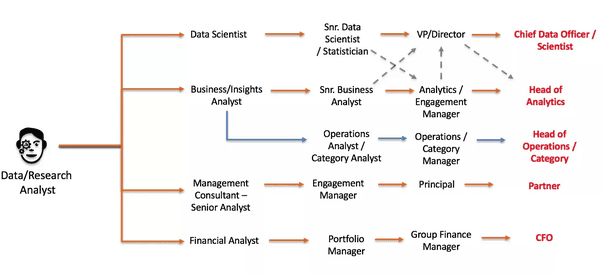
Interesting Puzzles To Prepare For Data Science Interviews !

A Data science career is a lucrative opportunity with many young professionals opting for it. With the easy accessibility to data science courses, the number of professionals pursuing it is rising. There is a huge demand for expertise in this area and it has been voted as the best career by Glassdoor in the United States.

Though there is a need for professionals in this field, it is often not easy to get into. Organizations look for problem-solving and analytical skills in their potential employees and judge them based on creative and logical reasoning ability.

Having a different approach towards a problem and solving it in a unique way can help one stand out from the crowd. It isn’t a cakewalk to master these abilities. One has to practice and try to improve their skills. Solving puzzles is a way to test the individual’s ability to think out of the ordinary and also puts to test problem-solving skills.

The interviewers while hiring fresher especially give them puzzles to solve during their interviews. Due to the pandemic, many companies now have a stricter policy when it comes to choosing the right candidate for the job. It is challenging and the chances of selection are less compared to earlier.
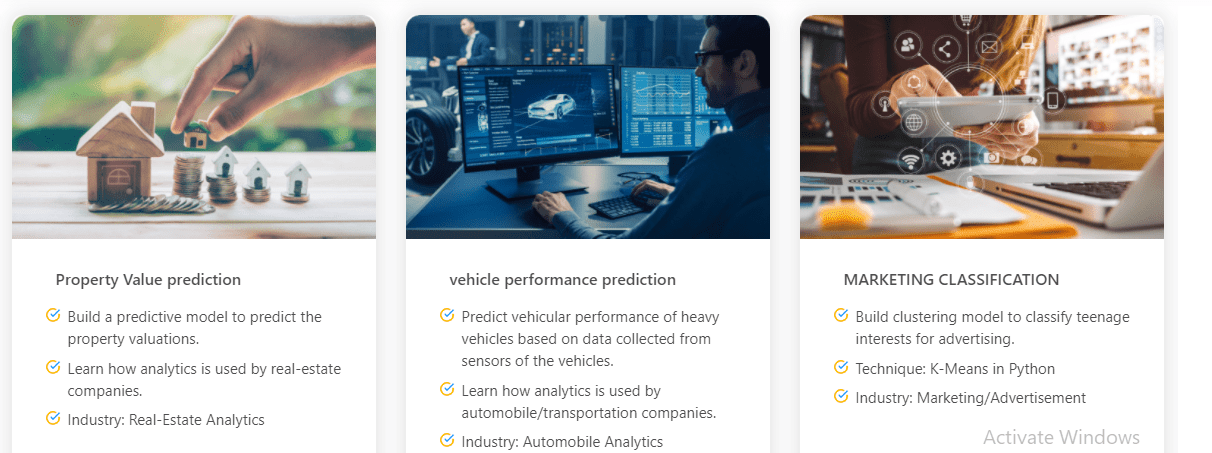
Data Science Career Interview

Some are even assessing the candidates based on their coding skills. To provide an insight into what is in store for the candidates, below mentioned are some of the commonly asked puzzles during a data science job interview.

  1. There are 4 boys A, B, C, and D who are supposed to cross a rope bridge. It is very dark and they have just one flashlight. It is difficult to cross the bridge without the flashlight and the rope bridge can only stand 2 people at once. The 4 boys take 1, 2, 5, and 8 minutes each. What is the minimum time required for the four boys to cross the rope bridge? 

Sol:

This is a question that is most repeated and has an easy solution. A and B are the fastest boys and can cross the rope bridge first. They take 2 minutes. B stands on one side and A returns with the flashlight in 1 minute. So the total time taken is 3 minutes. After that, C and D have to cross the rope bridge. They have taken 5 and 8 minutes each. The total time taken is 8 minutes.

When we add the time taken by all, it is 3+8 which equals 11 minutes. C and D stand on the other side and B takes 2 minutes to return. Hence the total time that is taken by all is 11+2 which equals 13 minutes. At last, A and B will cross the rope bridge and will take 2 minutes and that adds the total time to 13+2 which is 15 minutes. So the time required by all the 4 to cross is 15 minutes.

  1. A person is in a room with the lights turned off. There is a table. A total of 50 coins have been kept on the table. Out of the 50, 10 coins are in the head position while the other 40 are in the tails position. The person has to segregate the coins into 2 different sets in a way that both sets have equal numbers of coins that are in the tails position.

Sol:

Segregate the coins into two groups, one with 10 coins and the other with 40 coins. Turnover the coins of the group that has 10 coins

  1. A bike has 2 tyres and a spare one. Each tyre can only cover a distance of 5 kilometers. What is the maximum distance the scooter will complete? 

Sol: 

To simplify the problem, we will name the tyres X, Y and Z respectively. 

X runs 5 kms

Runs 5 kms

Z runs 5 kms

Initially, the bike can cover a distance of 2.5 kms with tyres X and Y

X=2.5 kms, Y=2.5 km, and Z=5 kms

Take off tyre X and ride the bike with YZ another 2.5 kms

Remaining X= 2.5, Y=0 and Z=2.5

Take off tyre Y and ride the bike with XZ another 2.5 kms

Remaining X=0, Y=0 and Z=0.

Hence, the total distance covered by the bike is 2.5+2.5+2.5 = 7.5 kms

The more an individual practices such puzzles, the better the chances of landing a data science job.

Related Articles:

Analytics & Data Science Jobs in India 2022 — By AIM & Imarticus Learning

The Rise Of Data Science In India: Jobs, Salary & Career Paths In 2022

Why It Is Right Time To Pursue A Career in AI, ML and Data Science?

Introduction

The world is all set for a digital transformation. New technologies are disrupting how business is being conducted on a day-to-day basis. Among the most notable of these technologies are Artificial Intelligence (AI), Machine Learning (ML), and Data Science.

These technologies are constantly restructuring the landscape of different economies throughout the globe, as it provides tremendous career opportunities. Moreover, these technologies are also interrelated which gives an individual a chance to build a holistic, well-paying, and satisfying data science career.

Career In Data ScienceWhy now is the Right Time?

We are living in the age of the fourth industrial revolution where everything is expected to be data-driven. Moreover, the pace at which the volume of data is growing is simply astonishing.

According to an IBM survey, 90 % of the data available has been created in the last two years. Technological devices like smartphones, tablets, and laptops have revolutionized the way users interact with the internet, and this number of users is also increasing at an exponential speed.

Now, accumulating data is not enough. An analysis of data is required to produce insights that can help in the curation of actionable results. This is exactly where the tools of AI, ML, and Data Science become relevant. These tools leverage various techniques from mathematics, statistical modeling, data engineering, data visualization, computer programming, cloud computing, etc.

To extract the insights from data collected by an organization. Now, this insight forms the basis of strategic decision-making in any organization. It is used to create targeted ads, augment customer experiences on company websites, reduce costs, forecasting demands, and so on. Therefore, the application of predictive algorithms like AI, ML, and data sciences are pervasive throughout different functional domains.

Again, these tools are used across different organizations as well. Governments, Corporates, Brands all are leveraging the advancements in technology to create an entire automated, data-driven ecosystem. Therefore, naturally, there has been an upsurge in the demand for data science courses in India and data science jobs across industries and functions. It is estimated that in India close to half a lakh positions have opened up.

Data Science CareerFrom an Indian context only, a typical data scientist is expected to receive a salary of around INR 9 lakhs p.a. Similarly the salary figures for AI and ML engineers would lie at around INR 5.5 lakhs p.a. and INR 11 lakhs p.a. respectively. Therefore, a six-salary figure makes a career in these disruptive technologies even more attractive.

With the pandemic changing the operation models across industries and functions, it can be safely assumed that technology is going to become even more relevant. Data Science, AI, and ML have a steep learning curve more and more organizations are adopting newer and agile techniques.

From expensive platforms, SPSS, SAS, etc. and organizations are now moving to open resource platforms like python and R. Therefore, technology is no more the future anymore; it is here and those who are passionate about it can find a lucrative career opportunity in AI, ML and Data Science.

Data Science and Analytics Career Trends for 2021!

A career in data analytics and/or data sciences is presently in extreme demand. This is due to the need to optimize new modes of data collection to identify large-scale problems and find solutions in a world after Covid-19, despite a minor drop in job openings at the start of the worldwide lockdown.

data analytics career

There are several trends that one must look out for if he/she wishes to pursue a career in data sciences and/or data analytics, including and beyond ones that involve adjusting to the ‘new normal.

It can be argued that 90% of data that is generated and collected were over the past 3 years. The demand for data science and analytics is therefore only going to grow in demand, at least for the next 10 years (and probably more). To ride this wave of opportunities in jobs and research and beyond, one must keep up with career trends relating to these fields.

What are the trends one must keep up with to enter a career relating to data?

  1. Understanding Data Collection

One must take a look at the avenues which entertain the possibility of data collection – preferably in new, never-before-seen ways. One may look to his/her area of expertise and collect data on it while combining newly learned data management skills to become a data analyst and/or scientist. This may definitely be aided by undertaking programs like data analytics courses at Imarticus learning.

  1. Analytical Problem Solving

In addition to hands-on experience, data analytics online learning may cover various fields relating to data. One must learn the basics like spreadsheet management in order to tabulate data more efficiently for analyst work.

Data Analytics Career

It is a useful skill to know what to recognize as possible data and convert that into an absorbable format, which will ensure later calculations, problem identifications, and solutions.

  1. Understanding Data Management Tools

If one is more interested in being a data scientist, then he/she must work to observe trends in big data. This involves learning big data management tools like Hadoop to find newer frameworks to collect, store and make sense of data. With earning SQL and no-SQL programming in addition to managing databases, one may find new problems to solve, whether for research or for aiding a business (or one of the myriads of other uses).

  1. Machine Learning

This is further aided by mastering other tools like machine learning and artificial intelligence. There are various tools that one may incorporate into his/her data studies, be they included in basic data science and/or data analytics courses or not. Undertaking this endeavor will allow one to master various avenues for finding and exercising ideas, which the world will go on to greatly benefit from.

  1. Communication

A possibly surprising trend that can be observed in regular data analysts and data scientists is the presence of soft skills. Someone dealing with data is required to regularly articulate and advertise new ways of improving things in his/her burgeoning field. Skills like effectively communicating one’s ideas and building useful chains of interpersonal relations go a long way in aiding the career of a data analyst and/or scientist.

  1. Artificial Collection of Data

One must find ways for his/her data collection and processing models to work without his/her presence. This process involves training replacements – both artificial and human. Ideally, a data scientist is expected to design systems that function without his/her interference, not only to undertake routine tasks but also to identify new problems and calculate possible solutions. A noted data trend is the undertaking of this process.

Conclusion

In conclusion, one can say that he/she must observe several trends relating to data on a regular basis, to adapt and grow into the self that can make a huge impact on this frontier field.

Data Analytics CareerData science and analytics are making strides in the tech market, and it is clearly the future. So, a career in data analytics can be really fruitful in the long run.



What is the Difference Between SAFe and Scrum Master Certification

What Exactly is Scrum and What is Scrum Master?

Scrum is a structure that helps build team working habits. It encourages teams to use past experiences to learn from them, self organise when working on an issue and analyse both their losses and wins in order to improve. This agile management device defines a set of meetings, instruments and roles which work together in order to help teams in structuring and managing their work.

Scrum masters help in facilitating scrum and is an agile framework that is lightweight. It focuses on time sensitive iterations called sprints and as a facilitator it acts as almost a coach to the team called servant leader. Scrum leaders must consider opportunities that will help the team improve its quality of work while remaining committed to the scrum’s foundation values.

What is Scrum Master Certification and What Does it Entail?

Scrum master certification helps people understand what good scrum is as per official scrum guides. The basis of the certification is the scrum guide. The certified exam for this is lightweight with 100 multiple choice questions drawn over a span of 2 hours and is taken after scrum master training.

What is SAFe?

SAFe happens to be a globally leading framework used to scale Agile across enterprises. It is designed to increase efficiency by driving a faster time to market ratio thus increasing productivity. Lean-Agile transformation is a combination of leadership engagement and education as well as training. Its role-based curriculum assists enterprises in bettering results.

What is SAFe certification and what does it entail?

This certification assists in resolving coordination issues in three stages:

1. Introducing management at an executive level thus passing on available budgets onto different value streams.
2. Organising the value stream within the company in order to generate various products and distinct services.
3. Encouraging more roles and practices at different stream levels.
Its basis is the website and training material provided by them in order to cover a larger span of content than just plain scrum.

The SAFe examination is a lot harder to clear considering its huge course content and highly advanced level of certification. There are 70 questions with a requirement of at least 75% to clear the exam. The exam like the scrum master examination requires training and preparation.

The differences in scrum master certification and SAFe certification are as follows:

Scrum master certification:

  1. It is structured and curated for a single team.
  2. It has three primary operational roles – Scrum Master, it’s development teams and the owner of the product.
  3. Usually four ceremonies are part of this. They are, daily scrum, stand-up meeting, deciding plan and review. This helps in reflecting on issues and rectifying them.
  4. The scrum master course for certification usually fits into one framework.
  5. It is mostly self-organised with cross-functional teams being co-located.
  6. It is more of a foundation level certificate. It can be used as a stepping stone to be able to proceed to more complicated certifications like SAFe.

SAFe certification:

  1. This could entail a team of a hundred to even a thousand members for turnkey projects.
  2. It is used majorly in scaled project environment groups.
  3. The roles covered here, under SAFe, are beyond scrum master certification. Its roles may even go as high as portfolio and program management levels.
  4. It is not just restricted to team level but can cover ceremonies beyond that as well.
  5. Covering a combination of multiple frameworks, it proves to be advanced and versatile.
  6. It can be located in a multitude of sites due to its time flexibility allowing it to be found in different time zones as well. They can thus be called a centralised and decentralised decision making environment.

With Jobs at Risk, can a Career in Big Data Keep You Safe?

Data powers the information economy just like oil powers industrial economy. No wonder they say, “data is the new oil”. A critical asset to many industries, data science and AI changed the way information is gathered and processed. Even when COVID-19 hit the global economy, leading to job cuts and hiring freeze, data science remained unaffected.

While companies do not debate on the importance of data science, collecting and storing the huge volume of data was a big challenge. With limited capabilities, companies had a big struggle to maintain and process data. However, AI and cloud-based technologies provide a solution to this problem. These technologies have created better job opportunities for data professionals than ever before. If you are aspiring for a data analyst career, there isn’t a better time than this.

Why Big Data?

The world is consumer-centric and will remain so despite the hard hits on the economy. Consumerism is the driving force that creates revenue, and job opportunities. From healthcare to e-commerce, all industries are data-driven. The data requirement changes from one business to another, from one company to another. But the enormous amount of unstructured data can be collected using various tools and techniques, organized and structured according to the business needs.

No matter the business is consumer data is vital to all businesses. The tech giants like Google, Amazon etc, and the social media giants like Facebook have been using the potential of data to achieve a competitive advantage over their rivals. And the result is pretty much evident. They are far ahead of their competitors.

What is common among all of them is that they collect large swathes of data regarding their customers – right from what products they buy, which products they ditched after adding to the cart, which posts get better engagement, how long does a person spend time on their webpages – every single move of their customer after arriving on their website is tracked, processed and analyzed to make better business decisions.

The global health crisis saw the extensive application of data, how it can be used to manage a crisis better. From contact tracing, health screening and mitigating the spread. Many apps were developed to help contain the spread, leveraging the GPS to identify the COVID-19 hotspots.

The Increasing Demand for Data Scientists

COVID-19 has indeed changed the way the world functions. With more people staying indoors, individuals flocking the internet also increased. From work to shopping, everything is being done online. And this has increased the requirements for data scientists. While many companies struggle to acclimatize and manage their current employees logging in from a remote place, Tech firms are out with a pressing need to recruit more talents.

With more students and professionals active online, the need for online tools and platforms is growing, and this has led to the demand for an intense expansion of their talent pool.

AI and cybersecurity talents are the most coveted as many companies need technical support in digitizing their businesses. This calls for the improvement of data security measures and to enhance automation to reduce the on-site manpower.

Firms that rely on AI-powered software and those which provide such platforms are on a lookout for technical talents including software engineers and data analysts. Furthermore, financial services companies are also gearing up to become market-ready when the economy reopens. They have started headhunting for people with risk management and data analytics skills to cater to the recent spike in digital banking and online payments activities.

Data Science Online CourseData science is one of those areas not affected by COVID-19. In fact, the pandemic and the enforced stay-ins have resulted in an increased demand for data scientists. If you are a new graduate, take this opportunity to make the most out of the current market situation.

Enrolling in a Big Data Analytics Course could help you land on a lucrative career in data analytics and big data.

Stay Competent with most In-Demand Data Science Skills!

What is Data Science?

The Science of combining capital processes, algorithms, and many such best tools to collect, manage and analyze the most important data to make business decisions is Data Science.

Who is a Data Scientist? 

A computing professional beholding the skill of data collection, data storage and management, and data analysis enabling the organization to make data-driven decisions quickly are Data Scientists.

 In-Demand Data Science Skills

Some of the most In-Demand Data Science Skills are:

Understanding of Math & Statistics 

Online Data Science course in India is all about extracting the required information from the data. A depth understanding of mathematical probabilities and statistical methodologies helps in data analysis.

Data Science SkillsThe majority of the data science models are built using one or more, known or unknown variables. Thus, the in-depth understanding of multivariate calculus is the key requirement to develop Machine Learning models.


A detailed understanding of functions such as Logit, Cost, rectified Linear unit, Step, Sigmoid, etc. is very much required to deal with the large data. Apart from these functions, the detailed understanding of Matrix algebra.

vector Algebra and Differential and Integral calculus help the Data Scientists to develop and understand the systems at a faster pace.

 Programming Skills for Data Science

In order to achieve the objective to transform the raw data into business insights, Programming skills plays a crucial role. Among all the programming languages, the go-to languages are Python and R, Python being the lingua franca in the data science field.

Skill to wrangle the Data

The process of removing imperfections from the raw data to get the data that can be easily analyzed is known as Data Wrangling. The entire process includes acquiring the data, combining the data with relevant fields, and cleansing the data. In short mapping the raw data from one form to the other to set up the data to get business insights.

Management Skills

Database management is a prerequisite of Data analysis. The basic requirements for a Database Management System is the family of programs to edit and manipulate the data and the operating system to provide the specific data.

Data Science Career 

The special skills set will definitely make you stand out from the crowd when the field and hence the number of jobs in the market are increasing at a faster pace.

Data Science Career Job Requirements Average salary
Data Scientist ·      Data collection and organization

·      Find the pattern in the data to help the strategic business
decision


$139,840

Data Engineer ·      Batch Processing of the database

·      Build and maintain data pipelines

·      Make the information available to the Data Scientists

$102,864
Machine Learning Scientist Research for the new data approaches and deep learning techniques. $114,121
Machine Learning Engineer ·      Create data funnels

·      In-depth understanding of statistics and programming

·      Designing and developing machine learning systems

$114,826
Data Analyst ·      Transform the large Database to meet the purpose.

·      Prepare the reports to facilitate the decision-making process by communicating trends and insights from the data.

$62,453
Business Intelligence Developer ·      Design and develop the strategies to make the specific information accessible for business decisions in lesser time.

·      Facilitate the system understanding to the end-users to use the data effectively

$81,514
Statistician ·      Facilitate the Data Collection process.

·      In-depth Data analysis

·      Data interpretation

·      Identify the relevant trends from the data

·      Design data collection processes

·      Advise the overall organizational strategy

$76,884
Applications Developer ·   Keeping track of the applications used in the business and internal interaction

·   Design the overall process flow of applications with the inclusion of development of user interface components etc.

$113,757


 Average Salary data is taken from https://www.glassdoor.co.in/Salaries/data-scientist-salary

10 Data Analytics Myths that Can Hamper Your Business Data!

Myths are a waste of time; they prevent progression – Barbara Streisand

In addition to making conclusions about the data, the science of evaluating raw data is what we call data analytics. Many techniques of data analytics and procedures have been converted via automation into mechanical operations and algorithms that operate over raw information for use by humans.

It is a booming field and many young and ambitious professionals are opting for data analytics courses. Many universities are offering data analytics courses online.

Due to its complexity and distinctive language, many amateurs don’t understand it and are hence oblivious of its activities in the backend. Its insignificance has led to the emergence of good and bad myths that have forayed into people’s minds. It can discourage any organization from effectively capitalizing on data analytics since they treat the myths as reality.

Here are the 10 data analytics myths debunked.

  1. It contributes to new findings: Theoretically, data analytics helps in finding significant data, and practically it helps in making some important decisions. Reaching new findings with AI via data analytics is untrue.An accurate understanding comes from the gathered and modeled data, and evidence is collected that proves to refute the theories. Data analytics should be used as a valuable platform for learning.
  2. It is time exhaustive: Some market leaders are of the view that using data analytics in a sensible manner is too time-consuming. One should check for answers which will align with the existing networks and then provide a complete view of the revenue-driving activities and provide execution services. In less time, the right software tools will help extract data insights
  3. It needs an exorbitant amount: The misconception that data analytics is a costly affair prevents many companies from effectively leveraging it. In fact, a solution for data analytics can be very functional and cost-effective, it is all based on the type of solution needed.
  4. Value can only be derived if an individual is an analyst: Another misconception is the above. All the credit goes to the pathbreaking development in the fields of automation along with AI for enabling the process through which anyone can avail an insight into the data information and quickly transform this knowledge into effective business decisions.
  5. Data is the force behind every business: Not all companies have data as their driving force. When the business offering makes sense, only then data is important. It is necessary to concentrate on the information, whether it is important to the company, and then join the battle, if not, keep concentrating on important progress.
  6. Bounce rates – useless to keep track of it: It is the perception of some company heads that keeping a record of bounce rates serves no purpose. The logic behind it is, these figures are usually inaccurate, and the real value is not given by the data.In reality, the bounce rate is important in increasing the SEO value and gives an indication of the consumer’s understanding of the said business, aiding them in identifying the faults responsible for people making an early exit from their site.
  7. Decisions made by machines are impartial: It confirms the already existing social biases, transforming into a “black box,” without any means of describing the logic behind choices. When the organizations are asked to explain decisions, they aren’t in charge of the manner in which models are designed, rendering them insecure and accountable.
  8. The loss of jobs is directly related to data analytics: This is a common misconception that data analytics connects to AI and that further transpires into job loss. Data analytics is akin to a business tool that produces jobs and productivity and reduces waste.
  9. More data is key: Another prevalent myth is that the more the data, the better it always is. The most important thing is that data has been well-sourced, is reliable, and also meaningful. As they always say, quality is better than quantity.
  10. Analytics runs your business: An organization cannot expect their business to grow and flourish only with the help of data analytics. It’s also about building a rapport with their customers and understanding their needs. It also depends on their processes and their products. When an organization incorporates better insights into its business processes, it can add more value.

Why Does Data Ops For Data Science Project Matter?

What is Data Science?

Data plays a major role in every organization as it helps in making decisions based on facts, statistics, and trends. Data science helps to trace insights from the raw data generated, which in turn is used to make major business decisions. Implementing Data Science in business has several advantages.

  • It helps in reducing risks and identifying fraud models. Data scientists are trained to identify data that stands out in some way and they use methodologies to predict fraud models along with creating alerts every time unusual data is identified.
  • It helps organizations in identifying when and where the products best sell. This helps the organization to deliver the right products at the right time as per the customers’ needs.
  • It helps the sales and marketing teams to understand their audience well and helps with providing personalized customer experiences.

Why Data Science Needs DataOps?

Data scientists deal with searching for data, labeling, cleaning, and performing other tasks that consume a lot of time. Especially if the business has to maintain a backlog legacy, then the amount of data keeps multiplying every year. This is where the need for DataOps rises.

DataOps involves collaboration, automation, and continuous innovation to data within a data-driven environment. Just like software can not be expected to provide exact results outside its live environment, data projects may also tend to behave similarly and may have to be reworked completely to make it work in a production environment. It also has to be continuously monitored even after deployment. Which makes it even more necessary to implement DataOps in a Data Science project.

Data Ops for Data ScienceDataOps plays a major role in building best practices throughout a function. Through continuous production, DataOps helps organizations to deliver value to a range of stakeholders.


Another significance of using DataOps in Data Science is Automation. Data moves through a particular process within an organization. While Data is entered in one form, it does not exist in the same form. Data scientists have to build data pipelines, test, and change them before data is deployed.

Making use of DataOps best practices, you can get a constant stream of data flowing through the pipelines. Which in turn, helps to attain real-time insights from the data. This ensures to reduce the time taken in converting raw data into Valuable information.

Combining Machine Learning with DataOps helps in maintaining a continuous workflow through internal communication. With this, the data quality can be controlled through version control, constant development, and integration. Combining ML also improves the insights and has a great potential for extracting value from DataOps.

Introducing DataOps in the organization also means changes in the work process. It builds a new ecosystem with consistent communication between the departments. Employees of each department work together, in real-time, sharing a common goal.

Therefore, using DataOps in Data Science ensures to develop projects keeping in mind the business impact along with delivering it in a way that the management can understand.

Why Data Science Course?

The Data Science course covers a mix of topics like mathematics, Tools, Machine Learning techniques, Business Acumen, and several algorithms. The main principle behind Data Science is finding patterns from gigabytes of raw data collected.

In today’s competitive world, more and more organizations are opening up to big data, and the need for data scientists is also on the rise. They get exciting opportunities to work on and also get to come up with solutions for businesses.

10 Data Science Careers That Are Shaping the Future!

Data is wealth in modern days and data scientists will be in huge demand in the coming years. Firms require skilled professionals to analyze the generated data. Data analysis is also predicted to surge with the rise of new-age technologies like machine learning, artificial intelligence, etc.

According to reports, there is a shortage of expert data scientists in the market. One can opt for a post-graduate program in machine learning to gain the skills needed in the data science industry.

Let us see about ten data science careers that are shaping the future.

Data Scientist

Data Scientists have to organize the raw data and then analyze it to create better business strategies. Data is analyzed for predicting trends, forecasting, etc.

Data science careerData scientists are technical personals who are fluent in data analysis software and use them to predict market patterns. Firms will require more skilled data scientists in the future due to the need to process & analyze big data.

Business Intelligence Analyst

Business Intelligence (BI) analysts & developers are required to create better business models. They also help in making better business decisions. Policy formation and strategy development are key responsibilities of a BI analyst. Firms have to face market disruptions and need good business models/strategies to tackle them. BI analyst/developer will be in demand in the coming days.

Machine learning Engineer

Machine Learning (ML) Engineers are required for creating better data analysis algorithms. They have research about new data approaches that can be used in adaptive systems. ML engineers often use other technologies like deep learning, artificial intelligence, etc. to create automation in data analysis.

Applications Architect

Firms require good applications and user interfaces to run business processes smoothly. Applications architects choose or create the right application for their firms. Due to the rise in the complexity of data, firms will require better applications to manage it.

Statistics Analyst

A Statistics analyst or statistician is required to interpret the data and present it in an understandable way to non-technicians. They have to highlight the key insights in big data to stakeholders/fellow employees. Data analysis results are also used to make predictions and identify potential opportunities. You need to be good with numerology if you are thinking to become a statistician.

Data Analyst

They have to convert large data sets into a suitable format for data analysis. They also help in finding the data outliers which can affect the business. There is a lot of data generated every day as humans analyze less than 0.5 percent of data produced! Data analysts are already in huge demand in the data science industry.

Infrastructure Architect

Infrastructure architect in a firm makes sure that the applications, software(s), databases used by the firm are efficient. Infrastructure architects also help in cost optimization. They make sure that their firm has the necessary tools for analyzing big data.

Data Architect

Data architects mainly focus on maintaining databases.

Data Science CareerThey attempt to make the database framework better. With the rise of automation in data science, data architects are in huge demand to provide better solutions.

Enterprise Architect

Enterprise architects are IT experts and provide firms with better IT architecture models. They suggest stakeholders & senior managers in choosing the right IT applications for data analysis. Top companies like Microsoft, Cisco, etc. hire enterprise architects for maintaining their IT framework.

Data Engineer

Data engineers are required to create a good data ecosystem for their firms where the data pipelines are maintained. Data Engineers are required to choose better data analysis applications to provide real-time processing. They also help in making the data available to data scientists.

Conclusion

Data science is a growing field and there are a lot of job opportunities. You can learn Data Science Courses in India from a reliable source like Imarticus learning. One can also target any particular job role in the data science industry and should learn the necessary skills. Start your post-graduate program in machine learning now!

How Businesses Are Building Futures With Data Analytics?

Data analytics handles the raw data from the resources using technology, algorithms, and mechanics into a simpler and human-friendly version to help data businesses and organizations. It is now an important factor that drives the business as well as the decision-making process in everyday lives.

In one way or the other, business and organizations depend on data analysis to improve their trade. It wouldn’t be wrong to say that business analytics and Artificial Intelligence have both a major role in building the future everywhere.

  • General analysis: A business needs everyday updates to keep up with the market and trends. It is necessary to identify the low and high points to work on these areas to make the necessary changes. Such random analysis can find new opportunities and can predict the capability of the new strategies.

    This is highly important for all types of businesses in any field. Whether it is the retail, healthcare, medical, technology, food industry, online industries, etc. They all rely on big data to help improve their services.

  • Business improvement: The pandemic has brought the world to a standstill for a while. It is now slowly improving its pace but there are several companies and businesses that suffered a huge loss. In order to get their business back on track, they can rely on data analysis. Finding what is trending or what the public is expecting is the key to a restart. Identifying the trend allows planning and strategy to make necessary changes in the projects to make it plausible for the future and improve the business.
  • Automation: Automation is something the general public does not think about too much but most of them are using it every single day. The use of AI and Machine Learning has integrated to come up with ideas such as Alexa, Siri, Google voice, etc.

    Apart from these, voice-controlled automobiles, electric devices, etc are all part of this. These are definitely in the initial stages right now and have better prospects for the future where they can be applied in many more domains and areas. It is even possible to attract more customers and urge them to use the same.

  • Managing data: The biggest huddle in data analysis is managing the raw data. With the accumulation of data growing in every department of life, it is significant to have proper usage of the stored data. Data analytics Certification could be used to find ideal solutions for the problems in each department.

    Data is useful for every business and department and it is up to the data scientists to find the use of these pieces of information. This is exactly why data scientists are the hottest job profiles in the current scenario. They are needed by every business to build their future by creating strategies for success and predicting their prospects. Since people provide their data in one form or the other through various mediums, managing this data holds a key role in the future of businesses and public lives.

Conclusion
Data analytics was started as a part of technology is now an integral part of lives that has an impact on almost all levels and departments of life. Such reliance on data increases the competition between businesses and it can be healthier when they can identify their key to success from the data available.

But ultimately, it all comes down to how each of them identifies and interprets the same pool of data with their insights and implements them along with the same pulse of the public. After all, going with the trend is more reliable than finding something new and making it successful.