What Problems and Challenges are Faced By a Business Analyst?

A large amount of business analysts time, as well as effort, is taken up in doing important activities. These activities include understanding a client’s business as well as collecting and clearing various requirements. Being a business analyst involves building trust with higher-ups and stakeholders while also identifying clientele needs. Thus writing up supporting documents is only a small part of a business analysts job and also happens to be the most visible to the people that are not involved with the project.

A business analyst helps in bridging the gap between various representatives of business that are responsible for solving issues and various developers that are needed to understand these issues. The developer curates a solution depending on the issue.

Listed below are the various problems as well as challenges that business analysts frequently face.

Typical challenges that business analysts face

1. Misunderstanding and misconception of a business analyst’s work scope
There are often differences created between what work or activity is really vital for a business analyst to get to and the actual responsibilities that their job holds or entails. This frequently occurs when a project involving a customer that does not have experience and is thus unfamiliar with a development project.
The possible solution that can be offered in such a situation is to discuss with the client what exactly their expectations are of them as a business analyst as well as their responsibilities. This should be done before the project commences. The business analyst must make sure to explain to the customer and make them understand the meaning of all important terms including terms like wireframes, V&S documents, SRS, and many more. A large number of clients often fail to recognise the difference between a prototype, a wireframe and what is called a mock-up. These words may look similar to the client and leads them to sometimes believe that the terms are designed equally. This would thus require the application of various styles, margins, and so on which would exceed the job responsibilities of a BA. Approval of various expected deliverables, as well as their content, is thus extremely important for both the business analyst as well as the client.

2. The specifications created do not the requirements of the development team
This would include the following pitfalls:
● Vague as well as ambiguous needs and requirements
● There is a lack of understanding of the level of requirements descriptions, that would be needed for developers, by the business analyst
● Insufficient time provided for obtaining requirements and putting the document together
The easiest way to solve this situation is through thorough discussion and through the discussion, defining the necessary level of requirements description, creating a checklist, identifying insufficiency of information, etc.
3. Changing business requirements as well as needs

4. Conflicts and clashes with stakeholders and higher-ups
In the case of any conflicts arising between authority (stakeholders) and business analysts when there is a team proposing a novel approach in regards to present business processes, the team must understand why there is any resistance. The following point may give you an idea.
● There could be critical features or important needs and requirements that were overlooked by the business analyst
● There could be hesitation in discarding old working methods and resistance to study novel solutions

5. Existence of undocumented processes
With the help of a business analyst course, aspirants and people looking to succeed in the field of business analysis will be informed and educated on the ins and outs of the field. A business analysis course will equip people with exactly the resources and tools that they would require in order to succeed in a business analyst job.


How Machine Learning is Changing Identity Theft Detection?


Debilitating data breaches and identity theft scenarios have left several high-profile firms across the globe scrambling to recover losses. In 2018 alone, in the US, over $1.48 billion worth of losses occurred, after 1.4 million fraud reports1. Of these reports, identity theft was a significant defining factor. Businesses and corporates alike are turning to machine learning and Artificial Intelligence (AI) in general for help. Current employees are also being upskilled for an artificial intelligence career through machine learning courses in order to prep for the future of machine learning.

Machine learning has already permeated everyday lives, from online recommendations on your favorite streaming site to self-drive cars that have awed the masses. When it comes to identity theft detection, machine learning has so much potential– especially since there are larger players and higher factors at stake.

Here are some ways in which AI and machine learning are being leveraged to detect, reduce and prevent identity theft:

Authentication Tests

With machine learning, identity documents including the likes of passports, drivers’ licenses, and PAN cards are scanned and cross-verified with an unseen database in real-time. An additional set of authentication tests can usurp theft to some extent– the use of biometrics and facial recognition being some of the more used ML-based tests. Other examples of authentication tests include microprint tests, OCR-barcode-magnetic strip cross-verification, and paper-and-ink validation2.

Real-Time Decision Making

Machine learning training has the power to operationalize and automate the process of data analytics, especially tasks that are mundane or prone to human error. Beyond speeding up the process of identity theft detection, machine learning enables real-time decision making to stop theft in its tracks or sound an alert in case of a potential threat. This is a boon for businesses both large and small who cannot afford to waste valuable human resources on mundane tasks. By detecting identity theft at speeds hitherto unmatched, machine learning allows analysts to make spot decisions before any damage is done.

Pattern Identification

An added benefit of using machine learning to revolutionize identity theft detection is pattern recognition. Since any machine learning algorithm is wired to a database with tonnes of data, these algorithms can scan through all the information available over the years to predict future threats and identify the source and patterns so that preventive measures can be taken in advance. This is beneficial in that it creates links between individual theft cases, allowing analysts to better assess what the best plan of action is in response.

Dataset Scaling

The more data that’s collected, the better machine learning algorithms are trained for a variety of situations. Unlike many other scenarios where lots of data mean more complexity, a wider database allows machine learning algorithms to be scaled and adapted as required. It also allows them to grow more accurate with every addition, make comparisons and identify genuine and fraud transactions in an instant– a true step up from the days of human involvement. However, a caveat– in training stages, it is crucial that analysts be monitoring the process because if the machine goes over an undetected fraud without flagging it, chances are it’ll learn to ignore that type of fraud in the future, opening up a big sinkhole in the system.

The final word

Machine learning is revolutionary in preventing billions of dollars being lost in fraud, theft and data recovery. Firms are increasingly allocating a huge chunk of their budget towards sound ML-based security systems– a testament to just how revolutionary the technology is in identity theft detection.

HOW AI HELPS VIDEOBOT ANSWERS COVID-19 QUERIES WITH MULTILINGUAL VOICE AND TEXT?

Artificial intelligence is helping us during the time of one of the biggest crises in the world. It explains why youth today want to focus on having artificial intelligence training for a better career ahead.

Currently, AI helps diagnose health risks, deliver services, discover new drugs, track coronavirus infections around us, and much more. The pandemic is becoming more significant by the day, but AI is coming to the rescue through different forms of its usage.

It is not only helping researchers, scientists, and doctors to secure people’s lives but tech firms and governments to keep everyone aware. These industries are jointly working towards making the world COVID free.

CoRover teaches us to use the artificial intelligence career at its best

Recently, a start-up driven by artificial intelligence, named CoRover, create a conversational platform. It helps businesses offer authentic information to customers instantly and automatically. The system works with the help of an AI-based doctor-video bot named AskDoc.

The bot addresses queries about coronavirus, transmission, and preventive measures. It includes multilingual voice formats and text formats. Thus, it helps Indians with diverse language options like Hindi, Marathi, Tamil, Telugu, and Kannada. It also includes German and French languages.

How does AskDoc work?

AskDoc helps users get automated replies about COVID-19 and safety protocols given by the Ministry of Health and Family Welfare. It also provides information from the World Health Organization (WHO) and the Government of India.

To ask questions, users need to log into the app. They can use voice recognition or send videos to get replies. Once the app receives a query, the chatbot backend passes it through several layers of its framework.

One can access AskDoc from their laptops other than the app. It offers a chat-based portal that replies to basic questions. Even after going through layers of understanding of the data provided, the answers are pretty quick and specific.

The app helps people interact with healthcare experts across the world. They can ask questions about coronavirus and have diverse knowledge about dealing with it.

How is CoRover making an impact with AI?

The team that made CoRover is currently working towards email integration, as it is also a major source of information. It will help several government-based platforms to get quick answers.

The company also introduced Ask Disha, a conversational AI platform with more than 20 billion interactions by more than 200 million people. With the help of machine learning and artificial intelligence, it helps connect administrative staff, travelers, verified service providers, and more. The recently growing company from Bangalore has already applied for two patents for its product.

Chatbots with AI are not new and know the right way of using empathy and emotions to connect to humans. These work as efficient virtual assistants and help medical experts, medical staff, patients, and families in several cases.

The chatbots created for health only focus on aspects of healthcare. Currently, chatbots for health are increasing due to the coronavirus pandemic. With voice recognition and text formats, these can reach out to people as other humans do.

Many businesses are incorporating chatbots to offer information about COVID-19. Moreover, the Centers for Disease Control and Prevention (CDC) and WHO have chatbots on their websites to provide quick information about the virus. Several governments are also incorporating the same to keep their people aware and safe.

What Are The Skills Required For Data Analyst?

What makes you inclined towards Data Science? Is it the interest in data? Or the shining career in this field? Or the impressive salary package? Despite the reason, you have made a wise choice. The course, Data Science has become the talk of the town for the past many years, and it reflects through the increasing demand for a skilled data analyst.

People are signing up for the Data Science courses in India. They believe the transition to a career in Data Science means stable employment and a high-paying salary once you have a good command of the Data Analytics course.

You don’t have to be a coding expert to learn and practice data science. This article will walk you through the five important skills required to become an in-demand Data Analyst professional. So, continue reading!

Role Of A Data Analyst:

A Data Analyst typically looks at large datasets and using their skill set, transforms data into a simpler and readable form that tells the story of a business. They integrate external data sources with internal company information to see where the company’s growth opportunities are located.

The analyst’s work on data highlights the key component that leads to high efficiency and improves business.

A Data Analyst Mainly Requires To Do The Following Tasks: 

  • Designing a database that suits different modes of inquiry
  • Optimizing database performance for easier use
  • Organizing data in the form of a dashboard that provide high-level summaries
  • Looking for patterns in large sets of data using statistical techniques or other methodologies.

Do You Wish to Become a Data Analyst? Master The Following Skills: 

Critical Thinking: 

A Data Analyst has to go through every day’s challenges related to data. The answer lies in data itself. To become an Analyst expert, you have to analyze the data differently. Apply all the basic concepts that you have been imparted during your Data Analytic course. The more challenges you solve, the better Analytic you become. So, continue to work on critical thinking, and gradually you’ll enjoy working with data.

Data Visualizations & Presentation:  

The two skills are closely associated. In data visualization, you’ll practice telling a story from compelling data to engage the audience or other officials you are presenting your data report.

The data presentation skills improve over time. At first, no one comes with an impressive result. Its consistent work makes you a skilled Data Analyst who presents the data effectively.

Programming Language:  

SQL (i.e., Structured Query Language) is the top-most database programming language a Data Analyst must know and practice. It gives access to data and statistics, which makes it an essential resource for data science.

R and Python are raising their ranks after their prominent use in Data Analysis. Python supports important tasks like collection, analysis, modeling, and visualization of data.

Other important programming languages to practice for a would-be data analyst are Java, Javascript, C/C++, MATLAB, Julia, SAS.

Machine Learning: 

The Data Scientist must be well versed with machine learning for quality prediction and estimation. The skill focuses on building algorithms designed to identify data patterns that improve accuracy over time.

Microsoft Excel: 

Creating a spreadsheet in excel is the basic and most traditional approach used for data representation. Although SQL is used to retrieve and present data in Data Analytics, knowledge of traditional and widespread tools is essential. Some industries may require you to work through excel along with the Data Analytics tool. So, it’s better to be well aware of the Microsoft Excel tool.

Conclusion: 

The skills mentioned above are important and make you confident to begin your career as a Data Analyst. Over time, you’ll achieve mastery of these skills and have a shining career with an abundance of opportunities.

So, are you ready to achieve your goal to become a Data Analyst? Imarticus Learning promises you to support by providing the best suitable Analytic course that fits your career needs.

You can contact us through the Live Chat Support system or even visit one of our training centers based in Mumbai, Thane, Pune, Chennai, Banglore, Hyderabad, Delhi Gurgaon, and Ahmedabad.

What is Alpha Beta Pruning in Artificial Intelligence?

What is Artificial Intelligence?

Most of us are aware of the edge cutting technology i.e. Artificial Intelligence (AI). It is used to create machines that have their decision-making capability. They can learn from their work environment and can behave autonomously. in the initial stages, it is man-made but once it has learned and evolved, it can enhance itself.

For example, the University of California, Irvine developed an AI machine that could solve Rubik’s cube. The machine learns and trains itself through algorithms and now it can solve complicated Rubik’s cube in a fraction of a second. In this article, let us learn about Alpha Beta Pruning in AI.

What is Alpha Beta Pruning?

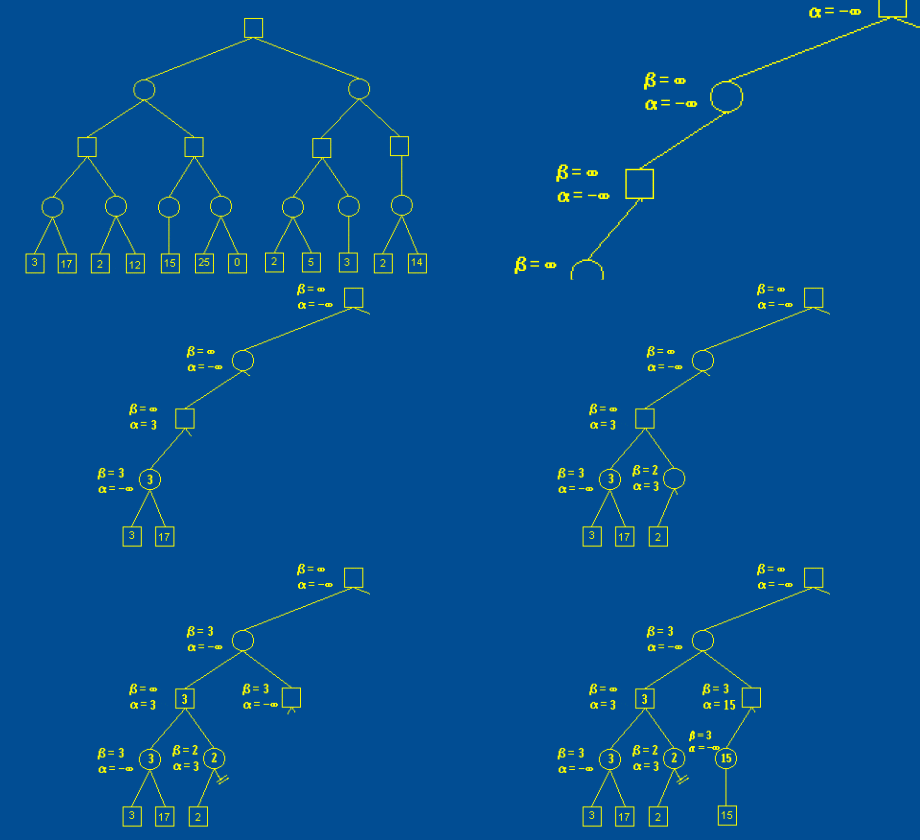
Before you learn about Alpha-Beta Pruning, one needs to know about the minimax algorithm. Minimax algorithm backtracks a scenario/game and finds the best move which will enhance the decision making or in terms of gaming, will maximize the chances of winning. It assumes that there is an opponent who is also trying to win, it tries to reduce the winning chances of the opponent and optimizing its steps to win.

Alpha Beta Pruning is an optimization technique that decreases the number of steps in the minimax algorithm. It helps in reducing the number of steps in searching/traversing. For example, if we are applying a minimax algorithm in a chess game, then Alpha Beta Pruning helps in finding those steps which will not result in winning, and then those steps need not be traversed.

The minimax algorithm prepares a search tree after backtracking, there are many nodes in this search tree. The redundant/useless nodes are eradicated with the help of Alpha-Beta Pruning. It helps in decreasing complexity and saves time. There are two main components in the minimax algorithm, first one is maximizer which tries to get the highest score and the minimizer does the opposite. Let us know about the two parameters ‘Alpha’ & ‘Beta’:

Alpha Parameter (α):

The best choice/decision found in the whole path of maximizer is called Alpha. Its initial value is (-∞). One can also say that the highest value along the path of maximizer is Alpha.

Beta Parameter (β):

The best choice/decision found in the path of minimizer is called Beta. It is the lowest value of all the values encountered in the path of the minimizer. The initial value of the Beta parameter is supposed to be (+∞).

 Note: Before Pruning one needs to check whether (α>=β). This is a necessary condition to run the Alpha Beta Pruning algorithm.

Why Alpha Beta Pruning is important?

There is no change in the result if we compare the outputs minimax algorithm and Alpha-Beta Pruning. Pruning helps in decreasing the number of steps thus making the algorithm faster and less complex.

Key points and terminologies in Alpha-Beta Pruning

  1. The child node is provided with the values of α & β.  While backtracking, the values of lower-order nodes are passed to the upper nodes in the search tree except for the child node.
  2. In some cases, the Alpha Beta Pruning algorithm fails to reduce the number of nodes. In such cases, more time is wasted because of α & β parameters and the number of steps comes out to be the same as the minimax algorithm.
  3. This scenario is called Worst Ordering. Ideal Ordering occurs when a lot of pruning happens and a lot of steps are decreased (especially on the left side of the tree).

Conclusion

AI is a budding technology and is expected to grow more. If you want to learn more about AI, then you can search for courses available online. One such good course is the PG program in Analytics & Artificial Intelligence in Imarticus Learning’s list of offered programs. This article was all about the Alpha Beta Pruning algorithm in AI. I hope it helps!

How To Write And Display Easily The Fibonacci Series In Java?

What is Java?

Java is a programming language that was developed by James Gosling in Sun Microsystems in the year 1995. The aim of designing Java was to support a digital Television screening; ultimately it was found out that Java was developed advanced to just be used for a TV network. The first version of Java 1.0 was released in the year 1996.

The latest version of Java is 14 that launched in the year 2020. Presently, innumerous applications are existing on the internet which won’t work without the support of Java. Usage of Java has also been considered beneficial in Artificial Intelligence.

Artificial IntelligenceBeginners in this field may enrol for a Java Programming Training in Analytics.

 Principles of Java 

When Java was developed, it came out with a certain set of goals or the principles. These principles have to be followed while programming in Java.

The Principles of Java are:

  • It must be simple, object-oriented and familiar.
  • It must be robust and secure.
  • It must be architecture-neutral and portable.
  • It must be interpreted, threaded and dynamic.
  • It must execute with high performance.

Some Java-based Applications

Java has encapsulated most of the functions in web-based applications. Some of the fields covered by Java are:

  • Java Desktop GUI Applications
  • Java Mobile Applications
  • Java Web-based Applications
  • Java Web Servers and Application Servers
  • Java Enterprise Applications
  • Java Scientific Applications
  • Java Gaming Applications
  • Java Big Data Technologies
  • Java Business Applications
  • Java Distributed Applications
  • Java Cloud-based Applications

What is the Fibonacci Series?

Fibonacci is the concept which is found to have appeared in Indian History in a connection with Sanskrit Prosody. This concept was given by Parmanand Singh in 1985.

Fibonacci series is a series of some integers, where the Nth term is equal to the sum of N-1th and N-2th (last two terms). The first two numbers in the Fibonacci series are supposed to be 0 and 1 and each of the subsequent terms of the series is the sum of the previous two terms.

An example of Fibonacci series can be:

0, 1, 1, 2, 3, 5, 8, 13, 21, 34, 55, 89…..

Artificial Intelligence

Algorithm to Generate Fibonacci Series

While generating a Fibonacci Series, some of the key points need to be focused on. Following is the algorithm to program a Fibonacci Series:

  • First two terms of Fibonacci Series need to be 0 and 1.
  • The last two terms of Fibonacci series have to be stored in “last” and “second last” integer values.
  • The current term of Fibonacci series is always equal to the sum of “last” and “second last” term.
  • The last and the second last integers need to be updated as Second Last= Last and Last= Current.

Ways to Write Fibonacci Series in Java

When writing a series in Java, recursion plays a vital role. The coding has to be done with or without the usage of recursion. Some of the programmers may just consider the use of recursion while coding Fibonacci series in Java but writing Fibonacci in Java without recursion is also a great way of coding which gives out amazing outcomes.

The two main ways of writing and displaying the Fibonacci series in Java are listed below:

  • Fibonacci Series without using recursion
  • Fibonacci using recursion

Ways to Display Fibonacci Series in Java

When it comes to the Display of Fibonacci series, it can be generally done by two ways in Java. Both the ways are listed down below:

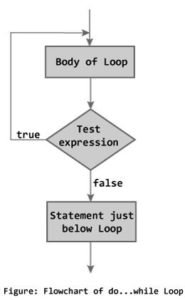
  • Fibonacci using For LoopArtificial IntelligenceFibonacci using While LoopArtificial IntelligenceApplication of Fibonacci Series

Fibonacci is used in various application systems. It is used for interconnecting the parallel and distributed systems. It can also be used in the following ways:

  • Computer algorithms are known as Fibonacci Search Technique and Fibonacci Heap Data Structure.
  • A certain specific type of graphs and tables particularly known as Fibonacci Cubes.

How Imarticus Helps For A Data Science Career in Pandemic Times?

Data-driven strategies have shot up in popularity after the coronavirus pandemic wreaked havoc on business plans. Data science is a key player in sustaining businesses not just now, but in the future when similar turbulent circumstances threaten to bring down shutters on previously stead organisations.

As a result, hundreds of companies across India and overseas are looking to add more data scientists to their repertoire. This comes from a need to drive more data-driven decisions and make businesses more resilient to change.

Here are some specific reasons that make a case for how choosing a data science career can be beneficial in times like these:

  • A need for general expertise

While previously companies favored data science specialists, today they prefer generalists and Jacks of all trades. While specialists come with in-depth knowledge and specific skill sets, they often cannot think beyond their domain. Companies today need someone who has skills to use across the board so that they can both learn on the job and be useful where they’re needed.

  • A need for understanding project flows

Many companies who are delving into data science now are probably unsure of their footing and their way forward.

Data Science CourseA data scientist is critical in companies like these, as they bring expertise to the table and understand the flow of projects much better than anyone else. With a data scientist at the helm, all other players in the process can fall into place. This reduces the pressure on upper management to figure out project flows; they can now leave it to the experts.

  • Higher chances for growth

Data scientist generalists are more likely to grow with the company– something many organisations prefer. Unlike a specialist, who already has a defined skill set, rookie data scientists can be shaped and molded into an ideal employee for the company. In the process, the data scientist becomes an intrinsic part of the organisation, learns business tactics and applications and develops skills through experience rather than through specializations. As a result, they become both experts and creative problem-solvers.

  • Immediate requirements

Businesses are struggling to stay afloat during the aftermath of the pandemic and are realizing their urgent need for data-driven business plans. As a result, many of them have put out feelers and immediate job offers for data scientists. This is in complete contrast to other fields that are seeing scores of job cuts, furloughs and pink slips, and goes to show that data science is only increasing in popularity.

It is worth keeping in mind that, despite recruitment into data science roles, many companies have slashed budgets and can’t afford to pay more experienced scientists at this stage. Rookie data scientists form the perfect compromise–  they’re eager to learn, have the necessary skills and can be accommodated within tighter budgets without reduced salaries.

  • Opportunities for upskilling

As rookie data scientists settle into their roles, many companies consider upskilling them for higher positions or specific technical projects.

Data Science CareerThis is an invaluable opportunity for fresh data scientists as the company takes care of all the costs and only asks for your attention and application in exchange. Adding a data science course to your CV will also help you get a leg up on the competition when you’re ready to switch roles or companies.

The final word

The data science landscape has shifted significantly in response to the coronavirus pandemic. As a result, rookie data scientists who are only just entering the field have a once-in-a-lifetime chance to make their mark and cement their place for when things stabilize.

What is Data Science

What is Data Science

Data science is a field with a plethora of possibilities and is evolving very quickly in our day and age. Hence since it does not have any clear cut boundaries, coming up with an exact definition for it becomes a tough task. In simple terms, data science is the process of collecting information as well as creating actionable insights from unorganised raw data. It involves taking raw data and making sense of it.

Data is something that can not be easily understood by a common individual. It depends on machines to understand and interpret it, process it and then change it into something meaningful.

Data has become completely intertwined with everything we do today and the modern world can not function without it. Various companies, countries and individuals are looking to digitise their information as fast as possible to increase efficiency. Taking up a data science course is highly recommended for people to gain more knowledge and information on the following topics.

How does Data Science work exactly?

When a person chooses to go into the field of data science they would need to meet a large number of requirements in order to be good at their job. This can be done by choosing to go through a data science course. These disciplines include being able to products a complete, thorough and clean output of the raw data that has been provided.

Other requirements include engineering, mathematics, statistical knowledge, advanced computing and creativity. This would allow the individual to search through the data in an efficient manner and organise the messy raw information in front of them. They will then need to convey only the important parts that will assist in driving innovation and efficiency. As mentioned earlier, a data science course will be of an advantage for those interested to enter the field.

Data science is heavily dependent on artificial intelligence and machine learning. AI helps in creating models and using algorithms to predict outcomes. There are five stages to data science. They are:

  • Capture: This involves the acquisition, entering and extraction of data
  • Maintain: This step involves warehousing, cleaning, staging, processing and structuring of data.
  • Process: Here data is mined, classified, modelled and summarised
  • Communicate: The data is reported and visualized. Then various decisions are made regarding the data.
  • Analyze: A qualitative and predictive analysis of the data is done.

A data science course would harbour more information in further detail, thus improving your understanding of this career path.

Where is Data Science Used?

Data science is helping us move forward in our ever-expanding world. It has helped us reach various goals and helped improve the efficiency of work. It is being used in various fields today. Some of these fields have been listed below.

  1. Self-driving cars: Using AI and machine learning, transport today has reached a whole new level. Companies like Tesla, Volkswagon and Ford have begun incorporating complex AI features into their vehicles, thus leading a range of autonomous cars. Using small cameras and tiny sensors, these cars have the ability to send information back and forth in real-time.
  2. Healthcare: Data science is being used in healthcare to a large extent today. This ranges from storing patient information in a compact and efficient manner through a database to making new breakthroughs in the fields of disease study.
  3. Cybersecurity: Data science makes it possible to source through large data sets and thus is perfect for detecting any kind of malware present. This thus makes it ideal for use in cybersecurity.

Data science is hence a very important part of our lives today. For anyone looking to work in such a feeling, it is ideal that they go through a data science course. A data science course would equip the individual with all the necessary information and tools to succeed in this particular field.

Also Read: Resources to Learn Data Science Online

Top Python Projects You Should Consider Learning?

Understanding Python

Python is a high-level programming language that is used by programmers for general purpose. There’s a whole lot you can do after learning python, it can be used to develop web applications, websites, etc. You can also develop desktop GUI applications using python. Python is more advanced than other traditional programming languages and provides more flexibility by allowing you to focus on core functionalities and taking care of other common programming tasks.

One of the major benefits of python as a programming language is that the syntax rules of Python is very transparent and allows you to express models without writing any additional codes. Python also focuses on readability of codes. Building custom applications without writing additional code is also an advantage that Python offers. Being an interpreted programming language Python allows you to run the same code on multiple platforms without recompilation.

Why learn Python?

One of the major advantages of python programming language is that it is relatively simple to learn and has a smooth learning curve. It is a beginner-friendly programming language. The simple syntax used by Python makes it easy to learn programming language as compared to programming languages like Java or C++.

Python has a standard library and the external libraries are also available for users. This can help you to develop concrete applications quickly. You can easily learn python by enrolling in python programming course online. Let’s take a look at some of the top python projects that you can easily learn.

Guess the Number

This project will use the random module in Python. Some of the concepts that will be used while doing these projects are random functions, while loops, if/else statements, variables, integers, etc. Here, the program will begin by generating a random number that is unknown to the user. The user will have to provide and input by guessing this number.

If the user’s input doesn’t match the actual random number generated using the program, the output should be provided to indicate how close or far was the guess from the actual number. A correct guess by the user will correspond to a positive indication by the program.

You will need to apply functions to check three parts of this program; the first is the actual input by the user, secondly the difference between the input and the number generated and lastly to make comparisons between the numbers.

Password Generator

This is a very practical project given the use of password generators for everyday applications. You simply need to write a programme that helps to generate a random password for the user. Inputs required from the user are the length of the password to be generated, the frequency of letter and numbers in the password, etc. A mix of upper and lower case letters and symbols is recommended. The minimum length of the password should be 6 characters long.

Hangman

You are already familiar with “Guess the Number” game, this is more of a “Guess the Word” game. The user has to input letters as guess inputs. A limit is required to be set on the total number of guesses a user can make. It is advisable to give the user 6 attempts at most to guess.  You will need to apply functions to check if the user has made a letter input or not.

You will also need to check if the input shared is there in the hidden word or not. You will have to find a solution to grab a word that will be used for guessing. The main concepts applicable in the Hangman project are variables, Boolean, char, string, length, integer, etc. It is comparatively more complex than the projects mentioned above.

All You Need to Know About Hadoop!

Hadoop is an open-source software framework to store data and running applications on clusters of commodity hardware. It provides massive storage for different data types, enormous processing power, and the ability to handle virtually limitless concurrent tasks or jobs.

Hadoop programming is a vital skill in today’s world for people looking to build a career in Data Science. Hadoop processes large data sets across clusters of computers using simple programming models called MapReduce jobs.

Importance of Hadoop for Organizations?

  • The ability to store & process enormous data quickly makes Hadoop development a much-needed thing for organizations.
  • Hadoop’s distributed computing model processes big data in no time. With more computing nodes, you have better processing power.
  • Hadoop is equipped with fault tolerance and guard against hardware failure. If a node goes down, tasks are automatically redirected to other nodes to ensure that distributed computing doesn’t fail.
  • You can quickly scale your system and handle more data simply by adding nodes.

How is Hadoop Used?

Hadoop development is used in a variety of ways. It can be deployed for batch processing, real-time analysis, and machine learning algorithms. The framework has become the go-to technology to store data when there’s an exponential growth in its volume or velocity. Some common uses of Hadoop include:

Low-cost storage and data archive

Hadoop stores and combines data such as transactional, sensor, social media, machine, scientific, clickstreams, and the modest cost of commodity hardware makes it more likable. The low-cost storage lets you keep data and use it as & when needed!

Secure for analysis & discovery

Since Hadoop was designed to deal with massive data, it is efficient in running analytical algorithms. Big data analytics on Hadoop can help organizations operate efficiently, uncover opportunities and derive next-level competitive advantage. This approach provides opportunities to innovate with minimal investment.

Data lake

Data lakes back up data stored in original form. The objective is to offer a raw view of data-to-data scientists and analysts for discovery and analytics. It helps them ask new questions without constraints. Data lakes are a huge topic for IT and may rely on data federation techniques to create logical data structures.

IoT and Hadoop

Hadoop is commonly used as a data store for millions of transactions. Massive storage and processing allow Hadoop to be used as a sandbox to discover and define patterns monitored for instruction.

Build a Career in Data Science:

Data analytics is a lucrative career and is high in demand and low in supply. It’s a field requiring plenty of expertise to master. But what if you have the ambition but lack the know-how? What do you do?

Data science courses or Data Analytics courses can help you gain better insights into the field. For a person to be technically sound, education, training, and development are the foremost steps.

Data Science Course

Imarticus Learning offers some best data science courses in India, ideal for fresh graduates and professionals. If you plan to advance your Data Science career with guaranteed job interview opportunities, Imarticus Learning is the place to head for today!

The certification programs in data science are designed by industry experts and help students learn practical applications to build robust models and generate valuable insights.

The rigorous exercises, live projects, boot camps, hackathons, and customized capstone projects will prepare students to start a career in Data Analytics at A-list firms and start-ups throughout the program curriculum.

The industry connections, networking opportunities, and data science course with placement are other salient features that draw attention from learners.

For more details on the transformative journey in data science, contact Team Imarticus through the Live Chat Support system and request virtual assistance!