Tableau: Accelerating Decision-making with the Power of Visual Analytics!

Tableau is one of the most frequently used data analytics tools. It is used for data visualization where the data is represented in a pictorial or graphical form. The raw data is converted into an understandable format by Tableau which can be further used for data analytics.

Firms use Tableau to understand the data and to use data analytics for empowering their business. Tableau helps in decision-making via forecasting, analytics, risk assessment, etc.

Let us see more about Tableau and how it helps in decision making & data visualization.

Importance of Visual Analytics

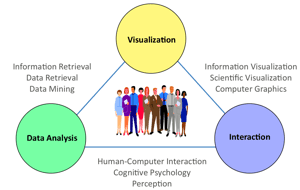
Visual analytics is the analytical reasoning of data via interactive visual interfaces which in this case is Tableau. Visual analytics helps in understanding the data better, finding outliers in the dataset, discovering insights, etc.

You can identify new opportunities for your business if you are visualizing your data via a good platform like Tableau. The benefits of using Tableau for visual analytics are as follows:

  • Tableau has excellent visualization capabilities and it helps in converting unstructured data into absolute logical results that are interactive. It is far better and powerful than its equivalent tools available in the market.Data Visualization
    The easy-to-use interface of Tableau provides data analysts to work faster and better. The drag-and-drop way of arranging unstructured data into diagrams and graphs makes it easier for beginners.Tableau is powerful and provides high performance of big data sets too. Beginners can easily complete Tableau training in less time and can get fluent in using it.
  • You can create a unified dashboard on Tableau where you can connect to multiple data sources. You can connect your dashboard with Hadoop, SAP, DB, etc., and can visualize data better.
  • There are a lot of Tableau users throughout the globe and one can find a helpful Tableau community on online forums. Tableau also provides a mobile application through which you can keep your visualized data at your fingertips.

How Tableau Accelerates Decision Making?

Tableau helps in visualizing and analyzing data. The structured data can be used for risk identification & management, increasing ROI, business forecasting, etc. You are well informed about your firm’s situation via data analytics and get to know about the upcoming market trends. You access the risk involved in any new opportunity via data analysis and then obtain it if is going to boost your business.

Tableau training in data visualization

Data analysis introduces clarity in your organization with a data-driven approach to obtain business objectives. Decision-making is hugely impacted via the use of data visualization tools and you will stay ahead of other firms in the market.

One can easily create and share analytics reports to your employees via Tableau, giving a sense of clarity. You can also use customer data to provide better services to them in the future. One can complete Tableau training online to understand how to use it.

Conclusion

Tableau is a powerful data visualization tool that can boost your business with better market predictions & risk assessment. Recent innovations in data analysis due to AI & machine learning have taken data analysis to a next level. You can learn more about data analysis via analytics courses available online. Start using Tableau for your business now!

Importance of R Programming As a Tool in the Machine Learning Spaces

With the announcement that, Data Science is one of the sexiest careers of the 21st century and the subsequent success of e-commerce giants with the help of data analytics, the world has seen a rise in the demand for data scientists. These professionals who are also known as Data Analysts are responsible for extracting this data, mining it, analysing it and drawing insights so as to add value to the firms.

A lot of companies across different fields have been hiring these professionals due to their specific skill set and the ability to turn numbers into growth and success. These professionals usually work with one or many data analytics tools like, SAS Programming, R Programming, Hadoop and Python and so on. Of these, R Programming is one tool, which has recently seen a lot of popularity and increased number of users, due to the fact that it is open sourced and easily accessible.

All of these data analytics tools are used by the professionals, depending upon what kind of job they want to accomplish.
Data AnalyticsR Programming is most popular choice, when it comes to thoroughly understanding data, by using various graphs and statistical methods. This tool becomes especially important when it comes to machine learning spaces, mainly due to its several packages and advanced implementations, useful for the top machine learning algorithms, which every data scientist is familiar with. All of these packages help in different kind of functions and are highly sought after, because they can be downloaded free of cost. Being an open sourced platform, R Programming has a huge community of contributors, the world over, who regularly add technical updates, which can easily be added to your projects.
These packages that are a part of R Programming can perform various specific functions like, take care of the missing values, allow you to partition your data, classify and combine, and find out the hidden layers in your data and so on. This vastness and variety in packages, makes for R’s strongest suit. Furthermore it is able to offer rich functionality, for the developers so as to enable them to build their own tools and analysing methods. Being open sourced, has given R a lot of leverage over the other data analytics tools, as the users can very well extend it without the need for any permission. What increases R Programming’s importance in the space of machine learning, is the fact that any new research in the field of data science, has a compatible package of R with it.
CIRP- Certification in R ProgrammingR Programming since its inception in around the late 90’s, has only seen major growth; and now, it is being assimilated into various commercial fields such as Oracle, IBM, MATLABS and others. There is a long list of companies in the data analytics industry, which have already declared their adoption of the platform. Adding to its popularity, it has been declared as the most popular platform for any successful practicing Data Scientist. As its popularity increases, there are a lot of institutes offering certification courses in this data analytics tool. Imarticus Learning is a leading education institute, offering industry-endorsed courses in R Programming, in both classroom and online format.


How Do You Become A Machine Learning expert?

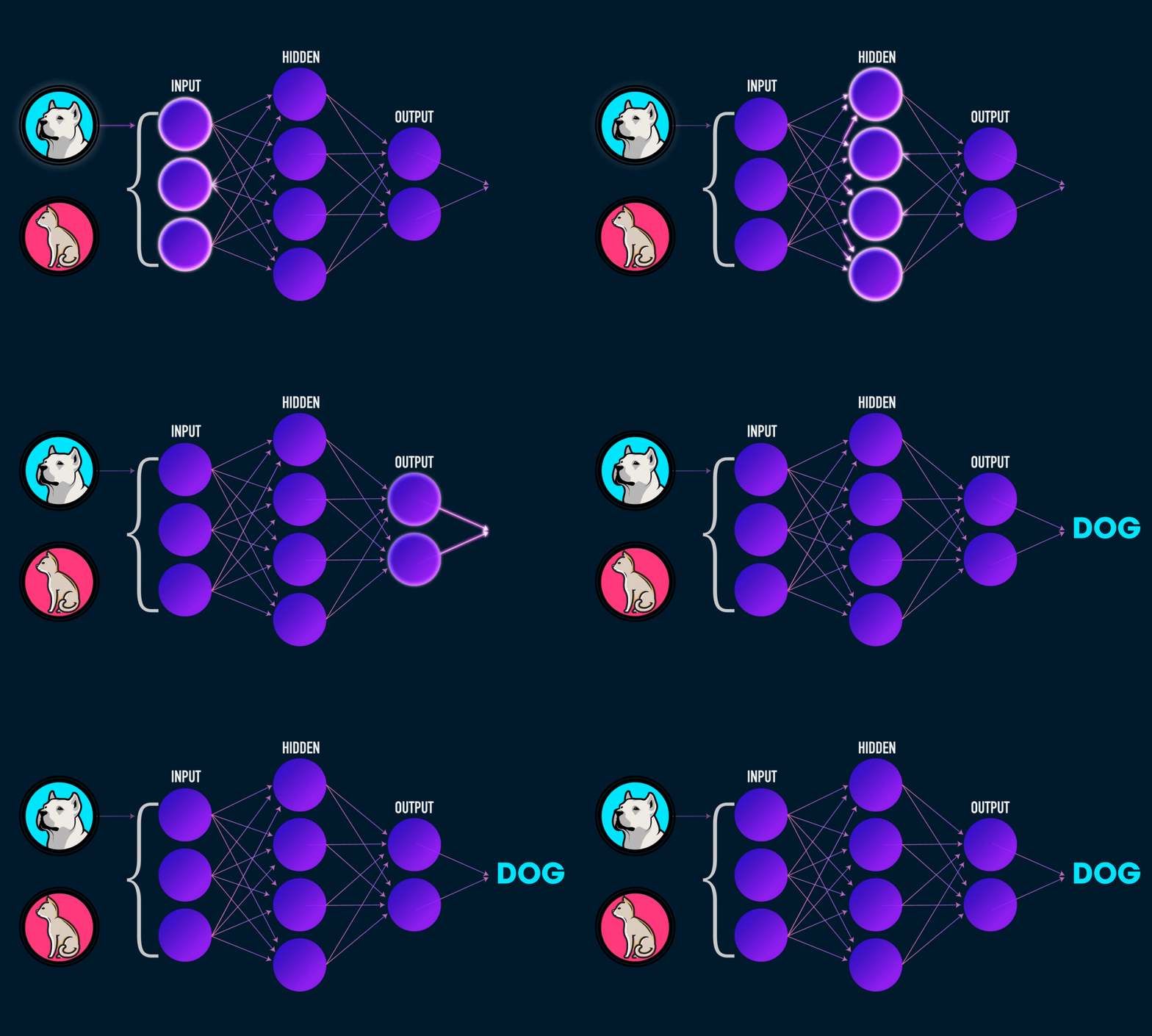
Machine learning is a powerful tool used to transform information into knowledge. Over the past few decades, the world has witnessed a surge in the data which is useless unless it is analyzed and used effectively. Machine Learning makes this easier. By training machines to analyze the data sets and their patterns and behaviors, data science helps create an environment super adaptable for the organizations that need help with data every single day.

There are several methods to master Machine Learning and Machine Learning Certification is one of them. Imarticus Learning offers Machine Learning and Deep Learning Prodegree. 

This course helps the learners in the following ways:

Learners Can Gain Job-Relevant Skills

Along with building skills in Machine Learning, Python, deep learning, and IBM Watson through 16 industry and in-class projects, candidates get an intense Capstone project.

Smooth Career Transition

Imarticus has witnessed more than 1400 successful career transitions among its learners. This was possible due to the career support module which comes within the program, enabling a smooth transition into ML and AI fields.

Receive Industry Certification

The machine learning certification awarded by Imarticus is endorsed by IBM, a global leader in providing solutions that are technology-driven.

Take Advantage of Online Physical Classrooms

The classes are Live. They come with facilitated instruction for best learning outcomes. The learners can learn while interacting with the instructors, while gaining a full-scale knowledge online.

The Emergence of Big Data In The Field of Agriculture

The recent couple of years have been witness to this huge amount of buzz created all over the IT world by the concept of ‘big data’, with it more often than not being related to in the print and electronic media. One of the most phenomenal discoveries was that all the data that has been rapidly generated was stored in the entirety of the past decade. For instance, it was in the year 2000 when 25% of the world’s information was being stored in the virtual format. Cut to the current year, more than 98% of information is stored in the digital format in our daily lives. Believe it or not, today, the entire world is generated more than 30,000 gigabytes of data that is almost being generated every second of every day. When you sit to carefully think about this, the change seems to be of almost astronomical proportions. This as it would, in the progression of all things IT, has led to the creation of huge data sets and in a way there has also been the whole issue, about how and where and especially in what manner would the data be stored.
More important than that is the question of what. The answer to what of this data, more specifically the answer to what exactly can be done about this data, lies within two words: Data Scientist. These are professionals who are basically given the responsibility of extracting value out of these huge data sets, thus in a way, assisting in making valuable decisions, for the growth and development of the companies. Today there is no field left that, has not been penetrated by the. The various fields that have been developed, in terms of their efficiency and their functioning, mostly due to the presence of big data are, health, IT, finance, oil and gas and many more.

Follow us on Linkedin for Company Insights

The newest addition to this ever increasing list, is the field of agriculture. The National Research Council, is of the opinion that something known as, precision agriculture can come into existence due to the introduction of big data. It basically refers to a management strategy, which will be making use of information technologies to collect data, from multiple sources in order to facilitate various quality decisions, when it comes to anything and everything related to crop production. While so far the system of precision agriculture and big data are a little different from each other, in terms of the technical aspects, there are chances of inculcating these two concepts in the near future.
Precision agriculture is still involved, with graphical representations of the field maps, wherein the main purpose is to just identify the areas which would be less nutrient deficient in order to sow seeds. As this concept already has a lot of generation of data in place, it surely will help with the process of data analytics, thus these two fields being complementary. This promises a lot of development in terms of job opportunities for all those great Data Scientists out there.
If you are planning to earn career in data science, then Imarticus Learning offer various business and data analytics courses in both online and classroom mode.

What is the best way to learn Artificial Intelligence for a beginner?

What is the best way to learn Artificial Intelligence for a beginner?

Over the past few years, the field of Artificial intelligence has displayed tremendous amounts of growth. AI is now driving businesses of billions of dollars across various industries and enabling enormous career opportunities.

If you have plans to learn artificial intelligence, it is the perfect time to start acting on it. This article discusses the best way to master AI for beginners.

1. Begin with the Basics

The first thing you have to do is unlearn everything about the AI. Clear all the preconceived notions and make your mind open and fresh for learning. Now you can actually start learning.

Start with the basics. Learn about the various technologies involved and their objectives. It will help you get oriented at the beginner level. You can refer books or blogs to get through this step.

2. The podcasts and Videos
The next step is listening to podcasts and videos. It will give you more comprehension about the industry, application of different technologies, the effect of them in our real life, various techniques in them and many more.

Often these videos and podcasts come with jargons and concepts involved. So, it is important to have a fair amount of familiarity with the basics.

3. Guided Courses
A dedicated artificial intelligence course is one of the most important practical ways of mastering AI. A guided course will take you fully into the world of Artificial Intelligence. You will get global exposure to the skills required. Usually, such a course will brush up on the basics you have already taken care of and then help you develop the right technical skills required to work with AI.

If you are planning to join the industry, such a course is inevitable. A guided course will also put you in touch with experts of this technology and excellent study materials. So, it is important to attend a guided course for a complete learning experience. Along with that, you will get a certification proving your excellence in AI at the end of these courses. It will help you during the search for a job.

4. Projects
The best way to learn anything is to practice it properly. So, it is essential to indulge in lots of projects and gain practical exposure. You will be doing capstone projects during your course. From those projects to the projects you are personally interested in, you have to constantly work and build your portfolio. By doing this you will be able to master this skill in a very short time.

For a beginner with very low prior experience with AI, these are the little steps that make sense. Also, through this, you will be able to find some time to process the transition between each step and prepare for the next one. Within just a year, this road map will equip you with AI capabilities that are good enough to be a part of the industry. So, start your process as soon as possible and take part in the AI revolution going all around the world.

Functions in Java Programming!

Regardless of whether you an expert software engineer or simply an amateur it is in every case better to break your program into squares, or capacities. It will help you later, above all else in investigating, furthermore, it is simply better to have an exquisite, meaningful and coordinated code.

A capacity is a piece of a program that has its own name. This name can be utilized in the program as an order (this order is known as a capacity call). At the point when a capacity is called, the orders of which it comprises are executed. A capacity call can return a worth (like an activity) and accordingly can be utilized in an articulation alongside tasks.

Capacities are utilized in programming to diminish its intricacy:

Rather than composing a nonstop succession of orders in which you before long stop to situate yourself, the program is isolated into subroutines, every one of which tackles a little finished issue, and afterward an enormous program is made out of these subroutines (this strategy is called disintegration).

The aggregate sum of code diminishes in light of the fact that, when in doubt, one capacity is utilized in the program a few times.

Composed once and extensively tried capacity, can be remembered for the library of capacities and utilized in different projects (it doesn’t have to recollect how this capacity was customized, it is sufficient to know what it does).

There are numerous valuable libraries of capacities that can be utilized by all software engineers, and a few libraries come packaged with a programming language (for instance, each and every individual who modified in Pascal utilized the library work writeln () to show on the screen, and in Java for these reasons the System.out.println () strategy is accessible, which is remembered for one of the standard libraries).

In object-arranged programing, for example, Java a capacity term is frequently applied to the strategy, which is bound to the class and characterizes its conduct. All in all, a capacity is a piece of code which plays out the activity and at times returns a worth.

A technique is a capacity that is important for a class that can perform procedure on information of this class. In the Java language, the whole program comprises just of classes and capacities can be portrayed uniquely inside them. That is the reason all capacities in the Java language are strategies. Int the accompanying sections we will call elements of Java as techniques.

Capacity/strategy sentence structure:

We need to discover max(the greatest) number between two int and return the worth of the greatest int. So we can compose a capacity to improve on our work for that:

1.public static int minFunction(int n1, int n2) {

functionBody

}

2.public static int minFunction(int n1, int n2) {

int max;

in the event that (n2 > n1)

max = n2;

else

max = n1;

bring max back;

}

Compartments of capacities:

public static − modifier, it characterizes the entrance sort of the technique and it is discretionary to utilize.

int − return type, work/technique may return esteem as was referenced previously, for instance, int

minFunction − name of the capacity, The technique/work signature comprises of the capacity/strategy name and the boundary list

n1, n2 − formal boundaries, the sort, request, and various boundaries of a strategy/work. These are discretionary, technique/capacity may contain zero boundaries.

int n1, int n2 − rundown of boundaries

functionBody-The strategy/work body characterizes what the technique/work does with the assertions.

Technique definition comprises of a strategy header and a technique body. In Java, all capacity definitions should be inside classes.

Composing and Defining capacity:

Characterize compose it, including programming directions and putting the guidelines. Contention type and name ought to be written in a first line of the capacity.

public twofold calculateAnswer(double wingSpan, int numberOfEngines,

twofold length, twofold grossTons) {

/do the estimation here

}

Albeit a technique name can be any legitimate identifier, code shows limit strategy names. By show, strategy names ought to be an action word in lowercase or a multi-word name that starts with an action word in lowercase, trailed by modifiers, things, and so on In multi-word names, the primary letter of every one of the second and following words ought to be promoted. Here are a few models:

run

runFast

getBackground

getFinalData

compareTo

setX

isEmpty

Normally, a technique includes an interesting name inside its group. Notwithstanding, a strategy may have similar name as different strategies because of technique over-burdening.

Calling capacity:

Calling capacity from another capacity

To call a strategy/work from another technique for a similar class, you should indicate its name, and afterward in sections the rundown of real boundaries (if the strategy doesn’t need boundaries, sections are as yet set). The technique call is utilized as an activity, which can be joined with different tasks (for this situation, the whole) in the articulation. When summoned (called), every one of the explanations that are a piece of the technique would be executed.

public class Student {

private String name;

public String getName() {

bring name back;

}

public void setName(String name) {

this.name = name;

}

}

Calling capacity from another class

To call a strategy for another class, you should have an object of this class *. The strategy name is shown by a period after the item name. For instance, the class (string) has a length () strategy that profits the length of the string. This strategy must be gotten to through an object of the String class (which is very coherent, the technique has required the string whose length we need to know).

Understudy s = new Student(); s.setName(“Your_Name”); String name = s.getName();

#ImarticusBlogLikeAPro – Write about your favourite Tech topic and take home rewards worth INR 10,000

Love Data Science, Machine Learning, or Data Engineering? Here is your chance to express your thoughts on the field of technology of your choice. While professionals can discuss the various tools, techniques, and best practices involved with their daily work, business leaders can speak of industry experience. Candidates are free to write about the current state of the discipline as well as the future potential of the field.

One can even choose to write about the effects of certain technology and the incredible benefits society and businesses enjoy due to these fields.

data science and analytics blogging contestThe Imarticus Blogger of the Year encourages budding bloggers or younger candidates to participate and write about the topic of their choice as well. You can participate in this Data Analytics and Data Science blogging contest by applying here.

What is Imarticus Blogger of the Year?

The main focus behind this contest is for providing enthusiasts with the opportunity to express what they wish to share about the field of their interest. Blogs can also speak about research, new technology, and interesting case studies of all the relevant fields.

Fundamentally, Imarticus has come up with this contest to provide some exposure to bloggers and professionals who are involved with Data Science and other disciplines that work with data. Candidates are also authorized to discuss core concepts such as Deep Learning or talk about diverse fields such as Data Analytics.

The Submission and Selection Process

The submission process followed by the selection process for this Data Science blogging contest can be divided into 6 simple stages. Let’s understand what exactly you must do in order to successfully submit your blog and how exactly the winners of the contest are decided.

Stage 1: First, participants are required to register themselves and opt-in for the contest. Then, you must write a high-quality blog related to the authorized topics or fields and then send the piece over to blog@imarticus.com before the 31st of August. Submissions close on the 31st of August, 2021 at 11:59 PM IST.

Stage 2: During this stage, the editorial panel will be evaluating the blog based on its creativity, originality, and depth of the subject matter.

Stage 3: Here, every blog that has met the minimum requirements and passed Imarticus’s quality standards shall be uploaded on the platform (blog.imarticus.org) by the 11th of September this year. The writers will be credited for their blogs and the links for their respective blogs will be shared with them by Imarticus.

Stage 4: In this stage, writers are recommended to share their blogs on their personal social media accounts with the mandatory hashtags. Writers are also advised to share their pieces with friends and family in order to gain more traction.

Stage 5: At this point, all the blogs will be evaluated on the basis of audience engagement and the score provided by the editorial panel. 25 of the best blogs shall be shortlisted to be promoted by Imarticus on all social media platforms till the 30th of October, 2021.

Stage 6: This is the final stage where the blog with the highest amount of cumulative shall be selected as the winner of the contest.

Conclusion

The winner is crowned the Imarticus Blogger of the Year and handed down a gift voucher of 10,000 rupees. Imarticus Learning is also offering gift vouchers of up to 7500 rupees for the other top 10 bloggers. Not just that, participants who rank within the top 20 get the opportunity to be featured in Imarticus’s hall of fame. So, why wait? Register yourself and start blogging from today.

Business Process Analyst-Career Road Map

The business analytics industry is booming. The business intelligence sector has grown by $2.5 billion since 2012, and it’s not stopping anytime soon. Thus, business process analysts are becoming increasingly important to businesses. They help companies improve their business processes by evaluating workflow, identifying business rules that can be optimized, improving data quality, and much more.

If you are interested in business analytics, business process analysis, or business intelligence and want to work with cutting-edge technologies, then this blog post is for you. This blog post will give insights on how to build a successful career as a business process analyst by sharing some tips from professionals who have done it before.

What Does a Business Analyst Do?

A business analyst is responsible for designing business processes that will maximize performance, minimizing risk and costs. This role can be challenging as it often requires a substantial background in functional areas such as finance, marketing, IT, or operations management. Business analysts are typically required to have an understanding of the business domain they are working with (e.g., healthcare), which includes knowledge about how changes could affect the organization’s objectives and goals.

Skills required for a Business Analyst’s Job Position

The skills required for this type of work include business process analysis, business problem-solving skills, and data management. Business analysts must develop a high-level understanding of business functions and how they interact with each other to understand the underlying causes of problems. They may also need some additional training depending on their area of work, such as accounting or computer programming.

Successful business analysts are self-motivated and possess analytical thinking abilities that can analyze situations from many perspectives rather than being limited by one perspective. These individuals have an ability to solve complex issues, which is essential when dealing with various departments across organizations interacting at different levels within themselves.

The role requires strong interpersonal skills, business knowledge, and the ability to communicate clearly. Business analysts must also have a high level of commitment to their work as they create change in an organization by creating new processes based on data that was collected.

Factors to keep in mind while looking for a Business Analyst Course

– The business analyst course curriculum should focus on the latest business intelligence and analytics technologies.

– Understanding business continuity planning, risk management, and organizational governance are some other important aspects of business analysis.

Understanding data mining techniques is also indispensable for any business analyst to stay relevant in today’s fast-changing IT landscape.

– Specializations in business process design, business intelligence, and data warehousing are some of the areas where a business analyst can specialize.

Become a Business Process Analyst with Imarticus Learning Institute

Imarticus Learning offers an MBA with a specialization in Business Analytics and Data Science. With this degree, you can explore the world of data science through courses on artificial intelligence, machine learning, deep learning, and big data processing.

Alongside your studies at Imarticus Learning, you will also gain exposure to other industries that will help you gain practical experience as well as more insight into what they want their future career path to be.

For more insight, contact us through the Live Chat Support system or visit any of our training centers in Mumbai, Thane, Pune, Bengaluru, Chennai, Hyderabad, Delhi, Gurgaon, and Ahmedabad.

Having Technical Knowledge Is Not Enough For Data Scientists

Data Science today has become the most advanced field industry in comparison to all those industries that have existed in the market sphere. One thing that is very evident about this field is that it is ever evolving in nature. This is one of the reasons why a lot of data science experts advice professionals to forever remain on their toes when it comes to the various developments in this landscape.

Mark Twain’s famous line, “Don’t let school interfere with your education” work the very best for all the professionals in this sphere.

As the field of Data Science is fairly new, there are a number of tweaking’s, replacements, additions and newer solutions being introduced here almost on a daily basis also. This is the reason why it makes it so imperative for Data Scientists to be aware of all the newer trends. After getting certified in any one data analytics tool, keeping in touch with the various new developments in terms of other tools and functions, becomes very important for any Data Scientist, who is looking to expand and improve their career. Data Scientists are time and again advised to learn and relearn certain ‘soft-skills’, which will help them stay on top of their game when it comes to the various requirements of the industry.

Data Science Course

While technical knowledge is of utmost importance, being able to develop certain professional traits and habits has great benefits Data Science professionals for these. It is said that learning never ends, it is a continuous process. Similarly for a data analyst, keeping up with all the market trends and trying their best to expand their skill set is a per-requisite. This is the very reason, why a number of professionals today reach out to us to help them gain knowledge of other data analytics tools like SAS Programming, R Programming, Hadoop, Python and more. It is always a better bet to add to your laurels than just resting on them. The most crucial parts of being a Data Scientist is not just to have great skills, but also be able to communicate their results very effectively. As this field has expanded from just being IT related to more fields throughout the market sphere, the same is expected out of a Data Scientist. A professional who has all the technical knowledge, but does not have any knowledge of the business perspective, would not be able to effectively deliver the results of the analytics work.

Business strategizing and development are two very important parts of data analytics and until a professional is not able to deliver on the technical as well as the business front, he becomes more of a liability than an asset to a firm. Thus reaching a balance between these two aspects will open up a candidate to huge benefits thus. Apart from working on your soft skills, working on your networking skills can also make a world of difference for all the data scientists out there. Attending a number of conferences and related events, will not only help you learn a trick or two but also will help you gauge current trends and give you a sterling CV.


Loved this blog? Read similar articles-
4 Most Exciting Data Based Start Ups In India Today!
What Are The Best Data Science Courses At Imarticus?

What Are The Application of Machine Learning in Medicine?

Medicine and healthcare are leading industries with altruistic goals. Smart applications of the Machine Learning are today playing a role in a variety of areas like billing, insurance claims, record-keeping, patient-care, staffing solutions and many more. Just over the last decade technology has changed much. So have the volumes of data and its complexities, the various smart devices being used, and the algorithms specific to medical care.

ML is the system of algorithms developed for specific tasks that use deep-learning and artificial intelligence to simulate the way in which the human brain works to execute and aid us in complex tasks. Hence Machine Learning Course is an evolving and very important field. The ability of the ML algorithms to accurately predict, self-learn and assist us with forecasts is truly amazing and way beyond what the human brain is capable of. The field of ML is lucrative too!

Let us look at some of the best applications of ML in the medical and allied fields.
1. Diagnosis on a global scale: ML algorithms and applications score in disease diagnosis, providing simple diagnosis and online treatment even in rural areas, identifying patterns in the disease progression that is hard to recognize, and creating a global repository of research to help better the healthcare segment. Some of these are cancer detection, treating underlying genetic conditions hard-to-diagnose like Parkinson’s, diabetes, etc, providing therapeutic aid, and predicting conditions like stress, depression, etc.

2. CAT scans and MRI aided Diagnosis: Deep Learning and ML have been responsible for the development of advanced imaging devices like the Computer-Aided-Tomography scans, Magnetic-Resonance-Imaging, and the non-invasive Doppler or ultrasound scans. These developments embody machine learning training, handling of large data volumes and the ability of AI and can easily be used to forecast accurately the development of tumours and aneurysms.

3. Manufacturing and discovery of new drugs: Research, discovery, and use of the latest drugs are very important today as we discover more diseases and strains that are traditional-drug-resistant. ML allows the learning in an unsupervised fashion and helps develop new drugs with optimum dosages which can even be personalized for cancer patients.

4. Modification behavior-therapy: Prevention being better than cure several startup firms have come out with gesture-control based therapy apps, symptomatic analysis, early cancer warning, and detection apps, sleep trackers and such behavior-sensing apps that can help even with predicting the susceptibility to genetic diseases. For ex: Angelina Jolie underwent mastectomy based on such a forecast of cancer.

5. App-based medical personalization: Currently medical predictions use biosensors, historical data, genetic information and symptoms to diagnose ailments which tend to have rather fixed treatment methods. The time is not far where ML can offer holistic personalized treatment options which can help faster recoveries by identifying the underlying cause, diets, optimum medicine dosages, and recovery paths in a moment. Even the very process of seeking doctor’s advice appears to be going online to reach out further into rural areas and the personalization of healthcare regimens.

6. Outbreak Prediction: ML, deep-learning and AI have succeeded in not only assisting in healthcare but can also accurately and through unsupervised learning predict and forecast epidemic outbreaks which can then be nipped in the bud.

7. Smart Record Keeping and insurance claims:
The better the maintenance of records the easier cashless hospitalization and treatment becomes. ML is taking very large strides with smart apps to enable smart health-records in real-time, better document classification and intelligent paperless claim settlements.

8. R and D and medical trials: ML has and bears high potential in these areas of medical care where innovation and data play a huge role.

9. Data Crowdsourcing: The smart apps powered through intelligent ML allows doctors globally to crowdsource their data resources making it easy to give a real-time diagnosis, treatment, and better healthcare facilities. Even operations and complex deliveries can now be conducted easily and safely.
10. Radiotherapy and medical imaging:
Radiology, laser treatments, pathology, gastroenterology, cosmetology and several disciplines of medicine are being innovatively modernized with smart algorithmic-based ML to make model-making of individual cases much easier to treat successfully.

In conclusion, ML is growing by the moment and now is the right time to get on board this transformation. If you want to learn Machine Learning and reap career benefits in the medical field then you need to have Machine Learning Training.

At Imarticus Learning, the mentored specialization in skill-oriented courses like ML is par excellence and comes with certification, skill-based training, personality development, and assured placements. Hurry!