How To Build A Credit Scoring Model With Machine Learning?

Credit bureaus and lending institutions have embraced big data and machine learning to develop credit score models on the basis of which the creditworthiness of a borrower is judged. This has many benefits for the business as they can better assess the risks of offering loans, gauge the repayments and plan accordingly. Businesses today take advantage of the huge volumes of data proliferating nearly every sector to create their own scoring models based on Big data and a long delicate and expert process of executing a machine learning course of algorithms to build their own models.

The trends:

The era of basing decisions solely on credit scores from bureaus are over. Today custom models work better and more accurately since they use data from a number of sources both internal and external to assess creditworthiness. Such data could include supplier information, account data, customer relationship or other market data. More the data the more accurate and efficient the scoring model becomes.

How to create the scoring model:

1. Goal setting:

Clear cut goal setting is important to achieve accurate results in scoring models. The goal needs to be in mine with the needs of business and its scoring model. For example, the goal could be the probability of late repayments of existing loans and dealing with the repercussions. Or, it could be using the data to decide on scoring the financial repayment plans of borrowers and their creditworthiness.

2. Data gathering:

This is a crucial requirement as all assessment is done on the basis of data. With enough data volumes and reliable data, a scoring model is made for the specific goals set. The test model so built can be used to supervise the model which will help in training the model under supervision from domain experts. Beyond this point, you will need to test the model with credible credit score website databases like the Boostcredit101.

3. Building the model:

With both internal data and comparative data in place, the experts can now build your scoring model. The Machine Learning Course procedure is complex and involves a large number of algorithms trained to interpret the data before the final test model is ready for deployment. It goes without saying that the goals of the business owners and the aim of the model builders need to be the same and both would need to contribute to the end goals and success of the scoring model being developed.

4. Validation:

The next phase is to validate the process and ensure the scoring model provides accurate results. Most applications lean on how to predict the late payments of the debtors. The scoring model will use the new data while scoring it against the test results to produce a score between 1 and 100. Higher scores mean fewer defaults and vice versa. These scores are also repeatedly done as changes in financial status, incomes and economic growth can all affect the score.

5. The implementation:

This final phase is where the permanency of the scoring model is tested by the actual implementation. A successful model will remain while the inefficient models get wiped out. Challenger models play the role of checking to see if the scoring model is functioning well or is the challenger is the better model.
The Big Data connection:
A shift from total reliance on credit-bureau data has seen lending banks, institutions, and companies that use credible data buy such data. Data is digital gold and large volumes of big data are needed to train AI on a machine learning course.The cleaning, parsing and making sense of such large volumes of multivariate data is a job for expert data scientists. This data is then used to create the scoring model be it a new or challenger model.
According to data scientists, it is these scoring models with the best ML algorithms that ML can accurately tap all unrelated factors and relationships in the data to provide a better scoring model. Though it is not without problems it is heartening that ML can help the machines self-learn with data and the more data one inputs the better are the results of the scoring model.

Conclusions:

The insights, big data, and ML have helped create scoring models for businesses, lenders, and organizations. While traditional credit bureau reports are also crucial, ML can go further with scoring models helping them add insights and provide newer business points of view. If you are interested in learning more about ML and credit risk scoring you could do a machine learning course at the Imarticus Learning Institute where futuristic technologies are taught and skilled on. Don’t wait too long. Start today!
For more details in brief and further career counseling, you can contact us through the Live Chat Support system or can even visit one of our training centers based in – Mumbai, Thane, Pune, Chennai, Bangalore, Hyderabad, Delhi, Gurgaon, and Ahmedabad.


Python Developer Salary And Certification Guide To Get You To The Top!

Python is one of the most popular and widely used programming languages across the globe. The use cases of Python have broadened from SEO and web development to AI, IoT, Fintech, machine learning, and data analytics. Today, with the support of a collection of software libraries, Python enjoys the reputation as an advanced programming language that can be used for general purposes.

Python training supports a variety of programming paradigms which makes it a user-friendly programming language that can be scaled for larger applications.

Python Certification coursePython sits at the fourth position in the TIOBE index, which tracks the popularity of computer programming languages. Diverse use cases and popularity make Python a favorite choice of many fields. This brings good compensation benefits as well.


The salary of Python programmers varies depending on the field they are working for.

Python Developer Salary

Given the diverse use cases of Python, companies are actively looking to hire Python talents. No wonder python developer tops the searches on the leading job portals. The job could vary from application developer to data scientist, web developer, or DevOps engineers.

The increasing demand for professionals is also reflecting in the compensation packages offered. The shortage of talents has pushed things in favor of the jobseekers. This is a good time to negotiate on the salary package. The average salary for different roles in India and the international job market are as follows:

Job Role Annual Salary
India International
Data Scientist ₹708,012 91,838 USD
DevOps Engineer ₹10,00,000 93,931 USD
Software Developer ₹10,00,000 118,950 USD
Senior Software Engineer ₹10,00,000 129,000 USD


Why You Should Learn Python Language

As discussed earlier, Python is becoming a popular programming language widely from web development, desktop apps, network servers, back-end APIs, etc. Its use case in artificial intelligence makes it an even more attractive career option today. Here are the top reasons to enroll in a Python programming certification course today.

  • Technology giants are on the lookout for Python professionals to help them develop several applications. Being the programming language used in many applications, Python skills are one of the most valued resources in these companies. The top names among the Python employers are Google, Facebook, Instagram, NASA, YouTube, Reddit, Quora, IBM, Mozilla, Dropbox, Yahoo, Uber. Getting trained in Python increases your chances to become a part of these big names.
  • There is a need gap in the job market. The need for Python professionals is increasing as it finds its application across many fields. However, there is a serious lack of talent. Python-trained professionals can get into futuristic fields as well – the likes of AI, robotics, big data analytics, and machine learning.
  • Having a certification increases your chances of getting hired. So, if you are interested in a Python Programming career, you should enroll in a Python programming certification course. Many reputed certifications train you with projects and case studies to help you deal with real-life problems.Python Certiication courses
  • Flexible syntax and a broad array of libraries make Python ideal for beginners looking to build their careers in this field. The “CodinGame 2020 Developer Survey Report” says that Python tops the preference of 10 K developers with 84 percent among them favoring it.

Python is growing very fast in terms of popularity. It is climbing up the list of popular programming languages, pushing its competitors down the list. It has successfully grabbed the second position in popular platforms like Github. It is just a matter of time for Python to secure the top position.

All these have increased the demand for Python-certified professionals. So, if you are aspiring to a Python programming career, there is no better time than this to start it.

Related Article:

https://imarticus.org/python-coding-tips-for-beginners/

What’s The Quickest Way To Learn Math For Machine Learning And Deep Learning?

In modern times we have everything from developments like smartphones, robots, driver-less cars, medical instruments like CAT scans and MRI machines, smart traffic lights, and a host of animated games. Even payments have gone digital and cashless! And all this has emerged over the last decade due to AI, ML, and data analytics.

The future holds great promise for development in these fields and to make a high-paid scope-filled career in any of these fields, mathematics is the key ingredient that you must learn if you want to learn machine learning. ML runs on algorithms and the algorithm is dependent on knowledge of mathematics and coding.

Why mathematics is so important in ML:

Some of the many reasons are :

  1. Selecting the apt algorithm with a mix of parameters including accuracy, model complexity, training time, number of features, number of parameters, and such.
  2. Selecting the validation of strategies and parameter-settings.
  3. Using the tradeoff of Bias-Variance in identifying under or overfitting.
  4. Estimating uncertainty and confidence intervals.

The math components required for ML:

ML algorithms require proficiency in the three topics of Linear Algebra, Probability Theory, and Multivariate Calculus.

Let us discuss the topics you need to learn machine learning under each of these heads.

A. Linear Algebra:

The use of Linear algebra notation in ML helps describe the structure of the ML algorithm and the parameters it depends on. Thus linear algebra is important in the interconnection of neural networks and their operations.

The topics that are important are : 

  • Vectors, Tensors, Scalars, Matrices,
  • Special Vectors and Matrices
  • Norms of Matrices
  • Eigenvalues and vectors

B. Multivariate Calculus:

ML learns from its experience with the data set and to supplement this we need calculus to power learning from examples, improving performance, and updating parameters of the different models.

The important topics here are : 

  • Integrals
  • Derivatives
  • Differential Operators
  • Gradients
  • Convex-Optimization

Probability Theory:

The assumptions about data use this theory to design the AI and its deep learning capabilities. The key probability distributions are crucial to algorithms.

Study these topics well.

  • Random Variables
  • Elements of Probability
  • Distributions
  • Special Random Variables
  • Variance and Expectation

Can you learn Math for ML quickly?

To learn machine learning it is not required to be an expert. Rather understand the concepts and applications of the math to ML. Doing things like math is time-consuming and laborious.

While there may be any number of resources online, Mathematics is best learned by solving problems and doing! You must undertake homework, assignments, and regular tests of your knowledge. One way of getting there quickly and easily is to do a learn machine learning course with a bootcamp for mathematics at Imarticus Learning

This will ensure the smooth transition of math and ML applications in a reputed institute for ML where they do conduct bootcamps. At the end of this course, you can build your algorithms and experiment with them in your projects. But, the main question that remains is why do a learn Machine Learning Course at Imarticus in the first place?

The Imarticus Learning course scores because: 

  • They have sufficient assignments, tests, hands-on practice, and bootcamps to help you revise and learn machine learning.
  • They use certified instructors and mentors drawn from the industry.
  • They integrate resume writing, personality development, mock interviews, and soft-skill development modules in the course.
  • They have convenient modes and timings to learn at your own pace for professionals and classroom mode for freshers and career aspirants.

Conclusion:

Mathematics is all about practice and more practice. However, it is crucial in today’s modern world where AI, ML, VR, AR, and CS rule. These sectors are where most career aspirants are seeking to make their careers, because of the ever-increasing demand for professionals and the fact that with an increase in data and the development of these core sectors, there are plentiful opportunities to land the well-paid jobs.

At the Imarticus, you can consider the Machine Learning course, you will find a variety of courses on offer for both the newbie and tech-geek wanting to go ahead in his/her career. Start today if you want to do a course in AI, ML, or Data Analytics. For more details in brief and further career counseling, you can also contact us through the Live Chat Support system or can even visit one of our training centers based in – Mumbai, Thane, Pune, Chennai, Hyderabad, Delhi, and Gurgaon.

What is the Difference Between a Business Analyst and Project Manager

Workspaces have evolved dynamically. This has led to the creation of different job roles and functions across industries. Different key roles have come into the picture in recent times. These roles have strategic importance in the functioning of organisations of all kinds. Also, in most cases, these new roles have now become pivotal points around which the stakeholders of a company revolve.

Project managers and business analysts are now seeing the light in different corporations. They handle some of the most important functions within and outside the organisation.

Let’s know more about their roles and responsibilities.

Who is a Business Analyst?

Business Analysts analyse and evaluate huge sets of data to come to different conclusions which can later be transformed into a business decision. A business analyst has good control over data and knows how to extract important information from a pile of Data. A Business Analyst works with the organisation and drives the changes the company goes through. These people are analytical and are good with numbers.

Role of a Business Analyst

Mentioned below are some of the roles of a Business Analyst:

  1.  Tries to understand the needs of different departments and stakeholders and serve them with what they require
  2. Uses various data modelling and handling techniques to crunch data and come with important data points
  3. Forecasts and manages risks which arise during the normal course of business.
  4. Recommend business solutions to the top management to improve the processes and outputs
  5. Formulation and implementation of strategic plans to drive growth and revenues of a company.

You can take up a business analyst course to train yourself and become a better business analyst.

Who is a Project Manager?

The job of a project manager is quite interesting. He is in charge of the different work projects which are taken up by any company. He leads an entire project and manages everything that is required to make a project successful. These activities include Planning, Strategizing, Execution, etc.

Project managers also have to become good leaders as they handle an entire team. He must also know about project management as it is an elaborate task. A good project manager should have the willingness to use innovative techniques while handling different projects.

Role of a project manager

A project manager performs the activities listed below:

  1. Guide his team throughout the different phases of project management
  2. Set up expectations and goals to be achieved by a particular project and work towards achieving those goals.
  3. Track the entire project lifecycle
  4. Develop a plan to manage the entire project
  5. Ensures the completion of a particular project within the given time frame

The difference between a Business Analyst and a Project Manager?

Though the two roles sound similar they have a huge difference when it comes to their role in the organisation. A business analyst course will help you understand how business analysts are different than project managers. A project manager takes care of a particular project.

He is responsible for running that project. He has to formulate a strategy and develop processes for the completion of the project. On the other hand, the Business Analysts analyzes different data sets to come to different conclusions. His job is to analyse different trends and draw out conclusions from these observations.

Both of these roles are very different. A project manager takes up a managerial role and manages all the aspects of the project whereas a business analyst has an analytical role where he deals with all kinds of data related to the company.

Guide To Using Advanced Analytics And AI In Business Applications!

AI-Possibility to Reality

The widespread advancement in the field of AI helped organizations to manage the employees and customers in a better way.

For example, the chatbots, meant to serve the purpose of handling the customer’s inquiries and complaints are a source of relief for the employees as well as customers who need not to wait for long for the response from a company. To understand the AI in businesses in detail we must familiarize ourselves with the basic terminology related to it.

Artificial Intelligence

AI is a concept which demonstrates the ability of a machine to think and execute the tasks in a smarter way as humans, using much complex logic in a single frame. Human intelligence forms the fundamental basis to facilitate the design of an AI. The different abilities of humans such as perceiving, reasoning, problem-solving, etc. use analytical skills. A machine when trained to use these skills can work with accuracy and no fatigue.

AI Augmentation

The way the human brain is trained using different stimuli, AI is also trained using historic data. To understand in detail, what happens to the historic data, we must understand different analytics from business perspective. Descriptive Analytics (What happened?) (maximum manual intervention), Diagnostic Analytics (Why did it happen?)(Significant manual intervention), Predictive Analytics (What could happen?)(Correcting the mistakes manually), Prescriptive Analytics (What should we do?), Cognitive Analytics (Cause something to happen)(Fully automated)

Moving beyond these analytics, advanced analytics helps to add knowledge and gives a progressive nature to the AI to make decisions in a holistic way.

Big Data

To train the AI to work in a specific field Big data plays very important role. Big Data is described by the 5 V model.

  1. Volume-describes the big size of the data
  2. Velocity-describes the speed at which the data is created, basically the mathematical ratio of quantity and duration of data creation.
  3. Variety-describes the various heads under which data is created
  4. Veracity-describes the accuracy of the data, in other words, it tells if the data is reliable or not.
  5. Value-Transferable nature of data in the useful form

Machine learning and predictive analytics

Technically Machine learning and predictive analytics share similar fundamental structures of complex algorithms with the same objectives of forecasting. The underlying difference between the two is the amount of data involved and human intervention.

Predictive analytics make use of different sets of algorithms to evaluate the viability of the results. It means, because of its probabilistic nature it helps in forecasting the problems along with the prediction of the possible solutions to the problems. One of the applications of Big Data lies in the Fin-tech industry, which helps the organizations to predict if the future bad debt. To get such predictions, it is very important to train the AI with a large amount of data.

On the other hand, in Machine learning, one cannot observe the evolving nature of the data and system adaptations with the new data. ML just focuses on data availability and forecast.

In predictive analytics, human intervention is required to train the AI, but this is not the case of ML.

Methods and techniques for getting the best out of given data

Advanced statistical and Mathematical techniques such as Bayesian theory, Probability distributions, Normal curves, etc. help to extract best out of a given set of data by defining the unique algorithms in coherence with the human expertise and experience. Such algorithms help in the automation of the quality and optimized decision making in business, which in turn results in more focus on profit-making.

What is the Difference between Business Analyst and Business System Analyst

There a lot of processes in any business. These processes/systems need to be analysed to produce maximum results. A Business Analyst focuses on the various business systems like work culture, team performance, etc. and will analyse the shortcomings.

A Business System Analyst focuses on the specific requirements of various business systems. It has a technical approach to work. The goal of both types of analysts is to create maximum result but they are different from each other. Let us see the key differences between a Business Analyst and a Business System Analyst.

Differences Between Business Analyst and a Business System Analyst

  • A Business Analyst works on the business. He analyses the working environment, working methodologies, and tries to interconnect all the processes to increase accuracy and performance. He finds out the lacking areas of a business where more input is to be required whereas a Business System Analyst is focused more on the specific requirements for any particular system.A Business System Analyst focuses on activities that drive the work processes in a business. A Business System Analyst works on a more granular level as compared to a Business Analyst.
  • A Business Analyst focuses on business problems and has mostly a non-technical approach. A Business Analyst analyses business processes through communication and brainstorming sessions.He tries to manage the business systems and keep them collective. A Business System Analyst provides his/her service when any application/software related processes are to be managed. He helps the company/firm in finding out the best services/technologies to be used to boost your processes/business.
  • Both, Business Analysts and Business System Analysts work in attracting stakeholders. They find stakeholders who are interested in company projects, services, vision and organize meetings with them. A Business Analyst works with a broader range of stakeholders as compared to a Business System Analyst.A Business Analyst finds people who are interested in the company or the company’s vision. A Business System Analyst attracts stakeholders who are interested in IT services. A Business System Analyst works closely with the technical community which includes developers, IT professionals, business architects, etc.
  • A Business Analyst is worried about the performance and morale of the employees. He uses business models that focus on working culture and strategy. A Business Analyst uses models like organizational structure, business strategy models, process maps, etc. whereas a Business System Analyst is concerned with the requirements that will fuel the processes individually. He focuses more on entity-relationship models.
  • A Business Analyst knows human resource management and can work across various domains to boost the business processes. He is aware of various business functions and strategies that will produce maximum ROI (Return on Investment) whereas a Business System Analyst is knowledgeable on a more concentrated level and has a technical approach. He is also aware of the latest technologies and trends.

Why Business System Analysts and Business Analysts are Important?

Both these professionals help in finding out the business processes which are not working to the full extent. They can find out the faulty areas and work closely to implement a successful business strategy.

They help in the creation of SDLC (Systems Development Life Cycle). Both of these professionals help companies/firms in adapting to new changes and to forecast. A lot of people are both Business Analysts and Business System Analysts due to their skills. One can find many Business Analyst courses available on the internet to learn from.

Conclusion
Both the job roles are very important for a company/firm and there are dedicated jobs for both these professionals. This article was all about the differences between a Business Analyst and a Business System Analyst.

What is Business System Analysis?

As the name suggests, Business System Analysis is the analysis of business systems. Different processes like team performance, the performance of business tools, human resource evaluation, etc. are analyzed by a business system analyst. A business system analyst finds ways to enhance the processes in a business.

A business system analyst works with both people and the resources available in the business. He or she interacts with the various team leaders within an organization and makes sure that every system is running properly. Problem detection is also done with the help of Business System Analysis and is managed.

The main focus of a business system analyst is to work on people, tools, systems, work environments, and optimise them. It helps in creating a better business strategy which will eventually help in growing of any particular business. Let us have some more insights into Business System Analysis.

Pros of Business System Analysis

  • The theoretical model created via Business System Analysis helps in creating a practical SDLC (Systems Development Life Cycle) model which is implemented to increase the effectiveness of business processes. SDLC includes planning, designing, development, maintenance, etc.
  • It helps in finding the shortcomings faced by the employees in terms of resources and tools. If the requirements for any particular job can be identified at the right time and employees are provided with the right guidance, they can produce better results.
  • It helps in finding tools, workers, initiatives which are taking more investment but are not producing expected results. Such processes, systems can be given a second thought form the administration. It will also help in cost optimization.
  • Business System Analysis helps in adapting to new changes. A good business system analyst can forecast and stay ahead of others in terms of working culture, technology, and resources.
  • A business analyst suggests companies/firms in finding out the best web application, software, and hardware tools which can increase speed and accuracy.
  • Risks in businesses are identified via Business System Analysis and are managed.
  • They also help in maintaining a good office culture. It helps in increasing employee satisfaction.
  • Business analysts help in meeting the market requirement. They monitor any particular process and make sure that it fulfils its objective. They try to maintain communication within employees which helps in increasing clarity.
  • They also help in proper documentation and analysis of required chores and processes and monitor them from time to time. There are many sub-processes in a business that is to be interconnected to achieve the company goal which can be done with the help of a business system analyst.

Skills Required to Be a Good Business System Analyst

  • Good communication skills are required to communicate and understand the problems of the employees.
  • A good business system analyst has good problem-solving skills. He/she can find the faulty areas within a business and can work on it.
  • Good business analysis skills are required where you can understand the processes and their architecture. A business system analyst must be able to work on various business analysis software. He/she should be able to create various analysis models like Process Flow Diagram, Data Mapping, Entity-Relationship model, etc.
  • A good business system analyst can connect to people and find out the loopholes. He/she is an excellent relationship manager and has good presentation skills. A business system analyst must be good in information systems, maths, computer science, etc. One can learn from Business Analysis courses available on the internet.

Conclusion
A company/business can generate revenue using their investments and technology but to maintain it for a longer time, trusted employees, tools are required.

A business system analyst helps any particular company in interconnecting the business processes and optimising it in such a way that it gives a maximum result. This article was all about Business System Analysis and its importance. I hope it helps!

What is the face recognition technology in AI and how is it helping secure businesses?

Artificial Intelligence is an ever-growing field, and it’s important to learn more about AI technologies. One of the most popular AI technologies we see today is facial recognition, also known as Face Recognition technology. In this blog post, we’ll discuss face recognition technology & how it’s helping secure businesses!

What is Face Recognition Technology?

Face recognition technology is one of the most cutting-edge AI technologies available today. It has many uses, from recognizing a person’s identity to authenticating their access to a building or room. The technology works by creating a unique template of an individual’s face after analyzing their facial features.

Face Recognition Technology in AI Benefits

There are many benefits to using Face recognition technologies, including:

– Automated Identity Verification: The ability to access secure areas is important for employees & customers. Still, it can also be time-consuming or just annoying, depending on how you do it. However, with this type of artificial intelligence software, companies can now allow faster access through automated identity verification technology! This means all someone needs to do is have their face scanned to enter freely without any problems.

– More effortless Authentication: Face recognition technology makes life easier for businesses and customers through automated authentication. All someone needs to do is access a building or room with this type of software installed to have their face scanned, allowing them free access without any problems.

 Secured Transactions:  You can also use this type of artificial intelligence software from your phone when online financial transactions. With the heightened security concerns, people are finding new ways every day to steal identities and money; these types of AI technologies help protect both businesses while allowing consumers peace of mind when conducting transactions online.

How to Face Recognition Technology is Helping Secure Businesses?

– Facial Recognition Door Access: One of the most popular types of software available today is facial recognition door access, where it’s used to identify people before allowing them into a building or room. This means faster authentication for employees, which reduces time spent outside entry points waiting in line while also providing increased security measures if someone tries to break in!

– Mobile App Authentication: Another application of artificial intelligence technologies, specifically facial recognition technologies, is through mobile apps like banking and shopping platforms. With these applications, companies use face recognition technologies to help secure transactions made on mobile devices by verifying the identity of people conducting financial transactions on their phones. This helps protect both parties while providing peace of mind when using these applications.

– Video Surveillance: Facial recognition technology with video surveillance can be used in many different ways, including identifying criminals or checking suspicious activity around your home! With this type of software installed, police forces can locate suspects much faster & arrest them quickly and prevent future crimes!

Make a Career in AIML with Imarticus Learning:

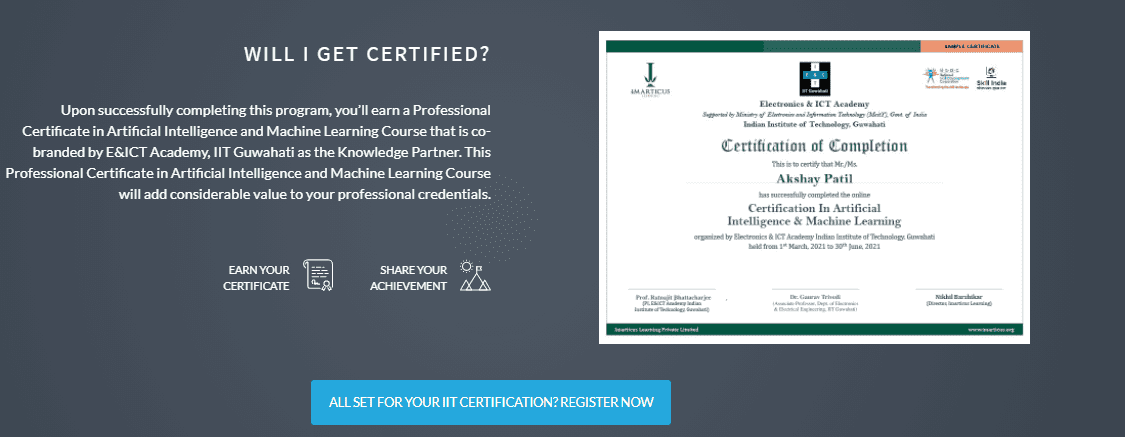
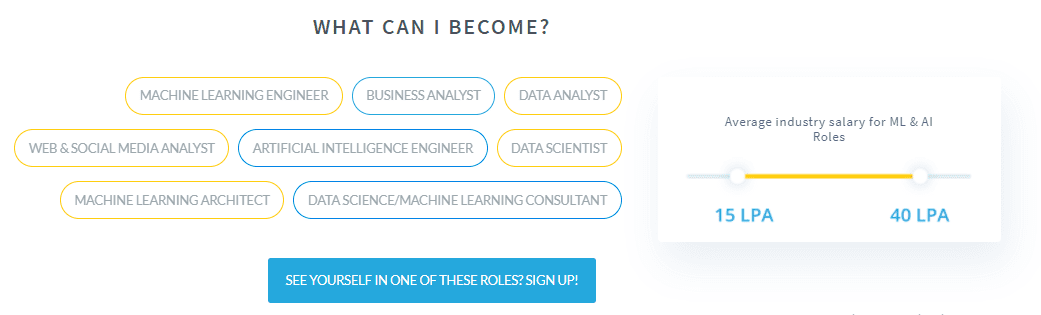
The certification in Artificial Intelligence and Machine Learning program from Imarticus Learning is designed with the E&ICT Academy, IIT Guwahati & industry leaders to provide the best learning outcome for students who wish to learn AI. This program prepares students for the Data Scientist, Data Analyst, Machine Learning Engineer, and AI Engineer roles.

Artificial intelligence course goes a long way towards helping unlock lucrative career opportunities in AIML.

Course USP’s:

  • Master Machine Learning and Artificial Intelligence skills through the most relevant curriculum designed by industry experts.
  • Boost your career with this globally recognized certification.
  • Imagine how you would feel when you have the skills to analyze.
  • This gives students the chance to engage in a world-class campus education experience.
  • Learn what New Age Artificial Intelligence & Machine Learning Engineers do by solving real-time problems.

For further details, contact us through the Live Chat Support system or visit our training centers in Mumbai, Thane, Pune, Chennai, Bengaluru, Hyderabad, Delhi, and Gurgaon.

Hands-on Linear Regression Using Sklearn!

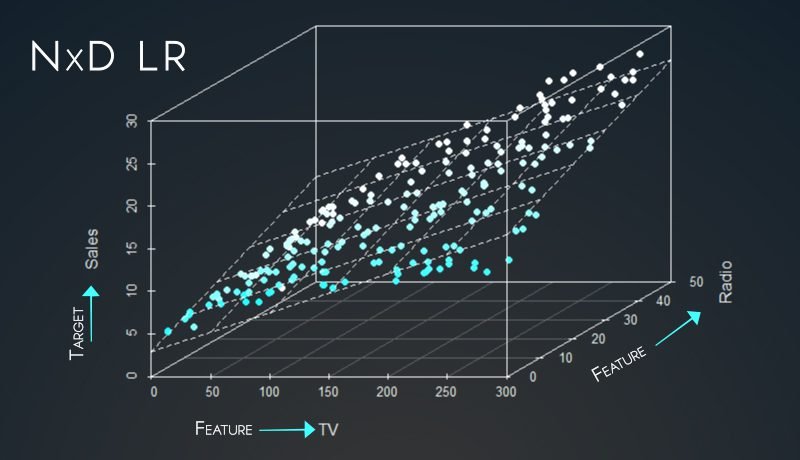
Linear regression in Machine Learning is a kind of analysis where there are both dependent and independent variables. Their relationship is depicted here by a linear line from the provided data. This technique is mainly used for predicting the results.

The data and the values from the linear regression are used to find the Mean Squared Error (MSE) to change the values of the variables so that they have the least value possible and get the most accurate results.

While there are several tools that are usually used for linear regression Sklearn is one of the popular tools.

What is Sklearn?

Sklearn is the short form for Scikit Learn which in Python Language, an open-source ML library to help unify the various tools of algorithms in machine learning.

Linear Regression trainingSklearn precisely works as a one-stop solution that helps with importing, preprocessing, plotting, and predicting data.

Its versatility, powerful nature, ample documentation, and active nature make it one of the popular toolkits in ML.

Linear Regression in machine learning

Linear regression comes at the last stage of the ML processing. Though there are several tools for the same, Sklearn is used more because of its versatility. When there is a log of consistent data it is easier to predict future patterns. The various steps towards the implementation of linear regression are,

  • Loading the data or object from its source
  • Training the model results in dividing the data into dependent and independent variables.
  • Later it is split the data into train and test sets.
  • It is the test set that will be used for the predictions.
  • Explore the results to find the suitability of the data for linear regression. A low accuracy data shows the non-compatibility of data to this.
  • Narrow down the data to a smaller portion and repeat the same steps above.
  • Now the data should be able to show the MSE which can be used for better predictions.

Importance of Linear regression 

Linear regression is important as it determines the accuracy of the prediction from the data given and also finds out the predictors that are significant for better results.

Linear Regression Training in Machine Learning

It is useful in determining the power between the dependent and independent variables such as sales and expenditure, or in the case of health care dose and its effects on the body, etc.

Analyzing the regression model explains how much the variables do change with respect to each other. Forecasting weather or its impact and changes is a fine example of this application. In the case of sales and marketing, it explains how much increase is possible in income with a specific amount of expenditure.

Finally, it is one of the main tools for predicting future trends and possibilities. It can be used for a future prediction of any time span. Linear regression using Sklearn provides a near-accurate prediction of the values.

In addition, there are different types of linear regression – simple or multiple linear regression. Each type is suitable for a different purpose or type of data available.

Conclusion

Its possibility is too vast that it requires proper Linear Regression Training to use the best data for getting the most accurate output. Once learned it is easier to predict data and values in the fields of sales, marketing, financial assessments, insights into consumer behavior, risks in finance or loans, etc.

As already mentioned, the accuracy of the prediction highly depends on how compatible the data is for the linear regression model. The Sklearn method is a far better option to determine the same and can provide the closest values to help with a better prediction model for the business.

How to choose the best machine learning & AI course?

The artificial intelligence and machine learning courses are becoming extremely popular, with many of the best universities offering degree programs in this field. It is not surprising that these courses are becoming more popular as they cover a wide range of topics.

For example, artificial intelligence includes computer science, engineering, and psychology, while machine learning covers artificial intelligence algorithms like neural networks. This blog post will help you understand what the artificial intelligence & ML course entails before taking one of these courses.

What are Machine Learning and Artificial Intelligence?

Machine learning and artificial intelligence are some of the most trending topics in this decade. Machine learning is a subset of artificial intelligence that focuses on studying artificial systems that can learn from data without being explicitly programmed. On the other hand,

Artificial Intelligence is a branch of computer science that deals with making computers do things that would typically require human intelligence, for example, playing chess or driving cars. So why should you take up AI & ML courses? Let us find out!

The AI & ML courses are essential for anyone who wants to be at par with today’s world technology. There are many companies hiring people who have these certifications in their resumes. The scope for students taking artificial intelligence or machine learning courses would be high because there has been an increase in demand for these skills set by top companies worldwide! It is not surprising that students with a degree in artificial intelligence or machine learning have a bright future ahead of them!

AI & ML Courses – What to Expect?

If you are planning to take up AI & Machine Learning Certifications, then there are various things that you should know before making your decision. Short-term certification programs are available for people who want to gain expertise at the workplace but do not have time for full-length online classes. Some considerations to be made when choosing a machine learning course:

best ai and ml courses from E&ICT academy, IIT GuwahatiPerformance: The quality of the course’s results is a fundamental factor, and one must prioritize algorithms that maximize performance. Depending on the issue, different metrics can help to analyze the results of the course. Selecting an excellent metric to evaluate course performance is a crucial task.
Explainability: In many scenarios, briefing the results of a course is paramount. Many algorithms work somewhat like black boxes, and the results can be hard to explain. The lack of explainability can be a breaker of situations. Understanding the level, of course, can help to interpret the result and let one choose the best!

Complexity: A challenging course or model may probably find more interesting patterns in data, but at the same time, it can be challenging to maintain. More complexity may help you better perform in specific fields. A complex setup may increase the impact on the entire learnings of the course.

Training time and cost: How long does it takes, and how much worth do you need to bear for the course? Some courses need to incorporate new knowledge in near real-time, and they can’t afford long training cycles. Balancing time, costs, and performance is crucial when designing a scalable solution.

Grow and Learn with Imarticus Learning:

Imarticus Learning offers 9-months extensive program that helps you prepare for the Data Scientist, Data Analyst, Machine Learning Engineer, & AI Engineer roles.

best artificial intelligence and machine leaning course from E&ICT academy, IIT GuwahatiThis E&ICT Academy, IIT Guwahati artificial intelligence course will bolster your foundational skills in Artificial Intelligence and goes a long way towards helping you unlock lucrative career opportunities in the coveted fields of Artificial Intelligence and Machine Learning.

best artificial intelligence and machine learning courses from E&ICT Academy, IIT GuwahatiWhat’s Unique About Our Artificial Intelligence & Machine Learning Program?

  • Cutting-Edge AIML Curriculum & Certification By E&ICT Academy, IIT Guwahati
  • The objective of this Certification Course is to prepare students for AI/ML job roles perfectly.
  • Students learn real-world ML & Deep Learning skills through multiple business projects.
  • Learn By Doing What AIML Engineers Do in Real-World Scenarios

For further details, contact us through the Live Chat Support system or visit our training centers in Mumbai, Thane, Pune, Chennai, Bengaluru, Hyderabad, Delhi, and Gurgaon.