Revolutionising Supply Chains: Exploring Advanced Strategies in Digital Supply Chain Management

In today’s rapidly evolving business landscape, traditional strategies in supply chain management are no longer sufficient to meet the demands of modern consumers and markets. The advent of digital technologies has ushered in a new era of supply chain management, characterised by increased efficiency, agility, and innovation. In this comprehensive guide, we delve into the realm of digital strategies in supply chain management and explore the advanced tactics and tools driving transformation in the field of operations and supply chain management.

Digital Supply Chain Management Course

The Advanced Certification Program in Digital Supply Chain Management in association with E&ICT Academy, IIT Guwahati, offers professionals a unique opportunity to gain in-depth knowledge and expertise in leveraging digital technologies to optimise supply chain operations. This supply chain management course is designed to equip participants with the skills and insights needed to navigate the complexities of today’s digital landscape, the program covers a wide range of topics, including digitization of the functions of supply chain management, data analytics, blockchain technology, Internet of Things (IoT), artificial intelligence (AI), and more.

What Is Supply Chain Digital Transformation? 

Supply chain digital transformation leverages the transformative power of digital solutions to become more agile and competitive in the marketplace as part of digital resilience. This includes accessing previously fragmented and siled real-time data from suppliers and consumers, making it accessible through innovative technologies.

This process enables businesses to make data-driven decisions while optimising all aspects of their operations and supply chain management.

Advanced analytics tools, artificial intelligence (AI), and robotic process automation (RPA) are examples of digital transformation strategies in supply chain management.

Benefits of Digital Supply Chain Transformation

Digital transformation strategies in supply chain management offer a myriad of benefits for organisations seeking to modernise their operations and stay competitive in today’s dynamic business environment. Here are some key advantages of embracing digital supply chain transformation:

  • Enhanced Efficiency and Productivity: By integrating digital technologies into supply chain processes, organisations can automate repetitive tasks, streamline workflows, and eliminate manual errors. This results in improved operational efficiency, reduced lead times, and increased productivity across the entire supply chain network.
  • Real-Time Visibility and Transparency: Digital supply chain solutions provide real-time visibility into inventory levels, shipments, and production processes. This enhanced visibility enables organisations to track the movement of goods, identify potential bottlenecks or disruptions, and make data-driven decisions to optimise performance.
  • Agile and Responsive Operations: Digital supply chain transformation enables organisations to respond quickly to changes in customer demand, market trends, and supply chain disruptions. By leveraging advanced analytics and predictive modelling, organisations can forecast demand more accurately, adjust production schedules in real-time, and optimise inventory levels to meet customer needs efficiently.
  • Improved Collaboration and Communication: Digital supply chain technologies facilitate seamless collaboration and communication between internal teams, external partners, and suppliers. Cloud-based platforms, collaboration tools, and shared data repositories enable stakeholders to exchange information, share insights, and collaborate on decision-making, fostering a culture of transparency and collaboration across the supply chain ecosystem.
  • Enhanced Customer Experience: Digital transformation strategies in supply chain management enables organisations to deliver superior customer experiences by providing faster, more reliable, and personalised services. By optimising supply chain processes, organisations can reduce order fulfilment times, minimise stockouts, and enhance order accuracy, leading to increased customer satisfaction and loyalty.
  • Cost Savings and Waste Reduction: By optimising strategies in supply chain management and reducing inefficiencies, digital supply chain transformation can help organisations achieve significant cost savings and waste reduction. By minimising excess inventory, reducing transportation costs, and optimising warehouse operations, organisations can improve their bottom line while minimising their environmental impact.

digital supply chain management course

Best Practices for Digital Supply Chain

Best practices for digitization in the functions of supply chain management are essential for organisations looking to optimise their operations, enhance efficiency, and stay competitive in today’s rapidly evolving business landscape. Here are some important best practices to consider when implementing digital strategies in supply chain management:

  • Embrace Data-Driven Decision-Making: Leverage advanced analytics, machine learning, and predictive modelling techniques to analyse large volumes of data and gain actionable insights into supply chain performance. By harnessing the power of data, organisations can make informed decisions, identify trends and patterns, and proactively address issues before they escalate.
  • Invest in Integrated Technologies: Implement integrated supply chain management systems that connect various functions, processes, and stakeholders across the supply chain network. By integrating technologies such as ERP (Enterprise Resource Planning), CRM (Customer Relationship Management), SCM (Supply Chain Management), and IoT (Internet of Things), organisations can achieve end-to-end visibility, collaboration, and synchronization of supply chain activities.
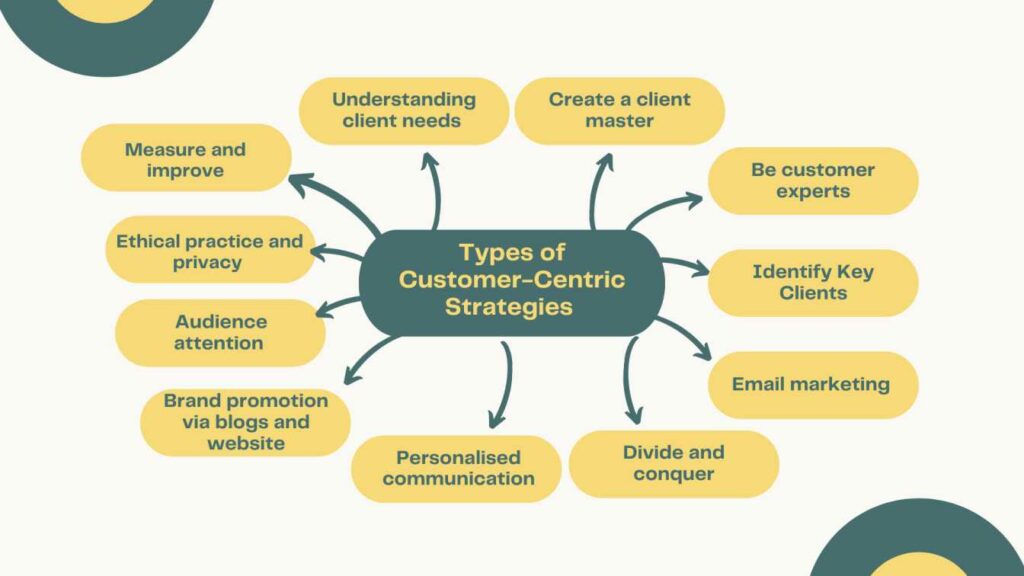
  • Focus on Customer-Centricity: Align strategies in supply chain management with customer needs and preferences to deliver superior customer experiences. Utilise customer data, feedback, and market insights to tailor products, services, and delivery options to meet customer expectations. By prioritising customer-centricity, organisations can build loyalty, drive repeat business, and gain a competitive edge in the marketplace.
  • Implement Agile and Flexible Processes: Adopt agile methodologies and flexible processes to respond quickly to changing market dynamics, customer demands, and supply chain disruptions. Embrace strategies in supply chain management such as lean manufacturing, just-in-time inventory management, and agile project management to minimise waste, optimise resources, and improve responsiveness.
  • Strengthen Supplier Relationships: Cultivate strong partnerships and collaborative relationships with suppliers, vendors, and third-party logistics providers. Establish clear communication channels, share information transparently, and work together to identify opportunities for process improvement, cost reduction, and innovation. By fostering trust and collaboration, organisations can build resilient supply chains capable of weathering disruptions and driving mutual success.
  • Ensure Cybersecurity and Data Protection: Safeguard sensitive supply chain data, intellectual property, and customer information from cyber threats and data breaches. Implement robust cybersecurity measures, encryption protocols, and access controls to protect digital assets and mitigate security risks. Educate employees, partners, and vendors about cybersecurity best practices and foster a culture of vigilance and compliance.
  • Continuously Monitor and Evaluate Performance: Regularly monitor Key Performance Indicators (KPIs), metrics, and benchmarks to assess supply chain performance, identify areas for improvement, and track progress towards strategic objectives. Utilise dashboards, scorecards, and analytics tools to visualise data, measure performance against targets, and drive continuous improvement initiatives.

Conclusion

Digital supply chain management represents a paradigm shift in the way organisations design, operate and optimise their strategies in supply chain management processes. By embracing digital supply chain management strategies and leveraging advanced technologies, organisations can unlock new opportunities for efficiency, innovation, and growth.

The Advanced Certification Program In Digital Supply Chain Management in association with E&ICT Academy, IIT Guwahati, offered by Imarticus Learning, is designed to equip professionals with the skills and insights needed to thrive in today’s digital economy. Take the next step towards revolutionising your strategies in supply chain management and future-proofing your career by enrolling in this supply chain management course today. Embark on a transformative journey towards mastering the art of digital supply chain management. Unlock new career opportunities and stay ahead of the curve in today’s rapidly evolving business landscape.

7 Benefits of Certificate Program in General Management

Welcome to a world where management is more than just a phrase and can propel you to the peak of success, inquisitive brains, and ambitious business whizzes! 

Expertly navigating a commercial empire, formulating tactics that intimidate rivals, and motivating teams to aim high. If this sight makes your heart race, hang onto your hats because we’re about to delve into the glittering world of the “Certificate Program in General Management” — a fast-tracked route to making your professional goals a reality.

The General Management program isn’t just a course; it’s your backstage ticket to the biggest songs of the business world, from deciphering the hidden language of economics to releasing your inner leadership maestro. Therefore, fasten your seatbelt as we travel through seven dazzling advantages that will make you want to seize the certificate and embark on an unmatched achievement adventure. 

Let’s explore the perks of General Management Certificate Training!

Key responsibilities of a General Manager

Okay, before we roll into the juicy stuff, let’s chat about what these general manager folks are all about. They’re like the grand captains of a business ship – steering it, setting targets, making things tick, managing cash and stuff, cheering on teams, fixing hiccups, and giving customers high-fives for good service. These GMs need a whole toolbox of skills: talking well, thinking on the fly, solving problems like champs, cooking fresh ideas, and more.

Ever wondered what it takes to wear the General Manager’s crown? Prepare to be dazzled by these modern-day magicians’ intricate dance of duties. From masterminding strategies to soothing workplace storms, here’s your VIP pass to the world of a General Manager’s key responsibilities – the magic behind the title!

  • Dream Weaver: General Managers don’t just dream; they orchestrate symphonies of success. They set goals that make the competition sweat and craft visions that light up boardrooms.
  • Strategy Sorcerer: If strategy were a potion, General Managers would be the master alchemists. They whip up plans that navigate the business through stormy seas and lead it toward treasure-filled horizons. 
  • Finance Whisperer: Numbers don’t lie, but they do tell stories. General Managers decode these tales, making budget decisions that keep the ship afloat and steer it toward profitable shores. 
  • Marketing Maestro: General Managers are the ultimate storytellers, using marketing spells to enchant customers and create a buzz that echoes across markets far and wide. 
  • Team Dynamo: Ever seen a well-oiled machine? That’s what General Managers do with their teams – they inspire, motivate, and ensure everyone’s in harmony, working towards the grand vision. 
  • Problem-Beater Extraordinaire: When problems arise, General Managers don’t flinch; they leap into action, armed with analytical swords and creative shields to conquer challenges and keep the show going. 
  • Customer Champion: General Managers know the key to treasure is customer satisfaction. They build bridges of trust, ensuring every customer leaves with a smile and keeps returning for more. 

So there you have it – the magical medley of roles that make General Managers the rockstars of the business realm. From weaving dreams to conquering challenges, they don’t just manage; they conjure success. 

What are the Benefits of a Certificate Program in General Management?

Here are some of the Benefits of General Management training program for Professionals:

  • Become a Biz Whiz:

 You’ll groove on all aspects of running biz – like the big strategy dance, reading financial crystal balls, nailing down marketing masterplans, acing the operations game, making people happy at work, and more. It’s like getting the whole playbook.

  • Master the Art of Bossing:

 Get ready to don the boss cape. You’ll learn to lead like a rock star, pass the task baton like a pro, pep-talk and inspire like a champion, deal with workplace showdowns, and even give and take feedback like a champ. 

  • The Brainy Side:

 Sharpen those smarts. Dive deep into biz puzzles – analyzing what’s up inside and outside, spotting golden chances and danger flags, cooking strategy plans, and tracking how they do. Tools and tricks for making top-notch decisions? You’ll know them all.

  • Fix-It Power:

 Problem-solving superhero, anyone? With this gig, you’ll learn how to whip up data sorcery, mix numbers and stories for insights, crack the riddles behind troubles, cook up solutions, measure if they worked, and even do tech magic for it all.

  • Innovation Highs:

Learn to whip up new concepts, brainstorm like a boss, test if your ideas got a mojo, scale up the winners, and make innovation your middle name. Plus, spread that creativity sparks in your work gang.

  • Rub Elbows Everywhere:

Get social, people! You’ll hang with other work ninjas from different corners of the job universe. Meet rockstar profs who know their stuff inside and out. Swap tricks, tales, problems, fixes, and even phone numbers. It’s like a pro party!

  • Boss Moves Incoming:

 Ready to rock the career stage? This certificate can jazz up your resume with skills. You’ll score cred from bosses, coworkers, customers, and rival companies. Up your paycheck game, zoom up that job ladder, and be a top job pick.

What’s Next After the Course Fiesta?

Now, what’s cooking on the career menu after this jam-packed course? As you stride confidently across the threshold of the General Management Online Certificate program, you are not just acquiring a certificate but unlocking a treasure trove of career possibilities that shimmer like gems in a vast desert of opportunities.

Imagine yourself as a modern-day alchemist equipped with the elixir of knowledge in General Management. As you step out into the professional arena, you become a conductor of change, orchestrating symphonies of efficiency and innovation. The corporate world becomes your canvas, and you wield the brush of strategy, painting the future with strokes of brilliance.

Your newfound prowess in General Management transforms you into a navigator, steering organizations through the turbulent waters of uncertainty. Like a captain of a majestic ship, you guide your team towards new horizons, harnessing the winds of collaboration and the currents of effective decision-making.

Picture yourself as an architect of success, constructing bridges between departments and forging alliances between people. With the Executive Certificate Program in General Management as your cornerstone, you build towering structures of organizational harmony supported by the pillars of leadership and vision. Your blueprint for success becomes a model admired by all who pass through its doors.

From the corridors of executive boardrooms to the bustling crossroads of project management, your certification opens previously hidden doors. You are not merely a candidate for a job; you are a coveted asset, a gemstone employers seek to embed in the crown of their company’s achievements.

As you journey further, your General Management certification propels you into the stratosphere of entrepreneurship. Armed with a deep understanding of market dynamics and a flair for innovation, you become a trailblazer, creating new avenues and setting trends others eagerly follow.

Think of yourself as a conductor leading an orchestra of growth, each member playing their role to create a harmonious melody of success. Your certification is the baton you wield, guiding the collective efforts towards a crescendo of achievement.

In the realm of possibilities after completing the General Management Certification program, you’re not just an applicant – you’re a contender, a protagonist in a narrative of achievement, and a visionary sculptor of your destiny. The corporate stage is yours to command, and the spotlight of success eagerly awaits your command. So, step forward with your certification as your sword and your dreams as your wings, for the world of General Management is yours to conquer.

Depending on your deal – experience, school smarts, what gets your heart racing – you could dive into roles like:

  • Captain of All Things (General Manager)
  • Big Boss of a Corner (Business Unit Manager)
  • Chief of a Department Party (Department Manager)
  • Project Pro (Project Manager)
  • Master of Making Things Go Smooth (Operations Manager)
  • Head Honcho of Selling (Marketing Manager)
  • Money Magician (Finance Manager)
  • HR Hero (Human Resource Manager)
  • Product Prodigy (Product Manager)
  • Program Prowler (Program Manager)
  • Consultant Extraordinaire (Consultant)
  • Idea Machine (Entrepreneur)

And guess what? It’s a career buffet – from making things to caring for people, tech wonders to nonprofit vibes, you pick your flavor!

So, Wrapping It Up

Summing it all in a neat package – the general management certificate gig is like a golden ticket for the boss-hungry. It’s like unlocking the biz kingdom – the A to Z on all things biz, unleashing your inner leader, smashing problems to bits, expanding your work gang, and firing up your career rockets. 

In partnership with IIMA, Imarticus Learning proudly provides the General Management Program (GMP), the program’s flagship that has been carefully developed and regionalized. This transformational experience aims to strengthen participants’ managerial knowledge so they can comfortably take on senior general management jobs as they advance. 

Imarticus Learning, in collaboration with IIMA, offers a curriculum that explores the timeless essence of management via immersive case studies and the guidance of seasoned faculty members, all while being guided by the values of top-notch education. These experts impart a degree of understanding to the unequaled learning process, establishing a foundation based on unshakeable information.

If you’re feeling the buzz, dive into the general management training scene. Snoop around for legit places that offer this gig. See what other folks say about it online – past students and their victory dances. 

Frequently Asked Questions (FAQs)

  1. What is a Certificate Program in General Management?

A Certificate Program in General Management is a professional training course that aims to equip individuals with in-depth knowledge and skills in various areas of management. It typically includes topics like leadership, strategic planning, finance, marketing, and operations.

  1. Who should consider enrolling in a General Management Certificate Program?

This program is suitable for current managers looking to improve their skills, professionals aspiring to advance to management positions, and entrepreneurs seeking to effectively manage their businesses.

  1. What are the key benefits of a Certificate Program in General Management?

Skill Enhancement: Improve your skills by learning in-depth information in crucial management domains, including strategic thinking, operational efficiency, and leadership.

Career Growth: Boost your credentials to raise your chances of getting hired for higher-paying jobs and promotions.

Opportunities for Networking: Make connections with colleagues, educators, and business leaders to grow your professional network.

Flexibility: A lot of programs allow you to combine your studies with your job and personal obligations by offering part-time, online, or hybrid choices.

Practical Application: Gain knowledge by applying management theories to real-world scenarios through interactive workshops, case studies, and projects.

  1. How does a Certificate Program in General Management differ from an MBA?

A certificate program is typically shorter and more focused on practical skills than an MBA, even though both offer excellent management education. It also commonly requires less time and money to complete. A more comprehensive, in-depth academic and theoretical approach to company management is usually provided by an MBA.

  1. Are there any prerequisites for enrolling in a Certificate Program in General Management?

While particular requirements can vary, most programs demand a bachelor’s degree along with some professional experience. In place of a degree, certain programs may instead accept applicants with a significant amount of job experience.

  1. What kind of job opportunities can I expect after completing the program?

Graduates can work in a variety of leadership jobs in a variety of industries, including project manager, operations manager, business analyst, and marketing manager. Your curriculum will give you adaptable abilities that you can use in a variety of business environments.

  1. How do I choose the right Certificate Program in General Management?

Take into account factors including the institution’s standing, the course material, the delivery method (online or in-person), the credentials of the instructors, networking possibilities, and the success of the alumni. Imarticus Learning’s General Management Program (GMP), in association with the prestigious IIM A, is designed to enhance the managerial capabilities of the participants who desire to take on general management responsibilities in the future. For seasoned managers ready to reignite their careers.

  1. How does this program help in developing leadership skills?

Courses on decision-making, team management, communication techniques, and leadership theories are commonly included in the curriculum. Effective leadership skills are also fostered by practical tasks and projects, which aid in applying these ideas in real-world situations.

How Do I Get Into Investment Banking?

How Do I Get Into Investment Banking?

There’s no doubt that figuring out how to get into investment banking is hard, primarily because it is the most prestigious job in the financial services industry. Traditionally, companies hire from elite universities and colleges for their entry-level positions, but things are changing as banks understand the need for diversity and different backgrounds. Here are some of the usual, and unusual paths, to an Investment Banking career and some tips on how to secure that lucrative job.

Entry Level Analyst Investment Banking Opportunity

This is when you join an Investment Bank after finishing your undergraduate degree. Most Bulge Bracket investment banks will take part in the placement rounds at various colleges. The problem with this approach is that unless you go to these colleges being part of these placement rounds is quite tough, especially since many boutique banks do not hire in large numbers.

If you are exploring how to get into investment banking, even if you are not part of a college where an investment bank comes to hire, nothing stops you from sending in your resume. And if that doesn’t work, you should consider joining a large financial institution in a different role, like corporate banking or even a brokerage firm. This work experience will set you up for a good MBA, which can then help you secure a job in the field.

Entry Level Associate Investment banking Opportunity

One of the most popular ways to consider how to get into investment banking is by joining them as an associate after a few years of experience and an MBA with a specialization in Finance. The great part about this route is that even if you didn’t go to an Ivy League college, your MBA will now stand you in good stead since most Investment Banks prefer this route over most. Most bulge bracket and boutique banks are part of placement rounds in well-recognized MBA schools globally and in India.

Lateral Roles Investment Banking Opportunity

While the bulk of Investment Banking roles get filled at Associate level through MBA placements, many roles are filled via lateral movements from different professions in various industries.

  • Lateral move from industry: Finance professionals working in the corporate field and contemplating how to get into investment banking can often join an investment bank a few years into their career by bringing their sector and domain expertise to the job. This works especially well in boutique investment banks that specialise in verticals like Pharma, Consumer goods, E-commerce, etc., and require extensive domain expertise to help secure clients.
  • Lateral move from other areas: Finance professionals from the Private Equity field sometimes move to Investment banking, even though the reverse is more common. However, there are instances where corporate bankers with excellent client relationships figure out how to get into investment banking and manage to get a foothold in the firm’s Investment Banking unit.

Corporate Investment Banking Unit

Many aspirants tend to forget about the route of how to get into investment banking, but if it is experience and role that’s important, this is perhaps as good as working in an Investment Bank for responsibilities and roles without having to do business development or secure clients. The caveat lies in the fact that it is a support function and perhaps won’t have the dynamism and scope of working on the sell side since you will be restricted by your firm’s corporate strategy and the sectors your company wants to focus on investing in. While salaries are good, they might not be on par with working in a pure-play Investment Bank.

As you can see there are many Investment Banking Opportunities, it is all a question of being prepared when the opportunity comes knocking at your door. As they say, luck is nothing but preparation meeting opportunity.

Related Article: How to Become an Investment Banker

What is the Difference Between SQL and MySQL? A Detailed Guide

Databases have always been crucial in the business sphere and have become an integral part of every sector. SQL and MySQL are two major topics when working on databases. Where SQL is the query language, MySQL is the RDBMS platform that uses the SQL language to maintain and modify large amounts of data.

Read on to get a deeper understanding of SQL vs MySQL. Also, learn how both these components work and why they are important in the field of data science, and management.

What is a Database?

A database can be defined as an assortment or compilation of data that is stored in a digital system such as a computer or a server. A database is used to store and keep track of large amounts of data which becomes easier to manage when stored within a database. Users can also update and retrieve information as and when required without any hindrance.

Generally, a database appears in the form of tables consisting of the desired number of rows and columns. Tables are the foundation of a database. One can easily read and retrieve data from tables. Each column consists of one feature or component, such as names and serial numbers and the corresponding rows consist of the values that the user adds.

So the question of the difference between SQL and MySQL can easily be answered if one knows the concept of database and its usage.

SQL vs MySQL – What is the Difference?

Here comes the most important portion of the topic, SQL vs MySQL. It consists of the answers to ‘What is the difference between SQL and MySQL’. Even though both of them are closely related to each other, they possess certain differences that are listed in the following table: 

BasisSQLMySQL
What is it?SQL is a well-organised query programming language that is used to manage relational database management systems.MySQL is an open-source RDBMS which uses SQL language for working with data.
stands forStructured Query Language. ’My’ is the name of the daughter of the co-founder, and SQL is an RDBMS that uses the SQL language.
Used forGenerally, SQL is used to write queries in order to operate and work with the database management systems.On the other hand, MySQL assists users in modifying, deleting, updating and storing structured data within the platform.
Supports and is compatible withSQL is less flexible and it does not support any connecting applications. It is not compatible with any connectors.The MySQL platform has an inbuilt application, called the MySQL Workbench. This tool helps users to promptly create, build, modify and design various databases.
Storage capacityThere is only one single storage engine when SQL is concerned.MySQL is a very flexible platform and it can support multiple storage engines. At the same time, it also comes with the facilities of plug-in storage.
format/structureSQL only supports one single standard format. It does not come with frequent application updates.MySQL platform, on the other hand, has variations and it comes with frequent updates. It helps the platform remain up to date with the latest technology inclusions.
manipulation of dataWhile working with SQL, it does not allow the processors to update or manipulate data at the time of execution. Hence, it is a secure language.MySQL is less secure and prone to security threats as it permits third-party processes to access and modify information at the time of execution. 
Difference Between SQL and MySQL

What is SQL?

While understanding the concept of SQL vs MySQL, one may often think what is SQL in DBMS? So the concept of SQL which is Structured Query Language can be defined as a standardised and widely recognised language that is often used to work on databases. Database management systems generally employ the use of SQL in order to maintain and manage the information contained in it. 

The standard SQL syntax provides the same type of syntax for performing different database functions, such as adding data, retrieving data, modifying data and so on. However, there can be negligible differences in syntax while working on different databases but the major part remains the same. 

Various SQL syntaxes allow users to perform different mathematical and management functions. It permits users to add or delete data, modify and update data, alter data and many other functions. 

What is an SQL Server?

To understand what SQL is and MySQL, it is important to understand the different components of SQL and SQL servers. SQL Server can be defined as the RDBMS, which expands to a Relational Database Management System developed by Microsoft. It works just like any other database and allows users to manage, store and retrieve information for a variety of services and applications.

The SQL server uses SQL language to work on and interact with the databases. SQL vs MySQL is a basic but important understanding for tech aspirants. SQL Server is also a programming language that performs tasks like filtering, sorting, creating tables, joining data, writing queries etc so that users can properly maintain track of data in an electronic form. 

Additionally, an important feature of SQL server is that it can provide high-end features such as more security, longevity of data, advanced availability and increased scalability. All kinds of businesses such as small-scale businesses and MNCs can make use of SQL servers for their web applications and data analysis processes.

What is MySQL?

MySQL is a type of relational database management system, and it is also one of the oldest RDBMS available. It was introduced in 1995 and has proven to be greatly helpful for the purpose of storing and managing data. MySQL AB developed this database and it was acquired by Sun Microsystems, which is present-day, Oracle Corporation. MySQL full form is ‘My’, which is the daughter of the co-founder and SQL is a relational database management system that uses Structured Query Language.

One question, what is MySQL used for? To understand this one should know that MySQL is an open-source application and was launched as an attempt to provide a platform for storing and managing well-organised data. MySQL is written in C and C++ programming languages and it is compatible with all available operating systems such as Linux, Unix, Windows etc. 

One can thoroughly understand SQL vs MySQL if one knows how the two components independently work. How is MySQL used and why it is important is a significant factor for database professionals. 

How Do You Use SQL With MySQL?

Many people wonder ‘Is SQL and MySQL same?’ Well, both of these are closely related, but it has some minor differences. SQL is commonly defined as a foundational language that is employed to manage and modify data in various databases, whereas MySQL is an open-source RDBMS that is compatible with the structured query language. 

In simple terms, SQL is the language and MySQL is the platform where the SQL language is used. It is one of the most common components of SQL vs MySQL. In order to use SQL in connection with MySQL, one needs to install the application of MySQL in their computer system along with a client application that is compatible with SQL.

If one wants to build communication with my SQL employing SQL, one needs to either employ a Graphical User Interface (GUI) tool or a command-line client that supports the working of SQL with MySQL. One can use common query statements to define the connection such as:

  • SELECT
  • INSERT
  • DELETE
  • UPDATE

Do All Databases Use SQL?

No, all databases do not use SQL. Databases have various kinds and most of them use SQL, but there are some other databases as well that use some other query, language and structures. Even though it is easier to manage relational databases by using SQL and it is one of the most convenient forms of database, there exist other forms as well.

Other databases like MongoDB and Cassandra, use a document-based approach and exhibit specialised query languages. These are also very promising databases, but these do not employ SQL. 

Another form of database, which is graphically extensive, such as Neo4j  uses organisational structures and some other particular programming styles, which again is not SQL.

Also Read: Top 50 SQL Interview Questions And Answers For 2024-25

What are SQL and MySQL Used For?

Almost every sector uses electronically controlled systems to store and manage large amounts of information. SQL is a command-based query language that is used to store, manage, update, modify, alter, and manipulate data in relational databases. Structured Query Language is expansively used in industries like IT, retail, healthcare, marketing, finance an so on.

SQL vs MySQL is a significant topic for understanding the variations in both components. MySQL is a famous open-source platform that uses the SQL language to communicate with databases and enhance the RDBMS functionalities. MySQL is the RDBMS that employs the structured query language to store, modify, alter, manage, and retrieve data from various web applications.

MySQL has the ability to develop robust and dynamic web pages when collaborating with programming languages like PHP. It elevates the capabilities of the open/source platform, which conclusively generates meaningful web applications and websites. One may consider signing up for the data science course to understand the deeper insights of both these components.

Commonalities Between SQL and MySQL

The topic of SQL vs MySQL also throws some light on the similarities between the two. Both SQL and MySQL are two crucial components in the sphere of data management. MySQL is one of the widely recognised open-source RDBMS platforms, whereas SQL is a popularly used query language. mostly, these two differ in their characteristics and features, but it has certain similarities as well.

The commonalities between SQL and MySQL are enumerated as follows:

  • The data types used and supported by SQL and MySQL are very similar for example; numeric, string, boolean etc.
  • Both SQL and MySQL have similar data modification and manipulation operators such as SELECT, UPDATE, INSERT, DELETE etc. 
  • The syntax used by both SQL and MySQL are very identical to each other as the keywords used while writing the queries are similar. For example, both SQL and  MySQL make use of the keywords WHERE, ORDER BY, FROM etc. 

How to Choose Which is Best to Use Between SQL and MySQL?

When contemplating the question of whether should I learn SQL or mySQL, it’s crucial to understand that my SQL is essentially a specific implementation of SQL language. In order to modify, change and alter a relational database management system, individuals make use of SQL language. Hence, MySQL is the RDBMS platform and SQL is the query language that is used by MySQL. 

Both SQL and my SQL are important as both of them have different functionalities. While contemplating the topic of SQL vs MySQL, it is imperative to understand that one cannot work with MySQL without implementing SQL query language and vice versa. One must remember that MySQL is just one particular implementation of the SQL language. 

Conclusion

SQL vs MySQL is a very important topic for people who want to take up data science and computer applications as their field of career. There is no winning over the other, and no one can say which one is best because both SQL and MySQL have different characteristics and functionalities having limited similarities. The smartest thing to do is to use both of them together and take out the best output, considering the specific needs of the companies.
If you wish to learn more about databases, SQL, and MySQL consider enroling in the Postgraduate Program in Data Science and Analytics by Imarticus. This data science and analytics course will help you get a personalised learning experience with proper practical knowledge. This postgraduate programme will help you stand out among your contemporaries and help you advance in your professional life.

FAQ’s

Should I learn SQL or MySQL first?

When contemplating ‘Should I learn SQL or MySQL’, you need to understand that without learning the SQL language, you cannot start working on database management. To master the skills of database management, one must first learn the SQL language. Understanding the language helps users to write queries for managing and manipulating the RDBMS.

Can I use MySQL without SQL?

No, one cannot use my SQL without SQL. SQL is a quarry language that is crucial to working on database management management systems, like MySQL. One needs to make use of the SQL programming language when working on RDBMS like MySQL.

Is MySQL free to use?

MySQL is an open-source platform that can be used by individuals as well as companies free of cost. The MySQL community edition is available free of cost, but there are certain great versions as well. The paid versions give more accuracy and clarity in database management. The paid versions are Cluster Carrier Grade Edition, Enterprise Edition and MySQL Standard Edition.

What is a Schema in SQL – Advantages, Types

One of the most common programming languages used to create database management interfaces is Structured Query Language or SQL. Many web-developing companies and web developers have adopted SQL to learn and manipulate data stored in databases. This language is also used to build new tables, indexes and databases as it is the standard programming language for the Relational Database System.

SQL schema is the most essential feature of this language. Keep reading this article to learn more about schema and why it is so important as well as useful!

What is Schema in SQL with Example?

SQL schema definition is one of the most sought-after questions. Schema in SQL are logical data structures that are usually in a dash format and are associated with a database. A schema is always associated with a single database, however, a database can be associated with more than one schema.

A schema is owned by a database user and the username of a database is termed a schema owner. This logical data structure comprises tables, indexes, views, etc. It sets the object of various databases according to the specific objective and relationship.

SQL Schema Example

Schema Name: my_database

Here are the tables:

  1. products:

product_id (INT, PRIMARY KEY): Unique ID for each product.

product_name (VARCHAR): Name of the product.

category (VARCHAR): Product category (e.g., “Electronics”, “Clothing”).

price (DECIMAL): Price of the product.

quantity_in_stock (INT): Current stock level.

  1. customers:
  • customer_id (INT, PRIMARY KEY): Unique ID for each customer.
  • first_name (VARCHAR): Customer’s first name.
  • last_name (VARCHAR): Customer’s last name.
  • email (VARCHAR): Customer’s email address.
  1.  orders:
  • order_id (INT, PRIMARY KEY): Unique ID for each order.
  • customer_id (INT, FOREIGN KEY): References the customer_id in the customers table.
  • order_date (DATE): Date the order was placed.
  • total_amount (DECIMAL): Total cost of the order.
  1. order_items:

order_item_id (INT, PRIMARY KEY): Unique ID for each item within an order.

order_id (INT, FOREIGN KEY): References the order_id in the orders table.

product_id (INT, FOREIGN KEY): References the product_id in the products table.

quantity (INT): Quantity of the product ordered.

Explanation:

  • products: This table stores basic information about the products you sell.
  • customers: This table keeps track of your customers.
  • orders: This table records individual orders placed by customers.
  • order_items: This table details the specific products included in each order, along with the quantities.

Various Components of SQL schema

The schema in DBMS is made up of various components that are extremely essential for efficient work. As a beginner who wants to commence his career as a data scientist, it is essential to know about the various components of SQL schema. Here are a few components of SQL schema that have been explained vividly:

Table

The basic structure of schema in DBMS is laid down by the table feature. The main function of this feature is to maintain all the data inside itself. A table is made up of various rows and columns which are also known as records and fields respectively.

The main task of a table is to give structure to the data that already exists in the database. In a schema table, the original data is stored in the records or rows whereas, the fields presented in the table indicate the data type.  

Index

Index is a schema feature that is closely associated with the table feature. This feature allows a user to retrieve all the deleted data within a few minutes. Hence, with the assistance of the index feature schema improves its performance as well as query execution.

An index can be easily found in a schema table occupying a single column or more than one column.

Columns

One of the most important parts of a database table is columns. It helps a user to understand what type of data has been stored inside the table. Each column has a definite name along with constraints.

Views

Views are just like schema tables but in a virtual format. It can be used as a normal table that can perform data abstraction, access restriction, etc. 

Triggers

The last important component of schema in DBMS is triggers. Its main task is to supervise data integrity along with business logic. Triggers are created so that it can execute itself automatically after certain commands like delete or insert.

A user can enable or disable the triggers feature according to their convenience.

Advantages of Using Schema

SQL schema has many advantages so many companies are rapidly adopting it. Here are a few advantages that have been elucidated properly:

  • SQL schema plays a very important role in structuring databases and organising data. It properly structures data by creating indexes as well as tables. This feature of SQL schema allows a web developing company or a web developer to understand and locate the database easily.
  • SQL schema provides strong security as well as access control to the existing database in the system. This allows only the authorised members to get access to the internal database and protects it from intruders. The members who have access can easily modify the data and can delete them according to their convenience.
  • This feature of SQL is highly scalable and maintainable with databases. It also customises and optimises data according to the current performance.
  • Schema allows web developers and administrators to work together as a team on the same database. This results in a higher productivity rate.
  • Data schema enhances query performance with the assistance of data management systems, tables, indexes, etc.

How to Create a Schema in SQL?

Certain in-built schema commands are present in the SQL server that can be used to create schema. INFORMATION_SCHEMA, dbo, sys, etc. are some in-built SQL schema examples. To create a schema one must use comment tags that must be enclosed all the object names within double quotes.

Double quotes are also used for special characters which do not consist of numbers, underscore, and letters. If you wish to learn how to create a schema in SQL in more detail, you can enrol in a data analytics course.

Types of Schema in SQL

Types of Schema in SQL

There are various types of schema in SQL. These various types have been elucidated below:

Star Model

One of the most popular types of data schema is the Star model. Various warehouses have opted for this kind of schema so that they can easily shape the important work-related data. A star model comprises a single fact table that is connected with numerous dimension tables.

All the business-related facts are generally stored in the fact table while all the business data that are present in the fact table is stored in a dimension table.

Snowflake Model

The second type of SQL schema model widely used in warehouses is the snowflake model. It replicates the star model but in a complicated manner. Snowflake models can easily perform advanced analytical works as well as solve complicated doubts about a warehouse.

In a snowflake model structure, there is a single fact table that is interconnected with several dimension tables which are further connected with other required tables. This structure gives a snowflake shape to the SQL schema model. This unique shape allows a warehouse to store more data with little storage space.

Hierarchical Model

The hierarchical schema model is used by various sectors such as the telecommunication sector, banking sector, and healthcare sector. In this model, there is a main root table that is interconnected with several other sub-root tables. The main root table can have several sub-root tables, however, the sub-root tables must originate from a single root table.

The single connection with the sub-root tables reduces the flexibility between databases. This structure of the hierarchical model helps it to quickly perform various actions like deletion, retrieval, etc. 

Galaxy Model

Fact constellation model or galaxy model is one more type of SQL schema. In this model, there are numerous fact tables which are interconnected with numerous dimension tables. This is one of the challenging schema shapes which is very difficult to maintain in the long long-term.

Flat Model

There are many companies that do not require a complicated schema model, for them the Flat model is appropriate due to its simple structure. Simple data castoredstore in this type of schema as there is only one table that contains all the data. The information in a flat model schema is separated with the help of commas.

How to Drop a Schema?

The term dropping a schema in SQL means removing or deleting a schema from a database that has been defined by the user. The “IF EXISTS” command is used to detect and delete an existing schema. Here is a syntax that one can follow to drop schema in DBMS:

Conclusion

SQL schema is one of the most essential topics and a beginner who is willing to commence his or her career in data science and computer application must know the basics. This knowledge will help one to grow in the corporate sector without any hassle.

If you wish to learn more about databases, DBMS and SQL then enrol yourself for the Data Science Course by Imarticus Learning. This 6 months program by expert faculty will help you to learn more about SQL along with practical knowledge. Enrol yourself today to bag lucrative job opportunities!

FAQ’s

What is SQL schema definition?

Schema in SQL is logical data structures that are usually in a dash format and are associated with a database. It comprises tables, indexes, views, etc.

What are the types of SQL schema databases?

There are three basic types of SQL schema databases. The databases are View schema, Logical schema, and Physical schema.

What is Table schema in SQL?

Table schema in SQL is a set of query tables that has been named so that it is identically defined. This table comprises the primary index as well as the secondary index.

What is the importance of SQL schema?

SQL schema is important so that the integrity of the stored data can be used widely by the main business.

Scope of CPA in India: Is it a Good Career Choice?

Overview

In today’s financial world, the demand for US Certified Public Accountants (CPAs) has increased due to the rising importance of financial management and accounting. A Certified Public Accountant or CPA is one of the most highly-respected finance and accounting professions in India and is managed by the American Institute of Certified Public Accounts (AICPA). Moreover, choosing a CPA course is a good option for better career opportunities. And, the scope of CPA in India is excellent as it is considered a valuable certificate in the country that can offer job security. So, let’s explore the scope of CPA in India, its benefits and its average salary.

What is CPA?

CPA or Certified Public Accountant is one of the most reputable accounting professions in the world. Having this certification allows accountants to work in the public accounting sector. Directed by the American Institute of Certified Public Accountants (AICPA), it comprises four sections, which are:

  • Auditing and Attestation (AUD)
  • Business Environment and Concepts (BEC)
  • Financial Accounting and Reporting (FAR)
  • Regulation (REG)

A CPA can provide accounting professionals with more flexibility in their careers. Generally, CPAs only hold a single state license, but as per the reciprocity laws, they can also get licenses in other states.

As per their credentials, reliability and industry knowledge, CPAs are in high demand across all financial management sectors.

us cpa course

What is the Scope of CPA in India?

The US CPA is a globally recognised designation, and the scope of CPA in India is higher as Certified Public Accountants or CPAs are being recruited widely by different sectors of US-based Multinational Companies (MNCs) in India. 

The “Big 4s” – leading accounting organisations offer accounting, taxation, auditing and assurance to clients around the world. These organisations include KPMG, Deloitte, PwC and EY. They are in high demand for hiring CPAs in India. 

CPAs in India have also the capability of handling global financial accounting and corporate governance proficiently. Therefore, they are suitable for different roles in financial management firms. 

As per the AICPA, five popular areas of specialisation for CPA designations in India are:

  • Tax Preparation and Consulting
  • Consulting Services
  • Litigation Consulting
  • Financial Planning
  • Auditing and Review

What are the Benefits of US CPA Certification? 

Here is a list of the benefits of US CPA certification:

  • Global Recognition: The CPA certification is globally recognised and expands the opportunities for employment and advanced careers not only in India but also overseas.
  • Advanced Career Opportunities: The US CPA qualification has a wide range of advanced career opportunities, including senior positions, such as Chief Financial Officer (CFO) and Financial Director, or starting their own finance and accounting company.
  • Job Security: The finance and accounting sector is considered one of the most secure industries, as financial management is an important part of any organisation. Hence, the demand for CPAs will always be high.
  • Multiskilled: CPAs have a variety of skills, including financial analysis, compliance and tax planning which are the most valuable in different industries, such as finance and accounting.
  • Trust and Credibility: Industries in India value the decent and professional standards that US CPAs need to maintain, thus strengthening trust and credibility in financial reporting and compliance.

US CPA Eligibility Requirements in India

Below are the US CPA eligibility requirements in India:

  • In order to be eligible for the CPA certification program, a candidate must have a bachelor’s degree or an equivalent qualification.
  • To get a CPA license, 150 semester hours of CPA course must be completed.
  • Many states require candidates who have about 1 to 2 years of experience under a CPA.

Average Salary of US CPA in India

On average, the US CPA salary in India is Rs. 7 lakh annually. However, the average salary ranges on the basis of experience and location. 

  • Entry-level – Rs. 4 lakh to Rs. 12 lakh per annum (For beginners)
  • Mid-level – Rs. 12 lakh to Rs. 20 lakh per annum (With a few years of experience)
  • Senior-level – Above Rs. 20 lakh per annum (For higher management or senior roles)

Final Words

Certified Public Accountant or CPA is one of the most reputable and valuable professions in India. With the increasing importance of financial management and accounting, the scope of CPA in India continues to surge in the future. It is a respectable and satisfying career choice that provides a good salary package, versatile knowledge and job security.

So, if you want to enhance your career in the field of financial management and accounting, then start your CPA journey with Imarticus Learning by enrolling in the course – Certified Public Accountant. Through this course, you can attain your CPA goals in only 12 to 18 months.

What is Corporate Finance: Objectives, Functions and Understanding

A well-established business or organisation requires funds at every stage of development. Finance management becomes crucial for carrying out multiple activities, projects and also operations to run the business. 

Businesses need to ensure that the required funds are available at every stage of the organisation’s development. Finance management and corporate finance become so crucial because the organisation will require funds to develop its infrastructure as proposed and also establish machinery and plants.

In this case, the first question is what is corporate finance and how it can be beneficial for a career in finance. Also, to learn all the corporate finance topics and gain a foundational grasp of corporate finance analysis, you can explore the Post Graduate Financial Analysis Program by Imarticus.

What is Corporate Finance?

Corporate finance plays a key role in funding as well as the actions that management carries out to develop a valuable organisation. The corporate finance definition explains it as the development of the capital structure of the company to maximise resource utilisation. Corporate finance’s main purpose is to keep a balance between profitability and the risk involved with the invested capital.

Objectives of Corporate Finance

The assurance of all the aspects of finance required to carry out organisational actions towards creating stockholder value become the fundamental objectives of corporate finance. 

The corporate finance concept of creating a plan for organisational profitability through pricing, revenue management and cost control aids the overall growth of the business. However, the key objectives include:

Market Value Enhancement

The fundamentals of corporate finance involve the development of strategic actions that are aimed at increasing the overall value of the company in the market. This can be achieved by proper financial planning and effective implementation of multiple strategies and initiatives.

These strategic efforts can be executed through well-informed cost control, high-value sales and proper revenue management.

Risk Management

The development of strategies that demonstrate or help in managing, identifying and evaluating financial risk comes under risk management. These factors when dealt with proper strategies and evaluation, can reduce financial risk for the organisation in the long run. 

Risk management is one of the essential objectives of corporate finance as it is necessary to ensure the survival of the organisation over an extended period.

Capital Allocation

This is considered to be the central pillar that involves raising the capital at an optimal level. As financing can take place involving either or in some cases both of the sources- debt as well as equity part of an organisation. 

For any organisation to run efficiently, it is crucial to have a balance between the two funding sources of debt and equity. Professionals who deal with corporate finance have the responsibility of developing the capital structure of the organisation.

Maximising Shareholder Wealth

This involves the appropriate development of financial strategies that aim at increasing the wealth of shareholders of the organisation. The overall wealth of the shareholder can be maximised through capital budgeting. Capital budgeting involves optimum resource utilisation to maximise the wealth of shareholders of the organisation.

Functions of Corporate Finance

There are certain essential functions that are utilised in corporate finance to mitigate the factor of risk faced by organisations. These functions of corporate finance serve to analyse as well as resolve financial difficulties and enhance the profitability of the corporation.

These functions of corporate finance act as a guide for both short-term and long-term investment decisions of the organisation.

However, these functions are classified under two broad categories which are:

  1. Traditional Approach
  2. Modern Approach

The traditional approach was mainly focused on earning more profits or in other words, these finance functions were restricted to raising funds. The traditional approach is heavily dependent on raising funds to meet the organisation’s financial needs.

Whereas, the modern approach not only focuses on acquisition funds, but also their effective and efficient utilisation and allocation. The modern approach deals with a more analytical path of observing the financial difficulties of an organisation.

The modern approach to corporate finance can be divided into four main functions or decisions and here are the following:

Capital Budgeting

Capital budgeting decisions or investment decisions are primarily concerned with long-term profitable opportunities with respect to financial resources. Capital budgeting decisions point out the selection of assets in which the corporation can invest for the long term.

These long-term assets are those which affect the corporation’s operations beyond a single-year period. 

It includes the allowance of financial resources to the properly predicted activities of the organisation. Capital budgeting decisions in corporate finance are also about the determination of financial resource requirements. 

This decision provides the proper coordination, planning and control of the organisation’s capital expenditure.

Capital Structure Management

Capital structure management refers to the development of an ideal financing mix or leverage. At first, the organisation must decide which assets must be selected for future investment and the source of finance.

There are two primary sources of funds for an organisation which are equity and debt. So, the organisation’s capital structure must be built optimally. 

Capital structure decides how much debt and equity should be raised to provide the finance to carry out business actions. This financing mix is decided on the basis of the cost of equity funds and the capital of debt.

Dividend Distribution

It is considered to be one of the major financial decisions of corporate finance. Dividend distribution refers to rewarding the owner of the corporation. Along with the owner the shareholders also get rewarded for investing their money in the organisation.

Dividend distribution avails two alternate paths for dealing with profit. The first option can be the distribution of profits to its shareholders in the form of dividends. Otherwise, they can be retained in the organisation which is also known as ploughing back of profits.

Key Concepts and Understandings

Corporate finance covers a wide range of business activities which includes dividend decisions, financing decisions and also capital investment decisions. 

The following points are some key concepts and understandings in corporate finance, so let us delve into each of them:

Cost of Capital

This simply refers to the rate of return which is necessary to compensate for the risk of investing in an organisation. The cost of capital influences the capital structure in terms of the evaluation of investment projects of the organisation.

Considering the cost of capital benefits in the determination of the optimal financing mix to minimise overall company expenditure.

Financial Statement Analysis

The investor always demand an analysis of the proposed organisation’s financial statement before they invest. Financial statement includes cash flow statement, income statements and even balance sheets for investment evaluation purposes.

This evaluation provides the performance as well as the position of the organisation in the market of business. Certain tools and techniques are used in financial statement analysis which involves- trend analysis and cash flow analysis.

The financial analysis demonstrates the current positioning of the organisation. It is so crucial because it provides insights into the organisations’ financial health. Financial statement analysis of organisations is essential for creditors and investors.

Time Value of Money

This is the fundamental concept of finance or corporate finance to be precise as the value of money gets affected over time. These changes in values are caused due to factors like inflation and interest rates.

The common calculation of the time value of money involves the organisation’s current value, perpetuities, annuities and future value. 

TVM is considered so crucial in corporate finance for making better financial decisions. These financial decisions involve the evaluation of financial options, investment appraisal and capital budgeting of the respective organisation.

Financial Markets and Institution

Financial markets and institutions are platforms in corporate finance where businesses, government bodies, and individuals can buy and sell financial assets. It becomes crucial for a corporation to raise their required capital, and try to surplus the investment. 

Although this profit-building strategies are developed with good management of all the risks related to the investment. 

These institutions are prime platforms for organisations such as banks, brokerage companies, insurance firms and investment banks to facilitate valuable financial services.

The assessment of the overall market economics helps to make organisations informed financial decisions that benefit their growth.

Final Words

An organisation’s entire trajectory gets shepherded through proper understanding and efficient utilisation of corporate finance strategies. Starting with better risk management capabilities and intricate interplay of financial decisions is what corporate finance is all about. 

Corporate finance deals with all the financial problems of an organisation. All organisation always seeks to build an exceptional financial analyst to strengthen their capital structure and promote growth. In case you wish to upskill your understanding of financial analysis. 

You can read our blogs on essential skills to build a successful career in finance.If you hold a keen interest towards financial analysis, the Imarticus Learning Post Graduate Financial Analysis Programme can help you to transform your professional career. This course from Imarticus Learning shall also prepare keen learners like you for CFA L1 jobs.

FAQ’s

Does corporate finance have any contribution in maximising the value of shareholders?

Corporate finance and strategy aim to develop and optimise all financial decisions. Corporations play an important role in resource allocation for the benefit of the shareholder and the organisation.

Why is financial planning so important in the financial decisions of corporations?

Financial planning under corporate finance requires the development of budgets, clear objectives and predicting the future financial needs of the organisation.

What is the role of debt markets in corporate finance?

Organisations raise capital to meet multiple financial obligations and manage cash flow through debt markets which facilitates capital through loans and bonds.

Explain the importance of comparable company analysis (CCA).

The CCA is done for the value assessment of one organisation with another one that exists in a similar publicly traded domain.

What Is Asset Management – Types, How it works, roles and responsibilities

The question “what is asset management” is a common query among finance professionals and investors. With this article, we aim to break down what is asset management, elucidating its definition, various types, key functions, and the roles and responsibilities involved.

By the end of this article, you’ll have a firm grasp of what asset management entails and its significance in the financial landscape.

What is Asset Management?

Asset management involves the systematic process of developing, operating, maintaining, and selling assets in a cost-effective manner. Thus, a simple answer to “what is asset management“ is the maximisation of the value of an investment over time while minimising risk. This process is managed by asset management companies (AMCs). The functions of AMC oganisations is to utilise their expertise to manage investments on behalf of their clients, including individuals, corporations, and institutions.

To fully grasp what is asset management, it’s essential to understand the various types of assets involved and the methodologies used to manage them. Assets can range from physical assets like real estate and machinery to financial assets such as stocks, bonds, and other securities. Effective asset management requires a blend of strategic planning, detailed financial analysis, and risk management.

Types of Assets

To understand asset management meaning, we must first know about the different types of assets. Assets can be broadly categorized into two types:

  1. Tangible Assets: These are physical items that hold value, such as real estate, machinery, vehicles, and equipment. Managing these assets involves maintaining them in good condition, ensuring their efficient use, and planning for their eventual replacement or disposal.
  2. Intangible Assets: These include non-physical items like stocks, bonds, patents, trademarks, and intellectual property. The management of these assets focuses on maximizing their financial performance and protecting their value over time.

How Asset Management Works

What is asset management and the asset management process involves several key steps to understand:

Asset management is the methodology of maximising wealth by the acquisition, maintainence and trading of assets that have the potential to grow in value in the upcoming future and benefit from it. Asset management fundamentally focuses on increasing the ROI of an asset.

The asset management process includes the following steps:

  1. Asset Identification and Evaluation: Identifying potential investment opportunities and evaluating their expected returns and risks.
  2. Acquisition: Purchasing the selected assets based on thorough analysis and strategic alignment with investment goals.
  3. Management and Maintenance: Regularly monitoring and maintaining the assets to ensure they continue to perform optimally. This can involve everything from routine maintenance of physical assets to periodic review and rebalancing of investment portfolios. Not monitoring and maintenance of assets will lead to the depreciation of assets.
  4. Performance Monitoring: Continuously tracking the performance of assets to ensure they meet expected benchmarks and making adjustments as necessary.
  5. Disposition: Selling or disposing of assets when they no longer meet the investment criteria or when they have reached their maximum value potential.

Types of Asset Management

Types of Asset Management

There are as many types of asset management out there as there are types of assets. Here are ten types of asset management as examples:

  • Real Estate Management: This might manage a portfolio of rental properties, ensuring they are well-maintained, rented to reliable tenants, and generating a steady income stream. The AMC would also handle the buying and selling of properties to optimize the portfolio’s performance.
  • Investment Portfolio Management: This involves managing a collection of financial assets such as stocks, bonds, and mutual funds. The AMC would develop an investment strategy, select appropriate assets, and continuously monitor and adjust the portfolio to achieve the client’s financial goals.
  • Enterprise Asset Management (EAM): This refers to managing a company’s physical assets such as machinery, equipment, vehicles, and infrastructure. It involves ensuring optimal performance, reducing downtime, extending the lifecycle of assets, and minimizing costs through effective maintenance and management practices.
  • Hotel Asset Management: This niche involves overseeing the financial performance of hotels and resorts, maximizing revenue and profitability through strategic decision-making, operational efficiency, and guest satisfaction.
  • Hedge Fund Asset Management: This involves managing complex investment strategies that employ leverage, derivatives, and other sophisticated financial instruments to generate high returns, often with higher risk profiles.
  • Private Equity Asset Management: This focuses on investing in private companies not listed on public exchanges, with the goal of acquiring ownership stakes, improving company performance, and ultimately realizing a profit through sale or IPO.
  • Venture Capital Asset Management: Similar to private equity, this involves investing in early-stage companies with high growth potential, often in technology or innovation-driven sectors. Venture capital firms provide funding and expertise to help startups scale and achieve success.
  • Mutual Fund Asset Management: This involves managing pooled investment vehicles that offer investors exposure to diversified portfolios of stocks, bonds, or other assets. Mutual fund managers make investment decisions on behalf of fund shareholders, aiming to achieve the fund’s stated objectives.
  • Exchange-Traded Fund (ETF) Asset Management: Similar to mutual funds, ETFs are traded on stock exchanges and offer investors exposure to diversified portfolios. However, ETFs are passively managed, tracking a specific index or benchmark, which typically results in lower fees compared to actively managed funds.
  • Fixed Income Asset Management: This involves managing portfolios of debt securities, such as bonds and treasury bills.

Asset Management Roles and Responsibilities

The roles and responsibilities in what is asset management are diverse and require a range of skills and expertise. Key roles include:

  1. Asset Managers: They are responsible for developing and implementing strategies to manage assets effectively. This involves conducting research, performing financial analysis, and making investment decisions.
  2. Analysts: They provide critical support by analyzing market trends, assessing asset performance, and providing data-driven insights to inform investment strategies.
  3. Operations Managers: These professionals ensure that the day-to-day operations of the assets are running smoothly, including maintenance, tenant relations, and compliance with regulatory requirements.
  4. Financial Advisors: They work closely with clients to understand their financial goals and develop customized investment plans to achieve those objectives. Closely understanding what is asset management needs for their clients
  5. Compliance Officers: Ensuring that all asset management activities comply with relevant laws and regulations is crucial. Compliance officers monitor and enforce adherence to these standards.

What is an Asset Management Company (AMC)?

The functions of AMC are multifaceted and designed to deliver maximum value to their clients. These functions include:

  1. Strategic Planning: Developing long-term strategies to manage and grow the client’s assets.
  2. Portfolio Management: Selecting and managing a mix of asset classes to achieve the desired investment outcomes.
  3. Risk Management: Identifying potential risks and implementing measures to mitigate them.
  4. Performance Reporting: Providing clients with regular updates on the performance of their assets and the overall portfolio.
  5. Client Advisory Services: Offering personalized advice and recommendations based on the client’s financial situation and goals.

If you were wondering “what is asset management company”, any organisation that offers the above services can be referred to as an AMC.

Types of Asset Management

Understanding what are the types of asset management is crucial for recognizing the breadth of this field. The main types include:

  1. Real Estate Asset Management: Focuses on managing real estate properties to maximize income and value.
  2. Financial Asset Management: Involves managing financial securities like stocks, bonds, and mutual funds to achieve investment objectives.
  3. Infrastructure Asset Management: Deals with managing physical infrastructure assets such as roads, bridges, and utilities.
  4. Enterprise Asset Management: Focuses on managing the assets of an organization to optimize their usage and performance.
  5. Digital Asset Management (DAM): Involves managing digital media assets such as photos, videos, and audio files for businesses, ensuring they are easily accessible, organized, and used effectively.Manages software applications and licenses to ensure compliance, optimize usage, and reduce costs.

Conclusion

Asset management involves strategic management of various asset types to maximize value and minimize risk. Understanding the asset management process, the different types of assets, and the roles and responsibilities within the field provides a comprehensive view of how asset management works. Whether it’s through managing real estate portfolios or optimizing financial investments, asset managers play a vital role in helping clients achieve their financial goals. By leveraging their expertise in finance, strategic planning, and risk management, asset management companies ensure that assets are managed effectively and efficiently, contributing to the overall growth and stability of the financial markets.What is asset management is not just about managing assets, it’s about creating value and ensuring the sustainability of those assets over time. With the right knowledge and approach, asset management can significantly enhance the financial well-being of individuals and organizations alike. Enrol in the investment banking course by Imarticus to learn more about asset management and other financial management services.

FAQ’s

What is asset management, and why is it important?

Asset management helps companies of all sizes minimise the expense per asset and allows them to make the most out of these assets. Asset management helps organisations avoid costly problems and instances such as asset depreciation, asset damage or duplicate purchases.

How do you approach evaluating a new investment opportunity?

This is one of the most common asset management interview questions. Evaluating a new investment involves a two-way approach, understanding the opportunity itself and aligning it with your goals. Research the investment’s risk profile, market potential, and the team behind it. Then, assess how it fits your investment timeline, risk tolerance, and overall financial objectives. It’s like fitting a puzzle piece, the opportunity should complement your bigger financial picture.

What strategies to use for risk management in asset management?

Effective asset risk management lies in proactive strategies. Identify all assets, physical and intangible. Analyze past breakdowns and industry trends to predict future risks. Prioritize risks based on potential impact. Ease with preventive maintenance, diversification, or insurance. Regularly monitor performance and update plans as needed.

How do we stay updated with market trends and their impact on finance and asset management?

Staying ahead of market trends is crucial in asset management. Here are your tools to help you stay ahead:

Industry publications: Subscribe to reports and blogs from top asset managers and financial news sources.
Market data providers: Utilize platforms offering real-time data and analysis on economic indicators and asset classes.
Conferences and webinars: Attend industry events to hear expert insights on emerging trends and their impact on investment strategies.
Networking: Connect with other professionals to exchange ideas and stay informed on market developments.

What is Python Pandas? Pandas series, Uses & Tutorial

Pandas is a two-dimensional data frame or structure within the open-source Python library. Elementary components of Pandas are data, rows and columns. Practically, Pandas data frame must be created from available storage like Excel, CSV file or SQL database. 

Python programming language uses Pandas as a software library. The main function of Pandas is the analysis and manipulation of data. Users value Pandas for high-end performance when back-end codes are written in C or Python.

Python Pandas tutorial explicitly teaches how to use Python Pandas. Python Pandas tutorial contains Pandas practice questions to help prospective candidates.

Python Pandas tutorial also contains several “try then yourself” sections and some “frequently asked questions” at the end of each session.  

What is Python Pandas?

Python has evolved in 1991. It rapidly became the most dependable programming language for Data Analysts, Web Designers and machine learning processes. Python is a simple, versatile and easy-to-use language.

Pandas use in Python was introduced by Wes McKinney in 2008. This DataFrame was developed over two key Python libraries – NumPy for mathematical operations and Matplotlib for data visualisation

The conclusion becomes easier with Pandas since it cleans data and makes it relevant for analysis. The use of Pandas has become widespread due to the ease of Pandas data structure.

Pandas is considered a flexible and powerful quantitative tool for data manipulation, cleaning, segregation and analysis. Pandas Program in Python may be understood by going through its uses. Pandas use in Python are as follows –

  • Pandas data structure is an important use of Pandas. Series and data frames are used to manipulate big data.
  • Correlation between two or more columns.
  • Detect average, maximum or minimum values.
  • Interpolation, cleaning and filtration of data.
  • Identification of missing data and handling of non-floating point data.
  • Data can be aligned to a set of labels.
  • Merges and joins data with system-driven intuition.
  • Data inspection and analysis.
  • Variables in time series functionality.
  • Categorised or graded labelling of axes.
  • Pandas has a statistical model functionality.
  • Split-apply-combine operations on data sets can be easily performed.
  • Statistical analysis in SciPy and machine learning algorithms in Scikit-learn.
  • Pandas use in Python makes the system robust, smooth and practical. 

Read more about Python training to learn how Python can be beneficial in reducing the skill gap in the modern workforce. 

Python Pandas tutorial

Learning Pandas has become a key objective for professionals across Engineers, Data Analysts and Scientists. Python Pandas tutorial teaches an aspiring professional all the minute details, one must learn regarding Pandas. Python Pandas tutorial covers stepwise instructions regarding how to use Python Pandas. 

Python Pandas tutorial also encourages students to solve Pandas practice questions to become more confident and conversant in the use of Pandas. Some aspirants also enrol in a data science course which helps them to learn about what is Pandas in Python. 

The topics on how to use Python Pandas as given in the Python Pandas tutorial are as follows:

  1. Installation of Pandas 

The process is to install ActivePython as guided in the Python Pandas tutorial.

  1. Create/slice a DataFrame in Pandas 

A DataFrame in Pandas is preparing SQL Table or spreadsheet type two dimensional labelled data structure, in the form of columns and rows. 

  1. Grouping data in Python Pandas

The grouping function allows parameter-based data splitting into either rows or columns. The steps of this function are stated in the Python Pandas tutorial.

  1. Access a row and column in a DataFrame 

A student can use the loc and iloc functions to access both rows and columns in a DataFrame. Practical illustrations with CSV files are available in the Python Pandas tutorial.

  1. Delete a row and column in Python 

A student may use the drop function to delete columns and rows in the Python Pandas DataFrame.  

  1. Apply function 

This function allows effective manipulation of columns and rows in a DataFrame. A proper guide to this function is available in the Python Pandas tutorial.

  1. Import a data set in Python 

A DataFrame object must be created first to import data from a CSV file. It is a good practice to save the file in the same directory as that of the Python code. Python Pandas tutorial help us learn the method in detail.

  1. Indexing in Pandas 

The process of indexing a Pandas DataFrame is essentially the identification of subsets of data, like rows, columns or individual cells, from a data frame. The steps are given in the Python Pandas tutorial.

  1. Access to an element in the data frame 

An element i.e. a row and a column or multiple rows or columns can be accessed using either iat or at functions. Detailed demonstrations with sample examples are available in the Python Pandas tutorial.

  1. Reading CSV and JASON 

The Python Pandas tutorial also covers how to read and understand CSV and JASON files.

  1. How to analyse data 

There are quite a few steps which a student must follow to analyse a data set. When the objectives are clear, the data analysis workflow needs to be understood. Data must be obtained and read through the CSV files. 

Data should be cleansed with Python and relevant columns need to be created. Then the data analysis is performed by using Python Pandas. The methods on how to analyse data are given elaborately in the Python Pandas tutorial. 

  1. Framing data with Pandas

Python Pandas deal with linear series of data expressed in numbers. However, real-world data comes with other attributes also associated with the numbers. This two-dimensional data structure is known as DataFrame. 

Python Pandas tutorial has enough inputs regarding the understanding of DataFrame.

  1. Cleaning data and moving duplicates 

Data cleaning is also known as data cleansing or data scrubbing. It is a method wherein incorrect, incomplete, erroneous or duplicate data in a data set are handled to suit analysis purposes. Data is updated, removed or changed as per requirement. A detailed explanation of the steps is given in the Python Pandas Tutorial. 

  1. Cleaning machine learning data sets using Pandas 

A practical data set has all useful information. Columns with irrelevant information should be dropped. Those columns that have data not aligned with the final goal need to be deleted. 

Those columns that have many empty cells also deserve removal. Columns containing non-comparable or non-compatible values also need to be deleted. A proper guide to this step is given in the Python Pandas Tutorial.

  1. Correlation and plotting of data using Pandas

First, the right data set must be collected for the correlation matrix. Then, a data frame must be created. Next, correlation can be modelled with Python Pandas, followed by plotting data for graphical representation. A proper guide to this function is available in the Python Pandas tutorial.

Pandas tutorial in Python gives the prospective candidate a detailed insight into all the necessary steps that a prospective candidate needs to know. It also provides information on how to run the Pandas program in Python. Pandas tutorial in Python covers important topics like the Pandas series and operations. 

Pandas tutorial in Python offers both textbook and video formats of learning. Python Pandas tutorial also renders a detailed knowledge of Pandas data structure.

Pandas series

A Pandas series is one of the many data structures. It is a one-dimensional array holding data of the following types – integer, string, float, Python objects etc. Collectively, axes labels are known as indexes.

Series may be created using inputs like an array, scalar value or constant. An empty series may also be created. A user needs to get accustomed to the Pandas program in Python to delve into the series.  

Creation of a Pandas series is done using the following constructors – data, index, type and copy. Data can be any list, dictionary or scalar value. The index should be unique. Dtype refers to series data types while copy is used for copying data.

Pandas series needs to be studied since it is the basics of a DataFrame. DataFrame is a two-dimensional labelled data structure. It consists of rows and columns like a spreadsheet. Python Pandas tutorial coaches a student with both theoretical and practical knowledge of the Pandas series.    

If predetermined indexes are available, they may be utilised to access Pandas series objects. Indexing or subset selection in Pandas is the identification of certain data from a Series object.

Interconversion of series into Data Frame and vice versa is possible. In specific functions, merging of Data Frame with series is also performed. The study of the Pandas series covers a lot of Pandas series attributes and Pandas series methods to perform a variety of functions. 

It is recommended that you always solve a large variety of Pandas practice questions. This will help you to understand the Pandas series and what is Pandas in Python. A solid Python Pandas tutorial will have a good number of exercises and solutions to clear the reader’s doubts. 

Operations

The most important function of data science is to prepare the data for model building, exploration and visualisation. Pandas is an exceptionally useful package in Python with several in-built functions capable of arithmetic, rational and logical operations. Those special symbols that carry out operations on values and variables are known as operators.

There are seven frequently used arithmetic operators and operands in Python Pandas. They are addition, subtraction, division, multiplication, modulus, exponential and floor division.

The rational operators and operands compare a value with another which is greater than, lesser than or equal to it.

The logical operators and operands are generally applied in conditional statements, like true or false. Here, a couple of situations should be satisfied to fulfil an equation. 

Python Pandas tutorial helps a student to be a master of these operators. Practical knowledge of operations will help a student to understand what is Pandas in Python. There are quite a few data operations for the data frame, as follows –

  1. Row and column 

Selection of any value can be done by selecting the name of the row and column. Thus the representation is one dimensional and may be considered as a series. 

  1. Filter data 

Data may be filtered by using some special data frame functions.

  1. Null value functions 

Null values (NaN), as the name suggests, do not contain data for the given item. In Python Pandas, users have the benefit of applying several unique functions for identifying, removing and/or replacing NaN in the data frame. 

  1. String operation 

The string function in Pandas helps to deal with missing or NaN values in a data frame.

  1. Count values 

This operation supports locating the frequency of items.

  1. Plot 

Pandas deploy the plot function to draw the graph of the given data. The reverse 

the function of tabulation can be also performed from a given graph.

Thus, the operation helps users to rationalise data in the first phase and convert the inputs into visual graphs, histograms, pie charts, etc. for easy understanding. All the above-mentioned topics are well covered in the Python Pandas tutorial. 

Data Operations of Python Pandas

Wrapping Up

Professional engagements as Data Scientists, Data Analysts and Artificial Intelligence Experts are lucrative in terms of future growth and compensation. A Python Pandas tutorial from a reputed institute will strengthen the learning foundation of the aspirant. 

The Postgraduate Program In Data Science And Analytics by Imarticus will enable prospective candidates to have massive growth right at the beginning of their careers. The duration of this course is 6 months. 

Visit the official website of Imarticus for more details.

FAQ’s

What are the different types of data structures in Pandas?

Pandas have three types of data structures, namely series, data frame and panel.

What is multi-indexing in Pandas?

Multi-indexing is a function of analysis, manipulation and storage of higher dimensional data.

What is the difference between operators and operands in Python?

Operators are special symbols in Python Pandas that facilitate different functions on variables and constants, known as operands.

What is NumPy?

NumPy, an abbreviation of Numerical Python, is a simple, open-source, versatile and widely used general-purpose package for processing arrays.

Advanced Certification in Cybersecurity and Blockchain: Mastering Emerging Technologies

In the rapidly evolving digital landscape, cybersecurity and blockchain technology have emerged as pivotal elements, revolutionising various industries and reshaping the future of technology. As organisations worldwide grapple with the complexities of securing digital assets and ensuring data integrity, the demand for skilled professionals in these domains has skyrocketed. 

Understanding Blockchain Technology

What Is a Blockchain? 

A blockchain is a distributed ledger or database that is shared by all nodes in a computer network. Though they have applications outside of cryptocurrencies, they are most recognised for playing a critical part in cryptocurrency systems that preserve a safe and decentralised record of transactions. Any industry can employ blockchain technology to make data immutable, or incapable of being changed.

The one place where confidence is required is when a user or program submits data, as blocks cannot be changed. This feature lessens the requirement for reliable third parties, which are typically auditors or other people who incur expenses and make mistakes.

Blockchain applications have multiplied since the launch of Bitcoin in 2009 thanks to the development of smart contracts, Decentralised Finance (DeFi) apps, Non-Fungible Tokens (NFTs), and other cryptocurrencies.

Why Is Blockchain Important? 

Blockchain is important because it provides a secure, transparent, and tamper-proof way of recording transactions and data. It eliminates the need for intermediaries, reduces fraud, and enhances trust in digital systems. Blockchain’s applications extend beyond cryptocurrencies to sectors such as finance, healthcare, supply chain management, and more.

Key Elements of a Blockchain

To fully grasp the potential of blockchain technology, it is essential to understand its core components:

  • Decentralization: Unlike traditional centralized databases, a blockchain operates on a network of computers (nodes), where each node holds a copy of the entire blockchain. This decentralized nature ensures that no single entity has control over the entire network, enhancing security and trust.
  • Immutability: Once a transaction is recorded on a blockchain, it cannot be altered or deleted. This immutability is achieved through cryptographic hashing, which links each block to the previous one, creating a secure chain of data.
  • Consensus Mechanisms: Blockchain relies on consensus algorithms such as Proof of Work (PoW) or Proof of Stake (PoS) to validate and confirm transactions. These mechanisms ensure that all participants in the network agree on the validity of transactions, maintaining the integrity of the blockchain.
  • Smart Contracts: These are self-executing contracts with the terms of the agreement directly written into code. Smart contracts automatically enforce and execute the terms of an agreement when predefined conditions are met, eliminating the need for intermediaries and reducing the risk of fraud.

Cybersecurity Course

The Importance of Cybersecurity

As the digital world expands, so do the threats that target its vulnerabilities. Cybersecurity is the practice of protecting systems, networks, and programs from digital attacks. These attacks are aimed at assessing, changing, or destroying sensitive information, extorting money from users, or interrupting normal business processes.

With the increasing sophistication of cyber threats, robust cybersecurity measures are essential to safeguard digital assets and maintain trust in digital systems. Cybersecurity encompasses various practices, including network security, information security, application security, and operational security. It also involves regular updates and patching, employee education, and incident response planning.

The Advanced Certificate in Cybersecurity and Blockchain By E&ICT IIT Guwahati

This Blockchain certification course is meticulously designed to provide a comprehensive understanding of both cybersecurity and blockchain technologies. The curriculum is tailored to address the latest trends, challenges, and solutions in these fields, ensuring that participants are well-equipped to tackle real-world problems.

Course Highlights:

  • In-depth Knowledge: The program covers fundamental and advanced topics in cybersecurity and blockchain, providing a solid foundation and deep insights into these domains.
  • Hands-on Experience: Participants will engage in practical exercises, simulations, and real-world projects that mimic industry scenarios, enabling them to apply their knowledge effectively.
  • Expert Faculty: The course is taught by experienced faculty from IIT Guwahati, along with industry experts who bring a wealth of knowledge and practical experience.
  • Industry-Relevant Curriculum: The curriculum is constantly updated to reflect the latest advancements and industry requirements, ensuring that participants are learning the most relevant and up-to-date information.
  • Certification: Upon completion of the program, participants will receive an Advanced Certificate in Cybersecurity and Blockchain from E&ICT IIT Guwahati, validating their expertise and enhancing their career prospects.

Career Opportunities and Benefits

Completing the Blockchain certification course opens up a plethora of career opportunities. Graduates can pursue roles such as:

  • Blockchain Developer: Specialising in creating and managing blockchain-based applications and systems.
  • Cybersecurity Analyst: Focusing on protecting an organisation’s digital infrastructure from cyber threats.
  • Smart Contract Developer: Developing and deploying smart contracts on blockchain platforms.
  • Blockchain Consultant: Advising organisations on implementing and leveraging blockchain technology for various use cases.
  • Information Security Manager: Overseeing an organisation’s cybersecurity strategy and implementation.

The skills and knowledge gained from this program are highly sought after in various industries, including finance, healthcare, supply chain, government, and technology. Organisations are increasingly recognising the importance of cybersecurity and blockchain, leading to a growing demand for professionals with expertise in these areas.

Conclusion

In today’s digital age, mastering emerging technologies such as cybersecurity and blockchain is crucial for staying ahead in the competitive landscape. The Advanced Certification in Cybersecurity and Blockchain by E&ICT IIT Guwahati offers a unique opportunity to gain in-depth knowledge and practical skills in these fields. This Blockchain certification course  not only enhances your technical abilities but also prepares you to tackle the challenges of the digital world with confidence and competence.If you’re ready to advance your career and become a leader in cybersecurity and blockchain technology, enrol in the Advanced Certification Course in Cybersecurity and Blockchain today. Visit Imarticus Learning for more information and to get started on your journey to mastering these transformative technologies.