How Do I Get Into Investment Banking?

How Do I Get Into Investment Banking?

There’s no doubt that figuring out how to get into investment banking is hard, primarily because it is the most prestigious job in the financial services industry. Traditionally, companies hire from elite universities and colleges for their entry-level positions, but things are changing as banks understand the need for diversity and different backgrounds. Here are some of the usual, and unusual paths, to an Investment Banking career and some tips on how to secure that lucrative job.

Entry Level Analyst Investment Banking Opportunity

This is when you join an Investment Bank after finishing your undergraduate degree. Most Bulge Bracket investment banks will take part in the placement rounds at various colleges. The problem with this approach is that unless you go to these colleges being part of these placement rounds is quite tough, especially since many boutique banks do not hire in large numbers.

If you are exploring how to get into investment banking, even if you are not part of a college where an investment bank comes to hire, nothing stops you from sending in your resume. And if that doesn’t work, you should consider joining a large financial institution in a different role, like corporate banking or even a brokerage firm. This work experience will set you up for a good MBA, which can then help you secure a job in the field.

Entry Level Associate Investment banking Opportunity

One of the most popular ways to consider how to get into investment banking is by joining them as an associate after a few years of experience and an MBA with a specialization in Finance. The great part about this route is that even if you didn’t go to an Ivy League college, your MBA will now stand you in good stead since most Investment Banks prefer this route over most. Most bulge bracket and boutique banks are part of placement rounds in well-recognized MBA schools globally and in India.

Lateral Roles Investment Banking Opportunity

While the bulk of Investment Banking roles get filled at Associate level through MBA placements, many roles are filled via lateral movements from different professions in various industries.

  • Lateral move from industry: Finance professionals working in the corporate field and contemplating how to get into investment banking can often join an investment bank a few years into their career by bringing their sector and domain expertise to the job. This works especially well in boutique investment banks that specialise in verticals like Pharma, Consumer goods, E-commerce, etc., and require extensive domain expertise to help secure clients.
  • Lateral move from other areas: Finance professionals from the Private Equity field sometimes move to Investment banking, even though the reverse is more common. However, there are instances where corporate bankers with excellent client relationships figure out how to get into investment banking and manage to get a foothold in the firm’s Investment Banking unit.

Corporate Investment Banking Unit

Many aspirants tend to forget about the route of how to get into investment banking, but if it is experience and role that’s important, this is perhaps as good as working in an Investment Bank for responsibilities and roles without having to do business development or secure clients. The caveat lies in the fact that it is a support function and perhaps won’t have the dynamism and scope of working on the sell side since you will be restricted by your firm’s corporate strategy and the sectors your company wants to focus on investing in. While salaries are good, they might not be on par with working in a pure-play Investment Bank.

As you can see there are many Investment Banking Opportunities, it is all a question of being prepared when the opportunity comes knocking at your door. As they say, luck is nothing but preparation meeting opportunity.

Related Article: How to Become an Investment Banker

Merger and Acquisition: Key Differences

Have you ever wondered how successful companies expand, diversify, and stay ahead in the competitive business world? It’s like watching a dance performance where every move matters and the stakes are incredibly high.

Today, we invite you to step into corporate choreography and ask yourself: “When it comes to business growth, which dance is the real showstopper – the graceful waltz of a merger or the commanding tango of an acquisition?”

In the grand theater of commerce, mergers and acquisitions take center stage. But what is the key difference between merger and acquisition? Why do some companies choose one over the other? How do these strategic moves impact the corporate landscape?

The ownership of corporations, business organizations, or their operating units may be transferred to or merged with another firm or business organization through commercial transactions known as mergers and acquisitions (M&A).

Understanding difference between Merger and Acquisition

What is Merger?

A merger is like two dance partners creating a harmonious duet. In the business context, two separate companies join forces and become one.

From a legal standpoint, a merger is akin to a grand metamorphosis where two companies come together, shedding their old identities to birth a brand-new entity with fresh ownership and management structures, often featuring key members from each original firm. It’s like a chrysalis turning into a vibrant butterfly but in the corporate world.

Different types of Mergers often take the stage to reduce the heavy cost curtains, expand the storyline into new markets, and skyrocket revenue and profits. Think of it as two adventurers deciding to combine their treasure maps for a more fruitful quest.

What is the purpose of mergers in business?

Now, let’s talk about the real theater of business – the examples of Mergers and Acquisitions, the friendly versus hostile takeover drama. In the spotlight, we have various types of mergers, akin to a well-choreographed ballet, and several types of acquisition that are hostile, more like a suspenseful thriller. The critical factor to recognize the difference between merger and acquisition is whether the deal is sealed with a warm handshake (merger) or a clenched fist (acquisition).

In the enchanting realm of friendly mergers, cash isn’t the show’s star; it’s more about exchanging power and vision. However, it’s a rare spectacle to witness. Picture two CEOs, each with their kingdom, willingly deciding to share the throne for the greater good. When this celestial alignment occurs, both companies perform a magic act – their existing stocks vanish like a puff of smoke, and from the haze emerges a shiny new stock bearing the name of their newfound corporate identity.

So, in the captivating drama of corporate metamorphosis, mergers are the elegant ballet dancers, gracefully twirling to reduce costs and expand their horizons while preserving their individuality.

Both companies usually share their resources, including assets, employees, and technologies, during a merger to create a stronger, more competitive entity. It’s a strategic move aimed at enhancing market presence, expanding product lines, or streamlining operations.

What is Acquisition?

The difference between merger and acquisition is that, Acquisition, is more like a solo performance. In this scenario, one company takes the lead and acquires another. It’s akin to a dance where one partner dominates the floor, guiding the other through the motions.

There are different types of acquisition wherein the acquiring company absorbs the acquired one during an acquisition, usually incorporating it into its existing structure. This can lead to significant changes for the acquired company, including new management, branding, and operational procedures.

Who are the key players in the acquisition process?

Buyer: The party that is acquiring the target company. The buyer’s management team will be responsible for acquiring the target, negotiating the deal terms, and integrating the target into their organization.

Seller: The party that is selling the target company. The seller’s management team will be responsible for preparing the target for sale, negotiating the deal terms, and transferring ownership of the target to the buyer.

Investment bankers: Investment bankers act as financial advisors to the buyer or seller. They help structure the deal, raise financing, and negotiate the transaction terms.

Lawyers: Lawyers provide legal counsel to the buyer, seller, and other parties involved in the acquisition process. They help draft and negotiate the legal documents and ensure the deal complies with all applicable laws and regulations.

Accountants: Accountants provide the buyer and seller with financial analysis and due diligence services. They help assess the target company’s financial health and identify potential risks or liabilities.

Valuation experts: Valuation experts independently assess the target company’s value. The buyer and seller use this information to negotiate the purchase price.

Advisors: Other advisors, such as tax and human resources advisors, may also be involved in the acquisition process.

Investment Banking Course

Difference between Merger and Acquisition

There are many examples of Mergers and Acquisitions, including horizontal mergers, vertical mergers, and conglomerate mergers. Each type of merger or acquisition serves different strategic goals and presents unique challenges. The choice of which type to pursue depends on the companies’ objectives, industry dynamics, and market conditions.

Now, let’s examine the key difference between merger and acquisition business moves:

Nature of Collaboration

Mergers: Collaboration is the name of the game. It’s a partnership where both companies work together, often with equal say in decisions.

Acquisitions: This is more of a takeover. One company dominates the other; the acquired company usually has less say.

Identity

Mergers: Both companies retain their identities, often resulting in a blended name or branding.

Acquisitions: The acquired company’s identity is often subsumed by the acquiring company, with the possibility of rebranding.

Control

Mergers: Decision-making is shared, reflecting a sense of equality between the merging entities.

Acquisitions: Control rests largely with the acquiring company, dictating the future of the acquired one.

Purpose

Mergers: Typically, the goal is to create a stronger, more competitive entity through synergy.

Acquisitions: The aim is to gain control, expand market share, or eliminate competition.

Cultural Impact

Mergers: Cultural integration often ensures a harmonious blend of values and practices.

Acquisitions: Cultural differences may be less prioritized, potentially leading to clashes.

Unveiling the M&A Trends 

The Tech Revolution Continues to Reign Supreme

In the M&A arena, technology remains the undisputed monarch. We witness the digital realm expanding its reach each year. Companies will continue to seek tech-driven mergers to bolster their digital portfolios. Whether it’s AI, cybersecurity, or the metaverse, expect M&A deals that make headlines and reshape entire industries.

Sustainability: The Green Handshake of the Future

In a world increasingly concerned about its ecological footprint, sustainable M&A is set to take center stage. Businesses are recognizing the importance of environmental, social, and governance (ESG) factors. The mergers of tomorrow will be defined not only by profit margins but by their commitment to sustainable practices. Think of it as a “green handshake” where both parties pledge to leave a positive impact on the planet.

Health and Wellness: A Healthy Appetite for Deals

The pandemic has accelerated the adoption of digital health solutions and heightened our awareness of overall well-being. We anticipate a surge in M&A activity within the health and wellness sector. Companies will vie to provide holistic health solutions, from telemedicine to mental health support, to cater to the growing demand for personal care.

The Creative Economy Takes Center Stage

The creative economy will flourish as the world embraces remote work and digital collaboration. Expect M&A trends to reflect this shift, with businesses looking to acquire creative talents, agencies, and content creators. Fusing creativity and technology will lead to groundbreaking innovations and artistic collaborations.

The difference between merger and acquisition landscape promises to be an enthralling spectacle of innovation, sustainability, and global collaboration. Each deal will be a chapter in the evolving story of corporate evolution, where businesses, like seasoned dancers, adapt to the rhythm of a changing world. The stage is set, the actors are ready, and the audience, the global business community, eagerly awaits the unfolding drama of M&A.

The Final Words

In business, the difference between merger and acquisition is their two distinct dances, each with its rhythm and style. A merger is like a graceful waltz, where two partners come together as equals, blending their strengths to create something beautiful. On the other hand, an acquisition is akin to a commanding tango, where one partner takes the lead and guides the other through the steps.

Understanding the difference between merger and acquisition corporate moves is essential for businesses looking to embark on such journeys. Whether you opt for the harmonious waltz of a merger or the commanding tango of an acquisition, both can lead to growth and success when executed with precision and purpose.

The Certified Investment Banking Operations Professional (CIBOP), is Imarticus Learning’s premier investment banking certification program tailored for aspiring professionals with under three years of experience. This immersive 150-hour program is your key to unlocking a rewarding career in investment banking operations. Enrolling in CIBOP comes with the added benefit of 100% job assurance, ensuring you access to ten exclusive job interviews with our extensive network of over 500 esteemed partner organizations actively seeking skilled investment banking professionals.

So, the next time you hear about a merger or acquisition in the business world, envision it as a captivating dance where companies move in sync to the rhythm of opportunity and transformation.

Fixed Income Securities: Corporate Bonds, Treasury Bonds, Municipal Bonds, etc., and Other Securities

Fixed-income securities, including corporate, government, and municipal bonds, are the cornerstone of conservative investing, providing stability and generating income. We emphasise the extreme importance of diversifying investment portfolios. Diversifying into different asset classes, such as fixed-income securities, is a good strategy and way to reduce risk and achieve long-term financial goals.

To build a career in investment banking, read this insightful article and learn about the best investment banking certification! This comprehensive guide will first look at fixed income and explain their nature and meaning.

Corporate Bonds

Corporate bonds are debt securities issued by companies to raise capital. These bonds have different characteristics, such as a fixed interest rate called a coupon and a predetermined term for repayment of the principal. They are considered relatively low-risk compared to other fixed-income securities.

Commercial loans also offer portfolio diversification opportunities. However, they involve risks, especially credit risk, in which the issuer may not make interest payments or principal repayments. Assessing credit ratings, industry trends, and a company’s financial condition is critical before investing. 

Treasury Bonds 

Treasury Bonds are an important debt instrument. These are government bonds that are known for their safety and are backed by the full faith and credit of the government. These bonds are distinguished by their long-term maturity period. The longer period makes them an attractive option for investors with long-term financial goals who are not looking forward to immediate liquidity needs. 

These play a major role in financial markets as they influence interest rates and act as benchmarks against other interest-bearing investments, thereby making them a cornerstone of investment portfolios and financial planning.

Municipal Bonds

Municipal loans play a crucial role in financing community development as a whole. One of the important advantages of municipal bonds is their benefits. The biggest advantage of interest income that is earned on most municipal bonds is that it is exempted from income tax.

One should be aware of the risks associated with municipal bonds. Investors should assess the issuer’s credit status based on information obtained from credit ratings and financial statements. Therefore, proper diversification of different municipalities and maturity can help reduce risks. A comprehensive banking course can help individuals understand this better. 

Risks Associated with Fixed-income Securities

Understanding and managing these risks is critical when including fixed income in your investment portfolio. One must take a banking and finance course to know more about associated risks. Diversification and thoughtful risk assessment can help reduce potential losses.

  • Interest rate risk: This risk arises when interest rates in the larger economy fluctuate. As interest rates rise, the market value of current fixed-income instruments falls, affecting bond prices. Bond prices often climb when interest rates decrease.
  • Liquidity risk: Liquidity risk arises when buying or selling a fixed-income security at the desired price and at the desired time, if it is difficult. Less liquid bonds may require investors to sell at a discount, causing potential losses. 
  • Inflation risk: Inflation weakens the purchasing power of interest-bearing investments, especially if the accumulated interest does not keep pace with price increases. Investors may experience reduced real returns in an inflationary environment. 

Building a Diverse Portfolio

For a career in banking and finance, one should know how to build a diverse portfolio of assets. Diversification has many benefits for you as an investor, but one of the biggest is that it can improve your potential returns and stabilise your results. By owning multiple assets that perform differently, you reduce the overall risk in your portfolio so that no investment hurts you too much.

Because assets perform differently in different economic times, diversification reduces your returns. While stocks may fall, bonds may rise and CDs may remain stable. If you hold a different amount of each asset, you get a weighted average of the performance of those assets.

While you won’t make amazing returns owning just one rocket ship, you won’t suffer its ups and downs either. Although diversification can reduce risks, it cannot eliminate all risks. Diversification reduces asset-specific risk – that is, the risk of owning too much of one stock (such as Amazon) or stocks in general relative to other investments. However, this does not eliminate market risk, which is the risk of owning this type of asset. One should go in for investment banking courses online to learn about more such insights into trading.

Current Trends in the Fixed-income Markets

Current interest rate market trends and forecasts are impacted by a variety of variables and are relevant to investors. Fixed-income assets are heavily influenced by economic variables such as interest rates, inflation forecasts, and creditworthiness.

Central banks play an important role in these markets, and their policies, such as quantitative easing and interest rate changes, have a large influence on bond rates and market dynamics. Investors are increasingly exploring creative techniques such as ESG (Environmental, Social, and Governance) bonds and sustainable investing to match their portfolios with social and environmental goals.

Furthermore, demand for high-yield fixed-income products, the introduction of digital bonds, and the expansion of fixed-income exchange-traded funds (ETFs) are altering the market. Keeping up with these emerging trends is important for investors who want to effectively navigate the fixed-income market and adapt to changing economic environments. 

Conclusion

The Certified Investment Banking Operations Professional Course from Imarticus Learning is a valuable investment for aspiring financial professionals. This investment banking course helps students develop the skills and knowledge that they need to be successful in the investment banking domain. It focuses on real-world applications and provides students with the opportunity to practise the programs in a hands-on environment. It increases career opportunities and instils confidence and competence in participants. Choose Imarticus Learning for such an investment banker course for a strategic step towards a successful and fulfilling career in finance!

Understanding the Differences and Similarities Between Mutual Funds and Hedge Funds

If you’re new to the world of finance and investment, you may have come across the terms “mutual fund” and “hedge fund” and wondered what they mean. These are two common types of investment funds that operate in different ways. In this blog, we’ll explain the differences and similarities between mutual funds and hedge funds. Also, we will help you understand which one may be a better fit for your investment goals.

What is the difference between Hedge Funds and Mutual Funds?

There are several differences between mutual funds and hedge funds. Let us look at them.

Accessibility

Mutual funds are open to a broader range of investors. For example, these include majorly the retail investors. Hedge funds, on the other hand, are typically only available to accredited investors. They meet certain income and net worth requirements.

Regulation

Mutual funds are heavily regulated by the Securities and Exchange Commission (SEC). Moreover, they must comply with strict investment guidelines. Hedge funds, on the other hand, are not subject to the same regulations. Also, they enjoy more flexibility in their investment strategies.

Investment Strategy

Mutual funds typically follow a more conservative investment strategy. They focus on long-term investments. But, hedge funds are more aggressive. For instance, they use a variety of investment strategies, including leveraging and short-selling, to generate higher returns.

Transparency

Mutual funds are required to disclose their holdings and performance to investors regularly. Likewise, hedge funds are not required to disclose their holdings and performance to the public.

Fees

Mutual funds typically charge lower fees than hedge funds. Mutual funds charge an annual management fee. On the contrary, hedge funds charge a performance fee based on the fund’s returns.

Mutual Funds vs. Hedge Funds: Key Similarities

Although mutual funds and hedge funds have their differences, they also share some similarities. Both funds are managed by professional portfolio managers. They use a variety of investment strategies to generate returns. Both funds also have the potential for high returns and can provide investors with diversification.

Professional Management

Both mutual funds and hedge funds are managed by professional portfolio managers. These managers have extensive experience in the financial markets. Moreover, they are responsible for making investment decisions and managing the fund’s portfolio.

Investment Diversification

Mutual funds and hedge funds offer investors access to a diversified portfolio of investments. This diversification helps to minimize risk by spreading investments across different asset classes and sectors.

High Returns

Both mutual funds and hedge funds have the potential for high returns. Mutual funds typically generate returns through capital appreciation and dividend income. But, hedge funds use a variety of investment strategies, including leveraging and short-selling, to generate higher returns.

Fees

Both mutual funds and hedge funds charge fees to investors for managing the fund. Mutual funds typically charge an annual management fee. But you pay a performance fee based on the fund’s returns for hedge funds.

Which is the Better Investment: Mutual Funds or Hedge Funds?

The answer to this question ultimately depends on your financial goals and risk tolerance. Mutual funds are a good option for investors who want to invest in a diversified portfolio of stocks and bonds. These are also good if you are looking for long-term returns. Mutual funds are also a more accessible option for retail investors, as they do not have the same income and net worth requirements as hedge funds.

Hedge funds, on the other hand, are a good option for investors who are looking for higher returns and are willing to take on more risk. Hedge funds use a variety of investment strategies, including leveraging and short-selling, to generate higher returns. However, hedge funds are typically only available to accredited investors who meet certain income and net worth requirements.

Investors should also consider the fees associated with both mutual funds and hedge funds. Mutual funds typically charge lower fees than hedge funds, which can eat into an investor’s returns over time.

Conclusion

In conclusion, mutual funds and hedge funds are two popular investment vehicles, each with its own set of characteristics and benefits. While mutual funds are more widely available and offer lower risk, hedge funds are typically reserved for high-net-worth individuals and institutional investors, offering the potential for higher returns but with greater risk. Investors need to understand the differences and similarities between these two types of funds to make informed investment decisions.

If you are interested in learning more about investment banking and finance, consider enrolling in the Certified Investment Banking Operations program offered by Imarticus Learning, a comprehensive Investment Banking course. This program is designed for recent graduates in commerce and provides a comprehensive understanding of investment banking operations, financial modelling, and valuation techniques. With Imarticus Learning, you can gain the knowledge and skills you need to advance your career in finance and make informed investment decisions.

A Complete Guide on : Certified Investment Banking Operations Professional(CIBOP)!

Does the word Operations conjure images of men in overalls with spanners or perhaps logistics?
To understand what we mean by ‘Operations’ go here. In this post, we give you some insight into how the program is different.

CIBOP has been created in conjunction with industry experts to ensure a syllabus that is relevant, timely, and interesting. In a short duration of 4 months, want to make sure that you have an in-depth knowledge of global investment banking and capital markets.

Our CIBOP course (Certified Investment Banking Operations Professional) is specially designed for candidates who are looking forward to building a career in the field of Operations which includes the Treasury & Clearing divisions in an Investment Bank.

This program will also have a whole host of guest lecturers that will provide students ample opportunities to interact with experienced senior professionals. You can ask questions, clarify doubts and get a glimpse into the career path you are embarking on. In a few months, you will probably be working with some of them!

The operations training program perfectly complements our personal development program (https://imarticus.org/certified-investment-banking-operations-program/) which ensures that you are well prepared for the corporate world.

We offer the industry-endorsed CIBOP certification and the CISI certified IOC (Investment Operations Certificate) on successful completion of this program. These well-recognized certifications will equip you for a worthwhile career within Investment Banking.

Your learning in Operations will include an all-inclusive exposure to trade lifecycle processes in the areas of derivatives and securities with a truly global outlook. Additionally, you will gain an in-depth understanding of each product and its workings from an operations perspective.

Please don’t hesitate to contact us if you have any questions. Call us on 81086 00055 or fill up a form here and we will get back to you.

About Imarticus
Imarticus Learning has been formed to bridge the gap between academia and the industry by providing knowledge and skill sets that are vital in today’s competitive working environment. ‘Marticus’ means knowledge and the ‘I’ stands for India, therefore Imarticus. We offer comprehensive industry specific training programs in various sectors such as financial services, healthcare, and logistics.

Excel for Financial Modelling: A Guide and Essential Formulae

Financial modelling in Excel is a method that involves showcasing all numbers of an organisation’s income statement, cash flow statement and balance sheet. This is done for the upcoming 5 to 10 years using Excel formulas.

With the help of these projects, stakeholders such as analysts, investors, and management can make informed business decisions, fundraisings, mergers and acquisitions. Hence, financial modelling is a highly essential tool in the business world. This blog will discuss the various formulas necessary for financial modelling in Excel.

If you want to build a career in investment banking, check out the Certified Investment Banking Operations Professional course by Imarticus. This investment banking course is ideal for beginners who want to learn the fundamentals of the financial markets.

What is Financial Modelling in Excel?

The tools used for creating the expected financial statements of a company by predicting their financial performance for the future using historical performance information and assumptions are known as financial modelling in Excel.

Financial modelling Excel is used as a decision-making tool. Company executives can use this information to calculate the costs and profits of a newly proposed project.

Financial analysts also use these to explain or anticipate an event’s impact on the company’s stocks. Internal factors like a change in business model or strategy or external factors like a change in economic regulation or policy can influence this.

Some of the top investment banking courses online are specially designed for those who want to build a career in the field.

Why do we Need a Financial Model?

A financial model can be described as a versatile tool used for various areas of finance like research, equity, credit research and investment banking. An investment banking certification can help you better understand its applications in detail. Here, we have listed some of the purposes of using a financial model:

  • Project evaluation (or project finance modelling)
  • Startup planning
  • IPO evaluation
  • Budgeting
  • M&A analysis (with an M&A model)
  • Strategic expansion and decision-making

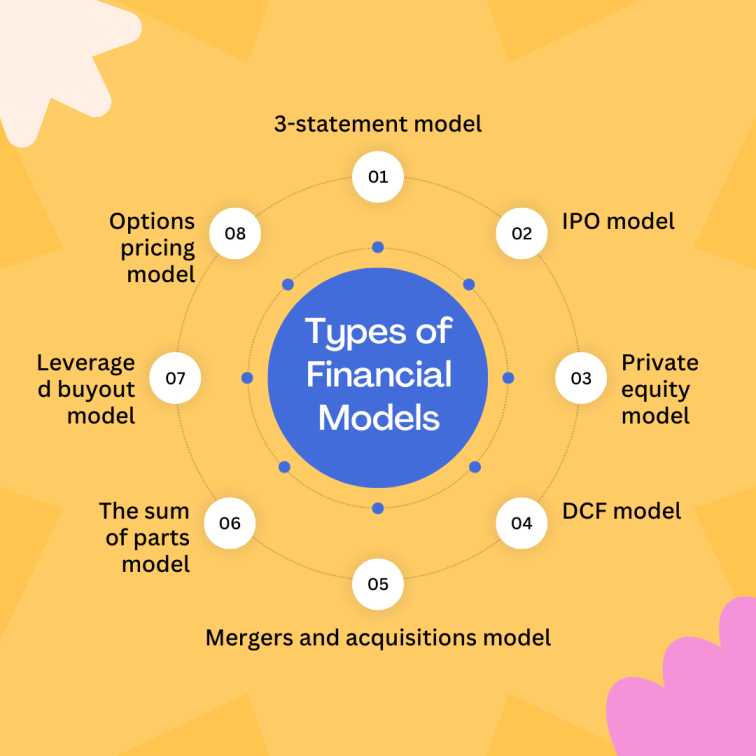
Types of Financial Models

Types of Financial Models

If you want to build a career in finance, understanding the various financial models is very necessary to understand the various financial models. Enrolling in a well-structured banking and finance course can help you learn about the various types of financial models used. They have been listed here:

  • 3-statement model: In this model, a company’s balance sheet, income statement and cash flow statement are projected to understand the financial performance.
  • IPO model: This model helps determine the price at which any business will sell its shares when it initially goes public on a stock exchange.
  • Private equity model: This model is explicitly used by private equity companies to determine if any investment should be made in a company and how to make it successful.
  • DCF model: With this model, an investment opportunity’s or company’s value is estimated. It estimates how much money the business will make and how much it is worth today.
  • Mergers and acquisitions model: This model helps understand the financial impact of combining two companies and how much the new company will be worth.
  • The sum of parts model: This model is used for examining the different parts of the company and finding out the value of each part separately. Finally, all the values are added to determine how much the company is worth.
  • Leveraged buyout model: This model helps determine how much money the investors will make if they borrow money to buy a company and sell it at a higher price.
  • Options pricing model: This model helps individuals determine how much money they can make by buying and selling contracts.

Excel Formulas for Financial Modelling

As an investment banker, you must be well-versed in Excel formulas, which will help you build a robust and accurate financial model. Here, we have listed some of the most essential Excel formulas for financial modelling:

1. NPV

The Net Present Value (NPV) formula helps calculate future cash flows’ present value. It is an essential formula in financial modelling as it helps determine if any investment will be worth it based on the future cash flows it might generate.

The NPV formula is: NPV(rate, value1, [value2],…)
Rate is the parameter that stands for the rate at which future cash flows are discounted to their present values. The value parameters stand for the cash flows expected to be generated.

2. PMT

This formula helps calculate the periodic payments needed to pay off a loan or an investment. It is a vital formula used in financial modelling. It helps determine the payments needed to repay a loan over a period.

The PMT formula is: PMT (rate, nper, pv, [fv], [type])

The rate parameter stands for the rate of interest, pv stands for the loan’s present value, and nper stands for the number of periods. The type parameter stands for the payment timings, and the fv parameter stands for the loan’s future value.

3. IRR
The IRR or Internal Rate of Return formula helps calculate the return rate on any investment. It helps compare the various investment opportunities and determine which offers the best return.

The IRR formula is: IRR(values, [guess])

The guess parameter is optional, which stands for the estimate of the IRR. The values parameter stands for the expected cash flows from the investment.

4. VLOOKUP
This formula allows people to look for data from a table. It helps retrieve data from a large data set and use that in the financial model.

The VLOOKUP formula is: VLOOKUP(lookup_value, table_array, col_index_num, [range_lookup])

In these, the lookup_value parameter stands for the value which you want to look for in the table. The table_array parameter stands for the cell range which has the data. The col_index_num parameter stands for the colomn number of the data you want to get back. The range-lookup parameter stands for the type of match you want to use.

A banking course can help you better understand the parameters and applications of the financial modelling formulas.

Conclusion

Building a career in finance requires a deep understanding of financial modelling. Finance professionals always use Excel to make their jobs more accessible and more efficient. The Excel formulas for financial modelling are essential for building a practical financial model.

If you want to build a career in banking and finance, check out Imarticus’s Certified Investment Banking Operations Professional course. This investment banker course has been designed for individuals just starting their careers in the field. It is taught by experienced professionals, making you industry-ready.

Trading Desks and Market-Making Activities in Investment Banks

Trading desks are physical locations of departments within an organisation or a banking institution where securities, like currencies, commodities, bonds, and shares, are traded to ensure liquidity in the market. The purchase or sale of such securities helps facilitate an organisation’s or a client’s trade in the market. It can be considered a money-making activity since it helps increase market liquidity. 

Trading desks are highly beneficial to firms. They help the firms analyse transactional costs, formulate favourable trading strategies, and assist in counterparty identification. They also help clients structure their financial products, identify opportunities, and ease entity-investor agreements, increasing the scope of market liquidity. The trading desks earn commissions for the services provided. 

This blog discusses how trading desks work in investment banking and how they facilitate market-making activities. 

The Working of Trading Desks 

Traders with different financial instruments meet in a trading room, also known as a trading floor. A trading floor has multiple trading desks occupied by licensed traders. Each trader deals in specific investments like bonds, currencies, equity, commodities, etc. The desks have service layers facilitating the purchase and sale of securities. 

The traders are chosen based on their past performance records. Traders determine the most suitable strike prices for the clients with the help of market makers and electronic trading mechanisms. The trading personnel gathers relevant data from the salesperson, suggests the most suitable trading strategies, receives client orders, and executes the trade per the investors’ goals and objectives. 

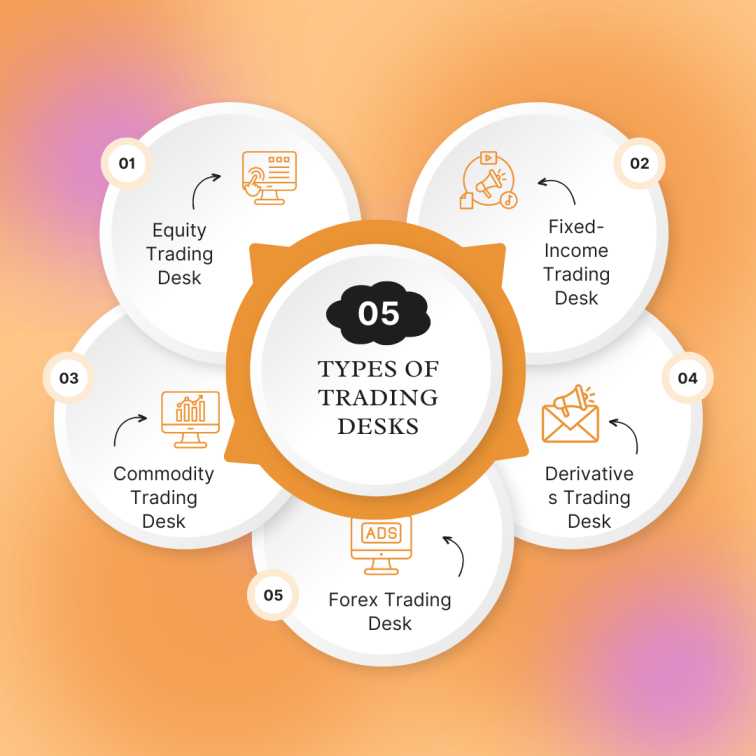
Types of Trading Desks 

Types of Trading Desks

The different kinds of trading desks are as follows:

  • Equity Trading Desk: The equity trading desk facilitates and manages an enormous trading range. The traders working on the sell side of the desk suggest the most suitable options to clients based on information derived from the analysts’ research. The trading desk may be classified into two categories — one, enabling trade for hedge fund clients and the other, offering trade facilities to institutional clients. 
  • Fixed-Income Trading Desk: Fixed-income securities are bonds with a specific income stream. One such example of a fixed-income security is the US Treasury Bonds. A fixed-income trading desk helps in the execution of trades concerning these securities. 

Fixed-income trading desks also trade credit default swaps, derivatives that can act as insurance in case of a bond default. Fixed-income trading desks can be divided further based on the risk associated with the bond being traded. 

  • Derivatives Trading Desk: This kind of trading desk deals with the trading of derivatives such as options, swaps, forwards, and futures. However, the assets that derivatives trading desks deal in are complicated and can often lead to massive losses or gains. 
  • Forex Trading Desk: Large-scale investment banks often have a forex trading desk. The traders at the forex trading desk usually have to deal with the spot exchange rates of foreign currencies. They may also have to participate in proprietary trading activities. 
  • Commodity Trading Desk: This desk deals in commodities like gold, agricultural products, crude oil, etc. The desks can be categorised into soft and hard commodities.

It is entirely at a firm’s discretion to subdivide these categories into smaller parts based on the kind of security being traded. 

Benefits of Trading Desks

Listed below are the benefits of trading desks. 

  • Low cost: Training desks can provide services to multiple customers simultaneously, helping reduce the cost otherwise spent on training, operation, and software. Professional managers are appointed to take training in the different market segments on behalf of the clients. The trading activities are improved through the experts’ technical expertise and valuable insights. 
  • Advanced technology: The activities are monitored using the latest technology. It helps eliminate the human factor in trading activities and reinforces discipline. 
  • Skill and expertise in a specific domain: Managers working at trading desks will likely acquire expertise, experience, and knowledge in managing portfolios. It helps hone their efficiency and allows them to identify trading opportunities more proficiently. 
  • Monitoring brokers’ performance: Trading desks can also help investors track broker-dealers’ performance, helping them identify the best-performing brokers for every security class. 

Limitations of Trading Desks 

Trading desks have associated drawbacks apart from the benefits too. Trading desk operations often lack transparency with respect to activities like performance evaluation, strategy improvement, analysis, etc. 

Also, the services provided by trading desks are not free. Clients have to pay an amount as a commission for trading activities. 

Conclusion

Building investment banking skills and expertise is crucial to establishing a career in investment banking. Develop an in-depth knowledge of trading desks and other aspects related to investment banking with Imarticus’ Certified Investment Banking Operations Professional programme. 

Ideally suited for finance graduates with 0-3 years of work experience, this investment banking course will take you through the fundamentals, preparing you for roles like market analyst, financial analyst, investment banking associate, and financial market advisor.

Visit Imarticus Learning to learn more about this certification in investment banking.

Green Finance and Sustainable Investing in Investment Banking

Investors ensure financial success by using various strategies for building and diversifying their financial portfolios. Green finance and sustainable investing in investment banking are increasingly attracting the attention of investors and businesses alike. 

Before we dive into the details of green finance and sustainable investing, their features, and advantages, let us understand what these terms mean. 

What is Green Finance?

Climate change is probably this century’s most defining economic and political issue and is here to stay for a while. Investors, governments, individuals, and businesses are taking action to combat the climate issue, particularly decarbonisation techniques. 

Green finance refers to investments or loans which promote environmentally-positive activities. This includes the construction of green infrastructure, purchasing eco-friendly goods and services, etc. Green finance is a mainstream phenomenon now protecting from ecologically destructive services and products. 

What is Sustainable Investing in Investment Banking?

Sustainable investing refers to different practices where investors and businesses look to achieve financial returns and promote long-term social and environmental values. 

Investors make better investment decisions and generate comprehensive analyses by combining environmental, social, and corporate governance (ESG) insights with conventional investment approaches. 

Sustainable investment in investment banking sees that business firms are judged not based on financial profits but on how and what they contribute to society. 

Understanding the ESG Factors in Sustainable Investing

The sustainability impact of an investment is evaluated using ESG factors. A typical ESG score consists of the following factors:

  • Environmental 

This includes the impact of a company on the environment. It includes water use, conservation, waste, carbon footprint, and clean technology that it creates and uses in its supply chain. 

  • Social

This is how a company or a business impacts society and how it calls for social change and good. Analysts keep a close watch and examine the stances and involvement of the business on various social issues. 

These issues include community engagement, human rights, employees’ health and safety, and racial diversity within inclusion and hiring programmes. 

  • Governance

Here we will see how a company or an exchange-traded fund (ETF) is ‘governed’ or managed to bring in positive change. 

This includes reviewing executive compensation and diversity, management and governing board quality, overall transparency and disclosure, shareholder rights, corporate political contributions, and anti-corruption. 

Along with ESG factors for sustainable investing, investors can also use other additional strategies. Some of them are as follows:

  • Impact Investing

Impact investing implies targeted investments aimed at solving environmental and social problems. Community investing is an integral part of impact investing. 

This capital is directed to underserved communities and individuals. Businesses working with clear environmental and social purposes also receive financing from impact investing. 

  • Activist Investing

Activist investing is purchasing company equity to change how it operates. Moral values often guide investment decisions or social or environmental causes that companies and their leaders believe in or think deeply about. 

For instance, individuals caring about global warming might show interest in a company that drives environmental change. 

Benefits of Green Finance

Undoubtedly, green finance brings environmental and economic benefits and advantages to everybody. It successfully transitions to a low-carbon society, resulting in socially inclusive growth. 

Let us take a look at some of the benefits of green finance.

  • Helps in adding business value

Businesses have a portfolio that they have to maintain and enhance. Green finance helps in enhancing the portfolio value of a business. Along with offering a green edge, the business can draw the attention of more environmentally-concerned customers and investors. 

  • Encourages the development of environment-friendly infrastructure and the spread of technologies

Governments create and develop infrastructure in most developing countries to improve long-term resource management. There are also attempts to channel the money from private sectors into local green markets. This step in investment banking provides a competitive edge to the business. 

  • Improves economic prospects 

Governments of countries promoting green financing help in protecting societies from resource scarcity. They build and encourage local markets for renewable sources of energy. They also work towards entering new markets, which have high employment potential. 

Conclusion

If you are looking to move up in your career in investment banking, you must learn the skills of green finance and sustainable investing. These new trends are taking the investment banking industry by storm, and their benefits for the economy, society, and environment at large cannot be overlooked. 

A professional investment banking course will pave the way for you to become an investment banker who is highly successful. Imarticus Learning offers a Certified Investment Banking Operations Professional programme for interested candidates. This certification in investment banking is ideal for finance graduates with 0-3 years of working experience. 

Along with a interview guarantee, the course offers live training modules, experiential learning, job-specific skills, extensive career support, and globally-accredited certification. A plethora of job opportunities open up on completion of the course. 

Visit Imarticus for further details.

Hedge Fund Strategies and Investment Banking Partnerships

Hedge funds are supplementary assets actively managed and frequently used as risky investing tactics. They raise money from investors and invest in securities or other assets to earn favourable returns. Hedge fund investing requires authorised investors to have a substantial minimum net worth or investment, and they charge higher fees than traditional investment funds. This blog will explore hedge fund strategies and investment banking partnerships.

Hedge funds are not regulated as rigorously as mutual funds and usually have greater discretion than mutual funds to explore investments and methods that can raise the risk of investment losses. They usually combine with investment banks to gain access to funds and insights. Investment banks can give hedge funds access to various financial goods and services, including funding, dealing, and research. In return, hedge funds can supply investment banks with a source of income through fees and charges.

Hedge Fund Strategies

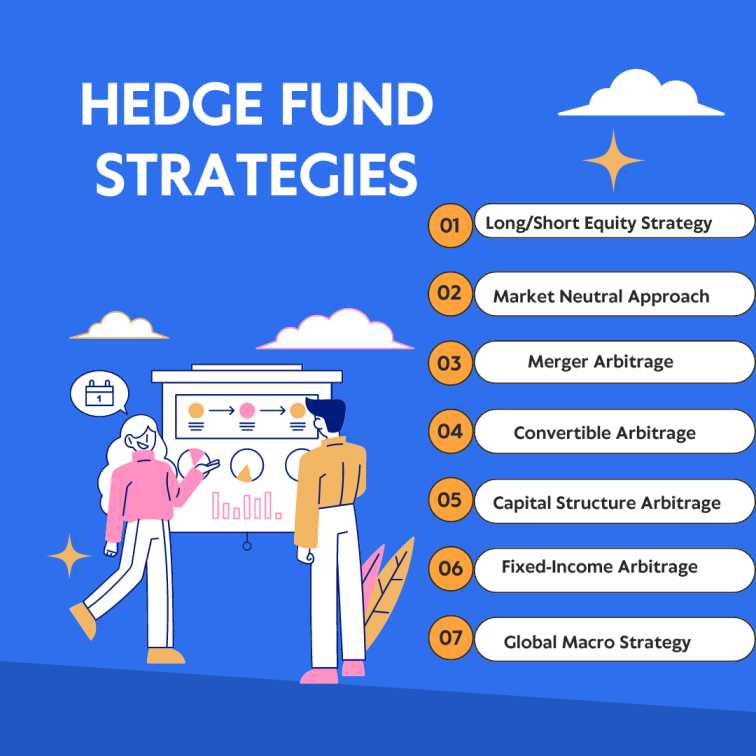
Hedge funds employ strategies to insulate themselves against volatility in the stock or securities markets and earn a return on a small amount of operational capital without compromising their whole budget. The following are some of the most popular hedge fund strategies:

  • Long/Short Equity Strategy: The most popular hedge fund strategy is the long/short equity approach. Equity hedges in the public markets balance long and short holdings, increasing return while lowering risk. The three main classifications are market neutral, long-short, and short-long positions.
  • Market Neutral Approach: This strategy involves holding long and short positions in various assets to build a market-neutral portfolio. It indicates that the portfolio is more susceptible to the performance of specific assets and less susceptible to market risk.
  • Merger Arbitrage: This tactic entails investing in businesses involved in mergers and acquisitions. The aim is to profit from the price discrepancy between the purchase and market prices once the merger or acquisition is complete.
  • Convertible Arbitrage: With this tactic, one can buy convertible instruments like preferred shares or convertible bonds. The aim is to profit from the price discrepancy between the convertible instrument and the underlying stock.
  • Capital Structure Arbitrage: This tactic involves purchasing several of the same company’s securities, including stocks, bonds, and options. The goal is to gain from the price differential between the two securities.
  • Fixed-Income Arbitrage: With this strategy, one can profit from potential arbitrage opportunities in securities tracking interest rates. A savvy fund manager will take advantage of the fact that equities would become proportionately cheaper than bonds.
  • Global Macro Strategy: By concentrating on wagers on interest rates, sovereign bonds, and currencies, this hedge fund strategy aims to profit from big economic and political shifts in prominent nations.

Common hedge fund strategies vary on the fund management, including equities, fixed-income, and event-driven goals. Hedge fund strategies use a variety of investments, like equity and debt securities, currencies, commodities, derivatives, and real estate, and employ an extensive spectrum of risk tolerance and investing principles.

Benefits of Hedge Funds and Investment Banking Collaborations

Collaborations between hedge funds and investment banking can offer several benefits:

  • Diversification: Hedge fund co-investments can significantly increase the diversification of conventional portfolios. Co-investing can allow investors to focus on certain exposures and risk/return profiles matching their investment goals not existing in their portfolios.
  • Attractive returns: Investors know the mutual advantages of the closer cooperation made possible by co-investing, which results in attractive returns.
  • Increased returns: Hedge funds can concentrate their assets, use leverage, or engage in other strategies with the potential to increase returns.
  • Career prospects: Both investment banking and hedge funds provide excellent career options, substantial salaries, and alluring exit strategies.

Predictions for the Future of Hedge Funds

The future of hedge funds is a topic of interest for many investors and analysts. Here are some predictions regarding the future of hedge funds:

  • Adaptation to changing market conditions: Hedge funds showed resilience and adaptability in the face of market volatility and disruption brought on by the COVID-19 epidemic. Hedge funds will develop further as they adjust to declining costs, rely more on technology, and offer greater accessibility to regular investors.
  • Better performance: Hedge funds performed well despite a poor public image; however, allocations were cut from over 40% in 2018 to barely 23% in 2020. Since hedge funds are actively managed, future performance can exceed expectations.
  • Increased assets under management: Assets under management are predicted to expand significantly in 2023, driven by the largest increase in the preceding ten years.
  • Significant potential for reinforcement: The performance of hedge funds can be considerably enhanced by the Post-Modern Cycle.

Conclusion

Investment banks use hedge funds to make money through fees and commissions, underwrite offers, and provide research and analysis for investment choices. With more investment options entering the market, a career in investment banking right now can offer great employment opportunities. 

Knowing about strategies such as hedge funds is important in order to become an investment banker.

The Certified Investment Banking Operations Professional (CIBOP) course, designed by Imarticus Learning, offers excellent insight into the industry. This investment banking course provides an in-depth understanding of complex financial products and their trade life cycles, operational risk, and treasury and clearing divisions within an investment bank. Check out Imarticus Learning to kickstart your career in investment banking.

Equity Research and Investment Banking Recommendations

Equity research and investment banking are crucial in helping investors make informed decisions. Equity research provides insightful analysis and recommendations on stocks, while investment banking provides consultation services for capital raising and mergers and acquisitions

This blog will explore the importance of equities research and investment banking and help prospective finance employees gain a thorough understanding of these areas.

Understanding Equity Research

Equity research focuses on fundamental factors such as financial performance, industry trends, and competitive landscape. Here are a few key aspects of equity research:

  • Fundamental Analysis: Equity research analysts thoroughly analyse a company’s financial statements evaluating the company’s general health, profitability, and financial performance. They assess important measures, including profit margins, return on equity, and sales growth. This helps them understand the company’s financial stability. Analysts also consider the management team, the company’s position in the industry, and the marketplace it operates in. 
  • Valuation Techniques: Analysts employ various valuation techniques to estimate a stock’s fair value. They also perform discounted cash flow (DCF) analysis estimating the present value of a company’s future cash flows. It considers factors like growth and discount rates. 
  • Sector Research: Analysts conduct in-depth research on industry trends, regulatory changes, and macroeconomic factors that impact a company’s performance. They analyse market dynamics, competitive forces, and emerging trends within the sector. This helps them understand the opportunities and challenges a company may face and stay updated on industry developments and macroeconomic indicators.

The Role of Investment Banking

Investment banking is essential to the financial ecosystem, bridging the gap between businesses and capital markets. Investment bankers execute transactions and offer strategic advice to businesses, governments, and other organisations. Here are some key areas where investment bankers excel:

  • Capital Raising: Investment bankers play a crucial role in assisting companies with raising capital. They advise on the optimal capital structure, helping determine the appropriate debt and equity financing mix. Investment banks connect businesses with potential investors through private placements or public offerings. They guide the offering’s pricing, timing, and structuring, ensuring the company’s capital-raising objectives are met while maximising investor interest.
  • Mergers and Acquisitions (M&A): Investment bankers facilitate Mergers and Acquisitions transactions. They assist clients in identifying suitable acquisition or merger targets, conducting valuation analyses, and negotiating deal terms. Investment banks provide strategic advice on deal structuring to maximise synergies and shareholder value. They also conduct due diligence to assess the financial and legal aspects of the target company, helping mitigate risks associated with the transaction.
  • IPOs and Secondary Offerings: Investment banks manage taking a company public through an initial public offering (IPO). They guide companies through the regulatory requirements, ensure compliance, and coordinate with underwriters and legal advisors. Investment banks also handle secondary offerings, assisting companies in issuing additional shares to raise capital or enable existing shareholders to sell their holdings. They help determine the offering price, optimise timing, and execute the transaction, ensuring favourable terms for their clients.

Benefits of Equity Research and Investment Banking Recommendations

Equity research and investment banking recommendations offer several advantages to investors:

  • Informed Investment Decisions: Equity research and investment banking recommendations provide investors with a comprehensive and detailed analysis of stocks and investment opportunities. Thorough research, including fundamental analysis and valuation techniques, helps investors gain valuable insights into a company’s financial health, growth prospects, and intrinsic value. A clearer understanding of the rewards and dangers of particular investments supports these choices. It could involve purchasing, promoting, or keeping stocks.
  • Risk Management: Equity research is vital in identifying and assessing potential risks associated with specific stocks or sectors. Detailed analysis of financial statements, industry trends, and the competitive landscape helps identify company performance risk factors. This information facilitates informed decision-making and effective management of their portfolios. For instance, investors can diversify their holdings, adjust exposure to specific sectors, or implement risk mitigation strategies. 
  • Access to Expertise: Investors get access to industry experts possessing deep knowledge and experience in evaluating investment opportunities. These professionals thoroughly know the markets, sectors, and economic variables affecting investment choices. They can provide specialised guidance, unique insights, and access to information that may not be easily available to individual investors. 

Challenges and Limitations

While equity research and investment banking recommendations provide valuable guidance, there are a few challenges and limitations to consider:

  • Bias and Conflicts of Interest: Analysts may face conflicts of interest or bias due to pressure from investment banking divisions, leading to potential inaccuracies in their recommendations.
  • Market Volatility: Rapid market changes and unexpected events can make it challenging for equity research analysts and investment bankers to predict stock performance accurately.
  • Regulatory Compliance: Both equity research and investment banking are subject to strict regulatory guidelines to maintain transparency and protect investor interests.

Conclusion

Equity research and investment banking recommendations are essential tools for investors looking to navigate the complex world of finance. Investors must rigorously assess advice, considering any potential biases and constraints. 

Enrol in the Certified Investment Banking Operations Professional course by Imarticus Learning to establish yourself better in equity research and investment banking. The investment banking course offers guidance from industry experts with industry-recognised certification to boost your CV. A certification in investment banking can help you a lot if you are looking for a career in investment banking or a career in banking.