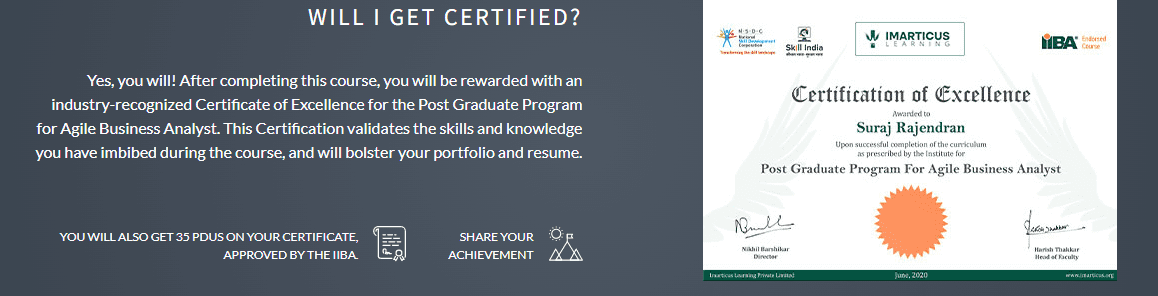
Establish your career as a digital procurement and contracts advisor in the supply chain management and analytics industry

Do you know why you should future-proof your career with a professional certification in supply chain management & analytics (SCM)? Nowadays, companies highlight the need to digitize their business processes in order to have more competitive, resilient, and flexible supply chains.

For this reason, those companies that have not yet started down this path have rethought their short and medium-term strategy by committing to the digitization of their supply chains. It is therefore the perfect time to take a logistics and supply chain management course.

What do we mean by digitizing the supply chain?

When we talk about digitizing the supply chain, we are referring to the introduction of advanced technology for management from the generation of demand or the purchase of raw materials to delivery to the end customer, including sales, production, logistics, and transport, and focusing on critical and key points such as inventory management, supplier relations, delivery control, and smart order management.

Why digitize the supply chain?

This technology makes it possible to reduce and/or eliminate tasks that lack added value in daily management and helps companies to deliver their products and services faster, more efficiently, at a lower cost, with higher quality and a better level of service.

Correct implementation and management of the new systems will add value to the business through smooth planning and execution of operations, getting the maximum profitability of each activity. This is achieved because today’s planning systems provide end-to-end visibility of the supply chain, allowing managers to monitor and track the status of all tasks occurring in real-time (at suppliers, plants, warehouses, distribution centers, etc.).

This continuous traceability will enable the identification of inefficiencies and potential problems, improve decision making and contribute to overall business growth.

Other notable benefits arising from the digitization of the supply chain are as follows:

  • Reduced delivery times: thanks to greater visibility and traceability in orders and greater availability of information, the status, and location of each order will be monitored at all times, allowing for real-time incident resolution, or more agile and intelligent decision making. 
  • Improved collaboration: supply chain managers, their suppliers, and customers will be aware of what is happening at all times and will be able to share crucial information dynamically and in real-time, which increases efficiency and fluidity in the management of the entire chain. 
  • Cost reduction: digitization will help reduce overall costs by optimizing inventory management, creating more accurate forecasts, improving demand planning, etc.

Thanks to digitization, this supply chain management course will make you able to make decisions that mitigate risks, give companies a competitive advantage in the marketplace, and optimize virtually all operations at a minimal cost.

In the face of competition, investing in supply chain digitization has become a necessity, as it has been proven that those who have already implemented specific supply chain technology solutions, as well as those who have developed solutions based on their ERP (enterprise resource planning), are now able to significantly improve their efficiency, performance, and productivity, as well as quickly monetize their investment.

It is clear that to keep up with the advancement of business, it is necessary to get at least one logistics and supply chain management course. To stay ahead of the competition, this supply chain certification prepares you for today’s challenges with a practical and up-to-date understanding of the industry.
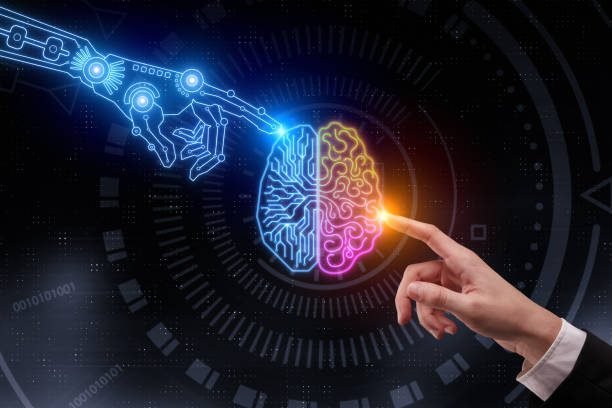

How digitization through artificial intelligence and machine learning technologies has gained momentum post COVID-19?

In just a few months, the COVID-19 pandemic has managed to do what normal times would have taken years to achieve – a paradigm shift in the way companies in every industry and sector do business. Artificial intelligence and machine learning have been at the forefront during these challenging times. 

As the world gradually finds its way back to usual ways of life, it is interesting to see how the global crisis has paved the way for behavioral shifts, learning, and innovation. 

AI and ML in the Post-Covid-19 World

With the acceleration of digitization through Artificial Intelligence (AI) and Machine Learning (ML), digital sales have seen a boost, and businesses have focused their tech investments on cloud-based products and services. From online grocery stores and EdTech sites to online pharmacies and OTT players, the post-COVID-19 world looks very different through the AI and ML lens.

So, here are some examples to show how AI and ML technologies have gained momentum post-COVID-19:

  • AI and ML have been impacting the healthcare industry since long before the pandemic hit. AI algorithms have and continue to help in quickly sifting through large datasets to help identify similar diseases and their possible cures to accelerate the COVID-19 research work. 
  • AI and automation technology have also eased the healthcare sector’s administrative load by automating various processes. For example, data processing algorithms to extract data from internal systems and automatically generate medical reports and necessary audit trails have gained momentum post-pandemic. 
  • Also, advancements in ML will continue to help create new revenue streams. For example, scientists, drug researchers, and pharma companies are increasingly turning to AI and ML data processing algorithms to facilitate vaccine and drug discovery and their possible impacts on people. 
  • Lockdowns and social distancing norms have boosted online markets and the digital economy. However, even when the pandemic is gradually ebbing, customers are expected to continue using doorstep services as they did during the peak crisis. Hence, technologies like Augmented Reality (AR) and Virtual Reality (VR) have increased among eCommerce platforms to deliver a better customer experience. 
  • Talking about customer experience, the online retail industry has ramped up its use of AI chatbots and smart assistants to attend to the ever-increasing numbers of digital customers. Hence, the use of AI has helped streamline digital services, online ordering, and delivery systems. 
  • The pandemic has given rise to a digital workforce. To this end, the use of AI to quickly process applications, scan for eligibility and qualifications and perform other mandatory hiring checks has become the norm and is only expected to increase in the near future. 
  • The financial sector has also seen a dramatic rise in the use of AI and automation to serve its customers better and quicker during challenging times. For instance, banks leverage AI to help customers safely upload documents, categorize them and expedite processes without any delay. 
  • Lastly, greater digitization has also increased the risks of cybersecurity threats during the pandemic. While conventional cybersecurity risk management systems have failed to keep up with evolving cyber threats, AI offers innovative defenses. The pandemic has only nudged organizations to adopt holistic approaches to cybersecurity through AI and ML and create an integrated security system. 

How to Find the Best Artificial Intelligence Course?

If you want to learn AI and get a certification in AI and ML, opting for an online course can be the best call. But before you sign up for the course, ensure that it offers hands-on experience with real-world projects and has a curriculum with extensive coverage of concepts related to machine learning, NLP, deep learning, data science, and computer vision. 

Discover the critical facets of supply chain management and analytics with this certification

Supply chain management and analytics is a rapidly growing field that requires the expertise of both supply chain managers and data analysts. The advanced skill set needed to succeed in this profession means that certification can be an excellent way to build your career and improve your chances for advancement.

In this article, we will explore some of the critical facets of supply chain management and analytics with a focus on certification and how it can help you grow professionally.

What is Supply Chain Management and Analytics?

  • The supply chain is transforming raw materials into a finished product that is delivered to customers.
  • The entire process involves manufacturing, transportation, warehousing, and distribution of goods, and necessary information flows within an organization or across companies in the value network (suppliers/customers).
  • Supply Chain Management (SCM) includes all activities required for effective planning, execution, and control of global business processes that connect suppliers to manufacturers through logistics providers, whereas Analytics refers to data analysis for decision-making purposes.
  • SCM has evolved over time from traditional hierarchical management structures towards collaborative governance among various stakeholders involved in end-to-end value chains.
  • It involves disintermediation where most transactions take place between trading partners rather than via intermediaries such as banks or wholesalers.
  • Analytics plays a major role in such collaborative governance by providing decision-makers with fact-based insights and analytics to make better-informed decisions for managing global supply chains while considering the complexities involved in the process.

Why Certification Matters?

The ACP offers a wide range of certifications in supply chain management areas to help professionals stay abreast of rapidly changing technologies and enhance their credentials. Both the Supply Chain Management Professional certification program and Certified Analytics Professional (CAP®) certification are among popular ones for individuals aspiring to make a career in the analytics field.

At present, there is no specific degree or diploma programs that can provide an individual with the necessary knowledge across diverse business functions involved in the supply chain management process; hence professional certificates issued by global organizations such as APICS play a vital role in invalidating one’s skillset.

The CACP/CAP Program provides two certifications — CSCP Certification helps professionals work on large-scale complex projects involving application design, development, integration, and supply chain planning, execution, collaboration, & optimization solutions.

On the other hand, CAP Certification is designed for individuals with expertise in data management and analytics who can help organizations take advantage of big data and complex algorithms to drive better decision-making.

How to Become Certified in SCM&A?

– Individuals can prepare for these certifications by taking a Supply chain Management course, attending webinars, and reading books/journals on the subject.

– To earn CSCP or CAP Certification, one needs to pass a relevant certification exam based on knowledge of supply chain concepts. There are no prerequisites for this exam; however, having some work experience in a related field will be beneficial.

Build Your Career in Supply Chain Management and Analytics with Imarticus Learning

The Professional Certification in Supply Chain Management and Analytics offered by Imarticus Learning provides a cutting-edge experience for supply chain aspirants. This 6-months program is uniquely designed by IIT faculty and industry leaders to help you learn. With the ever-increasing trend of e-commerce, the amount of movement of goods has been ever-increasing. There has been a disproportionate jump in the number of jobs for SCM across industries.

Course USPs:

  • Cutting-edge curriculum and certification from e-learning center, IIT Roorkee
  • Experiential learning & impressive project portfolio
  • SCM and analytics – a power couple
  • Learn through real-life industry projects.

What to Look for in a Business Analytics Certification

As a business analyst, you should always “think outside the box,” but what does that mean? To help show our readers how they can think outside of the box when it comes to their career, we have put together this list of some things you should look for in a business analyst certification.

You might be wondering what you should know about Business Analytics Certifications, especially if you already have some technical background. The world of BI is overgrowing and is moving towards real-time reporting, so check out the types of certifications available.

What is a Business Analytics Certification?

To understand what business analytics certification means, let’s define the term certification. Certification is a process through which an authoritative third party recognizes an individual or company with expertise in a particular subject/skill.

Business Analytics certifications allow data professionals to demonstrate their knowledge of Business tools and techniques in business intelligence, predictive analytics, data mining, reporting, and more.

Unlike traditional enterprise software certifications (e.g., Oracle or SAP), Business Analytics certifications are vendor-neutral, which means they focus on the BI tools themselves rather than on a particular vendor tool suite.

How to become a successful business analyst?

If you are starting with your career in data analytics, the first thing to do is look at vendor-neutral certifications that can help build your foundation for success.

Business analyst certifications are generally into three separate categories: 

 Professional Certifications: Also referred to as entry-level or foundational credentials, professional-level certification programs provide a broad understanding of reporting and analytics capabilities.

Expert-Level Certifications: Also referred to as mid-level credentials, expert-level certification programs provide a more profound knowledge of Business tools and techniques in predictive analytics, data mining, or survey analysis.

Master-Level Certifications: Also referred to as advanced-level credentials, master-level certification programs focus on providing an even deeper understanding of Business tools and techniques in areas such as data visualization, dashboarding, or a particular industry.

Benefits of Business Analyst certification:
best Agile business analyst courses

  1. A business analyst certification proves that you have the expertise to succeed in the field of data analytics.
  2. It helps you master your tools and techniques, leading to increased productivity and efficiency.
  3. Certification increases your salary potential (up to 10%) and can help you earn a promotion or find a new job.
  4. It provides a sense of accomplishment and can give you the confidence to offer even better Business solutions for your organization.

Explore and learn with Imarticus Learning

The Agile Business Analyst course is a six-month program that will prepare students for the tasks of an Agile Business Analyst. This placement-driven curriculum teaches students how to handle current business analysis processes with appropriate tools and approaches through several case studies, role-playing exercises, and hands-on training.

Some course USP:

  • This business analyst certification for students aids the students to learn job-relevant skills.
  • Impress employers & showcase skills with the best analyst Course endorsed by India’s most prestigious academic collaborations.

World-Class Academic Professors to learn from through live online sessions and discussions.

How Data Visualization Helps Data Analysts Make Effective Decisions Faster

In most organizations, the challenge is not the lack of data, but the excess of data. Companies have such a large quantity of data that it is difficult for them to organize and use it as a tool to prioritize activities. A large amount of data is often spread across different departments, including marketing, and sales.

Proper data visualization through algorithms can help a company reason through chaos. It can filter the data and digest it in a way that detects the right prospect at the right time. It also provides the rich context needed to greatly improve the efficiency of a company or a segment of it, like for example the sales team. 

Data Analysis for Effective Decision Making

Data visualization helps data analysts give an explanation and rationale as to why a recommendation is made, as well as contextual data from relevant applications, such as customer relationship management, which allows an individual to act on the recommendation more intelligently and effectively. 

Intelligent data analysis throughout proper data visualization allows the breakdown of information based on specific criteria. When a proper data analysis is carried out, not only is time saved but also, companies are able to support their decisions on facts and can be confident that they are making the most effective strategy.

Role of data analysts

Data analysts are in charge of examining a set of data with the objective of deriving conclusions in order to make decisions or simply to expand knowledge on a specific topic for which they contain information. Almost any industry or company can profit from proper data analysis if they have the required means of data visualization.

Data analytics is a key tool that helps recommend products, services, actions, or decisions that address a specific demand. Data analysts also extract value from data thanks to visualization tools. Today many universities worldwide offer data analytics courses and data visualization courses that help people become experts in delivering commercial strategies for many industries.

Why Imarticus for data analysis online course?

Becoming a data analyst will open many doors to an enormous number of possibilities in many industries. It will give you professional analyst skills, new ways to make key data-driven decisions on aspects like how, when, or where to deploy resources, or how to engage prospects and leads more effectively.

You will become of value to the industry, as you will be key in eliminating their reliance on guessing outcomes and relying on gut instincts to make critical decisions. You can subscribe to a data analytics course offered by us at Imarticus and become a well-profiled professional in this new and demanded field!  

best data analytics certification courses in IndiaAt Imarticus we offer a Program in Data Analytics and Machine Learning that has been designed for fresh graduates and early career professionals that are seeking to pursue a career in Data visualization and Analytics.

This industry-designed curriculum is offered in partnership with many industry leaders, which will be key in providing you with real-life case studies, via our data analytics courses, that will train you for the real world during your formative years. Once you have received your data analytics certification, we will guide you through interview opportunities. Come and join our Imarticus team today! 

Conclusion

The value of data visualization for data analysts is increasingly obvious when compared to the past when there were no systematic methods to determine the next action on any given customer or even of a company. Thanks to professionals with data analytics certification, today companies are able to gauge the true impact of the data, by tracking metrics against previous practices and environment, in order to make effective decisions faster.

Transforming healthcare with operations research in Supply Chain management

The Supply Chain Management course is a graduate-level program that explores the systems and processes needed for managing product flow from manufacturer to customer. It is an essential component of any company’s operation as it helps them identify, monitor, and manage their inventory across all stages of production.

It also identifies potential areas for improvement in order to optimize operations and generate more revenue. Supply Chain Management has many different applications including healthcare, which we will explore in this blog post.

What is Operations Research in Supply Chain Management?

Operation research is a method for improving decision-making and planning through the development of models that describe complex problems and help to identify the most effective solution. Supply chain management is a sub-field of operations research that deals with managing inventory, information, people, time, space or money as factors in complex supply chains involving many organizations collaborating together. Also, Supply chain management and operations research make a powerful pair, especially when it comes to healthcare.

How Operation research in Supply Chain Management is transforming Healthcare?

Healthcare is one of the most complex industries with many moving parts that need to be managed together seamlessly. SCM offers an approach for improving quality while reducing costs by identifying areas for improvement such as:

  • Supply chain visibility: It is challenging to identify the root causes of supply problems and manage inventory effectively when there is a lack of visibility.
  • Supply chain management helps healthcare providers make better-informed decisions by having real-time, accurate information about their product flow and distribution.
  • Reducing costs: Supply Chain Management can help reduce healthcare spending through improved planning for equipment maintenance, more efficient use of resources and more accurate forecasting.
  • Improving patient care: Supply Chain Management’s central theme of collaboration can help healthcare providers reduce wasteImproved productivity and process efficiency. by identifying areas for improvement in how they work together, share technology, or even practice medicine.
  • Increasing transparency: Supply chain management will help to improve both the quality and delivery of care. Supply chain visibility creates a shared understanding across healthcare stakeholders, such as patients, doctors, payers, or manufacturers.
  • Reduces errors: Supply Chain Management can increase the number of people who receive critical treatments quickly by reducing errors in inventory management and product distribution which reduces wait times.
  • Supply chain optimization for ancillary services like lab tests, diagnostics, pharmaceuticals etc.

Explore Supply Chain management courses with Imarticus Learning.

Imarticus Learning offers Supply Chain Management courses to help you discover the power of Supply Chain Management. Supply chain management is best suited for Supply Chain professionals who want to move up the Supply Chain career ladder.

Imarticus Learning’s Supply Chain certification prepares you for a comprehensive understanding of Supply chain management concepts so that they can be applied in your work environment with ease. Imarticus also brings you instructor-led training from experienced industry experts and certified practitioners, helping you develop Supply Chain Management skills that are in demand.

Course USP’s:

  • Takes your career goals to the next level.
  • Best suited for Supply Chain professionals.
  • Learn from industry experts and take your skills to the next level with Supply chain management online courses developed by expert Supply Chain practitioners & trainers, certified consultants, and leading academics of top universities in India and abroad.

How Data Science is Making Personalization of Customers Feasible?

How Data Science is Making Personalization of Customers Feasible?

Data science opens the door to an enormous number of possibilities in customer experience management. It plays an increasingly important role in all areas of the customer relationship management lifecycle, but countless companies have yet to make this advanced technology part of their marketing tools.

One of the main reasons is the lack of full visibility of what can help them engage better with customers and the inability to quantify potential improvements. Nowadays, with the amount of information available to both consumers and businesses, the key to success is knowing how to offer personalized offers that appeal to each consumer. 

Data Science for the Hypersonalization of Customers

To better understand how data science can make sales and marketing actions more effective, it helps to think about one of the main responsibilities of these groups: acquiring new customers. To optimize commercial strategies in a highly competitive market, working around qualified leads is the basis for success. In that sense, data science can greatly improve projections and help a company increase sales by effectively identifying those who represent real business opportunities. 

Intelligent data analysis allows the segmentation of leads based on their specific criteria, such as needs, purchasing power, geographic location, and other exclusionary criteria. In this way, it is possible to optimize prospecting efforts, allowing companies to increase their closing rates and, ultimately, business profitability. 

Role of Data Science

Data science extracts value from data through the combination of multiple fields, such as statistics, artificial intelligence, and data analytics. Data science involves the preparation of data for analysis, including steps such as data gathering, scrubbing, presentation, and manipulation. Data scientists can pursuit analytical operations and are able to review results to reveal patterns and enable businesses from different fields to gain informed insights.

To optimize commercial strategies in a highly competitive market, working around qualified leads is the basis for success. In that sense, data science can greatly improve projections and help you increase sales by effectively identifying those who represent real business opportunities. Today, more and more people are opting for a Data Scientist Career, as it is in increasing demand in many industries.

Why Imarticus for data science online course?

Not only is data science being key for market forecasting and finding good investment opportunities but also for smart marketing. As competition in the market increases, it is becoming more and more necessary to shape the business according to the demands of end-users. Data science makes it possible to offer products/services that address the needs of each user. 

Here at Imarticus, we offer an industry-designed curriculum on DSP Data Science Prodegree. In partnership with many industry leaders, we will introduce you to real business projects and case studies, throughout high-quality tech-enabled education. With one of our courses at Imarticus, not only will you learn data science, but also, we will provide you full placement upon completion of the program.

Conclusion

Data science opens a door to an enormous number of possibilities in customer experience management. It gives sales and marketing professionals a new way to make key data-driven decisions on how to deploy resources and engage prospects and leads more effectively, eliminating the reliance on guessing answers and relying on gut instincts in making critical decisions. You can subscribe to a data analytics course in India offered by Imarticus and become a well-profiled professional in this field! 

Here’s how you can improve customer service for mid-market and enterprise businesses with artificial intelligence and machine learning

Customers are the reason for businesses to drive! Whether it’s a small, medium, or an established business, it holds equal importance for all. A customer would like to take services from a company that provides easy access to the platform, understand their needs, is quickly responsive, and resolve the queries optimally.

Technology has a way of making life easier. This is especially true for businesses, which can save time and money by utilizing machine learning and artificial intelligence to analyze customer data to provide better service.

In this blog, we’ll understand a few important ways businesses use AI and Machine Learning for improved customer service. So, let’s get started:

How AI and Machine Learning Contributes to Enhance Customer Service

AI and Machine learning is used in the following areas to enrich customer experience.

  • Customer service interaction
  • Enhancing returns
  • Troubleshooting problems
  • Uses of Website
  • Messaging
  • Customized offerings

Following are the ways used to enhance customers’ experience using AI and machine learning.

1. Chatbot – For Faster and Efficient Assistance: 

The chatbot is one of the most used AI applications by business enterprises. It understands human communication in an accurate context and provides relevant answers to the questions. With the chatbot, you can avail the following benefits:

  • Help businesses to gain insights about user’s requirement
  • Reduces customer’s wait time and get them where they want to be quicker
  • Available for 24 by 7 and provide basic customer support

2. Eliminate Language Barrier to Improve Customer Engagement 

With AI, an enterprise can overcome barriers to doing business with an audience that speaks different languages. Language analysis tool enables office associates to extract main information from the customer feedback and, based on that, adapt their communication.

Language analysis is an important asset to improve the call center experience. With it, the executive can detect if the customer they’re talking to is happy or unhappy and adjust their tone accordingly.

3. Machine Learning Algorithm – Better Understanding of Customer’s Need 

Machine learning offers businesses to get to know more about their customers. Relying on a machine learning solution helps businesses organize daily support requests, answer common inquiries, completely understand a customer’s requirement, and provide a faster solution.

4. Predictive Analytics

Analytics refers to the effort to analyze the data, and it’s crucial for marketing a product. Predictive analytics, with the help of AI tool, analyses past data and predict future outcomes.

 Take Your Career to Next Level with Imarticus Learning 

Imarticus Learning offers the certification in Artificial Intelligence course that the industry’s best leaders have designed to provide a quality learning experience.

The artificial intelligence course will take 9 months to give you a holistic learning experience. Choosing this course will unlock the lucrative creative opportunities in the coveted field of AI.

Our Artificial Intelligence and Machine Learning Course USPs:

  • Master the skills of Machine Learning and Artificial Intelligence through the most relevant curriculum designed by E&ICT Academy, IIT Guwahati, and leaders from the industry.
  • An opportunity to get educated about what new-age AI & ML engineers do by solving real-time problems in their job. Engage in a world-class education program while mastering practical application.

Here’s what you need to know about Digital Twin in Supply Chain Management

Digital Twin is a new concept in supply chain management that has gained popularity over the past few years. Digital Twin technology creates a virtual model of a physical product by digitizing its design, manufacture, and distribution process. This allows businesses to collect data about their products and use it for predictive analytics to improve efficiency, reduce costs, and cut down on waste. Read this blog post to learn more about Digital Twin basics before you start Designing a Supply chain network!

What is a digital twin, and how does it work?

A digital twin is a virtual replica of an existing physical entity, such as a machine or product. It can be used to predict changes that will occur in the future and also help with decision-making processes by providing insights into how those changes will impact performance metrics like supply chain cost per unit shipped, customer satisfaction ratings, etc.

The digital twin works by taking measurements from the physical entity and generating a virtual model. The data is collected via sensors installed on or around the object being monitored to record changes over time. These sensors collect information like temperature fluctuations, system efficiency levels, amounts of wear-and-tear damage done throughout its lifespan, etc. This can be used to produce insights into how that change will affect performance metrics later on down the line. This process enables better decision making about product design and life cycle management for companies looking at long term results instead of short term gains.

Benefits of using a digital twin in supply chain management include:

– Improved decision making by using data from the digital twin to inform decisions about product design, life cycle management and service level agreements.

– Reduced time required for new product launch as a result of faster prototyping with the use of virtual models that can be tested without having actually to build physical prototypes first. This means more efficient workflows are freeing up resources for other projects instead of spending time building components only to find out they don’t meet specifications. In addition, working off a virtual model reduces waste since prototype iterations are not needed before finalizing designs/products, which would have been scrapped otherwise due to being non-compliant or unusable in some way.

– Increased reliability via early fault detection resulting from integrated sensors on products connected through IoT devices, which in turn improves serviceability by allowing problems to be detected sooner.

– Reduced risk of disruption to operations caused by accident or system failure because the digital twin can provide real-time data about how changes will impact performance metrics like availability and reliability before they happen.

Learn Digital Twin with Imarticus Learning

Aspirants can quickly achieve the opportunity to work at most global digital twin courses with placement assistance. Students can get full career help to begin their digital twin courses with 8000+ placements accomplished with 60 per cent compensation increases.

Some course USP:

  • The digital twin courses with placement assurance aid the students to learn job-relevant skills that prepare them for an exciting career.
  • Impress employers & showcase skills with a certification endorsed by India’s most prestigious academic collaborations.

World-Class Academic Professors to learn from through live online sessions and discussions. It will help students understand the 360-degree practical learning implementation with assignments.

The Changing Face of the Retail Industry with the Emergence of Data Analytics

The introduction of new technologies like data analytics has revolutionized the way we think about retail. Even the figure of the retail professional is changing and evolving. Companies are in a phase of change and are looking for new professionals who understand the difficulties, issues, and challenges of the sector.

Read on if you want to know how data analytics drives the retail business, and to find out more about the roles of data science and retail banking in this industry.

Data Analytics in the Retail Industry 

Today, companies operating in the retail sector leverage the power of data analytics more than anything to ensure business continuity and growth. Retail employees have traditionally had relatively little training in their area of work. This trend is changing and must change if retailers are to improve the shopping experience and be able to adapt to new customer demands.

In today’s world, customers are becoming more and more dependent on e-commerce and no longer depend on going to a store to get information and rely on what the salesperson tells them; rather, customers rely today on store personnel to get information or resolve doubts that they themselves have not been able to find or resolve online. This requires greater professionalization of employees to meet the customer’s demands at the point of sale.

Role of Data Analysts

Data analysis is the science of examining a set of data for the purpose of drawing conclusions about the information in order to make decisions or simply to expand knowledge on various topics, it is an indispensable tool for market forecasting and identifying good investment opportunities.

Many industries, like investment banks and retailers, are already using data analytics. With increasing competition in these markets, businesses are being shaped according to the demands of end-users. Data analytics is a key tool in helping them offer products and/or services that address these demands. 

Data Analytics for the Retail Industry

The retail sector is therefore increasingly demanding professionals with data analytics certification and marketing expertise, as analytical and creative skills are positively valued to find solutions in a changing environment. 

Many aspects of this type of company, from distribution to warehouse logistics, are changing and continue to change drastically in the coming years. Stores are and will be an important factor in a retailer’s sales, as the physical point of sale allows interaction with the customer that is impossible for now in online commerce.

Online sales are going to coexist with physical stores and therefore, new professionals with expertise in the omnichannel world who can relate to both worlds are required. Therefore, having trained staff capable of analyzing data, identifying weaknesses and strengths, and implementing the necessary changes in time will be indispensable for the retail industry to survive the technological revolution. 

Individuals with business analytics skills are being highly valued in these industries. At Imarticus, you can access data analytics courses online to learn how data analytics affects the retail industry. 

Why Imarticus for Data Analytics Online Course?

At Imarticus we offer a PGA Program in Data Analytics and Machine Learning design specifically for fresh graduates and early career professionals that want to pursue a career in Data Science and Analytics. We offer this industry-designed curriculum in partnership with many industry leaders.

During your formative years, we will provide you with real-life case studies via its data analytics courses that will train you for the real world. On completion of the data analytics program, our Imarticus team will guarantee you interview opportunities. Enroll today and begin our data analytics program!