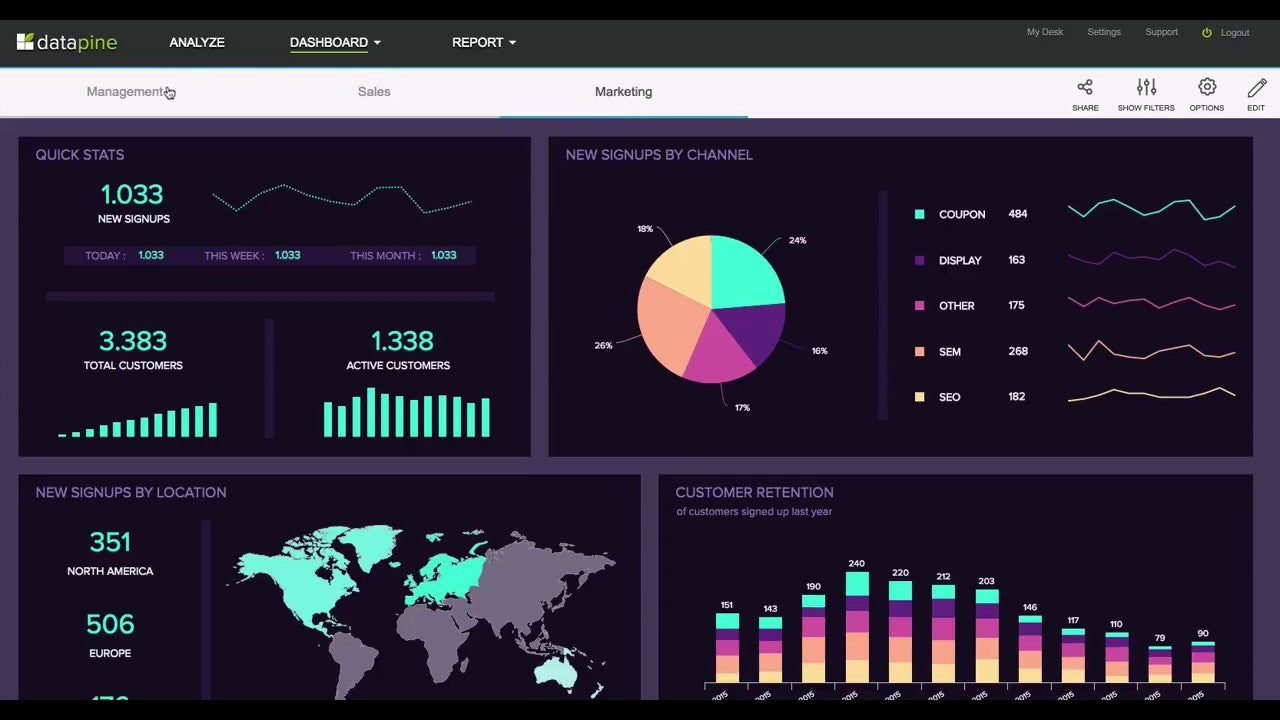
What is the Technical Data Analyst Skillset for The Digital Enterprise?

As data science is regarded as the “new oil” for the technology industry, there is a surge in the demand for skilled professionals. Data Analytics is finding its application in nearly all aspects of life, from education to healthcare, social media, e-commerce, and fintech, to mention some. As a professional, data scientist plays a pivotal role in the business ecosystem and influence business decisions.

data analytics coursesAnalytics, in general, has three important components – business context, technological intentions, and data science.

Data science is a broad term that encompasses different expertise like research – both operations research and statistical research, machine learning algorithms, and deep learning.

No matter which aspect of data science are you planning to focus on, you need to understand the key skills that make up a good data analyst. Read on to learn about the skills you need to excel in a data analyst career.

MS Excel

One of the most widely used app for data visualization as well as financial, statistical, and mathematical calculations, excel is the basic tool one needs to master while looking for a career in data science. The pivot tables are one of the most popular tools used in data analytics. Charts are excellent tools for data visualization. Slicers and filters allow organizing data while the formula-based techniques are great for creating aggregate reports, while other features like Vlookup help process a large number of data bits into a well-organized structure, enabling easy comprehension.

Data Warehousing

In simple words, data warehousing involves the collection of data, organizing them, and storing them. Data analysts and projects managers are usually responsible for data warehousing, where they handle the safekeeping of the data, ensure that the privacy rules are strictly adhered to, and monitor them. Data analysts should be able to integrate the data collected from different sources, analyze and create analytical reports, and support decision-making.

Data Retrieval Skills – SQL

The Structured Query Language (SQL) is used to connect with the database. Whether updating a database or retrieving data from it, SQL is the standard language used by Relational Database Management Systems (RDMS).  SQL skills are mandatory if you wish to have a career in Big Data. However, learning SQL is simple, even non-technical people can learn it. It has become a basic skill used in many organizations to create, maintain and modify database structures and storing the collected data.

Coding and Programming Skills

Data analysts should master coding and programming to practice their knowledge. You don’t need to be a hard-core programmer, but you need to know the basics and should be comfortable with coding and programming to excel in this role.

While the primary responsibility of a data analyst is to analyze the data and derive meaningful insights from the, understanding the concepts such as functions, loops, if-else, and programming logic would be an advantage while dealing with a large amount of data.

Artificial Intelligence (AI) and Machine Learning

AI and machine learning help enhance data analytics. When you prepare a machine learning algorithm and provide it with a model, it gives you an output based on the model provided. For instance, if you train a machine learning algorithm and provide it with a predictive model, it will provide you with predictive analysis based on the data feed.

There is no absolute definition of skills needed to excel as a data analyst. Most data analyst courses cover the basic skills needed to secure a data analyst job. There is a buzz about big data and its application. Almost all industries are espousing data analytics. As technology improves, there could be overlaps in the job role, or the job roles could encompass wider aspects of data science. The better skilled you are the more are the chances to excel in a data analytic job.

Choosing between SAS, R, and Python for Big Data Solution

SAS, R or Python, from where do would it be advisable to begin? This is the most widely recognised inquiry that each competitor confronts while entering the universe of Data Analytics. As the examination field keeps on developing, new devices and advancements have begun rising in the market, making the business experts ace them for better profession alternatives.

Today, extraordinary systematic devices are accessible in the market, yet the significant rivalry is seen between R, Python, and SAS. As in all situations where there are decisions and competition, a near noteworthy investigation is made between these three stages to locate the best fit.

Let us initially comprehend what R, Python, and SAS are?
R – It is the most widely used language of statistics. It is a language that depends on a progression of following subroutines. Due to its cost-effective approach, R is the profoundly favoured programming language among numerous information researchers. R is the best alternative accessible for information and plot visualisation that are important with regards to data analysis. It gains by its open source nature by making available the most recent methods quick.

Python – It is a multi-purpose programming language. It has increased monstrous prominence as a result of its information mining libraries and capacities that can be generally used to play out any statistical operations. Python is another open source scripting language that has developed to envelop.

SAS – Statistical Analysis System (SAS) is a superior programming suite introduced to investigate substantial datasets in a well-organised format that looks good. Today, numerous worldwide organisations and million dollar organisations generally incline toward this product. It offers the clients a decent GUI, a variety of measurable capacities, alongside an undeniable specialised help. Nonetheless, it is a much costly alternative accessible in the market when compared with R and Python. Also, it is not an open source.

To know which tool suits best according to your necessities, let us examine a portion of the critical traits for the devices.

  1. While discussing the cost of utilisation, SAS is a costly business programming accessible in the market. While R and Python are the open source devices that can be accessed for no cost. This is the thing that makes R and Python broadly mainstream among numerous new companies and settled organisations working in the field of data analysis.
  2. As the Internet use has developed twofold with time, more information is produced each day making it hard to store and manage it adequately. However, SAS accompanies a decent easy to understand GUI; it misses the mark regarding the capacities required for taking care of and dealing with the data. The bundles like Plyr, DPlyr, and so on and expansions like NumPy, Panda, and so forth. It gives Python a smoother approach for information stockpiling and control. While, R works just on RAM, which makes it hard to run even a little undertaking.
  3. SAS is a costly programming, for the most part, utilised crosswise over enormous MNCs which constrains the career opportunities to a particular level. While R and Python are profoundly favourite crosswise over new businesses, entrenched organisations, and MNCs, which exhibits an incredible breadth of better career openings at overall industry levels. In this manner, conveying R and Python confirmation qualifications on your resume will unquestionably copy the likelihood of getting procured.

Conclusion

  • In case you are a fresher and great at science and mathematics, at that point R is the best alternative, to begin with. Be that as it may, on the off chance that you are great at programming and coding, at that point Python is the best choice to begin.
  • In case you are an expert with a few years industry encounter, at that point upgradation is connected on either R Python coordination or SAS Python coordination.

How Is Ethical AI Different From Fair AI?

Artificial Intelligence is turning out to be an integral part of every part of businesses and human lives at a surprisingly faster pace. As much as it is transforming lives and processing easier, it comes with its share of drawbacks.

The topic here is the ethical and fair side of AI that has already proven to be a problem even for the big giants like Amazon and Apple. So the question here is how to rectify the problem without compromising the usefulness of AI.

In order to solve the issue, it is important to understand the difference between ethical AI and fair AI. Although they are not much different from each other, knowing the thin thread that separates them is crucial.

The dilemma of ethical AI

While AI  algorithms help replace several tasks which usually the human mind accomplishes, there are several pressing issues regarding the ethical outcomes it causes. Both  AI and Machine learning requires data that is fed manually, there is still no definite criteria on what qualifies as non-biased that leads to an ethical result.

If the algorithm leads to an unwanted advantage for anyone while someone else ends up on the receiving end it is considered unethical. The problem is defining what are ethical terms and what constitutes unethical. To solve this issue, leading brands have slowed down their progress with regard to the AI development in their business end.

An ethical AI will be the one that can accomplish ethical prediction and quality outcomes without impacting humans in one way or the other.

When is it a fair AI?

When it comes to fairness in AI predictions and outcomes, it is all about perceptions. A fair decision to one might appear unfair to another. So it is not easy to judge the AI program as unfair or fair.

While there are several issues with the unfair outcome of AI programs, what it really needs is a smarter and sensible approach.

  • It needs cooperation between humans and the AI system to evaluate and judge fairness. The employees need to be more intuitive and apply more common sense to do the job well.
  • As humane as AI seems to be it needs a bit more humanity than already has. Here, it is the company’s choices and values that can be used to determine the fairness in the AI system under development or use.
  • While creating the algorithms even the smallest factor and the most unimportant aspect should also be considered to create a more effective filter. This approach prevents a wider range of unethical and unfair decisions by the AI system.

The future of ethical AI

Owing to the past mistakes in the field of AI, many of the Artificial Intelligence training courses are trying to include a moral side in their curriculum. Since most of the unfair decisions by the machine is due to the social and economical perception by the humans, it needs correction right from the root level.

difference between ethical AI and fair AIIn order to pursue an Artificial Intelligence career, one must start thinking ethically and be able to decide between what is fair and unfair for the right matters. This is where critical thinking comes in handy.

Though it is difficult to create a Fair AI, it is easier with Ethical AI as long as it does not cause a clear bias with many factors in consideration.

Conclusion

What it shows is that machines can only impersonate humans and they are yet to reach that feat emotionally and for logical thinking capability. For them to reach that point, humans must change their views, perceptions, and work ethics.

What is Big Data Analytics?

Big data can always be related to massive volumes of data generated directly by the company or acquired from various sources. However, in order to truly utilize the data to its full potential, companies are always in dire need of skilled data analysts or business analysts. Big Data Analytics allows companies to use this data to their advantage by gaining valuable insights from this data, thus making more effective data-backed decisions.

Data Analytics Certification Courses with placement in IndiaThe Big Data Analytics course positively affects sales, decreases risks, optimizes production, helps understand customer behavior, and even allows companies to come up with more efficient marketing strategies.

This is all possible due to Big Data, Data Science, and analytics. Budding analysts are always advised to join well-orchestrated Data Science courses in order to acquire the skills required to effectively analyze the data.

The true intention of Big Data Analytics is always to promote more efficient use of resources and getting better results through data-centric suggestions from business analysts. It is highly recommended to opt for reputed business analytics courses in order to productively contribute to this field. Constructing data-based predictions is the key to making businesses run adequately.

Why is Big Data Analytics Important?

Fundamentally, Big Data Analytics allows companies to discover patterns, trends, and correlations from massive amounts of data. This allows companies to use the newly acquired information to their benefit, thus making more effective business decisions, increasing profits, and satisfying customers better.

From helping in marketing campaigns to improving production capabilities, Big Data Analytics can help with any sector that generates data. Analytics help companies make customers happier through understanding customer behavior and trends better.

Fintech courseData scientists and analysts help companies massively cut down operational costs by resources much more effectively. Decades back, even though “Big Data” did not exist, business analytics did. However, it was not a cost-effective process and demanded a lot of time.



Big Data Analytics online training allows data scientists and analysts to make this process much faster. With the advent of AI in analytics, Big Data Analytics can almost provide real-time insights from incoming data.

What is Data Science?

The value Data Science brings to business analytics is immense. It is responsible for everything in the process. Starting from sourcing the data and modeling it to the time that the required insights are acquired, Data Science powers it all. Data Science allows companies to effectively source transactional or raw data from various sources and then process it. This is where analysts come into play, they analyze this data and then help companies visualize the data.

What are the requirements to become a Data analyst?

How to become a data analyst? It might sound complex but it is truly not that hard. There are many good Data Science courses or business analytics courses available online and offline that one can choose from. However, care must be taken when choosing a Data Science course in India or outside, ensuring that you get the best out of your time and energy. Any good Data Science course in India will cover the fundamental skills required to become a data analyst and prepare students to effectively use analytics tools when working with Big Data or data in general.


Conclusion

Big Data makes it possible for organizations to store and harness the capabilities of massive amounts of both structured and unstructured data. Even though what Data scientists do is similar, Big Data Analytics requires exceptional skills when working with large volumes of data. A good Data Science course in India is highly recommended such as this PG program in order to gather the required skills to work with Big Data and Analytics.

Related Article:

What is the difference between data science and data analytics?

How Artificial Intelligence Training Helps to Boost The Fashion and Advertising Agencies?

In a fast progressing world such as ours, the need for an efficient tool to speed up the process of our work has increased. With that demand came the answer to all our problems, Artificial intelligence (also known as AI).

At this moment in time AI is being used across almost all major industries. A large number of establishments not using AI face being left behind in our extremely competitive economic race.

In this article, we will be shedding light on its advantages in the fashion and advertising industries.

AI and the fashion industry:

AI has established its role in the fashion industry quite firmly. Fashion retailers are going bankrupt due to the lack of importance given to AI. Due to this high demand, each year, the total expenditure on AI in the fashion industry is estimated to reach a whopping $7.3 billion by the end of 2020.

In the fashion industry, where only the top 20% of global brands are considered to be profitable, the need for a tool to maintain their relevancy is immense. It allows easy access to large chunks of data, customer personalization, and various other services which the fashion companies will not be feasible to run without.

AI is used mainly in three areas:

  1. Apparel design: Due to its ability to collect intricately detailed data sets, fashion companies are using this technology to better satisfy and understand customer needs and also be able to design better clothing from feedback. Zalando which is a German-based fashion platform has been designing its clothes using AI which picks up information depending on a wide set of customer choices which range from the material of clothing to clothing style and color.
  2. Making manufacturing easy: Fashion trends are fast-changing and there is a need for the pattern of change to be identified. AI is able to do this with ease while also being able to supply the apparel to shelves much faster than a normal retailer. Taking advantage of this, companies can confidently provide immediate service thus gratifying their customers based on their demands and needs. Examples of companies using this are brands such as Zara, TopShop, and H&M.
  3. Selling merchandise virtually: AI has the ability to break down the walls between the online and in-store shopping experience. This is being done through augmented and virtual reality technology, allowing customers to access apparel online using AR. Certain brands like Tommy Hilfiger are using virtual reality to create virtual pop-up retail stores.

Now you may ask how this works. AI is largely used in the fashion industry in the form of chatbots using which the fashion brand gathers information about the customer’s needs and desires. It has become an indispensable tool and is able to identify the customers fast changing desires.

AI and the Advertising industry:

AI plays a very important role in the advertising industry as well. It is able to identify elements that will resonate with the viewers, creating ads without any human involvement. It is also able to perform audience targeting and ad buying. Major platforms are using AI, taking advantage of its ability to determine if viewers would click on the ad they are being presented with.

It is able to intelligently identify and segment audiences, build ad creative, test variations, improve performance and also optimize spend. It has proven to be advantageous to digital advertising and the careers of marketing experts who plan and run ad companies.

Advertising at scale is something that is tricky and impossible for humans to perform and AI comes in quite handy here. The technology has the unique ability to detect patterns and predict what changes need to be made to a campaign to improve it against its specific KPI. This does not take days, hours, or even minutes but can be done in a span of just a few seconds.

The advantages of AI in advertising are hence as follows:

  1.  Increasing revenue through analyzing data at scale
  2. Reducing costs by acting on data faster and automatically
  3. Creating a massive competitive advantage

It plays a key role in real-time advertising, buying, and selling. This is most popularly done with the help of third-party apps like Facebook, Instagram, and Snapchat. These ads are suggested through AI looking at the links that are promoted by the user.

Taking all these facts into consideration it is pretty clear that a career in AI, especially in our day and age has huge scope and its benefits are undeniable! AI is transforming the fashion and the advertising industry as well as many other industries and thus considering artificial intelligence training at this point is a very smart thing to do!

How Analytics Is Being Used In Data Journalism?

Growing technology leaves an impact on every industry. As people want to upgrade, they allow the integration of computation in their fields. The current trends in journalism are no different from any other. There is an intersection between computation and journalism, which we will widely discuss here.

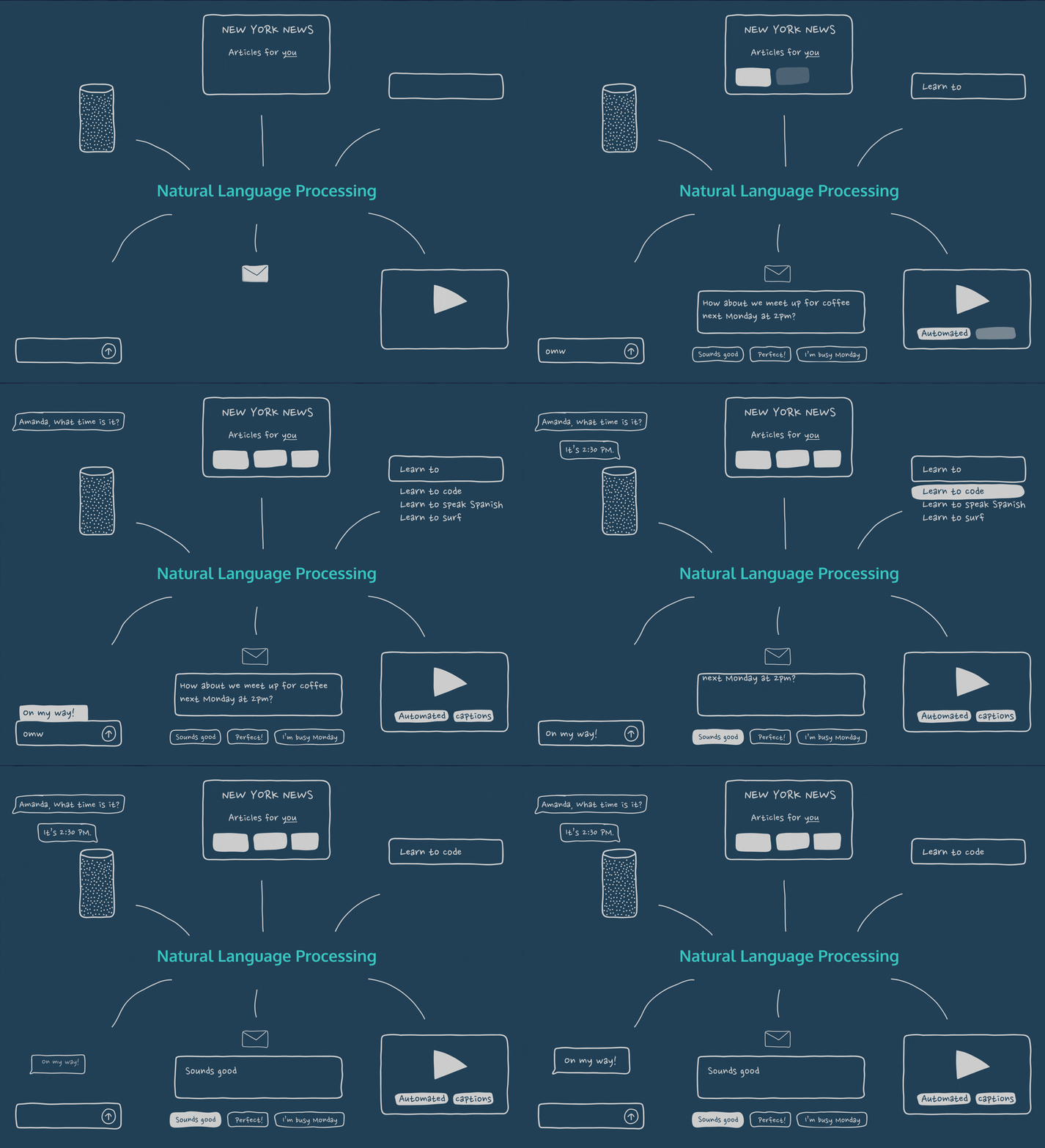
AI is expediting the process of analyzing data and synthesizing them into stories. For example, automatic story writing involves Natural Language Understanding and Processing for synthesizing reports. AI also helps generate images and videos for data journalism.

Why do journalists need to learn data analytics?

There is a shift in the digitalization of media publications, and companies who couldn’t bring the change collapsed. Simultaneously, the ones that could are now exploring data and computation tools to make journalism more economical.

The process of computational journalism is using analytical tools for reporting. Data journalism is much different from traditional journalism, and journalists need to keep up with the trends. If you plan to work in media, you will also need to gather knowledge from a data analytics course to work more efficiently.

The job of a journalist is to take unstructured data and creating a structure. They have to be convincing enough to catch people’s attention. Structured data is not always informed about different people or events. It can also include factual numbers like tracking money, the effects of an election, and so on.

One of the most prominent examples of how data journalism worked is the exposition of the Panama Papers. Global journalists came together and exposed famous names, which led to resignations and legal trials.

Among all media companies reporting, a German newspaper, Süddeutsche Zeitung, revealed the most extensive dataset. The company had an anonymous source report of 11 million documents to them. The company then teamed up with 370 journalists across 76 countries and carried out a year-long investigation to expose influential people.

Without the help of analytics, it is impossible to have evidence regarding such matters of corruption.

Data journalism makes way for democratic storytelling

People who join the data analytics career work with the science of analyzing raw data for drawing conclusions. When you add this to journalism, it creates a more straightforward approach for the media as well.

Nowadays, computer-assisted reporting is standard, and technology helps us gather information, analyze, and create stories. Thus, open data is democratic, factual, and engaging.

Every industry is taking efforts to make data more available to people. For example, data regarding the government, census, demography are all on the internet. Thus, it helps journalists who like to dig deeper into their research and come up with fact-based reports.

One such example will be the Stanford Open Policing Project. The university’s journalism department allowed its students to register freedom of information act requests. All the states were asked to report the electronic version of the stop data of State Police. In two years, they garnered records from 31 states with 130 million records.

The data helped students understand what makes a policeman pull over someone.

The university opened the data for any media house or local reporter to download this information. The revelation helped people understand the state police better. It also highlighted how the police take actions across racial demographics and a pattern to understand how they work.

Visualization is vital for journalism

Data visualization is an essential part of journalism as it engages people. Journalists take complex data and convert them into exciting visuals. People don’t have much time to read lengthy content nowadays. Attractive visuals with short content are more engaging.

Visualization is another aspect of why journalists need to know how to use tools to create them. There are many such tools available to create compelling visuals with complex datasets. It goes onto show the varied skillset a journalist needs to have for surviving in this field.

R Users Need To Study SAS Programming As Well, Here’s Why

When it comes to the IT industry, there are a number of debates, regarding various gadgets, operating systems, applications and so on. There is also one lesser-known debate, which takes place quite often in specific IT circles. This is the debate between SAS Programming and R Programming, two of the most popular and highly preferred tools in the data analytics industry.

The field of data analytics deals with great amounts of data in the virtual space, which is generated by companies, across different fields. While both of these data analytics tools, perform very similar functions, one very essential distinction between them is, that R Programming is an open source software, whereas SAS is a paid, licensed software. As there is a huge demand for highly skilled professionals in the field of data analytics, a lot of institutes have begun to offer courses in R and SAS training.

While R is an open sourced software, which means that it can easily be downloaded. This easy access is what has made it so popular in the data analytics field. While it is true that R can do everything that SAS can do, which is the opening argument of a lot of R users; it is also important to note that softwares like SPSS can also do what both R and SAS can do. While SAS Programming is a paid licensed product, R is free and this why it is believed to better than any other data analytics tool. This may be true in some aspects, where R users get to experience all the new and updated techniques whereas it takes a while for SAS Programming to assimilate them.

Think of it as a windows versus linux argument, where although Linux does everything similar to Microsoft, yet does not really have that much credibility in terms of the official usage. When R users opt for SAS training, they get to learn the not only the oldest tool in the market, but also a software that has been used as a default software in many companies for the past three decades now.

SAS Programming training will equip a professional to cover almost all the areas of statistical analysis and techniques. The fact that it is a licensed product, users can be sure that all the new additional changes are thoroughly tested by the support center.

R users getting trained in SAS would be able to handle large databases without any glitches like memory errors or becoming unresponsive. SAS is designed as a data manipulation language, which means that it can run intuitively and is very easy to learn, this would be a fresh change from the fact that R is more difficult to learn.

Although there are a lot of reasons why one would prefer R, mainly because it is free, can be updated, and has a huge community where one can find out problems, but it cannot be SAS.

This programming language is already a default software in a lot of companies, most of them do not even use it for analytics purposes. SAS provides a great support base, guarantee and is best tool to us in the long run. Hence it becomes a necessity for R users to try and master the skills of SAS programming.


A Most Trending Career in the World is Data Science!

A Most Trending Career in the World is Data Science!

Information researcher is moving everywhere. The interest for such researchers is colossal, more than the number of accessible competitors. A new report clarified that the interest for these researchers has expanded by over half since last year.

The buzz that information science has made all throughout the planet is great. The field of best Data Science courses in India can change your profession completely and move your vocation into the swearing field.

WHO CAN BE A DATA SCIENTIST?

The information researcher is the person who can perform a wide range of parts of information crunching yet not really be a specialist in any of them, which in short is named as a ‘handyman’.

The individual who needs to turn into an information researcher should have numerical abilities, measurable abilities, and programming abilities, and the necessities to have a definite comprehension of every one of them.

This individual additionally needs to have solid business information with the goal that he/she can go through business issues totally and can fabricate solid business methodologies for what’s to come.

Really at that time can you apply your abilities viably in the association in which you will be utilized.

TOP COMPANIES HIRING DATA SCIENTISTS:

Top organizations, just as new companies, are needing information researchers due to the huge measure of information streaming in the association’s data sets.

A lot of graduates are anticipating their vocations in the field of information science since it is one of the generously compensated positions or has a promising future.

However, they neglect to comprehend the way that affection for coding, numbers, and calculations is exceptionally vital for the ones who need to manage huge information. It isn’t some tea.

It is testing and intriguing simultaneously.

The top business concerns incorporate Flipkart, Amazon, and LinkedIn and the new companies incorporate Accenture, Heckyl, and DataWeave.

The Scope of Electronics and Communication Engineering!

The brilliance of Electronics and Communication lies in its omnipresence! Electronic gadgets have become a significant piece of our lives. With the development of innovation, Electronics and Communication have become a fundamental discipline that is needed by each and every other industry.

Presently the world can at this point don’t subvert the importance that Electronics and Communication discipline conveys. Thus, Electronics and Communication designing is perhaps the most pursued branches by understudies. Therefore, in this article, we will audit the extent of Electronics and Communication Engineering.

The extent of Electronics and Communication Engineering

Well known spaces of study in ECE –

Taking the instructive degree and vocation decisions into thought, here are the mainstream spaces of study in the field of Electronics and Communication.

Installed frameworks :

Installed Systems are one of the main specializations in the field of Electronics and Communications. These frameworks are a mix of equipment and programming that are committed to a particular capacity. These frameworks are modified frameworks in which programming is generally implanted into the equipment to perform specific errands.

Inserted Systems Projects Topics

VLSI :

The rationale behind Electronics has consistently remained on three standards –

Speed.

Smallness (size).

Reasonableness.

VLSI is the discipline of ECE that connects the entirety of the above standards effectively. It is the most broadly utilized innovation for Integrated Circuits (ICs), Microchips, and Component planning. An Acronym for Very Large-Scale Integration, VLSI is the marvel of incorporating a huge number of semiconductors on a solitary Silicon Microchip. VLSI was probably the greatest commitment to Electronics and Communication.

VHDL Intro Course

Remote Communication :

Remote Communications assume critical parts in our day-by-day lives. This sort of Communication consolidates the methods of correspondence between at least two frameworks with no actual medium or channel. An extraordinary model is Wi-Fi. A portion of the significant kinds of Wireless correspondence are –

Satellite Communication.

Microwave Communication.

Radio Communication.

Portable Communication.

Mechanical technology :

Another significant part of Electronics and Communication is Robotics. This field manages the development, use, and control of machines that can repeat human movements. Robots are machines that are utilized to substitute human work for different assignments. Advanced mechanics is a hot pattern in the field of Electronics and Communications.

Imarticus Robotics Certification Course

Advanced Image Processing :

Advanced Image Processing is the discipline that arrangements with the preparing of computerized pictures with the assistance of PC calculations. Thus, this branch enjoys numerous benefits. Significant legitimacy is the improvement of pictorial portrayal as far as sign commotion and sign contortion.

Simple and Digital Electronics :

Hardware and Communication Engineering is partitioned into two general classes. Simple Electronics is the field where electronic frameworks manage a constant factor signal, While Digital hardware manages the signs taking just to levels. This stream manages essential entryways, combinational rationale circuits, semiconductors, speakers, back-peddles, and a lot more gadgets.

Web of Things :

The IoT was one innovation that surprised the world. IoT crawled into pretty much every circle of innovation, be it Healthcare, Home machines, or Security frameworks. Besides, the Internet of Things is effective to the point that each troublesome assignment can be improved by bringing IoT into it. Subsequently, the IoT will keep on being a main pattern in the coming years.

Best Internet of Things last year projects

Expected enrollment specialists and areas –

There is plenty of vocation openings in Government and Private areas in regards to ECE. Here is a portion of the significant areas and selection representatives for ECE understudies.

Government Sector :

For a vocation in the Public Sector Units (PSUs), understudies need to clear Gate, as a rule, followed by a meeting. PSUs select ECE understudies significantly by Gate. Be that as it may, There are a few associations, like ISRO, which direct their own tests too.

ISRO (Indian Space Research Organization).

ECIL (Electronics Corporation of India Limited).

BARC (Bhabha Atomic Research Center).

DRDO (Defense Research and Development Organization).

BEL (Bharat Electronics Limited).

DERL (Defense Electronics and Research Laboratory).

BHEL (Bharat Heavy Electricals Limited).

HAL (Hindustan Aeronautics Limited).

Rail line Departments.

Private Sector :

Intel Corporation.

Samsung Electronics.

Texas Instruments.

Phillips Semiconductors.

Hewlett-Packard (HP).

Worldwide Business Machines Corporation (IBM).

Cisco Systems.

HCL Technologies.

The benefits of picking ECE –

Since we know about the extent of Electronics and Communication, the time has come to discuss why ECE is probably the best discipline to pick.

The capacity to switch among Hardware and Software fields –

The main advantage that Electronics and Communication branch gives you is opportunity. the opportunity to float between the equipment field and the programming field. Moreover, this is additionally the explanation that a lot of businesses decide to favor Electronics and Communications engineers over different specialists. During the four years of Electronics and Communication Engineering, understudies acquire information on both the equipment and the product viewpoints.

While they find out about electronic circuits, gadgets, and correspondence frameworks, they additionally find out about installed frameworks, programming dialects, and low-level computing constructs. An Electronics and Communication Engineer, who knows about the equipment field, and furthermore has a hold over some programming languages, will be more fruitful during his vocation than another understudy who are capable just in the product field.

Thus, Electronics and Communication Engineers can change from equipment to programming field, yet it isn’t the opposite way around.

The scope of Electronics and Communication –

At the point when we consider ECE, we typically picture individuals working in Integrated Chip (IC) fabricating businesses. Notwithstanding, Electronics, and Communication is an undeniably more flexible field. Prior in this article, we assessed the wide scope of professional openings offered by ECE.

Gadgets and Communications incorporate fields, for example, PC designing, control frameworks, picture preparing, power frameworks, Opto-hardware, simple and computerized circuit planning, and numerous different fields. Thusly, ECE understudies are allowed to pick one of the numerous fields offered by ECE as indicated by their enthusiasm and abilities. Consequently, Electronics and Communication is a very tremendous field.

Look at the Booster Degree Course for Electronics Engineering by Imarticus!

Promoter Degree for Electronics Engineering

Vocation Outlook for Electronics and Communication Engineers –

The interest in Electronics and Communication Engineering is expanding dramatically continuously. The degree for Electronics and Communication Engineers is very high in open areas. The private areas are favoring ECE understudies too. Notwithstanding, there have been a few issues over the nature of architects regardless of the branch, that is being employed for occupations.

To be a fruitful architect, one must be continually refreshed with the arising patterns and advances in his industry. Keep in mind, learning is a long-lasting interaction.

Comparing Different Programming Languages For Machine Learning!

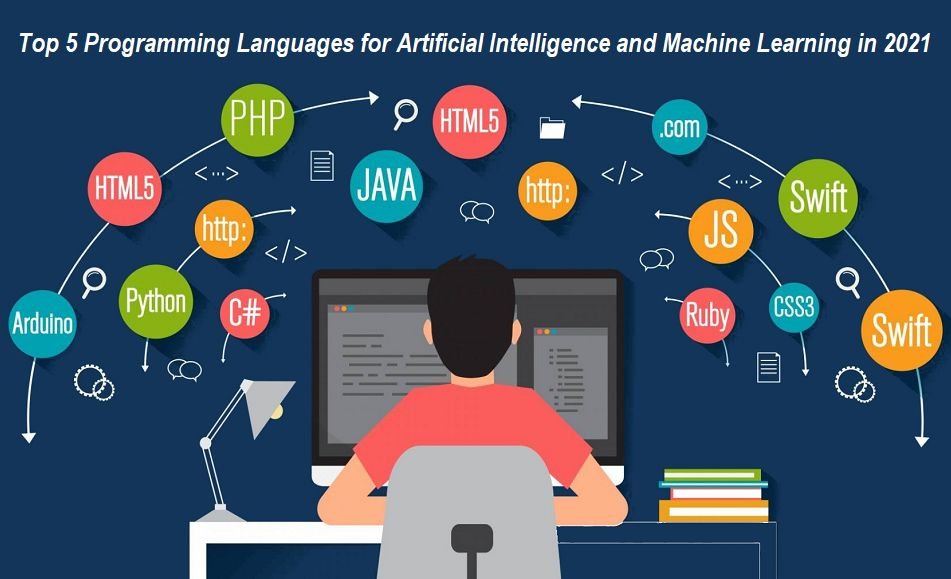
Machine learning is a fascinating field. However, if you are just starting out in your machine learning career, then deciding where to begin is the toughest part. There are plenty of programming languages available that support machine learning. And each of these has its own uses and values.

Machine Learning CourseIn this article, we will dive deep into the different types of programming languages available along with their details to help you select the right one for you.

Let’s get started.

  • Python
  • Java
  • C++
  • MATLAB
  • R
  • Julia

Python

Python is one of the most famous programming languages and is used worldwide. It is used by over 8.2 million developers across the world. It has a vast library that is easy to access, handle, process, and transform data. Python offers better readability, more independence, and less complexity. Making it the No. 1 choice for machine learning engineers. However, the major shortcoming of Python is that it is relatively slower than C++ and its multithreading support is not good.

Java

Java is popular among those machine learning engineers who have a background in Java development. These engineers do not need to learn a completely new language for their machine learning implementation. Java offers easy dubbing, enhanced user-interaction, ease of use, and graphical representation. It also makes the scaling task easier for engineers. But Java is a slow and memory-consuming platform that requires significant memory space for running.

C++

C++ is a great programming language for building libraries. When it comes to game development, C++ is the most used language. Some C++ packages also support Tensorflow and Microsoft Cognitive Toolkit (CNTK) for deep learning. They come with OpenCV for computer vision. Shogun and MLPack are used for machine learning. DyNet, OpenNMS, and ANN support neural networks. However, C++ is mostly syntax-oriented, which is quite complex for beginners.

MATLAB

MATLAB – Matrix Laboratory is an innovative programming language. It is easy to use and understand language for machine learning aspirants. It supports GUI and is not constrained with complex syntax. It can easily perform code generation functions. It comes with predefined functions and helps optimize the coded models. Though MATLAB is a good language, it has its own shortcomings. MATLAB is a bit costly and is not easily available for free use. One can get a 30 days trial version with MATLAB, but for further use, it has to be bought.

R

R is a good alternative programming language for Python. With a userbase of over 2 million, R is used for various machine learning applications. It has significant benefits for statistical purposes. It is an open-source programming language with a good library. It supports matrix implementation, vectors, and other data structures. From data visualization to model evaluation, data sampling, data analysis, and more, R offers diverse packages. However, R lacks basic security and has lesser speed.

Julia

Julia is a dynamic programming language that can be used for a variety of general-purpose tasks. It works exceptionally well for computational and numerical analysis. It supports nearly all types of hardware and is used by major corporations like NASA, Apple, Oracle, etc. The codes of Julia are universally functional. They employ larger scalability. But it takes too much time to plot the data. Its packages are also not much mature.

Every programming language has its own pros and cons. Depending on your use, you should choose the one that best serves your purpose. A machine learning course can provide you with a deeper understanding of these languages along with their efficient use.