




Request CallBack

Whatsapp Us

Executive Post Graduate Program In Data Science and Artificial Intelligence
Future-proof your data science career with GenAI edge
In association with


11 Months Program

Weekend Online Interactive Learning

10,000+ Career Transitions

35+ Tools & Projects
Awarded
Best Education Brand in Analytics

Proven record of transforming careers
52%
Average Salary Hike
2,500+
Hiring Partners
10,000+
Career Transitions
40% Hike

Project Manager

Data Analyst

Riya Israni
65% Hike

System Engineer

Data Scientist

Anjana Srinivasamoorthy
85% Hike

SEO Specialist

Sr Analyst

Kumar Yadav
25% Hike

Site Engineer

Analyst – BI

Manish Singh
90% Hike

Analyst

Data Analyst

Vinayak Patnaik
50% Hike

Associate Analyst

Data Analyst

Rajshekar Siya
30% Hike

Bank - Teller/Cashier

Data Research Intern

Madhan Kumar M P
Our alumni work at top companies















Program highlights
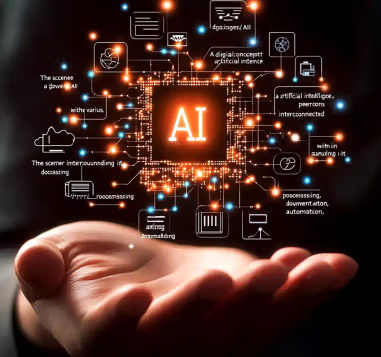
gen ai - infused curriculum
Future-proof your career with a cutting-edge curriculum integrated with the latest GenAI technologies.
dedicated career support
Receive comprehensive career assistance with resume building, mock interviews, and access to the exclusive job portal.

Project-first Approach
Begin with understanding real-world business challenges, then learn the key just-in-time concepts and tools through project implementation.

global capstone project
Gain hands-on experience solving a real-world problem from an international startup and receive a certificate to enhance your career prospects.

AI and cloud conclave
Connect face-to-face with industry stalwarts and guest speakers at our offline networking event and build your professional circle.

Online Interactive Learning
Learn from anywhere with live engaging sessions and get real-time support during dedicated office hours.

Tools you will master













Stand out with hands-on experience in cloud-driven AI applications

AWS AI & ML Courses with Certification
Earn industry-recognised credentials.

Hands-on AWS Labs
Train and deploy AI/ML models on the cloud.

AWS Jam Challenges
Solve real-world AI/ML problems.

AWS Game-Based Learning
Engage in interactive, fun learning experiences.
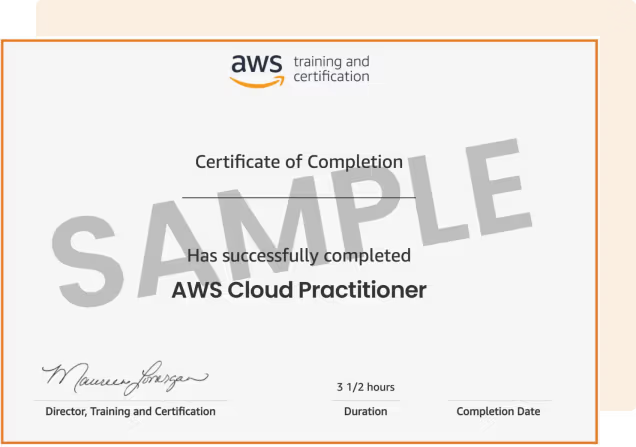
Get access to ML & AI content created by top AWS experts; take learning beyond this program.
Project-first learning
Become the business-savvy data scientist

Immersive Business Problem Solving (IBPS)
Dive straight into real business problems, and learn data science concepts while solving those problems.

Real-life Data Science and AI Projects
Every project is like a mini-bootcamp, preparing you for the industry from day one.

Learning by Doing in Real Business Scenarios
Acquire #1 skill hiring managers crave - understanding business context and communicating insights clearly.
Unique learning pedagogy
Understand the key business metrics and identify challenges.
Learn “Just In Time” data science concepts, as required by the project.
Apply learnings to solve business problems using relevant datasets.
Communicate insights and present data-driven solutions.
Curriculum highlights
Topics covered

Topics covered
Topics covered
Topics covered
Topics covered
Topics covered
Topics covered
Topics covered
Topics covered
Topics covered
Topics covered
Topics covered
Topics covered

Integrated AWS Course & Labs
Global capstone project

Real Projects from International Startups

Guided by Expert Data Science Mentors

Get an International Certification
Partner Companies* for Capstone Projects


UK


SOUTH KOREA


SINGAPORE


DUBAI

UK
*Companies may vary for different batches.
Earn your global stripes in data science and AI - build a project portfolio that helps you stand out.

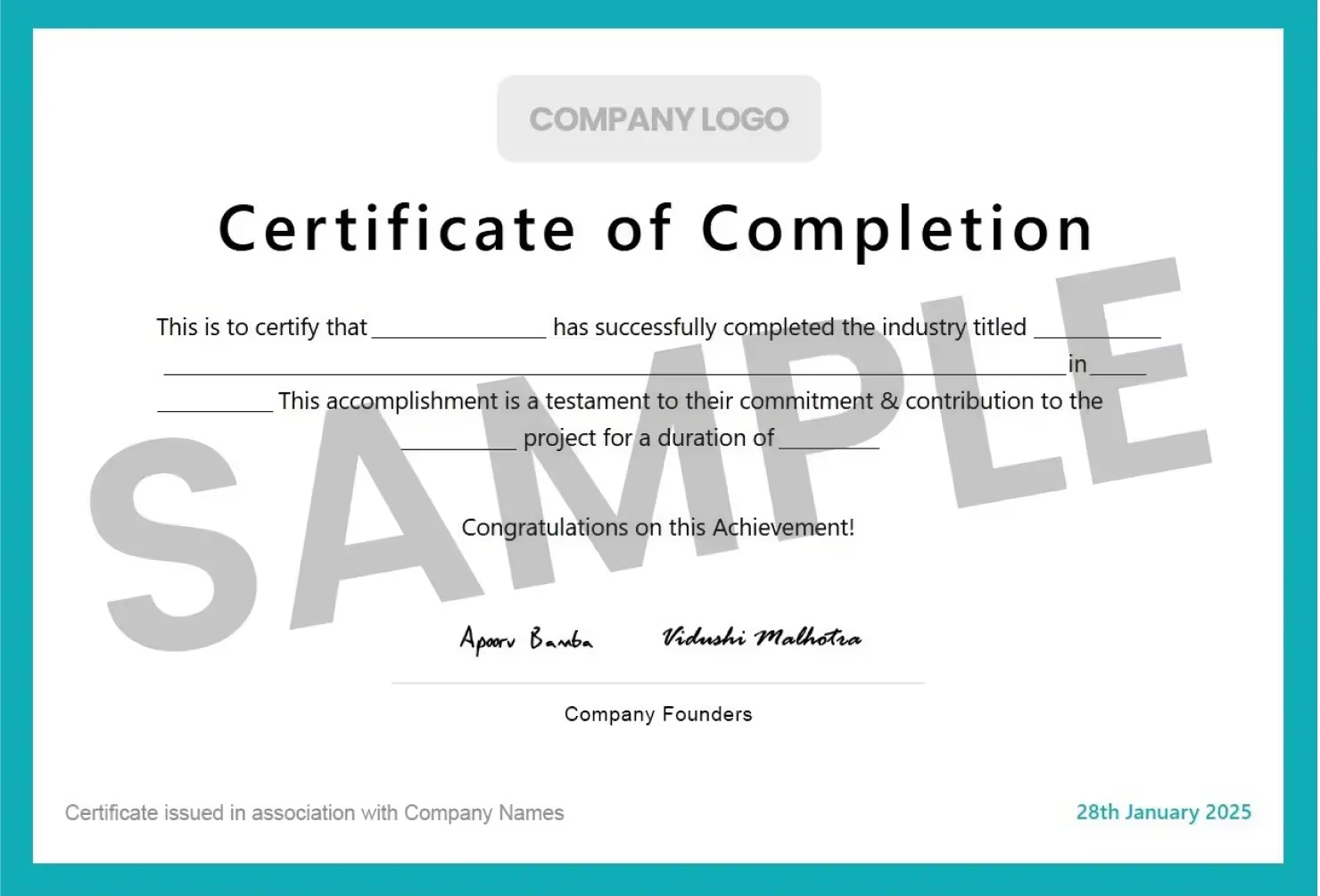
Sample Certificate for Capstone Project
*Companies may vary for different batches.
Projects completed by our learners
AI & Cloud conclave: explore, learn, and network!

Industry Insights from Leading Experts
Gain exclusive knowledge from top professionals at the forefront of AI and cloud technology, discussing the latest trends and future directions.

India’s Tech Preparedness
Hear from notable speakers as they evaluate and discuss India's readiness to adopt and integrate cutting-edge AI and cloud technologies.

Networking Opportunities
Connect with a diverse group of like-minded AI and cloud enthusiasts from across India, including participants from both academia and industry.
Industry Insights from Leading Experts
Gain exclusive knowledge from top professionals at the forefront of AI and cloud technology, discussing the latest trends and future directions.
India’s Tech Preparedness
Hear from notable speakers as they evaluate and discuss India's readiness to adopt and integrate cutting-edge AI and cloud technologies.
Networking Opportunities
Connect with a diverse group of like-minded AI and cloud enthusiasts from across India, including participants from both academia and industry.
Event Location: Bangalore
Stay ahead of the curve in this rapidly evolving field. Join us to explore, learn, and network!
















The explosive growth of India's AI and GenAI sector
$28.36 billion
growth of the AI market by 2030
20 million
new AI-related roles by 2026
₹500 billion
GDP growth of India by 2026
Most In-demand Job Roles in India

Data Scientist

Data Analyst

AI Engineer

GenAI Engineer

NLP Engineer

Business Analyst

AI Consultant

ML Engineer
Build your success story with us


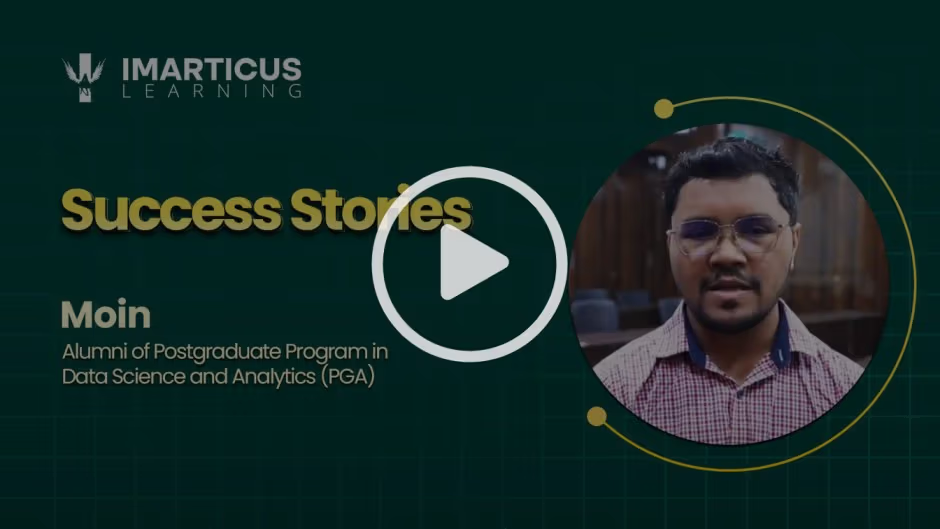
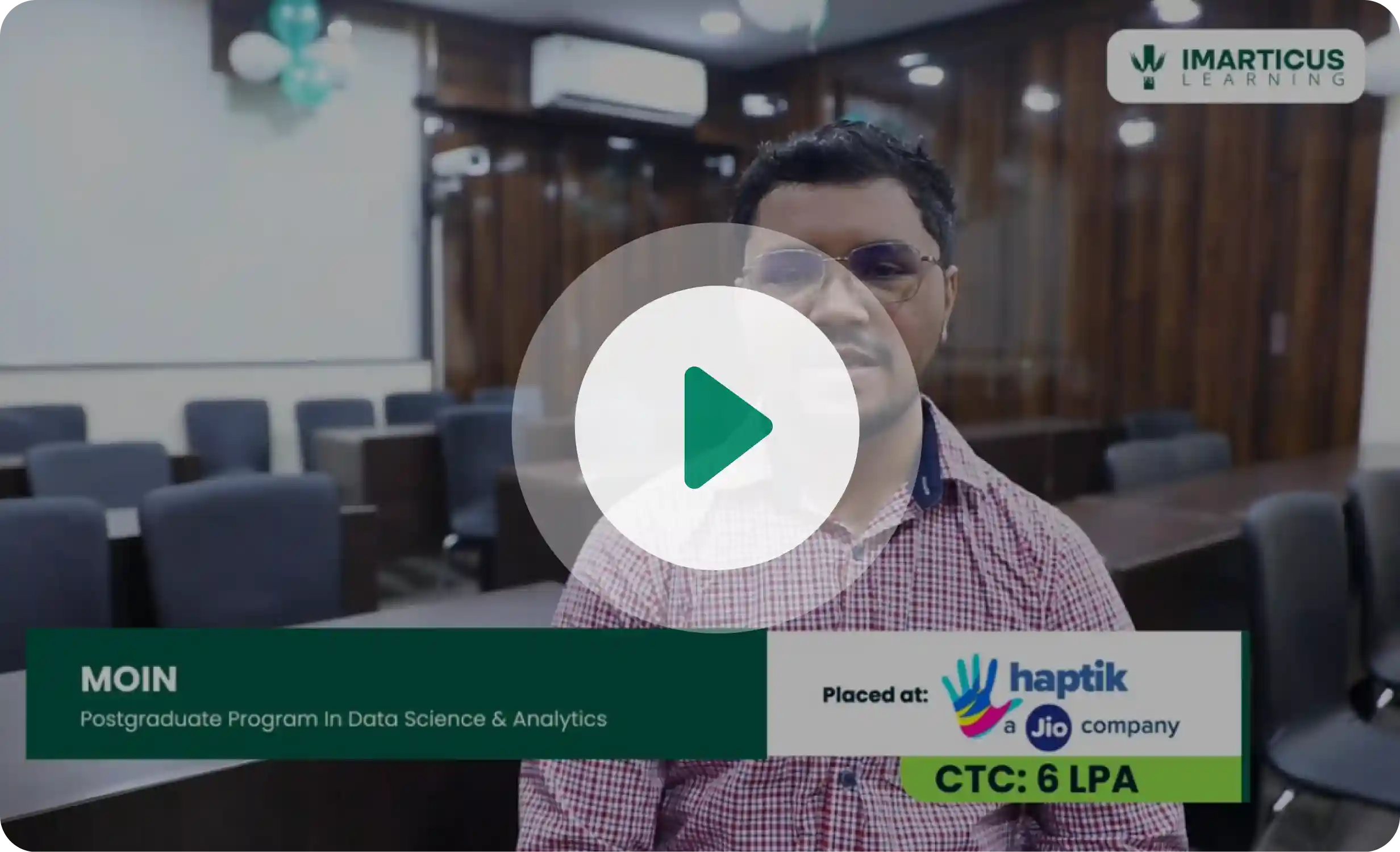

Piyush More
My experience with Imarticus was quite positive. The training provided a strong foundation in the subject matter, and the faculty was knowledgeable and supportive, always ready to assist with any questions. The career support was adequate, offering valuable guidance and resources that helped me explore job opportunities confidently.
Placed at:


Asif Shaikh
I'm thrilled to announce my completion of the Data Science course and my placement at Genpact. Imarticus Learning's unwavering support and guidance throughout the process was invaluable. I extend my heartfelt thanks for their instrumental role in my success.
Placed at:

Rohit Gohil
Through hands-on projects, comprehensive coursework, and mentorship, I've gained a deep understanding of statistical methodologies, machine learning algorithms, and data visualization techniques. This program has not only sharpened my analytical abilities but has also instilled in me the confidence to tackle real-world data challenges.
Placed at:


Rutuja Narasagoudar
I highly recommend Imarticus Learning for anyone seeking quality education and career advancement.
Placed at:

Siddesh Nalawade
Completing the data science program at Imarticus Learning has been a transformative journey, equipping me with the skills and knowledge needed to navigate the complex landscape of data analysis and interpretation.
Placed at:

Vikas Mahindrakar
My expepfully. I am immensely grateful for their guidance and support. If you're considering this career, I highly recommend it.
Placed at:

Vipul Purohit
After researching various institutions, I chose Imarticus for their top-rated Data Science Course. Since I come from a non-IT background, transitioning into data science wasn't easy. However, with the support of Imarticus, I successfully completed the Program in Data Science. Their career assistance paved the way for my placement in a reputable IT company. I'm grateful for their invaluable support throughout this journey.
Placed at:


Honey Punamiya
I completed the program at Imarticus Learning and had an excellent experience. Irfan Sir’s training was top-notch, and Sameer ensured smooth communication around career opportunities. I highly recommend advancing in data science and machine learning.
Placed at:
Career transition support that gets you hired
Transform your professional trajectory with our Career Services

Mock Interviews & Resume Makeover
Practice real interview scenarios with industry pros. Fine-tune your resume and LinkedIn profile to make a strong impression in a competitive market.

Project Portfolio Enhancement
Showcase real-life projects that prove your hands-on expertise. Capture recruiters' attention with business-relevant case studies in your portfolio.

Access to Exclusive Job Portal & Placement Drives
Get premium access to the Imarticus job portal and placement drives to maximise your chance of landing a dream data science role.
From resume-ready to interview-ready- Our career support prepares you for top-tier opportunities.
Certificates
Certificate of Completion
On successful completion of this program, you’ll earn an Executive Postgraduate Program in Data Science and Artificial Intelligence certificate. This certification will add considerable value to your professional credentials.
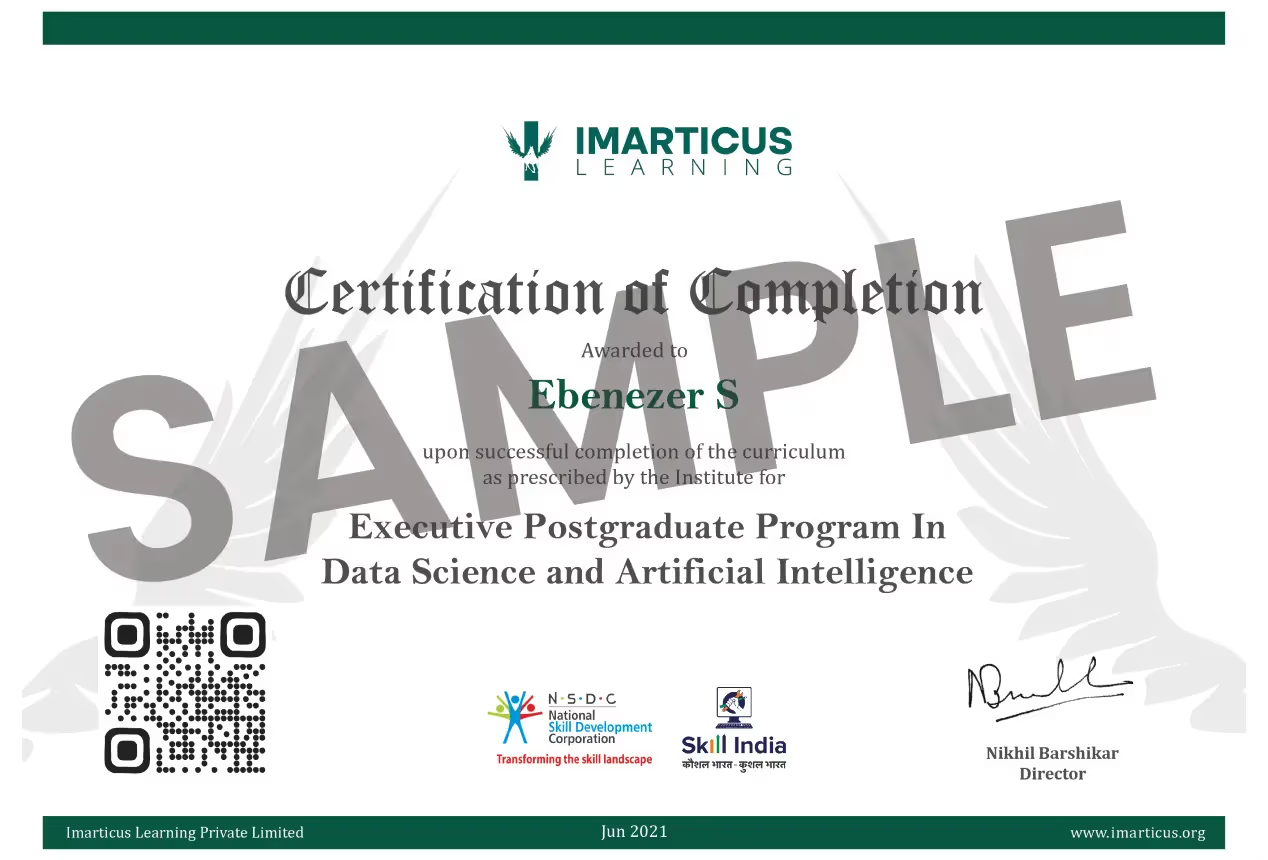

On successful completion of this program, you’ll earn an Executive Postgraduate Program in Data Science and Artificial Intelligence certificate. This certification will add considerable value to your professional credentials.
Global Capstone Certificate
Upon successful evaluation of your capstone project, you will be awarded a project completion certificate from a Global startup company. This will be a testimony to your hands-on experience.
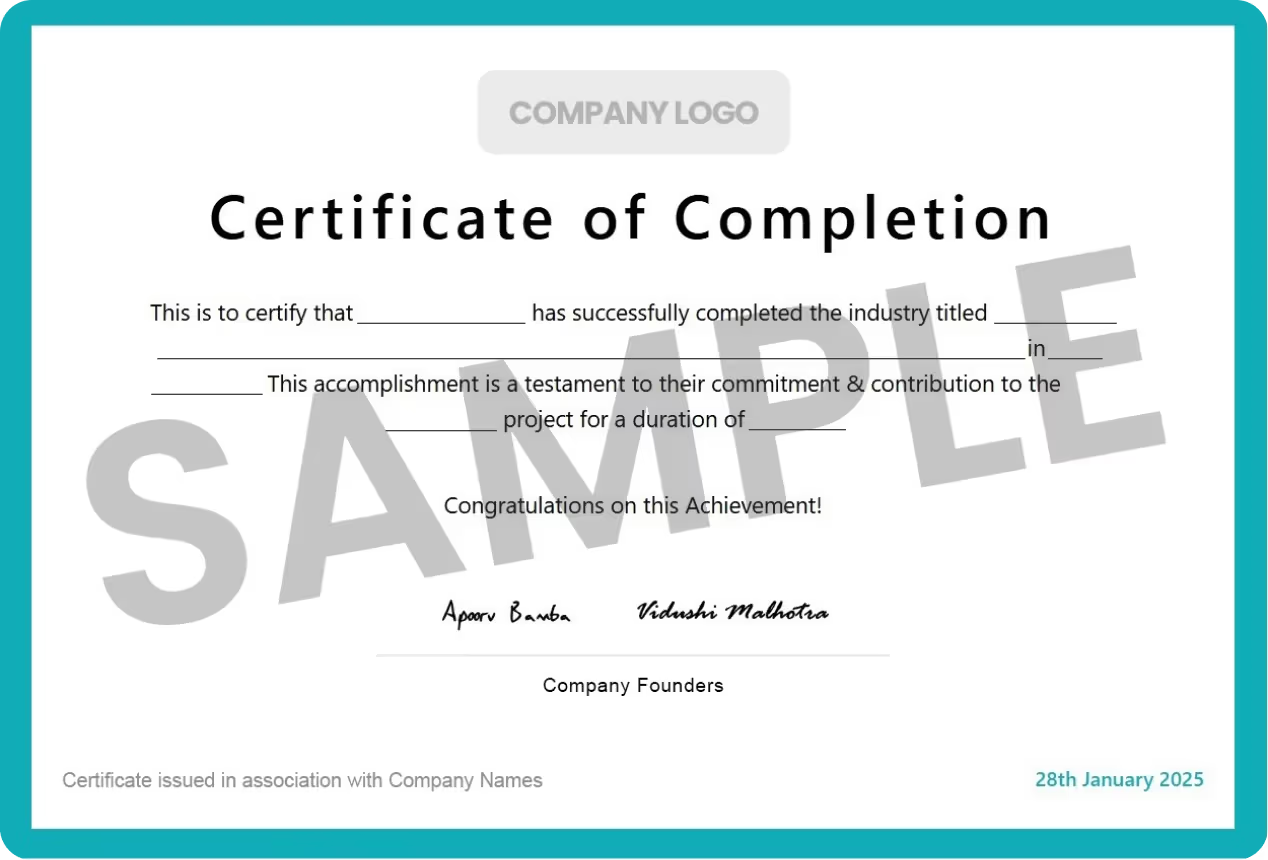
Upon successful evaluation of your capstone project, you will be awarded a project completion certificate from a Global startup company. This will be a testimony to your hands-on experience.
AWS Certificate
Upon successful completion of integrated AWS ML/AI courses, you will get a certificate from AWS acknowledging your commitment to learning.
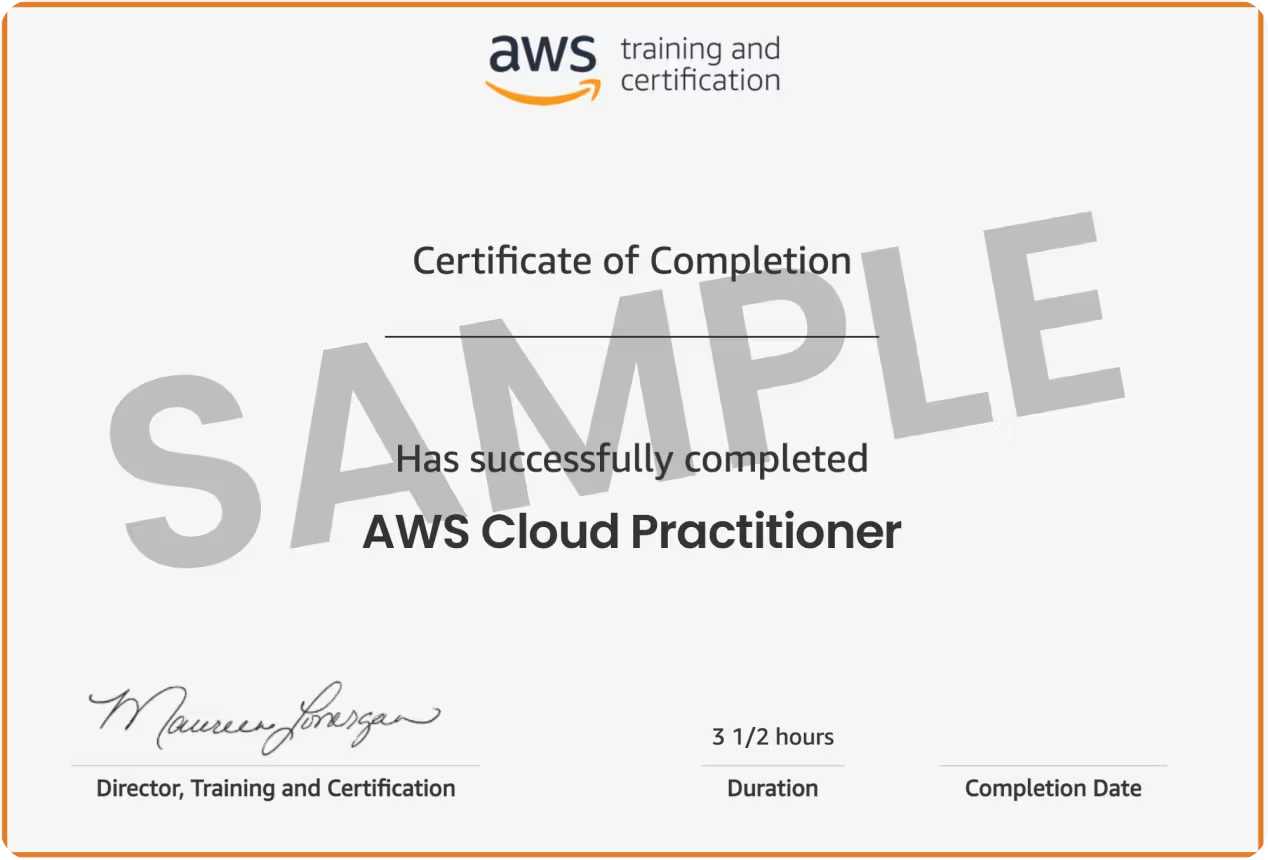
Upon successful completion of integrated AWS ML/AI courses, you will get a certificate from AWS acknowledging your commitment to learning.
This program is right for

Early Career Professionals
Start your career in Data Science and AI with basic to advanced skills, hands-on projects, and industry knowledge to help you transition into new roles.

Mid-Senior Professionals
Move up to senior positions by gaining real-world experience and advanced AI/ML (Artificial Intelligence/Machine Learning) knowledge.

Tech Enthusiasts
Enthusiasts who would like to start their career in Data Science and AI.
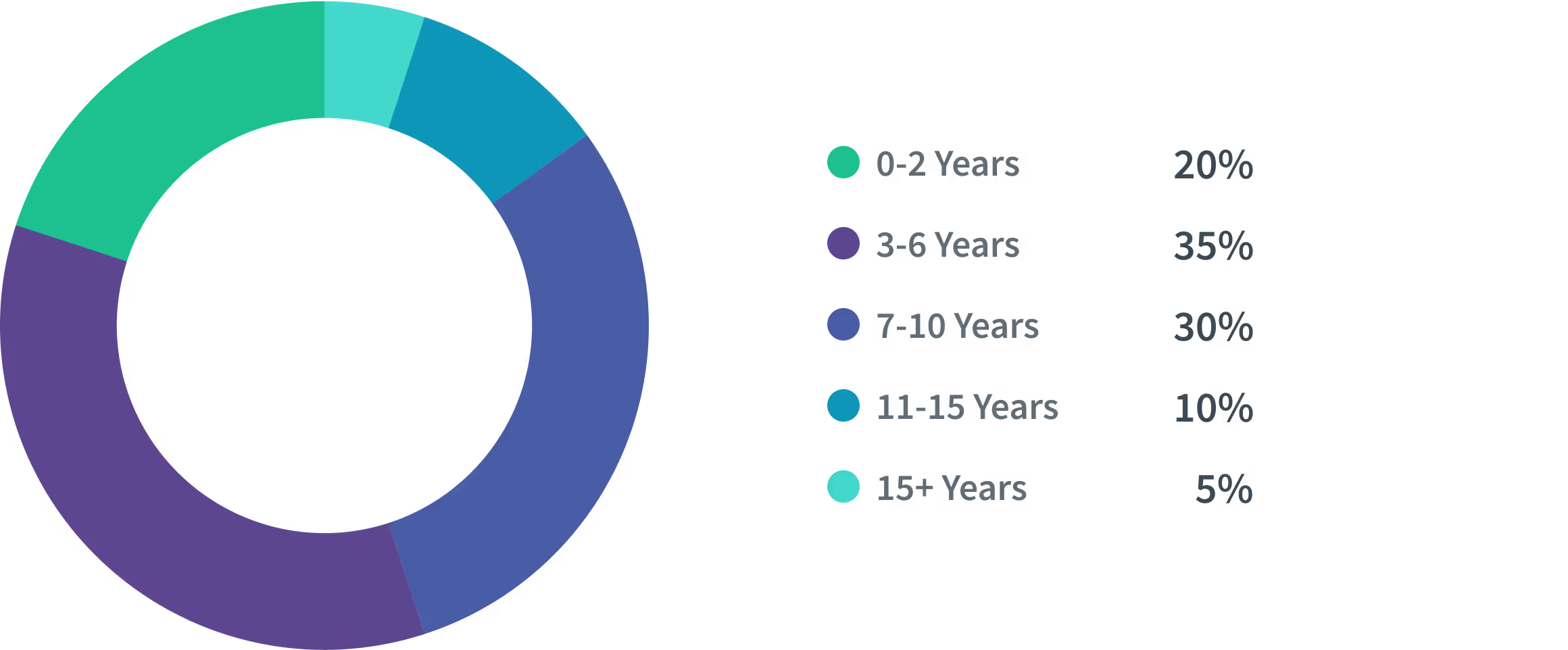
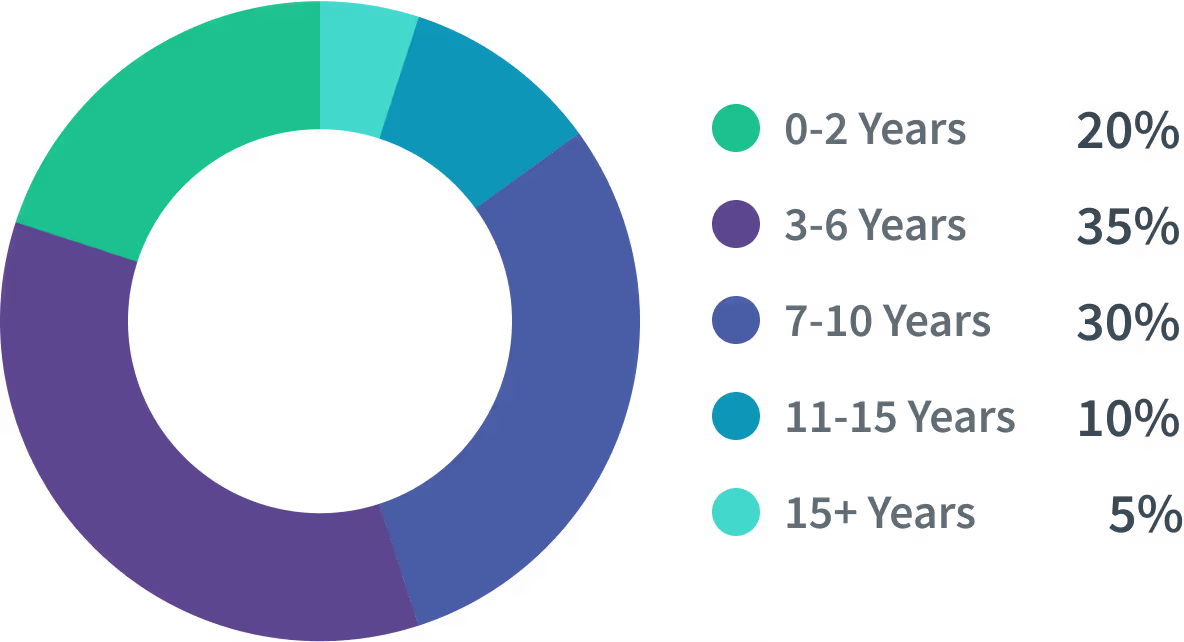
Batch Profile
Admission process

Submit Your Application

Get Profile Reviewed

Pay Registration Fee

Join the Program
Programme fee
Total program fee
₹ 1,99,000
inclusive of all taxes
Honored for excellence - Awards highlighting our commitment
Outstanding Education Company for Data Science and Analytics in 2024

Best Education Brand in Analytics
Edtech Business of The Year Analytics
Best Institute to Study Data Science 2023

Outstanding Education Company of the Year
FAQs
We take pride in our effective and thoughtfully designed learning pedagogy. Below are the key highlights indicating how this program stands out:
- Business first approach: Understand what matters to businesses willing to analyse data. Learn to create strategic plans that effectively align your analytical work with desired business outcomes.
- Develop a problem-solving approach: Learn the approach of problem-solving and not just analysing data. We will help you break down real industry challenges and teach you how to effectively solve them.
- Learn by solving real industry problems: Expose yourself to what working data science professionals go through in their day-to-day work lives. Gain practical experience by tackling 12+ real industry problems from diverse domains for a 360-degree learning journey!
- Top-notch industry guidance: Imagine getting direct, one-on-one guidance from professionals of your dream tech company and discussing your career path with them.
- Learn through the latest curriculum: Stay ahead of the curve with our curriculum, featuring the most advanced tools and technologies, including LLMs, Langchain, GANs, RAG, NLP, CV, MLOps, Python, Deep Learning, GenAI tools, and more.
- Live Learning + Campus Connect: Learn through live, interactive, hands-on focused sessions and also get an opportunity to meet industry stalwarts and your fellow learners through an offline event. Our 320+ hours of learning will transform you into a complete data science professional.
- Extensive Career Support: Unmatched career support with 1:1 mentorship sessions with industry leaders, resume-building sessions, mock interviews, and more.
This program is right for you if you are:
- Early Career Professionals: Start your career in AI with basic and advanced skills, hands-on projects, and industry knowledge to help you transition into new roles.
- Mid-senior Professionals: Move up to senior positions with leadership training, real-world experience, and advanced AI/ML (Artificial Intelligence/Machine Learning) knowledge.
- Tech Enthusiasts: Enthusiasts who would like to start their career in Data Science and AI.
Skills that you will master are as follows:
- Generative AI
- Prompt Engineering
- MLOps
- Hugging Face
- Machine Learning
- Supervised and Unsupervised Learning
- Reinforcement Learning
- Python
- Artificial Intelligence
- Large Language Models (LLMs)
- Model Evaluation and Tuning
- Data Science and Machine Learning Frameworks
- Natural Language Processing (NLP)
- Ethical AI Practices
- Computer Vision
- Chatbot Development
- Data Analysis
- Data Visualisation
- Deep Learning
Graduates of this Executive Postgraduate Program in Data Science and Artificial Intelligence will be well-prepared for a variety of in-demand job roles. The program's focus on hands-on projects, industry mentorship, and a GenAI-infused curriculum positions graduates for success in the following areas:
Core Data Science and AI Roles:
- Data Scientist: Analysing data, building predictive models, and extracting insights to drive business decisions. The program's focus on business problem-solving and real-world projects directly prepares graduates for this role.
- Machine Learning Engineer: Developing, deploying, and maintaining machine learning models in production environments. The curriculum's coverage of supervised/unsupervised learning, deep learning, and MLOps is highly relevant.
- AI Engineer: Designing and building AI-powered applications, including those using NLP, computer vision, and generative AI. The program's emphasis on these areas makes graduates suitable for AI engineering roles.
- Data Analyst: Analysing data to identify trends, patterns, and insights to support business decision-making. The foundational modules on Python, SQL, statistics, and data visualisation equip graduates for data analyst positions.
Specialised AI Roles:
- NLP Engineer: Working with natural language data to build chatbots, sentiment analysis systems, and other NLP applications. The dedicated NLP module and GenAI content are crucial for this role.
- Computer Vision Engineer: Developing applications that can see and interpret images and videos using techniques like image classification and object detection. The computer vision module provides the necessary skills.
- GenAI Engineer/Prompt Engineer: Focusing on generative AI models, including developing new models, fine-tuning existing ones, and creating effective prompts for these models. The program's GenAI and LLM modules are essential for these emerging roles.
- MLOps Engineer: Streamlining the process of deploying and managing machine learning models in production. The MLOps module specifically targets this growing area.
Business-Oriented Roles:
- AI Consultant: Advising businesses on how to leverage AI to solve their problems and achieve their goals. The program's focus on business problem-solving and communication skills prepares graduates for consulting roles.
- Business Analyst with AI Focus: Combining business analysis skills with AI knowledge to identify opportunities for AI implementation and translate business needs into technical requirements.
Emerging Roles:
- AI Ethicist: While not explicitly mentioned, the program's focus on responsible AI practices could position graduates for future roles in AI ethics, as this area becomes more important.
The core learning will happen via live online lectures & some part through “learn at your own pace” videos. To reinforce your learning, you'll receive lecture recordings to review at your convenience. You will also get access to student notes, practice projects, additional study material, and quizzes on our fully integrated online learning portal - LMS.
Our career services include a host of benefits that are designed to make you industry-ready.
- Resume-building: Redesign your CV to create the best profile and get noticed by hiring managers of your dream job companies.
- Profile enhancement: Enhance your profile with a project portfolio that stands out from the rest.
- Interview preparation workshop: Learn best practices and attend mock interviews with our industry experts to ace real interviews.
It's tricky to give exact salary figures because they vary significantly based on experience, location, specific skills, company size, and industry. However, we have provided some general ranges based on industry data and trends:
General Salary Ranges for AI/Data Science Roles in India (Annual):
- Entry-level (0-2 years): ₹3-7 LPA
- Mid-career (2-5 years): ₹7-15 LPA
- Senior-level (5+ years): ₹15-30 LPA
Specific Roles (Approx Ranges):
- Data Scientist: ₹6-25 LPA
- Machine Learning Engineer: ₹6-20 LPA
- AI Engineer: ₹7-18 LPA
- NLP Engineer: ₹8-22 LPA
- Computer Vision Engineer: ₹7-20 LPA
- GenAI Engineer/Prompt Engineer: ₹8-25 LPA (This is a very new area, so ranges are still evolving)
- MLOps Engineer: ₹7-18 LPA
- Data Analyst: ₹4-10 LPA
While we can't guarantee a specific job, we empower you to become a highly competitive candidate. Our program focuses on developing in-demand skills, building a strong portfolio through real-world projects, and providing personalised career guidance. We give you the tools and support to navigate the job market effectively and increase your chances of landing your dream role.
Follow us on


Download our app


Download our app