A truly inclusive workplace doesn’t just bring in people from different backgrounds; it creates a space where every voice is heard, valued, and respected. Organisations prioritising diversity and inclusion in HR experience better employee engagement and benefit from enhanced creativity, problem-solving, and decision-making.
Diversity, equity, and inclusion (DEI) are frameworks to ensure everyone’s fair treatment and active participation. But how can HR professionals effectively foster an inclusive workplace?
Let’s explore key strategies that enhance diversity in HR practices and ensure every employee feels valued and included.
Why is diversity and inclusion important in HRM?
Building a diverse and inclusive workplace isn’t just the right thing to do—it’s a business imperative. Studies show that companies with a strong focus on diversity and inclusion in HR practices tend to perform better, have happier employees, and are more innovative.
According to a Pew Research Center survey, 56% of U.S. adults believe focusing on DEI is a positive step. However, views on DEI vary based on demographics and politics.
Many workers are familiar with DEI initiatives at their jobs. Around 61% say their company has policies to ensure fair hiring, pay, or promotions, and 52% report having DEI training or meetings.
Fewer say their workplace has a dedicated DEI staff (33%), offers salary transparency (30%), or provides employee groups based on shared identities (26%). Most who access these measures believe they had a positive impact.
But what exactly makes the importance of inclusion in HRM so crucial?
An inclusive workplace encourages people from different backgrounds, cultures, and experiences to collaborate and share ideas. This diversity in HR practices leads to richer problem-solving, greater creativity, and a competitive edge. So, the question is, how do we implement diversity HR practices?
How to Implement diversity and inclusion in HR Practices
Conduct Diversity Audits:
Assess the current state of diversity in the organisation.
Identify gaps in representation and inclusion across different departments.
Set Clear Diversity Goals:
Define specific, measurable objectives for increasing diversity in hiring, promotions, and leadership roles.
Ensure goals align with overall company values and business strategy.
Provide Diversity and Inclusion Training:
Offer regular workshops on unconscious bias, cultural competence, and inclusive behaviour.
Ensure leadership and HR teams actively participate in these trainings.
Create Employee Resource Groups (ERGs):
Encourage the formation of ERGs for underrepresented groups.
Support ERGs by providing funding and resources for their initiatives.
What are the best strategies for creating an inclusive workplace?
HR managers play a crucial role in embedding diversity and inclusion into the company culture.
Here are a few diversity and inclusion strategies in 2024 you can implement:
Unbiased Hiring Practices
One of the most important steps towards an inclusive workplace is to start at the hiring stage. Ensure that job postings use neutral language and that interview processes are free from bias. Tools such as HR analytics identify patterns and remove any unintentional biases.
Diversity Training for Employees
Providing diversity and inclusion training to all employees is crucial. This helps raise awareness about diversity HR practices and fosters a workplace where everyone is more mindful of how to contribute to an inclusive environment.
Data-Driven Decisions Using HR Analytics
This is where HR analytics comes into play. With the right tools, HR professionals can track diversity metrics, monitor inclusion levels, and make informed decisions. Still trying to figure out where to start? An HR analytics course can provide the insights you need to use data effectively to promote workforce inclusion.
Open and Inclusive Communication Channels
Encourage open dialogues within teams. Regular check-ins and feedback sessions allow employees to voice their concerns or share ideas on fostering a more inclusive workplace.
What is the Role of HR Analytics in Diversity and Inclusion Initiatives?
As HR professionals, you know data is your best friend in improving diversity. HR analytics allows you to measure everything from hiring practices to employee retention rates concerning diversity. You can implement inclusive workplace strategies tailored to your organisation’s specific needs by understanding what the numbers say.
If you want to deepen your knowledge and make data-driven decisions, consider enrolling in an hr analytics course. You’ll learn how to gather and interpret data that can drive more effectivediversity and inclusion in HR.
Here are some key ways HR analytics contributes to these initiatives:
Identifying Diversity Gaps
Tracking Progress
Enhancing Recruitment Processes
Evaluating Employee Engagement
Driving Inclusive Leadership
Supporting Employee Development
Transform Your HR Career with Imarticus Learning and IIT Roorkee
At Imarticus Learning, we partner with CEC IIT Roorkee to bring you a cutting-edge HR management program to equip you with the skills needed to lead in today’s dynamic business landscape. This comprehensive course covers everything from job analysis and recruitment strategies to performance management, employee engagement, and diversity management.
Our HR analytics course offers an immersive learning experience, with access to over 3 trending tools, 8 case studies, and real-world projects. This approach ensures you gain practical knowledge that can be directly applied in your workplace, enhancing your competency in HR.
With expertise from IIT Roorkee and top industry professionals, you will benefit from a curriculum combining academic insights and real-world application. This HR management course will give you the best of both worlds, ensuring a well-rounded education.
Take the next step in becoming an HR leader with Imarticus Learning and IIT Roorkee!
FAQ
What are effective diversity HR practices?
Effective diversity in HR practices includes implementing targeted recruitment strategies, conducting diversity training, and establishing employee resource groups (ERGs).
How can organisations promote inclusion in HRM?
Organisations can promote inclusion in HRM by setting clear diversity goals, offering ongoing training on unconscious bias, and ensuring that their policies support diverse hiring and retention.
Why is diversity important in the workplace?
Diversity and inclusion in HR are crucial as they lead to improved problem-solving and innovation. A diverse workforce brings various perspectives, which enhances creativity and decision-making.
What strategies can build a more inclusive workplace?
Companies should adopt inclusive workplace strategies such as offering mentorship programs, conducting regular diversity audits, and celebrating cultural events to build a more inclusive workplace.
How does HR analytics help in enhancing diversity?
HR analytics is vital in improving HR practice diversity by providing data-driven insights into hiring, promotions, and employee satisfaction.
As technology evolves, CFO finance automation is no longer a distant concept—it’s here, reshaping how businesses operate. For CFOs, the stakes are higher than ever. The question isn’t if you should adopt automation but how and when.
McKinsey estimates that AI could create up to $1 trillion additional annual value for the global banking industry. In this post, we’ll explore the future of financial management, the role of AI in finance, and how CFOs leverage finance automation.
What is Finance Automation, and why should CFOs care?
Finance automation uses artificial intelligence (AI), machine learning, and other technologies to streamline financial tasks. This means automating everything from data entry to budgeting and forecasting. By leveraging CFO finance automation, you can significantly reduce manual work, eliminate human errors, and make better, data-driven decisions.
How AI in finance can help CFOs improve efficiency?
Automation has emerged as a powerful tool for CFOs seeking to streamline operations and enhance decision-making. While the benefits of financial automation are compelling, the implementation also presents certain challenges that must be carefully considered.
Set Clear Targets
Identify priorities: efficiency, effectiveness, expansion, or disruption.
Use RPA for efficiency and effectiveness boosts.
For expansion or complex issues, explore AI and machine learning tools.
Involve Frontline Employees
Address employee concerns by providing proper training and tools.
Engage finance teams in building and using digital tools to automate processes.
Foster collaboration between finance experts and data scientists for optimal results.
Focus on People, Processes, and Performance
Align automation with your broader finance strategy.
Balance people (upskill employees), processes (increase efficiency), and performance (improve financial outcomes).
Establish Strong Governance Structures
Ensure data accuracy by pulling from correct sources and giving timely access to the right people.
Provide tools for visualising data and comparing insights.
Implement AI governance from strategy definition to deployment and monitoring to ensure accountability.
How does finance automation benefit CFOs?
Cost Reduction
One of the most significant benefits of AI in finance is the reduction of operational costs. Automating repetitive and time-consuming tasks such as data entry, invoicing, and payroll processing can significantly cut labour costs and minimise manual intervention.
Improved Decision-Making
Automation gives CFOs real-time access to accurate financial data, enabling quicker and more informed decisions. By automating data collection and analysis, CFOs can have more profound insights into cash flow, profitability, and financial health.
Time Efficiency
By eliminating manual processes, finance automation frees time for CFOs and finance teams to focus on more strategic initiatives. Instead of spending countless hours on routine tasks like reconciling accounts or processing payments, CFOs can dedicate their efforts to activities that add more value to the organisation, such as financial forecasting, risk management, and growth planning.
What are the challenges of implementing finance automation?
High Initial Investment
The upfront cost is one of the biggest challenges CFOs face when considering finance automation. Implementing automation software requires a substantial financial investment, which can be particularly daunting for small to medium-sized businesses.
Cybersecurity Risks
Cybersecurity has become a critical concern with the increasing reliance on automated systems and digital tools. Automated finance systems can store vast amounts of sensitive data, making them attractive cyberattack targets.
Resistance to Change
Change management is often a challenge when introducing new technology. Teams accustomed to traditional financial methods may resist automation due to fear of job loss or discomfort with new processes.
Key Technologies Driving Finance Automation
While AI gets most of the spotlight, several other technologies are shaping the future of finance:
Robotic Process Automation (RPA): Automates manual, rule-based tasks like data entry, invoice processing, and auditing
Blockchain: Ensures secure and transparent financial transactions, especially in areas like payments and auditing
Machine Learning: Goes beyond simple automation by learning from data to make predictions and suggest actions
Cloud computing: Offers scalable and flexible platforms for financial operations, enabling real-time data access, collaboration, and integration with other financial tools
These technologies are no longer optional but essential for CFOs who want to stay competitive. The future of financial management is being built on these tools.
What Does the Future of Financial Management Hold for CFOs?
The future of financial management is rapidly evolving, with AI in finance taking the lead. CFOs must be ready to adapt to trends such as:
Hyper-automation: Using multiple technologies like AI, RPA, and machine learning to automate finance departments fully.
AI-enhanced decision-making: CFOs will rely more on AI for everything from budgeting to risk management.
Data-driven strategies: Financial leaders will use data analytics to refine strategy and drive business growth.
Elevate Your Financial Leadership with the CFO Programme from ISB and Imarticus Learning
The Chief Financial Officer Programme from the Indian School of Business (ISB), in association with Imarticus Learning, is your path to taking your financial leadership skills to new heights.
This comprehensive 8-month CFO course equips you with the ability to think strategically, lead high-performing teams, and drive sustainable growth. In today’s complex and fast-paced business environment, you’ll also learn to lead with integrity, purpose, and agility.
The CFO course at ISB, in collaboration with Imarticus Learning, provides unparalleled networking opportunities with like-minded CXOs and industry leaders. As a participant, you’ll be part of an elite group of financial professionals from diverse sectors and geographies, building your professional network and expanding your social capital.
Take advantage of this opportunity to advance your career with the Chief Financial Officer Programme.
FAQs
What is finance automation?
Finance automation uses AI and machine learning technologies to streamline financial processes, reduce manual work, and improve decision-making.
How does AI improve efficiency in finance?
AI automates repetitive tasks, reduces errors, and provides real-time data insights, allowing CFOs to focus on strategic initiatives.
What are the main benefits of finance automation for CFOs?
Key benefits include cost reduction, increased accuracy, improved decision-making, and enhanced time efficiency for finance teams.
What challenges do CFOs face when implementing finance automation?
Major challenges include high initial investments, cybersecurity risks, and resistance to change from employees accustomed to traditional methods.
Which technologies are driving finance automation?
Key technologies include robotic process automation (RPA), blockchain, machine learning, cloud computing, and natural language processing (NLP).
What does the future hold for finance management with AI?
The future involves hyper-automation, AI-enhanced decision-making, and data-driven strategies, making it essential for CFOs to adapt and innovate.
Are you in search of a solution that streamlines your supply chain operations?
Do you need to learn which tools can ease the process and help you improve efficiency, cut costs, and optimise decision-making?
Indeed, this is the primary concern, considering the changes in the business sector. However, the choice of tools between productivity enhancement, visibility improvement, and a data-based approach to production is crucial.
Let’s not wait until 2026 to understand the top 10 supply chain management tools. The time to form an opinion is now, before the date arrives.
Why Do You Need Supply Chain Management Tools in 2026?
The digital transformation in supply chains is no longer a luxury but a necessity. Businesses are dealing with increased complexity in logistics, global supply chain disruptions, and shifting customer demands. This has pressured companies to adopt digital supply chain solutions to maintain smooth operations and remain competitive.
Supply chain management involves the design, planning, execution, control, and monitoring of supply chain activities, all aimed at creating value, building a competitive infrastructure, leveraging global logistics, aligning supply with demand, and evaluating performance on a global scale.
Supply Chain Management Benefits
But what are the real supply chain management benefits in 2026?
Efficiency: Tools like real-time inventory tracking, demand forecasting, and automated procurement significantly reduce delays and manual errors.
Cost Savings: With streamlined processes, companies can avoid overstocking or stockouts, reduce warehousing costs, and optimise routes for logistics.
Data-Driven Decisions: Access to real-time analytics allows supply chain managers to make informed decisions that can boost productivity and revenue.
What are the top supply chain softwarefeatures in 2026?
Let’s dive into the best supply chain tools that will dominate 2026, offering critical supply chain software features to streamline logistics, inventory, and demand planning.
SAP Integrated Business Planning (IBP)
Features:
Real-time demand and supply synchronisation
Predictive analytics
Integrated financial and sales operations planning
Benefits:
SAP IBP provides complete visibility into your supply chain operations. Synchronising real-time demand, supply, and inventory planning helps businesses make quicker, data-backed decisions. It also allows companies to simulate different scenarios, helping them plan for disruptions.
2. Oracle SCM Cloud
Features:
AI-driven analytics
Supplier management
Integrated transportation and warehouse management
Benefits:
Oracle SCM Cloud helps businesses automate key supply chain activities, from procurement to delivery. With its AI-driven analytics, it predicts demand changes, helping businesses stay one step ahead. Its scalability makes it one of the best supply chain tools for growing companies.
3. Kinaxis RapidResponse
Features:
End-to-end supply chain visibility
Real-time decision-making
Predictive demand planning
Benefits:
Kinaxis RapidResponse focuses on providing fast, real-time solutions to complex supply chain problems. It offers a single platform to plan, monitor, and respond to changes, providing businesses with flexibility and agility.
4. Manhattan Associates SCM
Features:
Advanced warehouse management
Transportation optimisation
Real-time inventory tracking
Benefits:
Manhattan Associates SCM excels in automating and optimising warehouse and transportation operations. It offers end-to-end visibility, ensuring businesses can track inventory and shipments in real time, leading to increased efficiency and reduced costs.
5. JDA Software (Blue Yonder)
Features:
AI-powered supply chain planning
Integrated workforce and logistics management
Cloud-based inventory solutions
Benefits:
JDA Software offers AI-powered solutions to forecast demand and optimise workforce management. Its supply chain software features enable companies to predict demand fluctuations and adjust inventory accordingly, providing a seamless supply chain experience.
6. Infor SCM
Features:
Collaborative demand planning
AI and machine learning algorithms
Vendor-managed inventory (VMI)
Benefits:
Infor SCM stands out for its collaborative approach, allowing businesses to work closely with vendors and suppliers. Its AI and machine learning capabilities enhance demand forecasting and optimise stock levels.
7. E2open
Features:
Global trade management
Demand sensing and inventory optimisation
Supplier collaboration tools
Benefits:
E2open provides comprehensive visibility across the entire supply chain, including logistics and supplier collaboration. Its demand-sensing tools allow companies to react to market shifts quickly, helping reduce stockouts and overstock situations.
8. Coupa Supply Chain Design & Planning
Features:
AI-driven supply chain design
Integrated risk management
Real-time simulation capabilities
Benefits:
Coupa’s tool helps businesses design a more resilient supply chain by simulating various risk scenarios. This tool is ideal for companies looking to ensure continuity and reduce risk during supply chain disruptions.
9. Logility Solutions
Features:
Collaborative supply chain planning
Inventory and replenishment optimisation
S&OP (Sales and Operations Planning) integration
Benefits:
Logility Solutions offers collaborative tools that enhance communication and efficiency across the supply chain. Its predictive analytics ensure accurate forecasting and optimal stock levels.
10. Anaplan for Supply Chain
Features:
Connected planning platform
Advanced financial planning and analysis
Predictive supply chain analytics
Benefits:
Anaplan provides connected planning across finance, sales, and supply chain teams. Its advanced predictive analytics ensures seamless operations from forecasting to execution, making it one of the most versatile supply chain management tools.
Key Supply Chain Software Features to Look For
Given the available supply chain software features, selecting the right tool can be overwhelming. Here are some essential features to consider:
Real-Time Visibility: This allows managers to track inventory and shipments, providing real-time updates and improving decision-making.
AI and Machine Learning: Tools with AI-driven capabilities offer predictive analytics, demand sensing, and intelligent planning.
Cloud Integration: Cloud-based tools provide greater flexibility, scalability, and accessibility, ensuring teams can access data from anywhere.
Collaboration Tools: With suppliers or internal teams, strong collaboration features improve communication and streamline processes.
The Growing Demand for Skilled Supply Chain Professionals
As supply chain solutions become more complex, the demand for skilled professionals to manage these tools is increasing. Companies seek individuals who understand logistics and have the technical know-how to implement and manage the best supply chain tools.
This is where a comprehensive supply chain management course comes in. Knowledge using these tools can give you a competitive edge and open new career opportunities.
Master Supply Chain and Analytics with IIT Roorkee and Imarticus Learning
Take the next step in your supply chain and analytics career by enrolling in the 6-month programme offered by Imarticus Learning in collaboration with CEC, IIT Roorkee. This supply chain management course will equip you with the expertise needed for data-driven decision-making. It prepares you for roles like demand planner, data scientist, and supply and operations planner.
Learn from IIT Roorkee’s experienced faculty and gain the skills to excel in today’s competitive market. Master the core concepts of supply chain management with practical learning experiences.
Transform Your Career in Supply Chain and Analytics!
FAQs
What are the top supply chain management tools for 2026?
The top supply chain management tools for 2026 include SAP SCM, Oracle SCM Cloud, Kinaxis RapidResponse, JDA Software, and IBM Watson Supply Chain.
How can supply chain management tools improve efficiency?
These tools streamline processes, enhance visibility, automate tasks, and provide data-driven insights, leading to better resource management and reduced costs.
What features should I look for in supply chain management software?
Key features include inventory management, demand forecasting, real-time tracking, analytics and reporting, and integration capabilities with other systems.
Why is it important to invest in modern supply chain tools?
Modern tools help businesses adapt to changing market conditions, improve collaboration, enhance customer satisfaction, and maintain a competitive edge.
Are you struggling to keep your business finances on track, or do you wish you had a clearer picture of your financial future?
Effective budgeting and forecasting could be the solutions you need. These practices are essential for navigating the challenges of today’s business environment and can empower you to make informed decisions.
Understanding why is accounting important in business plays a key role here, ensuring that your financial strategies are sound and future-focused. Whether you’re new to financial management or looking to sharpen your skills, mastering budgeting and forecasting can lead to greater success in your business accounting.
Let’s explore how you can implement these strategies effectively!
How to align business budgeting and forecasting with financial goals
A firm budget allows businesses to allocate resources wisely, ensuring they meet short-term and long-term financial goals. On the other hand, forecasting involves predicting future outcomes based on historical and current data. These practices are necessary for businesses to avoid poor financial management and may struggle to adapt to changing market conditions.
What is the importance of budgeting and forecasting in business accounting?
Budgeting and forecasting are routine tasks and foundational elements of strategic financial planning that directly influence a business’s success.
Here’s why they matter:
Resource Allocation: Budgeting effectively allocates resources, ensuring that funds go toward productive areas
Financial Insights: Forecasting analyses historical data to provide insights into future performance and improve decision-making
Risk Management: Identifying potential risks early allows businesses to adjust budgets and mitigate financial setbacks
Performance Measurement: Comparing actual results against budgets establishes benchmarks for assessing productivity and efficiency
Strategic Planning: These practices support long-term planning by aligning financial goals with business objectives
Aspect
Budgeting Benefits
Forecasting Benefits
Resource Allocation
Guides effective resource distribution
Anticipates financial trends
Financial Insights
Establishes financial goals
Informs strategic decision-making
Performance Measurement
Sets performance benchmarks
Assesses deviation from expected results
Strategic Planning
Facilitates long-term planning
Supports goal alignment
Risk Management
Identifies potential risks
Allows for proactive adjustments
Step-by-Step Guide to Implementing Effective Budgeting
Step 1: Set Clear Financial Goals
The first step in effective budgeting is defining your financial goals. These should be specific, measurable, and aligned with your business’s long-term vision. Clear goals are a benchmark against which to measure the budget’s effectiveness. For instance, if your goal is to increase net revenue by 15%, your budget should allocate resources to departments or projects contributing to that outcome.
Step 2: Analyse Past Financial Data
One of the most valuable tools in budgeting is historical data. A detailed review of past financial performance helps businesses identify trends, inefficiencies, and areas for improvement. This step is closely tied to business accounting and taxation. Tax records, balance sheets, and profit-and-loss statements offer crucial insights into how well a company has previously managed its finances.
Step 3: Create Realistic Financial Projections
Financial projections form the backbone of any budget. Businesses can prepare for various financial scenarios by forecasting future revenues and expenses. These projections should be realistic and based on historical data and industry trends. Business accounting is critical in creating these projections, ensuring they are accurate and aligned with the company’s financial health and goals.
Master Forecasting Techniques in Business Accounting
Forecasting goes hand-in-hand with budgeting. While the budget outlines where your resources will get allocated, forecasting predicts future financial trends based on internal and external data. This allows businesses to be proactive in decision-making, adjusting their strategies to meet anticipated financial challenges or opportunities.
There are two main types of business forecasting techniques: Qualitative and Quantitative.
Qualitative forecasting involves expert opinions and market research, while quantitative forecasting uses historical financial data and statistical models to predict future performance. Both methods are essential in business accounting, offering insights into market trends and economic conditions.
By refining your business forecasting techniques, you can ensure your business remains agile and prepared, no matter what the market throws your way.
Overcoming Common Challenges in Budgeting and Forecasting
Even with the best practices in place, businesses often need help with budgeting and forecasting. These challenges include unforeseen expenses, inaccurate data, and external economic pressures.
Here are a few ways to overcome these obstacles:
Use Technology:Accounting software can automate many aspects of budgeting and forecasting, reducing the risk of human error and improving data accuracy.
Regularly Update Your Budget: A budget should always be dynamic. Regular updates allow you to account for changes in the business environment or financial performance.
Invest in Training: Enrolling in financial services courses can provide employees with the latest tools and techniques in budgeting and forecasting, ensuring your business stays ahead of the curve.
By addressing these challenges head-on, businesses can maintain financial stability and set themselves up for success.
Professional courses in financial services can play a transformative role in improving your budgeting and forecasting skills. These programmes offer practical, hands-on training that equips professionals with the knowledge and tools they need to succeed in business accounting.
Conclusion: Elevate Your Career with the Financial Services and Capital Markets Programme
The Advanced Management Programme in Financial Services and Capital Markets offered by Imarticus Learning in collaboration with IIM Lucknow provides a comprehensive understanding of key financial domains, including digital banking, capital markets, risk management, and fintech.
Covering crucial areas such as corporate finance, valuation, fundraising, treasury operations, and financial analytics, this course empowers high-performing middle management professionals, helping them transition smoothly into senior management roles.
Upon completing the course, you will gain prestigious IIM Lucknow Executive Alumni Status, unlocking exclusive benefits. This includes access to the esteemed IIM Lucknow campus and the opportunity to join a network of distinguished alumni.
Take the next step in your career today by enrolling in this transformative programme at Imarticus Learning!
FAQs
Q1: Why is budgeting important in business accounting?
Budgeting is crucial because it helps businesses allocate resources efficiently and set financial goals that align with their overall strategy.
Q2: What are the common mistakes businesses make in forecasting?
Common mistakes include relying on inaccurate data, failing to account for external economic factors, and needing to update forecasts as new data becomes available regularly.
Q3: How can financial services courses improve budgeting skills?
These courses offer practical training in the latest budgeting techniques, ensuring professionals handle the complexities of business finance.
Q4: What’s the difference between budgeting and forecasting?
Budgeting is a resource allocation plan, while forecasting predicts future financial trends based on current data.
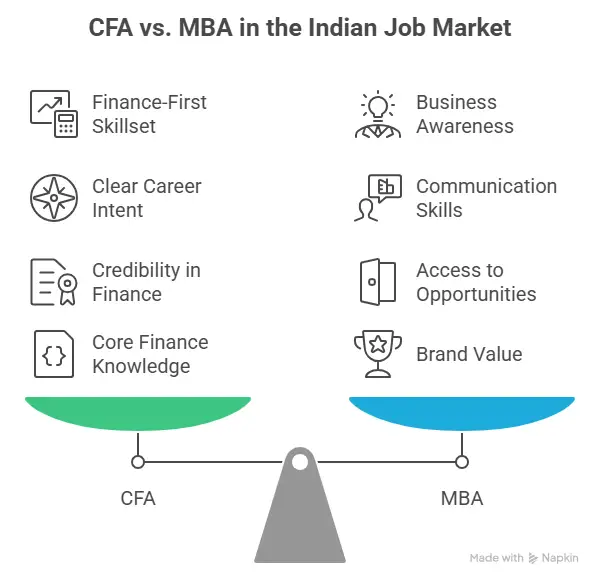
If you’re a professional considering advancing your career in finance, you’ve likely come across the typical dilemma: CFA vs MBA. Both are potent credentials but serve different purposes, offer distinct advantages, and have varying costs and durations.
Let’s be honest. If you’ve been Googling CFA vs MBA for the past few weeks, you’re probably going in circles – reading the same surface-level comparisons, getting more confused with each article. We get it. Both are powerful credentials. Both the CFA and an MBA can genuinely change the direction of your career – but they are not interchangeable. They lead you down very different paths, and choosing without clarity can cost you not just money but years of effort.
In this article, I’ll break things down in a practical way – how difficult each path really is, how to decide what fits your goals, and what to expect in terms of cost, salary, and job opportunities. We’ll also look at what the market in India actually values today, so you’re not making this decision based on assumptions about CFA vs MBA, but on reality.
Whether you’re a fresh graduate weighing your options or a working professional thinking about upskilling through CFA Certification or an MBA degree, this one’s for you.
Interesting Insight:
The CFA Institute estimates that candidates who pass all three levels spend a combined 900-1,000 hours studying. That’s roughly 18 months of weekday evenings if you study 2 hours a day. (Source – CFA Institute)
What Is the CFA Course?
Before getting into the comparison of CFA vs MBA, it is usually ideal to start by understanding: what is CFA, and more importantly, whether it’s something they can realistically commit to before you start the comparison.
The CFA (Chartered Financial Analyst) designation is widely regarded as the gold standard in investment management and financial analysis. It is a globally recognised professional credential awarded by the US-based CFA Institute (formerly known as AIMR), designed for those looking to build careers in investment and finance. The program is structured across three levels – Level 1, Level 2, and Level 3 and each level pushes you a step further, not just in knowledge, but in how you think about finance.
Here’s how it roughly breaks down:
CFA Level 1 is where you build your foundation. You’ll cover core concepts like financial reporting, ethics, economics, and basic valuation. It’s broad, but manageable if you stay consistent.
CFA Level 2 is where things get real. The focus shifts to applying concepts – especially in valuation and analysis. This is the level most candidates struggle with because it tests how well you use what you’ve learned.
CFA Level 3 is about thinking like a portfolio manager. It’s less about formulas and more about decision-making, wealth planning, and real-world application of investment strategies.
What surprises most people isn’t just the CFA course syllabus – it’s the consistency required. This isn’t something you cram for. It’s something you build toward, month after month.
To earn the CFA charter, you also need 4,000 hours of relevant work experience, so it’s not just an exam you crack and move on from. It’s a credential that validates your on-the-ground finance expertise.
What Is an MBA in Finance?
An MBA (Master of Business Administration) is a postgraduate degree that helps one to build a broad foundation in business. Even with a finance specialisation, you’ll study areas like strategy, marketing, and operations alongside finance.
Unlike the CFA, which is deeply focused on investment and finance, an MBA is a more flexible, academic path offered by business schools. It’s designed not just to teach concepts, but to prepare you for leadership roles and career transitions.
One thing to be clear about: an MBA can be expensive. Globally, graduates often carry significant student debt – in the US, for example, average MBA-related debt can exceed $60,000-$80,000. So the return on investment depends heavily on the school you choose and the career outcomes you achieve.
If you’re unsure how to approach CFA preparation across all three levels, this video walks you through a practical strategy – from how to study for Level 1 to handling the complexity of Levels 2 and 3, along with common mistakes to avoid.
What are the career prospects for CFA vs MBA?
If the CFA trains you to think like an investor, an MBA trains you to think like a business leader. Earning an MBA or CFA enhances your knowledge of financial careers and provides globally recognised qualifications.
MBA in Finance is an academic degree with broad business subjects plus a finance specialisation – covering corporate finance, financial markets, and strategic finance at a conceptual level.
CFA is a deep-dive professional certification covering investment management, security analysis, portfolio construction, risk management, and financial ethics in exhaustive technical detail.
One is breadth with a finance tilt; the other is pure finance depth. They complement each other rather than compete. Before we go deeper into CFA vs MBA, here’s a clear comparison so you can see where they stand:
Criteria
CFA
MBA in Finance
Type of Credential
Professional designation
Postgraduate degree
Awarding Body
CFA Institute (USA)
University / Business School
Duration
2.5 to 5 years (self-paced, exam-based)
1 to 2 years (full-time)
Mode of Study
Self-study, typically alongside a job
Full-time, part-time, or executive
Academic Focus
Deep focus on investment management, valuation, and ethics.
Broad business + finance specialisation
Difficulty Level
High – low pass rates require sustained discipline
Moderate – competitive entry, but structured learning
Entry Requirements
Bachelor’s degree + work experience for charter
Bachelor’s degree + CAT/GMAT + often work experience
Global Recognition
Strong within finance and investment roles
Depends heavily on institution (top MBAs have global weight)
CFA vs MBA Difficulty – Which One Is Harder to Crack?
This is probably the most searched part of the CFA vs MBA debate, and for good reason. Firstly, nobody wants to spend years on a credential they’re not prepared for. Undoubtedly, the CFA is widely considered harder to pass. But they test very different things.
CFA vs MBA – which one feels tougher – really comes down to how you learn best and what kind of environment you’re comfortable in.
→ If you learn best with structure, clear deadlines, and a traditional classroom environment, an MBA will probably feel more natural and manageable.
→ If you’re someone who can stay disciplined on your own, study independently, and keep going consistently over months, the CFA course is more likely to suit you.
CFA Exam Structure, Levels, and Pass Rates
The CFA exams are widely known for their difficulty level. Here’s what the numbers look like:
CFA Level
Recommended Study Hours
Approximate Pass Rate
Exam Window
Level 1
300+ hours
~37-44%
Feb, May, Aug, Nov
Level 2
300-350 hours
~44-47%
May, Aug, Nov
Level 3
250-300 hours
~48-52%
Feb, Aug
Most candidates take 2 to 4 years to complete all three levels. And here’s something people don’t talk about enough: you can fail a level and have to retake it, which can add months or years to your timeline.
The CFA tests your ability to apply financial theory to real-world scenarios – it’s not just rote learning. Ethics alone has tripped up some brilliant candidates.
MBA Admission Requirements and Academic Structure
Getting into a top MBA program is its own challenge. Here’s what the process looks like in India:
MBA Admission Factor
What’s Expected
Entrance Exam
CAT (IIMs), GMAT (ISB, global), XAT (XLRI), SNAP
Work Experience
2–5 years preferred at top programs
Academic Profile
Strong undergraduate GPA
Group Discussion / Personal Interview
Strong communication, leadership narrative
Essays & LORs
Compelling story, clear career goals
Once inside, MBA programs are demanding – case studies, group projects, internships, and placements keep you busy. But the structure is guided, supported, and time-bound. You know when it ends.
The CFA, by contrast, is a solo sport. You’re required to study on your own time, alongside a job, without the structure of a classroom, unless you take a structured CFA coaching program. That’s what makes it mentally harder for most people.
Choosing between a CFA and an MBA really comes down to where you see your career going. In the end, it’s not about CFA vs MBA, which is better overall – it’s about which one is right for you.
If you’re trying to understand the real scope of CFA in India – with actual roles, salaries, and career growth – this video gives a clear, ground-level perspective for 2026.
CFA vs MBA Duration and Study Timeline
One of the biggest practical advantages of the CFA is that you don’t have to leave your job. You can be a working analyst in Mumbai and still prep for the CFA entrance exam or the CFA Level 1 exam in the mornings and on weekends. An MBA, unless it’s an executive format, typically requires you to step away from full-time work for 1 to 2 years.
Let’s talk about money. This is often the deciding factor, especially for candidates in India who are self-financing their education. Let’s have a look at the MBA and CFA course fees:
Cost Component
CFA (Approx. in INR)
MBA – IIM (Approx.)
MBA – Tier 2 B-School (Approx.)
Registration Fee
₹28,000 (one-time)
Included in tuition
Included in tuition
Exam Fee (per level, early)
₹75,000-80,000
Included in tuition
Included in tuition
Study Materials / Prep
₹15,000-50,000
₹20,000-70,000
₹5,000-30,000
Annual Tuition Fee
₹28,000 (Annual Membership Fee by the CFA Institute)
₹12-15 Lakh per year
₹3-8 Lakh per year
Total Program Cost
₹2.5-3.5 Lakh
₹25-30 Lakh +
₹6-16 Lakh +
The CFA wins on pure cost efficiency and by a significant margin. But the ROI math for an IIM or ISB MBA can still make sense, given the salary jumps and placement networks those schools offer.
If you’re wondering how the CFA can actually translate into high-paying roles like investment banking, this video breaks it down in a very practical way – from the kind of skills you need to how professionals leverage the CFA to reach ₹30 LPA+ opportunities.
CFA vs MBA Salary – Who Earns More?
CFA vs MBA salary in India is where things get interesting. And where most comparisons get it wrong. Both credentials offer competitive earnings regarding CFA vs MBA salary, but the scales tilt depending on your career goals.
CFA Salary in India – Level and Role-wise Breakdown
CFA charterholders in India typically earn anywhere between ₹4-20 LPA+, depending on experience, role, and city. Entry-level roles may start lower, but compensation rises significantly in areas like equity research, portfolio management, and investment analysis.
Role
CFA Level / Experience
Average Annual Salary (India)
Junior Research Analyst
CFA Level 1 or 2 cleared
₹4-8 LPA
Equity Research Analyst
CFA Charterholder, 2-3 yrs exp
₹8-18 LPA
Portfolio Manager
CFA Charterholder, 5+ yrs exp
₹18-40 LPA
Senior Portfolio Manager / Fund Manager
CFA + 8-10 yrs exp
₹40 LPA – 1 Crore per annum+
Risk Analyst / Credit Analyst
CFA Level 2+
₹7-15 LPA
Investment Banking Analyst
CFA + IB experience
₹12-25 LPA
MBA Finance Salary in India – College-wise Breakdown
MBA salaries can vary a lot depending on where you study. If you graduate from a top B-school like the IIMs or ISB, average packages often fall in the ₹20-35 LPA+ range. On the other hand, mid-tier colleges typically see salaries around ₹6-12 LPA.
B-School Tier
Example Institutions
Average Median Placement Package
Tier 1 (Premier)
IIM Ahmedabad, Bangalore, Calcutta, ISB, XLRI
₹25-35 LPA
Tier 1 (Strong)
IIM Lucknow, Kozhikode, Indore, MDI, SP Jain
₹15-22 LPA
Tier 2
NMIMS, Symbiosis, IMT Ghaziabad
₹8-14 LPA
Tier 3 / Regional
Various private B-schools
₹4-8 LPA
CFA vs MBA Finance Salary
Let’s be honest – for most people, the CFA vs MBA Finance salary in India plays a huge role in choosing between CFA and an MBA in Finance. But the comparison isn’t as simple as higher vs lower pay.
Career Stage
CFA Charterholder
MBA Finance (Top School)
MBA Finance (Tier 2)
Entry Level (0-3 yrs)
₹5-10 LPA
₹12-25 LPA
₹5-10 LPA
Mid Level (4-7 yrs)
₹12-25 LPA
₹20-40 LPA
₹10-20 LPA
Senior Level (8-12 yrs)
₹30-70 LPA
₹40-80 LPA +
₹18-35 LPA
Top of Career (15+ yrs)
₹80 LPA -2 Crore per annum+ (Fund Manager)
₹1 – 3 Crore per annum+ (CFO, MD)
₹30-60 LPA
Key insight: An MBA from a top school pays more upfront, especially in the first 5 years. But a CFA charterholder in a specialised finance role that catches up significantly by mid-career, especially in investment management and wealth management roles.
CFA vs MBA in India – What the Indian Job Market Prefers
India’s finance job market has a clear split in terms of what credentials get you where. When you compare CFA vs MBA in the context of India, the answer isn’t as simple as one being better than the other. The Indian job market doesn’t favour a qualification in isolation – it favours what you can do with it.
When you compare CFA and an MBA in the context of India, the answer isn’t as simple as one being “better” than the other. The Indian job market doesn’t favour a qualification in isolation – it favours what you can do with it.
CFA is usually valued more in specialised finance roles where deep, technical knowledge really makes a difference, like:
An MBA, especially from a top-tier institute, is often preferred for roles that need a broader business perspective, such as:
Consulting
Corporate Finance
Leadership tracks
In India, the brand of the college and campus placements matter a lot, which is why MBA graduates from top B-schools often get quicker access to high-paying roles. In the end, it’s not about CFA vs MBA – which one is better – it’s about which path fits the kind of career you want to build.
Key Insight:
In India, the MBA tag, especially from an IIM or ISB, carries enormous social and professional signalling weight. It opens doors faster in the early career phase. The CFA, on the other hand, is respected more deeply in pure finance circles and becomes a stronger differentiator at the mid-to-senior level.
CFA vs MBA for Investment Banking
Investment banking is probably the most glamorised finance career, and both credentials have a role to play – just at different entry points.
Factor
CFA
MBA (Top B School)
Entry Route
Usually lateral (2-4 yrs experience first)
Direct campus placement
Typical Role at Entry
Research Analyst, Associate
Investment Banking Analyst / Associate
Salary at Entry (India)
₹10-18 LPA
₹18-35 LPA
Technical Credibility
Very high in valuation, financial modelling
High, but varies by candidate
Brand Power in IB
Recognised but not a fast-track
IIM/ISB is a fast-track into top IB firms
Ideal Path
CFA + IB experience = Senior Analyst/VP
MBA + IB summer = Analyst → Associate
If your goal is to break into investment banking as quickly as possible, an MBA from a top school like the IIMs, ISB, or a global top-10 program is usually the faster route. It gives you direct access to recruiters and structured placement opportunities.
But if you come from a commerce or finance background – or you’re already working in finance – the CFA, combined with the right experience, is a solid and respected path into investment banking. It may take longer, but it builds strong technical credibility that the industry values.
Many senior IB professionals in India hold both the CFA and an MBA – the combination signals both technical depth and business leadership capability.
When you compare CFA vs MBA, it’s easy to focus on differences – but what really matters are the advantages each path brings to your career. Both offer strong, but very different, benefits depending on whether you’re aiming for deep expertise in finance or broader business growth.
Benefits of CFA
Before you decide if the CFA is right for you, it helps to understand what you actually gain from it. Beyond the qualification itself, the CFA modules offer a set of advantages that can shape your career in finance in a very specific way.
Deep finance expertise – Unmatched depth in investment analysis, portfolio management, financial ethics, and quantitative methods.
Globally portable credential – Recognised across 160+ countries, the CFA charter travels with you.
Study while earning – No career break needed. Most Indian CFA candidates prepare while working full-time at banks, NBFCs, or research firms.
Cost-effective – At ₹3-4 LPA all in, the CFA is a fraction of the cost of any MBA program.
Ethics badge – CFA charterholders are held to a strict code of ethics enforced by the CFA Institute – a trust signal employers value highly.
Growing India relevance – SEBI’s increasing regulatory requirements for research analysts and fund managers have made the CFA more valuable than ever in India.
Benefits of an MBA
Before you decide if an MBA is right for you, it’s worth understanding what you actually gain from it. Beyond the degree itself, an MBA offers a range of advantages that can shape your career across industries, not just within finance.
Breadth across business – Finance, strategy, marketing, operations, leadership – all in one program. Unique among professional qualifications.
Powerful alumni network – The single biggest career lever at top schools. An IIM or ISB alumnus network can open doors that no credential can match.
Campus placements – Direct access to top investment banks, consulting firms, and MNCs for structured hiring – this is priceless for career starters.
Leadership development – MBAs develop soft skills – negotiation, leadership, team management, communication – that no exam can replicate.
Career pivot enabled – Moving from engineering, medicine, or non-finance into finance? An MBA is the cleanest, most structured way to make that switch.
CFO/CEO trajectory – The MBA is still the most common credential among India’s CFOs and business leaders.
Yes – holding both CFA and MBA is more common than people assume. A lot of senior finance professionals – both in India and globally – don’t just choose one path; they end up doing both. It’s actually quite common to see someone with an MBA and the CFA charter. Even business schools recognise this overlap – some offer CFA scholarships or structure parts of their finance courses around the CFA curriculum.
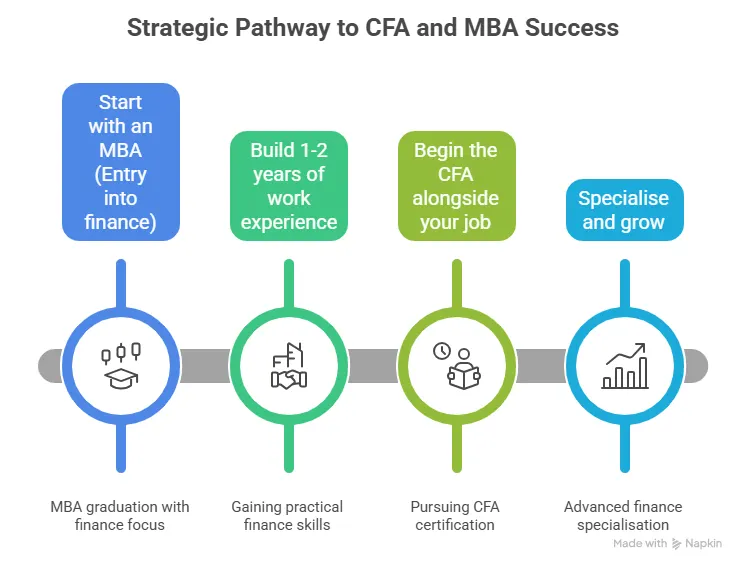
For most people, the most practical route is to do an MBA first. It helps you get your foot in the door, build the right network, and land your first meaningful role in finance. Once you’re in, you can take up the CFA alongside work to sharpen your technical skills and move deeper into areas like investment management or research. Done this way, the combination works really well and gives you both breadth and depth in your career.
Sequence Option
Who It Suits
MBA first → CFA while working
Fresh graduates, career switchers
CFA first → MBA later
Working finance professionals
Both simultaneously
Extremely disciplined professionals
CFA only
Deep specialists (AMC, research, IB)
MBA only
Leaders, generalists, career switchers
The MBA gets you in the door. The CFA makes you the most credible person in the room.
Insight worth noting: The CFA Institute offers a credit waiver of up to 3 months of work experience if you hold an MBA from a recognised partner institution – another perk of combining both.
Consider both CFA and MBA, if:
You want to be a finance leader with great technical skills and business leadership capability.
You’re aiming for senior roles at global investment banks, hedge funds, or top AMCs.
You have the time, resources, and a clear plan to leverage both credentials over 6-8 years.
Your target is CIO, CFO, and MD at a finance firm – roles where both depth and breadth matter.
Why Study CFA From Imarticus Learning
Choosing where you prepare for the CFA program can make a big difference once you have figured out your choice between CFA vs MBA – not because the syllabus changes, but because the right guidance keeps you consistent and focused. Imarticus is built around that idea.
Structured Industry-relevant curriculum – Instead of just giving you study material, it offers a more structured learning experience with expert-led sessions, a clear study plan, and regular practice to keep you on track. This matters with CFA, where most people struggle not with understanding concepts, but with staying disciplined over months of preparation.
Strong industry exposure and dual certification – You’re learning from professionals who’ve worked in finance roles, so the concepts don’t feel abstract – you start to see how they apply in real-world scenarios like valuation or portfolio management. You also work on case studies designed by KPMG in India, and a dual certification is awarded on successful completion.
Mentorship and support system – From doubt-solving to mock exams and revision strategies, having that ecosystem around you can make the journey less overwhelming and a lot more manageable.
Placement Support – What also stands out is the industry connection. You’re learning from professionals who’ve worked in finance, so concepts feel practical, not just theoretical. On top of that, Imarticus offers career support and placement assistance, helping you connect with relevant finance roles and build a pathway into the industry alongside your CFA journey.
At the end of the day, CFA is still your effort – but the right institute can make sure that effort actually converts into results.
FAQs on CFA vs MBA
Before you make a decision, it’s natural to have a few practical questions around CFA vs MBA – from difficulty and costs to career outcomes. Here are some of the most frequently asked questions people have, to help you get clarity.
What is the main difference between CFA and MBA?
CFA focuses on finance and investment management, while MBA offers a broader business education with various specialisations. If you’re interested in pursuing a career in finance and want to specialise in areas like portfolio management, investment analysis, or hedge funds, the CFA course from reputed institutes like Imarticus Learning is the best fit.
Is CFA harder than MBA?
Yes, in most cases. The CFA has a pass rate below 50% across all three levels, and most candidates who start the program never actually earn the charter. MBA programs are competitive to get into, but once admitted, completion rates are very high. The CFA difficulty is about sustained self-discipline over the years; the MBA difficulty is concentrated at the admission stage.
Which has a better salary – CFA or MBA?
An MBA from IIM Ahmedabad, ISB, or a top school typically offers a higher starting salary of ₹20-35 LPA compared to a CFA charterholder entering the same market at ₹8-15 LPA. However, CFA charterholders in specialised roles – fund management, equity research, investment banking – close that gap significantly by mid-career. Long-term salary potential is comparable or higher for CFA specialists in pure finance roles.
CFA vs MBA for investment banking – which is better?
An MBA from a top school (IIM Ahmedabad, ISB, global schools) is the faster, more direct route into investment banking via campus placements. The CFA is a strong lateral entry path for working finance professionals who build relevant experience alongside clearing CFA levels. For long-term IB careers, the CFA adds significant technical credibility at the VP and Director levels. Many top IB professionals in India hold both.
Is CFA vs MBA difficulty really that different?
Yes, very different types of difficulty. CFA difficulty is about passing rigorous exams over 2-4 years while working, with pass rates below 50%. MBA difficulty at top schools is about getting in (CAT 99%+ or GMAT 720+), not about completing the program once admitted. CFA tests technical endurance; MBA admission tests competitive academic and professional performance.
Which is better – CFA vs MBA Finance in India?
For deep, specialised finance roles in AMC, equity research, IB, risk management, CFA is better. An MBA is better for leadership, career switching, consulting, or corporate finance. For the best long-term career in Indian finance: MBA from a top school + CFA while working is the combination most senior finance leaders in India recommend.
Should you do CFA after an MBA?
Yes, if you’re in a specialised finance role and want deeper technical credibility. Many MBA graduates from IIM/ISB who join finance firms start CFA Level 1 within 1-2 years of graduating. It adds technical depth that complements the MBA’s business breadth. The CFA is particularly worth doing after an MBA if you’re targeting fund management, research, or senior IB roles.
Can you do CFA while working?
Absolutely, that’s how most CFA candidates in India do it. Since the CFA is exam-based with no fixed classroom schedule, you study evenings and weekends while holding a full-time job. Most Indian finance professionals clear Level 1 and Level 2 while working at banks, NBFCs, AMCs, or research firms. It requires discipline, but it’s very achievable with a structured study plan.
Who earns more – CFA or MBA?
If you look at the short-term, an MBA from a top school earns more. In mid-term, the gap narrows significantly for CFA charterholders in specialised roles. And in the long term, CFA fund managers and senior research analysts match or exceed MBA graduates from comparable schools. The important thing here is that ‘MBA’ is not one thing – an IIM Ahmedabad MBA and a Tier 3 MBA are worlds apart, while the CFA charter is a consistent, uniform global credential.
CFA vs MBA – Pick the Path That Fits Your Ambition
By now, you might have found answers to the CFA vs MBA questions in your mind. If you’re already working in finance and love the analytical side – valuing companies, building models, understanding markets at a deep level – the CFA is probably the smartest move you can make. It’s cost-effective, rigorous, and in the investment world, it genuinely earns respect. Passing all three levels while working full-time also signals something about your character that hiring managers notice.
But if you’re early in your career, want to switch industries, or have ambitions that go beyond portfolio management – leading teams, starting something, moving into consulting or PE – an MBA from a strong program will open doors the CFA simply can’t. The network alone often justifies the cost over a 10-year horizon.
The overlap crowd – people doing both – typically do the CFA first, then the MBA, 3-5 years later, when they have a clearer picture of where they want to go. That combo is genuinely powerful in asset management and investment banking. The right one in CFA vs MBA is whichever one gets you closer to the life you’re actually building toward. If you’re serious about building a career in finance, the CFA isn’t just another qualification – it’s a long-term investment in your skillset and credibility. Start with a clear plan, stay consistent, and take the first step toward your CFA course journey today.
In the world of finance, things can get a bit tricky when you move beyond the basics. That’s where technical accounting comes in.
If you’ve ever found yourself staring at complex financial reports, dealing with regulatory headaches, or just wondering how big companies keep everything straight, you’re not alone. Technical accounting is the toolset that helps professionals like you navigate those choppy financial waters.
But what exactly is it? Why is it so crucial in today’s world of finance? In this guide, we’ll break down the fundamentals of technical accounting, explain its growing importance in modern finance, and give you the inside scoop on how a CPA course can level up your skills and career.
Ready to dive in? Let’s go!
Understanding Technical Accounting
As a discipline, technical accounting can be seen as the application of specific accounting principles, rules and standards. These rules often pertain to complex financial reporting and regulatory requirements. Needless to say, this is an advanced area of accounting and involves the preparation and analysis of financial statements in line with international financial reporting standards (IFRS), US GAAP (Generally Accepted Accounting Principles), and other local regulations.
Distinct from general accounting, which concerns itself with routine business operations, technical accounting pursues deeper probing of transactions such as mergers and acquisitions, financial derivatives, revenues and other operating income, and leases. It ensures that a firm’s accounting records are accurate, complete and presented in accordance with respective legal requirements.
The Fundamentals of Technical Accounting
Before diving into more specialised topics, it’s crucial to grasp the fundamentals of technical accounting, which include:
Adhering to the set regulatory standards – Technical accountants guarantee that all the financial records and reports compiled are in compliance with the current set regulatory agencies such as SEC, FASB or IASB.
Financial Reporting – They specialise in the production and presentation of general financial reports so that any business entity can give the owners, creditors, investors, and other stakeholders accurate financial reports to act on.
Revenue Recognition – Another important aspect of technical accounting is the recognition of revenues, which map income statements with packages of standards such as IFRs 15.
Taxation & Audit Preparation – Technical accountants analyse and work on the technical aspects of taxation preparations and audit processes among other key aspects under international taxation laws.
Now, let’s try to understand the importance of technical accounting in modern finance.
The Importance of Technical Accounting in Modern Finance
For the present day’s increasingly complex and unpredictable financial environment, technical accounting plays a most crucial part. Here are some reasons why it holds importance in modern finance:
Regulatory Complexity: Given that there are changes to financial reporting standards from time to time, companies need technical professional accountants to guide them in compliance with the rules to avoid problems related to accountability.
Transparency for Stakeholders: Sophisticated investors, as well as regulatory authorities, call for increased transparency. The technical accountant has a critical responsibility of ensuring that the reported figures are credible, and are in compliance with the provisions of the law.
Strategic Decision-making: Accounting according to standard technical accounting procedures helps create financial statements that are of great use to management in making decisions such as acquiring new outlets, expanding or restructuring.
Mitigating Financial Risks: Technical accountants also assist in recognising and avoiding exposure to financial statement risks or failure to meet regulatory standards so as to avoid incurring penalties or damaging the business image.
As the finance industry continues to evolve with the integration of new technologies and regulations, technical accounting professionals are at the forefront of ensuring accuracy and compliance in all financial dealings.
How a CPA Course Can Boost Your Technical Accounting Skills?
For anyone who wants to pursue a career in technical accounting, it may be necessary to attend a Certified Public Accountant (CPA) course. The CPA certification is recognised internationally and teaches its candidates sophisticated aspects of accounting, audit, taxation and financial reporting.
The CPA course targets the particular knowledge required for dealing with intricate regulations, allowing professionals to provide an edge when handling disclosures, audits and compliance functions. Therefore, it is important for any finance professional to have a CPA course when offering their services to any organisation to show how proficient they are in technical accounting.
Conclusion: Taking Your Technical Accounting Career to the Next Level
It’s crucial to have some technical accounting skills if you want to move forward in your finance career. This remains important, especially in the current complex regulatory financial environment. Whether you are working with a complicated financial process, need to stay with regulatory requirements, or need to analyse a strategic decision, technical accounting knowledge will provide numerous opportunities.
Among the most useful strategies for deepening your knowledge in the field of technical accounting, the best choice is to complete the Certified Public Accountant (CPA) course offered by Imarticus Learning.
This globally recognised program covers more than the principles of accounting. It also goes further to include areas such as the regulatory environment and aspects of auditing and taxation as they apply in the international context. By enrolling under Imarticus Learning, you will learn all that is necessary to succeed in today’s complex business environment and become an expert in technical accounting.
Do you ever wonder how giant companies regulate their capital, funds, and fiscal vulnerability?
The trick lies in treasury management. Although many may think it is an exclusive deal for the economic sector or simply finance, treasury management is a highly fundamental function of any business activity, driving towards its financial security and, consequently, effectiveness.
This article will describe treasury management, its primary tasks, and the tools that facilitate them.
What is Treasury Management?
Treasury management is the systematic approach of managing business financial assets and liabilities to meet the need for adequate cash balance and, at the same time, to mitigate risks. It is an important financial operation that deals with managing cash, other financial assets, and the transactions that arise during business operations. In its most basic sense, treasury management is true time management of your company’s finances.
At face value, it may sound quite plain, but managing a business’s cash is one of the most complex jobs that require the right tools, vision, and infrastructure. This is where a treasury management system comes in handy as treasuries become increasingly complex as businesses expand.
Treasury Management Systems
A treasury management system (TMS) is a tool that helps manage the business’s financial processes. These systems also give live information about the financials and control, making it better for the treasuries to control cash flows, dependency, and risks. For any company to operate an efficient and effective treasury, implementing a TMS is most helpful for tracking payments and investments and forecasting financial position, amongst other tasks.
A treasury management system also provides greater transparency and control over financial processes. From ensuring that the company has enough liquidity to meet its obligations to optimising investment returns, a TMS integrates all functions of treasury management in one place.
Key Functions of Treasury Management
The functions of treasury management are broad and varied, all designed to support the financial health of a business. Below mentioned are some of the most critical functions:
1. Cash Management
This is the heart of treasury activities, meaning monitoring cash inflows and outflows, ensuring enough liquidity to run the business on a day-to-day basis, and maximising returns on any surplus cash by investing.
2. Risk Management
It is another critically important function of treasury management. Treasury specialists should identify financial risks like changes in interest rates, volatility in the currency exchange rate, and credit risk, which might endanger the business. This can include hedging instruments, diversification of investments or other financial products that safeguard assets in a company.
3. Liquidity Management
Effective liquidity management allows the company to meet its short-term liabilities in a manner that does not harm its long-term finances. In other words, such management ensures the balance of current assets and liabilities and decisions about borrowing or investing in short-term securities.
4. Investment Management
A key responsibility within treasury management is the strategic management of a company’s investments. Treasury teams must decide where to allocate surplus funds, ensuring the company maximises returns while managing risks. This might include investing in short-term bonds, certificates of deposit, or other low-risk financial instruments.
5. Debt Management
Treasury departments are also responsible for managing a company’s debt. This involves determining the right mix of debt and equity financing, ensuring the company can meet its debt obligations, and finding cost-effective financing options.
6. Financial Forecasting
Predicting future cash flows and financial positions is another critical role of treasury management. Accurate forecasting helps businesses anticipate cash shortages, plan for large capital expenditures, and make informed financial decisions.
Conclusion
Treasury management is a vital component for any business as it aids in maintaining liquidity and managing risk to maximise investment returns. At a time when risks to finance are growing, and demand for real-time data has never been greater, good treasury management is critical for an organisation that aims at sustainable success.
Want to learn more about the strategic role of treasury management and other key financial responsibilities? Enrol in the Chief Financial Officer Programme by the Indian School of Business (ISB).
With this CFO course, you will get an in-depth knowledge of financial strategies that contemporary CFOs have to handle to lead successful organisations. It will provide the much-needed skills to take control of your company’s treasury management and financial future.
Bias is inherent in man’s way of thinking, influenced by their past experiences, upbringing and the society in which they live. Just as bias helps to make quick decisions, often, it leads to decisions that are not rational and do not consider other factors. In this article, we’ll explore what is bias, the different types of bias, and how biases impact our decisions, particularly in professional environments like finance.
What is Bias?
At its core, bias refers to a prejudice or inclination towards or against something, someone, or a group, often unfairly. In decision-making, bias is the tendency to allow personal preferences or preconceived notions to influence judgement. While biases are a natural part of human thinking, they can become problematic, especially when they lead to decisions that aren’t based on facts or logical reasoning.
For example, a financial analyst may unknowingly favour certain stocks or industries due to biases, even when the data suggests otherwise. These tendencies can skew analyses, affect predictions, and ultimately result in poor financial decisions.
Types of Bias
Bias can take many forms, and each form influences the decision-making process in its special way. Here are a few of the most common biases that affect individuals in both personal and professional contexts:
Confirmation Bias
This is the tendency to positively incline information that supports existing theories, strategies, assumptions or hypotheses. For example, if a financial analyst hypothesises that a particular stock will perform well, the individual will analyse data supporting the hypothesis while downloading data that could refute the hypothesis.
Anchoring Bias
Anchoring is where people fixate on the first piece of information they gain (“the anchor”) while making decisions. For instance, if investors know that a particular share is at a certain price, they will likely have an anchored judgement despite new information indicating that the stock has been overpriced.
Hindsight Bias
This is the practice of presuming that events are inevitable once they have happened. In finance, this could be the case that after some events, such as a market downturn, an analyst would look to conclude that they “knew it was all along” or they could not have been in a position to foresee the crash in the real sense.
Overconfidence Bias
Overconfidence is when people put too much trust in themselves and the information acquired. A financial analyst may feel that they know the market more than the case, thus exposing the business to much risk.
Recency Bias
This entails managing information by associating higher relevancy with recent details instead of taking a historical view. This is seen in investment, where a financial professional could elevate the latest earnings report close to perfection, disregarding the overall performance of the firm in question.
Now, let’s look at how these biases impact decision-making.
The Impact of Bias on Decision Making
Biases can influence big and small decisions, especially within areas that require numerical analysis, like the financial sector. The decision bias may result in a poor decision that may be expensive, cause the loss of an opportunity, and sometimes have ethical implications.
For instance, an analyst who experiences confirmation bias when assessing by tending to stick to a prior conclusion will recommend that certain products that a company invests in will flop. Likewise, anchoring bias could lead investors to pay more for a given stock because it anchors on a previous price.
Many of these biases are latent, meaning their influence is not easily recognisable, complicating control and eradication. This is why anyone working in any field, including finance, needs to be informed about biases and fight them in any way possible.
How to Mitigate Bias in Decision Making?
Recognising and addressing bias is key to becoming a more effective decision-maker. Here are a few strategies to reduce the impact of bias on decisions:
Increase Awareness The first step is to become aware of your own biases. By understanding the types of biases, you can start to recognise them in your thought processes.
Seek Diverse Perspectives Consulting with others who have different views or experiences can help mitigate biases. This might involve discussing investment strategies with colleagues with varying market outlooks in finance.
Use Data-driven Approaches By relying on data and evidence rather than instinct or intuition, you can reduce the influence of bias on decision-making. For financial analysts, this might mean using sophisticated modelling techniques to ensure decisions are based on factual information.
Regularly Review Decisions Reflecting on past decisions and understanding where biases may have influenced your choices can help improve future decision-making.
Conclusion
Bias, a natural part of human cognition, can significantly impact decision-making, especially in professional fields like finance. Individuals can make more rational and informed choices by recognising and addressing decision bias. Whether you’re a financial analyst or making personal decisions, awareness of these biases is the first step to improving judgement.
If you’re interested in furthering your financial career and learning how to make more informed, unbiased decisions, Financial Analysis Prodegree by Imarticus Learning can provide you with the necessary tools and skills. This comprehensive programme delves into financial analysis and equips professionals with the analytical and decision-making skills required to succeed in today’s complex financial environment.
In times of economic uncertainty, the role of a chief financial officer (CFO) becomes more critical than ever. Whether navigating volatile markets, managing cash flow, or mitigating risks, CFOs are on the front lines, steering their organisations toward financial stability.
If you’re an aspiring CFO, understanding the key financial strategies to handle unpredictability is essential for the long-term success of your company. Read on to learn about the top financial strategies to navigate economic uncertainty.
1. Prioritising Cash Flow Management
Indeed, cash is king during times of uncertainty. Arguably, one of the most basic tenets of corporate financial management for a CFO is to ensure that their organisation has adequate liquidity to cope with the inevitable bad times. Again, efficient cash flow management is measured by sufficient cash reserves and cash planning for particular situations. Firms need to keep their working capital low in the short run in conditions of economic uncertainty while making necessary provisions for the future. Embracing dynamic cash flow models and reviewing forecasts prepares the CFO for market volatility.
Also, renegotiating payment terms with suppliers and customers, better managing inventories, and moderating fixed expenses are valuable methods for maintaining a healthy cash situation.
2. Embracing Flexible Budgeting
The traditional forms of implementing budgets can be very restrictive during economic fluctuations. A less rigid one called a rolling forecast, can give CFOs a better chance to respond quickly to new challenges. In contrast to fixed budgets, rolling budgets enable updating and using accurate and current market data.
Firm-specific capital budgeting is, therefore, another adaptable approach through which the CFO can rearrange resources in the company’s best interest.
3. Diversifying Revenue Streams
A CFO’s financial strategy should comprise product and service differentiation as well as diversification of revenues. Indeed, relying on one or two sources of income is very dangerous to any firm, especially in difficult economic times. Thus, CFOs can assist the organisation in diversifying the market, relations, or the model it operates, thereby decreasing the risk.
For instance, through digital transformation, organisations have had many opportunities to shift and find other strategic revenue models. CFOs should promote adopting technology that helps the company tap into these opportunities without potentially damaging long-term impacts.
4. Strengthening CFO Risk Management
CFO risk management is not only the process of managing risks but is also about recognising and exploiting opportunities that may arise with risk. CFOs must also evaluate the external environment, from geopolitical to supply-chain risks, to respond to any risks in the organisations they represent. An integrated risk management system assists the CFO in identifying, assessing and controlling all risks before attaining the organisation’s financial objectives.
Similarly, a comprehensive risk management plan should enrich the relational capital with the lender and investors. Open communication with the parties informs everyone and allows action if any problems with the money crop up.
5. Leveraging Technology and Data Analytics
Technology is central to developing sound financial strategies, given that the current financial environment is dynamic. Since decision-making in any organisation has become critical, CFOS must adopt advanced analytics, AI, and automation. CFOs can learn about cost reduction initiatives, demand patterns, and operational efficiency that would otherwise go unnoticed.
Cloud solutions also offer better opportunities in financial systems and platforms and business transparency and scalability, which are crucial when market conditions evolve. These technologies provide CFOs with timely financial position information, making managing enterprises through economic volatility easier.
6. Focusing on Workforce Optimisation
Despite the tempting nature of cost-cutting during downturns, the role of the CFO entails a much more profound approach to handling employees. Employing workforce optimisation that includes upskilling, reskilling, and redeployment will maintain employees’ morale while overhead costs are trimmed more appropriately.
CFOs can play an important role in protecting the organisation from further turbulence and guaranteeing the constant improvement of key personnel and overall outstanding performance by investing in professional development in bad times.
7. Collaborating with Leadership
Finally, good communication and coordination with other leaders within the organisational leadership team are necessary. CFOs should engage their chief executive officers (CEOs), chief operating officers (COOs), and other department heads to ensure that financial strategies fit the broader company goals. Such a collaborative approach not only provides clarity in terms of everyone being on the same page but also paves the organisation’s way forward during moments of uncertainty.
Strategic leadership alignment allows experienced CFOs to promptly make key operational decisions and attain conviction that financial strategies will be implemented systematically throughout the venture.
Conclusion
Economic risk management is a complex process, made even more so because the CFO has to coordinate many different financial strategies to align the company with its future conditions. By improving cash flow, planning well, and using technology and proper risk management, CFOs can prepare their organisations to endure and succeed in foresighted economic declines.
For finance professionals looking to refine their skills and develop cutting-edge strategies, Imarticus Learning offers an outstanding Chief Financial Officer Programme. This CFO course, offered in collaboration with the Indian School of Business (ISB), is designed to equip you with the tools and knowledge needed to navigate today’s financial challenges, providing a comprehensive curriculum focused on strategic leadership, financial analysis, and risk management.
Stay ahead of the curve and elevate your CFO capabilities with this prestigious certification programme by Imarticus.
Financial products can be explained as contracts that can be traded in the market. Someone is selling these contracts and others are buying the same. Financial products are financial instruments that are available in various forms.
The reason for introducing the concept of a financial product is that it lets individuals convert their fiat currency into something they can sell to others within a marketplace. Financial products can be classified into various categories. Read on to learn more about financial products and their major classifications.
Financial Products: Meaning and Definition
Financial products are generally referred to as any form of financial contract, which is equally well connected with financial infrastructure available to consumers and organisations or other entities such as government authorities, municipalities, sovereign bodies, etc. Such financial products are provided to consumers by financial institutions that consist of banks, brokerage companies, insurance agencies, investment, consumer finance, firms, and so on. All such institutions make up the financial services sector.
To understand ‘what are financial products’, one has to understand the concept of contractual agreement between two parties. One who promises to provide some service, in this case, it is financial service and the other who agrees to provide some consideration in exchange for receiving such service. The exchange of economic activities between the two parties establishes a continuous monetary relationship which facilitates the exchange of finance and ancillary services which is the foundation of the financial relationship.
The contractual agreement comes with a lot of legal provisions and is recorded in a terms sheet. Such agreement establishes continuous relationships during the lifetime of the financial product, depending upon various specified events. However, financial products are not real or tangible assets. These ancillary services can act as an asset for the companies that help them to facilitate the ongoing relationship between the parties.
Various effective banking courses are available that can help individuals to have an in-depth understanding of financial products.
Types of Financial Products
As per the technical carb of financial products, they can be classified into four major categories. There are several types of financial products. However, the major classifications are:
Securities
Securities are the most traded instruments by companies, financial organisations, public entities, government entities, banks, etc. Generally, securities are a means of entitlement to a specific thing, such as a promise to fulfil a contract or a claim to an asset. It is a type of financial product most widely used within a marketplace.
Therefore, securities are promises having a tangible or intangible existence. In such a case, the promisor promises something to the promisee, who is the holder of a security something proportional in exchange for the security they hold. Securities can be both long-term and short-term in nature depending upon the requirement and financial capacity of the security holder.
Some of the most common types of securities are enumerated as follows:
Stocks
Stocks are the most commonly used securities, mainly when transactions occur between two or more businesses, financial institutions, government entities, etc. Stocks highlight part of ownership in an organisation. When someone purchases a stock, they get a share of ownership within the company.
Stock ownership comes with owning equity shares in a company and provides the owner with various rights and responsibilities. Such rights may include voting, representation, and decision-making rights. Companies sell stocks to individual investors to fetch finance for their operations.
Appreciation and depreciation of stocks may happen depending upon the market conditions. Appreciated stocks are a sign of profitability, whereas depreciated stocks represent losses. Investors buy stocks at lesser prices and when the value of the stocks increases, they sell them to earn profit.
Bonds
Bonds are a form of loan that individuals extend to companies or public entities selling bonds to raise money for their operations. However, bondholders are not the owners of the company. They are the creditors of the organisation.
Bonds specify an obligation that the bond issuer will pay back the money along with the interest amount to the acquirer of the bond. This transaction will be completed on the maturity date of the bond. However, these are long-term investments with long maturity periods, such as 20 to 30 years.
Hence, bonds are nothing but loans advanced by individuals to companies. Acquiring bonds has fewer risk factors than buying stocks. At the same time, bonds yield lower returns than stocks. Stocks guarantee capital appreciation, whereas bonds fetch money through interest.
Mutual funds
Mutual funds are a type of financial security that allows many people to invest their money to purchase securities. In mutual funds, investors can combine their money to purchase more than what they can buy themselves. Individuals get a portion of the fund proportional to the amount they invest.
Mutual funds are categorised as index funds and exchange-traded funds. The former is a combination of securities that keeps track of one particular index, whereas the latter can be traded in the market in the same manner as stocks. Index funds may provide a sense of ownership, but that’s not the case with exchange-traded funds.
Derivatives
A derivative is a financial product that derives its value from an individual or a group of individual securities. The simplest example of a derivative is a contract between a buyer and a seller where the price of the derivative fluctuates, depending upon the price shifts of the concerned asset, which is called the benchmark.
The most iconic feature of derivatives is that they are used to keep track of market fluctuations and movements, which helps companies or individuals leverage their holdings. Investors secure the right to buy or sell any security through derivatives at a specific time and price level. The risk associated with derivatives is considered to be high in capital markets.
Types of derivatives that are most widely used in the marketplace are stated as follows:
Futures
Future is the type of derivative that indicates a contract between two parties to buy and sell a security or an asset at a fixed price on a fixed date. One cannot change the price of the derivative; they see that the price of the share has increased and a lower amount has been kept fixed on the contract. It can be said that it depends a lot on probability as well.
Options
Options also perform the same way as futures do except that the holder of a derivative is not obligated to exercise the contract. There is an obligation to trade in future derivatives, but options do not impose such an obligation. Hence, options are considered flexible when compared to futures.
Swaps
Swap is used to change the form of derivatives. It implies that swaps can change a particular kind of cash flow into another. A commodity swap allows individuals to trade based on the price level of an underlying commodity. There exist several types of swaps based on the class of asset such as credit, default swaps, currency swaps etc.
Commodities
A commodity is a type of financial product that has a tangible existence and highlights some ownership or share of ownership by an individual or a group of individuals. Generally, trading in commodities involves things like precious metals or natural resources. In a broader sense, commodities also include soft commodities, such as livestock, agricultural products, dairy products, etc.
For instance, if an individual has reasons to believe that platinum prices will rise in future, then he may invest in platinum now and can earn profits when its prices potentially rise. The changing price of the commodities in various time periods is the key to earning profits in commodity trading. That is why commodities are generally recorded in portfolios as a hedge against inflationary pressure.
Generally, commodity trading becomes more popular if the stock market and other security trading encounter a sudden fall. Trading directly in commodities is a complex procedure and difficult when compared to trading in securities.
However, individuals can indirectly invest their money in commodities by investing in various securities held by several companies that are responsible for manufacturing those commodities.
Currencies
Currencies are not fundamentally considered as a separate asset class or a financial product but can be included in the list because they can be traded in the market as well. Currencies are generally traded on cryptocurrencies, which are foreign exchanges that allow people to convert one type of currency to another. Currency trading is an absolute necessity as different countries and companies need to trade with each other.
However, there is no centrally controlled marketplace for currency trading as it exists for securities and stock trading. It indicates that currency trading generally occurs between individual investors. Individuals make money on forex markets in the form of currency trading as shifts in price take place.
With the advent of the Internet, current trading has become easier and more prevalent throughout the world. With the inclusion of online, foreign exchanges, currency trading has become widely accessible.
The above-mentioned financial products list is a partial list. These are the major types of financial products. However, there exist other miscellaneous financial products as well that may or may not align with companies and market conditions at all times.
Conclusion
It is significantly important to understand the basic concept of financial products to start your journey in the financial markets. One can enrol for the investment banking courses offered by Imarticus Learning to understand how financial products are dealt with.
Understanding financial products helps individuals and companies to invest in a smart manner which helps them maintain the operational stability and monetary flow within the company. A career in investment banking comes with a lot of lucrative opportunities which you would not like to miss out on.