The Truth About CMA USA Salary

Learning about the CMA USA salary, professionals envision six-figure checks with stapled photocopied pamphlets and exponential career advancement. What actually ensues upon entering global finance? Beyond the glitz, the CMA certification truly translates into huge salaries and global recognition but the amount is dependent on geography, position, and experience.

In India, CMA India’s salary has increased tenfold in the past few years, with the salary differing between ₹8 LPA to ₹18 LPA, while the overseas professionals receive much higher amounts in the CMA international market. The actual magnet does not lie in the initial salary but in the CMA earning capacity and long-term CMA USA career growth opportunity that it offers.

This blog is in outright detail regarding actual salary figures, comparison on a country-to-country basis, and what exactly CMA-certified people can actually expect with this career-shaping certification.

cma usa salary

What Makes CMA USA Salary Stand Out?

USA remuneration of the CMA is not merely the salary—it’s global acceptance which employers place on the credential. Compared to traditional accounting positions, the CMA certification extends beyond technical finance skills to strategy, leadership, and analytics, rendering professionals indispensable in operating MNCs.

Key Differentiators:

  • Global Acceptance: Rolled out in 100+ nations.
  • Short Study Time: Achievable in 6–8 months of intensive studying.
  • Higher Salary Benchmark: Frequently above average accounting certifications.
  • Diverse Careers: Ranging from budget analysis to CFO roles.

High demand and world recognition guarantee competitive compensation packages to CMA professionals worldwide.

CMA Salary in India: Numbers You Need to Know

Indian professionals are especially drawn by the remuneration of CMA in India in view of the comparatively short course duration and certification fee.

Entry-Level Salary

New CMA graduates usually begin at ₹6–8 LPA with financial planning, cost analysis, or management accounting roles.

Mid-Level Salary

With 3–5 years of experience, professionals can expect ₹10–15 LPA offers in consulting, IT, or multinationals.

Senior-Level Salary

Senior professionals are able to command a remuneration of ₹18–25 LPA for leadership roles in FP&A, strategy, or CFO career streams.

Top Recruiters in India:

  • Deloitte
  • EY
  • KPMG
  • PwC
  • Accenture
  • Citibank
  • Infosys

The CMA USA salary in India provides great ROI compared to other certifications.

CMA Global Pay Scale: What Professionals Earn Worldwide

Amongst the top inducements to follow CMA are the global levels of CMA salaries, which are astronomical in local currency terms.

USA

  • Average Salary: $100,000 per year
  • Median Total Pay: 63% greater than non-CMAs
  • Hot Job Titles: Senior Analyst, Finance Manager, CFO

Middle East

  • Average Salary: $35,000 – $50,000 per year
  • High demand from oil & gas, telecom, and consulting sectors.

Europe

  • Average Salary: €60,000 – €90,000 per year
  • Growing demand from German, Swiss, and UK financial hubs.

Asia-Pacific

  • CMA Average Annual Salary: $20,000 – $40,000
  • Boom economies of India, Singapore, and Hong Kong.

The CMA USA salary provides professionals with a global passport to finance careers that renders them mobile between countries without the need for extra certifications.

CMA Earnings Potential: The Long-Term View

The long-term earnings potential of CMA is not limited to short-term compensation. CMA professionals always have:

  • Accelerated Promotions: Reaching management levels in 2–3 years.
  • Salary Hikes: 50–60% greater hikes than their non-certified peers.
  • Leadership Pipeline: CMA-certified professionals for Director and CFO-level roles.

The payback on the investment grows year over year, making the certification one of the most valuable investments in the accounting and finance field.

CMA Average Salary by Job Role

Let’s break down the CMA average salary for top job titles:

Job RoleIndia (₹ LPA)Global (USD)
Financial Analyst6–10$65,000
Management Accountant8–12$70,000
Finance Manager12–18$90,000
Senior Finance Manager15–20$110,000
CFO / Director of Finance25+$150,000+

This is how CMA USA salaries go up with experience and leadership.

CMA USA Career Growth: Beyond Numbers

The most attractive aspect is not salaries but the greatest appeal of the CMA USA career development opportunity. Unlike conventional employment available for bookkeeping or compliance jobs, CMA leads to leadership positions.

Growth Path for CMA Professionals:

  • Junior Level: FP&A analyst, costing analyst, or reporting analyst.
  • Mid-Level: Strategy manager, finance manager, or consultant.
  • Senior-Level: Head of strategy, controller, or head of finance.
  • C-Suite: COO, CFO, or even CEO with cross-functional background.

This well-laid-out career path spells it all out on how CMA professionals are bosses’ favorites.

Why Imarticus Learning + KPMG in India Give You an Edge

The earning potential of CMA USA is only a success if supported by sound preparation. That’s where Imarticus Learning, in association with KPMG in India, comes in.

What You Get:

  • Gold Learning Partner of IMA, USA
  • Joint Certification with KPMG in India
  • Surgent Study Materials (83% pass rate)
  • Practical Case Studies & Internship opportunities
  • Pre-Placement Bootcamp: Resume guidance, mock interviews, career counseling
  • Money-Back Guarantee: 50% refund in case exams aren’t cleared

With the theoretical knowledge gap filled, practical training gap filled, the program makes candidates exam-ready and career-ready.

CMA Salary in India vs Global: Which Pays Better?

Though the CMA salary in India is great according to Indian standards, the international scale of CMA salaries has incredible returns. Yet, selection has to be done depending on cost of living, experience, and sector.

Best for Freshers: India (high ROI in the beginning)

Best for Mid-Level Development: Middle East (tax-free allowances)

Best for Long-Term Career: USA/Europe (most competitive salary and professional growth)

So, CMA salary potential is worth it wherever you go.

FAQs 

1. Average salary for CMA USA

It is around $100,000 per year worldwide. It can be ₹8–18 LPA in India.

2. India freshers: What is the pay of CMA?

Freshers can be offered ₹6–8 LPA, and otherwise growth can be extremely rapid depending on experience.

3. Is the worldwide salary scale of CMA country sensitive?

Yes, European and USA CMAs earn the highest, and in India and Asia-Pacific, it will be less than but greater than respective local averages.

4. What is CMA long-term earning capacity?

CMAs have the ability to rise to managerial positions like CFO, with compensation package of over ₹25 LPA in India and $150,000 globally.

5. How is CMA average salary distinguished from CPA?

CMA professionals are paid more in managerial and strategic positions, while CPA is superior for audit and compliance positions.

6. What is the career progression of CMA USA?

From Analyst to CFO, promotion every 2–3 years for performers.

7. Why choose Imarticus Learning to study CMA?

Because it provides dual certification with KPMG, Surgent study material access, internships, and placement bootcamps.

You can take your career journey global with the US CMA course by Imarticus 

Conclusion: The Real CMA USA Salary Story

So, what are the numbers? CMA USA pay is not a number on shiny pamphlets—it’s a career multiplier. Whereas CMA salaries in India already with profits and CMA international pay scale of greater returns to follow, the certification positions you for leading employment in industries and geographies.

The CMA earnings potential lies not just in high salaries but also in career acceleration, leadership opportunities, and international mobility. Whether you’re aiming for a role in India or looking abroad, the CMA average salary consistently outperforms other finance qualifications.

And with preparation support from Imarticus Learning and KPMG in India, the journey becomes smoother, faster, and guaranteed.

To put it simply, CMA USA career development is not a fantasy but reality. Yes, the numbers may never come close to the advertisements, but trust us, they make your bank account proud.

The Power of CMA Accounting Certification

Finance has been front and back stage two-edged. Backstage is where the masters develop skills, credibility, and marks so they are welcome to that VIP club. Front stage is where the CEOs, CFOs, and financial leaders seal billion-dollar business deals. The best passport to gain entry there is the CMA accounting certification.

This globally accredited certificate not only puts your accounting skill to test—it also assures your numeracy, money management, and multinational firm decision-making capability. The Certified Management Accountant accounting certification is the sole qualification to prepare management, strategy, and analytics skills professionals needed by companies.

Within just 6–8 months of study, professionals can transition from mid-level finance roles into international opportunities, earning packages ranging between ₹8 LPA and ₹18 LPA in India, with much higher figures abroad. If you’re considering the next big leap in your career, the CMA accounting career path may just be your backstage pass to the finance elite.

What is CMA Accounting Certification?

CMA accounting certification is provided by the Institute of Management Accountants (IMA), USA. It is in great demand as a master CMA accounting certification that separates masters from the masses. In contrast to conventional accounting careers, which are rule-based and report-driven, CMA professionals are able to achieve:

  • Strategic financial planning
  • Performance management
  • Corporate finance
  • Risk analysis
  • Decision support
  • Professional ethics in international finance
cma accounting certification

Key Highlights of CMA Accounting Certification:

  • Study period: 6–8 months
  • International Acceptance: Accepted in 100+ countries
  • Salary Range: ₹8 LPA – ₹18 LPA in India; higher abroad
  • Scope: MNCs, Big 4 firms, consulting, technology, and manufacturing

This blend of speed, recognition, and career impact makes CMA certification one of the most sought-after qualifications for finance professionals today.

CMA Syllabus: What You’ll Learn

Among the outstanding characteristics of the Certified Management Accountant accounting professional is that it has a limited but specialised syllabus. Two sections of the CMA examination are fixed syllabus topics in management accounting and strategic finance.

Part 1: Financial Planning, Performance, and Analytics

  • External financial reporting
  • Budgeting and forecasting
  • Cost management
  • Performance management
  • Technology and analytics
  • Internal controls

Part 2: Strategic Financial Management

  • Corporate finance
  • Investment decisions
  • Risk management
  • Decision analysis
  • Professional ethics
  • Financial statement analysis

Not only does it turn CMA pass-outs into accounting professionals but also generalists, with the courage to use it for business planning.

CMA Course Duration: Fast-tracking Your Career

In contrast to long certifications, which run for years to finish, CMA’s accounting certificate is a career accelerator. Average candidates finish the course in 6–8 months, which is a great shot in the arm for prospects who would be so eager to start their careers.
Flexible Study Options:

  • Weekday Courses: best suited for full-time students and students
  • Weekend Courses: best suited for professional employees with work and study schedules
  • Self-Paced Study: with flexibility of examination scheduling

All such convenience puts the CMA course in the number one spot on the list of top choice among professional employees who prefer to make maximum impact with minimum loitering around.

CMA vs CPA: Which One Should You Choose?

Among the leading finance practitioner arguments is CMA vs CPA. Both are both established, but their practice application is quite different:

FeatureCMA Accounting CertificationCPA Certification
FocusManagement, analytics, corporate financeCompliance, auditing, financial reporting
Duration6–8 months18–24 months
Global ReachRecognised worldwideMostly US-focused
Career RolesFinancial Analyst, CFO, Consultant, FP&AAuditor, Tax Accountant, Controller

If top-level jobs, strategic business decisions, and worldwide action are your goals, the CMA accounting certification is the winner.

CMA Certification Value: Why It Matters?

The benefit of CMA certification is that it has the power to change lives. It doesn’t just instruct technical skill but leadership and strategy to fill executive positions.

Benefits of CMA Certification Value:

  • Pay Increase: By nearly 60%, as compared to non-certified colleagues.
  • Global Recognition: Mobility in over 100 countries.
  • Professional Progress: Increased chances for senior-level management.
  • Various Professions: From consulting to investment banking, CMA has opportunities in various professions.

In simple words, CMA is a certification—a career booster.

MA Accounting Career Path: Where Can It Take You?

You have a career path to multiple career opportunities in India and globally with the CMA accountancy certification.

  • Financial Planning & Analysis (FP&A) Analyst
  • Corporate Finance Manager
  • Risk Consultant
  • Treasury Analyst
  • Equity Research Analyst
  • CFO (senior)

Industries Hiring CMA Professionals:

  • Big 4 Accounting Firms (KPMG, EY, Deloitte, PwC)
  • Multinational companies in tech, pharma, and manufacturing
  • International investment firms
  • Financial services firms

This wide CMA accounting career line is thus an extremely brilliant option for anyone who would like to climb his/her corporate ladder at an extremely rapid rate. 

Imarticus Learning + KPMG in India: Your CMA Success Partner

Learning CMA is boring in the absence of appropriate hand-holding. And that’s where a firm like Imarticus Learning, with its association with KPMG in India, comes in.

Why Choose Imarticus Learning?

  • Gold Learning Partner of IMA, USA
  • Joint Certification with KPMG in India
  • Surgent Study Materials available (83% pass rate)
  • Pre-Placement Bootcamp (resume guidance, mock interview preparation, mock interview)
  • Internships and practical case studies
  • Money-Back Guarantee (50% refund in case not cleared in the exams)

All the education background and industry inclusion renders students exam-ready, but career-ready as well.

CMA Certification Fees: Investment in Your Future

CMA accounting certificate fee is a costly one, yet the return is well worth it.

Approximate Fee Structure:

  • IMA Membership: $245
  • Entrance Fee: $300
  • Exam Fee (both): $460
  • Training + Study Material: ₹1.5–₹2 lakh

As mentioned above, salary hikes (₹8–₹18 LPA in India), ROI is unbeatable. All return within certificate year.

CMA Certification Advantages Over Other Qualifications

The Certified Management Accountant accounting course is actually a superior one compared to other finance certifications:

  • Short Duration: 6–8 months completion.
  • International Acceptability: 100+ countries accepted.
  • Management Focused: Analytics, strategy, and leadership focus.
  • Career Flexibility: Can be used to work in any sector.
  • Good Return on Investment: High salary boost and professional development.

These are the most advanced finance certifications.

Watch this video to know top 10 reasons to pursue US CMA course

FAQs 

1. What is CMA accounting certification?

It’s an internationally recognized certificate awarded by IMA, USA, and deals with something other than company finance, management accounting, and analysis.

2. How is CMA different from CPA?

CMA is planning and management focused while CPA is compliance and audit focused.

3. How quickly will it take to get CMA certified in accountancy?

6–8 months of study, say, will be needed in order to pass both exam sections successfully.

4. What is CMA certification?

It provides global career mobility, increases earnings, and speeds up career advancement to executive levels.

5. What are job opportunities after CMA?

Experts were employed in job roles such as FP&A analyst, corporate finance manager, consultant, risk manager, and CFO.

6. What is the cost of CMA certification in India?

Fees: ₹1.5 lakh to ₹2 lakh, including training, study material, and exam fee.

7. Why join as a CMA training candidate with Imarticus Learning?

Because it is co-certified with KPMG in India, includes Surgent study guides, internship, and placement assurance support.

Conclusion

In accounting, you simply can’t reserve front-row seats in the upper echelons of decision-makers. But with CMA accounting certification, it’s not an audience seat you’ll get—it’s a backstage pass to the money leaders.

It’s global recognition, the shortness of the course duration, the pluralistic CMA accounting professional career path, or industry-leading ROI—whichever you choose. This certification is a career transition you cannot afford to miss.

With partnerships like Imarticus Learning and KPMG in India, backed by Surgent’s game-changing tools, your journey to becoming a finance leader gets simplified, guided, and guaranteed.

So, if you’re ready to elevate your career, the Certified Management Accountant accounting certification is not just a choice—it’s your secret pass to the world of finance leadership.

CMA Course as a Career Game-Changer

For a finance professional, the career growth is very much linear in nature—accounting roles, financial reporting, may be a transition to management. But what if there is a possibility to break open a career turn that would lead your career into global roles and leadership positions? That is exactly what the CMA course (Certified Management Accountant) offers.

In a span of just 6–8 months of study period in the CMA courses, you can gain a program that gives you international credibility, exposure to higher salaries, and business mobility. CMA courses assure you of financial reporting, planning, analytics, corporate finance, and ethics skills—multinational in-demand skills. Mix this with quality CMA study material and quality CMA course, and you have a recipe to rewrite your career narrative.

This blog demystifies CMA course, syllabus, cost, modes of training, and international advantages—letting you in on the secret why it may just be the turn-around good luck you have been waiting for.

What is CMA Course and Why is it Special?

CMA course is globally recognised professional qualification awarded by the Institute of Management Accountants (IMA), USA. CMA is different from any other accountancy courses in that it transcends bookkeeping. It equips you with decision-making, strategy, and analytical strength that makes you invaluable to the business administration.

  • Duration: 6–8 months
  • CMA course cost: ₹1.5–₹2 lakh (approx., including study materials and training)
  • Salary Range in India: ₹8 LPA to ₹18 LPA (lower overseas)
  • Scope: International career in MNCs, Big 4, consultancy, and finance leadership

The three areas of CMA’s uniqueness are speed, recognition, and professional applicability. You don’t simply study accounting—you study leading.

CMA Course

CMA Syllabus: The Backbone of Global Finance

The CMA syllabus is divided into two segments of exams, each of them covering vital areas of finance and management.

Part 1: Financial Planning, Performance, and Analytics

  • External Financial Reporting
  • Cost Management
  • Internal Controls
  • Technology and Analytics
  • Budgeting and Forecasting
  • Performance Management

Part 2: Strategic Financial Management

  • Corporate Finance
  • Risk Management
  • Investment Decisions
  • Professional Ethics
  • Decision Analysis
  • Financial Statement Analysis

Together, these parts cover everything from technical finance to strategic decision-making, ensuring you’re not just a number cruncher but a business partner.

CMA Course Duration: A Fast-Track to Success

Strongest feature of CMA is the fact that it takes only a short period of courses. Unlike other finance certifications that require 2–3 years of your life, CMA gets completed in a single year.

  • Average duration for which CMA courses are conducted: 6–8 months
  • Flexible formats: Full-day classes for full-time students; weekend batches for professionals working
  • Self-study flexibility: Candidates have a choice to give exams as per their own convenience.

Systematic CMA study schedule is the secret of success. Professionals in employment and students with genuine commitment can simultaneously study and work.

CMA Study Plan: How to Crack the Exams

Example Study Schedule:

  • Month 1–2: Conceptualising Part 1 (costing, reporting, budgeting)
  • Month 3–4: Part 2 emphasis (corporate finance, decision-making, risk)
  • Month 5–6: Practice question, mock tests, time management
  • Month 7–8: Final revision, exam simulations, attempt at the exam

Consistency is the key. Best CMA training program enables the candidates to gain exam confidence and true job skills simultaneously.

CMA Training Program: Why It Matters

Even though some like CMA from self-study, appearing for a formal CMA training program enhances pass rates by leaps and bounds. Education platforms such as Imarticus Learning (Gold Learning Partner of IMA, USA) provide the candidate with something more than books.

Features of a Strong CMA Training Program:

  • Study Material: Surgent CMA content access (83% pass rate)
  • Expert Faculty: Counseling by experienced CMA professionals and KPMG practitioners
  • Live Webinars: Finance trends updates and exam strategies monthly
  • Case Studies: Actual case studies for practice
  • Placement Support: Pre-placement bootcamps and interview practice

With study preparation augmented by industry awareness, such programs facilitate the candidate to build both exam confidence and employability.

CMA Course Fees: Investment vs Return

While paying for the CMA course fees, all candidates with an opinion view it as an investment.

Indian CMA Course Fees: ₹1.5 lakh – ₹2 lakh (training and exam fees)

Details:

  • IMA Membership Fee: $245
  • CMA Entrance Fee: $300
  • Exam Fee (each part): $460
  • Training & Study Material Cost: Vary depending on provider (Surgent, Becker, etc.)

While the cost of initial investment seems to be high, ROI for CMA certification is incredible with 60% average salary hikes for certified members and global opportunities through certification.

CMA Course vs Other Finance Certifications

How is CMA different from the rest?

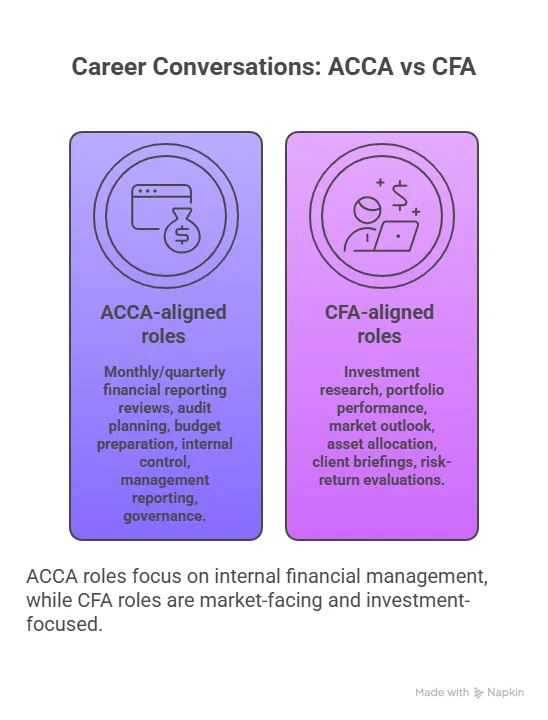
  • CMA vs ACCA: CMA is faster (6–8 months vs 2–3 years) and management-focused
  • CMA vs CPA: CMA is worldwide; CPA is US-centric
  • CMA vs CFA: FCA is concerned with investments; CMA is concerned with strategy, finance, and management

This makes CMA the most appropriate certification for finance professionals aspiring to become leadership-level strategic professionals.

Career Opportunities After CMA Course

Passing the CMA course unlocks a vast universe of career opportunities in India and worldwide.

Top Most Popular Titles for CMA Professionals:

  • FP&A Analyst (Financial Planning & Analysis)
  • Treasury Analyst
  • Corporate Finance Manager
  • Business Consultant
  • Equity Research Analyst
  • Risk Manager
  • CFO (with experience)

Industries Hiring CMA Professionals:

  • Big 4 Consulting Firms
  • Investment Banking
  • MNC Corporations
  • IT/Tech Companies (finance functions)
  • Manufacturing and FMCG

By proper CMA training program, professionals are placed in companies like Deloitte, EY, PwC, KPMG, Accenture, Amazon, and international investment houses.

Why Imarticus Learning for CMA Course?

Imarticus Learning, in association with KPMG India, offers one of the best CMA training programs in India.

Highlights:

  • Joint Certification with KPMG in India
  • Usage of Surgent CMA Study Material (IMA-approved, 83% pass rate)
  • Internships: Live corporate experience before placements
  • Pre-Placement Bootcamp: Resume preparation, mock interviews, and interview fixing
  • Money-Back Guarantee: 50% refund of failing exams
  • India’s First Approved Provider: For finance certifications top 5 (CFA, CPA, CMA, FRM, ACCA)

This combination of corporate and academic ensures that the candidates are employable after the CMA course.

Watch this video to know how you can grab a career opportunity in multinational companies with US CMA course degree

FAQs

1. What is the duration of the CMA course?

The CMA course is usually 6–8 months, which is less than other finance certifications.

2. Where does the CMA syllabus belong?

 The CMA syllabus includes financial reporting, cost management, corporate finance, decision analysis, ethics, and risk management.

3. How much are the CMA courses in India?

 The costs of CMA courses usually range from ₹1.5 lakh to ₹2 lakh including training, study material, and examination fee.

4. Do I need to go through a CMA training program?

Yes. Self-study is acceptable but formal training significantly increases pass rates as a result of professional training and practice material.

5. How do I create a study timetable for CMA?

Work 10–15 hours a week, piece by piece. Make the most of mock tests, past papers, and guided reviews.

6. What are the career opportunities after CMA?

FP&A Analyst, Corporate Finance Manager, Consultant, Risk Analyst, and even CFO with experience.

7. Why choose Imarticus Learning for CMA course preparation?

Because it offers industry-specific case studies, Surgent-supported study resources, internships, and a money-back guarantee for added confidence.

Conclusion

CMA course is not another finance certification—it’s a career builder. With short tenure, globally recognised syllabus, scheduled study plan, encouraging training programs, and awesome ROI, CMA is literally the passport for finance vagabonds.

For Indian aspirants, organisations like Imarticus Learning and KPMG India provide an unparalleled combination of academics and professional learning. From Surgent-sponsored study material to placement boot camps, every step leads to success.

In case your career in finance is simply too vanilla, then taking the CMA course can be the twist of fate that turns your life into one of international acclaim, strategic advice, and economic prosperity.

Why CMA Certification is Making Waves?

In today’s borderless, global finance economy, mobility is not a plus — it is normal. The professionals no longer live in one geography or one nation; they pursue international opportunities, cross-border jobs, and international leadership positions. It is under these circumstances that CMA Certification has emerged as the unstated passport of the finance vagabonds — those who want to carry their know-how across country borders.

The CMA, or Certified Management Accountant, is a highly valued professional credential worldwide. With just 6–8 months of preparation time, students can equip themselves to pursue a career in India and globally with salary packages ranging from ₹8 LPA to ₹18 LPA. With its rigorous focus on management accounting, decision-making, and strategic business analysis, CMA is offering just the kind of talent that organisations need today.

Today, we are discussing why CMA Certification is so much a force to be reckoned with, its professional potential, global acceptability, benefits to professionals, and why finance candidates make it their golden ticket.

What is CMA Certification?

CMA Certification is a professional certification of the Institute of Management Accountants (IMA), USA, that is globally recognised. It attests to financial analysis ability, business acumen, decision-making ability, and management accounting ability. Unlike other accounting finance certifications, CMA combines technical knowledge with business know-how — a very practical approach to managing actual leadership. 

Key Features of CMA Certification:

  • Study Time: 6–8 months
  • Career Prospect: India and worldwide in MNCs, consulting, Big 4, and corporate finance functions
  • Salary Range: ₹8 LPA to ₹18 LPA for certified professionals
  • International Recognition: Certified in 100+ countries

This combination of global acceptability, applicability, and high employer preference makes it one of the most sought-after finance professional certifications today.

CMA Certification

CMA Certification Benefits: Why Professionals are Choosing It?

The advantage of CMA Certification is a hundredfold compared to an employment title. It’s global credibility and it proves that the person is leadership-ready.

1. Global Mobility

CMA experts can be deployed anywhere, ranging from the USA to the Middle East, Europe, and Asia. It offers finance vagabonds with the mobility to roam through geographies and industries.

2. Career Versatility

With a certified CMA, the contenders are not limited to traditional accounting. They can opt for careers in the area of:

  • Financial Planning & Analysis
  • Corporate Strategy
  • Cost Management
  • Internal Auditing
  • Risk Management
  • Business Consulting

3. High Earning Potential

Salary packages after acquiring CMA professional qualifications are considerably more than those without any certification. As per industry standards, CMA designation benefits include the average 60% salary increase with certification.

4. Strategic Decision-Making Skills

The CMA is concerned with developing leadership-capable competences. Concentrating on business analysis, financial planning, and performance management, the individuals develop competences to be able to make an immediate contribution to organisational strategy.

5. International Recognition

IMAs Certified Management Accountant title results in the title being recognized globally, conferring the certified practitioner a long-standing competitive advantage in the course of recruitment drives.

CMA Career Opportunities Across the Globe

Whereas discussing the career prospects in CMA, one has to highlight the versatility of the certification. It is equally valued by MNCs, corporates, and consultancy firms.

In India:

  • Management accounting and corporate finance
  • Back-office operations of US and European MNCs
  • Big 4 firm advisory services

Abroad:

  • Financial analyst roles in Fortune 500 organizations
  • Consultancy firm strategic roles
  • Management roles in manufacturing, technology, and healthcare

As globalisation and digitalisation intensify, CMA professionals are able to move into functions in which strategy and finance intersect and assist organisations to grow, scale up, and transform.

Certified Management Accountant Recognition: Why Employers Trust CMA

Today’s recruiters exercise prudence while taking hiring decisions. They require candidates who can contribute value from the very first day to their companies. The Certified Management Accountant designation is a seal of endorsement that guarantees recruiters technical competence, analytical minds, and strategic thinkers.

The employers value CMA professionals for:

  • Their capability to analyze financial information in business context
  • For being leadership-oriented decision-makers
  • For responsiveness in the face of evolving regulatory environment

This renders CMA professionals most sought after in industries like banking, technology, consultancy, and manufacturing.

Imarticus Learning’s Role in CMA Certification Success

The US CMA program at Imarticus Learning is crafted under the mentorship of KPMG in India to stabilise academic education and industry expertise against each other. The team has maximised the preparation process among candidates with industry-specific case studies, live projects, and internship schemes.

What Makes Imarticus Learning Stand Out?

  • Industry-Based Study Material: Closely put together by KPMG experts to cater to global finance needs
  • Internship Exposure: Guest faculty exposure for industry readiness
  • Joint Certification: Imarticus Learning + KPMG in India = strong brand credibility
  • Special Study Guides: Access to study material for Surgent’s CMA (83% pass rate globally)
  • Money-Back Guarantee: 50% fee rebate if exams not passed
  • Pre-Placement Bootcamp: Resume creation, interview preparation, and job placement assurance

With IMA USA Gold Learning Partner, Imarticus is India’s first and only certified prep provider of the world’s top 5 finance certifications (CMA, CPA, CFA, FRM, ACCA).

CMA Certification vs Other Professional Qualifications

Comparing CMA certification with other certifications such as CPA, CFA, or ACCA, the benefits are evident:

  • CMA vs CPA: CPA is US centered, whereas CMA is international oriented.
  • CMA vs CFA: CFA is investment oriented, while CMA is broader with corporate finance and management accounting.
  • CMA vs ACCA: CMA is quicker (6–8 months) in comparison to ACCA’s lengthy course duration.

For those who want international exposure and quicker professional opportunities, CMA is the correct choice to make. 

Watch this video to know how you can grab a career opportunity in multinational companies with US CMA course degree

FAQs on CMA Certification

1. What is CMA Certification and which institution offers it?

It is a finance certification provided by the Institute of Management Accountants (IMA), USA).

2. How long should CMA be prepared?

For normal 6–8 months preparation with systematic learning.

3. What are the CMA designation benefits?

Improved growth in remuneration, global reputation, career designations as strategy, and other prospects in industries.

4. Does CMA allow me to work outside the country?

Yes, CMA provides career prospects in more than 100 nations, thus being one of the most sought-after international mobility certifications.

5. What are the salary ranges for CMA specialists?

Certified specialists earn ₹8 LPA to ₹18 LPA with much more on offer abroad.

6. Which industries recruit CMA-certified specialists?

IT, banking, consulting, manufacturing, FMCG, and healthcare are among the leading recruiters.

7. In what ways does Imarticus Learning support CMA candidates?

With Surgent study materials, sponsored KPMG case studies, internships, pre-placement boot camps, and a money-back guarantee.

Conclusion

The CMA Certification is now the nomad’s secret passport — for others who must live the international dream, dream leadership roles, and economic independence. With the eerie awareness, plenty of career prospects, and self-apparent salary benefits, CMA emerges as one of the most powerful finance certifications.

For Indian students, Imarticus Learning’s association with KPMG India merely makes it all that more profitable — training at global standards, actual practice, and 100% placement assistance.

If you’re willing to bring about a career quick start and unlock doors to international finance opportunities, CMA Certification is the pass you cannot afford to miss.

What is Blockchain Technology? Exploring Its Impact on Modern Industries

Introduction

If you’ve been hearing a lot about blockchain but aren’t sure what it really is, you’re not on your own. This game-changing tech started by making things like Bitcoin work and has now gone on to change many areas, like supply control, health care, money matters, and more. But here’s the key question: what exactly is blockchain tech, and why are big tech firms and new small firms all rushing to use its power?

In this blog, we will explore the nuts and bolts of blockchain technology to see how it works, game-changing use cases, and its future.  As a curious learner or business manager, this guide will assist you in grasping the game-changing influence of blockchain in the contemporary world.

What is Blockchain Technology?

By its very nature, blockchain is a decentralised digital ledger that makes transactions on many computers so the information cannot be tampered with in the past. This provides transparency, security, and trust–without intermediaries. It is such as a shared Google spreadsheet, yet one no one person has access to and where every transaction is irreversibly logged.

When you hear the term blockchain tech, it means a system for keeping data in “blocks” linked in time order and with strong code. This setup makes it hard to mess with, giving it big use for safe data use in many areas.

Key Features of Blockchain:

  • Decentralisation: No one owns the data.
  • Immutability: Data cannot be altered once it has been recorded.
  • Transparency: Everyone involved can see the ledger.
  • Consensus: Data is confirmed by consensus among nodes.
FeatureDescription
DecentralisedEliminates the need for a central authority
TransparentParticipants can view and verify the entire transaction history
ImmutableOnce data is recorded, it cannot be modified
SecureCryptographic principles secure every block
Consensus-drivenTransactions validated via consensus mechanisms like Proof-of-Work (PoW)

Blockchain Applications Across Industries

What is blockchain technology

Practical applications of blockchain extend far beyond cryptocurrency. Organizations across industries are today researching the potential of blockchain applications to address actual problems and spur innovation.

In finance, blockchain provides secure and faster transactions. In health, it allows for tamper-proof medical records. In supply chain, it offers end-to-end product traceability. Even governments are leveraging blockchain for land registration and digital identity.

Main Uses of Blockchain

  • Supply Chain Checks: Live checks and where goods are.
  • Health Care: Safe info share and patient files.
  • Banks & Money: Safe money moves across borders quick and clever deals.
  • Digital ID: Checked IDs to stop cheats.
  • Voting Systems: Tamper-proof and transparent electronic voting.
  • Intellectual Property: Royalty distribution and copyright protection.

External Resource: World Economic Forum on Blockchain Applications

Blockchain in Business: Revolutionising Operations

Blockchain in business is not a buzzword—it’s an engine of efficiency and trust. From automating back-end operations to greater transparency of transactions, blockchain is rewriting the rules of how companies work.

Companies are employing smart contracts to automatically enforce agreements without the need for intermediaries and legal documentation. Blockchain also facilitates the simplification of audit, logistics, and customer validation processes.

Advantages of Blockchain in Business:

  • Enhanced Traceability: Every transaction is timestamped and verifiable.
  • Fraud Prevention: Hard to falsify or modify records.
  • Cost Efficiency: Eliminates middlemen and third-party authenticators costs.
  • Faster Settlements: Instantaneous processing of transactions.
Business FunctionBlockchain Use Case
FinanceCross-border payments, smart contracts
HR & RecruitmentCredential verification
Supply ChainInventory management, provenance tracking
LegalSmart contracts, digital notary

External Resource: Harvard Business Review on Blockchain in Business

Distributed Ledger Technology: The Backbone of Blockchain

To get a proper idea of what is blockchain technology, we have to discuss Distributed Ledger Technology (DLT). Blockchain is a form of DLT—a network of computers (or nodes) that maintain synchronously a common, secure database.

DLT does away with a central record-keeper. All the nodes have visibility to the same data, and any modification is propagated throughout the system in real-time. This arrangement increases trust and transparency, particularly in multi-party settings.

Differences Between Blockchain and DLT:

FeatureBlockchainDistributed Ledger Technology
Data StructureBlocks linked in a chainNo specific structure required
Use of TokensOften includes cryptocurrenciesMay not include tokens
Public AccessCan be public or privateUsually permissioned
Example TechnologiesBitcoin, EthereumCorda, Hyperledger Fabric

External Resource: IBM Explains DLT vs Blockchain

Blockchain Industry Impact: Key Sectors Transformed

The blockchain industry impact has been massive across several sectors. It’s not only seen in fintech. We see its mark in logistics, fun, learning, and even farming.

Blockchain brings safe, clear, and good work ways, building trust in fields where keeping data true is key. Let’s see how many areas gain from it.

Industries Revolutionized by Blockchain:

  • Finance: Real-time settlements, fraud prevention mechanisms, smart loans.
  • Healthcare: Tamper-evident health records, accelerated insurance processing.
  • Retail: Sourcing transparency, loyalty schemes.
  • Agriculture: Farm-to-fork traceability, proof of fair trade.
  • Media: Digital rights management, ownership through NFTs.
  • Education: Verified credentials, decentralised learning platforms.

Future of Blockchain: What’s Coming Next?

The road ahead for blockchain looks bright. It will mix with AI and IoT, and more folks will use DeFi. As more work goes digital, blockchain is set to be key.

Governments are also welcoming it for intelligent governance and regulatory alignment. Startups are creating end-to-end ecosystems based on blockchain, while incumbent companies are integrating it into existing infrastructure.

  • Decentralised Finance (DeFi): Banking-free open financial services.
  • Interoperability: Blockchains that can talk to one another.
  • Green Blockchain: Efficient energy use in consensus models.
  • NFT 2.0: Tokens driven by utility beyond art and collectibles.
  • AI + Blockchain: Improved decision-making with secure data.

If you want to build a job in the world of money and blockchain later on, the Post Graduate Diploma in Fintech at Imarticus Learning has a good course list that fits what the job world needs.

Key Takeaways

  • What is blockchain tech: A Decentralised digital ledger no one can change.
  • Blockchain uses reach into money, health, school, and the flow of goods.
  • Blockchain in work makes things easy and builds trust.
  • Distributed ledger technology supports blockchain’s secure design.
  • Blockchain industry influence is evident in retail, media, and governance.
  • The future of blockchain is about AI, DeFi, and green innovation.

FAQs

1. What is blockchain tech in easy words?

 Blockchain is a setup that keeps data in parts linked in a sure, firm line, making it clear and trusted.

2. How do folks use blockchain out there?

 It’s used in banks, health, supply lines, vote systems, and more, for safe and clear record-keeping.

3. What work areas use blockchain now?

 Areas like money, health, news, farming, and learning are using blockchain for different uses.

4. Is blockchain just for digital money?

 No. While it first came for digital money, blockchain now runs things from online ID to moving goods tracking.

5. How does distributed ledger work?

 It keeps all of the copies of the database in sync across many locations, so it’s essentially impossible to modify the data.

6. What are the types of blockchain?

There are public, private, consortium & hybrid blockchains -each used for different use cases & privacy requirements.

7. What is a smart contract?

 Smart contracts are executing contracts with terms embedded directly into code, making it automatic and trusted execution.

8. Is blockchain secure?

 Yes. Its decentralised and encrypted nature makes it virtually impossible for any one party to tamper with data.

9. What are some blockchain platforms?

Popular platforms are -Ethereum, Hyperledger Fabric, Corda & Tezos.. each with its own features.

10. Is it possible for me to have a blockchain career?

 Yes. With careers such as blockchain developer, architect, and analyst, it’s an emerging field with high demand.

Conclusion

Now that we know what blockchain tech is, it’s clear it’s more than a cool word. It’s spread-out, safe, and open in ways that make it a strong help for companies and fields that aim for trust and speed. As blockchain grows, being up to date and learning more is very key.

If you are a fintech fanatic or even a business leader, now is the best time to jump into the blockhain world. Ready to take the leap? Discover the PGDM in Fintech by Imarticus Learning and arm yourself with hot skills that will craft tomorrow’s digital economy.

The Impact of AI on Investment Strategies: A New Era in Finance

Introduction: Welcome to the Era of AI-Driven Investing

What if a machine, not a person, made the largest money choice in your life? This machine never sleeps, never fears, and never skips a fact. Say hi to a new mix of Money and AI. Here, the old ways of putting money in are changed by code, steps, and data analysis that is always on.

Those days when wealth managers depended on intuition or past data are over. In today’s era, Finance and AI are combining to develop systems that forecast, automate, and even outsmart human investors. From robo-advisors to algorithmic trading and sentiment analysis, we are heading towards an era where artificial intelligence doesn’t just support—it dictates.

Artificial Intelligence’s Role in Finance

Finance and AI

The money world has always grabbed new tech fast, but AI has pushed its change faster and further than before. AI is great at handling huge loads of data quickly and finding details that people can’t. Now, banks, funds, and money firms use AI to catch cheats, check risk, and fine-tune their plans. By mixing money work with AI, they make choices that are not just quick but very smart. According to a McKinsey report, financial institutions may capture $1 trillion in additional value through AI adoption by 2030 (source).

Key Use Cases of AI in Finance

  • Predictive analytics for stock market movements
  • Real-time fraud detection platforms
  • Credit scoring and underwriting automation
  • Portfolio management through robo-advisors
  • Automated compliance and regulatory screening
  • News and social media sentiment analysis
  • Customer service and chatbots automation
  • Algorithmic trading platforms
  • Risk modelling and stress testing
  • Insurance claim evaluation

Rise of AI-Driven Investing: A Game Changer

AI investing is the employment of machine learning algorithms and models to make investment choices based on data without human influence. These models are set to learn and improve continually with new data, having a serious advantage over volatile markets.

The use of Finance and AI in asset management is increasing at a fast pace. AI assists in removing emotional prejudice, processing alternative data (such as satellite imagery or customer behaviour), and making trades in milliseconds. Companies such as BlackRock and Renaissance Technologies are already utilizing AI intensely to produce alpha.

By Forbes, almost 60% of institutional investors think AI will become critical to producing future returns (source).

The marriage of Finance and AI is being propelled by major trends in financial technology. From blockchain to deep tailoring, the scene is growing fast. As new fintech firms and old players take on AI, we’re seeing huge new ideas. Two big shifts are the rise of easy AI tools that need no code and the move to include finance inside other services. Both trends allow for faster deployment and greater scalability of AI-driven investing solutions.

  • AI-driven ESG investment models
  • Predictive customer behavior modeling
  • No-code AI for banks
  • Blockchain and AI integration for intelligent contracts
  • AI-powered underwriting for loans and insurance
  • Generative AI for customized financial guidance
  • Quantum computing potential in trading
  • Cloud-native AI investment platforms

Automated Investment Strategies: Precision at Scale

Automated investment plans are constructed with pre-established rules and input data to control portfolios with little or no human intervention. These plans, most commonly applied by robo-advisors and institutional investors, are capable of rebalancing portfolios, tax-loss harvesting, and making trades based on market signals.

The integration of Finance and AI guarantees these computerized systems never sit still. They evolve. A machine learning model, say, can change asset mixes based on geopolitical developments, inflation data, or social media sentiment—something that human managers just aren’t able to do in real time.

The Future of Wealth Management with AI

Finance AI are revolutionizing wealth. High net worth as well as mass affluent investors are increasingly preferring digital platforms that provide 24/7 advice, data-driven recommendations, and transparency.

AI is making hyper-personalized investment offerings possible. Two individuals of the same age and income, for example, may receive very different portfolio suggestions based on their objectives. Risk tolerance. Even personality characteristics inferred from digital trails.

As per Deloitte, wealth management companies which adopt AI will enjoy a 30% productivity edge over their non-AI-adopting counterparts by 2027 (source).

Conventional vs AI-Based Investment Models

Below is a side-by-side analysis of how AI and Finance models vary from conventional ones:

Traditional vs AI-Driven Investment Strategies

FactorTraditionalAI-Driven
ApproachHuman intuition, past dataAlgorithmic, real-time data
SpeedSlow, manualInstant, automated
ScalabilityLimited by human effortHandles millions of accounts
AdaptabilityPeriodic, reactiveContinuous, real-time learning
BiasProne to emotionData-driven, emotion-free
PersonalisationBroad segmentsHyper-personalised
Data UsedStructured onlyStructured + unstructured
CostHigh advisory feesLow, automation-led
AccessMostly HNWIsOpen to all via fintech
TransparencyDepends on advisorBuilt-in explainability

This table shows the extreme difference in methodology, speed, scalability, and responsiveness between traditional and AI-based investment approaches. You can see, of course, that the future belongs to automation and intelligence.

Advantages of Finance and AI Integration

The mix of Finance and AI adds big gains above better results. It opens up access to investing tips, cuts down on costs, and lifts choices over all types of assets.

Main Gains

  • Speed: AI can go through live data in a snap.
  • Scalability: Systems can take care of lots of accounts at once.
  • Accuracy: Choices built on data cut down on mistakes.
  • Efficiency: Work done by robots saves time and cash.
  • Transparency: AI setups can show clear logs and reasons.
  • Customisation: Plans are made to fit a person’s needs.

Challenges and Ethical Considerations

As powerful as Finance and AI can be, challenges remain. One major issue is data bias—if the data fed into the model is flawed, the outcome will be too. Moreover, lack of regulatory clarity around AI models poses risks, especially in highly sensitive sectors like finance.

There’s the fear of job replacement, too. While AI replaces many jobs, it also creates new ones—AI trainers, ethicists, and algorithm auditors will be hot commodities. 

FAQs

Q1. What is AI currently being used for in financial markets?

AI is used in jobs like stock tips, scam checks, auto trading, robot help, and smart money plans. It lets firms and money men make good, quick choices. 

Q2. Are there real-world applications of AI in investing?

Robo-advisors such as Betterment and Wealthfront utilize AI for portfolio management, and hedge funds utilize AI to provide trading signals and measure risk based on alternative data sources.

Q3. Can AI substitute human financial planners?

AI can help and run many tasks that helpers do, but feelings, trust, and smart calls stay key—so AI helps more than it replaces. 

Q4. Can AI be trusted in turbulent markets?

Yes, particularly if it is trained on huge historical data sets. Nevertheless, rare black swan events might still confound AI models, so hybrid human-AI models are best.

Q5. How does AI improve wealth management?

AI speeds up money help by giving very tuned advice, good money shifts, and smart views that change plans early. 

Q6. Can AI-based strategies be accessed by retail investors?

Yes, absolutely. Robo-advisors and fintech mobile applications provide AI-based portfolios to individual investors at a lower cost than traditional advisors.

Q7. What are the risks posed by AI in finance?

Big worries are data privacy, unfair code, clear choice in models, and too much use of machines with no human help. 

Q8. Can AI anticipate market crashes?

 AI can discover patterns that could signal risk, but anticipating sudden crashes with exactness remains a notch away from its reach, though it’s advancing quickly.

Q9. How is AI regulated in finance?

Regulations are continuously changing, but most financial institutions now require algorithm auditing, AI decision-making explainability, and ethical usage of consumer information.

Q10. How do I read more about Finance and AI?

You can take senior-level fintech courses that cover AI and finance—like this MSc. in Fintech program by Imarticus Learning that constructs next-gen fintech leaders.

Key Takeaways

  • Finance and AI are radically redefining the way investments are made.
  • AI-based investing introduces precision, velocity, and emotional objectivity.
  • Leading financial technology trends enable wider adoption of AI in wealth management.
  • Automated investment plans offer scalable solutions for every type of investor.
  • The future of wealth management will be hyper-personalised and technology-driven.
  • Ethical principles and regulatory infrastructures will guide ethical use of AI.

Conclusion

The money world is changing, and AI is key to this change. From very custom plans to smart guessing that beats people, Money and AI are making a path for a bright, quick, and open money future. If you put money in, manage wealth, or love fintech, taking up AI is a must now.

If you want to join this cool future, think about being part of Imarticus Learning’s MSc in Fintech. It will let you build a job where money, tech, and new ideas meet.

The Impact of a COO: Critical Roles and Responsibilities

Introduction

When examining organizational dynamics, one quickly realizes that the Chief Operating Officer (COO) is central to the company’s day to day operations. While Chief Executive Officers (CEOs) often receive public recognition.. it is in fact, the COO -who oversees the intricate details that ensure the organization functions efficiently. The responsibilities of the COO extend across various domains -technology, logistics, human resources & more. In essence, the steady performance & operational coherence of a company frequently reflect the COO’s strategic oversight & influence.

COO roles and responsibilities

In the complicated and competitive modern business environment, COO duties and tasks have gone far beyond operations. They are currently decision-making strategic partners, facilitators of innovation, and agents shaping cultures. Let’s dive deep into what influences a COO and why this executive management position is key to business prosperity.

Chief Operating Officer Responsibilities in Contemporary Businesses

The Chief Operating Officer role has undergone drastic changes over the past decade. As the operating doer of the vision of the CEO, the traditional COO no longer exists but is now a visionary in themselves—usually responsible for breaking high-level strategy into action on a day-to-day basis and into measurable results.

From managing cross functional coordination to guaranteeing customer satisfaction through operational effectiveness.. the COO’s role is both wide & deep. It entails wearing multiple hats & juggling business priorities in real time.

Overview of Key COO Responsibilities:

AreaCOO Responsibilities
OperationsOversee daily operations, drive efficiencies
Strategy ExecutionTranslate strategic plans into actionable steps
Team LeadershipManage senior leaders and operational teams
Cross-functional IntegrationAlign departments for cohesive output
Financial OversightOptimise budgets and cost control strategies

It is essential to note that COO responsibilities and roles are diverse based on industry, firm size, and leadership style. However, across the board, there is one common thread: COOs drive execution perfection.

Leadership in Business Operations: Leading Daily Excellence

Excellent business operations leadership is the key to what makes a COO absolutely necessary. COOs are the anchor that steadies the ship in rapidly scaling or transforming companies, all while embracing agility.

COOs create, track, and refine operational processes. They keep departments from HR to IT to finance aligned with top-level objectives. They review bottlenecks, implement process enhancements, and spearhead consistency among teams.

Two solid paragraphs of insight won’t detail all their work, but here’s the bigger picture.

COO-Led Operational Leadership Projects:

  • Creating standard operating procedures (SOPs) across departments
  • Managing implementation of new technologies and systems
  • Handling resource planning and workforce planning
  • Negotiating with leading vendors and partnerships
  • Leading quality assurance and compliance procedures
  • Establishing and monitoring KPIs for operational teams
  • Handling crisis response and risk mitigation strategies
  • Coordinating change management activities in mergers or expansions

All of these are COO roles and responsibilities, and every task affects the organisation’s health and efficiency to scale. 

Executive Management Roles: Working at the Top

When we speak of executive management roles, the COO sits right at the intersection of vision and execution. They not only manage internal systems but also partner with C-suite peers on enterprise-wide initiatives.

The COO collaborates closely with the CEO, CFO, CHRO, CTO & other executives. While the CEO focuses on outward facing strategy & stakeholder relationships.. the COO ensures those strategies are viable, scalable & well executed across the business.

In big organisations, the COO also coaches department heads, directs up to the board, and steers executive debate on organisation, transformation, and expansion.

Most Important Executive Partnerships and COO Contributions

C-Suite PartnerCOO’s Collaborative Role
CEOAlign on vision, lead strategic execution
CFOBudgeting, cost management, profitability oversight
CTOTech adoption, operational automation
CHROWorkforce strategy, culture-building
CMOMarket delivery, operational marketing support

This collaborative leadership approach illustrates why COO responsibilities and roles are essential in maintaining enterprise momentum.

Strategic Operations Management: Creating Long-Term Value

If operational effectiveness is the pulse of a firm, strategic operations management is its navigation system. A COO’s role is not just to keep things operating but to make them work towards goals that are yet to come.

Strategic COOs anticipate future requirements, evaluate incoming risks, and determine how the company will grow. Whether it’s expanding into new geographies, digitalization, or reorganizing teams, they lead operational choices that drive long-term value. Above all, this section showcases the forward-thinking and present-day actionability of the COO.

Strategic Initiatives Addressed by COOs:

  • Creating scalable operating models
  • Leading business continuity and disaster recovery planning
  • Enabling sustainability and ESG integration
  • Managing capital-intensive projects (infrastructure, technology systems)
  • Ensuring enterprise agility through data-driven operations
  • Supporting M&A due diligence and post-merger integration
  • Measuring performance with long-term financial planning models

This is where the COO roles and responsibilities drive measurable shareholder value and develop enterprise resilience.

COO Impact on Business: Why It Matters More Than Ever

The COO effect on business has become increasingly visible as companies deal with volatile market environments, remote work shifts, and tech disruption. A talented COO is able to navigate an organisation through turmoil with poise and lucidity.

Operations-driven transformations drive up to 30% performance gain, says a McKinsey & Company report. With AI, sustainability, and agile models in the game, COOs now direct enterprise transformation on the ground level.

A study conducted by Harvard Business Review describes how today’s COOs excel in uncertain situations through high adaptability, data-driven acumen, and a focus on people.

In short, COO jobs and duties are pivotal to realizing value, mitigating risk, and constructing the future.

Key Takeaways

  • COO jobs and duties include strategy, execution, operations, and transformation.
  • Modern COOs create value through efficiency, innovation, and leadership.
  • They collaborate across C-suite functions to deploy scalable solutions and lead teams.
  • As business landscapes grow more complex, the COO’s role becomes even more critical.
  • Strategic COOs are long-term thinkers with strong executional capabilities.

Conclusion

The role of COO is anything but one-dimensional. It’s about managing daily operations, sure, but also driving the company’s broader vision forward—sometimes it even feels like you’re the glue holding everything together. If you’re already in senior leadership or have your eye on the executive ranks, really grasping these responsibilities? That’s how you take your career to the next level. It’s a blend of strategic thinking and hands-on management, and not everyone’s cut out for it. But if you are, you’re in for an impactful journey.

Looking to develop your strategic skills as a COO? Join the Global Senior Executive Leadership Programme – Chief Operating Officer by IIM Nagpur in association with Imarticus Learning. Acquire the frameworks, leadership mindset, and hands-on learning to excel in the new-age COO position.

FAQs

1. What does a COO do in a company?

The COO handles everyday work, makes sure goals match actions, runs teams from different parts, keeps costs down, and sets up work methods that can grow within the company.

2. How is a COO different from a CEO?

While the CEO thinks of big plans and deals with people outside, the COO works on these big plans inside by handling details and getting teams to work well together.

3. What must a COO be good at?

A good COO needs to think ahead, lead well, handle operations smoothly, know money matters, be good at talking, and get different teams to work as one.

4. Can a COO turn into a CEO?

Yes, many COOs become CEOs because they know a lot about how things work inside and they work closely with other top people.

5. How does a COO affect the way a company feels?

By making rules clear, setting steady goals, and leading projects that focus on people, the COO strongly shapes how the company feels and acts.

6. Does every company need to have a COO?

No, small companies may not necessarily employ a full-time COO, but as businesses grow, the complexity of operations will usually require one to balance and sustain growth.

7. What fields lean a lot on the COO role?

Areas such as making things, moving goods, health care, and tech—where making sure things run well is key—rely much on COO know-how.

8. How does the COO help in big plan making?

COOs help plan big by giving thoughts on what can work, how to best use resources, and how things are run to support big aims of the group.

9. How has tech changed the COO’s job?

Now, COOs must lead in making changes with new tech, using tool that work by themselves, and looking at data deeply to make things better and bring new ideas.

10. Does one need formal education to become a COO?

Yes, although experience is most important, formal executive education like the COO Programme by IIM Nagpur and Imarticus can hone strategic thinking and leadership capabilities necessary for the job.

Top Challenges Faced by Executives in Managing Money

Introduction

Let’s be realistic — money management at the executive level is not merely about keeping an Excel sheet under control. It involves making strategic choices in real-time, reconciling the interests of stakeholders, and predicting outcomes under extremely volatile conditions. Whether you are a CFO for a multinational or a business leader managing more than one department, pressure to make correct financial choices is humongous.

In the current corporate environment, finance leaders are confronted with a war zone of economic uncertainty, regulatory demands, and changing tech environments. As stakes are greater, so is the requirement for sound leadership financial competencies and advanced decision-making. Let’s dive in-depth into the most urgent money-connected challenges that executives currently face, and how an Executive Finance Program can be a game-changer.

Executive finance program

Executive Finance Challenges in a Fast-Moving Economy

As economies leap back and forth at light speed, executives have to respond with the same speed. What was effective in the boardroom last quarter may already be yesterday’s news.

Financial executives tend to be running after real-time information. They are under pressure to make high-value choices without always having the luxury of having all the information. The pressure of ensuring business continuity while adjusting financial strategies to emerging regulation, digital transformations, and evolving customer behaviors is great.

Key Executive Finance Challenges Include

  • Balancing short-term liquidity and long-term objectives
  • Managing market uncertainty and inflation threats
  • Adjusting internal financial policies to conform to new compliance standards
  • Harmonizing ESG (Environmental, Social, Governance) thinking with decision-making

McKinsey Report: Just 11% of finance chiefs consider themselves ready for abrupt macroeconomic shocks.

Corporate Budgeting Challenges and Sophisticated Financial Choices

Corporate budgeting is more than just doling out money — it’s about putting the right priorities in place according to company strategy. Budgeting is too often a game of tug-of-war between departments, deadlines, and executive vision. 

Executives often struggle with implementing agile budgeting systems. Conventional methods just aren’t flexible enough to react to the latest trends or crises. In addition, budget planning can be an overly time-consuming administrative process that constrains bandwidth for more strategic decision-making.

Common Corporate Budgeting Challenges:

  • Slow approval cycles
  • Static annual planning models
  • Disconnection between budget and actual-time performance data
  • No cross-functional transparency
Budgeting ChallengeDescription
Delayed ApprovalsMultiple stakeholders slowing down budget sanctioning
Static PlanningInflexibility to adapt to new priorities mid-cycle
Forecast MismatchDisconnect between projected and actuals
Transparency GapsSiloed information creates inaccurate allocations

Strategic Financial Planning in Volatile Markets

Strategic budgeting takes foresight over the long term, but how do you make plans when the market is not cooperative? Executives usually have to forecast earnings in the face of economic turmoil, supply chain disruptions, and changing consumer sentiment.

Financial planning must be flexible. Leaders require adaptive structures that facilitate scenario modeling, risk analysis, and data-driven forecasts. This is where the Executive Finance Program comes in — empowering leaders with adaptable planning tools and analytical decision-making frameworks.

Strategic Financial Planning Must Account For:

  • Scenario planning and sensitivity analysis
  • Investment prioritization in uncertain conditions
  • Aligning financial objectives with business vision
  • Harnessing real-time data and AI forecasting capabilities

Harvard Business Review: Scenario planning to overcome uncertainty.

Managing Cash Flow in the Midst of Operating Pressure

Profitable companies can get into trouble with bad cash flow. Cash is king, and for executives, it is about ensuring the company never experiences a liquidity crisis.

The problem is in aligning collections, payables, inventory cycles, and investment in capital. Additionally, in expanding organizations, executives need to ensure subsidiaries and teams are in sync with central financial controls — no easy task with an operation across geographies.

Challenges in Cash Flow Management:

  • Tardy receivables and high DSOs (Days Sales Outstanding)
  • Inventory holding problems
  • Unpredictable input costs
  • Lack of visibility among business units

Key Tactics for Cash Flow Improvement:

  • Digitised collections and invoicing systems
  • Dynamic forecasting for cash
  • Reduced payable cycles through early payment discounts
  • Monthly working capital reviews

PwC: Cash flow visibility key to resilience.

Leadership Financial Skills and Team Accountability

Financial literacy at the executive level isn’t merely about number-crunching. It’s about being a strategic thinker, a data storyteller, a stakeholder influencer, and a financial literacy builder across teams.

Finance leaders of today must mentor, delegate, and get cross-functional teams to deliver. Many executives, however, do not have formal training to build others’ finance skills. This is where leadership finance capabilities come in — particularly in cascading strategy intent down the line.

Top Leadership Financial Skills Required:

  • Converting difficult financials into meaningful insights
  • Cross-functional team alignment on financial KPIs
  • Delegating and checking financial tasks
  • Coaching non-financial leaders on fiscal responsibility

Weak Financial Leadership Symptoms:

  • No cost ownership in teams
  • Inconsistent reporting accuracy
  • Teams making budget decisions in silos
  • Poor finance and operations alignment

How an Executive Finance Program Can Help

If you find yourself nodding your head to these challenges, it might be time to take a formal learning experience. A well-designed Executive Finance Program provides more than just armchair knowledge — it’s a tactical toolbox for today’s financial leaders.

Imarticus Learning’s Postgraduate Certificate Programme for Emerging CFOs by IIM Indore is aimed at empowering finance leaders with today’s best tools, leadership methods, and decision-making frameworks adapted to the complexity of real life.

Why This Programme is a Must:

  • Learn from best IIM faculty and industry practitioners
  • Concentration on leadership, valuation, M&A, digital finance
  • Networking with high-level finance professionals
  • Simulations and capstone projects in real life

Key Takeaways

  • Executives confront sophisticated executive finance dilemmas in a changing economy.
  • Pain points commonly shared are corporate budgeting challenges and cash flow management.
  • Effective financial leadership skills are crucial to leverage and make decisions.
  • A formal Executive Finance Program enables professionals to lead with purpose and speed.

FAQs

Q1: Why executives require specialized finance training?

Executives make high-risk decisions, and without sophisticated financial education and strategic models, they can make expensive mistakes. Specialized training bridges this gap with experiential education and leadership tools.

Q2: What are some of the telltale symptoms of ineffective executive-level financial planning?

Symptoms include missing targets, overrunning budgets, decision-making out of cycle, and a lack of departmental alignment. These tend to be the result of poor forecasting or strategic misalignment.

Q3: Why does budgeting become a bottleneck within big organisations?

Budgeting creates issues when it is too rigid, is not collegial with departments, or does not include real-time input. This slows down progress and causes miscalculation of resources.

Q4: Why is cash flow more significant than profitability?

Profit is abstract until it’s realised, whereas cash flow is the immediate fuel that energises the business. An organisation may be profitable but still crash because of inadequate liquidity.

Q5: How do finance leaders make teams more accountable?

Through the establishment of clear financial KPIs, training, dashboarding & ownership, finance leaders can instill more accountability across departments.

Q6: What is the significance of scenario planning in executive finance?

It enables leaders to assess various outcomes & prepare proactive responses, especially in volatile markets.. thus enhancing resilience.

Q7: Can digital tools help overcome challenges of executive finance?

Yes. Applications like AI-based forecasting, automated reporting, and ERPs supported by cloud infrastructure provide real-time insights and minimize human error in financial processes.

Q8: What is the ROI of an Executive Finance Program?

The payoff comes in enhanced decision-making, better team alignment, accelerated promotions, and more organisational impact. The learning pays off in terms of long-term value.

Q9: How do leadership financial skills differ from technical skills?

 Leadership skills are concerned with influence, communication, decision-making, and team building, whereas technical skills are concerned with financial modelling, analysis, and reporting.

Q10: Is the IIM Indore Executive Finance Program relevant for mid-career professionals?

Certainly. It’s geared for mid to senior finance leaders wanting to move into strategic positions or CFOs in their future.

Conclusion

Managing the corporate finance environment is no longer an exercise in numbers. It’s vision, flexibility, and power. From managing macroeconomic uncertainty to building a financially savvy team ethos, executives today require more than experience — they require constant upskilling. Adopting an Executive Finance Program can be the difference between money management and money mastery.

The Ultimate Blueprint for Aspiring COOs: How to Get Started

Introduction

So, you want to be a COO? That’s not a job title—it’s a calling. The Chief Operating Officer is the conductor of an organisation’s execution muscle. You’re not merely checking off strategy tick boxes; you’re spearheading the transformation, juggling internal operations, and becoming the CEO’s right-hand person. If you’ve been wondering how to get into being a COO, you’re in the right place.

In this guide, we’re going in-depth with everything that makes a rockstar COO—starting from COO skills development and executive training to real-world education routes. Whether you’re a mid-manager or already in a senior position -this guide will take you through the actions, mindset & certifications you need to confidently take on the COO role. 

How to become a COO

Understanding the COO Position

The Chief Operating Officer is usually the behind-the-scenes hero of C-suite management. CEOs are visionaries.. but COOs make the vision a reality with execution, alignment & operational effectiveness. A COO manages day to day operations, constructs scalable systems & keeps the firm running like a well oiled machine.

COOs are responsible for cross-functional leadership. From HR to IT, logistics to customer service, they touch nearly every business unit. Understanding the full business landscape—and having the judgement to course-correct quickly—is critical. If you’re asking how to become a COO, start by immersing yourself in the operations mindset.

Typical Responsibilities of a COO

ResponsibilityDescription
Strategic ExecutionTurn CEO vision into real outcomes
People ManagementLead, motivate and retain key teams
Financial OversightEnsure operational profitability
Risk ManagementMitigate threats and align compliance
Performance MetricsMonitor KPIs and drive optimisation

COO Skills Development: What You Need

In order to actually know how to be a COO, you first need to develop a broad set of hard and soft skills. It’s not about understanding operations; it’s about dealing with complexity, people, and crisis.

COO capabilities development starts with an anchor in understanding business functions—but emotional intelligence, flexibility, and tech literacy are added to the mix. In the emerging business environment of today, COOs will need to drive digital transformation and enable sustainability agendas too.

Key Skills for COOs:

  • Strategic thinking with execution-first orientation
  • Cross-functional leadership and collaboration
  • Financial acumen and budget stewardship
  • Crisis management and high-pressure decision-making
  • Communication mastery, particularly in times of organisational change
  • Tech-savviness, including digital tools, AI, and automation
  • Emotional intelligence for leading high-performing teams

By McKinsey, COOs increasingly set the culture of execution and resilience. In brief, they’re culture carriers.

Executive Operations Training: Enhance Your Skills

One does not become a COO overnight. Purposeful learning is critical. That’s where executive operations training fits in. Through short-term certification or interactive leadership residencies, ongoing upskilling helps you stay competitive.

This training provides you with a 360° perspective of operations. You’ll see how to link strategy with processes, create agile systems, lead people through transformation, and leverage tech for growth. The idea is to move out of functional silos and work enterprise-wide.

Executive Program Key Training Modules:

ModuleFocus
Strategic OperationsBusiness modelling, process redesign
Digital TransformationAI, automation, agile workflows
People and CultureTalent strategy, team engagement
Finance and RiskBudgeting, compliance, scenario planning
Leadership SimulationCrisis response, boardroom readiness

Leading universities and organizations such as Harvard Business Review consistently point to the role executive education plays in expediting C-suite readiness.

Chief Operating Officer Course: Your Career Journey

Paying for a Chief Operating Officer course is one of the best decisions you can ever make. Why? Because these courses are crafted to provide you with the theory, frameworks, and experiential knowledge that you need to deliver at the top.

These are not academic qualifications—they’re indicators of credibility. And they give you membership to top peer groups and mentorship from industry experts. You also get exposure to real-world simulations, which check your leadership potential.

Why Take a Chief Operating Officer Course?

  • It confirms your strategic and operational skills
  • Develops your executive presence and boardroom impact
  • Introduces you to cross-sector challenges and solutions
  • Strengthens decision-making using data, dashboards, and tools
  • Provides networking access to alumni, mentors, and leaders

Ready to fast-track your COO journey? Enrol in the IIM Nagpur Global Senior Executive Leadership Programme – Chief Operating Officer, co-created by Imarticus Learning. This course is tailored for high-potential professionals aiming to master how to become a COO in today’s dynamic business landscape.

Leadership Path for COOs: Climbing the Ladder

Becoming a COO isn’t just about the destination—it’s about the leadership evolution. The leadership path for COOs typically starts from mid-level functional roles like project management, operations, finance, or sales.

Once you’re taking on cross-functional projects, steering transformation programs, and driving real innovation, you’re getting into COO territory. By then, you should already have a proven track record in P&L roles, managing sizable teams, and actually delivering on strategy—not just planning it. If you haven’t checked those boxes, you’re probably not ready for the next step.

Typical Leadership Career Paths to COO:

Project Manager → Program Director → VP of Ops → COO

Sales Director → Country Head → COO

Finance Manager → Controller → Director of Ops → COO

Product Manager → Chief Product Officer → COO

The COO role of today, as Gartner sees it, is to be a growth partner—developing new engines of revenue and keeping old systems intact.

How to Become a COO: Actionable Steps

So let’s break down the grand question: how to become a COO? There isn’t a single answer, but there are established paths. These steps can greatly improve your odds of arriving in the COO chair. Here’s your practical roadmap:

Step-by-Step Guide to Becoming a COO:

  • Begin with a deep functional background in operations, finance, or supply chain.
  • Establish cross-functional understanding by working on projects outside your existing department.
  • Obtain executive operations training to establish strategic depth.
  • Take a Chief Operating Officer course for focused grooming as a leader.
  • Network with C-suite leaders and COOs to learn about current challenges.
  • Demonstrate impact through KPIs, profitability, and process improvements.
  • Seek mentor and sponsor feedback to refine your leadership style.
  • Stay current with tech trends and industry changes to stay relevant.
  • Remember, becoming a COO is a path to professional excellence and self-knowledge.

FAQs 

Q1: How much time does it take to become a COO?

It would generally take 12–20 years of increasing leadership experience across functions, industries, or geography. But with intentional development & proper mentorship -you can accelerate this process.

Q2: Do I need an MBA to be a COO?

An MBA is helpful, but not essential. What really counts is your depth of operations, leadership impact, and business influence.

Q3: What industries are hiring COOs the most?

Tech, logistics, healthcare, fintech, and retail are the ones experiencing a hike in COO hiring right now, owing to intricate operations and scaling issues.

Q4: What’s the average COO salary in India?

As per AmbitionBox and Glassdoor.. typical COO salaries can fall between INR 50L to INR 1.2Cr per annum, based on the organization & experience.

Q5: Is technical experience necessary to become a COO?

Yes, particularly if you can show strong people leadership, business sense, and the capacity to implement strategy across segments.

Q6: What is the greatest challenge for newbie COOs?

Establishing trust between departments and bringing everyone together to common execution targets is usually the toughest part of the transition.

Q7: How do I get a mentor to advise my COO path?

Start within your current organisation or alumni networks. Many executive courses also offer formal mentorship programs.

Q8: What’s the difference between a COO and a CEO?

 While CEOs focus on long-term vision, market positioning, and investor relations, COOs focus on execution, alignment, and internal performance.

Q9: Are there any books that can help me become a COO?

Yes, there are books like High Output Management by Andy Grove and The First 90 Days by Michael Watkins that are very good.

Q10: How do I prove I’m prepared for the COO job?

Take on enterprise wide projects, drive transformation initiatives, persuade stakeholders & provide measurable business results.

Key Takeaways

  • COO is an execution-oriented and strategically challenging role.
  • Start with operations mastery and then extend to enterprise-wide leadership.
  • COO skills training, executive operations training, and taking a Chief Operating Officer course is crucial.
  • Learn the path to leadership for COOs to chart your rise clearly.
  • Identifying how to become a COO is all about combining business impact with leadership presence.

Conclusion

The path to the COO suite is complicated but fulfilling. Let’s be real—it takes more than a stacked resume to earn real credibility. Building a solid operational base, always pushing your skillset forward, and learning from top performers—that’s how you set yourself up for serious leadership growth. Still curious about carving your path to COO? Start today. Learn. Network. Lead. And above all—invest in the right training.

Attend IIM Nagpur’s Global Senior Executive Leadership Programme – Chief Operating Officer by Imarticus Learning to make your dream come true.

Skills Every Future CMO Needs to Succeed

Introduction

Ever imagined yourself shaping the marketing vision of a global brand? The role of the Chief Marketing Officer (CMO) has evolved dramatically in recent years. It’s no longer just about creating catchy campaigns or monitoring ad budgets. The modern CMO is a data-savvy strategist, a technology enthusiast, and above all, a customer whisperer. So, if you’ve been asking yourself, how to become a CMO, you’re already thinking like a future leader.

With how fast AI, martech, and customer data platforms are evolving, the roles expected of a CMO have also changed. Today, they are expected to drive growth, claim customer experience, and guide digital transformation. This blog is your guide to the key skills that every future CMO must possess to thrive in today’s marketing world.

How to become a CMO

Marketing Leadership Skills

Being a CMO necessitates the mixture of experience and technical know-how with right leadership skills, vision, and inspiration to cross-functional teams. Before being the marketing counterpart of the chief operating officer, this future CMO must be a strategic leader who integrates marketing with other business efforts through ambiguity and change.

For someone to understand how to become a CMO, one must first understand that leadership applied in marketing is not the title of a candidate, but rather it is a mindset; Marketing leadership comprises empowering teams, strategizing, and integrating departments. The capacity to lead empathetically, envisioningly, and being versatile is what really distinguishes effective CMOs.

The most important leadership characteristics to develop are:

  • Visionary imagination to set marketing in conjunction with long-term business objectives
  • Emotional intelligence to manage high-performing, diverse teams
  • Cross-functional collaboration between product, sales, and customer success
  • Risk management and decision-making in the face of uncertainty
  • Effective communication and storytelling skills

Read how CMOs are becoming enterprise growth leaders – Harvard Business Review

Digital Marketing Expertise

You cannot afford to be serious about figuring out how to become a CMO unless developing digital marketing expertise. Today’s customers engage brands across multiple touchpoints—social, search, email, mobile, and even voice assistants. Ability to architect a cohesive digital strategy is a must.

Digital marketing skills involve everything from SEO & SEM to performance marketing & programmatic ad buying. But it’s not just equipment.. it’s about knowing how to understand user behavior & create personalized, scalable campaigns that convert. Learn about the top digital marketing trends for CMOs in 2025 – Gartner

Here’s how the digital world impacts the CMO’s role:

Digital DomainWhy It Matters for CMOs
SEO & Content StrategyDrives organic traffic & thought leadership
Social Media MarketingBuilds brand presence & community trust
Performance MarketingTies ad spend directly to ROI
CRM and Email AutomationEnhances customer retention and lifecycle value
Martech IntegrationStreamlines marketing workflows

Strategic Branding Skills

Let’s be real—a strong brand isn’t just a “nice to have,” it’s the main event. No matter if you’re B2C or B2B, people buy from brands that genuinely connect with them, deliver what they promise, and actually make sense when they talk. If you’re eyeing that CMO title, you need to make branding your bread and butter.

The next-gen CMO needs to own the brand -inside & out. It’s not just about spinning a nice story for the annual report.. it’s about making sure every single interaction with customers tells that story, loud & clear. You have to really understand who your customers are, what they care about & what keeps them coming back ..or drives them away. Competitive landscape?? You better be two steps ahead. And when it comes to creative, forget cookie-cutter campaigns —the brand’s personality has to jump out at people, wherever they see it. That’s what sets a leader apart. Why purpose-led branding is leading the future – Forbes

Skills in branding that next-gen CMOs need to excel at:

  • Creating harmonious brand architecture for products and geographies
  • Conducting regular brand audits and tracking brand equity
  • Positioning internal culture in accordance with outer brand values
  • Directing creative storytelling and visual identity
  • Managing brand crises and reputation issues

Customer Engagement Strategies

If you’re serious about stepping into a CMO role, customer engagement needs to be your north star. That’s not just marketing fluff—it’s the foundation for real growth. Forget the old playbook of mass emails and generic loyalty programs; those tactics just don’t cut it anymore.

Let’s be real—relying on endless email blasts or generic loyalty schemes just won’t cut it in today’s market. Success now hinges on using data smartly to craft personalized experiences that actually resonate with customers. The CMOs who’ll thrive? They’re the ones who put the customer front and center in every strategy, building real, lasting connections between people and the brand. That’s the playbook going forward.

High-impact customer engagement strategies are:

  • Personalized marketing through AI and predictive analytics
  • Omnichannel journey mapping and experience design
  • Building online communities and brand advocates
  • Creating feedback loops to enhance products and messaging
  • The use of interactive content formats such as quizzes, polls, and webinars

Marketing Analytics Skills

In today’s age of big data, instincts just won’t do. Every budding marketing leader serious about finding out how to become a CMO needs to adopt data analytics. The skill of extracting insights from marketing metrics and turning them into strategic decisions is now a must.

From ROI tracking to A/B testing creatives, CMOs need to be data-driven decision-makers. But dashboards aside, they need to be able to tell great stories with data in order to engage stakeholders and inform the marketing team.

Essential analytics skills for next-generation CMOs:

  • Knowledge of key metrics by channel (CTR, CAC, CLTV, NPS)
  • Applying analytics tools such as Google Analytics, Tableau, Power BI
  • Utilizing attribution models in measuring campaign performance
  • Predicting trends through predictive modelling
  • Building data-informed strategies for budgeting and growth

How to Become a CMO: Final Thoughts

Still wondering how to become a CMO in today’s competitive landscape?? The journey isn’t linear. but it’s certainly achievable if you’re willing to upskill & lead with impact. The role demands a blend of creativity, data literacy, technological agility, and a deep understanding of people—both customers and teams.

One of the strongly recommended options is the Post Graduate Certificate Programme for Emerging Chief Marketing Officers by IIM Indore and Imarticus Learning. This forward thinking program provides marketing professionals with leadership, analytics, branding & strategic planning skills —readying you to take a seat in the CMO chair with confidence.

Key Takeaways

  • The new CMO is supposed to be a data-driven, technology-savvy, customer-oriented leader.
  • Good marketing leadership skills drive business function alignment.
  • Digital marketing skills provide omnichannel consistency and performance.
  • Strategic branding skills defend and boost your brand equity.
  • Customer engagement strategies reinforce loyalty and spur advocacy.
  • Marketing analytics skills provide evidence-based, high-impact decisions.
  • To thrive as a future CMO, upskill consistently, lead from the heart, and keep ahead of trends.

Conclusion

The CMO job is among the most lively and powerful roles in contemporary business. These days, marketing isn’t just about running ads—it’s about pushing boundaries, leveraging data, actually understanding your customers, and thinking strategically. If you want that CMO chair, you’ve gotta build a toolkit that’s part creative genius, part analytics whiz, with a leadership streak and a vision you can actually deliver on. 

Let’s be real: the marketing landscape is only going to get messier and more competitive. But for folks who are ready? There’s serious potential to make waves and drive real innovation. Are you ready to take the lead?

FAQs

1. What is the standard career trajectory for becoming a CMO?

 Many CMOs begin in functions such as -brand management, digital marketing or product marketing, eventually expanding into leadership & strategy roles. Building cross-functional experience & executive education significantly boosts your track.

2. Do I require an MBA in order to become a CMO?

An MBA is not required, but it can certainly speed up your process. More critical are your strategic sense, leadership ability, and marketing outcomes. Specialized executive programs can provide the same benefits.

3. How long does it take to be a CMO?

It usually requires 10–15 years of experience.. to get to the CMO level, depending on the company size & your professional path. Accelerated programs and&early involvement in analytics or leadership can help shorten the path.

4. Which industries are in greatest need of CMOs today?

Technology, e-commerce, financial services, consumer packaged goods & healthcare -are quickly hiring CMOs as they are investing in digital expansion and customer experience.

5. How do CMOs keep themselves current with marketing trends?

 They monitor industry press, attend international conferences, engage with peer networks & spend time in continuous learning through certifications and executive education.

6. Do you need to know data analytics as a CMO?

 Yes. Decision-making based on data is the stamp of success for today’s CMOs. You should be at ease with analytics so that you can justify budgets, optimize strategies, and monitor performance accurately.

7. Which soft skills are essential for CMOs?

Empathy, communication, emotional intelligence, flexibility & influencing without authority are essential soft skills for successful marketing leadership.

8. Can I be a CMO if I have a background in sales?

Yes, numerous CMOs have made the leap from sales roles. If you can establish expertise in branding, analytics, and customer experience, your commercial acumen will be an absolute asset.

9. What is the greatest challenge facing future CMOs?

Balancing data & creativity, keeping up with fast-changing technology.. and generating sustainable value in customer touchpoints are some of the biggest challenges facing tomorrow’s CMOs.

10. How do I future-proof my marketing career?

Be curious, accept digital technology, learn analytics, look for a mentor, and take higher-level executive programs like the one provided by Imarticus and IIM Indore.