


Last updated on September 4th, 2026 at 05:55 pm
If you have ever scanned a QR code to pay for tea, checked your mutual fund on your phone or applied for a loan online, you have already used financial technology. You may not have noticed the technology behind it. You only saw the payment go through or the money reach your account.
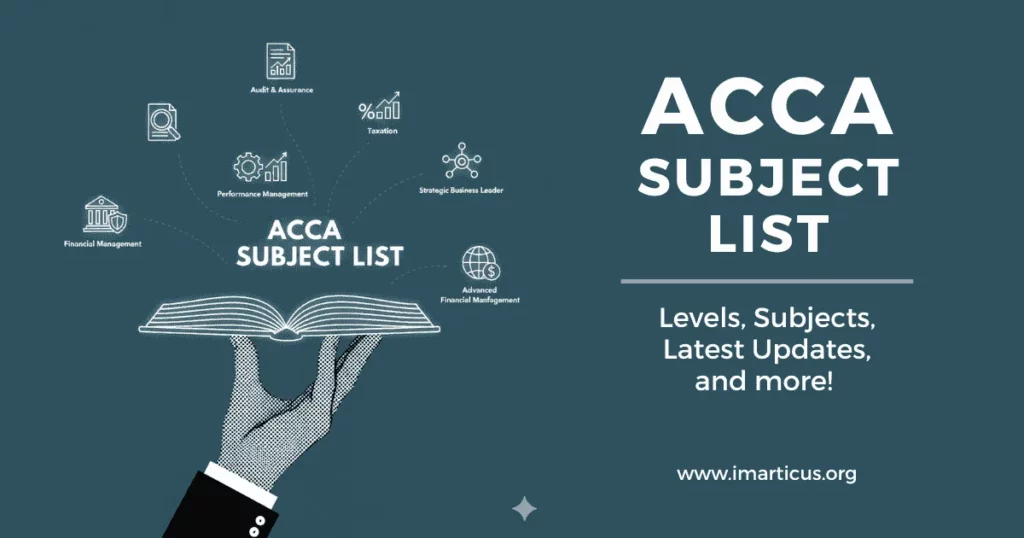
Thirteen papers. Three levels. A mix of accounting, audit, tax, finance, strategy, and some seriously demanding exams along the way. That is the ACCA journey in a nutshell. This guide breaks down the complete ACCA subjects list and shows how each paper fits into the qualification.
You’ll find the ACCA papers arranged by level, understand what the 13 subjects in ACCA cover, and get a clearer sense of how the difficulty changes as you progress. We also look at the easiest ACCA exams, the hardest ACCA exams, recent syllabus updates, exemptions, and the skills each stage is designed to build.
The ACCA subjects are a fascinating reflection of the changing world of finance, regulation, and business. While I haven’t sat the exams myself, my research has taken me deep into the heart of the syllabus, showing just how the qualification’s structure responds to real-world needs – and how it opens doors across the industry.
What makes the ACCA Certification unique is its practical orientation. You aren’t simply learning accounting entries; you’re learning how financial statements reveal business health, how taxation shapes policy, and how audit frameworks protect trust in organisations. Every topic reflects what top employers expect from finance professionals in today’s competitive, digitised economy.
Considering ACCA?
Get personalized guidance on your ACCA journey—eligibility, exam roadmap, and career outcomes in a 15-minute call with our expert counsellor.
No commitment required • 200+ students counselled this month
If you’re thinking of a career in finance or accounting, ACCA (Association of Chartered Certified Accountants) is perhaps the best-known qualification globally. But come on – it isn’t a cakewalk! Understanding the ACCA subjects and the latest ACCA syllabus is your first step to boost your employability.
Don’t Let Our Best Advice Get Buried
Add Imarticus as a Preferred Source — see more of what we publish, every time you search.

Curious which ACCA papers are the toughest?
Which have the highest failure rates?
How can ACCA boost your career?
This guide weaves through all the major ACCA subjects and levels, packed with trends, news, and statistics to show why the curriculum is both relevant and future-proof.
Did you know?
85% of employers actively seek ACCA-qualified professionals because they blend analytical skill with ethical judgment – a rare and valuable mix. (Source: ACCA’s Global Talent Trends Report)
ACCA Subjects Overview
Imagine sitting in a strategic planning meeting. Everyone has access to the financial statements. Most see numbers. An ACCA, however, identifies which divisions are underperforming, evaluates the impact of regulatory changes, and forecasts how strategic decisions will affect the company’s bottom line.
This is the ACCA edge: turning technical knowledge of accounting, audit, and tax into actionable insights that guide business strategy.
ACCA is a professional certification recognised in over 180 countries that demonstrates your expertise and understanding in the field of financial accounting, tax, and reporting. ACCA empowers you to build a global leadership career in finance with employment opportunities abroad and competitive salaries. It takes a duration of 2 to 4 years, based on your previous qualifications, to clear ACCA.
With over 13 exams spread over three ACCA levels, the ACCA course challenges might seem demanding in terms of time and effort, particularly if you don’t approach your studies with the right strategy. There are multiple levels, exemptions, and optional papers to choose from.
From understanding the basics and mastering the core concepts at the Applied Knowledge level to tackling real and complex financial strategies at the Strategic Professional level, every stage of the ACCA course is designed to prepare and upgrade your financial expertise.
When everyone sees a spreadsheet full of transactions, an ACCA spots inconsistencies, ensures compliance, and safeguards the company’s reputation before a risk becomes a crisis.
Before diving into the ACCA subjects, it helps to understand the bigger picture. From qualification structure and global recognition to career opportunities and professional growth, having a clear overview of ACCA can make the subject journey easier to navigate.
What is ACCA
Before exploring the full spectrum of ACCA course details and ACCA subjects, let’s first understand what is ACCA and why it holds such high regard among multinational corporations worldwide. The ACCA full form is Association of Chartered Certified Accountants (ACCA) UK, provided by ACCA Global, and is among the world’s most trusted and respected certifications in accounting, audit, tax and finance. ACCA-qualified professionals demonstrate a high-level expertise in financial management, business strategy, and corporate governance.
The ACCA subjects include 13 papers divided across three levels, designed to build strong accounting, finance, and strategic skills. In which the candidates can choose two electives from a list of 4 papers. For students comparing the ACCA course subjects before enrolling, the structure offers a clear progression from accounting fundamentals to advanced strategic decision-making. The subjects in ACCA are spread across different stages so that knowledge develops gradually rather than all at once.
Note: Regardless of exemptions, meeting all ACCA requirements is mandatory – including completing 36 months of practical experience using ACCA PER examples (Practical Experience Requirement) for full certification. This is one of the most important ACCA requirements for becoming a fully qualified ACCA professional.
Check whether you are eligible to apply for exemptions → Use this ACCA Exemption Calculator Guide.
ACCA Subjects List By Level
The ACCA qualification is a reflection of global finance itself – diverse, interconnected, and constantly evolving. Its subjects span audit & taxation, performance management, financial reporting, and leadership – the very competencies that define high-performing finance teams today.
Understanding ACCA Levels of Exams
The ACCA levels of exams help students understand how the qualification progresses from basic concepts to advanced professional application. These ACCA levels are divided into Applied Knowledge, Applied Skills, and Strategic Professional, with each stage introducing greater technical depth. Employers value ACCA professionals not just for their technical mastery but for their ability to connect the dots – to see how strategy, operations, and reporting all influence business success.
In short, the ACCA syllabus is built to create decision-makers, not just accountants. Students often search for an ACCA subjects list before beginning their preparation because it gives them a clearer idea of the papers ahead. Looking at the full ACCA subjects list alongside the ACCA levels of exams can also make it easier to plan a realistic study sequence. Let’s get a high-level overview of the ACCA subjects list across the different levels.
ACCA Level 1: Applied Knowledge
At the gateway to the ACCA qualification are the Applied Knowledge subjects, which cover the essential principles required for any finance professional. These form the base of financial literacy for students, and the skills are immediately useful in most business roles. These three papers represent the starting point within the ACCA levels. Among all subjects in ACCA, they introduce the accounting, business, and financial concepts that support the more technical papers later in the qualification.
- Business and Technology – This focuses on developing an understanding of the business environment, management, and internal control.
- Management Accounting – This focuses on the techniques for managing finances, budgeting, costing, and performance measurement.
- Financial Accounting – This focuses on recording, processing, and presenting financial information, mainly in bookkeeping and financial statements.
ACCA Level 2: Applied Skills
Once students are confident with the basics, the syllabus turns to Applied Skills – these are subjects every accountant needs to master, at a level equivalent to a UK bachelor’s degree. This level advances core ideas with more focus on applied concepts. The ACCA levels of exams become more demanding at this stage because students are expected to apply concepts to practical situations. These ACCA course subjects require stronger technical understanding across taxation, reporting, audit, performance, and financial management.
- Corporate and Business Law – This covers the legal framework relating to businesses, contracts, and employment.
- Performance Management – This covers applying management accounting techniques to quantitative and qualitative decision-making.
- Taxation – This covers understanding and applying tax systems for individuals and companies, where you can choose local variants like the UK, Malaysia, etc.
- Financial Reporting – This covers preparing and interpreting financial statements, applying international accounting principles.
- Financial Management – This covers understanding the audit process, ethical considerations, and reporting.
- Audit and Assurance – This covers the tools and techniques of financial management in the business context.
ACCA Level 3: Strategic Professional
At the top tier are Strategic Professional papers. These make the leap from technical skills to a strategic, consultative mindset. This is the most advanced level of ACCA, and for many, this is the most challenging but also the most rewarding stage of the ACCA journey.
Compulsory Subjects:
- Strategic Business Leader – This consists of an integrated case study focusing on leadership, governance, risk, and strategy.
- Strategic Business Reporting – This consists of professional and ethical judgments in financial reporting, focusing on the investor’s perspective.
Electives /Optional Subjects:
- Advanced Financial Management – This helps you specialise in the advanced application of financial management techniques for strategic decision-making.
- Advanced Performance Management – This helps you in applying strategic management accounting techniques to evaluate organisational performance.
- Advanced Taxation – This helps you gain advanced knowledge and application of the national tax system.
- Advanced Audit and Assurance – This helps you gain advanced concepts of audit and assurance, including ethics and current developments.
At this stage, the ACCA levels move beyond technical knowledge and place greater emphasis on judgement, leadership, and strategic thinking. These advanced subjects in ACCA also allow students to choose specialist areas based on their career interests.
Quick Insight: The Strategic Professional level is where most students shift from learning “how” to learning “why,” a distinction that transforms your approach from accountant to advisor.
At each level, ACCA exams demand a unique approach and difficulty level. The passing rates are generally higher for foundational levels. It decreases gradually as levels increase and subjects become more complex. It requires high-level skills like application, analysis, and professional judgment. Let’s explore each in greater detail!
Build My ACCA Paper List
Select your starting level and any exemptions you already have to see the ACCA papers you need to complete.
Choose the level from which you plan to begin your ACCA paper journey.
Tick any papers for which you already have an exemption. These papers will be removed from your list.
Your ACCA Paper Plan
This tool is a planning aid. Exemptions depend on your previous qualifications and ACCA’s official assessment of your eligibility. Check your individual exemption status with ACCA before making enrolment decisions.
Also Read: Everything you need to know to start ACCA after 12th class.
ACCA Subjects at a Glance
The syllabus isn’t just an academic menu – it’s a signal to the industry about the skills that matter now and in the coming decade. Here’s a simple breakdown of the current papers and levels as of 2025:
| Level | Paper Name | Abbreviation/Code |
| Applied Knowledge | Business and Technology | BT (F1) |
| Management Accounting | MA (F2) | |
| Financial Accounting | FA (F3) | |
| Applied Skills | Corporate and Business Law | LW (F4) |
| Performance Management | PM (F5) | |
| Taxation | TX (F6) | |
| Financial Reporting | FR (F7) | |
| Audit and Assurance | AA (F8) | |
| Financial Management | FM (F9) | |
| Strategic Professional – Essentials | Strategic Business Leader | SBL |
| Strategic Business Reporting | SBR | |
| Strategic Professional – Options | Advanced Financial Management | AFM |
| Advanced Performance Management | APM | |
| Advanced Taxation | ATX | |
| Advanced Audit and Assurance | AAA |
Students typically complete 13 papers – three at Knowledge level, six at Skills, and four at Strategic Professional (two Essentials, two Options). Some ACCA exemptions apply, depending on previous qualifications.
What Are the 13 Subjects in ACCA?
Students often ask, what are the 13 subjects in ACCA? The qualification includes three Applied Knowledge papers, six Applied Skills papers, two Strategic Professional Essentials papers, and two optional Strategic Professional papers chosen from four available options.
Understanding what are the 13 subjects in ACCA gives students a complete picture of the qualification before they begin planning their exam journey. The final selection depends partly on the optional papers chosen at the Strategic Professional stage.
Did you know?
The ACCA Council has currently stopped taking paper-based exams, and all exams are conducted computer-based/ online in testing or remote centres.
ACCA Updates in 2026
The ACCA council keeps their curriculum up to date in line with industry requirements. The ACCA syllabus for 2025 has the three-tiered exam structure with a few revisions and additions.
Applied Knowledge Level changes
Financial Accounting (FA) has a few syllabus changes; the Management Accounting (MA) syllabus remains unchanged, with some changes to the learning outcomes that apply from September 2025 until June 2026.
Applied Skills Level changes
The Corporate and Business Law (LW-ENG / LW-GLO), Taxation (TX-UK) and Financial Reporting (FR) syllabi have been changed; the syllabi for Performance Management (PM) and Audit and Assurance (AA) remain the same with a few changes in their learning outcomes, which apply from September 2025 until June 2026.
Strategic Professional Level changes
Strategic Business Reporting (SBR-INT /SBR-IRL) and Advanced Taxation (ATX-UK) have a few changes in their syllabi. While there are no significant changes to the syllabuses in Strategic Business Leader (SBL), Advanced Performance Management (APM), and Advanced Audit & Assurance (AAA-INT/AAA-UK), some of their learning outcomes have been revised, effective from September 2025 until June 2026.
The ACCA Council has announced a latest update for the 2027 Exam with Future ACCA Qualification by redesigning their existing curriculum into four levels – Foundations, Knowledge, Expertise, and Strategic.
Foundation entry routes remain open, with the qualification accessible to those without prior degrees.
Electives have been refocused with a restructuring aligned with evolving industry needs like AI, digital finance, technology, data science, and sustainability, and reporting now features in optional Strategic Professional modules.
The goal is to help students experience more integrated assessments focused on real-world skills in professional judgement and analytical reasoning, and prepare them for leadership roles.
Note: Students need to use up-to-date study materials from the official site or from ACCA Global’s Gold Approved Learning Partner when preparing for their exam.
ACCA Subjects Through the Lens of Difficulty and Progression
Every student approaches the qualification differently. Some focus on building momentum through the foundational papers, while others immediately start planning for the more advanced stages. Looking at the ACCA subjects through a progression-based lens can help you understand how the qualification develops knowledge and professional judgement over time.
Rather than viewing the curriculum as a collection of individual papers, it is often more useful to see how the ACCA subjects work together to build accounting, finance, taxation, audit, and strategic decision-making skills.
Understanding the ACCA Papers List by Level
A common question among students is how the ACCA papers list is organised and what each stage is designed to achieve. The structure follows a gradual progression from core principles to advanced professional application.
| ACCA Level | Focus Area | Number of Papers |
| Applied Knowledge | Core accounting foundations | 3 |
| Applied Skills | Technical and practical application | 6 |
| Strategic Professional Essentials | Leadership and reporting | 2 |
| Strategic Professional Options | Specialisation choices | 2 out of 4 |
| Qualification Total | Complete ACCA pathway | 13 |
When reviewing the ACCA papers list, it becomes clear that each stage builds naturally on the concepts introduced in earlier levels. The ACCA papers list also answers a common question: what are the 13 subjects in ACCA? Together, the papers cover core areas such as accounting, taxation, audit, financial management, reporting, and strategic leadership.
Total Papers in ACCA and What They Cover
Many aspiring students search for the total papers in ACCA before deciding whether the qualification aligns with their study plans. The current total papers in ACCA is 13. These papers are distributed across three levels and cover a wide range of finance and accounting disciplines. The total papers in ACCA include:
- Business and Technology
- Financial Accounting
- Management Accounting
- Taxation
- Financial Reporting
- Audit and Assurance
- Financial Management
- Strategic Business Leadership
- Strategic Business Reporting
- Optional specialist papers
Understanding the total papers in ACCA helps students create realistic preparation timelines and set clear expectations from the beginning. For anyone wondering what are the 13 subjects in ACCA, reviewing the papers by level is one of the easiest ways to understand the full structure. Each ACCA subject contributes a different skill set, from bookkeeping and taxation to leadership and strategic analysis.
Easiest ACCA Exams for Building Early Confidence
While every learner has different strengths, students often discuss which papers are commonly viewed as the easiest ACCA exams. Many candidates consider the following among the easiest ACCA exams because they focus on foundational concepts:
| Paper | Level | Primary Focus |
| Business and Technology | Applied Knowledge | Business fundamentals |
| Financial Accounting | Applied Knowledge | Accounting principles |
| Management Accounting | Applied Knowledge | Costing and budgeting |
| Corporate and Business Law | Applied Skills | Legal framework |
| Financial Management | Applied Skills | Finance concepts |
The easiest ACCA exams often provide an opportunity to become familiar with ACCA’s assessment style while developing confidence for future papers. Students should remember that the easiest ACCA exams can still require consistent preparation and concept clarity. Choosing an ACCA subject based on personal strengths can make the early stages easier to manage. While students may have different opinions about difficulty, each ACCA subject requires a clear understanding of its core concepts and exam format.
An Overview Of The Hardest ACCA Subjects
While every student’s experience may vary, ACCA results and global pass rates consistently show that papers like Strategic Business Leader (SBL), Strategic Business Reporting (SBR), Advanced Audit and Assurance (AAA), Advanced Financial Management (AFM), and Performance Management (PM) are among the most challenging subjects.
These subjects not only require memorisation of the core concepts and basic principles, but also deep analytical thinking ability for applying to case studies and professional scenarios. Understanding the difficulty level of each ACCA course subject helps you plan your time better and focus on studying and take efforts where they matter most.
Top 3 Most Difficult ACCA Papers
Students often find these subjects quite difficult in terms of passing due to the high-level skills required for the practical application of complex concepts.
- Strategic Business Leader (SBL) – This paper demands high analytical and problem-solving abilities, requiring you to demonstrate high analytical and problem-solving abilities to solve the real-world application of case studies.
- Advanced Audit and Assurance (AAA) – This paper demands high technical knowledge of auditing and writing skills for the analysis of complicated scenarios like high-level auditing strategies and risk management.
- Performance Management (PM) – This paper demands a deep understanding of costing techniques and financial management, and applying financial management principles to practical situations.
ACCA papers do not just test your domain knowledge but also the practical skills that you will require to showcase yourself as an ACCA professional. The difficulty level in each paper depends on the learning outcomes and the pattern of the questions.
Hardest ACCA Exams and Why They Challenge Students
Discussions about the hardest ACCA exams are common because certain papers demand more analysis, judgment, and professional application. The hardest ACCA exams are often associated with:
- Case-study-based assessments
- Advanced scenario analysis
- Strategic decision-making
- Professional judgement
- Extensive written responses
Many students identify Strategic Business Leader, Advanced Audit and Assurance, and Advanced Financial Management among the hardest ACCA exams due to their complexity and real-world application requirements. The hardest ACCA exams generally test a candidate’s ability to apply knowledge rather than simply recall concepts.
ACCA Exams List at a Glance
For students planning their study journey, having a simplified ACCA exams list can be useful.
| Paper Category | Example Subjects | Learning Objective |
| Knowledge Level | BT, MA, FA | Foundation skills |
| Skills Level | PM, FR, TX, FM | Technical competence |
| Audit & Law | AA, LW | Governance and compliance |
| Strategic Essentials | SBL, SBR | Leadership and reporting |
| Strategic Options | AFM, APM, ATX, AAA | Specialisation |
This ACCA exams list shows how the qualification progresses from technical understanding to strategic expertise. When reviewing the ACCA exams list, students often notice that each paper contributes to a broader professional skillset rather than focusing on a single area of finance.
How ACCA Subjects Work Together
One of the strengths of the qualification is that the ACCA subjects are interconnected. Financial reporting supports audit understanding, management accounting supports performance evaluation, and strategic papers bring together concepts learned throughout the qualification.
When viewed collectively, the ACCA subjects provide a structured pathway that prepares students for diverse accounting, finance, audit, taxation, and business leadership roles.
Whether you are reviewing the ACCA papers list, planning around the total papers in ACCA, identifying the easiest ACCA exams, or preparing for the hardest ACCA exams, understanding how the curriculum fits together can make the qualification journey far more manageable.
Looking at all subjects in ACCA together also shows why the qualification follows a structured progression. The ACCA levels of exams are designed to build knowledge step by step before students reach the advanced strategic papers.
How ACCA Levels Shape Your Exam Journey
Understanding the ACCA levels before choosing an exam sequence can save students from taking on difficult papers too early. The ACCA levels of exams provide a structured path, beginning with foundational knowledge and gradually moving towards advanced professional judgement.
When students compare the ACCA course subjects across these stages, they can identify which areas match their strengths and where they may need more preparation time.
Interesting Insight:
While managers debate numbers, an ACCA predicts cash flow challenges, evaluates investment decisions, and guides the board toward smarter financial strategies.
Why Choose Imarticus Learning for Your ACCA Journey?
Building a successful ACCA career requires more than exam preparation alone. The right learning partner can help bridge the gap between academic concepts and real-world application while providing the structure, mentorship, and industry exposure needed throughout the qualification journey.
Imarticus Learning’s ACCA Course prep is designed with this approach in mind, combining ACCA preparation with practical business learning, industry-aligned resources, and career-focused support. Through its collaboration with KPMG in India and an industry-led learning model, the program helps learners develop skills that extend beyond the examination syllabus.
- ACCA Program in Collaboration with KPMG in India: Imarticus Learning and KPMG in India collaborate to deliver an industry-led ACCA preparation experience supported by practical learning components and real-world business exposure.
- 23 Real-World Business Case Studies: Learners work through 23 business case studies aligned with ACCA learning modules and reviewed by KPMG in India practitioners, helping connect theory with practical business scenarios.
- Joint Certification Opportunity: Students have the opportunity to earn a joint certification alongside their ACCA preparation, adding an additional layer of industry-recognised learning to their profile.
- Industry-Relevant Learning Resources: The program includes curated ACCA study material and ACCA books designed to support exam preparation while strengthening practical accounting and finance knowledge.
- Internship Opportunities with KPMG in India: Top-performing learners may gain access to internship opportunities with KPMG in India, providing exposure to professional work environments and practical application of ACCA concepts.
- Career Readiness and Professional Development Support: Beyond exam preparation, learners receive support aimed at helping them build employability skills and prepare for accounting and finance career opportunities.
For students planning to pursue ACCA, Imarticus Learning combines structured preparation, industry collaboration, practical case-study learning using the ACCA study hub, and career-focused support to create a more holistic learning experience that extends beyond clearing examinations.
Frequently Asked Questions About ACCA Subjects
Let’s look at some of the frequently asked questions about the ACCA subjects.
Are there 17 exams in ACCA?
According to the current syllabus, there are 13 papers in ACCA til June 2026. The 13 exams are held across 3 levels of ACCA- Applied Knowledge, Applied Skills and Strategic Professional. These ACCA levels of exams help organise the qualification into a clear learning pathway. Understanding the ACCA levels can help students decide how to approach their preparation and paper sequence.
What are the 13 papers of ACCA?
The 13 papers of ACCA are:
- Applied Knowledge – Business and Technology (BT), Management Accounting (MA) and Financial Accounting (FA).
- Applied Skills – Corporate and Business Law (LW), Performance Management (PM), Taxation (TX), Financial Reporting (FR), Financial Management (FM), and Audit & Assurance (AA).
- Strategic Professional – Strategic Business Leader (SBL), Strategic Business Reporting (SBR) – mandatory, and two optional papers from Advanced Financial Management (AFM), Advanced Performance Management (APM), Advanced Taxation (ATX), and Advanced Audit and Assurance (AAA).
Is ACCA tougher than CA?
While ACCA and CA are both challenging in terms of subjects and technical difficulty. ACCA offers a flexible structure with a higher passing rate as compared to CA, making it more manageable. ACCA exams are held more frequently than CA, making it easier to pass quickly. ACCA is considered easier than CA in terms of structure and flexibility.
Can I skip ACCA papers?
Exemptions are a great way to accelerate your ACCA journey if you have prior qualifications recognised by the ACCA Council. These qualifications are not automatically applied, and one must apply for exemptions by paying a specific fee per examination.
What qualifications are required for ACCA exemptions?
Usually, candidates with qualifications higher than 10+2 are eligible for certain exemptions.
- Commerce Graduates and Postgraduates (BCom, BBA, MCom and MBA) qualified candidates are exempt from up to 5 papers in the Applied Knowledge / Applied Skills Level.
- CA Inter/ IPCC qualified candidates are exempt from 6 or more on particular papers.
- Qualified CA candidates are exempt from 9 papers.
- MSc in Accounting candidates from recognised Universities are exempt from 4 papers.
Can I finish ACCA in 1 year?
Yes, you can finish ACCA in 1 year by opting for exemptions and clearing all the exams in the first attempt. However, this is challenging and might require a rigorous study routine and time management skills, along with prior experience in the industry.
Is ACCA without maths?
Yes, you do not require advanced mathematics knowledge for ACCA. However, there are a few entry-level requirements where you need to have mathematics at your 10+2 level. As ACCA focuses on high-level accounting and application skills, a basic understanding of arithmetic and algebra concepts is enough.
Which ACCA subject should I try first?
Begin with BT, MA, and FA in the Applied Knowledge level for a solid base. You need to begin with the foundation level and take the easiest subject according to your interest level and strengths to cover the syllabus efficiently. The right ACCA subject to begin with depends on your existing knowledge and comfort with accounting concepts. Reviewing the ACCA course subjects by level can help you choose a sensible starting point and build confidence gradually.
Key Takeaways
- The list of ACCA subjects comprises 13 papers in three levels.
- SBL, AAA, and PM are the most challenging ACCA exams.
- Past paper practice and a planned study schedule are essential to pass hard papers.
- ACCA is recognised in India, with leading firms recruiting ACCA-qualified staff.
- The ACCA syllabus 2025 is changing with an emphasis on digital finance and sustainability.
Your Next Steps to Turn ACCA Subjects into Career Success
ACCA is challenging, but mastering its subjects builds strong technical knowledge and enhances your employability, which makes it extremely rewarding. Even though there are a few difficult subjects, proper training and guidance, strategic planning, focused study tactics, and maximising available materials can really drive up your probability of success.
The ACCA subject list is so much more than “just” an exam set. Each paper opens a new window into the finance profession’s present and future. UK finance surveys forecast that by 2030, more than half of all accountants will need advanced digital and sustainability skills as standard. The ACCA qualification already builds this in, with a syllabus that feels both practical and visionary.
Whether for those considering the ACCA route or simply wanting to understand how finance education meets the tides of technology, sustainability, and globalisation, this subject list is a signpost to both industry needs and personal career progression. And as the world keeps changing, so will the skills mapped out in the next iteration of the ACCA syllabus – making it one of the most flexible, future-proof qualifications in global finance.
Imarticus Learning, ACCA Course, leads the way to global career prospects. Should you commit yourself to bettering your profession in finance and accountancy, acquiring mastery in ACCA’s list of subjects is your way forward to prosperity!
Liked This? Follow Us Where You Already Search.
Preferred Sources is Google’s built-in follow button — no app, no login, just more Imarticus in your results.
