
Top Investment Banking Trends to watch in 2021!

Investment Banking is a dynamic industry that has been evolving rapidly in recent years. The last decade has seen significant changes as new technologies and regulations have impacted how investment banks operate.

Today, Investment Banks are more compliance-focused than ever before, with increased pressure to meet regulatory demands. The increased regulatory scrutiny of the sector means that companies need to be aware of their responsibilities and obligations when operating an investment bank or providing services for one.

Investment Banking Career

Investment Banking career is a highly sought-after career, and it is not an easy one to enter into. The competition for these jobs is stiff, but if you’re looking at building a career in Investment Banking, then you must stay updated on the banking trends that are in the market.

Some top investment banking trends to watch out for in 2021:

HFT (High-Frequency Trading)

The global high-frequency trading market is set to nail a bullish growth in upcoming years from 2020-2026. These platforms use complex algorithms, analyze the market, and spot emerging trends in a second’s divide. Large investment banks typically employ HFT. The firms that implement HFT expect high favorable returns on trades. This gives a systematic approach to active trading. With the number of advantages HFTs offer, in the coming years, there will be a rise in the use of HFTs.

Virtual IPOs

The COVID-19 pandemic has forced organizations to opt for virtual IPO. Traditionally, the roadshow and pricing of IPOs would take approximately two weeks. It also used to be dependent on face-to-face interactions among management & prospective investors.

Automation of the process has led to a decrease in time by 50 percent. Also, demand for remote connections and transactions has been accelerated during the lockdown. So, tracking legal diligence & reports is the new trend for IPOs.

Digital technologies

The pandemic has pressed for a strong wave of digital transformation, i.e., consolidation & automation of mid-and back-offices. Some of the latest digital technologies introduced & redefined include:

  • Robotic Process Automation (RPA): saves money on operations
  • E-payments
  • Cyber hygiene
  • Use of AI/ML to improve existing systems
  • Confidential computing to streamline data & communication privacy
  • Automation of data distribution using big data analytics & real-time reporting
  • Increased security by tapping the core of blockchain technology in transactions

Changing Employability with Trends

As technology overpowers investment banks, recreating jobs is the need of the hour. Talented professionals have a deep understanding of new technologies, regulations, risks, and updates. Investment banks are now hiring professionals from cross-industry, acquiring tech companies like IBM, Microsoft, and others.

Investment Banking Career with Imarticus Learning:

Investment banking professionals must upskill themselves & have an augmented understanding of technology. You can choose to keep yourself updated in this domain through recent investment banking certifications courses.

Imarticus Learning through the Certified Investment Banking Operations Professional program is helping professionals explore financial, technical, and interpersonal skills. The investment banking courses equip students with the skills required to begin a career in investment banking.

The students learn job-relevant skills, get hired, gain industry certifications while learning through live virtual classes during the program. The 360-degree structured learning package allows students to access an industry-aligned curriculum, be tech-enabled & get 100% placement assistance. The industry connects, and the alumni network at Imarticus Learning boosts the students looking to grow connections & search for better opportunities in the industry.

Contact us through the Live Chat Support system or plan a visit to our training centers in Mumbai, Thane, Pune, Chennai, Bengaluru, Hyderabad, Delhi, Gurgaon, & Ahmedabad.

Related Article:

How Much Do Investment Banker Earn In India?

Career As Investment Banker

How Good Is Investment Banking As A Career



What Is the Pay Progression for a Career in Financial Analysis?

Financial analysis is important to predict the financial impact of any business decision. Financial analysts use business data to forecast and to decide the impact of any financial decision. They provide periodic reports to their clients which helps in keeping business in profit.

There are senior as well as junior roles in the financial analysis sector. Often, financial analysts work on a junior level and open a lot of job roles for them by their performance.

Let us see the pay progression for a career in financial analysis.

What is a Pay Progression?

A pay progression is an increase in wages/salary because of the upliftment of the job role. For example, a junior financial analyst moves on to a senior role and is provided a hike in salary. It is different from salaries increased due to inflation or bonus given to the employees by any particular firm/company. Pay progression does depend on individual performance and career growth.

Pay Progression for a Career in Financial Analysis
If you have joined a firm as a junior financial analyst, you will be working under a senior analyst. One can directly become a senior analyst if he/she has an advanced degree in finance and analysis. Many junior analysts work on junior roles and then leave to gather advanced degrees after gaining a little work experience. According to payscale.com, a junior analyst in the USA earns around $50,000 per year and according to surveys conducted by indeed, a senior financial analyst earns around $72,000 per year in the USA.

There are a lot of job roles in the financial analysis sector like financial advisers, financial managers, budget analysts, junior and senior analysts, etc.

Business Analyst Online TrainingThe upward mobility is quite high in the field of financial analysis and one can build a good career with his/her performance and results. One can work hard and can rise to good positions like the fund manager, chartered financial analyst, etc. which have high salaries.


The financial analyst course must help your clients to make better financial decisions. A good financial analyst helps a company/firm in avoiding those business decisions which could result in financial instability. The more profit you provide to your clients, your reputation as a financial analyst will grow and you can move to senior job roles quickly.

Career Path in Financial Analysis
The major job roles in terms of hierarchy from junior to senior job roles in the financial analysis which will give you an idea of pay progression in this field are as follows:

• Junior Financial Analyst is the basic step in the field of financial analysis. A junior financial analyst forecasts possible investment opportunities & analyses the business decisions and produces detailed financial reports.

• Senior Financial Analysts are the ones who have an advanced degree in the field of finance and have some work experience. They review financial reports and make recommendations.

• A director is one who has massive work experience in the field of finance. He has a team to guide and coordinates audits.

• Chief Financial Officer (CFO) is responsible for managing debt, equity, and financial forecasting. According to Investopedia, the average salary of a CFO in the USA is around $371,548 per year which is massive.

Conclusion
One has to perform well in terms of advice, reports given to his/her clients to grow his/her financial analysis career. There is a lot of upward mobility in this sector thus opening the path for a hike in salaries. One can take up financial analysis courses available on the internet via elite sources to boost his/her knowledge and to apply it in their job. This article was all about pay progression and career opportunities in the financial analysis sector.

RPA Lifecycle – Everything About Different Stages of Bot Development!

Robotic Process Automation (RPA) in Machine Learning is a hot topic right now. Aspiring learners are looking to amass knowledge in it while IT professionals are looking to gain hands-on experience. In this quest, you are bound to come across the RFA lifecycle which is how bots are built from scratch.

Let’s take a look at the critical stages of bot development.

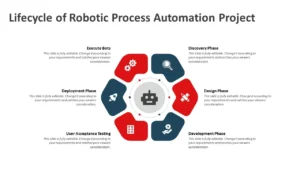
RPA Lifecycle

robotics programming automation course

Before we get into the stages of bot development, let’s first understand what Robotic Process Automation in Machine Learning really is. In laymen terms, RPA allows a process to be automated using software, robots, or any type of bots so that human intervention can be minimized.

Ever contacted the customer support of Amazon.in and a chatbot suddenly appeared on your screen? That is RPA in motion. It involves mimicking a human activity so that basic actions (like responding to a customer’s query about a recent purchase) can be automated. This helps reduce costs and human resources.

Let’s move on to the different stages of bot development.

Discovery

In this phase, the brief provided by the client is analyzed.

Can the process be automated? Can a bot for the said process be built? What are the challenges and advantages of building it?

Answers to these questions will give the entire RPA development team a clear understanding of the project. Thorough coordination with the client is essential in this phase.

Solution Design

In this phase of RPA in Machine Learning, a Process Definition Document (PPD) is created which provides detailed information about the process. A flowchart is then created that will act as a blueprint to the bot creation. What actions will trigger the bot? How many elements should it include? Such questions are asked.

data analytics course

This is perhaps the most important phase of Robotic Process Automation in Machine Learning as the information gathered here will heavily influence the final product: the bot.

Development

Once all processes are established, the next step is development. This is the longest phase in RPA in Machine Learning and can extend depending upon the scope and volume of the project.

Different RPA tools are used to develop bot. High levels of coding are executed in addition to automated tools and templates. This is where skilled and experienced individuals in the ML field is required.

The key element of the Development phase is to test how extensive the build of the bot is. Have all scenarios and outcomes been tested and there is no gap in the development? Will there be a situation when the bot goes live and it fails to act? Proper coordination with the research done in the initial phases is extremely important. This will ensure the bot is a success.

Testing

As the name suggests, this stage involves all types of testing. From the user interface to the backend, all elements are rigorously tested to ensure there are no loopholes.

In a way, Robotic Process Automation in Machine Learning is a complex procedure. Testing, therefore, is the second-most important phase because the findings in this stage can make or break the project.

Deployment

Last on the RPA lifecycle is the deployment stage. Here the bot goes live on the frontend and is ready for user interaction. Maintenance and bot execution are generally part of this stage.

That is the RPA lifecycle in a nutshell for you. Of course, when you go deep into each of the stages discussed above, you will understand the complexity of RPA in Machine Learning. It’s an interesting concept but one where the lifecycle has to be religiously followed to avoid mistakes.

What if you would like to switch your career towards Blockchain?

There has been an incredible advancement in the evolution of Blockchain technology over the past couple of years. In various sectors in society, from healthcare, education, logistics, industrial supply chains and more, Blockchain has been adopted and implemented in industries.

Due to its use cases and positive reviews, Blockchain-based pilot projects have been part and parcel of the global scenario and possibly the dawn of a new technological revolution. If you are looking to pursue a Blockchain career, there could possibly be no better time than this.

What is Blockchain technology?

Blockchain is a data recording database that is both encoded and dispersed with working similar to computerized records of transactions, contracts or even money. Blockchain technology is mostly useful to protect the transfer of confidential documents like contracts, money, property and more without any third party like a government or a bank interfering in the same.

Once information is stored and encrypted inside a block, it is not possible to change it or tamper with it. The most important and highly useful feature of Blockchain is that it can be accessed across multiple computers.

How to start a career in Blockchain

A fairly new technological segmentation itself, Blockchain careers might not be your run-of-the-mill jobs. In today’s day, technical skills make for a much stronger ground than a candidate’s educational background. Although you can start off as a novice, it will be an added advantage if you have or a similar professional field.

It is not absolutely essential to have a formal education and you can easily start by signing up for a professional Blockchain course. A course in this field can turn out to be highly useful for you if your goal is to master topics in the cryptocurrency space.

Most professional courses teach you the working of the Blockchain platforms along with a solid understanding of the basics, essential vocabulary, key concepts, along with important tools like docker, truffle and more. The main goal of any professional course is to help you understand the A-Z of Blockchain technology and how to implement it in the real world.

Most importantly, a certificate Blockchain course will also teach you how to prepare your own sample Blockchain application, or how to build an actual Blockchain use case later on in the near future.

Most courses on Blockchain technology cover the essential ideas of cryptography and how it is related to Blockchain, and in case you’ve already worked as a developer, engineer or tester, you have an added advantage. Additionally, the course may teach you more about required programming languages like Go, Solidity, or Simplicity, that you may need to develop a Blockchain application.

Blockchain career options

With a bright and evolving future, Blockchain is playing a crucial role in everyday lives. Careers in Blockchain have been and will change the professional world in terms of technology, and before you completely seal the deal, here are a couple of career options you can pursue in Blockchain once you’ve gained professional knowledge in this field.

  • Blockchain Developer
  • Blockchain Quality Engineer
  • Blockchain Designer
  • Blockchain Legal Consultant
  • Blockchain Project Manager

Conclusion

Careers in Blockchain technology are making uproars in the technical world in terms of scope and advancement with top companies looking to hire professionals with an in-depth understanding and working knowledge in this arena.

Cryptocurrency has already changed the face of the world economy in terms of security and the bigger picture looks good. So, think about where your interest lies, conduct basic research about the possibilities and challenges you may face. Once you’ve made up your mind, go for it!

Python Developer Salary in Terms of Job Roles

What is Python?

The second most liked Programming language in the world, Python is one of the widely used term in the web-development world.

Who are Python Developers?

The web-developers who design and code the software applications with the help of Python language are referred to as Python Developers.

Roles and responsibilities of Python Developers

 Python Developers as Data Scientists

Major businesses in today’s world require tools and skilled people for the data-related tasks such as data collection, data cleaning and processing.

Python Programming Course with Data ScienceData Scientists are the programmers who do these tasks for the organizations. Data Scientists gather a large quantity of data and convert it into a useful form, followed by recognizing data-analytics solutions for organizational growth.

Data Scientists encourage the data-driven approach in organizations to deal with complex business problems.

 Artificial Intelligence

In AI Python Developers create and implement the required Machine Language algorithms. They analyze the success and failure of the algorithm and rank them according to their performance for future use. Training and Retraining ML algorithms is one of the key tasks performed by Python Developers.

Salaries of Python Developers in India

The changing focus of the organizations on data-driven solutions is resulting in a manifold increase in the salaries of the Python Developers. In the coming years the demand for AI-skilled people will increase, and hence the salaries.

Major IT giants like Google, YouTube, Amazon etc. are adopting Python-driven systems and hence, manifold increases in the salaries of the Python Developers.

Python Programming Course with Data scienceThe entry level salary of a Data Scientist is approximately INR 500,000 per annum (Source: payscale.com) Data scientists with 5-9 years of work experience gets +100% more salary in India. With the experience and refinement of the skill, the salary of Data scientists shows exponential growth.

 An entry-level engineer who develops the ML Algorithms earns the average salary of approximately INR 700,000 annually. With further experience and refinement of the skills, the average salary of the Data Scientist shows exponential growth.

Factors affecting the Salaries of Python Developers

Job location: Considering the increasing demand of Python Developers, not only in India, the faster salary growth is visible in UK and in US.

Location

Approximate Average Salary in INR

Gurgaon

700,717

Bangalore

669,787

Delhi

600,000

Mumbai

579,728

Chennai

540,131

Hyderabad

475,000

UK Python Developer annual salary

£67,000

US Python Developer annual salary

$117,000

Experience:

Python Developer

Approximate Salaries in INR

Entry Level Python Developer

427,293

Med-Level Python Developer

909,818

Experienced Python Developer

1,150,000

Refined Skills:

Mere understanding of the Python is of no use, till is integrated with the problems and solutions. How one uses the well-known Python tools define the person’s skill set, which is a determiner of the salary.

Job Role:

Python Developer

Approximate Average Salary in INR

Data Scientists

700,000

ML Engineer

670,000

DevOps Engineer

660,000

Software Engineer

500,000

Web Developer

300,000


Python Programming Course with Data ScienceShould know more interesting things about Python programming training and Python career.

 

Healthcare Financial Analysis Market: Growth and Trends

Financial analytics is required for healthcare companies to perform core functions of claims processing and maintaining payment integrity and fraud, waste, and abuse (FWA), and risk assessment. The advances in big data are driving the accelerated growth of the financial analytics segment, especially in the healthcare domain. Big data analytics gives a better way to tackle healthcare expenditure and quality issues.

The healthcare financial analytics market is growing. The largest market for healthcare financial analysis is North America and the top players include Cerner, Oracle, IBM, etc. The market size was $11.59 billion in 2018 and is projected to grow to $80.21 bn by 2026 with a CAGR of 27.5%.

While the coronavirus pandemic jeopardized many markets, it showed the importance of healthcare financial analytics. The costs of vaccine development, monitoring the health of the population, health insurance innovations, etc. resulted in new directions of financial work for many healthcare providers. Most hospitals faced massive losses and are unlikely to be profitable even in 2021.

Another trend across the world is the rise of the geriatric population across developed countries. Even countries like India will have a large aging population in 2-3 decades at the most. The nature of healthcare costs will change as more people will require preventive care. Currently, the healthcare market operates on a service-based model but is moving towards a value-based model.

There are also many healthcare disruptors coming on the scene, building diagnostics that put people’s healthcare in their hands. There is also a call for strategic planning to cope with the revenue loss and deal with the emerging costs of people deferring healthcare and opting for teleconsultations. World over, attention is also upon the systemic inequities of healthcare.

Considering the need for healthcare financial analysts, this is a good niche for students and those who want a career change. Skilled analysts can get paid quite well. Students have to acquire domain knowledge of accounting, financial modeling, debt, and the healthcare industry. This can be obtained by opting for a financial analyst course online.

What do Healthcare Financial Analysts do?

The responsibilities of a healthcare financial analyst may include:

  1. Creating reports of financial data, forecasting trends, presenting, etc.
  2. Budgetary management
  3. Claims processing and compensation
  4. Ensuring that taxation and legal compliances are in place
  5. Reviewing operational and purchase costs
  6. Finding ways to maximize revenue generation, business plans creation, and execution
  7. Handling teams of other finance professionals

Pathway to Becoming a Financial Analyst in Healthcare

Traditional education offers a basic pathway to enter the field with comparative ease:

  1. A Bachelor’s in math, engineering, finance, commerce, economics, etc. helps but you can also do the following steps if you lack a relevant Bachelor’s.
  2. A Master’s in Business Administration (MBA) with a specialization in hospital management or finance, is the easiest way to get your resume accepted by prospective employers.
  3. A Master’s in Public Health or Commerce or even Chartered Accountancy can be sufficient. However, you have to acquire additional skills by taking courses for financial analysts. 
  4. Chartered Financial Analyst course online is often desired by employers.
  5. A professional certificate or Financial Analysis Prodegree can teach you the skills needed. It can also give you the exposure needed to connect with real professionals in the field.

There are a few reputed courses for financial analysts online which can help those who have basic degrees but want to change careers into this field. One should ensure that they are taught by industry-recognized organizations.

Getting Experience:

As many companies prefer experienced candidates, one can opt for a Financial Analysis prodegree where live projects give a chance to develop a working knowledge of healthcare financial analysis. It’s also good to look for jobs in hospitals and healthcare companies, especially if you already work in a similar domain. Hospitals can have overwhelming balance sheets, so gaining experience makes your candidature stronger.

Artificial Intelligence in Fintech: Understanding Robo-advisors Adoption Among Customers

The influence of Artificial Intelligence (AI) and its application in various industries have brought about a positive outlook on how operations are done in many sectors. In direct contrast to traditional methods, AI is making processes more smooth, beneficial to businesses by reducing overhead costs on labor and human error.

AI in financial technology (Fintech) has also seen vast applications and not just in banking and financial management but also in catering to the advisory portion of it. With AI in the mix, Fintech companies can now offer customers 24/7 support along with and reduce operational fees levied for their services.

Fintech Courses in India

Fintech isn’t just for financial institutions but also for businesses that employ financial services as part of their operations. Thus, despite the field of operations, fintech is useful in all businesses to make the process automated and smooth. Thus, many fintech startups are seeing rapid growth in the field.

Fintech courses in India have seen great exposure as the applications of this course don’t just stop at giving businesses backend solutions but also make customer-facing services smoother. Wealth management, better banking and investment management services, and more, this field has financial technology courses that give students a chance to get into great positions in the field.

Some of the courses that rank high in India include:

  • Data Science Analysis
  • Data Science Visualization
  • Artificial Intelligence in Fintech
  • Machine Learning in Fintech
  • Wealthtech
  • Robo-advisors and their applications
  • Cyber Security and more

Adoption of Robo-Advisors Among Customers

The scope of this financial technology course studies the application and adoption of Robo-advisors in the banking and investment sector. Businesses including financial institutions save a lot of costs involved in manpower and support by adopting Robo-advisors in their business to deal with customer-facing queries.

With this course, you understand the challenges involved in AI in financial services, the history of Robo-advisors and customer feedback on them, and measures involved in the successful implementation of Robo-advisors for business.

As with any new innovation, customers and even businesses are slow to adapt and test the use case of Robo-advisors. However, the course is aimed at understanding user behavior and how to overcome traditional beliefs involved in its implementation.

Careers in Fintech

There is no doubt that fintech has brought about a huge change in financial services. It is not just about the digitalization of banking and investment services but also includes cryptocurrencies, blockchain management, and more.

The prospects of a career in fintech have high demand. Fintech is the upcoming innovation that has led many financial products and their management smoother and more profitable for businesses. Entry into one of the fintech companies requires a course or a degree in financial technology and the knowledge of AI, machine learning, and its applications.

As a fintech student, you can push your career path as a data analyst, blockchain developer, cybersecurity specialist, mobile app development, and other positions. Many organizations are looking forward to hiring candidates with the right skills to help them develop the necessary IT infrastructure or monitor and analyze data secured by AI functions.

Working in a fintech company has a lot of benefits as AI in finance is a disruptive force taking over several operations in the financial sector. It can soon replace many traditional methods of banking, investment, and handling financial services. The growth in your career and the monetary benefits are worth pursuing a course in fintech.

Explore Different Paradigm of New-Age FinTech Industry with MBA in Fintech!

The Fintech industry is changing the way we think about money. The Financial Marketing Association predicted that, by 2020, $1 trillion would be invested in Fintech companies and products. There are many different paradigms of the New-Age FinTech world with an MBA in Fintech to explore!

In the last two decades, the paradigm has shifted, and today, Marketing Management, Operation Management, & Business Strategy Management aren’t the only streams for students. A whole new stream of MBA Fintech awaits career opportunities that students have been aspiring for. MBA Fintech is a specialized course that equips them with skills required for the newer paradigms of Financial Markets.

best MBA online courses in IndiaThe Marketing Management MBA program at this institute provides students with a holistic education that enables them to develop leadership skills while also ensuring they acquire transferable skills that would help them find desirable jobs in diverse sectors across industries ranging from Marketing to Finance to IT etc., after graduation!

This blog post talks about why enroll in MBA Fintech, the needs the course addresses.

Why enroll in MBA Fintech?

The ever-changing financial landscape has created a need for professionals with transferable skills and knowledge. Yet, as the scope of modern finance expands, there is no longer anyone field that provides all the expertise needed to succeed in this rapidly changing environment. This means candidates are now required to be highly adaptable by mastering multiple disciplines like Fintech like Banking & Risk Management, Financial Markets and Services, Digital Innovation and Transformation, Investment Analysis and Portfolio Management, Financial Modeling, etc.

MBA Fintech provides a perspective on how banks do business, insurance firms, non-banking finance companies (NBFC), payment banks, stock trading, and investment advisory firms. The program builds an understanding of how innovative technologies like Blockchain, AI, IoT, Cloud Computing, Data Analytics using R and Python enable firms to provide new solutions to consumers and investors.

During MBA in Fintech, students develop an in-depth understanding of concepts like Insure-Tech, peer-to-peer lending, Robo-advisory, Algorithm Trading. This brings more efficiency and financial inclusion in the processes, delivery, and outreach of financial markets.

Finally, MBA FinTech equips participants with foundations to participate in dialogues, develop requisite skill sets and attitudes to explore opportunities & understand business environment management.

How MBA program addresses the need for transferable skills and demand for job opportunities?

MBA FinTech enables students to straddle with cutting-edge financial technology innovation and learn practical applications. Students learn drafting, strategizing, and developing disruptive financial innovations using appropriate tools and techniques. MBA Fintech enables students to have an in-depth understanding of the future of money, markets & mental tools required to predict & leverage future trends in Fintech.

Most of the MBA Fintech programs include innovations central to financial markets like blockchain, digital advisory, and trading systems, design thinking AI/ML, equity crowdfunding & mobile payment systems.

MBA Fintech equips students with the ability to identify opportunities, launch new Fintech ventures, and harness new technology to build better financial services firms.

Advance in Fintech Career with Imarticus Learning

Imarticus learning offers structured learning programs ranging from blockchain & crowdfunding to peer-to-peer lending and Robo-wealth-managers. Among the most popular demand is blockchain at the top list for millennials.

Imarticus Learning offers the best online MBA courses for Fintech enthusiasts who eye to gain insights into the financial markets. The program prepares graduates and professionals to be well-versed in fintech, with an enhanced knowledge of Blockchain.

Online MBA courses in Fintech cover subjects like Financial Accounting, Cloud Computing, Trade finance, Blockchain, and cryptocurrency. Industry experts design these courses for better business insights, domain expertise, communication, and management skills. The network and placement assistance add a different value to these courses.

For more details, contact us through the Live Chat Support system today or schedule a visit to one of our training centers in Mumbai, Thane, Pune, Chennai, Bengaluru, Hyderabad, Delhi, Gurgaon, and Ahmedabad.

Want To Build A Promising Career In Digital Marketing In 2021? Get A Google & HubSpot Certification Now

Digital marketing is an exciting profession full of bright individuals that work tirelessly to stay ahead of the pack. Digital agency and company hiring managers are now looking for applicants who are up to date on the newest trends, techniques, and news.

If you’re having trouble breaking into the digital marketing field, it’s most likely due to a lack of relevant abilities on your CV.

Certifications provide you with an edge for employers looking for talent like you, whether you’re looking for your first marketing job or your next career in digital marketing. Don’t let your digital marketing talents lapse. Use digital marketing certificates to your advantage. You may improve your abilities and position yourself as a top contender for that job by doing so.

Financial Analysis course with placement in IindiaWith thousands of digital marketing courses online, all touting the same benefits, finding the finest online marketing school that works for you is quite complicated. Here are some of the best digital marketing courses and certification programs that deliver genuine results.

Google Digital Marketing Courses

Google offers a free online course platform (Digital Garage) on various career and company growth topics. Digital Marketing training is one of the topics that is thoroughly discussed. In addition, Google provides the following digital marketing course online:

  • Digital Marketing Fundamentals (includes a digital marketing certification)
  • What are the best ways to start an online business?
  • How do you make sure your customers can find you on the internet?
  • How to use online advertising to promote a business (Google Ads)
  • How do you expand your company to other countries?
  • Content marketing.
  • Advertising on social media
  • Course on YouTube

All of the courses include both video and written materials, and some may be finished in three hours, while others might take up to 40 hours to complete. In addition, the Interactive Advertising Bureau Europe and The Open University have both accredited the digital marketing fundamentals certification.

Why Should You Take This Course?

This is the most significant course to take if you are new to digital marketing and want to achieve a basic understanding of what it is and how the various components function together. The certification is also internationally recognized, making it an excellent tool to advance your career.

HubSpot Digital Marketing Certification Courses

HubSpot Digital Academy is another alternative for learning digital marketing online and getting accredited by a reputable organization.

HubSpot is a renowned digital marketing company that offers a variety of solutions like SEO and content marketing. The following subjects are covered in HubSpot’s online digital marketing courses-

  • Content Marketing
  • Email Marketing
  • Inbound marketing
  • social media Marketing
  • Marketing in Contextualized Environment

You will receive a HubSpot digital marketing certification after completion of the course. They also offer several non-certified courses that cover blogging, Facebook ads, and other online marketing channels, in addition to the courses mentioned above.

Why Should You Take This Course?

Even if you don’t plan to use HubSpot’s tools in your marketing initiatives, their online courses are excellent. Experts who are known digital marketing specialists with years of expertise in the business teach all of the courses. In addition, the classes are free, and the learning environment is simple to use.

Take Away

The certifications listed above will undoubtedly enhance your skills and aid in career development, allowing you to come out from the crowd and take a competitive advantage in the rapidly evolving career in digital marketing.

Which Career Is More Promising: Data Scientist or Software Developer?

As per a study, about 2.5 quintillion bytes of data are produced every day. The number is about to increase by many folds in the future. The pace at which data is being generated demands more data science professionals. That’s the reason data science jobs are now regarded as one of the highest-paid jobs across the globe. And, people are joining data science training to explore a career in data.

As, firms are hiring employees who can build technical applications, and collect, analyse and predict data. That’s the reason students are enroling in data science training courses that are best and give job assurance.

Companies are keen to employ data scientists, data analysts, web developers, full-stack developers, and much more technology professionals. According to Imarticus Learning and Analytics India Magazine’s research, there will be a 30.1% increase in data science and analytics jobs in 2022 compared to 2021.

However, more competition in Information Technology requires software career enthusiasts to learn the latest technology for survival. The primary responsibility of data scientists is business analytics. They also work on constructing data and software products using algorithms. The demand for data scientists is high due to the shortage of skilled people for start-ups and corporates. Global companies are searching for professional data scientists to up their game in this competitive world.

Who is a data scientist?

Data scientists collect and interpret large amounts of structured and unstructured information. They analyse, process, and model data before interpreting the findings to develop actionable plans for businesses. The data scientist uses computer science, statistics, and mathematics for data interpretation.

Who is a software developer?

Software developers are the thinkers and doers behind computer programs of all kinds. While some software developers specialise in a single program or application development, others build massive networks or underlying systems that trigger and power other programs. As a result, there are two types of developers: applications software developers and systems software developers.

The approach of data scientists and software developers

To use and organise data in a structured or unstructured form, a data scientist becomes essential and can master the art with the right Data Science Training. Hence, there is a need for a data scientist, with sound knowledge of handling data that demands the best data science training and experience.

Software developers collaborate with computer programmers to test the convenience of using a software program. The component that powers digital systems is software which is the core element of computers. To be precise, software engineering can be termed as the application of engineering principles for designing, structuring, developing, and implementing software. An efficient software developer understands the client’s needs and then develops the software as a solution to the client’s needs.

Important tools used in software development and data science

To be productive, data science career aspirants should be knowledgeable about statistics, software programming, and analytical thinking. In addition, a data scientist should have the urge to learn and be updated about new programming languages.  Python, Swift, and Ruby, apart from mastering SQL, Spark, machine learning, and Hadoop are the most important to learn.

A software developer should know the latest programming languages along with a bachelor’s degree in computer science. A good understanding of computer programming by understanding the functionality of new tools is a plus. Along with various skills, a software developer should possess to flourish in the field of analytical skills. Followed by attention to detail, creativity, problem-solving techniques, and interpersonal skills are vital.

The pay scale for data scientists versus software developers

A report from Payscale.com reveals that the median salary for a data scientist is around 6,00,000. It is not much different in the US. According to a survey by Glassdoor, the median salary for a data scientist is $91470, which is great. So, it is evident that data science can offer ample money and growth. But, the salary also depends on the qualifications, skills, experience, and location. Firms also play a vital role in deciding the pay. 

Currently, the median salary for software developers is $1,00,80 and the growth in employing software developers is set to increase by 24% in a decade. In addition, an estimate states that there are 3.7 billion mobile users worldwide. It demands newer and better applications for smartphones and tablets. It increases the demand for software developers globally. Factors that affect the salary of a data scientist are similar to those of software developers. 

Roles and job titles for a career in data science versus software development

A few important job titles that a data scientist can do are data architect, data scientist, and business analyst. In fact, the roles of data administrator, and business intelligence manager are also in demand. Global companies in the digital world, like Facebook, Twitter, IBM, and Apple, are racing to hire the best data scientists. So, the demand for data scientists is growing like never before.

Some of the interesting career options that connect to software developers are Computer programming. Computer system analysts, web developers, computer network architects, and computer hardware engineers are also on the list. Though data science is a relatively newer concept than software development, it is increasing rapidly. 

Conclusion

This article has showcased the digitisation, technology, data rise, and demand of technology professionals. The high demand for data scientists, and software developers have given rise to the skills gaps. If you are eager to learn new tools for efficient data handling, you can grab a chance to flourish as a data scientist in the long run. Enrol for the best data science training course and enter the world of data.
But, selecting the best institute for data science training is not easy.

You should enquire about the faculty, course curriculum, and the job assistance that they provide. It is always good to get interview assistance, career monitoring, and resume-building tips from the experts. If the institute provides all this then it is the best for the learners.

It should be your priority to learn coding and programming if you want to become a software developer. Furthermore, the amount of data being produced every day is high, which signifies long-term growth and attractive salary await a talented data scientist. So, in the end, we can say that both careers in data science and software development are promising. It depends on individual preferences and interests. Both, career options are good and offer career growth. 

For more details, you can also search for – Imarticus Learning.  You can drop your query by filling up a form from the site. You can also contact us through the Live Chat Support system. To explore more you can visit one of our training centers based in – Mumbai, Thane, Pune, Chennai, Bangalore, Hyderabad, Delhi, and Gurgaon.