How Do Traders Working On The Cloud And Data To Cope With The New Normal?

COVID-19 or coronavirus is spreading like wildfire throughout the world. And, this even forced the World Health Organization (WHO) to declare it a pandemic. Ever since this disease was spotted, countermeasures have been set to curb its spread effectively. One such way is social distancing.

Because of social distancing and worldwide lockdown, the world’s foundations shook from within. And, it wasn’t late until this shockwave reached the stock market. In fact, both the trade life cycle and banking courses after graduation have taken a huge hit as well.

To do their bit, financial institutions like the New York Stock Exchange (NYSE) have closed their doors to traders for the first time in history. Things are only slowly returning to normal, and a few traders are allowed on NYSE. However, most of the traders are forced to trade from home and find online alternatives for conventional processes.

Cloud offers a lucrative opportunity for anyone looking to trade online. Traditional problems like lack of storage space, security concerns, and connectivity issues have all but disappeared in the cloud era. Statistics state the same. With an online chatting interface, apps providing a secure interface for traders have seen a substantial rise during the pandemic. Let us see how traders are using cloud services in great detail.

How are traders using the cloud?

Stock trading should never come to a halt because it has the power of crumbling economies. The COVID-19 outbreak can thus be considered a major test. Thankfully, traders are armed with the power of the cloud in today’s world.
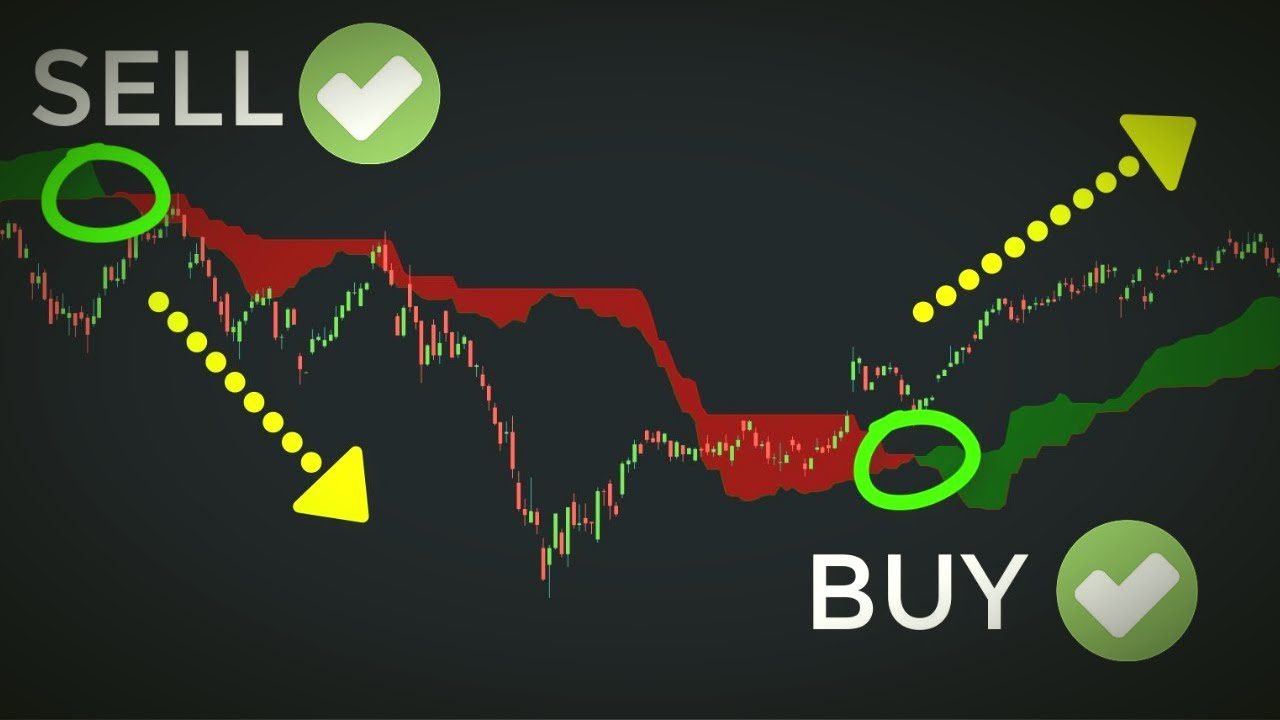
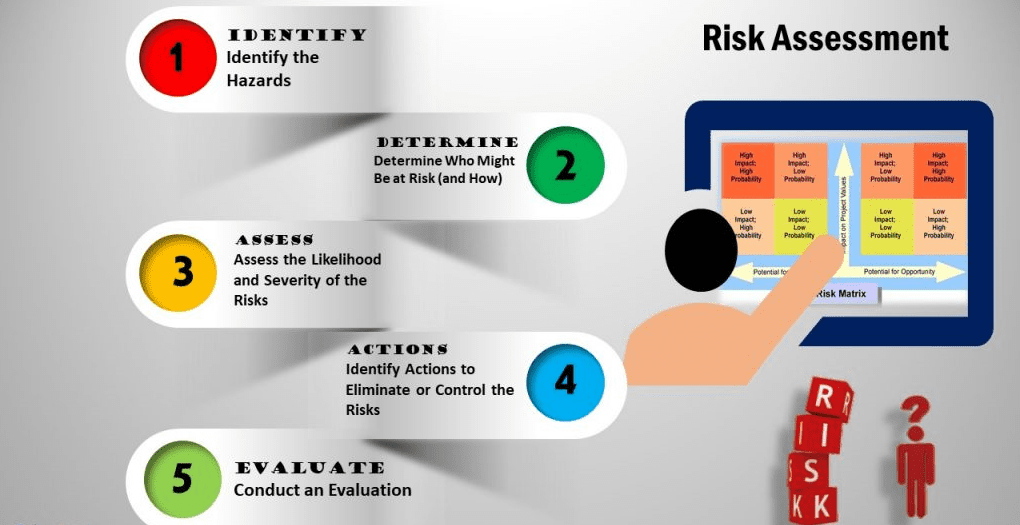
TradingData is the central part of any trader’s life. It is even more important to store and analyze the information correctly. Traders are increasingly using cloud solutions to store their data and run their models. The processing power of cloud computing allows them to quickly run multiple analyses like risk assessment within a matter of minutes as opposed to hours or even days from conventional means.
Trading using Cloud ComputingCloud also allows for better traffic management. Traders can be seen leveraging the cloud to tackle any amount of traffic effectively. Mainly because the cloud is a scalable entity, it can quickly go up and down depending on the actual amount of people using it. Moreover, cloud computing offers a cheaper solution to many problems associated with stock trading.

Not to mention, it provides the ability to analyze customer demographics, which allows for targeted solutions for a particular section. So, not only does the cloud act as a cheaper alternative but on top of that, it also improves profit margins.

In the search for normalcy, traders are looking towards the cloud to provide them with solutions. We are fortunate enough to live in a time where we have enough computing prowess to shift the base of operations online. Not only does it allow us to fight the virus but it also provides some benefits overall. In the future, we can expect cloud computing to take up a major role in the trading market.


Which Is Better, Becoming a Financial Analyst or a Data Scientist?

2020 is a year of opportunities for a lot many different fields and industries around the world. Although it has been a year of disarray, every difficult situation has always given rise to upliftment in certain industries, and this year is no different.

LinkedIn, which is the world’s number 1 job search portal, reported that in 2020, there was a 15% increase in the demand for financial analysts and a 25% increase in demand for data scientists. This data clearly shows that these two industries are booming in their own might and rightly so.

If you are planning for a job in either of these industries, in this article, we will draw a Let’s get started.

The Difference Between a Financial Analyst and a Data Scientist

One of the first and most important aspects to understand in this regard is the difference between both these job roles, so let us quickly take a look at the definitions of each.

Data Scientist

The role of a data scientist can be simply understood as being a professional who is responsible for analyzing, extracting and determining conclusions from the vast amount of data that is being collected by companies on a regular basis. The job role of a data scientist is to understand the data that is present and then determine business decisions, which will be most beneficial for the company both in terms of growth as well as profitability.

Financial Analyst

Now that you understand the role of a data scientist let us understand what a financial analyst does.

A financial analyst can be understood as a professional who analyses the financial information of a company and then takes decisions on the way forward so that the company can either increase their profit or take better decisions on their overall growth. The job of a financial analyst is to consider all the verticals that affect the financial health of a company and then determine if the company is making sound progress, or if it should make better decisions on the way forward.

Requirements for Each Career

One of the most fascinating aspects of both these careers is the fact that neither of them imposes hard and fast rules on the educational qualification you need to obtain to pursue these careers. Unlike other professions such as lawyers and doctors which mandate you to pass either the bar or the medical boards, these professions embrace all standard college degrees and put more emphasis on the skills a professional has.

Depending on the amount of competition each of these job roles have in the geographical location of your choice, the criteria for getting hired and the skills you need to acquire keep changing, and thus it is always a good measure to assess the demands of the employer before you proceed.

Conclusion

If you are looking for a career choice that embraces ambitious professionals like you and offers a lifestyle that is competitive, then both these career choices will be well suited for you. Along with this, both these career options offer high pay and other perks across the board, and thus you can be sure to get properly reimbursed for your job.

The choice between choosing either options comes down to you. If you fancy only financial data, choose online Finance course or if you want to work with a variety of data sets, choose the other.

Also Read: Difference Between Financial Analyst & Business Analyst

What is the Difference Between SAFe and Scrum Master Certification

What Exactly is Scrum and What is Scrum Master?

Scrum is a structure that helps build team working habits. It encourages teams to use past experiences to learn from them, self organise when working on an issue and analyse both their losses and wins in order to improve. This agile management device defines a set of meetings, instruments and roles which work together in order to help teams in structuring and managing their work.

Scrum masters help in facilitating scrum and is an agile framework that is lightweight. It focuses on time sensitive iterations called sprints and as a facilitator it acts as almost a coach to the team called servant leader. Scrum leaders must consider opportunities that will help the team improve its quality of work while remaining committed to the scrum’s foundation values.

What is Scrum Master Certification and What Does it Entail?

Scrum master certification helps people understand what good scrum is as per official scrum guides. The basis of the certification is the scrum guide. The certified exam for this is lightweight with 100 multiple choice questions drawn over a span of 2 hours and is taken after scrum master training.

What is SAFe?

SAFe happens to be a globally leading framework used to scale Agile across enterprises. It is designed to increase efficiency by driving a faster time to market ratio thus increasing productivity. Lean-Agile transformation is a combination of leadership engagement and education as well as training. Its role-based curriculum assists enterprises in bettering results.

What is SAFe certification and what does it entail?

This certification assists in resolving coordination issues in three stages:

1. Introducing management at an executive level thus passing on available budgets onto different value streams.
2. Organising the value stream within the company in order to generate various products and distinct services.
3. Encouraging more roles and practices at different stream levels.
Its basis is the website and training material provided by them in order to cover a larger span of content than just plain scrum.

The SAFe examination is a lot harder to clear considering its huge course content and highly advanced level of certification. There are 70 questions with a requirement of at least 75% to clear the exam. The exam like the scrum master examination requires training and preparation.

The differences in scrum master certification and SAFe certification are as follows:

Scrum master certification:

  1. It is structured and curated for a single team.
  2. It has three primary operational roles – Scrum Master, it’s development teams and the owner of the product.
  3. Usually four ceremonies are part of this. They are, daily scrum, stand-up meeting, deciding plan and review. This helps in reflecting on issues and rectifying them.
  4. The scrum master course for certification usually fits into one framework.
  5. It is mostly self-organised with cross-functional teams being co-located.
  6. It is more of a foundation level certificate. It can be used as a stepping stone to be able to proceed to more complicated certifications like SAFe.

SAFe certification:

  1. This could entail a team of a hundred to even a thousand members for turnkey projects.
  2. It is used majorly in scaled project environment groups.
  3. The roles covered here, under SAFe, are beyond scrum master certification. Its roles may even go as high as portfolio and program management levels.
  4. It is not just restricted to team level but can cover ceremonies beyond that as well.
  5. Covering a combination of multiple frameworks, it proves to be advanced and versatile.
  6. It can be located in a multitude of sites due to its time flexibility allowing it to be found in different time zones as well. They can thus be called a centralised and decentralised decision making environment.

With Jobs at Risk, can a Career in Big Data Keep You Safe?

Data powers the information economy just like oil powers industrial economy. No wonder they say, “data is the new oil”. A critical asset to many industries, data science and AI changed the way information is gathered and processed. Even when COVID-19 hit the global economy, leading to job cuts and hiring freeze, data science remained unaffected.

While companies do not debate on the importance of data science, collecting and storing the huge volume of data was a big challenge. With limited capabilities, companies had a big struggle to maintain and process data. However, AI and cloud-based technologies provide a solution to this problem. These technologies have created better job opportunities for data professionals than ever before. If you are aspiring for a data analyst career, there isn’t a better time than this.

Why Big Data?

The world is consumer-centric and will remain so despite the hard hits on the economy. Consumerism is the driving force that creates revenue, and job opportunities. From healthcare to e-commerce, all industries are data-driven. The data requirement changes from one business to another, from one company to another. But the enormous amount of unstructured data can be collected using various tools and techniques, organized and structured according to the business needs.

No matter the business is consumer data is vital to all businesses. The tech giants like Google, Amazon etc, and the social media giants like Facebook have been using the potential of data to achieve a competitive advantage over their rivals. And the result is pretty much evident. They are far ahead of their competitors.

What is common among all of them is that they collect large swathes of data regarding their customers – right from what products they buy, which products they ditched after adding to the cart, which posts get better engagement, how long does a person spend time on their webpages – every single move of their customer after arriving on their website is tracked, processed and analyzed to make better business decisions.

The global health crisis saw the extensive application of data, how it can be used to manage a crisis better. From contact tracing, health screening and mitigating the spread. Many apps were developed to help contain the spread, leveraging the GPS to identify the COVID-19 hotspots.

The Increasing Demand for Data Scientists

COVID-19 has indeed changed the way the world functions. With more people staying indoors, individuals flocking the internet also increased. From work to shopping, everything is being done online. And this has increased the requirements for data scientists. While many companies struggle to acclimatize and manage their current employees logging in from a remote place, Tech firms are out with a pressing need to recruit more talents.

With more students and professionals active online, the need for online tools and platforms is growing, and this has led to the demand for an intense expansion of their talent pool.

AI and cybersecurity talents are the most coveted as many companies need technical support in digitizing their businesses. This calls for the improvement of data security measures and to enhance automation to reduce the on-site manpower.

Firms that rely on AI-powered software and those which provide such platforms are on a lookout for technical talents including software engineers and data analysts. Furthermore, financial services companies are also gearing up to become market-ready when the economy reopens. They have started headhunting for people with risk management and data analytics skills to cater to the recent spike in digital banking and online payments activities.

Data Science Online CourseData science is one of those areas not affected by COVID-19. In fact, the pandemic and the enforced stay-ins have resulted in an increased demand for data scientists. If you are a new graduate, take this opportunity to make the most out of the current market situation.



Enrolling in a Big Data Analytics Course could help you land on a lucrative career in data analytics and big data.

The Top Tips to Become A Pro Business Development Manager!

In a strategic role in a successful organization, the ultimate goal of a Business Development Manager is to generate revenue and steer the company towards growth. The role is built on the fundamental responsibility of identifying new markets and exploring new ways to improve the business footprint in the current markets.

A business development manager is also responsible for identifying new qualified business opportunities, working on new partnerships, and ideating new products or services to cater to the changing needs of the clients and the market. Along with these responsibilities, a business development manager is also responsible for maintaining good relationships.

Business Management CoursesThe current COVID-19 situation has emphasized the importance of investing and relying more on digital transformation, with more emphasis on artificial intelligence and machine learning. Thus, the pandemic has reinforced the relevance of a business development manager and underscores the importance of focusing more on expanding the capabilities of this role to accommodate the digitalization of the business.

What Does a Business Development Manager Do?

While the basic responsibility of a business development manager is to grow a business, the actual job role and workflow will be different for different industries.  However, generally, the roles and responsibilities include:

Cold Calls: Though this is mostly done by a salesperson, business development managers might be asked to do cold calls as part of their job. However, in large organizations, this could be delegated to the marketing team or the sales team.

Generating Leads: Business development managers need to collaborate with other teams to generate qualified leads. For this, they might need to actively involve in developing growth strategies and business plans.

Customer Relations: Developing and nurturing customer relations is an important responsibility for a business development manager. This involves ensuring all concerns of the clients are addressed timely and satisfactorily.

Product Specialization: Business development managers should be able to provide specialist advice to clients. This requires an in-depth understanding of the product and/or services and value proposition of the company they are working for.

Other important responsibilities of a business developing manager include:

  • Identifying business strength and mapping the needs of clients.
  • Writing proposals and drafting/renewing business contracts.
  • Stay updated with the local and international industry trends
  • Negotiating with stakeholders

Tips to Become a Pro-Business Development Manager

Enroll in a Good Course: A good Business Management Course is the ideal place to start your career.  It gives you better subject-specific knowledge regarding customers, markets, finance, communication, business operations, etc.

Set Realistic Business Goals: There is nothing wrong with being ambitious. However, it is always better to set realistic and achievable business targets and work on strategies to achieve them. A clear goal with a deadline and a good strategy would help you perform well in this job.

Identify Your Strength: Identifying your strength is important to build confidence and to perform well in this role. You can work on your capabilities to crack a deal.

Find a Mentor: No one can guide you better than an experienced person with a wealth of knowledge in this role, who has been doing this for many years. A guide could help you handle the most difficult client and crack a tough deal.

Build Your Network: Attending career-related events will help you develop a network among professionals in the same field. Interacting with experienced people will help you gather insights and learn more about the profession.

It takes skills and qualifications to become a business management manager.  Learning from a good place like Imarticus Learning is beneficial not only in gaining the relevant qualification but also in building skills.  Projects and case studies are designed to help the students be market-ready when they complete the course. Also, tie-ups with the market leaders and placement services help you start your career from a prestigious organization right after completing your course.

How Do I Move to Investment Banking?

Investment banks help their clients in generating capital and giving financial advice. Firms/organizations take the aid of an investment banker to find suitable investment opportunities. Investment bankers help new firms and startups in going public by acting as a mediator between security issuers and investors.

Investment bankers assist their clients in selling equity & issuing debt. They also provide financial advisory services & help in making better financial decisions. One can get into the investment banking industry by occupying the necessary skillset via Investment banking courses online.

Let us see how to get into the Investment banking sector.

Key Skills Required for Investment Banking

The key skills you have to learn to get into the Investment banking sector are:

  1. Investment banking required good analytical skills. You should be good with numerology and quantitative analysis. Investment bankers are required to present a detailed analysis of business plans or investment opportunities. They have to embed investment ventures with facts and figures to make them more understandable to the client.
  2. You should have good communication & presentation skills to get into the investment banking sector. You must be able to persuade the client and sell your idea.
  3. You must have good networking skills to know about the market condition, business trends, etc.
  4. You should be able to read and analyze financial statements & give aid to clients during important financial decisions.
  5. You should know about deal structuring to become a successful investment banker. You should be able to close deals sequentially.
  6. Investment bankers are required to prepare financial models for their clients around which their business strategy revolves. Investment bankers are familiar with different types of financial models and when to use them. You must also be good with applications/platforms used in the investment banking sector like Microsoft Excel, VBA, etc.

Qualification for Investment Banking

There is no compulsion of any specific degree for getting into the Investment banking sector. Many people start their careers as an accountant and late move to investment banking. You can get a bachelor’s degree in economics, business administration, finance, mathematics, etc. to get into investment banking. One can also learn from an online Investment banking course offered by a reliable source like Imarticus Learning.

Bachelor degree holders are mainly recruited for analyst positions & master degree holders are recruited at the associate position. You can build a successful career path in investment banking via the industry-oriented learning offered by Imarticus Learning. One can also do internships in the related field to gain more experience and understand the working culture of the investment banking industry.

Major Job Types

One should know about the different job roles in the investment banking sector so that a targeted study can be done. Some of the prominent job types in investment banking are Mergers & Acquisitions (M&A), Financial Advisor, Rating Analysts, Retail Brokers, Public Finance, Equity Analysts, Project Finance, etc. You can evaluate your skillset and can choose a career field in which you can upskill rapidly. One can also research what firms for looking in candidates who are applying for an investment banker.

Imarticus Learning will provide you classes taught via experienced faculty along with real-life case studies. You will also get placement support via Imarticus Learning and a lot of people have already built their career with Imarticus Learning.

You can choose an institutional degree or online courses for gaining the skills needed in the investment banking sector. There are a lot of growth opportunities in the investment banking sector and there is a need for skilled professionals who can analyze the market and help in raising capital. Grab your Investment banking course now!


Why Do You Want to Become a Financial Analyst?

People who find self-employment lucrative and want steady job growth often consider a career as a financial analyst. Currently, the pandemic is going parallel with a recession. But finance companies are thriving and are expected to continue in terms of growth. Thus, stability and growth are the two primary reasons why many students prefer completing a financial modeling course and pursue this stream.

Role of a financial analyst

If you become a financial analyst, you have to create financial models to predict the outcome of potential business decisions. It takes years of learning and experience to excel in this career. You will have to go through large amounts of data and make an analysis based on it. You also have to study market trends to understand what works best for the company you work for.

It is also essential to understand that where you work or who you work for will also determine your job role. For example, if you work at an investment bank, your work will involve assisting with mergers and cracking deals.
Overall, you will play a significant part in decision-making for businesses, individuals, and your goal will be helping people grow financially.

Reasons to become a financial analyst

Here are the top reasons why becoming an analyst is a smart career choice:

  • Stability
    The year 2020 has taught us how stability is important. Millions of people have been forced to change their way of working to survive at this time. Such circumstances make us consider choosing career paths that will never go out of requirement.Offering financial services is one of the stable career options as you will never go out of business. Bureau of Labor Statistics suggests that the role of financial analysts is estimated to grow by 23%, while finance advising by 30%.
  • Possibilities of growth
    As a finance student, you have a lot of scopes to grow. Of course, completing a financial analyst course will help you target only one section of the financial service industry. However, you can also become an accountant, internal auditor, and more.
  • Employment opportunities in finance are unlimited irrespective of your interests and favoredenvironment to work. Having a wide array to choose from lets you make decisions than settle for anything less than what you deserve.You can also take an interest in investment banking, asset management, client servicing, sales, trading, and more. The career path in the finance sector is enormous, and having a complete idea will always help.
    Many like to gain experience in different jobs to know how each of them works. Thus, you can associate with brokerage firms, private banks, insurance companies, and more, to widen your horizon.
  • Interesting job profile
    Most finance students take an interest in the services offered by an analyst. At a basic level, you will start your job by knowing the proficient use of spreadsheets, PowerPoint, databases, and more software. The job slowly escalates to a point where you will put long hours into developing interpersonal relationships with seniors. At the same time, you will also be responsible for guiding junior analysts.If you want to work in the finance sector where you have to use communication and people skills equally, then this is perfect for you. From curating credible presentations to being orally convincing, you have to do it all.
  • Potential to earn well
    No matter how passionate we are about a specific job, money is always a driving force. It is essential to weigh your options in the financial sector to understand what is most lucrative. The position of a financial specialist can indeed fetch massive numbers with experience. Analysts are one of the highest-paid jobs. Moreover, changing market conditions and advancements in technology keep your job in demand at all times.

Are you a B.Com Graduate? Check out some career options after graduation here – Focusing on NMIMS Batch Launch

B.Com or Bachelor of Commerce degree is a popular stream choice among students after 10+2. This degree basically prepares one for any job relating to finance, numbers, and in some cases, management. These are jobs in Banking, Taxation, Management or Business. Now, if you are worried about what to do after B.Com, then we will be discussing courses and career options.

The reality of the Job Market

Most students go for B.Com because it provides a lot of career options after graduation. A few more than other streams and some of these career options are definitely lucrative. But, the reality of the job market in today’s date is not as good as one might expect.

The truth of the matter is – one will not be able to get his/her dream job just after getting his/her graduation certificate in hand. His/her career after graduation will not soar if he/she doesn’t study a little more or take up a few extra courses after graduation.

Career Options for B.Com Graduates

There certainly are a few jobs that one can get just after he/she graduates out of college. A few of the jobs that are available after B.Com graduation are:-

Government Jobs: One can surely sit for exams like IBPS or UPSC to get government jobs in the banking sector or finance sector after the completion of his/her graduation degree.

Business Analyst CourseBusiness Analyst: Even though there are courses to be business analysts, some companies still look for fresh graduates as business analysts. People can amplify their skill sets along with gaining experience for their future endeavors.

Digital Marketing: Most of the time, this job requires certification in digital marketing. Still, most companies look for graduates in commerce for this job. So, anyone looking for a creative job after his/her graduation can surely take a gamble here.

NMIMS Courses

There are plenty of courses one can opt for after his/her graduation in commerce to get that dream job; and, the courses are like M.Com, MBA, CMA, CA, and B.Ed. But, NMIMS provides the best of new-age courses which can get people a future-proof dream job. Some of these courses are:-

NMIMS PGP in New Age Banking: The New Age Banking course is perfect for any new age banking job. It provides two certifications within a 2-year span and teaches all the necessary subjects to get its students ready.

M.Sc. Finance: Students are made ready for successful careers in risk management and capital markets through the course. Jobs in banking, mutual funds, fintech, and more are also waiting for students studying this course.

MBA: This course provides an option of specialization in finance, which means it can help one get a high-level management job in the finance sector if he/she has this degree.

Conclusion

There are many lucrative job opportunities after the completion of graduation in B.Com. However, you have to plan your higher studies properly to opt for a better stable job. The charming options provided by NMIMS can be a great way to a course through multiple options after B.Com.

Become a Financial Analyst with NMIMS PGP IN NEW AGE BANKING – Batch Launch!

In today’s date, knowing every aspect of finance is a necessity, not a luxury. From running a financially stable household to running a huge company of your own, everyone needs to be able to understand at least a bit of finance. And on top of it, if someone is an expert at the subject, a successful banking career is waiting for them just around the corner.

Who is a Financial Analyst?

If we say it in an easy way, financial analysts are the forecasters and advisors of the financial services industry. Financial analysts have a strong base in financial accounting, and on a regular basis, they go through tons of financial data of the companies they work for, predict financial findings of the market and the company, and help them make the proper financial decisions.


It includes decisions about investing their money in the right place, selling or buying stocks of the company, certain marketing decisions within the company, and more.

Why Choose a Career Being Financial Analyst?

We all know that getting a satisfying job after your graduation is not an easy task. But the financial industry is ever-growing and one of the most lucrative jobs here is being a financial analyst. With more and more companies and products launching in the market every day, they all require analysts to recommend them the right way to go financially and that’s why the job opportunities are vast in this area, and opportunities to grow in the job are there too.

It also helps to think that being a financial analyst means they are almost at the center of all the financial decision-making in the industry, or in the market. Also, as a bonus, financial analysts earn quite a satisfying amount of money whether they’re in a senior or junior position. You can get promising job opportunities at investment banks, insurance companies, sell and buy-side firms, and even banks.

About the NMIMS PGP in New Age Banking Course

NMIMS, along with Imarticus, have come up with an excellent course model which looks absolutely perfect for whosoever is opting for a banking career or wants to become a financial analyst. They are providing a dual certification just within 24 months with the course.

First, there is a course of 11 months PGP in New Age Banking and second, there is a 2-year course of Global Access PGDBM in Banking & Finance Management.

New Age Banking Course

In the New Age Banking course, students will not only learn the technical side, such as Financial Accounting, Marketing, Business Law, Commercial Banking System, Foreign Management, or Strategic Management but also they’ll be able to put their theory learnings to practicality with real-life problem-solving maneuvers. The course also assures great placements.

Conclusion

People studying for a career in the BFSI (Banking, Financial Services, and Insurance) industry should definitely opt for a job as a financial analyst. The job might not be easy but it certainly can be satisfactory for the finance-loving people out there and nothing can prepare them better for the world out there in the market than the course provided by NMIMS PGP in New Age Banking.

Stay Competent with most In-Demand Data Science Skills!

What is Data Science?

The Science of combining capital processes, algorithms, and many such best tools to collect, manage and analyze the most important data to make business decisions is Data Science.

Who is a Data Scientist? 

A computing professional beholding the skill of data collection, data storage and management, and data analysis enabling the organization to make data-driven decisions quickly are Data Scientists.

 In-Demand Data Science Skills

Some of the most In-Demand Data Science Skills are:

Understanding of Math & Statistics 

Online Data Science course in India is all about extracting the required information from the data. A depth understanding of mathematical probabilities and statistical methodologies helps in data analysis.

Data Science SkillsThe majority of the data science models are built using one or more, known or unknown variables. Thus, the in-depth understanding of multivariate calculus is the key requirement to develop Machine Learning models.

A detailed understanding of functions such as Logit, Cost, rectified Linear unit, Step, Sigmoid, etc. is very much required to deal with the large data. Apart from these functions, the detailed understanding of Matrix algebra.

vector Algebra and Differential and Integral calculus help the Data Scientists to develop and understand the systems at a faster pace.

 Programming Skills for Data Science

In order to achieve the objective to transform the raw data into business insights, Programming skills plays a crucial role. Among all the programming languages, the go-to languages are Python and R, Python being the lingua franca in the data science field.

Skill to wrangle the Data

The process of removing imperfections from the raw data to get the data that can be easily analyzed is known as Data Wrangling. The entire process includes acquiring the data, combining the data with relevant fields, and cleansing the data. In short mapping the raw data from one form to the other to set up the data to get business insights.

Management Skills

Database management is a prerequisite of Data analysis. The basic requirements for a Database Management System is the family of programs to edit and manipulate the data and the operating system to provide the specific data.

Data Science Career 

The special skills set will definitely make you stand out from the crowd when the field and hence the number of jobs in the market are increasing at a faster pace.

Data Science Career Job Requirements Average salary
Data Scientist ·      Data collection and organization

·      Find the pattern in the data to help the strategic business
decision


$139,840

Data Engineer ·      Batch Processing of the database

·      Build and maintain data pipelines

·      Make the information available to the Data Scientists

$102,864
Machine Learning Scientist Research for the new data approaches and deep learning techniques. $114,121
Machine Learning Engineer ·      Create data funnels

·      In-depth understanding of statistics and programming

·      Designing and developing machine learning systems

$114,826
Data Analyst ·      Transform the large Database to meet the purpose.

·      Prepare the reports to facilitate the decision-making process by communicating trends and insights from the data.

$62,453
Business Intelligence Developer ·      Design and develop the strategies to make the specific information accessible for business decisions in lesser time.

·      Facilitate the system understanding to the end-users to use the data effectively

$81,514
Statistician ·      Facilitate the Data Collection process.

·      In-depth Data analysis

·      Data interpretation

·      Identify the relevant trends from the data

·      Design data collection processes

·      Advise the overall organizational strategy

$76,884
Applications Developer ·   Keeping track of the applications used in the business and internal interaction

·   Design the overall process flow of applications with the inclusion of development of user interface components etc.

$113,757


 Average Salary data is taken from https://www.glassdoor.co.in/Salaries/data-scientist-salary