How is The Life of an Investment Banker in India

A career in investment banking has always been the dream job for thousands of Indians, and since 2017, as the influx of foreign investment in India has increased, more professionals than ever before want to build a stable career in this industry.

The life of an investment banker has been broken down and displayed on the big screens many times over, but for those of us in India, who want a homegrown career in investment banking, what does life look like?

Thus in today’s blog post, we will share with you how the life of an investment banker in India looks like. Let’s get started.

The Work-Life

Since investment banking is one of the most sought after careers in both India and around the world, it comes as no surprise that it naturally calls for a stressful and hectic life, which is adequately rewarded by a financially fulfilling career. When you just start out in the industry after completing your investment banking certification, you need to typically go through an adjustment period which can last anywhere from a couple of months to a year, depending on your accuracy and speed at which you manage multiple tasks, while at the same time, learn the necessary skills which are necessary to finish the job.

During this adjustment period, you will be typically working as an analyst or researcher under an investment banker, and this will give you the incredible opportunity of experiencing at close quarters, what the life of an investment banker looks like. Along with this, you will also get the opportunity to better evaluate your strengths and weaknesses and understand if this is the right career path for you, considering the hectic work schedule and long hours.

Andrew Gutmann, a former investment banker, wrote in his book “How to Be an Investment Banker: Recruiting, Interviewing, and Landing the Job,” that the typical working hours of a new investment banker ranges from 80 to 100 hours a week and every day starts at 10 am and can go until 2 am at night.

Your Role as an Investment Banker

Now that you have a fair sense of what the life of an investment banker looks like let us better understand what role you will be playing as an investment banker. In simple terms, the role of an investment banker can be understood as being the mediator between companies and the money they need. For example, if a large company is planning a merger, investment bankers are hired or if a young company is planning to go public, investment bankers are hired.

Therefore any organizational level transaction, which will include a transfer of high net worth assets, liabilities, and cash, will require the intervention of an investment banker.

While this is a general out mark of the clientele you will be working with, depending on the company you choose to work for, the clientele may vary as each organization has its core expertise and experience.

The capital markets are a very high paced and high stakes industry, where both the risk and the reward is very high. Although these markets are highly regulated and overwatched, one needs the expertise of a professional to navigate this market, and these professionals are known as investment bankers.

Conclusion

Life in the day of an investment banker in India can comprise all kinds of tasks starting from meeting new clients to preparing offers and all the way to creating sales projections and preparing pitchbooks.

It’s a fast-paced industry, so put on your seatbelts and get ready.

Also Read: What is Investment Banker

What is The Wealth Management Career Ladder?

Introduction

Wealth management is an advisory service where a wealth manager advises his/her clients in making better financial decisions. A wealth manager makes sure that financial services and resources are used appropriately to generate profit.


Wealth managers can be found in a lot of sectors like estate planning, retail banking, tax processes, investment sector, etc. A wealth manager also focuses on sustainable development i.e. using resources in such a way that they could be preserved for the future.


Let us see more details about the wealth management career.


 Wealth management Education
If you are thinking to start your career in wealth management, the first and foremost requirement is to have the necessary set of skills. You need to have a bachelor’s degree in mathematics, finance, economics, management, business, etc. You can also take wealth management courses via the internet. Many wealth managers go for a CFA (Chartered Financial Analyst) course as it helps them in gaining skills for senior wealth management job roles.

Besides education, you also need to do internships to get a basic idea of working culture in the wealth management sector. A lot of institutes/colleges offer summer term internship program or you can grab an internship off-campus. You will learn about updating client portfolios, mutual funds management, financial analysis & research, etc.


With the help of education & internships, you will learn about the basic skills required in the wealth management sector such as analytical skills, financial understanding skills, market analysis skills, forecasting skills, etc. Getting a good education or certification is the first process in building a successful Wealth management career.


 Career Path in Wealth Management

Once you have completed your education and are ready to work, you can apply for various wealth management job roles. There is a lot of opportunity in this sector. According to the U.S. Bureau of Labour Statistics, the growth rate predicted in the wealth management sector is 15% from 2016 to 2026 which is much higher.


Career path in wealth management


You can work as a wealth manager in a financial advisory firm, retail bank, investment bank, or as a freelancer. You will grow your reputation as a wealth manager over time. The more you help your clients in achieving their financial goals or booming their business, the more is your demand as a wealth manager in the market.


Job Roles in the Wealth Management Sector

There are a lot of different job types in the wealth management sector. Let us see some major wealth management jobs:


Investment Counselor

Investment Counselor in Wealth ManagementThey focus on the financial relationships of his/her client. They keep analysing the market and ping their clients whenever a good investment opportunity occurs. They also work in investment banks advising clients on whether to invest in any particular venture or not.



 

Portfolio Manager – They usually work with HNI clients. They are responsible for updating and analysing client portfolios.


Business Developer – They help in the growth of their client’s business by maintaining good financial relationships. They usually work with ultra HNI clients.

Financial Advisor in Wealth ManagementFinancial Advisor – They help in making financial strategies and models. They are also considered with insurance-related problems. A personal advisor can work for a firm or as a freelancer.

These were some of the major job roles in the wealth management sector. It usually depends on the firm/company that what type of services are they expecting from a wealth manager.

Conclusion

You can learn more about the skills required in the wealth management sector via various Wealth management courses available on the internet. This was all about the Wealth management career path and what opportunities are waiting for you in this field.

Why is Reference Data Management Important?

Companies have been looking for the various methods they can use to create more revenue, reduce costs and increase efficiency. In order to follow through with these goals, organizations are now making data management a streamlined process using MDM strategies (Master Data Management) to be able to provide consistency in the view of data across their business.

Master Data Management moves dissimilar, identical, and conflicting information out of the way, allowing space for simplified intelligence and improved business decisions.

However, a large number of companies tend to ignore a very important area in data management which is reference data management. They play a very important role in showing the true value of reference data. The management of information, such as a user inputting dates, their country, gender into the database, over a large company or business can be extremely complicated.

The general approach would be to use an application-by-application basis of maintaining the reference data. This can bring in a lack of consistency and cause difficulty in collecting data across various functions if done poorly, thus preventing us from getting a complete image of how healthy the business is.

Keeping all this in mind, we must understand that the right reference data management structure if used would only serve to build a company and further its growth by increasing efficiency, productivity and making them more reliable.

Advantages of Reference Data Management

  1. Empowerment of business users: To be of any value, the accessibility of data is key. An intuitive and easy to use interface is required to allow users to utilise reference data in a way that makes sense. Both power and business users should be encouraged to define, manage and have ownership of data models as well as the data that they hold from the same UI without being dependent on IT services.
  2. Simplification of compliance and reduction of risks: Companies, no matter the size, spend a large portion of their time reporting both internal compliances as well as external compliances. Reports provide a framework for boosting confidence and improving decision making when they are internal.Meanwhile, regulatory reports (external reports) for compliance don’t really improve the margin and can in turn be of financial risk to the organization. An approach which takes into account all of this produces accurate data exchange and entitlements. These tools allow accuracy in internal as well as external reports and largely decrease risks.
  3. Removing operational overheads and reducing costs: Companies can have tasks which overlap across the enterprise’s functions. Thus employees would need to automate the use of data from each source to be able to avoid the struggle of manually collecting data from various source points every time. Reference data management thus reduces costs and expenditures.

Why Reference Data Management Important and Where is it Put To Use?

Management of reference data can be a much more tedious task than meets the eyes. A cloud-based management system would reduce the struggle of reference data management by having the ability to consolidate, manage and distribute the data. AI and machine learning if incorporated in the process of reference data management would serve to strengthen and simplify the data sets.

It is being put to use in various places. They have been mentioned below.

1. Financial services:
Common issues faced in this sector are:

  • New securities
  • A large number of security masters are to be managed
  • Increase in assets
  • Presence of various identifiers used by front officers and mid-officers.

The advantages of reference data management are as follows:

  • Streamlining of value chains
  • Efficient risk management
  • Customer loyalty increased

2. Healthcare:
The advantages of reference data management are as follows:

  • Ensures maximum reimbursement
  • Betters the patient’s experience
  • Creates a cost-effective environment and saves time
  • Supports the improvement in reporting

What are the Benefits of Studying Banking and Finance?

What are the benefits of studying Banking and Finance?

The banking and finance industry has always been a growing field given its vital economic significance. It has continuously evolved to meet the needs of the modern capitalist economy. The traditional banking systems have been replaced with more sophisticated digital ones to meet the needs of 21st-century customers.

First, and most importantly, the banking industry is so versatile that you have the options to choose which segment within the banking industry, you would be keen to pursue. It offers a fast-paced and continuously challenging career only to put your skillset to the test.

Secondly, through a professional banking course that is offered by various banking institutions, government-registered institutions, and private establishments, you open up a career opportunity to last a lifetime.

Banking and Finance is one such industry that will never be out of business and will continue to proliferate as more development-oriented activities are carried out in the economy.

Benefits of Studying Banking and Finance

One of the major benefits of studying banking and finance is the diverse range of career opportunities that are there. You can choose from a range of job roles as per your strength and skills and have a very rewarding career.

Another important benefit of studying banking and finance is that it offers a very pragmatic approach to learning things around us. You will learn skills that are practically applicable in most industries instead of just obtaining theoretical knowledge. It will help you understand how the economy and the world around us work.

The banking and finance courses help you to obtain a better level of qualification. The skills you will learn here will be in demand throughout. Also, it is important to note that the demand for banking and finance professionals is not just limited to the banking and finance industry.

You can also work with companies in different industries that require finance professionals to manage their finances and books of accounts. You can pick an industry of your liking and join a company as a finance professional.

The banking and finance job roles have a very lucrative remuneration and most of the job roles have incentives attached in addition to your salary. It makes it worth your time to build a career in the banking and finance-related segment.

In addition to this, most of the job roles in the banking and finance segment require you to interact with people inside and outside the company, this helps you build your professional network very rapidly.

Some of the reputed career options in the banking and finance segment such as the Investment banker or Wealth manager give you a special platform to connect and network with high-profile individuals and companies. You have access to crucial and confidential information which makes you stand out from the crowd. The same is the case with the role of a financial analyst or business analyst.

Let’s take a glimpse into how the career opportunities in the banking and finance segment differ and why you should go for it.

Fast-paced and Challenging Career Opportunity

If you want to grow fast in your career and are ready to accept challenging circumstances, you will love the job roles that the banking and finance industry has to offer. The market keeps on fluctuating and so do the daily requirements when you are working for companies in the banking and finance industry.

If you are working as a trader or an investment banker you will require to work 70-80 hours a week but your efforts will be equally rewarded and your remuneration will be much more than the usual jobs.

Boost Your Long-Term Career Prospects

Starting your career with a job role in the banking and finance-related segment helps you boost your long-term career goals no matter what industry you want to join later. Having worked with a reputed bank or financial institution helps to amplify your resume and boost your chances of getting a job in any industry.

Also, it will be fairly easier for you to join other companies in the same domain and you will be highly rewarded for your experience at a reputed financial firm.

Requirements Life Cycle Management: The Basics

What is Requirements Life Cycle Management? This post will discuss how Requirements Life Cycle Management can help make your business run more smoothly. We’ll also explore how to become a business analyst after engineering!

Requirements life cycle management is the process of managing the needs and requirements of a project or system. It involves understanding how these requirements change over time and how they impact other areas to maintain an efficient workflow. This process helps companies minimize risk by ensuring that changes are made necessary to deliver products or services.

The business analyst has the primary responsibility within this stage, but their responsibilities will vary depending on what phase of the project they’re working on.

During the inception phase, business analysts help define how to meet customer needs with minimal cost and effort. During development, they work with stakeholders to ensure each requirement is clear and achievable. Finally, during deployment/implementation, they measure how well customers use new features as part of an audit process. Requirements might change because it’s more important to meet customer needs than stick with the original plan.

Business analysts courses may need engineering resources or input from other departments like marketing and finance during requirement development. For example, when a company wants to start an online shop to sell clothes instead of opening new stores in cities across America.

They’ll work closely with designers on how best to display clothing items and accessories without wasting precious screen space while making informed decisions about how much inventory can get carried away at any given time based on how many products are ordered each day.

How to become a business analyst after engineering?

Business analysts may come from various backgrounds, but typically, they have some business degree or other formal training in understanding the needs and goals of an organization that is either public or private. That stated it’s not unheard of for someone with experience as an engineer to transition into being a BA after their job ends because there has been so much demand for them over the years – make sure you know what you’re signing up for!

There are also plenty of opportunities for people with degrees in engineering (among many others) who want to become business analysts without switching careers altogether by taking on training programs like Business Analyst Certification Courses Online!

If you are looking for a business analyst course with placement, Imarticus is the best choice. They offer a comprehensive range of courses, including their popular Online Business Analyst Certification Course, which will help you learn the skills needed to become certified as a professional business analyst.

Their Business Analyst Certification programs are designed and delivered by experienced industry professionals who have seen it all before. They offer courses in both online and classroom formats to suit your needs and schedule.

With several years of experience delivering successful projects in various industries, they can help you become a top-notch professional at what you do – whether that’s project management or data analysis – fast! Are you ready to invest in yourself? Visit their website and find out which option suits your goals best.

What Is Content Marketing and How It Can Help to Build a Career in Digital Marketing?

Content marketing is a less invasive approach to reach and interact with customers when compared to traditional marketing. Content marketing aims to attract customers by providing informative, helpful, interesting, entertaining, and engaging content.

Content marketing is a strategic business and marketing process focused on creating, distributing, and measuring valuable, consistent, and relevant content to attract & retain a defined audience and ultimately drive profitable customer action.

Wondering how to explore a career in content marketing? This blog post explains all you need to know about content marketing and the skills required to make a career and all you need to know about online digital marketing courses!

What does a content marketer do?

Content creation:

Content creation entails the creation of well-defined content for the target audience. Before creating content, it is imperative to understand what the marketer wants readers to learn. Content goes hand in hand with SEO in this new digital age.

Content distribution:

Content distribution is vital to make the right content reach the right audience through the right platform. Content distribution is generally done through forums, social media channels, Q&A sites, etc.

Measurement:

Measuring and tracking are vital aspects is important. Consistent reports & constant tracking through analytic tools are vital to conclude future actions.

Skills needed to be a Content Marketer.

Research skills:

Creating a piece of content needs a certain level of knowledge that can only be acquired through research.

Writing skills and grammar:

Writing is the essence of the content. To thrive as a content marketer, be super comfortable with words. When writing for the web, possessing exceptional grammatical skills and vocabulary is not enough. It is vital to understand the target audience and needs, content, and tone of the brand. Being comfortable with different writing styles is a prerequisite.

SEO and other technical skills:

SEO is inevitable for web-writing. Optimizing content for search engines is essential. Some vital SEO factors include keyword research skills, relevant keywords, optimizing page title, meta-description optimization, optimizing images, etc. Organizations highly appreciate technical skills.

Design and creative skills:

As a content marketer, you may work with images and visual content such as infographics, data visualization, and creating/editing videos. Thus, it is vital to have a basic knowledge of design tools.

Project and content management skills:

A content marketer is responsible for looking after several things. For common operations like maintaining an editorial calendar, keeping up with social media posts, assigning tasks, managing blog, tracking relevant metrics, etc. Knowledge of project software tools is essential.

Content marketing as a career

Content marketing is one of the hottest & fastest-growing careers in the marketing and advertising space today. Employment opportunities for content marketers have outnumbered other openings in the marketing domain. These figures are going to expand further in the coming years.

The average salary of a content marketer in India is close to INR 5,42,000 per year. The salary range varies per the individual’s experience and background and can go up to INR 11,08,000 per year. While content creation entails creativity, a great content marketer utilizes creative content in a data-driven space.

Grow with Imarticus Learning

Individuals can boost their skill set in content marketing by taking up online courses. Imarticus Learning offers digital marketing courses that prepare students for a great career in content marketing. These courses add immense credibility to your profile.

The Digital Marketing course is designed to give extensive and detailed coverage of Digital Marketing concepts practically. The programs adopt a collaborative approach focusing on multiple capstone projects, job-ready skills, and guaranteed job interviews.

For more details on Digital Marketing Course Fees, contact us through the Live Chat Support system or visit one of our training centers based in – Mumbai, Thane, Pune, Chennai, Bengaluru Hyderabad, Delhi, Gurgaon, and Ahmedabad.

Advanced Data Science Skills to Stay Relevant in the Post-Pandemic World!

The need to upskill to meet the dynamic demands of a technology-first world has been around for the past few years; it has only become more urgent in the wake of the COVID19 pandemic. The emergence of new technologies such as Artificial Intelligence, machine learning and data science has set the tone for the future.

Data Science

In the post-COVID19 world, there are a few advanced data science skills that, when added to the toolkit of a data scientist, can make or break their career.

To ensure that your core competencies are strengthened as a data scientist, you can sign up for a comprehensive data science training course that explores the following:


#1: Geospatial Technologies

 With more people working on data-driven decision processes, geospatial data has helped better planning and processing of the system. This knowledge has proved invaluable in tracking the COVID19 outbreak all over the world; come the near future, geospatial technology will likely be extended to other research areas as well.

Data Science

A geospatial data scientist will need to sift through vast geographic and demographic datasets that hide gold nuggets of insight across diverse research topics.


#2: Natural Language Processing (NLP)

NLP gained traction even before the pandemic reared its ugly head. That said, it is only set to increase in importance and reach in a post-pandemic world. Natural Language Processing

Most organisations often implement self-service systems, such as bots that come with multi-language optimized NLP to help solve customer problems.

Data scientists of the future must understand NLP and master it enough to help companies develop automated solutions for a better post-COVID outcome.

#3: Computer Vision

Computer vision is an artificial intelligence field which trains computers to interpret and comprehend the visual world. It uses digital images from cameras and videos as well as deep learning models to recognise and distinguish objects correctly. With the help of algorithms, computer vision is also integrated to follow up with a programmed response. In current scenarios, computer vision has proved helpful in containing the outbreak and regulating quarantines and social distancing in cities across the world. In the future, where maintaining distance might become the norm, data scientists specializing in computer vision will automatically become more hire able.

#4: Data Storytelling

With data analytics becoming a prime concern for companies across industries, the need for good data storytelling has increased. The benefit of data analysis is not just in the evidence it provides but also in how it is made meaningful and impactful. Gripping storytelling makes it easier for non-data-scientist stakeholders to understand the value of the information and the possibilities it poses.

Data presented as contextual stories, rather than isolated data points, makes individuals more likely to understand the impact, decipher patterns and make more informed decisions.
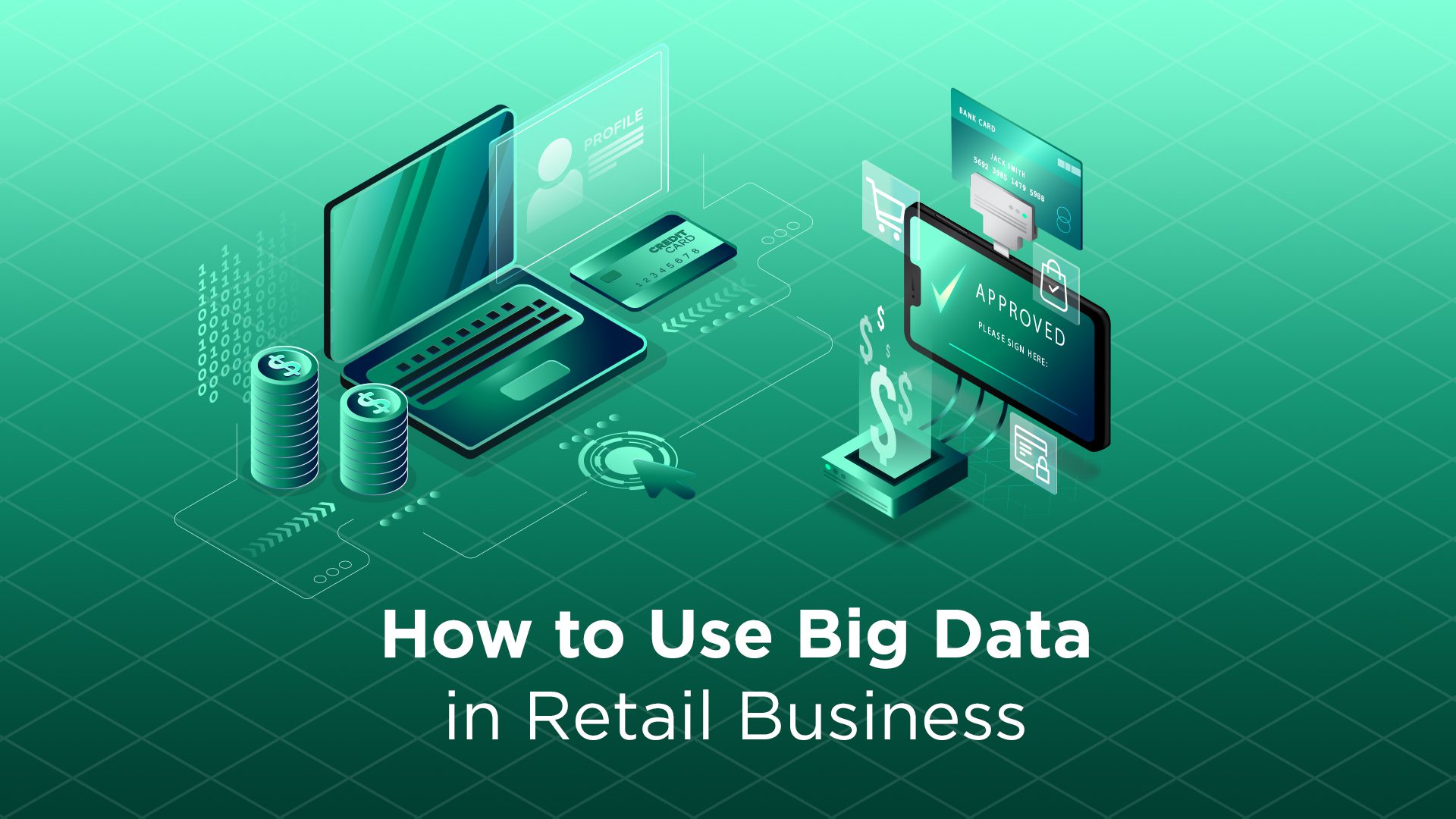


In turn, as data storytelling would help business leaders with powerful insights, it would help them better prepare for the post-pandemic world’s opportunities.


#5: Explainable AI

Considering that AI has reached into nearly every area of human life, companies must be able to trust computers and their decisions. This is where the need for explainable AI emerges. Until now, companies build and sourced AI models that predicted accurate insights from large data dumps. In a post-pandemic world, they may well shift to models that also provide explanations for predictions. Explainable AI is a step forward in reducing the mistrust in non-human workflows. It makes AI systems more transparent and much fairer and all-inclusive than they were earlier.

Conclusion

Advanced data science skills are crucial to the cause of innovation and growth. Advanced upskilling is an integral step for data scientists looking to become more than relevant in the coming years.

How A Big Data Can Be Used In Retail Banking?


Like in all successful business ventures, the field of banking is no exception. Big Data drives decisions. The successful use of such large-volume data-based applications already exists and is hugely popular too. Retail banks are big data-driven with nearly all its processes being already supported by such data to deliver business value to their customers.

Their advantages and competitive value is data fueled and depends on the insights provided by the most effective use of such data. It is surprising that in spite of having had access to such large databases for over a decade now, Retail Banking is yet to exploit the numerous benefits uses of big data in retail-banking can bring in.

A data analyst Retail Bankingintern or freshman makes a handsome payout package and the range of the salary depends on the skill-set, certification, and experience. The skills required can vary depending on the employer and industry. As they climb the ladder the promotions depend on continuous skill up-gradation, managerial and leadership skills. Hence, soft-skills and personality development are also important attributes.

Big Data transformation benefits:

With the move by customers to digital transactions many banks did invest substantial efforts in dedicated teams, advanced analytics, appointing data officers, and upgrading their infrastructure. The early adapters are the survivors and have evolved more competitive as new-age banks offering customer-need based services based on Big Data insights. There are many areas where banks are yet to ramp up their use of big data to reap benefits according to the Boston Consulting Group’s reports.

The three main abilities that are leading transformations are: 

  • Data: Multi-source multi-system huge volumes of data petabytes being available which include high definitions of detail and features.
  • Models and ML: The models are now more insightful thanks to the evolution of better ML software which enables decisions and predictions that are data-driven.
  • Software technology: The hardware-software clustering technique in software like Hadoop has proven to be big-data centric and allowing use of complex databases non-structured and structured in a cost-effective manner.

There are at least six areas in Retail Banking which focused and coordinated big-data programs can lead to substantial value for banks in the form of increased revenues and bigger profits.

IMPROVING CURRENT PRACTICES WITH POINT ANALYTICS: Applications of big data analytics for individual needs can be simple and yet powerful with the point analytics method.

TRANSFORMING CORE PROCESSES WITH PLATFORM ANALYTICS: Big data and point analytics can be used to improve customer risk assessment and for effectively tapping the marketing potential measures analyzed.

TRANSFORMING CORE PROCESSES WITH PLATFORM ANALYTICS: Big data applications can transform the collection process with step-by-step optimization to bring in a 40 percent savings in terms of writing off bad debts, with effective use of mining outdated customer information, their predispositions, and newer behavioral models.

BOOSTING IT PERFORMANCE: Big-data IT technologies should have need-based linear scaling to reduce costs. Data-intensive models, mining omnichannel customer experience, balancing data warehouse workloads and effective leveraging of data can help.

CREATING NEW REVENUE STREAMS: 

A European bank used new architecture, hybrid data-warehousing combining banking tech and big-data by clustering the Hadoop commodity servers. Budget savings were 30 percent with all functionalities!

GETTING THE MOST FROM BIG DATA: 

This involves these basic steps of infra and people management detailed below: 

Assess the present situation: Banks needs to bring in newer innovative applications as a differentiator from the competition where all organizational levels collaborate to contribute to the use and needs-based model.

Be Agile: The agile requirements of communication, collaboration, and contribution across all processes will help big data transform them.

Critical capability cultivation: If not implemented the cultivation of critical capabilities can hinder the big data transformation of processes. Limiting the capability to the vision essentials is recommended in all domains of big data capabilities.

The three domains of Big data capabilities that Retail Banking should question itself about are: 

  • The usage of data
  • The engine driving the data
  • The ecosystem of the data

Retail banks should necessarily explore and act on these domains effectively by using smaller discrete programs to take their strategy to execution.

Conclusion:

BIG business for all banks comes from effectively exploring Big Data. Such large institutions who cash in early will stay ahead of the other banks by adapting technology into the very fabric of their banks for its many benefits.

The future holds great promise for development in the field of Retail Banking and to make a high-paid scope-filled career even without experience. Start your Big Data Analytics Course at Imarticus Learning and take advantage of their assured placements and certification. All the best with your career in big data and retail banking!

For more details, you can also contact us through the Live Chat Support system or can even visit one of our training centers based in – Mumbai, Thane, Pune, Chennai, Banglore, Hyderabad, Delhi, Gurgaon, and Ahmedabad.

Welcome to the Data Science Club of Imarticus Learning!

Imarticus Learning is among the top online education providers in India. After its data science course helped many data science aspirants to build a successful career in the industry, it has now come with a new campaign i.e. the ‘Data Science Club’. This club will aim at addressing the shortage of data scientists in India. It will also help in unifying data science aspirants from all over the country & giving them a chance to interact.

Data Science CourseYou can bring the data science club to your college/university with just a simple process. They already have registered 30 colleges from locations like Delhi, Tamil Nadu, and Karnataka.

The registration process is open & you can experience a whole new aspect of data science. One can also join the data science community of Imarticus on various social media platforms.

Mission & Vision of the Data Science Club

  • To promote students across India to build a successful career in data science.
  • To address the talent gap in the data science industry & shortage of skilled data scientists in India.
  • To facilitate the exchange of ideas & information relating to data science between club members across PAN India.
  • To provide industry-oriented learning of data science involving technological advancements & tools used in the industry.

Registration Process

Generally, most of the colleges don’t even have a data science club. You could be the first to introduce a data science club at your college/university. You can visit the Imarticus website and can easily register your college/university for the data science club. You will be required to fill a google form asking for a few details like college name, address, department, designation, email address, etc. The Imarticus panel will get back to you and will inform you about further proceedings.

Benefits of Being a Club Member

This data science club will facilitate its members from various colleges across India in understanding the importance of data science. It aims at motivating aspirants for building a successful career in data science and bridging the talent gap in the current data science industry. The benefits of joining the data science club of Imarticus are as follows:

  • Students of member colleges can attend any event/competition under the data science club for free.
  • You will get to attend lectures or webinars from industry experts/professionals.
  • The members of the club will get to test themselves by participating in the national level hackathon.
  • You will get to attend data science workshops under this club. You will also get a certification from Imarticus Learning for being a part of the data science club.
  • The members of the club will also undergo the faculty development programme.
  • Eligible members/students of the club will also get full placement support from Imarticus.
  • You will get to know about the industry practices & trends by being a member of this club. You will also get to know about the right career roadmap in the data science industry.

If you want to make a transition from data science aspirant to an expert, you have to grab this wonderful opportunity which will bring you closer to the data science community in India. One can also opt for the data science course provided by Imarticus Learning to know about the data science aspects in detail.

Register for the data science club now!

Why Artificial Intelligence is better than Other Technology

Living in the 21st century, we have been able to see a lot happening in the field of technology and its advancement. Artificial Intelligence in that regard is the latest and the most developed version of classic technology. However, the term artificial intelligence still perplexes many people as they are not aware of its details. Even though people are using gadgets birthed by artificial intelligence, they may still not know about it.

What Artificial Intelligence Exactly Is?

AI is that field of machined technology that imitates humans and their functions on various levels. These machines or robots are functioned using various codes and algorithms to make them work as humanly as possible. It deals with the behavioural part of the machines which has a connection or a relation with intelligence. This branch of computer science has made it possible for the machines to think and act rationally and humanly to a great extent.

Why is AI Better than Other Technology?

Artificial Intelligence is any day better than human intelligence or works efficiently as compared to other technologies of the world. This can be made clear through the following points:

  • Mitigating Risks: AI has been working incessantly in reducing the risk factor associated with completing a task as compared to other technologies. To quote it as an example, forest fires can be handled more effectively with AI robotic drones instead of manual machines to put out the fire. AI can minimize the risks associated with human lives in many areas like radiation, electricity, hydropower and fire etc.
  • Zero Errors: Unlike other forms of technology or human intelligence for that matter, AI works so efficiently that it leaves no chance for errors or mistakes. Owing to a situation, human beings can alter the ways they work but AI does not change frequently according to their surroundings in all situations.
  • Remarkable Anticipation: The technology preceding AI is not accurate enough to make correct judgements about the events which are about to happen. However, forecasts or predictions made by AI are far more accurate. Likewise, AI sensors to forecast and measure the intensity of an earthquake beat the normal scales to measure the earthquakes. Also, AI functions with far less human involvement as compared to other technology.
  • Saves Time and Money: The classic technological advancement would just let you type a song name in the search list and it will present you a list of preferred songs. However, Siri and Alexa, a gift of artificial intelligence are voice regulated gadgets which work on your personalized instructions. There is no default set of questions and answers fed in these gadgets. They respond to any question with any suitable answer, isn’t that amazing?
  • Reduced Human Intervention: When technology functions on its own without human intervention, it can turn out to be the best. To illustrate, a doctor carrying out a surgical procedure makes use of all the modern gear and instruments but can still perform differently with different patients of the same conditions. However, this is not the case if robots carry out the surgery by themselves. This points to the fact that AI outshines human interference while making use of technology.

Conclusion
Embracing a positive approach to make use of Artificial Intelligence can always turn out to be in the best interest of every human being. Although, AI has eased the lifestyle and the way people used to work but still, exploring it outside the boundaries of positive development can cause harm to humanity at once.

If you wish to explore the field of AI and aspire to learn artificial intelligence, you must check out Imarticus learning for the same.