
How Can AI Help to Enhance Conversational Business Intelligence?

Data, Analytics, Insights are the three key terms connected with the success of any organization. Well-curated and holistic customer data can take businesses to a whole new level.

It is the Business Intelligence Dashboard that keeps a record of KPIs, metrics, and various other data related to the organization, departments, or a specific process. While Business Intelligence Dashboards can provide a whole lot of information, it may require a considerable amount of time and effort to access the data.

Consider a scenario where a manager needs the sales of the Southern Territory for the past quarter. He also needs the list of jobs currently running on the organization’s server for new recruitments. All the information he needs will be available in the organizational Business Intelligence dashboard. But to access the specific data, he has to undergo several processes.

He has to log in for each task, set the parameters, range, format, etc, which is time-consuming and also tedious. This is where the AI-enhanced Conversational Business Intelligence comes in handy.

In today’s dynamic and competitive market, Conversational Business Intelligence powered by Artificial Intelligence has a unique role. It helps the organization to improve customer experience, involves minimal business decision-making, and also helps in offering more personalized services. It provides a whole new approach to your daily business tasks.

AI-enhanced Conversational Business Intelligence is an intelligent interface between the dashboards and the users. It not only helps in gathering the specific information at a rapid speed but makes use of a structured and user-friendly format to present the data.

It delivers quick and exact responses. Conversational Business Intelligence is beneficial both at the customer end and also for the employees within the organization. It helps to receive crucial data and insights about the customers by simplifying and speeding up the entire process.

The employees can access data without worrying about extra passwords, another application, or new software. Conversational Business Intelligence enhanced by Artificial Intelligent is easy to collaborate with any platform of your choice.

Let’s look at another instance where Artificial Intelligence enhanced conversational business intelligence comes to your help. Using Google Analytics, you get valuable insights related to your customers such as what page they are viewing or how frequently they have visited a page of your site, etc.

But what it does not answer is WHY that specific customer revisits a page, the pricing page for instance, and does not continue with the purchase or opt for a trial option as mentioned on the page.

There could be several reasons stopping the customer from making the purchase. He could be hesitating because the page does not provide enough details to convince him, or he could be confused about the purpose of the product, or he could be worried about the delivery of the product, etc. However, the reasons are unknown.

This is where the AI-enhanced conversational business intelligence comes to your rescue. The customer can now communicate their problems, to a system mimicking human intelligence, without actually having to talk to the manager or owner of the site in person and can clarify all his doubts regarding the specific product or page instantly.

Why a career in Artificial Intelligence?

Artificial Intelligence trainingArtificial Intelligence in Business Intelligence makes use of computer systems to mimic the various abilities of human intelligence such as reasoning, learning, understanding, communication, perception, judgment, and much more.

With the fast-growing businesses and a huge number of customers, the data generated today is much more than what one can absorb or interpret.

With this kind of data, it can get really difficult for human minds to make complex decisions. This is why Artificial Intelligence is said to be the future of all complex decision-making. Therefore, an Artificial Intelligence career can provide endless job opportunities.

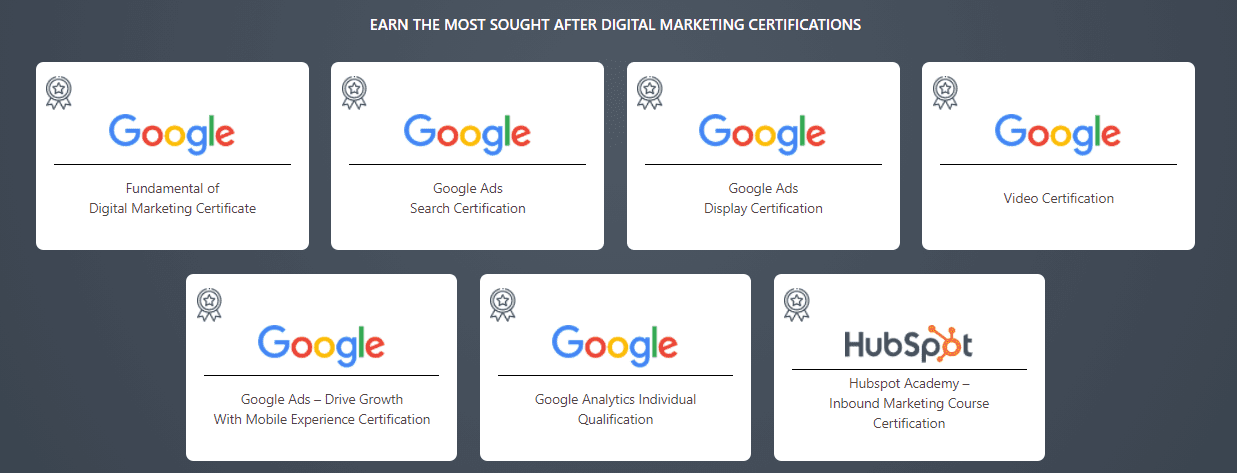
What are the must have certifications for a Digital Marketer?

To make a successful career in Digital Marketing, you need to have the proper certifications. Be sure that your resume includes an official degree in Marketing or Business Management and certificates for digital marketing programs like Google Analytics Certification or HubSpot certification.

best digital marketing courses in IndiaWhat are the essential things to be a good Digital Marketer? Let’s say we’re talking about me because I’m certified and educated on what needs to happen if someone wants their company website ranking well online (I am from SEO Agency).

best digital marketing certification courses in IndiaThe first thing people are going ask themselves before deciding whether this person deserves my money would be, “Do they know how can make us more profitable?”.


If you want to make your career in digital marketing, you can get a certification in digital marketing. Many institutes provide digital marketing courses online. Below are the lists of topics that most institutes cover when you go for a digital marketing course online.

  1. Search Engine Optimization (SEO)

Search Engine Optimization (SEO) is a term used to describe the process of making your website search-engine friendly. This means that it will rank higher in Google’s search results for specific keywords and phrases, so more people can find you through their searches.

  1. Content Marketing

Content marketing is a strategy that allows you to earn interest from the content your company produces on social media. By creating blog posts, infographics, and other forms of visual communication for people interested in what you have to say about a specific topic or product set, businesses worldwide can grow their following and brand recognition with little money spent by way of advertising.

  1. Social Media Marketing

In this day and age, social media marketing is an integral part of any business strategy. There are many different ways to use these outlets for promotion–from paid ads on sites like Facebook or Twitter to free content such as blog posts that reach a broad audience with just the click of a button.

Related Article:

https://imarticus.org/which-digital-marketing-course-would-be-helpful-for-a-relationship-manager-in-a-private-bank-new-age-banking-blog/

Marketing Management: How is it Applicable in New Age Banking and Finance?

New-age banking and finance is a new way of doing business that has emerged with the advent of the internet. New-age banking and finance are about providing loans or deposits and partnering with merchants to bring them through marketing activities.

Marketing Management course can be used in finance because it provides an integrated approach towards all aspects of marketing, such as generating leads by identifying target markets and segmenting them based on customer needs; developing strategies to promote products or services; creating awareness about product/service; executing promotional campaigns for visibility.

How is marketing management applicable in New Age Banking and Finance?

The new-age banking system considers all factors contributing to the development of the banking sector-whether political, economic, or social. In this context, marketing management is one key factor that can help banks design and implement their strategies to capture more market share from other players. The marketing strategy also includes customer relationship management (CRM), which allows you to understand your customers’ needs and serve them better with relevant offers.

Financial services marketing strategies for banks and financial institutions:

Customer Outreach

Customer outreach is one of the traditional marketing strategies for banks & financial institutions to adopt & it’s most effective. Customer outreach is simply the concept of reaching out to customers to fill existing needs surrounding education, awareness, and help. Customer Outreach works to build awareness, customer loyalty, and interest in products and services.

Self-Service and Digitization

Millennials & Generation Z often do everything themselves. Setting up & promoting digitized financial products & customer service/experience portals enable customers to sign up for services online, change products and services online, and view information without entering a branch. This is an effective & growing trend for financial organizations.

Social Media

Smart & consistent social media platforms are a valuable financial marketing strategy that cannot be ignored. Millennials & Generation Z use social media platforms to connect with brands, learn from peers, and follow current events and news. A steady presence on websites offers value to followers, builds brand trust, creates marketing opportunities, & grows the customer base.

Automation and Big Data

Most financial organizations carry bulk data, and before they know what to do with it, it rapidly changes. Customer experience platforms & automation tools make data utilization easier & apply it to the marketing strategy for financial services.

Digital Storytelling

Storytelling is one of the most effective marketing mediums, whether on social media, video, ads, or cross-channel platforms. All you need to do is encompass your marketing strategy telling a story that captures interest & evokes interest, excites, and moves your target group.

Grow with a Degree at Imarticus Learning:

Imarticus Learning offers masters-level banking and finance management program with assured placement to match up with the competition.

New age careers in banking and finance coursesThe program is for fresher graduates as well as professionals who want to explore new opportunities through learning.


The Post Graduate in New Age Banking is a comprehensive, 24-month unique combination of two industry-endorsed New Age Banking & Finance Management programs designed to upgrade existing careers in the Finance industry.

The programs have unique curriculums and parallel learning paths that make it ideal for professionals looking to upgrade their BFSI careers. The exceptional approach to professional education redefines industry knowledge & effectively compounds occupational abilities.

The course includes an overview of management with credits on management theories in Strategic Management, Financial Accounting, Business Law, Marketing, Communications, Information Systems, HR & more.

For further details on business analytics courses in India, contact us through the Live Chat Support system or visit our training centers in Mumbai, Thane, Pune, Chennai, Bengaluru, Hyderabad, Delhi, Gurgaon, and Ahmedabad.

How Digitization Will Change the Future of Finance: The Digital DNA of Fintech?

The digitization of finance will have a profound effect on the future of Fintech, and it is already changing how companies do business. The digital DNA of Finance has allowed for new opportunities to be created by companies who can use this new technology to reach customers in ways they could never have before.

This also allows for the potential that more people will be interested in MBA programs focused on Fintech as well. It has increased the demand for specialists in FinTech and has made them harder to find. MBA in Fintech is an on-demand degree that provides you with all the tools necessary to succeed in the financial services industry.

How will Digitization change the future of the fintech industry?

Digitization is changing the world as we once knew it. It has changed how people interact with each other, and now it’s starting to change finance. The digital DNA of Fintech varies widely from country to country, but one thing that remains constant is its exponential growth in the last five years.

Here are some predictions on what digitization will do for Fintech:

– The Economist predicts that by 2020 mobile banking revenue will exceed desktop revenues.

– According to Accenture research, 85% of all customer transactions could be handled by digital channels within the next decade.

– It is predicted that 90% of all financial services in the US will be provided digitally, saving an estimated $900 billion a year for banks and other providers.

– The top 30 global fintech organizations raised over 12 billion dollars collectively in 2016, which was up from only about half of that amount just two years ago. It’s clear to see how this industry has been exploding with innovation!

MBA in Fintech coursesThis also implies that the demand for specialists in Fintech is increasing. MBA in Fintech is one such degree that will equip you with the skills to thrive and harness this opportunity.

Why should graduates consider making a career in the fintech industry?

Today, there is a high demand for people with finance and technology skills. This demand is expected to grow substantially with digitization, making it an excellent time for potential professionals considering this career path who want a high salary and strong employment prospects.

The MBA in Fintech program equips students to take on the challenges of this ever-changing landscape by providing them with an understanding of all the aspects of the fintech industry. It will also give you exposure to a diverse set of industries that are taking advantage of advanced management concepts such as Big Data analytics and mobile commerce.

Master the skills of digital transformation & investment management with Imarticus Learning

With digitization changing the way we live, work and do business, finance is no exception. Finance professionals across industries are undergoing a digital transformation to better serve their clients’ needs with this shift of focus from traditional banking activities to innovative solutions for financial services.

Imarticus Learning offers online MBA courses that equip you with the skills needed to succeed in this challenging but very rewarding industry. With a broad understanding of technology, business, and finance, MBA students become highly sought-after as they are able to offer financial advice on complex transactions involving digital assets.

For more details, get in touch with us through the Live Chat Support system or visit our training centers based in – Mumbai, Thane, Pune, Chennai, Bengaluru, Hyderabad, Delhi, Gurgaon, and Ahmedabad.

The Key Role of Fintech in Developing Smart Cities

What is a smart city?

Unlike the old times when smart cities of the world could be counted on fingers, today every country has several smart cities which operate with modern technology to provide an easy and quality lifestyle to the inhabitants. The concept of a smart city focuses on the usage of available technology and modern equipment in day-to-day functioning so that people can make use of it residing in their cities.

Amenities like transport, banking, public convenience, education, health, and housing are infused with modern and technological advancements to promote an ideal lifestyle.

Role of fintech in smart cities

Apart from different factors that contribute to the development of a smart city, finance acts as the backbone. All the decisions and functioning are based on finance. Having a modern and web-based financial system can bring about favorable changes in a city making it a perfect place to live.

  1. Modern banking system

When it comes to a smart city, the banking structure and functioning must be strong enough to suffice the needs of all the residents efficiently. Fintech has facilitated the banking structure by providing personalized banking services to customers. These services are tailor-made and can be altered at any time. Along with that, online banking facilities and ATMs are widely run by various fintech corporations in collaboration with the banks.

  1. Smart Market

Fintech creates a marketplace for smart buyers who use a digital model for transacting. In various shopping complexes and stores, fintech corporations use disparate applications and portals for payment methods. Generally, smart cities have more modern stores as compared to small cities or towns. This is because of the wider usage of fintech.

  1. Public payments

Governments operating in smart cities try to facilitate the residents through e-payment methods for paying for electricity bills, taxes, rents, and different fees. Governments collaborate with fintech corporations to provide these mechanisms so that the public can use resources effectively and safely. This way fintech operates in the background fulfilling our daily needs.

  1. Deliveries and rental taxi services

It is quite evident that all the metropolitan and smart cities operate with great dependence on spot deliveries and taxi services. These companies also make use of fintech organizations as intermediaries for the payments to be made safely.

Today, more than 80% of deliveries of food items or general items are made through online payments and the same is the case with taxi services which make use of various applications and portals for the payments to be made. This digitalization of transactions has only been possible through fintech.

 Future of Fintech

Considering the present status of fintech, it can be easily predicted that in the coming couple of years fintech will dominate the whole world, making it a modern hub.

Aspirants working in this field can check out Imarticus learning for amazing fintech training and professional assistance in placement afterward for a stable fintech career. Considering the significance of fintech corporations in almost all industries, working in this field is pretty rewarding and professional.

Digital Marketing: How Marketers use niche Digital Channels to Reach Consumers

The new world order of digital marketing is a place where marketers have to be agile, innovative, and strategic. It’s a place where you need to make sure that your content attracts the right people to convert into customers or clients. Those interested in this field understand what digital marketing is all about and how Digital Marketers use niche channels such as social media, search engine optimization (SEO), email marketing, and many others to reach their target audience.

For those who wonder what digital marketing is, it is important to understand that it is more than simply creating a Facebook Page & hope a customer base following you. A digital marketer needs to use niche digital channels to reach consumers engagingly.

How do Digital Marketers use Niche Digital Channels to Reach Consumers?

Digital Marketers use Niche Digital Channels to Reach Consumers by understanding what their customers need and know. They can do this through the following channels:

Inbound marketing from SEO, email marketing, social media, and blogging helps a marketer reach existing clients while generating new leads.

Outbound Marketing on paid search engines or call centers is used when there’s an immediate need for a business, such as a customer service issues or lead generation.

Broader Outreach via digital video platforms like YouTube, which reaches people who may not have been reached before due to demographics or geography (a great example of niche content).

Others include Display Ads in online publications that target audiences based on demographics and interests, so they see ads relevant to them.

Innovative strategies to leverage Niche Market:

User-Generated Content

Customers can take advantage of user-generated content to showcase merchandise without looking promotional. User-generated content is the best marketing trick to use because it works in two ways: It’s like free advertising and a chance for a business to create a connection with existing clients.

Choose Advertising Platforms Wisely

Two masters can’t be served together. For long-term success, accuracy is needed to target audiences. You need to figure out the right platform to be used for niche products. The precision of goals & the right choice will lead you to the correct path.

Partnerships

Experience fuels customer satisfaction these days. Giving customers a package, from placing an order to product delivery, is the way to keep them hooked for life. Marketing is not always a priority; businesses also need to keep costs low to accommodate expenses. The solution is to team up with experts to spread awareness & showcase USPs.

Don’t Forget Offline Marketing.

Since it is challenging to target every segment through mobile apps, mainly for niche businesses, offline mode is the way to reach out. It allows people to touch, hold, & sample clients’ products. Offline marketing tactics like business cards, pamphlets, or coupons connect your brand to customers physically.

Grow your Digital Marketing Career with Imarticus Learning:

best Digital Marketing courses in IndiaA digital marketing course online can help you to stay ahead in this fast-paced industry. Imarticus Learning offers a PG program and Prodegree in Digital marketing that prepares the students for real-industry life.

Our Digital Marketing Post Graduate course is designed to give students an extensive and detailed coverage of Digital Marketing concepts in a more practical way.

It’s the best digital marketing course as it adapts a very collaborative approach focusing on multiple capstone projects, job-ready skills & guaranteed job interviews.

The coursework is designed by industry experts and covers Big Brand case studies, Four Capstone Real Biz Projects. The programs offer 100% Job Assurance and excellent placement assistance.

For further details on business analytics courses in India, contact us through the Live Chat Support system or visit our training centers in Mumbai, Thane, Pune, Chennai, Bengaluru, Hyderabad, Delhi Gurgaon, and Ahmedabad.

Banking and Finance – Trending Jobs in the Industry

Banking and finance (BFSI) are collectively one of the most active job industries in India. They have great scope for jobs for aspiring graduates who can look at getting hired in any company they want. Since most organizations have a finance/accounts department, the number of jobs is abundant.
But what are some of the most trending BFSI jobs in India? What banking and finance courses should you pursue to land a high-paying job that is also professionally rewarding? These are the questions that we will answer in this article today. Read on.
Trending Jobs in the Banking and Finance Industries

Here’s a list of the most sought-after and hot jobs in the BFSI sector.

1. Investment Banking – Provide investment advice to non-finance people and earn consultation fees and commissions. Investment bankers are one of the highest-paid professionals in the BFSI field. Whether you work as a freelance consultant or get hired at a consultancy like BCG, the exposure you get in the industry is too high. Investment bankers have knowledge of the stock market and corporate banking and usually deal with businesspeople.

2. Corporate Finance – Similar to investment banking, here you consult companies with their finance. Skills of business analysts and financial analysts come together here to help organizations make better financial decisions. These are about their own growth and development, their investments, and their expenses. Corporate finance is another field that pays well, but it is equally challenging and requires professionals to know the field inside out. Taking up banking and finance courses is extremely critical to be successful in this field.

3. Wealth Management – Another great career path to take is to specialize in wealth management. This is all about how a person can multiply their wealth through tax breaks, sops, and utilization of the right instruments. You will mostly work with high net-worth individuals (HNIs) such as business magnates, industrialists, and directors of large corporations. Your work will mainly involve guiding them on where to put their money and how to invest it to earn best interest rates. For example, if a businesswoman has a lumpsum amount of INR 50,00,000 to invest, it is your job to tell her what the best instruments are for her profile that will give her the maximum benefits. Companies like HDFC Limited and Kotak Group have departments that specialize in wealth management

4. Credit Analysis – Ever heard of the CIBIL score? A credit analyst basically helps people improve their credit score. In some cases, this profession can also mean working with regulators like Sebi and RBI to improve the credit infrastructure of the country.
a. In a usual credit analyst role, you will assist individuals and companies understand their credit history and score and suggest ways in which they can improve them. You should know the workings of the credit system in and out to provide counsel. This has a direct connection with loan operations

5. Risk Management – A slightly different field but still highly relevant in the BFSI sector. A risk management profile involves you assessing the financial situation of a company and providing advice on how to use their money properly. This can mean investing in a certain project and cutting the fund on another because it is not performing well. This is more of an analysis role than one where you work with numbers.

Whatever profession you choose in the BFSI sector, having good general knowledge of the finance sector can do wonders to your profile. So, go ahead and join any of the banking and finance course of your choice and start building your CV.

Also Read: Overview of Career in Finance

Good to Have: New Age Skills in Credit Risk & Analysis!

Many people think that credit risk and analysis is a dying industry. They believe that technology or computers in the future will take it over. However, this couldn’t be further from the truth.

In reality, Credit risk and underwriting degrees are becoming more critical in today’s world because they teach people to work with numbers and use them effectively for decision-making purposes.


Skills for Credit Risk Analysts:

A career in credit risk and underwriting requires a diverse skill set. You must understand the intricacies of various industries, have excellent analytical skills, and have an in-depth knowledge of accounting principles. However, it’s not just about the technical aspects.

A successful candidate also needs to possess some New Age Skills such as leadership abilities, communication skills, and negotiation experience. New skills must be learned to stay on top of the latest trends. One of these new skills is programming, which can help with data analytics and automation.

Here are some other common skills required for a Credit Risk Analysts:

Strong quantitative & analytical skills: Credit Analysis requires digging into financial statements & analyzing credit risks using tools like ratio analysis. Hence having an analytical mind is important.

Knowledge of financial analysis: A Credit Analyst must know their way around financial statements & develop a knack to find items impacting the company’s debt-paying abilities. Risk analysis is a part of their job profile and may demand analysis of different scenarios.

Attention to detail & diligence: Errors made in assessing creditworthiness can be costly for the entity & stakeholders too.

Communication skills: Credit Analysts course prepare financial standing reports, which needs excellent report writing skills. They are also required to interact with company management & clients, to scrap out information & discuss problems. Good people with oral communication skills excel as credit analysts.

Credit Risk Analyst CourseComfort with Financial/Statistical software: Credit analysis requires risk analysis using statistical software. Knowledge & comfort working on such platforms is an advantage.
Move up the Ladder with Imarticus Learning:

A Credit analyst’s job is challenging and demands analytical solid skills. Looking for careers after graduation, you can get placed as junior analysts/management trainees assisting analysts. However, to move up on the ladder, you may need a Master’s degree or certification courses like CFA/CA/FRM.

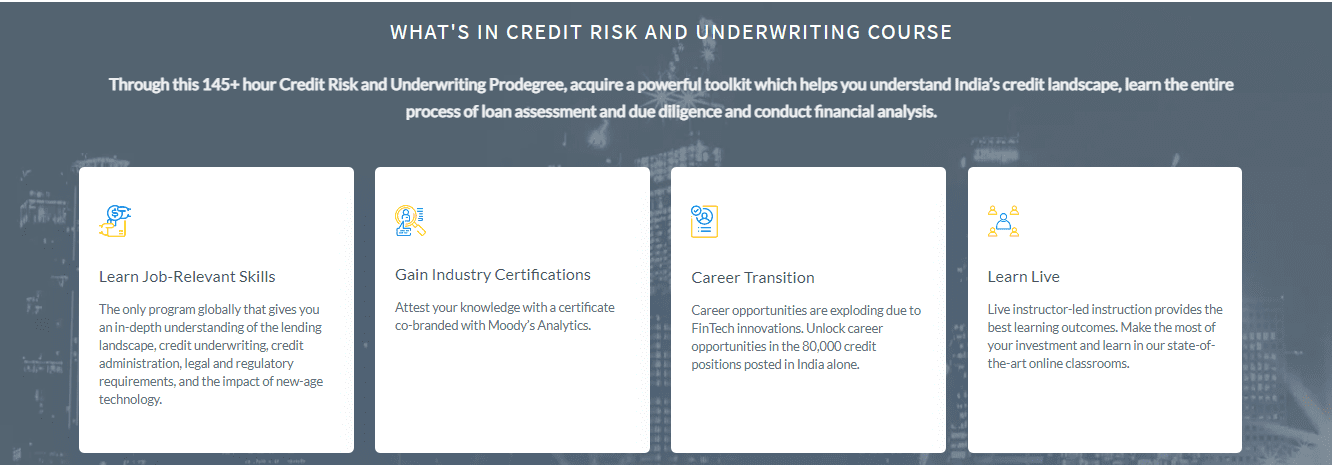
Imarticus Learning offers Credit Risk and Underwriting Prodegree that helps you carve a career in Credit Risk Underwriting. Students get an in-depth understanding of the dynamic banking & non-banking financial corporations (NBFC) loan markets during the program.

credit risk and underwriting courseThrough this Credit Risk and Underwriting Prodegree, students acquire a powerful toolkit that helps them understand the credit landscape, learn the entire process of loan assessment and due diligence and conduct financial analysis. The students get hands-on learning experience and explore five comprehensive case studies linked to different aspects of the curriculum.


After completing this course, students are rewarded with an industry-recognized Certificate of Excellence in credit risk & underwriting. The certification represents the skills & knowledge they have imbibed during the course and can be used to boost your portfolio and resume. To answer your questions like what after B.Com? This CRU Pre-degree is the answer!

For further details on business analytics courses in India, contact us through the Live Chat Support system or visit our training centers in Mumbai, Thane, Pune, Chennai, Bengaluru, Hyderabad, Delhi, Gurgaon, and Ahmedabad.

Why Data Security Should Be a Top Priority?

Data science has revolutionized how businesses utilize information and leverage it to achieve their objectives. Businesses in the contemporary heavily rely on the use of data and analytics to obtain valuable insights about the market, customer base, competitors, etc.

Decision-making is not random in the modern digital age; it involves complex analysis and data churning to make outcomes more favorable and predictable.

best data science courses in India Data science training has gained new heights in the past decade and there is a growing demand for professionals in this field, making the data science career one of the most sought after and rewarding ones.


Today, data stored by companies is not just some random piece of information that no one looks at twice, it has gained a new significance and is kept confidential. Cybersecurity is a concern in the modern digital era, where data is not less than fuel for businesses.

Cybercrime has also gained momentum with the growing demand for data by businesses. Data security should be a top priority for businesses in the light of recent cybercrimes that has affected both small and large businesses. One can easily opt for a data science course from reputed organizations like Imarticus Learning and learn all about this discipline.

 Data Security a Necessity

Data security entails protecting vital digital information from theft or corruption.  Data security ensures that your confidential information is safe and secure and could not be altered by any other party.

Businesses also hold personal information related to their customers and protecting it is a necessity for the longevity and growth of the business. Let’s delve deeper into why data security should be a top priority for businesses.

  • Potentially Unwanted Program (PUP)

Data security is not just needed for large organizations but even the smaller ones need it to keep their confidential information secure. Potentially Unwanted Programs, popularly termed PUPs are one of the major data security threats that affect small businesses. Small businesses generally receive complimentary bundle software with the purchase of new tools.

At times, some spyware could get installed while working on these software packages if not sorted out properly. The consequences could be complete system slowdown, hacking, etc. One can easily avoid these PUPs by installing software from reliable sources only and inspecting the installed ones from time to time.

  • Increase in Data Breach Damages Reputation

Data breaches can turn out to be very costly for businesses. It can lead to a decrease in sales volume and also impact an organization’s reputation negatively. People will be more reluctant to trust a brand that has had cases of a data breach in the past and they won’t be comfortable availing products or services from these organizations.

A famous example of a data breach that resulted in a huge loss was Target’s 2013 breach, the profits decreased by more than 40% in the last quarter due to this event.

  • Hampers Productivity

Data breach not just hampers the reputation of an organization but also has other major consequences. It also leads to a reduction in productivity as it disrupts the whole process and systems in place that effectively integrate everything. Addressing and resolving the breach issue takes a little time but making things normally takes more than that and this causes a chain reaction of reduced productivity which adds to further losses for a business.

Keen To Develop A Solution That Will Predict User’s Online Training? Imarticus Could Help You Develop The Right Expertise

Online user behavior is something e-commerce and target marketing has been relying on. What helps them predict online user behavior is machine learning and Artificial Intelligence.

The user interest and the pertaining trend help the business and marketing team to anticipate the changes and take the necessary steps for improvement. This change is a trendsetter that has urged many other fields to use the same mechanisms to study its users.

data analytics and artificial intelligence courses in IndiaEver since the online training process gained popularity finding out what the users’ needs became crucial to set up the right kind of courses and setting up the ideal curriculum to nourish their careers.


Predicting user’s online training

Getting the correct feedback on the online learning process is significant to know about what the users are interested in. It helps refine the curriculum and also helps introduce more useful courses to increase the chances of a better career.

Predicting a user’s online training interest requires some specific expertise but it doesn’t involve a single field of study. It requires a collection of subjects that are part of data science. In order to be an expert in predicting user interests, these are the fields of technology that one must master.

  • Artificial Intelligence: User prediction using AI is done through developing models and algorithms that provide a predictive outcome. It is also one of the primary objectives of this technology.
  • Machine Learning: ML is the branch of AI that helps with the computational part or where the machines are made intelligent to work like human brains. BY processing the machines one can help find the relevant data to create a reliable predictive analysis to find out the user interest.
  • Deep Learning is that part of AI that functions as human brains where it recognizes speech, language, objects, etc and that also helps in decision making. Using these factors creates a prediction model that has near-accurate validity. In fact, it is one of the most popular careers at the moment.
  • Natural Language Processor NLP is using technology to understand the common and natural language used by humans. It involves compiling data and processing it appropriately through mathematical, linguistic, or statistical methods. It is just a collective term for multiple steps. Moreover, it uses most of the above mentioned technologies as well.
  • Computer Vision is another branch that works on perspective analysis using videos and images. They help with replicating the visual system in humans and automate the tasks accordingly.

How Imarticus helps?

Imarticus offers various courses in Artificial Intelligence that includes Deep Learning, Machine Learning, Natural Language Process, Computer Vision, etc in the curriculum. It makes a foundation for predictive analytics. The course duration ranges from 2-8 months depending upon the user’s choice. Both online and classroom options are available for most courses.

Analytics and Artificial Intelligence coursesAnalytics and Artificial Intelligence Courses in India are open to both freshers and working professionals. They can select the relevant option when opting for the course. The courses are termed PG-courses and Pro-Degree courses respectively.

Keeping in mind the time constraints for the professionals, the pro degree courses may be completed in a shorter span of time.

Not only do they provide quality courses but also provide opportunities to work with giants such as IBM and others. Both types of courses have this partnership option for hands-on experience.

Analytics and Artificial Intelligence courses in IndiaSuch hands-on courses enable the users to polish their knowledge and make them borderline experts in their respective fields, even for an entry-level.

Conclusion

The learning process at Imarticus includes a program mentor who gives proper guidance and support for the academics. Moreover, the placement assistance at the end of the course increases the prospects of landing the right job.