Don’t enrol in a Fintech course without reading this

One sector which was the first to bring about technological changes in its mode of operations or management was Finance. Ever since the introduction of technology to this sector, the entire department has been revamped and the expected growth of the Fintech global market is 26.2% CAGR (Compound Annual Growth Rate) between 2022 to 2030. So if you were planning a career in the Fintech sector, now would be the ideal time to give a jump start on your dreams, and opting for various Fintech courses online is the ideal first step. However, before you make up your mind on a course, there are a few things to be aware of. This article covers all the essentials of any online Fintech course.

Fintech certification course: What is it all about?

In the simplest of terms, the Fintech industry is all about using technology to smoothen the financial operations of a company or business. Fintech courses are those courses that help you to specialise in this field and give you an opportunity to learn the various skill sets required to set foot in this sector.

What to look for before enrolling in a Fintech online course?

While browsing through the multiple options of Fintech courses you might get intimidated owing to the broadness of this niche. So here are a few factors which you should keep in mind before choosing your course:

Your requirements and preferences

The ecosystem of the Fintech industry is a varied one, which makes it very important for you to understand your preferences and interests beforehand. Based on your requirements, capacity and interest you should choose the stream, and not the other way around. For example, if your interest lies in Wealth Technology or Wealth Tech, then you have to choose an online Fintech course that focuses on that segment. However, if your preferred field is Lending or Digital Banking, then you need to choose your course accordingly.

Duration of the course

The next important thing to consider is course duration. Fintech course durations range from shorter ones of 6 to 12 months or longer to full-fledged courses of almost 4 years. If short-term courses are the ones you are looking for, then the Fintech course offered by Imarticus is your ideal one. Imarticus runs the core module, where the basics are taught at a duration of only 100 hours, while in-depth learning is provided by the pro module which runs for 140 hours.

Practical training

Another factor to consider before finalising your Fintech course is whether the course is paired with any hands-on training or experience or not. With a course that offers proper hands-on experience, you will ensure that your theoretical knowledge is properly transcribed into a practical one.

What topics are taught in online Fintech courses?

Fintech courses are job-oriented, and thus its curriculum is curated by keeping in mind the need for both theoretical and practical knowledge. Any online Fintech course, like the professional certificate in Fintech offered by Imarticus, covers the following subject areas:

  • Risk management
  • Understanding the startup ecosystem
  • Law and policy
  • Fintech security and regulation
  • Banking and financial services

The Imarticus Fintech course also offers hands-on training on various in-demand technologies like RPA, Machine Learning, Cloud Computing, Blockchain and likewise.

A career in Fintech: Array of job opportunities

best investment banking course

After finishing your online Fintech course, you can pursue any job profile in any of the following business models:

  • Transaction delivery
  • Asset management
  • Digital wallet
  • Payment gateways

The various job profiles include:

  • Cloud Manager
  • Data Scientist
  • Product Engineer
  • Product Manager
  • Sales

This is only the tip of the iceberg, and with the rapid growth in this sector, newer job profiles and business models are coming up now and then.

Why choose an online Fintech course over an offline one?

If you’re confused about whether to opt for an offline or online Fintech course, be assured that this dilemma is quite common. Both modes have their own sets of advantages and disadvantages, yet the online one wins the race owing to the following added benefits:

  • An online Fintech course is flexible and thus convenient. Such a course offers you the opportunity to learn at your own pace and time.
  • Next is cost savings. Not only are online courses less expensive than offline ones, but you also save travel costs.
  • Most online Fintech courses are paired with exhaustive career services and scopes of networking with peers, professionals and industry experts.

Bottom line

The Fintech sector is rapidly evolving with time, and to stay afloat, you must be well equipped with appropriate knowledge, current changes and an ability to upskill yourself and adapt to the changes. The correct Fintech course will help you achieve the same with ease, which will not only act as a supplement to your knowledge base but also give a picture of your interest to work in the field to your potential employers.


The world is changing with the combined forces of fintech and crypto

The world is changing with the combined forces of fintech and crypto

The long tail of financial services in emerging markets has proven to be fertile ground for fintech. Still, the game-changing force of crypto and blockchain technology might have even more significant implications.

What happens when the power shifts from global banks to the individual? What does this mean for mobile phone banking and digital wallets? How will online and peer-to-peer trading change how we manage our money?

Here are nine ways the world is changing with the combined forces of fintech programs online and crypto — for better or worse.

1) Blockchain is going to change how your business works.

If you are not keeping up with the latest trends in business, you risk being left behind. One of the biggest changes on the horizon is the rise of blockchain technology.

2) Cryptocurrencies are going to change who owns your data.

We are all becoming increasingly reliant on digital systems to store our data. From our social media profiles to our financial records, our lives are now contained within 1s and 0s. It means that whoever owns those systems also owns our data.

3) Your data on social media might be worth more than you think.

Your data is worth a lot to social media companies. The average person’s data is estimated to be around $250. That might not seem like a lot, but when you consider that there are over 2 billion active social media users, that number starts to look much bigger.

4) Preparing for the shift will benefit your business and wallet.

We are currently in the midst of a digital revolution. Financial technology (Fintech) and cryptocurrency are two of the driving forces behind this change. So let us not waste our time and learn cryptocurrency online from Imarticus today.

5) You might become the bank of tomorrow sooner than you think.

In the past, banks were the only institution that could provide financial services. But with the rise of fintech and crypto, that’s all changing.

Now, several companies are providing banking services without being banks. It is made possible by combining the Fintech certification course and crypto. And it is changing the world as we know it.

6) Blockchain can help anyone raise funds with fewer regulatory hurdles.

Blockchain technology can help entrepreneurs and small businesses raise funds with fewer regulatory hurdles. Using blockchain, companies can tokenize their products or services and sell them to investors in a crowd sale.

This fundraising method is often called an initial coin offering (ICO). In the past few years, ICOs have become a popular way to raise funds for new projects. In 2017, startups raised over $5 billion through ICOs. This trend is likely to continue as more people become aware of the potential of blockchain technology.

7) People will buy more goods using crypto instead of fiat money.

With the combined forces of fintech and crypto, the world is changing. People are now able to buy goods using crypto instead of fiat money.

It is a massive shift that is taking place in the world economy. In developing countries, it can be a boon for small businesses where people have few ways to access traditional banking systems.

One example of this happening already is with customers who live in Venezuela. They have adopted Bitcoin as an alternative currency because their national currency has lost value due to hyperinflation. In addition, they can use it to avoid government-imposed restrictions on buying foreign currencies like US dollars.

8) Ownership of assets will move from offline to online.

Fintech and crypto are working together to change the world as we know it. Ownership of assets is moving from offline purchases to online investments.

This shift will profoundly impact the economy, businesses, and individuals. Online assets offer more opportunities for innovation, creativity, and growth. We are excited to see what the future holds for fintech and crypto!

9) Real estate is in for a massive upgrade.

Real estate is one of the world’s oldest and most important industries. But it is also an industry that has been slow to change and adapt to new technologies. That is, until now.

Conclusion

Cryptocurrencies, both Bitcoin and Ethereum, are revolutionizing how we do business, buy or sell products and services and even store our hard-earned wealth. Just as electricity changed the world, crypto has altered how people live, work, and play in so many ways that it’s mind-boggling to think about the implications of this emerging new world order.

Asia’s leading fintech program online is from Imarticus Learning  – The Professional Certification In FinTech. This course enhances your crypto knowledge through hands-on training from industry leaders, real-world case studies, projects involving technologies like Blockchain and Cloud Computing, and beneficial interactions with FinTech industry experts and entrepreneurs.

Why should you study a fintech course in 2022?

Why should you study a fintech course in 2022?

In recent years, we have seen massive growth in financial technology (FinTech). However, this is only the beginning. This industry is expected to grow as new fields like machine learning, blockchain technology, the IoT, artificial intelligence (AI), cloud computing, and API advance further.

In addition to emerging FinTech companies, traditional financial institutions are beginning to change. The banking sector is introducing technology in its processes, including various digital services and products. Hence, it is imperative to properly understand FinTech, especially if you want to work in this industry. You can deepen your understanding by continuous learning and upskilling. Fortunately, there are tons of fintech courses online which will help you in your professional development. 

What is Fintech?

Financial Technology, also known as FinTech, is the application of digital technologies to improve the delivery of financial services and products. It includes collecting and processing data in real time. In the last two decades, many industries have witnessed transformation with the growing use of technology in services like mobile, internet, and cloud computing. It has changed the way banks and financial institutions manage their economic services. FinTech provides better solutions to businesses, especially small and new ones, and has great benefits.

How to start your FinTech career?

The FinTech industry is fast-paced and rapidly changing, but it offers lucrative career opportunities. A candidate with an advanced FinTech degree may apply for positions in the private or public sectors. You will be equipped with the right knowledge to solve real-world problems with a creative approach. 

Considering the growing demand for FinTech professionals, many business schools worldwide have developed financial technology courses for students to upgrade their knowledge and skills. The fintech certification course from Imarticus Learning enhances your FinTech knowledge through hands-on training from industry experts and real-world case studies. Their projects involve the latest technologies like Blockchain and Cloud Computing and valuable interactions with industry leaders and entrepreneurs in the FinTech sector.

Benefits of studying financial technology courses

Being up-to-date with technology

FinTech is a great career choice for tech-savvy students who wish to work on developing new ways of financial services and products. However, choosing a career in FinTech is solely dependent on your skills and interests. FinTech offers immense potential for the future, as even the old industries will adapt to new technologies. However, it doesn’t mean traditional finance jobs will be obsolete. It only means that they will be more tech-driven. Small FinTechs have come up with solutions to tackle problems like cybersecurity and have developed friendly user interfaces. 

Land high-paying jobs

Many factors will determine your salary package, like your location, previous experience, work profile, the scale of the company, etc. So let’s look at some high-paying roles in FinTech.

  • Entrepreneurship – You can start your own FinTech company, and if it is successful, it can be valued in millions. Even if you fail or decide to sell the company, the competitors will be ready to buy it at a high value.
  • FinTech strategists and consultants – People with more experience can demand higher pay for their expertise and the value they offer to the company. These roles may include director or vice president level positions. The titles may differ for each company, but their responsibilities include strategizing and executing FinTech services and products. They may head a team of researchers, programmers, and designers.
  • FinTech programmers – These people create FinTech services and products. Their job primarily involves the development of the products, but some roles may require a lot of research. These roles offer good compensation, depending on your skills and experience.
  • Diverse career paths

You can work for a bank, a big tech firm, a startup, or solo. You might be especially valuable if you have experience in a high-demand field like AI development. With fintech certification from Imarticus Learning, you can become a blockchain strategy manager, design thinking specialist, process automation lead developer, cloud infrastructure architect, chief information security officer, digital transformation manager, robotic process automation project manager, regulatory affairs counsel, and chief product officer.

Conclusion

FinTech offers excellent career opportunities, and people with the right knowledge will be an asset to tech companies, banks, and other industries. With the help of FinTech courses online from Imarticus Learning, you can acquire the right skills and pave your path to success. While choosing a course, pick something that will help you accomplish your career goals.

For further guidance, get in touch with us through our chat support. You can also visit our training centers in Mumbai, Thane, Pune, Chennai, Bengaluru, Delhi, and Gurgaon. 

How the evolution of cloud computing is accelerating the opportunities in Fintech

How the Evolution of Cloud Computing is Accelerating the Opportunities in Fintech?

Cloud computing has changed how organizations of all sizes operate. Using cloud technologies, companies from all domains can provide services to their customers or users more effectively while making collaboration inside the organization easier. With the help of cloud computing, the financial sector has adopted more agile, holistic, and flexible business models. And, same is the case with the banking sector as well, which has evolved to provide faster services and interoperability with the help of cloud technologies.

Without the need for in-house IT resources anymore, fintech companies have also started benefitting from the 24×7 uptime and the ability to support millions of users simultaneously. A good fintech course or a fintech training course can definitely help one learn more about cloud computing for a career in fintech.

Further, the fintech industry relies on scalability and technologies that offer security and efficiency. Cloud computing cuts down costs by not requiring dedicated IT infrastructure and empowers the development of fintech services or applications (loan disbursal applications, payment gateways, stockbroking applications, etc.) while also enabling the continuity of these services and their related business operations such as customer service, analytics and database management.

A reduction in operational costs and the adoption of automation also help fintech companies increase their revenue. For instance, it is easier and cheaper to incorporate artificial intelligence, robotic process automation or automated analysis with the help of cloud technologies.

Benefits of incorporating cloud technologies in fintech

Here are some ways fintech companies of all sizes are benefiting from cloud computing:

  • Easier documentation, storage and sharing of financial information
  • Security, access control, encrypted systems and ease of monitoring
  • Compliance and more effective data governance
  • Ability to integrate automation technologies and scale projects
  • Effective data management and data segregation
  • Disaster recovery and systematic backups

How the evolution of cloud computing is empowering the fintech sector?

Here is how cloud computing is accelerating the opportunities in fintech:

Automation and self-service models: With more powerful cloud technologies, fintech companies are removing the need for manual work for both employees and users. It is also easier to incorporate advanced AI systems for self-service models which are especially useful during this pandemic. Working remotely and collaborating are also easier for employees with the adoption of cloud systems. 


  • Better security features: The cloud can be secured better and monitored more effectively. Updated cloud technologies are not being offered by companies such as Amazon and Microsoft alone, even small businesses are providing better data governance, encryption and access control. By educating employees and following the right protocol, fintech companies can avoid all kinds of data theft or cyber-attacks. With 360-degree cloud systems, data or services cannot be compromised physically. For example, one cannot take down a fintech application from inside the company’s office or destroy servers anymore.
  • Data management: With fintech companies targeting millions of people for using their applications or services, the ability to acquire and work with vast amounts of data is essential. Customers must be onboarded and verified while their data is used for account management and analysis of spending habits. Advanced cloud technologies are making it easier for companies to store this data for employees and AI systems to access it at any given time. This is removing the need for IT experts who need to periodically transfer financial information like in earlier times.


Unlike the previous decades, in modern times, companies are able to use high-speed internet connections, making it more efficient to use cloud systems and cloud storage. It makes tasks faster for fintech companies and reduces the need to buy expensive software and storage for multiple computer systems.

What to Know About Cryptocurrency?

With everything becoming dependent on technology, why not money? Monetary transactions have slowly gone digital too. With this form of digitalization, cryptocurrency was also developed which evolved into a medium of exchange.

Bitcoin became the first cryptocurrency that began back in 2009. Now, businesses are looking towards this exchange medium, with the likes of Elon Musk investing $1.5 billion in Bitcoin. Hence, it would be wise to know what cryptocurrency is and why it has already taken the world by storm.

What is cryptocurrency?

The meaning of cryptocurrency lies in its name itself. It is a kind of digital currency that is encrypted for security purposes. As it is encrypted, it becomes impossible to counterfeit like real money or even hack virtually. It comes in the form of digital coins and tokens that one can buy with real money.

Or, if someone has the expertise in technology, they can ‘mine’ it for themselves via a strong graphics processing unit (GPU).

CryptocurrencyMost of the cryptocurrencies use Blockchain technology, which is decentralized and records transactions among computers. Cryptocurrencies are mainly used for trade finance. People usually use it to buy goods and services for many beneficial reasons.
Different types of cryptocurrencies

Bitcoin is the most popular among all cryptocurrencies and currently, there are at least 18.5 million tokens being used. Besides Bitcoin, there are more than 6,700 kinds of cryptocurrencies being used in the market nowadays. And, some of them are:

Ethereum: Ethereum uses a token named Ether and it mainly promotes free access. But mostly, it is for developers to get rid of middlemen and control their apps.

Litecoin: Litecoin was created in the light of Bitcoin to improve upon it. It is basically the same as Bitcoin other than faster time for transactions and a few more benefits.

Stellar: Stellar’s currency is Lumen and its uniqueness lies in people being able to transact between different countries. Also, huge transactions can be made with little to no hassle.

How to buy cryptocurrencies?

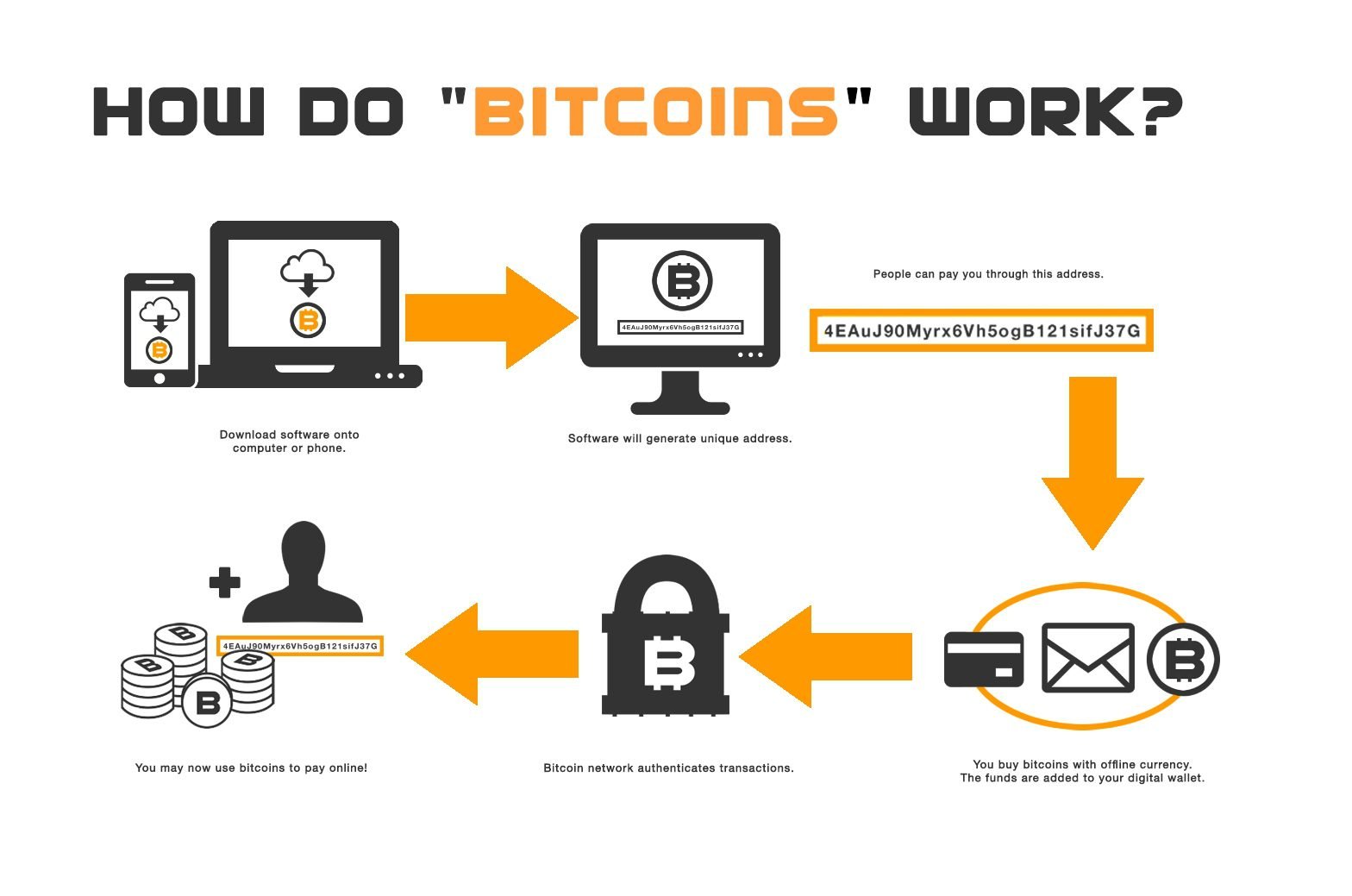
If someone wants to buy some cryptocurrencies for themselves, they will need an app where they can hold the currency like a ‘wallet’. Then, they can create an account and transfer real money to buy cryptocurrencies. Some online brokers are also selling cryptocurrencies. Notably, the exchange rate for cryptocurrencies can fluctuate at any time due to its decentralized nature.

BitcoinFurther, cryptocurrencies are very much transparent. They have zero possibility of being stolen. The transactions can also be quicker and made with minimal transaction fees compared to banks or other financial organizations, which makes trade finance a much easier process.



By and large, cryptocurrencies are a little risky but as online transactions are increasing day by day, their importance is increasing too. One should only go along with purchasing cryptocurrencies with their advantages and risks all in mind.

Is Machine Learning the Best Way To Grow a FinTech Company?

With the financial world in a constant state of disarray and uncertainty, technology becomes the saving grace to navigate through the complexities and resolve the problem of predicting what’s next to come.  While concepts like neural networks and fuzzy logic may require companies to raise their budgets in terms of technology and experts, the truth is the payoff is massive. Let’s take a look at some of the uses machine learning can have.

Stock Price Movements

Using the right tools and algorithms with the best learning-testing schemes can help in creating a perfect portfolio for predicting price movements in a multivariate environment. Several online binary options trading platforms, as well as options trading platforms, are now employing such methodologies in delivering solutions with more refined figures.

Loans, Insurances, and Interests

The average person doesn’t have the time or interest to properly gauge the various schemes for loans and insurances and compare the numerous differences between different plans.

Machine learning helps in delving deeper into these data frames in a more meticulous fashion that gives them an edge over what even the most successful of speculators can do.

Deep learning algorithms can dissect the nooks and crannies to discover possibilities of risk, fraud, and other factors that may affect the decision-making steps of loans, insurances, and the interests associated with them.

Also Read: What’s Machine Learning All About?

Protecting Systems

Machine learning has become even more famous in the sector of biometrics to create systems that have stronger security protocols and entry methods with augmented identity confirmation steps.

One such pioneer is Aimbrain whose machine learning algorithm becomes a part of the user’s interaction online and keeps track of everything from typing speed to click-rates and even how the user reacts to content. Any sign of an anomaly will immediately result in the system asking for a facial or voice confirmation.

Fintech companies have benefitted in using machine learning for cybersecurity purposes as well such as DarkTrace whose AI learns the mechanisms of the human immune system in replicating similar defense strategies against network attacks in servers.

Accounting and Record-Keeping

Verifying statements, transactions and records is a crucial part of Fintech companies which rests upon the accuracy of data. Machine learning algorithms cut down on the time which would normally be much longer for a human. The modern-day software even allows for better accuracies with minimal human error for just an additional fee and allows users to process data across various data formats, thus ending the conundrum of incompatibility as well.

The Cube system developed by Duco, for instance, lets companies and users work on any data, in all formats in mere minutes. Data can be loaded instantly, compared, and debugged quickly without passing it over to separate teams.

Brokerage Firms

Simple AI learning algorithms have been in brokerage firms to draw results from arbitrageurs and speculators as well as investors looking for a nice deal. Traders often set predefined tasks such as price setting, short selling, buying long stocks, selling long stocks, buying short stocks, selling short stocks, hedging, risk management, portfolio evaluation and much more.
As the trading floors become more replete with machines that replace the crowded nuances of stockbrokers, machine learning will help in finding correlations and patterns which are otherwise unknown to those in the financial services sector. Even on the battlegrounds of Wall Street, Trafalgar Square, Bombay Stock Exchange and Silicon Valley, better results are guaranteed to those with advanced deep learning systems.

Banking Regulations

Banks often set aside certain capital as part of regulatory implementation without which they wouldn’t function with much profit. Such regulations are instilled to introduce risk control measures, keep a steady supply of capital and make the financial sector more transparent to users. Such drastic demands require technology that has drastic tools and measures.
Machine learning comes to their aid by providing real-time insights into any issues, warning them about any impending risks, and identifying any regulatory problems beforehand. Breaches, phishing, thefts, forgeries, and scams become a thing of the past as machines filter through data at great speeds to keep decision-makers ahead in formulating more effective strategies.

The promise of technology in any sector has always been that of awe and hope. Machine learning’s best use comes to those in FinTech Course who have the proper investments in the best machines with the best technology with the adequate amount of workforce behind it to create meaningful decisions.

Critics of machine learning may dismiss it by calling it another step in a totalitarian regime where machines rule, but such technologies will inevitably become an indispensable part of our lives to account for a rapidly growing population that generates unlimited data each day. The signs point towards the same direction that machine learning is the way to go for any FinTech company.


Related Articles:

What Would You Need To Become a Machine Learning Engineer?
7 Key Skills Required For Machine Learning Jobs
What is The Easiest Way To Learn Machine Learning?

What Are Some Fintech Companies?

The Basics of Fintech

At the very core of any technological evolution is a determination to provide something better than what already prevails in the market. Can you think of any industry that is not influenced by technology? I am wondering it’s very hard to think of one. Fintech is the short form of Financial Technology, meaning the use of technology in the financial domain to provide better finance-related services over tthe traditional methods.  

The Fintech industry comprises companies and start-ups that are focused on providing solutions to various problems that exist in the industry. The bottom line of using cutting-edge technology in the financial domain is to provide more efficient services that could work in conjunction with our fast-paced world, ultimately increasing customer satisfaction. Let’s dig more into the players in the Fintech industry who are revolutionizing how people use banking and financial services.

Players in the Fintech Industry

Some of the key players in the Fintech domain are mentioned below.

Ant Financial 

One of the major global players in the Fintech industry is based in China. Established in October 2014, Ant Financial Services Group is on a mission to bring inclusive financial services worldwide. It is also the official operator of Alipay, the digital payment portal by the Alibaba group for its e-commerce platform.

Xero

Xero is one of the fastest-growing software as a service (SAAS) provider worldwide that already has more than 2 million subscribers. Founded in the year 2016 in New Zealand, it aims to provide accounting solutions for small and medium business enterprises through its cutting edge software technology. Xero has also backed the title for the World’s Most Innovative Growth Company in 2014 & 2015 by Forbes.

Avant

Founded in the year 2012, Avant is one of the key players in the Fintech domain. Originally registered as AvantCredit, Avant is a Chicago based Fintech firm that provides online credit solutions for customers. On a mission to eradicate the obstacles in the borrowing process and minimize the cost of borrowing for individuals, Avant brings more transparency to the whole system through its revolutionary technology. 

Tala

Tala is a game-changer in the Fintech domain for providing micro-loans through its smartphone application. Founded in the year 2011, Tala has a customer base like no other, it provides credit facilities to people in the remotest parts of the world. On a mission to expand financial access and choices to billions of underserved people worldwide, Tala is using technology for the best! 

PayPal

One of the most prominent players in the industry, PayPal was the harbinger of the Fintech revolution. With a customer base of more than 277 million active users, PayPal believes in empowering individuals and businesses to connect and prosper in the globalised economy through its digital financial services platform. It adds value by enabling individuals and merchants to indulge in monetary transactions in multiple currencies worldwide.

Stripe

Stripe is a US-based Fintech company that was founded in the year 2009. It uses its software technology to provide payment solutions for individuals and business owners that help to receive and make payments online. Stripe has built a customer base in the e-commerce domain by catering to the payment solution needs of the online business owners.

Robinhood

Robinhood is a US-based Fintech firm that provides investment solutions through its mobile and web applications. It was founded on the core principle of increasing participation of people in the finance industry through commission-free access to investing. Robinhood is a fast-growing company that already has a customer base of more than 6 million active users, a major percentage of which belongs to the millennial population.


Skills and Tools Which Are Required in Fintech Industry

FinTech which stands for Financial Technology is a rapidly growing but highly expansive field. FinTech’s areas of interest are many such as Net Banking, Cryptocurrency, Insurance, Trade, Application Design, and Online wallets. Since this interdisciplinary field is so widespread, it entails professionals from a wide variety of disciplines within its folds. A software designer and an accountant both can work in the field of financial technology, as this field caters to a large set of skills.

Some of the most sought after skills and tools in FinTech Course

● Cybersecurity expertise: One of the main threats that the FinTech industry faces is malware infections and hackers. If a financial technology system is infected and its data gets breached then, the corporation can face penalties; hence people who can secure the computer systems from virus invasion and prevent a breach of privacy are of great value in FinTech.

Machine learning and Artificial Intelligence: FinTech works heavily with artificial intelligence. This field needs people who have apt statistical knowledge and instincts. One needs continuous analysis and study of data in FinTech. A candidate who knows how to use the machine learning to add, edit, remove, and study statistics will always be a useful addition in the FinTech industry. A person is needed to be proficient in Hive, SQL, and Pig. They are also expected to know how to work with toolkits like Weka, Python, NumPy, and MatLab.

Soft Skills: The nature of FinTech industry is highly collaborative. A person is required to work closely with people who come from different backgrounds. This makes it necessary for a worker to have soft skills like teamwork, the ability to work in a group and be amicable. This industry also requires people to be highly open to ideas, edits, and suggestions so a person who is not receptive to feedback will not be a good fit for this industry. People with soft skills help in team-building and communicating ideas. They are useful in managing human resources and resolving conflicts that might arise in different groups due to the dense presence of workers from different disciplines.

What are the challenges and questions of the FinTech industry?

Like all industries in the world, FinTech also has its share of problems and challenges. FinTech is a relatively new industry; hence its challenges are still being explored. But over the years, government regulations and breach of data are the two main challenges faced by FinTech companies.These restrictions and lack of government support prevent these innovative companies from establishing themselves due to legal and bureaucratic hurdles. These problems are particularly harmful to start-ups than established companies.

Another major challenge that surrounds FinTech is that of hacking and breach of privacy. In the world of Big Data, information is gold, and hence hackers and cybercriminals are always on a lookout for profitable data. The breach of security by hackers or malware infection in FinTech brands does not just ruin the credibility of the company but it also leads to fines and penalties.
Some of the strictest penalties for FinTech corporations are made by the European Union (EU). All FinTech companies that are practicing in the European Union are mandated to adhere to the GDPR guidelines that deal with privacy and data protection. Any FinTech company that fails to protect the data of its users can face up to 20 million euros in fines or give up 4 per cent of their annual turnover in penalty. To prevent any intrusion by hackers, FinTech institutions end up splurging a copious sum of money into developing firewalls and other security systems such as anti-viruses. Not just money but time is also spent in ensuring that the information base is secure from all kinds of Trojans, malware, and snooping.

Conclusion

Contrary to popular belief, FinTech is not completely run by engineers or bankers only. Even people who are not particularly tech-savvy can work here in a highly collaborative space. In this cabalistic and digitalized world, by taking a Fintech Course you will be able to understand the immersion of financial technology which is in almost all kinds of fields and disciplines around the urban world.

Blockchain: The Numerous Career Prospects It Offers, And Skills Required To Build A Successful Career

The market for blockchain experts is booming. Since the arrival of Bitcoin, blockchain has been an attractive technology for companies all over the globe.


How to become a Blockchain DeveloperFrom healthcare to finance, companies in nearly every industry are looking to apply blockchain and get ahead of their peers.

The following article will shed light on various issues related to this technology such as what is blockchain technology, how does blockchain works, how to become a blockchain developer, and much more.

What is blockchain? How does blockchain work?

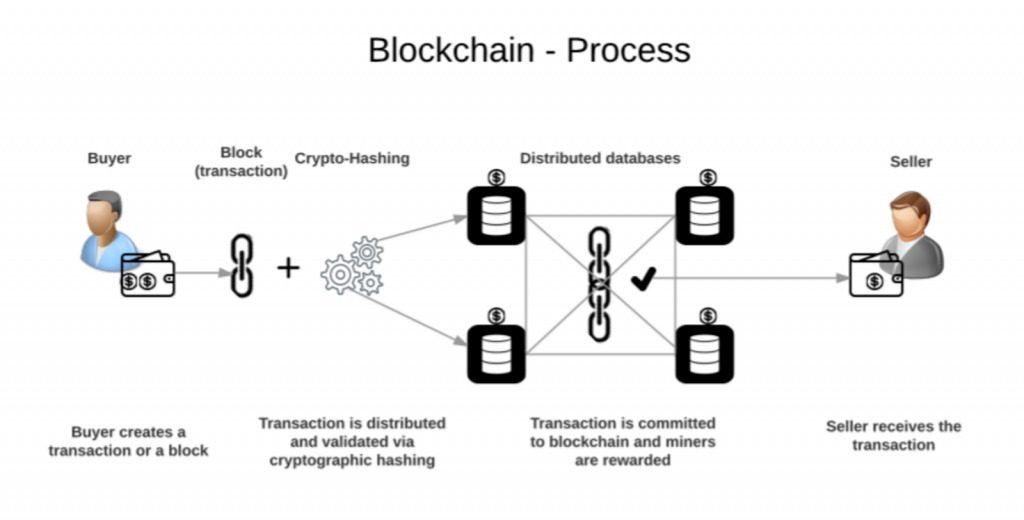
Blockchain is a particular kind of database. It stores information in blocks and whenever new information is added to the blockchain, it is entered into a new block. While a traditional database has one owner of the information, a blockchain stores information with multiple users, which makes a huge difference.

Whenever a new block is added to a blockchain, it is given the exact timestamp. One of the biggest highlights of blockchain is it offers decentralization. This means a central authority doesn’t have control or ownership over a blockchain network. Instead, all the users share authority and ownership.

Every node in such a network has a complete record of the data. This allows the system to function smoothly even if one node gets disrupted. That’s because if a node will get corrupt or disrupted, other nodes will have the necessary data to continue the process.

One of the most popular applications of blockchain is Ethereum.

What is Ethereum blockchain?

Ethereum is a popular cryptocurrency that uses smart contracts for completing transactions. To understand what is Ethereum blockchain, you should be well-acquainted with Hyperledger and smart contracts. You can learn about them while preparing to become a blockchain developer

How to become a blockchain developer?

Now that you know what is blockchain technology, we can discuss the process of becoming a blockchain developer.

Blockchain developers are responsible for building blockchain-based solutions for their organizations. They are familiar with the fundamentals of blockchain, cryptocurrencies, and their applications. The demand for blockchain developers is on the rise because this technology is relatively new but has many applications in various industries. Companies want experts who can help them build and maintain blockchain-based solutions.

To kickstart your career in this field, you should get a blockchain course. A course in this subject will help you study its various concepts and test your knowledge through projects and assignments.

A Blockchain online training would also let you study directly from industry experts so you can resolve doubts quickly and avoid getting stuck on complex topics. Another advantage is that completing a blockchain course would certify you as an expert in this subject.

Recruiters are always on the lookout for certified professionals in this sector because certification shows the person is highly skilled and well-acquainted with the subject.

Conclusion

Blockchain is certainly a revolutionary technology. It has made a huge impact on the finance and tech industries and companies are actively working towards utilizing it further.

how to become a Blockchain developer?There’s a bright scope for blockchain developers in India. If you’re interested in becoming a blockchain developer and want to learn what is blockchain, check out this blockchain course offered by Imarticus.

Related Article:

https://imarticus.org/how-imarticuss-future-learning-program-carved-a-career-in-fintech-industry-an-interview-with-abhilash-chatterjee/

Secure Your Finance & Analytics Careers With Imarticus!

With the growing commercial and technological advancements in the global markets today, Finance and Analytics are quickly becoming one of the most lucrative careers in the business world. Finance & Analytics play a major role in data evaluation for businesses to streamline decision-making processes.

They mainly inform the investment decisions of the companies by researching the microeconomic and macroeconomic situations with the organization’s principles. The professionals in these fields also prepare financial models that project future economic conditions.

Many businesses also hire them to evaluate the efficiency of their marketing techniques in comparison to the cost using numerical data. They also work in franchise-based businesses to track the individual franchise or a group and evaluate their positive and negative points to speculate the growth of the business.

Importance of Finance & Analytics

In this competitive world, businesses today need on-time data to formulate decisions for business. Every company needs good financial and analytics planning to utilize its resources in the best way possible.

Finance and Analytics Courses

The changing needs of businesses and the emergence of new models are making it crucial for companies to have sound Finance and Analytics professionals that help them improve their decision-making

Shape the business goals and plans for optimal performance. The Finance courses and Data Science Course with Placement help businesses to run efficiently and attain their aims fast.

Scope of Finance & Analytics

The careers in these fields are highly coved in the business industry with a good pay scale. The professionals in these fields have ample job opportunities in sectors like banks, pension, insurance companies, mutual funds, and securities firms, etc. Since they assist people in their financial decisions and investments, they can also open their own offices and work as self-employed.

They can also do accounts, auditing, taxes, and prepare financial statements. They can also specialize in other segments like Cost accountancy. The work scope of Finance and Analytics professionals also includes tasks like account management, secretarial work, share valuation, etc.

Job Opportunities

The wide scope of Finance & Analytics allows professionals to find employment in a range of sectors. They can find job roles under the following titles:

  • Financial Analyst
  • Chartered Account Trainee
  • Analyst – Back Office
  • Accounts Trainee
  • Assistant Consultant – Business Analyst
  • Junior Financial Analyst
  • Management Trainee – Finance
  • Research Analyst – Option Strategist

The pay range in these roles is also good. The average pay of a Financial Analyst in India is around INR 40,000. With experience, this number multiplies manifold.

Educational Requirements

To build a substantial career in these fields, one needs to have in-depth knowledge along with a good practical skill-set.

Fintech Online CoursesFor this, students can join vocational programs in Finance and Analytics from reputed institutions. Imarticus is one such renowned organization that is offering courses in these subjects to train students and make them job-ready for the business world. By learning these courses students get:

  • Guaranteed job interviews
  • Comprehensive, industry-approved curriculums
  • Hands-on, experiential learning with cutting-edge technology
  • Training by industry experts and veterans
  • Extensive career support and assistance
  • Certifications accredited by world-class organizations
  • … And so much more!

Learning with Imarticus

Imarticus Learning is organizing the ‘Great Indian Futuristic Talent Drive’ offering good discounts on its various courses for the festive season from 21st October – 27th October 2020. You can avail of the following discounts by registering in the drive:

Finance and Analytics online coursesFee Waiver on PG Classroom ProgramsUp to 25% off

Fee Waiver on Online ProDegreesFlat 20%

Fee Waiver on Classroom CIBOP & ProDegreesFlat 15%

With the online learning mode of Imarticus, you get the facility to learn at home.

Thus, keeping safe during the pandemic and productively using your spare time to upskill yourself for an excellent career.

Register today and make your learning fun & affordable!