Coronavirus Fears Accelerate Wealth-tech Innovation! How?

Introduction

Wealth-tech is one of the trending sectors in recent days. It is wealth management through digital solutions. Wealth management is being done with the help of technology and it gives better results and accuracy. It also helps in faster analysis & research.

Market forecasting can also be done more accurately with the help of wealth tech services. The recent coronavirus outbreak has slowed down the growth of many industries but it will not slow down the growth of wealth tech services. Let us see how wealth tech services are predicted to grow despite the recent Covid-19 outbreak.

How will the Wealth-tech Sector Grow?

The reasons which will help in the growth of wealth tech innovation despite the coronavirus outbreak are:

  • Wealth-tech has influenced automation in wealth management services. New-age technologies like artificial intelligence, data analysis, machine learning have helped in the growth of Wealth-tech services. People can now automate the wealth management services and they don’t even require a professional to physically manage the processes.

    Wealth Management coursesIt can all be done by smart & intelligent applications. The digital platform can be easily managed by wealth managers from a remote location too. All they need is a system and the client’s requirements. This also helps in adopting more efficiently with the new work from home culture.
  • This pandemic has forced companies/firms/HNI clients to opt for digital wealth management services. If it wasn’t for the pandemic, they still would have been taking traditional wealth management services. It won’t be a hyperbole to say that this pandemic is a blessing in disguise for the wealth tech sector. The employees are also shifting rapidly towards digital platforms.
  • Wealth-tech extends its services to smaller companies as well. The digital tools & services can be used by small scale companies that would have been neglected otherwise.
  • Wealth-tech also helps in cost optimization. Smart applications provide data-driven solutions to wealth management problems and reduce the cost of hiring wealth management professionals for the same. Companies can just use smart digital solutions and can easily manage their wealth.
  • HNI or Ultra HNI clients are also happy about the wealth tech services as they can now talk to their wealth manager from a remote location too. The social distancing norms have been introduced due to this ongoing pandemic. Wealth-tech helps in taking advantage of its services while following the social distancing norms.
  • Market volatility & uncertainty is expected to grow because of the ongoing pandemic. It such times, you don’t want wrong forecasting information so that you end up investing in a loss generating venture. The digital wealth tech solutions are proving to be more accurate than traditional methods. The data analysis & forecasting is more robust & on point via the digital mediums. This will help clients in opting for wealth tech services to know about the trends.

    Data Analysis
  • It is expected that AUM (Assets Under Management) sector will grow from $74.3 trillion in 2018 to $145.4 trillion in 2025 with an impressive CAGR (Compound Annual Growth Rate) of 8.8%. The asset management under wealth management is also shifted to online channels and clients are loving this innovation as it helps them to get more accurate details in less cost. It reduces paperwork and the amount of hard work an individual has to put in to go through all the assets & financial resources of any particular individual.

Conclusion

If you are thinking of building a Wealth Management Career then perhaps this is the right time to step in with all the innovation going around.

You can learn more via the Wealth Management Courses available on the internet. This was all about how the coronavirus outbreak will accelerate the growth of the wealth tech sector.


Skill up to Scale up- India in The Next Decade | Imarticus Learning | CEO Talks!

There has been an unheard of upward push in the wide variety of lay-offs, furloughs and agencies shutting down over the previous few months. Process uncertainty, a sour pill to swallow, has affected lakhs throughout the board, no matter in which they stand at the company ladder. Inside the wake of this phenomenon, working specialists have become to on line guides to upskill themselves and stay beforehand of the curve.

So have recent and sparkling graduates, who discover themselves facing an upturned task marketplace with all doorways efficaciously barred for all however the great of the lot. Analyses have discovered that the fields of synthetic intelligence, statistics technological know-how and machine getting to know were maximum sought out in terms of on line guides of varying lengths.

Up-Skilling through Online LearningIf you’re seeking to get educated on-line in the equal fields, you’re inside the right area. If you’re still at the fence about on-line publications in popular, here is a complete list of advantages that you may expect to gain:

Flexibility in the time and region of studying

You get extra flexibility in analyzing on-line. You may look at more effortlessly round your existing work agenda (and your pastimes). This advantage is a lot better felt when you’re taking a category that lets in you to study and do assignments at your very own tempo.

You can additionally pick out your selected paintings environment as well as use your personal technology to grant your gaining knowledge of as you spot in shape. The most effective stipulations to on-line gaining knowledge of are a strong internet connection and pc, pc or telephone that you could attend your guides on lower costs.

For fresh graduates and new professionals, it could be tough to justify dropping thousands on yet another university course or diploma. However, selecting online guides reduces costs with the aid of a massive level. You might need to pay fixed fees– which include lessons charges and e book purchases– however you’ll discover that the fees of tour, transport and further daily prices lessen substantially.

Up-Skilling through Online LearningOur modern-day #CEOseries functions attractive commercial enterprise conversations with prominent industry leaders as we delve into professional insights from a number of the maximum reputable names within the corporate world.

This is specifically beneficial if you’ve were given your eye on a direction from an international university however haven’t been capable of justify the costs of accommodation, stay and visas. A much wider variety of guides.

The remarkable adjustments throughout economies, the paradigm shift in the way companies are run nowadays – aided via technological improvements, and the much pointed out ‘new global order’, has pressured the company world to recalibrate their near & mid-term desires. The optimism that maintains to buoy the corporate world stems from its ability to be resilient after every disaster.

Opting for on line courses offers you a greater complete variety of topics and industries to pick from. Additionally, on line learning has made courses from international universities and establishments to be had to those in surely any country. By means of making schooling globally available, online learning drastically raises the scope of curriculums in addition to the requirements of teaching.

An overarching advantage of this extensive range is likewise that graduates and professionals are capable to connect with industry specialists in other nations, particularly if the united states of America they’re from does now not currently have the resources or the call for for such niche courses. Constructing specializations.

Conventional schooling structures often work to educate the basics of a website or subject matter; but, not many provide specializations which are both beneficial and affordable. This gap is one which on line gaining knowledge of can fill. Experts and graduates can fill gaps of their talent set or pursue an education in a spot subject matter through on-line publications.

Mr. Srinivasan’s storied professional legacy has achieved global recognition and admiration. With a career in financial services that spans more than 30 years, his accomplishments have propelled him to become a ‘CEO of CEOs’.

Prior to joining Aditya Birla Capital, Mr. Srinivasan served as the CEO of Fund Management at Prudential Corporation Asia, where he was responsible for the company’s astonishing growth in the Asian market. His expert guidance resulted in Prudential accumulating nearly $70 billion in funds during his time there.


Up-Skilling through Online LearningListen Mr. Srinivasan, credited with a success turnaround of Aditya Birla capital, and recognized for his ingenious business acumen, hard paintings, hazard and willpower, share his thoughts on how company India will emerge stronger, the growth drivers of the Indian economy, the upward thrust of fintech, the super improvements in digital financial system, and skilled human capital.

This is specifically beneficial for professionals who have sound core abilities and are ready for a higher degree of analyses or studies. This is also beneficial for all of us who wasn’t able to pursue a subject out of natural passion; it lets in interests and personal pursuits to be catered to without the chance of jeopardizing your present career. End

Whether or not it’s working specialists trying to invest their time in bettering their skillset, sparkling graduates hoping to feature a little more to their resume or individuals ultimately getting around to learning what they’re enthusiastic about, an increasing number of people are turning to online learning to upskill and complement their current understanding.

How Fintech Moved Successfully from Normal to Pandemic New Normal?

Fintech was expected to earn great profits in the year 2020. Unexpectedly, due to global pandemic, a paradigm shift could be seen in the functioning of fintech all over the globe.

Although it hasn’t been an easy task for many companies to survive in these testing times, the brighter side shows that for some industries, this scenario has proven to be a bit beneficial.

Unlike other sectors or industries where daily operations used to take place manually, fintech is web-based and does not require any physical interaction. This has been the sole reason that has worked in the favour of fintech in such challenging times.

The successful shift of fintech during the new normal

There are specifically some sectors where fintech operations have accelerated. Some of the positives are discussed below:

  • Continual functioning of Banking Sector

Out of all the industries, banking has been the only one that functioned without any disruption. However tough the times were, banks functioned and transactions took place.

Banking and FinanceIt has widely been seen that people have very positively accepted fintech as their new normal. Unlike the usual times where people used to visit banks for even their balance inquiries, people nowadays have gained trust in the applications and portals under fintech.

Some companies worked without involving cash transactions and only accepted digital money. Usage of portals like PayPal gained popularity during the pandemic.

  • Ease in Regulations

This time has proven somewhat beneficial for fintech as there are many organizations which have adopted the policy of cashless transactions. Considering this, the government and the authorities may lower the regulations that are imposed on the fintech companies for their collaboration with these aspiring organizations.

By working hand in hand, directly or indirectly there is going to be a surge in the usage of fintech tools.

  • Retaining Cash

Considering the current scenario, people have nurtured the habit of keeping cash reserves with them. In such a situation, they tend to make use of fintech companies whether they are in favour of it or not.

banking and FinanceTo illustrate, earlier many amazon orders were booked with cash on delivery but people want to have their limited cash reserves with them and hence are paying online.



  • Dip in the number of lenders

Owing to coronavirus widespread, many money lending companies have restricted the lending capacity considering the current scenario of non-payment by the existing borrowers. They claim to restart lending activities with the uplifting of the coronavirus restrictions. In such a situation, fintech corporations are still operating widely in the market and people can borrow some money using fintech.

Not only the money, but fintech has also collaborated with various big and small companies for providing emergency and necessity items to the people. People, on the other hand, have accepted the involvement of fintech corporations in their day to day operations and they are satisfied by that to a great extent too.

Conclusion 

With a great demand for fintech in the present world, a stable and rewarding fintech career can be planned by gaining professional knowledge and fintech training through renowned institutions like Imarticus. One must always grab the opportunity as it comes your way.

How Do You Become A Wealth Manager?

Introduction

Some people are just obsessed with Finance. They are always busy with their calculations and always talk about money. People who are interested in money and how it runs the world are potential wealth managers.

What is wealth management?

Wealth Management includes the management of various financial products and commodities of a client like assets of people, families, organizations, etc. You can seek a career in wealth management if you are good at assessing assets and handling finance in different forms.

Wealth Management can also be called an advisory service. This service caters to the needs of clients who need help with their finances. Wealth managers charge a fee on theses services and make money out of it. Usually, the wealth management services are availed by high-end clients who want their finances in place.

How to become a wealth manager?

Wealth Managers are paid well. Also, due to the growing demand for wealth managers, a lot of people are looking forward to hiring personal wealth managers. Personal wealth managers are paid more than public wealth managers.

You can opt-in for a wealth management course if you seek a career in wealth management. For becoming a wealth manager, you need to be a graduate. You can go for a certification in Financial Planning or Wealth management.

Also, you must have studied a subject related to business or business administration. You must have a basic understanding of accounting to get into wealth management. Each company has its requirements. The above-mentioned requirements are just some pre-requisites for becoming a wealth manager.

A lot of wealth management companies prefer to hire people from high ranked universities so that they can cash out on advice. A lot of companies also give on-the-job training to the hired employees so that they stand out in their career.

To become a good wealth manager, you should have an in-depth knowledge of the stock markets as a lot of people have a portion of their wealth coming from stock investments. Also, you must know how the market works. You must also understand risk management for assessing your client’s risk profile.

A good wealth manager must be well-versed with different tax laws. Also, he should be good with numbers as his job requires the crunching of numbers.

A good wealth manager should also have good social skills as he has to interact with a lot of people. Also, he must make his clients feel comfortable as they are going to talk about finances. Also, you will be responsible for bringing in business to your firm. Therefore, networking becomes important.

You must also have basic technical proficiency so that you can handle workings on computers. Being tech-savvy is important to keep a check on the stock market and the trends which it is following. You can keep upgrading your IT skills to stay strong in the market.

Conclusion

The best wealth managers are made with hard work and dedication. You must be well informed to serve your clients better.

How an Investment Banker Views the Market for Logistics and Supply-Chain Tech?

An Investment banker helps his/her clients in raising capital, managing equity/debt. The market of logistics and supply chain management is witnessing a hike due to new technological advancements. Companies are providing solutions for supply chain management through software. The age of digitization of processes is creating a huge capital in logistics and supply chain management (SCM). An Investment banker course advises his/her clients for decision making.

Logistics defines the movement of services, information, goods, etc. in and out of a company/firm. SCM is said to be the new logistics in the current era. Now, logistics is widely considered as a subprocess of SCM. SCM is a way to manage the transportation of services from the producer to the consumer. It helps in creating strong business models.

Let us see how the logistics and Supply chain technology market is important for investment bankers.

Opportunities for an Investment Banker in the market for Logistics and Supply-Chain Technology

Digitization of logistics and supply chain with the help of technology has helped companies/firms to create a good distribution model and enhanced customer service. It helps in driving business processes with ease. Technology has helped in generating shopping patterns of customers and managing the supply chain with increased accuracy and speed. The traditional methods of supply chain management are being replaced with supply chain technology.

With the introduction of Artificial Intelligence in this field, the capital in this market is going to increase rapidly in the coming years. The Investment banker must have an eye on the logistics and supply chain tech market. Companies like Oracle, SAP, etc. are providing a complete resource management system linked with cloud capabilities. More new solutions/start-ups for SCM and logistics are expected to come soon. This is the perfect time to invest in a booming field like logistics and supply chain technology.

With the emergence of e-commerce, supply chain technology is helping companies to produce products strategically and finding loss-generating products. The supply chain tech is providing solutions to distribution models and is helping companies in cost optimization. The software/application can handle huge chunks of data and can even automate the SCM process. It is a great area where a lot of capital is being generated.

The global logistics market is supposed to grow up to USD 12,256 Billion by 2022 with a CAGR (Compound Annual Growth Rate) of 3.48%.

Why companies will prefer Logistics and Supply-Chain tech?
The investment in this market is supposed to increase. Companies will invest in logistics and supply chain tech because of many benefits. The few are listed below.

  • It will help companies in planning and managing the demand from the consumers.
  • Supply chain tech is helping companies in procurement i.e. the process of purchasing/obtaining goods/services.
  • Smart software can keep track of all the business data/information and can manage the business inventory.
    This helps companies in reducing human labor for inventory management.
  • A reliable business model created via SCM will help in managing the distribution service effectively and predicting the upcoming demand of the consumers. It will also help in predicting the trends in demand and for business forecasting.
  • Risk analysis and management can be done with the help of supply chain tech.

The e-commerce sector had arrived years ago and is expected to have a long-term impact on businesses/companies. The traditional methods are not being preferred because of reliable and automated technology solutions. If you are an investment banker, then you must focus on the logistics and supply chain tech market.

One can learn more about ideas for investing and generating capital in any market through various Investment banking courses after graduation available. This article was all about the perspective of an Investment banker towards the logistics and supply chain tech market.

#KnowledgeBytes: EBITDA!

This Imarticus Learning video explains to us the concept of EBITDA. EBITDA Stands for Earning Before Interest, Tax, Depreciation, and Amortization. It is a measure to value Businesses. EBITDA measures the operating performance of a company.

This video elaborates on the pros and cons of EBITDA. It also teaches us the formula to calculate EBITDA along with an example.

Check our complete #ImarticusPrograms playlist here: https://bit.ly/2JP52hM

Why Imarticus?

Imarticus Learning offers a comprehensive range of professional Financial Services and Analytics programs that are designed to cater to an aspiring group of professionals who want a tailored program on making them career ready.

Our programs are driven by a constant need to be job relevant and stimulating, taking into consideration the dynamic nature of the Financial Services and Analytics market, and are taught by world-class professionals with specific domain expertise.

Headquartered in Mumbai, Imarticus has classroom and online delivery capabilities across India with dedicated centers located at Mumbai, Bangalore, Chennai, Pune, Hyderabad, Coimbatore, and Delhi. For more information, please write back to us at info@imarticus.org

Call us at IN: 1-800-267-7679 (toll free) – – – – – – – – – – – – – – – – –

Facebook: https://bit.ly/2y6UjKW

Twitter: https://bit.ly/2J11llx

LinkedIn: https://bit.ly/2xwSoPM

#KnowledgeBytes: Asset Classes!

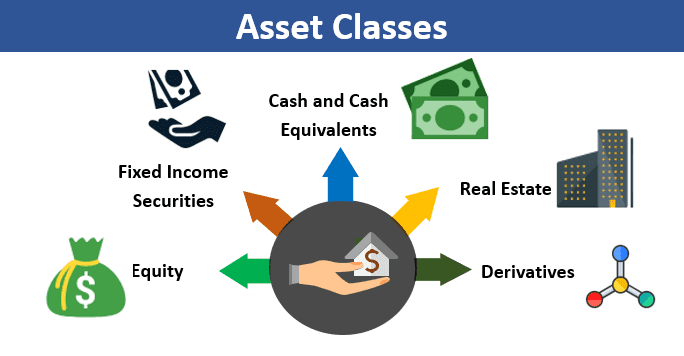
In this video by Imarticus Learning, we will learn about asset classes. It explains the definition, features, and types of asset classes. The most popular asset classes are equities, bonds, cash, and commodities. Some uncommon asset classes called alternative assets to include real estate, art, and stamps.

The video also elaborates on these asset classes along with examples. Check our complete #ImarticusPrograms playlist here: https://bit.ly/2JP52hM

Why Imarticus?

Imarticus Learning offers a comprehensive range of professional Financial Services and Analytics programs that are designed to cater to an aspiring group of professionals who want a tailored program on making them career ready.

Our programs are driven by a constant need to be job relevant and stimulating, taking into consideration the dynamic nature of the Financial Services and Analytics market, and are taught by world-class professionals with specific domain expertise.

Headquartered in Mumbai, Imarticus has classroom and online delivery capabilities across India with dedicated centers located at Mumbai, Bangalore, Chennai, Pune, Hyderabad, Coimbatore and Delhi.

For more information, please write back to us at info@imarticus.org Call us at IN: 1-800-267-7679 (toll-free) – – – – –

Facebook: https://bit.ly/2y6UjKW

Twitter: https://bit.ly/2J11llx

LinkedIn: https://bit.ly/2xwSoPM

How Is Coronavirus Impacting The Financial Sector – And How Are Brands Responding?

The COVID-19 pandemic has so far infected over 1.3 million people and killed over 70,000 people, and has spread to more than 205 countries. With geographies the world over observing lockdowns and self-quarantine to contain the transmission of this virus, the outbreak is causing widespread concern and economic hardship for businesses across the globe. As uncertainty on ending lockdowns/self-quarantine looms large, the situation is changing quickly with widespread impacts. The effects of COVID-19 pandemic are being felt in almost every sector.

It is clear now that we are in disruptive times; with the absence of workforce and dwindling consumer demand businesses are reeling under immense stress. Almost all sectors barring a handful few are doing well. The situation may get worse for businesses if the situation fails to improve. Governments over the world are counseling businesses with guidance on crisis management and response, operations and supply chain, finance and liquidity, tax and trade, etc.

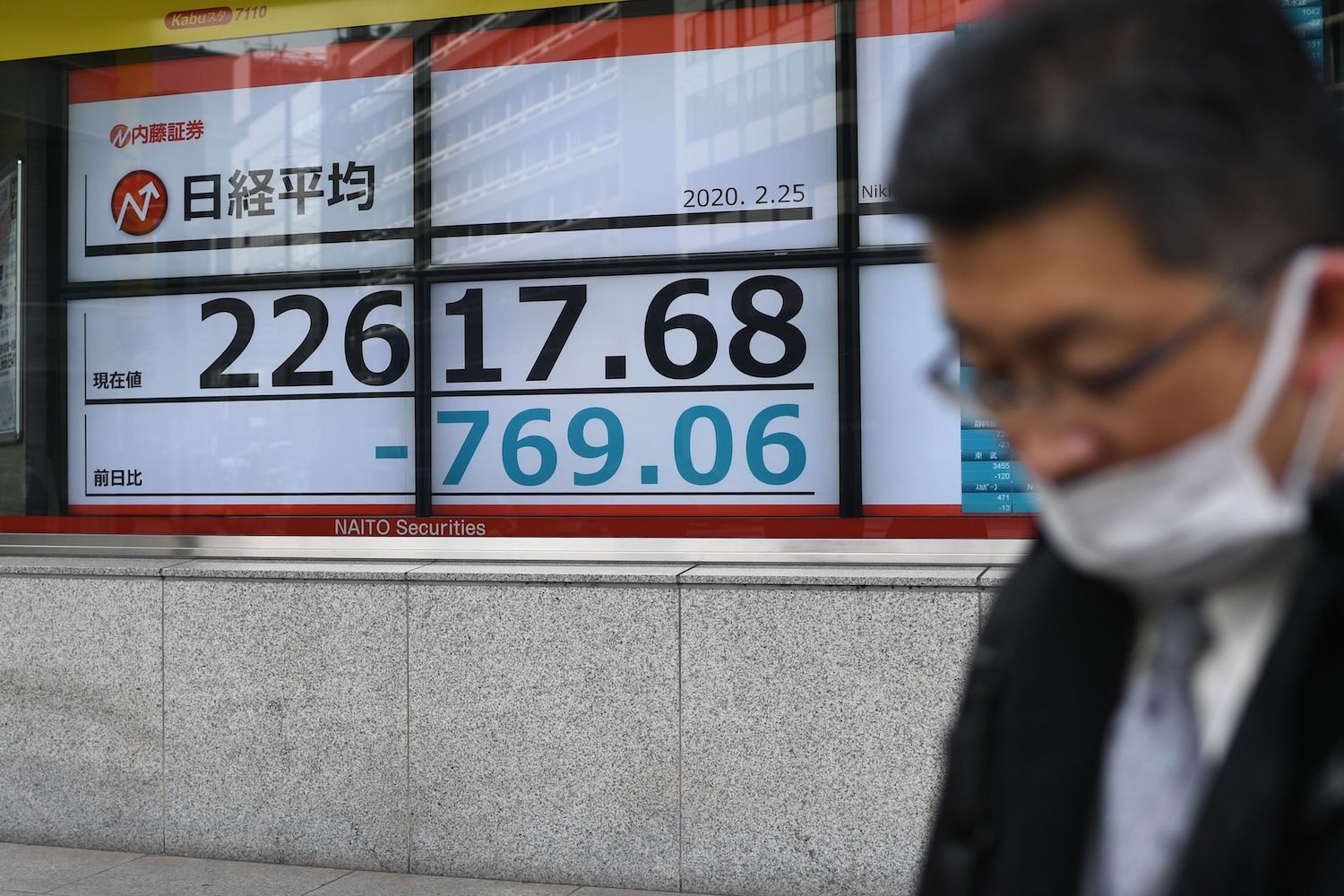
This pandemic has caused major disruption to global economies owing to the containment measures and lockdowns all over. It is quite evident now that because of the virus-containment measures global economies will be hit to a great extent. Lockdowns, social-distancing and other coronavirus-containment measures have led to a massive fall in the global economic activity – decreasing consumer demand, fall in crude oil prices, crash in global stock markets, and equally decreasing global banking revenues.

The financial services sector is currently reeling under serious stress and surrounded with challenges on multiple fronts. Social distancing rules, reduction in bank opening hours, etc. are causing less transactions at banks and has almost halved loan procurements.

In such testing times, consumers are expecting banks to pass on relief measures. Many have lost jobs, drop in income, fear of defaulting on loans are some of the reasons consumers are frantically trying to contact their bank with. The finance sector has reported drop in revenues, poor cash flows, rising leverage, and stretched valuations of firms and seek help through special measures.

Fintech firms have also reported a drop in demand as customers prefer predictable investments in such critical situations. Few Fintech firms stand to benefit from this scenario with an increased demand for online and mobile banking services.

The situation needs constant and mindful handling from finance companies as they seek to restore consumer confidence. They’ll have to be proactive in providing with seamless digital services to increase their business.

The COVID-19 pandemic could be a marketing communication opportunity in disguise. Few brands have realized this fact and have initiated their line of communication to capitalize on this opportunity. The correct and ethical marketing communications strategy will help strengthen brand loyalty and also raise brand awareness; if your communications help consumers deal with the personal economic issues they are experiencing, the message will be welcome.

Emphasis should be on achieving brand-oriented goals with customer personalized messaging. The key is to be able to deliver messages which can help create more business and retain customers.

Also Read: How Coronavirus May Impact Global Investment Bank Revenues

Corona Virus and Impact on Capital Markets!

The capital market involves investments for the long term in an entity’s capital constituents i.e., equity instruments and debt instruments. The entity uses these sources of funds to produce goods and services.

The COVID 19 disease, on the other hand, involves choking breaths, killing people, and adversely impacting investor confidence in capital market financial instruments. Consequently, COVID 19 has obstructed new investments and affected existing long-term investments. A system that cannot breathe cannot generate energy and in the absence of energy, all else fails.  Frozen sales activity due to increasing uncertainty is a boost for the savings driven economy, while consumption has reduced globally – from essential commodities like oil to trade of everyday requirements thereby reducing spending. Only time will tell if this is a working capital glitch which can be resolved or if there is much more to this than meets the eye.

Though the COVID 19 seems to be an Atlas that bears the brunt for everything wrong happening to the capital markets, the ever prevalent disconnect between entities that produce basic necessities like food, clothing, shelter, health and education and the financial system is just as much responsible for the ongoing misery. This disconnect has let COVID 19 seep through the openings and crumble supply chains due to social distancing, reduced activities, and the flow of data and information in our generally fast-paced era. On the other hand, consumption has reduced worldwide – from essential commodities like oil to trade of everyday requirements.

Inversion of yield curves is a primary indicator of a negative outlook to long term yields from investment in debt instruments. However, most other capital market representations, including the stock markets, in the current scenario are just as imperfect as the information available to them.

In light of the current scenario, cash, in line with the definition of financial assets (IFRS) remains the most preferred financial asset. The consequent liquidity crises in the investment circuit thus, due to a preference for cash, severe short-term losses, and uncertainty, have affected long term investments. New long-term investments have been blocked, and existing long-term investments are being sold off to recover for the losses incurred in short term trades.

The uncertainty due to the newness of the situation to the present market gurus leaves prediction of outcomes merely a fool’s errand. In the absence of reliability in the current investment system, hoping for homeostasis; while we prepare for a further cut in consumer spending to hoard cash seems to be the only certainty.

Feel free to visit for more information: https://www.linkedin.com/showcase/4821209/admin

What Are The Types of Trade Settlement in The Trade Life Cycle?

Understanding Trade Settlement

The evolution of finance and commerce as a whole has pushed the world economies to a new high. With the advent of trading of financial instruments and multiplier effect into action, the monetary growth has been multiple folds over the past few decades.

Let’s get deeper into what exactly is trade settlement and how does it function. Trade settlement is a transaction method wherein the securities in trade are transferred into the buyer’s account and the monetary value of the security is deposited into the seller’s account post a trade execution.

The securities traded are financial like bonds, stock futures, or other financial instruments of value. The date when an order is placed is known as trade day whereas the transferring of security and cash takes place on the settlement day.

The trade settlement in the trade life cycle process is a part of a bigger whole which we call the trade settlement period.

The trade settlement period incorporates the whole time taken to complete the trade, starting from execution to settlement of the trade.

Types of Trade Settlement 

During trading of financial securities, the time period for settlement of trades, trade capture is set as per the contract. The general time frame differs as per the types of securities. Equity securities are settled on T + 2 days, here ‘T’ is the trade date. Other securities such as commodities, currencies, or derivatives are traded at the mark to market, the settlement for a mark to market is at T + 2 days.

The classification of Trade settlement can be done into 3 types:

  • Normal/ Rolling Settlement
  • Trade-to-Trade Settlement
  • Auction

Rolling Settlement

In this type of trade settlement, securities are settled on successive dates based on the settlement period in the contract and the day when the trade was executed. So let’s take a trade contract period with T + 2 days settlement time, here if a trade is placed on Monday and another trade is placed on Tuesday, the trade on Monday will be settled on Wednesday and the trade executed on Tuesday will be settled on Thursday (successively).

This is different from the account settlement method wherein the trade executed within a given time period is all settled at once.

Trade-to-Trade Settlement

In the Asset allocation, Trade to Trade Settlement method, intraday trading in prohibited for securities falling in this segment.


In this type of settlement method, the trader is required to accept the delivery of the security when bought and provide the monetary value, while selling the trader has to deliver the securities and the monetary value of the same will be provided to the trader for the securities traded. In short, shares are traded only for delivery.

Auction

Any trade involves at least two parties to the transaction, in the trading of financial securities, on one side we have the buyer of the security on the other side we have the seller of the financial security. The auction takes place when the selling party of the transaction or trade fails to deliver within the given time period on the agreement of selling the security for the said or agreed upon the monetary value of the security. It’s a kind of penalty for the investor’s carelessness while trading.

In this case of failure the broker of the selling party will try to purchase the security in a buy-in-auction market, the sum of the auction price along with the penalty and brokerage charges has to be paid by the defaulter (the selling party). The settlement of the action is done on T+3 days given the broker tries and purchases the share in the auction market on T + 2 days.