
How to become a Financial Analyst in India?

Fiscal prudence plays a crucial role in the growth and sustainability of any business. Managing finances in an organization can get complex and challenging as it expands across new geographies and segments. The use of new technology also adds to the regulatory complications. The services of a financial analyst can help a firm to obtain valuable insights into its historical performances and future projections.

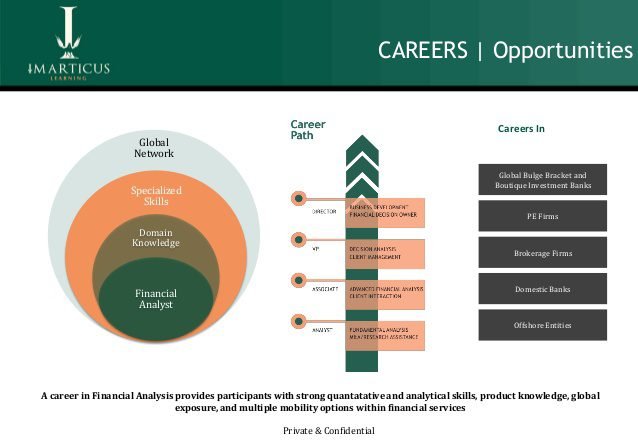
Financial analysts help firms to monitor the overall financial health of a business. Investment banking firms are always on the lookout for talented financial analysts to join their organizations.

Let’s delve deeper into the role of a financial analyst and how one can set foot in the right direction for becoming a financial analyst in India.

What Does a Financial Analyst Do?

 The primary responsibility of a financial analyst is to analyze tons of financial data related to a business and create financial models to make predictions based on historical and current data. The roles and responsibilities of a financial analyst are usually quite broad and have various facets. It varies depending on factors such as type of organization/industry, job position, etc.

A financial analyst also works along with the accounting department to ensure error-free financial reporting. Investment banking firms dealing in the money market or capital market are among the top employers for financial analyst professionals. The capital market is primarily focused on long-term assets whereas the money market entails short-term borrowing and lending.

What does It Take to Become a Financial Analyst?

 Given the growing reliance of investment banking firms on data, there is a huge demand for financial analyst professionals in India. There are plenty of factors that might influence your course to become a financial analyst. If you have a strong academic background with a good command over subjects such as economics, maths, accountancy, business, etc. you are already on the right path. Some of the important considerations that can help you grow your career in this field are as follows.

  1. Earn a bachelor’s degree in relevant discipline

 If you are still studying and haven’t completed your bachelor’s degree, you should opt for a bachelor’s program in either economic, statistics, maths, accountancy, etc. This will help build a robust base required to excel as a financial analyst. You can even search for a more specialized bachelor’s degree to boost your prospects.

  1. Get the required certifications

 Now a bachelor’s degree will surely help you build a strong base but specialized certifications are highly recognized and set you apart from the crowd. It eases your entry into the doors of the best investment banking institutions. In addition to this, it is highly pragmatic and factors in the recent changes in the finance landscape to provide you with precise knowledge regarding the industry. Some of the widely recognized certifications include the CFA certification, FRM certification, etc.

  1. Enroll in an investment banking course

Trade life cycleInvestment banking courses are specially curated for financial analyst professionals. It takes a comprehensive approach to impart knowledge related to the financial markets. It also helps you understand the complexities involved in a Trade Life Cycle. The investment banking courses with placement options are not just theoretical but also give you a pragmatic view of the industry. It helps to develop the technical and soft skills required to succeed as a financial analyst in the contemporary.

In a Nutshell

 Becoming a financial analyst in India can get challenging if you are relying on the traditional approach. The modern age firms require you to have an in-depth understanding of the present-day scenario. The best approach here is to enroll in investment banking courses with placement to get a chance to work with reputed organizations in the industry. One can easily opt for Imarticus investment banking courses online and boost their employment prospects as it also provides job assurance.


All About Myths & Facts about an Online MBA Course!

Millennials are fast-paced and don’t take much time to get on-trend nowadays. So they choose to opt for something that’s achieved in less time. 

MBA online courseAn online MBA course caters to this thought process. Hence, it is convenient to find more individuals nowadays who opt for an online MBA degree. But unfortunately, many get into it without considering what it entails and whether or not it is the right course or best online MBA course!

This blog clears confusion, present facts, and debunk some common myths surrounding courses like online MBA course and best online MBA courses available!

Myth 1: The Credibility of an online MBA is lesser than an on-campus MBA

This is one of the most heard ones and is 100% myth. The reason behind the statement is that the industry holds accredited online degrees to the same high standards as accredited on-campus degrees. Accreditation is the most critical indicator of credibility.

It is an endorsement that validates a higher education institution’s credibility, competency, and integrity and the course and programs it offers. 

When enrolling for an accredited degree, aspirants must trust that the course framework, learning outcomes, faculty, course content will be of the highest academic parameters. What matters more is what are the subjects in MBA, rather than the mode!

Myth 2: Studying Online will be a Monotonous Experience

Online study demands self-motivation and discipline, but if you think you’ll be left on your own, that’s completely false! Instead, students explore new tools and channels to interact, collaborate, and seek support from peers and faculties during online studies. Interaction is a self-paced game in online studying. Your choice on how you choose to build and diversify bonds with fellow students to create a network that lasts for a lifetime.

Myth 3: You must be Tech-Savvy to Study online MBA Course

That’s a bug that bothers and bard many! The truth is, all you need is a working computer and a decent internet connection to study online degree! Online learning programs are designed to be simple to use, easy to navigate, and intuitive. This targets better efficiency and productivity among students. In simple words, if you are someone who can navigate a website easily, online learning will be a cakewalk for you!

Myth 4: Online Coursework is Easier than On-campus

MBA CorrespondenceDo you think MBA correspondence or online MBA course is more accessible due to its flexibility and accessibility? Here’s a myth-buster! 

The basic concepts and principles of management will all be the same as an on-campus degree. All that differs is the pace and mode of participation. Students do get to write assignments, complete group tasks, go through case studies and projects for research.

The governing bodies ensure that all accredited degrees adhere to these practices of learning. So, know that the course curriculum in online MBA will be as rigorous as for on-campus, but with an added flexibility!

Why does Online Learning work for Students at Imarticus?

At Imarticus Learning, most of the enrolments come from fresher graduates or working professionals. Understanding their management on time, work, and personal commitments, the courses at Imarticus are designed flexibly with an excellent framework suggested by industry experts.

Our online MBA course enables aspirants to pursue higher education without quitting jobs or missing out on other life priorities. The interactive, reliable, and knowledgeable programs are focused on building a workforce of the future.

Kick-start your career in a leading firm through Imarticus’s corporate network and become a business management expert!

For more details, contact us through the Live Chat Support system or visit our website!

The 5 Most In-Demand Skills In The FinTech Industry!

If there is one field that is growing at a rapid pace and which also has a lot of scope for students in India, it is fintech. Short for financial technology, it has revolutionized the way we manage our finances in a short span. Whether it is small-scale investments or corporate finance, fintech has managed to provide better solutions like mobile banking, wallets, UPI, and other IT-driven financial services.

This is the same reason why a fintech career is one of the most sought-after paths for aspiring students today. But with that aspiration comes the question of specialization. What skills to master? And what fintech courses to take?

Fintech online certification course in IndiaHere’s help in the form of a starter guide about the 5 most in-demand skills in the industry.

1.      Strong Understanding of Programming Languages

Knowing the basics of coding and having a working knowledge of at least one major programming language is essential to even enter the world of fintech.

And when you do enter, just knowing a language is not enough. A fintech career requires you to innovate in that language and come up with solutions to modern problems. This is only possible if you know the language (or languages) inside out.

Fintech certification courseSome of the most common languages used in fintech are JavaScript, Python, and SQL. You can learn more about them through easily available fintech courses online.

2.      Mathematical and Analytical Skills

You have to be very sharp with numbers.

Some people have a natural way with numbers and that is expected in any student who wants to make it big in the fintech industry. In addition to accountancy and bookkeeping skills, you also need to be strong with charts and graphs and mathematical analysis. Tech tools involved in fintech are extremely useful and knowing how to use them even more critical.

3.      Blockchain Skills

An intermediate-level expert in blockchain has a better chance of nailing a fintech job interview than a financial expert. Why?

Because fintech companies are looking for talent who have a bend with technology. Since blockchain is considered the next big thing in online security and privacy, experts in the subject are in demand.

This makes blockchain a hot skill and something that you should study on the side as you prepare for your fintech career.

4.      Cybersecurity Skills

Another in-demand skill for your fintech career is related to cybersecurity. This is obvious because security is one of the most crucial aspects of fintech. A company creates a mobile wallet app, and one of the most important things it needs to ensure is the safety of its users’ private information.

With the constant threat from hackers looming, companies need to make sure that their products are secured with top-notch technology. This is where your cybersecurity skills come into play.

Knowing existing security standards such as the FIDO alliance, two-step verification, strong authentication, and other related concepts then becomes paramount.

5.      Machine Learning and Deep Learning

Last on the list is machine learning, which is one of the most in-demand tech skills in general. The world is still trying to make communication between computers and humans free-flowing, and having one more expert getting involved in it is a welcome move.

If you are a finance student, it would be good to expose yourself to such tech concepts as you try to build a fintech career in India.

The recent change in the high school education framework of India further makes fintech an appealing path. This is because students can now take two more years to decide on their interests and start focusing on specific employable skills from early on. Start now and enroll in a fintech course today.

What Does A Financial Analyst Do In A Day?

Financial analysis is a rewarding & challenging career for people working in the financial services industry. A Financial Analyst typically conducts quantitative analyses of information affecting the investment programs of public or private organizations.

However, depending upon the level of experience & job role of a financial analyst, their day-to-day activities may differ. Moreover, the industry in which they are working may also influence their job responsibilities & pay.

Some common things that a financial analyst do include:

  • Gather data & information
  • Organize information
  • Analyze financial results
  • Make forecasts & projections
  • Develop recommendations
  • Build Excel models & make presentations
  • Generate reports

Before jumping onto what a financial analyst does in a day, let’s take a quick look at what a junior analyst’s and senior analysts’ job entails.

Junior Analyst (entry-level)

A financial analyst who has little to no professional experience is typically responsible for gathering data, financial modeling & creating or maintaining spreadsheets. This enables entry-level analysts to develop a fundamental understanding of the financial marketplace & environment.

A junior analyst may consider earning certifications or licenses such as (CFA) Chartered Financial Analyst certification to move up the ladder to a better-paying, higher-level job position.

Senior Analyst

A senior analyst typically has more & better professional experience & academic credentials. One can become a senior analyst only after developing their expertise in the field & pursuing continuing education. One of the main tasks of a senior analyst is developing relationships with companies & industry to build a strong contacts’ network as well as representing their own firm in the industry.

A Day in the Life of Financial Analysts

A usual day in the life of a financial analyst looks like this:

Early morning 

Early in the morning, they check the news, international trade & markets. If there are any relevant releases or developments concerning the market, then an analyst may need to “put out fires.” This may include updating data & alerting administrators about the change.

Morning meetings & check-ins 

Contact or meet their colleagues in person, present investment ideas (if any) and then meet clients or potential clients. Moreover, depending upon the time of the year, a financial analyst may need to plan projects, schedules & calendars around the ebb & flow of the market.

Mid-morning to afternoon (project & schedule updates)

A junior analyst may meet their senior analyst in their firm to go over their collected data & financial models. The senior analysts may meet with their superiors to go over a project or business model/strategy. They may also spend time contacting investors and other contacts in their network to grow the business.

Lunch

A junior analyst may make the most of this time by meeting their mentor and planning the “next move” in their career. However, a senior analyst may have lunch with industry contacts and use this time to build their network.

Reviewing the day 

A lot can happen during the afternoon, which is why most financial analysts spend this time reviewing reports & releases to better plan their upcoming days. For example, a senior analyst typically reviews earning reports, whereas a junior analyst may review financial models & research notes for their own earnings releases. Then, later in the evening, the junior analysts meet their senior to go over the numbers for the following day’s morning meetings.

A Rewarding Financial Analysts Career with Imarticus!

Knowing the need for new-age careers & the potential of online education, Imarticus Learning offers various online courses related to financial services for young professionals, undergraduates, graduates, and executives. If you want to further your career as a financial analyst and have a leg up over other applicants, getting a PG degree could be your best option.

An advanced degree with various specializations at Imarticus Learning will add credibility to your profile and position you as an efficient professional. Start your journey in the financial industry with Imarticus Learning and have a rewarding career!

Recovery and Risk of Inflation in the Post-Covid-19 Economy!

This is the question in the back of every investor’s mind. It is the question that is being asked to every professional with a wealth management career. How will the economy of India look like post-covid-19? How does the risk of inflation look for the last two quarters of 2020-2021?

Business Analyst Training with Placement

There doesn’t seem to be a clear answer but experts weigh in on their thoughts on the basis of the current situation as the economy finally starts recovering.

Let’s take a look at projections and initial thoughts even as India’s GDP takes a plunge.

Inflation or Deflation?

That is the question currently plaguing industry experts. While current inflation data pinpoint a situation where the inflation rate is bound to go up, some experts believe that the fall in demand for goods will cause deflationary pressures. These will nullify whatever the inflation that may have caused due to a dull first two quarters of 2020.

“We expect elevated inflation to be transitory. As supply chains are restored and demand remains weak, we expect inflation to fall sharply to average 2.5-3.0% year-on-year in the second half,” says an economist at Nomura. This shows a mix of inflation and deflation which will take its own time to settle over the first two quarters of 2014.

The Gap Between Rural and Urban Areas

Another important facet of the current situation is the varying trends in rural and urban India. While prices of goods still remain high in rural and interior India, pushing the inflation figure to 6% and above, the opposite is true for urban regions. Prices have normalized and so have the demand, which is being met due to unobstructed supply with Unlock 4.0 coming into effect from the start of September.

This makes several experts note that the worse days are behind us. In the months of April, May, June, and July – which observed the strictest lockdowns in the country – the inflation was on the high side. It is bound to alleviate in the coming months as the economy opens up and life goes back to normal.

Even professionals in the wealth management field echo these thoughts with an optimistic projection for the next months. The spike in prices of foods and other essentials rose during the lockdowns but is not back to normal, hinting at a stabilization.

Risk of Inflation

The record fall in India’s GDP in nearly four decades also shows the likely possibility of inflation in the coming months. According to an IDFC First Bank statement, “Overall, with real GDP expected to contract 6.3% in FY21 and with sustaining negative output gap, core inflation is only likely to move lower. On the non-core side, food inflation is expected to remain moderate supported by a robust start to Kharif sowing, expected good monsoon and the government holding significant buffer stocks.”

However, RBI’s surveys have shown an increase in expectations, mostly due to many more services coming back on their feet. While several major sectors – such as cinemas, restaurants, realty – still experiencing limbo with no recovery in sight, inflation is a possibility.

But there is a positive projection for the final quarter of the year 2020-2021, which should be enough hint for wealth management experts to plan ahead.

The current economic situation in India is a great arena for aspiring professionals with a wealth management career to studying projections, inflation, and possible risks to the economy and investments in general. Starting with a wealth management course now and then putting the acquired knowledge to practice is a sure-shot way to land interviews and get hired.

Online MBA Education CoursesExplore more online courses in the field and start studying today.

Top 10 Interview Questions And How To Tackle Them For A Financial Analyst Role

Financial analysts are responsible for assessing financial data, financial statement preparation, studying business trends, appraising a business’s financial statements, and potentially meeting with company management to determine the firm’s performance and evaluate the leadership team.

Interviews can be stressful, and preparation makes you confident. So here we’ve put together ten financial analyst interview questions along with potential answers that will help:

Financial Analyst CourseWhy do you want to be a financial analyst?

Recruiters want to know what attracts you into the job scope of a chartered financial analyst? Tell them elaborately about the real motivation this role puts in you. Avoid generic answers, preferably say you love working with numbers to understand the financial implications of decisions.

Where do you see yourself in five years?

If you’ve done a financial analyst course and are a fresher, saying “dreaming about CFO at Fortune 500 company” isn’t a realistic five-year goal. Instead, be realistic and say, “I would ultimately love to be a CFO, but for now, I want to spend time learning and making an impact.”

Why association with us?

Recruiters want to know what is about their company that attracts you? For example, say that you’ve researched many companies and yours is a perfect fit because you offer various roles for financial analysts.

How do you develop investment recommendations for senior management?

Take this as an opportunity to share how your mind works. Talk about how you get specific recommendations and less about tools and analytical specifics. Strike the perfect balance and talk about what you learned during financial modeling courses, SWOT analysis, ratio analysis, etc., and how it would help with ROI? 

Financial Analyst Courses

How are you meeting tight deadlines?

Recruiters want to know about your performance under pressurized circumstances. Describe an example, a problem you faced, and your role to resolve the challenge with efficiency.

How’ll you deal with a discrepancy in the details of a cash flow statement?

Here you are expected to identify problems and constructively address them. Be smart and say, “I’ll double-check the numbers to ensure the fact of discrepancy. Then, after thinking through the available ramifications and remedies, I would meet with my manager immediately to discuss.” This shows your attention to detail and the positive approach.

How do you suggest handling unhappy internal customers?

Know how financial analyst roles are gatekeeping and may require making unpopular decisions. Let managers know how you can keep the calm and diffuse situation positively. Tell you will listen carefully to concerns and find a real-time solution. Say, “I would also share the conflict with my managers to get their guidance.”

What will you do if the team challenges your opinion?

To answer this, take an opportunity to reflect on how well you play with others. Your description of the example and how you reacted will be necessary. Show your communication and intellectual skills here.

What’s an EBITDA, and what isn’t included in it?

Such questions test your technical knowledge and what you learned through financial modeling courses. So, be prepared for complex questions and establish the fact that you know your stuff!

What tools you’ll use to prepare illustrated reports with graphs, spreadsheets, or charts?

Plan, prepare, and practice! Show the employers that you have a working knowledge of the tools of the trade. The more examples you have ready, the better impression you have.

Lastly, to land into better employment roles, make sure you invest time in a financial analyst course.

Imarticus LearningFinancial Analyst Courses offers a range of courses that help you secure excellent employments. Check out their financial analytics course syllabus here, and enroll in one to gain momentum in new-age careers!

Related Article:

https://imarticus.org/what-is-a-financial-analyst-course/

Anti-Money Laundering: What Is It And Why It Matters?

Did you know that global money-laundering transactions are estimated to be worth $1-2 trillion? 

Money laundering is one of the biggest issues plaguing the global economy. Companies all across the world look for ways to counter this problem. Money laundering hurts the capital market and makes it difficult for organizations to thrive.

Hence, organizations rely on investment banking professionals to protect the capital market. In the following sections, we will cover the issue of money laundering in detail and learn how companies use anti-money laundering (AML) procedures to counter this issue.

You will also find out how you can become a part of the solution by enrolling in Investment banking courses in India.

MBA online CoursesWhat is Money Laundering?

Money laundering is a significant financial crime. It refers to the process of legalizing money that has been obtained illegally. It focuses on hiding the nature, source, and act of a crime to give it a legal image.

Some of the illegal activities that utilize money laundering are terrorism, corruption, drug trafficking, and human trafficking. Governments and companies all over the world strive to combat this issue as it damages the economy and society as a whole.

What is Anti-money Laundering?

Anti-money laundering refers to the provisions and procedures companies use to prevent money laundering in their organization. One of the most popular AML procedures is KYC (know your customer).

In this procedure, a company requires its customer to verify their details such as an address, name, and ID. This way, the company can mitigate suspicious transactions. And, if a customer performs one, it can track him/her quickly.

There are many AML procedures and they help a lot in combating the issue of money laundering. However, industries require professionals that are well-acquainted with the advanced AML procedures.

How you can get involved?

Money laundering is a big issue and one of the best ways to combat this problem is by learning the necessary compliance and skills.

If you are interested in pursuing a career in finance, then you should take a course that covers anti-money laundering provisions and procedures properly. This way, you would be well-equipped to combat this problem at the organization you work in.

The best way to go about this process is to join investment banking courses in India. Most reputable investment banking courses in India cover AML procedures along with the basics of investment banking.

Before joining a course, be sure to check its crucial details such as the investment banking course fees, duration, and modules. After completing investment banking courses in India, you can apply for high-paying roles in the finance sector and help organizations in protecting and growing the capital market.

AML implementations help companies in mitigating money laundering activities. However, they require the expertise of skilled professionals to do so.

You can become a part of the AML solution by enrolling in relevant investment banking courses. If you are interested, then check out Imarticus’ Certified Investment Banking Operations Professional (CIBOP) program to get the right direction.

How To Get An MBA Degree Without Breaking A Bank?

You must have heard this several times that MBA is an investment. And after earning your degree, you’ll understand why. But, practically, it’s a steep investment for many students.

Figuring out how you can afford an MBA degree in your home country or abroad in the budget is often difficult, especially when you know the financial institutions and tuition fee is payable in the currency you earn. And if you need to move cities, getting a solid grasp on the expenses might just get even more difficult.

Moreover, paying for the additional relocation expenses along with the standard expenses of the business management course can be really heavy on the pocket. 

Business Management CoursesIn this article, we’ll see how you can get an MBA degree without breaking a bank.  

Online MBA Courses: The Most Affordable Way of Gaining an MBA Degree

In the past few years, the popularity of online MBA courses has increased tremendously. Looking at this growing acceptance of the online distance MBA course, various B-schools and reputed institutes are offering some of the best online MBA Courses.

Ever since the outbreak of the COVID-19 pandemic across the globe, the world has adapted to live in a digitally dependent environment. The shutting down of schools & colleges due to pandemic has led to a rise of online education.

Students have realized that pursuing MBA degree courses in online mode is a better option. Among all other business management courses, online MBA courses have gained prominence more because it doesn’t require practical experiments. Instead, the lectures are theoretical and can be accessed anytime from a remote location.  

Online MBA CoursesGiven the fact that a lot is going to change about human interaction after the COVID-19 era, one can see online MBA courses as the future leader of management courses.



Here are some of the key features that show how joining an online MBA course is the most affordable way of gaining the degree.

  • You don’t need to relocate in order to take your MBA online classes. This implies that you’ll not be paying the moving costs that you would if you needed to find a place closer to the campus.
  • Cost of the program: The course fee of conventional MBA programs is comparatively very high than the cost of an online MBA program. This affordable fee structure is the major attraction for MBA aspirants. Thus, candidates facing a financial crunch can easily join an online course as the fees for such courses can be arranged easily.
  • Curriculum same as Full-time MBA course: The syllabus & curriculum of online MBA class is the same as the one taught in a full-time MBA program. This implies that even without attending the conventional MBA program, the students will get to learn what the student attending full-time MBA classes learn.
  • You don’t need to give up on your job: Working professionals who are willing to pursue an MBA degree don’t need to give up on their job. They can continue working while pursuing the online MBA course. This implies that you don’t need to give up your salary/earnings to gain an MBA degree.

Online MBA Degree with Imarticus

Knowing the need for new-age careers & the potential of online education, Imarticus offers online MBA Courses for fresher graduates, professionals, and executives. The reasons why you should join the online MBA program with Imarticus are:

  • It is less expensive than the traditional on-campus MBA programs
  • Provides you with remote access; which enables you to advance your career while continuing with your job
  • Focus on the subject specialization such as Marketing, International Banking, and Financial Accounting.
  • Provides you with great networking opportunities and placement assistance

Our flexible course offerings enable students from across the globe to learn new skills & gain experience to advance their career without breaking a bank!

Lets Learn about Consumer Behavior Mapping Techniques In FinTech And Digital Banking

Introduction

With the internet and focus on digitization, the fintech (financial technology) industry is also evolving. One of the massive changes that have emerged in this industry is the use of digital transaction portals. The entire BFSI sector has transformed, integrating modern cutting-edge technology with Digital banking solutions to meet the evolving needs of customers. A prime observation noticed among modern customers is that they are increasingly moving towards transactional mobility. This demand has compelled the BFSI industry to form an all-round interaction with the customer and provide banking services using the power of Financial Technology.

Need for Consumer Behavior Mapping

Due to mobile phones being accessible all around the world, consumers have more access to information and diverse services. This naturally means that there is more competition among financial institutions as they try to improve their customer base.

In the current digital world, a customer can choose from a diverse variety of financial services, and since there is no limit on providers, they can also mix and match their financial service providers. Also, there can be difficulty in identifying whether a customer is demanding a financial service online or not since many customers do not actively choose a financial platform based on their need but on a need demanded by another service provider.

It is clear that the current customer base is more technologically educated and information-savvy. Hence, it is important that innovative ways are used to understand the customer thoughts, the trends in the market and understanding the reasons behind a product decision. Analyzing financial behavior and tying it with a range of demographics can help in understanding trends in customer behavior. While big data analysis can be a great way to understand this trend, traditional methods like interviews, online surveys, offline studies can help too. 

Fintech and the changing financial scenario 

In 2020, the world almost stood still with the COVID-19 pandemic. As most physical forms of transactions came to a halt, the fintech market emerged strongly. By automating financial services and improving on digital customer experience, banks and financial institutions were able to interact with customers and provide them the necessary services even during a COVID-impacted scenario.

Indian banks started integrating Blockchain, Cloud Computing, RPA, Data Science and Analytics, AI, and Machine Learning to understand customer requirements and upgrade their services to provide the best experience to them. Implementing advanced financial technology in several banking areas can help build and retain a strong customer base.

After all, Fintech relies a lot on customers and how they interact with Banking services. As future customers become more tech-savvy, fintech will continue to evolve and its role will be stronger in the financial systems of our country and the world as a whole.

EndNote

As Fintech becomes a part of our lives, BFSI industries should start adapting to the changing scenario and understand ways to map customer behavior. Mr. Mujib Mundewadi has been kind enough to offer a 2-hour long Masterclass on the topic.

He has had around 25 years of experience in the banking sector and has worked with investment negotiation, financial structuring, cross-border taxation solutions, and finance strategy too. MBA aspirants, BFSI professionals, Finance Management and New Age Banking aspirants, Fintech aspirants, and consumer Behavior Enthusiasts can attend this Masterclass.

Let’s involve and invest in such a valuable lesson on fintech and customer behavior mapping. Register Now.

Career in Machine Learning – Check Job Profiles, Top Courses and Colleges, Fee Structure

Professionals in the sphere that is Machine Learning are very important and sought after in the Information Technology Industries across the globe. Through Machine Learning, human work has reduced significantly and boosted efficiency.

Machine learning has also helped reduce errors and a large number of companies have begun automating their systems. Business systems are using machine learning training to reduce costs and improve productivity along with performance as a whole.

Data scientistThere are a variety of career parts to pursue in the sphere that is Machine Learning and the positions offered are very rewarding.

Career Paths for Machine Learning Aspirants

  1. Software Engineer: Software Engineering aspirants need to know the nitty-gritty of code writing fluently as candidates will be needed to create code that would support the creation of specific algorithms. Using principles from engineering with computer science within mathematics from an engineering degree, designing and developing software is what computer software engineers are responsible for.The candidate for these jobs is required to have skills in listening to and understanding clientele requirements on a more detailed level. Along with this, they are also required to create a system in accordance with clientele parameters.
  2. Software developer: The job of a person in software development entails creating flow charts to assist coders in their work. Software developers are known to be the true brains behind any computer program. They are responsible for creating models, illustrative representations, strategic groundwork, and plotting out the required working of a complete system. They are required to test machinery and look at the working of each component.
  3. HTML Designer: These designers are involved in the creation of software for various social media platforms, big online stores, and banks as well. In banks the designs they put into effect help in increasing the number along with the efficiency of bank transactions that are managed and done online including those done electronically.
  4. Data Scientists: Involved in the procedure of analysis, they are responsible for utilizing data to find out vital information using inspecting and modeling processes.
  5. Computational Linguistics: The job of a computer linguist holds candidates responsible for helping computers in understanding spoken languages and to constantly improve currently existing systems.
  6. National Language Processing Scientist: The people in this position are needed to do the designing and development of machines and also applications that can learn patterns and translate various words imputed by a speaker to various other languages.

The demand for professionals in the area that is machine learning is growing every day. Various other career paths in this area include Data Analyst, Cloud Architect, Intelligence Developer for a Business and also Data Architecture.

Best Courses and Facilities for Training within India

The top 3 machine language courses available in India are listed below. Students,

professionals in analytics and also data scientists pick the finest programs to increase their skills and improve themselves.

  1. PGP in Machine Learning & Artificial Intelligence offered by IIIT-B
  2. Offered by IIT in Hyderabad is Fundamentals of ML
  3. PGP in Artificial Intelligence along with Machine Learning

Colleges Offering Machine Learning Courses

The various colleges offering machine learning courses in India are listed as follows:

  1. Indian Institute of Technology, Hyderabad
  2. DY Patil International University
  3. University of Petroleum and Energy Studies
  4. Jain University, Bangalore
  5. Sharda University
  6. Indraprastha Institute of Information Technology
  7. Vellore Institute of Technology
  8. SRM Institute of Science and Technology
  9. Dehradun Institute of Technology University
  10. SVVV (Shri Vaishnav Vidyapeeth Vishwavidyalaya)