
How to Succeed as an Analyst in Investment Banking

Investment Banking is not just about horsepower, if it was then the smartest people in the room would be PhD holders. Most successful Investment Bankers are not CA’s and neither are they CFA’s. Most Investment Banking analysts around the world are armed with degrees in History and Philosophy and often law because most Analysts are graduates fresh out of university. So what does it take for an Analyst to perform successfully during the first crucial three years?

Hard work

This is a given but after three years of doing a Bcom where you skipped classes and had weekends to yourself, 90 hour weeks can be hard especially if you’ve never done finance before. Most Investment Banks are happy to have you learn on the job but that means doing it on your own time. So while you spend your days building tables, research companies and filling up power point templates, you need to spend your after hours, think skipping that episode of Suits and take out your Damodaran on Valuation.

Investment Banking does not allow for weekends or free time during your first two to three years. You are wedded to your job. That means getting in at 9 am and working till 8 pm after which you’re probably going to have to come back to work on Saturday and Sunday to finish that pitch if you want a coveted bonus.

But beware of face time. Staying in and playing brick breaker at work won’t score you any points primarily because it’s very unlikely you’ve finished everything you need to do. There’s always something more to do in IB. The financial analyst prodegree program is an intensive program that prepares you for the harsh reality of Investment Banking.

Deadlines: Getting stuff done on time is something we have noticed students find very hard to do because they are not used to doing assignments. They think extensions are permissible. There are no extensions in Investment Banking or Equity Research because a meeting or stock calls cannot be postponed. The financial analysis prodegree ensures that assignments have strict deadlines through our state of the art Learning Management System.

Groupwork: for many of you, this will be the first time you work in groups and have to put up with someone else’s style of working. A team will always create better work than an individual because it has the added advantage of multiple inputs, which get validated by your peers, and it also ensures that mistakes are caught at various levels. But group work also means working your leadership skills, learning to delegate, learning to accept someone else’s weaknesses and bringing the best out in the team.

It can also mean learning to work with someone who doesn’t pull his or her weight. This is a common interview question. How would you deal with a team member not working on their deliverables? The Imarticus School of Investment Banking prepares you for group work since almost 40 percent of the course is group work which means you work with people who live 2 hours away from you and come from different backgrounds.

You learn to work in coffee shops and crowded environments and realize that working in a group is much better than working alone.

While the financial analysis prodegree program prepares you for Investment Banking by equipping you with technical skills such as Financial Modeling, Pitch Book making as well as Financial Analysis training, we also focus on developing your soft skills, which include Business communication skills, group work and Interview Preparation.
So to boost to your career in finance and enroll now!

Lean Change management – Innovative practices

“The Only Thing That Is Constant Is Change -”― Heraclitus

Take a look the growth of any industry within the last 200 years and the one thing that will definitely stand out to you is the amount of change they would’ve gone through, whether technologically or in relation to their work culture. The above quote sums up that observation well.

However, change, if not done right, can also be quite destructive to any organization. That is why it’s important to plan out all the changes you wish to have before implementing them.

What is Lean Change Management?
The Lean Change Management method basically comprises a cycle of changes in the organization. These changes are labelled as taking place through three stages, namely, options, experiments, and insights.
Any business transformation must take place in tiny, incremental steps. As such, it is important to involve the person who would be directly affected by any changes.

This is because it is easier to understand how a person will react if the change that they are subjected to happens in incremental steps. This will also help your employees adjust to the changes in a gradual manner.
Gather data that allow you to understand what is going on in your organisation and to identify any roadblocks on the way to change. Assemble bits of knowledge utilizing practices or tools that allow you get a handle on a general situation.

ADKAR

This is a common formal approach to collecting insights. It describes a few requirements that are compulsory within an organisation that wants to change:

  1. Awareness: A need for change is recognized by everyone involved. Lacking this will result in half-hearted efforts from the employees.
  2. Desire: Everyone involved wants the change to happen.
  3. Knowledge: Everyone involved knows how to make the change possible.
  4. Ability: They have the capability to facilitate the required changes.
  5. Reinforcement: They will continue to stick with the changes over the long run.

ADKAR is a prominent evaluation instrument that accompanies a survey. You convey the survey, gather it and break down the responses. To successfully have a positive shift in your organisation, you have to meet every one of the five conditions. When you send out any survey to your employees, they will begin to wonder, “What is going on?” That’s the point at which you know you’ve left on the change journey.

Think about your available choices for presenting change. Guess about how every choice could profit your organisation. Development and training will definitely help your firm with this procedure, but don’t hesitate to think about different sources too, for example, online journals, bulletins, instructing and tutoring.
Utilize three parameters to assess your determinations: cost, value and level of disruption.

Plot your decisions on a chart demonstrating cost on the horizontal axis and value on the vertical axis. Use a red sticker to highlight the practices you think would be most problematic to your organisation. For the present, avoid staggering expenses, low-value and very troublesome tracks. You can simply take a look at them again later along the line.

All alternatives cost something, regardless of whether it’s the time you spend taking a shot at change, dive inefficiency, or the new capacities you and your workers require.

Consider what factors impact your proposed change. You will know a few of the people involved and they may be anything but difficult to convince. Others will be less available to you and your group, so you should win them over through their contacts.

Test your best options with trials that will enforce a change. In a perfect world, direct these tests each one by one to find out what exactly works for you and your organisation.

Understanding the Difference Between Data Science and Business Analysis

The arrival of big data into the picture of industries all over the world has considerably increased the importance of data science. However, many tend to confuse the terms ‘data science’ and ‘business analysis’, often taking them to mean the same thing. In reality, there are distinctive differences between the two, and each has its own pros and cons. If you’re ever planning to make a career in either of these fields, it’s important to learn the difference between the two.

Business Analysis vs Data Science Difference #1: Definition

Put simply, the overarching goal of a business analyst is to help grow a business in a given market under certain conditions. They have a direct influence on critical financial decisions made in the company. They use data to create and change policies, improve productivity and stabilise systems. A data scientist, on the other hand, is responsible for collecting, processing and reporting findings from a massive data dump. Data scientists convert raw data into structured, meaningful silos which are then used to generate reports on trends or make forecasts.

Business Analysis vs Data Science Difference #2: Analysis

A business analyst perceives data, insights and requirements from the perspective of the business and its overall operational systems. A data scientist observes and visualises the relationship between data in a database. While data analysts derive insights from data dumps, business analysts take what is needed to make the business function better and meet certain milestones. Both problem-solving roles are highly data-focused; the difference is that they enter at different stages of the operation and manipulate data to different goals.

Business Analysis vs Data Science #3: Skills

While the skills required for both roles might overlap by virtue of dealing with data, in the end, there are some differences. The following skills apply for data scientists:

● Programming: Where premade software might not be flexible enough, data scientists must be equipped to make personalised changes
● Software: Data scientists must be well-versed in a plethora of tools serving different purposes, from statistics to visualisation
● Data management: From collecting to segregating and organising massive data dumps, data scientists are expected to be adept at managing and manipulating data

When it comes to business analysts, the following apply:

● Analytical skills: By virtue of their job role, business analysts need to be excellent at analysing data and immediately spotting significant information and leveraging it
● Technical understanding: though not as much as data scientists, business analysts are expected to understand databases, basic software and visualisation systems to interpret data
● Soft skills: Business analysts need to network and brainstorm with multiple key players, so they must have the necessary soft skills to work well under pressure

Business Analysis vs Data Science #4: Outlook

Business analysts are strictly organisation-centric, though their policies might have a national or global impact. They deal with strategies, alliances and networks a lot more than data scientists. The latter is more likely to be mathematicians and statisticians in their outlook, sifting through data to find salient patterns and outliers. Whether a finding is of significance to the business or not, is up to the business analyst. That said, the business analyst heavily relies on data scientists to collect and segregate data they can work with.

Conclusion

Despite the differences in tools and skills, it’s safe to say that both business analysis and data science deals centrally with data– the shift lies in where they stand in the operational process. If you’re confused between the two roles, its best to envision the type of work you see yourself doing. Would you rather be making business decisions or collecting and making sense of data? Are you people-centric or technology-driven? The answers to these questions will help you zone in on what career suits you the most.

What Are The Best Courses For Finance?

Finance is one of the most sought-after education fields and short-term certifications in the domain are quite popular nowadays. These online finance courses provide a candidate with the necessary skills in a short amount of time and can be pursued conveniently along with studies or a job. Even if you are just looking to move up the ladder in the finance industry, these online finance courses can immensely help.

financial Analyst courseYou can opt for a financial analyst course or a chartered financial analyst course to give your career a necessary boost. Read on to know more…

Why Pursue a Course in Financial Analytics?

Financial analytics is used to provide different insights on financial data. It gives in-depth knowledge and helps take strategic actions against the problems to improve the overall performance of any business. Financial analytics is majorly a subset of business intelligence (BI), and enterprise performance management (EPM). It impacts almost every aspect of any business and is hence one of the most coveted fields today.


A chartered financial analyst course, or for that matter any of the good financial analyst courses will help you bag a good job in this field. Let’s discuss some courses for financial analyst jobs with the best financial analytics course syllabus available online.

Best Finance Courses

Here are some of the best online courses available in the field of finance:

Financial Analysis Prodegree

This course is offered in collaboration with KPMG, which is a leading professional service and accounting firm in India. This course in finance is hands down the best financial analyst course you can take up to either start a career in finance or just give a boost to your existing portfolio. It covers areas and topics of investment banking, private equity, and corporate finance in its financial analytics course syllabus and helps you learn job-relevant and field-related technical skills.

PGP in New Age Banking

The financial analytics course syllabus covers a wide range of topics and helps you develop various technical skills in the area of finance. The modern job of financial analyst requires candidates to be equipped with the correct and right training in this highly competitive market, to move up the corporate ladder. And, this course provides just that. It is certified by NMIMS and offers assured placement.

MBA in Investment BankingIt provides dual certification with an MBA in banking and finance management. Business economics, financial accounting, and analysis, marketing of financial services, corporate finance, financial institutions, and markets are just some of the topics covered under this program to boost your knowledge.

This course also covers topics like business communication and business law to make you even more eligible for jobs in the corporate sector.

As business analytics plays a very crucial role in evaluating the profit of any business, the demand for qualified professionals in this field is increasing. It is imperative that you choose a course for financial analyst which features a comprehensive financial analytics course syllabus, covering all essential topics. A good chartered financial analyst course will help you answer every business question related to the domain you are in and provide the best options for your company.

What Does An Investment Banker Do?

Investment banking is one of the most sought-after jobs of the century. There are many career paths a young aspirant can choose but if you want to go for a banking course after graduation, then investment banking courses are the way to go.

Investment banking courses in India can help you get a better knowledge of how investment banking works and what an investment banker does. But before you pay investment banking course fees, this article will help you get an idea about what you’re getting into.

What is Investment Banking- In Simple Terms?

Investment banking involves raising capital for companies and firms through either selling equity or issuing debt. It also involves the task of managing mergers and acquisitions, advisories, and many other financial services in the corporation. It also includes underwriting, sales of securities, reorganizations, and broker trades for both private investors and the company.

Investment Banking Course with placement in IndiaIt helps corporations and governments in managing the financial aspects of large projects. Investment banking courses after graduation can help you prepare for a job in investment banking and give you a more advanced understanding of how to perform these services after you land a good job.

You need to check the certificate in investment banking course details to know if you’re choosing one of the right investment banking courses or not.

What Does an Investment Banker do?

An investment banker has to take several responsibilities and perform several activities for the client, but the main task an investment banker has to handle is raising the capital of the company by issuing securities by either debt or equity. The investment banker has some very important responsibilities which are as follows:

  • The most important responsibility of an investment banker is to support capital generation. Assessment of various transactions and all the financial activities of the client need to be done by the investment banker for this purpose. The performance of bonds and stocks need to be supervised by them to properly value and price the securities they have.
  • Performing various valuation methods such as DCF, presidents, and comparable companies
  • Developing recommendations for several tasks like product offerings, mergers and acquisitions, valuations, and private equity transactions
  • Performing research, documentation, and analysis of live transactions with due diligence
  • Creating presentations for client portfolios

What Course to do for Investment Banking?

Investment banking courses in India will give you a good understanding of how investment banking works, but will not prepare you for the challenges and the field experience of the job.

Business Analyst online trainingIf you’re paying the investment banking course fees, you should choose a course that gives you a job assurance and provides industry interactions to prepare you for the field.

Certified Investment Banking Operations Program (CIBOP) is a course that gives you just that. With in-depth coverage of topics like financial markets and risk management, this course is surely a catch.

Conclusion

Investment bankers should have an excellent grasp of the investment climate at all times. They must have a working knowledge of popular investment vehicles and the process of IPO (Initial Public Offering). They should know how to maximize investments and their returns. To check out certificate in investment banking course details which will help you build the expertise for these processes, click here.


What Are The Benefits Of Bringing Big Data Analytics Education?

Education, human behavior and interpersonal interactions have always held our interest as topics for research and discussion. Such data analysis can draw out many insights that can be beneficially used to improve the ways we work. learn and analyze issues around us. Did you know that the big data industry is projected to touch a total value of 28 million USD very soon? No wonder the educational field is looking to exploit the many benefits of a big data course in the educational field and analyzing the results to tweak the outcomes.

The very first step in this process is to set up the functional database and its analysis process. In the field of education, this would imply building a community website. Why? Data analyzed so far shows that if students needed information 93 percent of the time they looked online for it.

The popularity of libraries of information available by doing a simple Google search or Googling as students call it is the most popular method for not just students but parents looking for educational institutions for their wards as well! It is a given that online presence helps prospective students and their parents find you.

But, can we also use the digital platform to educate students?  Here are at least three ways to benefit from big data analytics and exploiting a big data course of benefits for your educational institution.

1. Assessing student performance:

Improving student performance and assessing their performances can be efficiently leveraged by big data and its analytics. Individualized learning modules can help find knowledge gaps and personalize the learning materials to fill in the gaps. By so adjusting the learning rate no student in a class is way ahead or too far back on the learning curve. Since learning styles, rates and methods may vary over each student, adaptive learning scores by understanding and identifying the gap in learning and taking corrective action before it is too late.

A differentiated style of learning deals with the most effective style to help the student learn. Adaptive learning curates the learning exercises matching them to the student’s needs and knowledge gaps. Competency-based AI and Big Data Analytics Course-based tests aid the students to gauge their learning levels and progress from thereon.

Using all these three types of learning AI can test how well the students can adapt their learning to applications of it and thus promote the progress of students based on individual interests. Traditional methods like exams, project work and assignments and exams can be used as data trails to help monitor learning activities and performances. The behavioral analysis attained can help provide personalized feedback to each student.

2. Personalizing educational programs:

Big data can help in customizing and personalizing learning materials and individualized programs for students using both on and offline resources. Blended experiences improve performances, generate more learning interest and help improve the performances of students. Students can learn at their own pace and style and even discover areas where they excel at applying their learning to applications. The classroom can effectively be turned into a nursery for budding professionals, entrepreneurs, gamers and businessmen who are well-initiated in exploiting benefits offered by skilling themselves in a big data course.

3. Learn from the results and improve the dropout rates:

Big data analytics can help us learn and predict the lacunae in learning and thus prevent dropouts. Corrective measures can easily be applied if unusual behavioral patterns are caught early. Personalization of these measures through suggestions from big data analytics can help target the source of the problem and resolve the issue or gaps in learning. Big data analytics’ behavioral analysis can also help in career counseling, providing information on various programs and courses at various institutions so students can choose their careers wisely.

Parting notes:
The class sizes keep increasing with compulsory education and teachers are often facing many challenges in giving attention and help to the large numbers of students. A big challenge like this has been simplified by incorporating computer programs that allow each student to follow his own pace and learning curve. The technological advancements in the last decade and especially in education has seen many applications that are data-driven and can be processed for use as learning materials to base your future decisions on.

Rather than concentrate on just building a good educational website from scratch one can use simple website solutions from online builders. The time saved is best used on implementing processes for reporting and better analysis. Do you want to learn how to use Big Data analytics in education? Reach out and do a big data course at the Imarticus Learning Institute to emerge career-ready.

How To Become A Business Analyst After Engineering?

How to become a business analyst after engineering? If you’re wondering the same thing, then you’ve come to the right place.

In the following points, we’ll discuss the various reasons why you should pursue a career in this field, and how you can become a business analyst most efficiently. So, without further ado, let’s get started:

Why become a business analyst

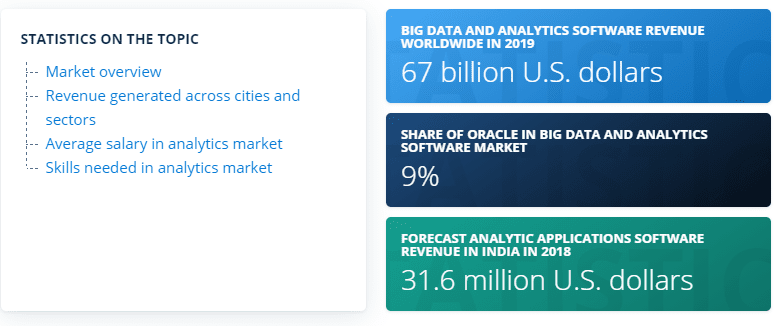
Becoming a business analyst can be the best career decision you can make, according to the industry trends. That’s because the demand for business analysts is sky-rocketing. The analytics market in India is expected to double its market size by 2020 with about 24% of this growth is attributed to big data.

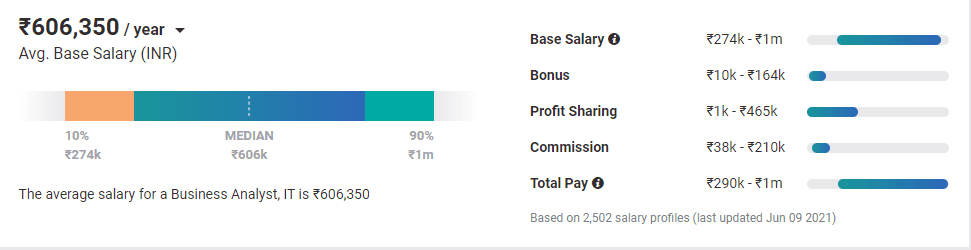
business Analyst Courses with placement in IndiaThe finance and banking sector in the analytics market across India generated 756 million US dollars in 2017. The analytics market in India is growing rapidly. The average pay of a business analyst in India is ₹6 lakhs per year. Moreover, it goes up to ₹10 lakhs per year, depending on your experience, skills, and location.
Business Analyst CourseSecurity is a huge factor while considering a career. As a business analyst, you would have a secure career as there’s a huge shortage of talented and skilled business analytics professionals in the market.
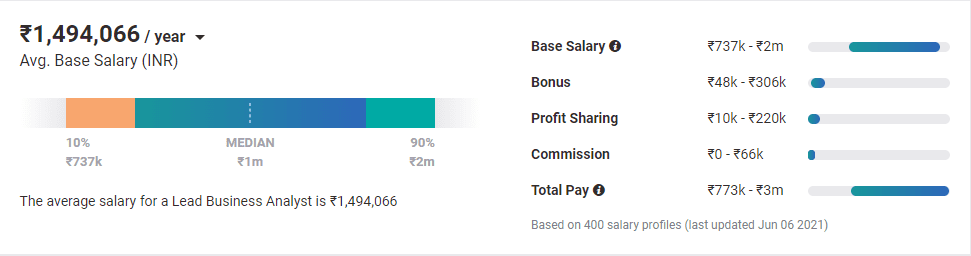
As you gain experience in this field, you can get senior roles in the industry and attract better pay. For example, with sufficient experience, you can become a lead business analyst whose average salary in India is ₹14.9 lakhs per year and the pay goes up to ₹20 lakhs per year.

Business Analyst CourseThe role of a business analyst offers a lot of flexibility and independence. You’d be working at your own pace and solving complex business problems, analyzing data patterns, and formulating solutions for your organization.

How to become a business analyst after engineering?

Certainly, becoming a business analyst can be highly beneficial for you. It can help you attract lucrative pay, become an in-demand professional, and have an interesting career filled with novelty.

To become a business analyst, you should look for business analysis certification courses. That’s because business analysis certification courses provide you with a structured curriculum, so you learn the necessary skills and topics in the proper sequence. It greatly improves the efficiency of your learning.

Moreover, completing a course would provide you with a business analyst certification. A certification will help you stand out from your peers because companies always prefer certified professionals over those without a certificate.

A business analyst certification shows that you’re familiar with the industry-relevant skills and have learned the applications of the same in a professional setting. If you’re interested in starting your career quickly, then you should look for a business analyst course with placement.

Conclusion

There are a lot of advantages to becoming a business analyst. It offers you numerous growth opportunities and highly lucrative pay. Business analytics is perfect for engineering students as engineers have experience in dealing with numbers and applied sciences.

If you want to pursue a business analyst course with placement, then check out the Business Analyst Course program.

Optimize Your Workflow – Tips for Future Data Scientist

Data Science is essentially a process of a lot of iteration. To complete a project in data science, one will have to make many changes, consistently during the process while trying new ideas.

The first step first, lets us make it clear, especially for the ones who would like to pursue their career in data science, to not confuse a job of a data scientist to that of a software engineer. Methodologies of software engineering cannot be used in data science. Data science is more of science and less of engineering.

There are some relevant software’s in data science that assist in optimising workflow, however, it is also the clarity, experience and intuition of the data scientist and the team that sets the preliminary analysis on track.

If a data science project has taken longer than planned to complete, it could be because of iterations. Let us understand, iterations will happen during the course of a project, however, if an iteration is for any other reason besides the flow of new information, it is uncalled for and could have been eliminated.

An unprecedented iteration could be either because the business pain point was not identified correctly, the data scientist was not aligned with the company objective, a data scientist did not initially believe in a collection of a few variables, or it could be because of assumptions and biases in the data were not accounted for. These are just a few scenarios that can be easily avoided.

Imagine if all variables are not accounted for, one will have to do the analysis again, and that would be really time-consuming, also counterproductive for the project and the team working on it.

Some tips to avoid such scenarios:

  1. Identify and choose the right issue to use the skills of a data scientist and the advantages of applying data analytics. Do not try to solve every resolvable issue with this technique. Apply data science only if the concern or problem is large enough, and clearly identify as to what objective or hypothesis you are running with. Check for the alignment of that hypothesis with the desired business outcome. Break down a large issue with all possible outcomes and then ask at each step what variables would be required. Defining each factor, and applicability of outcomes would be a great starting point. Make use of pipeline and data sharing tools.
  1. Identify the data requirement, this is simple, define the time period you would need the data from, collect all information and data points even if it might not look important now, and lastly put a structure to your data requirement by designing tables, this will also further add clarity to what variables would be captured.
  1. This step is simple yet mostly faltered on, always ensure that the analysis created is reproducible.
  1. It’s a daunting task to write codes, now imagine to continue writing it over and over again. To avoid syntax errors, it would be great to make a directory of most commonly used codes and ensure everyone on the team has this, it will ensure efficiency in work and it also takes care of simple errors.
  1. Be flexible and adaptive to technologies, there is no process that is perfect. Be adaptive to the limitations of technology and processes, always finding an alternative will help you reach the goal faster.
  1. Understand the business, you might be a pro in programming and numbers, and data analysis comes naturally to you, however, if you fail to understand how your business works there will always be a gap in understanding the output.
  1. Speak the language of your stakeholders, they might not understand algorithms and you should not assume they understand the technical language. Help them visualise your findings, your approaches. Use visuals and examples to illustrate your plan. Connecting with the audience is half the battle won.

Demarcate the data science project in four phases –

The first phase is the Preliminary Analysis -this is where an overview of data points is done.
Second Phase is the Exploratory Data Phase – Specific to asking the right questions and cleaning the data to answer those questions.
Third Phase is Data Visualisation – Here the focus shifts on how to present the analysis.
The Fourth Phase is Knowledge Discovery Phase – The last stage, where models are made to explain the data, algorithms are tested to come up with the best outcome possible.
This is not a definitive workflow and one could make changes to further increase efficiency and productivity. Data Science is exploratory in nature where the data scientist is constantly innovating and learning, preparing themselves to overcome business and project challenges.


Read More:
Having Technical Knowledge Is Not Enough For Data Scientists
What a Data Scientist Could Do…?
Seven ways a Data Scientist Can Add Value to Businesses

The Future of India in the Field of Big Data Analytics

The best possible example of the usage of big data analytics can be found in the legendary fictional works of Sir Arthur Conan Doyle. Sherlock Holmes, as we all know him today through the famous crime detective show, Sherlock is said to be one of the biggest patrons of this concept. The world’s first consulting detective, Holmes once said, “It is a capital mistake to theorize before one has data.” These words uttered during the case of A Study in Scarlet, hold true as data proved to be his timely assistant in solving extremely difficult cases, by helping him come to perfect deductions.
As we accumulate more and more of this data, we feel the need to have optimal processing skills and analytical capabilities in order to process it. India, as a country has been making a lot of growth with many government agencies and private companies, getting on board with the data analytics revolution. Continuing in the same vein, the Comptroller and Auditor General (CAG) has also put together the ‘Big Data Management Policy’ for Indian audit and accounts departments, in order to foster the use of data analytics and ensure the improvement of their functions. Many more efforts are being taken in the same regard, like for instance the Centre for Data Management and Analytics (CDMA) has been inaugurated, in order to synthesize and integrate relevant data for auditing process. The aim here is to exploit data rich environments, on both the state level as well as the central level in order to develop the audit and accounts department.Data Analytics Banner
Data has always helped humans in increasing the level of their decision making skills, in every field of medicine, science, and technology. The recent couple of years saw a great surge in the availability and accessibility of Big Data and its storage options. With big data coming to the fore, it has begun arriving on the scene with alarming velocity, volume, and variety. With so many technological advancements revolving around the accessibility and storage, have led to the opening up of new and empowering possibilities.
On the other hand, there are DISCOMS, which are set up for capturing all the data from the sensors, which are installed in order to analyse the power usage patterns, so as to put together preventive measures for Aggregated Technical and Commercial losses. All the cloud based and predictive analytics solutions given by industries in retail, telecom, and healthcare, have collectively resulted in the rapid growth of the country’s industry and economy. Today as it stands, India has about 600 data analytics firms, in addition to the 100 new start-ups, that have been set up in the year 2015. This clearly reflects on the demand for data scientists in the not so far away future. This is why a number of students have been attracted to the field of data science. As not many generic educational institutes are able to provide the required training, many candidates seek help from professional training institutes like Imarticus Learning, which provide a number of industry endorsed courses in the field of Finance and Data Analytics.

Financial Markets And Their Roles

A financial market, unlike the other markets, is more of an intangible concept and basically refers to a marketplace where buyers and sellers usually participate in an exchange of assets such as equities, bonds, derivatives and currencies. The basic characteristic of any financial market comprises of transparent pricing, basic regulations regarding costs and fees and a number of market forces, that determine the prices of securities that trade. These financial markets can be found almost in every single country across the world, some of these may be small, with a very few numbers of participants, while some are huge in terms of the amount of money they trade, for example, the New York Stock Exchange.
It is basically investors, who have an access to a great number of financial markets and exchanges, that deal with a vast array of financial products. Some of these markets have always been open to private investors, while some have always remained, pretty much exclusive in terms of catering to major international banks and financial professionals. There are a variety of financial markets, which make up the field of finance.
Certification in Capital MarketsCapital Markets

These markets are where individuals and various organizations, deal with the trading of financial securities. There are a number of organizations and companies, that sell securities on these markets, in order to raise funds for themselves. This is why the capital markets consist of both primary as well as secondary markets. Any organization or corporation requires capital in order to finance its various operations, as well as to engage in long-term investments. In order to accomplish this, the corporation raises money through the sale of securities, basically bonds and stocks; all of which is in the name of the company.
Stock Markets

These are markets, which allow all of the investors to buy and sell the shares in publicly traded companies. They are popularly known to be the most vital area of a market economy, this is because they provide companies, with the access to capital and all the investors, with a chance to have a percentage of ownership in the company. This market is divided into primary markets as well as secondary markets.
Bond Markets
A bond refers to any debt investment in which, an investor loans money to an entity, this can be either corporate or governmental. This entity basically borrows the funds for a specific period of time Bonds are usually used by a number of companies, municipalities, states as well as governments, in order to finance a variety of projects and activities. This markets basically deals with buying and selling of bonds on the various credit markets, all over the world. This market is also referred to as the debt market or credit market or fixed-income market. The many types of bonds are corporate bonds, municipal bonds, notes and bills which are also known as treasuries and so on.
All of these markets require a financial professional, wither a corporate banker, investment bankers or portfolio manager and so on, to deal with their various aspects. The various attractive benefits that these markets offer are a result of a lot of finance aspirants seeking positions in the field of financial markets. Imarticus Learning is one of the best institute for finance and investment banking training and very much preferred by these professionals, in order to get a hang of how the markets work, through various certification courses in corporate finance, investment banking and so on.