How is FinTech Helping the Sports Business Industry in 2021?

In recent years, FinTech has influenced several industries. The use of FinTech can not only optimize different operations but also generate more revenue by improving user experience. Since the implementation of FinTech is now widespread, many jobs are available. The sports business industry can benefit from the use of FinTech.

If you are interested in sports as well as financial technology, you can enroll in FinTech courses online. Imarticus Learning offers a comprehensive course in FinTech that allows students to find jobs in several sectors.

 Use of FinTech in the Sports Business Industry

A career in FinTech has endless scope. The sports business industry is currently booming and the application of FinTech can increase revenue. FinTech is applied in the following aspects of the sports business.

  • Sports Broadcasts

Sports broadcasts have gained popularity and several networks invest in different data sharing options. The broadcasts can be monetized effectively with FinTech solutions. Blockchain technology can be applied to understand viewer preferences and provide content accordingly. Since the networks are decentralized, it is easier to monetize the data.

  • Sale of Tickets

FinTech solutions have enabled better optimization of virtual transactions. The sale of tickets to sporting events is a huge form of gaining profits in the sports business. Online verification ledgers can be used to provide secured payment gateways and prevent fraud. Customers often use cryptocurrency in this sector. Cryptocurrency can be used to purchase tickets to events as well as subscriptions for sporting channels or streaming platforms.

  • Sale of Sports Memorabilia

The sale of sports memorabilia is a significant part of the sports business industry. Implementation of FinTech has helped to increase the online sale of sports memorabilia and similar products. However, the online sale has also increased the risk of counterfeit products. But the use of online security technologies helps to ensure that sellers and users are genuine. Secure networks can also be created for the sale of products.

FinTech can be implemented in sports statistics. The statistics can be used to understand viewer responses and provide improved services. These services can be monetized better, ensuring profits. FinTech can also be utilized in the online sports industry. Online games, modeled after real sporting events, have gained popularity. They are quite significant in generating profits in the sports business industry.

Become a FinTech Expert

To use FinTech in the sports business, you need hands-on training and Industry experience. Imarticus Learning offers professional certification in FinTech. The course includes teaching in online mode and several real-world case studies.

These case studies are instrumental in preparing students to use FinTech in the sports industry. Blockchain and cloud computing is essential for a successful career in FinTech, particularly in the sports business industry. Imarticus Learning includes both these topics in the curriculum. The curriculum has been designed by industry experts to ensure that students understand how the professional field functions. Of all FinTech courses online, this one from Imarticus Learning includes access to the FinTech community.

This allows students to expand their networks and interact with professionals. Imarticus Learning also has several industry partnerships. These partnerships ensure that students have access to current resources and learn more about the recent trends in FinTech solutions. Students can use these trends to optimize sports business and help to increase the growth of revenue for specific companies.

If you are looking for a career in FinTech, the professional Fintech certificate course from Imarticus Learning is the best option. Students can interact with their peers and instructors, participate in webinars and gain more experience. This will ensure a stable and rewarding job in FinTech, particularly in the sports business industry.


MBA Entry, no longer CAT-centric- An Opportunity for Executives working from home!

The MBA admission process has changed drastically over the past few years, with the CAT (Common Admissions Test) becoming less and less of a focal point for admissions officers. Instead, colleges are now looking at more holistic measures to assess potential students, including essays, work experience, extracurricular activities, and leadership positions.

This shift in focus is directly related to an uptick in applicants and colleges fighting over limited resources like funding and qualified staff members. Professionals always doubt what to do after B.COM. This blog post will guide you about the online MBA course.

Current Trend of Business Schools

The current trend among business schools is to use these alternative assessment methods to understand better who will be successful within their programs. The latest trend in MBA admissions is to look beyond applicants’ test scores and focus on a more holistic picture of their people. There is a shift away from purely quantitative measures of success, such as students’ undergraduate grades and MBA entrance exam scores.

How does an online MBA address the learning need of executives working from home?

One of the biggest challenges working executives face is staying on top of their continuing education and professional development. Graduate professional biggest question is what to do after B.com thus gets solved with an online MBA course.

Students can travel and work extended hours, leaving them with limited time at home to do an MBA degree. It has led many to search for MBA courses online, where they can take classes at the comfort of their space at any time and still get the knowledge and certification they need.

MBA correspondenceFor many working professionals, staying current with their continuing education and professional development can be challenging because of limited time at home.

Working professionals often turn to MBA correspondence to get the necessary knowledge and skills without sacrificing jobs. This way, they still get the knowledge and certification they need but still stay up to date with their professional development.

This change in focus is directly related to an uptick in applicants and an increase in schools fighting over limited resources like funding and qualified staff members. As such, many MBA correspondence programs are looking for ways to expand their reach to capture a larger pool of prospective students, and this is where the shift towards non-CAT measures comes into play.

Why Enrol in MBA program with Imarticus Learning

The widespread adoption of financial technology has dramatically altered the global economy’s dynamics, leading to a surge in the need for skilled FinTech specialists. The 4 Quadrants strategy use to deliver the learning experience for this best online MBA course in FinTech, leading to optimum active learning. Personal and group assignments, programming exercises, and thesis all provide opportunities for hands-on education.

Some course USP:

  • The course lets the students learn skills that prepare them for an exciting MBA career.
  • Impress employers & showcase skills with a certification endorsed by India’s most prestigious academic collaborations.
  • World-Class Academic Professors to learn from through live online sessions and discussions. It will help students understand the practical implementation with real industry projects and assignments.

Contact us through the live chat support system or schedule a visit to training centers in Mumbai, Thane, Pune, Chennai, Bengaluru, Hyderabad, Delhi, and Gurgaon.

What is the role of a supply chain analyst in managing uncertainties in a supply chain?

A supply chain involves a network that connects a firm and its suppliers in order to manufacture and deliver a certain product to the end-user. This network consists of many activities, individuals, entities, information, and resources. The supply chain also symbolizes the stages necessary in getting a product or service from its initial state to the consumer. A supply chain management career has become a dream for many young students.

supply chain management coursesA supply chain analyst plays a critical role in the design and execution of large-scale initiatives. A supply chain analyst gathers and processes data in order to improve the supply chain system. He/she works to improve employee performance and reduce the expenses of project-related commodities.
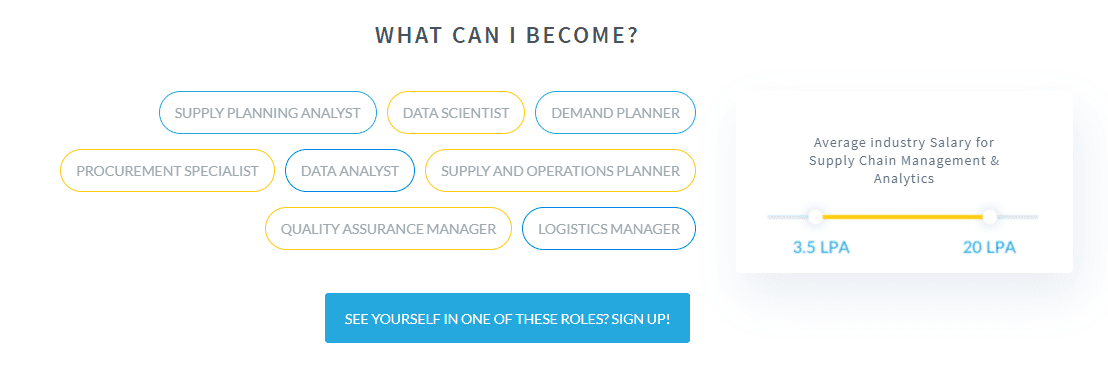

A certified supply chain analyst is the point of connection for many significant purchases made outside the firm for projects. He/she conducts market research and negotiates with corporate representatives to guarantee that the parent company receives the greatest price available. He/she is aware of the inventory on hand and proactively manages what is being used to assist other team members by ensuring they have the necessary tools.

What is the job of a certified supply chain analyst?

  • Create and develop techniques for gathering and managing supply chain data
  • To improve business revenue, research potential partners and seek out best-price contracts
  • Maintain a professional and friendly connection with contractors while supporting corporate aims and values
  • Contribute to the enhancement of a positive image and cross relationships with business partners and suppliers
  • Examine and evaluate collected data to identify problem areas in the supply chain process and devise ways to enhance it

How does an analyst manage uncertainties?

  1. Mitigating risk will look extremely different based on a variety of supply chain-related elements. Look for specific weaknesses in the supply chain, such as sole-source vendors or centralized inventory. New software and other technology tools are now available to assist you in determining the origins of your risk.
  2. In some circumstances, the consequences of an unforeseeable global calamity can be exacerbated because businesses have focused too long and too hard on cost-cutting measures and efficiencies. However, the same tactics that can make a supply chain run more efficiently and cost-effectively, such as sole-source suppliers, can also lead to longer, larger, and more significant interruptions. Balance your need for protection against unpredictability with your desire for improved efficiency.
  3. A supply chain analyst creates a list of what-if scenarios that he/she can guide the team through in a simulated supply chain disruption crisis. These tests are critical dry runs of situations that are very likely to occur in the future, and they can provide invaluable insights into how much crisis management work they should focus on.
  4. Although it is critical to have particular procedures in place in case of large-scale supply chain disruptions, it is also critical for supply chain managers to consider risk and uncertainty when making all decisions. Considering the effects of changes on risk management is critical to protecting against disproportionate losses caused by uncertainty, especially when deploying new technology, working on supplier development, or boosting overall efficiency.

Conclusion:

Companies are putting supply-chain risk management back on the menu in a more uncertain environment. Cybersecurity threats are becoming more destructive. A proactive approach paired with a strong risk-management culture will be a game-changer for businesses, assisting them in avoiding and managing future supply chain breakdowns.

For students wondering what to do after graduation, a supply chain management career might be the right start. A supply chain management online course will help you get closer to your dream career. There are great supply chain management online courses that you must check out!

supply chain management courses

What are the Job Roles of an AI and ML Specialist?

In today’s data-driven world, the highest demanding and relevant jobs have got to be that of an AI and ML specialist. Most major industries now rely heavily on artificial intelligence and machine learning to optimize their business better.

It helps them to detect the clients’ needs and cater to them accordingly. It even helps them to look after their employees’ well-being, which in turn makes them more productive and loyal to the company. This is possibly the best time to do an AI and machine learning course if you are worried about your future.

artificial intelligence and machine learning coursesThis is one job that will never go out of positions as most sectors these days need an AI and ML unit in their teams. If you are confused about which institute would be better for your career, then you do not need to look very far. Like always, Imarticus Learning has come through with one of the best AI and ML certificate courses that will immediately give you that extra edge over others.
However, the question remains about what having these jobs entails? Here, we have tried to give accurate job descriptions for artificial intelligence and machine learning specialists in detail. Please, read through it to learn more about it.

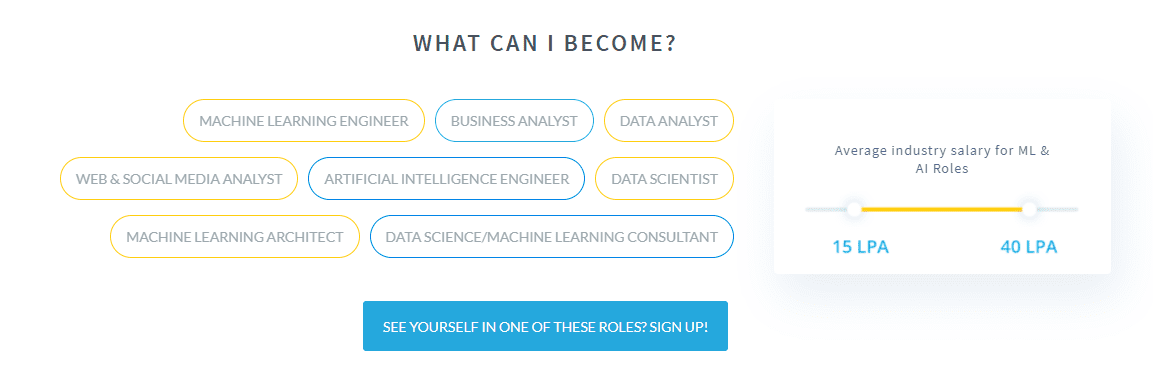
Artificial Intelligence Specialist

There are a variety of aspects to an AI specialist’s job. However, all of these meet at a certain point. That is, they develop computer software to comprehend different situations through hypotheses. They test these hypotheses by comparing them to the workings of the human mind. All of these are done through cognitive stimulation.

They also use this to enhance the opportunities and suggestions provided by and inside of a variety of different industries. This is versatile enough to be applicable in any major industry that deals with clients. The job roles of an AI specialist can be any, but not limited to, the ones following:

  • Software analyst: Using AI to debug or check the performance of software
  • Data security engineer: Safeguarding a company’s intra network and internetwork as well as data governance and data integrity
  • Research scientist: Extracting, designing, analyzing, and comprehensively preparing data using AI predictive analysis and another forecasting
  • AI developer: Develops AI systems and integrates existing software with AI systems
  • IoT engineer: Developing IoT-based devices and integrating AI software and processes in them
  • Cloud specialist: Empowering data with cloud systems

 Machine Learning Specialist

This is a profession dedicated to developing algorithms that can adapt to or learn from the available data to make helpful suggestions and predictions. Some of the job roles are:

  • Machine learning engineer: Involved in sourcing data, creating the machine learning model, and implementing it
  • Machine learning architect: Setting up, integrating, and maintaining machine learning components according to the requirement
  • Data engineer (data modeling specialist): Involved in data modeling and ensuring data can be used for machine learning
  • Machine learning developer: Involved in programming and setting up machine learning systems like forecasting and predictive modeling
  • Automation engineer: Automating processes using ML
  • Deep learning engineers: They work with complex datasets to power up neural networks using deep learning and ML
  • Artificial neural network specialist: Creating neural networks and ensuring that the system has the ability to make decisions mimicking human beings.AI and ML courses

There are many benefits to an AI and machine learning specialist’s job. The major ones being, you will never go out of a job. This is also a high-paying job, so you will never have to think about the salary input being less than your performance output. So, do check out Imarticus Learning’s AI and ML certificate course to give your career the necessary boost.

AI and ML courses

Use of Data Analytics in Improving Working Capital Management

What is working capital management?

Working capital is an organization’s utilization of money to cover its daily needs, such as paying for raw materials, supplies, and salaries. The term can also be applied to individuals. Working Capital Management is defined as “managing cash flow so that it fulfills all the business needs”.

For example, if you have $10 in your wallet but need $100 worth of groceries today, your working capital would be negative $90. Working capital management takes care of the flow of funds within the organization. It ensures that funds are available to meet short-term obligations without having to borrow or sell assets. It’s essential for all businesses because it affects the growth and the profits of the company.

Without sufficient working capital, companies will fail before utilizing their full potential. Working capital management is a critical function for every company. Whether you are operating in the manufacturing or service industry, managing your working capital will impact your ability to grow and succeed.

How does it help the organizations?

Data analytics can help organizations measure how much money they need for their working capital based on their current situation. This way, they can improve their working capital management by minimizing risks such as overinvesting or underinvesting in one area while neglecting others.

There is a need for both MSMEs and large manufacturers to remotely manage their supply chain, cash flows, etc. This has led to a rapid and massive shift away from manual processes. This is where automation comes into play – Accounts Receivable Automation (ARA) was developed as an alternative solution by many companies who needed more control in this area of their business while still managing all aspects with less workforce. These systems allow businesses to deal directly with suppliers and it drastically cuts down processing between payments and delivery.

Application in the real world

In the past few years, the use of Data Analytics has been steadily increasing as a way for organizations to understand their customers better and identify trends.

In today’s world, data analytics is indispensable as it facilitates the efficient working of an organization. The proper recording and analysis of every activity related to the manufacturing cycle of the products help in having visibility of the processes.

Data Science Course

One particular area where Data Analytics can be applied is in examining customer payment patterns, such as when customers pay or don’t pay on time. For example, one company found that because of the customers who paid late, they were losing roughly about $21 million annually due to delayed payments from other clients. It also examined the reasons as to why people pay late. They came up with several insights like cash crunch during month-ends, etc. that stopped them from making these payments.

Using a company’s balance sheet and cash flow statement, a financial analyst can determine when the business has excess funds and also the times when they need more money. This analysis can then be used to establish an appropriate financing strategy that balances the company’s needs with its ability to repay the debt over time. Data Analytics makes the entire process smoother and better.

Conclusion

To maintain change, it is imperative to differentiate between noise and signal. This is done by developing measurable, granular  KPIs that are monitored strictly. Carefully analyzing historical data can provide valuable insights into managing networking capital by quickly finding and dealing with emerging issues.

Contact us today if you want to be well equipped when it comes to dealing with such situations. With a digital analytics course, implementing these tactics in your business becomes easier.

With a data science course, you become aware of the techniques that go into it. The course comes along with a placement opportunity so that you’re all set to apply your business analytics knowledge in managing operations.

Equity Research Analyst: Enhance Your Career Portfolio with This Most Sought-after Profession

In today’s era, financial decisions by businesses and investors are taken only after conducting proper research. Financial decisions can include investing in a company or opting out of a share/stock. There is no limit to financial decisions that can be encountered by businesses and investors.

To decide whether a financial decision is beneficial or not, equity research is performed. You can also build your career as an equity research analyst and work with the top organizations. Read on to know more about making a career as an equity research analyst.

best equity research analyst courseUnderstanding the role of an equity researcher 
An equity researcher is responsible for carrying out an analysis of a firm, stock, or any other type of financial entity. The information produced by equity researchers is then used by investment banks, shareholders, and companies to make better financial decisions.

For example, investors perform equity research to know which investment ventures will provide a huge return in the future. Companies value a project with the aid of equity research to make sure it is beneficial. In short, equity research is the valuation of a company or a venture/project.

An equity research analyst performs the following tasks for its organization/client:

  • An equity researcher has to develop a company portfolio that will be used to generate capital from investors. Company portfolio will be the ideal documents used in investment meetings and IPOs.
  • An equity researcher develops financial models and calculates the estimated income, cash flow, revenue, and returns of capital.
  • An equity researcher monitors the market situation continuously and provides updated reports to investors. Based on the generated reports, investors can then make better decisions.
  • An equity researcher evaluates the financial position of the firm in comparison to its competitors. This also predicts the growth of a company based on current performance and trends.

How to become an equity researcher?

You will have to learn the basic skills of financial analysis and modeling to become a successful equity researcher. Colleges in India do not offer a designated course for equity research. It can be included as a subject/topic in a traditional college course. For learning financial analysis, you may have to opt for the complete degree program. Also, the recent COVID pandemic has made it tough for colleges in India to conduct classes.

Nowadays, students are leaning towards EdTech platforms for financial analysis courses. You need to select an industry-oriented financial analysis course that could make you job-ready. Imarticus Learning is a reliable source that can help you in building a successful career as an equity researcher.

Why choose the financial analysis course from Imarticus?

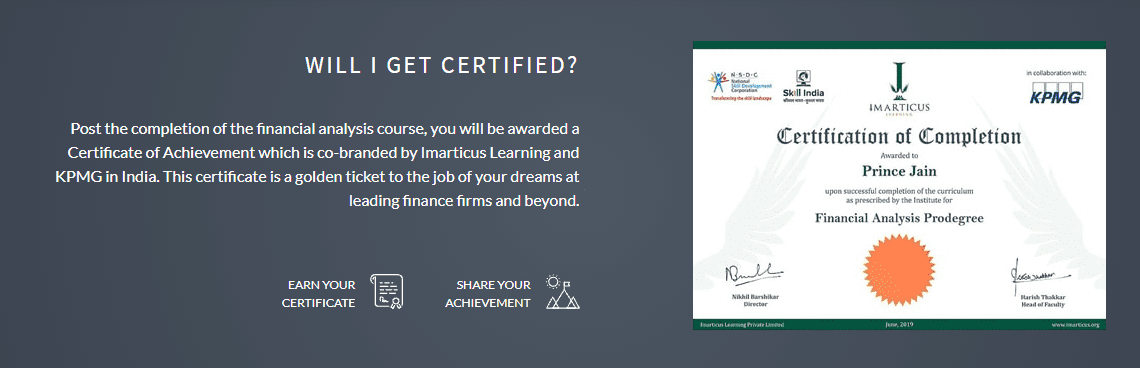
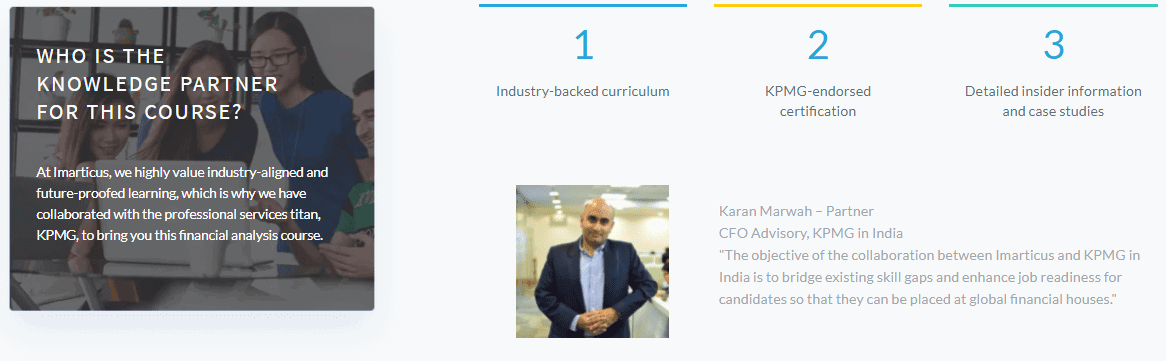
 The Financial Analysis Prodegree offered by Imarticus is endorsed by KPMG, a leading accounting firm in the country. The pros of choosing the financial analysis course of Imarticus are listed below:

financial analyst course

  • This course will help you in an easy career transition and will make you job-ready. Imarticus has successfully transformed the career of more than 2400 enthusiasts.
  • Six real-world projects offered by this course to students make it one of the best financial modeling courses in India.
  • A KPMG-endorsed curriculum will ensure that you learn the job-relevant skills and common practices in the industry.
  • Most of the financial modeling courses do not provide tech-enabled learning. This course will also introduce you to the tools and technologies used by equity researchers in the industry.

Conclusion 

financial analysis prodegree courseImarticus will help you in learning the concepts of equity research from industry experts. With a practical learning approach, you will learn equity research techniques by performing them in real life. You will obtain industry certifications during this course that will enhance your credibility as an equity researcher.

What should you know about earning a second MBA degree?

Master of Business Administration, is a very demanding postgraduate curriculum in India and around the world. This management degree serves as a springboard to a myriad of jobs in the corporate sector. Over the previous two decades, the MBA program has grown in popularity in India.

All managerial level jobs across all domains and sectors want an MBA degree, which is why a big number of graduates now pursue an MBA as a career after graduation.

Best online MBA coursesA full-time MBA program normally lasts two years, while several expedited full-time MBA programs last only one year.



This style of fast-paced MBA is prevalent, particularly at non-US business institutions.

The length of part-time and executive MBA programs varies according to how many credits a student enrolls in each academic semester or quarter. Both executive and part-time MBA programs are designed for working individuals who want to continue their education while working full-time.

In India, getting a second MBA is fairly prevalent and a huge chunk of students pursue it as a career after graduation. Experts suggest that when it comes time to hunt for that promotion, industry leap, or new professional adventure, the first MBA may be lacking in postgraduate benefits such as a strong alumni network or brand recognition.

If someone meets this requirement and wants to work for Google in Europe, they will certainly have a more difficult time than someone who graduated from an internationally renowned program.

When do some people want to pursue a second MBA course?

MBA schools in some countries, like India, accept a large number of applicants directly out of college.

When you enter an MBA program with next to no professional experience, you are more likely to succumb to society’s expectations to land the ‘most prestigious’ job on campus, which is often sifted solely through compensation packages and brand names, rather than what you prefer or what fits your strengths and limitations. Eventually, with time people realize that this is not the right job for them.

  • Some career paths are harmed as a result of a poor employment market, being laid off, a failing business venture, or poor professional choices.
  • There are applicants, particularly from less prestigious MBA programs, who do not have the opportunity to recruit for the top organizations and must settle for whatever remuneration they can receive.
  • Some people want to settle elsewhere and their previous degree is not valid.

When it comes to accepting applicants with an MBA, top business schools have various policies. As a result, before beginning the application process, research the admission policies for second MBA programs at your preferred business schools.

Admission policies at business schools are continually being revised. As a result, before considering a second MBA, establish contact with the admissions office of your preferred business school. All B-Schools do not accept candidates who already have one MBA degree. There are some that accept candidates conditionally and some who accept students despite their having an MBA previously.

When you understand whether your desired business school would approve your application for a second MBA, the second phase is to reflect and determine whether a second MBA is a good fit for your professional goals. In case you lack time for a full-time degree, there are some of the best online MBA courses available on the internet and give you plenty of specializations to choose from.

One must delve deeper and explain why the first MBA did not provide them with the qualifications, abilities, or exposure they required for their professional objective.

In the application, it’s critical to explain why one needs the second degree, especially in the descriptive questions. Essay submissions should also include the short-term and long-term goals, as well as what one aspires to learn from the program.

Conclusion

The best online MBA courses will give you a clearer picture of the wants and needs of the corporate sector. MBA online courses help you juggle between your job and academics and might be a very good option for aspiring candidates.

What is the Difference Between a Business Analyst and Business Intelligence?

When the business analysis markets are expected to hit the 20 billion mark and considering that business analytics actually makes the business five times faster, better informed and effective, it gets a little confusing when people mix up the terms “BA-Business Analytics” and “BI- Business Intelligence” and use them interchangeably when the two areas are really different.

Let us explore how we can define the two areas and what their differences really are.

A Brief Definition:

By definition BA means the technology and approach behind the data analysis where one can establish trends and gainfully cull insights into business data with the ultimate goal of boosting the planning, efficiency and productivity of a business’s future goals and performance.

It is a Why- approach to business needs. The Business Analyst depends on the use of the predictive models, specific data sets and statistical analysis to justify why a business decision needs to be taken based on predictive analysis of future performance parameters.

BI refers to the analysis of the same business data on a wider scale and with large volumes of unstructured data and focuses on the how and what- approach to business needs involving what and how you can use and mine raw data, the tools required for OLAP, querying, data management and reporting etc, to align and draw out the business performance goals and stimulators based on both prescriptive and predictive analysis.

You can learn all of these by doing a Business analyst course.

The Differences Table:

Here are some of the key differences explained below.

1. BI reports analyzed data as against BA which uses technology and tools to perform data operations.

2. BI uses current, past and historical data in comparison to BA where past data is used to gain foresight or extract insights. Both have the same goal of increasing productivity, efficiency and use data to achieve business results.

3. BI is the method or process whereas BA comprises of inputs from BI to arrive at the visualized and extracted information.

4. BI provides insights drawn from the data in use while BA is the process of working on the data and arriving at solutions for the use of Big Data in use.

5. BI appears to be a part of BA which effectively uses information management, data warehousing, business applications, security measures, and risk mitigation.

6. BI uses a combination of predictive and statistical analysis and modelling in comparison to BA which works on huge data volumes to analyze, retrieve, publish and make reports on it.

7. BI uses sets of structured data drawn from applications like the ERP or financial software applications while BA cleans and works with unstructured data while transforming the data into valuable meaningful data for BI.

8. BI normally is restricted to dashboards with a user-interface in comparison to BA which relies on a vast armoury of tools and software applications.

9. BI uses the same format and a sub-set of data for insights while BA works on the raw data to transform it into various databases to draw out trends and foresight.

10. BI roles like executives, analysts, and managers use pivot tables, reports and the dashboards while BA analysts use past BI reports and capacities to help get tasks done with the required BA information.

11. BI is about Big Data access and control over data while BA focuses on handling the data

12. BI focuses on effectively running the business process while BA brings transformational changes to make the enterprise’s processes more effective and productive.

13. BI is a subject in the field of the ever-popular BA.

14. BI uses tools like for analysis in real-time, data-reporting, Mapping Analysis, OLAP and Dash-boards in comparison to BA tools like requirement and use-case, user stories, data, SWOT analysis, predictive modelling and such.

Conclusion:
Let us now elucidate on the table to sum up our differences. No, Business Analytics and Business Intelligence are different and should never be used interchangeably. The field of BA is vast and with growing data and the need for BI is increasing and encompassing all processes and all fields.

To be a good Business Analyst one needs to learn business analytics too and it goes without saying that to be a good BA analyst BI is essential. The debate ends when the needs and end goals are met through doing a Business analyst course. So, here’s to analyzing, using and predicting insights well using both BA and BI. All the best!

How Machine Learning Systems Can Streamline Healthcare Disbursement Setups?

The ripple effects of the COVID19 pandemic have been felt across industries at several levels. The healthcare industry wasn’t spared either, with essential healthcare workers moving to the frontlines to deal with the emergency. As a result, many organizations saw their back-end operations, such as appointment bookings and disbursement trackers, floundering.

However, there is a silver lining in this situation– it’s that technology has speedily been integrated into systems. Telehealth software has seen a surge in demand so as to prevent risks of exposure; healthcare disbursements are next on the list to be made easier.

Healthcare disbursements are traditionally tricky and convoluted processes; the pandemic has put further amounts of strain on the system and caused frustration, delays, and errors. However, machine learning in healthcare is a step forward in fixing disbursement delays.

Here’s how:

  • Moving from Checks to Digital Disbursements

A majority of disbursement systems around the world rely heavily on cheques and other outdated methods. However, this has become a point of friction at this time considering courier services have shut down and deliveries are very delayed. In such a scenario, the use of digital reimbursement options, bolstered by machine learning, is tempting.

Providers can facilitate faster payouts through DTC (direct-to-consumer) payments. By shifting the process online, providers will also be able to keep track of all patient and consumer data on one server. Machine learning can be used to pull up the relevant information, create automated disbursement setups, and ensure the consumer receives their disbursement digitally. The reduced reliance on paper payment processes will lessen the load on healthcare finance systems as well as get disbursements out to the right people in a flash.

  • Addressing Glitches in Systems

Several reports talk of misplaced cheques, incorrect deposit information, and several such kinks in telehealth and digital healthcare solutions being used today. Machine learning can be leveraged to iron out these kinks because, especially during a healthcare crisis, such errors can have a snowball effect on consumers and providers alike.

Providers who use machine learning systems to manage delays will be able to maintain strict records of past and future payouts. The system can be trained to collect the right deposit information as well as cross-verify with other records if required. The reliance on an automated system, in this case, equals to a lesser reliance on outdated methods of payout tracking.

  • Simplify User Experience

Claiming payouts and processing them can become a nightmarish experience for both patients and healthcare providers alike. Machine learning systems effectively reduce quite a number of manual steps which, in turn, saves time, money, and efforts. Machine learning can be leveraged to extract critical information from healthcare contracts, estimate how much is owed, and prepare the right documentation in time for a payout.

For patients, too, the process of claiming payouts become simpler. They will no longer have to fill out a myriad of forms and move from office to counter over days. Instead, by automating certain processes from the providers’ ends, patients can be called in only to verify details if necessary and to provide any other physical documentation the healthcare provider may need.

Conclusion

The healthcare industry will most likely see a surge in the adoption of machine learning and artificial intelligence. This will be across the board– from handling disbursements to automating admissions and discharges. Therefore, students who are interested in pursuing an artificial intelligence career would do well to explore this niche and develop the right skillset for it.

You can do this by enrolling in a machine learning course that focuses on the healthcare system, or take on related projects that could leverage your portfolio when it comes to it. The current strains on healthcare providers worldwide have exposed significant cracks in the system that machine learning could most likely fix.

The Crypto Takeover: Are Crypto asset markets moving too fast for clear regulation?

Cryptocurrency is a type of payment that may be swapped for products and services online. A lot of firms have built their own currencies, known as tokens. They can be swapped for the goods or services offered by the firm. Crypto assets are digital assets that use cryptography techniques to generate a financial transaction medium of exchange. Crypto assets include cryptocurrencies, utility coins, and security tokens. To have access to the good or service, you must first swap actual dollars for cryptocurrency.

Cryptocurrencies use blockchain technology to function. Blockchain is a distributed technology that manages and records transactions across multiple computers. This technology’s security is what distinguishes it. Financial modeling courses on cryptocurrency, such as a chartered financial analyst course will help one gain deeper insights into it.

Cryptoassets mark a profound transformation in financial markets and have gained prominence in recent years. Cryptoasset technical innovations have come a long way and have the potential to upset the financial system. Central banking institutions and other banking institutions can help shape this landscape.

This worldwide phenomenon is causing uncertainty in numerous ways, including how individual crypto assets differ from one another and the role of the major participants in the crypto-asset ecosystem. With the hype surrounding bitcoin, altcoins, cryptocurrencies, and tokens, an entirely new financial environment has emerged.

Why is regulation required?

Regulation is one of the most critical variables influencing the price of bitcoin. Every time a government cracked the policy whip, the cryptocurrency’s rise was halted, with countries taking varied approaches to bitcoin regulation.

AML standards have been improved as authorities and financial institutions get a better knowledge of these illicit operations. However, these adjustments have been mainly reactive and trial-and-error in nature.

To resolve these concerns of the rapidly expanding blockchain ecosystem, the European Union has begun implementing more strict financial laws that strengthen the regulatory structure and improve authorization models. Many member states currently regulate crypto assets on an individual basis, with Germany leading the way as the first to do so.

These individual regulations outline the conditions for acquiring and keeping a financial license from the government, clearly prescribing the road for crypto firms. Compliance, by definition, improves investor confidence and safeguards them.

Different governments have taken various ways to regulate cryptocurrencies. Digital currencies have been banned in Vietnam, Bangladesh, Kyrgyzstan, Bolivia, Ecuador, etc.  Russia and China are on the threshold of outlawing them.

Cryptocurrencies are unregulated in India, the United Kingdom, and Brazil. However, these are regulated and lawful in nations such as France, Finland, and Germany. Individuals are permitted to use bitcoin in their transactions in China, but organizations and banks are not permitted to do so. It is prohibited in Iceland to buy or sell bitcoins, but they can be produced.

There is currently no distinct law in India dealing with cryptocurrency concerns and it is unregulated. As a result, all pertinent departments and law enforcement agencies, such as the Reserve Bank of India (RBI), Enforcement Directorate (ED), and income tax authorities take appropriate measures in accordance with current laws. Similarly, the Indian Penal Code is enforced by the police and the courts. In addition, there are a number of other vulnerabilities and threats involved with bitcoin.

Conclusion:

It is a pressing need to regulate cryptocurrencies as well as recognize them as legal cash, with adequate safety and surveillance measures in place. This is essential in third-world countries where the majority of citizens are not technologically or financially competent. This is largely attributable to the fact that India’s economy only opened up a little more than a quarter-century ago.

Financial modeling courses such as a chartered financial analyst course might be the right boost for a flourishing career in this field.