
Unlocking Value and Long-Term Returns: A Complete Guide to DCF Valuation and Investment Analysis

Discounted Cash Flow (DCF) Valuation is a widely utilized method in finance to effectively estimate the intrinsic value of investments. It is a valuation technique that considers the future cash flows of an investment and adjusts them for the time value of money. This analysis is particularly relevant in investment banking capital markets, where informed decisions regarding acquisitions and capital budgeting are made.

DCF valuation and investment analysis are among the many valuation techniques covered in comprehensive investment banking courses. These courses aim to provide individuals with a thorough understanding of various valuation methodologies, including but not limited to DCF analysis, Comparable Company Analysis, Precedent Transaction Analysis, and Leveraged Buyout analysis. Through the study of these courses, individuals can develop a comprehensive perspective on company valuation.

Professionals equipped with investment banking skills and knowledge are highly sought after in the competitive financial industry. Their proficiency in analysing investments and providing guidance on mergers and acquisitions allows them to play a pivotal role in shaping successful business ventures. As a result, individuals who possess these investment banking skills become invaluable assets in the ever-evolving world of finance.

Understanding the Time Value of Money

The concept of the time value of money (TVM) asserts that the present worth of a sum of money is greater than its future value, primarily due to its potential for earning over the interim period. This fundamental principle holds utmost significance in the field of finance. In simple terms, holding a specific amount of money at present carries greater value than receiving the same sum at a later date. 

Investment banking services play a crucial role in calculating the TVM for their clients and helping them make informed financial decisions. TVM is a fundamental concept in finance that states that a sum of money is worth more now than the same sum will be in the future due to its earning potential and the effects of inflation. Here’s how investment banking firms assist in calculating TVM:

Present Value (PV) and Future Value (FV):

Present Value (PV) and Future Value (FV) are important components of the time value of money. PV represents the current worth of money to be received in the future, while FV is the value of money after earning interest over time. Investors often prefer receiving money today as opposed to the same amount in the future due to the potential for growth through investments, such as the power of compounding interest. 

The formula for TVM:

PV = FV / (1 + r)^n

Where:

PV = Present Value

FV = Future Value

r = Interest rate per period (expressed as a decimal)

n = Number of periods (time)

FV = PV * (1 + r)^n

Where:

FV = Future Value

PV = Present Value

r = Interest rate per period (expressed as a decimal)

n = Number of periods (time)


Discount Rate and Net Present Value (NPV):

The Discount Rate plays a crucial role in evaluating the time value of money, serving as the interest rate for determining the Net Present Value (NPV) of investment while considering the associated risk. NPV, which calculates the difference between the present value of cash inflows and outflows over time, serves as a tool for assessing the profitability of a project or investment. 

The formula for NVP:

NPV = ∑ {After-Tax Cash Flow / (1+r)^t} – Initial Investment

Internal Rate of Return (IRR):

Complementing NPV, the Internal Rate of Return (IRR) represents the discount rate that sets the NPV to zero and estimates the expected percentage return from an investment. In instances where NPV is zero, Excel can identify the IRR, indicating that the project breaks even with the cost of capital.

Cost of Capital:

The Cost of Capital represents the rate of return required by investors for providing capital to a company. It serves as the discount rate for investment evaluation, considering the risk associated with the investment

DCF Valuation Methodology

The DCF Valuation Methodology is a highly regarded investment banking financial modelling technique utilised in assessing the value of a business or investment by considering its projected future cash flows. The DCF analysis entails a series of crucial steps, such as the computation of Free Cash Flow (FCF), cash flow forecasting, terminal value estimation, selection of the suitable discount rate, and performance of sensitivity analysis. 

Let us delve into each step of the DCF Valuation Methodology in detail:

Free Cash Flow (FCF) Calculation:

Free Cash Flow (FCF) is an imperative element in DCF analysis, as it signifies the cash generated by a business that can be allocated to investors or reinvested into the operation. The calculation of FCF involves commencing with the company’s operational cash flows and making adjustments for capital expenditures and variations in working capital. 

The formula for computing FCF is as follows:

FCF = Operating Cash Flow – Capital Expenditures – Change in Working Capital.

Forecasting Cash Flows:

Forecasting cash flows is a crucial step in the DCF valuation process. Analysts project cash flows over 3 to 5 years, which significantly impacts the reliability of the valuation. Factors considered include revenue growth, operating expenses, capital expenditures, working capital changes, and tax rates.

Terminal Value Calculation:

DCF analysis extends beyond the forecast period, requiring estimation of the business’s value beyond that explicit period, known as the terminal value. Two common methods for calculating terminal value are the perpetual growth and exit multiple approaches.

Perpetual Growth DCF Terminal Value Formula:

Assuming continuous generation of Free Cash Flow at a normalised state, the perpetual growth terminal value is calculated as:

TV = (FCFn x (1 + g)) / (WACC – g),

where TV is the terminal value, FCFn is the final-year free cash flow, g is the perpetual growth rate of FCF, and WACC is the weighted average cost of capital.

Exit Multiple DCF Terminal Value Formula:

Based on observed comparable trading multiples for similar businesses, the exit multiple approach assumes the business will be sold for a multiple of a financial metric (e.g., EBITDA). 

The formula for calculating the exit multiple terminal values is:

TV = Financial Metric (e.g., EBITDA) x Trading Multiple (e.g., 10x).

Choosing the Appropriate Discount Rate:

In calculating the present value of future cash flows, it is crucial to discount them using an appropriate discount rate. This rate considers the time value of money, opportunity cost, and investment risk. The most commonly used discount rate in DCF analysis is the weighted average cost of capital (WACC), which accounts for both debt and equity costs.

Sensitivity Analysis:

Sensitivity analysis is necessary for DCF valuations to examine the impact of various assumptions on the final valuation. By testing different scenarios, analysts can understand the range of potential valuations and the sensitivity of the valuation to changes in key variables.

Components of DCF Valuation
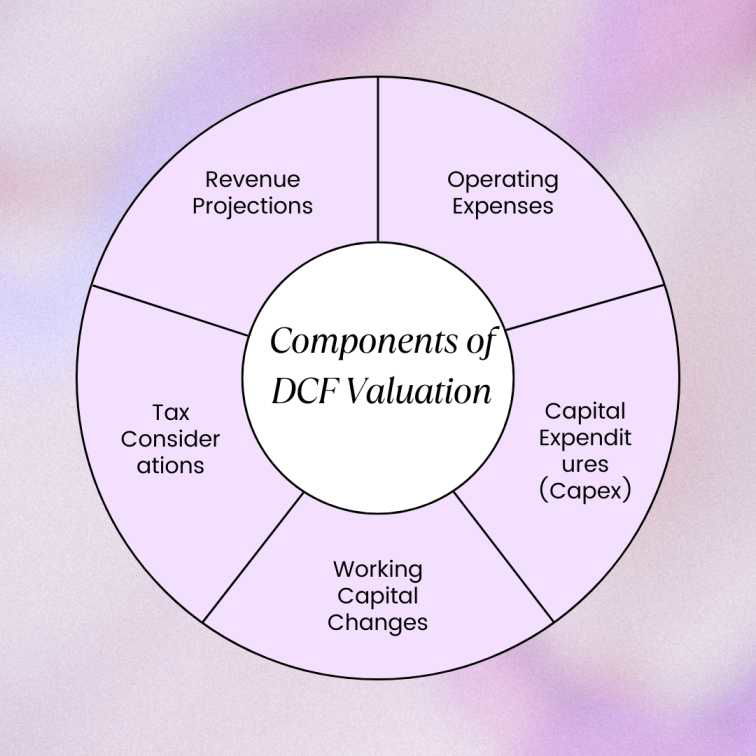
Components of DCF Valuation

DCF analysis involves projecting future cash flows, discounting them to present value using a suitable discount rate (e.g., WACC). It also considers terminal value to estimate the company’s worth beyond the forecast period. Investment banking services rely on DCF analysis to ascertain the intrinsic value of investments or companies, facilitating informed financial decision-making.

DCF Valuation comprises the following key components:

Revenue Projections: Forecasting future sales and income based on market trends, demand, and industry outlook.

Operating Expenses: Costs for day-to-day operations, like salaries, rent, utilities, marketing, and other expenses.

Capital Expenditures (Capex): Investments in fixed assets or long-term projects, such as equipment, infrastructure, or production expansion.

Working Capital Changes: Impacts of current assets and liabilities on cash flow, like inventory increase or accounts payable decrease.

Tax Considerations: Calculating cash flows post-tax, considering tax rates and deductions.

DCF Models and Techniques

DCF models are commonly utilised in finance to assess investments, value businesses, and inform financial decisions. These models rely on projected future cash flows and discounted rates to determine present investment or company value. By utilsing DCF methods, analysts and investors can evaluate opportunities and make informed investment choices. 

DCF models and techniques include

Dividend Discount Model (DDM): This estimates stock value by calculating the present value of future dividends. Assumes the primary source of returns for investors is dividends, discounted using the required rate of return.

Cash Flow to Equity (CFE) Model: Focuses on cash flows available to equity shareholders. Calculates net cash flows after deducting interest expenses and debt obligations. Discounted using the cost of equity.

Cash Flow to Firm (CFF) Model: Estimates cash flows available to all capital providers. Considers equity and debt holders. Calculates free cash flow after accounting for expenses, taxes, capital expenditures, and working capital changes. Discounted using Weighted Average Cost of Capital (WACC).

Weighted Average Cost of Capital (WACC): This represents the average rate of return expected by the company’s investors. Considers proportion of debt and equity in capital structure. Used as the discount rate in DCF analysis. Reflects the company’s overall cost of financing.

Adjusted Present Value (APV) Model: Considers the value of potential tax shields or subsidies from financing decisions. Unlevered cash flows are discounted using the cost of equity to determine value without debt financing (NPV). Value of tax shields and subsidies added to arrive at APV.

Relative Valuation vs. DCF Valuation

Characteristics Relative Valuation DCF Valuation
Methodology The target company’s financial metrics and valuation multiples are compared with similar companies in the same industry to determine its value based on market sentiment and peer performance. This valuation method determines the target company’s intrinsic value using discounted cash flows, considering the time value of money and financial fundamentals.
Precision The approach may be less precise as it relies on generalisations and may overlook unique company characteristics. By considering cash flow projections, growth rates, and the cost of capital, it becomes more precise.
Basis The valuation process relies on market multiples and assumes that companies within the same industry should have comparable metrics. To accurately forecast cash flows, it is necessary to apply a discount rate that reflects the cost of capital, and then discount them back to the present.
Market Dependency Dependent on market sentiment and prevailing market multiples. Independent of market pricing and focuses solely on the company’s financial fundamentals.
Applicability Quick assessments and benchmarking in the market. Long-term investment decisions and in-depth analysis require sensitivity testing and scenario analysis.
Advantages Easy to understand and apply. Captures the current mood of the market. Provides a detailed and intrinsic valuation based on expected cash flows. Allows for sensitivity analysis.
Valuation Methods Comparable Company Analysis (Comps) and Precedent Transaction Analysis (Precedents). Discounted Cash Flow Analysis (DCF).


DCF Valuation is primarily ideal for:

  • Stable and established companies with predictable cash flows.
  • Long-term investment decisions backed by confidently projected cash flows.
  • Companies with distinctive characteristics deviating from comparable peers.
  • Rigorous analysis involving sensitivity testing and scenario assessment for risk evaluation.

DCF Valuation in Investment Decision-Making

DCF Valuation is a vital technique for investment decision-making, used in scenarios like business valuation, investment project evaluation, M&A analysis, and asset valuation. Investment banking firms rely on DCF Valuation to assess asset intrinsic value and inform financial decisions. 

Let us examine its application in these contexts:

Valuing a Business or Company: In investment banking, professionals use DCF Valuation to estimate the present value of a business based on its future cash flows. By projecting cash flows, selecting a proper discount rate, and determining a terminal value, investment bankers derive the company’s intrinsic value. This method is crucial for mergers, acquisitions, and equity investment decisions, offering a comprehensive and unbiased view of the business’s worth.

Evaluating Investment Projects: DCF Valuation is a commonly employed method for assessing the financial viability of investment projects. By discounting future cash flows to present value using an appropriate discount rate, investment bankers can determine the project’s feasibility and profitability. This analysis aids in identifying lucrative investment opportunities and informing strategic investment decisions.

Merger and Acquisition (M&A) Analysis: DCF Valuation is crucial in M&A deals for determining the fair value of the target company. Investment banking services leverage this technique to analyse synergies and the financial impact of acquisitions, enabling them to negotiate a purchase price and assess financial attractiveness for clients.

Valuing Equity and Debt Instruments: DCF Valuation is commonly used by investment banking firms to estimate the fair value of equity and debt instruments. For common stock valuation, projected future dividends are discounted to derive the intrinsic value. Similarly, future cash flows from coupon payments and the bond’s maturity value are discounted to determine the fair value of bonds.

Assumptions and Limitations of DCF Valuation

DCF analysis is a commonly taught valuation method in investment banking courses. It helps estimate the intrinsic value of an asset or business based on projected future cash flows and a discount rate. 

The common DCF Valuation assumptions and limitations are

Sensitivity to Projections: DCF analysis depends on assumptions made about future cash flows, discount rate, and terminal value. Slight variations in these inputs can significantly impact the calculated intrinsic value. Thus, the accuracy of the valuation depends on the reliability of these projections.

Forecasting Challenges: Accurately forecasting future cash flows is challenging due to uncertain economic conditions, market fluctuations, and projections for early-stage companies. These challenges may introduce inaccuracies in DCF valuation, influencing investment decisions.

Market and Economic Factors: DCF analysis assumes projected cash flows will continue into the future, ignoring potential changes in market dynamics, economic conditions, or competitive landscape. Unpredictable market and economic factors can impact company performance, reducing the long-term reliability of DCF projections.

Risk and Uncertainty: DCF Valuation may not fully account for all risks and uncertainties, such as unforeseen events, regulatory changes, or competitive threats. These factors can impact a company’s future cash flows and potentially introduce inaccuracies in the valuation model.

Real-World DCF Valuation Examples

  • Valuation of a Startup Company
  • Valuation of a Mature Company
  • Valuation of a Project or Investment
  • Valuation in Different Industries

DCF Valuation Best Practices

The following are the best practices for investment banking DCF valuation:

Gathering and Analysing Data:

When studying DCF Valuation in investment banking courses, it is imperative to grasp the significance of collecting and analysing pertinent data. This includes historical financial statements, industry trends, market data, and macroeconomic indicators. Thorough data analysis enables informed decision-making and the construction of robust valuation models.

Ensuring Consistency in Assumptions:

Students undergoing investment banking training should be aware of the importance of consistency in assumptions for DCF Valuation. Logical alignment and reliance on reliable data when making assumptions about revenue growth, profit margins, working capital, capital expenditures, and discount rates are paramount. Achieving consistency significantly improves the accuracy and reliability of the valuation model.

Communicating Results Effectively:

Efficient communication of DCF Valuation outcomes is emphasised in investment banking courses. The ability to articulate the methodology, assumptions, and sensitivity analysis in a clear and concise manner is vital. Visual aids, such as charts and graphs, can enhance the presentation and facilitate stakeholders’ understanding of the valuation’s implications.

Continuous Monitoring and Updates:

Investment banking training should stress the importance of continual monitoring and updates in DCF Valuation. Market conditions, business performance, and economic factors evolve over time, impacting the accuracy of projections. Regularly reviewing and updating the DCF model with the latest data ensures the valuation remains pertinent and reliable.

Conclusion

The DCF model is an essential tool used by various financial professionals to assess companies and make informed investment decisions. Students pursuing investment banking courses must master this model through a step-by-step approach, involving accurate cash flow forecasting and discounting. 

However, it’s important to acknowledge that valuations can be affected by uncertain assumptions and unforeseen events, which may impact cash flow projections. Therefore, the DCF model should be seen as one of several methods for investment analysis. 

Wandering how to get started with an investment banking course? Imarticus Learning is here to help!

Our Certified Investment Banking Operations Professional training program offers you a fantastic opportunity to acquire or enhance your investment banking skills. And that’s not all – we also provide investment banking internships with renowned recruiters.

At Imarticus Learning, we ensure that along with sharpening your skills through our robust investment banking course, you also receive an investment banking certification to facilitate your career progression in this field.

So why wait? Get in touch with us today!

Imarticus Game Studio: The Six-Step Formula For Success

Earlier, most companies were sceptical about the idea of training through video games. That is a thing of the past now as more and more companies are realising the purpose behind game-based solutions- to educate employees better. Video games are just a tool to achieve this goal quickly and efficiently. This article will discuss how Imarticus Game Studio can help organisations in implementing successful game-based solutions.

Identify the goals

First things first, map out and prioritise the needs of an organisation, employees and target audience. Once these demands are identified, it will be easier to identify the goals. Organisations should think of the results they would want to achieve through game-based solutions. That will give clarity about the goals before moving into the development stage. Experts from Imarticus Game Studio will provide all the guidance required to make decisions. With their help, companies will be able to build an effective narrative.

Plan the environment

After identifying the game goals, it is time for the organisation to define the space where the game action will take place. As for this question- if the game was supposed to take place in person, what would the space look like? The idea is to virtually give employees a sense of real-life office situations and environments. Brainstorm with Imarticus Game Studio‘s expert team and find out elements that would give the employees this experience.

Decide on the Platform

Choosing the platform is a crucial decision because it determines the success of the game-based solution. Each platform has its own levels of complexity and can incorporate various features.  So, make sure to choose the platform that best fits the business needs. PC, mobile, web etc. are some of the common platforms for game-based solutions. Imarticus Game Studio will do the research and suggest the options. The organisation can choose the platform that will work best for them and their team.

Plot an engaging storyline

New challenges should come the way of employees as they progress in the game. These challenges should reflect the learning objectives of the game. A lot of thinking and careful planning should go on into deciding these challenges. Keep in mind that the players receive feedback and guidance based on how they perform in these challenges. They are also to be rewarded after the completion of each task. Hence, it’s vital that they receive the right tasks at the right time in their virtual learning journey. Remember to develop an engaging scenario which has a clear beginning, middle and end. Imarticus Game Studio can help in achieving this goal.

Select intuitive interfaces and controls

One thing to be taken care of while building a game-based solution is that players should understand how to work with the controls easily. This way, they can focus on the challenges rather than spending additional time understanding how the game works. Clunky controls and usability issues will make the employees frustrated and disinterested in the game. One of the primary objectives of game-based solutions is to keep the employees engaged and not distracted. Ensure that the purpose and uses are clearly communicated and its effects can be reflected in the game. Imarticus Game Studio will make sure that the employees have the best experience while participating in the game-based training.

Develop a strategic game plan

The last step is to come up with a strategic game plan and a clear set of rules. This ensures that the game is designed with some serious strategies and that the results from challenges reflect those strategies. Define every parameter, including the resources employees have access to and how much they can win or lose. This process is simplified when companies have a set of well-defined goals in hand.

Key Takeaway

Using the benefits of game-based solutions to the organisation’s advantage is important in becoming an industry leader. Now that companies know the Imarticus Game Studio’s six-step formula to success, get in touch with their experts. To learn more about game-based learning solutions, visit Imarticus Learning.

A Guide to Customer Funnelling and Consumer Journey

The customer funnel depicts a customer’s entire path, from initial awareness and interest to consideration and conversion. It extends beyond the purchase stage, encompassing ongoing engagement and advocacy. 

A sales & marketing leadership programme can help aspirants learn the basics of the customer journey and how to use customer funnelling to nurture leads and close deals.

Advantages of Customer Funnelling

  • Simple and clear understanding: The customer funnel is a simple concept that can be effectively tracked. It provides a straightforward visual representation of the customer journey.
  • Attracting a broad audience: It helps draw the attention of a large number of people to your company. As prospects progress through the stages, qualified leads are generated.
  • Building target groups: It enables the gradual formation of target groups, starting with a broad audience. It filters out less interested individuals, leaving those with a higher potential for conversion.
  • Tailored marketing: It guides marketers in tailoring their efforts to specific target groups. Addressing each segment’s unique needs and preferences enhances the overall effectiveness of marketing campaigns.

Consumer Journey

A client or consumer journey refers to interactions, offers, and channels guiding prospects or clients through your product/service range.

It can vary in duration depending on the complexity of your offerings. Some journeys may be brief, while others may be more extensive due to multiple product options or service levels.

The consumer journey involves:

  • Funnelling: Creating structured pathways guiding prospects towards specific actions or conversions.
  • Email communication: Using personalised and targeted email campaigns for nurturing and maintaining ongoing communication.
  • Text messages: Engaging prospects and clients through direct and timely text messaging platforms.
  • Voicemails: Leave thoughtful voicemails to follow up and provide additional information or offers.
  • Website presence: Establish an informative and interactive website, a central hub for prospects to explore your offerings.

Essential Stages of the Consumer Journey

Let’s explore the consumer journey stages through an example of someone looking to buy a new smartphone:

1. Awareness

The individual realises their current smartphone is outdated and doesn’t meet their needs anymore. They search for the latest smartphone models online and read reviews and articles about top brands and features.

2. Consideration

They narrowed their choices to two leading smartphone brands following extensive research. They compare each model’s specifications, prices, and customer feedback to make an informed decision.

3. Decision

The person purchases the smartphone from Brand X due to its excellent camera features, positive customer reviews, and a limited-time discount offer.

4. Retention

After using the smartphone for a few weeks, the individual receives personalised emails from the brand, offering tips on optimising the device’s performance and exclusive access to new software updates. It enhances their overall experience and loyalty to Brand X.

5. Advocacy

Impressed with the smartphone’s performance, the person shares their positive experience on social media, recommending the product to their followers. One of their friends sees the post and asks for a direct link to purchase the same smartphone.

The example shows how a consumer progresses through the journey stages, from becoming aware of the need to purchase, examining possibilities and finally becoming an advocate for the company.

How to Improve the Consumer Journey?

Sustaining successful marketing outcomes requires continuous optimisation to meet evolving consumer expectations.

Regularly reviewing and refining your consumer journey is essential to ensure a seamless and satisfying experience.

Here are the key stages to focus on:

Stage 1: Reach

Effectively target your audience by leveraging customer data, including voluntarily shared zero-party data.

Create audience personas for targeted ads on platforms like Google and social media. 

You’ll build a more robust and engaged contact list by reaching the right people. Remember to collect only necessary data and avoid gathering unnecessary information.

Stage 2: Acquisition

Prevent customer loss by avoiding irrelevant messaging to newly acquired customers. Impersonal and generic email marketing can lead to a high customer unsubscribe rate.

Instead, ask customers about their preferences or offer a self-service content model for topic selection. Maintain customers’ trust in your brand by avoiding irrelevant messages.

Stage 3: Conversion

The conversion stage is where marketing and customer service converge. Collaborate between departments to ensure a smooth customer experience.

Implement channels like live chat to remove obstacles to purchasing and gather valuable data. Identify areas for website improvement and address frequently asked questions.

Use consumer data to create post-chat email automation, enhancing overall experiences and fostering robust and enduring customer relationships.

Stage 4: Retention

Leverage consumer data for personalisation during the post-purchase phase. Focus on collecting data that enables tailored product recommendations and content to keep customers engaged and retained.

Combine consumer interests, purchase history, and segmentation techniques like eRFM or lead scoring to create unique pathways for highly targeted customer segments.

Personalise marketing messages and offers based on customer data to drive relevance and conversions and cultivate consumer loyalty.

Stage 5: Loyalty

The loyalty stage aims to make consumers feel valued and deepen their connection with your brand.

Optimise earlier stages of the consumer journey to establish trust and demonstrate commitment to responsible data usage and privacy.

Invite loyal customers to participate in review panels or join loyalty programmes, encouraging a more vital investment in your brand.

This approach increases the likelihood of customers choosing your brand over competitors.

Customer Funnel vs Consumer Journey

Some of the primary differences between the two are:

Customer Funnel Consumer Journey
Definition A marketing model outlining the steps customers take to make a purchase decision and become a customer. A holistic view of a consumer’s entire experience with a brand, from the initial awareness stage to post-purchase interactions.
Focus Acquiring new customers and guiding them towards making a purchase. Understanding and enhancing the overall consumer experience and fostering long-term relationships.
Scope Limited to the stages leading up to a customer’s purchase decision. Encompasses all touchpoints and interactions throughout the customer’s relationship with the brand, including the pre-and post-purchase stages.
Goal Conversion of leads into customers. Building loyalty, customer retention, and advocacy.
Marketing Focus Attracting and converting potential customers. Creating a seamless and positive experience at each touchpoint, from discovery to advocacy.
Importance Essential for lead generation and sales. Crucial for building strong customer relationships and fostering brand loyalty.

Conclusion

Understanding and effectively implementing customer funnelling and consumer journey strategies are crucial for driving business growth and success. Companies can enhance their sales and marketing performance by optimising the customer’s path from initial awareness to becoming loyal advocates.

Consider enrolling in Imarticus Learning’s Executive Management Programme in Sales & Marketing Leadership programme by IIM Lucknow to kickstart your career in the field. 

Visit Imarticus Learning for more information on the IIM L executive programme.

Insurtech: Innovations in the Insurance Industry

Have you ever tried to navigate your way through insurance claims? Despite numerous phone calls, emails and then some more chasing after the customer care executives – oftentimes all this hustle goes in vain. Lack of substantial response ends up generating lower customer satisfaction and an even more bitter experience, until technology swoops in and saves the day.

In today’s fast-paced world, technology has been a disruptive force in almost every other industry. The insurance industry is not an exception. If you are looking forward to a career in fintech, knowing about insurtech is essential. In this blog, we shall try to understand how technology has penetrated the insurance market and explore the innovations that have impacted the industry altogether.

What is Insurtech?

As the word suggests, Insurtech is the technology designed to remodel the insurance industry to make it more customer-oriented and user-friendly. The term Insurtech comes from ‘insurance’ and ‘technology’ put together, inspired by Fintech (finance+technology). Insurtech now has effectively revolutionised the industry that once upon a time was made of tonnes of paperwork and some extremely tedious process of claim settlements. Along with that, insurtech has also come to ensure efficiency and cost-effectiveness while reducing errors and fraud with cutting-edge tools.

How so? Let us learn more.

Streamlined customer experience

Customer experience is one of the most crucial aspects of selling insurance. An improved customer experience is the catalyst of growth of the entire industry. But in the case of insurance, all the manual paperwork and process of claim settlement get quite cumbersome.

With the help of insurtech, one can easily purchase insurance policies online, have it customised based on their needs, submit claims simply with a tap of a finger and receive time-to-time updates on their mobile phones. Cloud computing and other technologies such as Artificial Intelligence and Machine Learning help in determining the amount of policy premiums based on the data provided by the customer. The digitised way not only makes buying insurance easier but also lets the customers navigate their way through the whole process with more convenience.

Advanced data analytics

Insurance is something that should be unique to individual customers. Every customer has their own set of needs and priorities. Insurance should be based on those essential points. Earlier, insurance used to have a set structure and customers had to buy a certain type of insurance to avail of specific benefits, all the while paying for things they did not need. Insurtech allows the much-needed customisations to insurance policies. With the help of artificial intelligence or AI, both insurers and customers can now analyse information to personalise packages.

Chatbots provide customer support to policyholders without the fuss of human interaction. Automation helps in designing an insurance policy that is solely fitted for the policyholder. For example, certain technical devices are installed nowadays in vehicles to collect data on driving behaviours. That data comes in handy in the future to calculate the amount of insurance premiums. Even wearable devices that can track various health metrics like heart rate, blood pressure, oxygen saturation in blood, and sleep patterns help design insurance policies for customers.

Blockchain and smart contracts

Blockchain is one of the pioneering technologies that has transformed the insurance industry for the better. Blockchain helps insurers create transparent and secure pathways for collecting and storing data of customers and their transactions. It also lets smart contracts automate the claim settlement process with more ease and efficiency. Smart contracts also come in handy in proceeding with the settlement after validating the claims of the policyholders. The execution of the entire process does not get started until the smart contract verifies the specific conditions that are to be met for the claim settlement. That is how this technology helps filter out potential fraudulent claims with finesse.

Internet of Things (IoT)

Internet of Things or IoT devices are the bridge between physical devices and software that analyse the data collected by them. Insurance providers heavily depend upon the real-time data collected by sensors and connected devices alike. For example, automobile insurers offer devices that gather data on vehicle conditions and driving patterns of the policyholder. The insurance premiums and the claim settlement amounts are decided based on those analytics. IoT devices are also capable of effectively identifying health hazards and contributing to the prevention of potential risk factors.

Pros of insurtech

Insurtech plays a pivotal role in filling the loopholes in traditional insurance policies with its new-age technological innovations. The reasons why customers these days are inclined towards opting for insurtech are:

  • Insurtech enhances the customer experience by providing easy access to policy-related information. The innovative technology also helps them understand the nitty-gritty of the coverage. As the entire service is available online, the customers do not have to travel to certain offices to derive any information whatsoever.
  • Insurtech focuses on the customisation of policies based on the needs of the policyholders. This technological trait makes the customers feel more comfortable with their investments.
  • Insurtech improves seamless efficiency in the industry. Earlier, insurers and customers had to research a lot and explore a lot of options before deciding on a policy that fits their bill. Now, with the help of technological tools, both the insurer and customer can finalise their desired policy within a much lesser time, with more accurate projections.
  • Insurtech ensures cost-effectiveness. Earlier, traditional insurance companies used to rely on manual labour and the miscellaneous cost would go up with no guaranteed outcome. Now with insurtech, companies engage staff remotely with almost no convenience cost and way more effective results.
  • Insurtech promotes flexibility as the AI tools, chatbot and automation are available 24×7 to find resolutions to the queries of the policyholders and potential customers.
  • Insurtech also accurately assesses the risk factors and provides optimised support in case of fraudulent activities.

Cons of Insurtech

Along with multiple pros, insurtech has a few cons as well:

  • Technologies, no matter how advanced they might be, can sometimes be extremely confusing for new users. With all these new-age tools at their disposal, it can get incredibly overwhelming for technologically challenged customers.
  • There also are nuances that are better explained by human agents than chatbots. Strictly online services can be limiting for all those enquiries.

Conclusion

The longstanding traditional insurance industry is now evolving rapidly with disruptive innovations like insurtech. Although insurtech is still at a nascent stage, it has revolutionised the insurance market with more certainty and sustainability. Insurtech has introduced a new way of looking at insurance policies and navigating through the nooks and corners of the industry. It has helped the customers with a more analytical approach and efficient yield. Some might say that the insurance industry is losing the human touch, but with its proven relevance, pace and responsiveness – it is safe to say that insurtech is here to stay.

Imarticus Learning provides an exceptionally insightful PGDM in Fintech. This course is designed in collaboration with Delhi School of Business. This 2-year full time course arms the students with in-depth knowledge and hands-on experience they can use to build a successful career in fintech. Sign up for the PGDM course today and prepare yourself for a brighter future.

How is a general management program beneficial for managers?

Did you know that effective management is crucial to an organization’s success? General management programs equip managers with the skills and knowledge needed to excel in their roles. This blog will explore the benefits of general management programs and their relevance in today’s dynamic business landscape.

Understanding: What is a General Management Program?

A general management program is a comprehensive educational program designed to equip individuals with the skills and knowledge necessary for effective management across various organisational and functional areas. It provides a holistic understanding of business operations, strategic thinking, leadership development, and decision-making skills.

A general management program covers various subjects, including finance, marketing, operations, human resources, and strategy. It aims to develop well-rounded managers who navigate complex business environments, drive growth, and make informed decisions.

These programs are often offered at the graduate level, such as MBA (Master of Business Administration) programs or specialized executive education programs for experienced professionals seeking to enhance their management skills.

Career Paths after Completing General Management Program:

Completing a general management program opens up a wide range of career paths and offers significant growth opportunities for individuals. Here are some career paths after completing a general management program:

Managerial Positions: Graduates can pursue managerial roles across functional areas such as marketing, finance, operations, human resources, and strategy. These roles involve overseeing teams, making strategic decisions, and driving organizational success. Graduates may start as assistant managers and progress to middle and senior management positions.

Entrepreneurship: The knowledge and skills gained from a general management program provide a solid foundation for individuals aspiring to start their businesses. Graduates can leverage their understanding of business operations, strategy, finance, and marketing to launch and manage their entrepreneurial ventures.

Consulting: Many general management program graduates enter the field of management consulting. They work with clients from various industries, providing strategic advice, solving complex problems, and helping organizations improve performance. Consulting firms value the broad skill set and strategic thinking abilities acquired through a general management program.

Executive Leadership: Graduates with significant work experience and a general management background are well-positioned to climb the corporate ladder and reach executive-level positions. They can aspire to become CEOs, CFOs, or hold other top-level leadership positions, where they will be responsible for guiding an organization’s overall direction and strategy.

Industry Specialization: Some graduates specialize in specific industries or sectors based on their interests and expertise. They can leverage their general management foundation to pursue careers in healthcare, technology, finance, retail, or manufacturing, bringing their managerial skills and knowledge to drive growth and innovation within the industry.

How managers can benefit from a general management program

  • Enhanced Leadership Skills

Best management training programs focus on developing practical leadership abilities. Managers can motivate their teams, drive performance, and achieve organizational goals by honing leadership skills.

  • Broadened Business Acumen

Best management training programs provide managers with a holistic view of business operations. Understanding different functional areas and their interdependencies allows managers to make informed decisions and contribute to the organization’s overall success.

  • Strategic Thinking and Decision-making

Best management training programs cultivate strategic thinking skills, enabling managers to analyze complex business environments, identify opportunities, and make sound decisions. Strategic thinking is essential for driving growth and navigating challenges.

  • Improved Communication and Collaboration

Interpersonal skills and effective communication are emphasized in general management programs. Strong communication skills enable managers to build relationships, foster collaboration, and influence stakeholders positively.

  • Adaptability and Change Management

General management programs equip managers to navigate change in the dynamic business landscape. Adaptable managers can embrace innovation, lead change initiatives, and ensure organizational agility.

  • Practical Application of General Management Skills

Managers can apply the skills acquired through general management programs in various practical ways. For example, they can use their enhanced leadership skills to inspire and motivate their teams, fostering a positive work environment. Their broadened business acumen enables them to identify growth opportunities, optimize operations, and drive profitability. Effective communication and collaboration skills allow managers to build strong stakeholder relationships and lead cross-functional teams.

Final Words about Best management training program: 

As Peter Drucker once said, “Management is doing things right; leadership is doing the right things.” 

Investing your management skills in the right place for success is important. Imarticus Learning offers an experience unparalleled through the 22nd General Management Programme (GMP) in Dubai, partnering with the prestigious Indian Institute of Management Ahmedabad (IIMA). The General Management Program enhances participants’ managerial capabilities, equipping them to assume senior general management roles in the future.

The General Management Program stands in a league of its own, driven by the first principles of management.

  • Participants delve into timeless cases and learn from experienced faculty, who bring unparalleled depth to the learning process.
  • The program’s unique format spans a consecutive weekend marathon over six months.
  • The program allows consistency, reduced study load, and focused exploration of a small number of topics each week.
  • The weekend session structure ensures minimal disruption to business hours, making it ideal for executives seeking to enhance their managerial skills.
  • The GMP boasts a short duration, with online sessions limited to a maximum of three hours per day to prevent Zoom fatigue. 
  • The capstone case study project and presentations during this campus immersion phase provide an opportunity for participants to showcase their newfound knowledge and skills.

The General Management Program’s learning outcomes are aligned with the participants’ professional growth.

  • It aims to enhance managerial skills, preparing participants for higher responsibilities.
  • The program equips participants with management concepts and techniques relevant to formulating and implementing strategies in functional and general management areas.
  • By appreciating the interdependencies within organizations and acquiring the necessary perspectives, participants develop the readiness for general management positions.

Embark on this unique journey to professional excellence and earn an alumni status with the 22nd General Management Programme at Imarticus Learning. Seize this opportunity and enhance your managerial capabilities to unlock new career horizons. Register your interest now and write your own success story!

Cybersecurity in Fintech: Protecting Data and Transactions

In the rapidly evolving landscape of the fintech industry, the protection of data and transactions has become paramount. As financial services and transactions increasingly migrate to digital platforms, the need for robust cybersecurity measures has grown exponentially. Fintech companies must safeguard sensitive financial information, prevent fraudulent activities, and comply with regulatory standards to maintain trust and confidence among their customers. 

In this article, we will explore the various cybersecurity measures employed to protect data and transactions in the fintech industry. Additionally, we will discuss the role of fintech platforms in strengthening cybersecurity, the benefits of cloud computing in this domain, and how the entire industry can be fortified through collaboration, education, and proactive cybersecurity practices.

Cybersecurity Measures for Data and Transaction Protection

Data encryption and secure network communication

One of the fundamental cybersecurity measures is data encryption. Encryption converts sensitive information into an unreadable format, ensuring that only authorized parties can access and decipher it. In the fintech industry, encryption plays a crucial role in safeguarding sensitive data, such as financial records, bank account details, and personally identifiable information (PII). By utilizing robust encryption algorithms and implementing secure network protocols like HTTPS (Hypertext Transfer Protocol Secure), fintech platforms can ensure the confidentiality and integrity of data during transit.

Multi-Factor Authentication (MFA)

Passwords alone are no longer sufficient to protect user accounts. Multi-factor authentication (MFA) has emerged as an effective security measure that combines multiple factors to verify a user’s identity. These factors typically include something the user knows (e.g., a password), something they possess (e.g., a smartphone), and something unique to them (e.g., a fingerprint or facial recognition). By requiring users to provide multiple pieces of evidence to authenticate themselves, fintech companies can significantly enhance security and prevent unauthorised access.

Fraud Detection and Prevention

Fraudulent activities pose a significant threat to the fintech industry. Cybercriminals employ sophisticated techniques to exploit vulnerabilities and compromise financial systems. To combat this, fintech platforms utilize advanced technologies such as machine learning algorithms to detect and prevent fraudulent activities. These algorithms analyze large volumes of data, identify patterns, and flag suspicious transactions or activities in real-time. By continuously monitoring for anomalies and employing proactive fraud detection mechanisms, fintech companies can minimize financial losses and protect both themselves and their customers.

Regulatory Compliance and Best Practices

Compliance with Regulatory Standards

The fintech industry operates within a regulatory framework that aims to protect consumers and ensure the security and integrity of financial systems. Fintech companies must comply with regulations such as the Payment Card Industry Data Security Standard (PCI DSS), General Data Protection Regulation (GDPR) and Anti-Money Laundering/Know Your Customer (AML/KYC) requirements. These regulations impose specific obligations regarding data protection, secure storage and transmission, customer identification, and risk management. By implementing robust cybersecurity measures and adhering to regulatory standards, fintech platforms demonstrate their commitment to protecting customer interests and maintaining the integrity of financial transactions.

Regular Security Audits and Penetration Testing

Maintaining robust cybersecurity requires continuous monitoring and evaluation of system vulnerabilities. Fintech companies should conduct regular security audits and penetration testing to identify weaknesses and potential entry points for attackers. Security audits involve comprehensive assessments of the organization’s infrastructure, policies, and procedures to ensure they align with industry best practices and regulatory requirements. Penetration testing, on the other hand, involves simulated attacks on the system to uncover vulnerabilities and test the effectiveness of security controls. By conducting these assessments periodically, fintech companies can proactively address vulnerabilities and strengthen their cybersecurity defenses.

The Role of Fintech in Cybersecurity

Secure Transaction Processing

Fintech platforms are at the forefront of digital financial transactions. To ensure secure payment processing, fintech companies employ robust encryption and secure communication protocols. By encrypting sensitive financial data during transmission and storing it securely, fintech platforms minimize the risk of unauthorized access and data interception. Additionally, they implement secure payment gateways that comply with industry standards to protect customer payment information and prevent fraudulent activities.

Collaboration with Financial Institutions

Fintech companies often collaborate with traditional financial institutions to provide seamless and secure financial services. These collaborations involve sharing data, integrating systems, and ensuring secure connectivity. By partnering with established financial institutions, fintech platforms can leverage their expertise in security and compliance. This collaboration fosters the exchange of best practices, enhances security protocols, and promotes a secure and trusted ecosystem for financial transactions.

Customer Education and Awareness

An informed and educated customer base is a vital component of a secure fintech industry. Fintech companies play a crucial role in educating their customers about cybersecurity best practices. By providing resources, guidelines, and tips for secure online behavior, fintech platforms empower users to protect their personal information, identify potential threats, and mitigate risks. Customer education initiatives can include tutorials, blog posts, and interactive content that raise awareness about common cyber threats such as phishing, social engineering, and identity theft.

Conclusion

Protecting data and transactions in the fintech industry is of paramount importance in maintaining trust, fostering innovation, and ensuring the long-term success of the industry. By implementing robust cybersecurity measures such as data encryption, multi-factor authentication, and fraud detection systems, fintech companies can safeguard sensitive information and prevent unauthorized access. Compliance with regulatory standards, regular security audits, and penetration testing are essential for maintaining a secure environment. Cloud computing offers scalability, flexibility, and centralized monitoring capabilities that enhance cybersecurity efforts.

Strengthening the entire industry requires collaboration, information sharing, customer education, and proactive incident response planning. By working together, the fintech industry can effectively combat cyber threats, build customer trust, and create a secure and resilient financial ecosystem.

To enhance your skills in fintech and cloud computing, you can enrol yourself in a professional certificate course such as the PDGM in Fintech offered by Imarticus in collaboration with the Delhi School of Business. This programme can prove to be very beneficial if you wish to pursue a career in fintech.

Career Choice Comparison: Asset Management vs. Wealth Management

Individuals and businesses deal with significant volumes of wealth and assets. Those who wish to focus on assets and the various ways of increasing and monitoring them can opt for asset management jobs. Candidates who are more focused on the overall finances can go for a wealth management degree.

Imarticus Learning’s CIBOP or Certified Investment Banking Operations Professional course offers a curriculum that includes both fields. Students can explore various options and choose their area of expertise at the end of the course.

best investment banking courses with placement in IndiaUnderstanding the Difference Between Asset Management and Wealth Management


Asset management deals with the investments of a company or clients. Asset managers are responsible for the money that clients invest. Asset managers take care of all investments, helping people follow the right procedure to set up accounts and invest in the right areas.

Investors can hire asset managers to assist them in opening accounts, finding the best investment opportunities, and finally making the trades. Asset management involves extensive risk management and research.

Managers need to research the condition of stocks, bonds, mutual funds, ETFs, or other forms of investment vehicles. After analyzing the research data, asset managers can accurately predict where one should invest to get the maximum benefits. Nowadays, asset managers are also responsible for ensuring that all investments are socially responsible.

Some asset managers may work in other aspects of investment management like tax-loss harvesting. An asset manager can at times provide financial advice. Since they have expertise in investment vehicles, individuals or firms that provide ETFs, mutual funds or similar products often hire them to get a better idea of what response their products will receive.

Wealth management deals with a broader view and includes all finances of a company or individual. Wealth managers have multiple tasks. Similar to asset managers, wealth managers have to conduct a risk assessment. A wealth management course usually prepares students for this task. Wealth managers are often hired by company stakeholders or older employees who require retirement planning services. Since wealth management involves monitoring individual wealth, managers can help clients choose the right retirement benefits.

Several clients also hire wealth managers for succession planning and estate planning. Wealth management also often involves the set-up and management of trusts. People who require insurance protection can seek the assistance of wealth managers. Wealth management often includes coverage of liability issues, stock options, and tax planning.

While there are differences in the services provided by asset managers and wealth managers, one also needs to look at the various compensation models. Asset managers usually take commissions. Their fees are based on the type of assets they are managing. Wealth managers, on the other hand, charge on an hourly basis or have flat fees. However, if they too are dealing with assets, their fees may depend on the size and value of those assets.

What Can Candidates Study to Work in Asset or Wealth Management?

Both asset and wealth management has a lot of scope and aspirants can benefit from honing their skills in either field. While there are several wealth and asset management courses, Imarticus Learning’s Certified Investment Banking Operations Professional course teaches students the skills necessary to land lucrative jobs. The institute organizes live lectures where candidates are encouraged to interact with peers as well as instructors.

The curriculum introduces students to financial markets. An understanding of the market trends is beneficial for both asset managers and wealth managers. Risk management is also a huge part of the course as it is extremely important for the industry. Candidates are prepared for interviews in their areas of interest and are guaranteed job interviews once they graduate.

The CIBOP course doubles up as a risk management course in banking and aspirants will benefit from the industry expertise offered. Such a holistic approach increases opportunities for all those who complete this degree.

IIM Lucknow is building an army of finance experts with their certification course

IIM Lucknow is one of the most prestigious institutes for building a career in financial services. It offers multiple courses for business and Management enthusiasts so that they can pursue a career in management.

The PGDM in financial management course is one of the top-rated courses in IIM Lucknow and many candidates have given positive feedback about pursuing this course which has immensely helped them to grow in their careers.

Enrol yourself for the IIML Financial Management executive course to become a financial expert and climb the ladder in your professional life.

Read along to know all about the courses that IIM Lucknow offers to build a pool of financial experts.

Significance of IIM Lucknow

IIM Lucknow is a prime institute and is among the five prestigious business schools in India that offers postgraduate degrees, diplomas, executive programs and fellowships, mainly in Management and Finance. The Ministry of Human Resource Development of India recognises IIM Lucknow as the “institution of excellence” that strives to achieve excellence by imparting insightful knowledge about business, management and finance. It is an elite institute that has introduced some new and well-developed courses so that these students can become financial experts. Several IIM Lucknow certificate courses are present there. If you want to become a financial expert, find the best course for yourself as per your interests and learn the IlM Lucknow certification course as it will uplift your career to another level.

Who is a Financial Expert?

A financial expert is an individual who possesses the required and relevant skills, qualifications and experience to educate others and impart knowledge about various financial topics. Although, financial experts specialise in any financial matters because there are numerous financial topics and it is impossible for a person to gain expertise in all of them. Knowledge and skills about matters of finance can be gained through various platforms such as reading financial and business books by legendary authors or by going through multiple websites and learning about finance from there. But if you choose to become a financial expert and want to make it a career then you should have the relevant qualifications as well. IIM Lucknow is one of the best institutes that can help you to gain the required qualification.

Functions of Financial Experts

You cannot become a financial expert in a blink of an eye. To gain a deep understanding of finance and its management, you must know when, how, what and where to use finance and manage them judiciously. Thus, a financial expert has to perform multiple functions. The major functions of financial experts are enumerated as follows:

  • A financial expert must know about bookkeeping and documenting transactions.
  • Financial experts are relied upon for providing insightful financial advice based on the financial analysis that they conduct.
  • Financial experts are trusted with the decision of investment. How, what, when and where to invest is best known by financial experts.
  • A company faces a lot of risks and the management of the potential risks is dealt with by a financial expert.
  • Tax laws can be very annoying at times. Financial experts deal with the wrath of these laws and solve the tax issues of a company.

Certification Courses by IIM Lucknow

IIM Lucknow is a prestigious institute that has numerous causes for creating experts in finance. Here’s a list of courses regarding management and finance that is presented by IIM Lucknow:

  • Chief Operations Officer program
  • Senior leadership program
  • Digital marketing applications and analytics course
  • Executive program in strategic management
  • Executive program in strategic Operations, Management and Supply Chain Analytics
  • Executive program in Project Management
  • Advanced program in Human Resource Management
  • Executive program in fintech, banking and applied risk management
  • Executive program in strategic marketing for business success
  • General Management program for IT professionals
  • Executive program in Data Science
  • Chief Marketing Officer program
  • Executive program in design thinking for innovation and business transformation
  • Advanced leadership program in a digital world
  • Executive program in digital transformation
  • General management program for executive- Middle East

IIM Lucknow upholds high-quality education and with every batch, they ensure that they generate more and more financial experts so that they can benefit multiple companies and ultimately contribute towards the development of a country.

It is a prestigious institute that provides a great opportunity for passionate candidates in building a career in financial services by offering them IIM Lucknow certificate courses. It is not only one of the best business schools in India but also an institute that always develops new and innovative styles of education and skill development.

Study hard and enrol for any of the courses or programs offered by IIM Lucknow and walk towards having a flourishing career. 

Here’s Why Using Search Intent Can Shape Your Digital Marketing Strategy

In this technological era, businesses and brands are going online. Nowadays, customers do not depend on businesses to provide a marketing funnel. Instead, they prefer to conduct their research about which product/service is better.

Search engines are the primary solutions for customers to look for any brand or service. Business owners should know about search intent as it is responsible for boosting ROI and driving online engagement. Read on to know how search intent can shape digital marketing strategies.

Understanding search intent 

Why is a user searching for anything on a search engine? Search intent is the reason that compels the user to search for anything on search engines. Customers may enter a search query for buying something or they may be interested in visiting the website.

Customers may also search for a query just knowing more about any product or topic. Based on the search intent of customers, brands implement their digital marketing strategies. For example, if the customer wants to search for the best antivirus in the market, one cannot show them a landing page in SERP. Instead, digital marketers will directly promote the antivirus product as the search intent suggests that the customer is willing to buy.

Significance of search intent 

 Many businesses pay for digital marketing courses so that their employees can know more about search intent. Online marketplaces and platforms rate search intent highly among digital marketing elements. If someone is an expert in understanding the search intent of customers, they are likely to get a lucrative job offer in the digital marketing industry.

Search intent is important because it helps in understanding the expectations of the customers. One can provide relevant responses to users on search engines if search intent is understood.

Search engines also rank web pages based on the search intent. For example, Google understands the search intent of customers and shows them results based on that. If someone is offering a relatable response to the user’s query, their web pages can rank higher in the SERP.

Relevance is the key formula in digital marketing to gain success. Many digital marketing courses skip search intent as they don’t consider it an important SEO element. Contrary to the belief, understanding search intent is of utmost importance for ranking higher in the SERP.

 How to learn about search intent?

Traditional colleges and institutions do not have ample courses for digital marketing. Also, the recent COVID pandemic led to the suspension of physical classrooms for digital marketing. Young enthusiasts have traversed to EdTech platforms for learning digital marketing.

Many working professionals who didn’t know much about search intent have looked for certification in digital marketing. Aspirants need to choose an effective online course that covers all the aspects of digital marketing in 2021. Imarticus Learning is a reliable EdTech platform that can help in getting a certification in digital marketing.

Why choose Imarticus for a digital marketing course? 

 Imarticus provides a PG Program in Digital Marketing which is preferred due to the following benefits:

  • The online program in digital marketing comes with 100% placement assurance. Students will receive quality placement assistance from Imarticus Learning.
  • From SEO to affiliate marketing, all the aspects of digital marketing will be covered in this course.
  • Simulated and capstone projects will help students to learn several practices in the digital marketing industry.

Conclusion 

As more and more businesses are shifting online, the demand for expert digital marketers is rising. A digital marketing course that covers search intent and other principles can help kickstart a career. Online digital marketing courses can help in learning from home amidst tough times. Start your PG program in digital marketing now!

How Investment Bankers Can Find Success with the “Eight-Call Rule”?

Before jumping over to the “eight call rule”, let’s find out about the roles and responsibilities of an investment banker and how to be successful in this industry.

Role of an Investment Banker

Investment bankers are essentially financial advisors who guide their clients on profitable investment avenues and help them achieve their desired financial goal. The role of an investment banker is multi-faceted and involved a lot of things. The role also varies depending upon the type of organisation and the nature of the investment bank.
An investment bank can be broadly categorised in two categories; the buy-side firm and the sell-side firm.

At the core of sell-side investment banks lies the role of raising capital for clients from the market by issuing either equity or debt securities. Investment bankers help a great deal to companies who are looking to launch their Initial Public Offer (IPO) and raise capital from the market by issuing shares of the firm.

The buy-side investment banking activities include managing pension funds, mutual funds, hedge fund, institutional investors, etc. The primary goal is to maximise the wealth of the client by finding profitable investment opportunities after assessing the risk appetite. The buy-side investment bankers are in contact with sell-side investment bankers to facilitate investment. This helps to channel the funds in the market.

How to be successful in the investment banking industry?

The investment banking industry is known for its magnificent lifestyle and fat cheques. People on the outside are often unaware of the efforts and dedication it takes to be a successful investment banker.

Most of the young and aspiring college graduates are lured in by the outside glamour, knowing very little of the work that goes into making it big in this industry.

The title of an investment banker sets you apart from the crowd in the sense that you have access to high-profile individuals and confidential valuable information. Being successful in the Investment banking industry takes more than just good financial acumen and technical skills. You have to hone your soft skills and network with high-profile individuals and make your mark.

You have to manage multiple aspects of the job that includes conducting research meeting new prospects, closing deals, etc.

Experts over the year have experimented with a rule that has resulted in successful breakthroughs in the Investment banking segment. It is popularly known as the “Eight-Call Rule”. Let’s dig deeper to find out what it entails.

The “Eight-Call Rule”

A big part of an investment banker’s role entails reaching new clients to expand the business. Arranging a meet with new clients involves a lot of cold calling and emailing before finally getting the consent. Cold calling new contacts are not very effective and often lead to disappointment. So what can you do to reach new prospects? Well, the short answer to this question is perseverance and patience and the long answer is the “Eight-Call Rule”.

Investment banking professionals at an Atlanta based Investment bank have found an effective strategy that has shown profitable outcomes. It has helped them reach new prospects strategically. The story behind the eight-call rule is very interesting. Investment banks have always logged all contacts with a prospective client; the twist here is that they have started leveraging data to obtain valuable insights.

This data scrutiny helped the investment banks to find the sweet spot for reaching new prospects; they got the magical number, which was ‘8’! As per historical records, it takes eight cold calls to reach a prospective client. Another important insight revealed from using data was the average number of calls for reaching an investor. Three was the lucky number here. However, it was not necessarily limited to phone calls. Other touchpoints like mail and messaging were also included in this.