3 Tips on Building a Successful Online Course in Data Science!

3 Tips on Building a Successful Online Course in Data Science!

The coronavirus pandemic is undoubtedly one of the biggest disruptors of lives and livelihoods this year. Thousands of businesses, shops and universities have been forced to shut down to curb the spread of the virus; as a result, massive numbers have turned to their home desks to work from and to tide over the crisis.

The pandemic has also influenced the surge of a new wave of interest in online courses. Over the past few months, many small and large-scale ed-tech companies have sprouted up, bombarding the masses with a wider range of choices than ever before. Many institutions have chosen to give out their courses at a minimal price and yet others for free. The format of these classes is different– hands-on, theoretical, philosophical, or interactive– but the ultimate goal is to take learning online and democratize it.

Naturally, it’s an opportune time to explore the idea of creating an online course– a data science online course, in particular, seeing as futuristic technologies will see a profound surge in attention come the next few years.

Here are a few tips to get the ball rolling on your first-ever online course in data science:

  • Create a Curriculum

Data science is a nuanced and complex field, so it won’t do to use the term in its entirety. It is important to think up what the scope of your course will be. You will need to identify what topics you will cover, what industry you want to target (if any), what tools you might need to talk about, and how best to deliver your course content to engage students.

education

General courses are ideal for beginners who don’t know the first thing about data science. This type, of course, could cover the scope of the term, the industries it’s used in as well as job opportunities and must-have skills for aspirants.

Technical courses can take one software and break it down– this is also a great space to encourage experiments and hands-on projects. Niche courses can deal with the use and advantage of data science within a particular industry, such as finance or healthcare.

  • Choose a Delivery Method

There are a plethora of ed-tech platforms to choose from, so make a list of what is most important to you, so you don’t get overwhelmed. Consider how interactive you can make it, through the use of:

  1. Live videos
  2. Video-on-demand
  3. Webinars
  4. Panels
  5. Expert speakers
  6. Flipped classroom
  7. Peer reviews
  8. Private mentorship
  9. Assessments
  10. Hackathons
    Education

The primary draw of online classrooms is also how flexible they are. Consider opting for a course style that allows students to learn at their own pace and time. Simultaneously, make use of the course styles listed above to foster a healthily competitive learning environment.

  • Seek Industry Partnerships

An excellent way to up the ante on your course and set it apart from regular platforms is to partner with an industry leader in your selected niche. This has many advantages– it lends credibility to your course, brings in a much-needed insider perspective and allows students to interact outside of strict course setups. Additionally, the branding of an industry leader on your certification is a testament to the value of your course; students are more likely to choose a course like yours if this certification is pivotal in their career.

EducationOther ways by which you can introduce an industry partnership include inviting company speakers, organising crash courses on industry software and even setting up placement interviews at these companies. The more you can help a student get their foot in the door, the higher the chances of them enrolling and recommending.

Conclusion
Building an online course in data science is no mean feat. However, it’s a great time to jump into the ed-tech and online learning industry, so get ready to impart your knowledge!


How a Financial Analysis Can Accelerate Openness to Technology during a Crisis?

The world has faced many pandemics/crises and each time some or other technology has evolved. At the time of the Spanish flu when phone systems were facing downtime, many online news sources such as remembers Syracuse.com and many others urged people to avoid public gatherings and it helped in spreading awareness. Today also we are facing a tough time because of the COVID19 outbreak throughout the globe.

In these times, Financial Analysis can bring more to the table. Almost all the physical works have come to a halt and people are shifting towards technology for survival. Let us see how Financial Analysis can bring us closer to technology at a fast rate.

What is Financial Analysis?

It is an analysis of any particular business, firm, financial institution, project, etc. & after the analysis, we get to know about the stability and longevity of that particular business. It helps investors, fundraisers to know whether they are investing in a profitable decision or not.

It can also help governments to analyze their financial decisions. It helps in business forecasting and in increasing the stability of any financial decision. A lot of administrative bodies already use Financial Analysis for taxation & other chores.

How Financial Analysis Can Bring Us Closer to Technology?

  • It will help the IT experts to decide on the stability of any particular technology. There are a lot of new and disruptive technologies coming now and then during COVID19. For example, the technology ministry of India has launched a contact tracing application in coordination with Reliance Jio.World Health Organisation also launched a technology ‘C-TAP’ which is responsible for increasing the speed of vaccine research & treatment. Many big delivery firms are shifting towards contactless delivery systems and usage of drones is also suggested. By Financial Analysis, we can get to know about their stability, and accordingly, investors can use their money & we will get closer to technology in right means.
  • Cost optimization and management can be done through Financial Analysis. Many technologies are lucrative at first but they fail at the time of implementation because the budget overflows. To avoid cost restraints, Financial Analysis can be done in advance.
  • Through Financial Analysis, one can find out the pattern of growth of any particular technology. It helps us in finding out the advancement in respect with time. It also helps us in finding out the drawbacks/loopholes in any particular project. One can learn from past mistakes and can forecast a better & stable project/technology.When we talk about Financial Analysis in a business/workplace, it helps in finding out the relation and dependence among various tasks among the company/firm.
  • New disruptive technologies tend to reduce labour and help in doing multiple tasks at a time. With the help of Financial Analysis, one can assure IT experts/investors about less labour which will come onto the table.Besides cost optimization, new technologies can do many tasks at once which were earlier divided into different chores. For example, when virtualization came into existence, it could do multiple chores at a time and deleted the workforce behind server administration. The money saved can be invested in some other jobs.

Financial Analysis can help us in finding out the loopholes in any particular new technology. When all the physical jobs which require a lot of workforces are closing due to this pandemic, the world is witnessing a shift towards technology at a much larger pace.

Financial Analysis can help us in finding out a disruptive technology that could replace traditional methods and should not fail. If you are new to this field, then you can find a plethora of Financial Analysis Courses on the internet and can learn about it. This article was all about the advantages of Financial Analysis in accelerating our openness towards technology amidst this pandemic. I hope it helps!

Related Articles:

What Is the Job Of a Financial Analyst

How Much Does A Financial Analyst Make

Why Do You Want To Become A Financial Analyst

What Are the Interview Questions For FInancial Analyst

What is an Underwriter Salary?

It is easy to mistake the role of an underwriter as someone who writes something. So, before knowing what the average salary of this position is, it is good to know the profile.

Who is an Underwriter?

As opposed to what the term suggests, an underwriter is someone who analyses and assesses the risks and liabilities involved in a loan or mortgage application. It is a person employed by a bank or a financial institution or a non-banking financial company (NBFC) to receive loan applications and check its validity against a set of standards and policies.

Although this role may sound easy, in reality it involves several concepts and terminologies in the finance and banking world. Because an underwriter essentially works on behalf of the company she works with – where accepting a fraudulent loan application can cause issues – it is an important job role.

With a very active growth in the finance world where borrowers – individuals and organizations – are growing by the day, the role of an underwriter has become more important.

What was a role that did not exist in the previous century – because other staff took care of it – is today a sought-after career role in India. All of this makes it a hot job for job seekers who have a financial or banking academic background.

Underwriter Salary – How Much Is It?

Although it is incorrect to suggest a solid number that will give you a blanket idea as to how much an underwriter earns, Payscale.com has come up with a number. According to its website, the average underwriter salary in India is roughly INR 4,85,000 (i.e. 4.85 lakhs). This is the annual package or the cost to the company (CTC). This figure is based on over 100 respondents who Payscale surveyed till May 2020.

It should be noted that this underwriter salary is for job roles in metro cities like Mumbai, New Delhi, Bengaluru, and Chennai. The numbers will change as per the location, the company, and the experience of the candidate. Research also suggests that individuals who took underwriting courses have reported higher incomes than average.

List of Underwriter Salaries by Experience

Here is a list of packages received by underwriters with different levels of experience. All figures imply annual salaries (gross income).

  • Fresher – Around INR 2,00,000 (2 lakhs)
  • Less than 3 years of experience – Between INR 4,00,000 (4 lakhs) and INR 7,00,000 (7 lakhs)
  • 5+ years of experience – Between INR 8,00,000 (8 lakhs) and INR 12,00,000 (12 lakhs)
  • 10+ years of experience – More than INR 15,00,000 (15 lakhs)

It should be noted that an underwriter’s role experiences substantial changes once the person has stayed in it for long. A person with more than five years of experience will soon move to other roles that will entail a lot of other tasks such as risk management.

Role of an Underwriter in a Glance

If you are an aspirant and are looking to take an underwriting course, here are some ground realities for you to consider:

  • You will be working on different types of loans and mortgages
  • An understanding of company policies and government regulations (SEBI, RBI, etc.) will be needed
  • It is an office job that will entail eight-hour shifts (or more)

As you gain experience, your role will change considerably. In terms of hikes and promotion, an underwriter’s role is not limited to loan assessment. You can even move to wealth management, portfolio assessment, and risk management roles. These pay relatively on a higher scale.
Begin your journey to a dream job. Enrol into an underwriting course today.

Also Read: What is Credit Risk Underwriting

Top 3 Apache Spark Tutorials For Machine Learning Beginners!

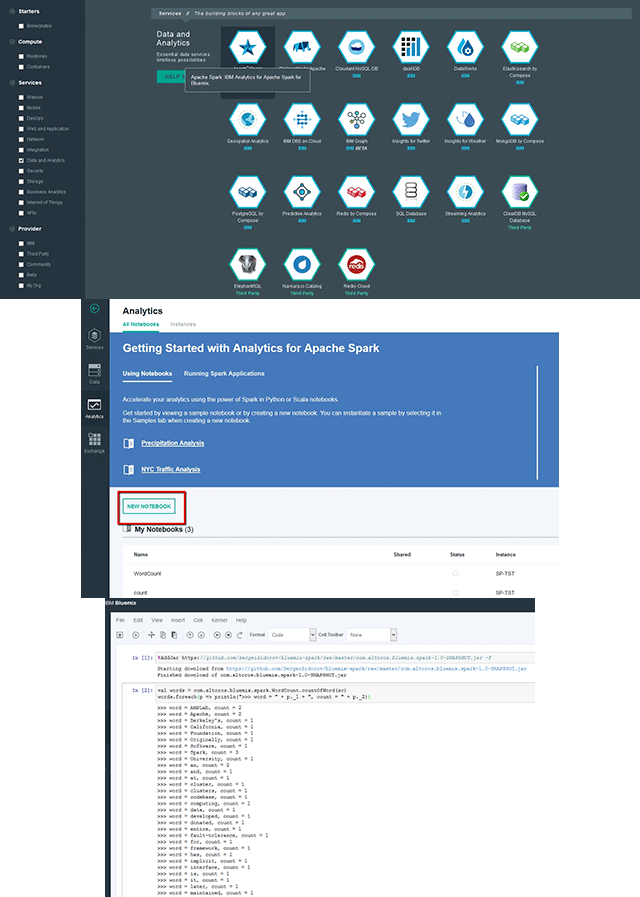
Apache Spark is a well-known name in the machine learning and developer worlds. For those who are unfamiliar, it is a data processing platform with the capacity to process massive datasets. It can do so on one computer or across a network of systems and computing tools. Apache Spark also offers an intuitive API that reduces the amount of repetitive computing and processing work that developers would otherwise have to do manually.

Today, Apache Spark is one of the key data processing and computing software in the market. It’s user-friendly and it can also be used through whatever programming language you’re most comfortable with including Python, Java and R. Spark is open-source and truly intuitive in that is can be deployed for SQL, data streaming, machine learning and processing graphs. Displaying core knowledge of Apache Spark will earn you brownie points at any job interview.

To gain a headstart even before you begin full-fledged work in Apache Spark, here are some tutorials for beginners to sign up for.

  1. Taming Big Data with Apache Spark and Python (Udemy)

This best-selling course on Udemy has fast become a go-to for those looking to dive into Apache Spark. More than 47,000 students have enrolled to learn how to:

  • Understand Spark Streaming
  • Use RDD (Resilient Distributed Datasets) to process massive datasets across computers
  • Apply Spark SQL on structured data
  • Understand the GraphX library

Big data science and analysis is a hot skill these days and will continue to be in the coming future. The course gives you access to 15 practical examples of how Apache Spark was used by industry titans to solve organisation-level problems. It uses the Python programming language. However, those who wish to learn with Scala instead can choose a similar course from the same provider.

  1. Machine Learning with Apache Spark (Learn Apache Spark)

This multi-module course is tailored towards those with budget constraints or those who are unwilling to invest too much time, preferring instead to experiment. The modules are bite-sized and priced individually to benefit those just dipping their toes. The platform’s module on “Intro to Apache Spark” is currently free for those who want to get started. Students can then progress to any other module which catches their fancy or do it all in the order prescribed. Some topics you can expect to explore are:

  • Feature sets
  • Classification
  • Caching
  • Dataframes
  • Cluster architecture
  • Computing frameworks
  1. Spark Fundamentals (cognitiveclass.ai)

This Apache Spark tutorial is led by data scientists from IBM, is four hours long and is free to register for. The advantage of this course is that it has a distinctly IBM-oriented perspective which is great for those wishing to build a career in that company. You will also be exposed to IBM’s own services, including Watson Studio, such that you’re able to use both Spark and IBM’s platform with confidence. The self-paced course can be taken at any time and can also be audited multiple times. Some prerequisites to be able to take this course are an understanding of Big Data and Apache Hadoop as well as core knowledge of Linux operating systems.

The five modules that constitute the course cover, among other topics, the following:

  • The fundamentals of Apache Spark
  • Developing application architecture
  • RDD
  • Watson Studio
  • Initializing Spark through various programming languages
  • Using Spark libraries
  • Monitoring Spark with metrics

Conclusion

Apache Spark is leveraged by multi-national million-dollar corporations as well as small businesses and fresh startups. This is a testament to how user-friendly and flexible the framework is.

If you wish to enrol in a Machine Learning Course instead of short and snappy tutorials, many of them also offer an introduction to Apache Spark. Either way, adding Apache Spark to your resume is a definite step up!

Data Literacy Is Very Much a Life Skill– Here Are 4 Reasons Why?

The world is no stranger to data; in fact, in recent times, the world has found itself being bombarded by more facts and statistics than ever before. At quite the same speed, people have also been faced with fake facts, viral social media forwards with little to no truth.

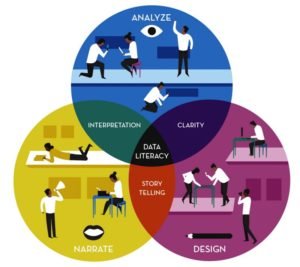
Being data literate has moved from being a niche requirement to being a life skill that allows people to distinguish between fact and fiction. Data literacy is a way of exploring and understanding statistics in a manner that provides meaning and insight.

This meaning isn’t relegated only a data science career or to businesses looking for an edge over competitors. It applies to society and its interconnected systems as a whole.

To drive the point home, here are a few advantages that data literacy offers when looked at as a life skill:

Recognising the Sources of Data

Data is everywhere, especially in a world where nearly everything is digital and produces and consumes more data. There are many different ways in which data exists, including graphs, images, text, speech, video, audio and more. Recognising the different sources of data is the first step towards working with data. The sources, formats and types all have a role to play in determining the use (and potential misuse) of data, which in turn drives data literacy.

Acknowledging the Self as a Consumer and Producer of Data

The messages you send, images you post and likes you leave on social media are examples of data. So are the transactions you make and the searches you conduct on search engines such as Google and Bing. Today, nearly every single person in the world is a data producer; those sources of data are vital to value-generating processes across industries and markets.

Similarly, people are daily consumers of data even if they don’t perceive it as that. The COVID19 pandemic has brought this into the light even further– front page statistics are at the back of everyone’s mind, as are the names of containment zones and the best practices for sanitisation.

Recognize Biases and Fallacies

Data literacy gives the people more agency to call out those producing statistical data that is biased, twisted or outright incorrect. As citizens, consumers and valued members of a society, it is imperative that every individual is able to identify false promises or glossed-over issues that allow wrong-doers to continue as they were.

Data ScienceData literacy gives people the power and the evidential backing to call out those intentionally or unintentionally propagating mistruths and fallacies through awry statistics. This way, data literacy plays a pivotal part in politics, economics and ethics of a society, indeed of the world.



Improves Data Storytelling

Instead of data points presented on their own, data that is presented as descriptive stories make individuals more likely to understand the effect, decipher trends and make more educated decisions. While data storytelling is imperative to learn for those taking a data science course, it is just as important for members of all other fields to better present their arguments such that they catch eyes.

Data has never been a strictly academic factor; however, it has often been painted as complicated, invasive or unnecessary to penetrate everyday lives. Data storytelling ensures that data is taken even further out of that box and presented as actionable insights to even the average Joe Bloggs.

Conclusion

The focus on data science and literacy shouldn’t just be restricted to mathematics and algorithms but everyday applications of data in daily lives. Data understanding allows people all over the world to take more control of what they’re producing and consuming. Data fluency and literacy is achievable by all.

Is Financial Modelling a Good Career?

A career in financial modelling in India is a popular option for aspirants. The immediate proofs of the growth in the field are the startup bubble of the current decade and the accommodating nature of the Indian government. Today, both private companies and public enterprises are looking at sharpening their financial decisions in a volatile market. And helping them in this pursuit are concepts such as financial modelling, quantitative finance, and mathematics.

If you are a student looking to build a career in this niche, you should start by learning financial modelling. The first step would be to create a rough path of your career journey, which will involve education, internship, followed by a job. This will require you to deeply understand the field and the work that you are expected to do. Here is a basic starter guide.

What is Financial Modelling?

Financial modelling is a subfield in the larger corporate finance sector and involves using mathematical models and tools to mimic the performance of an asset or a portfolio. It primarily focuses on understanding the life curve of a financial asset before it is activated. This allows the courses for financial analyst to understand the loopholes and risks in the asset and tweak/plan accordingly when it actually goes live.

Organizations make use of financial modelling to make better decisions when it comes to investments, spending, and taxation. When you learn financial modelling, you will start with these basics and then go on to master the concepts and tools used in it.

What Does a Financial Modelling Career Look Like?

As a professional financial modeller, your job will be to prepare a forecast for a financial asset, a portfolio, or a project. The idea is to mimic its performance in the real finance world and obtain insights. These insights will, in turn, be used to improve the execution of that asset or project.
In corporate finance, financial modelling has a huge scope as companies are constantly looking to improve their financial infrastructure. Following are some of its major applications:

  • Business valuation
  • Capital budgeting
  • Cash flow forecasting
  • Working capital management

Apart from having excellent math skills, you will also need to know a variety of tools that are used in financial analysis. But theoretical understanding will come first, so you should explore financial modelling as a career field before making the jump from your existing path. An online financial modelling course will help you make this decision.

The Scope of a Financial Modelling Career in India

As mentioned above, financial modelling has already taken off in the country. Today, professionals who are expert in financial analysis and corporate finance are considered hot picks and are in great demand. Finance is already a lucrative industry for aspiring professionals and financial modelling acts as a great niche to focus on.
Because it is a field that is still in a nascent stage, the demand for such skills is high. This makes it a good career for finance students who may want to branch out and make themselves employable in the future.
Instead of studying finance in general, why not pick this niche and make a career out of it? At a time when jobs are being cut across industries, a career in financial modelling promises a safe bet. As long as there is money in the world, professions like financial modelling are here to stay.

There is no doubt that financial modelling makes for a good career for aspiring students. The need, then, is to start preparing right now when there is ample time in your hands. Learn financial modelling and kickstart the next phase of your life.

Also Read: What is Scope in Financial Modelling

How Business Management Training Can Help To Enhance The Quality of The Product?

Business management training allows the trainees to formulate a broad mindset about the functioning of a business and various elements associated with it. One can get a subject-specific understanding through business management training.

Some specific fields that you can master after business management training are:

  • Marketing
  • Product
  • Markets
  • Customers
  • Communication
  • Finance
  • Operations
  • Strategizing
  • Policy Formulation
  • Information Technology

Apart from these fields, there are other subjects as well which can help you become a successful business manager and contribute largely towards the enhancement of the quality of a product.

How can the quality of a product improve through business management training?

  • Understanding the customers

In business management training, the trainees get to know a lot about consumer behavior and various theories like price sensitivity. In this wake, business management training can help to understand the perspective and requirements of the customers.

Changes or modifications in a product can be made based on the customer-oriented research of the market. Accordingly, enhancements in the quality of the product can be made to satisfy the customers.

  • Easing out the communication process

Business Management CoursesTo enhance the quality of a product, all the employees of an organization must have a common mindset and are well coordinated. In case there are some disputes or lack of communication in the organization, it is hard to bring positive changes in any aspect of business functioning.



In business management training, the trainees are guided well about maintaining healthy communication within an organization. This can help in easing out the process of communication leading to a positive work environment that can facilitate enhancement in the product and its quality.

  • Understanding the importance of demand

Whenever the demand for a specific product is created in the market, it needs to be fulfilled quickly. Imagine a situation; where customers are demanding a product but there is no supply in the market, gradually the demand is subject to fall.

In that regard, the managers need to be assured about the proper management of the demand of a product as the quality of any product does not only mean its tangible quality but it also means the services being offered before and after buying it.

Business management training teaches about the demand for a product in the market and some effective ways to deal with it.

  • After-sales services

Lately, the quality of a product has no longer remained its tangible and physical quality but involves associated services as well. Whenever a customer buys a product, after-sales services like fitting the product, exchanging or replacing are necessary.

Business management training plays a pivotal role in enhancing product quality as areas like information technology and consumer behavior are widely covered which can act as the guiding light to improve performance.

  • Market forecasting

A manager must have a knack to foresee the trends of the market soon. This can, however, be attained through business management training. The trainees get a piece of proper knowledge about the product market and the change in trends depending upon various dynamic features.

Anticipating the market trends can help the company to be prepared for the challenges that may arise in the future by making necessary enhancements in product quality.

Considering the current scenario where businesses have begun to flourish, a business management career can turn out to be a great option.

Business Management CourseIn case you require detailed knowledge about the courses and subjects covered under business management training, you must look out Imarticus learning. Imarticus offers you professional courses in the field of business management along with assistance in placements in certified companies.

Why Artificial Intelligence is Invaluable for Weather Forecasting and Disaster Prediction

For most people, weather forecasts are simply indicators of whether they need to carry an umbrella or throw on a coat when they go outside. However, for many industries and types of individuals, weather changes and patterns have a direct impact on their lives and livelihoods.

Agriculture, for example, benefits from accurate weather forecasting because farmers can make better planting and harvesting decisions. For governments, weather forecasts factor in their budget plans and disaster relief fund allotments. Businesses that rely on clear weather (or rough weather) depend on weather forecasts to drive several of their operational processes.

From all this, it is easy to gather that accurate weather and disaster forecasting carries much more weight than we think. Artificial intelligence augments the accuracy and reliability of weather forecasting, especially given that so many details fluctuate every day and with every geographical location. It is a great fit, given the volume of data is nigh impossible to sift through with manual labor alone.

In short, the future of artificial intelligence will also see its increasing use in the weather and natural disaster forecasting domains. Here are  a few more reasons why:

  • Managing several sources of weather data

There are currently more than one thousand weather satellites orbiting the  Earth, each sending back weather data dumps to various collection points. These data dumps are a mix of information about temperatures, cloud patterns, winds, and pollution levels. Then there are thousands of government and private weather stations around the world, each conducting their own real-time research on weather and climate.  It is nearly impossible to sift through all this data manually, but AI algorithms can do it in a matter of hours.

  • Sifting through multiple data categories

Suffice to say that the amount of data generated from satellites and personal weather stations is too much to fathom, and impossible for humans to sift through. However, Artificial Intelligence training can be applied to segregate and classify data from dumps, as well as to pull out key insights for analysis. This is a preliminary process in the weather prediction model, wherein AI segregates data based on indicators, flags significant shifts or patterns, and keeps data classified such that predictions are made as accurately and as scientifically as possible.

  • Preparing for potential disasters

Beyond real-time predictions, AI is also used to identify patterns and prepare for natural disasters in advance, off the back of previous circumstances. It may also split this data between geographies, allowing disaster management teams to evaluate which areas will be hit the hardest and prepare for that. This data is also invaluable for civil engineering teams, architectural firms, and city planning teams who need to take weather into account when mapping out residential and commercial areas.

  • Sending out warnings

Apart from predicting natural disasters, AI can also be leveraged to send out warnings to potential danger zones. This is invaluable when it comes to saving human and animal lives and generally preparing areas for the worse. Warnings can be sent out through media alerts, push notifications, and citizen broadcasts; whatever the method of delivery, AI is vital to sending such notices out in time and to the right people to curb panic and facilitate seamless planning.

Artificial Intelligence Training for Weather Forecasting

Weather forecasting teams and companies need skilled AI scientists and engineers to apply theory to practice in real-time. They need AI professionals who can create automated setups to free human minds for higher-order thinking; they also need pros who are fast on their feet and adept at creative problem-solving.

Using AI for weather forecasting is a whole new ball game – one on which many lives depend.

Imarticus Learning Launched an MBA in Investment Banking and Equity Research in Collaboration with JAIN Online

Imarticus Learning, one of the leading vocational training companies in India, is cooperating with JAIN (Deemed-to-be University) to launch MBA training programs in the field of investment banking and equity research. The recently launched program aims to further strengthen JAIN (Deemed-to-be University)’s strong MBA programs in the field of investment banking.

Therefore, all paradigms of the new investment banking business are covered. The MBA aims to give students a deeper understanding of the key elements of the investment banking field and provide practical training for industry experts. The unique program will also provide an immersive educational experience.

MBA in Investment Banking and Equity ResearchEnable students to apply what they have learned to actual business scenarios and prepare for the future.

Through a unique investment banking pedagogy, industry associations, and extensive professional support, MBA Online programs provide students with 5 LinkedIn courses, e-learning methods, JAIN Alumni Connect, extensive guidance, and career advice to obtain a world-class learning experience.

Nikhil Barshikar, the founder of Imarticus Learning, said: “The world of Banking and Finance is evolving rapidly, driven by the next generation of transformative technological innovations. The complexity and dynamics of the new investment banking business have also adapted to this progress. “We recently launched. The investment banking MBA course and its 360-degree teaching method will enable students to keep up with investment banking trends and become future-oriented professionals.

The MBA program provides students with a comprehensive learning experience and is a catalyst for building a successful career. “We are very happy to work with a renowned institution like JAIN (Deemed-to-be University), which is known for its emphasis on teaching, entrepreneurship, research, and sports, and we look forward to further strengthening the MBA program while building a strong relationship,” Barshikar said. …Dr. Raj Singh, Vice President of JAIN (Deemed-to-be University) said: “With the rapid development of the banking and financial industries, high-quality professionals are needed.

The new investment banking MBA program provides students with a 360-degree perspective. “I am very happy to work with an excellent institution like Imarticus Learning and look forward to fruitful cooperation,” Singh said.

The one-year MBA in banking provides students with various career opportunities, including financial analysts, investment banking executives, and risk management. Consultants, money market analysts, global financial researchers, money market analysts, financial market consultants, corporate bank treasurers, and money laundering prevention experts.

Including Latari’s outstanding career, the total amount of the program is 190,000 Indian rupees, and a one-time registration fee is 2,000 Indian rupees and the exam pension is 3,000 Indian rupees. The plan also offers EMI-based payment options.

Therefore, if you are looking for an entry-level job and have a relevant academic background, then you do not need an MBA in Investment banking.

However, if you are looking for a highly professional job, then an MBA is definitely for you. help you. Increase the credibility of your personal information. If you don’t have a relevant academic background and want to switch from another industry, MBA courses will definitely help.

For more brief, you can explore –

https://mediabrief.com/imarticus-learning-jain-launch-mba/

FinTech Ecosystem in India – Trends, Top Startups, Jobs, Challenges, and Opportunities

Introduction

Fintech services in India are witnessing growth in recent years. India is one of the top five markets in the fintech sector. The Fintech sector in India received a finding of about $270 million in 2016 and it has grown a lot since then.

Fintech courses and jobsThe technology innovation in India and the surge in usage of smartphones has helped in the growth of fintech services. The recent coronavirus outbreak has also made people shift towards online modes of transferring money. Let us see the trends and opportunities in the fintech sector in India.

Trends in Fintech in India

The top trends in fintech that one should look for in India are:

  • Platform as a Service (PaaS) is helping fintech companies to provide more services to their clients. With the help of PaaS, fintech firms can provide payment processing services, credit risk management services. It also helps in resource management & team collaboration.
  • The usage of new-age technologies like machine learning, artificial intelligence, robotic process automation is also trending. These technologies are helping in generating automation & helping in processes like online credit report generation, customer support services, etc.
  • The usage of Blockchain as a Service (BaaS) in fintech services is also witnessing a growth.
  • The shift of traditional financial institutions towards fintech is also booming in India. A lot of traditional banks have come up with their own mobile applications to compete with the fintech giants.

Top Start-ups in the Fintech Sector in India

Some of the top fintech start-ups in India are as follows:

  • MobiKwik
  • BankBazaar
  • One97 Communications
  • Phonepe
  • Policy Bazaar
  • Capital Float
  • CCAvenue

Jobs in the Fintech Sector in India

Fintech is a combination of banking services & technology. IT experts in data analysis, blockchain, machine learning will be in huge demand in India as they will be required in building smart algorithms that can automate the financial processes and can save time & money of any particular fintech firm.

Job opportunities will also be available for mobile application developers, UI/UX designers, etc. There are many fintech start-ups/firms in India and thus more jobs will open in the banking & IT sector.

Challenges & Opportunities in the Fintech Sector 

There are a lot of challenges faces by fintech companies. They have to make sure that their online transaction platform is secure. They have to secure the sensitive information of their users at any cost. They have to also cope up with the rules and regulations laid by the government.

The lack of deep-technology experts in India has also created hiring problems for fintech firms. The recent coronavirus outbreak has also impacted the working culture of the employees in the fintech sector. The monitoring of staff is also done remotely via online mediums.

There are a lot of opportunities in India in the fintech sector. The government of India also promotes the use of digital transfer mediums. The government of India is also providing financial aid to start-ups up to 1 crore if your idea is worth it. There is a huge user base in India because there is a lot of population and almost everyone is having access to smartphones. In recent years India saw demonetisation being imposed by the government which has fueled the use of fintech services.

Conclusion

Fintech services are challenging the traditional banking services up to a great extent in India. If you are thinking of building a Fintech Career, then perhaps this is the right time to step in this sector.

Career in FintechYou can learn more about this industry via various Fintech courses available on the internet.

This was all about the fintech trends, challenges & opportunities in India.