How to Start a Supply Chain Management Career?

How to Start a Supply Chain Management Career?

A supply chain management career is the best choice for those who are interested in research and logistical development. Students with a basic knowledge of programming and operations management can opt for the certificate course from Imarticus Learning.

This course will prepare students for a career as production planner, purchasing and warehouse manager, logistics resource planner, and maintenance supervisor. There are many more jobs in inventory control, procurement, and logistics administration.

Get a Degree in Supply Chain Management

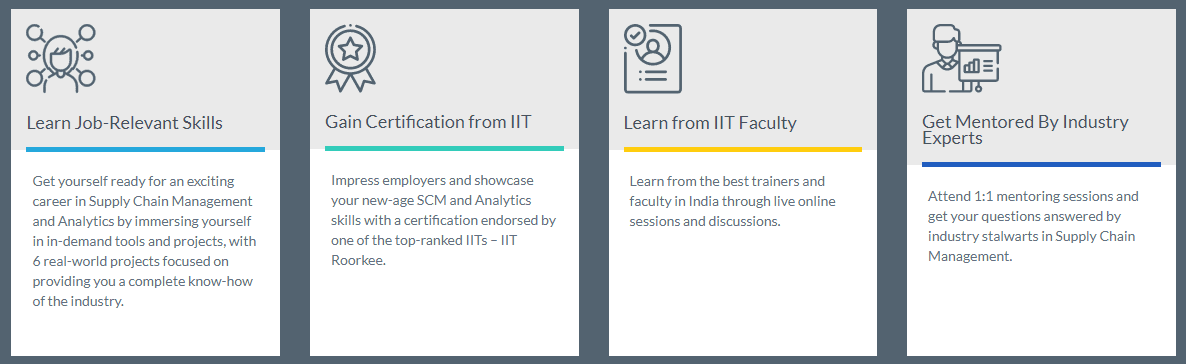
To start a career in supply chain management, aspirants should opt for an SCM course. Imarticus Learning offers professional certification in supply chain management & analytics.

The certification is provided in collaboration with IIT Roorkee. Live lectures are organized by industry professionals and academicians. Students are encouraged to participate and interact with their peers and instructors.

The supply chain management course from Imarticus Learning requires students to complete projects that are based on real industry issues. These projects help students develop strategic planning skills at operational levels. For students aspiring to become data scientists, supply planners, demand planners, or supply and operations planners, this certificate course is the best choice.

Mentoring sessions are held frequently. These sessions are great for building networks and gaining hands-on experience. The campus immersion program at IIT Roorkee is a great opportunity for students to interact and develop soft skills.

Things to Know Before Starting a Career in Supply Chain Management

A supply chain management career is very rewarding and provides many opportunities. Students who wish to study supply chain management and build a career should keep in mind the following points.

  • Supply chain management is data-centric.

In supply chain management, professionals focus on data-driven decisions. A large volume of data is processed on a daily basis and analyzed to generate actionable insights. The extraction of relevant data needs to be accurate in order to create an efficient supply chain.

  • Supply Chain Management includes more than storage and movement of products.

supply chain management courses in India

The storage of products and movement from supplier to manufacturer, then to wholesaler to retailer, and finally to the consumer.

But the job also includes supply chain planning and monitoring of finances.

The certificate course from Imarticus Learning on supply chain management and analytics will help students learn every aspect.

  • Supply chain managers require soft skills for networking.

Supply chain managers need to collaborate and communicate with clients and other teams. This is why it is essential to have soft skills that include communication, people skills, and social intelligence.

To have a successful career, new professionals in the field should develop connections. Networking is essential to expand the knowledge base. Imarticus Learning helps students develop such skills through interactive sessions and project work with industry experts.

  • The supply chain management industry is competitive.

While there is scope for advancement in supply chain management, the industry is very fast-paced and challenging. The competition is intense and managers need to be able to process the planning and movement of goods quickly and efficiently.

  • The supply chain needs to be environmentally sustainable.

A supply chain manager should focus on creating an efficient supply chain. Such chains can optimize the movement of products which reduces wastage. This makes it more sustainable and environmentally friendly.

The professional certification in supply chain management & analytics from Imarticus Learning is ideal for learning relevant skills. This is a 6-month long program and prepares students for a lucrative career in supply chain management.

A supply chain management course can help candidates start and continue a successful career. Since there are many job opportunities in the industry, certification from a leading institute like Imarticus Learning allows students to create an impressive portfolio and get jobs in their fields of interest.

What Are the Roles of a Cloud DevOps Engineer and How To Become One?

The fields of software engineering and IT are expanding. DevOps engineering merges the development of software applications with various IT operations.

This has increased job opportunities in the industry. Various companies require the services of a Cloud DevOps engineer. Therefore, students with a bachelor’s degree in engineering can seek such specialization through an SCBI course.

What roles does a cloud DevOps engineer have?

A professional cloud DevOps engineer has many roles and responsibilities in the software engineering industry. The code changes constantly in DevOps, therefore an engineer needs to be involved in constant development and automation.

The primary role of a DevOps engineer is to find the right combination of code for the integration of the various elements in SQL data. DevOps engineers also work with IoT cloud and the development of IoT applications to update software and firmware. Apart from this, a DevOps engineer fulfills the following roles.

  • DevOps engineers deal with the entire IT infrastructure and create combinations of code that are suitable for the needs of a business. DevOps engineers are tasked with monitoring the performance of specific codes in a multi-tenant setup.
  • DevOps engineers also work in teams. Teams have to handle coding and scripting, and the challenges that arise from it. These teams develop software kits and libraries to optimize and automate various processes.
  • A team of DevOps engineers collaborates and works with other professionals to deliver tools that suit the needs of a business and OS. They are also involved in process re-engineering.

DevOps engineers are constantly designing and testing new applications. Usually, tools like Jenkins and Maven Git are used. The engineering teams work in close collaboration with the operations and development teams. This helps businesses create suitable services that improve customer experience.

These roles are ideal for DevOps engineers because they have the necessary skills. A DevOps engineer will be trained in the following aspects.

  • Scripting languages including Shell, Python, Ruby, and Pearl.
  • Operating and working with Linux environment.
  • Use of management tools like SaltStack, Ansible, and Puppet for configuration purposes.
  • Regulation of software development processes with the operations and integrations teams.
  • Handling of SaaS projects by using CI/CD processes and tools like Jenkins and Maven Git.
  • Utilization of Docker, Kubernetes, and other such tools for dealing with VM’s Containers

How to become a cloud DevOps engineer?

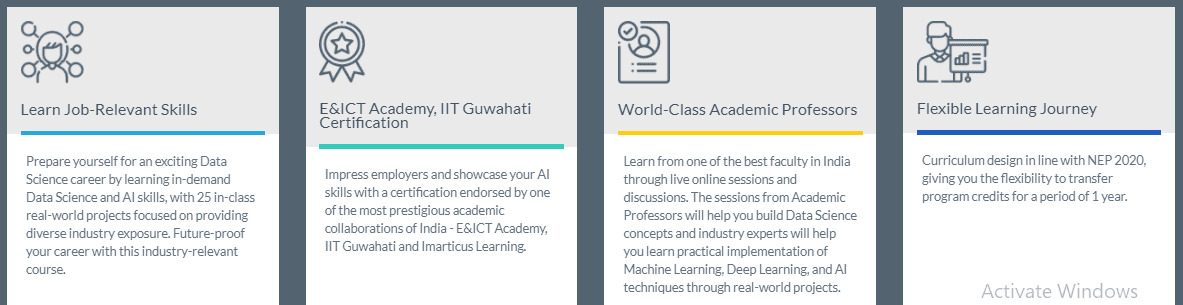
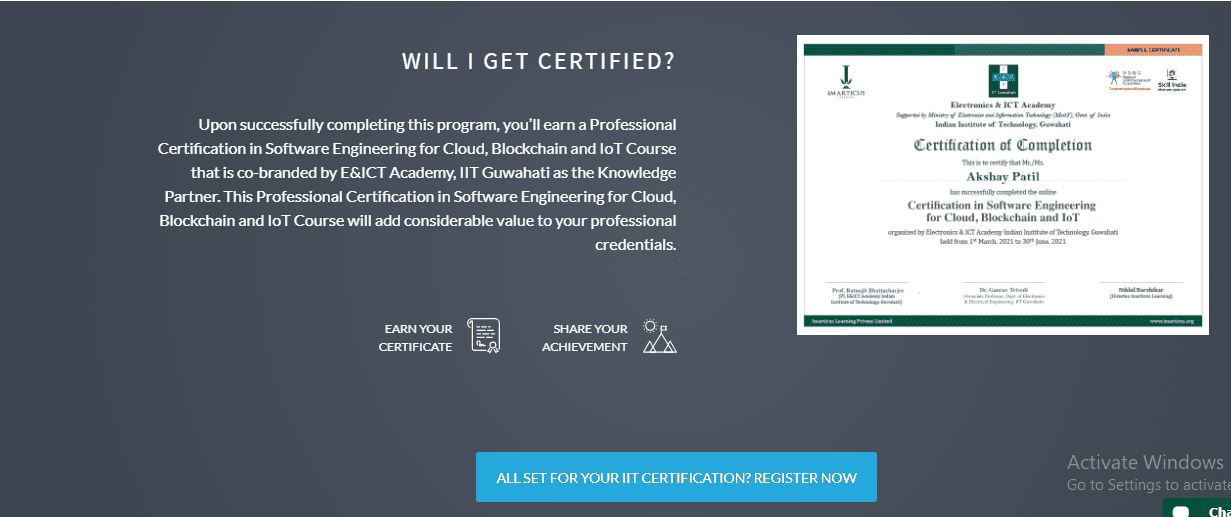
For those aspiring to become a Cloud DevOps engineer, a Certification in Software Engineering for Cloud, Blockchain and IoT from Imarticus Learning is the best choice. The certification is provided by the E&ICT Academy and IIT Guwahati.

software engineering courses in indiaThe curriculum of the course has been created in collaboration with industry experts.  Students will be able to participate in live sessions and interact with professionals and academicians.
Imarticus Learning’s course on software engineering provides specializations in IoT cloud and blockchain. Students are asked to complete 15 assignments. Instructors guide them through 6 industry projects that deal with real challenges.

software engineering courses in IndiaThe course is for 9 months and it prepares students to implement DevOps applications in diverse fields. The assignments and projects help students develop relevant skills for the software engineering industry. Working with industry professionals in interactive sessions will also allow students to have better exposure and hands-on experience.

The curriculum of this certification course in software engineering for Cloud, blockchain, and IoT has been designed according to NEP 2020. Due to this design, Imarticus Learning allows students to transfer their credits after a year. This makes the learning process much more flexible.

software engineering courses in IndiaTo become a successful professional cloud DevOps engineer, students need to gain industry experience.

Imarticus Learning provides live training and even includes a campus immersion program of 3 days. Students develop necessary soft skills and get placed with reputable companies.

Imarticus Learning: Fuelling India’s Data Analytics Workforce

What is Data Analytics?

 Data Analytics involves analyzing raw data and drawing meaningful conclusions and patterns from that data. In data analytics, a lot of processes are automated to eliminate manual intervention. You can take up a data analytics course to understand the intricacies of the subject.

In data analytics, a lot of algorithms are prepared to make the job easy. These days you can take up a data analytics course with placement. A data analytics certification course makes you credible enough for the job.

Understanding Data Analytics

best data analytics certification courses in IndiaData Analytics can be complex when you try to understand it. A data analytics certification course can help you know what the subject entails and how to make the best use of it. The data analytics course will also introduce you to the world of algorithms.

Data Analytics is a broad subject that includes several diverse types of data analysis techniques.

Data Analytics can be used to mine different kinds of data insights. These insights can be used in improving processes and transforming them for the convenience of the data users. You can take up a data analytics course with placement to practically apply these algorithms and techniques of data sorting and data analysis.

Companies like Imarticus Learning are tirelessly working towards making the Indian workforce tech-savvy and well-versed with data analytics and its application. If more and more workforce joins hands with Imarticus to learn data analytics, the workforce will become digitally enabled to deal with a large amount of data. They would know how the data would be put to proper use.

Use Cases of Data Analytics

Data Analytics training can be used to understand several trends that dominate the market. You can apply predictive analysis using the insights from these data points. Several industries are now making use of data analytics to optimize their processes.

For instance, in the manufacturing industry, data analytics is used to store and record runtime, work queue, and downtime of all the machines in the factory. The data can then be utilized to optimize all the processes and to make manufacturing better.

However, data analytics is not limited to spotting bottlenecks in the process. It can do much more. It can make the entire process better and more efficient. You can also use data analytics to speed up the manufacturing process as a whole, as with data analytics, you can reduce the waste to a great extent.

Types of Data Analytics

If the workforce knows how to use Data Analytics, they will be able to use technology better. Some of the types of Data Analytics are:

  1. Descriptive Analytics: This is used to understand what has happened over a while.
  2. Diagnostic Analytics: If something happens, you can analyze what went wrong using diagnostic analytics.
  3. Predictive Analytics: In the case of predictive analytics, the algorithms are used to predict a future trend.
  4. Prescriptive Analytics: These algorithms are used to take a suggestive measure for any action.

Conclusion

Building an analytics workforce is the need of the hour. Therefore, it is essential to train more professionals and prepare them for the analytics world. Digital literacy is very important to automate functions, and data analytics is an integral part of it.

Imarticus is on a spree to enable people to use data analytics to decode patterns and understand data. Imarticus has several courses on data analytics. You can enroll in all of these courses to get an in-depth insight into how data analytics works and make the best use of it. The certifications from Imarticus have a great value in the industry.

2021: The Year of Upskilling With Online MBA Courses Across FinTech and Investment Banking Sector

Introduction

In this economic crisis, there is a steep decline in the hiring of MBA graduates across the domains. For most students, this economic crisis is the time to pause their career growth and utilize this time to upskill themselves. The majority of the online business schools expect an increase in demand for online MBA courses in the year 2021.

The vaccination drives across the globe have raised the hopes for the return of campus teaching, but it would be too early to say when the same will be restored. Of course, the learning is faster with networking amongst peers and faculty, but till the pandemic situation gets back to normal, online education is the only way forward.

best online MBA coursesNot only for students but, for working professionals as well, it is the right time to upskill themselves and opt for the best online MBA courses along with their ongoing jobs.

 What is FinTech?

FinTech is the integration of finance and innovative technology that ensures efficient financial services to the customers. The continuously evolving world of financial technologies has changed the way businesses are modeled by various financial institutions.

To provide error-free services to the customers most of the companies are migrating to adapt the digital tools such as AI, cloud computing, data analytics, blockchain, etc. This advancement has rekindled the desire to opt for lucrative career prospects associated with financial services, of which FinTech is right at the top.

 MBA in Fintech

To cater to the increasing demand for talent and education in the finance world, MBAs in fintech is becoming the popular choice of students. An MBA in Fintech will enable students to have an in-depth understanding of cutting-edge technology and its application in the banking and financial sector.

The online MBA courses will enable students to strategize and develop the innovative model to use the appropriate tools at the right place.

This will help to build high-quality commerce products and leverage future trends in fintech. Students who will equip themselves with an understanding of the concepts such as Algorithm Trading, Robo-Advisory, Peer Peer Lending, Insure Tech, etc. will have an upper edge in fintech ventures.

The online MBA courses that include innovative techniques such as blockchain, digital advisory, and trading systems, design thinking artificial intelligence and machine learning, peer-to-peer lending, equity crowdfunding, and mobile payment systems, etc. which are the core of FinTech should be the key choice of the students.

What is Investment Banking?

The underlying difference between a normal bank and the investment bank is the customers. Any general bank serves the public, whereas the investment bank serves the corporations and enterprises. Investment banks advise corporations and governments in their stocks and bonds, mergers, and acquisition matters to raise the required capital and maximize profit.

Investment banking at a global level is growing after the recent financial crisis and getting back to normalcy, in terms of profitability.

 Investment bankers hold prominent positions in many financial institutions across the globe. The investment banker’s key role is to identify the finance-related risk with business operations in order to save time and money for the organizations. Besides the obvious accounting and financial skills, an investment banker should possess soft skills such as effective communication and seamless movement across the industry.

 MBA in Investment Banking

best investment banking courses with placement in IndiaTo pursue a career in investment banking in the recent recession, an online MBA in investment banking is the preferred choice of students and working professionals. MBA graduates from well-recognized institutions have an upper edge when it comes to hiring in investment banks.

It is very important to check the richness of the finance curriculum along with other courses of the college when looking at MBA.

While studying a finance curriculum students should take other courses such as marketing, human resources, and technology into consideration. It is always better to research the placements of the college before enrolling yourself in the course.

The Scope of Cryptocurrency Technology in India

In addition to the day-to-day politics, if there is any news which haunts the television shows in India, it is cryptocurrency. In order to have an idea about the scope of cryptocurrency in India, it is equally important to go into the depths of its evolution. It has gained acceptance all over the finance sector. However, in India, the Reserve bank of India has declared transactions to be independent, and the Indian government is not answerable to any gains or losses.

WHAT IS CRYPTOCURRENCY?

Cryptocurrency is a virtual currency which utilises encryption techniques to make transactions. The plus point of using this currency is that every single deal you make is transparent and secure. Some of the peculiar features of this currency are:

  1. Transfer of funds between two parties becomes more relaxed with a negligible processing fee.
  2. It makes use of blockchain technology to secure and encrypt transactions, whose database is highly secure and unalterable.
  3. It is outside the ambit of governments and central banks of countries.


Also Read: Top 6 Incredible Benefits of Cryptocurrency
However, there are some risks associated with it as well. These are as follows:

  1. The rates of exchange fluctuate by large margins which makes the little investment bit risky.
  2. These are prone to hacking.
  3. These are often used to make transactions for activities which are harmful to a nation’s economy such as terror funding or money laundering.

Despite all the odds, cryptocurrency is still the favourite investment spot for those involved in the trading world.

BITCOIN- THE MOST POPULAR CRYPTOCURRENCY

Bitcoins are the rulers of the cryptocurrency market. Although these are not legal tenders, still they chart high on market trends. Bitcoin is the first digital currency used to make transactions. The price of a bitcoin depends on bitcoin mining. More the number of bitcoins, the more it becomes difficult to add in the blockchain. These are eminent rivals to government currency.

SCOPE OF CRYPTOCURRENCY IN INDIA

A country like India which has recently faced demonetization has developed great affection for cryptocurrencies in the recent past. It has been nearly five years since bitcoin made its debut in Indian Financial markets. In India, the transactions made through cryptocurrency are on the rise despite the notifications circulated by the finance ministry. This makes it clear that the upcoming future of bitcoin in India is dazzling. There are about 1548 cryptocurrencies currently operational in the market available as an alternative to Bitcoin.FinTech Banner
Since bitcoin is not available in the physical form, this virtual currency can be converted into physical form by listing it on various online exchange platforms. Taxing the cryptocurrency is another way to legalise this currency. It becomes clear that it is a risky investment option, but there is no harm in opting for a calculated risk.

CONSEQUENCES OF BANNING CRYPTOCURRENCY IN INDIA

  1. Ban has never been a solution to any problem. Instead, a ban can result in brain-drain. If investors are not allowed to make transactions in bitcoin, they might shift to other countries like US and Canada where the use of cryptocurrencies is permissible.
  2. Money- minded people will never mend their ways. Instead, they would find some loopholes in the system which will eventually lead to an increase in cryptocurrencies through illegal means.

The government should make its stand clear since banning a promising technology might mean that India has to suffer backlog in a technique in which the whole world is continually improving. Realizing the importance of bitcoin, Marc Kenigsberg aptly said “Blockchain is the tech. Bitcoin is merely the first mainstream manifestation of its potential.”
Article Source:

What is the Job Description of an IoT Software Engineer and What Are the Common Interview Questions for the Role?

The job opportunities of an IoT software engineer are varied as many companies are investing in the implementation of IoT technology. Therefore, students with a bachelor’s degree in engineering should consider Imarticus Learning’s certificate course on software engineering. The course will also teach new-age skills in IoT Cloud and blockchain.

Job Description of an IoT Software Engineer

An IoT software engineer is tasked with the development of devices embedded in the IoT technology. The job description of an IoT software engineer requires skilled candidates to conduct thorough research and design sensors in connection with IoT devices.

The job also requires IoT engineers to invest considerable time and effort in testing devices. Rigorous testing is necessary to create devices that will connect seamlessly. Every feature of these devices requires different sets of coding. This is what the SCBI from Imarticus Learning teaches students. With specializations in blockchain and IoT Cloud, this software engineering course is ideal for meeting the job requirements of a well-paid IoT software engineer.

What interview questions can IoT software engineers expect?

Students who wish to become IoT software engineers will have to sit for interviews with several companies. Most interviewers ask the following questions.

  • How are IoT devices used in this age?

IoT devices contribute to the global capital. Almost every sector, including the education sector, governments, and transportation, make use of IoT devices. At an interview, candidates evolution of technology in this age

  • What is the basic concept of IoT devices?

Candidates are expected to explain the working of IoT devices in detail. Interviewees will have to elaborate on various aspects of IoT technology including data processing, communication, intuitive performances, and sensor devices.

  • What effect does IoT have on everyday life?

IoT technology is present in various aspects of life. The use of smart devices has increased and most people invest in them. These devices are designed with IoT technology. Candidates will have to elaborate on the implementation of IoT in such areas.

  • Can you describe the different IoT components?

Here, candidates will have to explain the 4 components of IoT. These are sensors, connectivity, user interface and data processing. Interviewers will expect candidates to provide details on each component.

  • Do you think IoT can influence the formation of smart cities?

Smart cities implement IoT technology in the promotion of projects that are energy-efficient and versatile. Interviewers will expect answers that detail how IoT technology can create smart homes, energy grids, better waste management systems, water conservation mechanisms and security features.

  • Can IoT be energy efficient?

The answer to this question lies in knowing the implementation of IoT technology in the creation of smart cities. IoT helps to build energy-efficient structures and candidates need to elaborate on the environmentally friendly aspects of the technology.

  • Do you know any economic impact of IoT?

IoT has a positive impact on industries, thus ensuring a booming economy. IoT can help to reduce the cost of labor by increasing automation. This is what candidates need to focus on when asked this question.

An online software engineering course from Imarticus Learning can help students prepare for such questions. It is important to know the basics of IoT technology and its impact on everyday life. Certification in software engineering for Cloud, blockchain, and IoT from Imarticus Learning will prepare students for all interviews. They can learn about real-world projects related to the use of IoT technology. This SCBI course has an industry improved curriculum that will allow students to tackle all assignments and questions.

Several institutes offer an online software engineering course, but the program offered by Imarticus Learning is in collaboration with the E&ICT Academy and IIT Guwahati. This means that students will be able to interact with academicians and experts who have worked in the industry. Such a holistic approach allows students to learn better and develop all necessary skills.

History and Future of Full Stack Web Development

In the modern context of web designing and development, one common confusion that arises among those that are invested in the industry is the history and future of full stack development. One of the main reasons behind this debate being the convoluted origin of this term and how it matured and became mainstream over the years.

In this article we will explore the past as well as the future of full stack development, so that you as a developer can understand the true meaning of this terminology, how this will shape the future and decide if you should undertake a course in full stack web development.

History of Full Stack Development

If you look at it from an eagle-eye view, full-stack development has existed since the beginning of programming, but the meaning of the term in its current context is not the same as it was before.


Full Stack Developer Course

The current meaning of full stack development only came to light in 2008, when designing for the web as well as mobile became mainstream. Earlier to this, the term in a different capacity was regularly used in the 1970s as well as 80s. The main reason behind this being, at that time there was not much difference between a back-end programmer and a front-end one. Back then, a programmer was a programmer and he could handle and operate both the hardware as well as software end of operations.

Slowly over time, the distinction between both these ideologies grew and two different streams of application came into the picture, frontend and backend development. In early 2008, full stack web development as a term started gaining momentum and over the years it has come to become one of the most in-demand job roles of present times.

Full Stack Web Development of Today

Now that you have an idea about the history of full stack development, let us understand what full stack development implies today. In order to understand this debate better, you need to first know the two sides competing with each other. First, there is the side that promotes the cross-functional benefits of full stack development and then there is the other which continues to support the fact that one person cannot be proficient in multiple disciplines and thus this job role should be discontinued.

The first party who embraces the benefits of full stack development encourages developers to learn the technology and further optimise their skills, as they are of the belief that as a programmer, the more you understand stack, the easier it will be for you to implement in your applications.

On the other hand, the second party engages in the belief that there should be two different disciplines and programmers need to choose which side to specialise in. The main reason behind their belief is in the fact that not one person can have expertise in both areas and thus this demand for the creation of two different disciplines of programming.

Future of Full Stack Development

As you might have understood from the above arguments, the future alignment of both these ideologies looks like a far-fetched dream, but subject matter experts are of the belief that slowly but surely a unified view will emerge in the industry, which will be responsible for shaping the future of programming.

In a recent literature review, a unified definition of full stack web development for the future was published. It states, “Full stack development is a methodology which addresses all stack layers and in doing so creates a complete, implementable solution to business requirements. Full stack developers have broad experience among all stack layers and expertise in a few layers. They should be able to render a minimum viable product in a given stack.”

Conclusion

Thus, although the clear definition of full stack development gives the feel of a distant dream, slowly but surely it will emerge to shape the future of programming.

What industries will hire me with a professional certification in supply chain management?

Supply chain management (SCM) is the process of optimizing the development and flow of a product, from raw material procurement to production, distribution, and delivery to the final client.

SCM involves the integration planning and execution of processes designed to handle the flow of materials, information, and financial capital in operations such as demand planning, sourcing, production, inventory management and storage, transportation (or logistics), and returning excess or faulty goods.

To function, supply chain management requires a combination of corporate strategy, specialized tools, and teamwork. Professional certification in supply chain management can take you a long way.

Supply chain management generates a range of benefits, including increased earnings, a stronger brand image, and a competitive advantage. These are some examples:

  1. Improved ability to forecast and meet customer expectations
  2. Enhanced supply chain visibility, risk mitigation, and prediction accuracy
  3. Fewer process bottlenecks and less product waste
  4. Quality improvements
  5. Increased societal and environmental sustainability
  6. Fewer overhead
  7. Improved cash flow
  8. And better logistics

If you want to pursue a supply chain management career, you must know your job prospects. A Supply chain Management course will come in handy if you want to flourish in this field and bag a job in your desired company.

Supply chain management coursesLet’s check out a list of some giants that greatly need supply chain managers: 

  1. McDonald’s serves roughly 70 million consumers every day. It accomplishes this by coordinating a vast network of suppliers, franchise owners, and service providers.
  2. Walmart is well-known for integrating path-breaking supply chain technologies and for developing novel routes to efficiency. Other companies frequently study Walmart’s supply chain management practices in order to replicate its success.
  3. PepsiCo is the maker of well-known snack and beverage brands. It unveiled broad sustainability goals in 2019 that will drive the firm to reduce emissions and run leaner operations. PepsiCo is focusing more on optimizing its supply chain with enhanced data integration and inventory analytics, including ordering algorithms.
  1. Companies like Apple highly rely on supply chain management hence streamlining inventory management and limiting overstocking.
  2. Starbucks is another giant that depends on the supply chain and functions globally, reducing outsourcing costs and focusing on centralizations.
  3. H&M’s supply chain focuses on intelligence and analytics, seeking to predict potential patterns of consumer behavior both online and in the brand’s physical locations.
  4. Nestle is the world’s largest food processing enterprise. Nestle established a “global coffee alliance” with Starbucks, which will offer the coffee bean sourcing aspect of the supply chain, while Nestle (which paid $7.3 billion for Starbucks licensing) would execute customer-end allocation. They are also moving to blockchain to monitor food journeys.
  5. Nike’s current manufacturing model is primarily reliant on third-party contractors in countries such as Vietnam, and Indonesia. By 2023, 20% of Nike and Adidas shoe production will shift to more automated factories. Given Nike’s existing reliance on offshore factory labor, this transition toward automation may necessitate a significant reorganization of its supply chain organization system.
  6. Intel IT is transitioning the historical supply chain into a new “glass pipeline,” which increases decision-making skills and business agility. This project is concentrated on its Integrated Data Platform, which means that reports that used to take several hours to generate can now be generated in real-time as a result of speedier data access.
  7. Alibaba is another company that depends on supply chain management. In 2020, the company reached a milestone of US$1 trillion and boosted revenue by 35% a year. This growth was witnessed despite the ongoing pandemic.

So, it’s clear that supply chain management is required in several industries. Some of the most important ones are:

  • E-commerce industry
  • IT industry
  • Food manufacturing industry
  • Beverage Industry
  • Fast food industry
  • Retail industry

Conclusion:

There are institutes that provide a Professional certification in supply chain management. You must carefully pick the right one for a successful supply chain management career.

supply chain management courses in India


If you want to take up a Supply chain Management course, do not forget to check out what areas are covered by that course and whether it is accepted by companies all around the world.

5 Tips to Writing an MBA Statement of Purpose: Format, Structure & Samples

Acquiring a Master of Business Administration (be it an online MBA course or offline), can help people advance in their careers, receive more pay, and receive job promotions. A regular MBA, as well as a distance MBA, can provide the skills and information required to launch a new firm, and many organizations require an MBA for certain managerial or leadership roles.

Accounting, statistics, economics, communications, management, and entrepreneurship are among the topics included in MBA training. MBA programs not only equip students to work for financial institutions, but also for managerial positions or as start-up company founders.

Here are 5 tips for your SOP which will help you outperform others and secure a position in a good MBA institute:

An SOP, or Statement of Purpose, is essentially a paper that explains to the university why you are applying to that specific program at that university. It also demonstrates whether you have what it takes to pursue a course at that particular university.

Tip 1: You must realize that the statement of purpose works as a vehicle for conveying your attitude, personality, and character. Here are a few points that you must include:

  • You are a bright student who can handle the academic demands of a graduate degree.
  • That you are academically and personally prepared, and willing to learn new things.
  • You are really enthusiastic about the field of study you have selected.
  • Your capability of overcoming the difficulties of studying at graduate school.
  • Your capability of establishing and maintaining positive relationships with teachers and fellow graduate students.

Tip 2: The format of your  MBA SoP format should be crisp, with vital messages distributed among logical paragraphs.

You must address the following questions and maintain this format:

What is your educational background?

What achievements have you made in your working life?

What are your professional objectives?

Why pursue an MBA? Why do you feel the need to pursue higher education?

Why do you believe our university is the ideal place for you to attain your goals?

Tip 3: It is often seen that the exact word count you need to hit is not always specified by the university. In such a case it is ideal to keep it within 1000 words and not include unnecessary things and make it boring and lengthy.

Tip 4:  While writing your SoP you need to be careful about being accurate about what you say. You need to conduct a good amount of research before starting anything. Whatever you write must be substantiated by case studies, statistics, or real-life examples. Also, remember to break your essay into paragraphs so that it is easier to read and comprehend.

Tip 5: Don’t restate everything on your resume. The admissions committee has already reviewed it, so there is no need for you to go over it again. Add something new to your SoP.

Conclusion

Whether you are pursuing a full-time MBA degree or a distance MBA degree, you must remember that this degree will shape your career, so make sure you give it your best shot.

MBA online coursesIn case you have other commitments and financial problems you can always take up an online MBA course. There are quite a few online programs that may help you get your dream job while balancing your work life and other responsibilities.

 [gravityform id=”83″ title=”true” description=”true”]

Top 7 industries that depend heavily on artificial intelligence and machine learning

AI and machine learning are possibly two of the most versatile technologies of the corporate world. It is now used in most sectors to extract and analyze data to make logical decisions. It also helps them to cater to their client’s needs more accurately and make helpful suggestions regarding the same.

It has also come to light that many major companies have decided to use AI to take better care of their employees’ well-being. This is high time to do a machine learning and artificial intelligence course if you are thinking of good career prospects. A lot of institutions in India provide good artificial intelligence and machine learning courses with certificates.

Imarticus Learning has a good AI and ML certificate course that will be beneficial to students who want to pursue this career. Experts state that artificial intelligence and machine learning are going to be even more in demand in the near future.

AI and machine learning courses in IndiaThey find applications in a versatile field, so you will be able to work in your dream sector. And not just that, you will even be able to change sectors as most major companies already rely heavily on artificial intelligence and machine learning.

Industries that rely heavily on AI and ML

Most of the big industries already rely heavily on AI and machine learning. And, the ones still left behind are starting to come over to this side slowly but steadily. Here is a list of 7 industries that function through AI and machine learning the most:

Transportation

AI and ML provided algorithms are used to monitor and predict the clients’ needs and give suggestions accordingly. From traffic management to the production of self-driving cars, all of it relies heavily on the data provided by AI and ML.

 Finance

Instead of replacing accountants with an automated system, AI and ML have proven to be reliable support tools for accountants and all of the finance industry. By taking on the grunt work, it lets accountants focus on the creative aspects of their jobs.

 Advertising

Collecting data from the online habits of the target audiences and providing advertisements according to it are the main reasons this industry has profited so much in the last few years, and it is all thanks to AI and ML.

 Healthcare

Thanks to the data collection of the patients by AI, the process saves a lot of time on both sides, which is crucial in a life or death situation.

 Agriculture

AI-powered robots can detect the specific places where weeds and pests are harming the plants and take actions to prevent them. This helps in developing a resistance to herbicides.

 Production industries

From dealing with supply chain issues to predicting malfunctioning machines, AI and ML have proven to be irreplaceably helpful to manufacturing or production industries.

 Retail and customer care

It is one of those fields that has benefited from AI the most. From bots to deal with customer issues and predicting clients’ needs to offer suggestions, this industry runs a lot smoother because of AI and ML.

 Conclusion

Artificial intelligence and machine learning courses can land you your dream job in any sector. It is one of those jobs that will never run out of positions as all industries need the help of technology to function properly these days. Check out Imarticus Learning’s machine learning and artificial intelligence course to learn from the best and always be on top of your game.

Related Article:

Top AI and machine learning courses in India