Cost-volume-profit (CVP) analysis, break-even analysis, and marginal analysis are all essential methods used in accounting and financial planning. These strategies assist organisations in evaluating the link between sales volume, costs, and profit and may be used to make educated choices regarding pricing, production, and investment. CVP analysis, known as breakeven analysis, determines the breakeven point for various sales volumes and cost structures.
In contrast, break-even analysis looks at the fixed cost level compared to the profit gained by each extra unit produced and sold. Marginal analysis studies the additional costs and benefits of a choice or action. Mastering these principles is essential for excelling in accounting and financial analysis. Pursuing a Certified Management Accountant (CMA) course marks your initial stride toward achieving CMA certification, which can unlock lucrative career prospects in financial management.
Cost-Volume-Profit (CVP) Analysis
Cost-volume-profit (CVP) analysis is a technique of cost accounting that looks at the influence that changing levels of costs and volume have on operating profit. It is a financial planning tool that executives employ while selecting short-term plans for their organisation. CVP analysis includes various assumptions, such that the sales price and fixed and variable costs per unit remain constant. Running a CVP analysis includes applying numerous equations for pricing, cost, and other factors, which it then puts out on an economic graph.
The cost-volume-profit analysis tries to establish the breakeven point for alternative sales volumes and cost structures, which may be valuable for managers making short-term business choices. CVP analysis is a complete study that analyses the link between sales volume, expenses, and profit to establish breakeven thresholds and profit objectives. It examines several elements including sales price, expenses, and sales mix.
The cost-volume-profit chart, frequently abbreviated CVP chart, is a graphical depiction of the cost-volume-profit analysis. In other words, it’s a graph that depicts the connection between the cost of units produced and the volume of units generated using fixed expenses.
Break-even Analysis
Break-even analysis is a financial method used by organisations to find the point at which total cost and total income are equal, meaning there is no loss or gain for the firm. It is used to assess the margin of safety for a company based on the revenue that is generated and the expenditures related to the revenue. The research indicates how much sales it would take to pay for the expense of carrying out the operations of the company. Break-even analysis mainly deals with the contribution margin of a product, which is the profit that remains after the total variable expenses are deducted from the selling price of the product.
The formula for break-even analysis is Break-Even Quantity = Fixed Costs / (Sales Price per Unit – Variable Cost Per Unit). The break-even analysis is vital to business owners and managers in estimating how many units or revenues are needed to cover the fixed and variable expenditures of the business. There are two primary strategies to decrease the break-even point: lower expenses and boost pricing. A break-even analysis is a vital component of any business plan and is typically a prerequisite if you want to take on investors or borrow money to support your firm.
Marginal Analysis
Marginal analysis is a decision-making method used in microeconomics and business to analyse the additional benefits of a business activity compared to the higher expenses experienced by the same activity. It includes breaking down a decision into a series of ‘yes or no’ judgements and comparing the marginal benefit with the marginal cost of each extra unit of work.
Marginal analysis helps organisations optimise their prospective earnings by analysing if the expenditures connected with the change in activity will result in a gain that is substantial enough to offset them. It is also important in decision-making when two possible investments exist, but only limited resources are accessible. Marginal analysis is a key idea in microeconomics that sits at the basis of why we make decisions.
Integrating CVP, Break-even, and Marginal Analyses
To merge CVP, break-even, and marginal analyses, one may utilise the information acquired from CVP analysis to compute the break-even point, which is the point where total revenue equals total costs, resulting in zero profit or loss. Break-even analysis is a subset of CVP analysis focusing on determining the point where total revenue equals total costs.
Marginal analysis, on the other hand, investigates the change in total cost that emerges when the amount produced varies by one unit. By integrating these evaluations, one may identify the best production level, optimising profit while reducing expenditures.
A company can use CVP analysis to determine the optimal production level by following these steps:
Calculate the break-even point: The break-even point is when total revenue equals total costs, resulting in zero profit or loss. A corporation may compute the break-even threshold in units or dollars by applying CVP analysis. This estimate will assist the organisation in identifying the minimal number of units it needs to sell to pay all costs.
Determine the contribution margin: The difference between the selling price and variable costs per unit. By measuring the contribution margin, a corporation may calculate how much each unit contributes to paying fixed expenses and creating profit.
Analyse the sales mix: The sales mix is the proportion of different items or services a firm offers. By assessing the sales mix, a firm may decide which goods are more profitable and focus on marketing and manufacturing to optimise revenues.
Conduct marginal analysis: Marginal analysis studies the change in overall cost that emerges when the amount produced varies by one unit. Using marginal analysis, a corporation may find the best output that maximises profit while minimising expenditures.
Identify the ideal production level: By integrating the information from the break-even point, contribution margin, sales mix, and marginal analysis, a corporation may identify the best production level that maximises profit while reducing expenses.
Conclusion
Cost-volume-profit (CVP) analysis, break-even analysis, and marginal analysis are key tools for managers, financial analysts, and investors to make educated choices. These assessments include various assumptions, such that the sales price and fixed and variable costs per unit are constant.
The Certified Management Accountant (CMA) course by Imarticus Learning prepares candidates for the advanced CMA test. The CMA certification is the worldwide recognised top certificate in management accounting given by the Institute for Management Accountants (IMA), USA. The CMA course is an advanced-level certificate ideal for accountants and financial professionals.
The CMA certification includes accounting, business, finance, and analytics. It helps to acquire 12 fundamental abilities that are widely required to dominate the field of accounting and finance.
FAQ’s
What is Cost-Volume-Profit (CVP) Analysis?
Cost-volume-profit (CVP) analysis is a method in which the impact of different levels of costs and volume on a company’s operating profit is evaluated.
What are the key components of CVP analysis?
The key components of CVP analysis are sales volume, variable costs, fixed costs and contribution margin.
What is Cost-Volume-Profit (CVP) analysis formula?
The CVP formula is used to calculate a company’s breakeven point. The breakeven sales volume formula is –
Breakeven Sales Volume = FC / CM
Where,
FC=Fixed costs
CM = contribution margin = Sales−Variable Costs
What is Contribution Margin?
Contribution margin can be described as the difference between total sales and total variable costs. In order to be profitable, the contribution margin must be greater than the total fixed costs.
How is Cost-Volume-Profit (CVP) Analysis Used?
CVP analysis can be used to compute the break-even point, the target profit levels, and evaluate the impact of changes in sales volume, costs, or pricing on profitability.
How can CVP analysis be used to evaluate pricing strategies?
CVP analysis can help businesses determine the optimal price point to maximize profitability.
Is CVP analysis important for CMAs (Certified Management Accountants)?
Yes, CVP analysis is an important tool for CMAs because it allows them to make informed decisions and manage financial risks while contributing to the financial success of their organizations.
Leadership has significantly changed in today’s fast and dynamic economic environment. Traditional leadership theories that relied on charisma and intuition have given way to ones that are more data-centric. Leaders are now expected to use data-driven insights to make wise decisions, streamline operations, and stay one step ahead of the competition. Business analytics is crucial in this situation. The importance of business analytics for leaders will be thoroughly discussed in this article, along with how courses like the senior leadership programme and IIM courses for working professionals give participants the skills they need to succeed in the data-driven world.
The Development of Business Leadership
Business leadership has undergone a significant change. Leadership in the past was frequently associated with wisdom, charm, and intuition. Even though these traits are still important, they are no longer sufficient in the contemporary corporate setting. A new era of leadership has begun in the Information Age, one that is characterised by the capacity to comprehend, understand, and act on data.
Today’s leaders are expected to base their decisions on facts. Utilising data-driven insights, they must pinpoint growth prospects, cut operational expenses, improve client experiences, and manage risks. This is where business analytics as a crucial leadership ability comes into play.
Understanding of Business Analytics
It’s crucial to define what business analytics involves before delving into the importance of business analytics for executives. Data collection, analysis, and interpretation are all parts of the process of business analytics, which is used to assist decision-making and propel strategic goals inside an organisation. Data mining, data visualisation, predictive modeling, and statistical analysis are just a few of the techniques and technology that it incorporates.
Business analytics goes beyond just looking at past data; it also includes forecasting future trends and outlining actions to take in order to attain desired results. Business analytics may provide leaders with essential information that can be used to find potential for development, lower operating costs, improve customer experiences, and reduce risks.
Business Analytics’ Role in Decision-Making
Leaders always have to make a variety of decisions, both big and small, that can have a big impact on their organisations. Traditionally, experience and intuition were frequently used to guide these decisions. Although this method may still be effective in some circumstances, it is no longer enough in a time when data is plentiful and simple to acquire.
Business analytics equips decision-makers to act on data-driven insights. It offers a methodical, structured approach to problem-solving, ensuring that choices are supported by facts and a thorough comprehension of the corporate environment. Following are some crucial ways that business analytics aids in decision-making:
Insights Backed By Data
Business analytics enables decision-makers to mine huge amounts of data for insights. from these insights, trends, patterns, and connections that would not be visible from casual observation might be revealed. With this knowledge, leaders can make choices that are more likely to result in favorable consequences.
2. Predictive Analytics
One of the most effective parts of business analytics is predictive analytics. It lets leaders predict upcoming trends and occurrences, assisting them in becoming ready for various contingencies. Strategic planning and risk assessment both benefit greatly from this.
3. Performance Enhancement
Leaders can locate inefficiencies and bottlenecks in their firms with the aid of business analytics. They are able to improve efficiency and productivity by making targeted improvements by assessing data on operations, processes, and performance.
4. Consumer perceptions
For many firms, understanding client behavior is essential. Business analytics gives executives in-depth knowledge of consumer preferences, enabling them to design better marketing plans, products, and customer engagement tactics.
5. Support for Real-Time Decisions
Leaders frequently have to make quick decisions in a fast-paced business environment. Real-time data and analysis from business analytics can help leaders react quickly to shifting circumstances and make wise decisions.
Business Analytics’s Advantages for Leaders
There are many benefits to integrating business analytics into leadership techniques. Let’s examine a few of the main advantages:
Better Decision-Making Ability
Business analytics equips decision-makers to act with greater knowledge. Leaders can decrease the likelihood of costly errors and make decisions that are in line with their organisation’s strategic objectives by relying on data and analysis rather than instinct.
Improvements to Strategic Planning
Business analytics can help leaders create more strategic plans that are successful. They can spot chances for expansion, evaluate market dynamics, and foresee market trends, enabling a more proactive and adaptable approach to strategy.
An edge over rivals
Keeping a step ahead of the competition is essential in today’s competitive environment. Business analytics gives CEOs the tools they need to establish a competitive advantage by seeing new trends and adapting to market changes more quickly than their rivals.
Effective Resource Management
The management of resources is an essential component of leadership. Business analytics enables management to more effectively deploy resources, including money, talent, and time. Organisations can provide better outcomes with fewer inputs by locating places where resources can be maximised.
Risk Reduction
Leaders need to be ready for upcoming dangers and difficulties. The use of business analytics enables the detection of hazards and the creation of risk-reduction plans. Decisions made by leaders can protect their organisations against unanticipated calamities.
Enhanced Client Relationships
Success in business depends on knowing your clients and anticipating their demands. Business analytics gives leaders insights into consumer behavior, tastes, and feedback, helping them to customise goods and services to better meet the needs of their target market.
A culture driven by data
It’s crucial to promote a data-driven culture within an organisation. By embracing business analytics, leaders model for their people the importance of making decisions based on facts and pursuing continuous improvement.
Overcoming Obstacles in the Application of Business Analytics
Despite the clear advantages of business analytics for leaders, putting it into practice in a company can be difficult. The following are some typical challenges and solutions for them:
Data Quality and Integration
Challenge: Bad decisions can be made as a result of inaccurate or inadequate data. Integrating data from several sources can be challenging as well.
Strategy: Establish data governance procedures and spend money on technologies for data quality. Make sure that data from various sources can be included effortlessly and is compatible.
The Resistance to Change
Challenge: Staff members may be reluctant to adopt data-driven decision-making, particularly if they are used to conventional approaches.
Strategy: To promote the use of business analytics, implement a change management approach that incorporates education, outreach, and rewards.
A talent gap in analytics
Challenge: Due to a lack of trained workers, finding and keeping skilled analysts and data scientists might be difficult.
Strategy: Invest in training and development opportunities for current workers. Additionally, think about outsourcing or collaborating with businesses that focus on data analytics.
Data Security and Privacy
Challenge: As data usage grows, strict data security and privacy procedures are becoming more and more important.
Strategy: Develop strong data security rules and ensure adherence to pertinent laws like GDPR or HIPAA.
Risk associated with Return on Investment (ROI)
Challenge: Calculating the return on investment for business analytics investments can be challenging.
Strategy: Establish precise metrics to gauge the effects of analytics activities and evaluate them frequently.
Scaling Analytics projects
Challenge: As organisations expand, scaling analytics projects to satisfy the rising demand for data-driven insights can be a major obstacle.
Strategy: Build a scalable infrastructure for analytics and take into account cloud-based solutions that can adjust to shifting data volumes and analytical needs.
Upkeep of Data Quality
Challenge: Poor data quality over time can result in incorrect analysis and judgments.
Strategy: Implementing data quality checks and data cleansing procedures will help to maintain the accuracy and dependability of the data utilised in analysis.
Organisational Transformation and Business Analytics
Beyond only affecting individual leaders, business analytics has the potential to significantly influence entire organisations. Let’s explore how business analytics may reshape and reinvent whole organisations:
A culture driven by data
A data-driven culture can be developed within an organisation with the use of business analytics. Making decisions based on data regularly by leaders serves as an example for the entire workforce. All levels of employees gradually start to rely more and more on data and analysis when making decisions.
Innovation, accountability, and transparency are all fostered by a data-driven culture. It motivates staff to look for evidence to support their ideas, assess the success of their plans, and constantly enhance their performance. This change in culture has the potential to spur beneficial change across the entire organisation.
Alignment of Strategy
Business analytics makes sure that a company’s tactics match up with its goals. Leaders may monitor the development of their strategic objectives and make necessary adjustments by regularly evaluating data. More effective and adaptable plans are produced through this iterative process of strategy creation and execution.
Business analytics also enables managers to assess which strategic initiatives are most effective and which may require restructuring or discontinuation. This data-driven strategy steers resources toward areas with the greatest potential for growth and stops the company from pursuing tactics that produce decreasing returns.
Focus on the customer
The potential of business analytics to improve an organisation’s understanding of its consumers is among its most important benefits. Leaders may learn a lot about the preferences, behavior, and satisfaction levels of their customers. The ability to more efficiently modify goods and services to match client wants is made possible by this knowledge.
Organisations can employ customer-centric strategies that increase customer retention and stimulate customer acquisition by analysing customer data. Client satisfaction is more important than ever in the era of social media and online reviews, making business analytics an essential tool for sustaining and expanding a loyal client base.
Functional Effectiveness
An organisation’s operational efficiency can be significantly improved using business analytics. Leaders can spot inefficiencies and bottlenecks in a range of procedures, from customer service to supply chain management. Organisations can lower operating expenses and boost overall efficiency by simplifying these procedures and allocating resources optimally.
Predictive maintenance analytics, for instance, can be used in the manufacturing industry to predict when equipment is likely to break down, allowing for preventive maintenance and minimising downtime. Demand forecasting can help the retail industry manage inventory more effectively by avoiding overstocking and stockouts.
New Opportunities and Innovation
Hidden possibilities and trends that could have been missed otherwise can be found using business analytics. Leaders can find new opportunities for expansion and innovation by examining market data, consumer behavior, and emerging technologies.
This is especially important in sectors that technology is disrupting, including finance and healthcare. Businesses that use data-driven decision-making are better able to quickly adjust to shifting market conditions and seize new possibilities.
Business Analytics: The Future of Leadership
Business analytics is the future of leadership in the digital age, not just a tool for better decision-making. The capacity to harness the power of data and create actionable insights from it is a defining characteristic of effective leadership as businesses become more complex and data-intensive.
Several important aspects will impact the future of leadership:
Data Literacy
High levels of data literacy will be required of leaders. This calls for not just being able to comprehend data but also being able to formulate pertinent queries, pick reliable data sources, and arrive at educated conclusions. Leaders will be required to be skilled in data analysis as data literacy becomes more widespread.
Use of Ethical Data
There are ethical obligations associated with the use of data in decision-making. The complicated ethical issues around data privacy, security, and openness will need to be negotiated by leaders. In addition to being required by law, proper data use is a crucial component in winning over stakeholders.
Machine Learning and Artificial Intelligence
There will be an increase in the use of machine learning and artificial intelligence (AI) in business analytics. The use of these technologies for predictive and prescriptive analytics will require that leaders have a thorough understanding of how they operate. For an organisation to remain inventive and competitive, this understanding is essential.
Adaptability and Agility
In the commercial world, change is happening more quickly. Leaders need to be flexible and adaptive, prepared to change course in response to current information and new trends. Future leaders will need to possess a key capability of making swift, data-informed judgments.
Ongoing Education
For leaders, learning will be a lifetime endeavor. It will be crucial to keep up with the most recent advancements in business analytics, technology, and industry-specific trends. The importance of ongoing education will never diminish, as demonstrated by initiatives like the Senior Leadership Program and IIM courses for working professionals.
The Role of Business Analytics in Programmes for Senior Leadership
Many educational institutions and businesses have created programmes especially for senior executives in order to provide leaders with the fundamental knowledge of business analytics. The Senior Leadership Program is one such course that aims to improve the leadership skills of participants in the modern data-driven business environment.
In order to give executives a thorough understanding of data-driven decision-making, the Senior Leadership Programme frequently includes business analytics modules. These are some ways that these programmes aid in the growth of leaders:
Development of Skills
A lot of senior leadership programmes offer practical business analytics instruction. Participants gain knowledge of how to gather, examine, and evaluate data, enabling them to use these abilities to tackle problems in the workplace.
Possibilities for Networking
Senior executives from many businesses are brought together by these seminars, creating beneficial networking opportunities. Peer exchanges of knowledge and experiences can be just as educational as the program’s curriculum itself.
Strategic Consideration
Strategic thinking is emphasised in leadership training, which enables business analytics to be in line with an organisation’s overarching goals. This makes sure that leaders perceive data analysis as a strategic instrument for accomplishing long-term objectives rather than an isolated task.
Case Studies
Real-world case studies that illustrate how business analytics has been successfully applied across diverse industries are frequently included in Senior Leadership Programmes. Leaders can gain useful insights into how to implement these techniques throughout their firms by studying these cases.
Exercises in Data-Driven Decision Making
Exercises and simulations that challenge participants to make judgments based on data analysis may be included in leadership programmes. In a risk-free setting, these activities enable leaders to put their newly learned abilities to use while preparing them for difficulties in the real world.
Leadership Training
These courses emphasise not only business analytics but also other vital leadership abilities including communication, strategic thinking, and change management. These programmes prepare future leaders with a comprehensive skill set that will help them succeed in their positions.
The Future: Developing Today’s Data-Driven Leaders
Organisations are investing in efforts and programmes to develop tomorrow’s data-driven leaders as they become more aware of the crucial role that business analytics plays in leadership. The road to creating these leaders is paved with many turns:
1. Training and Education
Leaders now have access to cutting-edge information and abilities in business analytics thanks to the specific courses that educational institutions like the Indian Institutes of Management (IIMs) are providing for working professionals. These programmes are accessible to leaders with hectic schedules since they are flexible and useful.
2. Mentoring
Emerging leaders can benefit greatly from the mentorship of seasoned leaders who are knowledgeable about business analytics. Future leaders can be developed more quickly through mentoring programmes that link seasoned professionals with individuals wishing to improve their data-driven decision-making abilities.
3. Institutional Assistance
Organisations are essential to the development of data-driven leadership. Investing in data infrastructure, data governance, and cultivating a culture that values data and promotes its use in decision-making are all examples of this support.
4. Recognition and Certification
Business analytics certification programmes can certify a leader’s abilities and expertise. Others might be inspired to improve their data-driven decision-making skills by recognising and rewarding leaders who thrive in this area.
5. Cooperation and Information Exchange
Through forums and industry groups, leaders and companies may work together to exchange best practices, case studies, and the most recent developments in business analytics. By working together, we can keep leaders current and help them develop their abilities over time.
IIM Courses for Professionals
Indian Institute of Management Lucknow (IIML) provides specialised courses for working professionals that include business analytics such as the Senior Leadership Programme. These programmes are tailored to fit professionals’ busy schedules while giving them the knowledge and abilities they need to succeed in leadership positions. As an example of how IIM courses for working people can produce leaders in the field of business analytics, consider the following:
Versatility
IIM’s working professionals’ courses are flexible in design, enabling leaders to further their education without jeopardising their professions. For senior executives who are unable to commit to full-time, on-campus training, this flexibility is essential.
Curriculum with Industry Relevance
IIMs are famous for their rigorous academic standards and dedication to remaining up-to-date with market trends. The most recent advancements in business analytics are included in courses for working professionals, guaranteeing that executives acquire up-to-date information.
Useful Applications
The actual implementation of business analytics concepts is the main focus of these courses. The courses are extremely beneficial in a professional setting since leaders can instantly put what they have learnt to use in their jobs.
Possibilities for Networking
Professionals from numerous industries participate in IIM courses, fostering a diverse and enriching learning environment. There are many opportunities for networking, which enables executives to build relationships that may advance their careers.
Proficient Faculty
The faculty of IIMs is made up of competent professionals with years of expertise in their fields. Learning from these seasoned experts improves educational quality and makes sure that leaders get advice from the top experts in the industry.
Personalised Education
IIM courses for professionals in the workforce frequently provide some level of personalisation. This implies that leaders can customise their education to meet their needs by selecting electives and courses that match their unique interests and professional aspirations.
Conclusion
Business analytics is a necessary component of a leader’s varied skill set in the modern business climate. It gives leaders the ability to make data-driven decisions, establish a competitive edge and successfully negotiate the challenges of today’s business world. The Global Senior Leadership Programme offered by Imarticus helps nurture leaders for future business management skills and unlock their true potential by giving them tasks like real-world case studies and 10 days of campus immersion. This and the IIM courses for working professionals are just two examples of programmes that are crucial in preparing leaders with the knowledge and abilities needed to succeed in the business analytics era.
Business analytics will become increasingly significant for executives as time goes on. Businesses that place a high priority on data-driven decision-making and make investments in the leadership development of business analytics skills are more likely to adapt to change, grasp opportunities, and succeed in an increasingly data-centric business environment. Business analytics ability to transform when used by qualified leaders is evident, and its importance in the field of leadership is here to stay.
Those who can use data to make wise decisions, promote innovation, and guide enterprises into a new era of data-driven success will be the leaders of the future. To create a future where data-driven leadership is not just necessary but also the standard, it will be important to nurture these leaders through education, mentoring, and organisational support.
Marketing is a continually developing subject that demands organisations to react to changes in the market environment and client expectations. To properly implement a marketing plan for each target market, organisations must manage various aspects. The marketing mix is a core paradigm that dates back as far as the 1940s and has developed through time. The original concept comprised the 4Ps of the marketing mix: product, price, place, and promotion. Later, the 7Ps of the marketing mix were established, which added three aspects to the original 4Ps: people, process, and physical evidence. Another adaption of this approach to digital marketing is the 5Cs of the marketing mix, consisting of the 4Cs plus content. The 5Cs of marketing focus on consumer demands, corporate competencies, competition, collaborators, and context.
Many people find the combination of a senior leadership program and an IIM course for working professionals to be a useful asset for career success. This blog will explore the 7Ps and 5Cs of marketing for leadership, their key elements, and how they can be used to develop a successful marketing strategy.
Understanding the Fundamental Principles of Marketing Leadership
Marketing leadership requires an understanding of the underlying marketing concepts and how they operate together to complement and align all marketing plan components. The 7Ps and 5Cs are some of the major concepts of marketing leadership. By understanding these concepts, marketing executives can build successful strategies that resonate with their target demographic and drive corporate growth.
Now, let us discuss the 7Ps and 5Cs of marketing for leadership in detail.
Product
What is a product?
A product is an item or service that fulfils a consumer’s demands or requirements. It comprises the actual product, packaging, branding, design, quality, features, and benefits. A decent product is the core of any business, and without it, there is no business.
Factors to consider when marketing a product
When marketing a product, there are several factors to keep in mind:
Target market: Who is your product for? What are their needs and wants? Understanding your target market is key to building a successful marketing plan.
Product range: What is the variety of items you offer? Do they suit the requirements and wants of your target market?
Quality: How excellent is your product? Is it trustworthy and durable? Does it satisfy the expectations of your target market?
Features: What are the features of your product? What benefits do they give your target market?
Convenience: Where does your target market spend most of their time? How can you promote your goods most conveniently?
Tips for marketing a product
When marketing a product, keep the following tips in mind:
Know your target market: Understanding your target market is vital to building a successful marketing plan. Conduct market research to understand their requirements and wants.
Differentiate your product: What sets your product distinct from the competition? Emphasise the distinct value your product gives.
Create a great brand: Branding plays a significant part in selling a product. Develop a powerful brand that connects with your target market.
Choose the correct marketing channels: Choose the marketing channels that are most successful for reaching your target market. This might be social media, email, or direct selling.
Emphasis on benefits, not features: When selling your product, emphasise the advantages it gives your target market rather than just the features.
Price
Value-based pricing is a pricing approach that considers a product’s or service’s perceived worth to the consumer rather than merely the cost of providing the product or service. It includes determining pricing depending on what consumers are willing to pay rather than on the cost of supplying the product or service. To build a successful value-based pricing strategy, organisations must devote a large amount of time to their consumers to discover their desires and requirements, and the product or service must be of high quality and separate itself from the competitors. Here are some key characteristics of value-based pricing:
Product differentiation: Any firm engaging in value-based pricing must have a product or service that separates itself from the competitors. The product must be customer-focused, meaning that any modifications and additional features should be based on the customer’s demands and needs.
High quality: The product or service must be of high quality if the company’s management is trying to have a value-added pricing approach
Open communication channels and strong connections with clients: Companies must devote a large amount of time to their customers to discover their goals and requirements. This may be done through feedback, surveys, and interviews.
Perceived value: Value-based pricing includes determining prices depending on how much value the client believes they will obtain from the product or service. This can enable firms to adapt their rates to each consumer, leading to higher sales and customer satisfaction.
Ongoing improvement: Value-based pricing makes upgrading the product an ongoing activity. Knowing what consumers value at all times will make improving the product and features an absolute requirement.
Value-based pricing may be useful for businesses since it allows them to charge a price that represents the real worth of their service. This can assist in boosting earnings and revenues. Additionally, consumer value-based pricing may help firms differentiate their products and services from rivals. However, there are several issues involved with value-based pricing, such as the necessity for a large commitment of time and money to collect customer data, the reality that views of value can vary over time, and the difficulty of determining a price that works for every client.
Place
What is Place in Marketing?
Place, also known as distribution, refers to where a corporation makes its items available, such as at a physical shop or on an e-commerce website. It is all about delivering the right goods to the right place at the right time. Place is a crucial aspect of the marketing mix since it impacts how quickly clients may reach a company’s products or services.
Why is Place Important for Leadership?
Effective leadership requires making strategic decisions that generate corporate development and success. Place is a significant part of the marketing mix that executives must consider when building their marketing strategy. Here are some reasons why Place is crucial for leadership:
Customer reach: Place impacts how readily customers may reach a company’s products or services. Leaders must guarantee that their offerings are offered in the correct places to reach their target audience.
Competitive edge: A company’s distribution networks provide it a competitive edge over its rivals. Leaders must determine the most effective distribution methods to reach their target audience and acquire a competitive edge.
Brand Image: The location of a company’s products and services might affect its brand image. Leaders must ensure that their goods are offered in venues that correspond with their brand image and values.
How to Optimise Place in Marketing?
To optimise place in marketing, leaders must consider the following:
Distribution Methods: Identify the most effective distribution methods to reach your target audience. This might include traditional stores, e-commerce websites, or third-party businesses.
Customer Convenience: Ensure that your items are offered in areas that are handy for your customers. This might involve building new stores in key places or working with third-party businesses.
Brand Image: Ensure that your distribution channels correspond with your brand image and values. This might involve launching storefronts in high-end shopping districts or working with eco-friendly merchants.
Promotion
What is Promotion?
Promotion is one of the 7 Ps of marketing, and it comprises a range of diverse efforts to make the client aware of the product or service. The promotion applies to the communication tactics done to make potential buyers aware of and attracted to the product or service. It is how your product will be recognised, and it involves everything you do to inform your consumer about your brand, from TV to radio to print, content marketing, discounts and promotions, social media, email marketing, advertisements, search engine optimisation (SEO), public relations, and more.
Promotion is crucial since it not only raises brand recognition but also helps increase sales and produce cash. It is how you persuade them why they should purchase from you rather than your competition. Promotion is a means to illustrate the worth of the product to potential buyers and justify the reasons they need to pay a given price.
How to Develop a Promotion Strategy?
Developing a promotion plan entails answering several questions to establish the best manner to communicate with your target audience. Here are some questions to ask yourself when designing a promotion strategy:
What is the message you wish to communicate?
Who is your target audience?
What is the budget allotted for the whole marketing mix?
What is the frequency of communication?
What are the best channels to communicate the message?
When making marketing decisions on promotion, it is vital to establish the distinctive aspects that separate your product or service from the competing offerings. It is also vital to evaluate the life cycle and design a plan for dealing with the product at every step.
People
People as a Marketing Strategy for Leadership
The “people” idea is important to the success of any marketing plan. It refers to the workers and salesmen who work for your firm, including you. Surrounding oneself with good people is crucial to success, no matter what brand you work on or what your ambitions are. The key to recruiting and maintaining good individuals is being personable. Showing that you care about people and their complete selves will develop a culture of commitment and encourage optimal performance.
From a marketing leadership viewpoint, it is crucial to make it obvious to your teams and your consumers what you stand for. Purpose is a verb, and if you don’t stand for anything, you stand for nothing. And nothing is what you’ll receive when it comes to their patronage. Therefore, it is vital to identify your goal and convey it to your staff and consumers. Leading your marketing and sales personnel effectively is key to a successful marketing or sales campaign.
Process
What is Process?
The “process” part affects how your business runs. It’s how the service is given or how the product is packaged, and it is part of what the client pays for. It is the procedure (or sequence of actions) that lets you provide your product or service to clients. This involves managing your sales funnel, payment processing, distribution methods, and after-sales service. To succeed here, it is necessary to figure out how to apply these “processes” in a way that keeps product quality and optimises consumer advantages while simultaneously decreasing expenses.
The process is crucial because it allows organisations to provide their products or services to clients efficiently and effectively. It guarantees that the client obtains a consistent experience every time they contact the firm. A well-defined process may allow firms to decrease costs, enhance quality, and boost customer happiness. It also allows firms to find areas for improvement and optimise their operations.
How to improve the Process?
To optimise the process, firms need to identify the major phases involved in providing their products or services to clients. They need to sketch out the process and find opportunities for improvement. They should also include their staff in the process and collect their opinions on how to enhance it. Businesses should also employ technology to automate and simplify their procedures. Finally, they should regularly monitor and analyse their processes to verify that they are producing the anticipated results.
Physical evidence
Physical evidence relates to the entire feel and perception of a business’s visual characteristics. It covers the items or services themselves, as well as anything received after or with an order—receipts, packaging, bills, or flyers. Your website, logo, signs, business cards, and online presence also make up your tangible proof.
For service-based organisations, physical evidence comprises the environment offered to the client. For example, if you manage a beauty or wellness centre, your physical proof extends to the mood, lighting, and design of your institution.
Physical evidence is a key component of the consumer experience. It can influence a customer’s opinion of your brand and affect their choice to purchase from you. Here are some pointers on how to strengthen your physical evidence:
Consistency: Ensure that your tangible evidence is consistent across all touchpoints. This covers your website, social media, packaging, and in-store experience. Consistency develops trust and helps buyers recognise your brand.
Quality: Ensure that your tangible proof is of good quality. This covers the quality of your products, packaging, and marketing materials. High-quality tangible evidence can help you separate from your competition and develop a great reputation.
Design: Invest in good design for your tangible evidence. This includes your logo, website, packaging, and marketing materials. Good design may help you express your brand’s values and provide a memorable experience for your customers.
Customer feedback: Collect feedback from your consumers on your tangible evidence. This can help you discover areas for development and verify that your physical evidence is satisfying their demands.
Let’s look into the 5Cs of marketing leadership
Company
What is Company in the 5Cs of Marketing?
Company refers to the resources and capabilities of a firm that is in a position to answer consumer requests. It is crucial to check in with your firm to establish if your resources and talents are aligned with your customer’s demands. A SWOT analysis is a wonderful technique to use to assess your company’s strengths, weaknesses, opportunities, and threats.
The company part of the 5Cs of Marketing is significant because it helps firms decide if they have the resources and ability to satisfy client requests. By doing a SWOT analysis, firms may discover areas where they need to improve and areas where they shine. This information may be utilised to design a successful marketing plan that matches the company’s strengths and potential.
How can businesses use Company in Marketing?
Businesses may use the Company element of the 5Cs of Marketing to design a successful marketing plan that corresponds with their strengths and possibilities. By doing a SWOT analysis, firms may discover areas where they need to improve and areas where they shine. This information may be utilised to design a marketing plan that focuses on the company’s strengths and potential.
Customers
Why are Customers important in the 5Cs of Marketing?
Customers are undoubtedly the most crucial C among the 5Cs in Marketing. Understanding your clients is key to establishing a successful marketing plan. The fundamental questions to ask are:
Can you describe what your interaction with consumers is like?
How are your consumers changing?
How will you adjust to satisfy their requirements vs the competition better?
A simple method to look at customers is from a new customer acquisition vs a current/loyal customer stance.
Current Customers: Do you have a qualitative and quantitative understanding of who your consumer is? Is what you are giving satisfying their needs? What are their unfulfilled needs? Are there any consumers you should discontinue serving?
New Customers: Who are your prospective customers? What are their needs? How can you approach them?
How to use the 5Cs of Marketing for Customers?
To use the 5Cs of marketing for customers, you need to:
Identify your target customers: Who are your prospective customers? What are their needs? How can you approach them?
Analyse your present customers: Do you have a qualitative and quantitative understanding of who your consumer is? Is what you are giving satisfying their needs? What are their unfulfilled needs? Are there any consumers you should discontinue serving?
Analyse your rivals’ customers: Who are your rivals’ customers? What are their needs? How can you distinguish your product or service to fulfil their needs better?
Analyse the market: What are the trends in the market? How are customers’ requirements changing? What are the rising opportunities and threats?
Develop a customer-centric marketing strategy: Based on your study, build a marketing plan that is focused on satisfying the demands of your target clients. This plan should encompass product creation, price, promotion, and distribution.
Competitors
Competitor analysis is an essential aspect of every marketing plan. It entails recognising your rivals and analysing their strengths and limitations. This study allows you to comprehend the market and your position in it. By evaluating your rivals, you may uncover opportunities and dangers and design tactics to achieve a competitive edge.
Competitor analysis is significant for various reasons:
Find Opportunities and Dangers: By evaluating your rivals, you may find opportunities and dangers in the market. This study allows you to comprehend the market and your position in it.
Design Strategies: Competitor analysis allows you to design strategies to acquire a competitive edge. Knowing your rivals’ strengths and shortcomings, you may design ways to differentiate your products or services.
Improve Products or Services: Competitor analysis enables you to find areas where you can improve your products or services. By studying your rivals’ products or services, you can uncover areas where you might improve your own.
How to Conduct Competitor Analysis?
Here are the steps to conduct a competitor analysis:
Identify Your rivals: Identify your direct and indirect rivals. Direct rivals are those who offer similar products or services, whereas indirect competitors are those who offer replacement products or services.
Gather Information: Gather information about your rivals, such as their products or services, price, marketing strategy, target audience, and strengths and shortcomings.
Analyse the Information: Analyse the facts you have acquired to discover your rivals’ strengths and shortcomings.
Develop Strategies: Develop ways to acquire a competitive edge based on your analysis. For example, you may distinguish your products or services, enhance your marketing techniques, or provide better pricing.
Collaborators
Collaborators are people who work with you to generate or enhance the design, development, selling, distribution, or support of your work product. Collaborators may include suppliers, corporate allies, partners, government/community leaders, and others. It is useful to put oneself in one’s position and think through one’s background, purpose, choices, connections, and actions. Understanding your collaborators’ needs and aspirations might help you create deeper connections and work together more successfully.
Here are some tips for effectively collaborating with your partners:
Identify your collaborators: Identify the essential partners and stakeholders that you need to collaborate with to achieve your goals. This may include suppliers, distributors, retailers, and other business partners.
Understand their needs: Take the time to understand your partners’ requirements, aspirations, and obstacles. This will help you create stronger relationships and work together more successfully.
Communicate effectively: Communication is important to successful teamwork. Make sure you are talking properly and consistently with your partners. Use resources like email, phone, and video conferencing to remain in contact.
Build trust: Trust is vital for effective collaboration. Be honest and straightforward with your partners, and follow through on your obligations.
Collaborate on solutions: Work together with your collaborators to develop answers to shared difficulties. This may entail brainstorming sessions, shared problem-solving, or other collaborative activities.
Context
What is Context in Marketing?
Context refers to the external context in which a firm functions. It comprises economic, social, political, and technical elements. Climate may also be referred to as context. Understanding the context is vital for organisations to establish effective marketing strategies that correspond with the external environment.
Understanding the context is vital for firms to establish effective marketing tactics. The external environment may greatly affect a business’s operations, and enterprises need to adapt to the changes in the environment to remain competitive. For example, technology improvements can affect the way businesses work, and organisations need to adapt to these changes to remain relevant.
How to Analyse Context in Marketing?
Analysing the context requires knowing the external environment and how it affects the business. Here are several steps to examine the context of marketing:
Identify the economic, social, political, and technical elements that affect the firm.
Analyse the influence of these factors on the business.
Identify the possibilities and dangers that originate from the external environment.
Develop marketing tactics that match with the external environment.
Conclusion
When designing a marketing plan, it is vital to include all of the aspects of the marketing mix, including the 7Ps and 5Cs. By assessing all of these components, firms may make educated judgements and suggest modifications to their marketing approach. It is also crucial to highlight that the marketing mix is always a dynamic discipline, and marketers must be ready to respond to changes in the business environment.
The Global Senior Leadership Programme is a course designed to transition the careers of high-potential business leaders to C Suite Executives. The programme is offered by the Indian Institute of Management, Lucknow, in collaboration with Imarticus Learning. The senior leadership program is designed for professional managers who have at least five years of professional experience and are seeking to acquire leadership roles in finance, HR operations, and marketing departments.
The IIM course for working professionals contains two tracks. In the first track, applicants will be educated on essential general management abilities. In the second track, professionals will be prepared for the skills necessary to move into the job of a CFO, CMO, CHRO, or COO. The curriculum incorporates a business simulation game where players develop decision-making abilities for general management throughout the disciplines of marketing, operations, finance, HR, and international business activities.
Anyone who has searched for the most cost-effective way in which an organisation can deliver its goods and services must be aware of the importance of operations management. Operations management is of the utmost importance to ensure the success of a business.
In a value chain, it is important to make sure that all the components such as the stakeholders, technology, processes, and machines are managed effectively and efficiently. This is where operations management comes into play.
It is needless to say that an organisation needs to appoint a professional, especially for the task of operations management. An operations manager is a senior role and includes a lot of responsibilities.
Many online platforms offer IIM courses for working professionals, which allow individuals to pursue a course for upskilling, while also maintaining their professional commitments. This article discusses some tips and tricks that will help you excel as a senior operation manager.
What Does Operations Management Mean?
Before we delve deeper into the discussion, we need to understand what operations management is. Operations management refers to the technique that establishes a connection between multi-disciplinary departments such as business development, finance, marketing, customer services, and so on.
Operations management helps to handle the responsibilities that arise in the day-to-day activities in the manufacturing and services domains. Effective operations management helps in managing the daily activities that ensure effective planning, execution, and management of goods and services.
An operations manager helps to resolve the issues related to how to get work done by identifying the bottlenecks and uncovering them, fine-tuning processes to make the execution more efficient, and removing all the obstacles that might be hindering the process.
A primary task of an operation manager is to balance cost with revenue so that a higher operating profit can be attained. The next section discusses some of the responsibilities that an operating manager is entrusted with.
What Does an Operations Manager Do?
When an individual joins the position of an operations manager, he assumes the position of a leader. As a leader, an operations manager is entrusted with a variety of tasks including making important policies as well as taking strategic decisions. From development to implementation, an operations manager has to take part in all the operational procedures and policies.
Not only this, but an operations manager also has to extend his assistance to the HR department. They may have to play an important role in the recruitment process as and when necessary. They also have to promote the company culture among the employees and keep them motivated.
Operations managers are responsible for the smooth delivery of goods and services. They assess the current systems and processes that are being implemented and recommend changes whenever necessary. When changes are implemented, an operations manager supervises the new process.
On a normal day, an operations manager has to meet with the different stakeholders, review the performance of the staff, conduct research on the new tools, test their efficiency, and train team members on their usage.
Some of the responsibilities of an operations manager are:
Recruit, and train the new joiners, coach and counsel them from time to time, and discipline them.
Conveying the job expectations, and planning, appraising, monitoring, and reviewing the performances of the employees.
Enforcing the policies.
Contributing to the operations information and recommending strategic plans.
Preparing and completing action plans and implementing production, checking the quality, and ensuring that the service being offered to the customers is satisfactory.
Identifying the trends and forecasting the requirements; preparing budgets annually.
Analysing ways to improve the organisational process and workflow.
Maintaining a healthy and safe work environment and ensuring adherence to legal regulations.
Upgrading knowledge on jobs by taking part in educational opportunities and reading publications related to the profession.
Managing relationships with all vendors and other stakeholders.
Reviewing and approving the operational invoices and making sure they are submitted so that payments can be processed.
Bridging the gap between the customers and the company receiving complaints on product quality, customer service, or any other issue.
You can learn more about the role if you pursue a senior leadership course from an online platform. The next section discusses some of the skills that are essential in a senior operations manager.
Skills that Senior Operations Managers Should Have
With great power comes great responsibility. The task of operations managers is diverse; therefore, they need to be equipped with the right set of skills to be able to succeed in their roles. A professional who is transitioning into the role of an operations manager should possess skills that can boost their success and effectiveness in the industry.
Ranging from managing budgets, coordinating with stakeholders, and organising project details so that it can be executed smoothly, an operations manager has to take care of it all.
Operations managers have to take care of a number of important tasks that will require their expertise in given areas of production, management, and business. Taking all of this into consideration, it can be seen that collaboration, coordination, planning, and budgeting skills are some of the many traits that are essential in a senior operations manager.
Discussed below are some essential traits that are important for an individual to excel as a senior operations manager.
Technical Ability
Operations managers should be proficient in the use of technology. He should be skilled in applications like product automation, and data entry, and should be able to handle software to access data related to a project, track information related to budget, and so on.
Some organisations also automate the process of tracking and conducting business operations, maintaining communication with the customers, and keeping track of costs incurred and revenue generated. Due to this vast use of technology, it is important to make sure that a senior operations manager, who is at the apex of managing business operations, is skilled in using technology.
Data Processing and Handling Ability
An operations manager has to collect data, enter it, and disseminate operational data within the system of the organisation so that it can be easily referred to as and when needed. Data processing within an organisation helps to effectively track the business functions such as sales transactions, shipments, customer accounts, cash flow, and so on. Therefore, it is important that a senior operations manager knows how to work with humongous amounts of data.
Product Development
Operations managers also have to take part in the phases of product development in the projects that they work on. This includes a wide range of tasks ranging from assisting in the development of the product to designing new ones and overseeing the quality of the final finished goods.
Operations managers also have to monitor the budgets. It is essential that an operations manager understand all these concepts because effective operations management helps a company generate revenue.
Therefore, being knowledgeable about all these aspects helps operations managers support the development teams and ensure the effective and successful completion of the projects.
Analyse Risk Effectively
While initiating new projects or coming up with new development plans, it is important to take the impending risks into consideration. Senior operations managers have to analyse the different aspects of the company’s production processes and identify the challenges that might arise at the different steps. He should also come up with solutions to curb the problem.
The ability of operations managers to analyse risk factors accurately affects the operations of the organisation and helps to curate strategies that will help to mitigate the risks so that the business can reap the most benefits.
Critical Thinking and Strategic Planning Abilities
These are two important skills required in an operations manager who is assuming a senior role. As senior professionals, operations managers should be able to identify the issues that might result in unsuccessful outcomes and address the challenges with creative solutions that can help the teams meet their objectives.
Strategic planning abilities mean being able to interpret the input that is needed for coming up with important decisions regarding business processes.
Budget Management
Operations managers should also have enough knowledge of business finance and maths. This equips them with the ability to make alterations in the budget of the managing company productions.
Through budget management, operations managers are able to track the costs and incoming revenue. They can also predict future production costs and profits, and extend support to the finance professionals in filing all the significant financial reports.
Managing the Staff
Operations managers are entrusted with the task of overseeing the different teams of employees so that they can perform their tasks effectively. It is important for operations managers to possess strong skills so that they can delegate tasks, organise and manage employee schedules, and also conduct evaluations and assessments of employees from time to time so that they can be considered for promotion.
Decision-making Abilities
Operations managers should be prompt in making decisions. Emergencies can arise at any time and they need to be addressed at the earliest to avoid any blunder. An operations manager should be able to make decisions in a way so that the operations of the business are not affected.
Problem-solving Abilities
In any organisation, conflicts are common. Such conflicts may include conflicts between staff, challenges arising with respect to completing projects within the deadline, and many other issues. Such conflicts can restrict the overall success of the organisation.
It is important for operations managers to be able to resolve conflicts promptly so that the work can continue seamlessly.
Effective Communication
Organisation managers should have great communication skills so that they can effectively interact with their colleagues, stakeholders, and other staff. They should also possess good written communication skills so that they can transcribe data, create all the reports, and pass down all the communication to all the employees thoroughly.
Operations managers should also have good presentation skills, listening abilities, and negotiation skills so that they can handle all the meetings and business contracts with the utmost ease.
Organisational Skills
As an operations manager, one should have good organisational skills and the ability to pay attention to detail. Operations managers need to keep a record of all the project files, paperwork of the employees, details related to the budget, project schedules, and other details pertaining to the company processes,
Operations managers who pay attention to detail can notice even the slightest of changes efficiently, identify the factors that are contributing to the change in production, and implement changes that can keep the operations going on track.
Time Management
Operations managers have to deal with various stakeholders, which means their daily routine is packed with lots of meetings. He also has to schedule deadlines, monitor the important milestones related to production, and make sure that a project is completed within a stipulated time frame.
To ensure this, it is important for an operations manager to be able to practise time management effectively.
Interpersonal Abilities
Operational managers have to work in collaboration with others, which requires great interpersonal skills. Operational managers should have the ability to connect with others. They should also possess empathy and compassion for others.
Having these abilities allows senior operations managers to build better relations at work. When a leader manages his team compassionately, it promotes creativity and gives vent to diverse ideas.
Leadership Abilities
Unless you yourself are motivated, you will not be able to motivate others. A senior operations manager should possess great leadership skills which help to foster a supportive environment within the organisation.
A good leader is one who combines effective management strategies and also has the ability to motivate and influence others so that they collaborate and share their ideas so that they can directly contribute to the progress of the organisation.
Who is Appointed as a Senior Operations Manager?
When a professional assumes a senior position in an organisation, it is evident that the individual is already experienced. Here are a few criteria that an individual needs to fulfill to become a senior operations manager:
Should have a bachelor’s degree in Business, Economics, Finance, or other relevant field.
Should have a minimum of 5 years experience in the field of operations management.
Should be knowledgeable about performance metrics and budgeting.
Should be experienced in process optimization.
Should be proficient in MS Office and other relevant data.
Alongside these, senior operations managers acquire other important skills in domains like project management, customer service, logistics, etc. which help them to deal with the complexities that they may have to face as senior professionals.
Career Path of a Senior Operations Manager
While pursuing a new career option, it is obvious for one to look at the career path so that he develops a fair idea about how he can advance in his career. A career path does not only help you predetermine the role you are likely to assume, but it also gives you an idea about the salary changes that will come over the years.
If you assume the role of a senior operations manager, you may be promoted to the position of an operations director, and then a vice president. Later in your career, you may assume the title of vice president and general manager.
Another possibility includes being promoted to the position of chief finance officer and then a chief finance and operating officer. Therefore, no wonder it is a rewarding career option!
Summing Up
If you have already worked in a managerial post and want to assume the role of a senior operations manager, you might consider pursuing an online certification course that will upskill you and validate your knowledge. In this regard, Imarticus Learning’s Global Senior Leadership Program in collaboration with IIM Lucknow can be extremely beneficial.
The program is designed in a way that will help you unleash your potential as a leader and prepare you for a senior position. This 11-month-long program is conducted online along with a 10-day long campus immersion program that will help you build your connections and network with leading industry experts.
Leadership qualities have become a critical determinant of success in the corporate domain. To navigate this complex terrain, leaders must master a set of essential principles. Advanced leadership, in this context, is the cornerstone of corporate triumph.
It transcends the basics of leadership by offering a sophisticated, multifaceted approach to guiding organisations, agendas, and employees toward excellence. With the demand for such experts in this field being perennial in the job market, taking up a senior leadership program can be highly lucrative to individuals looking to hone their leadership skills to take up a leading role.
However, to initiate you into the concept of leadership in a nutshell, we have brought to you this guide. Learn more about the core attributes and strategies that comprise advanced leadership here.
Introduction to Leadership
Leadership is a concept that has transformed dramatically over the years. In the past, it was often associated with a top-down approach, where leaders were viewed as authoritative figures responsible for decision-making and enforcement. However, in today’s world, leadership entails much more.
It’s a collaborative, adaptable, and multifaceted role. Effective leaders now need to serve as visionaries, motivators, and facilitators. They need to inspire and guide their teams, adapt to rapid changes, and be at the forefront of innovation.
The evolving role of leadership demands a new set of skills and attributes, and this shift is precisely why advanced leadership has become an imperative in the contemporary business landscape.
Importance of Leadership
Leadership is not a luxury but a necessity in today’s competitive and fast-paced business environment. Here we have highlighted the key reasons why advanced leadership has become an integral part of the corporate landscape:-
Navigating complexity: Organisations face unprecedented complexity in their operations, and advanced leaders are equipped to navigate this intricacy. They can decipher intricate challenges, make informed decisions, and lead their teams with clarity.
Driving innovation: The pace of innovation is accelerating. Leaders need to be innovative thinkers themselves, fostering a culture of creativity and adaptability within their teams. Advanced leadership promotes a mindset of continuous improvement and innovation.
Motivating and engaging teams: Employee engagement and motivation are pivotal for productivity. Advanced leaders inspire and engage their teams, resulting in higher job satisfaction, retention, and overall performance.
Strategic agility: In a world where change is constant, a strategic mindset is essential. Advanced leaders can create, adapt, and execute effective strategies, ensuring their organisations remain competitive.
Ethical and values-drivenleadership: Ethical considerations are increasingly important in business. Advanced leaders are guided by strong values, setting the tone for ethical practices within their organisations.
Effectivecommunication: Effective communication is the foundation of strong leadership. Advanced leaders excel in conveying their vision, expectations, and feedback clearly and with empathy.
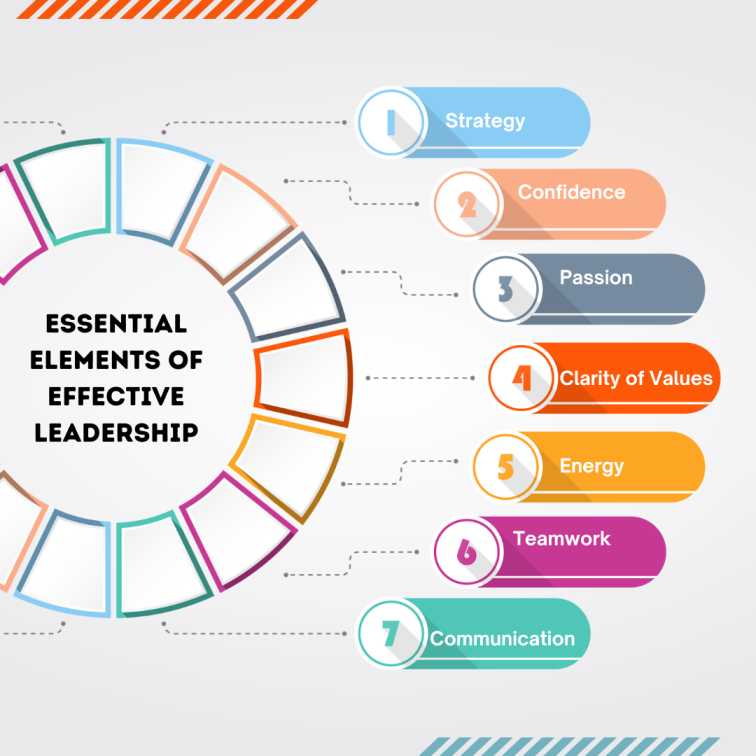
Essential Elements of Effective Leadership
Leadership is a complex concept woven from vital qualities. These attributes are the bedrock of successful leadership, guiding leaders on their path to excellence. When nurtured and seamlessly integrated into one’s leadership style, these attributes have the potential to drive personal development and transform organisations.
Let’s explore the seven crucial traits that set outstanding leaders apart:-
Strategy
A clear and compelling plan for the future: This involves creating a vision for where you want to go and developing a detailed roadmap to get there.
Concise and focused objectives: It’s essential to set specific, clear goals that guide your actions and measure progress.
Skillful organisation of time, skills, and resources: Effective time management, utilising your skills, and efficiently allocating resources are vital aspects of strategy.
Flexibility and adaptability to changing environments: Strategies must be adaptable to evolving circumstances and able to pivot as needed.
Openness to ideas and opportunities: Being receptive to new concepts and opportunities is crucial for refining and expanding your strategy.
A willingness to take calculated risks when necessary: Knowing when to take calculated risks is a key part of strategy, as it can lead to innovation and growth.
2. Confidence
Trust in oneself, instincts, and abilities: Confidence involves believing in your capabilities and decisions.
A steadfast belief in one’s ability to succeed: A strong, unwavering belief that you can achieve your goals.
Focus and determination regardless of circumstances: Maintaining concentration and resolve even in challenging situations.
Maintaining a dominant thought of success: Cultivating a mindset focused on achieving success.
Daily review of important goals: Regularly revisiting and reaffirming your goals. This is especially important when leading marketing campaigns and marketing agendas.
A perpetual forward-moving attitude with a positive outlook: Maintaining an optimistic and forward-looking attitude.
3. Passion
An innate force that propels one forward: Passion is the internal drive that motivates and propels you toward your goals.
Enhances one’s abilities and objectives: Passion amplifies your skills and ambitions.
Provides the will to tap into one’s true potential: It empowers you to explore and maximise your full potential.
Infuses enjoyment into one’s pursuits: Passion makes your work enjoyable and fulfilling.
Aids in achieving what might seem impossible: It can help you overcome challenges that may appear insurmountable.
A consistent trait among successful individuals and leaders: Passion is a common trait found in successful people.
4. Clarity of Values
The bedrock of one’s ethics and business practices: Your values form the foundation of your ethical standards and how you conduct business.
A well-defined belief system that distinguishes right from wrong: Values guide your moral compass and help you discern right from wrong.
A clear and fundamental sense of what is truly important: They highlight what holds the utmost significance in your life and work.
Serves as the moral compass for decision-making and leadership: Values influence your decision-making process and leadership style.
Requires consistency and unwavering adherence: Staying true to your values demands unwavering commitment.
Influences and informs every action and decision: Values shape every aspect of your behaviour and choices.
5. Energy
The ability to perform at a high and sustained energy level: Energy enables you to maintain peak performance consistently.
Maintaining physical and mental well-being: This involves keeping your body and mind healthy and active.
Serving as the driving force behind one’s strategy and passion: Energy is the fuel that powers both your strategic planning and your passions.
Synergy between great physical and intellectual energy: Balancing physical and mental vigour is essential.
Maximises the utilisation of one’s talents and gifts: Energy allows you to make the most of your natural abilities.
Demands daily consistency and maintenance: To harness your energy effectively, you need to maintain it daily through healthy habits.
6. Teamwork
The skill of constructing organised, efficient, and productive teams: Building teams that function smoothly and deliver results.
The capacity to bring out the best in individuals: Fostering an environment where team members can shine.
Effective collaboration with others: Working well with colleagues and partners to achieve common goals.
The creation of extraordinary groups and alliances: Forming exceptional teams and partnerships that exceed expectations.
The ability to find synergy in every situation: Identifying and capitalising on synergistic opportunities.
An essential support network that encourages and bolsters leadership: Teams that provide support, encouragement, and shared goals.
7. Communication
How one communicates with oneself and others: How you convey information and thoughts, both internally and externally.
Maintaining clarity regarding personal wants and needs: Clearly understanding and expressing your desires.
The effective and consistent conveyance of goals and objectives: Clearly articulating your goals and objectives in a way that others understand.
Active listening to others with a genuine interest: Paying close attention to others and showing a sincere interest in their ideas and concerns.
Respect for the insights and ideas of others: Valuing and appreciating the perspectives of others.
Building effective and robust relationships: Developing connections that are productive and strong.
Setting and Managing Strategic Agendas
For advanced leadership, the ability to set and manage strategic agendas stands as a defining trait of successful leaders. Let’s look at how advanced leaders navigate the complexities of establishing and overseeing strategic agendas ensuring their success:-
Strategic agenda as a roadmap: In advanced leadership, a strategic agenda is akin to a roadmap for the future. It outlines the key objectives, priorities, and actions that an organisation must undertake to achieve its vision. Effective leaders craft and communicate this roadmap clearly, ensuring all team members understand their roles in the grand scheme.
Alignment with organisational vision: One of the fundamental principles of advanced leadership is aligning the strategic agenda with the broader vision of the organisation. This alignment ensures that every step taken, and every objective pursued, is directly contributing to the realisation of the overarching goals.
Complexity management: In today’s intricate corporate environment, managing complexities is a significant challenge. Advanced leaders excel in breaking down complex agendas into manageable steps, making them achievable. They understand that intricate agendas can overwhelm teams and may lead to confusion. Therefore, they simplify and prioritise.
Flexibility and adaptability: Flexibility is a crucial aspect of setting and managing strategic agendas. The world is in a state of constant change, and advanced leaders recognise that their agendas must be adaptable. This means being open to reevaluating and adjusting the agenda as external factors evolve.
Agenda as a motivational tool: An advanced leader knows how to present the strategic agenda as more than just a plan; it becomes a motivational tool. By infusing the agenda with purpose and meaning, they inspire and engage their teams. When team members understand how their work contributes to the broader agenda, they are more motivated and invested.
Risk and innovation on the Agenda: A progressive agenda includes a place for calculated risk-taking and innovation. Advanced leaders recognise that without taking risks and embracing innovation, an organisation can stagnate. They incorporate these elements into the agenda, driving the company forward and ensuring it remains competitive.
Monitoring and adaptation: Once the agenda is in motion, advanced leaders continuously monitor its progress and use analytics to help develop data-driven strategies. They analyse data, assess outcomes, and make informed decisions to keep the agenda on track. This may involve making necessary adaptations to overcome challenges and seize opportunities.
Proper communication of the agenda: Lastly, an advanced leader is a master communicator. They know how to convey the strategic agenda effectively to their teams, ensuring everyone is on the same page. Effective communication fosters understanding and alignment, driving success.
Leading Employees to Excellence: The Impact of Advanced Leadership
Solid leadership practices play a pivotal role in guiding and inspiring employees toward achieving excellence within an organisation. Leading employees in an impactful and effective manner can also lead to successful performance and operations management. Here we have highlighted how advanced leaders effectively lead and motivate their teams, fostering a culture of excellence and driving collective success:-
Setting a visionary example: Advanced leaders understand that their actions speak louder than words. They lead by example, embodying the values and work ethic they expect from their teams. By demonstrating commitment and excellence in their work, they inspire employees to follow suit.
Creating a motivational environment: Motivated employees are more likely to excel. Advanced leaders recognise this and work to create a motivating work environment. They understand the individual motivations and aspirations of their team members and provide opportunities for personal and professional growth.
Empowering and delegating: Micromanagement stifles employee growth and creativity. Advanced leaders empower their teams by delegating responsibilities and granting autonomy. This fosters a sense of ownership and accountability, encouraging employees to take initiative and excel in their roles.
Alignment with individual goals: Advanced leaders understand that employees have their own career goals and aspirations. They work to align these personal objectives with the goals of the organisation. This not only boosts employee morale but also results in a workforce that is dedicated to achieving excellence.
Coaching and mentoring: Mentoring and coaching are essential components of advanced leadership. Leaders invest in the growth of their employees, providing guidance and support. This leads to the development of well-rounded individuals who are equipped to excel in their roles.
Recognition and reward: Recognising and rewarding excellence is a practice advanced leaders value. They acknowledge outstanding achievements, whether through verbal praise, promotions, or tangible rewards. Such recognition reinforces a culture of excellence and motivates others to excel.
Embracing diversity and inclusion: In today’s diverse workforce, advanced leaders understand the importance of diversity and inclusion. They create an environment where employees from various backgrounds feel valued and included. Diverse perspectives often lead to innovative solutions and improved performance.
Conflict resolution and team building: Conflicts are inevitable, but advanced leaders are skilled at resolving them effectively. They also invest in team building activities that foster camarie and collaboration, creating cohesive, high-performing teams.
Continuous learning and development: Advanced leaders support ongoing learning and development opportunities for their employees. This not only improves individual skills but also contributes to the collective excellence of the organisation.
Common Challenges Faced in Advanced Leadership
Challenges are an inherent part of advanced leadership, but they also present opportunities for growth and innovation when approached with the right mindset and strategies. Here we have highlighted some of the common pitfalls:-
Resistance to change: Implementing advanced leadership practices often requires a shift in the organisational culture. Resistance to change from employees and even some team members can pose a significant challenge.
Complexity and uncertainty: The modern business environment is rife with complexity and uncertainty. Advanced leaders must navigate these intricacies, making decisions and setting agendas in uncertain times.
Maintaining consistency: Staying consistent in leadership practices can be challenging, especially when external factors and circumstances are constantly changing.
Balancing autonomy and control: Delegating authority and granting autonomy is a key aspect of advanced leadership, but finding the right balance between autonomy and control can be tricky.
Diverse teams: Embracing diversity and inclusion is vital, but it also brings the challenge of effectively leading diverse teams with varying needs, perspectives, and communication styles.
Resolving conflicts: Conflicts within teams or between team members can disrupt productivity and innovation. Advanced leaders must be skilled at conflict resolution.
Coping with failure: Advanced leaders understand that innovation and risk-taking may lead to failure at times. Coping with these setbacks and turning them into valuable learning experiences is a challenge.
Sustaining motivation: Keeping employees motivated and engaged over the long term can be challenging. Advanced leaders continually seek ways to sustain motivation and passion among their teams.
Effective communication: Maintaining open and effective communication channels in a rapidly changing environment can be a challenge. Leaders must ensure their messages are understood and their teams remain well-informed.
Balancing individual and organisational goals: Aligning individual career goals with the broader objectives of the organisation can be complex. Advanced leaders need to find ways to harmonise these goals for mutual benefit.
Conclusion
The corporate world increasingly recognises that leadership qualities are not merely desirable but imperative for success. Leaders are no longer viewed as figureheads but as the driving force behind innovation, adaptation, and sustainable growth. This paradigm shift underlines the critical role that effective leadership plays in achieving and maintaining success in today’s dynamic and competitive environment.
As businesses continue to evolve and face new challenges, the imperative for strong leadership will persist, making it an unassailable cornerstone of corporate achievement. To tackle said challenges, you can consider taking up the Global Senior Leadership Programme offered by Imarticus Learning to sharpen your skills. This comprehensive IIM course for working professionals will equip you with the knowledge and expertise needed to excel in the world of advanced leadership, making you an invaluable asset in the corporate domain.
Don’t miss the opportunity to elevate your leadership capabilities and open doors to new career horizons. Join our senior leadership program today and chart a course toward excellence.
Chief Marketing Officers (CMOs) are the orchestrators of marketing strategies, the visionary who ensures the company’s products or services reach the right audience and the communicator who shapes the brand’s image. In this blog, we’ll explore the foundations of effective CMO leadership.
For more strategic insights and actionable knowledge to excel in the dynamic landscape of marketing leadership courses for marketing professionals.
Foundations of Marketing Strategy Design
Effective CMO leadership begins with a deep understanding of the core elements that shape a marketing strategy. These elements form the building blocks upon which the entire approach rests.
Brand: The brand is not just a logo or a tagline, it’s the essence of the company’s identity. It represents what you stand for, the values, and the promise you make to the customers. As a CMO, nurturing and evolving the brand is a continuous journey.
Product: At the heart of any marketing strategy is the product or service that is offered. It’s essential to understand the product’s unique selling points, features, and how it fulfills customer needs. The product strategy should align with the brand and resonate with the target audience.
Service: Customer service plays a critical role in shaping the customer experience. Exceptional service can set you apart from competitors and create loyal customers. CMOs must ensure that marketing strategies integrate service excellence to enhance brand reputation.
Pricing: Pricing strategies are a delicate balance between value and profit. Setting the right price for the products or services requires a deep understanding of market dynamics, customer perception, and cost structure. CMOs must collaborate with pricing experts to make informed decisions.
MarketingCommunication: This is where the strategy comes to life. Effective communication is about more than just advertising; it’s about storytelling, connecting emotionally with the audience, and delivering consistent messages across all touchpoints.
Decisions & Decision-Making for CMOs
CMO decisions carry significant weight and impact. To make informed choices, the consumer decision-making process and leverage various tools and strategies at the disposal need to be understood. Doing a study in digital marketing helps you with the required knowledge and skills.
Heuristics: People often use mental shortcuts or heuristics to simplify decision-making. Understanding these cognitive biases can help you design marketing strategies that align with how customers think. For example, the availability heuristic suggests that people rely on readily available information, so making the brand easily accessible and memorable is crucial.
Qualitative & Quantitative Data: Data is the ally. Collecting and analysing qualitative and quantitative data can provide insights into consumer preferences, market trends, and the effectiveness of marketing efforts. Use data-driven decision-making to refine the strategies continuously.
DigitalAnalytics: In today’s digital age, the online behavior of consumers provides a treasure trove of data. Utilise web analytics tools to track user interactions on the website, social media, and digital advertising campaigns. These insights can guide digital marketing efforts.
Rural vs. Urban Markets: Market dynamics can vary significantly between rural and urban areas. CMOs must adapt their strategies to cater to the unique needs and preferences of these diverse markets. This might involve tailored messaging, distribution channels, or pricing models.
InnovativeApproaches: To stay ahead of the competition, experiment with innovative marketing approaches. Test new technologies, such as augmented reality (AR) or virtual reality (VR) experiences, and explore emerging trends like influencer marketing and content personalisation.
Leadership Levers for CMOs
Effective CMOs are not just marketers; they are leaders who guide their teams and organisations toward success. To excel as a CMO, you need to harness several key leadership levers:
Vision and Strategy: A CMO’s vision for the future is instrumental. It sets the course for the team and organisation. A clear marketing strategy that aligns with the company’s overall goals needs to be defined. Ensure that the vision and strategy are communicated effectively to inspire and mobilise the team.
Team Empowerment: The team is the greatest asset. Empower the marketing team with the tools, resources, and autonomy they need to execute the strategies effectively. A culture of collaboration, creativity, and continuous learning needs to be fostered.
Cross-Functional Collaboration: Marketing does not operate in isolation. It needs to collaborate with other departments such as sales, product development, and customer service. Cross-functional teamwork ensures that marketing strategies are integrated into all aspects of the business.
Data-Driven Decision-Making: Continuously emphasize the importance of data-driven decision-making within the team. The use of analytics to measure the impact of marketing campaigns and refine strategies accordingly should be made necessary.
Adaptability: The marketing landscape is constantly evolving. Successful CMOs embrace change and are adaptable. An eye needs to be kept on industry trends, emerging technologies, and shifts in consumer behavior. CMOS should be ready to pivot when necessary.
Customer-Centric Approach: Place the customer at the center of the marketing efforts. Understand their needs, preferences, and pain points. Craft marketing campaigns and strategies that resonate with the target audience and provide value.
Measuring ROI: CMOs are accountable for the return on investment (ROI) of marketing initiatives. Robust metrics and analytics to measure the effectiveness of the strategies are to be implemented. Adjusting the approach based on what delivers results is ideal.
Strategic Thinking for CMOs
Strategic thinking is the cornerstone of effective CMO leadership. It involves envisioning the future, aligning internal stakeholders, and navigating the competitive landscape. You can master the art of strategic thinking in these domains with the help of a digital marketing course.
Competitive Analysis: Staying vigilant by monitoring the competitors. Analysing their service offerings, pricing strategies, product development, and branding efforts. Identifying gaps and opportunities where the company can excel and differentiate itself.
Consumer Research: Investment in advanced consumer research to gain deeper insights into the target audience is necessary. Understand their behaviors, preferences, and pain points. This knowledge empowers you to tailor the strategies effectively.
SWOT Analysis: Conduction of a comprehensive SWOT (Strengths, Weaknesses, Opportunities, Threats) analysis for each of the five domains should be done. These exercises help you identify internal strengths to leverage, weaknesses to address, opportunities to seize, and threats to mitigate.
Scenario Planning: Anticipation of various scenarios and plans accordingly. Consider how changes in market conditions, consumer trends, or technological advancements could impact the strategies. Having contingency plans in place ensures resilience.
Long-Term Perspective: While short-term results matter, maintain a long-term perspective. Some strategic decisions may not yield immediate benefits but could position the company for sustained success in the future.
Digital Marketing Transformation
In the digital age, the landscape of marketing is continually evolving, and digital marketing is at the forefront of this transformation. As a CMO, staying updated with the latest trends and strategies in digital marketing is essential to remain competitive. Digital marketing is a dynamic field, and keeping up with these trends is crucial to your success as a CMO. Consider enrolling in a digital marketing course to stay ahead of industry changes and ensure your skills remain sharp.
Conclusion
We’ve unveiled the essential facets of CMO leadership in this article. Armed with these insights, you’re well-prepared to navigate the dynamic world of marketing leadership. To embrace strategic thinking, adapt to digital trends, and champion ethical practices to excel in your role as a CMO consider enrolling in the Post Graduate Certificate Programme for Emerging Chief Marketing Officers offered by Imarticus in collaboration with IIM Indore.
Supply chain management is the crux of today’s globalised and interconnected commercial industry. It is the pillar behind the seamless availability of products and services.
Supply chains are not just mere logistics procedures; they tackle various problem-solving mechanisms. Supply chains are an indispensable tool for consumers and businesses alike.
In this blog, we will address the various problems supply chains face and how they are solved quickly and efficiently by a robust SCM system. If you want to establish a career in supply chain management, keep reading to learn how these logistics marvels navigate complex challenges and ensure stellar business operations.
What is Supply Chain Efficiency?
One should comprehensively understand supply chain efficiency to excel in supply chain management. Supply chain efficiency is not only known for its supremacy in cost efficiency or achieving customer satisfaction; it also helps gain a competitive edge in the global market.
The supply chain streamlines various procedures, enabling minimal delays, reducing excess inventory and eliminating bottlenecks. Adopting an accurate forecasting method alongside investment in advanced technology is essential for efficient supply chain management. To pursue excellence, businesses should consider that supply chain efficiency is not about cost-cutting and enhanced values. It involves continual improvements and a proactive approach to problem-solving.
To understand supply chain efficiency, a supply chain management course is ideal for upcoming professionals eyeing the role of supply chain managers.
Importance of Supply Chain Efficiency
Supply chain efficiency plays a vital role in the sustainability and success of organisations across various industries. The reasons for their importance in the global marketplace are listed below:
Cost efficiency: Efficient supply chains minimise operational costs via streamlining through optimised transportation and reduced inventory holdings.
Customer satisfaction: With supply chain efficiency, consistent customer satisfaction has become feasible because of consistent product availability
Risk mitigation: Efficient supply chain management promotes resilience against any disaster, integral to risk mitigation.
Global expansion: Supply chain efficiency promotes global expansion as it enters and adapts easily to different geographical and cultural landscapes.
Problems Solved by Supply Chains
An efficient supply chain is always up for solving any problem that might arise shortly or in the present. Here are some issues supply chains face and how they could be mitigated.
1. Material Shortage
In 2022, McKinsey and Company considered material shortage as one of the significant challenges of the global supply chain. It also specified how these have disrupted the overall supply chain efficiency and faced more disruptions than in 2020-2021.
Methods to Overcome the Problem: Supply and Demand Change Executive has specified that around 57% of the disruption would be solved if the manufacturing procedure is diversified. It should include strategies like supply chain automation, efficient supplier collaboration and focus on inventory management.
2. Lack of Supply Chain Visibility
Supply chain visibility is pinpointing and tracking logistics movement, be it raw materials or other counterparts. High visibility is the pinnacle of efficient company operations and seamless business. During the pandemic, supply chain visibility was in shambles, hampering the overall distribution procedure.
Methods to Overcome the Problem: To increase supply chain visibility, analyse the current pain points. Remedy these areas adhering to the company’s goals and objectives. Eliminate any form of siloed technology and implement a robust supply chain management system.
3. Demand Forecasting Complexity
The capacity to effectively predict consumer demand and anticipate future requirements is crucial to effective supply chain management. Creating good customer relationship management and ensuring corporate profitability and growth is critical. Some approaches organisations use for demand forecasting include exponential smoothing, moving average forecasting, auto-regressive integrated moving averages, bottom-up forecasting, and multiple aggregation prediction algorithms.
Methods to Overcome the Problem: One of the integral methods to overcome these problems are:
Providing clean and reliable data.
Having an actionable input towards the affected stakeholders.
Imposing robust analytics.
Building strong collaborations with other supply chain partners.
4. Supply Chain Fragmentation
Fragmentation occurs when the supply chain is dispersed among various suppliers and manufacturers. While this may provide some pricing or quality advantages, controlling the supply chain may be difficult. The pandemic once again demonstrated how unstable the fractured supply chain can be when manufacturing is closed in one country or borders are blocked altogether, prohibiting the transportation of required parts.
Methods to Overcome the Problem: Improved data management is the most effective strategy to address the problems caused by supply chain fragmentation. Remove isolated systems that are unable to communicate with one another. Actively capture disruptions to the supply chain and assess their potential impact on the business.
Congestion at Critical Ports
Congestion at crucial ports can be induced by circumstances other than those seen during the pandemic. The reasons are:
Outdated and insufficient equipment.
Labour strikes.
Insufficient transmodal capabilities.
Methods to Overcome the Problem: Increasing supply chain visibility and extending time leads would exponentially help overcome these problems. Investigation into proper ports can also help mitigate congestion.
Increased Freight Costs
Transport and freight costs are also affected by the epidemic, global social upheavals, and rising inflation. Fuel prices have soared, affecting all modes of transportation by land, sea, and air.
Methods to Overcome the Problem: Consolidating shipments on time alongside searching for suppliers within geographical proximity is one of the best mitigation procedures. Furthermore, imposing dual sourcing is another efficient way to decrease freight costs.
Digital Transformation and Integration
Improved digital technology is required to gather, analyse, and integrate high-quality, up-to-date data. This data can assist the automation and forecasting technologies required for today’s supply chain management.
Methods to Overcome the Problem: Perform a supply chain audit. Evaluate present circumstances and prioritise requirements. Investigate potential technologies that satisfy the requirements. Request product demonstrations to witness the technology in action. Establish a team of implementation representatives from all affected parties.
Conclusion
Strong and effective supply chains are crucial in dealing with critical organisational concerns. They address issues like inventory management, fluctuating demand, and cost optimisation, eventually improving competitiveness and customer satisfaction.
If you are looking for an efficient supply chain course, check out Imarticus Learning’s Professional Certification in Supply Chain Management and Analytics. This supply chain course has a campus immersion programme and helps you understand the new age of supply chain management.
With the integration of technology and automation, many industries are rapidly growing, and with this growth comes increased competition. A CFO certification will help boost the required skills to be in the game. Low-price/low-cost competitors are becoming more common, and they can pose a serious threat to businesses in these industries.
When dealing with digitally enabled industries where companies rely heavily on technology to provide their products and services, businesses in these industries need to be aware of the latest trends in technology and how they can use technology to their advantage. Businesses can use AI to automate tasks and improve customer service. Let us learn some more important ways to deal with competition.
Value Platform Models
Value platform models are strategic frameworks that help businesses create, deliver, and capture value in their ecosystems. In the context of fintech and data management, these models are essential for achieving sustainable growth and staying competitive. Here are the key aspects of value platform models:
Ecosystem Orchestration: Value platforms often serve as orchestrators within ecosystems, connecting various stakeholders such as customers, partners, and developers. They facilitate interactions and transactions, creating a network effect that amplifies value.
Scalability: Fintech and data management companies must be able to scale rapidly to meet increasing demands. Value platforms enable scalability by providing a foundation for expanding services and accommodating a growing user base.
Data-Driven Insights: Data is a core asset in these industries. Value platform models leverage data analytics to gain insights into customer behavior, preferences, and trends. These insights inform product development and enhance customer experiences.
Monetisation Strategies: Value platforms offer multiple monetisation opportunities. They can charge fees for services, create subscription models, or monetise data through insights and analytics. Diversified revenue streams are key to financial sustainability.
Openness and APIs: Many successful value platforms are open and offer APIs (Application Programming Interfaces) that allow third-party developers to create complementary services and solutions. This openness fosters innovation and expands the platform’s reach.
Focusing on the Unique Value Proposition
The first step for a business to handle low-price/low-cost competitors is to identify its unique value proposition. What makes the business different from its competitors? What value does it offer that they don’t? Once the business has identified its unique value proposition, it should highlight it in its marketing and sales materials. The business should also use it to differentiate itself from its competitors in its customer interactions. In the fiercely competitive fintech and data management industries, having a unique value proposition is a cornerstone of success.
A unique value proposition is what sets a business apart from its competitors and resonates with its target audience. Here’s how to develop and leverage a unique value proposition effectively:
Identify Core Strengths: To craft a unique value proposition, a business must first identify its core strengths and differentiators. What can it do better or differently than others in the industry?
Understand Customer Needs: Understanding the specific needs and pain points of the target audience is essential. Tailor the value proposition to address these needs effectively.
Clear and Concise Messaging: The value proposition should be communicated clearly and concisely in all marketing and sales materials. Customers should immediately grasp why your services are valuable to them.
Consistency: Ensure that the unique value proposition is consistently integrated into customer interactions, from website messaging to customer support.
Adaptability: As market conditions change, be prepared to adapt and refine your value proposition to remain relevant and meet evolving customer demands.
In the fintech and data management sectors, where technological advancements and shifting customer expectations drive constant change, having a robust unique value proposition is vital for attracting and retaining customers while fending off low-price competitors. Businesses that effectively leverage these investment criteria, optionality in decision-making, value platform models, and a unique value proposition are well-positioned to thrive in these dynamic industries.
Investing in Customer Experience
Customer experience is pivotal in both fintech and data management. Convenience and personalisation are key, and providing excellent customer service can differentiate a business.
Customer Service Excellence: Train customer service teams to be responsive, knowledgeable, and empathetic. Resolve issues promptly to ensure customer satisfaction.
Seamless Transactions: Simplify onboarding processes and enhance user interfaces to make transactions effortless for customers.
Personalisation: Leverage data analytics to understand customer preferences and offer personalised recommendations and experiences.
Being Innovative
The fintech and data management industries are constantly evolving. This means that businesses need to be constantly innovating in order to stay ahead of the curve. If businesses can come up with new products or services that their competitors don’t have, they will have a competitive advantage. Businesses should also be constantly looking for ways to improve their existing products and services.
Partnering with other businesses
Collaborating with other businesses can strengthen market positions and counter low-cost competitors.
Identify partners offering complimentary services to expand reach and attract new customers.
Partner with data analytics firms to gain deeper customer insights, refining strategies and offerings.
Consider resource-sharing arrangements with partners to optimise efficiency and reduce costs.
Recommendations
Businesses in the fintech and data management industries can take the following steps to handle low-price/low-cost competitors:
Focus on their unique value proposition. What makes the business different from its competitors? What value does it offer that they don’t? The business should highlight its unique value proposition in its marketing and sales materials.
Invest in customer experience. Businesses should provide excellent customer service, make it easy for customers to do business with them, and provide a personalized experience.
Be innovative. Businesses should not be afraid to innovate and come up with new products or services that their competitors don’t have. This is one of the best ways to stay ahead of the curve.
Partner with other businesses. Partnering with other businesses can help businesses to pool their resources and expertise. This can give businesses a competitive advantage over their low-price competitors.
Getting certified as a CFO can show potential employers that the business has the skills and knowledge necessary to be successful in the role. They will also have the skills and knowledge necessary to make informed decisions about pricing, marketing, and operations.
Conclusion
The fintech and data management industries are dynamic and competitive. Low-price competitors are on the rise, but businesses can effectively navigate this challenge by focusing on their unique value proposition, delivering exceptional customer experiences, fostering innovation, forming strategic partnerships, and investing in certifications and skill development.
Success in these industries hinges on adaptability and staying attuned to evolving technologies and customer preferences. Enrolling in the Postgraduate Certificate Programme for Emerging CFOs course can help you strengthen your portfolio and skills in the required arena of cost-cutting and handling low-price competitors. By following these strategies, businesses can not only withstand low-price competition but also position themselves as leaders in these dynamic markets.
A chargeable gain is a British term for the growth in an asset’s price between the time it was purchased and the time it was sold. The entire concept is subjected to capital gain tax. Chargeable gains can often be offset by chargeable losses, lowering the amount of tax that must be paid.
UK Taxpayers are also allowed to reduce chargeable gains by considering inflation. In simple words, the chargeable gain is generally the difference between the charge you paid for the asset and the rate you disposed of it. Capital gains tax (CGT) is payable to the person making the disposal.
ACCA (Association of Chartered Certified Accountants) offers flexible and comprehensive qualifications for aspiring financial professionals. The ACCA course provides students with a range of skills that are helpful in many industries, not only in finance and accounting.
Personal Chargeable Gains
Personal chargeable gains are capital profits that result from the sale of capital belongings held for private use. Here are some key factors to keep in mind concerning private chargeable profits:
Personal chargeable gains follow any type of asset, together with investments and those purchased for personal use.
Whenever you sell a capital asset held for personal use at an advantage, you want to calculate how much money you gained and report it as per Schedule D. Depending on your situation, you could also need to apply Form 8949.
Capital belongings held for non-public use, which can be sold at a loss, usually only want to be mentioned to your taxes if particularly required if you obtained a Form 1099-S for the sale of actual estate. The loss is commonly not deductible.
The chargeable advantage of an asset is the distinction between the sale rate and the unique purchase price.
The price of capital gains tax (CGT) is 33% for maximum gains, but there are different fees for unique types of gains.
Calculation of Chargeable Gains
To calculate the chargeable gain, you need to follow these steps:
Calculate the distinction between the sale rate and the purchase fee of the asset. This is the full advantage.
Deduct any allowable prices, consisting of the value of the acquisition, from the overall gain. This offers you a chargeable gain.
Deduct any losses from other chargeable gains within the identical tax year.
Multiply the chargeable benefit through the capital profits tax (CGT) price to determine the amount of tax owed.
The CGT price in the UK is 10% for basic profits and 18% for residential property, or 20% for those above the fundamental tax bracket and 28% for residential assets. The price of CGT for most profits is 33% in Ireland.
Adjustments to Profit
Capital gains tax is a taxation on the earnings that an investor makes from the sale of an investment, which includes inventory stocks. The taxable capital gains for the year may be reduced by using the overall capital losses sustained in that year, and the tax is due on the internet capital benefit. In the UK, taxpayers are allowed to lower taxable gains by taking inflation into account, regularly referred to as indexation allowance.
When assessing an employer’s chargeable gains, the liability is assessed for the accounting length in which the benefit is accumulated. It is protected with any other income of the accounting duration. The changing profit must be adjusted for the things deducted but not deductible for tax functions, such as depreciation and amortisation, which must be delivered again to the operating profit determined. Instead, capital allowances and the corresponding lease adjustment must be deducted.
Modifications to income in chargeable gains involve thinking of the boom in an asset’s price among the time its miles purchased and the time it’s far bought and decreasing the taxable capital gains utilising the overall capital losses suffered in that year. In the United Kingdom, taxpayers can minimise taxable profits by considering inflation. When assessing an organisation’s chargeable gains, the operating profit needs to be adjusted for those gadgets that have been deducted but aren’t deductible for tax reasons.
Tips for Preparing for ACCA Exam on Chargeable Gains
Preparing for the ACCA exam on chargeable gains involves a detailed comprehension of the capital gains tax regulations that apply to chattels. Here are some tips to help you prepare for the exam:
Qualification Structure: The ACCA qualification includes 3 factors – applied knowledge, applied skills, and strategic professionalism. Students progress through those factors by finishing thirteen checks, relying on earlier chances of qualifications.
Entry Requirements: To start studying for the ACCA Qualification, students want two A Levels and 3 GCSEs in 5 separate topics such as English and maths (or equivalent qualifications).
Study Options: ACCA offers complete-time publications, weekend guides, distance studying, online knowledge of ACCA-X and revision courses. ACCA-X is an internet-gaining knowledge platform that gives seven guides to prepare college students for the ACCA Foundation in Accountancy tests and the ACCA Qualification Applied Knowledge assessments.
Exams: Many ACCA exams are primarily based, and college students can sit them at any licensed centres. There are two styles of computer-based assessments: on-demand CBEs and consultation CBEs.
Support: ACCA presents 24-hour aid to its students through its ‘ACCA Connect’ crew.
Work Experience: To qualify as an ACCA member, college students must enter at least 36 months of relevant work experience and obtain nine performance objectives.
Cost: The fee of the ACCA path varies depending on the observed alternative and the number of assessments taken. The 4 introductory and intermediate courses on ACCA-X are free, at the same time as the diploma courses fee of USD 119 every.
Conclusion
Understanding how to compute and calculate chargeable gains for individuals is essential for selling property, such as inventory, a residence, or a mutual fund. Under the Affordable Care Act (ACA), new taxes and consequences exist on individuals and organisations, along with a 3.8% tax on net investment profits for unincorporated taxpayers who’ve changed adjusted gross profits above a sure threshold. Recognising what profits are counted while figuring out eligibility for financial savings under the ACA is important. The marketplace uses an income-wide variety known as modified adjusted gross income (MAGI) to decide eligibility for financial savings.
Imarticus Learning has partnered with the Association of Chartered Certified Accountants (ACCA), UK, to offer a certification course in Accounting and Finance. The ACCA course is a reputed accounting and finance course recognised in eighty international locations. Imarticus Learning also gives a complete pre-placement boot camp at the professional degree of ACCA, which incorporates resume upgrading. Additionally, beginners who complete the ACCA course with Imarticus Learning are assured placement by the company.
If you work in a supply and distribution management business, you are aware of the immense emphasis put on the framework of the supply chain from production or packaging to delivery of the end product to the market or consumer. Even the slightest glitch or delay in supply can cause a loss in product demand or other financial loss including product damage.
Nowadays, data-driven analytics is used to design fortified and efficient supply chain strategies to predict and eliminate possibilities of deficiencies in supply. Supply chain network modelling is a lucrative profession for those wishing to pursue a career in supply chain management and this article might be able to provide some insights.
Aim of Supply Chain Network Modelling
Supply chain network models are primarily used as prototypes to help decision-making at multiple stages of a supply chain. Transportation and transshipment are the two most frequent obstacles that supply chain networks try to address, especially the costs per unit in both cases. The end goal, as mentioned already, is to deliver the product to the receiver in minimum time with minimum expenditure, without compromising on the quality. It helps in the best possible usage of transportation resources within a set distribution and logistics network.
Types of Supply Chain Network Models
It is imperative that you choose the correct supply chain model for your business to prevent any financial risks interruptions and logistical problems. We have listed some of the most reliable supply chain network models for your reference before you customise one for your business.
Continuous Flow Network: This supply chain network model is for delivering goods in a pre-determined set-up. In zones where there is a high demand for the products, it ensures stable supply and fulfilment of requirements. If your business delivers only a particular kind of commodity without many modifications, then this is the most reliable set-up for you.
Custom-Configured Network: As the name suggests, in this supply chain network model, this method requires substantial modification of the supply chain with varying scenarios. In this model, both continuous flow and agile network models are employed and steps are taken to ensure that the product functions after delivery.
Fast Chain Network: A relatively new model, this supply chain network is ideal for those commodities that have an early expiry date. To ensure maximum utilisation of the product, enterprises adopt a supply chain network that is fast and requires little processing, primarily to keep up with changing market trends.
Agile Network: The agile model is best suited for those businesses that handle delicate products. In this network, more personalised intervention is required and less automation to ensure safe delivery of the product from one point to another. Joint management of inventory and collaboration in product design is highly required in this setup.
Advantages of Supply Chain Network Modelling
Designing supply chain network models leads to the optimisation of the supply chains by the enterprises, which can then get a clear roadmap of how the supply chain gets executed. It is a valuable method that can help supply chain companies achieve the benchmark of the key performance indicators in the industry in a short time. Here are some major benefits one can reap from supply chain network modelling:
Data-driven realisations that empower better administration of supply chains: With highly efficient network designing tools, companies can now identify multiple ways of streamlining the supply chain, and saving costs by minimising redundancy.
Helps get an in-depth awareness of business expenses: Often, supply chain enterprises can incur various expenses for the purchase of items and maintenance of warehouse inventory. Apart from these major expenses, there might be many intangible costs that often go unnoticed in the process of running a business. Supply chain network models ensure that you gain a grasp on the interconnected parts of your business, and how each segment is impacting the working capital.
Optimisation of service process and delivery: The emerging high-end supply chain network designing models can help the operators visualise multiple scenarios for efficient service providing and suggest alternative ways to minimise transit time for speeding up delivery.
Guidelines for Designing Supply Chain Network Models
When designing a supply chain network model, try to adhere to the following guidelines or consider these factors to get the best results out of your network:
Outline your objectives and targets clearly: This is the first step to designing supply chain network models as your aims will become the foundation of the model. It is not practically plausible to attempt to optimise all aspects of logistics and distribution simultaneously, hence, identify your primary targets, especially the ones which need immediate resolution. The best way to do this is to ask questions about the kind of customer service you aim to provide, and how the storage capacity, location of warehouses, and lead time of replenishing stocks can factor in the service.
Gather supplementary information: To make feasible decisions about supply chain networks and to implement them, you need to have all the required data at your disposal. Although this step might seem prolonged, it is the most important factor, and you can easily access the data from enterprise resource planning databases or legacy systems. Typical examples of supply chain network modelling information include demand for products, transit rates, warehouse availability and rates.
Use supply chain network modelling tools: The advancement of technology has facilitated the development of numerous network optimisation software for supply chains. You can subscribe to one such model, or design your tool for aiding your decisions regarding supply chain networks. Whichever software you use should be able to address your major concerns through parameters such as cost benefits, operational time management, storage capacities and lead times for modes of transportation.
Verify and validate your supply chain network model: Designing a supply chain network model can be complete only when it has been tested against potential scenarios for use. Before finalising your supply chain network model, analyse your network by implementing it against some potential what-if situations and discern its feasibility.
Conclusion
Without an effective data-driven strategy to back up your supply chain network, you can make it susceptible to numerous drawbacks. Hence, the use of big data analytics in designing supply chain network models is a must in this fast-evolving consumerist market. To that end, pursuing a logistics management course, such asImarticus Learning’s Advanced Certification Program In Digital Supply Chain Management offered in partnership with IIT Guwahati will help you get a more nuanced grasp on the critical roles of supply chain management and network modelling.