What Are Qualities of Good Financial Analyst?

Albert Einstein once stated, “It is not that I am so smart, it is just that I stay with the problems more.”

Having concentrated explicitly in their professional experiences, educational history, and challenging abilities, an ideal financial analyst is one who marries proprietary technologies with unwavering dedication to get the job done and deliver maximum results. Suffice to say, there is more that goes into an excellent finance candidate compared to just one’s specialist makeup.

No provider is exactly alike, thus becoming a candidate that satisfies every company’s one-of-a-kind business culture is essential to mutually beneficial employment. If you possess those requirements and are the ideal fit for a organization’s culture, you are more inclined to slip easily through the hiring procedure. Showcasing employer-coveted character traits of the fund sector is exactly what you need to land that perfect job position. So what are these traits?

Must-have Skills for a Financial analyst:

  • Employers rely on workers who will pull in hard times. A leading finance candidate chooses action to discover solutions — irrespective of the circumstance or fault. This attribute may not be an easy-read through the hiring process.
  •  A number of the most influential leaders easily embrace and use their analytic abilities to make waves within their own companies. The capability to demonstrate logical thinking so as to assemble and analyze many different advice is an absolute requirement in the finance area. – Since analytical abilities are not very inborn, being well-versed in analytic experiences ensures a good base.
  • The most enviable finance professionals are individuals who push themselves and others ahead through enthusiastic motivation.
  • Effective communication skills – this helps to boost productivity and efficiency when working with customers, people, along with a staff.
  • Your leadership abilities are certain to turn heads. Employers want candidates that have the ability to communicate with supervisors, coworkers and customers. You ought to have the ability to easily throw your communicating efforts to the preferred stations, platforms, and fashions of everyone you encounter.

Confidence provides a basis for stride in just about any element of finance. You should have confidence in your ability to move your business ahead but additionally, exploit a willingness to set your business and team before yourself. Would you invoke confidence and devotion in somebody who you’ve just met? Could you drive things home in a demonstration? These characteristics are sure to have you hired.

To sum it up, for a fantastic financial analyst, one requires budgeting, forecasting and planning experience. They can craft the easiest hypothesis and examine it. They have a powerful database and spreadsheet skills. Their budgeting, forecasting, and planning abilities are based on a solid comprehension of their business markets, products, and processes. They have exceptional small business partnering skills that empower them to convey complex data in an accessible way. Finally, they possess all the necessary soft skills such as confidence, effective communication, and problem-solving abilities, that will take not only themselves but their team and company towards success.


Is Data Science a Good Career in India?

In India, a lot many academic decisions are taken on the basis of how good a career one will have after graduation. This is all the more true for STEM streams like data science and data analytics that make up some of the hottest courses (and professions) in the country.

Aspiring students are signing up for these courses across universities in large numbers. But is a data science career in India a good bet? Can you lead a prosperous and content life by becoming a data scientist? Let’s find out.

Is Data Science Career in India Promising?

The short answer is yes.

There is enough research to support that a career in data science is promising and that it is a high-demand skill right now. Why? Because it’s a stream that has seen a spike in demand globally since the start of the 2010s decade.

A lot of data is being generated, but the number of people who can process them is still relatively negligible. Although tech startups are mushrooming in every corner of the world, there is still a gap in demand and supply. New technologies, tools, and systems are being invented in the stream but there is still a lack of talented and skilled professionals who can drive them. This points to the reason why there is a growing need for data scientists.

Companies across sectors need insights to aid in their decision-making. This is why industry analysts around the world are regularly commenting on the gap between demand and supply. The demand is only growing – from behemoths like Amazon.com to smaller local startups needing data and insights – while the supply of professionals remains truncated.

A reason for the dim supply is the overall poor understanding of data science as an academic field. It is a complex course and one that requires in-depth academic proficiency and experience.

What Does a Career in Data Science Look Like?

Before becoming a data scientist in India, one should understand what the stream is and what all will entail in the profession. Only then can one make a decision if they are fit for the role.

As noted above, it is a STEM degree. And according to Northeastern University, a data scientist is a ‘computing professional who has the skills for collecting, shaping, storing, managing, and analyzing data [as an] important resource for organizations to allow for data-driven decision making.’ It then takes the example of Amazon as one of the largest organizations utilizing data science for its business development.

Take, for example, all the purchases made on Amazon.in in a single day. The data that is generated from these purchases – types of product, prices, the weight of the package, locations, etc. – are then collated to understand user buying behavior among other things. These insights are then used to better the process.

When you become a data scientist, you will begin as an analyst and mainly work with streams of huge data. It can be purchases made on an eCommerce website as in the example above or the data about Covid-19 cases in a specific geography. Whatever it may be, your role as a data scientist will involve collating and analyzing data. Tools like Microsoft Excel, Tableau, Power BI, MATLAB, and Apache Spark will be heavily used.

To conclude, a data science career in India is a good bet considering the world is quickly moving into a data-driven world. If you have an academic background in mathematics and engineering, then it’s time to take it up seriously and become a data scientist.

5 Reasons to Learn Hadoop!

Big Data Analytics is ruling the world. Organizations across the world have realized the potential of Big data analytics to push their business decisions to be more informed and data-driven. Data analytics has become imperative in terms of uncovering the hidden patterns, deriving correlations, understanding business information, and learning the market trends.

Hadoop is open-source software that facilitates the storage and processing of a large amount of data. It is scalable and reliable and can be used on distributed computing that does not share any common memory or discs. So, is it good to learn Hadoop? Let us look at the top five reasons to learn Hadoop.

  1. Bright Career Prospects

More than 90% of the companies have invested in big data and they are in the hunt for talents to manage the data for them. This unveils a big career path ahead for big data and Hadoop trained professionals. If you are looking for a lucrative career in big data, you should get Hadoop training to brighten up your future employment prospects.

  1. Many Choice of Profiles

There are many different profiles related to Hadoop depending upon your proficiency, learning skills, and experience. You will be amazed at the designations available – have a look at some of them:

  • Hadoop Admin
  • Hadoop Developer,
  • Data Engineer
  • Data Analyst
  • Data Scientist
  • Big Data Architect
  • Software Engineer
  • Senior Software Engineer
  1. Constant Increase in the Demand

Big data and its applications are ever-increasing, and this works in favor of Hadoop professionals too. Big data has now become the basic requirement for effective business strategy formulation and hence, the companies are on a constant lookout for talents who can collect, process, and interpret data. The demand is only going to increase in the coming years. Getting Hadoop training will help you to be future-ready.

  1. Accelerated Career Growth

As mentioned earlier, there are many different profiles associated with Hadoop. Depending upon your skills, experience level, and your willingness to learn, you can easily move up your career ladder and secure a more challenging and rewarding position.

The fact that many global market leaders are big recruiters of data professionals the scope of data science-related jobs is as vast as the sea. Also, unlike many other jobs where the supply of talents is far exceeding the demand, there is a serious shortage of skillful professionals in data analytics. This increases the chances of employability by many folds.

  1. It Promises Good Pay

The fact that Hadoop is the leader in big data job postings gives you a taste of the situation. There is a serious lacuna in terms of good talents, and companies are ready to pay fat salaries for the right talent. All you need to do is to sharpen your skills and keep yourself updated all the time.

Conclusion

You now know the top reasons to learn Hadoop. Ease of learning and high demand makes it a hot pick among aspiring data professionals. Hadoop skills will earn you brownie points and help you get your dream job.

Learn Predictive Analytics to Boost Your Data Career!

Does it feel like you are stuck in your data science job without any upward movement? Are you tired of doing the same MATLAB analysis that you were doing three years ago?

If yes, then it is time to further your data career with a new addition to your academic qualifications. Introducing predictive analytics as a perfect addendum to your data career.

Why Predictive Analytics?

Just like a finance student will learn about microeconomics to further his career in the field, a data student or professional can add auxiliary credentials to his name. Since predictive analytics goes hand in hand with data analytics, statistics, and machine learning, it can be a great way to explore one more avenue in the ever-growing field.

Predictive analytics essentially means using different data analytics and machine learning techniques to predict the future of a process or of a hypothetical situation. The idea is to use past and present (ongoing) data to accurately predict the future. To state the obvious, this can revolutionize (and already has) the way companies and governments work.

A perfect example of the current times would be to use predictive analytics to predict the outbreak of the coronavirus outcome. Scientists and analysts around the world are already involved in such activities. Research made by them is the source of news stories that predict the estimated duration for which the pandemic will stay.

How Can It Boost Your Data Career?

The first step here is to get enrolled in predictive analytics courses. Research what the best and the most important courses are and then sign up. The more you know about the subject the better will be your job prospects.

Let’s take the example of a data scientist involved in marketing as a professional. She should ideally take a predictive analytics course that enables her to optimize different types of marketing campaigns. A good example would be to predict a customer’s future actions after he has bought a pair of jeans from a shop. If data can also help her understand what physical store he will next visit for shopping, then that is an additional insight for the company to move its marketing cross-channel.

Because she took a predictive analytics course and would study detailed case studies during the tenure of the course, she can use that knowledge to apply for jobs across agencies and companies. Instead of just being a data scientist, she can boast of a specific skill set that can have an actual impact on the potential employer’s marketing campaigns.

List of Sectors Using Predictive Analytics

Another reason why a predictive analytics course would do good to you is that it is leveraged across sections in India and elsewhere. Just take a look at all the sectors that use it as of 2020:

  • Banking and Financial Services – measure credit risk and reduce online fraud
  • Retail – Price optimization and solve digital marketing challenges
  • Governments – analyze census data and detect citizen behavior
  • Manufacturing – optimize production to reduce costs
  • Insurance – reduce risks and provide appropriate coverage recommendations based on user history.

The opportunities for individual companies are even higher. Just like the internet marketing example given above, a predictive analytics course can help you explore more of how data analytics work in the real world.

If not anything, it can act as a speciality. Because remember that being a jack of all trades is no longer a good thing in the modern professional world. You have to choose a speciality and be the best in it to succeed.

Blockchain Project Ideas for Beginner or Student in 2020!

What is the Blockchain Technology?

Blockchain is a technology that supports online transactions/information sharing. It can be referred to as a diary or a spreadsheet that contains the record of transactions. Each block directs to its previous block.

It is a decentralized technology with no central controlling unit. Everyone can access the information but cannot manipulate it due to extreme security in blockchain.

Every user shares equal authority and can only read the information. Each transaction generates a hash code that uplifts the network security.


Blockchain is widely used in digital transactions and cryptocurrency transfers in present times. It is also used for other things which include record maintenance.

Let us see some blockchain project ideas for beginner/student in 2020 in this article.

Identification of copied brands

Every successful brand has an imposter available in the market. These fake suppliers use the name of the brand and sell their goods/commodities. This leads to confusion and distrust among consumers.

Every original manufacturer has a barcode imprinted on its product label. This barcode is unique and can be scanned by anyone to check the originality of the product.
This information can be connected to blockchain technology.

One can develop an application for smartphones that could do the aforementioned work. Previous works are done in this field but still, a lot of fake brands are available in the market. There is a lot of scopes to increase accuracy in this field. It can be a brilliant project idea.

Web hosting

You can host through the web using blockchain where the authority is decentralized. If you are building a centralized server then the maintenance cost will go high and it can encounter traffic issues from time to time. One can distribute the services all over the web and can link it back as and when required using the blockchain registry. This will reduce the traffic and maintenance cost.

Supply Chain Management (SCM)

SCM contains all the processes of a raw material being converted to finished goods. It handles the supply side of any product/service and monitors the flow/storage of goods/services. with the usage of blockchain, we can easily detect the chronology of ownership of the product from being a raw material until the end consumer.

The transparent and traceable nature of blockchain will help in such tasks. The licensing of products/services can be done easily using blockchain. The cost will be cut down and security will increase. This project can bring a revolution in SCM.

Insurance Sector

Sometimes a lot of time is taken to process the documents before allowing the insurance. This can be done through blockchain and the documents and reports can be accessed quickly by the insurers which will ultimately decrease the time of insured money which is reaching its destination. The traceability of blockchain will help in this process. People can understand the cost risks easily and it will also help insurers in cutting down the cost.

E-voting

A lot of E-voting campaigns have been carried out already. People still don’t trust E-voting as security concerns are there. With the use of blockchain technology, we can increase security. We can also make the information transparent to the required authorities who can keep an eye on malicious activities.

It can be a far-fetched thought but if applied properly can give us a fair & secure voting system. It can cut down the cost of various polling booths that are physically made and monitored during an election.

Conclusion

Blockchain ensures the highest number of reaches through its traceable and transparent nature. The security is also managed by the hash functions generated after each block. The level of peer to peer sharing is quite high in the blockchain.

There are many blockchain online courses available on the internet to help you out. This article was all about some blockchain projects/ideas for students/beginners in 2020 which can bring a revolution in respected fields. I hope it helps!

A Step-By-Step Guide For A Smooth Career Transition To Data Science!

Are you an electronics engineer looking to move to a data science career for a better-paying job? Or are you a commerce student who has recently taken to data science? This simple data science career guide will help you transition to the field and become a data scientist.

Step-By-Step Guide to Becoming a Data Scientist

Follow these four steps to move from any field to a data science career.

Step 1 – What field are you in right now?

The first and the most important step in this process is to understand your current academic and professional standing.

Are you still a student? Or are you working at a job in another field right now?

Step 2 – Gain Data Science Qualifications – Study or Work

If you are still studying, you have two options. Either wait and complete your existing degree (especially if only a few months are left) or immediately switch to a data science course. The latter can be a difficult situation, but when you look at the number of years you will further waste in that degree, it will make sense to you.

As a student, your goal should be to gain at least a degree, a certificate course, or a diploma in the field. Without an educational qualification, becoming a data scientist will be challenging. Then you will need a lot of hands-on experience and projects in your CV to prove that you are an able data scientist.

If you are working, the transition will take a bit longer for you. As noted, gaining some education in the field should be your higher priority. In case it is not possible due to financial or any other reasons, you can look at online courses.

Whatever you do, make sure you have some experience – academic or professional – before you move to step 3. In an ideal scenario, a little bit of both will improve your chances considerably.

Step 3 – Create a Solid Data Science CV

Making a data science career for yourself should start with you making a CV of yourself. Once you are satisfied with your own academic and professional qualifications, a CV is your pathway to reach out to potential employers.

Here is a list of activities that you need to do one after other:

  • Create a detailed CV that is no longer than two pages
  • Update and build your LinkedIn and Naukri.com profiles (among other job websites)
  • Create a web portfolio that lists our your academic and/or professional projects in the data science field

Once you have any or all of these three, move to the next step.

Step 4 – Apply for a Dozen Jobs Daily

The fastest way to build a data science career is to aggressively apply for jobs. You need to send out at least a dozen applications – via LinkedIn, Naukri.com, company career pages – every day to even get a response.

The Covid-19 situation can be a challenge here but staying aggressive is the only solution. Since a data science career entails working on a computer, employers are still looking for talent.

Following these four critical steps can pave your way to the goal of becoming a data scientist. It is not as easy as it looks and will require a lot of hard work on your part. Nor is it a quick way to get into a data science career.

On average, you can expect to spend at least 2 to 4 years in this process if you are looking for a successful transition regardless of your current professional situation.

How Does Blockchain Technology Works?

What is Blockchain?

The latest phase of industrialisation is filled with ingenious inventions. Blockchain is considered a ground-breaking technology that has the power to change the world. The Blockchain technology can transform the way we do things on a very fundamental level; it is considered even a bigger breakthrough than the internet which is something.

However, the Blockchain technology is still in its nascent stages and there’s so much that we are yet to discover. So, what exactly does Blockchain mean? Blockchain can be formally defined as the distributed ledger technology that is decentralised and record digital transactions which cannot be altered after input.

The use of cryptography along with decentralisation creates more transparency and instils accountability in the system. Most of us know Blockchain from one of its major applications that is crypt-currencies. It became popular as the revolutionary record-keeping technology behind the Bitcoin. Let’s find out how does the Blockchain technology works.

How Does it work?

How does the Blockchain technology work? Well, that’s a common question from people who are not very familiar with the technicality of this technology. At the core of the Blockchain technology resides the idea of decentralisation and transparency that brings more accountability in the process.

For a basic analogy, you can think of this technology as equivalent to a spreadsheet that is shared with a few people. Now changes made by any individual can be view by all the people and they would easily recognise the person behind this new development. This brings more transparency and accountability in recording a particular transaction.

Blockchain is very different from the spreadsheet and much more advance but it works along with the same principles. The three important terminologies related to Blockchain that you must be aware of are blocks, nodes and mining. Every chain is formed by multiple blocks and each block has three respective elements; the data, nonce, hash.

New blocks are added to the chain through a process called mining. Miners create new blocks on the chain through the process of mining which helps with the new addition. Now mining is not as simple as it sounds and requires Blockchain experts. There are plenty of Blockchain online courses that you can choose from and develop your skillset.

Each block has a unique hash and nonce value and the blocks also have the hash reference from the previous blocks. This is done to maintain the block’s uniqueness and connect it with a valid block so that the information can be traced properly. Let’s talk about the third component that we call nodes.

Nodes are all about the decentralisation aspect of this revolutionary Blockchain technology. It is very important to understand that any single computer or organisation or entity cannot own the chain, it will defeat the purpose of transparency and decentralisation. Nodes can be understood as any form of electronic device that has copies of the Blockchain and helps the network to function.

The network must approve algorithmically the mining of a new block for updating and v verifying the chain. This instils transparency since every new update can be traced and verified. A unique identification number is provided to participants that help to trace their transactions. This identification number is a combination of alphabets and numbers.

Blockchain has the power to dramatically reduce the chances of corruption by ensuring transparency and accountability. This is very useful in the case of any public information as it helps to track the source of change and creates a sense of integrity through its checks and balances. Blockchain has numerous other applications in addition to crypto-currency in the field of healthcare, insurance, supply chain, etc.

Difference between a Business Analyst and Financial Analyst

Today’s data-driven world calls for professionals who can gather analyse and study data to obtain valuable insights and help businesses to grow in new trajectories. Data science is growing to become one of the most rewarding career opportunities in the contemporary landscape. The need for data analysis is on an unprecedented scale.

Companies are leveraging progressive technologies to decode data and make sense of their business decisions. Naturally, this need to utilise data has increased the demand for data science-related professionals who can churn complex data and make sense of the big numbers.
The data science industry is very dynamic and it requires a diverse range of skill sets. People entering into data science-related fields have multiple options. These choices can sometimes be overwhelming for an individual; one such choice is between the role of a financial analyst and business analyst.

People are often confused between the two. Although there are multiple aspects of these roles that are very similar, there are considerable differences between the role of a financial analyst and business analyst. Let’s get some contextual insights into the differences between the two job roles.

Educational Requirements

Let’s start the comparison by finding out the level of education needed to enter into both the job roles. The academic requirements for both roles vary greatly depending on the organisation. However, a bachelor’s degree in a relevant field remains a prerequisite for the job of an analyst. You can opt for a financial analyst course or business analyst course to supplement your education and get a relevant job.
The role of business analysts has a wider scope as it is related to the overall analysis of the business. The role of a financial analyst is very specific and is more inclined to the financial aspects of the business. Business analysts can choose from various majors like Finance, management, accounting, technology, etc. For financial analysts, preferable majors include finance, economics, and statistics.

Skillsets

One common skill set needed for any analyst position irrelevant of the specialisation is the ability to identify trends and patterns and find irregularities in data. In addition to this, financial analysts need to have good quantitative acumen. Technology has made it easier to solve complex mathematical problems but has a good quantitative acumen is a strong fundamental trait that financial analysts should have. The robust knowledge base in fields like probability, statistics, trends, etc. is a must-have. It also requires good presentation skills to depict the inferences derived from complex financial analysis.
Business analysts also need to have good quantitative acumen but the emphasis is laid on identifying errors and problems in the businesses’ operations. Business analysts need to have strong problem-solving skills and they should be able to leverage technology to solve business problems. They are more like the connecting link between the technical and non-technical aspects of the business. Strong logical reasoning and management skills are a must-have for a business analyst’s role.

Remuneration

Analysts, in general, earn more than average income, even at the entry-level positions. The compensation is less when compared with an investment banker’s income but it provides a better work-life balance which hardly is the case with investment bankers.
As per research reports, the entry-level salary of a financial analyst ranges from $53000 to $66000 in a large US-based firm. In addition to this they also receive fairly decent bonuses and commissions at times it is equivalent to their annual pay.
The average salary for a Business analyst professional ranges from $55000 to $70000 in a large US-based firm. They are also entitled to decent bonuses and commissions. The income potential is almost identical in both the roles.

Also Read: Difference Between Business Analyst & System Analyst

How do I get Certified in Change Management?

What is Change Management?

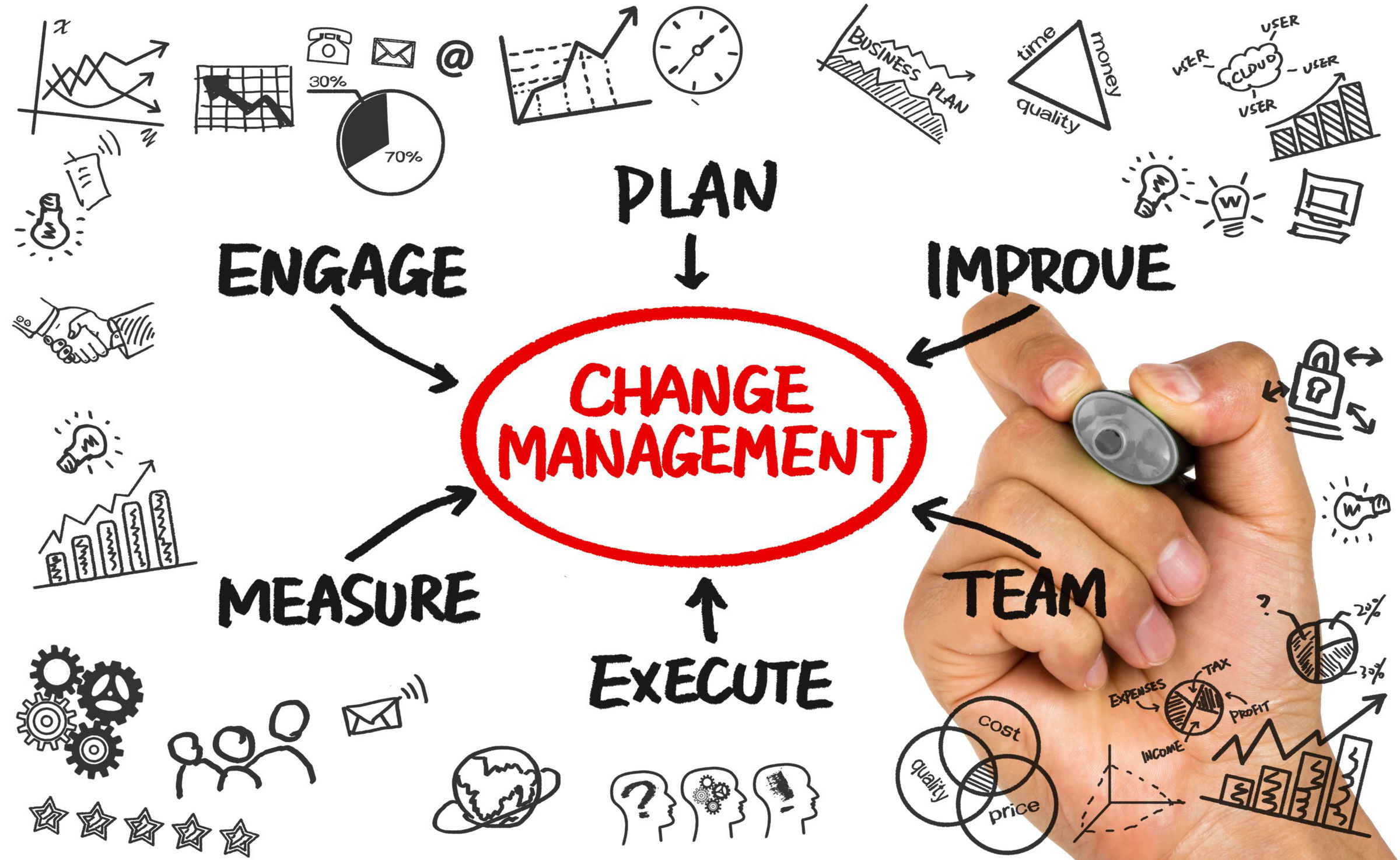
Change Management is a process which helps organisations/firms to cope up with the changes/development. Whenever a firm takes on a new project or training course to develop their business capacity, it requires a change. You must have heard that “change is the nature of development.” But it is the employees of any particular firm who have to adapt quickly. If they fail to do so, the company might witness a loss.
Change management helps individuals to grasp new technologies faster and adapt to the current circumstances. There are a lot of jobs in this field ranging from Talent Manager to Change Management Manager. The average salary in change management in the United States is $115,173 per year. One can get a certification in change management in various ways. Let us see how to get certified in change management in this article.

How to train

There are business schools that offer MBA courses with specialisation in Change Management. With all the technological advancement/innovation going around, it can be tough for even the top ones to cope up. This can be a very effective degree for people who want to understand and revolutionize business.
There are online courses available for distant learning. Almost all the top business universities have their change management online courses. One can analyse their strengths and can choose in which way they want to train. There are various types of change management courses and let us discuss which courses are best.

Few effective courses in change management

• The Change Management Foundation Certificate created by APMG International & Change Management Institute (CMI) is one of the best courses to understand organizational change. There are various training modules available in this course which will help you to identify any type of organizational change. It will help you to motivate people during a change and quickly adapt to the changes. There is an MCQ test consisting of fifty questions and you have to pass it to get the certification. Training modules are recommended but are not compulsory for taking the test.

• The Change Management Specialist (CMS) certification which was developed for the Management and Strategy Institute (MSI) is one of the best courses for people who have a prerequisite in this field. The certification program will teach you to find common causes of organisational change failures. Well-tested theories/models in change management will be taught in this course. There is also an exam and the trainees who qualify it get 30 Professional Competency Units (PCUs) & Continuing Professional Development (CPD) units.

• The Prosci Change Management Certification is one of the best courses available which is not online. This course requires a 3-day in-person commitment. One has to bear the exam fee, accommodation charges, and training charges. This certification campaign takes place multiple times in a year and happens at different locations globally. It will teach the trainees the Prosci ADKAR model which is used to deal with organizational/project changes. They will also provide the opportunity to use this model in any of their ongoing project for experimental and faster learning. One will get to learn about change management communication.

A Change Management Certification will help you understand and cope up with the developments that require a change in the working atmosphere of a company/firm. It helps you to be agile (be able to adapt quickly) in terms of ever enhancing technology. It helps you in breaking down the change process into simpler parts and then implementing them on your team. This article was all about ways to get a Change management certification and some of the best courses available in the market. I hope it helps!

How Long Does It Take to Get Agile Certification

What is Agile Certification?

In this period where conventional project development methods are not enough, Agile in the need. The demand for agile certified people has gradually increased in the IT industry. If you are doing agile certification you will learn ways to enhance the project performance by getting to know about the concepts of Agile and how those are implemented. If you have learned about Agile or you are such a practitioner who wants to check the skills in this domain and wants to upward your career then you need to get Agile Certification. You need to check the right certification that would stand you out from other people.

You will see many institutions are offering different agile certification. It is not easy to choose an agile certification that would be good for upskilling & moving ahead in your career. In this article, I will discuss why to do the agile certification and different certifications that are available today.

Why do Agile Certifications?

Agile is almost the same as other provinces like Project Management & Service management. But the organization looks for people who are certified in this domain. This is the main reason why such agile professionals go certification courses so that it is easy for them to make a career in this domain. There are advantages of doing such certifications that include better salary, recognition, etc.

What are the top Agile Certifications?

Different institutes and certifications are in the market today offering such certification courses to help people in this domain. When you have so many people offering the same things then you get confused while choosing the best for you. Because you are going to invest your money, you need to check the most beneficial certification for you that will help you enhance your career in this domain.

Scrum is the agile methodology that is easy to understand is considered to be the most popular. Many case studies are there under a scrum, so many different certifications are based on scrum.

Here are a few of the best Agile certifications that can be done by the people who want to build a career in Agile-

1. PMI-ACP (Agile Certified Professional).
2. Scrum Alliance (Certified Scrum Master/Certified Scrum Product Owner/Certified Scrum Developer).
3. Scrum Alliance (Certified Scrum Professional).
4. Professional Scrum Master/Professional Scrum Product Owner/Professional Scrum Developer -1.
5. SAFe Scaled Agilists.

How to choose the best agile certification for you?

As you are aware that multiple certifications are present and many are scrum-based. Because it is the often-used form of agile. You may be still confused about picking up the right certification for you.

Let’s have a clear idea of how to proceed?

• Step 1: Anyone how wants to gain knowledge about agile should start from scratch of Agile/Scrum.
• Step 2: Once you are done basics of Agile are cleared you should move forward to advance knowledge.
• Step 3: Scaling is considered to be the last step.

Many other agile certifications are there in the market apart from the five that are mentioned above. People have to make a good call while choosing what is best for them. If your sole aim is of changing the job then you can go with “PMI-ACP & CSM” that is more popular. If your aim to gain whole knowledge from scratch to expert then “PSM-I” is best. So, you need to look wisely at what is the best certification for you which would help you to shape your career. You need a lot of research on the course before investing your money.