
What is Credit Risk Management and Its Different Models?

The most important and essential task to look into at a bank is to check its credit affairs. As an institution running on credit provision, banks tend to undertake a large number of risks. With the increase in competition for more shares as well as customers, the risks taken up by banks have increased tenfold.

This thus sees a strong requirement for credit risk management. In order to understand credit risk management it is necessary to understand what exactly credit risk is.

Credit management is an area of expertise that requires not only theoretical information but also problem solving and thus creative ability. With the right guidance and tools through a credit management course you will be ready to step foot into the high demand world of credit management.

Credit risk and what it is

Credit risk takes place as a result of a borrower’s inability to return the payments made on some type of debt thus declaring a credit contract unfulfilled due to a lack of adherence to the same.

This is a situation that can come up due to failure to pay off debt on time, incomplete payment of debt or a failure to pay off the debt entirely. It creates a struggle for active business and causes monetary losses.

Credit risk management and its techniques

Credit risk management is a process essential to the functioning, existence and development of any bank and helps them rise above any competition that they are faced with. It systematically assists in supervising risks and understanding them as well.

In the definition it is a method to analyze, identify and measure the extent of risk and thus come up with measures to control activities concerning credit. The various techniques and principles involved in this task are as follows:

  1. Organizing strategies and policies: Credit strategy involves the generation of a ploy in a certain time period. It mirrors the bank’s readiness to take risks and also helps determine positive results.
  2. Analyzing and understanding credit: Credit analysis plays a very key role in any bank’s venture into taking risks. It involves information processing and collection of the same while considering and understanding the characteristics of the plan that would affect the clients potential to pay loans. This is all done in a bid to make appropriate decisions while lending money. It plays a huge role in credit management in general.
  3. Scattering the risks: This involves the process of categorizing and putting up credit risk requirements as well as judicious ratios in customer ranking, undertaking credit and internal scoring. Customer ranking is done based on the customer fulfillment and brings to light signs for caution early on.

Credit risk management models

  1. Credit analysis model: Management and analysis models for credit risk supply information on a customer’s credit risk at any given time. Banks require confirmation from a reliable source in order to make important lending choices.

    These choices involve deciding whether credit should be extended as well as the credit needed to be charged. A large number of credit risk models are now being mechanized using language understood and learnt by machines like Python. Taking a course in credit management will help in understanding these languages better.

  2. Risk rating models: This model is used to evaluate the probability of default (PD) and it plays a key role in credit risk management. It uses a large number of elements and sets in place a set of rules to calculate the default probability of the person the money is being landed to.

Being well versed with credit risk management will thus not only aid you because of its scope but will also make you an indispensable asset to money lending institutions like banks. I thus strongly suggest credit management courses that will help you strengthen your grasp over such topics!

Also Read: What is Credit Risk Management

What Imarticus Brings For You in A Zero Defects in Business Management Training on The Teacher’s Day??


Business Management Course in Imarticus Learning

What is business management training all about?

When you enrol yourself for a course like this, you must be ready to explore even the smallest elements of business functioning.

Business management training provides insight into the planning, execution, supervision and an overall analysis of the business.

To begin a business or to be a part of an existing one, one must have a knowledge base about the basics of business operations.

Successful completion of the course on business management Course during graduation and post-graduation level will help you in landing into various managerial positions in top companies.

Business management training in the current scenario

Business Management CoursePeople nowadays are very much interested to build a business management career as there are innumerable business start-up opportunities out there in the world. Having an intricate knowledge of the field can make you thrive in your career.

Concept of Zero Defects

The idea of zero defects came from the mind of Philip B. Crosby who thought that the performance of any employee should have a standard of no or zero defects.

Zero defects Business Management TrainingIn simple words, he tried to explain that the best motivation that can be given to an employee is by making him feel personal about the work he is doing. If employees can relate to the tasks they are involved in, there is no chance of defects in the workplace.
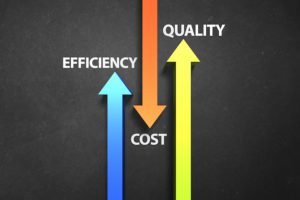


Philip penned ‘Absolutes of Quality Management’ putting forward his thoughts on business management which is still considered significant. According to Crosby, there are a total of four absolutes.

  • The definition of quality is conformance to requirements

This points the fact that production being a paramount department of any business must involve a greater downward flow of product-related information and specifications so that the production employees do not generate a quality of their own. If a new worker is not guided about the exact quality requirements of a product, there are high chances that he establishes quality standards according to his judgement and understanding.

  • The system of quality is prevention

Every production department has a criterion for inspection of goods.

Quality work in business management

Crosby makes a point by stating that rather than being fully reliant on inspection, a defect-free approach of production must be carried out. If the workers are trained in such a way that they commit fewer mistakes in the first place, the tendency of defects can subsequently be brought down. The zero-defects production can, later on, be backed up by inspection.

  • The performance standard is zero defects

If a worker sets a zero defects performance as a standard for himself, the whole problem of wastage of resources can be solved easily.

  • The measurement of quality is the price of non-conformance

With this statement, Crosby tries to override the misimpression that higher quality can only be achieved by incurring higher costs.

Institutions like Imarticus provide thorough professional knowledge and training on these subjects which can help you learn better about this field.  They also provide proper assistance for your placement in a well-known company. You should check out the details of the courses that Imarticus offers.

Related Posts:

https://imarticus.org/what-is-business-management-program/

https://imarticus.org/top-business-management-questions-and-answers/

How Do I Start a Data Analytics Study?

Before commencing anything new a lot of questions and queries baffle the mind. When starting a data analytics study there are some factors one must keep in mind for a smooth and practical flow of the study. By investing some of the time in the beginning to follow these steps, a good amount of time and efforts can be saved while carrying out the actual study.

Keep the following points in mind before kick-starting a data analytics study.

  1. Understanding the Capacity: Before you begin to explore a particular study in data analytics, it is significant that you know about the whole capacity of data analytics.
    Data Science Online Course
    There is going to be a great requirement of the theoretical knowledge and deep insight about data and understanding data. Learning about the coding languages and syntax is paramount to make a hold on data analytics.It can prove to be advantageous if you take up a data analytics course online which can make you learn data analytics and its different elements in a precise and detailed manner. You may refer to Imarticus learning which can help you hone your undiscovered skills and make you a genius in data analytics.
  2. Experimenting: Once you gain proper knowledge about the coding languages and their systematic usage, it is really important that before you jump on to the main data analytics study, you apply what you have learned by the way of an experiment. Internet is filled with data published by various renowned companies which can be used for the experimentation. Experimentation is the only means which can help you establish a relation between the cause and the effect.
  3. Specifying the Pre-requisites: Once you are done and satisfied with your experimentation, to begin the actual study in data analytics you need to specify the requirement of a specific date on which the research is going to be based. This data can be in any form like the number of people from the general population or the number of people working from home etc. Understanding the specifications of the data, in the beginning, is paramount.
  4. Collecting the Data: After specifying the requirements of data and recognizing the sources of that data, the collection has to be started. Data can be availed from various sources like the company portals or the organizational databases.The collection of data has to be appropriate and methodical so that it is not hard to decipher when the study begins. Sometimes the data collected is not at all in a usable manner and has to be filtered on various levels before beginning the actual study. In such a scenario, the data undergoes a processing and cleaning process.
  5. Processing the Data: For better understanding, scattered data has to be represented methodically for the study to be smooth. In this step, various tools are used to make the data workable. With the help of bar-graphs, tables with rows and columns, data are presented systematically. Generally, the use of spreadsheets is done for a structured display of data.
  6. Cleaning the Data: At this point, still, there would be a lot of information which is going to be of no use while carrying the study. There are chances that there is a duplication of the data. Most of the times there are certain errors in the data which may cause a lot of problems while studying and analyzing it. Such errors are got rid of in this cleaning process.

After following these steps, the study of data analytics can be taken forward in a hassle-free and smooth manner. To learn data analytics and how to communicate the data after analysing it, refer to Imarticus leaning which is an ideal way to learn data analytics through professionals.

What are the Principles of Change Management

Change management as a whole is a tricky process considering all the obstacles it would have to face in order to be implemented.
Principles for change management provide a strong framework which allows an understanding of what can be expected, how to move the entire company to take part in the process and how to personally manage the change.

Significant Principles in Change Management

  1. Systematically addressing the people aspect of the change: Significant changes come with a large number of smaller changes at once. Leaders will be held accountable, new skills and ideas must be developed, jobs will change and this will thus cause a large amount of uncertainty amongst the employees. A formal approach is thus required to be developed quickly and adapted as and when change spreads through the organisation. This requires the collection of data and its analysis, creating plans, implementing some kind of discipline, tweaking strategies, procedures and other arrangements. These changes must also be based on realistic grounds, assessing the history of the company to determine its fitness to change and the extent to which it can be done.
  2. Move from top to bottom: In times of change, the people turn to figures that represent support, strength and that would guide them in the right direction. These figures are the CEO’s and the Leadership teams. They must accept the changes themselves and thus inspire motivation in the employees and the rest of the organisation. They must model the behaviours that they desire to see. Executive teams that exhibit good team work, move an organisation closer to success. They must accept and align their ideas along with the changes taking place.
  3. Include all levels of organisation: Change programmes move from creating strategies and marking targets to creation and implementation, affection various levels of organisation. It also requires plans to identify leaders, thus distributing responsibilities for implementation.
  4. Creating a formal case: Communicating the need for change in a formal setting and creating a formal write up for the same are extremely important and essential to creating an alignment in the leadership team. This requires leaders to convince the need for change, express their faith in the company’s future, and map a guide for decision making and desired behaviour.
  5. Create ownership: The responsibility of making changes must be taken up by leaders in their respective levels of influence. It also creates an opportunity to involve people in identifying problems and coming up with solutions for them. This can be positively reinforced through the provision of rewards.
  6. Message clarity is key: Sometimes leaders mistake that employees have understood the issues and new directions whilst also feeling the need for change as well as them. Hence reinforcing the messages through timely advice is a good idea.
  7. Assessing the cultural landscape: Culture and various other behavioural aspects must be accounted for at all levels. Through diagnosing and assessing the culture we can determine the readiness for transformation. This is also beneficial due to the fact that it brings into light major problems and helps in identifying disputes. It also helps recognise the core values, hopes and beliefs which need to be accounted for in order to see a successful change occurring.
  8. Addressing existing cultures explicitly: Leaders must honestly indicate the desired culture and behaviours that would suit the new changes.
  9. Expect the unexpected: Preparing for unexpected outcomes is important as people do not react in a set manner and the external environment is also susceptible to changes. Continued reevaluation must be done in order to check the impact that the change has as well as the companies willingness to adapt. This must be backed by real data from the field, informational support and strong decision making.
  10. Understanding the individual: People react according to the information they receive from their surroundings. Hence setting rewards in order to bring out desired behaviours is advisable. Leaders need to be clear in explaining to the people the nature of change and how it will affect them.

Hiring personnel well versed in credit management is thus very essential to all organisations. Taking up a credit management course would be a wise decision. So do not hesitate to put your foot forward in taking up change management courses as it will help you climb up the ladder of success!

Also Read: What are the Types Of Change Manangement

What is Business Analysis Tools and Techniques?

Business analysis involves professionals who are responsible for understanding and identifying companies and various opportunities and issues. It requires the professionals to be hands-on and interact with people of higher positions like CEO, Vice President, Directing staff and thus understand their needs and what they require to embark on a successful plan.

There are 3 types of analysis in business. They are as follows:

  • Strategic Analysis: This involves pre-planning a project and thus having an overview of all the risks and problems that may come up. Analysts would be required to come up with a fully functional plan and meet certain goals. This is then reported to upper management which uses the information to make rational decisions.
  • Tactical analysis: This process involves gathering information on specific analysis techniques to use on an apt project.
  • Operational analysis: Using AI and learning about the operational systems, in this type of analysis a professional would be required to gather information about various available opportunities.

In order to work in the area of business analysis, one needs to be well versed with the various business analysis tools and techniques that would be required. An aspirant can find out more and learn all the necessary information by going through a business analysis course.

Business Analysis Tools and Techniques

  1. SWOT analysis: SWOT is an acronym. Each letter stands for Strength, Weakness, Opportunities and Threats respectively. In this technique, strength and weakness are intrinsic factors while opportunity and threat are extrinsic. Being an analysis technique at an enterprise position makes it applicable to fields outside of business as well. It is popular for how easy it is and can be applied to a project at any developmental stage efficiently. Hence, it is the most widely used technique.
  2. MOST analysis: Standing as an acronym for Mission, Objective, Strategy and Tactics, this technique is among the best. It serves to gather information about the companies goals and plans and what it would require to make it successful. It makes sure that an organization maintains its focus on the project and on its goals.
  3. BPM technique: BPM stands for Business Process Modelling. This method used to find the loopholes and gaps between existing and future processes. This technique makes it easy to have an overview of how the business would function in various roles. This allows planning and visualisation of further steps in the process of execution, making complex analysis simpler for professionals.
  4. Use Case Modelling: This technique uses a pictorial representation of the interactions made by users. It helps convert the various project requirements into actionable specifications cradled within another already existing project for development. The various components of a UML diagram are as follows: 1. Systems 2. Use Case 3. Actors 4. Association 5. Stereotypes. This technique boasts various advantages. It allows the analyst to understand the functional requirements that were originally placed and emphasize on vital functional areas.
  5. Brainstorming: A technique which serves as a base to other popular techniques such as SWOT and PESTLE analysis, Brainstorming is one of the most popular techniques amongst various analysts. This is a group activity which allows the members to formulate and present their ideas while looking at the various risks and loopholes and finding solutions to various issues.
  6. PESTLE Analysis: This technique takes into account the various environmental influences that affect the business analysis. This includes Political, Economical, Social, Technological, Legal and Environmental factors that serve to form the acronym. These factors play a huge role in finalizing business decisions. This straightforward framework requires a network of skills and a large amount of experience.

Hence a large amount of information needs to be known beforehand in order to work in this field. This can be done through a business analysis course. A business analysis course would prepare an aspirant while slotting in all the necessary tools in their tool belt to make them successful.

Also Read: What are Business Analysis Techniques

Purpose of Credit Risk Analysis

What is Credit Risk?

Risk is a part and parcel of conducting business, the degree and types of risk vary depending upon the nature of business. Credit risk can be explained as the risk of loss arising due to the failure of a borrower to meet its loan obligations. In simpler terms, when a borrower is not able to repay the loan amount as per the terms and conditions of the agreement, a credit risk situation arises. Credit risk is far too common in the banking and finance industry and an increase in credit risk leads to loss for banking and financial institutions. It also severely impacts the cash-flow of the business.

Credit Risk Analysis

Now to tackle the situation of huge losses arising on account of credit risk, banks and financial institutions who are primarily involved in lending money takes all necessary measure to mitigate and reduce the risk. Credit risk analysis can be understood as a measure to mitigate credit risk. The credit risk analysis process involves assessing the probability of loss due to default by the borrower. It also evaluates the actual amount and extent of loss that will arise when the borrower fails to meet his/her repayment obligations as per the terms of the loan agreement.

Credit risk analysis is primarily carried out by banks, financial institutions and NBFCs as they are primarily involved in the process of loaning out funds for various needs. In addition to this, insurance companies and bond issuers also need effective credit risk analysis to minimize loses and boost profitability. Effective credit risk analysis helps to ease the lending process and this is much needed in the current digital economy where customers don’t like to wait long for goods and services. Credit risk analysis is an indispensable process for all major financial and banking institutions that deal in a large volume of loans and monetary transactions.

Why Conduct Credit Risk Analysis?

Now that we have a complete understanding of what credit risk analysis is let’s delve deeper into why is it important to conduct credit risk analysis and how it helps.

  • Helps to calculate the probability of default: The probability of default is an important factor needed to calculate the exact amount of loss due to default by borrower or credit risk. The probability of default is generally explained as the likelihood of the borrower failing to meet the principal and interest repayment within a given time frame, generally one year period. The two important determinants of the default probability are the borrower’s personal characteristic and the overall economic scenario.
  • To calculate exposure and loss at default: A comprehensive credit risk analysis helps to determine the exposure and actual amount of loss in case of default by the borrower. Banks and financial institutions often need to determine the exposure in case of loss to be prepared in advance. In addition to this, the actual amount of loss at the time of default helps to provide better estimates of the liabilities associated with banks and financial institutions. It helps banks to keep the credit risk exposure in an acceptable range that is within its risk-taking capability.
  • Mitigating and controlling credit risk: The most important reason why banks and other financial institutions conduct credit risk analysis is to mitigate or control their credit risk exposure. Effective credit risk analysis helps to provide important information regarding the borrower’s financial standing and helps to eliminate the high-risk borrowers. These institutions can establish an acceptable credit risk range and allow loans only to borrowers that meet the criteria and fall within the set risk limit.

The role of credit risk analysis has gain importance in the past decades, especially after the global financial crisis. Credit risk analyst is one of the most sought-after career options for people who want to get into finance and banking related sector. A credit risk course helps you boost your career prospects in this industry. One can opt for a credit risk course by reputed institutions like Imarticus Learning that also guarantees job assurance and imparts you with relevant knowledge and skills need to do the job.

Also Read: What is Credit Risk Analysis and Why It is Important

How Do I Get into Financial Analysis with an Accounting Background?

Financial analysis is a hot field right now. It has experienced a boom due to the rise of cyber technology and in startup culture. Existing organizations have become bigger while new startups and enterprises are mushrooming across India. All of this increases the demand in financial analysis. Which in turn makes it a sought-after field for aspiring students and current finance professionals.
The good thing about financial analysis is that anyone can transition to it from another field. This is even a more valid proposition for those already in the finance and accounting fields. You just need a bit of training and skill learning to enter the field. Here’s how.

Entering the Field of Financial Analysis

The first thing to do when you attempt this transition is to understand the differences between accounting and financial analysis.
Accounting deals with inspection and handling of financial records, bank statements, and balance sheets of an organization. As an accountant, you will need to go through files after files and check if the math fits right. If it doesn’t, you report it for further investigation. An accountant also takes care of taxes, filing returns, and other financial activities such as billing.
Financial analysis, on the other hand, is a bit more advanced concept. Here in addition to the inspection of financial records, you also provide advice on how the organization can make better decisions. Essentially, your role would be to assess all historical financial dealings of the company and provide them with counsel on ways they can improve their financial decisions in future.
Another aspect of the role – something you can learn more about in financial analysis courses – is that you will work with an additional set of skills and tools. You will work more with concepts like trend analysis, cash flow analysis, and working capital to name a few. The processes will be slightly different than the accountant role because here your main task is analysis.

How to Make the Switch to Financial Analysis?

If you are an accountancy student or are working as an accountant somewhere, the next step would be to start learning about financial analysis. There are three ways to do this:
• Take a financial analysis course. This is the most recommended way as you will both learn about concepts and earn a certificate that you can use to land job interviews. There are many online courses available that will give you a good peek into the field. You can also do this part-time while working at your existing job
• Learn individual skills. Start with the ones that are mentioned above plus others through online courses. The advantage of learning individual skills is that you can learn about them in more depth. All of this will prepare you better in future when you actually work as a financial analyst
• Get an internship. This may require you to leave your current job but the experience will do you good. An internship at a financial analysis firm under the tutelage of experienced professionals is another great way to learn more about the field
You can also do all three of them at once if you are focused and determined to get into financial analysis. But if you want to take it safely ahead while keeping your current job, enrol on a financial analysis course and start learning about it on the side. This will also help in the rare case that you lose interest in the field midway. This way you can still get back to your primary job. Start your learning today!

Also Read: How To Become Financial Analyst With No Experience

Feasibility Study: Types and Importance in Business Management!

Feasibility study, as the name indicates, is an analysis of the feasibility of a project both technically and legally and if it is economically justifiable. This helps an organization from making the wrong investment. A project can be unreasonable for many reasons. Some might require too many resources that would keep them from doing other tasks.

This might eventually cost the company more than what they have invested in the projects.  A good feasibility study covers key areas like the details of the services or products related to the project, account statements, legal obligations, tax requirements, financial data, and policies. Some projects might require additional investment in technology and for implementation of the project. Feasibility study finds relevant in the current-day business landscape which is severely affected by the COVID-19 pandemic.

Many organizations prefer to ensure the feasibility of a project before investing in that. This makes it an excellent career choice more than ever. To pursue this career, you may enrol in a Business Management Course.

Different Kinds of Feasibility Studies

Depending upon the type of project evaluated, feasibility studies can of different types. Some important types are:

Business Management CourseTechnical Feasibility Study 

In this type of project assessment, the focus is on technical resources in a company, and if their technical team is skilful and capable of converting the concepts and ideas into practical working models. The person is also responsible to evaluate the technical requirements including software, hardware, and other components.

Economic Feasibility Study

As the title suggests, the role deals with the cost factor. This role is designed to help the organization to decide if a project is viable and economically feasible, after evaluating various factors. This is done before allocating the financial resources needed for a project. Assessing a project independently also helps enhance the credibility of that project, and to evaluate the economic benefits the proposed project brings to the organization.

Legal Feasibility Study

While finalizing and approving a project, it is important to make sure that it does not conflict with the legal aspects about the subject – data protection rules, social media regulations or zoning laws.

Business Management CourseFor example, if an organization is planning to build a new office or moving to new premises, the legal feasibility manager is responsible for making sure that that kind of business is allowed in that location, and that locality is not part of any special zone with restrictions to certain businesses.



Operational Feasibility Study

Operational feasibility assessment involves a thorough analysis of a project and its outcome to determine if that project can satisfy the needs of the organization. Mostly requirement analysis is done while the system development is in progress, and while doing a feasibility study, the capability of the project to satisfy the needs identified during requirement analysis.

Scheduling Feasibility Study

For any project, the timeline is important. A project will not be able to deliver the expected result if not completed on time. Scheduling feasibility is concerned with estimating how much time would it take to finish.

The Relevance of the Feasibility Study

Organizations need to invest in the right project. So before committing, organizations prefer to analyse the project in terms of resources, budget, and time. Sometime, feasibility studies could help to unearth a new idea or scope. Also, conducting a feasibility study is important for the stakeholders to get a clear picture of the project. Conducting such a feasibility study has many other benefits including:

  • Helps in decision-making (about the project).
  • Improves the success rate by assessing multiple factors.
  • Identifies and establishes a strong reason to take on the project.
  • Recognizes new opportunities for improvement.
  • Identifies flaws and unreasonable grounds to call off a project.
  • Improves the focus of the project team.

You now know the importance of feasibility studies. If you want to pursue a business management career, enrol in a good course offered by a reputed organization like Imarticus Learning.

Not only you get business management training from good faculties, but also get to build your network and secure a good job. Imarticus has partnered with many leading organizations to get a good launching pad for their students. After all, what could be a better beginning than working with a market leader!

How Can I Become an Insurance Underwriter?

What is Insurance Underwriting?

Risk is an integral part of doing business, the higher the risk the better the returns. This is the general rule but exceptions are always there. Risk can’t be avoided altogether; it can be reduced and hedged with certain strategies that allow businesses to function smoothly. Insurance underwriting services provided by Insurance companies helps other businesses to hedge their risk and lower their overall exposure. Businesses are required to pay a premium to insurance companies as a fee to hedge their risk.
The underwriting process help insurance companies to price the risk based on multiple variables related to the business. It is calculated based on two major factors that include, coverage provided to a potential policyholder, the probability of claim made on the insurance. An insurance underwriter is responsible for evaluating how much coverage should be given to a policyholder in case of an unfavorable event. They review the application for insurance coverage and reject or accept the application based on their risk evaluation.

Responsibilities of an Insurance Underwriter

An insurance underwriter has a huge role to play in insurance companies and there’s a lot on their plate. Broadly speaking, the role of an insurance underwriter is to identify which parties are suitable for coverage and what kind of coverage can be provided based on their risk evaluation. An insurance underwriter is responsible to dig deeper into the possible risks associated with a business or industry and review the detailed information to measure the actual risk.

They are responsible for identifying the best policy coverage that could be provided to the prospective clients, the damages that are insured and the terms and conditions of the insurance policies. They also perform the task of finding solutions that will reduce and minimize the risk arising out of future insurance claims. They also work together with the broker to help find out the best insurance coverage for the clients in case the scenario is unclear.

Underwriters are highly trained professionals who know the ins and outs of the insurance sector and the policies offered by insurance companies. They specialize in the process of risk assessment and use their extensive research and knowledge to identify if they should be covering a particular risk or not in their insurance policies. The role of an insurance underwriter is very different from a broker and should not be confused with it.

Becoming an Insurance Underwriter

Underwriting is a very rewarding career opportunity in the insurance and finance industry. Insurance underwriters are generally employed by insurance organizations or independent insurance brokerage houses. How to become an insurance underwriter can be a puzzling question. There’s no one specific course of action and it is very subjective. The very first step in becoming an insurance underwriter is to finish your graduation in a relevant field.

You can choose among business, finance, accounting, economics, commerce, etc. However, some big organizations also demand an MBA degree for insurance underwriters. So, the academic requirements differ from organization to organization but an MBA degree in a relevant field will surely boost your prospects and give you’re an edge over the competition. Insurance underwriting professionals are also required to have decent computer knowledge since all the activities are carried out on the system in the contemporary scenario.
Underwriting course is strongly recommended for individuals who want to obtain a holistic understanding of how the industry works and want to gain practical exposure to the work. You also need to work on your commination and interpersonal skills in addition to learning all about the insurance, finance and business sector. You are also required to have strong analytical skills to excel in this job. Honing your soft and technical skills will help you land up your dream job easily.

Also Read: Role of an Underwriter

Guide On How to Become Scrum Master

In an Agile organization, Scrum master is the one who holds together the process of product delivery while maintaining an easy to approach way to solve problems and facilitating for the organization, scrum team and product itself. In this process, most agile teams have a scrum master to lead the process of daily scrum meetings, in theory, practice and values. The scrum master not only leads the team but also helps out the team members in practice and manages the sprint board, retrospective meetings and the overall functioning of the team by acting like a “servant leader”.

A scrum master might have to use several tools to keep track of progress as well as the backlogs of the team from the previous sprint and priority of each of these items in the next one. There are several tools available in the market for the same, as well as scrum master certifications to help one be more confident in the role, and appear more suited for the same role in an agile organization’s scrum team.

Steps to take if you want to facilitate your scrum team’s progress by removing roadblocks

  1. Have basic knowledge of Scrum and the agile framework: As a scrum master, it is important to know the basic terminology of a scrum as well as the agile framework and the various tools that could help track the daily progress of the team smoothly. Besides the scrum master, the technical lead, consultant or product manager are some of the other functions who need to be fluent in the workings of a scrum team, ensuring that there is no communication gap within the team. Also, the knowledge of stakeholders, mediating conflicts and adaptability to change according to requirements are very big assets in positions such as these. A scrum master certification will be of a great use to you.
  2. Choose a recognized scrum certification program: While there are a plethora of resources online to get a certification done on scrum or on how to become a scrum master, you must choose one which is valuable to the organization you are planning to join. The syllabus covered for the certification and training provided, if any, are the primary things that you should check while signing up for certification in this domain. Starter certifications mostly comprise MCQ questions and cover all the basics that a scrum master would need to know for handling the responsibility of an Agile team well. Also, this becomes a third-party verification that an individual possesses the requisite skills to be a scrum master, so it is easier for organizations to judge the same while hiring.
  3. Attending a course for knowhow of the course content: Most certifications for scrum master require you to go through a training which prepares you for the examination. This requires around two days of effort along with extra reading if anyone is interested in the same. Some of the important topics are the history of a scrum, building a successful scrum team, managing backlog for your team, scrum scalability, how to build and manage teams etc. This helps scrum master tackle the challenges of implementing scrum methodology, preparing reports and to overcome any hurdles that they face as a team. Following this, you appear for the examination and get certified for securing a minimum score overall of sixty to eighty-five per cent and receive a certificate stating you are a scrum-master.
  4. Certificate renewal every two years: Since scrum is a part of agile which is an ever-evolving process, the scrum master certification expires every two years and renewal is necessary by citing your education hours and a minimal fee.

Also Read: Role & Responsibilities of Scrum Master