Learn to Assess Risks and Opportunities in Supply Chain Management and Analytics with This Coveted Certification

Every business wants to meet the supplies as per the demand of the end-users. For doing so, a business has to ensure effective SCM (Supply Chain Management). Supply chain management can help a business in knowing about the flow of raw materials and finished goods. In this digital era, businesses need individuals who are familiar with supply chain analytics.

Supply chain analytics can uncover areas of improvement and reduce overhead costs of an organization. Read on to know more about SCM and how to learn it.

 Why is SCM necessary for a business?

Businesses are now realizing the benefit of effective supply chain management. The demand for SCM experts has increased over the years. The pros of SCM in the current scenario are as follows:

  • You can protect your business from market disruptions and production shortages via effective supply chain management.
  • SCM improves your inventory system and reduces errors in day-to-day operations. You can optimize the space for finished goods with SCM.
  • A business can optimize the display of products on sale outlets with SCM. You can decide which product should be highlighted at your physical store with supply chain analytics.
  • You can increase the customer walk-in ratio with better supply chain management. You will have better relationships with suppliers and vendors due to SCM.
  • When fewer errors occur in your day-to-day operations with SCM, you can increase the overall productivity of your business.
  • You can accumulate raw materials and finished goods according to the demand of customers. Oversupply and undersupply issues can be avoided with better SCM.
  • You can uncover all types of overhead costs with SCM. Unwanted overhead costs can be managed when you know about your operational expenses with SCM.

What are the risks in supply chain management?

 Some of the risks associated with supply chain management that should be avoided are as follows:

  • Sometimes, businesses miscalculate the demands of the customer for a product or service. Demand risks can result in oversupply or undersupply.
  • SCM is concerned with managing environmental risks that can delay the delivery of products or raw materials. Political, governmental, and social issues often lead to delay in supply chain processes.
  • Contingency risks are also associated with supply chain processes. Your business should have a backup plan for any supply chain disruptions.
  • Manufacturing risks are also to be addressed by SCM experts in an organization. A small manufacturing error can affect the complete supply chain system.

How to learn supply chain analytics?

More and more businesses are understanding the importance of SCM in cutting losses. There will be a lot of opportunities in the SCM industry in the coming years. You can complete a supply chain management course to futureproof your career.

supply chain management coursesEnthusiasts can go for the Professional Certification in Supply Chain Management & Analytics provided by Imarticus Learning. The pros of the supply chain management online course offered by Imarticus are as follows:

  • Imarticus provides this course in association with IIT Roorkee which, is a leading university in India.
  • You will learn quickly via numerous real-world SCM projects under this course.
  • You will be applicable for a 3-day campus immersion program where you get to interact with peers and faculty of IIT Roorkee.
  • The IIT supply chain management course covers numerous aspects like sales planning, operations planning, supply chain performance, and distribution network.

Conclusion

The recent COVID pandemic has highlighted the need for SCM experts. With supply chain analytics, businesses can avoid market disruptions and economic disturbances. The industry-oriented online course of Imarticus can help in learning SCM industry practices. Start your IIT supply chain management course now!


How Do Business Analytics & Data Analytics Differ? What Are Their Applications?

Both business and data analytics is about processing data and gaining insights from data.

The terms business analytics and data analytics might be used interchangeably in organizations on a small scale. On the other hand, big firms hire both business analysts and data analysts to perform well-defined functions, thus making it very necessary to understand the difference between the two.

With Imarticus’s, you can choose between the best data analytics courses and business analytics courses in India. Read on to have a deep insight into the two important career paths and their respective applications.

best data analytics courses in IndiaBusiness Analytics

Business analytics course focuses on business impact when analyzing data and the actions that should result from the insights. For example, it provides answers to the following questions, “Should a company develop a new product line?” Or, “Should it prioritize one particular project over another?”

Business analytics combines various capabilities, tools, and applications to measure and improve the effectiveness of core business functions such as marketing, customer service, sales, or IT.

Business analysis (also Business Analytics) is the iterative exploration of a company’s data. There is a statistical analysis method used to bring information to light that can help to stimulate innovation and business results. Companies that rely on analysis consider big data to be a valuable asset of the company: data helps to advance business planning and forms the basis for future strategies. Business analysis helps these companies get the maximum value from this gold mine of insights.

Sufficiently large volumes of high-quality data are required for business analysis. Companies that want to achieve the most accurate results possible have to integrate and compare the data from different systems. A decision is then made as to which subsets will be made available to the business.

Data Analytics

A Data analytics career involves combing through massive data sets to identify patterns and trends, create hypotheses, and support business decisions with data-based insights.

For example, data analytics seeks to answer questions such as, “What impact do geographic factors or time of year have on customer preferences?” Or, “What is the likelihood that a customer will defect to a competitor?” In practice, data analytics encompasses many different techniques and approaches. It is also known as data science, data mining, data modeling, and big data analysis.

In data analysis, raw data is collected and examined to conclude it. Every company collects huge amounts of data, such as sales figures, market research, logistics, and transaction data. The real benefit of data analysis is in identifying patterns in a data set that can indicate trends, risks, and opportunities.

Data analysis enables companies to use this knowledge to change their processes to make better decisions. In practice, data analysis can help, for example, to decide about the next product developments, to develop customer loyalty strategies, or to evaluate the effectiveness of new medical treatments.

Applications of Business Analytics and Data Analytics

Since Business Analytics and data analytics are both based on big data tools, they have several applications in various industries across the globe. Some of them are mentioned below:

  1. Digital Advertising
  2. Energy Management
  3. Medical Applications
  4. City planning and mapping
  5. GPS tracking
  6. Transportation
  7. Risk detection and management
  8. Security
  9. Transportation
  10. Traveling
  11. Customer interaction
  12. Internet Browsing
  13. Expenditure Management

Conclusion

Business and Data analytics share the same overarching goal: use technology and data to drive business success. We live in a data-driven world where the amount of information available to businesses is growing exponentially. Both functions in combination can help companies achieve maximum efficiency and gain some useful insights.

Understanding Mutual Funds: Are They Safe?

What is a Mutual Fund

There are different assets and holdings to invest with higher and lower risks in the financial market. A mutual fund works as a company that pools money collected within a diverse set of investors. This money is invested in a varied set of securities, or financial products, such as bonds. The whole set of holdings is known as a portfolio. The management of the funds is carried out by money managers who find the right allocation, optimizing and monitoring the capital gains for the investors.

This limits the decision power of its investors. Indeed, holders do not have voting rights. As a matter of fact, the ownership of the fund is represented by the shares. The gains and losses will then be distributed proportionally among the shareholders. Mutual funds are attractive to conservative risk profiles, as they are affordable, diversified, and allows the investors to easily redeem any fees.

Types of Mutual Funds 

Depending on the nature of the securities included in each fund, the mutual funds can be categorized into different types.

Some of the most common funds are denominated money market funds. This type of fund has a lower risk and is made through short-term instruments. The safety of the fund responds to the type of investment, which is made only through safe assets.

As aforementioned, the risk profiles respond to different types of mutual funds. To more aggressive risk profiles, bond funds address the investment through bonds. Stock funds, conversely, allocate the investment using corporate stocks of a diverse nature (regular dividends stocks, non-regular ones, index funds, or specialized sector funds of a specific industry). Finally, target-date funds manage the investment with a varied set of financial assets, shifting the mix periodically.

Risks Management

Any type of investment has an inherent risk associated with it, which varies according to the sector and types of assets used to invest. The nature of the mutual funds makes them very suitable for risk-averse profiles. Mutual funds reduce the risk through three axes: volatility, concentration, and inflation control procedures. For the former item, a systematic investment plan (small investments in short time intervals), such as those applied in a mutual fund, reduces the risks derived from the market variability.

Following with the next one, i.e. concentration, the famous financial advice gives us a clear hint on the strategy used: “One should not put all the eggs in the same basket”. As mutual funds are defined mostly as a vehicle of investment in varied sectors using different assets, the impact on diversified portfolios allows investors to foresee and prevent dramatic loss. Lastly, the funds also have advantages in terms of taxation, such as tax savings and a paying free-tax scheme for the returns.

Why Should You Partner with Imarticus to Learn About Financial Assets?

In partnership with LSED Academy, we offer a holistic, practical program to certify professionals in Investment Banking Operations. In a more competitive and complex financial work market, we offer a complete 180-hour program to not only get a deep understanding of complex financial assets and products but also to enhance the possibilities to get salary hikes and career development.

The 360-degree program alternates from the comprehension of complicated financial products trade life cycles, risk management courses, and market regulation modules, focusing also on the development of soft skills.

Conclusion

Being able to understand and manage investments using innovative financial assets is a crucial skill to work within the financial market. You can become a part of the Imarticus working force, participate in the investment sector and improve your salary. Get a certification online in banking operations with Imarticus. Join today!

Embedding Sustainability Into the Innovation Funnel With This BBA Certification

Sustainability is based on satisfying our current needs while not compromising the capacity of future generations to meet their own needs. This requires the balanced development of three fundamental pillars: economic, environmental, and social.

In addition to the economic contribution, business activity also generates environmental and social effects that do not go unnoticed. Thus, the business contribution is essential to reverse the current situation in economic, environmental, and social aspects. The bachelor’s in business administration we offer will show you how to succeed in this field.

BBA in banking and financeTypically, companies start their sustainability strategies by reducing their costs and their negative impact on the environment. However, this approach is not enough; sustainability must be considered a core value in any business strategy. To do this the BBA in finance will show you how to embark on this path, for example:

  • Elevate sustainability to a core business strategy. Sustainability should be a cultural feature throughout the organization, always on the agenda of senior leaders. In most cases, the company’s services and products should be marketed as environmentally friendly.
  • Integrate sustainability principles into innovation efforts. Environmental initiatives require imaginative ways of approaching problems. For example, many companies may consider replacing the raw materials that have traditionally been used to design products with more environmentally integrated ones.
  • Look at the overall product value chain through an environmental lens. The full impact of design decisions on the overall environmental impact of a product should be considered, by establishing close relationships between customer and supplier design teams, which should also consider the full life cycle of products within the design decisions taken.
  • Consider the principles of sustainability in key decisions. All business decisions involve a trade-off between different variables. The environmental implications of a decision must also be taken into account because of its implications in terms of risk, cost, growth, service, and quality.
  • Integrate sustainability into corporate and brand messages and advertising. This is particularly important to keep legitimate stakeholders (investors, employees, customers, regulators, etc.) properly informed.

Innovation can be a means to achieve sustainability, as it involves improving the way things are done. Thus, sustainable innovation includes both the creation of green products and the implementation of sustainable processes. Such processes encompass both industrial manufacturing and organizational processes. This is why innovation in business models and business practices is moving the company towards sustainability.

New technologies offer sustainable solutions to move towards a better world. However, their implementation in the business fabric is often complex due to factors such as uncertainty or resistance to change. Closing these gaps, therefore, requires significant efforts from both governments and businesses themselves.

Practices such as the integration of management systems or open innovation are part of a set of strategic solutions that contribute to building a sustainable world. This is a complex problem, and its real solution goes far beyond individual efforts or isolated cases.

That is why we are changing the way we do things and innovating with BBA coursesBusiness objectives are very diverse, which is why several management systems (quality, environment, occupational health and safety, corporate social responsibility, among others) interact in the same company to ensure the satisfaction of each of these objectives.

To understand sustainability-oriented business strategies the bachelor in business administration offers you a comprehensive curriculum that covers the demands of new-age banking, financial modeling, equity research, and FinTech. The BBA courses will enable you to work on real business projects that will allow you to gain a practical understanding of finance and general management.

Ethereum Vs. Ethereum Classic: Differences You Should Know About!

If you have been following the developments in cryptocurrency or planning to enrol for an Ethereum course, there is a very less chance that you have not heard about the Ethereum Vs. Ethereum Classic discourse. The hard fork that led to the creation of a new chain was a result of a huge attack on the Decentralized Autonomous Organization (DAO), a venture capital fund that was created to decentralize the cryptocurrency transactions and to automate the functions. The DAO was developed on the Ethereum platform.

This smart contract automates the cryptocurrency transactions based on a set of pre-determined conditions. Everything was working smoothly until the notorious attack on DAO happened in 2016, stealing $50 million, leaving the traders in absolute shock. Though the incident happened because of a fault in the structure of DAO, it sparked a lot of debates and eventually, resulted in a hard fork. Thus, the Ethereum was split into two branches. While the new branch retained the name Ethereum, the old one took up a new name, Ethereum Classic.

Now that you have an overview of what is what, let us look into some fundamental differences between Ethereum and Ethereum Classic.

Difference Between Ethereum and Ethereum Classic

The proposal for a hard fork sparked an ideological difference, as many people believed that the new chain challenged the fundamental idea of the Ethereum being immutable. Both Ethereum and Ethereum Classic share some functional similarities. However, there are some fundamental differences that set them apart. There are marked differences in some of the main features, but the more striking ones appear on the philosophical and moral aspects. Lets us look at the differences one by one.

Differences in Philosophy

One of the founding ideas of blockchain was that it should be immutable. This is because the supporters believe that if a blockchain allows people to make changes according to their wish, that could lead to fraud. However, the new branch, Ethereum, does not advocate that. The Ethereum community members believed that a hard fork is necessary to serve justice.  Ethereum devalued the stolen tokens and refunded those who had invested in those Ethers.

Differences in Value

Ethereum values almost 15 times than the Ethereum Classic. This is because Ethereum successfully garnered the support of many leading names in the crypto community. Also, it receives regular updates. Ethereum Classic has a lesser value compared to Ethereum, but recently, it managed to attract the backing of some prominent names.

Enterprise Ethereum Alliance (EEA) is a support group formed by more than 200 market leaders such as Microsoft, Wipro, Intel, Accenture, JP Morgan, Thomson Reuters, Credit Suisse along with many start-ups and subject matter experts. They are all bound by a common factor; all of them believe in the potential of blockchain.

Differences in Potential and Features

The growth potential of Ethereum Classic is debatable. On the contrary, Ethereum is looking at a promising future. Looking at its rapid growth, experts are postulating that Ethereum could become the first cryptocurrency to reach the $10,000 mark after Bitcoin. Ethereum enjoys a higher hash rate than Ethereum Classic. As mentioned earlier, Ethereum keeps updating on a regular basis, but Ethereum Classic cannot access those updates.

There is a surge in the carer opportunities related to Blockchain. Needless to say, the technology industry has undergone tremendous change after the introduction of blockchain. Many fortune-500 companies are coming forward to espouse blockchain to support their growth. This underlines the career potential of blockchain and Ethereum, which is largely untapped. Check out the Ethereum courses offered by Imarticus if you are looking for a good Ethereum training in Fintech.

What Makes Credit Underwriting Such A Fascinating Career Option?

Throughout your life, you would have seen countless advertisements for insurances (of all sorts.) However, if you have ever decided to fill one and go through the entire process, you would have faced the risk assessment.

Risk assessment is the insurance company’s way of determining whether insuring you would be a profitable deal or not, since each year, these companies are risking billions of dollars. Comprehensive risk management thus becomes more important.

A Credit Underwriting career is a career in which you do a risk assessment. Yes, a credit underwriter’s job description is to go through all the applicants and determine their risk coefficient. A credit underwriter’s job is both demanding and challenging, yet at the same time entertaining and lucrative.


Credit Risk Underwriting CareerLet us understand why credit underwriting is such a fascinating career option.

Credit Underwriting: Job Description

As an underwriter, you would be the person accepting any understated liability, thus making you the person who will be held responsible for the potential losses incurred by the client. A credit underwriter does the same thing in an economic context.

So, when you accept this highly analytical, 40-hours-a-week desk job, you will be expected to review the application for insurance coverage for people and organizations. You are supposed to extract all the valuable information from their applications and then use your computer to develop a risk factor coefficient.

You, as a Credit Underwriting Career, have a pivotal role in the company’s profits (and losses). Since a lenient underwriter would open up the company to unprecedented losses, a very strict underwriter would run the company into the ground by losing its business. Thus, striking the right balance is critical for any Credit Underwriting Career.

What makes credit underwriting fun?

From the description of Credit underwriting thus far, it seems more daunting than fun. However, there are many apparent benefits, and we have listed some of them below:

Credit Risk Underwriting CareerYou get to work with the latest technology:
Traditional means of risk assessment have been invalidated by advancements in technology like Machine Learning, Artificial Intelligence, and Deep Learning. You, as a credit underwriter of the 21st century, would be working mostly with such tech stacks. You would be using exciting and cutting-edge statistical modeling from day today.

Insurance and other benefits:

Since you will be working with insurance agencies, and you will be bestowed upon the best plans for yourself without going through any painful process, you also have a high chance of having other benefits like retirement plans, etc.

Paycheck:

It is estimated that a Credit Underwriting Career would earn you about $69,380, which translates to about a whopping fifty-one lakh rupees an annum. That is a very lucrative reason to pick up underwriting as a career.

Credit Risk Underwriting CareerConclusion:

Credit Underwriting as a Career has its pros and cons like any other career. We hope to have provided you with enough information to make an informed choice on your own.

Artificial Intelligence skilling has to start from a young age! How? Explore…

The chasm between machines and living things is shrinking. Artificial intelligence (AI) is deeply rooted in all aspects of technology, from robots to social networks. India has the potential to skyrocket in the domain of Artificial Intelligence and surpass USA and China, largely owing to:

  • It’s deep-rooted IT &ITeS infrastructure
  • Innovation ( India ranked among the top 50 countries in the Global Innovations Index 2020)
  • Accessibility to large datasets

These have pioneered more than a handful of start-ups and private investments in this sector. For AI to flourish further, there needs to be a nationwide upskilling of the younger generation in Artificial Intelligence Training. The GenZ needs to be acquainted with the theoretical and practical aspects of AI application to increase its scope of innovation and entrepreneurship.

Artificial Intelligence CareerIn the future, the interaction between humans and AI will define in a lot of ways the structure and functioning of a modern-tech society.

Thus it becomes imperative to lay down the basis of friendship for the years to come by exposing the young ones to AI.

While a lot of minds will wander to an Artificial Intelligence Career it is also important that others are no less familiar with the upsides and downsides of such a powerful technology.

Here is how we can ensure the frontiers of the same:

  • Introduce young people to the concepts of AI and machine learning through education curriculum. In India, the Central Board of Secondary Education (CBSE) announced the integration of AI in partnership with IBM for the academic year 2020-21
  • Encourage learning through hands-on projects so that student can make better, informed and critical use of these technologies
  • Enrolling young minds on various Edu-tech platforms specializing in the field of Machine Learning and AI which help them gauge interest and real-life applications of such technologies using intuitive software

Some of these websites include- Scratch, App Inventor, Cognimates etc

  • Experiments with Google is an easy-access, affordable, and user-friendly tool to explore artificial intelligence training at a young age with exciting experiments on AI, VR, AR, Chrome, Voice, Android etc to apply creativity and technological dexterity at the same place. One of these fun-filled learnings includes MixLab that uses voice commands to create music
  • Engage in the practice of cultural inquiry – like what is the goal of You tube’s recommendations or how do my Amazon purchases reflect on my Instagram feed
  • Lastly, before introducing your children to the world of AI and machine learnings, self-education of the same is very crucial

Apart from exploring the possibilities of AI, these junior minds also need to know the limitations of AI to have a balanced approached. That is to say, AI is not the ultimate machine as it is created by humans and will improve along the way by errors made and rectified by humans.

Artificial Intelligence CareerIn recent studies, a scientist is experimenting to teach AI to learn like a kid. They want to inoculate the eager learning attitude and swift skills of young people into the algorithms of machines.


And, AI does not create everything. It is the innovation and vision of responsible human beings that will introduce, implement, and maintain the technological structure in human society.

Complete Guide To Vectors in Linear Algebra With Implementation in Python!

Mathematical implementation and mathematical functionality play a key role in understanding the workings of various physical entities. Creating mathematical models and mathematical measurements is essential to give shape to the theories and concepts. It also plays a vital role in writing code and new-age Machine learning algorithms.

Measurement:

Any attribute of an object that can be assigned with a meaningful number to observe, assess or understand the item is called Measurement. This measurement can be broadly divided into two types:

  1. Scalars
  2. Vectors

Scalars:

The measurement of the attribute of the objects doesn’t depend on the direction of the item.

SclarTo illustrate the definition let us consider the length between two points. The span between these two points doesn’t change depending on the direction as the size remains the same.
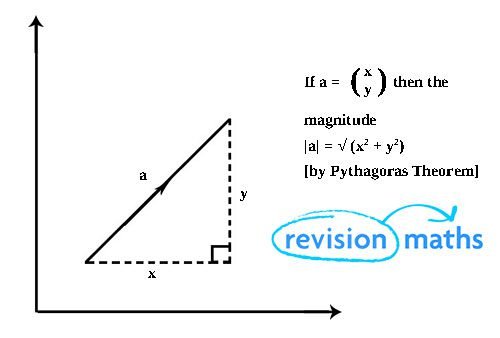

Vectors:

The measurements of the attribute of the objects depend on the direction of the attribute too.

Vector

This can be understood by taking the example of force. Force needs a path with the numerical to comprehend the measurement

Vectors are denoted by an Arrow (entirely→).

The direction where the vector points are called the vector’s direction.

Types of Vectors:

  1. Zero Vector or Null Vector: A zero vector is the vector consisting Zero-Length and no direction
  2. Unit Vector: A vector that has a magnitude of 1 with a set direction.
  3. Collinear Vector: If the vectors are parallel to each other or on the same line irrespective of their direction.
  4. Coplanar Vector: All vectors that lie in the same plane
  5. Equal Vector: If the vectors have the same magnitude and direction
  6. Position Vector: A point that can be constituted as a constant point regarding other vectors

Implementation of vectors in Python: 

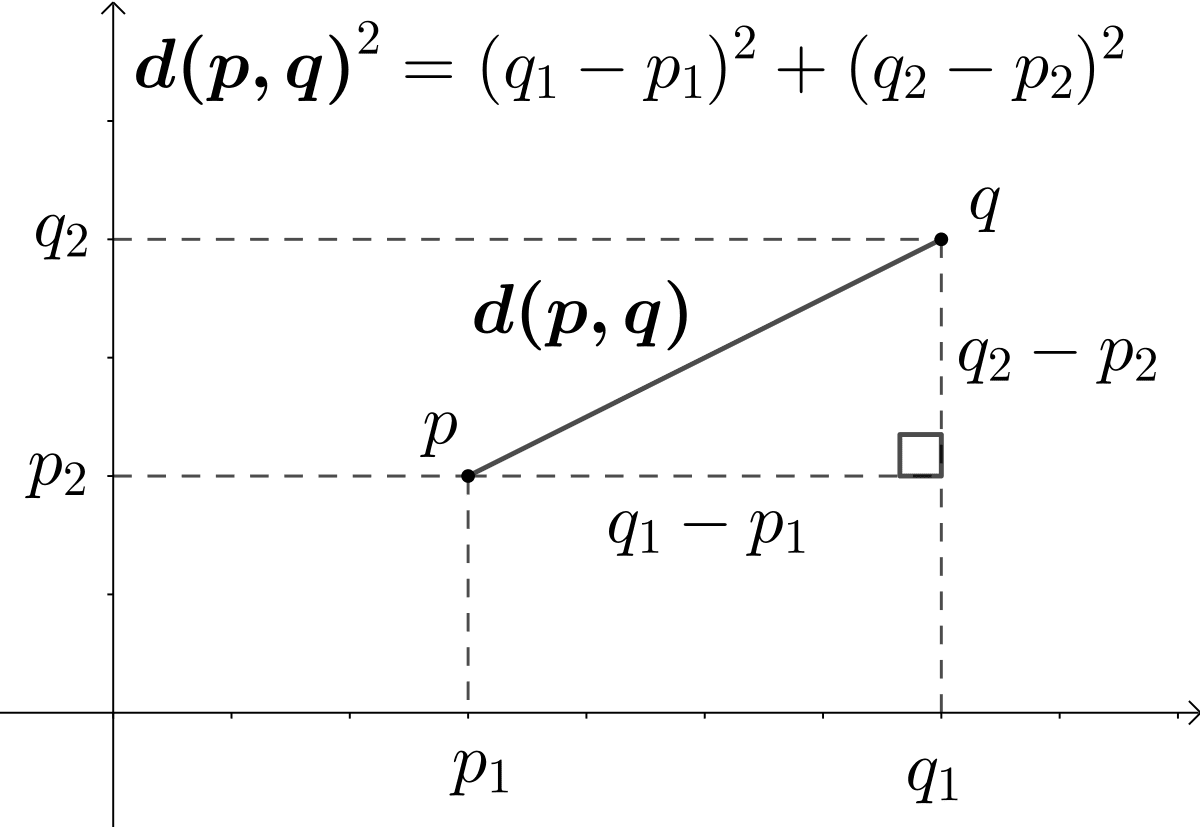
Vectors are a beneficial component not only in computer languages but also in machine learning. Decision-making is one of the most critical aspects of machine learning and vectors, in particular, is used in one such algorithm called Support Vector Machine (SVM). An SVM is used to analyze the given dimensional space for finding optimal hyperplane. The concept of vector/Euclidean distance is used to know the distance between data points and hyperplane.

Python TrainingTo achieve this through machine learning, we use Python as the programming language using libraries such as NumPy, Pandas. Python and the array operations in Python are useful to perform many algorithms such as SVM.



Therefore, having a prior Python Training is valuable and essential to get a grip on how vector functionalities are applied in more advanced topics such as Machine Learning.

Implementation in Python:

Vector Implementation can happen through arrays in Python. All the vector functionality can be done through libraries like NumPy. Using a simple code, we can implement various basic vector functionalities such as

  1. Vector Addition: The addition of two vectors through Python can be seen here:


Vector

import numpy as np #pip install numpy

a=np.array([2,1,3])

b=np.array([4,5,3])

print(a+b)

Output: [6,6,6]

  1. Vector Subtraction: Subtraction of two vectors through Python can be seen here:Vector Subtraction

import numpy as np

a=np.array([2,3])

b=np.array([1,-1])

print(a-b)

Output: [1,4]

  1. Scalar Multiplication: Multiplying a scalar to vector is given below:Scalar Multiplication

import numpy as np

a=np.array([3,5])

print(3*a)

Output: [9, 15]

  1. Euclidean Distance calculations: In Euclidean distance calculation the distance is measured between two points and can be done in Python as follows:Euclidean Distance calculations

import NumPy as np #pip install NumPy

a=np.array([4,6])

b=np.array([7,-2])

print(np.linalg.norm(a-b))

Output: 8.0622577

These are some of the implementations of vectors in linear algebra using Python. Python is an essential language to understand advanced topics such as machine learning. Therefore, basic Python Training is the best step to ensure a great career.

SEO Optimization: Why Your Landing Page Should Display Consistency in Design, Graphics, Language, and Tone of Voice

Due to the recent rise in e-commerce businesses and online marketing, brands are focusing on the quality of landing pages. If clients like the look of the landing page and can clearly understand the brand, they are more likely to purchase the products or services available. Thus, the appearance of landing pages can affect digital marketing significantly.

It is also why brands are looking for professionals who have completed at least an SEO course online. Those who wish to build a career in the digital marketing industry and assist brands in developing landing pages can opt for the DM program offered by Imarticus Learning.

Building a Creative and Impactful Landing Page

An SEO course online from prestigious institutes like Imarticus Learning will focus on the overall appearance of a brand’s landing page. The quality of a landing page can be judged by its design, the graphics present, the language of the content, and the tone in which the said content is delivered. If there is no lack of these four aspects, then the landing page will do very well.

The design of a landing page should be clear and easily understandable to potential clients. Graphics used on the page need to be attractive but not too complex. The color scheme of the landing page needs to be aesthetic. However, the design and graphics are not supposed only to improve the visual appearance of the page. They are meant to make it functional.

A page design that highlights different sections of the brand outlines the benefits and the services, using good-quality graphics, will make the page navigable. Digital marketers should also keep in mind the audience. The target audience needs to relate to the brand, so the language cannot be too complex. The tone of voice needs to be friendly but informative. Those who visit the page need to relate to the brand and trust it enough to purchase.

Consistency is critical when it comes to landing pages. Keeping a consistent design and not changing the graphics too often will help clients remember a brand’s page. The type and tone of content, too, need to remain consistent. If the appearance of the landing page is being changed frequently, people might feel confused, and the page won’t work as well as the business needs it to. It is also not easy to optimize inconsistent landing pages. Therefore, designers and marketers need to ensure that the page’s appearance will remain the same, except for minor changes.

How to Ensure the Success of a Landing Page?

Candidates need to complete a degree to work with brands on their landing pages and have a successful digital marketing career. Imarticus Learning’s PGP in Digital Marketing is a course that provides 228 hours of hands-on training and case studies from some of the biggest brands. Students will learn collaborative skills through 4 capstone projects that are based on real business issues.

The curriculum also includes the study of modern technological tools that are used in digital marketing. So, students will be taught various concepts like SEO, ORM, content marketing, social media, and paid media marketing. Thus they will develop a complete understanding of the digital marketing industry. After completing the course, candidates can work with the best brands in creating landing pages and other marketing solutions.

Imarticus Learning offers the best digital marketing course. Graduates will correctly optimize the landing page and direct more traffic towards a brand’s website.

How to Alleviate Foreign Trade Credit Risks in International Trade?

Entering a foreign country can bring several significant growth opportunities for a business. However, trading in an international market comes with its share of risks. If you are aware of the credit risks associated with international trading, you can take the necessary steps to eliminate them.

Let’s find out some of the major strategies using which you can effectively eliminate foreign trade risks during international trade.

  1. Check the Importers’ Credit History

The first thing that you need to do while foraying into international trade is to check the credit history of your importer carefully. There are multiple ways by which you can assess the creditworthiness of foreign importers.

Make sure to check the balance sheet, year-end income, and other financial elements of the foreign company.

Moreover, third-party credit reports, trade reference forms, and bank references are other ways to check the credit history of the foreign company.

  1. Understand the Business Rules of the Country

Each country comes with its own set of trading rules and regulations. Before entering a particular market, make sure to understand the trading customs and regulations of the country.

You can also consult professionals to become aware of the politics, culture, and economy of the target country. This will help you to get a better idea about how to conduct business in a new country.

  1. Seek Help from Credit Risk Experts

Foreign trade credit risks can pose a serious threat to the growth and expansion of your business. The credit risk management process has been significantly improved through automation techniques.

A professional credit risk expert equipped with a credit analyst course and credit risk modeling courses can help businesses eliminate potential foreign credit risks.

  1. Set up Credit Boundaries

Another effective method to minimize foreign credit risk is to set up a credit limit for international customers. These limits have to be based on the following factors:

  • Profitability
  • Cash flow limitations
  • Financial statements of the company
  • Credit reports

Moreover, the terms of the sales agreement need to be comprehensive and free from any ambiguity. You should set up a master sales agreement that would enable you to establish a strong basis for lending terms from the beginning.

Also, make sure that the foreign clients are aware of all the clauses of the agreement to avoid chances of misunderstanding in the future.

  1. Use Working Capital Efficiently

To reduce the risk of foreign credit risk, make sure to use your working capital in an efficient manner. Optimizing working capital use can be done through these ways:

  • Consolidation of the inventory
  • Using various financing solutions such as vendor financing
  • Efficiency ratio analysis
  • Restrictions with cost management

Notably, even the slightest change or improvement in inventory processing, payments or receivables can significantly impact cash flow.

  1. Handle Late Payments Effectively

A business should set up a standardized process to efficiently handle all late payments. Usually, the ideal time to collect overdue invoices is 90 days beyond the due date. Make sure to have arrangements for dealing with non-payment so as to manage credit risk effectively.

Sometimes, third-party institutions can help in offering additional protection in the following ways:

  • Letter of Credit
  • Promissory Note
  • Export Financing
  • Bill of Exchange

These methods can enable businesses to optimize accounts receivable.

You cannot avoid foreign credit risks while expanding to foreign markets with proper risk-eliminating strategies. By employing experts with the knowledge of credit risk management courses, you can reduce the chances of foreign credit risks.

With the modern credit analyst course and credit risk modeling courses, professionals can help businesses manage credit risk sufficiently.