Is Commercial Banking a Good Career?

This question needs to be answered by you only, I can provide you insights and pros of this job but in the end, it is you who has to decide. Commercial banks are generally profit-oriented and if you are a commercial banker, you will have to deal with the clients regarding loans and depositions. If we look at the statistics the compound annual growth rate and the amount deposited per SBA have increased significantly over the years. More and more people are opening their bank accounts.

The government is also helping people to open bank accounts and the country is witnessing a shift from cash to cashless transactions. This field will grow as usual and if you are interested in a banking career then there will be chances for your growth too.

To become a successful commercial banker, you do not have to earn many degrees, what you need is a charismatic character so that people can trust you with their money. If you are dependable and likable, you are likely to grow in this field. You will find different types of jobs in commercial banking ranging from relationship manager to credit score generator.

You need to find out your interest, if you are good at statistics and computation, you would do better on a desk job with the computers but if you love to interact and have good communication skills, you can deal with people face to face. There are many banking firms who are currently looking for a commercial banker and they will always be looking because there is an ever-growing demand in this field. Growth is there in this field but the growth would always be less than that of a corporate banker.

You will not be always sent out to deal with the people, you may be handed a computer and would be asked to determine credit scores of various people the whole day. You must be very clear about what you want in your life. If you are happy doing such stuff then only you should go. Commercial banking training is a good career choice but sometimes you have to start from scratch and then depending upon your capabilities you will be promoted.

The sales culture can get aggressive at times. It is an era of competition so your job as a commercial banker may get complicated at times but if you keep up the good work you will get promoted and the hectic nature of your job will decrease as you go up. If you are not interested in hard-earned money, I suggest a commercial banker is not the job you are looking for. Commercial banks look for profits, so they will always try to increase their market share and you would also feel the pressure.

If you are good at accounting and statistics, you can choose this field. But I would repeat, ask yourself and decide what do you really need? There is a growth in loan amount in India, many people are preferring credit cards nowadays so there is an ever-growing demand in this field and if you are working for a trusted firm, I suppose the risks are less. But in this era of competition not much micro-firms get their feet moving and they just vanish.

Conclusion
Overall it is a satisfactory job but there are even better options out there. If you are strict and feel like you have perfect skills for a commercial banker, you can go for it. But if you are yet confused then I must say that go for a corporate banker instead. The salary and growth, both are more in corporate banking. But then again, it is a comparative analysis. I would say commercial banking is a satisfactory job but not an overwhelming one. Rest whatever I tell here, the wand is in your hands. Hope this helps.


What Business Problems do Scrum Masters Solve?

The Scrum Master on an Agile team is not a leader in the traditional sense but more of a facilitator. They work at everyone’s level to ensure that the organization and its operations stay smooth and efficient.

This blog post highlights the role of Scrum Masters in an organization and some common challenges faced by them while at work.

Role of a Scrum Master in an Organization!

The primary responsibility for success within agile software development goes back to one person -the “Scrum Master.” This individual must be skilled both technologically and organizationally if they want any hope of achieving their goal, which involves being able to understand other members’ skill sets well enough. Hence, there are no gaps when things go wrong during project execution.

The Scrum Master’s role can be a difficult one within an organization. Even the most experienced Scrum Masters find themselves overwhelmed with pressure sometimes! We’ll share what challenges they face while being in the role!

Business Problems or Challenges Faced by Scrum Master:

Maintaining Time-boxing

The Scrum Master maintains the time-boxing of activities like Daily Stand-up. Time-boxing is utilized to define the upper limit of duration for activities & events, with teams not limited to this duration. Individuals with a lack of focus can derail the meeting; a Scrum Master controls the direction to avoid excessive delays.

That Extra Effort in the Role

The Scrum Master isn’t a leader of the team. They are only a contributing member, enabling & empowering work while removing obstacles hindering smooth operations progress.

Lack of Buy-in from Senior Management

Agile is a system that everyone must follow in the company. Apart from lining in employees, the Scrum Masters also align the senior management to get on board to avoid any problems inside the team.

Agile Meetings not conducted properly

Many individuals feel meetings to be a waste of time. For agile values of transparency & inspection to work correctly, regular meetings must have the whole team on board. Core Agile meetings are brief and add value with collaboration, which helps get past hurdles & prepare them for tasks.

The conflict between Agile and Waterfall

The senior team members who have followed the Waterfall approach may know the principles of Agile but find it challenging to implement them. Due to this, agile transformation fails, leading to conflicts, misunderstanding, & lack of beliefs. Scrum Master patiently advocates the benefits & share data on successful Agile product deliveries.

Lack of Agile Training

Agile concepts are easy to learn but challenging to implement. Only team members having basic knowledge of Agile principles will be invested to follow them closely. In a reverse situation, the Scrum Master is responsible for passing on knowledge and information about the fundamental understanding of Agile terminology & processes to everyone.

How to Become a Business Analyst with Imarticus Learning:

Imarticus Learning offers business analytics certification and a PG Program for Agile Business Analyst. This comprehensive 6-month course prepares students for the responsibilities of being an Agile Business Analyst. The placement-driven program teaches students to manage modern business analysis processes with relevant tools and techniques through multiple case studies, role-playing activities, and hands-on training.

USPs of this Business Analyst Course in India:

  • The program is uniquely structured, which lets you pay fees only after you get a placement with a minimum salary of ₹5LPA, potentially rising to ₹12 LPA.
  • The program focuses purely on student outcomes, which is high-earning job placement.
  • The program allows students to undergo state-of-the-art training at no upfront cost and guarantees jobs interviews.
  • After placement, students can pay course fees from their salary for a maximum of 36 months. The arrangement is known as the “Income Sharing Agreement (ISA)”.

Close the diversity gap with this Financial Analysis course

The finance industry is on the rise with the boom in new technologies and innovations. This has led to a demand for talented professionals who can analyze financial transactions, forecast trends, and make sound decisions about investments. If you have been thinking of embarking on your own journey as a professional in this field of work, then now is the time to take financial analyst courses.

In this blog post, we will talk more about why it’s important to learn these courses so that you can close the diversity gap in finance.

Understanding the diversity gap in the financial industry

The finance industry has grown by leaps and bounds in the last few decades. With an increase of almost 50% in job opportunities, it is no surprise that more people are looking to break into this growing field. However, studies have shown that there is a major gap between the number of minorities in the finance industry and those looking to break into it.

The reasons behind such a gap are often varied, but there is one that stands out from the rest: lack of courses for financial analysts. However, there are certain institutes offering financial analyst courses to help close this diversity gap by offering courses targeted towards underrepresented groups.

You need to show potential employers what skills you have acquired during your coursework. This will help you learn more about what a career as a financial analyst entails while learning the necessary skills needed to excel at their job search or current position.

What does a Financial Analyst do?

A financial analyst course helps a business make informed decisions about investments, spending, and budgets. Financial analysts review the performance of companies in order to give advice on how they can improve their operations or find new ways for growth. They often work with investment bankers when deciding whether to take the company public through an initial public offering (IPO) or other methods.

Financial analysts typically work in an office and spend most of their time researching information for reports, analyzing financial statements, or making recommendations to managers on courses of action. They may also prepare presentations that address specific investment-related topics.

Why should you take up financial analyst courses?

Financial Analyst courses are a perfect fit for those who want to gain insight into how businesses operate and contribute their part in the industry. With an increase in demand for finance professionals, it is time you take up courses that can help you close this diversity gap and set yourself apart from other candidates.

While some companies may prefer to hire someone who has experience in the field, courses for financial analysts are now offered online. You can enroll anytime and anywhere with ease without having to quit your current job or relocate.

Learn and Grow as a Financial Analyst with Imarticus Learning

Imarticus Learning offers courses for the finance industry to help you learn and grow as a financial analyst. The courses are well-designed, engaging, practical learning courses that cover the latest trends in the industry. The courses are designed by industry experts and offer you a deep understanding of important concepts.

Some course USPs:

  • Comprehensive 360-degree learning of the banking and finance industry
  • Tech-enabled learning
  • Industry-oriented curriculum designed/delivered in collaboration with industry veterans and leading firms.

Why now is a good time to become an Asset Valuation Consultant?

The increased demand for asset valuation consultants has led to rapid growth in the number of people taking up courses on asset management. But what is really driving this increase in demand? The answer can be found by looking at the global economy, which has been steadily increasing since 2007.

This is because more & more people realize that one of the best ways to protect their assets from any economic downturns or natural disasters is through an investment in intangible assets such as intellectual property, patents, brands, and goodwill. This blog post will discuss why now is a good time to become an Asset Valuation Consultant!

Why asset valuation consultant is a great career choice?

As the demand for asset valuation consultants increases, it is a good time to take up an online course and join this new profession. Assets such as real estate & securities are becoming more valuable than ever before – putting great pressure on investors to value these assets accurately. In recent years, asset-backed securitization has also increased, which means there is a greater need for accurate valuations of financial instruments that serve as collateral against loans or other types of debt financings.

This industry requires highly skilled professionals who have expertise in valuing multiple kinds of assets, especially fixed-income investments like bonds, derivatives, structured products, etc. It is also crucial to note that being an asset valuation consultant offers flexible hours so you can continue working while studying – and you can also work from the comfort of your own home!

What does an asset valuation consultant do?

An asset valuation consultant is someone who evaluates the worth of an investment or business. They do this by assessing its financial value and other factors like market impact, brand strength, etc. This often involves creating a report which will be used to make important decisions about the company’s future plans for investments or projects. The goal should always be to understand whether an asset is over-priced (considering it should cost less) or undervalued (when it costs more than what people are willing/able to pay).

In real-life scenarios, they work with investors, owners of businesses, and organizations. They are often employed by large corporations or financial institutions to look at their core assets like stocks, bonds, real estate, etc.

This role is growing in demand due to the increase in the number of business transactions happening around us daily. Due to this, there is a need for more professionals who can accurately value an investment opportunity before making decisions about it. Besides that, they also help understand what contributes to brand image & market perception, which helps companies make better marketing choices and improve internal operations through strategic planning processes.

Start your asset valuation consultant career with Imarticus Learning

Imarticus Learning offers various financial analysis courses that help you establish a rewarding career in the financial industry. The Asset Management Course is designed for students and professionals who are interested in working as an Asset Valuation Consultant or want to build a successful career in this domain.

This online course provides the knowledge of various concepts, tools, and techniques required for valuing financial assets like equities, debt instruments, etc.,

What’s unique about this Course?

  • Comprehensive 360-degree learning of the banking and wealth management industry
  • Tech-enabled learning
  • Industry-oriented curriculum designed/delivered in collaboration with industry veterans and leading firms.

How is Fintech spilling Opportunities for the Agricultural Sector?

The fintech sector is a rising industry that has come to define the contemporary era. The term “fintech” refers to financial technologies and encompasses digital innovations in payments, lending, insurance, and investment management. One of the primary reasons for this growth is that these companies offer better solutions than traditional financial institutions.

The Scope of the Fintech Industry?

The Fintech sector is a fast-growing industry that has been evolving rapidly since the word was first coined in 1999.

  • The Fintech sector is revolutionizing the way we do business. It will be difficult for banks to compete with this new wave of technology that has come about in recent years.
  • There are many opportunities in the agricultural industry, but it’s essential to know where you stand on your current level of technological development before taking any steps forward.
  • India’s fintech market is the world’s fastest-growing- 67 percent of the more than 2,100 fintech entities in operation have been set up in the last five years. India’s fintech market is valued at US$31 billion, which is projected to grow to US$84 billion by 2025.
  • The fintech transaction value size is projected to grow to US$138 billion by 2023 from US$66 billion in 2019.
  • According to a Boston Consulting Group report, Indian fintech companies will reach a valuation of US$150-160 billion by 2025, becoming thrice more valuable in the next five years.

Evolution of Fintech: Opportunities for Agricultural Sector

Fintech is now looking at opportunities to serve agricultural sectors and farms across India, which can potentially transform rural life by providing access to affordable credit and insurance products- two things that we take for granted but are often inaccessible without significant wealth or connections. Here is how Fintech is assisting Agricultural Sector:

  • Easy Loans for Farmers: The agricultural sector needs to borrow money frequently. With Fintech, there are no middlemen, the efforts of the fintech sector to make direct loans are consistent.
  • Direct Connections: Farmers have better opportunities to establish direct connections with lenders & other institutions for better operations. This change can potentially stabilize the sector.
  • Ongoing Payment Model: Instead of paying large payments for equipment & tools, farmers can now use various ongoing payment programs. People can better organize finances more efficiently by paying for what is used, skipping problems arising from conventional payment models.
  • Affordable Financial Services: Financial services are becoming more accessible to farmers. Some companies are focusing on this aspect to bring a greater variety of financial tools & utilities.
  • Better Insurance: The availability of crop insurance plans for farmers is shaping the sector in a better manner.

Grow your Career with Imarticus Learning:

Imarticus Learning has collaborated with prestigious universities to enhance robust Fintech Training courses. Enroll in MBA FinTech, which covers every paradigm of cutting-edge New Age FinTech solutions. The curriculum is designed to provide students with in-depth exposure to critical elements of the FinTech domain.

This program covers every critical aspect of FinTech via hands-on training with prominent technologies such as API, Blockchain, Cloud Computing, AI, Machine Learning, RPA, IoT, and Big Data. This program enables students to apply what they learn while dealing with real business scenarios & problems.

Some Course USP’s:

  • UGC Entitled Online Degree Programs
  • NAAC ‘A’ Graded University with Graded Autonomy Status
  • Top Ranked University in India – NIRF & QS World Rankings
  • Program Delivery follows the prescribed four quadrants approach from UGC
  • Learning Hours and Credits at par with Full-Time Classroom Programs
  • Innovative Programs Accredited by Global Professional Bodies

If you want to skyrocket your FinTech career prospects by transforming into a FinTech expert, your search ends here, and a spectacular FinTech learning journey begins. Contact us through the Live Chat Support system.

Internet Trends: Why are learners pivoting back to Online MBA?

The future is now, and it’s digital! The Internet is changing the way people do things. We now have access to information and knowledge on our own time, at any location. And with so many options for online learning available today, it’s no surprise that more people are opting for an Online MBA degree than ever before.

What has caused this recent surge in demand? The answer might be surprising – there’s been a shift in what learners want from their educational experience. This blog will explore some of these trends and reveal why more learners are choosing an Online MBA degree over other types of degrees or certification programs.

Key trends showing the surge in demand for online MBA courses

– Global online MBA programs market was expected to reach $15.02 billion by 2021.

– The percentage of MBA students enrolling in online courses increased from 22% to 35%.

– Global spending on eLearning worldwide is projected to reach $325.87 billion by 2021 with a CAGR of 16.08 %.

– The number of digital learners in the US has reached 43 million, and online learning is expected to be a $107 billion industry by 2020.

– According to a recent study, 77% of the total workforce are “digital workers” who have access to information anywhere & at any time.

– By 2021, it is predicted that 80% of the workforce will be made up of millennial workers.

– According to a recent survey, 43% of working professionals said they would like to receive training at their own convenience and pace.

– 74 % of students prefer online courses (and learning opportunities) over traditional ones due to flexibility in time and place.

Key reasons why students prefer online MBA courses over traditional learning

Flexibility: Online courseware offers students the flexibility to study when and where they want. They can choose from a range of learning environments, including their own homes or in libraries.

Compatibility: In today’s digital world, people are adopting online tools faster than ever before because it is compatible with their lifestyles. The same applies to MBA learners who have busy work schedules that demand constant travel across different countries for international assignments and meetings. Best online MBA courses enable them to do all this while studying for an advanced business qualification at the same time.

Affordable: The cost of studying for an MBA has increased in recent years, with many universities increasing their fees. However, online courses are more affordable than traditional learning methods since students do not need to travel long distances for classes and spend on accommodation while they study.

Personal development: Coursework and assignments play a major role in personal development for MBA students by giving them the opportunity to improve their time management, presentation skills, and analytical thinking abilities, among others while taking up online courses.

Learn & Grow with Imarticus Learning

Imarticus Learning offers an online MBA course in collaboration with JAIN University. The course is designed under the guidance of industry experts to prepare you for a rewarding career in the IT, Banking, and Financial Services sectors. This program will also enable you to meet the requirements of other sectors such as Retail & FMCG, Media, and Entertainment, etc.

This course is focused on providing a solid base in management principles, managerial skills, and cross-functional business knowledge, which will enable you to take up leadership roles within your organization or even start your entrepreneurial journey.

WHat’s unique about this online MBA Course?

  • Transformative cutting-edge solutions
  • Comprehensive curriculum covering in-demand New Age Banking & Finance skills
  • In-depth learning of Financial Modelling, Equity Research & FinTech.
  • Exposure to real-business projects, simulations & assignments.

For further details, connect with us through the Live Chat Support system or visit our training centers in Mumbai, Thane, Pune, Chennai, Bengaluru, Hyderabad, Delhi, and Gurgaon.

What’s The Hype Around Mid-Career MBAs?

An MBA is a valuable degree for any working professional. As the average age of working professionals continues to rise, more people are looking for different ways to get ahead in their careers. An MBA can provide them with this opportunity by offering invaluable skills to employers, such as project management, time management, negotiation, and analysis. This blog post will discuss the hype around Mid-Career MBAs.

What are mid-career MBAs?

Mid-career MBA is a name given to the MBA courses attended by professionals who have been working for at least ten years before starting an MBA. Classes usually tend to be smaller as they follow those individuals who have already established themselves within their industry and now looking for advanced management education from great institutions.

Are Mid-career MBA’s the same as traditional MBA Degree?

There are a lot of differences between Mid-Career MBAs and MBA correspondence degrees. Let us briefly discuss them:

  • Mid-career MBA programs do not require individuals to have a bachelor’s degree to be admitted, contrary to the MBA correspondence programs, which require a bachelor’s degree. Mid-career MBA programs are shorter in time, usually taking 18 months or less to complete than the traditional MBA, which requires 24 months or close to two years.
  • Mid-Career MBA courses focus more on the practical application of knowledge than theoretical concepts taught at distance learning MBA courses. It means that students can expect more group works and projects during their MBA.
  • Mid-Career MBA programs provide students with knowledge and mentorship than on a high starting salary upon graduation. On average, mid-career MBA programs do not provide for any scholarship or financial aid, while distance learning MBA programs can offer a scholarship in some cases.

Why should mid-career MBAs be considered for leadership positions within your organization?

Although many think of MBAs as a degree for those just graduating college, they accept mid-career professionals who have had some work experience. It is becoming more common to see mid-career MBAs entering the workforce. The average age of full-time MBA students is 27 and part-time students 29, according to Forbes.

A significant issue with hiring people fresh out of college is that they lack fundamental world skills, which can cause problems when trying to manage them. College graduates often leave school thinking they know everything only to find that the real world isn’t like their lecture hall or textbook. Mid-career professionals already have years in the workplace and possess many valuable skills to help them transition into their new roles.

Where can I get an MBA course near me?

Student always has a query to find “best MBA course near me.” There are a lot of different schools that offer Mid-career MBA degrees. The best way to identify which one is right for you is by considering your location and the cost involved in completing an MBA.

Enroll today with Imarticus Learning

This MBA program covers every vital component of the industry while also providing hands-on experience with cutting-edge technologies like APIs, Blockchain, Cloud Computing, AI, Machine Learning, RPA, IoT, and Big Data. The widespread adoption of financial technology has dramatically altered the global economy’s dynamics, leading to a surge in the need for skilled MBA specialists.

Some course USP:

  • The MBA course lets the students learn job-relevant skills that prepare them for an exciting career.
  • Impress employers & showcase skills with a certification endorsed by India’s most prestigious academic collaborations.
  • World-Class Academic Professors to learn from through live online sessions and discussions. It will help students understand the practical implementation with real industry projects and assignments.

Contact us through the live chat support system or schedule a visit to training centers in Mumbai, Thane, Pune, Chennai, Bengaluru, Hyderabad, Delhi, and Gurgaon.

Plastic money to Internet Banking to UPI: Dissecting India’s Digital Banking landscape

With the reach of the internet extending to almost every corner of the country, people have started using digital banking more and more. From your nearest alley shop to malls to ticket and hotel bookings and bill payments, you can use it everywhere.

It saves time and also lessens the risk and hassle that comes with carrying large amounts of cash a lot. There are three main types of cashless payments that have taken over the country. Such as plastic money, internet banking, and UPI.

Banking and finance courses after graduation have been popular in this country for a long time. A lot of good institutions in India provide a good certificate course in banking and finance. Imarticus Learnings too has a compact certificate program that can give you all the leverage you need for a career in new-age banking.

What is digital banking? 

Digital banking basically refers to the process of cashless payments. Either through debit/credit cards or internet banking and UPI.

A story of constant growth

Although the massive transformation to cashless modes of payment came to a head during the demonetization campaign, the actual evolution began a long time ago. First with plastic money, then gradually with e-banking, and later as a modified result with UPI. Here, we are going to talk a little about how it started in the beginning, and where it is now.

Plastic money: Debit/credit cards have been in the market for the longest time. The major change started happening in 2001-2002 when the number of card transactions rose consecutively with a whopping $2.277 billion and $4.201 billion respectively. Which is about 69% and 103%. In the beginning, the main chunk of transactions happened to purchase jewelry, which later with the changing habits of Indian households turned to ticket purchasing and bill payments. 

Internet banking: E-banking first came into play with the RBI constituted Saraf Committee’s proposal of using EFT in 1994. ICICI Bank became the pioneer of e-banking by first using it in 1996. Citibank, IndusInd, and HDFC bank followed them in 1999. From the arrival of card-based transactions in the late 1980s to the early 1990s to the later evolution of CTS in 2008 to the present day mobile banking where you can do most of your work with a click on your phone, it has come a long way.

UPI: UPI has proven to be the best mode of true cashless payments in these covid ravaged times. It too came a long way from 2016 when it was introduced and only 21 banks agreed to go live and today in 2021 when 216 banks are live on this platform. The main players PhonePe, and Google Pay have topped the charts with about 43.9% and 35% of total transaction volume. Paytm made a close third with about 401.16 million transactions.

Conclusion

Banking has evolved a lot in the last few years with the introduction of these new and faster methods. Banking as a career has always been popular, which is why a lot of people opt for banking and finance courses after graduation. Check out Imarticus Learnings’ certificate course in banking and finance if you are thinking about a career in new-age banking.

Assessing a knowledge-based approach to commercial loan underwriting

The AI-based transformation is slowly taking over the major business sectors. For finance especially, it has proven to be an excellent support tool. From accounts to credit risk underwriting, the benefits of AI tools have been immensely profitable. The same goes for commercial loan lending and underwriting. As this is a highly data-driven process, AI tools can provide immense support in the process.

Credit risk analyst is a highly demanding career these days, and this could be a terrific option for students thinking about their careers. Many institutions provide compact credit risk underwriting courses. You can check out Imarticus Learnings’ credit risk analyst course to enhance your skills to the next level.

Here, we are going to explain what commercial loan underwriting is, how a knowledge-based approach or how AI tools can benefit the process, and some other things that should be kept in mind.

What is commercial loan underwriting?

From the start-up stage to asset acquisition to ongoing expenses, there are a lot of reasons a business needs loans for. A bank or financer usually wants to analyze the reasons for a business borrowing loans along with its financial condition. This process is called commercial loan underwriting.

This process examines whether a business would be able to pay back the borrowed amount along with the interests. Credit risk management courses basically teach you how to analyze the chances of a successful repayment or the failure of the same.

Benefits of a knowledge-based approach

As this is a completely data-driven process, AI tools can provide significant support which in turn results in better time management, swift decision making as well a lesser chance of human errors occurring. The major benefits of a knowledge-based approach to the whole loan underwriting process are as follows:

  • It helps in merging traditional, social, and online data sources. Which results in a bigger amount of data flow that helps in swift decision making.
  • Misperceptions can be corrected in due time with the help of AI-delivered information.
  • The structured internal big data makes up only about 20% of the decision-making process. So by adding the rest of the unstructured data into the process, the decisions made are a lot more beneficial to both parties.

Key things to keep in mind

To make sure that this process works as efficiently as possible, there are a few key things that should be kept in mind. Such as:

  • Customer experience should be the focus of the process. And it should be done by combining all aspects of the knowledge-based approach together.
  • Some companies use cognitive stimulation, some use natural language processing while others use computer vision to help the process. The ideal structure would be to combine all these factors into building a giant machine that works smoothly and efficiently.
  • The end result of the customer experience-oriented process is to provide the customers with their needs before they have a chance to ask.

Conclusion

AI has been causing a steady change in the last few years. And it is going to grow more and more in the coming years. This is the prime time to associate yourself with data-affiliated courses if you are thinking about good career prospects for your future. The question is where to enroll for good credit risk underwriting courses and credit risk management courses. Check out Imarticus Learnings’ credit risk analyst course to sharpen your skills to the max.

Decoding success in the world of Online Business courses

Business courses are often beneficial to people who are interested in the fields of finance and business administration. An additional degree helps such candidates to build a network with industry professionals. With the rapid digitization of the education sector, online courses have been instrumental in helping students get jobs. Online BBA courses prepare students to pace themselves and focus on projects that will help them in the industry.

Can you find jobs after completing an online business course? 

To succeed in the field of business, a bachelor’s degree is a must. An online BBA course in India usually includes specializations like accounting, banking, or finance. This allows students to find their areas of interest and get the best education. 

BBA online courses Online degrees have grown in popularity as they are convenient and flexible. There is a common misconception that online degrees often miss out on having a holistic approach towards education.
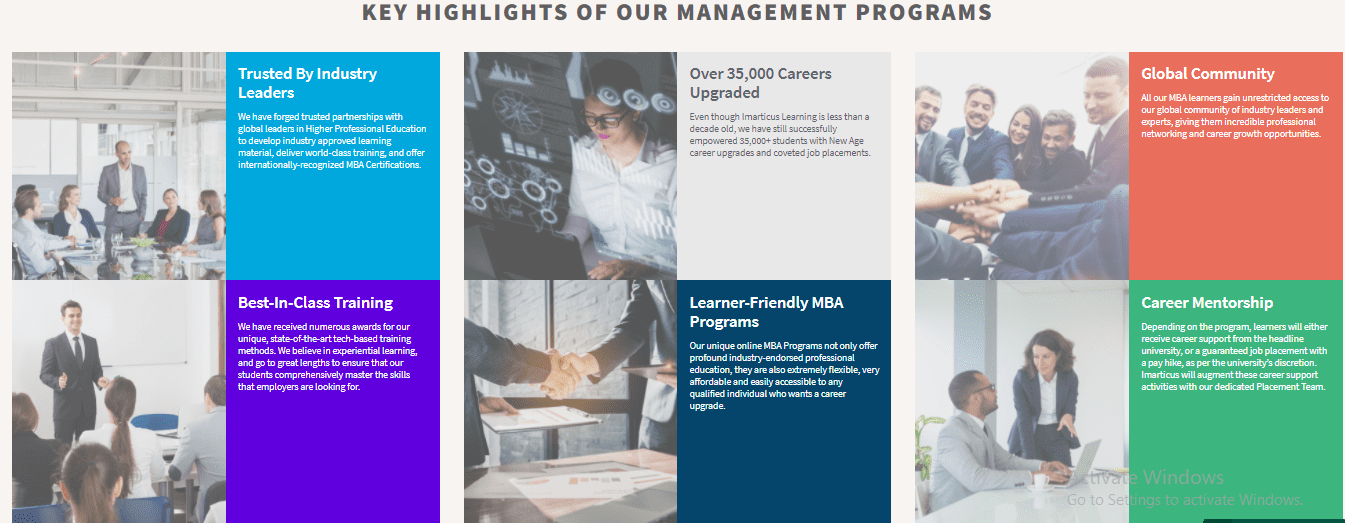
Since business is a field that is constantly evolving, online degrees allow the addition of several programs tailored to fit the needs of students.

As a working professional, you can still apply for a degree in any business course. This is something that very few residential, full-time courses offer. 

If you focus on a business management course from a reputable institute, you can apply for jobs at top companies. Online business courses are ideal for students to build specific soft skills. These skills make candidates valuable employees and are a major factor in students getting the best jobs. 

  • Self Discipline and Improvement

Students who focus on online education, have to rely on themselves to communicate and interact with professors and students. While course materials are provided, students have to set their study time aside and prepare for tests and assignments on their own. This helps them to reflect on their abilities and improve themselves. 

  • Professional Experience

Online business courses are often designed by industry professionals. They guide students and help them complete projects that are based on actual case studies. Students can apply for internships and gain more experience. 

  • Schedule Management

In an online course, students are in charge of their schedules. They have to manage all commitments and make time to study and complete assignments. This helps them learn the basics of preparing and managing a schedule. Such a skill is essential in the business sector. 

  • Communication 

Potential employees are expected to communicate with each other and their team leaders. In an online course, students are encouraged to participate in interactive sessions and communicate with their peers. This helps them develop the necessary communication skills. 

  • Teamwork

Teamwork is important in business management and administration. Online business courses often require students to work in teams. They communicate with other teams and ensure the best outcomes in a project. This prepares them for the industry. 

How to ensure a successful career in business management?

To start a successful career in business management, aspiring candidates should focus on completing a business degree. BBA in Banking and Finance from Imarticus Learning is one of the best business courses. The curriculum is based on unique and holistic finance and includes practical applications of the subject. This is a full-time online course of 3 years and is ideal for students who wish to have a great career in finance and banking.  

BBA online coursesStudents are taught to use new-age software like machine learning, blockchain, AI, cloud computing, and IoT for business. Imarticus Learning provides an immersive educational experience for all students and supports them in finding suitable careers.  

Imarticus Learning’s top online BBA course in India includes industry partnerships that help students become specialists in finance and banking. The Placement Team at Imarticus Learning will also help boost your career.