Are financial modelling skills indispensable to investment banking professionals

Are financial modelling skills indispensable to investment banking professionals?

To work in investment banking, you need to demonstrate that you have a range of skills and knowledge that are differentiated or in demanding careers, such as financial modelling skills. Moreover, the investment banking sector deals with the financing of companies through equity or debt. This includes work such as buying and selling companies in whole or in part, IPOs, joint ventures, or risk hedging.

To achieve this, investment banks must work directly with the management of the companies involved, as well as with investment funds or public financing facilities. This requires people who want to work in investment banking to have a multidisciplinary profile with extensive financial knowledge, agility in financial modeling, and good interpersonal and communication skills. Here we tell you 7 reasons why financial modelling skills are indispensable to investment banking skills.

What is financial modelling? 

The term financial model refers to an abstract-mathematical version of a company’s financial reality in a set of spreadsheets.

A model is thus a mathematical, simplified, and idealized version of the reality of a company. The model works out simple versions of real factors and translates them into spreadsheets that facilitate the execution of mathematical calculations on the data.

The purpose of a financial model is to represent reality as simply as possible while still being a realistic reflection of the company’s situation, and thus to enable the company’s financial statements to be projected on the basis of current and historical data.

Here are the 7 main reasons why financial modelling skills are indispensable to having investment banking professional skills

  1. It allows you to give a transparent picture of the overall situation of a company.
  2. It helps to project the impact of any changes in the company’s structure or business.
  3. Since financial models are designed taking into account historical data in addition to the structural situation, the model allows for the definition of scenarios with variables that reflect changes in the entire structure depending on their value.
  4. It is an integrated planning system that contains the profit and loss accounts, the balance sheet, and the calculation of capital flows with their respective dependencies. In this way, the model makes it possible to project the development and consequences of a change scenario for any given decision. This is an indispensable tool when making decisions affecting the structure of a company, as it makes the impact of any decision transparent.
  5. All companies need a business plan to organize themselves, but from the moment external financing comes in, whether, through credit or investment, the financial model becomes an essential planning tool.
  6. Investors only invest their money if they are convinced that the company will be able to repay loans and interest in the future, thus providing a return on their investment, which is why a transparent, complete, and correct presentation of the financial situation, especially the projected income, capital, and liquidity situation, is indispensable.
  7. Apart from their use in all matters relating to financing, financial models are also used for business management.

Why Imarticus for a CIBOP online course?

Financial modelling, i.e. the design and planning of a financial model, is mainly used in the preparation of a business plan or in the representation of a company’s financial structure. The aim is to translate the reality of the company into an abstract model that provides a transparent picture of the overall situation of a company. 

In Imarticus we offer Certified Investment Banking Operations Professional courses for those who need to start from scratch. If you have any questions, please do not hesitate to contact us to have more information on investment banking courses.


Technology in the era of cloud, blockchain and IoT

Cloud, blockchain and IoT are among the technological developments expected to bring disruptive breakthroughs and commercial possibilities in the next five years. The future of technology will be ubiquitous smart gadgets that deliver numerous intimate services based on big data. Analysts believe that there are trends covered by the following three points that will bring a continuous increase in innovation:

  • Intuitive: AI will pervade all current vertical sectors while also spawning new ones.
  • Digital: The physical and digital worlds will converge, resulting in a new “immersive” environment.
  • Mesh: A growing network will connect people, companies, equipment, content, and services.

Continue reading to discover more about Blockchain online training, Software engineer courses are technological trends for the reference of technology entrepreneurs, and how IoT, AI, and blockchain will revolutionize business.

Autonomous stuff – Intelligent devices

The use of artificial intelligence technology to substitute equipment for people to execute activities is referred to as autonomous objects. This category includes autonomous vehicles, robots, drones, intelligent apps, and automated agents. Land, water, atmosphere, and the digital world are all covered by these five types of equipment. Drones and agricultural robots can collaborate in the field to fulfill agricultural activities, for example, using five types of applications and four dimensions to entangle a number of options. Gartner predicts that in the future, every IoT application, service, or device will have some level of intelligence. While there is debate over whether such gadgets may be classified as “smart,” it is evident that artificial intelligence technology improves their capacity to interact with the environment, coordinate, and analyze data.

People should keep looking at the prospect of integrating AI technology into real-world enterprises and products. However, it’s worth mentioning that this sort of technology is now limited to a few specialized activities and lacks the overall decision-making capabilities, much alone intelligence, of the human brain.

AI-driven development

The market is rapidly evolving. The first way prevailed: most AI-enhanced solutions require collaboration between professional data scientists and application software developers; but, this model is currently popular: professional developers may use it alone as a pre-defined model offered for each service. This gives developers access to an ecosystem of AI algorithms and models, as well as specialized development tools for incorporating AI functions and models into solutions. Professional application software development confronts a new set of opportunities as AI is employed in the development process to automate different data science, application software development, and testing operations.

Blockchain

Blockchain is a distributed ledger that has the potential to transform all aspects of life because it can establish trust, give transparency, and eliminate friction within company ecosystems, lowering costs, boosting cash flow, and reducing transaction settlement times. People now rely on central authorities such as banks, clearinghouses, governments, and a variety of other organizations. Their databases securely maintain the ” only version of reality.” The centralized trust model introduces delays and frictional costs to the transaction (money’s value in time, fees, and commissions). Without the requirement for a central entity to arbitrate transactions, blockchain enables another manner of trust.

Many current blockchain initiatives do not include all the features of blockchain, such as a massively spread database. These solutions inspired by blockchain are only a technique of increasing functioning productivity by automating corporate procedures or keeping digital documents. They are intended to increase information transmission between known entities and improve physical and digital asset tracking and tracing.

These solutions, on the other hand, ignore the true value of blockchain subversion, thus increasing the danger of vendor lock-in. Companies who adopt this option ought to be aware of the limits and be ready to gradually implement the blockchain solution. They should also be aware that they can achieve the same results using existing non-blockchain technologies more efficiently and effectively.

Conclusion

Visit Imarticus today to discover all our Blockchain online training and Software engineer courses offered via our SCIB courses and become part of how IoT, AI, and blockchain will revolutionize business.

Diverse job opportunities after completion of MBA in Fintech

Technology has expanded its reach into the financial sector. It is essential for the various developments and growth in the domestic and global economies. FinTech is the integration of finance and technology departments. It has now become a separate career with various prospects. 

One of the top qualifications to find a job in the finance sector is an MBA in FinTech. There are various courses available from leading universities both online and offline. An online MBA course will be more convenient and they are equally valuable. 

Online MBA and job opportunities may not seem possible but the fact is, there are diverse opportunities available in various departments. Here are some of those wonderful opportunities. 

  • Business Analyst

A business analyst will combine the various models, workflow, business strategies, etc with the IT systems. This collaboration helps the institutions to study and revise their strategies for maximum benefits and success. It is one of the important ways of improving the overall efficiency and rectifying any mistakes in the business operations. 

  • Chief Financial Officer

The CFO is the responsible person who monitoring the financial flow of the company. Predicting capital requirements, analyzing the financial performance, risk management, etc are a few of the responsibilities of a CFO. MBA in FinTech is one of the requirements to qualify for this job. Having long experience in this field will help them excel at this job opportunity. 

  • Compliance Analysts

Compliance is an emerging field in FinTech that helps companies to improve their product growth. Since this is a part of the regulation of the economy, compliance analysts are in demand. 

  • Financial Analyst

One of the most crucial and popular job opportunities in FinTech is Financial Analyst. The job demands analysis of the financial trends to predict future investment decisions. The analysts must categorize the data in the right manner to achieve the same. Multinational companies are looking for such analysts with higher salaries as well.  

  • Investment Banker

It may seem impossible but with an online MBA course, one can easily be an investment banker having the right skills and expertise. 

  • Portfolio Manager

A portfolio manager single-handedly deals with the pooled money of a company or institution. Continuous expiration of the market will be required by them to help the clients to reach their financial targets. 

  • Risk Managers

As the title suggests, risk managers deal with assessing and discerning the company’s financial risks. They must manage the finances without succumbing to losses and must reduce them. 

  • Venture Capital Analyst

The financial industry is dynamic and companies must be on their toes to keep up with their competitors. It is the Venture Capital Analyst who assists them in this task. They must diversify their network and continue working closely with the firms to help them find their capital. 

Online MBA and job opportunities

These days it is not difficult to find an online MBA with job opportunities. Courses such as the MBA In Investment Banking & Equity Research in collaboration with Jain University is one such course.

Students will get the opportunity to get guidance from experts and find them acquainted with all the necessary fields in FinTech. Completing the course will help you find diverse job opportunities in this industry. You will also get proper training and interview assistance. 

Continued mentorship along with flexible timings make this one of the best online MBA courses for professionals and beginners. 

Conclusion

As per the latest trends, demand for MBA graduates in FinTech is still on the rise. A deserving candidate having the required skills is likely to get immediate placement in leading MNCs. 

Tips and tricks in AI/ML with python to avoid data leakage

Data science has emerged as an essential field of work and study in recent times. Thus, a machine learning course can help interested candidates learn more and land lucrative jobs. However, it is also essential to protect data to ensure proper automation.

Now, beginner courses in machine learning and artificial intelligence only teach students to split data or feed the relevant training data to the classifier. But Imarticus Learning’s AI/ML program helps gain the necessary in-depth knowledge. 

Best Ways to Avoid Data Leakage when Using AI/ML with Python

A Python certification from a reputable institute can help one gain proper insight and learn the tricks of using AI or ML with Python. This will enable interested candidates to know about real-world data processing and help them prevent data leakage.

Following are some tips that advanced courses like an artificial intelligence course by E&ICT Academy, IIT Guwahati will teach students. 

  • No Data Preprocessing Before Train-Test Split

There will be a preprocessing method fitted on the complete dataset at times. But one should not use it before the train-test split. If this method transforms the train or test data, it can cause some problems. This will happen because the information obtained from the train set will move on to the test set after data preprocessing. 

  • Use Transform on Train and Test Sets

It is essential to understand where one can use Transform and where one needs to use fit_transform. While one can use Transform on both the train set and the test set, fit_transform cannot be used for a test set. Therefore, it is wise to choose to Transform for a test set and fit_transform for a train set. 

  • Use Pickle and Joblib Methods

The Python Pickle module serializes and deserializes an object structure. However, the Pickle module may not work if the structure is extensive with several numpy arrays. This is when one needs to use the Joblib method. The Joblib tools help to implement lightweight pipelining and transparent disk-caching. 

Following are a few more tricks that help in automation and accurate data analytics when using AI/ML with Python.

  • Utilize MAE score when working on any categorical data. It will help determine the algorithms’ efficiency as the most efficient one will have the lowest case score. 
  • Utilize available heat maps to understand which features can lead to leakage. 
  • When using a Support Vector Machine (SVM), it is crucial to scale the data and ensure that the kernel cache size is adequate. One can regularise and use shrinking parameters to avoid extended training times. 
  • With K-Means and K-Nearest Neighbour algorithms, one should use a good search engine and base all data points on similarities. The K-value should be chosen through the Elbow method, and it should be relevant. 

Learn AI/ML with Python 

A Python certification will be beneficial for those who wish to pursue a career in data science and analytics. However, it is best to choose a course that will offer advanced training. Imarticus Learning’s Certification in Artificial Intelligence & Machine Learning includes various recent and relevant topics. Apart from using AI/ML with Python, students will also get to work on business projects and use AI Deep Learning methods.

The course curriculum is industry-oriented and developed by IIT Guwahati and the E&ICT Academy. Students can interact with industry leaders, build their skills in AI and Ml through this machine learning course. This course is ideal for understanding the real-world challenges in data science and how AI/ML with Python can help provide solutions. 

The IIT artificial intelligence course from Imarticus Learning helps students become data scientists who excel in their fields of interest. The course offers holistic education in data science through live lectures and real business projects. It is therefore crucial for a rewarding job in the industry. 

5 Reasons Why Supply Chain Snags Affect Global Economic Growth

The global economy depends on supply chains that have networks running across continents. This is why any issue with the supply chain can directly affect economic growth. If you learn SCM, you will notice that most of the time, supply chain snags occur due to issues with the management. Now, you can ensure that they have a positive impact on economic growth. To do this, you will have to opt for a supply chain management course

How Can Supply Chain Snags Affect the Global Economy?

Since supply chains are vital for most businesses, any management issue can harm economic growth. Those who opt for a supply chain management career need to be aware of the snags that can affect the global economy. 


  • Fluctuations in Customer Demand


Supply chains often depend on the demands of the customers. But due to various external factors, these demands can fall. When this happens, excess products go to waste. However, at times, customer demands can increase rapidly. If supply chains are not optimized enough to handle such a spike, there will be utter chaos. This can lead to limited products, improper pricing, and issues with the delivery of goods. If global supply chains are unable to meet demands, the economy is bound to suffer. 


  • Shortage of Workforce


While you can optimize several aspects of the supply chain, a human workforce is necessary. A shortage of workforce means less production or a slow-moving supply chain. If the supply chain gets held up due to inevitable glitches, many might quit due to extended periods of no work. When the supply chain starts working again, there will be an inadequate workforce to handle the pressure. This snag can adversely affect economic growth, particularly when production slows down or the delivery of goods stops. 


  • Increase of Freight Rates


Since supply chains are closely related to the global economy, snags may increase freight charges. If shipping routes, particularly for global supply chains, are disrupted, the freight rates will increase rapidly. When businesses cannot pay the costs, that particular link in the supply chain will stop functioning.  


  • A Slowdown of Industrial Activity


A snag in a supply chain can slow down activity in an entire industry. If one part of the supply chain does not move forward, the rest cannot follow. The economy will suffer as vast quantities of raw material go to waste, and the labour force reduces due to certain issues with managing a specific supply chain. 


  • Bottlenecks in Manufacturing and Production


Supply chain bottlenecks can occur anytime, primarily if the supply chain is not being appropriately managed. If there is a supply bottleneck, then manufacturing will be affected. While this affects the availability of products, it can also affect the earnings of those involved in the production stages. 

To understand how an aspect of the global economy is dependent on supply chains, you need to gain extensive knowledge. Learning supply chain planning can help you build the required skills. 

Supply Chain Management for Sustained Economic Growth

Supply chains, when appropriately managed, can contribute to economic growth and even maintain it. To learn about sustainable supply chains, you can opt for a supply chain management course. Imarticus Learning offers Professional Certification in Supply Chain Management and Analytics. This program is in collaboration with IIT Roorkee, DoMs, and E-Learning Centre.

The institute also has various industry experts collaborating to create a well-rounded curriculum. Imarticus Learning ensures that students can understand supply chain management from a strategic and operational viewpoint. This will help you establish a rewarding supply chain management career

The course offered by Imarticus Learning includes supply chain planning and prepares you for the industry through six projects. These are all based on real situations, and you can develop the experience necessary to become a successful supply chain manager. You can also opt for a job in data science, demand planning, or supply and operations planning. 

Latest – Top 10 Innovations in the world of Fintech in 2021

The term Fintech comes from combining the words Finance and Technology, therefore, the term covers all those companies that use new technologies to offer financial services. Financial companies are not the only ones to use this term, as universities and study centers are already offering many financial technology courses to specialize in this area.

The Fintech industry is growing rapidly, with more and more investment. Such growth makes it essential to understand how it works in order to take advantage of the opportunities it can provide. At Imarticus, we understand the important role of technology in every aspect of our lives and the big potential it has to create value and new products. For this reason, we offer different Fintech courses so that you can be at the forefront of technological innovation: MBA in Fintech and the SP Jain FinTech. 

If you want to know more about the programs and the importance of this industry, keep reading and you will understand why it is important to be in one of our Fintech specialization programs and the advantages of taking one of the best Fintech courses in India.

Here are the top 10 innovations in the world of Fintech. 

  • 1. Banking through digital platforms

With mobile phones and electronic devices, it is possible to access financial platforms quickly and efficiently.

  • 2. More paying options

Fintech also makes it possible for us to pay in a variety of ways. We no longer have to use only a credit card or cash, we can now pay with different services.

  • 3. Easier online payments

Thanks to the increase of electronic platforms and increased security, it is possible to make online payments much faster and easier.

  • 4. Cryptocurrencies

Fintech has helped to democratize the use of cryptocurrencies, as they allow you to buy and sell this type of virtual currency very easily.

  • 5. Digital insurance

As well as normal financial institutions, Fintechs also offer other types of insurance options in case you want to protect your resources.

  • 6. Blockchain

Blockchain is one of the great innovations of our time. It allows transactions to be made in a decentralized, transparent, and secure way so that anyone can see what is happening, making transactions fairer and more efficient. It is a distributed register that serves to store information in the form of transactions and is one of the basic building blocks for the functioning of cryptocurrencies.

  • 7. Big Data

Today we live in the information age. With the constant use of computers, telephones, and the internet, we produce an impressive amount of data that can be exploited to extract information and knowledge of value to any business.

  • 8. Fraud detection 

The fact of having technologies such as blockchain and data analysis makes it possible to trace possible financial fraud more easily.

  • 9. Internationality

By decentralizing financial systems, it is easier to make transactions or payments without having to rely on banks in any one country. Now it is easier and cheaper to send money or make transactions outside of your country.

  • 10. Service and customer service automation

It is possible to use artificial intelligence to automate processes such as customer service or other repetitive activities that are very common in traditional financial companies.

We have just selected some of the innovations that we believe have the most disruptive influence on the market, but you can learn more about this topic with our financial technological courses. Imarticus has some of the best fintech courses in India, you will learn from real-world experts all these innovative technologies and ideas that will help you in the future. If you want to know more information about the fintech courses, the MBA in fintech, or the SP Jain FinTech, do not hesitate to visit the Imarticus website to solve your doubts.

Learn NLP: How are chatbots created?

Chatbot, conversational bot, Artificial Intelligence assistant, intelligent virtual assistant, conversational agent, digital assistant, conversational interface, we find endless names, some more accurate than others, to refer to this technology. Experts do not agree on which one is the best or what subtle differences there are between each one, but what is clear is that they are everywhere.

Conversational assistants answer countless questions and tasks, such as buying a train ticket, knowing the stock of a product in a store, buying movie tickets, ordering food at a restaurant, or checking the weather in your city with the mobile.

It is common to use Machine Learning and Natural Language Processing in Artificial Intelligence to create these chatbots, achieving that, based on examples, they are able to detect what the user needs through text and to maintain a conversation with concrete and coherent answers. With the CIBOP program from Imarticus, get an opportunity to learn more about chatbots and how Natural Language Processing with python can achieve this.  

Types of Chatbots

Although it is clear that these machines have the purpose of making our lives a little easier, there are different types of chatbots depending on the purpose they have:

  • Some assistants have the purpose of maintaining an unstructured conversation, imitating those of the people. A good example of this is BlenderBot, from Facebook, designed to be able to carry on a conversation as if it were a human: with its own personality, showing empathy, knowledge, feelings, etc. 
  • Others are designed for short conversations and are also capable of solving certain specific tasks. For example, Apple’s Siri, which is capable of following short dialogues and responding to tasks such as sending a message, setting an alarm, or searching for a song.
  • Another type is chatbots specialized in specific tasks for specific domains. These are tools that provide solutions to limited complex problems, such as booking a flight, ordering food, analyzing health problems, or, for example, buying a train ticket. 

Normally these chatbots use Machine Learning and Natural Language Processing techniques to provide solutions and respond to user needs. 

Within the Natural Language Processing techniques, they need the understanding of natural language (NLU) to understand what the user has said and to be able to respond to it (for this, they use the intentions, entities, and dialogue flows). On the other hand, using natural language generation (NLG) they are able to return answers prefabricated or custom responses through, for example, query databases.

Steps To Create a Chatbot

But the important question that arises here is how do you create a chatbot? There are platforms that help to design a conversational agent, analyze data from conversations, search databases, or train chatbots in a relatively simple way. Some of the many available on the web are Language Understanding (LUIS) of Microsoft, Google Dialogflow, or Watson Assistant IBM.

These tools are usually based on intentions, entities, and flows of dialogue to build conversational agents. By integrating Natural Language Processing with python, chatbots can be specialized in specific tasks depending on the demand. We, at Imarticus, offer Natural Language Processing courses to learn and create chatbots.

Is a Chatbot the Same as a Virtual Assistant?

Some specialists believe that what differentiates a bot from a virtual assistant is the high degree of customization of the latter. In this way, while the chatbot is the face of a company, to whose codes or particularities the user has to adapt to achieve their goal, it is the personal assistant who adapts to the user and not the other way around. 

Promoting digitization in the commodity industry with blockchain in Fintech

Gone are the days when visiting a bank was the only way to make a financial transaction. At present, people can easily make financial transactions with just a few taps on their smartphones. The rise of fintech has helped people make financial transactions while sitting on their couches.

Have you ever wondered what technology stack makes fintech possible? Well, blockchain is one of the primary technologies used by the fintech industry. Many young enthusiasts go for a blockchain certification to enhance their skill set. Read on to know how blockchain in fintech is prompting digitization in the commodity industry.

Role of blockchain for financial technology

Blockchain is among the new-age technologies that are decentralized. Financial transactions in the commodity industry have become more secure with blockchain. The costs incurred by companies in the commodity industry for financial transactions are also reduced with blockchain.

best Fintech courses in IndiaCompanies in the commodity industry have started to realize the worth of blockchain experts. They are proactively hiring individuals that have blockchain certification. Some of the use cases of blockchain for fintech are as follows:

  • Since blockchain is a distributed technology, single points of failure that disrupt the entire system do not occur. There is no work for any intermediatory in a blockchain-powered transaction. The need for transfer agents is reduced since the introduction of blockchain. Blockchain-powered transactions are nearly impossible to be hacked or manipulated. 
  • Blockchain is a shared platform that enhances the transparency of network participants. The best part of a blockchain network is that participants can only see the financial transactions. Under no circumstances, a participant can change the financial transaction on a blockchain network. 
  • Due to its transparency, blockchain helps network participants to collaborate and access financial/transaction data. Opposite parties can come to an agreement quickly due to the transparency of a blockchain network. 
  • You can create tamper-proof software to support your business logic as blockchain offers high programmability. Blockchain also allows businesses to share data selectively to maintain privacy. According to stats, blockchain offers around ten times more cost benefits than other technologies for making financial transactions. 
  • Blockchain is a scalable technology and can adapt if the number of fintech transaction increase considerably. Each company in the commodity industry gets a global reach with blockchain and fintech. If there are periodic surges in the transaction activity, blockchain is capable of handling them.

A company in any commodity industry can go global and indulge in cross-border transactions with blockchain. Products offered by different companies in the commodity market are more or less the same. Different companies in the commodity industry compete for price with each other. When a company reduces costs incurred in making/managing financial transactions with blockchain, it can provide discounts to buyers.

If you are working in the commodity industry, a fintech course with blockchain can help you upgrade your career. Companies in the commodity industry are also focusing on hiring employees that have done a fintech course. Blockchain and fintech experts can help companies in safeguarding their financial transactions.

best Fintech courses in IndiaWhy choose Imarticus’s fintech course?
We offer a PGDM, MBA, and certification course for financial technology. Fintech courses will help you in learning the tools and technologies used in the industry. Among all the technologies used in the fintech industry, there will be a focus on blockchain. We also offer placement support to students who choose our financial technology courses.

You will work on several real-life projects during your fintech course. Not only you will learn industry practices, but also learn job-relevant skills with a financial technology course. Start your fintech course to make financial transactions in the commodity industry secure!

Is it possible to become an investment banker with an Online MBA?

An investment banker at a high-profile company is a dream job. Getting an MBS degree from a top university will surely open a path in this way. Most of the leading investment banks look for eligible candidates at the top MBA universities and colleges. It means that it is possible to become an investment banker with an MBA so an online MBA is also valid. This is why the demand for an online MBA in investment banking is trending. 

Online MBA Program

An online MBA course may last for a few months to two years but the two-year will be more credible and recommended.

Here, we will see how to find the best online MBA course to be an investment banker and other tips. Before we see that, let’s see the role of an investment banker.

Role of an investment banker

An investment banker is one of the key players in the financial department who is capable of identifying the risks associated with the financial operations of the institution. Acquisitions, sales, mergers, documentation of planning for the companies to go public, etc are a few of the other requirements of an investment banker job

It is a high salaried job profile but comes with high stressful situations and demands. If you can overcome all these, what awaits at the end is a bonus, extra remuneration, and faster career growth. It gives you an opportunity to stay in touch and work with the highest players in the financial world. 

How to become an investment banker?

Landing an investment banker job needs sheer determination to excel at the necessary academic and personal skills. Choosing the right online MBA course is the next step. It is important to choose a course that can offer internship, mentorship, and real-time experience while studying. While doing so, widening your network will be a bigger playoff. Both in-person and social or digital connections are counted. Getting a few years of experience, 1-2 years will definitely be an added advantage here. 

There are online courses for MBA in investment banking that give such opportunities. Courses such as MBA In Investment Banking & Equity Research by Jain University are a strong recommendation. 

To become an investment banker, most of the time spent at work will be in communication with the clients or institutions. Interpersonal skills like communication and decision-making skills are essential to being an investment banker. Technical skills and knowledge in the fields of accounting, finance, and mathematics are also necessary. A good course will cover all these departments. 

How does an online MBA course work?

These online courses like the JAIN MBA course will be through live classes, pre-recorded sessions, discussion forums, and self-study material over two years. There will be semesters and each of them concentrates on specific areas.

Students will be able to choose mentorship that is conducted over the weekends. This will help polish their skills in several areas and for getting proper guidance from the experts. There will be people who can guide you on the right professional path. Mock tests and other additional facilities are also available with these online courses. 

Conclusion

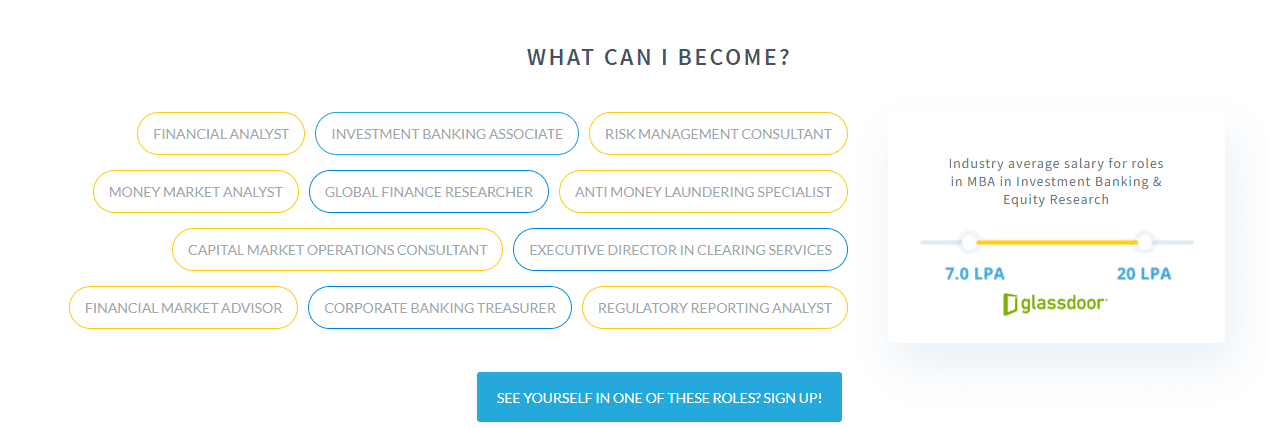
An investment banker is just a simple term used for a collection of job profiles such as Money Market Analyst, Global Finance Researcher, Financial Market Advisor, Corporate Banking Treasurer, Regulatory Reporting Analyst, etc.

best MBA online courseEach of these profiles is prospective high salaried jobs or the ones that open up better professional growth. Many of the online MBA courses have a part-time curriculum to suit professionals. SO, make use of this wonderful opportunity to boost your career on the right path. 

4 best programming languages to learn for Cybersecurity

If you are here and you are interested in the world of programming, you are probably already a programmer or your dream is to become one, whatever your case is, this article will help you. We are going to tell you the keys to choosing the ideal programming language to learn, and we will give you the basis to learn about cyber security training courses, Cybersecurity course, and Learn Ethical Hacking, all taught here at Imarticus. 

Key factors for choosing a programming language

First is syntax, simple syntax, easy to understand. The syntax is the way you write, how many lines you use to write an instruction, what symbols you use. There are languages that with a couple of lines of code you do the same as others with 20 lines.

Secondly, a friendly development environment. A development environment is the whole set of tools that you are going to need to program, without those tools configured you can’t program, in some languages you have to install several things, you have to configure environment variables.

Thirdly, that it has a large community, and that it is open source. It should have a large community because when you have doubts and problems you will find people willing to help you or people with the same problems as you, so you won’t feel alone and you won’t get demoralized.

Fourthly, that there are job opportunities. It is true that as programmers we also like to create projects for our own personal pleasure, non-profit projects. That’s true, it’s not bad, but who doesn’t like to have their work rewarded and to have a better quality of life because of your knowledge.

That’s the goal in the end, so a language that doesn’t have much of a market, many job opportunities, it’s not going to do you much good to learn it. Everyone has job opportunities, but it will depend a lot on the sector in which you want to work. For example, the same language can be used for the web, or maybe for mobile development, or maybe for desktop, or for video games. Be careful because there are languages that have only one area of application, they are very limited.

In short, simple syntax, friendly development environment, community, open-source, and job opportunities are the main factors you need to analyze to choose a programming language.

The 4 programming languages we recommend

  • Python: The language we recommend you start in the world of programming is Python, it is one of the most popular and most used languages in the world, in fact, it leads all the rankings along with JavaScript. 
  • JavaScript: JavaScript has a peculiarity, and it is that you don’t need to install anything to use it because it comes already inside the browsers, so to speak, that is to say, that with a browser you can already use JavaScript to learn how to program. 
  • SQL is the language of relational databases. Database administrators, developers, and end-users write queries in SQL to retrieve, insert, update and delete information stored in database tables. Attackers also use this language to steal sensitive information, disrupt data stores and perform a variety of web-based attacks. If you want to understand attacker activity and prevent SQL injection and other database-related attacks, you will need at least a basic understanding of SQL. 
  • C language: This is the last of the programming languages that we present to you. It is not so well known at a user level, but we recommend it for its variability and the fact that it can be used to create practically everything, from mobiles to servers, desktop apps to video console applications.

Conclusion 

If your dream is to be a programmer for the Cybersecurity world, you are probably full of doubts, full of questions, you don’t know which way to go, there are so many languages, there are so many technologies. What do I do, where do I start? Don’t worry, here at Imarticus we offer you cybersecurity courses and cyber security training courses where you will also learn Ethical Hacking meant for cybersecurity. Visit our site today and start your Cybersecurity career!