Dreaming of making a significant impact in the finance and accounting world? You’re in the right place. Whether you’re a newbie or an experienced professional, the IIM CFO Programme is your ideal launchpad for a successful career in finance and accounting. Let’s delve into how this programme can help you rise above the rest.
Establish a solid foundation
Before you can lead, you need to learn. A career in finance and accounting requires a strong understanding of core concepts and principles. The Chief Financial Officer (CFO) programme provides a comprehensive curriculum, covering everything from financial management to corporate finance and strategic planning. By mastering these areas, you’ll be better equipped to make informed, strategic decisions that will benefit your organisation.
Develop crucial leadership skills
In the CFO programme, you’re not just learning about numbers. You’re developing the leadership skills necessary for high-level positions. The programme emphasises the importance of strategic thinking, communication and ethics in finance and accounting roles. These skills are crucial for driving a team towards achieving organisational goals and ensuring sustainable growth.
Gain real-world experience
The theory is essential, but real-world experience is invaluable. The CFO programme offers practical learning opportunities through case studies and projects, allowing you to apply what you’ve learned in a real-world context. This experience can be a game-changer when competing for top finance and accounting positions.
Expand your professional network
Networking is a powerful tool for career advancement. The CFO programme brings together like-minded professionals, offering you the chance to build relationships with potential mentors, peers and industry leaders. These connections can lead to opportunities that might not be available otherwise.
Become a certified professional
A certification from a prestigious institution like IIM Indore can make your resume stand out. The CFO programme not only equips you with the necessary skills and knowledge but also awards you a certificate upon completion. This certification serves as proof of your competence and commitment, giving you an edge in the competitive job market.
How does the CFO programme help?
Let us look at a few things which would highlight the benefits of the CFO programme.
Acquiring in-depth knowledge
The CFO programme is structured to impart an in-depth understanding of critical areas in finance and accounting. The curriculum is designed to tackle complex topics such as risk management, financial reporting and cost control. By grasping these concepts, you become capable of making sound decisions that positively affect your organisation’s bottom line.
Personal growth
In the CFO programme, your growth goes beyond academics. The programme focuses on enhancing your personal attributes – leadership, decision-making skills and strategic thinking. This holistic approach prepares you for the challenges that come with senior roles in finance and accounting. It shapes you into a well-rounded professional who can navigate the complexities of the corporate world.
Staying updated
The finance and accounting sector is continuously evolving, with new trends and technologies emerging regularly. The CFO programme ensures that you stay updated with these changes. It incorporates current trends and advancements into its curriculum, making sure that you’re ready to tackle the future of finance and accounting.
Preparing for the CFO role
The CFO programme specifically prepares you for the role of a Chief Financial Officer. As a CFO, you’ll play a vital role in your organisation’s success, providing strategic financial guidance. The programme equips you with the skills and knowledge needed to excel in this role, preparing you for the various challenges and responsibilities that come with it.
Hands-on learning experience
The CFO programme emphasises experiential learning. It includes case studies, projects and simulations that give you hands-on experience in real-world scenarios. This approach not only enhances your understanding of the concepts but also helps you apply them practically.
Access to industry experts
Learning from industry experts can significantly enhance your understanding of the field. The CFO programme gives you access to experienced professionals. Their insights can provide you with valuable guidance and inspire you to strive for excellence.
Global exposure
The CFO programme provides you with a global perspective on finance and accounting. It exposes you to international financial practices and standards, preparing you for roles in global organisations. This exposure can broaden your horizons and open up a world of opportunities for you.
Flexibility
The CFO programme is designed keeping in mind the busy schedules of professionals. It offers flexibility, allowing you to learn at your own pace and convenience. This flexibility ensures that you can balance your learning with your professional commitments without any hassle.
Investing in the future
Your journey to the top of the finance and accounting world can be a challenging one, but with the right resources and training, you can make it. The IIM CFO Programme with Imarticus is designed to provide you with the knowledge, skills and experiences you need to excel in this field.
Are you ready to take your career in finance and accounting to the next level? Enrol in the IIM CFO Programme today and start your journey to becoming an influential leader in the world of finance. The time is now to invest in your future.
CFO stands for Chief Financial Officer. This is a key role in any organisation, tasked with managing all financial actions. From budgeting and financial planning to cost management and performance evaluation, a CFO is involved in every financial aspect of a business. They are the backbone that supports the company’s financial health.
Enter the CFO Training Courses
So, what are CFO Training Courses? These are special educational programmes designed to prepare individuals for the CFO role. They equip you with the necessary skills and knowledge to handle the financial tasks in an organisation effectively. But they offer so much more than just that.
The Power of Knowledge: Deep Dive into CFO Training Courses
CFO Training Courses give you a deep understanding of various facets of finance, including accounting, economics, and financial management. They teach you how to analyse financial data, develop effective financial strategies, and make informed decisions that can significantly impact an organisation’s growth.
Career Advancement: The Ladder to Leadership
CFO Training Courses open up a plethora of opportunities for career advancement. The knowledge and skills you acquire make you a strong candidate for senior finance roles. By opening the door to positions like CFO, these courses can fast-track your career growth.
Beyond the Classroom: Real-world Application
One of the most exciting aspects of CFO Training Courses is the real-world application. These courses don’t just teach you theory; they show you how to apply it in the real world. You’ll get to work on case studies, simulations, and projects that mimic real-world scenarios, helping you better understand how to navigate the corporate finance landscape.
Developing Leadership Skills: A Proactive Approach
CFO Training Courses are about more than just finance; they also hone your leadership and decision-making skills. As a CFO, you’ll need to make critical decisions that can affect your company’s future. These courses prepare you for this responsibility, transforming you into a proactive leader.
Networking Opportunities: Building Connections
Another often overlooked benefit of CFO Training Courses is the networking opportunities they provide. You’ll interact with other finance professionals, industry leaders, and seasoned CFOs, expanding your professional network. These connections can prove invaluable as you progress in your career.
Comprehensive Learning: The Chief Financial Officer Programme
A comprehensive Chief Financial Officer Programme, like the one offered by IIM Indore, provides an in-depth view of the CFO role. It covers a broad range of topics, from strategic finance and risk management to corporate governance and ethical decision-making, preparing you for the challenges that come with the CFO position.
Understanding the Financial Landscape: A Global Perspective
CFO Training Courses don’t just prepare you for domestic markets. They give you a global perspective. You’ll learn about international finance and how global economic factors can impact your company’s financial performance. This knowledge is crucial in today’s interconnected world, where a financial event in one country can have ripple effects across the globe.
Adapting to Technological Changes: Embracing Financial Tech
Another essential aspect covered in CFO Training Courses is the role of technology in finance. As the financial landscape evolves, CFOs need to adapt and embrace financial technologies, or FinTech. You’ll learn about the latest FinTech trends and how to use them to streamline financial operations, reduce costs, and improve accuracy in financial reporting.
Risk Management: Navigating Uncertainty
Risk is a constant in the world of finance. CFO Training Courses teach you about risk management, helping you understand the different types of financial risks and how to mitigate them. You’ll learn to develop effective risk management strategies, enabling you to navigate uncertainty and ensure your company’s financial stability.
Corporate Governance and Ethics: The Pillars of Trust
A CFO’s role extends beyond financial management. You also have a responsibility toward your stakeholders. CFO Training Courses cover corporate governance and ethics, teaching you how to balance the interests of different stakeholders and uphold the highest ethical standards. This knowledge strengthens the trust between your company and its stakeholders, which is vital for your company’s reputation and success.
Wrapping Up: The Road to Success with CFO Training Courses
In a nutshell, CFO Training Courses are a stepping stone to a prosperous career in finance. They arm you with the knowledge and skills necessary to navigate the complex world of corporate finance and to lead with confidence.
Ready to take the plunge? Make the wise move and invest in your future with a CFO Training Course. Start your journey with the Postgraduate Certificate Programme for Emerging CFOs from IIM Indore. It’s an excellent way to kickstart your journey in the world of finance. Make the first move now by visiting Imarticus. Your future as a successful CFO is just a click away!
Listen up if you want to advance your career and leave your mark in the banking industry. A true game-changer is the US Certified Management Accountant course.
A professional qualification in management accounting and financial management is called Certified Management Accountant (CMA). The qualification denotes the holder has expertise in financial analysis, planning, control, decision-making, and professional ethics. There are several professional organizations with management accounting credentials throughout the world.
This blog examines five strong arguments for why the US CMA course is essential for aspirant professionals like you. So let us explore the fascinating world of CMA while buckling up and preparing to be inspired!
What is a CMA course?
A CMA course is a study plan created to prepare people for the Certified Management Accountant (CMA) certification. The (IMA) Institute of Management Accountants, a global group for accountants and financial professionals, grants the CMA professional qualification. The CMA certification, which denotes proficiency in management accounting and financial management, is widely recognized.
US CMA Course Details
Cost and Management Accounting, or CMA, is a certificate program that grants CMA certification to qualified students. The title serves as a springboard for a rewarding career in corporate accounting. The four knowledge pillars of management, regulatory framework, strategy, and financial reporting form the foundation of the CMA course. After passing the CMA test at one of the three levels listed below, a candidate is given the designation of CMA:
LEVEL 1: CMA Foundation
LEVEL 2: Intermediate CMA
LEVEL 3: CMA Final CMA Total Form
CMA stands for cost and management accountant. CWA, or Cost and Work Accountant, was the previous name for CMA. All of the eligible candidates received the CWA designation from ICWAI. ICWAI then changed its name to ICAI, while CWA became CMA. The modification was implemented to compete with designations at a comparable level in other nations.
Most nations use the same abbreviation to refer to CMAs or certified management accountants. The suggested name change was made to accord the CWA qualifiers equal standing. Additionally, the program emphasizes management over work accounting to deliver current information with emerging technology.
Why should aspiring management accountants consider the US CMA course?
Here are key motives behind why the US CMA certification is essential for management accountants.
The Skills and abilities
Any professional certification has as a fundamental prerequisite the acquisition of specialized skills. In the case of the CMA, a competent certified management accountant specializes in the abilities needed to manage the four main areas of Finance management.
Therefore, CMA USA Course focuses on financial planning, financial analysis, financial reporting, and investment decisions, in addition to having a solid understanding of risk management and business ethics.
The curriculum for CMA USA has been created with a practical, conceptual focus rather than a theoretical one, giving rise to high-order skills and developing the robust analytical and strategic planning abilities needed by finance professionals.
It covers relevant and practical topics.
The US CMA curriculum is created to meet the demands of management accountants in the workplace. It includes cost management, risk management, decision analysis, internal controls, financial planning and analysis, and professional ethics.
Whether you work for a small firm, a large corporation, or a non-profit, you may use these talents immediately in your current or future roles. You will also learn to use the newest tools and technology to increase productivity and effectiveness.
The gateway to management accounting
In the US CMA course, a strong understanding of management strategies is also integrated with knowledge of accounting and finance. Therefore, if you decide to pursue a career in business management focusing on accounting and finance, US CMA might be a fantastic choice.
You may even work as the CFO of a company that uses management accounting if you have the necessary training and expertise. You may even anticipate being promoted to higher management roles in the future.
It has a high return on investment.
The US CMA program is not only inexpensive but also worthwhile. The course typically costs $2,000, covering the test fees, study guides, and membership dues. That is a small portion of the price of comparable professional courses.
And the advantages go beyond money. You may improve your self-assurance, credibility, and leadership abilities with the aid of the US CMA course. You will be able to interact with coworkers, bosses, and customers more effectively. Additionally, you will be able to impact your company’s strategic objectives and vision more.
It opens up career paths and opportunities
Not just accountants can take the US CMA course. One who wants to succeed in business and money should use it. The US CMA course can assist you in achieving your goals, whether to work as a CFO, controller, consultant, or entrepreneur.
You are prepared for several jobs and sectors with the US CMA course. You can also work in any industry that needs management accounting expertise, including manufacturing, finance, healthcare, education, and government. Due to the US CMA’s widespread acceptance worldwide, you can also work in other nations and areas.
The Final Words
So why are you still waiting?
The coveted Certified Management Accountant (CMA) certification is offered by Imarticus Learning and is recognized by the Institute for Management Accountants (IMA), USA. The US CMA program is also recognized in more than 170 countries, making it the highest level of success in management accounting.
None of the certifications available in accounting and finance can match the appeal of the CMA. Imarticus Learning assures you have the skills necessary to live up to the high standards set by employers and recruiters worldwide that actively seek professionals with this prestigious degree.
Enroll immediately in the top accounting certifications if you are prepared to advance your profession. You will be happy that you did!
Businesses and financial institutions are looking more than ever to harness financial data to forecast future performance and make relevant financial decisions. It has led to a growing demand for financial modelling skills. A career in financial analysis could help you exploit this market need. Financial modelling skills enhance your resume and provide better job opportunities.
Financial modelling will come in handy for you if you are looking to boost your career or set up a business. A financial modelling course is a perfect way to learn the relevant skills and make a career in investment banking, mutual funds, project finance companies and any business in general.
This article will list the top financial modelling courses to look out for in 2023.
The value of a course is significantly heightened if it has CV-boosting potential. You need to understand whether the certification provides a distinctive edge in the competitive job market.
Will this certificate help me in real-world learning?
Another important aspect is whether the course is relatable to the real world. Before you take up the course, it is crucial that you examine the course structure and know beforehand if it trains you in practical experiences and offers a case study-centric model. Such a course can even improve your chances of faring well in job interviews and increase your odds of securing the job.
Does the certification adhere to its specific niche?
Not every course caters to every candidate’s needs. One has to choose a course carefully according to his/her career aims. Some financial modelling courses are more suitable for candidates seeking a corporate finance career, while others are better suited for investment bankers.
A financial modelling course is the stepping stone to rising in rank in the future. It allows finance professionals to be well-prepared and get lucrative job opportunities during the hiring process. Thus, asking the above questions before selecting a course is extremely important for advancing your career.
Top 5 accounting and financial modelling courses
Accounting and financial modelling courses will enhance your qualifications and help you get better job opportunities in prominent business companies. Here are the top 5 financial modelling courses that would set you on the path to success.
Business and Financial Modelling Specialisation by Wharton:
This course by Wharton School, under the affiliation of the University of Pennsylvania, helps you hone your spreadsheet and modelling skills. It is a beginner-friendly course that helps learners to understand business models and the standard techniques used in investment analysis, forecasting and company valuation.
Duration: 2 months
Mode: Online
Excel Skills for Business Specialisation by Macquarie University:
This is a series of four courses provided by Macquarie University to help aspirants with advanced Excel skills needed for business. This course helps segregate data and extract vital information from different data sets effectively. Besides, the course sharpens your automation skills and arms you in using advanced formulas to make robust business decisions.
Duration: 3 months
Mode: Online
Finance and Quantitative Modelling for Analyst Specialisation by Wharton:
If you are interested in pursuing a career in data and business analysis, then this is the perfect course for you. The course trains aspirants to map and use data to predict future data scenarios affecting business performance. This series of four courses will help you gain the relevant knowledge required for finance and quantitative modelling to get job roles in corporate finance and investment analysis.
Duration: 2 months
Mode: Online
Business Statistics and Analysis Specialisation by Rice University:
This comprises four courses, including a capstone project equipping learners with vital conceptual and applied skills. The course primarily helps aspirants master specific spreadsheet functions that, in turn, would enhance their aptitude for data modelling. It also explores the baseline probability concepts that materialise uncertainty through the data distribution process.
Duration: 2 months
Mode: Online
Financial Modelling Foundations by LinkedIn:
This course can ease the problematic decision-making process if you are in a management position in a business entity. It will teach you to build the corporate finance infrastructure alongside the basics of portfolio management and commercial and investment banking. The course covers buyout models, M&A models, DCF models, and more.
Duration: 3.5 hours of on-demand video
Mode: Online
Conclusion
A career in financial analysis may initially seem challenging because of the vast area of study. One might also get confused between beginner- and advanced-level courses and end up choosing the wrong one.
If you want to pursue a career in accounting and financial modelling, then check out Imarticus Learning’s Financial Analysis Prodegree in Collaboration with KPMG. This course helps you land job opportunities in investment banking, corporate finance and private equity. This 4-month online course is held on weekends and offers guaranteed placement assistance.
Are you interested in learning more about Fintech and cryptocurrency? Due to the rapid development of technology, these two disciplines are revolutionizing the financial industry in ways that have never been possible.
Financial services are now more readily available, effective, and inventive than ever, thanks to Fintech. Additionally, cryptocurrency, a decentralized digital currency, has many advantages for consumers and businesses.
Great opportunities do, however, also present great challenges. Fintech and cryptocurrency confront regulatory barriers, cybersecurity issues, and a lack of standardization. There are several career opportunities in Fintech, from project management and marketing to software development and data research.
This blog will thoroughly explain what is Fintech and examine the advantages and disadvantages of Fintech and cryptocurrency. We’ll investigate investment potential in these fascinating sectors and their influence on the financial sector.
What is Fintech?
“Fintech,” or “financial technology,” refers to any innovation that employs technology to enhance or completely change how financial goods and services are delivered. Fintech encompasses various technologies, such as peer-to-peer lending, crowdfunding, robo-advisors, Blockchain, and mobile banking and payments.
The relationship between Fintech and Cryptocurrency
As of September 2021, the market value of all crypto assets exceeded $2 trillion, a 10-fold rise from early 2020. A whole ecosystem also thrives, including exchanges, wallets, miners, and stablecoin issuers.
Financial technology, or Fintech, is the abbreviation for any innovation that leverages technology to enhance or revolutionize financial services. Consider robo-advisors, peer-to-peer financing, internet payments, mobile banking, and other innovations. With the help of Fintech, everyone may now access financing more easily and effectively.
A digital currency known as cryptocurrency employs cryptography to safeguard and verify transactions. Cryptocurrencies, unlike conventional money, are managed by a network of computers that adhere to a set of rules rather than by a single central authority. The most well-known cryptocurrencies include Dogecoin, Ethereum, and Bitcoin.
Opportunities in Fintech and Cryptocurrency
Over the past few years, blockchain technology has become increasingly widely used in contemporary life. The Blockchain is fundamentally simply a collection of code that records occurrences, each being unalterable. However, for those who see the Blockchain as a network of nano-bots ready to take over humanity, the Blockchain is just a set of codes.
This list of resources might include storage space and a ledger of peer-to-peer cryptographic transactions without needing a financial institution to operate as a mediator. But the starting point is the connection to financial technology – Fintech. The Fintech industry, which heavily relies on calculations and analysis, is driven by efficiency and effectiveness, and Blockchain is a key component of this.
Crypto transactions will make up a sizeable share of the FinTech investment opportunities, projected to rise to $158 million by 2023 after experiencing rapid growth in recent years. People who own smartphones but do not have bank accounts can also use cryptocurrencies to gain access to financial and Fintech services.
Around 1 billion people fall into the “unbanked” category, which presents a huge opportunity for cryptocurrency-powered Fintech services to offer their customers goods and services previously out of reach. Crypto transactions are far more attractive than conventional money transfers because they are less inefficient and slower.
People who are underserved or unbanked by traditional institutions can benefit from greater financial inclusion and empowerment thanks to Fintech and cryptocurrencies.
Fintech and cryptocurrencies can also reduce the costs and obstacles associated with cross-border transactions, making sending and receiving money internationally simpler and less expensive.
Fintech and cryptocurrencies can open new doors for innovation and entrepreneurship in the financial industry. Fintech platforms, for instance, allow users to generate money, invest, borrow, lend, trade, or contribute in novel ways that were before impractical.
What are the challenges facing Fintech and Cryptocurrency?
Although it is difficult to quantify the extent of cryptocurrency asset adoption, surveys and other indicators imply that developing and emerging market nations may be setting the pace. Most significantly, citizens of these nations drastically raised their trading volumes on cryptocurrency exchanges in 2021.
The economy may become more dollarized, or in this case, crystalized, due to broad and quick adoption, which might cause serious problems if people use crypto assets rather than their local currency. The ability of central banks to successfully conduct monetary policy may be hampered by cryptoization. There are many challenges in cryptocurrency adoption.
It might also increase the significance of some of the dangers to consumer protection and financial stability that were already there, such as funding and solvency problems brought on by currency mismatches.
There are certain issues with Fintech and cryptocurrencies as well that need to be resolved. Regulating is one among them. Since Fintech and cryptocurrencies are still relatively new and changing quickly, they frequently operate in a legal gray area with ambiguous regulations.
As a result, there may be uncertainties and dangers for both customers and service providers. Safety presents another difficulty. Fintech and cryptocurrencies are susceptible to cyberattacks, hacking, fraud, and theft since they depend on technology and networks.
People may lose their money or personal information, for instance, if their devices, accounts, or platforms are compromised, hacked, or shut down.
The Final Words
Fintech and cryptocurrency are two of the most exciting and disruptive trends in finance today. They offer many opportunities for innovation, inclusion, convenience, and efficiency, but they also pose challenges that must be overcome. As a consumer or an entrepreneur, you must be aware of these technologies’ benefits and drawbacks and how to use them wisely and responsibly.
With the Professional Certificate in Fintech from SP Jain School of Global Management and Imarticus Learning, you may realize your full potential in Fintech. Through hands-on instruction from subject matter experts, real-world case studies, cutting-edge tech projects, and networking opportunities with Fintech trailblazers, this fintech course will give you cutting-edge Fintech skills. With this degree, you’ll be equipped to start a rewarding career in the fascinating and rapidly evolving field of Fintech.
Fintech, which is a developing trend, is the use of technology to deliver financial services. Because they can provide customers with better service at lower costs than traditional banks, fintech startups are growing in popularity. For instance, several fintech businesses assist consumers in managing their money more effectively or discovering new investment opportunities by utilizing artificial intelligence (AI).
North America was the preferred destination for financial companies as of February 2020. However, the adoption rates of Fintech in several financial sectors reveal that American consumers lag behind Chinese consumers.
Additionally, they provide more practical ways for people to use their smartphones to purchase online or in physical stores, pay bills, and transfer money between accounts.
Due to their inability to compete with the newer firms’ advancements in customer experience design, some experts have predicted that traditional banks may soon cease to exist completely due to the growth of these startups.
How are fintech startups changing the financial industry?
Fintech is significant because it can potentially increase millions of people’s access to affordability, convenience, and personalization of financial services. In addition to challenging the established actors in the financial sector, Fintech has the potential to open up new options for business owners, investors, and consumers.
Adoption of new technologies: By allowing financial institutions to provide better services at lower prices, new technologies have fostered the growth of fintech companies.
Changing customer preferences: Customers’ preferences are evolving, and they expect more from banks and other financial organizations. Rather than merely sitting in an account collecting meager interest rates, they want their money to work for them.
Increased investment in Fintech: Over the past few years, increased venture capital investments in fintech companies have accelerated innovation. As a result, numerous innovative solutions have been developed across various industry segments.
What are the latest trends in fintech startups?
Here are a few fascinating trends in Fintech:
The rise of Neobanks: Neobanks are digital-only banks that provide various financial services without needing physical branches or middlemen. Customers who value speed, efficiency, and affordable prices are drawn to them.
The expansion of embedded finance: Embedded finance refers to the incorporation of financial services into applications or platforms that are not financial. Thanks to it, customers can easily access financial goods and services in their everyday user experiences. The loan and payment processing services offered by Shopify, the driver insurance and debit card offered by Uber, and the subscription bundles for Spotify and Hulu are a few instances of embedded finance.
The acceptance of open banking: Application programming interfaces, or APIs, are used in open banking to share financial data and services across various suppliers. Customers are given more control over their financial information and have access to a larger selection of goods and services from many suppliers. The Plaid data aggregation platform, transfer wise’s international payments solution, and Credit Karma’s credit score tracking application are a few instances of open banking.
Ecosystem banking: Ecosystem banking assists banks in India in enhancing the customer experience and producing long-term value for clients. Customers who previously relied on complicated and disjointed processes across several applications managed by partners are now offered a single option through ecosystem banking. Banks were forced to use a purchase or joint venture strategy to expand new services due to the high costs and complexity of monolithic technical applications.
The rise of decentralized finance (DeFi): DeFi is a movement that uses blockchain technology to develop an open, transparent, and permissionless financial system. Without the need for middlemen or centralized authority, DeFi enables consumers to access various financial services like lending, borrowing, trading, investing, and saving.
What are the biggest challenges facing fintech startups?
Regulatory obstacles: As they attempt to operate in a highly regulated sector, fintech firms frequently encounter regulatory obstacles, which can impede their growth.
Cybersecurity threats: Because they handle sensitive financial data, fintech organizations are frequently the target of cyberattacks and data breaches.
Funding: Fintech firms need a lot of money to create and build their products, but getting that money may be difficult, especially early on.
Competition from existing companies: Established financial institutions have significant resources and customer bases, making it challenging for fintech startups to compete.
Opportunities for Fintech Startups
There are many opportunities for fintech startups to grow and expand.
These include:
Digitalization: One of the widespread changes that have affected every industry, including banking. Massive technical and structural changes are currently taking place, and they are quickly emerging as the new norm. Efficiency and convenience have increased with the emergence of digital-only banks. Nobody likes to visit the bank physically, stand in long lines, and complete a ton of paperwork.
Blockchain: Due to its rapid expansion and acceptance, blockchain is becoming a crucial component of financial institutions’ operational infrastructure, including digital payments, stock trading, smart contracts, and identity management. Financial institutions are utilizing blockchain more swiftly due to its global reach, speed, and security.
The Final Words
The growth of financial firms is persistent as the world becomes increasingly digital. From robo-advisors to mobile payment systems and everything in between, these forward-thinking businesses are revolutionizing how we perceive and engage with financial services.
Fintech’s future, however, is not without its difficulties. Fintech companies face several challenges as they develop and grow, including regulatory challenges, cybersecurity threats, and the constant danger of disruption from established firms. These startups are positioned to bring about substantial change in the next years by utilizing cutting-edge technology and a thorough grasp of client demands.
The Professional Certificate in Fintech, developed in partnership between the SP Jain School of Global Management and Imarticus Learning, is Asia’s top Fintech certification program. Through practical instruction from subject-matter experts, real-world case studies, projects utilizing cutting-edge technologies, and beneficial interactions with industry leaders and Fintech entrepreneurs, this course equips you with knowledge of the field of Fintech.
Navigating DEI training: Key factors to consider for maximum impact and success
Companies have started understanding the importance of Diversity, Equity and Inclusion (DEI) for creating an inclusive work culture. DEI training programmes foster an environment that values diversity and promotes equal opportunities for everyone. However, choosing the right DEI training programme for your employees can be exhausting. In this blog, we will discuss some key factors to consider when selecting the best DEI training programme to ensure maximum impact and success.
Understanding DEI training
Before diving into the topic, let’s briefly understand what DEI training entails. DEI training refers to structured programmes designed to educate employees on diversity issues, promote inclusive workplace practices, and develop cultural sensitivity. It aims to create awareness about biases, and foster an environment where differences are respected and celebrated.
A study conducted by Deloitte found that organisations with inclusive cultures are two times more likely to meet or exceed financial targets. They perform better and are likely to be innovative and agile. In short, organisations with inclusive cultures tend to achieve better business outcomes.
Factors to consider when choosing a DEI training programme for employees
Assessing organisational needs: The first step in choosing an effective DEI training programme is to assess your organisation’s specific needs. Identify areas where diversity gaps exist or where there is a need for increased cultural competence. Conduct employee surveys or focus groups to gauge their perceptions and experiences regarding diversity within the company. This will help you tailor the training programme accordingly.
Content relevance: Look for a DEI training programme that offers relevant content – one that’s aligned with your organisation’s values and goals. The programme should cover topics like unconscious bias awareness, privilege and power dynamics, allyship skills, inclusive leadership development and creating equitable policies. A well-rounded curriculum that addresses both theoretical knowledge and practical application will ensure comprehensive learning.
Interactive learning: The chosen DEI training programme should incorporate interactive learning strategies such as group discussions, case studies, role-plays or simulations for maximum benefit. Active participation encourages engagement and helps employees internalise key concepts. Interactive sessions also facilitate open dialogue, allowing participants to share experiences and learn from each other’s perspectives.
Experienced facilitators: The expertise of the facilitators conducting the DEI training programme for your employees is crucial for its success. Look for programmes led by experienced professionals who possess subject matter expertise in diversity training, cultural competency and adult learning methodologies. Skilled facilitators can create a safe space for discussions and effectively address challenging topics while maintaining an inclusive environment.
Ongoing support and resources: DEI training is most effective when it is supported by ongoing resources and opportunities for continued learning. Choose a programme that provides post-training support like access to online materials, toolkits, webinars or coaching sessions etc. This ensures that the training becomes an integral part of the organisation’s culture rather than a one-time event.
Empowering change: The road to DEI success
Selecting the right DEI training programme for your employees requires careful consideration. By choosing an appropriate equity and inclusion education programme that aligns with your organisation’s goals, you can empower your employees with the knowledge and skills needed to foster diversity, equity and inclusion within your organisation.
If you are looking to enhance your company’s DEI initiatives further, consider enrolling in Imarticus Learning’s comprehensive DEI Training Programme. Our programme covers all key aspects of diversity education and provides practical strategies to promote equity and inclusion in the workplace. Read more about the course here.
Why DEI training is an imperative, not a trend, in 2024
These days organisations are embracing diversity in order to foster an inclusive work environment. As a result, many companies are investing in Corporate Diversity and Inclusion (D&I) Training programmes. In this blog, we will explore why implementing DEI training within your company is not a trend but a necessity in 2024.
Understanding the concept of corporate D&I training
Corporate D&I Training refers to structured programmes for educating employees about DEI within the workplace. These programmes aim to create awareness, address biases and provide tools for building inclusive work environments.
The role and benefits of D&I training
Corporate D&I training plays a crucial role in shaping the organisation’s culture. It fosters understanding, empathy, and respect among employees and helps them recognise their unconscious biases and stereotypes, in turn promoting fair treatment for all individuals.
Improved employee engagement: Corporate DEI training creates an inclusive culture and fosters higher employee engagement levels to make them feel more connected to their work and colleagues.
Enhanced creativity and innovation: By embracing diverse perspectives and experiences, companies can tap into a pool of ideas that fuels creativity and innovation. DEI training encourages collaboration among team members from different backgrounds, leading to new insights and problem-solving approaches.
Talent attraction and retention: Organisations that prioritise diversity attract top talent who seek an inclusive workplace where they can thrive professionally. By demonstrating commitment to DEI through training initiatives, companies become more lucrative to candidates who align with their values.
Better decision-making: Employees bring varied viewpoints to the table, resulting in well-rounded decision-making processes. DEI training equips them with the skills needed to leverage these differences effectively, leading to improved outcomes.
Addressing unconscious bias
Unconscious biases and stereotypes influence our decisions and interactions without our awareness. DEI training helps employees recognise and address these biases.
Awareness: Corporate DEI training sessions create awareness about unconscious biases and their effects. By understanding these biases, employees can actively work towards overcoming them.
Reducing the impact of bias in decision-making: Through interactive exercises and case studies, DEI training helps employees come up with strategies to avoid biases when making hiring decisions, evaluating performance, or assigning tasks.
Creating inclusive leadership
DEI training programmes provide leaders with the knowledge needed to create an inclusive environment.
Leading by example: Leaders who undergo DEI training gain the capacity to implement inclusive practices in their teams. This inspires others to follow suit, creating a ripple effect throughout the organisation.
Promoting diversity in leadership positions: DEI training encourages leaders to actively promote diversity in leadership positions. This helps ensure that different perspectives are represented and considered at various decision-making levels.
Takeaway – why D&I training is essential
In conclusion, implementing corporate D&I training programmes within your company is pivotal for building an inclusive workplace culture. By addressing unconscious bias and equipping leaders with the necessary tools, organisations can attract top talent while retaining existing employees.
If you want to enhance your skills in creating D&I workplaces, consider enrolling in a comprehensive Corporate Diversity Programme offered by Imarticus Learning. Our courses provide valuable insights into building an inclusive culture. Moreover, it helps in developing practical strategies for effective leadership. Read more about the course here.
Supply chain management is a very crucial concept to sustain any business in today’s world. The fundamentals of supply chain management are concerned with the inflow and outflow of goods, services, data, finances and anything related to a product or service. A proper flow within the supply chain is very important which starts right from the procurement of raw materials and continues till the delivery of the finished goods at its destination.
Supply chain management (SCM) is a centralised concept where various departments come together to manage the flow of goods and services within the supply chain. Knowing how to forecast demand and coordinate the planning of the supply chain is an integral part of supply chain management. One can learn these essentials by taking an efficient supply chain management course to get a better understanding.
Read on to learn demand forecasting, planning and its importance in supply chain management. Planning the various processes of the supply chain and coordinating the dynamic activities are some essential skills that one needs to master to become a successful supply chain professional.
What is Demand Forecasting?
Recognising the essence of demand forecasting and its essential functions in preparing a company’s logistic initiative is a major step in understanding the concept of demand forecasting in supply chain management. Supply chain managers take a cyclical approach to forecasting demand by gathering and analysing historical data and performing market analysis with the help of sophisticated data models.
Accurate demand forecasting is a very important step in supply chain management as it involves inventory management, scheduling of manufacturing and production and making data-driven strategic business decisions, based on predictions. Professionals need to tactically balance consumer needs and cost-effectiveness throughout the SCM process. Demand forecasting helps to enhance a company’s market position and increase the profitability of the business.
Demand Forecasting Methods in the Supply Chain
There are various types of demand forecasting in supply chain management but all of them have the same foundation which is data. All the demand forecasting methods are based on the availability of data such as historical sales data, predictive data, valuable insights for making action plans, etc. Hence, it is clear that the available data creates a direct impact on the quality accuracy and utility of demand forecasting activities.
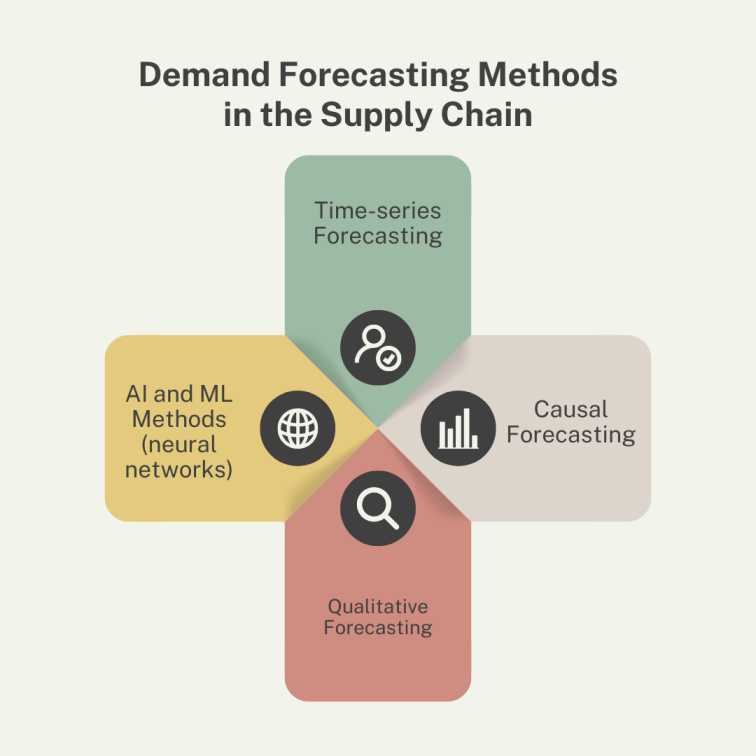
The following are the various types of demand forecasting methods used in the process of supply chain management:
Time-series Forecasting
This demand forecasting method relies upon past performance and historical data to make predictions regarding future demand. This is done by analysing the past patterns of sales, demand, production and manufacture of the product. ‘History repeats itself’ is the cardinal principle of this method.
However, this method of demand forecasting tends to eliminate the possibility of any major change that may affect the demand for a particular product. Many important external factors are overlooked in this method such as the competitors’ next moves, market fluctuations, inflation etc.
Time-series forecasting is a great choice in case of a stable market condition with reliable and consistent demand. It is a cost-effective method that produces straightforward results.
Causal Forecasting
The method of causal forecasting is based on a cause-and-effect relationship between multiple variables. These variables are extremely important and create a great impact on the economic indicators that are essential for making forecasts about the future demand for a product. Supply chain managers extend marketing efforts and build strategies on the basis of demand forecasting.
However, critics consider the method of causal forecasting a very complex one but it is well-known for its accuracy in predictions. It can be used to make wise business decisions but requires skilled personnel for making forecasts.
Qualitative Forecasting
The qualitative approach of forecasting is used when the historical data for that particular product is missing. This method largely depends upon market research, new industry trends and professional judgment. Predictive intuition plays a great role in this method as there is no support for historical data.
Critics may disregard qualitative forecasting because of its subjective nature but it is crucial in circumstances where there is a dearth in actual data. The effectiveness of this method heavily depends upon the amount of industry knowledge, experience and expertise of supply chain professionals.
AI and ML Methods (neural networks)
The new-age approach of AI and ML methods uses neural networks to enhance the accuracy of demand forecasting. These techniques use the power of machine learning and enhance the predictive accuracy of new products. This method can easily get a hang of complicated and non-linear relationships that can be used to get accustomed to new data.
However, experts regard this method to be very complicated and resource intensive but the major advantage that this method offers is the ability to deal with large quantities of data in a convenient manner. It can positively identify hidden patterns which makes it a great innovation in the world of demand forecasting.
Best Practices in Demand Forecasting
Businesses need to conform to several best practices while performing demand forecasting in order to enhance the accuracy levels in predictions and to completely utilise its benefits. The following are the best practices in demand forecasting:
Use high-quality data
While predicting the future demand for certain products, it is important that supply chain managers use data-driven techniques. Such data should be reliable and consistent.
Using high-quality data is one of the major reasons for performing successful demand forecasting. The data needs to be cleaned and authenticated from time to time to increase the prediction accuracy. Additionally, supply chain managers should be trained enough to understand the hidden patterns and insights of certain data.
Select a suitable forecasting method
Select an appropriate forecasting method based on the characteristics of the business, the range of the goods and services, the market trends and customer demand patterns. Also consider factors like cost effectiveness, market volatility, seasonality and demand trends while choosing the demand forecasting approach that best satisfies the business’s unique requirements.
Collaborate across departments
To build an effective supply chain, a business needs to properly collaborate across various departments such as sales, marketing, operations, finance and so on. For this, proper communication channels should be maintained so that it becomes easier to extract data, analyse insights and understand the meaning of hidden patterns.
Dynamic business strategies should be decided upon and aligned to ensure effective collaboration across various organisational departments. Departmental collaboration increases accuracy in forecasts and enhances the decision-making system in the organisation.
Understand demand drivers
Supply chain professionals need to gain a deep understanding of the various demand drivers that affect the demand for certain products in the market. Demand drivers are those factors that influence the market demand for a product. It is important to locate major market factors, consumer behaviour, competitor’s actions and economic indicators in the industry.
In order to improve the accuracy and depth of demand forecasting, professionals can incorporate their knowledge and expertise in demand forecasting models to improve the entire process of supply chain management.
Consistently review and update forecasts
Demand patterns can take a shift and transform as they do not remain constant for a longer period. Hence, it becomes crucial to regularly scrutinize and review the forecasts. Also, asking for feedback from the management and incorporating certain changes can enhance the forecasts.
Supply chain professionals need to supervise and analyse the market trends, customer behaviour, industry dynamics and various other external factors to make sure that the forecast remains relevant and precise.
Coordinating Activities of Supply Chain Management
Managing the supply chain is much more than just calculating inventory and recording logistics. Supply chain managers perform diverse functions to keep costs down which results in the enhanced efficiency of the supply chain process of the organisation.
Good supply chain managers coordinate various activities that are known as the pillars of supply chain management. If you want to learn how to coordinate supply chain activities in an efficient manner, consider taking a supply chain course.
In supply chain management, the manager has to coordinate multiple logistic activities that mainly consist of the following parts:
Planning
The process of supply chain management starts with the planning stage where supply chain managers align supply with the customer trends and manufacturing demands. Demand planning helps them to achieve the best results and also anticipate future demands in order to take appropriate action. Planning involves collecting raw materials that are required in every stage of manufacturing, assessing the abilities and competitiveness of each instrument and noting the labour requirements for carrying out the entire process.
Generally, large organisations frequently use Enterprise Resource Planning (ERP) systems to gather data and generate action plans accordingly.
Sourcing
Sourcing is one of the main pillars in the SCM process where businesses need to maintain good and cordial relationships with the suppliers. Sourcing employees gathering and using raw materials that are essential for the entire manufacturing process. professionals work closely with the vendors to arrange raw materials at the right time and in appropriate quantities.
Companies may draw manufacturing plans in advance so that they can secure raw materials from the supplier without any delay. However, different industrial sectors have different sourcing requirements. Some of the major sourcing requirements are enumerated as follows:
The supplied raw materials comply with the specifications that are required in the manufacturing process for the production of goods.
The cost of the raw materials and the finished goods are in alignment with the market standards.
The supplier has the liberty to send emergency supplies in case of unavoidable circumstances.
The reputation of the supplier should be such that they deliver good quality materials on time.
Supply chain management can get extremely critical when concerned with perishable goods. When sourcing raw materials, businesses should take care of the lead time and how conveniently a supplier can comply with the necessary standards.
Manufacturing
Manufacturing is that part of supply chain management where workers convert the raw materials into finished goods with the help of labour, capital, machinery and various other external sources. Procuring good quality finished goods is the main aim of supply chain management.
The manufacturing process can further be divided into various subcategories such as assembling testing packaging and inspecting the finished goods. Businesses should take care of the costs involved in making the final products and also the generation of waste. These elements should not divert from the original SCM plan. If any diversion from the original plan takes place then such issues must be rectified at the earliest.
Delivering
After the manufacture of the products they are sold in the market and once the sales are finalised the products need to be delivered to the customers. The customer interaction with the product has not yet taken place and delivering the products to the customer is seen as the first step of interaction between the brand and the consumers. Hence, the delivery process must be seamless and customers should not face any sort of difficulties or else it will lower the brand image.
In a seamless supply chain management process, companies generally build high-performing delivery channels for safe and timely delivery. To ensure delivery essentials they do not completely rely on any one method of delivery rather they make provisions for multiple delivery methods. These methods ensure the safety of the products and are also cost-effective.
Returning
The process of supply chain is not yet complete. Sometimes there can be products that a customer purchases but does not like or it comes with some sort of issues. In such cases, consumers place return requests for the product. So, accepting a return request and adjusting the product cost is also a part of the process of supply chain management.
It is already bad for the brand if a customer needs to return a product but it can get even worse if the return request is not processed hassle-free. Companies must be able to take return items and process the refunds for such items. It is also known as reverse logistics. This is where the supply chain management process concludes.
Methods of Planning Supply
Supply planning is the practice of aligning and coordinating various tasks associated with the production and distribution of finished goods and services in order to fulfil consumer demand. Supply planning is the way to ensure that the business has the potential to deliver what the customer wants at the right time.
Supply planning consists of various methods. For someone interested in building a career in supply chain management, getting a good understanding of supply planning is a crucial part. Some of the most frequently used methods are enumerated as follows:
Demand forecasting
The first thing to ensure proper supply is to predict the demand for a particular product. Demand forecasting is the way of knowing what the demand for a product could be and how the customers will react to it. There are various means of forecasting demand that are generally data-driven in nature. Supply chain managers need to analyse the data and make forecasts about the future demand for a product in order to proceed with supply planning.
Inventory review
Inventory review is the approach of stocking products in the warehouse after knowing the already existing stock that is kept in the warehouse. According to smart supply chain managers, one needs to store only the amount that is to be supplied to the consumers. Hence, there is no point in producing and storing enormous amounts of products in the warehouse.
Supply chain professionals need to properly analyse the current inventory levels in the warehouse and produce only the required amount of products that have been estimated in demand forecasts.
Sourcing and procurement
After assessing the inventory report, supply chain managers get a clear understanding of what products they need to stock, what they have in abundance and where they may fall short. To stock the required inventory in the warehouse, sourcing and procurement are absolutely essential.
Retailers choose reliable suppliers to acquire products as and when required. The suppliers provide the retailers with an adequate amount of raw materials and other essential items that are necessary for making the finished goods. Such is the process of sourcing and procurement which is an integral part of supply planning.
Distribution planning
Distribution planning is the process of dividing the inventory in the proper places. Storing inventory at the wrong place at the wrong time is of no use. Hence, supply chain managers need to ensure that they have the right amount of inventory distributed organically in various areas. Supply chain professionals build a plan to properly distribute the inventory throughout the operation centres.
Performance monitoring
After performing all the steps in supply planning, supply chain managers need to constantly supervise the performance of their supply chain to see what gaps to fill. Professionals analyse and mark areas that need to be improved. Such areas can be anything starting from inventory tracking, planning production schedules, monitoring delivery times and so on.
However, a significant part of performance monitoring is to determine whether the suppliers are meeting their delivery commitments or not. If there exist any discrepancies, supply chain managers need to take the appropriate corrective actions to solve any performance alignment issues.
Conclusion
Businesses can build a highly successful supply chain management framework with proper demand forecasting and procurement, coordinating various activities and raising the standards of supply planning. Businesses can earn great benefits if they properly comprehend client needs and streamline the process of stocking inventory in terms of higher levels of customer satisfaction, cost savings and enhanced profitability.
For performing such activities companies need efficient supply chain professionals who understand the fundamentals of the process. If you are looking forward to building a career in supply chain management, consider signing up for the Advanced Certificate In Supply Chain Management And Analytics, CEC, IIT Roorkee by Imarticus. This supply chain analytics course will help you understand the concepts of supply chain and analytics for becoming a successful new-age supply chain professional.
Sales training is imperative for professionals looking to excel in the field of sales. With the right sales techniques and strategies, individuals can enhance their skills, boost confidence and achieve outstanding results. A study has identified that sales training has positive impacts on productivity and with different types of trainings the impact on businesses also differs. In this blog, we will explore seven essential aspects that contribute to the success of sales training programmes.
1. Customisation for targeted outcomes
Effective sales training should be tailored to meet the specific needs of the participants. By understanding their industry, products/services and customer base, a customised training programme can provide relevant content. This approach helps learners apply new skills directly to their roles, leading to improved performance and increased sales.
2. Interactive learning experiences
To ensure maximum engagement and knowledge retention, successful sales training programmes incorporate interactive learning experiences. These experiences can include role-plays, simulations, case studies, group discussions and practical exercises. By actively participating in these activities, professionals can practice various techniques in a controlled environment before implementing them with actual customers.
3. Ongoing coaching and support
Sales professionals benefit greatly from ongoing coaching and support throughout their careers. After completing a training programme, participants should have access to experienced coaches who can guide individuals on challenges they may face in the field. Regular feedback sessions help reinforce learned concepts and fine-tune selling strategies based on real-world experiences.
4. Emphasis on building relationships
Building strong relationships with customers is crucial for long-term success in sales. Effective sales training programmes emphasise relationship-building skills such as active listening, empathy and effective communication techniques. Professionals are taught how to form deep connections with clients by understanding their pain points and offering tailored solutions that address their specific needs.
5. Integration of technology
Technology has revolutionised the way we conduct business today, including sales processes. Successful sales training programmes leverage technology tools such as customer relationship management (CRM) systems, sales automation software and data analytics platforms. By integrating technology into the training curriculum, participants learn how to use these tools effectively to streamline their sales processes and enhance productivity.
6. Continuous learning and skill development
Sales techniques and customer expectations are ever-evolving. Therefore, successful sales training programmes emphasise the importance of continuous learning and skill development. This can be achieved through workshops, webinars, industry conferences and networking events. Encouraging professionals to stay updated on the latest trends and best practices ensures they remain competitive in a rapidly changing market.
7. Measurable metrics for success
To gauge the effectiveness of sales training programmes, it is essential to establish measurable metrics for success. Key performance indicators (KPIs) such as revenue growth, conversion rates, customer satisfaction scores and average deal size can help track progress. By regularly monitoring these metrics, organisations can identify areas that need improvement and refine their training strategies accordingly.
Creating a successful career map by acquiring effective sales training
Successful sales training programmes encompass various crucial aspects. Customisation for targeted outcomes, interactive learning experiences, ongoing coaching and support, relationship-building emphasis, technology integration continuous learning and skill development opportunities are all key components of effective sales training initiatives.
If you’re interested in enhancing your sales skills further or looking to pursue a career in sales, consider enrolling in a comprehensive sales training programme offered by Imarticus Learning. Our courses provide a structured framework for developing technical proficiency in various industries. Read more about the courses here.