How does Blockchain verification work?

One of the best features that have made blockchain so easily adaptable is the verification feature of transactions that are immutable, secure, permanently recorded, maintained as a public ledger and has no third-party interference.
How verification is achieved:
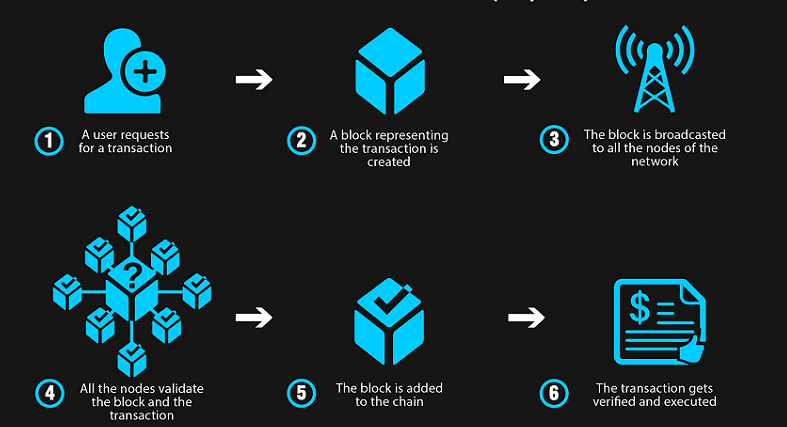
Blockchains are made of blocks of code joined together and is essentially a process based on consensus between transacting parties. The blockchain network has many nodes of such continuous blockchains. It functions as a ledger which is decentralized. Whenever a new block is introduced, the transaction gets a digital signature fingerprint which cannot be altered and consists of hashtag functions of the previous block with an output that is unique. If the output is changed and not verified the transaction becomes invalid and unverified. This means that all network nodes should receive the exact same output on executing the hash. If the change is acceptable by this test, the transaction is verified.
Blockchains provide security, immutable records, and verification as the prime features. The different blocks are held together by connecting hashtags, and each and every block holds the hash code of the preceding block got from the values generated when the new block is introduced.
Every initialized transaction has  the connecting nodes verify the following

  • Transaction history is immaterial, and the balance of the wallet address of the sender is checked.
  • Receiver address is also verified.

The request is approved if these conditions are met perfectly. A Digital authentication signature is formed by the request and unique private keys required for the transaction. This is then sent and verified across all nodes of the network for matching the key and signature by means of an output complex hashing algorithm generated with the request by a nonce. Nodes compete with each other to solve the hash thereby doubly ensuring the verification process.
Remember that the nodes are interconnected and are small configurations that are high-end and can solve the above code for the right output. They also broadcast the result to other transacting miner nodes in the network to ensure the solution is right. This ensures that all nodes are constantly watching the transactions and that the transaction is public verified.
It is important to note that a block can contain very many transactions. Only the transacting nodes that verify the transaction first is the rewarded miner thereby setting up a fool-proof verification system with healthy mining completion. Any miscalculation will result in invalidating the transaction broadcast across all connected nodes. Mining rewards are generally in the form of BTC or Ethereum on the Bitcoin blockchain network. A transaction is verified, validated and completed only when all nodes mine the information and receive their reward.
To learn all about this feature do a fintech course like the one at Imarticus which necessarily focuses on a global curriculum, hands-on practical blockchain training, and project work and which helps you build your industry and vertical relevant portfolio, learn at your convenience and get set to be career-ready as a blockchain developer.

Why Fintech Needs to Start Counting for The Unimaginable 2020?

Fintech is a young achiever in India. Just a half-decade into its foray it has completely transformed the behavior of consumers. From cash to cards and now smartphone digital payments the concept of money stands redefined. The young Turk of Fintech can hope to see much development and should gear itself for 2020. The Government has placed its bet on the Fintech industry and has gone all out to promote the revolution with large incubators, sand-boxes, and promotion of the Digital India movement. So what does 2020 hold for this nascent industry? Let us explore the main contributory factors that are sure to dominate the next decade and usher in the digital revolution.
Digital Payments:
While blockchain technology and the digital mobile app solutions for payments like the interface for unified payments UPI the QR scan Bharat, initiatives of large online payment solutions like Amazon and Google Pay and many more the Indian markets will see much user-experience improvements. As of today, and according to NPCI the Indian payments corporation digital payments on UPI recorded a growth of 20 percent and 2018 saw over six-figure Crore worth money being transacted in nearly 621 million digital or mobile transactions. Truly messaging money is as simple as it gets!
Scanning of QR codes:
India uses the slightly outdated version of QR codes that are static while countries like China have moved to dynamic codes already. Even street vendors use the QR scan options to accept even the least payments and have made a huge impact on the behavior of the customers pan India. Alipay, Wechat, Tencent, Paypal, and a host of other big players see India as an emerging market for QR code scanning applications and evolving technologies in payment solutions. With sanctions and trade-wars hanging over the global industrial scenario 2020 will be a decisive year as far as Indian markets go.
Banking for MSME/ SME:
2020 will definitely be the year when the Fintech players fill the gaps in traditional retailer banking with innovative solutions and better customer experience. With fintech based aggressive companies competing for a place in the lending sector, the impetus for MSME/SME lending and credit is set to grow and will probably overtake retail-banking. Rightly so, since they are vital drivers for an economy that needs a boost and niche to grow into. Fintech also is a great step towards inclusion financially and a step in the right direction for the growth of industries according to the survey data from FICCIIBA.
Credit and lending apps:
Over and above the lofty goals of financial inclusion and growing the economy, the Indian market is where credit has been consistently withheld and is a cumbersome process. A plethora of changes is expected with online loan facilities and a population that is largely credit-starved. The over 15 crore market, the POS credit facilities being offered by giants like Amazon, Flipkart and others, and the rapid development of credit apps for digital lending are set to dominate the development of the Fintech sector especially with the credit card circulation rate is less than 3.9 crore. This is a win-win situation for the young digital-age consumers with instant facilities to pay in installments and for the business enterprises to cash in on the burgeoning customer market for credit facilities completely doing away with the unnecessary issue of credit cards.
Fintech training:
The growth in this sector has also seen the promotion of Fintech learning in a big way. The essentials of finance, technology and practical development of learning have seen unprecedented boom-time. Are you interested in what the Fintech industry could mean to your career and how you could be a part of this growth? Try the courses at Imarticus Learning which not only gear you for a career in Fintech but also offer assured placements in this next-gen technology.
In parting, 2020 looks promising for disrupting in the Fintech segment and the emergence of young startups as the unicorns of tomorrow for all the above reasons. Beat the helm of a fintech career and experience the seamless career transitions at Imarticus. Besides, where futuristic technology is expected to spur growth, one cannot but place a bet on the reputed favorites, right? Enroll at Imarticus today and ensure you are part of Fintech’s success.

What is Blockchain Technology? Step-by-step Guide For Beginner

Data-driven industries will take the Blockchain-Route to enhance data usage, storage and issues like transparency, trust, cryptography and more. Blockchain is an alternative providing decentralization of data which otherwise was maintained by the central server. Older servers were limited both by storage capacity and use of it. The present method of using Cloud servers is both expensive and hard to scale.

Step-by-step Guide of Blockchains For Beginners.

The Blockchain:

The technology of blockchains has a digitally maintained ledger of incorruptible and difficult to renege on financial and economic transactions recorded on shared and closely monitored decentralized P to P networks.

Blockchain technology works on a series of blocks of information hash-tagged together such that each block contains a hash-tag sequence of the previous block.

The unique solution of each block or transaction is verified across all nodes in real-time to check for authenticity. Only then is the new block coupled to the chain and thus enable the irrefutable history of transactions across the decentralized network.

The blocks and chains are unalterable and immutable. Any attempt to change is immediately picked up by peer nodes and users of the system. It is a very difficult task to achieve since the blockchains are encrypted uniquely and any change in one block will be reflected in all subsequent blocks.

How Blockchain functions:

Blockchains guarantee record security since the math solution for each record is verifiable and the decentralized network is monitored by users every second. The distributed node system offers a verifiable solution across all interconnected nodes of a PC network of thousands of users.

Further, the lack of a central monitoring system means the network is easily accessible. Originating with the success of the BitCoin the blockchain technology has gained popularity since it avoids duplication, fraudulent records and maintains a strict verified chronological order that is technically immutable.

The ledgers are distributed and use cryptography to generate unique digital signatures, which contain the previous unit code and depend on trust between transacting parties to provide the key to the record. Many digital transactions, financial records, and cryptos like Ethereum, BitCoins etc mean the cash in digital form can have only one transacting owner and no record can be duplicated.

Basic Blockchain features:

  • Chronological verifiable time-logs mean that the Blockchain technology ensures the creation of duplicates of the ledger across its multiple users on a peer-peer network.
  • Immutable records which are time-stamped cannot be tampered with, erased or edited. Any changes to the record would be in conflict with copies of the users and thus it creates a secure transaction where more than half the users would have to change the record in the same manner and the same time.
  • No intermediaries are present as it uses miner nodes competing to sole an algorithmic issue. The miner with the first solution broadcasts the encrypted answer to the peer network, which is multiple user-reviewed and approved, providing a completely private transaction or a block in full view of an ever-watching peer chain of blocks network. Since the previous and next blocks carry linking information a chain is born which is cryptographically unhackable. Trust, transparency and record-keeping are superb.
  • Miners are ever watchful as they are benefitted by a fee or as in the case of Bitcoins addition to the number of coins held.

Benefits accrued:

Besides transparency and simplicity of using the technology, it also offers excellent features like

  • The database is absolute, true, decentralized and devoid of confusion. 
  • The entire database is rapidly updated in real-time with time-logs and stamps capturing system information as and when it occurs.
  • Completely secure and private transactions are facilitated through user access being restricted on the peer-peer network. 

Limitations:
The entire technology is young, promising, and evolving. Sensitive data protection like personal details of clients, claim records in insurance and such, needs a cautious approach.

Security features of blockchain technology:

Blockchains, as indicated above, make the transaction real-time and secure. It is set to eliminate any middleman or authority interfering in the transaction. Thus they provide transparency, security, decentralization and irrefutable immutable records of each transaction.

On a concluding note, blockchain technology is one of the most potential technologies today that is bound to impact most fields of our daily lives. The blockchain technology tutorial taught in the immersive course at Imarticus Learning can help you make a career in this emerging field where the demand is booming and payouts are generous and skill-based.

How do you become a bitcoin/blockchain expert?

In the US companies like the conservative IBM, groups like the R3 Consortium and newbies like Bloq and several others were responsible for transforming the Bitcoin blockchain into the revolution of Blockchain technology. The core feature of blockchains is the distributed ledger which is public and stores all transactions which are verified, recorded and make use of cryptography for encryption resulting in unbeatable trustworthy, secure and transparent transactions. The awesome features of blockchains can be used in

  • Financial transactions and sectors needing immutable records like banks, stock markets, real estate transactions and such.
  • Recording rights, trademarks, patents and preventing plagiarism in music, literary, entertainment, art and such fields.
  • Legal contracts, recording of registration, agreements, transfer certificates, etc.
  • Insurance, Healthcare, subsidy distribution, and such sectors.

Types of Developers:
As a tech-geek, you can become a Core Blockchain Developer or a Blockchain Software Developer. Core developers deal with architecture development, protocol design, decision-making, consensus design, and design development. The developers of software deal with the protocol and architecture used in creating blockchain enabled applications.
fintech certification
Tech skills required:

  • Coding skills are essential for logical interpretations and quantification.
  • Cryptography and its methods like the hash functions (KECCAK256, SHA256, etc) and a digital signature generating asynchronous cryptography.
  • The architecture of blockchains laid out in the Bitcoin whitepaper, fundamentals of distributed and centralized networks, consensus, cryptographic hash functions, and distributed ledgers in blockchain fundamentals, its architecture and working, convention theory used for decentralizing the architecture, MVC, Document-view, MVVM, fundamental communication architecture, G and bus architecture.
  • Programming languages and relational database procedural languages like OOPs, C, JavaScript, C, etc.
  • Structures of Data including data structures like Stack, Merkle trees, Patricia trees, advanced cryptography, Queues,  LinkedList, Tree, Hedera HashMaps, etc.

·Smart Contract enablers like Truffle suite installation and working on Mac, Windows, and Ubuntu.

  • Platforms and frameworks like HashGraph, Hyper Ledge, Ethereum, EOS, etc.
  • Development of Smart Contracts including functionalities of smart contracts and specific network languages like Ethereum’s Solidity, Chaincode, Viper, etc.
  • Web-Development both front and backend decentralized application development, handling APIs, requests, Dapps based interactive GU interfaces, etc.

Job scope and payouts:
Indian salaries range according to Glassdoor in the range of Rs19 to 21K in India for fresh candidates and Rs 288 to 313K for the experienced at higher levels. In the US Application Developers get an average salary of 85,534$ pa and for a Software Engineer, it is about 98,460 $ pa. According to Upwork blockchain engineering and development is the second most-evolving sector.
In parting, if you are interested in pursuing a career as a blockchain developer then do a certified course from a reliable institute like Imarticus. This ensures you get both the theoretical knowledge, technical skills to adapt the learning into solutions, and practical knowledge of trends and industry-relevant knowledge to further your career. To learn all about blockchain technology or the bitcoin blockchain one can do a fintech course. Such blockchain certification can give your career a head-start.

Why is blockchain technology revolutionary?

The rise in value from pennies to nearly 450$ did catch the imagination of nearly the whole world and suddenly industries were talking of the revolutionary Bitcoin, its blockchain technology and whether this would actually lead to disrupts or be the enabling technology of the future in all financial transactions.

In the US companies like the conservative IBM, groups like the R3 Consortium and newbies like Blog and several others were responsible for viewing and transforming the interest in Bitcoins to the revolution of Blockchain technology.

Today the world of Fintech, banking, and sectors like the real-estate, stock-markets and recording of financial transactions have more or less integrated the blockchain technology into their systems.

What is revolutionary in blockchains?

At present, there are two segments namely those using the blockchain adapted to their own systems and processes to increase efficiency, provide transparency and make financial transactions secure and immutable and the Bitcoin open network operating globally for cryptocurrencies.

Blockchains were termed revolutionary for the following scoring features.

  • Cryptocurrencies became tradable assets.
  • Code rules all transactions: The blockchain is based and governed by its coding. Once recorded it cannot be changed or tampered with. Also, the digital records are available to the public and thus ensures a safe, immutable, recorded transaction.
  • No governmental, legal or regulatory involvement as a third-party exists.
  • Trust and records between transacting parties without the involvement of institutions and banks were welcomed.
  • Data is permanently stored.
  • Blockchain verification and public record verification were used to track and verify every transaction.
  • Access is only through your private key.
  • Use of a reliable currency exchange platform prevents hackers and ensures safe transactions.
  • The receiver address is very important: In a digital and decentralized system once you transfer to a wrong party there can be no charge-backs or support interventions.
  • The possibilities of using tokens to make purchases, trade, sell or buy anything in virtual currency.
  • The accompanying digital wallet has enhanced security and can be password protected.Whether the technology will actually be adapted and change the banking industry, whether the blockchain is an enabler or will cause a disrupt and whether Fintech will really take off is a matter of speculation.

To learn all about blockchain technology or avail blockchain training one can do a fintech course. Such courses have several advantages and can give you a headstart if you are interested in pursuing a career as a blockchain developer. It is recommended you do a certified course from a reliable institute like Imarticus.

This ensures you get both the theoretical knowledge, technical skills to adapt the learning into solutions, and the practical knowledge of trends and industry-relevant knowledge to further your career. While certification does help in this evolving field, it is best to remember that opportunities will grow exponentially and will depend entirely on your skills.

What are other uses of a blockchain apart from cryptocurrencies?


Blockchain has been the primary technology behind the rising popularity of cryptocurrencies, especially in 2017. It is the concept of having a transaction system without the involvement of any financial intermediaries, which has been revolutionary in its time. It completely obliterated the need for banks and transaction fees, and time required for long distance transactions.

Blockchain technology is not just meant for the cryptocurrency. Here are some of the potential ways in which it can be used in the modern world.

Processing payments and transferring of money: Banking transactions can become much simpler when blockchain is involved. Transfer of funds from one party to another can be facilitated 24 x 7. Banks are not involved in the process, and therefore, the transaction can be completed within seconds.

Supply chain management: There is no need for records or physical bookkeeping when it comes to maintaining supply chains. Blockchain would help business owners figure out the issues in the supply chain much easily, and then locate the issues in real time. The technology would help perform quality control checks in the supply process from the place of origin to the retailer.

Rewards programmes in retail transactions: Loyalty rewards are an effective process to keep customers and maintain revenue for many retail businesses. Including blockchain in this system would completely eliminate the need for paper and card bases loyalty reward points. The token-based system would reward customers in a fast and effective way. Fraud and other issues would also not arise which is common in the current systems. Customers would find this system more reliable and would come back to shop from the same retail chain.

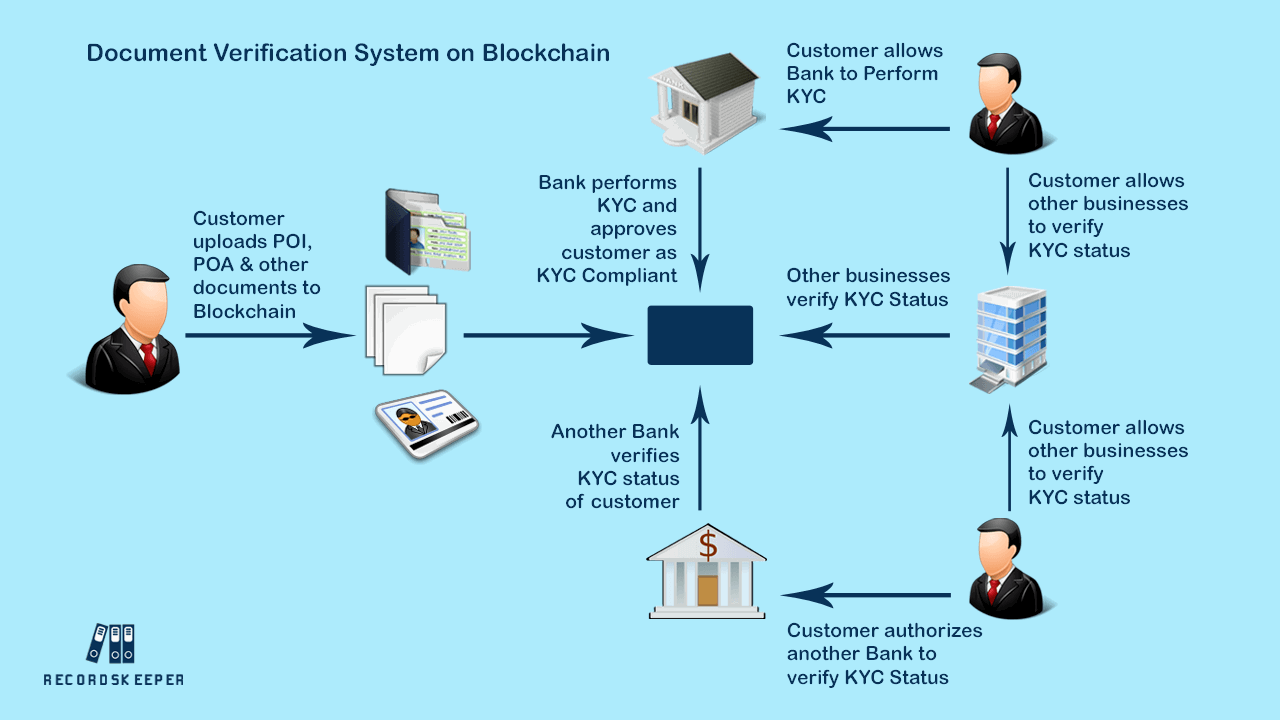
Digital IDs: Digital identification has become an increasingly important concept. It eliminates the need to carry your identification document around. It will also help people in remote areas get access to resources or banking services. Microsoft is currently working on digital IDs through its Authenticator app. It is currently used by many people and gives them control of their digital identities. Blockchain technology is instrumental to facilitate the process. The company is also working on decentralized digital IDs as well.

Sharing of data:  Blockchain can be used to share or sell unused data. The cryptocurrency IOTA has recently launched a beta version of the Data Marketplace. Involving blockchain can help unused enterprise data be used in a number of industries. Currently, IOTA has more than 35 brand-name products currently, with Microsoft being one of them.

Protection of copyrights and loyalties: Copyrights and loyalties for music and other shareable creations have become unclear, with digital and other platforms are involved. Involving blockchain in the process would help secure the transactions which take place for such products. Loyalties and copyrights would also be maintained properly as a  part of the process. Blockchain training offers a real-time distribution of data, which can be especially helpful when it comes to profit-sharing.

Online voting: Blockchain offers transparency in the system which can be very useful when it comes to voting. It can help you put votes digitally, and all regulators can clearly keep a track on the votes, making your vote really matter.

What are The Best Books To Understand Cryptocurrency and Blockchain?

Blockchain and cryptocurrency had taken the world by storm in 2017. The idea of digital currency has revolutionized the concept of sale and purchase of goods on the internet. Recently, cryptocurrency has become unpopular due to the lack of institutional controls behind it. There is no denying that it is the way to the future, though. This is the best time to read up on the concepts and brush up your knowledge. With the potential it holds in the future, being aware of the basics will put you ahead of many others.
There are many books out there which will support your Blockchain training. Here is a selection of books which are best suited to develop an understanding of the blockchain technology and bitcoins.
Digital Gold: Focusing on the first cryptocurrency which was developed. The book goes into the history of the evolution of Bitcoins. It walks you through the ideation and the creation of the blockchain revolution. The book, written by Nathaniel Popper, is a New York Times bestseller. It will definitely help you appreciate the efforts that went into making the technology, and clearly understand how the technology started, and what it is poised to be.
Blockchain Revolution: This is a great book to understand the fundamentals of blockchain technology. If there was a technical guidebook on the technology, this is it. The book is written by the famous business and management strategist, Don Tapscott, along with his son Alex. There are technical illustrations and examples clearly explaining the basics. It also shows how technology has changed the future of how we make transactions. You will also find real-time examples of various projects which are under development, along with the results.
The Bitcoin Standard: If you are interested in the economics of Bitcoin, this is the perfect book for you. The book explores the history of money and how transactions have been done. The author then discusses the challenges that Bitcoin poses to the current financial system. It also discusses the impact Bitcoin can have on the future as well.
Blockchain Basics: This book goes into the technical details of how blockchain works. However, it is extremely easy to understand from a non-technical point of view as well. There are illustrations, analogies, pictures, which make the book easily understandable. If you are looking for a Fintech Courses focusing on blockchain and cryptocurrency, then this is a great book.
The Truth Machine: This speaks about the larger concept of what blockchain stands for. From privacy-related issues to the control of data, a number of complex topics are explained from the perspective of blockchain and cryptocurrency.
Cryptoassets: Investors in cryptocurrencies will find this book extremely useful. The book clears the fundamentals of cryptocurrencies and is extremely useful if you are interested in investing in the future. Concepts, such as dollar-cost averaging are also explained with ease in this book.
Mastering Bitcoin: This book focuses on the software aspect of the book. Programmers and developers will find this book extremely useful because it goes into the technical details of the programming that goes into blockchain. Newer developments in the field, such as the Lightning Network, are also given in great detail in the book.

The Hidden Agenda of Fintech

Fintech is the digital revolution which has redefined the way financial business took place in the past. India has adopted fintech at a very rapid pace. Many start-ups have emerged which are embracing fintech and many banks have also adopted fintech. The purpose of these new fintech start-ups is to utilize technology such as artificial intelligence in payments applications.
So what is fintech in the laymen terminology? Fintech is basically driven from the term financial technology which means that using technology is changing the financial services industry. This has been adopted globally. While fintech India is still quite a new concept in the country, but it is progressing.
Financial technology has its own agenda, in the way that it is customer driven. Fintech is a customer-driven approach. It is a way to spread awareness amongst its customers about the digital payments possibilities. From the financial industry aspect, another motive of fintech set-up is to make lending and borrowing available for all types of people who need capital. Since the current banking and finance industry uses credit history as a method of lending decisions, many individual borrowers along with small and medium enterprises end up suffering. This is because although their credit history might be tainted but possess good cash flow in present and future outlook could be promising with an intent to pay back the loan, banks and financial institutions still reject such applications.
How the fintech course can help in this situation? The answer is that since it makes use of artificial intelligence and machine learning it can help to create a lending score through a complete analysis using advanced data-driven and behavioral management models. Blockchain technology is the most amazing innovation of fintech. It is a digital ledger which stores all such data of customer which can be used whenever needed. Not only this, but it can also create a digital profile of customers who are not using banks for financial needs.
Another important reason why fintech is the next big thing is because of the online payments transactions which have become the norm. It wants to provide payments solutions to all individuals belonging to any sector in the economy. Fintech India aims to transform the country into digital India.
However, the biggest challenge is to convince and familiarize the small and medium enterprises to adopt fintech payments solutions as it will help them in the long-run to make and accept secure payments online. The biggest apprehension of the small and medium enterprises sector is the cost of adopting fintech. But what they need to understand is that this will not only help them to scale up their existing businesses but also increase the profitability of the business.
Through the use of smartphones, fintech is changing the customers of businesses as well. It makes it easier for customers to access information and data based on their previous history. Fintech can also keep a track of physical location as well as text messages. This way they can tailor the customer needs and provide a better way to address the financial needs efficiently.
Although all this sound promising the actual challenge which fintech is facing is the lack of awareness amongst the financial sector. There is an utmost need to address this issue and make fintech adoption easier and smooth. Since many people do not want to learn about the advanced banking products, while many do not want any disturbance in the current routine thus resisting the change. This can be resolved through aggressive marketing which can be done by making the marketers understand this concept completely.
Fintech is not a bad revolution which cannot be adopted rather it should be considered a positive sign for the economy. It will really change the financial industry for the better. Apart from this, it is also beneficial for customers to become financially sound.

How Your Job Will Be Stable If You Start A Career in Blockchain?

The blockchain technology has moved beyond Bitcoin and cryptocurrency and has a wide array of theoretical applications. Many start-ups, legacy company, tech firms and government agencies are hiring blockchain developers towards the development of their projects such as ICOs, digital wallets, incorporation of blockchain technologies smart contracts into accounting, HR, finance and IT functions of large-sized enterprises etc., as a result of this a career in blockchain can be a highly lucrative option.
Career in Blockchain
Blockchain has become the equivalent of ‘the cloud’ of the mid-2000s and is predicted to become the next big thing. The blockchain is one of the fastest growing skills in the industry, and the current demand is exceeding the supply of blockchain engineers and developers available within the marketplace.
Some of the most in-demand blockchain jobs in the marketplace are:

  • Blockchain developer

There is a high demand for blockchain developers in the market as the industry is still in its infancy, has enormous potential, everyone is gearing up to become the market leader in this domain. The scope and full potential of blockchain developer are yet to be discovered entirely with the technology having immense potential.
The position of a blockchain developer can be one of the safest position within the industry due to the versatility of the position, a blockchain developer is in a position of offer multiple roles and can be transferred almost anywhere within the horizontal of the company.

  • Blockchain Project Manager

The roles and responsibilities of a blockchain project manager involve connecting the wide range of dots within the organisation’s business cases within the development of blockchain-based technology. They have to coordinate with multiple blockchain experts within and outside of the organisation involved in the development of blockchain related projects of the company.
These professionals are required to have knowledge and experience of working within the industry, technical know-how and should be able to communicate project reports and status to various stakeholders who do not have the technical understanding of blockchain. These positions are often filled on a project basis and hence have some level of instability and lack of job security.

  • Blockchain Quality Engineer

These are the equivalent of quality control and quality assurance engineers of blockchain and can be considered as one of the most important careers in the blockchain. They are required to test and ensure the quality of all areas of the blockchain-based product or project. They are further required to test, automate and test a wide array of frameworks within the blockchain. Blockchain quality engineers also guide the testing of the strategy of development of blockchain and maintaining quality test standards.

  • Blockchain legal consultant and attorney

With the advancement and introduction of newer technologies, a wide array of legal questions, implications can arise. Companies and businesses need to hire legal experts towards addressing these questions and concerns and safeguarding them from any foreseeable legal complications. Legal experts help businesses and companies to understand and prepare them to face and protect them from various scenarios which have legal implications.
Probably one of the most stable positions in any industry, blockchain legal consultants and attorneys is deemed to be one of the most lucrative careers for legal and blockchain professionals.
The Verdict
The decline of prices of Bitcoin and other cryptocurrencies is no indication for the future of the Blockchain technology. Blockchain technology might be the underlying technology for Bitcoin, but it has a wide array of implications and development of these technologies is still in its infancy.
As and when the blockchain technology will evolve, it will open more opportunities can avenues for a career in the blockchain. While it is impossible to predict how the blockchain technology will shape up in the future, a career in blockchain is expected to be quite stable and lucrative for blockchain engineers and professionals.

What Are The Blockchain Technology Courses To Meet Demand in The Workforce?

Blockchain technology is simply decentralization of data that is achieved by collecting the data on multiple systems. Due to the lack of centralized data, hackers find it very hard to penetrate the security walls of the application that are safeguarded by the blockchain advancements. Due to its robust and reliable nature, many industries including health, real estate, finance, and other industries are adapting to it. As a result, there is a huge career scope in this domain.

Why Blockchain Technology is The Catch Today

Financial companies and top banks in the world are leveraging blockchain technology to implement a higher level of cybersecurity in their transactions. This technology can not only be shared by different users, but every bit of data needs to be authenticated completely before entering the network.
Logistic companies’use blockchain technology to track their containers across the world and it is also being implemented in the food and agro-based industries on a large scale.
Even HR recruiters are using this technology to verify the authenticity of the documents and to check their backgrounds. With a myriad of software services, blockchain is being used in different sectors such as medical, telecom and much more.

Popular Blockchain Technology Courses

The growth of Fintech in India has been substantial over the last decade, and therefore, today many financial institutions provide blockchain course training. Some of them also include blockchain certification in their curriculum. Students who have a background in networking or languages like Java and Python can learn about blockchain to meet the rising demand for blockchain developers, engineers, and designers in the market. These blockchain course are online-courses and popular in the career markets of today.
1. The Basic training: This fundamentals training in blockchains takes you through the evolution of blockchains and how they work. You may even find free courses that give you tutorials on blockchains through the online medium.
2. Certification courses: A Certified blockchain course is an option for aspirants making a career in fintech and wishing to learn applications and skills in blockchain technology aimed at developing solutions for real-time and industry-related problems. A computer science backing and graduation can help careers of investment bankers, DevOps people, software developers, investment bankers etc. make a career in the Fintech segment.
3. Certifications: Students and professionals who are interested in a blockchain course and certification can take up Blockchain council certification at Imarticus Learning, which is an online certification course for blockchain experts.
Fintech is a term coined from morphing words of Finance and Technology. The financial transactions sector is heavily impacted with blockchain technology making the transactions secure, rapid, immutable with excellent record keeping in distributed ledgers and cryptographically encoded blocks interlinked to each other in hash-tag codes. Almost all technologies like AI, VR, AR, IoT use the advantageous blessings of blockchain advantages to spur their growth and productivity. This, in turn, fuels the demand-supply gap for trained professionals and drives the payouts to unbelievable levels for the experts and well-trained professionals.

How Blockchain Technology Helps the Careers of Professionals:

A basic understanding of blockchain will prove insufficient for the professionals as they also have to apply their knowledge in real-world scenarios and issues. However, due to a serious dearth of blockchain professionals, companies are willing to hire people who have a technical or software background. Moreover, IT companies are also looking to hire freelancers on the basis of hourly pay to satiate the demand in the workforce.
Where opportunities exist:
The Fintech sector and industry need professionals and personnel in
• Emerging Technologies like cloud services, blockchains etc.
• Payments and digital financial transactions.
• Working in analytics of Big Data.
• Cryptos and virtual wealth management.
• Solutions and service providers.
Suitable job roles in high-demand:
• Managers of projects and product owners.
• Experts in data management.
• Business Development and Sales.
• Recruitment and HR sector.
• Experts in financial markets, debt capital markets, equity funding etc.
You can find openings in diverse verticals ranging from internship positions to Blockchain developers, Project Managers, Quality engineers, Web designers, Blockchain attorneys, engineers and more. This is precisely why a blockchain course can feed off the growing market demands for blockchain experts and provide a futuristic well-paying growth-oriented career.

Advantages of Doing a Fintech Certification

Certification in Fintech is a measure of your technical skills and aptitude for a career in the fintech industry which is evolving and has high personnel demands. Doing a good blockchain course like the Imarticus’ Fintech Prodegree will equip you with the fundamentals, concepts, theoretical and practical skills with coveted certifications that enhance your resume, job prospects, and career.
The advantage of mentoring by industry aces gives you the edge of experience learnt through techniques, tricks, best practices, skills, and lots of practice on cutting-edge trending applications and technologies. You will also need technical skills taught in these courses like skills in IoT, DevOps, Python, Big Data analytics, ML, and Hadoop.
Non-transferable skills are extremely important and properly aligned with your career and enterprise’s needs. You must have the following traits.
1. Excellent communication and interpersonal skills.
2. Creative and innovative problem-solving skills.
3. Team skills in contribution, and collaboration.
4. The dedication and ability for long work-hours under pressure, ambiguity, and lack of SOPs in a startup environment.
5. Integrity and financial discipline.
6. A team-player and quick learner of techniques and best practices.
Payouts: Definite standards in payouts are not present as of now. According to reports on Glassdoor, the payments are very appreciative and second to very few. However, with this evolving and rapidly expanding sector the demand for personnel is much higher than the supply positions thereby driving the demand for better salaries and promoting quick growth in Fintech careers.
Conclusion:
Careers are always the result of research and career choices. The present-day professionals are lucky to have sustained demand in the Fintech industries which encompass a gamut of verticals from insurance, digitized payments, real-estate, technological services, cloud storage and many more where there is undying job demand for analytics, software, and expertise in ML. Banks, financial stock markets and services supporting the Fintech industry are bound to see exponential growth in the next decade. Be prepared by doing a blockchain course with the Imarticus Academy.