How Much Does it Cost to Become Scrum Master

If you intend to make a career as a Scrum-Master then you need scrum master certification. It is normal that you will have many questions about the CSM course and that is the right due-diligence you need to take. So, let us explore the cost and benefits of the certified scrum master course.

Certified Scrum Master Workshop

Certified Scrum Master workshop at Imarticus Learning gets you job-ready for the role of SM. Being an entry-level program you can discover answers to the following questions.
• What is Scrum? Is it different from Agile and traditional frameworks?
• What are Scrum core values?
• When can Scrum be used? What are the determining factors and project complexity?.
• What are the different responsibilities and roles in a scrum-team?
• What are Sprint Review, Daily stand-up, Release Planning and Sprint Retrospective in Scrum?
• What are scrum artefacts like Sprint Backlog, Burndown Charts, Product Backlog etc?
• How will the scrum master certification help me?

Why is CSM appropriate for me?

Anyone can enrol for the CSM workshop if their core interest lies in frameworks increasing efficiency in project management. Some knowledge of business practices, project management or experience working in an agile enterprise helps the understanding process. Scrum and Agile are buzz words already adopted in most Indian enterprises like Wipro, TCS, IBM, Sapient, Infosys, HCL and more. You can accelerate your career progression with the scrum master certification if you are an IT professional.
You will have to attend and complete the 2-day workshop which is mandatory for certification and then attempt the online certification exam. The total cost of the scrum certificate is USD 100 which is normally included in the workshop cost paid by the trainee. The certifying Scrum Alliance has specifically made it classroom training in scrum mandatory. Hence one has to complete the workshop to be eligible to take the certifying exam and obtain certification through the accredited training partners Imarticus Learning.
Many attributes like soft-skills in communicating with the team and adopting scrum methodology need face-to-face interactions and cannot be conveyed in the virtual or other modes. However, along with the classroom-oriented workshop, you get the allied online programs of
• Creating value with Scrum Framework
• Agile mindset and principles on how Agile mindset is different from the Waterfall mindset.
• Kanban for teams in software development to help Scrumban/Kanban implementation and improve team productivity.
Certification Process
The exam pattern for the scrum master certification consists of 35 multi-choice objective-type questions based on applications of the scrum guide principles. You get one hour to complete the exam which has no negative marking for wrong answers. You are permitted two free attempts to clear the Scrum Alliance exam. If that is still not sufficient you can pay afresh to take the final third attempt. The pass-percentage is 65 per cent meaning you need to get at least 24 correct answers out of the total 35 questions. What you definitely will not need is tuitions since the course prepares you for the certifying exams in the CSM workshop.
Will I Get a Job After This CSM Course
The CSM workshop has no assured job assistance attached to it. However, the Imarticus course ensures you are job-ready for the scrum master role. Additionally, the program does include accelerators to finding a job like the
• Interview Guide – Revision of interview questions, mock interviews etc free of cost.
• Quizzes – Scrum quizzes can help in the certifying exams and allows you to revise concepts and interview questions on Scrum.
• Career Prepping- You can have face-to-face certified trainer interaction to clear career doubts.
• Networking opportunities – You can network more effectively by joining the Imarticus community of bloggers. Discuss Agile portals or post videos on the YouTube Imarticus channel, be a scrum speaker at events in your hometown, take webinars online for Imarticus clients and more. These activities improve your visibility and personal brand so jobs and recruiters can chase you with job offers.
Concluding Notes:
Imarticus offers a variety of Agile courses and uses only certified Scrum and Agile trainers. Other than the support offered at and for the CSM course you can expect to have a lifelong relationship with them. Do your scrum master certification with Imarticus today.

How Much Money Does a Front End Developer Make

A front-end web developer is responsible for the applications involving the visual and interactive element’s implementation used at the front-end or where users engage through their web browser. They are supported at the server end or back-end by the developers at that end, which integrates server-side application logic with the front-end and the various layers between them. They learn their technical skills in a front end developer course. The full-stack of technologies hence contain
• User-presentations and applications at Front end layer.
• Logic at the Backend layer
• Multi-tasking at the sub-layers of data.

Front-End Developer Responsibilities

Briefly, the responsibilities among others at the front-end include
• Ensuring the UX/UI design is technically feasible.
• Ensuring user-input is verified before sending it to the back-end.
• Developing the user-facing features anew.
• Optimizing the front-end of the applications for scalability and speed.
• Building libraries and reusable code for future use.
• Collaborating with developers, stakeholders and other team members.

Qualifications and Technical Skills:

The front-end of the application is user-facing and very important to present the applications to the clients. They include in brief
• Proficiency in web markup, and knowledge of CSS3, HTML5 etc.
• Adept at pre-processing server-side CSS platforms like SASS and LESS.
• Proficiency in frameworks running on JavaScript, client-side scripting and jQuery.
• Complete understanding of frameworks, advanced JavaScript libraries, adept at AngularJS, DurandalJS, BackboneJS, KnockoutJS, ReactJS etc.
• Adept at asynchronous request handling, AJAX and partial page updates.
• Knowledge of the fundamentals of authoring tools, performing small adjustments on images, cropping, resizing etc. Familiarity in tools like Photoshop, Gimp etc is an advantage.
• Deliver UX/UI finished resources to the back-end developers for integration into the app after tweaking the same.
• Proficiency in ways to work around cross-browser issues and incompatibility.
• Adept with tools of code versioning like SVN, Git and Mercurial.
• Excellent understanding of SEO tools, principles and such for optimizing applications with data analytics.
• Fair knowledge of working with legacy systems.
• Should have certifications at a front end developer course to validate their skills.
Front-end developers are tech-savvy with a foundation in CSS3 and HTML. They are adept at JavaScript and love working on creative projects that challenge them. They have the benefits of being paid high salaries and are constantly in high demand. With their job security depending solely on their skills, there is much scope for career progression into full-stack web development and plenty of mobility options. Learning this gamut of skills should be through a front end developer course at a reputed training institute like Imarticus Learning who offer skill certification widely accepted by the industry.
Demand Skills:
The front-end developer never has to struggle to find well-paying jobs. The competition for plum roles is fierce and mobile for those in this career. It definitely is a seller-market and these developers can afford to choose and pick jobs as they please.
Skill proficiency in CSS3, HTML5, and the frameworks running on JavaScript like BackboneJS and AngularJS are in high demand and the data of the Bureau of Labor Statistics reaffirms a growth rate of 27% between 2012-24.
More than coding skills employers are looking for problem-solving skills in the UX design and visualization challenges. Cross-functionality and fullstack skills are always encouraged.
What Front-End Developers Make:
The payouts in the industry for front-end developers are skill based. There is a huge demand for such skills in the market today. According to Glassdoor, the average national salary for front-end developers was over USD 76,000 per month. In high demand locations and markets, this figure rises to USD 100,000 per month. Becoming a front-end developer is a great career choice because of the very competitive and high salaries at the entry level and rapid career progression that is skill-based. According to Jen Pugh, a tech recruiter from New York City salaries at the mid-level of this career routinely starts in multiples of the USD 100,000 mark.
Conclusion:
The catering to such markets assures placements that may have varying salaries based on the location and candidate skills. Payscale states that geographic location is the biggest challenge affecting the salaries of the front-end web developers.
All job-markets not being equal the seven leading locations are Dallas, San Francisco, New York, Washington, Los Angeles, D.C., Chicago and Atlanta. The lowest are Denver, St Louis, Minneapolis and Charlotte.
Do your front end developer course at Imaticus and be an elite-skills holder. Enrol today!

How Do I Learn Full Stack Web Development Online

How Do I Learn Full-Stack Web Development Online

If you would like to go from knowing nothing to becoming a full-stack web developer career-starter, here is a step-by-step tutorial that could take about 6 months and cost you around 30-50 USD.

The boot camps for full stack web development help you revise online coding beginner and advanced could cost 15-20 USD apiece and should be undertaken after you have the fundamentals of web development in place. First, you can practice your learning and undertake a reinforcement session with documentation, reading recommended articles and free tutorials. The next step is to build projects using your skills and open-source them on platforms like GitHub. Once you are at this stage, create your resume, undertake internships, interview preparations, salary contract negotiations and then land a job as Junior Developer.

Let’s start the process.

  1. The bootcamp for full stack web development: Build a solid base in the fundamentals of web development concepts and principles by doing the easiest and best online course. Try the ‘The Web Developer Bootcamp – Udemy’. It covers the basics of CSS-V3, HTML-5, Bootstrap, JavaScript, SemanticUI, jQuery, DOM manipulation and Unix Commands. In addition, you will discover advanced suites from this stage like NodeJS, ExpressJS, NPM, REST, Database Associations, MongoDB, PassportJS, Authorisation and Authentication.
  2. The Bootcamp for advanced web development: The advanced full stack web development camp by Udemy takes your coding to the next platform with over 10 plus projects and solutions to many code challenges with hands-on practice. The course is about the frameworks, tools, technologies and best practices to build web-based responsive applications.
  3. Reinforce your Skills: Learning reinforcement means reading articles, tutorials and documentation.
  4. Get your profile on Git or SourceTree.
  5. Deploy with Heroku.
  6. Do a few additional courses on advanced JavaScript and building projects in Nodsjs and ReactJS.
  7. Attempt game coding and take up hackathons and code challenges.
  8. Build from concept to product and show off your complete range of skills.

Quick adaptations by ever-evolving technologies cater to organisational requirements. However, they need full stack capability to juggle between practical skills, multi-tasking capacities, and domain knowledge for the full-stack developer to suggest practical solutions.

The full-stack developer handles the layers of

  • Presentation at Front end layer
  • Logic at the Backend layer
  • Multi-tasking at the sub-layers of data

Who is a full-stack developer?

The technologies vary for ends, servers, layers, etc., and the stack is a collection of such technological modules. Thus, a full-stack developer combines the various sets of technologies to work together in sync with each other while producing accurate desired outcomes. The full-stack developer multi-tasks and copes with systems engineering, solutions for databases, servers etc. which are client-facing. The various stack depending on their applications is called native stack, web stack or mobile stack, depending on client/ project requirements.

The full-stack developer’s essential skills

You will need flexibility and adeptness at and between all layers. The full-stack course skills include

  • Coding skills use CSS3, HTML5 and JavaScript for logic, interpretation and quantification.
  • Concepts of architecture like distributed and centralised networks, distributed ledgers convention theory, cryptography, consensus, hash functions, MVC, MVVM, document-view, G, communication and bus architecture are essentials.
  • Frameworks and Platforms likeHashGraph, EOS, Hyper Ledger, Ethereum, etc.
  • Front-end languages, database relational procedural languages like JavaScript, Python, C, OOPs, C, R etc.
  • Data Structures like Stack, Trees, Hedera HashMaps, Queues, LinkedList etc. Add on database manipulation techniques.
  • Backend languages like Nodejs and frameworks like Flask, Django and more.
  • Protocols like HTTP, REST, dash and such.
  • Techniques like cloud data storage.
  • Web development at both ends and centralised web development, Dapps-based interactive GUIs are handling APIs, Requests, and such.

Job scope and payouts:

According to reports from Glassdoor, the median salary range for fresh full-stack developers is 19 to 21K Rs in India and 288 to 313K Rs with experience. The US average salary is 85,534 USD pa; for a Software Engineer, Upwork reports it at 98,460 pa.

Reports from the Stack Overflow-2016 study suggest high demand for full-stack developers, who are highly paid.

Enrol in a full-stack development certification course right away

As you are aware, the scarcity of qualified specialists makes this industry extremely competitive and presents many prospects for those who are interested. Additionally, this makes it possible for people to enrol in full-stack development classes. But a certified course is always preferable if you want to make a career in it. A full-stack development-certified course offers the knowledge and skills required to work in any organisation.

Conclusion:

The pace of changes in skills and technology required makes them a cheaper option than recruiting various developers at different ends. As a result, they are the jack-of-all-trades, a one-stop solution for the web-based development of software applications.

The training factor for full-stack developer training is essential and can be availed through a reputed institute like Imarticus Learning. Besides being the best-of-class online course for learning, they offer soft-skill training, assured placements, and skill-oriented practical syllabi included as key takeaways.

The payouts are high, and a small investment in learning can help you earn it. Act today!

How Do I Start Learning Java From Scratch

Quick adaptations by ever-evolving technologies cater to organizational requirements and need full-stack capability to juggle between practical skills, multi-tasking capacities, and domain knowledge for the full-stack developer to suggest practical solutions.
Java is a programming language not difficult to learn and popular as an application layer. To learn java from scratch can be easy if you have some programming knowledge though you do not require experience to learn Java coding.

Full Stack Developer Handles the Layers of

•Presentation and applications at Front end layer.
• Logic at the Backend layer
• Multi-tasking at the sub-layers of data.
Learning Java starts with the following few steps.
Step 1: Start and ignore Java critics:
If you’ve picked Java as your choice of programming language, it is based on the kind of applications you plan to work on. Java has the largest community and has of recent become the most popular programming language. So, start to learn java and ignore the critics.
Step 2: Install Eclipse IDE and Java:
The learning curve of Java SDK may be painstakingly slow for beginners. But when combined with IDE an integrated development environment is created which helps you learn effectively and quickly. Eclipse scores as the best IDE for Java and is absolutely free to use or download.
How to install Java SDK
– Click on the Java Download Page
– Chose the Download “JDK” option.
How to install Eclipse
– Click on the Eclipse Download Page
– Chose the Download option for “Eclipse IDE for Java EE Developers”.
– Download to a folder and unzip it.
Step 3: Learn Java basics:
Start learning the basic Java methodology and concepts. To learn java basics you can also use a good e-book or the free tutorials available online, on YouTube etc. Once you are familiar with the basics you can move on to the more advanced topics.
Some key topics you must concentrate on are
• Why is Java an independent platform and how it runs on operating systems like Windows, Mac and Unix.
• The Object-Oriented-Programming-OOP-Concepts including abstraction, polymorphism, inheritance, encapsulation, and containment.
• Learn about the JVM-Java Virtual Machine and it’s working.
• Gain proficiency in data types and some of the java.lang classes like Math, String, https://java.io stream concepts, System and such.
• Spend time understanding the framework of the Java Collection.
• Try a few hackathons like Kaggle and coding competitions to help test and evaluate your progress in Java programming skills.
Step 4: Read online e-books from Java experts:
Start with reading e-books penned by expert Java professionals and programmers. Try Thinking in Java and such books.
Step 5: Create Applications:
To learn java one must practice in Java. Learning the theory does not help. Try simple coding exercises in which your success will create motivation. Some simple logic exercises are
• Create a Fibonacci series.
• Compute the factorial of any number.
• Find prime numbers from 1 to 1000.
•Print a number in words (Ex:126 = One Hundred Twenty Six).
Also, try output and input tasks like
• Read a file and display its contents on the screen.
• List directory files.
• Create files by inputting content.
• Read the input from user on screen.
Attempt manipulation of String exercises like
• Find a string in large text.
• Replace string parts.
• Parse numbers from strings.

Who is a Full-stack Developer?

The technologies vary for ends, servers, layers, etc and the stack is a collection of such technological modules. Thus a full-stack developer combines the various sets of technologies to work together in sync with each other while producing accurate desired outcomes. The full-stack developer multi-tasks and copes with systems engineering, solutions for databases, servers etc which are client-facing. The various stacks depending on their applications are called native stack, web stack or mobile stack depending on client/ project requirements.
Job scope and payouts:
According to reports from Glassdoor the median range of salary for fresh full-stack developers is 19 to 21K Rs in India and 288 to 313K Rs with experience. The US average salary is 85,534 USD pa and for a Software Engineer. Upwork reports it at 98,460 USD pa. Reports from Stack Overflow-2016 study suggests a high demand for fullstack developers.
Conclusion:
The very pace of changes in skills and technology required of a fullstack developer makes such developers a cheaper option than recruiting developers at different ends. These programmers and developers with Java proficiency become a jack-of-all-trades and a one-stop solution in web-based development of software applications.
To learn java enrol at a reputed institute like Imarticus Learning is important. Besides being the best-of-class online course to they offer soft-skill training, assured placements, and skill-oriented practical syllabi as key takeaways. The payouts are high and the small investment in learning Java can help you earn well. Act today!

How Do I Get Started With Angular JS

AngularJS used for dynamic web applications is a structural framework offering enterprise solutions. This hybrid JavaScript/ HTML framework simplifies building web apps against REST’s web services. It also allows the extension of HTML’s syntax while expressing the components in your application and executing the angular js tutorial.

Why AngularJS is Popular

AngularJS is the latest trending technology because of its features that include
Security: Enterprises are focused on data security, distributors and sales teams and easy access to their channels. Angular offers complete enterprise security solutions for businesses and processes.
Declarative User Interface: AngularJS uses HTML to define the UI of the app. The Angular UI is intuitive, declarative, and less convoluted. You need not worry about what loads first or program flows.
Integration: Third-party features are easily integrated with AngularJS which has inbuilt integration in frameworks like Wijmo, Ionic, Telerik’s Kendo UI, Famo.us, and others.
Data Binding: The two-way binding in AngularJS is just another advertised feature.
Needs less Coding: This is great for developers!
Easy Testing: JavaScript codes have to follow a series of tests. Remember that JavaScript is not compiled but dynamic and interpreted.
The easy tutorial
Here is an easy angularjs tutorial. The steps are simple and intended to help you get started with AngularJS.
Step1: Study the conceptual overview. Get a clear understanding of the AngularJS vocabulary and the AngularJS components.
Step-2: Complete the AngularJS Tutorial. Use a node.js web server and take the tests on building an application. This should help you learn the features in AngularJS while setting up the development environment.
Step-3: Use the Github resource to clone/download the Seed App template for projects.
This helps you with the directory layout, scripts to begin building your application and the test harness.
Step-4: Further tasks.
A. Watch Videos on
• Introduction to AngularJS
• Creating Directives
• Communicating with Servers
B. Use the YouTube channel for more AngularJS tutorials and video presentations.
C. Subscribe to
• Subscribe to the community mailing list where you can ask if you have doubts and questions.
• Follow on Twitter.
• Add AngularJS to your circles on Google .
D. Read and reread.
Read the AngularJS Developer Guide covering basics and concepts. Also, read the API Reference for Angular’s usage and syntax.
AngularJS runs on HTML and uses the JavaScript framework enhancing performance in HTML. To start the AngularJS operations you must have an HTML page with three things.
1) Loading angular.js: You will need to use the local disk or a CDN like Cloudflare CDNjs to load the angular.js file. You can also download the angular.min.js file and put it on the server. This version 1.4.2 of AngularJS is currently in use and releases in the 1.x series expected. You can use the latest version.
2) Add ng-app: Next move to adding ng-app to one of the elements of HTML on the page. This element and everything in it becomes a part of the AngularJS code and can be added to the HTML element, division or body.
3) Add an AngularJS expression: There are various elements in AngularJS which means an expression code is snipped and wrapped in {{ }}. It contains JavaScript expressions in the form of a limited set.
The popularity of AngularJS has made it a popular language to learn and work in for developers. Keeping in mind that the developers are highly paid and never have to search for jobs Angular.js is definitely the way to go in enterprise solutions. Angular brings awesome benefits to developers in web application development and its popularity shows it is here to stay. One must change with technology when technology changes rapidly as it does in current times. Do a course with an angularjs tutorial at the reputed Imarticus Learning where technical skills and soft-skills are honed to make you career ready from day one.
Conclusion:
Angular is a very dynamic, popular and has a great track record of being adapted by the enterprises. To build complete enterprise-solutions one must go beyond the feature- collection. You can transform businesses by leveraging AngularJS’ advantages. The angularjs tutorial is very helpful to start learning and install Angular.
Start your course at Imarticus Learning today!

Amazing Facts About Full Stack Developer You Don’t Know

Amazing Facts About Full Stack Developer You Don’t Know

Quick adaptations by ever-evolving technologies cater to organizational requirements and need full-stack capability to juggle between practical skills, multi-tasking capacities, and domain knowledge for the Full stack developer to suggest practical solutions.
The full-stack developer handles the layers of
•Presentation at Front end layer
•Logic at the Backend layer
• Multi-tasking at the sub-layers of data
The technologies vary for ends, servers, layers, etc and the stack is a collection of such technological modules. Thus a full-stack developer combines the various sets of technologies to work together in sync with each other while producing accurate desired outcomes. The full-stack developer multi-tasks and copes with systems engineering, solutions for databases, servers etc which are client-facing. The various stack depending on their applications is called native stack, web stack or mobile stack depending on client/ project requirements. For those interested in becoming a full-stack developer here are ten amazing facts you probably don’t know about.

Fact-1: In 2008 on June 3rd the first full-stack development definition emerged.
The MD-Burns & McDonnell Terminals group Randy Schmidt, is credited with describing the full-stack as capable of multi-tasking with design, styling, markup, and behaviour programming.
Fact-2: Full-stack includes both back and front end programming and development.
Thus a full-stack developer combines the various sets of technologies to work together in sync with each other while producing accurate desired outcomes. The full-stack developer multi-tasks and copes with systems engineering, solutions for databases, servers etc which are client-facing.
Fact-3: According to Wikipedia 710 coding languages are available globally.
The more programming languages you know the better your stack capabilities. Achieving this capability is an on-going process that never ends.
Fact-4: The terms “web development” and full-stack development were synonymous from 1999 to 2004.
Currently, web development is the process of coding, markups, web design and testing specific to inter and intranets. While the full-stack is a capability of technologies for programming both ends of the system.
Fact-5: Coderhood claims there are 19 varieties of stack developers.
Like front-end, back-end, mean-stack, web, desktop, middle-tier, mobile, graphics, game, Big Data, CRM, DevOps, embedded, high-level, low-level, WordPress, and security developers besides the SDET. Wow!
Fact-6: The Evan Data Group claims a whopping 23 million developers are currently present and will be 27.7 million by 2023.
Some of the success tales include the world’s richest and most famous like Bill Gates, Mark Zuckerberg, Jeff Bezos, and Larry Ellison. Inspiring? Acquiring full-stack capabilities pays!
Fact-7: BLS reports suggest a 27 per cent rise in web developer jobs by 2024.
According to reports from Glassdoor and the chart below, the median range of salary for fresh full-stack developers is 19 to 21K Rs in India and 288 to 313K Rs with experience. This augurs well for the career aspirants and proves that skill upgradation and certification helps. Continuous learning always keeps you ahead!
Fact-8: Full stack development has been and continues to be among the best careers and in-demand jobs. The demand for full-stack developers increases proportionately with developments in data volumes and technology. Over the last decade, the demand for skilled professionals has outstripped supply taking the payouts for the skilled full stack developers far beyond the median salary ranges according to the 2018 report Best Jobs of 2018 by Indeed.com.
Fact-9: The average salary for a full-stack developer is demand based.
According to Indeed, the average salary was 111,640 USD pa. Glassdoor states front-end developers were paid 88,680 USD pa and backend developers fetched 70,676 USD pa.
Fact-10: A Full stack has many career benefits.
Some of the full stack developer career advantages are
• Easy switching to both ends through skill upgradation.
• Employability terms are better for an employer who need not hire more developers than required.
• Higher Salary due to the wider range of skills.

Conclusion:

The very pace of changes in skills and technology required of full-stack developers makes them a cheaper option than recruiting various developers at different ends. They are the jack-of-all-trades one-stop solution in web-based development of software applications.
If the facts above have convinced you to become a full-stack developer then do a full stack course with Imarticus Learning. Besides being the best-of-class online course for learning they offer soft-skill training, assured placements, and skill-oriented practical syllabi included as key takeaways.
The payouts are high and the small investment in learning can help you earn it. Act today!

What Does the Term Full Stack Programmer Mean and What are the Defining Traits of a Full Stack Programmer

What Does the Term Full Stack Programmer Mean and What are the Defining Traits of a Full Stack Programmer

You will need to make efficient use of tools, techniques and best practices in database management, design, coding, prototyping, modelling, testing, deployment and data storage to create an application for the web, mobile or desktop.

And in this process are you aware that you switch from rear end platforms to front-end applications, server needs and a complete technological stack of technologies to not only use these back-end, front-end and mean applications but also to switch between them. With software rapidly evolving terms like full-stack programmers, DevOps, frontend, backend, and such have become accepted in computer parlance.

Types of Developers:

Core developers handle the infrastructure architecture, software development, protocol-design, consensus-design, testing and decision-making while creating those apps. And yes, Full stack programming is when you have the ability to jump between the front and back ends and handle all the system requirements to produce end-to-end DevOps applications you get called a full-stack developer since you now have the entire range of technologies and domain expertise at your command.

You can gain expertise in technologies at either end of the infrastructure or become a core Full-Stack Software Developer. You can get called Software Developer, Backend Server Specialist Developer or Frontend Programmer depending on the range of technologies you can hustle between.

In other words, if you want to function full-stack then do a full stack course at an institute like Imarticus Learning to help with the process of being practically able to use the entire stack of technologies and switch between them as an expert would.

The non-transferable traits required:

• Rapid comprehension of client or project needs.
• Being an effective PM who can lead Agile teams.
• Can handle one or all of the demands in strategy development, programming, project planning, testing, methodology selection, designing, marketing, deployment, maintenance and support.
• Fluent with requirements of OS, development frameworks, integrations with third parties, choices of servers and such.
• Can hustle between Full stack programming tasks at the back, front and intermediate regions, data management and testing technologies. More like replacing individual front-end and back-end developers while multi-tasking.
• Capability to shape and streamline tasks between various developers on the project.
Well if you were replacing many with a multi-tasker would a higher salary be unexpected? Beware the costs of training is higher as will be your payouts when you start earning.

Tech skills required:

All full-stack developers should get their profiles on to ensure productivity, security and organization of data. Here is a comprehensive list of skills that may be required of a developer with a full-stack.
• Profile yourself on GitHub or SourceTree which is essential for community learning.
• Coding skills for logical quantification and interpretations use CSS3,JavaScipt, and HTML5.
• The web architecture concepts of centralized and distributed networks, cryptographic hash functions, consensus, MVC, distributed ledgers convention theory, MVVM, document-view, G, bus and communication architecture are essentials.
• Frameworks and Platforms like Hyper Ledger, HashGraph, EOS, Ethereum, etc.
• Front-end languages, database relational procedural languages like C , OOPs, Python, JavaScript, C, R etc.
• Data Structures like Stack, Petrecia and Merkle trees, Queues, advanced cryptography, Hedera HashMaps, LinkedList etc. Add in database knowledge and manipulation techniques.
• Backend languages like Nodejs, frameworks like Django, Flask etc.
• Protocols like REST, HTTP and such.
• Enablers of Smart Contract like theTruffle suite installation and working on Windows, Ubuntu. Mac and such.
• Techniques in data storage like cloud storage.
• Methods in Cryptography like (KECCAK256, SHA256 etc) hash functions, asynchronous digital-signature generating cryptography and more.
• Both ends and centralized web-development, handling APIs, Dapps based interactive GU interfaces, requests, and such.
• Smart Contracts Development network languages like Ethereum’s Solidity, Viper, Chaincode, etc.

Job scope and payouts:

According to Glassdoor Indian Full-stack salaries for freshers range from 19 to 21000Rs and 288 to 313, 000 Rs for the more experienced ones. Upwork claims the Application Developers in the USA get annuals of 85,534$ and an engineer could draw about 98,460 $ pa.

On a parting note, areas of the application, techniques and technological needs, on-the-job requirements keep changing and evolving with advancements in the volumes of data and advancements of handling technologies. Your practical knowledge and the flexibility to adapt will be of paramount importance in this career.

Do your full stack course at a reputed institute like Imarticus where theoretical aspects are honed and practical implementation is given priority. Develop the opportunity with hands-on practice projects and stay on a great career track!

What Are The Best Courses For Cyber Security Using Machine Learning?

What Are The Best Courses For Cyber Security Using Machine Learning?

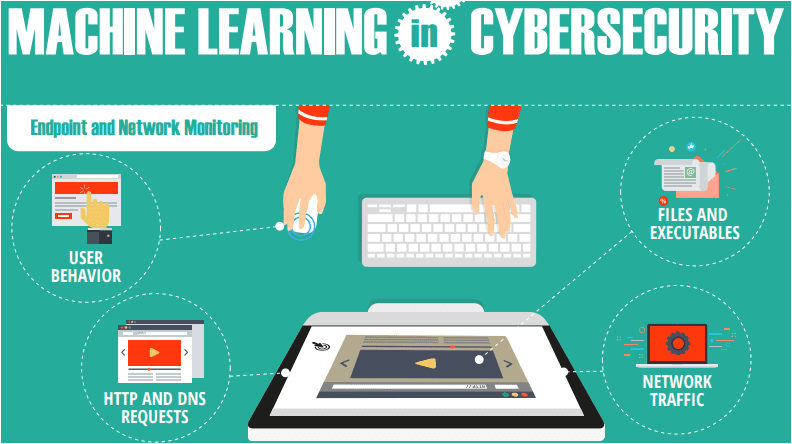
Today everything is online and from such activity the sheer volumes of data generated, its management and security from misuse is a matter of concern that cybersecurity professionals are tackling on a war footing.

ML and AI have seen huge developments in the last decade in conjunction with the rapid growth of data and data analytics. Most organizations value their data and ML as organizational assets. So any threat to them or the devices connected to the algorithms is considered a serious cybersecurity threat. And cybersecurity depends more and more on ML since it holds potential for analyzing large volumes of data, structure and process data in real-time, and present instantly any threat to its intelligence as it occurs.

To learn machine learning is the mainstay of threat intelligence which alerts you so you can deal with mitigating the threats. Gone are the days of incoming alerts and handling attacks. Today we have advanced ML where threat intelligence is the buzz word.

Why? Because, ML has huge applications in helping organizations defend against malware, apply TI (threat intelligence), make unknown connections, identify key parameters, the transformation of unstructured text, threat actors, and such relevant risks.

Cybersecurity ML algorithms and software help: 

  • Understand why and how ML will affect the future of cybersecurity
  • AI techniques add value to ML to make the analysts more effective.
  • Obtain insights on ML processes for threat intelligence.
  • Help to detect future threats through predictive analytics.

How to become a cybersecurity professional:

Choosing a career in cybersecurity or opting to change careers to it is a great career move at the moment. You will have to learn machine learning with a reputed training institute like Imarticus Learning who are renowned for fast-tracking career options and enhancing technical skills required for careers in the latest emerging fields. Such learning courses are available online with a host of reading and comprehension on cybersecurity risks and its mitigation. However, classroom sessions and supervised learning will also be needed to gain practical and implementation skills.

You could start with an entry-level position gaining experience in security, risk management or IT and move your way up to a mid-level role as an analyst, security administrator, risk auditor or cybersecurity engineer. To sharpen and hone your cybersecurity skills advanced training and certifications will be required before you can actually practice as a security consultant.

Cybersecurity education:

A formal after-school college experience for an associate’s degree will take four full-time semesters or two years to start as an Intern. A bachelor’s degree could last 8-semesters or four years and the master’s degree will last two years or another 4-semester duration should help you learn all about the theory behind cybersecurity.

The actual practice of writing algorithms can be honed by online challenges participation, certifications and hackathons on Kaggle. The necessary attributes for cybersecurity would be proficiency in English, mathematics, and statistics. Combined with a certification you are set to start your career according to the BLS.

The top-10 roles in Cyber Security:

The field of risk evaluation, mitigation and prediction are growing with data analytics and data taking center stage in modern times. Take your pick of career paths from a few of the roles enumerated here to always be in demand.

  • Ethical Hackers.
  • Security Systems Administrator.
  • Security Consultant.
  • Computer Forensics Analysts.
  • Information Security Analyst.
  • Chief Information Security Officer.
  • IT Security Consultant.
  • Penetration Tester.

The top cybersecurity certifications:

Certifications are essential to your resume and offer employers a real-time measurable scale of your skills in cybersecurity and validate that you can implement and use the learn machine learning applications for risks and security of cyber systems effectively and practically.

The top certifications are: 

  • The ISC (2) Certification
  • CISM- Information Systems Manager
  • CISA- Information Security Auditor
  • Information Systems and Risk Control Certified
  • CEH- Ethical Hacker
  • Tester GIAC/ GPEN Penetration
  • Cyber Security Courses     State Approved

Payouts:

The Cybersecurity professionals have a median salary of 116,000 USD. At an hourly rate of 55.77 USD/ hour, it is almost thrice the national average income offered to full-time workers. The BLS reports make the high salaries a very attractive feature to make cybersecurity your dream career.

Conclusions:

The cybersecurity professional is highly paid and has immense job scope in a variety of roles. Formal education, practical skills, certification and performance at the end-of-the-day will set you apart and help your career progression. There definitely is a huge demand for the cybersecurity professions which will continue into the next decade according to most reports on Glassdoor, Payscale, and BLS.

Resources are available aplenty to make cybersecurity your career no matter where you live. The Imarticus Learning courses, unlike many online programs, have limited class sizes meant to enhance learning, certification attainment and networking.

So hurry and learn machine learning! Also, for more details and further career counseling, you can also contact us through the Live Chat Support system or can even visit one of our training centers based in – Mumbai, Thane, Pune, Chennai, Hyderabad, Delhi, Gurgaon, and Ahmedabad.

What is Change Management Certification

The constant change in technology and personnel needs newer skills like change management. Change management brings ongoing continuous changes in increasing productivity and efficiency while causing better risk management, error reduction and offers enhanced project development and management.

What is Change Management?

It isn’t just data that increases by the minute. With the phenomenal growth and use of data and the technology to use it for analytics the demand for change, change education and change training is certainly also increasing every minute. So are the jobs and demand for trained change management professionals who are paid handsomely.

However, inanimate organizations cannot implement change unless the people who man the organizations do so. For every change in process, size, or key issue, there is a change that needs to be implemented by people in their job roles, the way they work and how they implement and benefit from these changes.

No initiative can succeed without organizational change. And while the organization cannot change, its people can, and this is crucial to implement the initiative. Thus change management is a discipline of applied sciences to help, support, equip, motivate people to change and retrain their thinking and working. You can do Change management certification to learn it. People change eventually causes the intended organizational change to succeed.

The Top Seven Certifications

To embrace change and have a measure of skills in change management, here’s a list of the top Change management certification courses available.

• CCMP-Certified- Change- Management- Professional
• CMS- Change- Management- Specialist
• CPCM-Certified-Problem-and-Change- Manager
• Certificate Program in Change Management from the Talent Development Association
• PCMC-Prosci-Change-Management-Certification
• APGM-from-Foundation- for-Organizational-Change-Management
• CMC-Change-Management-Certification-by- AIM.

How to Induce Change?
Like every person is different, so also every change is unique. The structured approach wherein one helps a person understand change, manage change, equips him/her to change and supports the transitional change process is what change management is all about.

The Change Management Levels:

Personal Change:

While inertia says it is natural to resist change both psychologically and physically when it comes to people change the mind is what rules the change. A structured certification can help support, train and equip people through the transition process and take them from a resilient state to a conscious changed state of the future where adaption to it brings success and career progression.

Personal change management uses motivational neuroscience and psychology to induce people to change. The change can be brought about by understanding the change experience, equipping people for what, when and how to change, supporting the transition, mentoring the whole process through effective coaching and positive behavior.

Organizational Change:

The change at the organizational level means a change in the strategic approach at the project level and involves all impacted teams of people on the project. It is symbiotic with project management because such initiatives can only succeed when every member of the team changes and embraces the change to allow the project to embrace change.

Scrum and Agile practices are an example of inducing organizational change. A large number of enterprises who are today implementing agile practices stand testimony to the fact that organizational change involves and encourages team changes and decisions.

Hence, no one stage can be isolated. Rather it is a continuous process of iterative changes practised across the three levels that causes the final initiative to succeed. Organizational change is possible only when the process of people change has succeeded and the next level can only succeed when the project changes.

Enterprise Change:

Enterprise change is at the core of quick, effective changes required in a modern world where nothing is static and demands change at every point of time in processes, people, management practices, the structure of the organization, roles, leadership and projects.

This capacity is the key differentiator in a competitive world. The results are visible when the employees change effectively and rapidly to challenges whether it be in markets, technology, strategic initiatives, budgeting or people management.

Conclusion:
Change is an ongoing process and the only thing that is really constant about changes is to change itself. The rapid growth of data, technologies to manage data and its analytics have seen the rise of Artificial Intelligence, Neural Networks, Big Data, Machine Learning, Data Science and Analytics in phenomenal ways over a short span of just the last decade.

The future holds great promise for development when organizations change speed and embrace change to improve efficiency, productivity, and profitability. Such courses help support, equip and motivate change in an organization through effective changes in people influenced by change instructors, trainers and mentors.

If you would like to motivate others and yourself to change, do a change management course at the reputed Imarticus Academy where Change management certification is encouraged and mentored well. Change today!

Business Analyst Interview Questions

If you’re searching for business analyst interview questions then you could be an interviewer or interviewee. But no matter which side of the table you are the interview itself is your chance to evaluate the answers of each other. Do not be nervous and try to stay calm, positive and genial throughout.

Business Analyst General Interview Questions

One should expect the interviewer will test your knowledge based on your resume and facts stated in them, your solutions in hypothetical situations and Agile related questions where the answers are likely to be based on your applications of Agile to BA situations like macroeconomics, fiscal policies, your ability to work on the team and your ability to creatively resolve tricky issues. General questions may have no right answer. These business analyst interview questions assess your soft skills and interpersonal communication skills.
Some of these are

  • Lead me through your resume.
  • What is your best positive feature or worst negative feature?
  • How would you measure BA success?
  • Would you like to ask us any questions?

In all your answers be brief, keep your answers simple, answer with spontaneity and honesty. Facts are easily verifiable and deceptively simple to answer wrongly.

Business Analyst Technical Interview Questions

  1. Explain differences between the Business Requirements, Functional Requirements and Technical Requirements documents.
    A BRD explains the business requirements. An FRD explains how business requirements can be achieved. A TRD explains how the Technical Designer requirements will be met. This trick question is not just about the answer but tests your Agile knowledge and application of the acronym to the Backlog list and other concepts in Agile from traditional and Agile perspectives.
  2. Where is PESTLE used?
    The PESTLE BA tool acronym expansion is Political, Economic, Sociological, Technological, Environmental, Legal environments assessed for opportunities, pressures and constraints.
  3. What are “Porter’s 5 Forces”?
    The framework is used to analyze competition levels in an industry, product substitutes, rivalry, new entrant’s threat and such factors for assessing competitiveness to influence organizational strategy. It was built and named after Harvard’s Prof. Porter.
  4. Explain Use Case Model.
    The Use Case model uses case descriptions and a step-by-step use case diagram to define the processes, role of actors and areas of the story.
  5. What does “Swim Lane” diagram mean to you?
    Using swim lanes is a widely used best practice in modelling techniques of processes showing the trigger for a specific event and the task sequences performed by a particular actor in the Use Case model.
  6. Tell us your definition of User Story.
    A User Story is used by Agile teams and is a format requirement from the user point of view got from Extreme Programming with the format:
    As a <user role>, I want
    <requirement> so that
    <business value>
  7. What is INVEST?
    The acronym expansion is Independent, Negotiable, Valuable, Estimable, Sized Appropriately and Testable. It checks the User Story effectiveness and uses it as a criterion for building them.
  8. Explain “Usability”.
    Usability is about the qualities that are end-user suitable. It is about the right system functionality and the user interface. The UX-user experience is the ultimate measure focused on.
  9. Explain non-functional and functional requirements:
    Functional Requirements are those that the solution will do or allow users to do. Non-functional requirements are “Quality Characteristics” like compatibility, security, performance etc, that measure how well the system behaves against the standards set for it and are essential to the system.
  10. Tell us about Kano Analysis:
    The Kano model explains customer satisfaction applied to the theory of product development by Professor Noriaki Kano in the 1980s. Customer preferences are put into five categories namely exciters, satisfiers, dissatisfiers or the wow, will and want factors. The model focuses on customer needs and tries to cash-in on perceived product features differentiated for product and marketing analysis.
  11. Explain MoSCoW prioritization briefly:
    MoSCoW stands for the acronym used in Agile approaches for requirements prioritized on a time-dependent scale in the DSDM Agile Project Framework.
    • Must Have
    • Should Have
    • Could Have
    • Won’t Have this time

Use these business analyst interview questions as a reference and work on your own questions if you were in the interviewer’s shoes.
Interviews need one to be thoroughly knowledgeable on topics related to business analysis, Agile framework and market conditions. One should use creativity in answering business analyst interview questions. Most of the questions tend to test knowledge, attributes of soft-skills, interpersonal communication skills and technical subject knowledge.
Did you know that the Agile and business analyst courses at Imarticus Learning offer mock interviews, assured placements, and soft-skill development too as part of their course learning? Why wait then? Join today!

Also Read: Top 25 Agile Interview Questions