How Do Business Analytics & Data Analytics Differ? What Are Their Applications?

Both business and data analytics is about processing data and gaining insights from data.

The terms business analytics and data analytics might be used interchangeably in organizations on a small scale. On the other hand, big firms hire both business analysts and data analysts to perform well-defined functions, thus making it very necessary to understand the difference between the two.

With Imarticus’s, you can choose between the best data analytics courses and business analytics courses in India. Read on to have a deep insight into the two important career paths and their respective applications.

best data analytics courses in IndiaBusiness Analytics

Business analytics course focuses on business impact when analyzing data and the actions that should result from the insights. For example, it provides answers to the following questions, “Should a company develop a new product line?” Or, “Should it prioritize one particular project over another?”

Business analytics combines various capabilities, tools, and applications to measure and improve the effectiveness of core business functions such as marketing, customer service, sales, or IT.

Business analysis (also Business Analytics) is the iterative exploration of a company’s data. There is a statistical analysis method used to bring information to light that can help to stimulate innovation and business results. Companies that rely on analysis consider big data to be a valuable asset of the company: data helps to advance business planning and forms the basis for future strategies. Business analysis helps these companies get the maximum value from this gold mine of insights.

Sufficiently large volumes of high-quality data are required for business analysis. Companies that want to achieve the most accurate results possible have to integrate and compare the data from different systems. A decision is then made as to which subsets will be made available to the business.

Data Analytics

A Data analytics career involves combing through massive data sets to identify patterns and trends, create hypotheses, and support business decisions with data-based insights.

For example, data analytics seeks to answer questions such as, “What impact do geographic factors or time of year have on customer preferences?” Or, “What is the likelihood that a customer will defect to a competitor?” In practice, data analytics encompasses many different techniques and approaches. It is also known as data science, data mining, data modeling, and big data analysis.

In data analysis, raw data is collected and examined to conclude it. Every company collects huge amounts of data, such as sales figures, market research, logistics, and transaction data. The real benefit of data analysis is in identifying patterns in a data set that can indicate trends, risks, and opportunities.

Data analysis enables companies to use this knowledge to change their processes to make better decisions. In practice, data analysis can help, for example, to decide about the next product developments, to develop customer loyalty strategies, or to evaluate the effectiveness of new medical treatments.

Applications of Business Analytics and Data Analytics

Since Business Analytics and data analytics are both based on big data tools, they have several applications in various industries across the globe. Some of them are mentioned below:

  1. Digital Advertising
  2. Energy Management
  3. Medical Applications
  4. City planning and mapping
  5. GPS tracking
  6. Transportation
  7. Risk detection and management
  8. Security
  9. Transportation
  10. Traveling
  11. Customer interaction
  12. Internet Browsing
  13. Expenditure Management

Conclusion

Business and Data analytics share the same overarching goal: use technology and data to drive business success. We live in a data-driven world where the amount of information available to businesses is growing exponentially. Both functions in combination can help companies achieve maximum efficiency and gain some useful insights.


Artificial Intelligence skilling has to start from a young age! How? Explore…

The chasm between machines and living things is shrinking. Artificial intelligence (AI) is deeply rooted in all aspects of technology, from robots to social networks. India has the potential to skyrocket in the domain of Artificial Intelligence and surpass USA and China, largely owing to:

  • It’s deep-rooted IT &ITeS infrastructure
  • Innovation ( India ranked among the top 50 countries in the Global Innovations Index 2020)
  • Accessibility to large datasets

These have pioneered more than a handful of start-ups and private investments in this sector. For AI to flourish further, there needs to be a nationwide upskilling of the younger generation in Artificial Intelligence Training. The GenZ needs to be acquainted with the theoretical and practical aspects of AI application to increase its scope of innovation and entrepreneurship.

Artificial Intelligence CareerIn the future, the interaction between humans and AI will define in a lot of ways the structure and functioning of a modern-tech society.

Thus it becomes imperative to lay down the basis of friendship for the years to come by exposing the young ones to AI.

While a lot of minds will wander to an Artificial Intelligence Career it is also important that others are no less familiar with the upsides and downsides of such a powerful technology.

Here is how we can ensure the frontiers of the same:

  • Introduce young people to the concepts of AI and machine learning through education curriculum. In India, the Central Board of Secondary Education (CBSE) announced the integration of AI in partnership with IBM for the academic year 2020-21
  • Encourage learning through hands-on projects so that student can make better, informed and critical use of these technologies
  • Enrolling young minds on various Edu-tech platforms specializing in the field of Machine Learning and AI which help them gauge interest and real-life applications of such technologies using intuitive software

Some of these websites include- Scratch, App Inventor, Cognimates etc

  • Experiments with Google is an easy-access, affordable, and user-friendly tool to explore artificial intelligence training at a young age with exciting experiments on AI, VR, AR, Chrome, Voice, Android etc to apply creativity and technological dexterity at the same place. One of these fun-filled learnings includes MixLab that uses voice commands to create music
  • Engage in the practice of cultural inquiry – like what is the goal of You tube’s recommendations or how do my Amazon purchases reflect on my Instagram feed
  • Lastly, before introducing your children to the world of AI and machine learnings, self-education of the same is very crucial

Apart from exploring the possibilities of AI, these junior minds also need to know the limitations of AI to have a balanced approached. That is to say, AI is not the ultimate machine as it is created by humans and will improve along the way by errors made and rectified by humans.

Artificial Intelligence CareerIn recent studies, a scientist is experimenting to teach AI to learn like a kid. They want to inoculate the eager learning attitude and swift skills of young people into the algorithms of machines.

And, AI does not create everything. It is the innovation and vision of responsible human beings that will introduce, implement, and maintain the technological structure in human society.

Complete Guide To Vectors in Linear Algebra With Implementation in Python!

Mathematical implementation and mathematical functionality play a key role in understanding the workings of various physical entities. Creating mathematical models and mathematical measurements is essential to give shape to the theories and concepts. It also plays a vital role in writing code and new-age Machine learning algorithms.

Measurement:

Any attribute of an object that can be assigned with a meaningful number to observe, assess or understand the item is called Measurement. This measurement can be broadly divided into two types:

  1. Scalars
  2. Vectors

Scalars:

The measurement of the attribute of the objects doesn’t depend on the direction of the item.

SclarTo illustrate the definition let us consider the length between two points. The span between these two points doesn’t change depending on the direction as the size remains the same.


Vectors:

The measurements of the attribute of the objects depend on the direction of the attribute too.

Vector

This can be understood by taking the example of force. Force needs a path with the numerical to comprehend the measurement

Vectors are denoted by an Arrow (entirely→).

The direction where the vector points are called the vector’s direction.

Types of Vectors:

  1. Zero Vector or Null Vector: A zero vector is the vector consisting Zero-Length and no direction
  2. Unit Vector: A vector that has a magnitude of 1 with a set direction.
  3. Collinear Vector: If the vectors are parallel to each other or on the same line irrespective of their direction.
  4. Coplanar Vector: All vectors that lie in the same plane
  5. Equal Vector: If the vectors have the same magnitude and direction
  6. Position Vector: A point that can be constituted as a constant point regarding other vectors

Implementation of vectors in Python: 

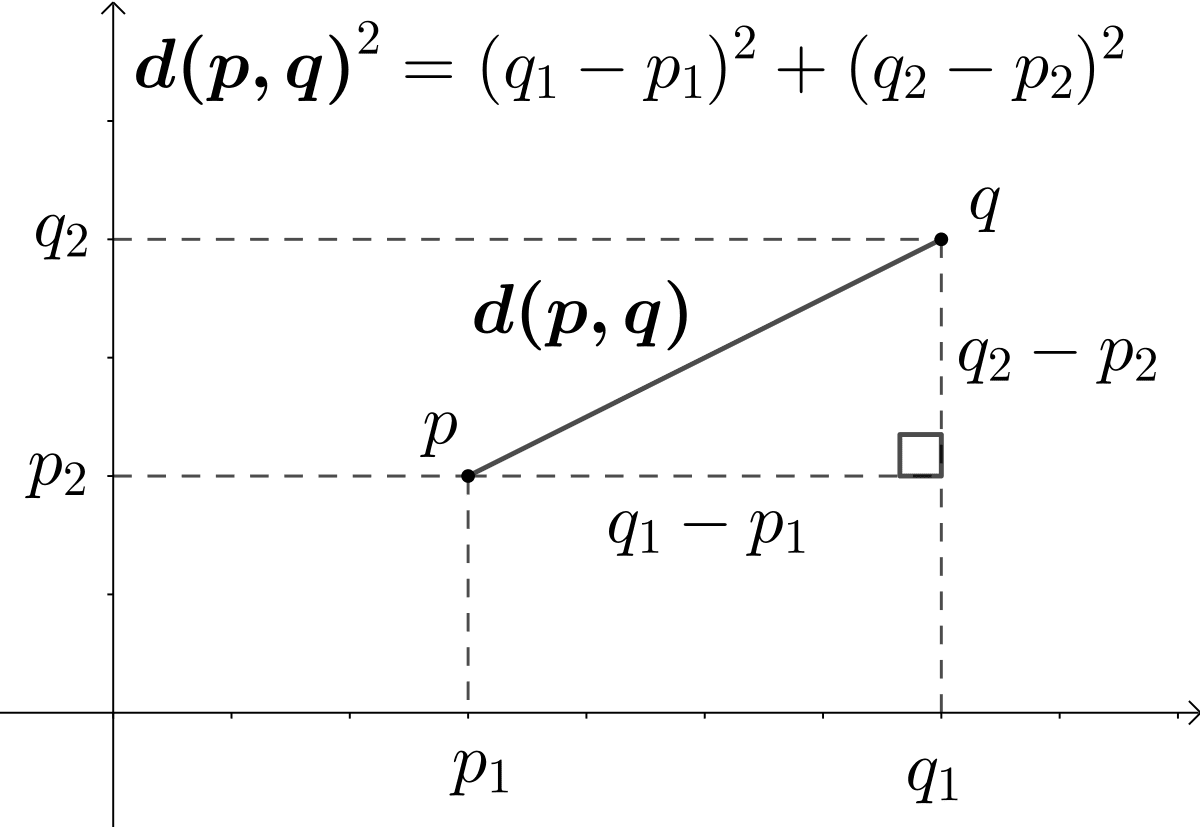
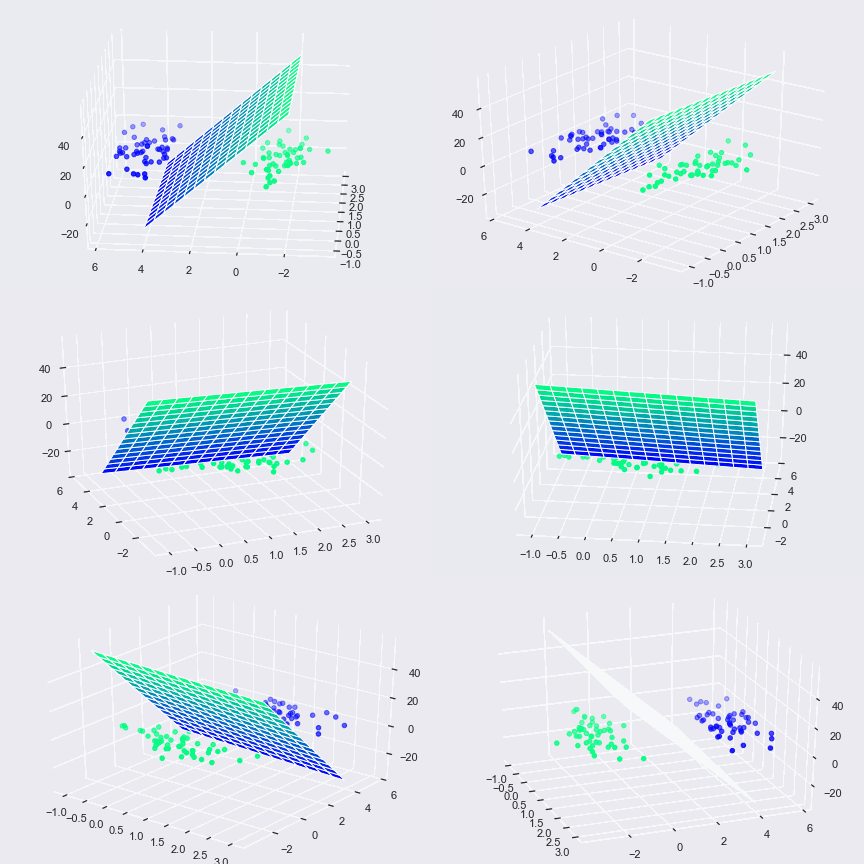
Vectors are a beneficial component not only in computer languages but also in machine learning. Decision-making is one of the most critical aspects of machine learning and vectors, in particular, is used in one such algorithm called Support Vector Machine (SVM). An SVM is used to analyze the given dimensional space for finding optimal hyperplane. The concept of vector/Euclidean distance is used to know the distance between data points and hyperplane.

Python TrainingTo achieve this through machine learning, we use Python as the programming language using libraries such as NumPy, Pandas. Python and the array operations in Python are useful to perform many algorithms such as SVM.
Therefore, having a prior Python Training is valuable and essential to get a grip on how vector functionalities are applied in more advanced topics such as Machine Learning.

Implementation in Python:

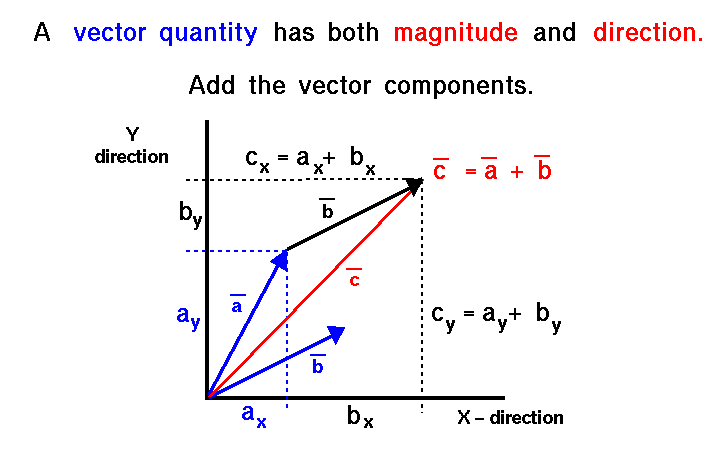
Vector Implementation can happen through arrays in Python. All the vector functionality can be done through libraries like NumPy. Using a simple code, we can implement various basic vector functionalities such as

  1. Vector Addition: The addition of two vectors through Python can be seen here:


Vector

import numpy as np #pip install numpy

a=np.array([2,1,3])

b=np.array([4,5,3])

print(a+b)

Output: [6,6,6]

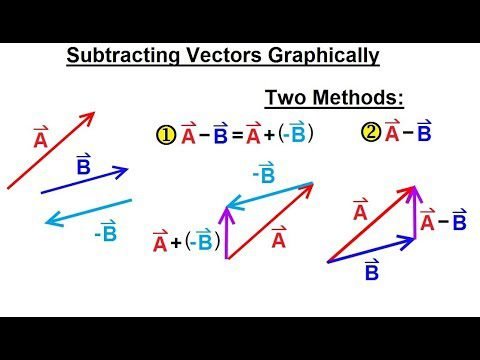
  1. Vector Subtraction: Subtraction of two vectors through Python can be seen here:Vector Subtraction

import numpy as np

a=np.array([2,3])

b=np.array([1,-1])

print(a-b)

Output: [1,4]

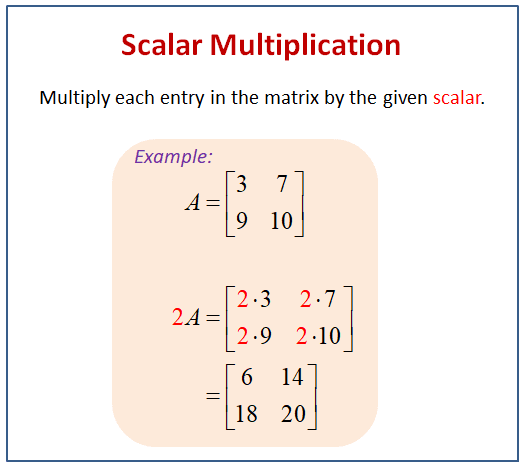
  1. Scalar Multiplication: Multiplying a scalar to vector is given below:Scalar Multiplication

import numpy as np

a=np.array([3,5])

print(3*a)

Output: [9, 15]

  1. Euclidean Distance calculations: In Euclidean distance calculation the distance is measured between two points and can be done in Python as follows:Euclidean Distance calculations

import NumPy as np #pip install NumPy

a=np.array([4,6])

b=np.array([7,-2])

print(np.linalg.norm(a-b))

Output: 8.0622577

These are some of the implementations of vectors in linear algebra using Python. Python is an essential language to understand advanced topics such as machine learning. Therefore, basic Python Training is the best step to ensure a great career.

How to Create Efficient Supply Chain Management Systems

How to Create Efficient Supply Chain Management Systems

E-commerce platforms are experiencing immense growth and this has led to the boom in supply chain management (SCM). Therefore, SCM Analytics is essential. It helps to analyze available data and gather metrics that can determine how systems can become more efficient.

Aspiring candidates can enroll in a supply chain management course to work in the field. Imarticus Learning offers professional certification for students who have basic knowledge of programming and operations management.

Top 5 Ways to Ensure an Efficient Supply Chain Management System

The working and proper management of a supply chain ensures the performance of a business and brings in new customers. So, companies need to maximize the efficiency of SCM. Candidates who wish to work as managers can focus on a supply chain management and analytics course that will enable them to learn how to create consistent supply chain management systems.

Following are 5 ways in which the efficiency of SCM systems can be improved.

  1. Get Reliable Suppliers

Introducing the right suppliers is essential to maintaining an efficient supply chain. Suppliers should be dependable and should have a history of good service. If the suppliers consistently provide good products, businesses will thrive and the supply chain will be sustained. Supply chain managers and analysts need to thoroughly research all potential suppliers. It will help to establish while suppliers will ensure product quality and packaging. Having reliable suppliers also means that the business can maintain ethical approaches and provide the best service to customers.

  1. Invest in New-Age Technologies

Managers can use a Warehouse Management System to streamline and maintain the efficiency of supply chains. Software applications should be used to collect relevant data, obtain insights, and document the performance of supply chain systems. Certain businesses can invest in transport management systems. These help to track and ship products without any errors. The entire SCM system can also be shifted to mobile devices for managers to work on the go.

  1. Ensure Constant Supply Chain Improvement

A supply chain that is efficient should remain so. SCM workers need to focus on new ways to tackle and maintain the efficiency of the supply chain. The improvement can be in terms of cost efficiency and benefits, customer service, or delivery to market.

  1. Returns Management System

A returns management system is an important aspect of SCM. This particular system allows companies to process returns faster. It improves the efficiency of the actual supply chain by keeping track of all the damaged goods that need to be processed again or manufactured again.

  1. Employee Development

For a supply chain to remain functional, a business needs dedicated and efficient employees. Every supply chain has a unique set of problems that require quick solutions. Employees should be able to provide those solutions and manage the supply chain in a way that minimizes errors. Therefore, businesses need to invest in proper training and strategizing.

How To Create Efficient Supply Chain Management Systems?

Candidates who wish to become SCM professionals and create an efficient system for businesses should invest in professional certification. Imarticus Learning offers a supply chain management and analytics course that is in collaboration with IIT Roorkee.

Students are taught to make decisions that are data-driven and based on valuable insights. Imarticus Learning provides hands-on training through 6 different projects. Students are also encouraged to participate in live lectures organized by industry experts. The institute provides a holistic education in supply chain management and ensures campus immersion at IIT Roorkee.

A supply chain management course from Imarticus Learning allows students to hone their managerial skills and use advanced software applications to provide error-free solutions. After completing the course, students can become supply planners, demand planners, supply and operations planners, or even data scientists.

How Artificial Intelligence and Machine Learning Is Altering the Marketing Landscape?

In this technological era, new technologies are being introduced in the market now and then. Businesses are no more using the traditional marketing methods to generate ROI (Return on Investment). Businesses are using new-age technologies like AI (Artificial Intelligence) and ML (Machine Learning) for better marketing and promotion.

Many young marketers are looking for a certification in AI & ML for securing better job roles in the marketing industry. The marketing landscape is continuously changing, and businesses need a sustainable solution. Read on to know how AI & ML are disrupting the traditional marketing landscape.

Use cases of AI and ML in marketing 

 One can see many real-life use cases of AI and ML in marketing around them. Some of the most popular use cases of AI & ML in marketing are listed below:

  • Businesses now use chatbots for their websites or software applications. Chatbots can interact with customers all day long and can solve basic queries. With a better user experience, businesses can retain their customers.
  • AI & ML can help provide accurate information to customers whenever needed. Inducing automation in marketing processes can reduce the manual load on an organization.
  • AI and ML tools are used by businesses to track dark social sharing up to an extent.
  • Many businesses are planning to use self-driving vehicles for marketing campaigns.

Driving factors for the use of AI & ML in marketing

 At present, businesses need to create personalized marketing content based on the preferences of the customer. Predictive analysis powers of AI/ML tools are helping businesses to create personalized marketing content. The recent COVID pandemic made it difficult for marketers to connect with their customers.

There was no physical interaction with the customers during the pandemic. AI & ML can help in collecting customer data even without stepping into physical markets. The need to decrease human labor in marketing processes has also forced businesses to go with AI and ML tools. With automated marketing processes, businesses can cut costs and boost ROI. In recent times, many businesses have focused on hiring marketers that have a certification in AI & ML for better results.

 How AI & ML are altering the marketing landscape 

Traditional marketing campaigns are launched with minimal insights. With AI & ML, you will have better insights before launching marketing campaigns. Marketing campaigns are becoming target-specific with AI & ML.

An ML/artificial intelligence course can help in learning more about disruptions caused in the marketing landscape. Businesses have to adapt according to the ever-changing marketing landscape to retain their market share. The benefits of AI & ML in marketing are listed below:

  • Marketers are getting better sales leads with AI & ML tools.
  • Marketers can understand the customer behavior and then launch marketing campaigns accordingly. It is better to understand the pain points of customers and then create personalized products/services.
  • Businesses are leveraging the power of customer data with AI/ML tools. The overall marketing cost is also decreased with the use of AI and ML.

How to learn AI & ML in 2021?

Young aspirants can go for the ML/artificial intelligence course offered by Imarticus Learning. The course name is ‘Certification in Artificial Intelligence & Machine Learning’ sponsored by E&ICT  Academy, IIT Guwahati. The certification in machine learning and AI follows an industry-approved curriculum. With numerous real-life industry projects and assignments, Imarticus offers a better learning experience.

Conclusion

Online certification in machine learning and AI can help marketers in securing better job offers. The role of AI & ML in marketing is increasing due to the recent WFH (Work from Home) culture. Start learning AI and ML for productive marketing!

Here’s How Creating a Data Analytics Culture Can Start Changing the Conversation About Data

A data analytics culture is beneficial in the current times. Data is generated in every business and when rightly used, it can benefit the entire company. The change in the conversation around data can start from PGA programs. A well-rounded data analytics course with placement ensures that students are able to make data-driven decisions. It also encourages a data analytics culture from a very early stage.

How to Create a Data Analytics Culture

Candidates with data analytics certification can use their expertise to introduce this in companies that are yet to embrace data analytics. To create a data analytics culture, one can use the following points.

  • Ask Team Leaders to Use and Promote the Data Analytics Culture

Team leaders need to understand the use of data analytics and promote the culture among their team members. The stakeholders of a company also need to assess how a data analytics culture will enable business development based on data-driven decisions. Once the employees see the leaders promoting this culture, they will be more inclined towards following the same.

  • Introduce Data Democratization

Data democratization enables inexperienced employees to analyze data for their own use. It makes data more accessible and when introduced, it can help employees become more productive.

  • Set Achievable Goals

When the data analytics culture is set up in a company, it should focus on showing what usable and available data looks like and how the company can benefit from the analysis of that data. These are the basic goals that should be set. As stakeholders and employees start understanding the culture, other goals can be set that is based on the utilization of data analytics in different departments.

  • Organize Data Literacy Workshops for All Team Members

Data literacy involves teaching teams to utilize and analyze data for the benefit of the business. Companies can conduct sessions or hands-on workshops so that employees become more comfortable in applying the available insights for the overall improvement of the company. Data scientists can be asked to conduct these sessions and help departments benefit from the use of data analytics.

  • Obtain Constructive Criticism and Positive Feedbacks

Positive responses to a new culture can make it easier for employees to transition, especially if there has been a pre-established method of working. Constructive criticism can also help to build the culture and optimize business processes that benefit from data analytics.

  • Boost Employee Morale and Get More Benefits

While data analytics can help with business development, it needs to focus on the employee community as well. Employee performances can be analyzed. The insights generated can be used to improve interactions and optimize their daily tasks. This will boost morale and encourage them to work better.

Bringing Change in Conversation About Data

To introduce the use and analysis of data in every sector, the conversation needs to change. The best way to ensure that more people are aware of the impact of data analytics, one can encourage students to engage in the study of data science and analytics.

Imarticus Learning offers data analytics certification for graduate students who wish to learn about the implementation of analytics. The curriculum of the postgraduate program in Data Analytics and Machine Learning is created and monitored by industry experts. Therefore, students can work on several industry case studies that allow them to understand the practical uses of data analytics.

Imarticus Learning’s data analytics course with placement is a great way to start one’s career and open up the conversation around data. It is ideal for freshers as well as professionals who wish to advance their careers.

How Successful Modern Assortment Planning Strategies in Retail Point Towards Data Analytics?

With the increased competition and customer demands, retailers have to toil hard for merchandise planning. Retailers are facing challenges in stocking their stores according to customer demands. Data analytics is used in the retail industry to know more about customers. Data analytics is used for numerous other processes in the retail industry. One such process is assortment planning. With assortment planning for numerous stores, a retail agency can boost its ROI (Return on Investment). Retailers that know data science will be in huge demand for better assortment planning and increased customer conversions. Read on to know more about the role of data analytics for better assortment planning in the retail industry. 

Understanding assortment planning

With assortment planning, a store decides the ideal store layout and visual merchandising that can attract customers. Product placements in a store are decided via assortment planning to maximise conversions. Retail companies usually conduct assortment planning at fixed intervals like weekly, monthly, or daily. Assortment planning decides which products should be highlighted at a given time. For example, a store can highlight its umbrellas and raincoats during the rainy season. The store can highlight its sweaters during the winter season. 

If a retail company has multiple stores, assortment planning can differ for each store. Assortment planning is also done based on the preferences of the local or daily customers. Many young retailers are looking for data analytics courses online to get a raise by offering assortment planning services to their stores. 

What makes assortment analytics important? 

It is hard to determine the preferences of customers and perfect product placements manually. It is why you need data analytics to fine-tune assortment planning. A retail company can know about the driving factors that compel the customers to make a purchase. The driving factors can then be implemented in physical stores to boost sales. The processes involved in assortment planning are as follows: 

  • Customer/sales data is collected and cleaned for advanced analytics. Redundancies in the customer data are removed for better assortment planning. 
  • Walk-in rates are determined via high-end data analytics. Sensors and cameras are used to determine how many pedestrians passed through your shop and how many entered. Based on the walk-in rate, you can modify product placements. 
  • Assortment analytics can help retailers in identifying customer loyalty. You can know which products are preferred by customers again and again. 
  • You can rank products based on their sales with assortment analytics. Retail companies use data analytics to identify which products are not generating substantial revenue. 
  • Assortment analytics also includes identifying the space productivity index of different stores. The space productivity index helps in knowing how much selling space is occupied by different products. 

How to learn data analytics for better assortment planning? 

Due to the numerous benefits of assortment analytics, retail firms are recruiting professionals who have a data analytics certification. To learn more about assortment analytics, you can go for the PG Program in Data Analytics & Machine Learning offered by Imarticus Learning. This course will cover all aspects of data learning along with 25 real-world projects. Various programming languages like SQL, R, and Python will be covered in this data analytics course. Imarticus is well-known in India for its data/business analytics courses that follow an industry-designed curriculum. At the end of the data analytics course, Imarticus will help you in getting a job offer. 

Conclusion 

With better assortment planning, stores can maximise their revenue. Assortment analytics can be the key to determine customer demands and optimise stores accordingly. The online course of Imarticus can make you job-ready by teaching several data analytics skills. Start learning assortment planning now!  

Understanding Occam’s Razor principle in Machine Learning

One of the most important and hot topics in Machine Learning nowadays is Occam’s razor principle. Does it sound unclear to you? Do not worry at all! Imarticus’s AIML program offers various Machine Learning courses which provide the basic study and understanding of the Occam’s Razor principle. Stay tuned to this article to kickstart your Machine Learning career

Categories of Machine Learning algorithms

The Machine Learning algorithms have mainly two different categories: supervised and unsupervised. When we talk about supervised learning, the model is trained with the labelled data taken from the previous sets for future predictions. On the other hand, with unsupervised learning, the process is applied exclusively to unlabeled data only. This is mainly used to identify well the patterns and structures in the data sets that were unexplored and unknown (sometimes referred to as ‘discovery analysis’. 

Occam’s Razor Principle: What does it mean? 

In simple words, Occam’s Razor advises using simple ML-based models and algorithms with fewer coefficients as compared to the complex ones (Eg. ensembles). The use of Occam’s Razor can be traced back to the 1200s by William of Ockham, who suggested using the simplest, efficient and most direct solution with the least number of assumptions and variables. There are certain applications and considerations to make based on Occam’s Razor as enlisted below:

Choosing the right model

Selecting the model from different available ML models to create a predictive project is termed model selection. Usually, a model is selected based on its performance like low prediction error and high accuracy. One should also consider the fact that a simple model should be preferred over complex ones as they have fewer coefficients during evaluation. 

Simplifying the model

Dimensionality reduction and feature selection are some of the simplification procedures which make use of Occam’s Razor. This results in improved results with less investment of time and energy. 

Modern state of art applications

One of the most useful applications of Occam’s Razor principle is in the state of art technologies, especially the direct application to Machine Learning. The programmers and engineers work collectively to train computers with data sets and extend their limitations of the already existing codebase data structure programming. This allows the computer systems to produce astonishing and favourable results in no time. 

Other applications

Some various other applications of Occam’s Razor principle is the setting of the parameters for specific Machine Learning concepts like Bayesian Logic. The programmers make use of this principle to make the model simpler and highly efficient. One of the important things to take care of is the correct application of Occam’s Razor. Incorrect usage and application can decrease the efficiency and credibility of Machine Learning programming. Interestingly Albert Einstein was Occam’s greatest disciple who said “Everything should be made as simple as possible, but not simpler”.

Key takeaways

If you want to start any project based on Machine Learning, it should always address the essential business question and problem that you intend to resolve. With the assumptions of other criteria remaining the same, Occam’s Razor can be applied successfully to chose a model which is simple to implement, interpret, understand, explain and maintain in the long run. In simpler words, choose the model that gives accurate results using this principle. The main idea lies in examining the project scope to a deep level, analysing the inputs, data sets and parameters to get the desired outcomes. A proper and well-defined machine learning training can result in a better understanding and implementation of the Occam’s Razor principle in solving real-life problems and deal with challenges.

How Can Artificial Intelligence and Machine Learning Make Software Development More Efficient?

Artificial Intelligence and Machine Learning are on everyone’s lips alongside the usual buzzwords such as ‘Big Data’, ‘Industry 4.0’ and ‘BlockChain’. However, similar to the other terms, it is often not easy to decipher the exact meaning behind it. Both AI and ML are developing at a rapid rate in various sectors. AI helps debuggers and programmers to work efficiently and quickly. They will make intense use of many machine-learning algorithms to create more user-friendly functional programs at the software level. Read on to find more on how the AIML program from Imarticus can facilitate the software development process to optimize the technologies. 

AI and ML: Transformation of Software Development

Artificial Intelligence and Machine Learning courses have both proven to be successful to increase efficiency in tasks related to software development. The programmers must understand their benefits on the whole. The already existing technology helps the new developers and programmers in identifying and fixing the program errors and bugs. Intelligent coding platforms, cloud-based IDEs, and easy control of deployment are also provided by the technologies. Some of them are mentioned below: 

  • Intelligent Coding

Programmers may make certain typing errors or code duplication errors in their code. To avoid these mistakes, powerful coding tools with the latest ML algorithms can be employed. Based on the methodology, language in use, or programming, there is also a code editor to format the code whenever needed. 

  • Rapid Prototyping

A prototype represents a development process of the company which needs to be delivered well in time to the clients for a review. With Machine Learning, it is possible to chart a business’s functionality with a technical prototype. The potential outcomes can be predicted very efficiently and quickly making the task of modifying the development process easy for the developers. 

  • Generate unique software designs

Most of the time, the clients look for unique and out-of-box designs for their projects. With advancements in AI, the digital assistants conduct a thorough analysis of project requirements, make recommendations for improvement and highlight the inconsistencies. Moreover, these tools work with natural language processing and use referenced guidelines for training. 

  • Help nurture young coders

Artificial Intelligence course gives the young programmers a unique opportunity to gain a deep insight on developing good software programs. These smart tools give them the convenience to share insights between young and experienced programmers to ensure efficient communications and learning between the two. These AI-powered tools help the developers to collaborate on software projects and have a bright career kick-off. 

  • Deployment control

Deployment control refers to that development phase in which the developers upscale their applications or programs to the latest versions in the software development realm. AI and ML promise to increase the efficiency in deployment control activities without being worrying about failed attempts or risks. 

  • Enhanced Data Security

The AI system usually collects data from network servers and software from the customer side. With AI, the data is investigated using ML to differentiate irregularities, avoid delayed warnings, false alerts, and notifications. 

Conclusion

Overall, Artificial Intelligence and Machine Learning will have a significant impact on the creation and design of the software. AI aims to help developers and testers to work efficiently with high productivity. Also, the integration of both of these into software development does not mean that the developers would lose their jobs in the future. It required extensive technical skills and experience to develop such advanced algorithms and programs. AI and ML will undoubtedly prove to be game-changers in software development. Learn AI today and boost your career performance. 

What is a supply chain analytics certification all about?

A supply chain is a network that connects a firm and its suppliers in order to manufacture and deliver a certain product to the end user. This network consists of many activities, individuals, entities, information and resources. The supply chain also symbolizes the steps involved in getting a product or service from its initial state to the customer.

Companies create supply chains in order to minimize costs and remain competitive in the business world.

A supply chain is a series of processes that must be followed in order to provide a product or service to a consumer. Moving and processing raw resources into finished products, transporting those items and distributing them to end users are among the procedures. Producers, vendors, warehouses, transportation companies, distribution hubs and retailers are all part of the supply chain.

 What is supply chain analytics?

 It is the study of data from a range of supply chain applications, such as supply chain execution systems for sourcing, inventory management, order management, warehouse management and fulfilment, and transportation management, known as supply chain analytics. A supply chain is like a domino effect: each step in the network impacts the one after it, and any faults at any point might have an influence on the ability to satisfy consumer needs.

Companies can use supply chain analytics to collect, analyse and act on data created by their supply networks. It enables them to make not only short-term adjustments but also long-term strategic improvements that will provide the company with a competitive advantage. A supply chain management certification online can be a saviour if you want to pursue this as your career.

 What is a supply chain analytics certification all about?

 A supply chain analytics certification is all about learning the nitty-gritty of how a supply chain functions. Keep reading to know the benefits of enrolling in a certificate course in supply chain management.

 This six-month certificate course in supply chain management has been specially prepared by IIT faculty and industry professionals to assist you in learning. During this era of the trend of e-commerce, the number of products in transit has also increased. The number of SCM employees has increased disproportionately across industries. This training will prepare you to capitalise on this opportunity.

 Areas that a good supply chain analytics certification cover:

  1. It must teach you real-world examples of how analytics may be applied to many domains of a supply chain, such as selling, logistics, production and sourcing, to have a major social or economic effect.
  1. You should also be taught about the employment market, job requirements and preparation.
  1. It should teach you about supply chain analytics employment options, qualifications and how to go about with its preparation.
  1. CVs should be taught to be redesigned and updated with the expertise of an insider to help you bag your desired job.
  1. Role-playing interviews and model interview responses should be provided so that you succeed in any technical interview round.
  1. It should cover technologies like Big Data, AI and IoT. These technologies are dominating the world and must be taught.
  1. It should teach you programming languages like R and Python.
  1. It should teach you how to manage uncertainties in the supply chain.
  1. It should teach you to design the supply chain and the distribution network.

Conclusion:

The IIT Supply chain management course is one of the most desired courses. This

IIT Supply chain management is one of the best courses available and teaches you most of the important skills and prepares you for the industry. If you want to save some money, yet want to learn the relevant skills required to have a fulfilling and successful career, then go for a supply chain management certification online.