

Analytics interview questions

1. What is the importance of validation of data?
From a business perspective, at any stage, data validation is a very important tool since it
ensures reliability and accuracy. It is also to ensure that the data stored in your system is
accurate, clean and useful. Improper validation or incorrect data has a direct impact on sales,
revenue numbers and the overall economy.

2. What are the various approaches to dealing with missing values?
Missing values or missing data can be dealt with by taking the following approaches-
● Encoding NAs- this used to be a very common method initially when working with
machine learning and algorithms was not very common
● Deleting missing data casewise- this method works well for large datasets with very few
missing values
● Using mean/median value to replace missing values- this method works very well for
numerical features
● Run predictive models to impute missing values- this is highly effective as it works best
with the final model
● Linear regression- works well to provide good estimates for missing values

3. How do you know if a developed data model is good or bad?
A developed data model should fulfil the following criteria to qualify as a good model-
● Whether the data is the model can be easily consumed
● If the model is scalable in spite of good data changes
● Whether performance can be predicted or not
● How good and fast can a model adapt to changes

4. What are some of the challenges I can face if I were to perform a data analysis?
Performing data analysis may involve the following challenges-
● Too much data collection which can often overwhelm data analysts or employees
● Differentiation between meaningful and useless data
● Incoherent visual representation of data
● Collating and analyzing data from multiple sources
● Storing massive amounts of generated data
● Ensuring and restoring both security and privacy of stored data as well as generated
data
● Inadequate experts or lack of industry professionals who understand big data in depth
● Exposure to poor quality or inaccurate data

5. Explain the method of KNN imputation.
The term imputation means replacing the missing values in a data set with some other possible
values. Using KNN imputation in data analysis helps in dealing with missing data by matching a
particular point with its nearest K neighbours assuming that it is a multi-dimensional space. This
has been a highly popular method in pattern recognition and statistical estimation since the
beginning of the 1970s.

6. What does transforming data mean?
Data transformation involves the process of converting data or information from a different
format into the required format in a system. While mostly transforming data involves the
conversion of documents, occasionally it also means conversion of a program from one
computer language to another in a format that is readable by the system.
Data transformation comprises of two key phases, data mapping to ensure smooth
transformation, and code generation, for the actual transformation to happen and run on
computer systems.

7. State the difference between null and alternative hypothesis.
It is a null hypothesis when there is no key significance or relationship between two variables
and is something that the researcher is trying to disprove. No effects are observed as a result of
null hypothesis and neither are there any changes in actions or opinions. The observations of
the researcher are a plain result of chance.
An alternative hypothesis on the other hand is just the opposite of a null hypothesis and has a
significant relationship between two measured and verified phenomena. Some effects are
observed as a result of an alternative hypothesis; and since this is something the researcher is
trying to prove, some amount of changes in opinions and actions are involved. An alternative
hypothesis is a result of a real effect.

8. What would you mean by principal component analysis?
Principal component analysis is a method used to reduce large data sets in dimension by
transforming larger sets of variables into smaller ones, while retaining the principal information.
This is majorly done with the intent of improving accuracy since smaller data sets are easier to
explore, as a result of which data analysis gets faster and quicker for machine learning.

9. Define the term – logistic regression.
Logistic regression is a form of predictive analysis in machine learning that attempts to identify
relationships between variables. It is used to explain the relationship between a binary variable
and one or multiple nominal, ordinal, interval or ratio-level variables, while also describing the
data. Logistic regression is used for categorical dependent variables.

10. How can I deal with multi-source problems?
Storing the same data can often cause quality hindrances in analytics. Depending on what the
magnitude of the issues are, a complete data management system needs to be put in place.
Data reconciliation, elaborate and informative databases and pooling in segmented data can
help in deal with multi-source problems. Aggregation and data integration is also helpful while
dealing with multi-source data.

11. List the most important types of clustering algorithms.
The most important types of clustering algorithms are-
● Connectivity models- based on the idea that farther data points from each other exhibit
less similarity when compared to closer data points in data space
● Centroid models- the closeness of a data point to the cluster centroid derives the notion
of similarity for this model
● Distribution models- based on the probability that all data points in the same cluster are
part of the same distribution
● Density models- search for varied density areas of data points in the data space

12. Why do we scale data?
Scaling is important because sometimes your data set will have a set of features that completely
or partially vary in terms of units, range and magnitude. While certain algorithms have minimum
or zero effects, scaling can actually have positive impacts on the data. It is an important step of
data preprocessing that also helps to normalise data within a given range. Scaling of data also
often helps in speeding up algorithm calculations.


All you Need to Know about Python and being a Certified Professional!

Programming has always been the core of computer science and Information Technology. Every year millions of programmers graduate with degrees to look for employment opportunities. Therefore, the demand for programmers has grown exponentially, and the trend will not be out anytime soon.

Python is one of the most familiarly used programming languages and was released by Python Software Foundation in 1991. In a fraction of years, it gained popularity and was started being used as a programming language in various disciplines.

Python Programming Defined:

Python is an interpreted, general-purpose, and high-level programming language developed by Guido Van Rossum. Today, companies use Python for GUI and CLI-based software development, web development (server-side), data science, machine learning, drone systems, AI, robotics, developing cyber-security tools, mathematics, system scripting, etc.

Python ranks second among other programming languages. Imarticus Learning has some fascinating advanced-level courses on Python and data science, covering Machine Learning and Artificial Intelligence using Python. With expertise in python programming, candidates can start learning advanced-level Python libraries and modules such as Pandas, SciPy, NumPy, Matplotlib, etc.

Python Programming Career Options:

Python programming coursesAfter a course in applied data science with python specialization, you can choose several career paths. Some are stated below:


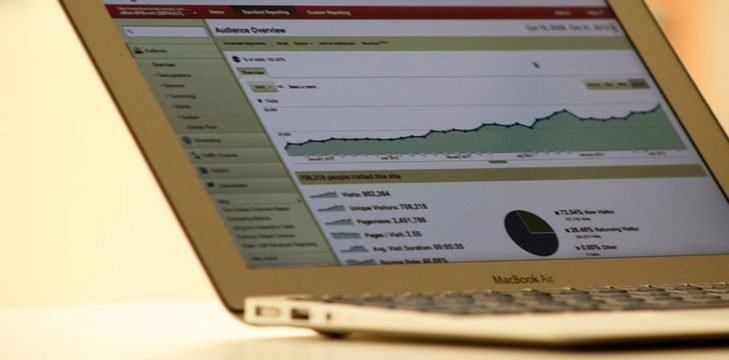
Data Visualization with Python and Matplotlib: The profile is linked with extensive data analysis, which is a future for the IT industry.

Web Programming: As you know, python is a concise language; many things can help you build a career as a web programmer.

Developing Games: If you are passionate about gaming and wish to develop games as a career someday, you need to put in efforts to learn Python and how to develop games.

Analyzing Data with Python and Pandas: This allows you to pivot into data science.

Why Python for Data Science?

The first benefit of data science using python is its simplicity. While data scientists come from a computer science background or know other programming languages, many belong to backgrounds with statistics, mathematics, and other technical fields. They may lack coding experience when they enter the field of data science. Python is easy to follow and write, making it a simple programable language to start and learn quickly.

There are numerous free resources available online let you learn Python and get help from communities. Python is an open-source language and is beneficial for data scientists looking to learn a new language because there is no up-front cost involved. This also means that many data scientists are already using Python, so there is a strong community for better guidance.

Python is especially popular among data scientists. There are many python tutorials and python classes where the world comes together to share knowledge and connect. Countless libraries like Pandas, NumPy, and Matplotlib available in Python for data cleaning, data visualization, data analysis, and machine learning make tasks easy.

Build Career in Data Science with Imarticus Learning:

Python programming course

Imarticus Learning offers some best data science courses in India, ideal for fresh graduates, professionals, and executives. If you wish to fast-track your Data Science career with guaranteed placement opportunities, Imarticus learning is the place you need to head for right away!

Industry experts design the programs to help you learn real-world data science applications and build robust models to generate valuable business data. Students go through rigorous exercises, hands-on projects, boot camps, hackathon, and personalized Capstone project, which prepares them to start a career in Data Analytics. Send an inquiry through the Live Chat Support System and request virtual guidance to commence the transforming journey!

What are the Steps to Transition into Data Analytics?

One can always migrate to data analytics regardless of his/her field and educational background. But people often find the transition to be confusing. If you are also looking to change your career into data analytics, this article will help you in getting an understanding as to what to do and how. Many companies hire fresh graduates from the college and provide them in-house data analytics training at their cost.

As they are looking for new and unbiased opinions regarding their business problems as well as its solutions. Being a fresher relieves you from any baggage and allows you to mould your career in the field any way you want.

Also Read – What are the Salary Trends in Data Analytics?
Here are the steps to follow to transition into data analytics –

Identify Your Interest and Ideal Job

The first thing you need to do when you are changing your field of data analytics is to identify the perfect place for you to be here. There is a lot of scope in data analytics as you can choose to be a traditional data analyst or try some more exciting options such as data scientist, data engineer and so on. Conduct proper and thorough research into the field at first to have a clear basic understanding regarding it. You can do this while still at your current job and give yourself a head start for the transition as you won’t have to sit idle after leaving your post.

Acquire Proper Skill-set and Training

Now that you have settled down or are close to settling down on the ideal job option for you in data analytics, it is time to start training and acquiring the skill-sets needed to survive and thrive in the field. You have to brush up and strengthen your knowledge and understanding of mathematics and especially statistics as it is the essential requirement of the area. Then, you have to acquire analytics skills, tools skills, problem-solving ability and much more. It is better to join a professional data analytics training course for this as they will provide you with the all-round training required to prosper in the industry as a data analyst.

Get Data Analytics Certification

Although you may have acquired some or all of the skill-sets to be a useful data analyst, possessing a data analytics certification will boost your chances of getting into the field as a fresher especially since you are jumping in from a different one. Getting a certification will make it easier for you to start your data analyst career as companies tend to hire a certified professional as they come with a reputation attached to them.

You can get your certification by giving any recognised data analytics test which takes place both online and offline all the time. You must choose the examination carefully though as some of them are designed to provide certification for a particular job option only.

Get into a Company and Start Your Career

Once you have acquired certification for data analytics, you are now eligible to sit in the interviews organised by the companies and organisations to fill up the positions of data analyst in their ecosystem. Once again, you have to be careful regarding deciding as to what area you want to apply for. Companies may announce vacancies for data scientists, data engineers or other related job posts too. You would want to take up the position you were preparing for since the beginning. Although, it is always possible for you to change course mid-way. You must never take your job lightly though as there is a lot of stress coming with a=data analyst responsibilities and thus you have to prepare yourself vigorously.

Related Article :

What Is Virtualization In Cloud Computing?

Virtualization is one of the most important aspects of cloud computing. It allows multiple virtual machines to run on a single physical server, and it also helps reduce costs.

Cloud computing is just the latest buzzword for this technology, but many people don’t know that it has been around since the 1960s when IBM released its first mainframe computer and started to think about how to make more efficient use of hardware.

What is virtualization in cloud computing?

Virtualization in cloud computing can be described as running multiple operating systems simultaneously on a single computer with their own set of resources allocated to them. This makes use of resources more efficiently and reduces the cost for users who want to access these services.

The system allows sharing a single physical instance of resource to multiple users. Cloud Virtualization manages workload by transforming traditional computing and making it more scalable, economical, and efficient.

The benefits are many- everything from increased security, better back-ups, lower power consumption, and easier management.

How Virtualization Works?

Virtualization in Cloud Computing training provides a virtual environment in the cloud that can be software hardware or anything. In virtualization, server and software application are required by the cloud providers for which they pay nominal fees to the third party.

With the help of Hypervisor, which is software, the cloud customer can access the server. A hypervisor connects the server and the virtual environment and distributes the resources between different virtual environments.

Types of Virtualizations in Cloud Computing

Operating System Virtualization: In operating system virtualization, the virtual machine software is installed in the host’s operating system rather than directly on the hardware system. Its most important use is for testing applications on various platforms or operating systems.

Server Virtualization: In server virtualization, the software is directly installed on the server system. A physical server can be divided into many servers depending on the need and balance load. This software helps the server administrator to divide one physical server into multiple servers.

Hardware Virtualization: It is used in server platforms due to its flexibility. In hardware virtualizations, virtual machine software is installed in the hardware system. It comprises a hypervisor to control and monitor the process, memory, and other hardware resources.

Storage Virtualization: This process groups physical storage from multiple network storage devices to make a single storage device. Storage virtualization is implemented by using software applications and is mainly done for backup and recovery purposes.

Explore New-Age Careers with Imarticus Learning:

To gain insights into the technical aspects of virtualization and how it impacts organizations and their operations, one needs to take an in-depth study into it. Students opt for online distance MBA courses to learn how technology drives the industries differently.

Others opt for online MBA courses and undergo structured learning. Imarticus Learning delivers career-defining professional education while partnering with global leaders. The unique Ed-Tech expertise, industry insights, market acumen, operational excellence, the sprawling network has an extensive impact on learners.

Imarticus Learning offers the best online MBA courses in various streams and provides students and professionals an edge over the competition. The programs give you access to limitless opportunities related to career and networking that no other courses offer!

Since technology has taken organizations by storm, career landscapes have changed for professionals, and Imarticus Learning prepares candidates for the same!

Send us an inquiry now through our 24×7 Live Chat Support System and request virtual guidance from experts!

Big Data and Social Innovation

The world is excited about big data. it is hard, to avoid the discussions on big data and the impact it has on the world around us. The excitement is warranted not only because of the impact that it has on our surroundings. Even without being consciously aware of it, we are reaping the benefits of big data in our daily lives.

As technology advances, the data size and the sources through which data is collected are growing and will continue to grow exponentially. There is a certain rise in complex data. each passing year, due to the technological advances in collection and storage of data and also the querying technology, one is seeing an increase in the usage of business analytics tools.

Now, this is logical, purely because, how is an organisation going to make sense of the humongous volume of structured and unstructured data. Unstructured data collected through a variety of sources adds up to about 85% of information that businesses store, irrespective of the type and size of the business. Big Data analytics assists in extracting value from this data and uses the insight innovatively to create a positive impact and assists the business to get competitive gain.

If you are thinking, my business is too small, or that Big data might not be of value to my industry now, think of it this way, ‘do you take quick and agile decisions to be at par with the competition?’ And if your answer is positive, then Big data analytics might help you gain a competitive edge in the way you conduct your business.

Travel and Hospitality use the advantages of big data to improve customer experience, big data allows these companies to collect data, apply analytics and identify problems almost in real time, so that time appropriate solutions can be applied.

Healthcare benefits from the data collected through patient records, insurance information and other various kinds of reports and data, that can help in getting key insights once analytics is applied. Insights from this data can help predict or offer an immediate resolution, based on historic information, trends can be identified in diagnosis.

Retail, Big Data analytics helps retailers meet customer demands, they can come up with effective promotional offers for the right target audience. Study their buying patterns, will help them reduce costs by managing inventory according to the demands. It positively impacts profitability.

Analytics widens your scope as an entity, giving you the option of doing things you never thought were possible, for example, it offers you timely insights, which help you in making better decisions, about fleeting opportunities, it also assists you in asking the right questions and supports you with extracting the right answers as well. With all the available insights, you are thus able to see new opportunities, manage and increase productivity, by putting your efforts in the right direction, and better utilizing your time and energy.

Looking at the advantages, most industries are hiring talent with big data expertise.

You can see all sectors are warming up to the benefits of big data analytics, whether you understand the impact or not, or if you want to embrace the technology or not, build a career in big data analytics or not. One thing is for sure, Big data analytics will fundamentally change the way business operate.

Understanding the Difference Between Data Science and Business Analysis

The arrival of big data into the picture of industries all over the world has considerably increased the importance of data science. However, many tend to confuse the terms ‘data science’ and ‘business analysis’, often taking them to mean the same thing. In reality, there are distinctive differences between the two, and each has its own pros and cons. If you’re ever planning to make a career in either of these fields, it’s important to learn the difference between the two.

Business Analysis vs Data Science Difference #1: Definition

Put simply, the overarching goal of a business analyst is to help grow a business in a given market under certain conditions. They have a direct influence on critical financial decisions made in the company. They use data to create and change policies, improve productivity and stabilise systems. A data scientist, on the other hand, is responsible for collecting, processing and reporting findings from a massive data dump. Data scientists convert raw data into structured, meaningful silos which are then used to generate reports on trends or make forecasts.

Business Analysis vs Data Science Difference #2: Analysis

A business analyst perceives data, insights and requirements from the perspective of the business and its overall operational systems. A data scientist observes and visualises the relationship between data in a database. While data analysts derive insights from data dumps, business analysts take what is needed to make the business function better and meet certain milestones. Both problem-solving roles are highly data-focused; the difference is that they enter at different stages of the operation and manipulate data to different goals.

Business Analysis vs Data Science #3: Skills

While the skills required for both roles might overlap by virtue of dealing with data, in the end, there are some differences. The following skills apply for data scientists:

● Programming: Where premade software might not be flexible enough, data scientists must be equipped to make personalised changes
● Software: Data scientists must be well-versed in a plethora of tools serving different purposes, from statistics to visualisation
● Data management: From collecting to segregating and organising massive data dumps, data scientists are expected to be adept at managing and manipulating data

When it comes to business analysts, the following apply:

● Analytical skills: By virtue of their job role, business analysts need to be excellent at analysing data and immediately spotting significant information and leveraging it
● Technical understanding: though not as much as data scientists, business analysts are expected to understand databases, basic software and visualisation systems to interpret data
● Soft skills: Business analysts need to network and brainstorm with multiple key players, so they must have the necessary soft skills to work well under pressure

Business Analysis vs Data Science #4: Outlook

Business analysts are strictly organisation-centric, though their policies might have a national or global impact. They deal with strategies, alliances and networks a lot more than data scientists. The latter is more likely to be mathematicians and statisticians in their outlook, sifting through data to find salient patterns and outliers. Whether a finding is of significance to the business or not, is up to the business analyst. That said, the business analyst heavily relies on data scientists to collect and segregate data they can work with.

Conclusion

Despite the differences in tools and skills, it’s safe to say that both business analysis and data science deals centrally with data– the shift lies in where they stand in the operational process. If you’re confused between the two roles, its best to envision the type of work you see yourself doing. Would you rather be making business decisions or collecting and making sense of data? Are you people-centric or technology-driven? The answers to these questions will help you zone in on what career suits you the most.

What Are The Benefits Of Bringing Big Data Analytics Education?

Education, human behavior and interpersonal interactions have always held our interest as topics for research and discussion. Such data analysis can draw out many insights that can be beneficially used to improve the ways we work. learn and analyze issues around us. Did you know that the big data industry is projected to touch a total value of 28 million USD very soon? No wonder the educational field is looking to exploit the many benefits of a big data course in the educational field and analyzing the results to tweak the outcomes.

The very first step in this process is to set up the functional database and its analysis process. In the field of education, this would imply building a community website. Why? Data analyzed so far shows that if students needed information 93 percent of the time they looked online for it.

The popularity of libraries of information available by doing a simple Google search or Googling as students call it is the most popular method for not just students but parents looking for educational institutions for their wards as well! It is a given that online presence helps prospective students and their parents find you.

But, can we also use the digital platform to educate students?  Here are at least three ways to benefit from big data analytics and exploiting a big data course of benefits for your educational institution.

1. Assessing student performance:

Improving student performance and assessing their performances can be efficiently leveraged by big data and its analytics. Individualized learning modules can help find knowledge gaps and personalize the learning materials to fill in the gaps. By so adjusting the learning rate no student in a class is way ahead or too far back on the learning curve. Since learning styles, rates and methods may vary over each student, adaptive learning scores by understanding and identifying the gap in learning and taking corrective action before it is too late.

A differentiated style of learning deals with the most effective style to help the student learn. Adaptive learning curates the learning exercises matching them to the student’s needs and knowledge gaps. Competency-based AI and Big Data Analytics Course-based tests aid the students to gauge their learning levels and progress from thereon.

Using all these three types of learning AI can test how well the students can adapt their learning to applications of it and thus promote the progress of students based on individual interests. Traditional methods like exams, project work and assignments and exams can be used as data trails to help monitor learning activities and performances. The behavioral analysis attained can help provide personalized feedback to each student.

2. Personalizing educational programs:

Big data can help in customizing and personalizing learning materials and individualized programs for students using both on and offline resources. Blended experiences improve performances, generate more learning interest and help improve the performances of students. Students can learn at their own pace and style and even discover areas where they excel at applying their learning to applications. The classroom can effectively be turned into a nursery for budding professionals, entrepreneurs, gamers and businessmen who are well-initiated in exploiting benefits offered by skilling themselves in a big data course.

3. Learn from the results and improve the dropout rates:

Big data analytics can help us learn and predict the lacunae in learning and thus prevent dropouts. Corrective measures can easily be applied if unusual behavioral patterns are caught early. Personalization of these measures through suggestions from big data analytics can help target the source of the problem and resolve the issue or gaps in learning. Big data analytics’ behavioral analysis can also help in career counseling, providing information on various programs and courses at various institutions so students can choose their careers wisely.

Parting notes:
The class sizes keep increasing with compulsory education and teachers are often facing many challenges in giving attention and help to the large numbers of students. A big challenge like this has been simplified by incorporating computer programs that allow each student to follow his own pace and learning curve. The technological advancements in the last decade and especially in education has seen many applications that are data-driven and can be processed for use as learning materials to base your future decisions on.

Rather than concentrate on just building a good educational website from scratch one can use simple website solutions from online builders. The time saved is best used on implementing processes for reporting and better analysis. Do you want to learn how to use Big Data analytics in education? Reach out and do a big data course at the Imarticus Learning Institute to emerge career-ready.

Optimize Your Workflow – Tips for Future Data Scientist

Data Science is essentially a process of a lot of iteration. To complete a project in data science, one will have to make many changes, consistently during the process while trying new ideas.

The first step first, lets us make it clear, especially for the ones who would like to pursue their career in data science, to not confuse a job of a data scientist to that of a software engineer. Methodologies of software engineering cannot be used in data science. Data science is more of science and less of engineering.

There are some relevant software’s in data science that assist in optimising workflow, however, it is also the clarity, experience and intuition of the data scientist and the team that sets the preliminary analysis on track.

If a data science project has taken longer than planned to complete, it could be because of iterations. Let us understand, iterations will happen during the course of a project, however, if an iteration is for any other reason besides the flow of new information, it is uncalled for and could have been eliminated.

An unprecedented iteration could be either because the business pain point was not identified correctly, the data scientist was not aligned with the company objective, a data scientist did not initially believe in a collection of a few variables, or it could be because of assumptions and biases in the data were not accounted for. These are just a few scenarios that can be easily avoided.

Imagine if all variables are not accounted for, one will have to do the analysis again, and that would be really time-consuming, also counterproductive for the project and the team working on it.

Some tips to avoid such scenarios:

  1. Identify and choose the right issue to use the skills of a data scientist and the advantages of applying data analytics. Do not try to solve every resolvable issue with this technique. Apply data science only if the concern or problem is large enough, and clearly identify as to what objective or hypothesis you are running with. Check for the alignment of that hypothesis with the desired business outcome. Break down a large issue with all possible outcomes and then ask at each step what variables would be required. Defining each factor, and applicability of outcomes would be a great starting point. Make use of pipeline and data sharing tools.
  1. Identify the data requirement, this is simple, define the time period you would need the data from, collect all information and data points even if it might not look important now, and lastly put a structure to your data requirement by designing tables, this will also further add clarity to what variables would be captured.
  1. This step is simple yet mostly faltered on, always ensure that the analysis created is reproducible.
  1. It’s a daunting task to write codes, now imagine to continue writing it over and over again. To avoid syntax errors, it would be great to make a directory of most commonly used codes and ensure everyone on the team has this, it will ensure efficiency in work and it also takes care of simple errors.
  1. Be flexible and adaptive to technologies, there is no process that is perfect. Be adaptive to the limitations of technology and processes, always finding an alternative will help you reach the goal faster.
  1. Understand the business, you might be a pro in programming and numbers, and data analysis comes naturally to you, however, if you fail to understand how your business works there will always be a gap in understanding the output.
  1. Speak the language of your stakeholders, they might not understand algorithms and you should not assume they understand the technical language. Help them visualise your findings, your approaches. Use visuals and examples to illustrate your plan. Connecting with the audience is half the battle won.

Demarcate the data science project in four phases –

The first phase is the Preliminary Analysis -this is where an overview of data points is done.
Second Phase is the Exploratory Data Phase – Specific to asking the right questions and cleaning the data to answer those questions.
Third Phase is Data Visualisation – Here the focus shifts on how to present the analysis.
The Fourth Phase is Knowledge Discovery Phase – The last stage, where models are made to explain the data, algorithms are tested to come up with the best outcome possible.
This is not a definitive workflow and one could make changes to further increase efficiency and productivity. Data Science is exploratory in nature where the data scientist is constantly innovating and learning, preparing themselves to overcome business and project challenges.


Read More:
Having Technical Knowledge Is Not Enough For Data Scientists
What a Data Scientist Could Do…?
Seven ways a Data Scientist Can Add Value to Businesses

The Future of India in the Field of Big Data Analytics

The best possible example of the usage of big data analytics can be found in the legendary fictional works of Sir Arthur Conan Doyle. Sherlock Holmes, as we all know him today through the famous crime detective show, Sherlock is said to be one of the biggest patrons of this concept. The world’s first consulting detective, Holmes once said, “It is a capital mistake to theorize before one has data.” These words uttered during the case of A Study in Scarlet, hold true as data proved to be his timely assistant in solving extremely difficult cases, by helping him come to perfect deductions.
As we accumulate more and more of this data, we feel the need to have optimal processing skills and analytical capabilities in order to process it. India, as a country has been making a lot of growth with many government agencies and private companies, getting on board with the data analytics revolution. Continuing in the same vein, the Comptroller and Auditor General (CAG) has also put together the ‘Big Data Management Policy’ for Indian audit and accounts departments, in order to foster the use of data analytics and ensure the improvement of their functions. Many more efforts are being taken in the same regard, like for instance the Centre for Data Management and Analytics (CDMA) has been inaugurated, in order to synthesize and integrate relevant data for auditing process. The aim here is to exploit data rich environments, on both the state level as well as the central level in order to develop the audit and accounts department.Data Analytics Banner
Data has always helped humans in increasing the level of their decision making skills, in every field of medicine, science, and technology. The recent couple of years saw a great surge in the availability and accessibility of Big Data and its storage options. With big data coming to the fore, it has begun arriving on the scene with alarming velocity, volume, and variety. With so many technological advancements revolving around the accessibility and storage, have led to the opening up of new and empowering possibilities.
On the other hand, there are DISCOMS, which are set up for capturing all the data from the sensors, which are installed in order to analyse the power usage patterns, so as to put together preventive measures for Aggregated Technical and Commercial losses. All the cloud based and predictive analytics solutions given by industries in retail, telecom, and healthcare, have collectively resulted in the rapid growth of the country’s industry and economy. Today as it stands, India has about 600 data analytics firms, in addition to the 100 new start-ups, that have been set up in the year 2015. This clearly reflects on the demand for data scientists in the not so far away future. This is why a number of students have been attracted to the field of data science. As not many generic educational institutes are able to provide the required training, many candidates seek help from professional training institutes like Imarticus Learning, which provide a number of industry endorsed courses in the field of Finance and Data Analytics.

How Augmented Analytics Is Helping Business Analysts Build Prediction Models

Gartner, a popular IT Research company, recently released their universally accepted Hype Cycle. In this Gartner Hype Cycle 2018, the augmented analytics is predicted to be the hottest topic in business intelligence. This article will shed light on what augmented analytics is and how is it helping businesses.

What is Augmented Analytics?
Augmented analysis or Agile business analysis can simply be explained as a fusion between Artificial Intelligence (AI) and Business Intelligence (BI). On a more technical note, Augmented Analytics is an approach that uses machine learning and natural language generation to automate the insights. With this technology, the traditional hectic process of converting raw data to insights will be automated and improved.

Augmented Analytics isn’t exactly a brand new technology. It had been growing at a slower pace over the past years. But with the recent advancement in AI technology, Augmented Analytics also found new heights of evolution.

The Impact of Augmented Analytics
Analytics Automation is a largely desired capability among new-gen enterprises. The current system primarily relies on manual methods to process raw data. The current automation of the change management processes is limited to simple forecasting and visualization of data using analytics tools. The Augmented Analytics delves deeper and provides actionable predictive and prescriptive guidance along with the historical reports and dashboards.

Elimination of human biasing is another critical aspect of this technology. Since Augmented Analytics can be free of any particular research question, it gives the organizations the flexibility to explore hidden layers of insights. Eventually, it will result in executives of enterprises concentrating more on strategies rather than the daily routine manual tasks.

Some experts compare Augmented Analytics to the evolution of automobiles. Both systems are very complex and have thousands of parts to make them function properly. But a user does not have to know all these parts to use a vehicle. Similarly, Augmented Analytics enables its users to carry out complex analyses without the need for coding skills. The technology abstracts the complexity away.

So, non-technical analysts will be capable of running complex analyses. According to Gartner, the hardest tasks of analytics are expected to be automated within the next two years. Hence making machine learning and data science more open and accessible.

Is Augmented Analytics the Future?
Currently, enterprises are relying on data scientists to carry out data analysis. The scarcity and the high cost for a good data scientist are preventing medium and small-scale businesses from effectively using their data. But with the aid of Augmented Analytics, the data analysis will be cheaper, easier and better – enabling more businesses of all sizes to benefit from analytics.

Augmented Analytics is not yet mature enough to implement in the industry. But, reports suggest that the growth rate in this technology is immense enough to disrupt the business intelligence and analytics market shortly. Right now the lack of good data scientists is causing major trouble for the industry and Augmented Analytics is expected to resolve all these troubles. In short, Augmented Analytics is indeed the future of business analytics.