Why Linear Regression is Important for Data Scientists & How to Learn It?

Linear regression is a powerful predictive modeling technique that enables the statistical analysis of continuous variables. It is the most popular technique for estimating relationships between inputs and outputs.

This post discusses linear regression, how to use it in data science, and why you need to know about it as a professional data scientist.  Now let’s dive into the topic!

What is Linear Regression?

We start this section by defining linear regression. Here, in simple words, it is an approach to estimate the relationship between the input and output. It simplifies the modeling process and produces more interpretable results. When you need to make predictions on new data, Linear discriminant analysis is a better option for making predictions on new data points (i.e., test set) because of its solid statistical foundation and mathematical proofs of performance guarantees.

Why is Linear Regression Essential for Data science?

For a Data Scientist, it is essential to know and understand the concept of linear regression and how to use it. This section provides some reasons why it is critical for data scientists:

When you don’t know which variables are important: In many real-world problems, no one tells you which input variable(s) affect the output variable. In cases where you have access to historical data, it is possible to find the relationship(s) between input and output variables (i.e., linear regression).

When your model needs linearity assumption: Incorporating nonlinearities in the prediction function requires complex modeling techniques like applying polynomial transformations or neural networks.

How can we use linear regression?

Here are some common scenarios where we use in the industry.

  • You can predict the price of a house/cars/robots etc., indicating loan eligibility for an individual based on his salary. How many items will you sell tomorrow? What time of the day am I likely to buy something?
    Estimating Expected Weight of a baby based on mother’s weight during pregnancy, Estimating the passengers who will purchase tickets for an airline, etc.
  • Now you can solve all these real-world problems with linear regression!
  • Linear regression is a beautiful yet straightforward statistical technique to estimate the relationship between input and output variables. In other words, it helps you to find a function that best explains the relationship between input and output variables.

Input features = house size, car speed, age of a person, flight duration, etc

Output variable = price of a house/car/flight ticket etc

Explore Data Science career with Imarticus Learning

Students can master the fundamentals of data analytics and machine learning and the most in-demand data science tools and methodologies. With Tableau, you can learn Python, SQL, Data Analytics, Machine Learning, and Data Visualization. With this program’s job assurance guarantee, students may take a significant step forward in their career.

Some course USP:

  • This Data science courses with placement assurance aid the students to learn job-relevant skills that prepare them for an exciting career.
  • Impress employers & showcase skills with a certification endorsed by India’s most prestigious academic collaborations.
  • World-Class Academic Professors to learn from through live online sessions and discussions. It will help students understand the 360-degree practical learning implementation with assignments.

Contact us through the live chat support system or schedule a visit to training centers in Mumbai, Thane, Pune, Chennai, Bengaluru, Delhi, Gurgaon.

The future of artificial intelligence and machine learning in the Biosciences

Do you know why artificial intelligence courses are so popular? For the last 70 to 80 years, we have been trying to simulate our intelligence in many artificial entities, which has given rise to the growing field of artificial intelligence (AI). Although AI has surpassed humans in many respects, it still does not live up to its name. AI, as we define it, does not yet exist, nor is there a consensus among experts as to whether it can be achieved.

However, while AI is captivating with its incredible applications and rapid growth (autonomous cars, nanorobots, etc), AI has infiltrated almost all disciplines and has had a particular impact on biosciences. AI offers sufficient computational power and capacity to address the complexity of biological research through simulations (known as “artificial life”). It presents itself as an ideal testing ground, a bounded but unbounded environment where physical laws are adaptable, all parameters are traceable, measurable, storable and retrievable.

AI in Biology

This translates into the possibility of overcoming some of the most important challenges of research in biology. For example, the ethical limits of animal experimentation with drugs for cancer and other diseases, or the methodological difficulties in studying complex systems such as human language, multicellularity or collective intelligence. AI also benefits from this interaction. After all, the key to being able to reproduce a natural system in an artificial environment depends on the knowledge one has of the system in question.

Deep Learning

Deep Learning is one of the many approaches to AI and is inspired by the structure and functioning of the brain through the interconnection of neurons, mimicking the biological structure of the brain through algorithms called Artificial Neural Networks that specialise in detecting specific features, through different layers of neurons, to achieve unsupervised learning. The concept is given by the multiple layers it can comprise.

A neural network needs approximately 50,000 times more energy to function than the human brain. For this reason, computers with traditional architectures are not suited to support the parallel processing that the brain carries out so efficiently. Therefore, research is being carried out into brain-mimicking computing techniques called Neuromorphic Computing.

Artificial Immune Systems

There is an initiative that aims to understand how different parts of the brain work in order to diagnose and treat brain diseases and to develop neuromorphic computers that can learn in the same way as the brain does. These advances need to incorporate multidisciplinary knowledge from neuroscience research, psychology, and ICTs. But it is not only the human brain that is a source of inspiration. Artificial Immune Systems comprise computational methods based on the processes and mechanisms of the human immune system and are used for learning and protecting information systems from malware.

AI and IOT

Finally, we could compare the relationship between Artificial Intelligence and the Internet of Things as the relationship between the brain and the human body. Our bodies collect sensory information (sight, hearing, touch, etc) and send it to the brain, to make sense of this information in order to make the decisions and/or actions, sending signals back to our body if necessary, for example, to pick up an object.

Conclusion

In conclusion, the symbiotic relationship between AI and bioscience has provided the ultimate testing ground for solving some mysteries of biology, as well as the theoretical framework needed to achieve real artificial intelligence. Any of us can learn AI or do a machine learning certification, but only the best prepared will be part of this amazing field of study, so study with Imarticus and go as far as you want.

Blockchain and FinTech: Career Opportunity or Threat?

The industry of financial services is one that has expanded at an exponential rate over the past couple of years and by the looks of it, it doesn’t look like its growth is going to slow down any time soon. With the establishment and growth of mobile payment, cryptocurrencies as well as online banking, a question that is largely being asked is whether digital systems such as these pose a threat to us while we go about our daily businesses.

There is an element of uncertainty to any revolutionary idea and FinTech is no different. FinTech has been finding a place in industries and organizations belonging to a variety of sectors, reaching almost all areas thus inspiring further change as well as innovation within it.

However, it is important to be careful and take measures to diminish the potential for this technology to be utilised as a tool for malpractice.

The inadequate performance of banks is among the several reasons contributing to the growth and popularity of FinTech. Banks seem to be having difficulty in gaining their cost of capital and thus are looking for newer business models as an aid. In order to remain competitive, banks are looking for various strategies that will help them evolve.

Fintech Career

Banks need to slowly start coming to terms with FinTech technology as well as its potential to start operating over a large number of sectors, thus not being limited to just financial services. An issue that is being posed at present is the development and use of blockchain technology.

The technology meets all the vital requirements for durable media, thus guaranteeing integrity as well as the confidentiality of the various documents sent to the client. This increases its appeal for potential use by banks. Customer empowerment is another key factor in the development of FinTech.

Advantages of FinTech

There are several advantages that FinTech provides its users with. FinTech improves efficiency, is faster and provides an improved experience in general for its clients as well as end-users. People do not have to be at the mercy of banks in dealing with various international payments as well as transactions.

Fintech CareerFinTech provides its users with an ability to perform all their important financial operations through their smart-phones or computers and these are processed in a matter of seconds.



Risks Posed By FinTech

Even though FinTech is advantageous in a large number of ways, like any other technology, FinTech also poses a few risks in its use. The first concern when talking about FinTech is the various risks posed by third-party services like cloud vendors. There is a level of operational risk posed by a third-party governance system.

Procyclicality is a possible risk which could come out of a number of sources and lead to various systematic risks. This becomes very important particularly when there is a high number or concentration in a platform or a market segment.

Another thing that may pose as a concern is various cross-border legal issues and various other regulatory issues which would need to be taken into account as well. When it comes to computation of big data and algorithm complexity, the lack of clarity makes regulatory disclosures all the more challenging.

Cyber risk is the most obvious threat that people worry about when it comes to any technology. The more we move towards digitalizing our world, the more we need to ensure that everything is up to date and mitigate security risks.

A career in FinTech right now is the smartest choice to make. FinTech courses would help in equipping with information and details required to succeed in this field. It is important to learn blockchain before stepping foot into the world of FinTech.

How Starters Must Go About Investing? How Small Should They Start?


The stock market is a marketplace where trade i.e., issuing, buying, and selling of stocks, bonds, etc. occurs. Investing in the stock market for the long term can help you manage your finances. It is an instrumental task of understanding stocks and shares. If you are just starting, then investing in the stock market could seem a little intimidating. 

How is Investment Banking Related to Stocks?

Investment banks assist companies or individuals to create or raise capital. They arrange for the buying and selling of stocks and provide consultancy on better opportunities for investors, beginners, or professionals. It may seem intimidating to learn investment banking, but it will help you understand the stock market better. 

How do Beginners Invest in the Stock Market?

  1. Determine the approach you want to take – Setting the approach you want to take in the beginning can make the future of your investing much easier. Your approach will also help you determine your investment management (long-term or short-term).

  2. Decide the amount you want to invest – The amount you want to invest can be decided based on the goal you want to achieve. It is inadvisable to invest in stocks if you need the money in the next five years.

  3. Open an investment account – To make all the trades in India, you need to open a specialized account, a Demat account, or a Dematerialised account. This account holds the shares and bonds in a digital form securely. The shares that are bought are deposited in this account which makes trading much easier.

  4. Choose where you want to invest – To choose where you should invest, you must first understand the options –
  • Stocks – Stocks are ownership shares of a single company. They are purchased at a certain price and fluctuate according to the market. This makes it a risky investment.

  • Bonds – Bonds are loans to companies or the government, and they agree to pay back in a certain amount of time. Till then you get interested. This poses a lesser risk.

  • Mutual Funds – Mutual Funds are like a trust that collects money from different investors who purchase securities. They are a safe investment for beginners.

How Much Should the Beginners Start With?  

It is advised for beginners to start investing as early as possible because your investment portfolio depends on it. When you start investing at a younger age you can take a risky approach, and if anything goes wrong, then you will have enough time to recover that amount and make profits. For example, during the Covid-19 pandemic in 2020, the stock market fell almost 40% only to rise to an all-time high over the next few months.  

Many people delay investing in the stock market because they think it requires a lot of money. Nothing could be further from the truth. You can start with as little as Rs.500/- per month and can increase it over the years if and when you can get the funds.

Conclusion 

Investing in the stock market is a great opportunity to gain wealth over the years. It gives every person an equal chance to earn money and also increase knowledge. There are investment banking courses with placements that can help you learn further. 

Are cloud, blockchain and IoT software engineering certifications worth it?

Today cloud computing is one of the most promising technologies that are constantly changing the whole IT industry. Even cloud services platforms such as Amazon Web Services (AWS) and Microsoft Azure cloud services are constantly developed to cover the demand from every area, including manufacturing, e-commerce, life science, etc.

As cloud computing becomes more prevalent in people’s minds and the business field, we need to prepare a cloud professional with knowledge and skills to support this infrastructure. Cloud certifications help cloud engineers/architects/administrators increase their expertise about cloud technologies and learn how to implement them in our company environment.

Nowadays, several cloud certification courses are available for individuals who would like to differentiate themselves from others by demonstrating their cloud skill set.

Interesting fact: According to Forbes, the Blockchain projects’ market is expected to grow from $242M in 2016 to $2.3B by 2021, which means the cloud computing sector will be one of the most promising areas for cloud engineers soon. In addition, cloud computing offers an excellent opportunity for IoT cloud applications because it provides real-time communication with devices and faster cloud storage hosting services.

It makes it possible for us to prototype IoT cloud applications quickly without spending too much time on server management. Cloud technologies also enable IoT cloud applications to collaborate or exchange data/messages stored into cloud servers.

  1. What benefits are cloud, blockchain, and IoT software engineering certifications for cloud engineers?

Legit cloud certification courses help cloud engineers/architects/administrators acquire the knowledge and skills to manage cloud infrastructures more effectively.

  1. How much does it cost to get these certifications?

Different institutes have different cost structures. For more information on the various credentials and the costs involved, check out Imarticus Learning.

  1. What is the best cloud certification course to take?

There are several good cloud certification courses available in Imarticus Learning like “Cloud computing.”

  1. Any suggestion about cloud engineer salary?

According to Indeed, cloud engineers/architects with extensive skills can receive more than $100,000 per year. For example, AWS certified solutions architect receives around $128,800 per year, and Microsoft certified cloud specialist earns around $97,500 annually if we check their salaries on Indeed. According to Glassdoor’s report, cloud engineers’ average salary is around $120K per year which means companies spend huge amounts.

  1. Do you need a college degree for these certifications?

Most cloud certification courses require either a bachelor’s or master’s degree in cloud computing/networking, cloud systems administration, or cloud application development. However, some cloud certifications don’t require any college degree.

  1. What is the job position of cloud engineers?

Cloud engineers play essential roles to manage cloud infrastructure and cloud software design for companies that want to use cloud technologies. Depending on company size and requirements, they can have various job titles like “cloud administrator”, “software engineer”, etc.

  1. What is the difference between certification and degrees in this field?

Certification courses build your cloud expertise, knowledge, and skills to let you start working right after certification or within a short period. On the other hand, cloud degrees provide comprehensive cloud education, including the latest cloud development tools/technologies and cloud infrastructure methodologies.

  1. What are the prerequisites for these certifications?

To enroll in cloud certification courses, candidates need basic knowledge of cloud computing principles like cloud data storage systems, virtualization technologies, etc. Cloud computing requires strong programming skills (JavaScript) and operating system administration (Windows/Linux).

Conclusion paragraph: With the rapid emergence of new technologies and software engineering certifications, it can be challenging to know which ones are worth your time.

If you’re interested in exploring these topics or want a refresher on current trends, we encourage you to explore our courses! We offer online certificate programs with personalized coaching from some of the world’s leading experts – all at your own pace and convenience. Enroll now so that you don’t miss out on this opportunity!

Different Ways Data Mining Helps Marketers

What is Data Mining?

Everything that we do leaves data behind. That data is ultimately used to extract useful information. Data mining is a technique of analyzing that large amount of data and making use of it in marketing strategies by determining the correlations and patterns among them. Budding industries tend to use data mining at a great advantage by using the information uncovered to target audiences accordingly.

It is highly advisable to have a data analytics certification through a data mining course to become a professional in this field.

Steps of data mining –

  1.     Extract and transform the information collected
  2.     Digitally store and manage the data
  3.     Analyze the data by using different data mining techniques
  4.     Display the data in a useful way, like in a graph or number chart

Frequently used data mining techniques

Data mining can turn out to be a highly effective technique if done correctly. Here are some basic techniques that are quite common:

  • Observe a pattern – Simple line graphs and bar charts can be used to represent the data collected so it becomes easier to recognize certain patterns and intervals in them.

  • Classification – Classification is a more detailed data analysis technique. It helps in classifying data further into groups or clusters for better analysis.

  • Association – This helps in finding a hidden pattern. This technique helps you unfold links between two different types of variables.

  • Regression – This technique is used to spot the relationship between different variables depending on the presence of another factor. It is a form of planning and modeling.

  • Outer detection – This technique is also known as an outlier technique or analysis that helps in finding variables in a data set or group that do not match the pattern.

  • Prediction – As its name suggests, this technique helps in analyzing past or similar data to predict future patterns or events.

Benefits of data mining

Data mining can add great value to a business that is why marketers interested in growing a business must understand its benefits.

  • Marketing campaigns are more optimized –. Data mining is a great way to analyze marketing campaigns and which methods will help in generating more engagement and leads.

  • Helps in making better business decisions – The information and insights gathered from data mining can help you make better decisions for your business.

  • It will help you detect any kind of fraud – Data mining in business can help in detecting any kind of fraud or potential fraud like fake money transactions.

  • Improves external market performance – It helps to understand and predict employee behavior which in turn helps in improving external market performances.

Data mining is the future

Data analysis and management is a huge source of employment even today. Data mining professionals can work individually or as employees of a company to evaluate important information and discard the ones that are not reliable.

This requires detailed knowledge of understanding data. This knowledge can be acquired through data mining courses in India that are available online. Since every company is going digital now, reliable data analysts will be in a lot of demand so it is better to start now.

Why Creditors Must Focus on Automating Their Credit Risk Workflow Processes

Lending institutions conduct credit risk analyses before approving credit. For most lenders, credit risk analysis usually depends on several years of experience. Such credit risk management is a combination of astute loan portfolio analysis and an intuitive knowledge regarding borrowing risks. 

However, owing to increasing competition and significant regulatory changes in the backdrop of economic uncertainty, creditors are focusing on automating credit risk workflow automation.  

credit risk analyst courseCredit risk management is a popular part of the banking sector today. You can undertake credit risk management courses to implement the knowledge in today’s evolving lending market.
credit analyst certification will help you to conduct credit assessments using modern automation techniques.

Impacts of Automating Credit Risk Management 

With a massive jump in credit requests, the lenders’ ability to analyze credit risk efficiently has declined. This has potentially led to a rise in loan default. However, with the automation of credit risk assessment, creditors can swiftly process loan requests in bulk without credit risk or increased expenses. 

By including artificial intelligence and machine learning in credit risk management, credit institutions can enjoy a host of benefits. As a creditor, you can use modern technologies in various circumstances, which will allow you to draw crucial insights about borrowers from a large set of data.

Here are some of the ways in which automation impacts credit risk analysis, thereby benefiting creditors:

Increased Fraud Detection – Credit card and loan fraud is a massive business throughout the globe, which has been costing billions to lending institutions. However, such frauds can be efficiently reduced by automating the credit risk assessment process. Through predictive analytics, automation processes can be used to detect fraud risks associated with certain borrowers. 

  • Scalability

It can be challenging for financial institutions to achieve scalability under conventional credit risk analysis systems. This is usually because creditors need much understanding about the lending sector so as to be able to process a vast number of documents for stacking, analysis, categorization, extraction, and more. With automation, institutions can easily manage the entire process without having to assess each case of credit risk individually. This can enable creditors to concentrate on offering additional services. 

  • Compliance with Regulations

One of the significant benefits of automation is that it provides lenders with the flexibility to alter rules and implement them according to the basis of the criteria that you provide. Therefore, with automation, you can easily automate several processes that are prone to errors.

  • Enhanced Underwriting

Through credit risk management automation, a lender can carry out document creation, credit request approval, and granting with increased personalization. This can happen while still being within the regulations of the institutions. Moreover, automated credit risk assessment processes come with all loan-risk factors that can be otherwise neglected during conventional credit risk assessment.

Available Automated Solutions for Credit Risk Management 

Automating the credit risk management process helps lenders to eliminate high-risk customers while conducting a more accurate analysis of customers. Here are some of the most commonly-used automated credit risk assessment techniques


  • General process automation
  • Low-code application platform
  • Cognitive and robotic automatic solutions


Bottom Line

Automation of credit risk assessment is widely applied off late. As a credit analyst, you need to be equipped with the knowledge of recent automation techniques predominant in the lending sector. With a credit analyst certification following a credit analyst course, you can enhance your decision-making abilities regarding credit risk assessment. 

credit risk analyst course

Credit risk management courses allow individuals to gain major insights into the crucial elements of the credit analysis process employed by banks. A credit analyst certification will also enable you to learn about various challenges that one can face during portfolio analysis. 

Which Careers Can You Consider With An MBA in Fintech?

In recent years, financial technology has been a growing industry in the world. As more businesses are coming up with new ways to improve payments and lending systems, many people are interested in this field.

This blog post will converse how you can use your MBA degree in Fintech to get ahead at work and what some careers may look like if you have this type of education behind you.

MBA in Fintech

What is Fintech?

Fintech is financial technology, which refers to the use of new technologies in various areas of finance. Some of these include online banking, lending services, and digital currencies like Bitcoin. Financial institutions are currently using Fintech to make their products more user-friendly. For example, many fintech companies are using blockchain technology to make transaction processes faster and more secure.

What Industries will a Career in Fintech Open Up?

If you have a career in finance, then an MBA in Fintech can be beneficial for both your old job and the upcoming one. Many positions are available within the fintech industry, but they tend to concentrate on finance heavily. Some of these positions include:

1) Market Risk Analyst: Market risk analysts are responsible for researching and analyzing market data. They use this information to design models that can predict the future value of securities like stocks, bonds, and commodities.

2) Investment Analyst: These analysts work with individual investors or companies to create portfolios that meet their specific needs. They help manage these accounts as well as make transactions in the stock market.

3) Financial Analyst: These professionals work with financial institutions to provide valuable insight into their operations and performance. They also investigate credit management strategies and current market conditions that can affect these businesses.

4) Managing Director: Managing directors are responsible for overseeing all financial affairs of an institution. They work with other professionals in the finance industry to help the company grow and accomplish its goals.

The Benefits of Pursuing the best online MBA courses in Fintech

  • Career Prospects: With a degree in finance, you will have endless career opportunities at your disposal. You will be able to work with new technologies and help companies evolve in the modern age.
  • Flexibility: The finance industry is known for its long hours and demanding bosses. However, fintech positions allow employees more flexibility with their schedules. You can pursue your career in Fintech without having to sacrifice family time or hobbies.
  • Future-Proof Your Career: New companies are creating every day in the fintech industry. By getting the best online MBA courses, you are essentially future-proofing your current job and making it more secure for the long term.

Explore and Learn with Imarticus Learning

MBA correspondence allows students to apply what they learned to real-world business challenges and circumstances. If students want to become a FinTech specialist and boost their job chances, their quest stops here, and a fantastic FinTech learning experience begins.

Some course USP:

  • This MBA correspondence course is with placement assurance aid the students to learn job-relevant skills that prepare them for an exciting career in MBA.MBA in Fintech course
  • Impress employers & showcase skills with MBA certification endorsed by India’s most prestigious academic collaborations.
  • World-Class Academic Professors to learn from through live online sessions and discussions. It will help students understand the 360-degree practical learning implementation with assignments.

Contact us through the live chat support system or schedule a visit to Mumbai, Thane, Pune, Chennai, Bengaluru, Delhi, and Gurgaon training centers.

Understanding Linear Discriminant Analysis in Python for Data Science

When we are working with more than two classes in data, LDA or Linear Discriminant Analysis is the best classification technique we can use. This model provides very important benefits to data mining, data retrieval, analytics, and Data Science in general such as the reduction of variables in a multi-dimensional dataset.

This is very useful for minimizing the variance between the means of the classes while maximizing the distances between the same. LDA removes excess variables while retaining most of the necessary data. This is extremely crucial for Applied Machine learning and various Data Science applications such as complex predictive systems.

What is Linear Discriminant Analysis?

LDA is a linear classification technique that allows us to fundamentally reduce the dimensions inside a dataset while also retaining most of the crucial data and utilizing important information from each of the classes. Multi-dimensional data contains multiple features that have a correlation with other features. Using dimensionality reduction, one can easily plot multidimensional data into two or three dimensions.

This also helps make data more cognizable for non-technical team members while still being highly informative (with more relevant details). LDA estimates the probabilities of new sets of inputs belonging to each class and then makes predictions accordingly.

Classes with the highest probability of having new sets of inputs are identified as the output class for making these predictions. The LDA model uses Bayes Theorem for estimating these probabilities from classes and data belonging to these classes.

LDA allows unnecessary features that are “dependent”, to be removed from the dataset when converting the dataset and reducing its dimensions. LDA is also very closely related to regression analysis and analysis of variance. This is due to all of their core objectives of trying to express individual dependent variables as linear combinations of other measurements or features.

However, Linear Discriminant Analysis uses a categorical dependent variable and continuous independent variables. Unlike different regression methods and other classification methods, LDA assumes that independent variables are distributed normally. For example, logistic regression is only useful when working with classification problems that have two classes.

How is LDA used in Python?

Using LDA is quite easy, it uses statistical properties that are predicted from the given data using various distribution methods such as multivariate Gaussian (when there are multiple variables). Then these statistical properties are used by the LDA model for making predictions. In order to effectively use the LDA model or to use Python for Data Science, one must first employ various libraries such as pandas, matplotlib, and numpy.

First, you must import a dataset such as the ones available in the UCI Machine Learning repository. You can also use scikit-learn to import a library more easily. Then, a data frame must be created that contains both the classes and the features.

Once that is done, the LDA model can be put into action, which will compute and calculate within the classes and class scatter matrices. Then, new matrixes will be created and new features will be collected. This is how a successful LDA model can be run in Python to obtain LDA components.

Conclusion

Linear Discriminant Analysis is one of the most simple and effective methods for classification and due to it being so preferred, there were many variations such as Quadratic Discriminant Analysis, Flexible Discriminant Analysis, Regularized Discriminant Analysis, and Multiple Discriminant Analysis. However, these are all known as LDA now. In order to learn Python for Data Science, a reputed PG Analytics program is recommended.

Smart Contracts: What are They & How do They Work?

With the progress of the blockchain system over the years, a lot of new features have started coming into play. Initially a manual system, it has now progressed to the point where transactions can be made completely automatically. That is, without involving any third parties at all. This is where smart contracts come into play. It ensures that the agreement between two people stays firm without the threat of any one of them backing out or delaying the process.

Here we are going to discuss what smart contracts are, how they work and what the benefits of using them are. The reason why the blockchain system has progressed so far is because of the highly adaptable nature of this industry. This is the reason why it has continued to remain afloat while others could not. 

So it is only plausible that this industry has also demanded professional opportunities recently. If you are someone wondering what to do with your career in the future, a Fintech course might just be what you need. A lot of institutions in India offer good courses.

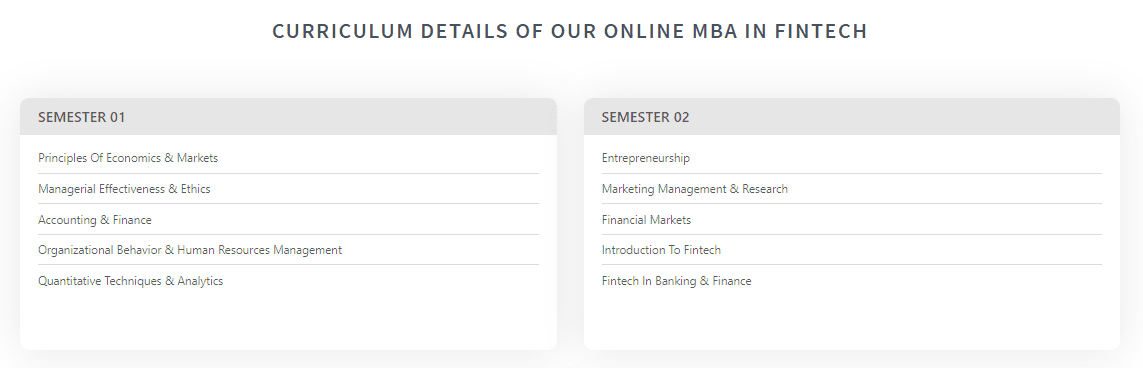
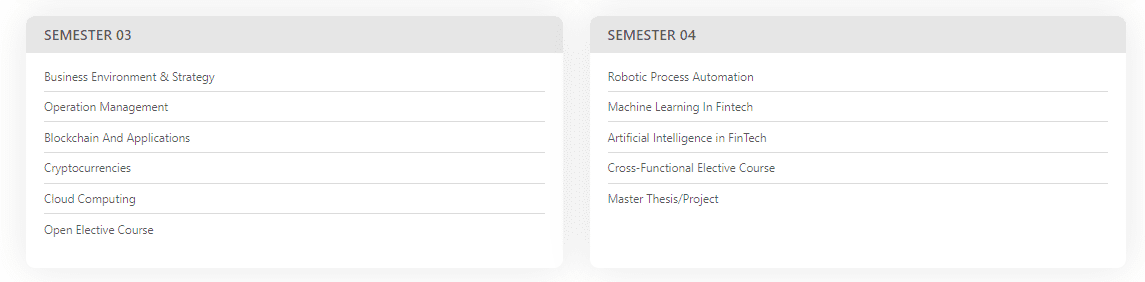
Imarticus Learnings is one of the best among them. They have a compact Fintech MBA degree with a blockchain and cryptocurrency course included in the curriculum. It will not only teach you all you need to get ahead in the game but would also provide good placement opportunities that will put you leagues ahead of your peers. 

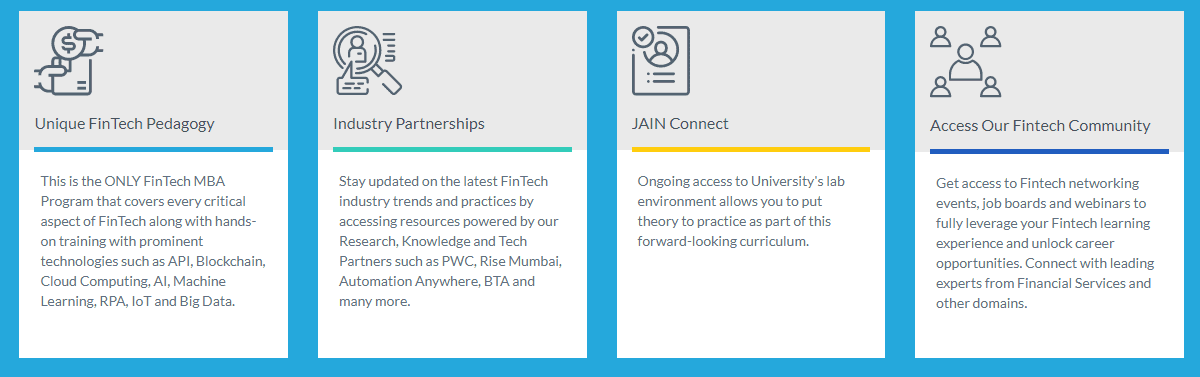
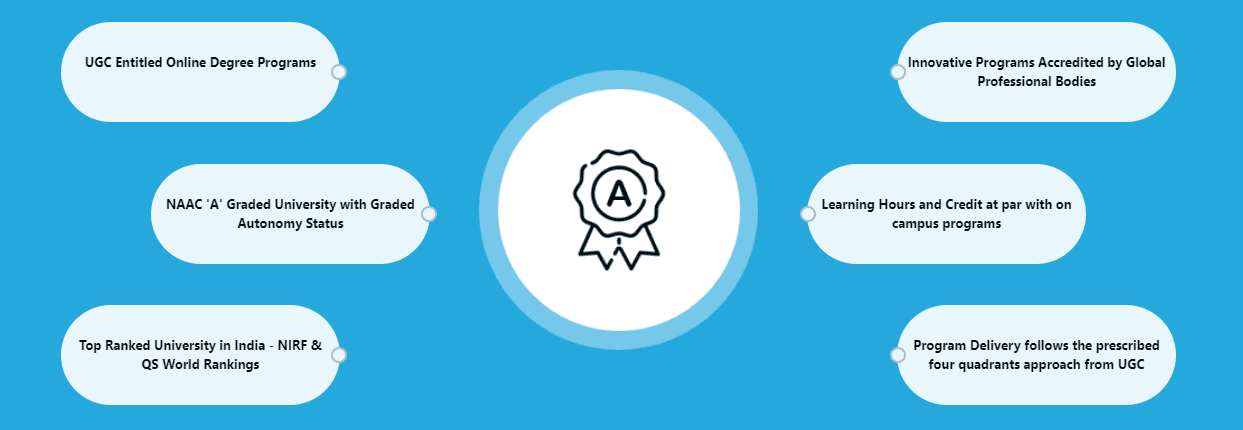
MBA in Fintech with blockchain and cryptocurrency course

MBA in Fintech with Blockchain and cryptocurrency course

What are smart contracts?

Smart contracts are basically an agreement made between two parties recorded in a blockchain system. They are absolute and obviously, due to the extremely secure blockchain system, they can not be hacked into or tampered with in any way. These contracts function automatically, as in if an agreement is made of a transaction happening at a certain date if certain conditions are met, then given all goes according to plan, the transaction will be made automatically.

With no involvement required of a third party or even the parties involved in the first place, the system completes the transaction automatically, with cryptocurrency being the mode of payment that gets transferred to the respective payee’s digital wallet.

How do they function?

Basically in a blockchain system, two parties agree. For example, Rachel will buy a car from Monica with 150 Bitcoins on 18th October. And the ownership of the car will be transferred to Rachel when the amount is paid. Now, on 18th October, the amount gets credited to Monica automatically without Rachel having to do it manually at all. And just like that with the conditions met, the ownership of the car is now transferred to Rachel.

Benefits of using them

There are some serious benefits of using smart contracts. A few of them are listed here:

  • No need to involve any third parties, including brokers, lawyers, or even the bank.
  • Both parties are secure in their knowledge that the terms are absolute and the amount, as well as the goods, will be transferred to them without any delay. Which negates the chance of fraud completely.
  • Saves precious time as well as extra expenses on both ends.

Conclusion

Blockchain is a system that is now being used in or introduced to almost all sectors of business, education, and even health. So a degree in Fintech is the best possible course to take for career aspirants these days. Do check out Imarticus Learnings’ Fintech MBA program to get the boost you need in your career.