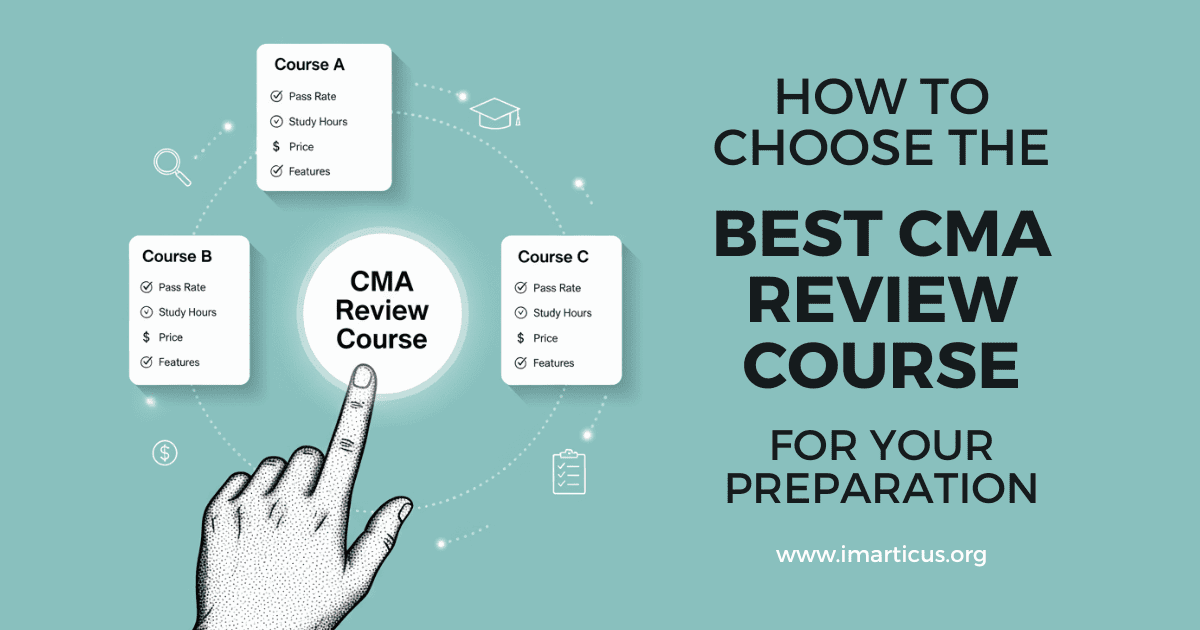
Choose the Best CMA Review Course for Your Preparation

If you’ve ever wondered what is CMA and why it carries such weight, think of it as unlocking a powerful secret language of business. Imagine holding that CMA certification in your hand, which showcases your expertise, opening doors to exciting leadership roles in finance and management accounting. If that vision resonates with you, then welcome! You’ve embarked on an incredibly smart and rewarding career journey. The challenge? Navigating the dense forest of available CMA review courses. How do you discern which path leads to genuine understanding and exam day triumph, rather than just more confusion? 

With the Certified Management Accountant Course being highly sought after in the industry, you need the best preparation strategy possible. At Imarticus, we believe your preparation should be as exceptional as your ambition. That’s why we’ve crafted this ultimate guide to help you confidently pinpoint the best CMA review course – a true partner that transforms daunting challenges into achievable milestones, ensuring you don’t just clear the exam, but truly thrive.
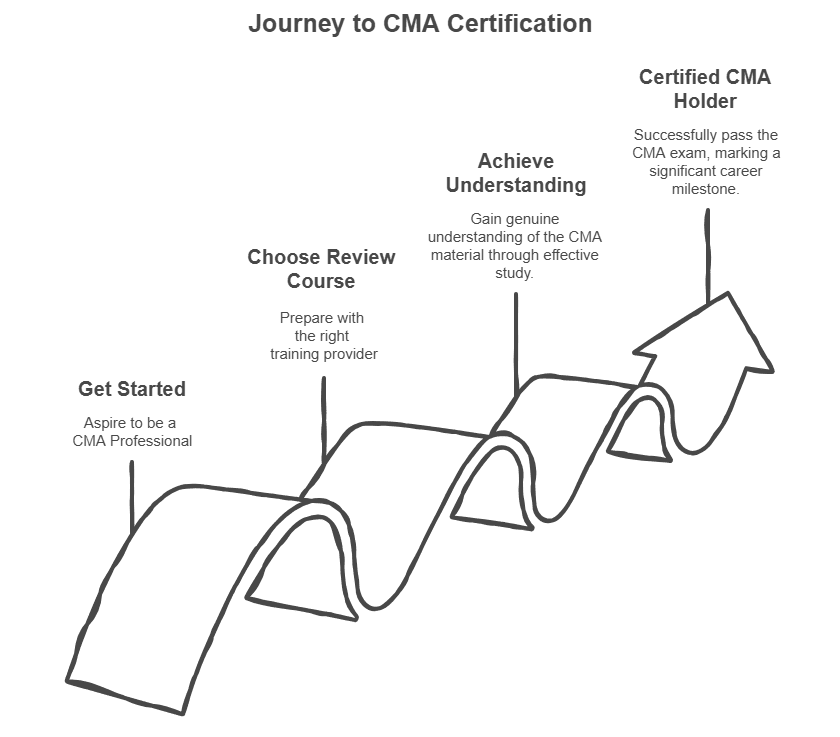
cma certification journey

What is CMA?

Imagine unlocking a powerful secret language of business – that’s what the CMA, or Certified Management Accountant, designation offers. It’s not just a qualification; it’s a globally recognised badge of honour, equipping you with advanced expertise to truly shape financial strategy. Think of yourself as a strategic navigator for a company, expertly charting courses in financial planning, sharp analysis, robust control, critical decision-making, and impeccable professional ethics. The CMA certification elevates you from a number-cruncher to a visionary leader. It is awarded by the Institute of Management Accountants (IMA).

Unlike other finance certifications that are deeply domain-specific, the US CMA course emphasises multi-faceted practical applications by training professionals to solve real-world challenges in corporate and business settings. 

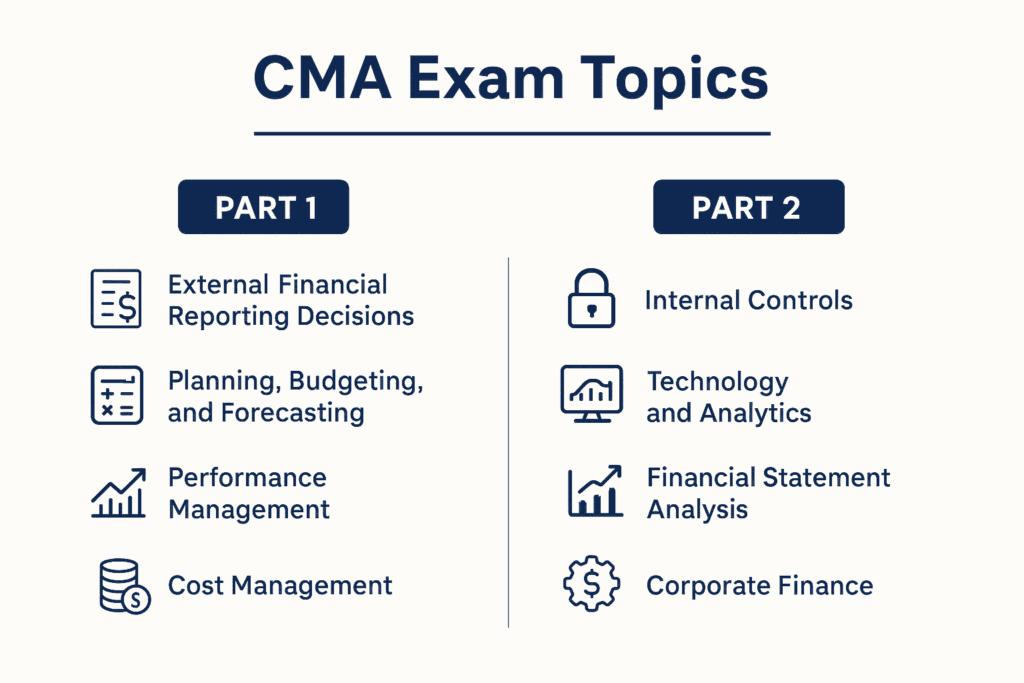
The curriculum consists of two parts with a wide range of subjects, such as:

  • External Financial Reporting Decisions
  • Planning, Budgeting and Forecasting
  • Performance Management
  • Cost Management
  • Internal Controls
  • Technology and Analytics
  • Financial Statement Analysis
  • Corporate Finance
  • Business Decision Analysis
  • Enterprise Risk Management
  • Capital Investment Decisions
  • Professional Ethics
cma exam topic

What is a CMA Review Course?

Picture embarking on an epic journey to conquer the CMA exam. While you could set out alone, a CMA review course is like having a seasoned explorer as your guide – someone who knows every twist and turn of the trail, every hidden shortcut, and every potential pitfall. A CMA review course is your roadmap through the maze of textbooks and study plans. It shows you exactly where to focus, turning stress into a clear, manageable path. In the end, it helps you do what matters most: pass the exam and boost your career.
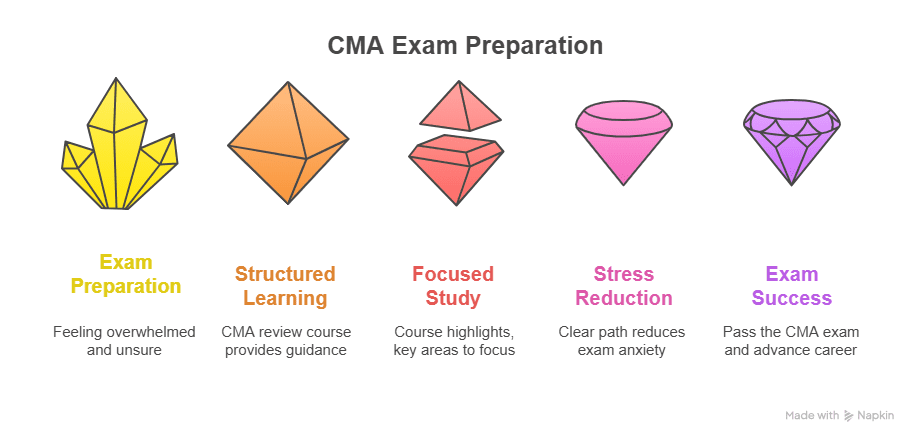
cma review course

Benefits Of The CMA Review Course

The decision to pursue CMA can feel daunting, as it is a huge leap in your career. Before you enrol in any CMA course, it is essential to weigh its benefits over other courses. Here’s a brief overview of the benefits:

BenefitDescription
Learning StyleTailoring the course to fit individual learning preferences
Course ContentEnsures comprehensive and up-to-date study material from reputed sources
InstructorsExperienced and engaging teaching faculty
Study MaterialClear and concise resources for effective revision
Practice ExamsBuilding exam stamina and confidence
Interactive ToolsEngaging and progress-tracking tools
Flexible OptionsFitting the course into busy schedules
Pass Rate & SupportHigh success rates and responsive support
Student ReviewsHonest feedback for realistic expectations

Why Is It Essential To Choose The Right CMA Review Course?

Pursuing the CMA (Certified Management Accountant) designation is a big step towards a career in management accounting. It requires the right guidance. But here’s the thing: this adventure, this path to becoming a CMA, isn’t a walk in the park.

That’s where your choice of a review course comes in – it’s like picking your most essential gear for the journey. Choosing the best CMA review course starts with knowing the value it brings to your preparation. The right course will provide you with a structured approach and an achievable goal that gives you an edge by helping you adopt a study strategy that truly fits your needs.

👉 Tip: Think of your CMA review course as an investment, not an expense—the ROI can be massive in just a few years.

It Impacts Your Success

The Review course helps you understand the concepts and their application in the real world. The best CMA study materials offer a comprehensive study guide that increases your chances of clearing the exam in less time.

Time Constraint & ROI

Opting for the review course is an investment in your career, and when you invest your time and money in something, the ROI matters a lot. Based on the review course, you can reduce the number of retakes required, resulting in fewer retake fees and a shorter duration.

👉 Tip: Stay consistent—studying 12–15 hours per week with a structured course is usually enough to crack the US CMA in 6–9 months.

Personalised Learning 

We all take in and remember information in different ways. Selecting the right course starts with knowing your style of learning, and when you choose a course that adapts to your style will make learning easier. 


Key Factors To Evaluate In A CMA Review Course

Enrolling on a review course can leverage your journey of preparation. You can consider the following factors to evaluate before selecting a course.

Understanding Your Learning Style

Choosing the right Certified Management Accountant course starts with knowing your learning needs. Take a course with a teaching pattern that matches your style so that it will make learning easier and be beneficial to you. 

Understanding how you learn best can make a big difference in your study journey. It may be visual (graphs and charts), auditory (listening to explanations), or kinesthetic (when you try it out yourself ).

Comprehensive Course Content

A great Certified Management Accountant review course should cover all topics in detail. The CMA exam includes many areas like financial reporting, strategic management, risk management, and more. Your course should cover all these topics.

Finding courses that make hard ideas easy to understand with examples from real life and case studies can help you understand better. 

Experienced & Engaging Instructors

The teachers in a Certified Management Accountant review course are very important. Find a course taught by people who know the subject and the CMA exam. They can give you useful advice to help you feel confident during the exam.

Extensive Study Material

A good review course provides clear notes, practice papers, and key summaries that help to make revision focused and manageable.

Practice Questions & Mock Exams

The best way to build the confidence to walk into the real CMA exam fully prepared is by taking practice tests. Solving mock papers under timed conditions helps you spot weak areas and manage pressure.
“Think of practice questions and mock exams as your rehearsals. How do you feel about practising under timed conditions? Does it help you find those tricky spots?”

Interactive Learning Tools

The best CMA review course offers interactive learning tools to enhance your understanding and retention of the material. Practice exams, quizzes, and simulations are excellent tools for reinforcing your knowledge and assessing your progress. 

Flashcards, quizzes, simulations… these aren’t gimmicks. It makes learning interactive, helps you remember more by enhancing your retention capacity, and makes studying feel less like a chore. 

Flexible Learning Options

A review course that offers flexibility in your preparation is essential. Flexible learning ensures you can dedicate the necessary time and effort to your CMA certification course. 

Passing Rate & Student Support

The passing rate of the review course and student support through online portals or in-person counselling can be a defining factor in your preparation journey. 

You can ensure that the passing rate of the review course is at least equal to the pass rate of the actual course.

Real Student Reviews

Don’t just take the course provider’s word. Positive feedback from successful candidates can reassure you, while honest comments about support and updates give you a real picture of what to expect.


CMA Review Course Comparison: Which One Fits You Best?

A review course doesn’t just add to your study; it maximises your entire effort, turning scattered information into focused insight, uncertainty into clarity, and ambition into a tangible, career-advancing achievement. It’s your strategic advantage for conquering the CMA exam and fast-tracking your professional journey.

This table shows a concise overview of all the key factors and why it is so important.

Key FactorsWhat to look forWhy it matters for you
Your Learning StyleVisual, Auditory, Kinesthetic approach.Ensures that you absorb information effectively and enjoy the process.
Course ContentComprehensive, up-to-date, real-world case studies and clear explanations.Covers every exam topic that makes complex ideas understandable.
InstructorsExperienced CMAs, engaging teaching style, good at simplifying.Your mentors help with exam strategies that give you clarity and confidence.
Study MaterialClear notes, practice papers, concise summaries.Streamlines revision and keeps you focused on key areas.
Practice & Mock ExamsAbundant, timed conditions, detailed solutions, and weak area identification.Builds exam stamina, boosts your confidence, and reveals any knowledge gaps.
Interactive ToolsFlashcards, quizzes, simulations, progress trackers.Enhances retention, makes learning engaging, and tracks your progress.
Flexible OptionsSelf-paced, live online, recorded lectures, mobile access.Fits seamlessly into your busy schedule.
Pass Rate & SupportHigh success rates, responsive online/in-person support, and guarantees.Increases your likelihood of passing; provides help when you need it.
Real Student ReviewsHonest feedback on strengths, weaknesses, and overall experience.Offers genuine insights; sets realistic expectations.

Why Imarticus is the best choice for your CMA Journey

Picture walking into the CMA exam room calm, collected, and confident. Every topic you studied feels familiar, every financial model clicks, and your mind doesn’t race—it flows. That’s what the best CMA review course delivers to you. It’s more than preparation; it’s building a mindset of clarity and mastery, turning ambition into achievement.

Imarticus Learning offers a top-notch CMA course, which offers:

  • Industry-led Program: Joint certification in collaboration with KPMG in India. Practical case studies evaluated by practitioners of KPMG in India.
  • Gold Learning Partner: Recognised by IMA US as a Gold status course provider for the CMA USA course.
  • Internship: Top performers get an internship opportunity with KPMG in India.
  • Access to training tools: Comprehensive study materials from Surgent – a top content provider with an 83% pass rate (higher than the global pass rate of 45-50%).

FAQs about the CMA Review Course

Here are a few frequently asked questions about the CMA review course:

How long does it typically take to complete a CMA review course and prepare for the exam?

The duration varies based on various factors, but a structured review course reduces study time and retakes. The CMA course has a study duration of 6 to 8 months.

What is the average cost of a CMA review course, and are there any hidden fees?

CMA review course costs can start from ₹1,00,000. This fee varies based on provider, included materials, and access duration. You can verify through the website and brochures about any potential hidden fees.

Can I study for the CMA exam using only free resources, or is a review course essential?

Yes, you can opt for self-study, but a CMA review course gives you structured guidance and smart strategies, making your preparation more focused and effective. It helps you clear the exam in fewer attempts.

What if I don’t pass the CMA exam on my first attempt after taking a review course?

Imarticus courses offer a “pass guarantee”, which guarantees a 50% fee refund if you fail. You can review the terms and conditions of such guarantees before enrolling in a course.

How important is live instruction versus self-study in a CMA review course?

Live instruction and experienced instructors are very important. They provide clarity on complex topics, exam tips, and confidence-building guidance, complementing self-study with structured support. 

Are there specific technical requirements (e.g., computer, internet speed) for online CMA review courses?

Online review courses usually have minimum basic requirements of a computer or mobile device for viewing the study material. Some additional requirements are high-speed internet, usually above 5 GB per second, and storage space. If any course has other requirements than those mentioned on their website or brochure.

How do I know if a CMA review course is up-to-date with the latest exam syllabus?

Course providers like Imarticus offer comprehensive content covering all CMA exam topics, including practice questions and mock exams aligned with current exams provided by top content providers recognised by IMA US.


Conclusion

Step into a future where your expertise in finance and management accounting is not just recognised but respected globally. Choosing the best Certified Management Accountant review course isn’t merely a decision; it’s the pivotal first step towards that successful, impactful career. Imarticus Learning is committed to guiding young professionals like you through your journey, providing a top-notch and best CMA review course that caters to various learning styles and preferences.

Imarticus is the perfect launchpad, providing you with an unparalleled learning experience. Our programs boast truly comprehensive content, delivered by engaging and expert instructors, all supercharged with innovative interactive learning tools and the flexibility you need. This potent combination is meticulously designed to lead you directly to exam success.

Let Imarticus be your trusted partner in your pursuit of the CMA Certification to prepare yourself with confidence. Enrol today and leap into a promising career as a highly sought-after professional in the finance and accounting industry.

6 Key Benefits of IIM Indore’s Finance Course

Chief Financial Officer, popularly known as CFO, is the senior executive of an organisation who is responsible for its financial activities. Their job role requires them to track the company’s cash flow and do the financial planning for the organisation. They also analyse the financial strengths and weaknesses of the company and propose strategic decisions.

The CFO is a C-suite executive of the company. The role of a CFO is similar to that of a treasurer. They are in charge of managing the finance and accounting departments.

Additionally, they also ensure that financial reports are accurate and ready on time.

The CFO job role is often perceived as the ultimate position for a finance career. Generally, the only person above a CFO is the Chief Executive Officer or CEO. Apart from the CEO, the CFO is only answerable to the owners which include the chairman, shareholders and entrepreneur. Thus, it is considered as the most senior role for a finance professional.

If you are a finance professional looking for a promotion from a managerial role to a CFO position, IIM Indore Finance Course can be of your help in the process. CFO Certification Course will provide you required training to bridge the skill gap to become a CFO. This article will discuss the role of a CFO and the benefits of doing a CFO Certification Course.

CFO in Today’s Business World

In the ever-shifting and fast-paced business environment of today, a CFO is not just a company accountant. They are multifunctional executives who have mastered financial skills. Automation of accounting processes has considerably reduced the accounting duties of a CFO. That being said, the role demands considerable experience and training in finance management.

They should have a thorough understanding of tax accounting principles including GAAP. Along with great analytical skills, the CFO is expected to master communication skills. This is to effectively communicate the financial health and strategic decisions to the higher-ups.

A CFO must be updated with the current market trends and have a vision for the business’s future. Thus, they will be capable of implementing business plans that align with long-term business goals. Leadership skills are a must as they are responsible for overseeing the finance department and its actions.

CFOs should possess a great understanding of how business works. That calls for collaborating and understanding the role of every department within the organisation. They should be ready to explore new things and try taking calculated risks. This will improve the company’s financial standing.

Benefits of IIM Indore Finance Course

High Demand

The finance industry is growing continuously. As the global economy keeps on changing, companies are on the lookout for professionals who can handle the complexities of financial markets effectively. Having a CFO Certification Course will give you an edge over other candidates and prepare you to help the company grow.

Financial Analysis and Planning

You can develop a deep understanding of financial analysis and planning through IIM Indore Finance Course. Here, you will learn to analyse financial statements and reports and predict a company’s future financial performance. This is crucial for making informed decisions and managing the company’s financial health.

Risk Management

Since the economy is getting increasingly complex, risk management is an essential skill for a CFO these days. A CFO Certification Course will give you a thorough understanding of real-world business problems and ways of identifying risks. Additionally, you will also be equipped with the skills to tackle them.

Flexibility

As the IIM Indore Finance Course is an offline course, it will allow individuals to embrace their own pace. Professionals can pursue training while not disturbing their work life or other commitments.

Networking Opportunities

IIM Indore Finance Course is taught by experienced professionals at IIM Indore. Additionally, you will get the chance to interact with several other industry experts. This way, the CFO Certification Course presents you with the opportunity to build good relationships which can benefit you in the future.

Personal Growth

Pursuing a CFO Certification Course can be a challenging yet rewarding experience. It will help you think critically, thus developing problem-solving skills. This growth can have a positive impact on all aspects of life.

How can Imarticus Learning help?

Imarticus Learning has introduced a CFO Certification Course in collaboration with IIM Indore. The IIM Indore Finance Course, which is a 12-month online program is designed for individuals who have over 5 years of working experience in the finance industry.

The program focuses on educating you about the latest technological developments in the finance industry and how to make the best use of them. The CFO Certification Course will also help you in developing the necessary soft skills to become a CFO.

Imarticus Learning has years of experience in grooming future CFOs of top companies. Our students work at organisations such as Flipkart, Amazon, ICICI, KPMG, Nestle etc. If you wish to join the IIM Indore Finance Course, visit Imarticus Learning now.


Chatbots for Marketing: An Insightful Guide

Have you ever browsed through a website and wanted additional information on a product but well, it’s 4 am and no customer support to help you? Or are you a business in the rush of the holiday season with a backlog of customer queries waiting to be addressed? On both ends, as a customer and a business, a chatbot can come to the rescue. 

Chatbots are the new holy grail of marketing. It combines the perks of automation and AI to provide optimal marketing services. Handing over the reins of marketing to chatbots is the future. A growing number of consumers, especially millennials, state their preference for chatbots over human agents, while some of the largest corporations like Facebook, LinkedIn and Starbucks have been using chatbots to reduce operating costs and reach their target audience. 

Take your first steps with our insightful guide on chatbots and become a digital marketer ready to take on the future of marketing. 

What are Chatbots?

Engaging in conversations with machines may have seemed like a fantastical scene from a sci-fi movie just a few years ago. Not anymore! Chatbots (conversational bots or conversational artificial intelligence) have changed how we interact with technology and vice versa. Chatbots are software programmed to interact and converse with users through texts, audio, and images. 

They are the digital personal assistants that today’s consumers need and want from businesses as time has become the most valuable commodity. Here chatbot marketing steps up to the challenge as a digital marketing strategy.

What is Chatbot Marketing?

Chatbot marketing is the use of chatbots by businesses to engage in one-on-one conversations with visitors or users to achieve marketing objectives. They are at the beck-and-call of users from the start (welcome) to finish (checkout and feedback).

From increasing sales, providing round-the-clock customer service, making appointments, acquiring customer feedback, amassing consumer insights, and connecting leads to the sales team- chatbot marketing is the master of all trades. You can even integrate the chatbot across multiple platforms for your business without having to sweat the extra effort or drain your resources! 

A marketing chatbot’s seamless juggling of multiple tasks at a time makes it a winner among digital marketing tools. Take a look.

Reasons You Need Chatbot Marketing

Marketing chatbots combine the skills of a team of customer service agents and marketers with the efficiency of a machine. Chatbot marketing’s adoption in the industry is a testament to its competence. 

Here’s why you need chatbots in your digital marketing strategy:

  1. Optimal use of resources

With a 24/7 chatbot at your service, you won’t need an army of people dedicated to performing services that can be automated. You can reallocate valuable resources and personnel time to more critical tasks. 

  1. Cuts down response time

With a chatbot, users can access its services in real-time without the hassle of waiting for personnel to become available to respond. Gone are the days of call waiting and call queues. 

  1. Personalisation

Give your users the personalised experiences they desire. Chatbots segment traffic based on consumer needs and their unique requirements. The process of completing a sale and providing any additional information is streamlined with a marketing chatbot.

  1. Increase conversion rates

Chatbots make it easier to increase conversion rates. They provide all-in-one customer support to make the journey through the conversion funnel easier for users by generating awareness, interest, desire, and action.

  1. Boost customer retention

Data is digital gold. Chatbots help collect and analyse the data required to elevate the customer experience in tune with their past information. Knowing your customer is half the battle won, and a marketing chatbot is an ally you need.

  1. Multi-platform support

With one software, you can meet your target audience wherever they are. Why limit your interaction with customers to only your platform? Connect with your audience across multiple social media platforms by integrating your chatbot marketing strategy at scale. 

  1. Get qualified leads

Chatbots are a messiah for the sales team. They act as the first line of lead generation by screening through the sea of potential customers for the business. Chatbots can qualify leads and directly connect them with the sales team cutting down the lag time in the process.

  1. Gather customer feedback

Customer feedback is essential to improving products and services. With chatbots, getting feedback becomes more interactive, thus, increasing response rates from users. 

  1. Measure performance

Performance metrics are essential to measuring the performance of your strategy. Keeping track of how your marketing chatbot is doing will give you insights into your future digital marketing strategy

Conclusion

Chatbot marketing holds the key to the digital marketing kingdom if done right. Its scope and potential in building a foolproof digital marketing strategy is a no-brainer. If you aspire to become a digital marketer, knowledge of chatbot marketing can open up doors for you.

With Imarticus as your knowledge partner, you can ace your digital marketing game. Imarticus’ Advanced Certification In Digital Marketing And MarTech, designed by IIT Roorkee, is the course you need to learn job-relevant skills to boost your career. Don’t wait. Enrol now! 

Understanding the Role of Financial Markets in Economic Growth

Financial markets play a pivotal role in driving economic growth by facilitating the efficient allocation of capital. As fresh graduates and young professionals, it is essential to understand the significance of financial markets in our evolving economy. In this blog, we will explore the concept of financial markets, their types and most importantly, how they contribute to economic growth.

What are Financial Markets?

Financial markets are platforms where buyers and sellers trade financial assets such as stocks, bonds, currencies, commodities, derivatives and more. These markets provide a means for individuals, companies and governments to raise capital and manage risk. Various types of financial markets cater to specific needs.

Types of Financial Markets

1. Capital Markets

Capital markets facilitate long-term borrowing and investment through the issuance and trading of stocks and bonds. This market enables businesses to raise funds for expansion or innovation while providing investors with opportunities to earn returns on their investments.

2. Money Markets

Money markets deal with short-term borrowing and lending instruments such as treasury bills, commercial papers, certificates of deposit, etc. They enable participants to meet their immediate liquidity needs while ensuring stability in the overall financial system.

3. Foreign Exchange Markets

Foreign exchange (Forex) markets involve trading different currencies against one another. These markets determine exchange rates between countries and enable international trade by facilitating currency conversion transactions.

4. Derivatives Markets

Derivatives are contracts whose value is derived from an underlying asset or index. The derivatives market comprises futures contracts, options contracts, swaps etc., which are used for hedging purposes or speculating on future price movements.

Role of Financial Markets in Boosting the Economy

1. Mobilising Savings

Financial markets play a crucial role in mobilising savings by offering a wide range of investment options. These options, such as stocks, bonds and mutual funds provide individuals and institutions with opportunities to grow their wealth over time.

By investing their savings, individuals contribute to the overall pool of capital available for productive investments. This capital can be utilised for infrastructure development, funding entrepreneurial ventures or supporting other economic activities that drive growth and development.

2. Efficient Allocation of Capital

One of the key benefits of financial markets is their ability to efficiently allocate capital. Investors have access to a vast array of investment opportunities, allowing them to analyse the risks and potential returns associated with each option.

This analysis helps investors make informed decisions about where to allocate their funds, directing capital to areas where it is most needed. As a result, financial markets promote the efficient allocation of resources, ensuring that capital flows to businesses and projects that have the highest potential for growth and productivity.

3. Facilitating Economic Growth

Financial markets play a vital role in facilitating economic growth. By providing businesses with access to capital, financial markets enable them to expand their operations, invest in research and development and create employment opportunities.

This infusion of capital into the economy stimulates productivity, innovation and entrepreneurship. As businesses grow and thrive, they contribute to overall economic growth, leading to increased prosperity and improved living standards.

4. Risk Management

Financial markets offer a range of risk management tools that help individuals and businesses mitigate potential losses. Insurance products, for example, protect against unforeseen events such as accidents, natural disasters or health emergencies. Hedging instruments, such as futures contracts, allow businesses to manage price fluctuations in commodities or currencies.

Options contracts provide investors with the ability to protect their investments or speculate on future price movements. By utilising these risk management tools, individuals and businesses can safeguard their financial well-being and promote stability within the economy.

5. Price Discovery

Financial markets serve as a platform for buyers and sellers to determine the fair value of financial assets. Through the forces of supply and demand, prices are established based on market participants’ perceptions of the asset’s worth. This price discovery mechanism ensures transparency, efficiency and liquidity in the market.

Investors can make informed decisions based on the prevailing market prices and companies can raise capital at fair valuations. Price discovery also helps in the efficient allocation of resources, as capital flows to investments with the most favorable risk-return profiles.

Unlock Your Potential in Finance with Industry-Aligned Programmes

As fresh graduates or young professionals seeking avenues for career growth or investment opportunities, understanding how financial markets function is essential. By gaining knowledge about financial markets’ types and their impact on the economy’s overall health, individuals can make informed decisions about their personal finances or even pursue careers in finance-related fields.

If you are interested in enhancing your skills or pursuing a career in finance or related areas such as banking or investment analysis, consider exploring Imarticus Learning’s Postgraduate Financial Analysis Programme. From financial analysis to investment banking certifications, Imarticus Learning offers industry-aligned programmes that can equip you with the necessary expertise to thrive in today’s competitive job market. Visit our website today to explore our course offerings and take your first step towards a successful career in finance.

5 Best Practices to Master Coding Skills

Coding has become an essential skill in today’s technology-driven world. Whether you are a fresh graduate or a young professional looking to enhance your technical proficiency, mastering coding skills can open up numerous career opportunities for you. In this blog, we will explore the significance of practice coding skills and discuss five best practices that will help you become a coding expert.

Coding is the process of creating instructions using programming languages to develop software, websites, mobile applications, and other technological solutions. It involves writing logical algorithms that machines can understand and execute. With the increasing demand for tech-savvy professionals in various industries, learning how to code has become crucial for personal and professional growth.

Significance of Practice Coding Skills

Practice makes perfect, and this holds for coding as well. Just like learning any new skill, consistent practice is key to mastering coding. By dedicating time and effort to practising coding skills, you can improve your problem-solving abilities, enhance your logical thinking, and gain confidence in your programming capabilities.

5 Best Practices to Master Coding Skills

Now let’s dive into the five best practices that will help you master coding skills:

Start With the Basics

Beginners often feel overwhelmed by complex programming languages and frameworks available today. It is important to start with the basics before diving into more advanced concepts. Understand fundamental concepts like variables, loops, conditionals, functions, and object-oriented programming principles. Building a strong foundation will make it easier for you to grasp more advanced topics down the line.

Solve Real-World Problems

To truly master coding skills, it’s important to apply your knowledge to real-world problems. Challenge yourself by solving coding exercises or working on small projects that replicate real-life scenarios. This hands-on approach will not only consolidate your understanding but also give you practical experience in tackling common challenges faced by developers.

Collaborate and Learn from Others

Coding is often a team effort in professional settings, so it’s crucial to develop collaboration skills. Engage with fellow coders through forums, coding communities, or open-source projects. By collaborating with others, you can gain insights into different coding styles, learn new techniques, and receive feedback on your code. Sharing knowledge and learning from peers will accelerate your growth as a coder.

Read Code and Documentation

Reading code written by experienced developers can be a great learning experience. Explore open-source projects or join online coding communities where you can access code repositories and documentation.

Analysing well-written code will expose you to the best practice coding skills, different programming paradigms, and efficient coding techniques. Additionally, reading documentation for programming languages or frameworks will help you understand their functionalities and utilise them effectively.

Embrace Continuous Learning

Technology is constantly evolving, and so are coding practices. To stay ahead in the field of coding, it’s important to embrace continuous learning. Keep up with the latest trends, updates, and advancements by following reputable tech blogs, attending webinars or conferences, and exploring online learning platforms like Imarticus Learning, offering courses catering to the fast-paced world of technology.

Why Choose Imarticus Learning?

Mastering coding skills requires consistent practice, dedication, and a willingness to learn from others. By starting with the basics, solving real-world problems, collaborating with fellow coders, reading code/documentation, and embracing continuous learning, you can become proficient in coding.

Expanding your skill set by opting for courses on Imarticus Learning can further enhance your career prospects in the field of technology. For instance, if you are interested in data science and analytics, consider enrolling in a data science course with a job guarantee. Imarticus Learning offers a comprehensive data science certification programme that provides hands-on training and real-world projects to enhance your coding skills in the field of data analysis.

Don’t miss out on the chance to unlock new opportunities. Visit their website today to learn more and get started on your journey towards mastering coding skills.

5 Steps for Picking the Right Corporate eLearning Solutions

Know About Corporate eLearning Solutions

In today’s rapidly evolving corporate landscape, continuous learning has become crucial to stay competitive. Organisations are increasingly turning to corporate eLearning solutions to provide effective training and development opportunities for their employees. 

Now, what do you mean by corporate eLearning solutions? These are training programmes organised by companies to train their workforce so that they stay updated with the market trends.

However, with a plethora of options available, it can be challenging to select the right solution tailored to your organisation’s unique needs. In this blog, we will discuss five essential steps that will help you pick the right corporate eLearning solution.

Step 1: Assess Your Organisation’s Training Needs

Before diving into the world of corporate eLearning solutions, it is essential to evaluate your organisation’s specific training requirements. Take a closer look at your employees’ skill gaps and identify the areas where training is most needed. Are you looking to enhance technical skills or foster leadership capabilities? Understanding these needs will help you narrow down the focus areas when considering different eLearning programmes.

Step 2: Define Your Learning Objectives

Once you have identified your organisation’s training needs, it is time to define clear learning objectives. What outcomes do you want to achieve through employee training? This could be anything from improving productivity and efficiency to enhancing customer service or fostering innovation within teams. Clearly defined learning objectives will guide you in selecting an eLearning solution that aligns with these goals.

Step 3: Consider Customisation Options

Every organisation has its unique culture, processes, and goals. That’s why it is important to choose a corporate eLearning solution that offers customisation options. Look for providers who can tailor their programmes to match your company’s branding and incorporate relevant case studies and examples specific to your industry. 

Customised content ensures that employees can relate their learning experiences directly back to their work environment, making it more engaging and impactful.

Step 4: Evaluate LMS Features

A robust learning management system (LMS) forms the backbone of any corporate eLearning solution. As you evaluate different options, pay close attention to the features offered by the LMS. Does it provide easy course creation and management? Is it user-friendly and intuitive for both administrators and learners? Look for features like progress tracking, assessments, interactive elements, and mobile compatibility that enhance the learning experience.

Step 5: Assess Technical Support and Integration Capabilities

Finally, consider the technical support and integration capabilities offered by the eLearning solution provider. Robust technical support ensures that any issues or concerns are promptly addressed, minimising disruptions in your training programmes. Additionally, check whether the solution can seamlessly integrate with your existing HR systems or other learning platforms you may already be using. Integration streamlines processes and avoids duplication of efforts.

Why Selecting the Right Corporate eLearning Solution is Important?

To sum it up, selecting the right corporate eLearning solution is a critical decision in today’s fast-paced business environment. By following the above-mentioned five steps — assessing training needs, defining learning objectives, considering customisation options, evaluating LMS features, and assessing technical support — you can ensure that you choose an eLearning solution tailored to your organisation’s requirements.

If you want to empower your employees with customised eLearning programmes that meet their training needs effectively, look no further than Imarticus Learning. Our comprehensive range of employee training solutions covers a wide array of industries and skill sets. Visit our website today to explore our courses and take a step towards unlocking your organisation’s true potential.

Why Every Executive Should Consider an Artificial Intelligence Course?

As industries embrace digital transformation, the demand for professionals with expertise in artificial intelligence (AI) is on the rise. In a constantly evolving world, it has become imperative for executives to stay ahead of the curve by acquiring new-age skills. Gaining proficiency in AI can aid executives unlock numerous opportunities, enhance business operations, and drive innovation. This blog elucidates the importance of why every executive should enrol in an AI course.

Overview of AI

AI refers to the simulation of human intelligence in machines that are programmed to think and learn like humans. It encompasses various technologies such as machine learning, natural language processing, robotics, and computer vision. AI has already made its mark on several industries. In healthcare, AI has been instrumental in enhancing diagnostic accuracy, optimising treatment plans, and streamlining administrative tasks.

In finance, AI has been a game-changer for fraud detection, risk assessment, and algorithmic trading. Manufacturing has used robotics and automation, guided by AI, to enable processes to be more streamlined, adaptable, and capable of producing higher-quality products. Retail has been transformed by AI in various ways, including personalised shopping recommendations, inventory management, and supply chain optimisation.

By understanding the fundamentals of AI through a structured course, you can grasp its applications and potential. You can gain insights into how algorithms work and how they can be used to analyse vast amounts of data for making informed business decisions.

Importance of Learning New-Age Skills

In the present digital era, companies are increasingly relying on technology to streamline their operations and gain a competitive edge. As an executive, you need to adapt to this changing landscape by acquiring new-age skills like AI. This will ensure your relevance in an evolving job market and help you stay ahead of your peers.

Learning AI equips you with the ability to harness data-driven insights effectively and identify patterns and trends from diverse datasets that would otherwise go unnoticed. Armed with this knowledge, you can make decisions that optimise processes, boost productivity and drive profitability.

Benefits of Completing an AI Course

There are numerous advantages of enrolling in an AI course, such as gaining in-demand skills to unlocking career opportunities and staying at the forefront of technology advancements. Let us explore how completing an AI course will benefit you:

Enhancing Problem-Solving Skills

An AI course will sharpen your critical thinking abilities by teaching you how to break down complex problems into manageable components. It will provide you with the necessary techniques and mental faculties to approach problem-solving from an analytical perspective.

Driving Decision-Making

AI-driven algorithms will provide you with predictive analytics, enabling you to make data-backed decisions. By completing an AI course, you can leverage these algorithms to identify emerging trends, forecast market behaviour and make well-informed strategic decisions.

Automating Routine Tasks

AI technology has the potential to automate repetitive tasks, freeing up your valuable time to focus on higher-value responsibilities. Executives who possess AI skills can develop intelligent systems that streamline workflows and improve overall efficiency.

Personalisation and Customer Insights

AI enables businesses to provide personalised experiences to customers by analysing their preferences and behaviours. Executives who understand how AI works can leverage this technology to develop targeted marketing campaigns that resonate with customers, leading to increased engagement and loyalty.

Innovation and Competitive Advantage

With the knowledge gained from an AI course, you can identify opportunities for innovation within your organisation. By leveraging AI technologies creatively, you can drive advancements in product development, customer experience and operational efficiency.

AI is the Need of the Hour

In conclusion, as technology continues to revolutionise industries globally, executives must embrace new-age skills like AI. Completing an AI course will provide you with a competitive advantage by enhancing your problem-solving abilities, promoting data-driven decision-making, automating routine tasks, and fostering innovation, thus helping you stay ahead of the curve in a rapidly evolving business landscape.

If you want to enhance your skills and secure new opportunities as an executive, consider enrolling in an AI course at Imarticus Learning. Our comprehensive program provides practical training and real-world examples that will equip you with the expertise needed for success. Check out our course in AI here

7 Key Skills You Will Learn in HR Management Course

As dawn’s gentle light breaks over the horizon, illuminating the possibilities of a new day, we invite you to embark on a journey that transcends the ordinary. In a world filled with endless information, where the constant hum of technology competes for our attention, we offer you a sanctuary of words—a place where language becomes art and creativity knows no bounds.

Here, imagination takes flight, weaving intricate tapestries of thought and emotion. You’re about to step into a world where the mind’s uncharted territory unfolds before you, where every sentence is a brushstroke, and every word is a musical note in the symphony of storytelling. 

As you venture further, you’ll find that our words are more than just letters on a screen; they are gateways to other worlds, keys to unlock hidden treasures of knowledge and inspiration. This is a place where stories take root in your soul and grow, where ideas blossom into creations that defy gravity.

So, let your imagination soar, and let the magic of words surround you. Welcome to a unique experience where the extraordinary is the norm, and every journey is an adventure through the limitless landscapes of human expression.

Overview of HR Management

Human Resource Management is a dynamic field that plays a crucial role in the success of any organization. HR professionals are responsible for managing a company’s most valuable asset – its people. Whether you’re already working in HR or aspiring to join this field, enrolling in an HR management course is a smart move. These courses provide you with the knowledge and skills necessary to excel in this multifaceted discipline.

In the grand stage of the workplace theater for the year 2023, a resounding sixty percent of HR visionaries have declared a mission: crafting the maestros of management. It’s not just a plan; it’s a symphony of strategy to shape the future of work.

In this unfolding drama, the spotlight shines on the art of cultivating exceptional leaders within your company. The result? A crescendo of benefits – heightened employee productivity, unwavering loyalty, and a harmonious chorus of job satisfaction that resonates throughout the organization.

Importance of Continuous Learning

Before we delve into the specific skills you’ll gain from an HR management course, let’s emphasize the importance of continuous learning in this field. The business landscape is ever-evolving, with new challenges and opportunities emerging daily. HR professionals must stay current with industry trends, best practices, and legal regulations. A well-structured HR management course ensures that you are up-to-date and equipped to meet the demands of the modern workforce.

Enrolling in an HR management course is a wise investment in your career. It equips you with the skills needed to thrive in the ever-changing world of human resource management. From strategic planning to legal compliance, you’ll gain insights that are not only valuable to your organization but also instrumental in your professional growth.

The importance of continuous learning in HR skill development cannot be overstated. As new challenges emerge and the workforce evolves, HR professionals must adapt. By mastering these key skills, you’ll become a competent and sought-after HR leader who can contribute significantly to the success of your organization.

What Are the Key Skills in HR Management?

  • Strategic HR Planning

In today’s competitive business environment, HR is no longer just about hiring and firing. It’s about aligning HR strategies with organizational goals. An HR management course will teach you how to develop a strategic approach to HR planning, ensuring that your human resources are utilized efficiently and effectively.

  • Talent Acquisition and Recruitment

Finding and hiring the right talent is a critical function of HR. HR management courses delve into recruitment strategies, interview techniques, and the use of technology in finding the best candidates. You’ll also learn how to create a diverse and inclusive workforce, fostering innovation and productivity.

  • Employee Relations and Conflict Resolution

Conflict is an inescapable facet of any organization’s intricate tapestry. Within this web of discord, HR professionals emerge as the crucial weavers skilled in managing and ultimately unraveling the threads of workplace disputes. Throughout your HR management course, you will embark on a transformative journey, acquiring the expertise needed to cultivate and nurture wholesome employee relations. 

Armed with a profound understanding of the art, you will learn to deftly navigate the labyrinth of grievances, applying your newfound knowledge and mediating conflicts with an adept touch. Through these endeavors, you’ll craft a serene and harmonious work environment where collaboration and productivity flourish in unity.

  • Performance Management and Appraisal

Evaluating and enhancing employee performance is essential for organizational success. You’ll learn how to set clear performance expectations, conduct performance appraisals, and implement feedback mechanisms that motivate employees to excel.

  • Training and Development

Continuous learning is essential for employees to stay competitive in their roles. HR management courses teach you how to design training programs, identify skill gaps, and create a culture of learning within the organization. This skill is vital for employee retention and talent development.

  • Compensation and Benefits Management

Compensation packages and benefits are powerful tools for attracting and retaining top talent. An HR management course will equip you with the knowledge to design competitive compensation structures, manage employee benefits, and ensure compliance with labor laws.

  • Legal and Ethical Compliance

HR professionals must be well-versed in labor laws and ethical standards. This skill ensures that the organization operates within legal boundaries and maintains a reputation for ethical conduct. Your HR management course will educate you on labor laws, workplace ethics, and how to prevent and handle legal issues.

The Final Words

An HR analytics course by IIM Lucknow is not just about earning a certificate; it’s about gaining the expertise and knowledge that make you a valuable asset to any company. So go ahead, make the investment in your education, and start your road toward ongoing HR management development. Both your organization and you in the future will appreciate it.

Remember, Human Resources management skills are not just about managing resources; it’s about unleashing the potential of your organization’s greatest asset – its people. At the core of this extraordinary journey is the fusion of education and experience. It’s an approach that transcends mere theory, plunging you headfirst into the world of Human Resource Management, where every challenge is an opportunity and every decision shapes your leadership destiny.

But the excitement doesn’t end there. The New-age People Leadership Program isn’t just about understanding the here and now; it’s a portal to the future. Welcome to a transformative journey – welcome to the New-age People Leadership Program by Imarticus Learning.

New-age Skills You Will Learn in Management Courses

Hey, future leaders and aspiring business entrepreneurs! 

If you’re wondering whether management courses are worth your time and money, the short answer is “YES!” 

Management courses are not just about donning sharp suits and power lunches; they’re about equipping you with the skills and knowledge you need to succeed in the modern world of business. 

Think of management as the conductor of a grand symphony, orchestrating the harmonious workings of diverse entities, be they businesses, nonprofits, or government bodies. 

Whether you’re in the realm of business administration, nonprofit management, or the intricate dance of public administration within the world of political science, management is the art and science of skillfully taming the wild horses of resources in these multifaceted organizations.

In this blog post, we’ll take a deep dive into the world of management, explore the significance of skill enhancement, and highlight seven essential cutting-edge expertise acquired in business school.

Overview of Management

Management is the art of getting things done through people. It’s all about organizing resources, setting goals, and, most importantly, leading and motivating a team to achieve those goals. From small startups to multinational corporations, every business entity relies on effective management to thrive in this competitive world.

Whether you’re fresh out of college or a seasoned professional looking to climb the corporate ladder, Strategic Thinking Training provides a structured path to understanding the nuances of business management. They also cover a broad spectrum of topics, ranging from leadership to strategy and finance to human resources. The most valuable aspect of these courses is the acquisition of skills.

Significance of Skill Enhancement

In today’s fast-paced and ever-evolving business landscape, merely having a degree won’t cut it. You need to be a versatile and adaptable professional, ready to tackle any challenge that comes your way. And that’s where the significance of skill enhancement in management courses comes into play.

These courses arm you with the practical tools and techniques necessary to navigate complex business scenarios. They make you a valuable addition to any firm by bridging the gap between theoretical understanding and practical implementation. As you embark on your management journey, you’ll soon realize that it’s not just about what you know; it’s about what you can do.

What Are the Latest Skills in Management Courses?

Key Leadership Skills in Management Courses:

  • Leadership Skills

   Leadership skills development isn’t about bossing people around; it’s about inspiring and guiding them to achieve a common goal. In management courses, you’ll learn the art of effective leadership, how to motivate your team, and how to lead by example. The best leaders are also the best listeners, so you’ll develop exceptional communication skills, too.

  • Strategic Thinking

   Every successful organization has a well-thought-out strategy. Management courses will teach you how to analyze market trends, create business plans, and make decisions that align with the company’s long-term goals. You’ll become a strategic thinker capable of navigating your company through the choppy waters of the business world.

  • Problem-Solving

   In the real world, problems are as common as coffee breaks. Management courses equip you with problem-solving skills, teaching you to identify issues, analyze them, and come up with practical solutions. You’ll be the go-to person when the going gets tough.

  • Financial Acumen

   No, you don’t have to be a math genius, but you do need to understand the numbers. Management courses cover financial management, helping you comprehend balance sheets, income statements, and budgeting. This skill is important for making informed decisions and ensuring your company’s financial health.

  • Team Building

   A company is only as strong as its team. Management courses teach you the art of team building and effective collaboration. You’ll discover how to create a harmonious working environment, leverage the strengths of your team members, and foster a culture of productivity and innovation.

  • Project Management

   Whether you’re launching a new product or implementing a change in your organization, project management skills are invaluable. You’ll discover how to establish project objectives, distribute resources, and guarantee that jobs are finished on schedule and budget. Realizing your ideas is what it’s all about.

  • Communication Skills

 Good communication is the backbone of any successful venture. You’ll polish your written and verbal communication skills, which are essential for conveying ideas, managing conflicts, and building relationships with stakeholders, clients, and colleagues.

The Final Words

So there you have it, folks! Management courses are not just a ticket to a fancy job title; they’re a gateway to a world of skills and knowledge that will set you on a path to success. In the modern business landscape, where change is constant and challenges are inevitable, mastering these new-age skills is more critical than ever.

Remember, management courses are not a sprint; they’re a marathon. You won’t become a management guru overnight, but with dedication and the right education, you’ll gradually build a formidable skill set that will serve you throughout your career.

So, if you’re wondering whether online management courses are worth your time and investment, think about the skills you’ll acquire, the doors they will open, and the heights you’ll reach. 

The Imarticus Learning General Management Programme (GMP) stands out as a prominent executive initiative meticulously designed by IIMA in Dubai, intended to empower professionals in elevating both their functional and leadership proficiencies. 

This General Management Certification is a testimony to the thoughtful customization that caters to the specific regional nuances and requirements. Since its establishment in 2009, it has seen 21 thriving batches and holds an esteemed reputation as the epitome of excellence. The primary objective of this General Management Course is to equip its participants, enabling them to seamlessly step into senior-level general management positions in the years to come.

Management is not just about making a living; it’s about making a difference. Go ahead, take that step, and embark on a journey of learning, growth, and success. 

Your future as a leader in the world of business awaits!

Navigating Conflict Resolution and Negotiation in Leadership

The ability to skilfully deal with conflict resolution and negotiation is a vital talent in leadership. Leaders face various issues daily, whether in corporate, governmental, or social environments. These disputes range from simple disagreements over opinions to more complicated interpersonal and within-group problems. How leaders address these issues can substantially impact their teams’ and organisations’ effectiveness and serenity.

In addition to dispute resolution, explore the art of negotiating, which is another essential talent for leaders. Leaders use negotiation to gain agreements, manage resources, and negotiate complicated procedures for making decisions. 

The necessity for ongoing growth and development is essential in the changing leadership environment, and senior executives play a critical role in establishing an organisation’s destiny. The Senior Leadership Programme concept has evolved as a strong and transforming tool as organisations strive for quality and creativity.

In this article, we explain a leader’s role in handling conflict among teammates, outline measures you may take to resolve issues and provide further conflict management advice successfully.

Understanding Conflict in Leadership

Conflict in the light of leadership signifies the existence of disputes, and differences that develop when different people within an organisation have contradictory interests, aims, values, or views. It symbolises an argument, which can be either internal or external, nonverbal or verbal, and is a common trait in the challenging environment of leadership.

Types of Conflict in Leadership

Given below are different types of conflict in leadership:

1- Intrapersonal Conflict

This type of conflict happens when two people in an organisation have opposing aims or strategies. Each person has a distinct character, so there will always be variances in decisions and viewpoints. Usually, it is beneficial for a leader experiencing intrapersonal conflict to interact with people who can assist them in resolving differences and finding solutions to negate difficult situation.

2- Interpersonal Conflict

Interpersonal conflicts occur when managers clash with other individuals, especially team members, coworkers, or supervisors. Everyone has a unique personality, and as a result, there will be variances in preferences and viewpoints. Leaders have to handle interpersonal disputes in order to preserve their personal growth and develop connections with other members in an organisation.

2- Intergroup Conflict

Intergroup disputes occur when various teams, or groups within an organisation disagree. These conflicts frequently arise from resource rivalry, competing interests, targets, or interdependence. To promote harmony among employees and the overall performance of the organisation, managers must resolve and handle intergroup conflicts.

4- Intragroup Conflict

This dispute can arise between two members of the same organisation or group. Disputes between team members, like interpersonal conflict, are generally the outcome of varying mindsets. To enhance teamwork and accomplish mutual objectives, leaders must support the resolution of conflicts among their teams.

The Role of Leadership in Conflict Resolution

Leadership Styles and Their Impact on Conflict Resolution

The manner in which a leader leads has a significant impact on the way conflicts are managed inside an organisation. Various leadership styles may heighten or alleviate conflict. It is critical to look into the following implications:

Autocratic Leadership: Autocratic leaders can make decisions unilaterally, leading to challenges since other team members are not involved.

Democratic Leadership: Democratic leadership involves teammates in making decisions, which can promote acceptance and minimise conflict through cooperation.

Laissez-faire Leadership: A hands-off strategy for leadership is often known as delegation management. These conflicts can arise as a result of a lack of guidance or responsibility.

Transformational Leadership: This inspires and motivates their teams and brings team members together to reduce the chance of disagreements due to similar goals and values in an organisation.

Guidelines for Effective Conflict Management in Leadership

Aside from everything you can take as a leader to deal with conflict, there are a few suggestions you can adhere to when attempting to resolve a conflict. These are:

Keeping Borders

While resolving issues, a leader should consider maintaining workplace boundaries. Through this, it helps the teammates and other members to behave in a conflict-avoidant manner. Workplace boundaries could include ensuring that any conflict discussion is limited to the individuals involved.

Developing Objectives

It is beneficial when all the members involved in a conflict understand what each one desires in a prospective resolution. This could contain the goals as their leader, such as fostering a productive or happy work atmosphere. Knowing the objectives of other teammates can resolve the conflicts and difficulties in a mutually beneficial way.

Conclusion

Understanding Conflict Resolution and Negotiation in Leadership explores the complexities of managing leadership in an organisation, where disputes are both an obstacle and a chance for growth. Across this article, we’ve discussed the fundamentals of comprehending, handling, and utilising conflicts in order to support organisational development, cooperation, and improvements.

Conflict resolution must be included in a leader’s portfolio and used when conflict emerges within an organisation. Leaders must recognise how disagreement could destroy their team or organisation. They may create possibilities for better team structure. They can rely on their leadership skills and identify which conflict-handling approach is required depending on the situation.

Explore the Global Senior Leadership Programme offered by Imarticus, which is a systematic training programme designed for high-level executives, and organisational leaders. Senior Leadership Course provides learners with advanced leadership abilities, and the skills to tackle difficult challenges such as dispute resolution and negotiation.