What Makes an Imarticus – UCLA Certified Analytics & AI Professionals To Be Forever in Demand

Modern-day technologies like AI (Artificial Intelligence), ML (Machine Learning), data analytics, etc. are revolutionizing the working culture of businesses & firms. Analytics professionals use these technologies to ease & pace the analytics process.

Analytics professionals are required to extract meaningful insights from huge chunks of unorganized data to make better business decisions. Professionals with a certification from a reliable source surely get an edge over others when it comes to upward mobility.

Let us see how can you get the Imarticus – UCLA certification in Analytics & AI along with its benefits.    

Course Overview

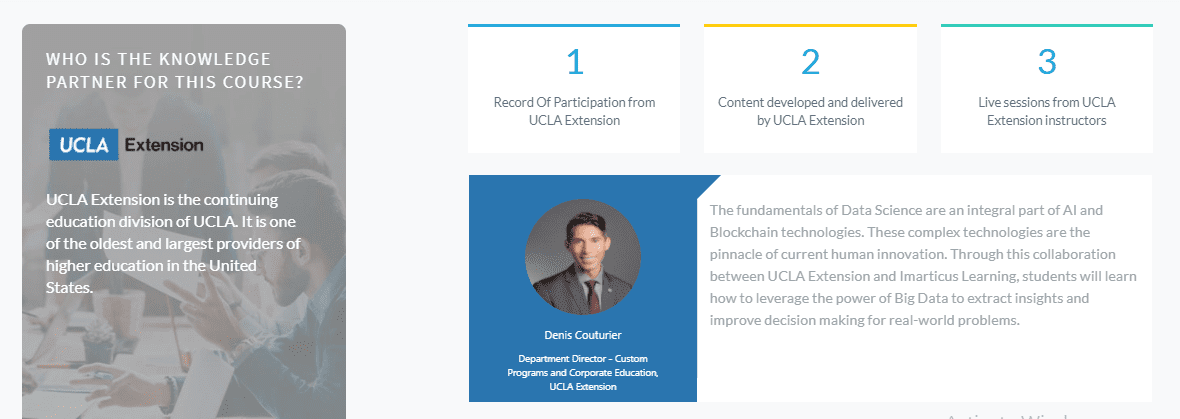
Imarticus provides a post-graduate program in Analytics & Artificial Intelligence in collaboration with UCLA Extension which is a major certificate issuing institution in the United States.

Analytics and Artificial Intelligence CourseYou will get dual certification from two reputed sources if you opt for this course. Many individuals have built their Analytics and Artificial Intelligence careers successfully with the help of this course.

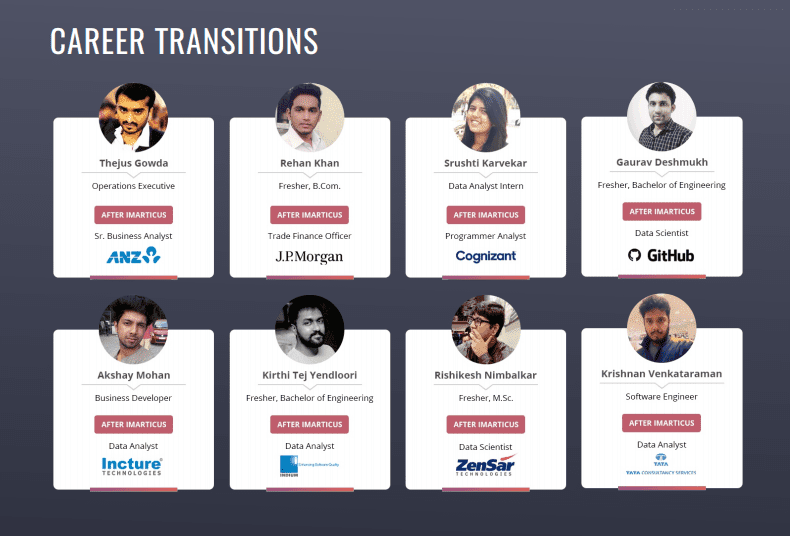
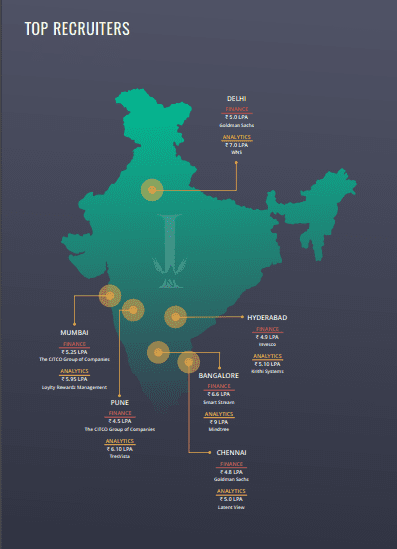
You will be receiving live training from world-class celebrities from UCLA & Imarticus. This course has around 400+ hiring partners with a 3-30 lakh salary range. You should have completed your graduation with at least 60% marks to enroll in this course.

Let us see how Imarticus – Analytics & AI professionals are forever in demand.

Broad Course Contents

This 28 weeks long online course covers all the aspects of analytics & AI along with data science fundamentals which helps in building a successful career. You will get to know about various tools/languages via this course like Python, Scikit-learn, Keras, TensorFlow, NLTK, OpenCV, etc. The major topics which will be covered in this course are as follows:

  • Data Science Fundamentals – You will be introduced to statistics in the first four weeks. You will also get to learn Python basics during this tenure. After that, you will perform data analysis with Python. Various concepts of data processing & statistics like central tendency, standard deviation, Z-score, etc. will be taught to you.
  • Machine Learning – ML will be taught to you for 6 weeks. Various topics of machine learning like multiple regression, correlation analysis, dummy variables, etc. will be taught to you. You will also be able to run various ML models in Excel in the practical classes. You will also learn about data science business models developed with the help of machine learning.
  • Deep Learning – Deep learning is a cutting-edge technology used for forecasting & enhancing decision-making ability. You will be taught about deep learning with an industry-first approach for 6 weeks.
  • NLP – Natural Language Processing (NLP) has helped in enhancing the ways humans react with computers. It has also automated the analytics process in firms/organizations. You will be studying this topic for about 4 weeks.
  • Computer Vision – You will be taught about computer vision, an AI-based technology that helps computers in extracting information for digital images and videos. You will focus on this topic for around two weeks including practical classes.

Pros of the Course

Besides the gravity of certifying institutions, the teaching methodology of this course ensures that the students will have a long run in the industry.
 

Analytics and Artificial Intelligence CourseThe pros of opting for this Imarticu’s Analytics and Artificial Intelligence course are as follows:

  • This instructor-led training is self-paced so that you can take your time to understand concepts.
  • You will work on various in-class industry-oriented projects to know about the practices in the industry.
  • You will also come across practice projects, boot camps, capstone projects, workshops, etc. if you opt for this course.
  • You will also get to test yourself in a hackathon at the end of the course.
  • The last two weeks of the course will be dedicated to placement preparation where you will get to learn from industry experts. Imarticus also provide excellent placement support to its students.
  • You will be provided a dedicated program mentor to guide you through the course and also for career advice. You can also monitor your test results & course progress.Analytics and Artificial Intelligence Course

Conclusion

This course follows an industry-first approach to make you ready for the industry. You can build a successful career with the broad topic coverage & placement support of this course.
Analytics and Artificial Intelligence Curse

Enroll in the Imarticus – UCLA Analytics & AI course now!
What is the best way to learn Artificial Intelligence for a beginner?

What is the best way to learn Artificial Intelligence for a beginner?

Over the past few years, the field of Artificial intelligence has displayed tremendous amounts of growth. AI is now driving businesses of billions of dollars across various industries and enabling enormous career opportunities.

If you have plans to learn artificial intelligence, it is the perfect time to start acting on it. This article discusses the best way to master AI for beginners.

1. Begin with the Basics

The first thing you have to do is unlearn everything about the AI. Clear all the preconceived notions and make your mind open and fresh for learning. Now you can actually start learning.

Start with the basics. Learn about the various technologies involved and their objectives. It will help you get oriented at the beginner level. You can refer books or blogs to get through this step.

2. The podcasts and Videos
The next step is listening to podcasts and videos. It will give you more comprehension about the industry, application of different technologies, the effect of them in our real life, various techniques in them and many more.

Often these videos and podcasts come with jargons and concepts involved. So, it is important to have a fair amount of familiarity with the basics.

3. Guided Courses
A dedicated artificial intelligence course is one of the most important practical ways of mastering AI. A guided course will take you fully into the world of Artificial Intelligence. You will get global exposure to the skills required. Usually, such a course will brush up on the basics you have already taken care of and then help you develop the right technical skills required to work with AI.

If you are planning to join the industry, such a course is inevitable. A guided course will also put you in touch with experts of this technology and excellent study materials. So, it is important to attend a guided course for a complete learning experience. Along with that, you will get a certification proving your excellence in AI at the end of these courses. It will help you during the search for a job.

4. Projects
The best way to learn anything is to practice it properly. So, it is essential to indulge in lots of projects and gain practical exposure. You will be doing capstone projects during your course. From those projects to the projects you are personally interested in, you have to constantly work and build your portfolio. By doing this you will be able to master this skill in a very short time.

For a beginner with very low prior experience with AI, these are the little steps that make sense. Also, through this, you will be able to find some time to process the transition between each step and prepare for the next one. Within just a year, this road map will equip you with AI capabilities that are good enough to be a part of the industry. So, start your process as soon as possible and take part in the AI revolution going all around the world.

What Are The Application of Machine Learning in Medicine?

Medicine and healthcare are leading industries with altruistic goals. Smart applications of the Machine Learning are today playing a role in a variety of areas like billing, insurance claims, record-keeping, patient-care, staffing solutions and many more. Just over the last decade technology has changed much. So have the volumes of data and its complexities, the various smart devices being used, and the algorithms specific to medical care.

ML is the system of algorithms developed for specific tasks that use deep-learning and artificial intelligence to simulate the way in which the human brain works to execute and aid us in complex tasks. Hence Machine Learning Course is an evolving and very important field. The ability of the ML algorithms to accurately predict, self-learn and assist us with forecasts is truly amazing and way beyond what the human brain is capable of. The field of ML is lucrative too!

Let us look at some of the best applications of ML in the medical and allied fields.
1. Diagnosis on a global scale: ML algorithms and applications score in disease diagnosis, providing simple diagnosis and online treatment even in rural areas, identifying patterns in the disease progression that is hard to recognize, and creating a global repository of research to help better the healthcare segment. Some of these are cancer detection, treating underlying genetic conditions hard-to-diagnose like Parkinson’s, diabetes, etc, providing therapeutic aid, and predicting conditions like stress, depression, etc.

2. CAT scans and MRI aided Diagnosis: Deep Learning and ML have been responsible for the development of advanced imaging devices like the Computer-Aided-Tomography scans, Magnetic-Resonance-Imaging, and the non-invasive Doppler or ultrasound scans. These developments embody machine learning training, handling of large data volumes and the ability of AI and can easily be used to forecast accurately the development of tumours and aneurysms.

3. Manufacturing and discovery of new drugs: Research, discovery, and use of the latest drugs are very important today as we discover more diseases and strains that are traditional-drug-resistant. ML allows the learning in an unsupervised fashion and helps develop new drugs with optimum dosages which can even be personalized for cancer patients.

4. Modification behavior-therapy: Prevention being better than cure several startup firms have come out with gesture-control based therapy apps, symptomatic analysis, early cancer warning, and detection apps, sleep trackers and such behavior-sensing apps that can help even with predicting the susceptibility to genetic diseases. For ex: Angelina Jolie underwent mastectomy based on such a forecast of cancer.

5. App-based medical personalization: Currently medical predictions use biosensors, historical data, genetic information and symptoms to diagnose ailments which tend to have rather fixed treatment methods. The time is not far where ML can offer holistic personalized treatment options which can help faster recoveries by identifying the underlying cause, diets, optimum medicine dosages, and recovery paths in a moment. Even the very process of seeking doctor’s advice appears to be going online to reach out further into rural areas and the personalization of healthcare regimens.

6. Outbreak Prediction: ML, deep-learning and AI have succeeded in not only assisting in healthcare but can also accurately and through unsupervised learning predict and forecast epidemic outbreaks which can then be nipped in the bud.

7. Smart Record Keeping and insurance claims:
The better the maintenance of records the easier cashless hospitalization and treatment becomes. ML is taking very large strides with smart apps to enable smart health-records in real-time, better document classification and intelligent paperless claim settlements.

8. R and D and medical trials: ML has and bears high potential in these areas of medical care where innovation and data play a huge role.

9. Data Crowdsourcing: The smart apps powered through intelligent ML allows doctors globally to crowdsource their data resources making it easy to give a real-time diagnosis, treatment, and better healthcare facilities. Even operations and complex deliveries can now be conducted easily and safely.
10. Radiotherapy and medical imaging:
Radiology, laser treatments, pathology, gastroenterology, cosmetology and several disciplines of medicine are being innovatively modernized with smart algorithmic-based ML to make model-making of individual cases much easier to treat successfully.

In conclusion, ML is growing by the moment and now is the right time to get on board this transformation. If you want to learn Machine Learning and reap career benefits in the medical field then you need to have Machine Learning Training.

At Imarticus Learning, the mentored specialization in skill-oriented courses like ML is par excellence and comes with certification, skill-based training, personality development, and assured placements. Hurry!

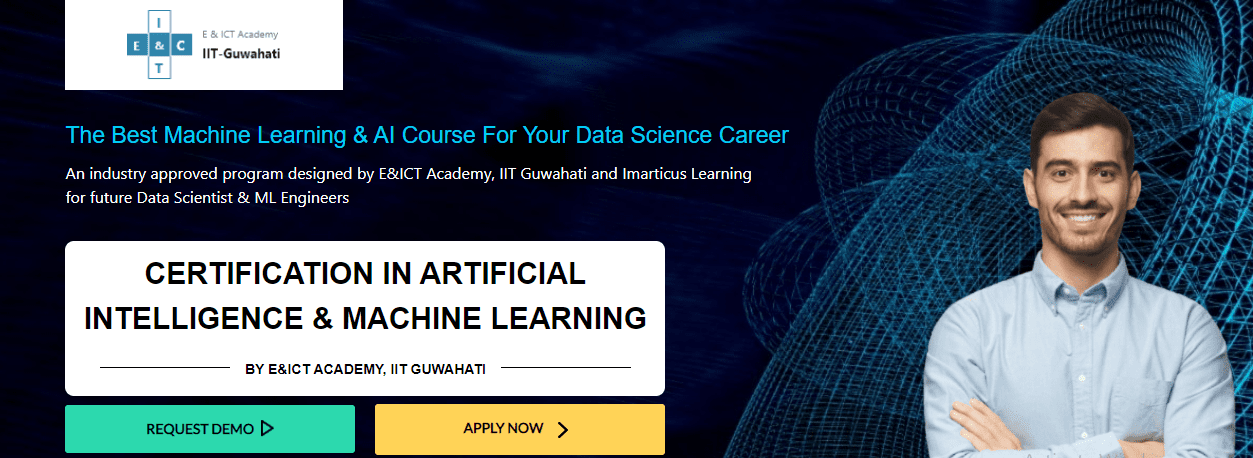
Certification in Artificial Intelligence and Machine Learning in Collaboration with E & ICT Academy, IIT Guhawati, and Imarticus Learning

Machine learning is powered by AI. With ML, we can power programs that are easily updated and modified to adapt to new environments and tasks- resulting in quick progress on difficult projects. ML and AI are almost synonymously used in tandem when it comes to the latest tech trends. And, AI has disrupted many industries forever – like SaaS, Manufacturing, Defense, Analytics, public sector, and so on.

If you learn machine learning through the best Machine Learning & AI course, you are likely on a fast and high-growth career trajectory.

Here is why!

#1. ML & AI Are Skills of the Future

Skills in ML can affect your long-term employment prospects because the field is projected to experience rapid growth.

With the emergence of advanced technologies like the Internet of Things (IoT), Machine Learning is experiencing a certain surge in demand and popularity.

If you learn machine learning by taking up data science certifications, there is an increase in the probability that you will have better job prospects as compared to someone without ML skills.

#2. Solve Real-World Problems

There is a lot of talk about how AI will replace jobs, but the truth is it will create new job opportunities. As an ML engineer, for instance, you get to work on projects that have a big impact in the real world and lead to business solutions that are meaningful.

#3. Versatile Growth Opportunities in the Data Sciences

Machine learning and artificial intelligence (ML &AI) skills are beneficial to a data science career. Both positions give you the opportunity to let your knowledge of both fields expand. Switching back and forth between roles can quickly enable you to become an invaluable resource in today’s rapidly changing world.

You want to have an advantage as early as possible so that you can learn about solving new and undiscovered problems. When the time comes, these skills will be in great demand and allow you to secure a career path on the rise.

What does a growth path in this domain look like?

Typically, a machine learning engineering career path begins with being a Machine Learning engineer. Machine learning engineers develop applications that automate common tasks previously done by humans and take care of the repetitive ones for humans to do efficiently without error.

When you earn a promotion as an ML engineer, you are then promoted to be an ML architect! Their responsibility is developing and designing prototypes for applications that need development.

There are a few other roles in the field which one could take on as well. These include ML data scientists, ML software engineers, senior software architects, and more.

New tech arenas keep developing into this space. So, keep your interest, skills, and industry demands aligned for the best growth!

How to make a successful career in AI & ML?

Want to learn machine learning with the best Machine Learning & AI course?

certification in Artificial Intelligence and Machine Learning

Imarticus brings to you the class-leading AI & ML certification in collaboration with E&ICT Academy of IIT-Guwahati.

Our highly-rated program has fostered hundreds of successful professionals serving the industry worldwide. Your chance to be a part of this prestigious career trek begins with us.

Enroll with Imarticus now!

What is The Best Coding Bootcamp For Machine Learning and Deep Learning?

Machine learning is an application of AI that provides the computer systems to automatically learn and process information to identify patterns and behavior which is later used in decision-making for given circumstances using this pattern. Machine learning is therefore looked upon as a revolutionary development in technology.

With diversified use of machine learning, companies are ready to invest in hiring machine learning engineers to stay ahead of the competition in a technology-driven world.

According to a report from Glassdoor, the average salary for machine learning engineers in the US is $115000 which is one of the reasons that make this field an attractive one even for the millennials who grew up with technology.

Aspiring candidates must possess great analytical skills and knowledge in programming languages and techniques like Python, C, C++, Hadoop, Impala, and Java which are provided through a Machine Learning Course.
There are numerous schools and institutes who are equipped with specially designed boot camps and courses both online and at the campus.

So, it becomes really difficult to choose the better one. Therefore, here is a list of compiled best boot camps for Machine Learning Training and deep learning which you can investigate further before making your decision:

  1. NYC Data Science Academy: Data science with Tableau, coding boot camp and Data science with R: Machine learning are some of its valuable courses offered full-time and part-time throughout the year. They also provide quarterly career day that connects the hirers with the students to enhance job opportunities.
  2. Grey Atom School of Data Science: It offers immersive data science boot camp, Data science masters program, data science masters program with deep learning. They offer career guidance and intense modules using Python.
  3. Product school: A list of comprehensive courses including product leadership, UX design for product managers and more cover subjects including Data analytics for managers(SQL & machine learning), blockchain and cryptocurrencies and project management. Students can get attend their courses in different locations or online and can access the job boards of the school online.
  4. Codesmith: Students get trained for landing in mid-level to high-level positions in their career with their intense courses like JavaScript for beginners, full stack software engineering immersive program and coding boot camps. On campus and online learning lets students build project modules and resume guidance.
  5. Lambda school: It renders a 30-week full time or 12 months part-time online boot camp which students can choose according to their convenience. Full-time or part-time Computer science and software engineering and Full-time or part-time machine learning and Artificial intelligence to name a few.
  6. Ubiqum Code Academy: Students can choose between a five-month full-time Bootcamp or one part-time data analytics course. Coding boot camps and full-stack web development with scholarships for women and veterans. To encourage promising aspirants they provide a facility to pay the fees in installments.
  7. Metis: It has different courses and boot camps both online and on the campus. Its data science Bootcamp has a duration of 12-week in person full-time course. Beginner Python for Matha and data science live course provides insights in subjects like web scrapping, Hadoop, Spark, Machine Learning, Git, GitHub and more.
  8. Data science Dojo: They have a specially designed 5-day data science bootcamp which leverages a hands-on-training for the students who spend 10 hours in this immersive course. Microsoft Azure machine learning, predictive analysis, and data engineering are some of the subjects the students can master during this course.
  9. We cloud data: They offer full-time and part-time data science bootcamps in Toronto and Canada. Their bootcamp is interesting and trains the students to be competitive enough to survive and flourish in this competitive field.
  10. Simple: They offer a wide range of online courses on machine learning, deep learning and data science for individuals who can concentrate on their career as well as upgrading their skills with their professional online courses simultaneously. MapReduce for big data problems, Introduction to solving data problems using UNIX and Hadoop are some of their skillfully designed courses.

Conclusion
Either for a person who is looking to land on a dream job or for a person who is looking to make a career shift in data science attending one of these coding bootcamps will definitely elevate the chances of being on a competitive front. Hike in salary and landing on full-time jobs are some of the perks received by the students who took up coding bootcamps.
Most of the bootcamps offer online courses which are flexible and allows you to work in a favorable environment. Luckily, we at Imarticus Learning is conducting an event called “Hackathon”, in which a number of students can participate in the coding competition.
Put your skills to the test, gain invaluable hands-on experience and develop your programming skills as you employ data science and machine learning to predict the price of used cars.
This exciting opportunity is brought to you by Imarticus Learning in collaboration with Analytics India Magazine. Winners stand a chance to win fantastic prizes and exciting learning opportunities.
Here’s What You Can Win: 

1st Prize
100% Scholarship
2nd Prize
50% Discount
3rd Prize
25% Discount
One of the Below Courses from Imarticus Learning
Data Science Prodegree
in collaboration with Genpact
Machine Learning Prodegree in Collaboration with IBM

You Will Also Win
Exclusive tickets to Cypher 2019, India’s largest Analytics and AI summit by Analytics India Magazine. Grab your chance right away by joining one of the best bootcamps to take your career one notch higher.

What is Differential Deep Learning?

Introduction

The world today has changed drastically. Therefore, it is important to change according to the environment in which we function. One such major change has been brought about by the advent caused by Artificial Intelligence.

Deep learning is a concept which has come around from artificial intelligence. It has been adopted by a lot of companies who want to automate their processes and make things easy. Also, people have started transitioning to deep learning to cut their losses and maximise profits. Therefore, deep learning is creating a lot of jobs in the market.

So, you can take up a Deep Learning course to increase your employability.

Understanding Differential Deep Learning

Deep learning is a way of implementing mathematical methods in the day to day working of a company. Numbers change every day. In most cases, we have to do these changes manually. With deep learning, you can keep a tap on the numbers without any additional effort.

With Deep Learning, you can formulate different algorithms to make your job easy. Deep Learning provides you with the ease of making predictions about future rates and prices based on the past and current trends and also on the market situations at different points of time. It provides ease of calculating and predicting values even if the market is volatile. Deep learning increases the analytic speed and efficiency of any company.

With proper Machine Learning training, you can design different algorithms for a different set of problems with which the company deals. Application of Deep Learning brings in automation which drastically improves the performance of any system is it calculating the sales value, keeping a tap on the generated leads, making a financial analysis, etc.

Differential Learning principals can be applied to different machine learning algorithms. Also, once you are well versed with the working of differential learning, you can try your hands on any machine learning language. It is going to be easy for you to understand.

You can apply Differential learning in models like regression, Principal component analysis, etc to get the best results. Also, differential deep learning is effectively used in the field of Finance. This can be used to develop a mechanism on pricing.

You can also use this to manage and assess various risks. Differential deep learning is effectively used to produce different models for closed-form solutions. Various Risk management metrics like hedge strategies, etc can be easily generated with the help of deep learning.

Uses of Differential Deep Learning

  1. It is used for developing different machine learning models where these algorithms are built to give results on different sets of inputs.
  2. Differential deep learning is being widely used in the field of risk management. With the use of different models, you can assess the situation at different values,
  3. It makes use of Automatic Adjoint Differentiation which can calculate changes and derivative sensitives quite easily.
  4. With Differential deep learning various fast pricing analytics can be formed which can be used to compute the metrics of risk management at different sets of information
  5. It is used to extract important estimations and values even when small data sets are available. Using differential deep learning can bring you to a conclusion very easily.
  6. It replaces the frequent interference of humans which was a prerequisite earlier. Differential Deep learning creates a system which is automated and reduces the cost of labour to a great extent. This system reduces the chances of errors drastically.

Conclusion

Differential Deep learning has changed the way we use our data. It has made the application of Machine learning possible. Also, with the help of this, companies are moving towards a fully automated world.

How the Indian Government’s AI Website Will Help the Country’s Artificial Intelligence Industry?

Collaboratively developed by the National Association of Software and Service Companies (Nasscom) and the National e-Governance Division of the Ministry of Electronics and Information Technology (MeitY), the portal is intended to be a one-stop-shop for all AI-related developments to happen in India.

The portal will also distribute documents, case studies, research reports and more relating to AI, and will also become a repository for AI-related learning job roles.

Noteworthy Resources On the Website

  • AI Courses

In order to help professionals and fresh graduates upskill, a variety of AI-related and machine learning courses are being offered through this government portal. The course providers range from IIT Bombay to companies such as IBM.

  • Editorial content

In order to collect all related information in one place, the website publishes editorial content and news as well as case studies and resources for budding AI entrepreneurs.

  • Highlighting successes

The portal also aims to highlight the country’s successes in AI in the recent past, spanning industries and use cases.

How the Website Will Help India’s AI Industry

The website is a distinctive step forward in recognizing the potential and scope of AI in India. Here are some ways in which the website can benefit the AI landscape at national and grassroots levels:

  • Democratising AI

Sanjay Dhotre, the MoS for E&IT, Communications, and HRD, said that digital innovation, including AI, has been a massive equaliser among the Indian population despite the diversity of the country. AI has already penetrated several homes; in the future, this website hopes to bring AI to virtually every part of the country and expound on its benefits in a growing economy.

  • Cementing India’s Place in the World

This public declaration of support towards Artificial Intelligence developments is a solid way of confirming to the world that India is investing in the technologies of the future. India has already supplied global leaders in technology to different parts of the world. By funding this AI website and encouraging its use, the country is making its way up the list of countries with one eye on the foreseeable future.

  • Encouraging Innovation

By making case studies, courses and resources accessible to the masses, the AI website is, in effect, encouraging each and every citizen to experiment in the field. There is no dearth of innovation and ideation in the country; this website becomes a place for resources to support the realization of AI-related dreams and the furthering of the country’s technological goals.

  • Building Networks

The website is touted as a convergence point for students, fresh graduates, AI experts, experimental businesses and new-age entrepreneurs to share and transact over revolutionary AI-driven ideas and proposals. The website also becomes a launching pad for innovation and a networking platform for those with ideas and those with the power to fund them. The departments are also working on creating investor pitch events to link ideators and funders alike.

  • Preparing the Future Generation

Alongside the website, the departments also announced the Responsible AI for Youth Program which is targeted at imparting AI education in government schools. The different phases of the programme aim to train teachers and gather groundbreaking ideas from the students themselves. Keeping in mind that India is one of the most populous countries in the world, instilling an understanding of AI and a passion for innovation at a young age is critical to the growth of the country internationally.

Conclusion

The AI website can be looked at as a show of support towards futuristic technologies that emerge from the grassroots level. By attempting to democratize AI, this government website is also creating a conducive atmosphere for technological growth on par with the rest of the world.

RPA Lifecycle – Everything About Different Stages of Bot Development!

Robotic Process Automation (RPA) in Machine Learning is a hot topic right now. Aspiring learners are looking to amass knowledge in it while IT professionals are looking to gain hands-on experience. In this quest, you are bound to come across the RFA lifecycle which is how bots are built from scratch.

Let’s take a look at the critical stages of bot development.

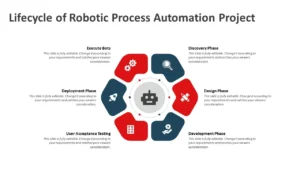
RPA Lifecycle

robotics programming automation course

Before we get into the stages of bot development, let’s first understand what Robotic Process Automation in Machine Learning really is. In laymen terms, RPA allows a process to be automated using software, robots, or any type of bots so that human intervention can be minimized.

Ever contacted the customer support of Amazon.in and a chatbot suddenly appeared on your screen? That is RPA in motion. It involves mimicking a human activity so that basic actions (like responding to a customer’s query about a recent purchase) can be automated. This helps reduce costs and human resources.

Let’s move on to the different stages of bot development.

Discovery

In this phase, the brief provided by the client is analyzed.

Can the process be automated? Can a bot for the said process be built? What are the challenges and advantages of building it?

Answers to these questions will give the entire RPA development team a clear understanding of the project. Thorough coordination with the client is essential in this phase.

Solution Design

In this phase of RPA in Machine Learning, a Process Definition Document (PPD) is created which provides detailed information about the process. A flowchart is then created that will act as a blueprint to the bot creation. What actions will trigger the bot? How many elements should it include? Such questions are asked.

data analytics course

This is perhaps the most important phase of Robotic Process Automation in Machine Learning as the information gathered here will heavily influence the final product: the bot.

Development

Once all processes are established, the next step is development. This is the longest phase in RPA in Machine Learning and can extend depending upon the scope and volume of the project.

Different RPA tools are used to develop bot. High levels of coding are executed in addition to automated tools and templates. This is where skilled and experienced individuals in the ML field is required.

The key element of the Development phase is to test how extensive the build of the bot is. Have all scenarios and outcomes been tested and there is no gap in the development? Will there be a situation when the bot goes live and it fails to act? Proper coordination with the research done in the initial phases is extremely important. This will ensure the bot is a success.

Testing

As the name suggests, this stage involves all types of testing. From the user interface to the backend, all elements are rigorously tested to ensure there are no loopholes.

In a way, Robotic Process Automation in Machine Learning is a complex procedure. Testing, therefore, is the second-most important phase because the findings in this stage can make or break the project.

Deployment

Last on the RPA lifecycle is the deployment stage. Here the bot goes live on the frontend and is ready for user interaction. Maintenance and bot execution are generally part of this stage.

That is the RPA lifecycle in a nutshell for you. Of course, when you go deep into each of the stages discussed above, you will understand the complexity of RPA in Machine Learning. It’s an interesting concept but one where the lifecycle has to be religiously followed to avoid mistakes.

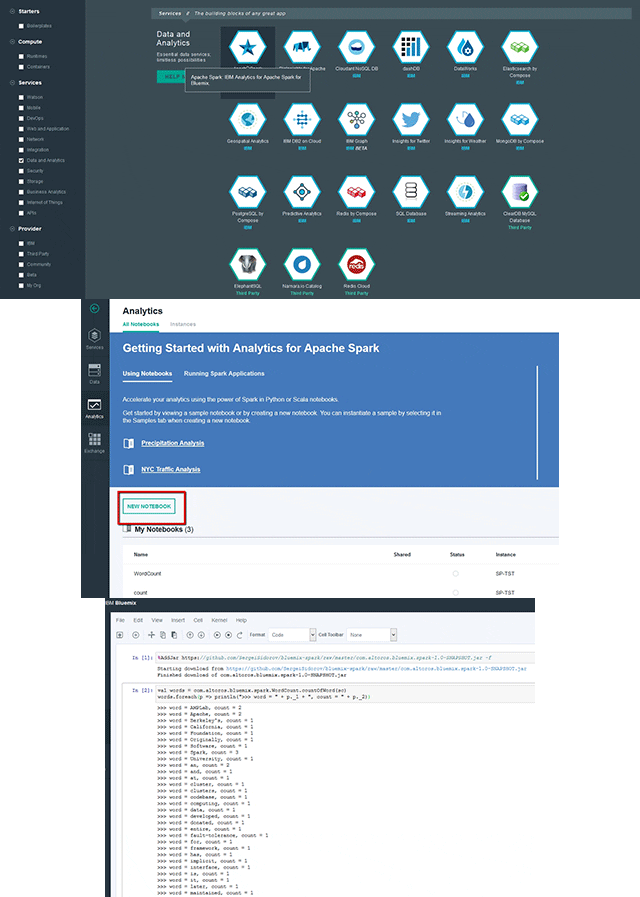
Top 3 Apache Spark Tutorials For Machine Learning Beginners!

Apache Spark is a well-known name in the machine learning and developer worlds. For those who are unfamiliar, it is a data processing platform with the capacity to process massive datasets. It can do so on one computer or across a network of systems and computing tools. Apache Spark also offers an intuitive API that reduces the amount of repetitive computing and processing work that developers would otherwise have to do manually.

Today, Apache Spark is one of the key data processing and computing software in the market. It’s user-friendly and it can also be used through whatever programming language you’re most comfortable with including Python, Java and R. Spark is open-source and truly intuitive in that is can be deployed for SQL, data streaming, machine learning and processing graphs. Displaying core knowledge of Apache Spark will earn you brownie points at any job interview.

To gain a headstart even before you begin full-fledged work in Apache Spark, here are some tutorials for beginners to sign up for.

  1. Taming Big Data with Apache Spark and Python (Udemy)

This best-selling course on Udemy has fast become a go-to for those looking to dive into Apache Spark. More than 47,000 students have enrolled to learn how to:

  • Understand Spark Streaming
  • Use RDD (Resilient Distributed Datasets) to process massive datasets across computers
  • Apply Spark SQL on structured data
  • Understand the GraphX library

Big data science and analysis is a hot skill these days and will continue to be in the coming future. The course gives you access to 15 practical examples of how Apache Spark was used by industry titans to solve organisation-level problems. It uses the Python programming language. However, those who wish to learn with Scala instead can choose a similar course from the same provider.

  1. Machine Learning with Apache Spark (Learn Apache Spark)

This multi-module course is tailored towards those with budget constraints or those who are unwilling to invest too much time, preferring instead to experiment. The modules are bite-sized and priced individually to benefit those just dipping their toes. The platform’s module on “Intro to Apache Spark” is currently free for those who want to get started. Students can then progress to any other module which catches their fancy or do it all in the order prescribed. Some topics you can expect to explore are:

  • Feature sets
  • Classification
  • Caching
  • Dataframes
  • Cluster architecture
  • Computing frameworks
  1. Spark Fundamentals (cognitiveclass.ai)

This Apache Spark tutorial is led by data scientists from IBM, is four hours long and is free to register for. The advantage of this course is that it has a distinctly IBM-oriented perspective which is great for those wishing to build a career in that company. You will also be exposed to IBM’s own services, including Watson Studio, such that you’re able to use both Spark and IBM’s platform with confidence. The self-paced course can be taken at any time and can also be audited multiple times. Some prerequisites to be able to take this course are an understanding of Big Data and Apache Hadoop as well as core knowledge of Linux operating systems.

The five modules that constitute the course cover, among other topics, the following:

  • The fundamentals of Apache Spark
  • Developing application architecture
  • RDD
  • Watson Studio
  • Initializing Spark through various programming languages
  • Using Spark libraries
  • Monitoring Spark with metrics

Conclusion

Apache Spark is leveraged by multi-national million-dollar corporations as well as small businesses and fresh startups. This is a testament to how user-friendly and flexible the framework is.

If you wish to enrol in a Machine Learning Course instead of short and snappy tutorials, many of them also offer an introduction to Apache Spark. Either way, adding Apache Spark to your resume is a definite step up!

The Role of AI in Minimising Physical Contact in Public Spaces!

The novel coronavirus pandemic has forced a majority of countries around the world to enforce lockdowns. Although met with initial resistance, a large chunk of the global population has stuck to social distancing and shelter-in-place norms, allowing the curve to be flattened.

As countries now begin to emerge out of lockdowns in phases, the focus will turn to maintain high standards of sanitation and hygiene. This is to avoid undoing the work that has been done over the past few months as well as set new norms for effective mitigation and disease controls. Amongst these, processes to minimize the frequent touching of common surfaces in public spaces will certainly feature.

So far, however, all efforts have been wholly dependent on manual efforts and individual dedication to social distancing and mitigation. AI can be pivotal in the efforts to curb the touching of surfaces in public areas without banking on individuals entirely.

Here’s how:

  • Contactless Access Systems

Tech titans are currently exploring the use of technologies for facial recognition to monitor the social distance between staff members. These can also be taken one step further to be combined with thermal scanning; when paired, this system can regulate who enters and exits the front doors in just a few seconds.

Machine Learning

This system also negates the need for touch-and-go biometric scanners or ID scanners which often become a collection point for employee throughout the day. Artificial Intelligence can be used to virtually cordon off some parts of the office as well as maintain control over how many times a person touches their face in a day (which is one of the quickest methods of COVID19 transmission).

  • Leveraging Voice Commands

Voice functionality has penetrated many aspects of human lives– and it’s only set to increase. Voice commands can be used to operate systems in public spaces such as bathrooms, elevators, entryways and cubicles to minimize the risk of contact. It can also be implemented at the water cooler, in the printing room and in office pantries, which are often places that see the highest footfall in large-scale organisations. Voice functionality can be implemented by integrated voice assistants and or smartphone apps. Aside from voice commands, gestures can also be used to minimizing the frequency of touching high-risk surfaces such as flushes, taps, door handles and elevator buttons.

  • Smart Handles and Locks

Doorknobs and handles are high-priority areas for sanitation teams given that we subconsciously handle them every day. AI can be implemented to reduce the need to physically touch handles to open doors. Technology can be used to kick into motion self-locking or gesture-controlled mechanisms. In a case where physical touch is absolutely required, AI can also be used to trigger the dispensing of antibacterial coatings or single-use sanitary sleeves. Newer inventions that use these technologies are able to be retrofitted onto existing doorknobs and handles, making them a quick fix to the sanitation problem in this aspect.

  • Location and Distance Tracking

Although some industries are slowly opening up, others have seen an influx of workers considered essential. However, that doesn’t reduce the need for strict social distancing measures, which is where AI comes into the picture. Artificial Intelligence can be used to account for the location of every employee in the facility and alert them if they have crossed social distancing boundaries.

Additionally, AI can also be used to demarcate spaces in queues and cubicles to maintain distance between employees. This system can be implemented through smartphone apps or wearable devices such as smartwatches.

Conclusion

Even after the pandemic loosens its hold, social distancing is slated to become the new norm. Businesses looking to leverage AI to maintain these rules without manual labour can consider upskilling their IT team through an artificial intelligence course or Machine learning training to ensure they’re achieving their potential.