
Anti-Money Laundering: What Is It And Why It Matters?

Did you know that global money-laundering transactions are estimated to be worth $1-2 trillion? 

Money laundering is one of the biggest issues plaguing the global economy. Companies all across the world look for ways to counter this problem. Money laundering hurts the capital market and makes it difficult for organizations to thrive.

Hence, organizations rely on investment banking professionals to protect the capital market. In the following sections, we will cover the issue of money laundering in detail and learn how companies use anti-money laundering (AML) procedures to counter this issue.

You will also find out how you can become a part of the solution by enrolling in Investment banking courses in India.

MBA online CoursesWhat is Money Laundering?

Money laundering is a significant financial crime. It refers to the process of legalizing money that has been obtained illegally. It focuses on hiding the nature, source, and act of a crime to give it a legal image.

Some of the illegal activities that utilize money laundering are terrorism, corruption, drug trafficking, and human trafficking. Governments and companies all over the world strive to combat this issue as it damages the economy and society as a whole.

What is Anti-money Laundering?

Anti-money laundering refers to the provisions and procedures companies use to prevent money laundering in their organization. One of the most popular AML procedures is KYC (know your customer).

In this procedure, a company requires its customer to verify their details such as an address, name, and ID. This way, the company can mitigate suspicious transactions. And, if a customer performs one, it can track him/her quickly.

There are many AML procedures and they help a lot in combating the issue of money laundering. However, industries require professionals that are well-acquainted with the advanced AML procedures.

How you can get involved?

Money laundering is a big issue and one of the best ways to combat this problem is by learning the necessary compliance and skills.

If you are interested in pursuing a career in finance, then you should take a course that covers anti-money laundering provisions and procedures properly. This way, you would be well-equipped to combat this problem at the organization you work in.

The best way to go about this process is to join investment banking courses in India. Most reputable investment banking courses in India cover AML procedures along with the basics of investment banking.

Before joining a course, be sure to check its crucial details such as the investment banking course fees, duration, and modules. After completing investment banking courses in India, you can apply for high-paying roles in the finance sector and help organizations in protecting and growing the capital market.

AML implementations help companies in mitigating money laundering activities. However, they require the expertise of skilled professionals to do so.

You can become a part of the AML solution by enrolling in relevant investment banking courses. If you are interested, then check out Imarticus’ Certified Investment Banking Operations Professional (CIBOP) program to get the right direction.

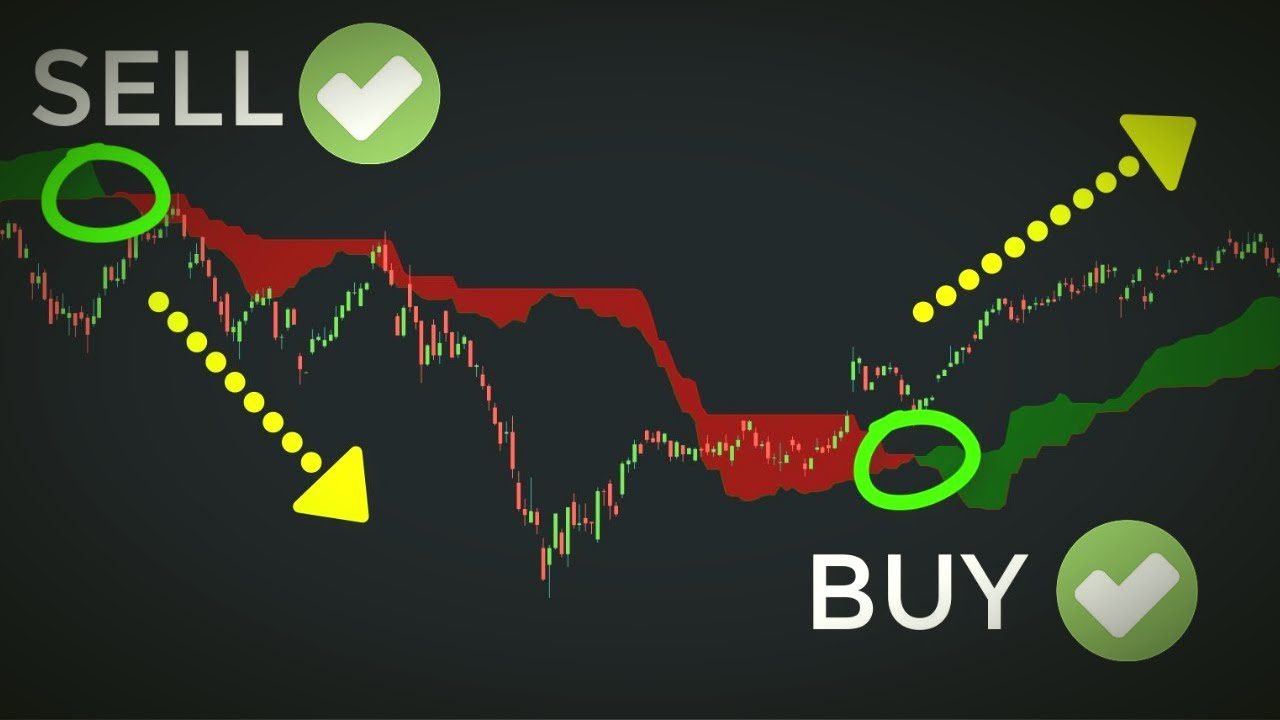
How Do Traders Working On The Cloud And Data To Cope With The New Normal?

COVID-19 or coronavirus is spreading like wildfire throughout the world. And, this even forced the World Health Organization (WHO) to declare it a pandemic. Ever since this disease was spotted, countermeasures have been set to curb its spread effectively. One such way is social distancing.

Because of social distancing and worldwide lockdown, the world’s foundations shook from within. And, it wasn’t late until this shockwave reached the stock market. In fact, both the trade life cycle and banking courses after graduation have taken a huge hit as well.

To do their bit, financial institutions like the New York Stock Exchange (NYSE) have closed their doors to traders for the first time in history. Things are only slowly returning to normal, and a few traders are allowed on NYSE. However, most of the traders are forced to trade from home and find online alternatives for conventional processes.

Cloud offers a lucrative opportunity for anyone looking to trade online. Traditional problems like lack of storage space, security concerns, and connectivity issues have all but disappeared in the cloud era. Statistics state the same. With an online chatting interface, apps providing a secure interface for traders have seen a substantial rise during the pandemic. Let us see how traders are using cloud services in great detail.

How are traders using the cloud?

Stock trading should never come to a halt because it has the power of crumbling economies. The COVID-19 outbreak can thus be considered a major test. Thankfully, traders are armed with the power of the cloud in today’s world.

TradingData is the central part of any trader’s life. It is even more important to store and analyze the information correctly. Traders are increasingly using cloud solutions to store their data and run their models. The processing power of cloud computing allows them to quickly run multiple analyses like risk assessment within a matter of minutes as opposed to hours or even days from conventional means.
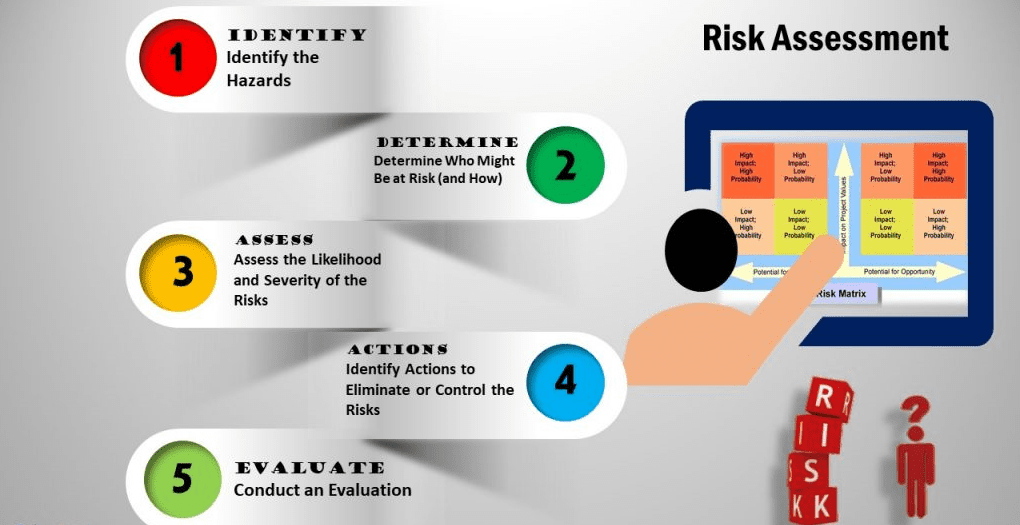
Trading using Cloud ComputingCloud also allows for better traffic management. Traders can be seen leveraging the cloud to tackle any amount of traffic effectively. Mainly because the cloud is a scalable entity, it can quickly go up and down depending on the actual amount of people using it. Moreover, cloud computing offers a cheaper solution to many problems associated with stock trading.



Not to mention, it provides the ability to analyze customer demographics, which allows for targeted solutions for a particular section. So, not only does the cloud act as a cheaper alternative but on top of that, it also improves profit margins.

In the search for normalcy, traders are looking towards the cloud to provide them with solutions. We are fortunate enough to live in a time where we have enough computing prowess to shift the base of operations online. Not only does it allow us to fight the virus but it also provides some benefits overall. In the future, we can expect cloud computing to take up a major role in the trading market.

Roles and Functions of Modern Investment Bank

There are different types of financial institutions around the globe that helps people in various ways. One such type of bank is the investment bank. In this article, we will try to understand the importance of an investment bank and its functions and roles.

We will try to understand the services offered by the IB (investment bank). Let us first understand what is an investment bank?

What is an investment bank?

It is a type of financial institution which acts as a bridge between the securities issuer and the public investors. In layman terms, you can say that an IB works as a broker for clients. IB also specializes in pension funding. They help institutions to issue new sets of stock through an initial public offering (IPO) or follow-on offering. Besides helping financially, IB also gives advice and predictions in order to make the institution or any particular company rise more and more. Let us study the roles and functions of modern investment banks in detail.

Roles and functions of the Investment Bank

An IB has various roles ranging from advisory to mergers and acquisitions. Let us cover each of the roles thoroughly.

New stock issues

Whenever a company goes public, i.e. it seeks funding from the public and is ready to sell its shares. Then the IB helps those institutions by buying some of the agreed shares keeping in mind the IPO (initial public offering). This whole process of stock issuing is also called underwriting. So, in short, the funds/stocks from a private institution are transferred to the public through underwriting.

Advisory roles

Besides the money talk, investment banks help their clients by giving them advises advice which that brings more capital and investment. They help in taking the firm/institution to new heights. Investment banks boast a huge client base and are always helpful in financial queries.

Mergers and Acquisitions

Whatever the acquisitions are, an IB tries to find out its worth or current market value. It acts as a bridge for the deal to close in. They are helpful for the successful completion of a deal.

Risk analysis and management

A financial institution is always prone to difficulties. An IB helps in finding out the target area which is incurring losses. It helps in preparing a particular firm from various risks such as inflation, credit risks, liquidity, loans, etc. it always makes the firm less vulnerable to losses.

Research

Investment banks have come a long way, nowadays, they do research too. Through this research, one can find out the trustworthiness and loyalty of any particular firm. IB gives people the rating points of any particular firm which helps in deciding whether to buy, sell or hold any acquisition belonging to that particular firm/company.

Derivative product structuring

We are talking about modern investment banks here; they have now various services and functions to be offered. A derivative product mostly gives a high return rate and margin. To identify such worthy derivative and then structuring in such a way that it gives profit is often a tedious job, but it is done by the investment banks. They identify future derivatives and find the right time to invest. This helps the clients to increase their business.

Conclusion

As we read, modern-day investment banks have evolved a lot. Their services now range from consultancy to derivative product structuring. They also help various firms in getting a yes from the government for any particular project. They focus on various dealings and investments which helps the owner of any particular firm to focus on something else and take the company to new heights. This article was all about the roles and functions of modern-day investment banks.

Tips For A Student For Career In Investment Banking

Want to pursue a career as an investment banker? Are you a graduate in Commerce, Business Administration, Finance, Economics etc? If you have answered with a yes, then you can pursue a career in investment banking. While most companies prefer graduates there is no need to worry even if your answer is no. Undergraduates can also undergo training and join as Analysts in IB and move up the career ladder.
The normal investment banking career ladder begins after you do your course and get a fair idea of what the IB field is about. Many of the finance graduates who do the course at Imarticus Learning have benefitted from their soft-skills training by being placed as Associates directly under their assured placement programs. The higher you go certifications and continued learning become crucial for better progression and higher bonuses and payouts. Normally it takes 2-3 years for undergraduates in an Analyst position to gain sufficient experience for the Associate’s role. Beyond this level it is all about performance, certifications, excellence in work-experiences and being an absolute people-person for the next 2-3 years, that can propel you to the higher rungs of the IB hierarchy.

Tips to Help With Your Investment Banking Career.

1. Research your IB career path:
Experience counts in this field and if you can do an internship while finishing your graduation it is a very good way to get a feel of the career. Small and large banks do offer internships and based on your performance could make a job offer.
Doing an investment banking course in the classroom mode offers you a chance to get certification and the requisite experience criteria fulfillment to try for an Associate’s post directly.
Keep a close track of recruitment offers and the hiring timeframes in the banking industry. This typically can take anywhere between 2-6 weeks and many rounds of interviews.
2. Research and learn all about the concepts and skills required:
Reading books like MarketWatch and DealBook help you keep track of the latest trends in IB. Prepare your resume and keep handy some interesting examples and trends that you can link into your answers to impress the interviewer. Develop your personality traits and soft skills like communication skills, objective quantitative tests etc to help with the interview rounds.
3. Do a relevant course:
Doing the financial and investment banking course at the reputed Imarticus Learning helps greatly. Besides your academic qualification, major subjects adding on these courses goes a long way to help you specialize in IB.
Many of the finance graduates who do the course at Imarticus Learning have benefitted from their soft-skills training by being placed as Associates directly under their assured placement programs. The higher you go certifications and continued learning become crucial for better progression and higher bonuses and payouts. Normally it takes 2-3 years for undergraduates in an Analyst position to gain sufficient experience for the Associate’s role. Beyond this level, it is all about performance, certifications, excellence in work-experiences and being an absolute people-person that can propel you to the higher rungs of the IB hierarchy.
4. Judge what the recruiter is looking for:
No one has all the right answers. Remember to pay attention to what the recruiter wants from you and answer honestly projecting a well-rounded persona with consistent planning to achieve your career goal. Showcase your internships, certifications and relevant experience to improve your chances. Focus on what the jobs taught you, what you liked and did not in them. Build up skills that you may be lacking like your language and communication skills.
5. Network:
IB is about who you know and how well you can maintain relationships. LinkedIn, Facebook, alumni networks and professional finance forums are good to advertise your efforts in.
The healthy IB payouts:
Payscale reports the investment banker salary is an average salary of 508, 855 Rs for a fresher. The salary components can vary between 177,560 to 1,545, 630 Rs while the bonuses can vary with contract negotiation from 2,517 to 524, 023 Rs depending on your skills and performance. In the US this is between 75-90k pa and an average total of 140k pa for a fresher.
Concluding notes:
The total payouts for an IB depend on performance and bonuses and are extremely well-paying. Doing the IB course helps you earn a global measurable certification which validates your skills and knowledge and is acceptable as real-life experience of the financial and investment banking experience requirements preferred by most employees.
In parting, if you wish to learn all about the investment banking career, do your course with the reputed Imarticus Learning to emerge right atop of the rushing crowds of IB career aspirants. Hurry. Admissions are limited in every batch.

My formula for a Successful Investment Banking Career

Prasad Mekde reminisces and talks about his experience which helped him land a prestigious job at BNP Paribas and earn a confirmation of service in just a few months.
Hello. My name is Prasad Mekde. I graduated in 2015 and enrolled in the investment banking operations course at Imarticus. Shortly after I completed the course I was placed at BNP Paribas and confirmed soon thereafter.
The highlights of Imarticus’ Investment Banking Course
Batch 68 is where 30 graduates came together at Imarticus Learning to realize their dreams of being tomorrow’s successful investment bankers. Every individual’s skill set is honed at Imarticus to present and mould them in the best possible manner and this is what they helped me with. The result is the job that I landed with BNP Paribas!
I enrolled for the program based on the recommendation of a friend and the encouraging Imarticus learning reviews. In my opinion, the best part of the course was the sharing of knowledge on investment banking in a practical manner which helped me get an insider’s view into the role of an investment banker and what exactly I needed to do in this role.
The knowledge and fine tuning of perceptions related to skill sets for investment banking, understanding the role and learning to apply the technical skills I acquired were the major areas I benefitted. The regular revisions and learning reinforcement ensured I had a good foundation in Investment Banking.
The training methodology:
The training comprised of 3 holistic approaches. The book references helped me gain theoretical knowledge and certification gave me added confidence. Imarticus Learning used assignments, projects, and live simulations to help me create the essential attributes of confidence. This essentially meant practically implementing my knowledge of the basics and concepts, presenting the information based on an analysis in lucid presentations and interacting with all relevant people collaboratively.
The trainer’s and faculty members helped boost my morale and give me a clear picture of my work-day and role as an investment banker. The classroom sessions, market simulations, hands-on, and do-and-learn experiential methods helped boost and kick-start my career.
Why I recommend Imarticus to all aspirants:
Imarticus Learning’s placement services and the industry-endorsed certification helped me stand head-and-shoulders above other candidates. The training and learning sessions enhanced my communicative skills and knowledge of the latest technological tools and helped me build a well-presented resume.
If you have a yearning to follow a career in Investment Banking click here for complete information or speak to the counselors to allay any fears you might have.

Danish Azam’s transition from engineering to an Investment Banking Career!

You don’t need a degree or background in finance to become an investment banker. Find that hard to believe? Well, we don’t blame you.

The mainstream ideology is that the traditional starting point for every investment banker is a bachelor’s degree in economics or finance with a master’s or Ph.D. in rocket science. So I exaggerated a little – but the fact remains – anybody aspiring to be an investment banker without a conventional degree in finance will, in all likelihood, give up!

Danish Azam’s transition from a civil engineering graduate to the investment banking division at SS&C GlobeOp challenges the status quo and is an inspiration for everyone wanting to start a career in investment banking. Read his story here.

Q: Tell us a little about yourself.
I’m a Danish Azam, and I have a bachelor’s degree in civil engineering. I recently graduated from the Certified Investment Banking Operations course at Imarticus and have been placed at SS&C GlobeOp.

Q: What convinced you to enroll with Imarticus?
I heard about Imarticus through a friend who recommended the course to me. At first, I was hesitant because I had absolutely no background in finance, but I spoke to a counselor at Imarticus who charted an investment banking career path for me and assured me that the transition from engineering to finance was possible. I was convinced and decided to enroll in the course.

Q: Was the transition from engineering to finance challenging?
Quite honestly, it wasn’t as difficult as I had anticipated. Considering the fact that I am from an engineering background and the course is in Finance, I have not faced any challenges and could keep up because of the knowledgeable faculty and the detailed curriculum.

Q: Were the guest lectures helpful?
The guest lectures were beneficial. I was able to co-relate the topics I was taught in class with the practical projects and assignments, and this has helped me grasp particularly challenging concepts like options strategies and derivatives.

Q: What did you like most about the program?
I’d have to say the faculty and the learning facilities. The faculty were extremely helpful and made every concept clear with a focus on real-world simulations and hands-on experience to make the training sessions interactive. The learning infrastructure at Imarticus is exceptional.

The online learning management system – LearnTron – is available to students 24/7. If ever I had a doubt or couldn’t remember a specific concept taught in class, I would go back home and go through the lecture to enhance my knowledge in a better manner.

Q: Tell us a little about the career and placement services.
In addition to technical sessions, soft skill sessions are also conducted and saying these sessions were beneficial would be an understatement. The resume building workshop helped me craft my resume into an effective and efficient one with the help of the experts at Imarticus.

I was pleasantly surprised because the placement services were much better than I had anticipated. Even before completing the course, the placements team brought me a couple of interview opportunities. They didn’t stop there; through mock interviews and interview prep, the trainers helped me hone my communication skills. In all, I appeared for two interviews and cracked one of them. I now work at SS&C Globe Op; my job involves much of what I learned at Imarticus, and I couldn’t be happier.

It’s not too late to begin. Click Here to speak to a career counselor and start your investment banking career.

Start a Career in Investment Banking – A Definitive Guide


An investment banker is responsible for raising or securing money for corporations or firms to fund their operations. Their scope of work includes ushering companies through complex processes such as acquisitions, mergers, and IPOs. In order to do this, investment bankers should have immediate and in-depth knowledge of how financial markets and forces work along with the legal requirements.

If you are looking to start a career in investment banking, then there are several steps you can take in order to become a successful one. One of the first criteria that you must meet is getting a bachelor’s degree. While a degree in math, finance, or accounting is preferable, you can become an investment banker with any degree. While in college, take up any electives that offer insight into finance and work closely with professors who teach finance.

During the break before your last year of college, apply for internships at all the investment banking firms. Even if you do not like some of the firms, interviewing with them will give you experience and you’ll know what to expect. Secure an internship for two to three months and build relationships within the firm.

You could also go a step further and enroll yourself in an industry relevant investment banking course that will round out your resume and make you a valuable hire. These courses are designed to give you in-depth knowledge of financial products, operational risks, and regulation. Most of these courses also prepare you to take up finance related certification.


Investment Banking Course

After you have finished your bachelor’s degree, apply to all the placement opportunities your college offers. Be sure to create a CV that is concise and to the point. Do not have a CV that is longer than a single page and keep it professional while also including all your extra-curricular activities. At this stage, you should focus on the interview process as this is the make or break point.

Read up on financial developments that have happened in the past year. You do not need an expert level of understanding of the events but a basic idea of what is happening in the financial world and its concepts. You will also be asked basic questions on the concepts of investment banking and it will serve you well to study the answers to them beforehand.

If you have had investment banking training before at college or in an institute, you will be prepared for the interview more than your fellow college mates. However, it is still important that you do your homework before going for the interview. Read up on the firm you are interviewing with and focus on their recent deals.

It is also important that you admit that you don’t know the answer to a particular question instead of giving an answer that you’ve just made up. These firms aren’t looking for someone with all the answers, rather they are looking for someone who has the correct mindset and attitude.