What Are The Ways Big Data is Being Used To Create The Next Generation of Mobile Apps?

Big data tops the charts when it comes to providing a considerably better user experience by increasing app engagement and optimizing resources correctly. While it not only makes content for users more relevant but also personalized content and when analyzed from a business point of view, it improves conversion rates. To put it in simpler words, the future of big data is the gold mine that app developers need in providing information and creating apps that users want.

Here is a breakdown of the various ways in which big data is being used to create the next generation of mobile apps:

Seamless and easy to use UX
Big data is incredible in providing insights that help tract every movement of a user by crunching numbers to improve overall user experience. Additionally, it also helps in signaling developers when apps do not meet either the design standards or the UX. Studies suggest that most app users stick to or delete an app based on its user-friendly quotient, which is the ease of use. This kind of information helps big data constantly make improvements for user interface and reduce friction.

Machine learning and artificial intelligence

With the help of machine learning and usage of artificial intelligence, big data can recognize failure patterns if any and suggest improvements.  Also, this helps understand any glitches that might be acting as slowdowns, including loading time for a website or a page.

Predictive analytics and customization
Big data helps customize the user experience and deliver content based on previous usage patterns. This is where predictive analytics come into play by suggesting what you should buy or what you should watch. This gets increasingly better as you consistently use a particular service.

Widely used by companies like Netflix and Amazon, predictive analytics shows up an image or shows pricing options based on user data buying patterns and more. Basics of predictive analytics are taught during a Data Analytics Course.

Increase app engagement

Users often get more engaged with a particular app and keep returning to it frequently. A term referred to as- app stickiness, this actively engages customers more than its competitors and factors like duration session, the flow of content on the screen and churn tracking help in contributing to stickiness.

Real-time analytics

Real-time analytics help an app developer to analyze data related to that app and make dynamic changes based on the present situation. The mobile app market in itself is a pretty dynamic one, where things significantly change every minute. Organizations are using real-time analytics o predict patterns that include flying for airlines when visibility is good, avoiding certain roads to get rid of traffic, avoiding extreme weather conditions, sharing driver and customer live locations, estimates fares at a given point in the day and more.

Evolve marketing strategies

Big data can help make better marketing strategies, by capturing user data that helps app developers understand the kind of people their users are. Existing strategies are reworked on to reach out to new users and rearrange older users. Study of user demographics, buying patterns social behavior of apps, posts liked, websites visited, all of which can be used to build individual user personas which are then used to strategize marketing strategies.

Considerable cost reduction

Lastly, big data helps understand and predict app development costs, since building a standard app might often be time-consuming and quite expensive. This not only includes the app development process costs but also calculates the number of developers, designers, testers and more will be needed to have an app up and running. Additionally, the longer time it takes to build the app, the higher the cost graph goes.

How Big Data Is Changing Disruptive Innovation?


How big data is changing disruptive innovation?

It is for sure that big data has grabbed the attention of many as the businesses have understood its prominence in this technology-driven world. The meaning of big data goes by its name it refers to a large sum of data to be handled efficiently for a productive business. Online giants who rule the world of technology like Amazon, Facebook, Microsoft, and Google together store about 1.2 Million terabytes of data.

Which is really a staggering amount of data and now we know how influential are they to the society. A new update from DOMO states that approximately 2.5 quintillion bytes of data is being generated every day and the number is going to increase exponentially. So, this has ideally remarked an era where talented data scientists are on a pinnacle and young aspirants choose data analytics training to land on their dream career.

Understanding disruptive innovation

Well, you must read somewhere that “90% of the world’s data is being created in the last couple of years” this is credited for the growth of online. Disruptive innovation can be termed as a new concept or model which alters the function of the monotonous market and influential in creating a new flow in the market. This disruptive innovation creates a disorder in the market place with its bang.

Impactful big data on the limelight

We often notice new innovations in technology and the way it affects business. Off-late Big data technologies like Hadoop and NoSQL has created quite a stir in the minds of businesses about convincing the customers.  Wings of big data like big data analytics course are vital for data science aspirants to identify hidden patterns to understand customer preferences. Big data has jeopardized the conventional flow of the market by inducing advanced computing and eliminating the traditional way of computing for better business.

Let us look into four ways by which big data is changing disruptive innovation:

Big data proved trust-worthy

You may notice that when new technology is introduced in the market, the market takes a while to completely adopt it. But this was not the case with big data due to its flexibility and impressive tools used to leverage profitability in business. Companies invest in employees who learn these tools to keep them par with the trending market scenario.

Ease of access and flexibility

The smooth transition in the software we use in mobile and computer systems induced by big data is quite enjoyable and user-friendly. Users have become more dependant on big data for it has altered the prospects of users on new technologies. Thanks to Hadoop and NoSQL technologies of big data which has created a revolutionary impact on businesses.

Spending for a positive impact

The need for big data and data analytics is different for different companies. Hence, the money spent on big data also varies. But, the companies are spending a huge sum on big data confidently as it proves to be worthy enough. Businesses pay for big data but proper use of tools and techniques in big data may eventually lead to saving a lot of money. It is a kind of predictive science which monitors previous trends and forecasts future trends.

Action and accomplishments

Big data has been successful in creating a satisfied customer base for business by identifying and understanding the needs of the customer beforehand and diverting the business to concentrate on the right track. Target marketing strategy in big data has aided businesses in achieving long-term growth and stability. When new technology enters the market, it is obvious from the customer end to expect certain changes in its attributes, whereas big data leaves the customers surprised with its functionality which other disruptive inventions failed to do so.

To sum up

Convenience and usefulness of big data have made people realize the way a disruptive innovation should work like. When innovations meet the expectation of the customers it is accredited as a technology that helps a business in gaining a competitive edge. Unlike other disruptive innovation, big data is assisting businesses in identifying market trends and disruptions to grab the opportunities, upon failing to take the first step the competitors will surely do so.

For more details, you can also visit – Imarticus Learning and can drop your query by filling up a simple form from the site or can contact us through the Live Chat Support system or can even visit one of our training centers based in – Mumbai, Thane, Pune, Chennai, Bangalore, Hyderabad, Delhi, Gurgaon, and Ahmedabad.

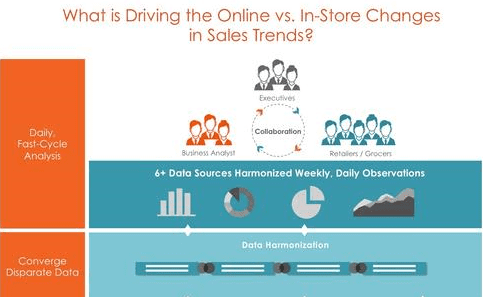
How are Online Retailers Using Big Data Analytics?

Data is being generated at every moment of the day and has grown from retailers using their own data to databases available across industrial verticals. It is so huge that cloud storage is now the buzz word. Data analytics with the Big tag deals with data primarily and the predictions or forecasts from analyzing databases that help with informed decision making in all processes related to business. This could run into volumes of several petabytes of data.
But, why would one need a Big Data Analytics Course? Because smaller databases that are less than a terabyte size-wise can be tackled with traditional tools. However, modern data tends to be unstructured and comes in the form of videos, audio clips, blog posts, reviews, and more which are challenging to clean, organize and include huge volumes of data.
The tools and techniques involved in the capture, storage, and cleaning of data need necessarily to be updated. One also would need faster software that can compare databases across platforms, operating systems, programming languages and such complexities of technology.
The speed and agility of analytics offer big advantages and savings in making informed business decisions. That’s why investing in data analytics and Data Analytics Training is such a popular choice across industrial verticals and sectors.
Let us look at the data analytics improvements of some real-life examples.

Offering marketing insights:

Foresight from analytics has the potential to change marketing strategy, operations and more in all firms. Whether it be effective marketing strategy or promotional campaigns, decision making, purchasing, cost-saving measures, targeting the customers, promoting products or improving efficiency through the predictions, insights, forecasts, etc help make those decisions. Just look at the campaign of Netflix covering over 100 million customers for inspiration.

Boosting retention and Customer-Acquisition:

Coca Cola used their data foresight to draw up their retention and loyalty reward programs and to improve their services, products, and customer stories. Besides boosting sales such improvements trigger loyalty too.

Regulatory compliance and Risk Management insights:

Singapore based UOB did their risk assessment and management for the financial sector and budgeting. Foresight and predictions can also be effectively used as a critical investment in regulatory compliance.

Product innovations:

Take the example of Amazon’s diversification into groceries, food, and fresh-foods segment. Their analytics program was based on the acceptance of customers trends and successfully helped innovate product lines, design models of innovation in saleable products, etc.

Management of logistics and supply-chains:

This essential field can be transformed very effectively as Pepsico did with improved processes, scheduling deliveries, warehouse management, reconciling logistics and shipment needs and more.
Budget and spending predictions:
The loyalty of customers is reflected in spending patterns and data is collected from use of credit cards, effects of promotional programs and customer retention data, web users log-in data, IP addresses, etc to gauge predictions for spending and effective budgeting. Did you know that Amazon analyses accounts that run into astounding figures like 150 Mil customers and their analytics programs increased sales by 29 percent and new customers by 40 percent? That’s huge profits from data analytics!

Bettering customer service:

Improvement in customer experience yields big dividends as in the case of Costco where specific customers who were at risk with listeria contamination in fruits and were warned instead of creating a scare with emails to all customers.

Demand forecasting:

Just look at the Pantene and Walgreens hair-care products sales figures. They promoted the products based on a demand prediction of weather and anticipated higher humidity affecting sales of anti-frizz hair products. Pantene recorded a 10 % increase and Walgreens a 4% sales increase. Smart use of data analytical predictions by retailers!

Research on journeys of customers:

This graph is never a straight line and when in retail marketing analytics with many thousands of customers, one can help understand data like where an individual customer will seek product info, how and where to reach such customers, why the customer loyalty changed, etc. Looking for the needle in the haystack is now easy with data analytics.

Concluding note:

All enterprises, especially in the retail sector, need big data analytics to have reduced operational expenses, a competitive edge, enhanced customer loyalty, better productivity, and retention. The demand for data analysts keeps growing alongside the growth of data and is an ideal choice of careers with scope, payouts, and growth. If you wish for a Data Analytics career, then do a big data analytics course at the reputed Imarticus Learning. Their data analytics training with assured placement, certification, soft skill modules,industry-suited curriculum, and real-time project work offers the best career choices. Enroll today!

How Can You Learn About Healthcare Data Analytics and Get Training and Certification Online?

The healthcare field has seen many improvements with the application of data analytics. From record-keeping, medical device calibrations, research on disease management, predictions of epidemic outbreaks, and suggestions of personalized health and treatment measures, data-analytics, ML, AI, and big data all play crucial and ever-increasing roles. Online courses are excellent as they address the pressing personnel shortage for certified data analysts and scientists. They do not make specialists of you. However, they do equip you with a generalist’s overview of the healthcare sector, update and refurbish the required skills, and offer certifications in a short period.
A paid Data Analytics courses, on the other hand, will help you hone your skills by practical learning application, effective mentoring and makes you a job-ready contributor to healthcare data analytics projects. It also serves to boost the first-timer’s confidence. During the interview rounds for your dream career and job, you will, of course, be tested on how you propose to use your skills to tackle problems that will arise and a good grasp of modeling and your industry-relevant measurable certification will go a long way.
Requisite Educational Qualifications:
Being an introductory and fundamental course, there is no necessary qualification specified. Data analysts can learn Data Analytics online and sometimes might need a basic degree with an understanding of subjects like mathematics, computer science, statistics, engineering, economics, etc. Most of these courses improve foundations and strengthen your skills. Hence, many pursue online courses at reputed institutes to give themselves the knowledge of how to apply their learning across various verticals. And truth be told, today it is all about data and no field including the healthcare sector, is free from using the same for furthering growth, efficiency, and technology.
Classroom learning during your Data Analytics Training will be needed to acquire crucial role skills including the comprehensive capture, cleaning, and organization of databases, the applications of data to business strategy, and effective communication of the analysis reports. Familiarity with excel techniques and statistics will be a plus point.
What the course teaches:
Let’s explore what most courses cover or do not cover and are moot requirements for a data analytics job-role.

A. Technical Skills:

Computer programming and CS Fundamentals including

  • Dealing with unstructured non-clinical and clinical data including blog posts, videos, reviews, social media posts, audio clips, medical images and videos that don’t fit into tables and are complex to handle.
  • SQL Coding and Databases score in operations like delete, add, query or extract functions used for transforming structures and in analytical functions when working with relational databases like patient records and insurance claims.
  • The platform of NoSQL/Hadoop is preferred with knowledge of Pig, Hive, cloud tools and so on for situations involving the transfer of data, storage, sampling, summarization, filtration, and exploration of data. Apache Spark and Scala frameworks are similar to Hadoop but much faster in handling very big-data volumes.
  • AI, MLand Neural Network knowledge and techniques are essential if you wish to score in the emerging uses of data-analytics to healthcare.
  • Data Visualization techniques that include formatting, editing, graphs, charts, etc. are easy with tools like ggplot, Matplottlib, and d3.js Tableau to make effective data forecasts, presentations and case studies.

·   Language proficiency in 

  1. R Programming.
  2. Coding in Python is recommended for versatility in its applications. Python can be used for all medical and healthcare processes and comes with a variety of libraries for nearly all verticals, browsers, etc.

B. Non-transferable Skills:
These are essentially not taught and depend on practice –

  • Quantitative and problem-solving aptitude skills
  • Grasp of inferential logic, an innovative approach, and great communicative skills
  • Above average skills in attention to detail, reporting and programming skills
  • Business acumen, team-skills, dedication, flexibility, and continued learning form a confident learner

Conclusion:
In parting, do acquire Data Analytics Training certifications online or in a paid course. Attend boot-camps, hackathons, MOOCs, etc. all of which give you support, exposure and mentorship in ML, ConvNet, and data analytics practical techniques. The demand-supply gap for data analysts ensures great payouts and undying scope over the next decade, according to the 2011 reports from Mckinsey and the survey by Accenture.

Attend and learn data analytics from a reputed institute like Imarticus Learning to emerge job-ready and with certification from day oneThey stress on the non-transferable skills and personality development as well. Hurry and be an early bird!

We offer data analytics courses at our centers in Mumbai, Thane, Pune, Ahmedabad, Jaipur, Delhi, Gurgaon, Bangalore, Chennai, Hyderabad, Coimbatore.

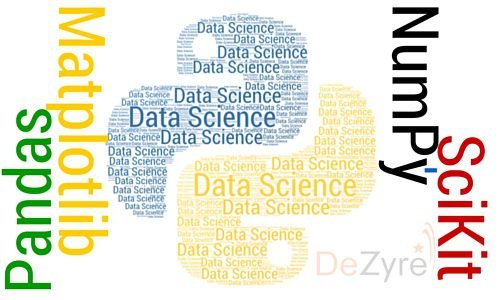
Top Python Libraries For Data Science

Top 10 Python Libraries For Data Science

With the advent of digitization, the business space has been critically revolutionized and with the introduction of data analytics, it has become easier to tap prospects and convert them by understanding their psychology by the insights derived from the same. In today’s scenario, Python language has proven to be the big boon for developers in order to create websites, applications as well as computer games. Also, with its 137000 libraries, it has helped greatly in the world of data analysis where the business platforms ardently require relevant information derived from big data that can prove conducive for critical decision making.

Let us discuss some important names of Python Libraries that can greatly benefit the data analytics space.

Theono

Theono is similar to Tensorflow that helps data scientists in performing multi-dimensional arrays relevant to computing operations. With Theono you can optimize, express and array enabled mathematical operations. It is popular amongst data scientists because of its C code generator that helps in faster evaluation.

NumPy

NumPy is undoubtedly one of the first choices amongst data scientists who are well informed about the technologies and work with data-oriented stuff. It comes with a registered BSD license and it is useful for performing scientific computations. It can also be used as a multi-dimensional container that can treat generic data. If you are at a nascent stage of data science, then it is key for you to have a good comprehension of NumPy in order to process real-world data sets. NumPy is the foundational scientific-computational library in Data Science. Its precompiled numerical and mathematical routines combined with its ability to optimize data-structures make it ideal for computations with complex matrices and data arrays.

Keras

One of the most powerful libraries on the list that allows high-level neural networks APIs for integration is Keras. It was primarily created to help with the growing challenges in complex research, thus helping to compute faster. Keras is one of the best options if you use deep learning libraries in your work. It creates a user-friendly environment to reduce efforts in cognitive load with facile API’s giving the results we want. Keras written in Python is used with building interfaces for Neural Networks. The Keras API is for humans and emphasizes user experience. It is supported at the backend by CNTK, TensorFlow or Theano. It is useful for advanced and research apps because it can use individual stand-alone components like optimizers, neural layers, initialization sequences, cost functions, regularization and activation sequences for newer expressions and combinations.

SciPy

A number of people get confused between SciPy stack and library. SciPy is widely preferred by data scientists, researchers, and developers as it provides statistics, integration, optimization and linear algebra packages for computation. SciPy is a linked library which aids NumPy and makes it applicable to functions like Fourier series and transformation, regression and minimization. SciPy follows the installation of NumPy.

NLKT

NLKT is basically national language tool kit. And as its name suggests, it is very useful for accomplishing national language tasks. With its help, you can perform operations like text tagging, stemming, classifications, regression, tokenization, corpus tree creation, name entities recognition, semantic reasoning, and various other complex AI tasks.

Tensorflow

Tensorflow is an open source library designed by Google that helps in computing data low graphs with empowered machine learning algorithms. It was created to cater to the high demand for training neural networks work. It is known for its high performance and flexible architecture deployment for all GPUs, CPUs, and TPUs. Tensor has a flexible architecture written in C and has features for binding while being deployed on GPUs, CPUs used for deep learning in neural networks. Being a second generation language its enhanced speed, performance and flexibility are excellent.

Bokeh

Bokeh is a visualization library for designing that helps in designing interactive plots. It is developed on Matplotib and supports interactive designs in the web browser.

Plotly

Plotly is one of the most popular and talked about web-based frameworks for data scientists. If you want to employ Plotly in your web-based model is to be employed properly with setting up API keys.


SciKit-Learn

SciKit learn is typically used for simple data related and mining work. Licensed under BSD, it is an open source. It is mostly used for classification, regression and clustering manage spam, image recognition, and a lot more. The Scikit-learn module in Python integrates ML algorithms for both unsupervised and supervised medium-scale problems. Its API consistency, performance, documentation, and emphasis are on bringing ML to non-specialists in a ready simple high-level language. It is easy to adapt in production, commercial and academic enterprises because of its interface to the ML algorithms library.

Pandas:

The open-source library of Pandas has the ability to reshape structures in data and label tabular and series data for alignment automatically. It can find and fix missing data, work and save multiple formats of data, and provides labelling of heterogeneous data indexing. It is compatible with NumPy and can be used in various streams like statistics, engineering, social sciences, and finance.

Theano:

Theano is used to define arrays in Data Science which allows optimization, definition, and evaluation of mathematical expressions and differentiation of symbols using GPUs. It is initially difficult to learn and differs from Python libraries running on Fortran and C. Theano can also run on GPUs thereby increasing speed and performance using parallel processing.

PyBrain

PyBrain is one of the best in class ML libraries and it stands for Python Based Reinforcement Learning, Artificial Intelligence. If you are an entry-level data scientist, it will provide you with flexible modules and algorithms for advanced research. PyBrain is stacked with neural network algorithms that can deal with large dimensionality and continuous states. Its flexible algorithms are popular in research and since the algorithms are in the kernel they can be adapted using deep learning neural networks to any real-life tasks using reinforcement learning.

Shogun:

Shogun like the other Python libraries has the best features of semi-supervised, multi-task and large-scale learning, visualization and test frameworks; multi-class classification, one-time classification, regression, pre-processing, structured output learning, and built-in model selection strategies. It can be deployed on most OSs, is written in C and uses multiple kernel learning, testing and even supports binding to other ML libraries.


Comprehensively, if you are a budding data analyst or an established data scientist, you can use the above-mentioned tools as per your requirement depending on the kind of work you’re doing. This is why it is very important to understand the various libraries available that can make your work much easier for you to accomplish your task much effectively and faster. Python has been traversing the data universe for a long time with its ever-evolving tools and it is key to know them if you want to make a mark in the data analytics field. For more details, in brief, you can also search for – Imarticus Learning and can drop your query by filling up a simple form from the site or can contact us through the Live Chat Support system or can even visit one of our training centers based in – Mumbai, Thane, Pune, Chennai, Bangalore, Hyderabad, Delhi and Gurgaon.

What jobs can you get with a Data Analytics degree?


The Data Analytics industry is one of the fastest growing sectors, proving to be a job provider to thousands of potential professionals every year.

Therefore, upon the successful completion of a Data Analytics degree, there are various job options that you can explore. Some of these have been deeply detailed in the following paragraphs. Let’s have a look. 

  1. Gaining a Big Data Analytics course or degree can give you a winning career as a Business Analyst – As a Business Analyst, you will be handling responsibilities such as Database management, cleaning up of data sets and organizing them.

    Creation of data visualizations, that convey information in an engaging visual manner to the audience. You will also be responsible for building models that explain the interaction of various variables, and this will be used for companies future references. 

  2. Operations Research Analyst – An Operations Research Analyst methodically uses data mining, data modeling, data optimization, and statistical analysis to help companies, corporates and organizations run cohesively and efficiently. Their major responsibility also includes streamlining of operations processes, minimizing waste and optimizing source models. Operations Research Analysts are also called as Operations Analysts, Operations Business Analysts, and Business Operations Analysts. 

  3. Quantitative Analyst – A Quantitative Analyst usually handles the finance department using, applying and implementing trading strategies and assesses risk factors and help/guides in generating maximum profits.

    They are deeply involved in the usage and designing of mathematical models that give financial firms and organizations to price and trade securities accordingly.

    You will require skills such as a great aptitude in mathematical statistics and finances, calculus, and machine learning. These will be the basics of your career as a successful Quantitative Analyst.

  4. Market Research Analyst – Studying market trends and conditions, and observing them carefully to forecast the profitability and revenue of a certain new product or new service is a job role carried out by Market Research Analysts.

    With their skill sets, tools and techniques they research and are able to predict market trends, market downfalls, measure the precise market success of various products and services, and thus identify potential markets where the said product/service can become a future success. 

    This helps organizations, corporates, and global companies understand market trends and make a fruitful profit for themselves, while making a positive impact on the society at large, with their respective product/service. 

Through individual coaching, guidance, and mentorship, you can explore many career advantages through a valid degree course in Data Analytics. These degrees usually have strategic career partnerships with industry relevant global companies and organizations (data analytics course with placement) that will help you mold you step by step process as a Data Analyst. 

You will also gain deep practical learning through internships and first-hand exposure in a corporate set up. Networking and socializing for career connects is an important task which you will be able to do through interacting with professionals and experts during your internship.

This will then help you walk down your successful path as a Data Analysts under whatever focus/stream you may later choose to focus on. 

Can you become a Data analyst by online tutorials?

In an age where tutorials and lectures are heavily sought after both online and offline, it is easy to see why online tutorials are on-demand, especially to those who are already occupied with jobs with heavy schedules and those professionals who experience time constraints to attend an actual full-time offline course. Although the teaching methods, means, and experience of that of an online tutorial may be quite different, if you are a good self-starter and self-learner, it is quite an engaging and educative activity you can invest your time in regularly.
Let us understand how to learn Data Analytics through online tutorials will guarantee you in becoming a Data Analyst professional. Some of these points are discussed below –

  1. Avail Online Big Data Analytics course for a minimum fee– Regular online classes, engaging, recorded lectures and practical projects help you gain great insight and enhance your skills regarding your subject matter. There are various online options for you to register and enroll for a course in Data Analysis. It sometimes has payment requests and you will need to pay the required fee for accessing these classes. To maintain a certain quality and standard some of these courses are priced with a standard fee structure.
  2. A wide variety of knowledge base in Data Analysis to choose from – You can choose from various types of Data Analysis courses that have the online classes option. From the IBM Data Science Professional Certificate to Applied Data Science with Python to Business Analytics to learning the Data Scientist’s Toolbox, the choices for you to pick from are vast and varies, giving you the opportunity to truly specialize and focus on your favorite subject matter.
  3. Globally recognized online courses – Not only do you have the benefit of investing only a small amount for your Data Analysis certification course, but you will also have global validation for the said course(s) This added advantage makes your knowledge base, skills, tools and techniques learned under the course internationally relevant. This naturally means a great score of career options and job opportunities will now be open to you.
  4. Free courses – Sometimes there are courses offered absolutely free of cost. Data Analysis has several such courses offered free of cost. The option of the syllabus may be limited but you will gain a little above the general knowledge of the certification course and will be able to become relevant with the skills and knowledge you achieve through this online engagement.

From the above factors it is evident that through practical application, patience and practice, you can forge into a  professional Data Analyst career with online support and tutorials. If you expand your knowledge base, there are further professional certifications and degrees to be awarded too. This is available online as well. However, the fee and eligibility criteria may vary accordingly.
So, go on, search for that perfect online course or online tutorial and equip yourself in becoming the best Data Analyst you know. With basic know-how, a minimum investment of money and time, practice and consistent efforts, turn your Data Analyst dream into reality!

What are some Data Analytics Internship questions?


What do Data Analysts do?

Data analytics (DA) is the science that deals with examining raw data sets to understand the useful information they contain. This process is aided by specialized software systems. Data analysts use technologies to facilitate organizations to take business decisions in a more efficient way. The main goal is to boost the business performance of the company by improving operational efficiency and increasing the profit rates.  The positions of a business analyst, data analyst and a data scientist differ in terms of technicality. In other words, the business analysts are least technical, data analysts being more technical and the data scientists are the most technical.      

Scope and Career Prospects of Data Analytics

The scope of data analytics is progressively huge in India. Every workplace being more technology-based, there is a great demand for professionally trained data analysts, who can efficiently record and analyze data to solve business problems.  

Data analysts can work in companies that offer banking services, fraud detection jobs, telecommunications, etc. Also, they can find employment in any private technology firms and in big reputed tech companies. In India Bengaluru, hosts 27% of analytics jobs, followed by Delhi and Mumbai.

Now that you are aware of the scope of data analytics, you should join data analytics courses that offer certification and alumni.

Data Analytics Course

Why Take Up Data Analytics As a Career?

  1. Bachelor’s degree is not enough, because a specialized degree is important.
  2. The increasing demand for data analysts in today’s world. 
  3. Data analytics can be a worthwhile contribution to your profession.
  4. It is a rewarding career, you can get a higher income. 

So, take up data analytics as a career and get a great opportunity to work with renowned Multi-National Companies.   

Qualifications of Data Analyst Intern

  1. Problem-solving skills
  2. Good communication skills and analytical skills.
  3. Strong business awareness.
  4. Knowledge in SQL.
  5. Programming knowledge and application skills.
  6. Efficient in Excel.
  7. Bachelor’s degree.

7 Data Analyst internship interview questions

What is the responsibility of a data analyst?

The responsibilities of a data analyst are,

  • To resolve business-related issues for clients.
  • To analyze results and interpret data by using statistical techniques.
  • To identify new areas for improvement.
  • Filter and clean data
  • Review computer reports. 

What are the steps involved in an analytics project?

The steps involved in an analytics project are:

  • Problem defining.
  • Data exploring.
  • Data preparation.
  • Validation of data.
  • Implementation.

What is data cleansing?

Data cleaning is the process of identifying and removing errors from data in order to improve the quality of data.

What are the best tools useful for data analysis?

  • Tableau
  • RapidMiner
  • OpenRefine
  • KNIME
  • Google search operators
  • Solver
  • Wolfram Alpha’s

What can be done with suspected data or missing data?

  • A validation report should be prepared, which gives all the information about the suspected data.
  • Examine the suspicious data to determine their acceptability.
  • To work on missing data, use the best analysis strategy like deletion method, single imputation methods, etc.
  • Invalid data should be replaced with a validation code.

Explain N-gram?

An n-gram is a contiguous sequence of n items from a sequence of text or speech. It is a type of probabilistic language for predicting next item.

What is Map Reduce?

It is a framework to process large data sets, splitting them into subsets and processing each subset on a different server and blending results.

How The Travel Industry Uses Big Data and Real-Time Analytics?

In this article, let us see how big data has brought about tremendous changes to the tourism sector, allowing the mushrooming of successful unicorns lie OYO, Trip Advisor, RedBus and many more to flourish. Big data and real-time analytics have helped the tourism industry rediscover itself and reap huge rewards.
Better decisions, improved customer experience, foresight on marketing campaigns, competitors, etc. have allowed strategic funding and decision making to boost tourism revenues. Did you know that OYO with a total corpus of 185 million dollars and a pan India presence in 223 cities used big data and real-time analytics to enable check-ins which total over two million?
So what exactly is real-time analytics in Big-Data about? 
Using data is normal, and we continue to generate it using everyday devices like smartphones. What was once in terabytes is today huge volumes of petabytes! That is big-data, and it comes from a number of sources, as text and video messages, blogs, posts, etc. in social media and internal company data. The essence of big data and real-time analytics is to clean and scour this data using deep learning techniques to enable self-learning of intelligent algorithms and networking with neural networks between databases to give gainful insights into trends, behavior patterns and the probability of occurrences. Such foresight is accurate, evidence-based and useful across a variety of functions like finance, behavior analysis, accounting, budgeting, marketing, customer services, and daily operations at all!

The top 5 Ways in which the travel industry is impacted:

1. Managing revenues:

Being able to sell the right product, through the right media channel, at the right price, at the right moment and to the right customer is the crux of excellent financial management and increasing profits. In the travel industry hotel bookings, vehicle management, local events, flights, holiday seasons, occupancy rates, room prices, prior reservations, availability of rooms, and many such factors affect revenues and its management. Which of us has not heard of Trivago, Expedia and such apps?
2. Building brands:
Reputation management has become necessary with the increasing use of social media, internet, reviews, posts, and blogs being referred to and used in making decisions like flight, destination and hotel bookings. Customer satisfaction and quick resolutions of issues is another critical area for increasing brand loyalty exhibited through reviews and posts. Smart pricing, discounts, seasonal fares and such are most often based on real-time analytics, feedback, surveys, and customer user experiences. Thus building brand loyalty has become a concerted effort at training and using data analytics effectively. Just look at how Google searches, Facebook, etc. always suggest your favorite sites when making a booking or purchase.

3. Promotional and marketing strategy:

Finding the right group of customers to target, deciding on promotional campaigns, the method, timing, and media, budgeting and execution of marketing plans are effectively a result of smart use of databases, trend spotting, foresight, and predictive analysis. Thus marketing messages pop up based on customer interest, time, location, etc. to save big when you make a booking on Yatra, Goibibo, etc.

4. Enhancing the experience of customers:

Customers are hard to please and ensuring their loyalty is based on improving the customer experience. Be it the hotel bookings, flight experience, Forex transactions abroad, or finding the best price big data analytics can help make those apps more effective for both the firm and customer. Modern times has even seen Airtel international travel cards, new-age banking UPI apps, QR scanning on PayTM, cashless transfers on PayPal, and shared Uber or Ola cabs in an effort to deliver improved customer experience based on insights from big data and real-time analytics.

5. Effective use of analytics and market research:

Today, data has evolved to be more precious than any other asset, especially in the tourism and travel sector. Market research using real-time big-data analytical techniques provides the basis of operations and all its allied functions today. Just ask to Make my Trip, Treebo Hotels, Bespoke Hotels or RedDoorz.
Conclusion:
Big data and its analytics can be beneficial to the travel industry through a number of applications that produce outcomes and foresight that are enablers of decisions that are actionable. Such apps have been a boon in online booking, optimizing dynamic prices, predicting demand, targeting markets, enabling strategy for financial budgeting and marketing plans. Improving the customer experience has led to higher sales, and the travel industry today is a booming sector offering a plethora of jobs and opportunities.
Do the Big Data Course at the reputed Imarticus Learning to get a firm grasp of how to be an enabler of the travel industry. The scope for growth and payouts are high. Don’t let the opportunity slip by you.

How Analytics And Data Science is helping OYO To Enhance Customer Experience?

How Analytics And Data Science is helping OYO To Enhance Customer Experience?

According to the CEO and Founder of OYO Rooms Ritesh Aggarwal, the use of analytics and data science helps identify not only the right demand but also the right action for each customer to enhance their experience. Its pan-India 223 city presence boasts of over 2 million check-ins and a total worth of 260 million dollars currently. OYO has used data science technology and analytics successfully in the hotel booking and servicing of accommodation renting segment tapping the mobile users who use the internet and advancements in technological apps to get the best deals and prices.
The OYO story:
In May 2013 OYO started with one hotel booking and had grown to over 8500 hotels and 75K rooms spread over well-targeted metros, commercial hubs, small cities, pilgrimage towns and foreign leisure destinations like Nepal, Malaysia, etc. Their analytics and data science efforts helped provide unmatched prices for well-stacked and standard hotel services while setting the bar for in-room customer experience and budget-accommodation availability in India. OYO’s inspirational story is the result of its CEO’s entrepreneurial debut, and his success is truly inspirational.
Offering standardized stay experiences OYO is spread across 223 cities in all We have revolutionized the legacy-driven hospitality space in India by standardizing the in-room experience and delivering predictable, affordable and available budget-room accommodation to millions of travelers in India,” says Ritesh Agarwal, founder, and CEO, OYO Rooms.
Ritesh hails from Orissa and travelled from the young age of 17 to many hundreds of B and Bs, hotels, resorts, guest houses, etc. to make a curated list of them and help discover such locations that were obscure till date. The introduction of price affordability, standardization of services and customer behavior predictability were the contributive factors to overhauling the way and use of booking with OYO and its analytics and data science program. The importance of training and experience in predictive analysis, data analytics, handling of big data of several petabytes, creating smart self-learning algorithms, and using the latest techniques of neural networking of the ML with AI cannot be undermined according to Aggarwal.
OYO and technology:
The services provided with OYO bookings are standardized with customers getting ac rooms, flat-screen TV, 24×7 customer support, WiFi, complimentary breakfast, quick availability searches, and app-based booking. Of course, the comfortable customer experience brought loyalty and increased its app reach and revenues by leaps and bounds. The app saw 5 million downloads in the first few weeks and OYO cashed in on data of room searches, availability, fair pricing, standardized services, etc. through its analytics-supported app.
Additionally, cab bookings, room-service requests for beverages, laundry, food, etc. were linked in through smart neural networking to provide a seamless 5 second 3-tap experience. Thus sales, technology, intelligent data analytics, satisfied, loyal customers and owner engagement driven by the analytical ability of the app helped OYO emerge as the 2018 unicorn amid the disrupted industries and stiff competition from CoHo, NestAway, ZiffyHomes, Homigo, WudStay, and SquarePlums.

The analytics and statistics:
According to an HVS report cited by Ritesh Aggarwal, unbranded hotels numbering 2 million are available as against the 112k branded ones. That is a huge, potentially untapped customer market that OYO plans to utilize in its growth to make OYO services a household name and brand to reckon with. Even the funding of OYO was strategically planned to raise 260 million dollars from Sequoia Capital, SoftBank Group, Lightspeed, and GreenOaks Capital. It hopes to raise its capital to over 500 million dollars with SoftBank’s help putting it in the unicorn league.
Parting notes:
Whether it be a bus booking, a train reservation, a connecting flight, the last-mile cab availability, intra and intercity travel, long or short stay vacations, quick food, and laundry services, or undiscovered destinations, OYO has plans to keep its customers numbers growing by catering to their needs reflected in the smart analytics app and media. Their inclusion of shared vacation stays, resort accommodation, and service apartments like Chennai-based Novascotia Boutique Homes to their hotel bookings was strategic inclusion planned for the internet savvy mobile user and a trend reflected in the search use of customers in its analytics-based strategic market expansion plans.
Data science analytics is best learned in classrooms with plenty of hands-on and industry-relevant experience. Certification, able mentorship of certified trainers and an assured placement program gives such training courses the leading edge in launching your career. If the OYO story inspires you, then do a Big Data Analytics Course at the reputed Imarticus Learning. Perhaps you will also take to utilizing the opportunity provided to get entrepreneurial ideas and mentorship assistance to start a successful venture. All the best!

Related Articles:

Analytics & Data Science Jobs in India 2022 — By AIM & Imarticus Learning

The Rise Of Data Science In India: Jobs, Salary & Career Paths In 2022