5 Ways How Technology Is Changing Financial Modelling and Forecasting

5 Ways How Technology Is Changing Financial Modelling and Forecasting

For many decades, financial system modeling was based on the same traditional business models with very little innovation and integration. Later, the experts started to realize that when technology is combined with finance, it can make the financial market more efficient and highly accurate. Indeed, this has started to change the world of finance opening doors to versatility and quicker computations.

It has proven to be a revolutionary step for the companies as well. With our CIBOP program offered by Imarticus, you can have the opportunity to learn more about the money market and understand the impact of evolving technology on financial systems. 

  • Increased Efficiency

Technologies such as big data, the cloud, and robotics are contributing to greater agility and efficiency of the financial function, since their application reduces the time dedicated to traditional processes, increasing productivity. It also cuts the time spent on reporting, allowing a greater focus on analysis, decision-making, and risk management, creating value for the organization, as well as representing a change in the company and having an impact on people.

  • Fraud Detection

Since money is involved in financial markets at a global level, this sector is prone to fraud and cyberattacks. Frauds or fraudulent activities can have adverse effects on businesses. Thankfully, with Artificial Narrow Intelligence (ANI), it is now possible to detect data patterns and prevent fraud. Any abnormal behavior in online transactions can be precisely detected by modern Artificial Intelligence and Machine Learning techniques, which can help save loads of money on debugging the problem in other traditional ways instead.  

  • Sound Decision Making 

Modern Artificial Intelligence algorithms can help in modeling risk management scenarios, thus making sure that rational decisions are taken most of the time. Finance requires a very delicate task of sound judgment, which surely cannot be left unnoticed and ignored. Even a single bad decision might result in losing millions of dollars on the money market. But thanks to advancements in Artificial Intelligence and Machine Learning algorithms, proper decision-making is ensured, leaving the system more reliable than ever before. 

  • Blockchain Transaction Enhancement

With the beginning of the era of blockchain technology, advancements in financial modelling have taken a big leap. When coupled with an Artificial Intelligence algorithm, blockchain technology blends more easily in the market, causing huge benefits. While on one hand blockchain technology enhances transparency and builds safe transactions amongst peers, Artificial Intelligence, on the other hand, can further improve system security. 

  • Automation of Tasks

Automation in technology can help to avoid many repetitive and tedious tasks. Many software packages are available which can display loads of information and data with just a click of a button, thus avoiding long waiting hours for results. So instead of spending time creating the tasks, the investment banker or any other financial professional can focus more on evaluating the results and their correct interpretation. 

Conclusion

After having understood the various ways in which technology is changing financial modelling systems, it is clear that big data and finance are going to be synchronous. Be it Artificial Intelligence, decision-making processes, blockchain, or automation of systems, technology plays a crucial role in deciphering information correctly and quickly. But there is some downside involved as well.

Inaccurate or improper use of these technologies can disrupt the system completely. It is necessary to make sure that these technologies are developed and maintained by experts and professionals who can
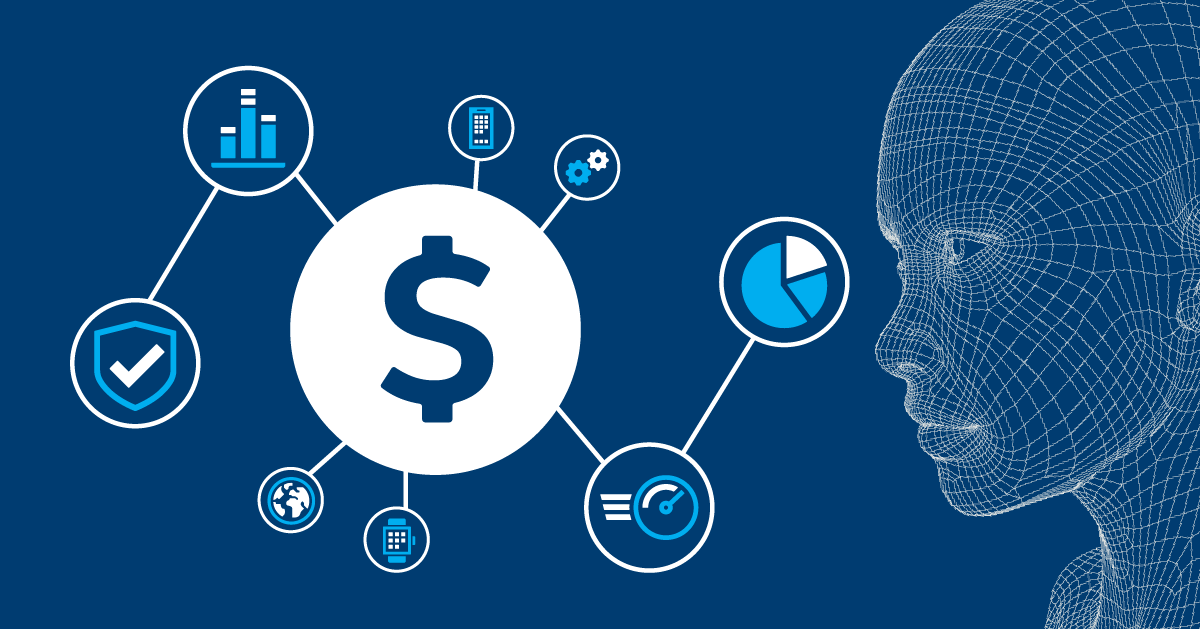
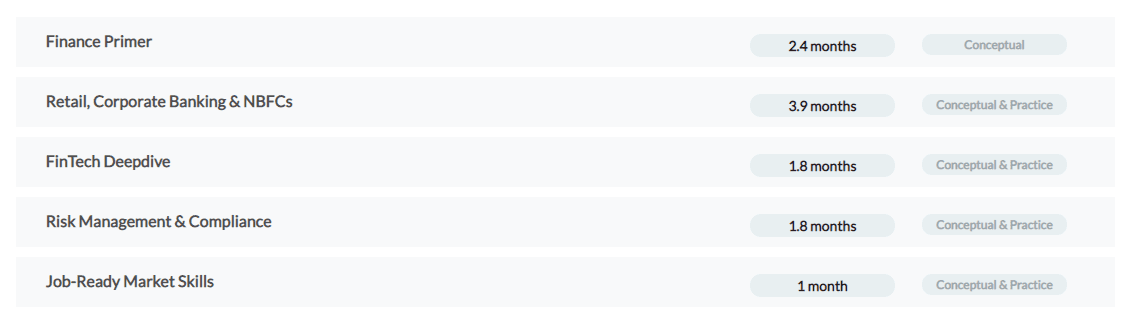
How big data and AI have revolutionized the world of banking and finance

Are you thinking about what after B. Com? Well, you can go for an online course to build new-age careers in banking and finance. The job roles in the finance and banking industry have changed a lot due to the introduction of new-age technologies. Technologies like AI and big data have given rise to new-age careers in banking and finance.

Before you start building a career in the banking and finance industry, you should know the role of new-age technologies. Read on to know five ways how AI and big data have revolutionized the banking and finance industry.

  • Risk analysis

AI and big data are used in the banking/finance industry for risk assessment. Besides providing financial services, banks must assess the risks associated with each client/customer. For example, before giving credit cards to customers, banks must analyze their loan repayment capacities. There is a plethora of customer data that needs to be analyzed for risk assessment. AI algorithms can scrap customer data from various sources and assess the risks associated with each customer. Banks are using AI to reduce human errors during risk assessment that can cost them more in the future.

  • Fraud prevention

Many criminals and money launderers target financial institutions to clean their black money. Money laundering increases the financial risks for banks and hampers their reputation. It is not possible to detect frauds in real-time with manual efforts. It is where AI comes into the picture for fraud prevention.

AI algorithms for big data analysis can identify the change in customers’ financial behavior. If anything seems off track, AI can help in identifying it in real-time. An AI-led fraud detection system can learn more about customer behaviors with time.

  • Recordkeeping

Banks are involved in financial statement preparation at frequent intervals. Human errors are bound to occur during financial statement preparation. Also, huge chunks of data are generated by banks and financial institutions.

PG Diploma in banking and finance

It is essential to store the data and analyze it for market insights. An AI-led analysis platform can not only help you with record-keeping but also with real-time analysis. AI can prepare most of the financial statements without any manual effort. The employees of financial institutions can focus on important chores, while record keeping can be done with the help of AI.


  • Personalized financial services


The banking landscape is more competitive than ever in 2021. To survive amidst the high competition, financial institutions try to launch customer-centric services. There is a need to analyze customer preferences and trends for providing personalized financial services. With big data analysis, financial institutions can know about the spending habits of customers.

Based on customer behavior, financial services can be launched. Big data analysis is also used by banks to understand the pain points of their customers. Once the pain point is known, financial service is created to solve it. A financial institution can build better relationships with its customers via big data analytics.


  • Enhanced compliance


Financial institutions must follow several regulations imposed by the respective government. Upon failing to meet the compliance standards, business continuity can be hampered. Big data analysis can help in meeting compliance goals. If you are still wondering what after B. Com, you need to go for the NMIMS online MBA offered by Imarticus Learning. 

Conclusion

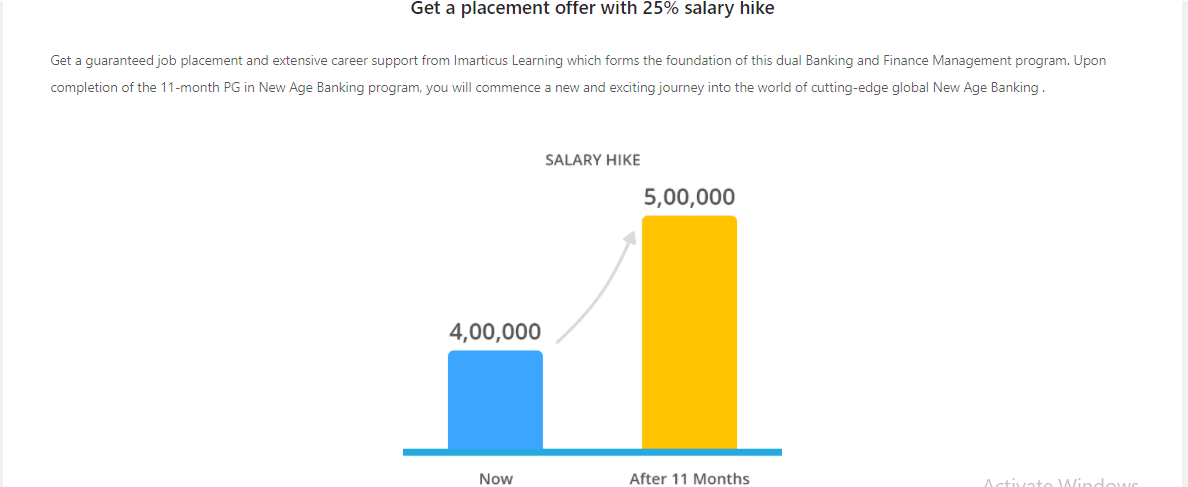
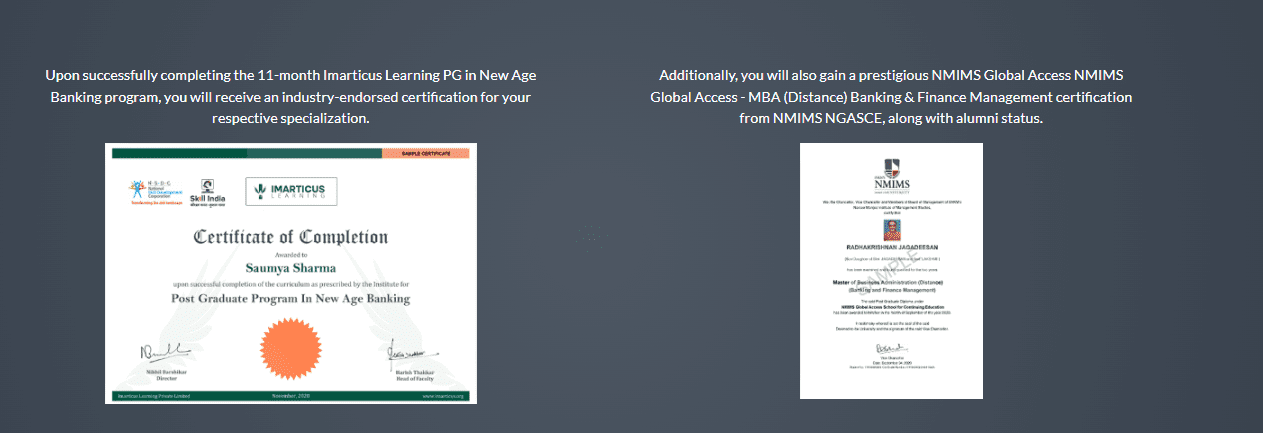
The PG Program in New Age Banking offered by Imarticus is certified by NMIMS. Young enthusiasts can launch their careers in finance/banking with this PG program. The NMIMS online MBA also guarantees a maximum of 25% of salary increase for working professionals. Start your new-age banking and finance course now!

Take this Financial Modelling Certification to Acquire the Right Skills: Here’s Why

The financial modeling certification will increase your skills and help you focus your knowledge on the genuine needs of the business. Financial projections simulate the behavior of a business over time through the evolution of its financial statements, depending on how changes in key business variables and its immediate environment are predicted. Thus, advanced modeling provides dynamic tools to study the effects of different scenarios.

A financial model is a tool that allows a company’s financial statements to be projected over time (into the future). It can also project the effect of independent business lines, specific investments, or isolated projects. The most useful aspect of the model is that, once it has been built and reflects (through the calculations incorporated) a representative behavior of the key variables of the business, we can analyze the estimated effect that certain changes in these variables may have on the ratios that have been defined as a priority.

This is one of the most comprehensive and powerful enterprise risk management tools and is an important part of the financial modeling course.

A solid financial model, with credible data and which allows a dynamic understanding of the effect that certain events in the market could have in the future, has become a fundamental tool in the debt refinancing processes that have been experienced during the worst years of crisis. This is only one of the applications of financial modeling. Their contribution to strategic planning is fundamental to discriminate on the major decisions to be taken in companies:

  • new investments
  • internationalization
  • remuneration policies
  • decisions between “make or buy”
  • outsourcing of work, etc.

These require an in-depth qualitative and quantitative study that ends up being translated into a financial model. This way of acting generates a series of different options or paths that we call “scenarios” and which comprise certain parameters that are estimated to occur (or not to occur) at a time. This set of events ends up generating a value for our study ratios and tells us which of these paths brings us closer to the objectives of the business and/or its shareholders.

The structure of a financial model should always be fairly similar. Another thing is that each modeler has his or her own way of ordering the information within the model, and each business is unique and requires that certain types of data or calculations gain (or lose) relevance depending on the activity and/or the specific stage of the business. The Financial Analysis Prodegree (FAP) is a program that builds your skills so that you can build your own models in the right way. 

The best way to know if a financial model is well thought out is to look at the performance requirements that the model must meet and you can learn this in the financial analyst course:

  • Financial statements must be projected under accounting, tax, and commercial regulations. Balance sheets must balance, depreciation must correspond to each period according to the nature of the assets, loans must be depreciated according to the specific conditions of each line, reserves must be appropriated when appropriate, and so on.
  • The entrepreneur must be able to recognize his business. If, after the model has been created, the entrepreneur who knows his business does not recognize the data, nor does it fit his business model, it should be reviewed from the outset to ensure that certain variables have not been oversimplified, nor that erroneous behavior of parameters that may be key has been assumed.

What is the Importance of KYC in Investment Banking?

KYC is to ensure that the firm has not unknowingly started interacting with a corrupt individual or entity. It also helps protect the company from any legal implications that could arise when dealing with these entities.

This post will explore how KYC plays an integral role in maintaining compliance and preventing corruption in IB, research methods for conducting due diligence on customers, and conclude by exploring some of the challenges faced by firms seeking compliance.

The Know Your Customer process is to protect the integrity of financial institutions by preventing them from unknowingly conducting business transactions with corrupt or sanctioned individuals. KYC is used in conjunction with OFAC screening to comply with existing sanctions against Iran, North Korea, Russia, Cuba, etc., which prohibited trade or investment.

The key objectives include:

Within Banking, KYC processes provide an effective method of preventing the following practices, which is to be in breach of compliance standards:

  • Anti-Money Laundering (AML) is a process that Investment Banks conduct to prevent organizations or individuals from using financial institutions for illegal activities. It includes any money laundering methods related to terrorist financing, drug trafficking, and other unlawful activities.
  • KYC aims to ensure that an organization or individual is not engaging in any illegal activities, preventing them from using banking services for their benefit.
  • Investment Banks take the AML process further by using OFAC screening to ensure they do not conduct business with individuals, organizations, or countries associated with terrorist activities.
  • The US Department of the Treasury develops and disseminates lists of designated terrorists. Banks must check their customers against these lists to ensure that they are not conducting transactions with organizations or individuals who have been deemed a security threat by OFAC.

Why is KYC important for a country?

Due to its importance in the financial services industry, KYC has become a regulatory requirement in many countries. Banks must have proper risk management systems to meet international compliance standards and monitor existing customers by checking their information against current sanctions lists.

  • KYC is towards the Financial Intelligence Unit (FIU) in each country, responsible for receiving and analyzing suspicious transaction reports (STRs).
  • It is a statutory requirement that banks report unusual transactions to the FIU.
  • KYC standards define by national laws and regulations but also include international standards such as the rules of the World Bank, International Monetary Fund (IMF), United Nations (UN), Organization for Economic Co-operation and Development (OECD), etc.
  • International standards support the idea that all banks can use similar KYC procedures, but each country adapts these standards following its unique legal and regulatory environment.

Learn Investment Banking with Imarticus Learning

Students can quickly achieve the opportunity to work at most global IB courses with a CIBOP certificate. Students can get full career help to begin their investment banker courses with 8000+ placements accomplished with 60 percent compensation increases.


Some course USP:

  • This Investment Banking courses with placement assurance aid the students to learn job-relevant skills that prepare them for an exciting career.
  • Impress employers & showcase skills with a certification endorsed by India’s most prestigious academic collaborations.
  • World-Class Academic Professors to learn from through live online sessions and discussions. It will help students understand the 360-degree practical learning implementation with assignments.

Contact us through the live chat support system or schedule a visit to Mumbai, Thane, Pune, Chennai, Bengaluru, Delhi, and Gurgaon training centers.

Here’s how delivering personalized service over a digital platform solves traffic challenges for banks

Banks are experiencing a challenging time with the traffic because people are turning to digital platforms for their banking. However, banks can increase conversion rates by delivering personalized service over these digital platforms. This post will discuss how to provide personalized customer service over a digital platform so that you can improve your conversion rates and generate more revenue for your business!

The bank is providing personalized customer service over a digital platform.

This allows customers to receive information about their accounts, transfer funds, and make payments whenever they want from anywhere in the world without waiting for an agent or coming into the branch. Banks should also use chatbots as part of this strategy, as well as other AI technologies such as machine learning and natural language processing (NLP).

These can help banks meet customer needs faster by automatically routing requests to agents when necessary based on pre-defined rules using algorithms that process user data, including location, account data, history with the company, etc.

For example, if you are looking at your balance between sessions, it will be routed differently than if you send multiple messages during one session, which would indicate urgency so an agent can respond more quickly.

Another important aspect of providing personalized service over a digital platform is that customers should be able to access their accounts anytime, anywhere, which helps them avoid missing out on potential opportunities. For example, if the value of one’s investment portfolio suddenly increases, they won’t miss it because they will receive an alert instead, so they know what actions to take next.

This also goes for any fees or penalties due as well as security alerts such as suspicious activity, which may include unusual transactions etc., so banks need to ensure people are getting notified immediately about these things along with other issues via email and SMS messaging, in addition, to push notifications through chatbots and apps. They could even integrate this into Google Home or Alexa devices by having voice-activated banking so customers can do their banking in the comfort of their own home without having to be glued to a computer.

Suppose banks want to offer personalized service over a digital platform. In that case, they need to ensure that people have access no matter where they are, which includes offering support across all devices such as smartphones and tablets in addition PC’s and laptop computers along with other internet-enabled devices including smart TVs, etc., so it doesn’t matter what someone is using at any given moment because they will be able to get assistance when needed.

This means giving them an excellent customer experience that cannot just come from one channel but instead should include multiple channels working together (i.e. chatbots sending information directly into SMS messaging or voice-activated assistants like Amazon Echo), so there aren’t any gaps.

This is just the beginning of how personalized service over a digital platform can help banks increase their conversion rates and generate more revenue for their business!

Get PG diploma in banking and finance from Imarticus Learning:

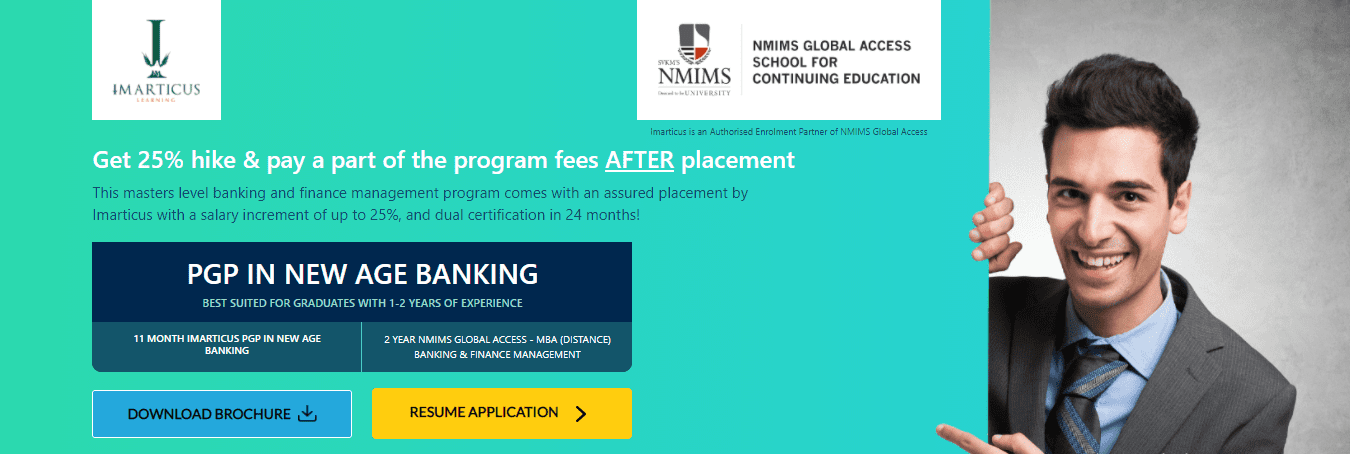
Imarticus Learning offers one of the best Masters’s level banking and finance management programs that come with assured placement. This course has specialization in Banking and Finance Management and Imarticus Post Graduate in New Age Banking program. The course is a comprehensive, 24-month unique combination of two industry-endorsed Finance and Banking courses specially designed to upgrade existing careers in the booming Banking and Finance industry.

Course USPs:

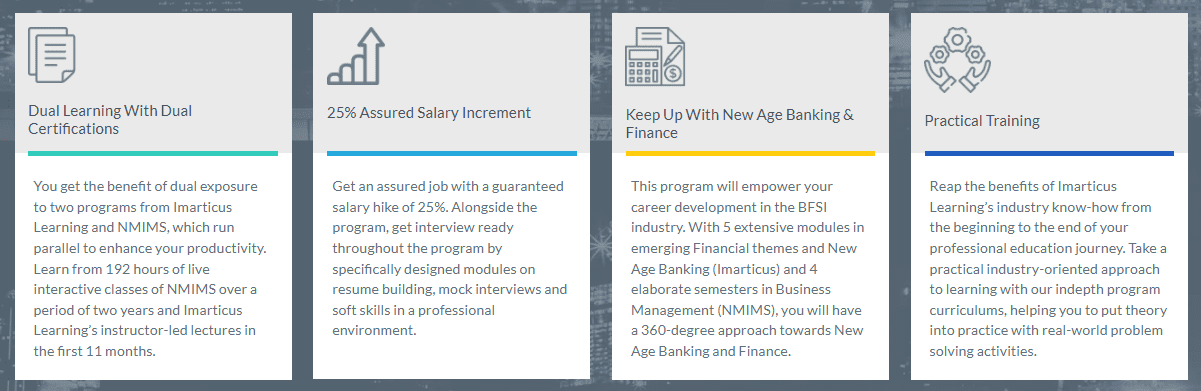
  • Dual Learning with Dual Certifications
  • 25% Assured Salary Increment
  • Keep Up with New Age Banking & Finance

Are Banks Doing It Wrong? What Do Investment Banking Clients Want

IB clients are dissatisfied with the services they receive from their banks. In a recent survey, 75% of respondents said that they were not satisfied with the service provided by their bank. The top three reasons for dissatisfaction included products:

  • Poor customer service.
  • Lack of attention to client needs.
  • An inability to provide solutions beyond traditional.

This blog post will examine what customers want and how banks can better serve them.

Banks Can Improve Service by Meeting Unmet Needs

According to the survey, 73% of respondents stated that their banking firm could not provide them with all the required products and services. Banks need to look at their service model and identify these gaps in products or services that they are not providing.

Banks should then find ways to provide the missing pieces, even bringing in an outside party. For example, by partnering with a trusted company, banks may offer trusts as part of their entire suite of wealth management products.

Banks Should Streamline Services to Help Clients

The survey also indicates that clients are frustrated with the amount of time it takes to get help from their banks. 60% of respondents stated that it takes too long to speak with someone who can provide timely advice or assistance, and 40% said they were dissatisfied because their bank had limited hours for customer service.

Banks need to look at their client services and determine if they can streamline them. For example, by offering extended hours or more self-service options such as mobile apps that allow clients to check account balances and view transaction history, banks can help clients complete tasks with less hassle. By streamlining service, banks can help clients save time and improve the overall customer experience.

Banks Should Streamline Processes to Improve Efficiency

Finally, according to the survey results, it is clear that banks need to improve their technology capabilities to offer better products at competitive prices. 69% of respondents stated that their investment bank did not provide them with advanced technological tools to help them manage their assets.

Banks should look at how they can upgrade and streamline their technology. Technology has improved dramatically over the past decade. Banks can take advantage of these advancements to provide better service for clients who are increasingly expecting banks to invest in technology that will allow them to work faster and more efficiently.

To better serve their clients, firms must meet client demands by providing more products and services while streamlining client service to help them save time. Firms should examine how they can upgrade their technology to make their services even more efficient. By doing this, banks will be able to improve the overall client experience and retain existing clients.

Explore Investment Banking with Imarticus Learning

Through the Investment Banker course, students can learn complicated securities and derivatives and the services of IB operations. This 180-hour online course will thoroughly prepare students for banking operations, treasury, and clearing services.

Some course USP:

  • This Investment Banking course with placement assurance aids the students to learn job-relevant skills that prepare them for an exciting career.
  • Impress employers & showcase skills with a certification endorsed by India’s most prestigious academic collaborations.
  • World-Class Academic Professors to learn from through live online sessions and discussions. It will help students understand the 360-degree practical learning implementation with assignments.

Are banks and financial institutions faced with the challenge of rendering efficient personalized services over their digital counterparts?

Banks are faced with the challenge of rendering efficient personalized services over their digital counterparts. This is primarily because banks have been slow to catch up on the available technology and therefore provide an inefficient experience for customers who are not satisfied by traditional banking methods.

In order to solve this issue, a PG diploma in banking and finance will be designed to provide students with the necessary skills and knowledge in order for them to become successful bankers.

In this post, we will discuss what banking and finance online courses focus on and what is the career scope for a PG diploma in banking and finance graduates.

What do Banking and finance courses focus on?
best PG Diploma in banking and finance courses

Banking and finance courses are primarily focused on equipping students with the necessary skills and knowledge to become successful bankers.

best PG Diploma in Banking and Finance

In addition to this, PG diploma courses also focus on accounting and taxation issues that are important for a successful career within the banking industry.  The banking and finance course will cover topics such as:

  • Financial markets and institutions: It is important to know the different financial instruments available, the institutions involved in each instrument, and how these work together.
  • Financial services: This includes a variety of topics that are related to banking such as credit cards, mortgages, etc., this PG diploma course will also cover basic insurance products that may interest customers.
  • Banking laws and regulations: For individuals who want to join the banking field, it is important to know the laws and regulations that are involved in the banking industry.
  • Taxes: The PG diploma course will have a separate section on taxes that covers the different types of taxation within an organization as well as personal taxation practices.

All these topics help a student understand how financial markets operate and allow them to excel in a PG diploma banking course.

What are the Career options after graduation from Banking and finance?

It is obvious that PG diploma graduates can expect a successful career in banking and finance.  A PG diploma graduate will be able to apply for careers such as:

  • Trader or Analyst within financial institutions.
  • Loan Officer, Loan Counselor, or Investment Advisor at banks.
  • Credit unions or other types of lending companies.

In addition, there are multiple job roles that students can apply for when they complete their PG diploma courses in Banking and finance. Moreover, all these jobs are reputed ones and offer a great career scope.

Make a Career in Banking with Imarticus Learning:

Imarticus Learning is India’s leading banking and finance course provider. They offer various banking and finances online courses such as PGDBA, PGDMF, PGDBM, and so on.

best PG Diploma in banking and finance courses

With more than 300+ branches across the nation, it is evident that Imarticus has created a name for itself within the industry of education. So, if you are looking to excel in your career in banking, then make sure you enroll in such a PG diploma course.

Course USP’s:

  • Designed to upgrade the career in banking and finance industries.
  • Practical training that keeps you up with new-age banking and finance.
  • Ideal for professionals who want to switch careers in banking and finance.
  • Career guidance that will ensure you get a job after PG diploma courses from Imarticus.best PG Diploma in banking and finance courses

For further details, contact us through the Live Chat Support system or visit our training centers in Mumbai, Thane, Pune, Chennai, Bengaluru, Delhi, and Gurgaon.

What are Altcoins? How do They Differ from Bitcoin?

An altcoin is an alternative cryptocurrency to the traditional and most popular ones like bitcoin. They are currently on the rise due to the volatility of the cryptocurrency market, which carries many risks. With an altcoin, transactions are much faster, it is generally less volatile than bitcoin and arguably has a higher level of stability. In addition, altcoins have an influence on the process and scope of the blockchain.

Since the emergence of bitcoin, the concept of a decentralized peer-to-peer (P2P) payment network has inspired the establishment of multiple digital assets. The cryptocurrencies that emerged after bitcoin are called ‘altcoins’. Their name is a fusion of “alternative” and “coin”. 

With Namecoin came the onset of altcoins, which started in 2011 and it was created using the same blockchain technology engine as bitcoin. Namecoin is an integral part of the altcoin story as it proved that there is enough room in cryptocurrency markets for more than one type of digital asset.

Today, of the total cryptocurrency market, altcoins represent approximately 31% of it and bitcoin represents the remaining percentage. Many altcoins share the main characteristics of bitcoin, as they do not depend on banks, financial establishments, or any kind of the third party to be transferred from one person to another.

The Blockchain Technology

By using blockchain technology, details on transactions are accumulated in blocks that need to be verified to guarantee that they are genuine. In this sense, as soon as the block is approved by an algorithm, it is converted into an official part of the general distributed book. Since the blockchain is put in storage on servers and computers all over the planet, it is almost impossible to hack such a huge system. For that reason, blockchain technology is thought to be reliable and the financial future. 

How Do You Get Altcoins?

Similar to bitcoin, altcoins can behave as both assets and currencies. The simplest way to obtain them is to buy them online. Today, there are over 350 different exchange platforms where altcoins get traded each day. Among the most popular cryptocurrency exchange sites are Bittrex, Kraken, Binance, and Coinbase, but you can also buy and sell selected cryptocurrencies over numerical payment systems such as Venmo or PayPal.

The prices of altcoins are established by sellers and buyers transacting on the exchanges, and therefore prices for the cryptocurrencies can be quite volatile. To purchase them, you will have to have a digital wallet where you can store the altcoins. When selecting a wallet, you should be careful to know the cryptocurrencies it allows because not all of them except the ones on the market.

Why Choose Imarticus for Online MBA Course?

At Imarticus we offer a one-of-a-kind FinTech MBA program that will give you the best Blockchain Training. This immersive FinTech learning experience will allow you to apply what you learned when facing real business problems. Thanks to our blockchain technology courses you will become a FinTech expert.

If your profile is more of a graduate with 1-2 years of experience, then you will love our PGP in New Age Banking. It is the perfect option for beginner professionals looking to build a career in the new banking industry.

Conclusion

The future of currency is here. With cryptocurrencies such as Bitcoin and the Altcoins becoming more and more stable, you cannot be left behind in learning all you need to know about blockchain technology. Subscribe today to one of our courses at Imarticus and become part of the future!

Are MBAs a Thing of the Past?

If you are interested in enrolling in an online MBA course, but you are not sure if a master’s degree in business administration is what your resume is missing, or if it would even make a difference when applying for a new job, this article is for you.

With the constant evolution that we have witnessed over the last years in all kinds of fields, there are thousands of devices, methodologies, trends, systems, and mechanisms that become obsolete every passing day.

As you probably figured, far from being the exception, education is one of the domains that has been impacted the most by the evolution of technology, which has caused many methodologies and even domains to be considered outdated and with an unpromising future for not having successfully adapted into said evolution.

Are MBAs a thing of the past?

If you are wondering if MBAs have fallen victims to obsolescence due to poor adaptation mechanisms, or if they are no longer an asset for job applicants, the answer is a solid no. Actually, having a master’s degree in business administration is a valuable qualification for students and workers all over the world in almost every field, as this degree is focused on creating and improving abilities such as leadership, time and resources management, apart from business knowledge.

Moreover, between the call for innovation coming from the pass of time, and the inevitable pressure exerted from the Covid-19 pandemic and its numerous effects, MBA programs are rapidly adapting. Not only are they shifting into what many refer to as “future-ready skills” and finding ways to include them within their curriculum and procedures, but the methods for imparting this knowledge are changing as well. Such is the case of online MBA courses and other distance learning programs.

Allowing people who have already integrated the workforce, or those who do not live in the same cities of the best-ranked academic institutions to join their prestigious programs through online platforms is one of the elements that can help you realize MBAs are here to stay.

If this option seems attractive to you, do not hesitate to take a look at the following list with the best online MBA courses, that will help you remain competitive by perfecting your future-ready skills and preparing you for real-world experience.

How SEBI is Regulating the Capital Market in India

The Securities and Exchange Board of India (SEBI) has always been the regulatory body regulating the capital market in India. Recently, they further expanded SEBI’s mandate to include regulation of virtual currencies as well. The move aimed to curb illicit activities associated with cryptocurrencies, such as money laundering or terrorism financing.

This blog post discusses SEBI’s changes and their implications for investors and exchanges dealing in crypto-assets. It also provides an overview of how these new regulations will help protect stakeholders like retail investors who might not be aware of the risks involved in digital assets.

What were the changes made by SEBI?

The amendments help bring these unregulated entities under the purview of India’s central banking institution. These entities will now have to follow a host of new rules and regulations under the Prevention of Money Laundering Act (PMLA), with several other inclusions.

Most notable among these inclusions are:

  • A ban on banks from doing business with exchanges until they have obtained an appropriate license from SEBI
  • Required registration of all exchanges/companies are providing such services
  • A minimum KYC (Know your customer)/ AML (Anti Money Laundering) regimen for all accounts and transactions

What does it signify for investors in the Indian Crypto Mark?

The amendments made by SEBI will make it harder for unregulated entities to operate in India and provide a massive boost to the legitimacy of exchanges that SEBI already regulates.

For retail investors, trading on a regulated platform will mean:

  • Increased transparency in the market
  • Strict adherence to anti-money laundering measures by exchanges/companies providing such services

With India’s large population supporting the government’s ambition to increase investors’ transparency and safety, SEBI has taken significant steps to make the country a safer place for retail investors.

How will these regulations help protect retail investors?

Retail investors unprotect in crypto markets due to a lack of clear guidelines. SEBI’s regulation aims to protect these consumers by curbing illicit activities associated with cryptocurrencies, such as money laundering or terrorism financing. One of the significant issues faced by exchanges dealing in virtual currencies is compliance related to Anti Money Laundering (AML) measures.

AML requires businesses to collect KYC details for transactions over a certain amount, making compliance with these regulations extremely cumbersome. SEBI has resolved this issue by requiring exchanges to submit KYC details for any user on their platform regardless of the number of transactions.

Capital markets are the heart of a nation’s economy, where shares/securities are bought and sold amongst investors. If you’re looking for a Capital market course, then look no further! Here at Imarticus Learning, we bring you the best capital market training.

Explore Investment Banking with Imarticus Learning

Through online banking and finance courses, students can learn complicated securities and derivatives, the trade life cycle, and the services of investment banking operations. This 180-hour Banking and finance online course will thoroughly prepare students for banking operations, treasury, and clearing services.

Some course USP:

  • This Investment Banking course with placement assurance aids the students to learn job-relevant skills that prepare them for an exciting career.
  • Impress employers & showcase skills with a certification endorsed by India’s most prestigious academic collaborations.

World-Class Academic Professors to learn from through live online sessions and discussions. It will help students understand the 360-degree practical learning implementation with assignments.