3 Tips on Building a Successful Online Course in Data Science!

3 Tips on Building a Successful Online Course in Data Science!

The coronavirus pandemic is undoubtedly one of the biggest disruptors of lives and livelihoods this year. Thousands of businesses, shops and universities have been forced to shut down to curb the spread of the virus; as a result, massive numbers have turned to their home desks to work from and to tide over the crisis.

The pandemic has also influenced the surge of a new wave of interest in online courses. Over the past few months, many small and large-scale ed-tech companies have sprouted up, bombarding the masses with a wider range of choices than ever before. Many institutions have chosen to give out their courses at a minimal price and yet others for free. The format of these classes is different– hands-on, theoretical, philosophical, or interactive– but the ultimate goal is to take learning online and democratize it.

Naturally, it’s an opportune time to explore the idea of creating an online course– a data science online course, in particular, seeing as futuristic technologies will see a profound surge in attention come the next few years.

Here are a few tips to get the ball rolling on your first-ever online course in data science:

  • Create a Curriculum

Data science is a nuanced and complex field, so it won’t do to use the term in its entirety. It is important to think up what the scope of your course will be. You will need to identify what topics you will cover, what industry you want to target (if any), what tools you might need to talk about, and how best to deliver your course content to engage students.

education

General courses are ideal for beginners who don’t know the first thing about data science. This type, of course, could cover the scope of the term, the industries it’s used in as well as job opportunities and must-have skills for aspirants.

Technical courses can take one software and break it down– this is also a great space to encourage experiments and hands-on projects. Niche courses can deal with the use and advantage of data science within a particular industry, such as finance or healthcare.

  • Choose a Delivery Method

There are a plethora of ed-tech platforms to choose from, so make a list of what is most important to you, so you don’t get overwhelmed. Consider how interactive you can make it, through the use of:

  1. Live videos
  2. Video-on-demand
  3. Webinars
  4. Panels
  5. Expert speakers
  6. Flipped classroom
  7. Peer reviews
  8. Private mentorship
  9. Assessments
  10. Hackathons
    Education

The primary draw of online classrooms is also how flexible they are. Consider opting for a course style that allows students to learn at their own pace and time. Simultaneously, make use of the course styles listed above to foster a healthily competitive learning environment.

  • Seek Industry Partnerships

An excellent way to up the ante on your course and set it apart from regular platforms is to partner with an industry leader in your selected niche. This has many advantages– it lends credibility to your course, brings in a much-needed insider perspective and allows students to interact outside of strict course setups. Additionally, the branding of an industry leader on your certification is a testament to the value of your course; students are more likely to choose a course like yours if this certification is pivotal in their career.

EducationOther ways by which you can introduce an industry partnership include inviting company speakers, organising crash courses on industry software and even setting up placement interviews at these companies. The more you can help a student get their foot in the door, the higher the chances of them enrolling and recommending.

Conclusion
Building an online course in data science is no mean feat. However, it’s a great time to jump into the ed-tech and online learning industry, so get ready to impart your knowledge!

Top 3 Apache Spark Tutorials For Machine Learning Beginners!

Apache Spark is a well-known name in the machine learning and developer worlds. For those who are unfamiliar, it is a data processing platform with the capacity to process massive datasets. It can do so on one computer or across a network of systems and computing tools. Apache Spark also offers an intuitive API that reduces the amount of repetitive computing and processing work that developers would otherwise have to do manually.

Today, Apache Spark is one of the key data processing and computing software in the market. It’s user-friendly and it can also be used through whatever programming language you’re most comfortable with including Python, Java and R. Spark is open-source and truly intuitive in that is can be deployed for SQL, data streaming, machine learning and processing graphs. Displaying core knowledge of Apache Spark will earn you brownie points at any job interview.

To gain a headstart even before you begin full-fledged work in Apache Spark, here are some tutorials for beginners to sign up for.

  1. Taming Big Data with Apache Spark and Python (Udemy)

This best-selling course on Udemy has fast become a go-to for those looking to dive into Apache Spark. More than 47,000 students have enrolled to learn how to:

  • Understand Spark Streaming
  • Use RDD (Resilient Distributed Datasets) to process massive datasets across computers
  • Apply Spark SQL on structured data
  • Understand the GraphX library

Big data science and analysis is a hot skill these days and will continue to be in the coming future. The course gives you access to 15 practical examples of how Apache Spark was used by industry titans to solve organisation-level problems. It uses the Python programming language. However, those who wish to learn with Scala instead can choose a similar course from the same provider.

  1. Machine Learning with Apache Spark (Learn Apache Spark)

This multi-module course is tailored towards those with budget constraints or those who are unwilling to invest too much time, preferring instead to experiment. The modules are bite-sized and priced individually to benefit those just dipping their toes. The platform’s module on “Intro to Apache Spark” is currently free for those who want to get started. Students can then progress to any other module which catches their fancy or do it all in the order prescribed. Some topics you can expect to explore are:

  • Feature sets
  • Classification
  • Caching
  • Dataframes
  • Cluster architecture
  • Computing frameworks
  1. Spark Fundamentals (cognitiveclass.ai)

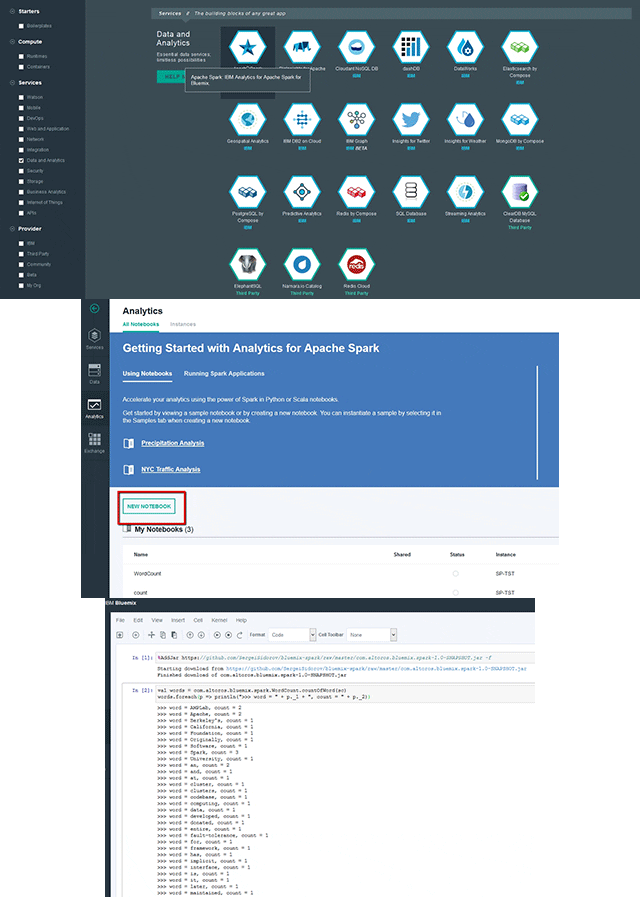
This Apache Spark tutorial is led by data scientists from IBM, is four hours long and is free to register for. The advantage of this course is that it has a distinctly IBM-oriented perspective which is great for those wishing to build a career in that company. You will also be exposed to IBM’s own services, including Watson Studio, such that you’re able to use both Spark and IBM’s platform with confidence. The self-paced course can be taken at any time and can also be audited multiple times. Some prerequisites to be able to take this course are an understanding of Big Data and Apache Hadoop as well as core knowledge of Linux operating systems.

The five modules that constitute the course cover, among other topics, the following:

  • The fundamentals of Apache Spark
  • Developing application architecture
  • RDD
  • Watson Studio
  • Initializing Spark through various programming languages
  • Using Spark libraries
  • Monitoring Spark with metrics

Conclusion

Apache Spark is leveraged by multi-national million-dollar corporations as well as small businesses and fresh startups. This is a testament to how user-friendly and flexible the framework is.

If you wish to enrol in a Machine Learning Course instead of short and snappy tutorials, many of them also offer an introduction to Apache Spark. Either way, adding Apache Spark to your resume is a definite step up!

Data Literacy Is Very Much a Life Skill– Here Are 4 Reasons Why?

The world is no stranger to data; in fact, in recent times, the world has found itself being bombarded by more facts and statistics than ever before. At quite the same speed, people have also been faced with fake facts, viral social media forwards with little to no truth.

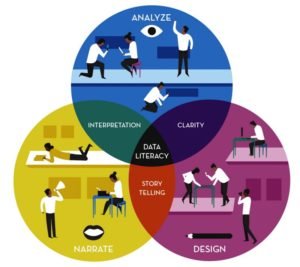
Being data literate has moved from being a niche requirement to being a life skill that allows people to distinguish between fact and fiction. Data literacy is a way of exploring and understanding statistics in a manner that provides meaning and insight.

This meaning isn’t relegated only a data science career or to businesses looking for an edge over competitors. It applies to society and its interconnected systems as a whole.

To drive the point home, here are a few advantages that data literacy offers when looked at as a life skill:

Recognising the Sources of Data

Data is everywhere, especially in a world where nearly everything is digital and produces and consumes more data. There are many different ways in which data exists, including graphs, images, text, speech, video, audio and more. Recognising the different sources of data is the first step towards working with data. The sources, formats and types all have a role to play in determining the use (and potential misuse) of data, which in turn drives data literacy.

Acknowledging the Self as a Consumer and Producer of Data

The messages you send, images you post and likes you leave on social media are examples of data. So are the transactions you make and the searches you conduct on search engines such as Google and Bing. Today, nearly every single person in the world is a data producer; those sources of data are vital to value-generating processes across industries and markets.

Similarly, people are daily consumers of data even if they don’t perceive it as that. The COVID19 pandemic has brought this into the light even further– front page statistics are at the back of everyone’s mind, as are the names of containment zones and the best practices for sanitisation.

Recognize Biases and Fallacies

Data literacy gives the people more agency to call out those producing statistical data that is biased, twisted or outright incorrect. As citizens, consumers and valued members of a society, it is imperative that every individual is able to identify false promises or glossed-over issues that allow wrong-doers to continue as they were.

Data ScienceData literacy gives people the power and the evidential backing to call out those intentionally or unintentionally propagating mistruths and fallacies through awry statistics. This way, data literacy plays a pivotal part in politics, economics and ethics of a society, indeed of the world.



Improves Data Storytelling

Instead of data points presented on their own, data that is presented as descriptive stories make individuals more likely to understand the effect, decipher trends and make more educated decisions. While data storytelling is imperative to learn for those taking a data science course, it is just as important for members of all other fields to better present their arguments such that they catch eyes.

Data has never been a strictly academic factor; however, it has often been painted as complicated, invasive or unnecessary to penetrate everyday lives. Data storytelling ensures that data is taken even further out of that box and presented as actionable insights to even the average Joe Bloggs.

Conclusion

The focus on data science and literacy shouldn’t just be restricted to mathematics and algorithms but everyday applications of data in daily lives. Data understanding allows people all over the world to take more control of what they’re producing and consuming. Data fluency and literacy is achievable by all.

Why Artificial Intelligence is Invaluable for Weather Forecasting and Disaster Prediction

For most people, weather forecasts are simply indicators of whether they need to carry an umbrella or throw on a coat when they go outside. However, for many industries and types of individuals, weather changes and patterns have a direct impact on their lives and livelihoods.

Agriculture, for example, benefits from accurate weather forecasting because farmers can make better planting and harvesting decisions. For governments, weather forecasts factor in their budget plans and disaster relief fund allotments. Businesses that rely on clear weather (or rough weather) depend on weather forecasts to drive several of their operational processes.

From all this, it is easy to gather that accurate weather and disaster forecasting carries much more weight than we think. Artificial intelligence augments the accuracy and reliability of weather forecasting, especially given that so many details fluctuate every day and with every geographical location. It is a great fit, given the volume of data is nigh impossible to sift through with manual labor alone.

In short, the future of artificial intelligence will also see its increasing use in the weather and natural disaster forecasting domains. Here are  a few more reasons why:

  • Managing several sources of weather data

There are currently more than one thousand weather satellites orbiting the  Earth, each sending back weather data dumps to various collection points. These data dumps are a mix of information about temperatures, cloud patterns, winds, and pollution levels. Then there are thousands of government and private weather stations around the world, each conducting their own real-time research on weather and climate.  It is nearly impossible to sift through all this data manually, but AI algorithms can do it in a matter of hours.

  • Sifting through multiple data categories

Suffice to say that the amount of data generated from satellites and personal weather stations is too much to fathom, and impossible for humans to sift through. However, Artificial Intelligence training can be applied to segregate and classify data from dumps, as well as to pull out key insights for analysis. This is a preliminary process in the weather prediction model, wherein AI segregates data based on indicators, flags significant shifts or patterns, and keeps data classified such that predictions are made as accurately and as scientifically as possible.

  • Preparing for potential disasters

Beyond real-time predictions, AI is also used to identify patterns and prepare for natural disasters in advance, off the back of previous circumstances. It may also split this data between geographies, allowing disaster management teams to evaluate which areas will be hit the hardest and prepare for that. This data is also invaluable for civil engineering teams, architectural firms, and city planning teams who need to take weather into account when mapping out residential and commercial areas.

  • Sending out warnings

Apart from predicting natural disasters, AI can also be leveraged to send out warnings to potential danger zones. This is invaluable when it comes to saving human and animal lives and generally preparing areas for the worse. Warnings can be sent out through media alerts, push notifications, and citizen broadcasts; whatever the method of delivery, AI is vital to sending such notices out in time and to the right people to curb panic and facilitate seamless planning.

Artificial Intelligence Training for Weather Forecasting

Weather forecasting teams and companies need skilled AI scientists and engineers to apply theory to practice in real-time. They need AI professionals who can create automated setups to free human minds for higher-order thinking; they also need pros who are fast on their feet and adept at creative problem-solving.

Using AI for weather forecasting is a whole new ball game – one on which many lives depend.

What Problems and Challenges are Faced By a Business Analyst?

A large amount of business analysts time, as well as effort, is taken up in doing important activities. These activities include understanding a client’s business as well as collecting and clearing various requirements. Being a business analyst involves building trust with higher-ups and stakeholders while also identifying clientele needs. Thus writing up supporting documents is only a small part of a business analysts job and also happens to be the most visible to the people that are not involved with the project.

A business analyst helps in bridging the gap between various representatives of business that are responsible for solving issues and various developers that are needed to understand these issues. The developer curates a solution depending on the issue.

Listed below are the various problems as well as challenges that business analysts frequently face.

Typical challenges that business analysts face

1. Misunderstanding and misconception of a business analyst’s work scope
There are often differences created between what work or activity is really vital for a business analyst to get to and the actual responsibilities that their job holds or entails. This frequently occurs when a project involving a customer that does not have experience and is thus unfamiliar with a development project.
The possible solution that can be offered in such a situation is to discuss with the client what exactly their expectations are of them as a business analyst as well as their responsibilities. This should be done before the project commences. The business analyst must make sure to explain to the customer and make them understand the meaning of all important terms including terms like wireframes, V&S documents, SRS, and many more. A large number of clients often fail to recognise the difference between a prototype, a wireframe and what is called a mock-up. These words may look similar to the client and leads them to sometimes believe that the terms are designed equally. This would thus require the application of various styles, margins, and so on which would exceed the job responsibilities of a BA. Approval of various expected deliverables, as well as their content, is thus extremely important for both the business analyst as well as the client.

2. The specifications created do not the requirements of the development team
This would include the following pitfalls:
● Vague as well as ambiguous needs and requirements
● There is a lack of understanding of the level of requirements descriptions, that would be needed for developers, by the business analyst
● Insufficient time provided for obtaining requirements and putting the document together
The easiest way to solve this situation is through thorough discussion and through the discussion, defining the necessary level of requirements description, creating a checklist, identifying insufficiency of information, etc.
3. Changing business requirements as well as needs

4. Conflicts and clashes with stakeholders and higher-ups
In the case of any conflicts arising between authority (stakeholders) and business analysts when there is a team proposing a novel approach in regards to present business processes, the team must understand why there is any resistance. The following point may give you an idea.
● There could be critical features or important needs and requirements that were overlooked by the business analyst
● There could be hesitation in discarding old working methods and resistance to study novel solutions

5. Existence of undocumented processes
With the help of a business analyst course, aspirants and people looking to succeed in the field of business analysis will be informed and educated on the ins and outs of the field. A business analysis course will equip people with exactly the resources and tools that they would require in order to succeed in a business analyst job.

How Machine Learning is Changing Identity Theft Detection?


Debilitating data breaches and identity theft scenarios have left several high-profile firms across the globe scrambling to recover losses. In 2018 alone, in the US, over $1.48 billion worth of losses occurred, after 1.4 million fraud reports1. Of these reports, identity theft was a significant defining factor. Businesses and corporates alike are turning to machine learning and Artificial Intelligence (AI) in general for help. Current employees are also being upskilled for an artificial intelligence career through machine learning courses in order to prep for the future of machine learning.

Machine learning has already permeated everyday lives, from online recommendations on your favorite streaming site to self-drive cars that have awed the masses. When it comes to identity theft detection, machine learning has so much potential– especially since there are larger players and higher factors at stake.

Here are some ways in which AI and machine learning are being leveraged to detect, reduce and prevent identity theft:

Authentication Tests

With machine learning, identity documents including the likes of passports, drivers’ licenses, and PAN cards are scanned and cross-verified with an unseen database in real-time. An additional set of authentication tests can usurp theft to some extent– the use of biometrics and facial recognition being some of the more used ML-based tests. Other examples of authentication tests include microprint tests, OCR-barcode-magnetic strip cross-verification, and paper-and-ink validation2.

Real-Time Decision Making

Machine learning training has the power to operationalize and automate the process of data analytics, especially tasks that are mundane or prone to human error. Beyond speeding up the process of identity theft detection, machine learning enables real-time decision making to stop theft in its tracks or sound an alert in case of a potential threat. This is a boon for businesses both large and small who cannot afford to waste valuable human resources on mundane tasks. By detecting identity theft at speeds hitherto unmatched, machine learning allows analysts to make spot decisions before any damage is done.

Pattern Identification

An added benefit of using machine learning to revolutionize identity theft detection is pattern recognition. Since any machine learning algorithm is wired to a database with tonnes of data, these algorithms can scan through all the information available over the years to predict future threats and identify the source and patterns so that preventive measures can be taken in advance. This is beneficial in that it creates links between individual theft cases, allowing analysts to better assess what the best plan of action is in response.

Dataset Scaling

The more data that’s collected, the better machine learning algorithms are trained for a variety of situations. Unlike many other scenarios where lots of data mean more complexity, a wider database allows machine learning algorithms to be scaled and adapted as required. It also allows them to grow more accurate with every addition, make comparisons and identify genuine and fraud transactions in an instant– a true step up from the days of human involvement. However, a caveat– in training stages, it is crucial that analysts be monitoring the process because if the machine goes over an undetected fraud without flagging it, chances are it’ll learn to ignore that type of fraud in the future, opening up a big sinkhole in the system.

The final word

Machine learning is revolutionary in preventing billions of dollars being lost in fraud, theft and data recovery. Firms are increasingly allocating a huge chunk of their budget towards sound ML-based security systems– a testament to just how revolutionary the technology is in identity theft detection.

HOW AI HELPS VIDEOBOT ANSWERS COVID-19 QUERIES WITH MULTILINGUAL VOICE AND TEXT?

Artificial intelligence is helping us during the time of one of the biggest crises in the world. It explains why youth today want to focus on having artificial intelligence training for a better career ahead.

Currently, AI helps diagnose health risks, deliver services, discover new drugs, track coronavirus infections around us, and much more. The pandemic is becoming more significant by the day, but AI is coming to the rescue through different forms of its usage.

It is not only helping researchers, scientists, and doctors to secure people’s lives but tech firms and governments to keep everyone aware. These industries are jointly working towards making the world COVID free.

CoRover teaches us to use the artificial intelligence career at its best

Recently, a start-up driven by artificial intelligence, named CoRover, create a conversational platform. It helps businesses offer authentic information to customers instantly and automatically. The system works with the help of an AI-based doctor-video bot named AskDoc.

The bot addresses queries about coronavirus, transmission, and preventive measures. It includes multilingual voice formats and text formats. Thus, it helps Indians with diverse language options like Hindi, Marathi, Tamil, Telugu, and Kannada. It also includes German and French languages.

How does AskDoc work?

AskDoc helps users get automated replies about COVID-19 and safety protocols given by the Ministry of Health and Family Welfare. It also provides information from the World Health Organization (WHO) and the Government of India.

To ask questions, users need to log into the app. They can use voice recognition or send videos to get replies. Once the app receives a query, the chatbot backend passes it through several layers of its framework.

One can access AskDoc from their laptops other than the app. It offers a chat-based portal that replies to basic questions. Even after going through layers of understanding of the data provided, the answers are pretty quick and specific.

The app helps people interact with healthcare experts across the world. They can ask questions about coronavirus and have diverse knowledge about dealing with it.

How is CoRover making an impact with AI?

The team that made CoRover is currently working towards email integration, as it is also a major source of information. It will help several government-based platforms to get quick answers.

The company also introduced Ask Disha, a conversational AI platform with more than 20 billion interactions by more than 200 million people. With the help of machine learning and artificial intelligence, it helps connect administrative staff, travelers, verified service providers, and more. The recently growing company from Bangalore has already applied for two patents for its product.

Chatbots with AI are not new and know the right way of using empathy and emotions to connect to humans. These work as efficient virtual assistants and help medical experts, medical staff, patients, and families in several cases.

The chatbots created for health only focus on aspects of healthcare. Currently, chatbots for health are increasing due to the coronavirus pandemic. With voice recognition and text formats, these can reach out to people as other humans do.

Many businesses are incorporating chatbots to offer information about COVID-19. Moreover, the Centers for Disease Control and Prevention (CDC) and WHO have chatbots on their websites to provide quick information about the virus. Several governments are also incorporating the same to keep their people aware and safe.

What Are The Skills Required For Data Analyst?

What makes you inclined towards Data Science? Is it the interest in data? Or the shining career in this field? Or the impressive salary package? Despite the reason, you have made a wise choice. The course, Data Science has become the talk of the town for the past many years, and it reflects through the increasing demand for a skilled data analyst.

People are signing up for the Data Science courses in India. They believe the transition to a career in Data Science means stable employment and a high-paying salary once you have a good command of the Data Analytics course.

You don’t have to be a coding expert to learn and practice data science. This article will walk you through the five important skills required to become an in-demand Data Analyst professional. So, continue reading!

Role Of A Data Analyst:

A Data Analyst typically looks at large datasets and using their skill set, transforms data into a simpler and readable form that tells the story of a business. They integrate external data sources with internal company information to see where the company’s growth opportunities are located.

The analyst’s work on data highlights the key component that leads to high efficiency and improves business.

A Data Analyst Mainly Requires To Do The Following Tasks: 

  • Designing a database that suits different modes of inquiry
  • Optimizing database performance for easier use
  • Organizing data in the form of a dashboard that provide high-level summaries
  • Looking for patterns in large sets of data using statistical techniques or other methodologies.

Do You Wish to Become a Data Analyst? Master The Following Skills: 

Critical Thinking: 

A Data Analyst has to go through every day’s challenges related to data. The answer lies in data itself. To become an Analyst expert, you have to analyze the data differently. Apply all the basic concepts that you have been imparted during your Data Analytic course. The more challenges you solve, the better Analytic you become. So, continue to work on critical thinking, and gradually you’ll enjoy working with data.

Data Visualizations & Presentation:  

The two skills are closely associated. In data visualization, you’ll practice telling a story from compelling data to engage the audience or other officials you are presenting your data report.

The data presentation skills improve over time. At first, no one comes with an impressive result. Its consistent work makes you a skilled Data Analyst who presents the data effectively.

Programming Language:  

SQL (i.e., Structured Query Language) is the top-most database programming language a Data Analyst must know and practice. It gives access to data and statistics, which makes it an essential resource for data science.

R and Python are raising their ranks after their prominent use in Data Analysis. Python supports important tasks like collection, analysis, modeling, and visualization of data.

Other important programming languages to practice for a would-be data analyst are Java, Javascript, C/C++, MATLAB, Julia, SAS.

Machine Learning: 

The Data Scientist must be well versed with machine learning for quality prediction and estimation. The skill focuses on building algorithms designed to identify data patterns that improve accuracy over time.

Microsoft Excel: 

Creating a spreadsheet in excel is the basic and most traditional approach used for data representation. Although SQL is used to retrieve and present data in Data Analytics, knowledge of traditional and widespread tools is essential. Some industries may require you to work through excel along with the Data Analytics tool. So, it’s better to be well aware of the Microsoft Excel tool.

Conclusion: 

The skills mentioned above are important and make you confident to begin your career as a Data Analyst. Over time, you’ll achieve mastery of these skills and have a shining career with an abundance of opportunities.

So, are you ready to achieve your goal to become a Data Analyst? Imarticus Learning promises you to support by providing the best suitable Analytic course that fits your career needs.

You can contact us through the Live Chat Support system or even visit one of our training centers based in Mumbai, Thane, Pune, Chennai, Banglore, Hyderabad, Delhi Gurgaon, and Ahmedabad.

What is Alpha Beta Pruning in Artificial Intelligence?

What is Artificial Intelligence?

Most of us are aware of the edge cutting technology i.e. Artificial Intelligence (AI). It is used to create machines that have their decision-making capability. They can learn from their work environment and can behave autonomously. in the initial stages, it is man-made but once it has learned and evolved, it can enhance itself.

For example, the University of California, Irvine developed an AI machine that could solve Rubik’s cube. The machine learns and trains itself through algorithms and now it can solve complicated Rubik’s cube in a fraction of a second. In this article, let us learn about Alpha Beta Pruning in AI.

What is Alpha Beta Pruning?

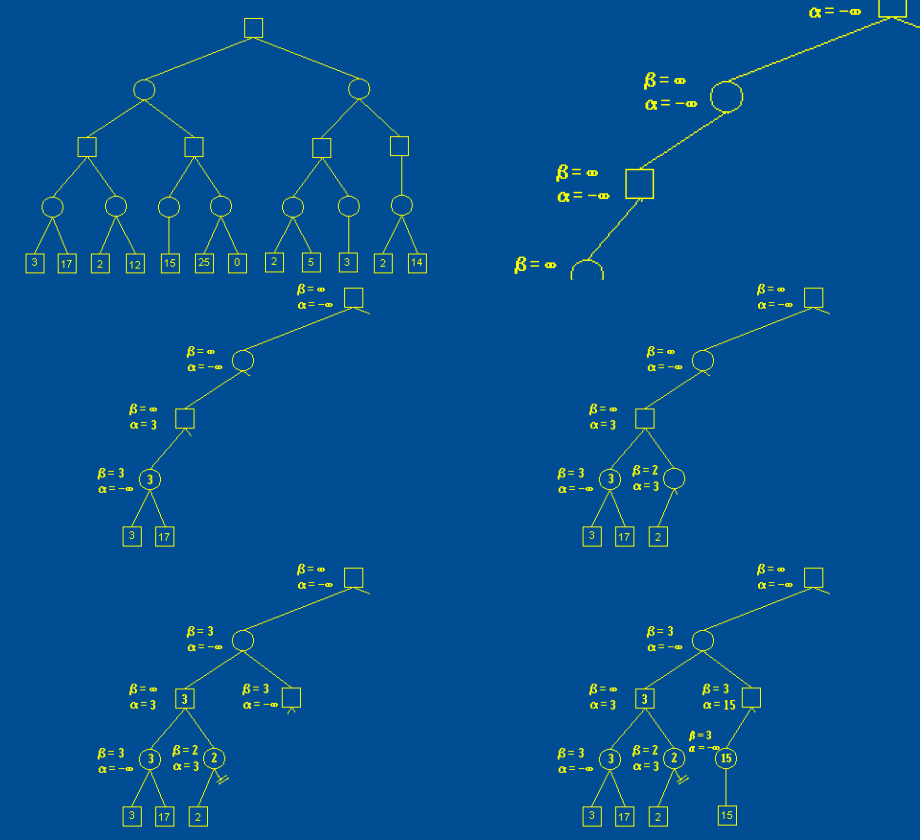
Before you learn about Alpha-Beta Pruning, one needs to know about the minimax algorithm. Minimax algorithm backtracks a scenario/game and finds the best move which will enhance the decision making or in terms of gaming, will maximize the chances of winning. It assumes that there is an opponent who is also trying to win, it tries to reduce the winning chances of the opponent and optimizing its steps to win.

Alpha Beta Pruning is an optimization technique that decreases the number of steps in the minimax algorithm. It helps in reducing the number of steps in searching/traversing. For example, if we are applying a minimax algorithm in a chess game, then Alpha Beta Pruning helps in finding those steps which will not result in winning, and then those steps need not be traversed.

The minimax algorithm prepares a search tree after backtracking, there are many nodes in this search tree. The redundant/useless nodes are eradicated with the help of Alpha-Beta Pruning. It helps in decreasing complexity and saves time. There are two main components in the minimax algorithm, first one is maximizer which tries to get the highest score and the minimizer does the opposite. Let us know about the two parameters ‘Alpha’ & ‘Beta’:

Alpha Parameter (α):

The best choice/decision found in the whole path of maximizer is called Alpha. Its initial value is (-∞). One can also say that the highest value along the path of maximizer is Alpha.

Beta Parameter (β):

The best choice/decision found in the path of minimizer is called Beta. It is the lowest value of all the values encountered in the path of the minimizer. The initial value of the Beta parameter is supposed to be (+∞).

 Note: Before Pruning one needs to check whether (α>=β). This is a necessary condition to run the Alpha Beta Pruning algorithm.

Why Alpha Beta Pruning is important?

There is no change in the result if we compare the outputs minimax algorithm and Alpha-Beta Pruning. Pruning helps in decreasing the number of steps thus making the algorithm faster and less complex.

Key points and terminologies in Alpha-Beta Pruning

  1. The child node is provided with the values of α & β.  While backtracking, the values of lower-order nodes are passed to the upper nodes in the search tree except for the child node.
  2. In some cases, the Alpha Beta Pruning algorithm fails to reduce the number of nodes. In such cases, more time is wasted because of α & β parameters and the number of steps comes out to be the same as the minimax algorithm.
  3. This scenario is called Worst Ordering. Ideal Ordering occurs when a lot of pruning happens and a lot of steps are decreased (especially on the left side of the tree).

Conclusion

AI is a budding technology and is expected to grow more. If you want to learn more about AI, then you can search for courses available online. One such good course is the PG program in Analytics & Artificial Intelligence in Imarticus Learning’s list of offered programs. This article was all about the Alpha Beta Pruning algorithm in AI. I hope it helps!

How To Write And Display Easily The Fibonacci Series In Java?

What is Java?

Java is a programming language that was developed by James Gosling in Sun Microsystems in the year 1995. The aim of designing Java was to support a digital Television screening; ultimately it was found out that Java was developed advanced to just be used for a TV network. The first version of Java 1.0 was released in the year 1996.

The latest version of Java is 14 that launched in the year 2020. Presently, innumerous applications are existing on the internet which won’t work without the support of Java. Usage of Java has also been considered beneficial in Artificial Intelligence.

Artificial IntelligenceBeginners in this field may enrol for a Java Programming Training in Analytics.

 Principles of Java 

When Java was developed, it came out with a certain set of goals or the principles. These principles have to be followed while programming in Java.

The Principles of Java are:

  • It must be simple, object-oriented and familiar.
  • It must be robust and secure.
  • It must be architecture-neutral and portable.
  • It must be interpreted, threaded and dynamic.
  • It must execute with high performance.

Some Java-based Applications

Java has encapsulated most of the functions in web-based applications. Some of the fields covered by Java are:

  • Java Desktop GUI Applications
  • Java Mobile Applications
  • Java Web-based Applications
  • Java Web Servers and Application Servers
  • Java Enterprise Applications
  • Java Scientific Applications
  • Java Gaming Applications
  • Java Big Data Technologies
  • Java Business Applications
  • Java Distributed Applications
  • Java Cloud-based Applications

What is the Fibonacci Series?

Fibonacci is the concept which is found to have appeared in Indian History in a connection with Sanskrit Prosody. This concept was given by Parmanand Singh in 1985.

Fibonacci series is a series of some integers, where the Nth term is equal to the sum of N-1th and N-2th (last two terms). The first two numbers in the Fibonacci series are supposed to be 0 and 1 and each of the subsequent terms of the series is the sum of the previous two terms.

An example of Fibonacci series can be:

0, 1, 1, 2, 3, 5, 8, 13, 21, 34, 55, 89…..

Artificial Intelligence

Algorithm to Generate Fibonacci Series

While generating a Fibonacci Series, some of the key points need to be focused on. Following is the algorithm to program a Fibonacci Series:

  • First two terms of Fibonacci Series need to be 0 and 1.
  • The last two terms of Fibonacci series have to be stored in “last” and “second last” integer values.
  • The current term of Fibonacci series is always equal to the sum of “last” and “second last” term.
  • The last and the second last integers need to be updated as Second Last= Last and Last= Current.

Ways to Write Fibonacci Series in Java

When writing a series in Java, recursion plays a vital role. The coding has to be done with or without the usage of recursion. Some of the programmers may just consider the use of recursion while coding Fibonacci series in Java but writing Fibonacci in Java without recursion is also a great way of coding which gives out amazing outcomes.

The two main ways of writing and displaying the Fibonacci series in Java are listed below:

  • Fibonacci Series without using recursion
  • Fibonacci using recursion

Ways to Display Fibonacci Series in Java

When it comes to the Display of Fibonacci series, it can be generally done by two ways in Java. Both the ways are listed down below:

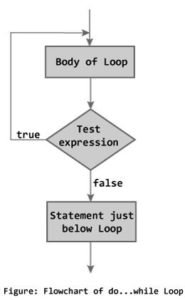
  • Fibonacci using For LoopArtificial IntelligenceFibonacci using While LoopArtificial IntelligenceApplication of Fibonacci Series

Fibonacci is used in various application systems. It is used for interconnecting the parallel and distributed systems. It can also be used in the following ways:

  • Computer algorithms are known as Fibonacci Search Technique and Fibonacci Heap Data Structure.
  • A certain specific type of graphs and tables particularly known as Fibonacci Cubes.