CPA Course: A Comprehensive Guide for Aspirants

The Certified Public Accountant Course (CPA) designation is one of the most prestigious and sought-after credentials in the field of accounting. Recognized globally, the CPA designation opens doors to a range of career opportunities in finance, auditing, taxation, and consulting. 

Competent accountants are referred to as certified public accountants or CPAs. It is comparable to the title of a chartered accountant. A CPA is authorized to offer public accounting services in the United States. Every state in the union grants it to practitioners inside its borders. 

Furthermore, mobility rules permitting CPAs from other states to practice on their own have been passed by all states, with the exception of Hawaii. Although state licensure standards differ, passing the Uniform Certified Public Accountant Examination, completing 150-semester units of college, and gaining one year of experience in accounting are the minimum standard criteria.

This comprehensive guide aims to provide aspiring accountants with a thorough understanding of the CPA course, its conditions, benefits, the CPA Exam Study Guide, and the steps involved in becoming a CPA.

Understanding the CPA Credential

What is a CPA Course?

The CPA designation is awarded to those who have demonstrated proficiency in accounting principles, auditing, taxation, and business law. CPAs are trusted financial professionals known for their expertise in financial reporting, analysis, and strategic decision-making.

Why Pursue CPA?

  • Career Advancement: A CPA designation can significantly enhance career prospects, opening doors to leadership roles and higher salaries.
  • Global Recognition: CPA is globally recognized, providing opportunities for international career growth.
  • Versatility: CPAs are equipped to handle diverse financial roles, from public accounting to corporate finance.

Eligibility Requirements

To pursue the CPA designation, candidates must typically meet the following requirements:

  • Education: A bachelor’s degree or equivalent in accounting or a related field.
  • Experience: A certain number of hours of relevant work experience in accounting.
  • Examination: Successful completion of the CPA Exam.

CPA Exam

This exam is a rigorous, four-part examination designed to assess a candidate’s knowledge and skills in various areas of accounting and finance.

 The four sections are:

  1. Auditing and Attestation (AUD)
  2. Business Environment and Concepts (BEC)
  3. Financial Accounting and Reporting (FAR)
  4. Regulation (REG)

Exam Structure

Each section of this online CPA course consists of task-based simulations, multiple-choice questions, and written communication tasks. The exam is computer-based and is administered by the American Institute of Certified Public Accountants.

Exam Preparation

  • Study Materials: Utilize CPA review courses, textbooks, and practice exams to prepare thoroughly.
  • Study Plan: Develop a structured study plan, allocating time to cover each exam section.
  • Practice Questions: Regularly practice with sample questions and simulations to reinforce learning.

Exam Scoring

This exam is scored on a scale of 0 to 99, and a score of 75 is the minimum passing score. Candidates receive a score report that provides a breakdown of their performance in each section.

CPA Licensure

State Board Requirements

Individual state boards of accountancy grant CPA licensure. Requirements may vary by state, but common elements include education, experience, and successful completion of the CPA Exam.

Work Experience

Usually, candidates must finish a certain amount of hours of pertinent work experience while being supervised by a certified public accountant. Gaining practical experience is essential for implementing academic information in real-world situations and developing practical skills. In order to prove that they comprehend the ethical issues surrounding the accounting profession, applicants must also pass an ethics exam, which is mandated by certain states.

Benefits of CPA Designation

Career Opportunities

Numerous employment options, such as positions in public accounting, government agencies, corporate finance, and non-profit organizations, are made possible by holding the CPA qualification. CPAs are recognized globally, facilitating international career mobility and opportunities.

Increased Earning Potential

CPAs often command higher salaries compared to non-certified peers, reflecting the advanced skills and knowledge they bring to the table.

Professional Prestige

Being a CPA is a mark of professional excellence, earning respect within the accounting and business communities.

Tips for Success

  • Get Friendly with Planning

Imagine planning your CPA journey like plotting a treasure map. You wouldn’t just wing it. So, start early. Plan your education, exam prep, and work experience. It’s the compass that’ll keep you on track.

  • Consistency is the Secret Sauce

Alright, so you’ve got your books, your laptop, and a cup of coffee. Now, here’s the golden rule: consistency. Make a study routine and stick to it like your favorite pizza topping. Little by little, every day, and watch the magic happen.

  • CPA Courses are Your Sidekicks

Think of CPA review courses as your superhero sidekicks. They’re your Batman to your Robin. These courses are designed to guide you through the tough spots, providing insights, practice exams, and breaking down complex concepts. Use them wisely.

  • Stay in the Loop

Don’t be that person who’s living in the accounting Stone Age. Stay informed! Keep tabs on any changes in CPA exam content, licensure requirements, and industry trends. You’re not just studying; you’re preparing for the accounting battlefield.

  • Mix Fun with Functionality

Now, let’s not turn this journey into a boring spreadsheet. Spice it up! Create a study playlist, throw in some memes about debits and credits, and turn your study space into a place you actually want to be. Fun meets functionality – that’s the secret.

The Final Words

The journey to becoming a Certified Public Accountant is challenging but immensely rewarding. By understanding the requirements, preparing diligently for the CPA certification, and fulfilling licensure obligations, aspiring accountants can also pave the way for a rewarding career in the dynamic world of accounting. This comprehensive guide provides aspiring CPAs with valuable insights into the CPA course, its components, and the steps involved in achieving this prestigious designation. 

Summary Of Key Points:

  • Boost career prospects with versatile roles in finance, auditing, and taxation.
  • A rigorous four-part CPA Exam assesses knowledge and skills in accounting and finance.
  • State boards grant CPA licensure based on education, experience, and exam completion.
  • Plan early, stay consistent, utilize CPA courses, stay informed, have a support system, and celebrate victories.
  • CPA designation signifies a commitment to excellence in accounting and opens doors to a dynamic career.

Embark on Your CPA Adventure with AICPA: Where Knowledge Meets Prestige

With over 400,000 members worldwide, AICPA at Imarticus Learning is a symbol of excellence, a beacon in the realm of numbers. AICPA’s rich legacy of driving advancements in accounting, audit, and ethics isn’t just a history lesson – it’s an inspiration.

AICPA does not follow the trends; it sets them. It’s the trailblazer, the avant-garde of the accounting world, leading with groundbreaking initiatives that shape the future of the profession. In their hands, the accounting profession is not just a set of rules and spreadsheets; it’s a dynamic force fostering trust in financial markets.

So, as you tread the path toward your CPA crown, consider AICPA your trusty sidekick, guiding you through the twists and turns of your adventure. Where knowledge meets prestige, that’s where success thrives.

Imarticus Learning provides valuable insights and resources on this path to professional success. Imarticus Learning stands as a beacon, aiding you in honing your skills and, therefore, achieving your goals. Here is to a journey marked by knowledge, prestige, and the unwavering support of trusted companions.

Learning Outcomes in a Modern Product Management Course

In the fast-paced world of product management, remaining ahead requires more than just industry knowledge—it also demands continuous learning and adaptation. Product management is the strategic business approach encompassing the planning, development, launch, and ongoing management of a product or service. This comprehensive process spans the entire lifecycle of a product — from the initial ideation phase through development and up to the market release. 

The pivotal role of product managers involves ensuring that a product aligns with the needs of its target market and contributes to the overarching business strategy. Throughout all stages of the product lifecycle, product managers are entrusted with the responsibility of effective product management.

This post will also guide you through the essential training outcomes in a modern product management course. Let’s explore how these outcomes can shape your journey in the dynamic field of product management.

Understanding Modern Product Management

Product management isn’t just a title; it’s a chameleon, adapting to the shifts in the winds of commerce. Uncover the secrets behind successful product management in an ever-evolving world!

The need for continuous learning

In the world of product management, it’s not just about learning the ropes; it’s about swinging from them with finesse. Continuous learning is crucial in product management due to the dynamic nature of the field. In the rapidly evolving landscape of technology, market trends, and consumer preferences, staying abreast of new developments and acquiring fresh knowledge is essential. 

Product managers must adapt to changes, learn from successes and failures, and continually refine their skills to make informed decisions. This ongoing learning process enables product managers to effectively navigate challenges, innovate, and align their strategies with evolving market demands. Ultimately, continuous learning empowers product managers to enhance their professional expertise and contribute more effectively to the success of their products and organizations.

 Key Components of a Modern Product Management Course

Ever wonder what makes the foundation of a stellar product management course? Spoiler alert: it’s not just about memorizing jargon. We’re unpacking the treasure trove of core concepts and principles that form the backbone of a modern product management course. 

Overview of practical skills and tools:

Put away the textbooks; it’s time to roll up those sleeves. In the realm of product management, theory is just one side of the coin. The other side? Practical skills and tools that make you a maestro in the product symphony. 

Importance of a holistic approach

Imagine building a bridge with only half the materials – it’s not going to stand. The same goes for product management education. We’re here to champion the cause of a holistic approach. It’s not just about coding or crafting a killer pitch; it’s about balancing the technical prowess with the finesse of soft skills. 

What are the learning outcomes in a modern product management course?

Join us as we emphasize the need for a comprehensive educational approach that nurtures both analytical minds and artful communicators. It’s time to take a 360-degree view of product management education!

  • Navigating Market Trends

In a world that evolves rapidly, staying attuned to market trends is essential. A modern product management course equips you with the skills to navigate and capitalize on emerging market dynamics.

  • Mastering Stakeholder Communication

Effective communication is the backbone of successful product leadership. The art of stakeholder communication ensures alignment and understanding across diverse teams.

  • Agile Methodology Demystified

Unravel the mysteries of Agile methodology—a cornerstone in modern product development. Gain insights into its application and understand how it enhances flexibility and responsiveness in your projects.

  • Data-Driven Decision Making

Explore the power of data in shaping informed decisions. A modern product management course empowers you with the skills to leverage data effectively, driving strategic choices and mitigating risks.

  • User-Centric Design Principles

Put the user at the center of your product development journey. Learn the principles of user-centric design and discover how creating products with the end user in mind leads to enhanced customer satisfaction.

  • Effective Project Management

Efficient project management is the fundamental key to delivering successful products on time. Uncover the methodologies and tools that modern product management courses offer to enhance your project management skills.

  • Risk Mitigation Strategies

In the unpredictable realm of product management, understanding and mitigating risks is crucial. Explore strategies to identify, assess, and address risks, ensuring your projects stay on track.

  • Innovation and Creativity in Product Management

Foster innovation and creativity in your product development process. Learn how a modern product management course encourages out-of-the-box thinking and the implementation of novel ideas.

  • Measuring Success: KPIs and Metrics

Success in digital product management is measurable. Dive into the world of (KPI) Key Performance Indicators and metrics, understanding how to gauge and elevate the success of your projects.

  • Collaborative Team Dynamics

No product is developed in isolation. Explore the dynamics of collaborative teamwork, understanding how to lead and contribute effectively within a cross-functional team environment.

  • Continuous Learning Culture

In an ever-evolving industry, the ability to learn continuously is a superpower. Discover how modern product management courses instill a culture of continuous learning, keeping you ahead of the curve.

  • Adapting to Industry Changes

The only constant in the product management landscape is change. Learn how to adapt swiftly to industry shifts, ensuring your skills and strategies remain relevant and effective.

The Final Words

As we wrap up this journey through the essential learning outcomes in a modern product management course, reflect on the transformative impact these skills can have on your career. Continuous learning is fundamental to unlocking your full potential in the dynamic world of product management.

Summary of Key Points:

  • Gives students the abilities they need to successfully negotiate and take advantage of new market dynamics in the quickly changing business environment.
  • This area focuses on developing excellent communication skills to guarantee understanding and alignment across various teams and stakeholders.
  • The Agile approach is a mainstay of contemporary product development and improves responsiveness and adaptability.
  • Equips product managers with the know-how to use data wisely for risk management and strategic decision-making.

Accelerate Your Product Management Journey

Introducing the Professional Certification Program in Product Management with CEC, IIT Roorkee, meticulously tailored for ambitious learners aspiring to forge a career in product management swiftly. Developed in collaboration with Imarticus Learning, this program caters to individuals seeking to gain the necessary experience and expertise efficiently.

Imarticus Learning, in collaboration with IIT Roorkee, has crafted a curriculum that empowers learners to navigate the entire product lifecycle seamlessly – from development and positioning to pricing and deployment. This 5-month live program, facilitated by IIT Roorkee, not only equips learners with the skills to master product management but also offers the unique opportunity to construct a product from inception, setting the stage for advanced career growth and portfolio enhancement.

Benefit from IIT Roorkee’s distinguished faculty and a cutting-edge curriculum, curated in collaboration with Imarticus Learning, to gain insights into new-age product management. The emphasis lies not only on product development but also on honing skills crucial for the modern product landscape, such as navigating the product roadmap, execution strategies, fostering growth, analytics, and much more.

Are you ready to embark on your journey to becoming a proficient product manager? Seize this opportunity with the Imarticus Learning-powered Professional Certification Program in Product Management with CEC, IIT Roorkee. 

Elevate your career and skill set by enrolling today!

Effective Business Strategies for Executive Management

In the dynamic landscape of today’s business world, the role of executive management is more crucial than ever. As the driving force behind organizational decision-making, resource allocation, and strategic planning, executives bear the responsibility of steering their companies toward sustainable growth and success. 

To succeed in an environment characterized by rapid technological advancements, shifting market trends, and unprecedented global challenges, executive leaders must adopt innovative and effective business strategies.

The Executive Search (Headhunting) Market is poised for robust expansion, with an anticipated size of $26,349.96 billion by 2031, exhibiting a strong growth trajectory at a CAGR of 6.94% until 2031, making waves across the globe.

In this blog post, we’ll discuss some simple and efficient business tactics for leaders can use to help their organizations grow and succeed.

How to Implement Effective Business Strategies for Executive Success

In the business landscape, staying abreast of the latest approaches for effective business management is crucial for executive management to adapt to changing market dynamics, incorporate cutting-edge technologies, and implement best practices that can positively impact the organization’s performance.

Leadership and Decision-Making

Good leaders make strong decisions. Corporate Leadership Effectiveness needs to be visionary, decisive, and transparent. They set the direction for the whole company, making sure everyone is confident and moving in the right direction.

Fostering Innovation

Executives should create a work culture that encourages new ideas and improvements. This means letting employees be creative, take smart risks, and suggest ideas that help the company move forward. Innovation helps companies adapt to change and shape their future.

Communication and Alignment

For a strategy to work, everyone in the company needs to understand it. Executives must communicate the plan clearly, give employees a sense of purpose, and create ways for people to share their thoughts. This also ensures that everyone knows their role and works together towards the same goal.

Understanding the Business Landscape

To be effective, executives must understand the business environment, including market trends, technology, and the global economy. Analyzing competitors and doing a SWOT analysis (Strengths, Weaknesses, Opportunities, Threats) helps make informed decisions.

Investing in Leadership

Good leadership is vital for effective executive management. This means thinking ahead, making sound decisions, and communicating openly. Building a strong leadership team through recruitment, training, and planning ensures a solid foundation for the organization’s future.

Strategic Planning

Every successful business has a well-thought-out plan. Successful corporate tactics for leadership must carefully outline the organization’s goals, mission, and vision. This plan acts as a roadmap, guiding every team member. It’s not just about setting goals but also understanding the market, analyzing competitors, and anticipating challenges.

Embracing Technology

In today’s digital age, technology is a game-changer. Executives should be aware of new technologies and find ways to use them in their operations. Cloud computing, data analytics, and automation can improve efficiency and streamline processes, giving businesses a competitive edge.

Investing in Employees

A company is only as strong as its workforce. Executives should invest in employee development programs and create a positive work environment. This includes training, mentorship, and opportunities for career growth. Engaged and satisfied employees contribute to the success of the organization.

Customer-Centric Approach

Successful businesses focus on their customers. Executives should build strong relationships by listening to feedback, addressing concerns, and providing great service. Satisfied customers become loyal patrons and advocates, spreading positive word-of-mouth.

Adaptability

Change is constant in business. Executives need to create a culture that embraces adaptability. Whether it’s responding to market trends, regulations, or new technologies, being open to change ensures survival in tough times and positions the company for new opportunities.

Risk Management

Every business involves risk. Executives should identify, assess, and manage risks instead of avoiding them completely. Taking calculated risks and balancing innovation and risk mitigation keeps the organization agile and resilient.

Collaboration and Team Building

A strong team is crucial. Executives should encourage teamwork, open communication, and a shared vision. Recognizing achievements builds a motivated and effective team that can overcome challenges together.

Strategic Marketing and Branding

A strong brand is a valuable asset. Executives should invest in strategic marketing to build brand awareness and loyalty. Understanding the target audience, creating a compelling brand story, and using various channels to attract new customers and differentiate the organization in the market.

The Final Words

In the ever-changing business world, executives need to navigate challenges with resilience and foresight. By using strategies like planning, technology adoption, employee development, customer focus, adaptability, risk management, team building, and strategic marketing, businesses can position themselves for long-term success. 

These strategies not only contribute to growth but also create a workplace that attracts top talent and fosters innovation. As executives implement these strategies, they pave the way for a future where their organizations thrive in uncertain times and continue making a meaningful impact on the market.

Key Summary Pointers: 

  • Good leaders are visionary, decisive, and transparent.
  • Set the direction for the entire company to ensure confidence and alignment.
  • Create a work culture that encourages creativity and smart risk-taking.
  • Allow employees to suggest ideas that contribute to the company’s progress.
  • Clearly communicate the business strategy to ensure everyone understands and is aligned.
  • Foster a sense of purpose among employees and encourage open communication.
  • Analyze market trends, technology, and the global economy.
  • Conduct a SWOT analysis to make informed decisions.
  • Build a strong leadership team through recruitment, training, and planning.

Unleash Your Leadership Brilliance: Elevate Your Strategy, Team, and Future with IIM Raipur’s Executive Certificate Programme for Strategic CEOs!

Dive into the Executive Management Program for Strategic Chief Executive Officers at IIM Raipur – your ticket to skyrocketing your leadership game. Picture this: a 12-month rollercoaster of mind-bending insights, tailor-made to transform you into a strategic thinking, team-building maestro with a knack for riding the waves of change and rocking a growth mindset.

In the chaotic world of today’s business scene, this program isn’t just about learning the ropes – it’s about becoming the captain of your ship with integrity and purpose. Crafted especially for the C-Suite crowd, the Imarticus Learning program’s curriculum is like a treasure trove of cutting-edge business, leadership, and strategy wisdom. 

So, if you’re ready to flip the script on leadership, navigate change like a pro, and inject some serious growth mindset mojo into your career, this program is your golden ticket. Don’t just lead; lead with swagger, strategy, and a sprinkle of brilliance!

Why You Should Pursue Leadership Program From IIM Lucknow?

In the ever-evolving landscape of business and management, the pursuit of leadership excellence has become a non-negotiable factor for individuals aspiring to make a significant impact. Among the distinguished institutions that stand as beacons of leadership development, the Indian Institute of Management Lucknow (IIM Lucknow) holds a unique position, offering a transformative experience that goes beyond conventional educational paradigms.

As professionals and aspiring leaders grapple with the complexities of the modern corporate world, the question arises: Why should one consider pursuing a leadership program at IIM Lucknow?

 In this blog, we will delve into the myriad reasons that make IIM Lucknow a premier destination for those seeking to elevate their leadership skills, navigate industry challenges, and emerge as influential leaders capable of steering organizations toward success.

 From the institute’s rich legacy to its cutting-edge curriculum and renowned faculty, we will explore the compelling factors that distinguish IIM Lucknow as an unparalleled hub for leadership education. Join us on a journey to discover why investing in the IIM Lucknow Leadership Course could be the catalyst for your professional ascendancy.

What is the Leadership Program at IIM Lucknow?

Nestled in the historic city of Lucknow, IIM Lucknow stands as a beacon of academic excellence. Established in 1984, the institute has consistently been a pioneer in management education, fostering leaders who leave a mark on the corporate landscape.

This business school is located in Lucknow, Uttar Pradesh, India. Back in 1984, the Government of India set it up as the fourth Indian Institute of Management (IIM). Fast forward to today, and it’s become a hub for management.

IIM Lucknow is not your average school – it’s got post-graduate diploma programs, fellowships, and executive programs that can seriously level up your management game. And get this: it’s not just any institution – India’s Ministry of Human Resource Development recognizes it as an “Institution of Excellence.”

But wait, there’s more! IIM Lucknow isn’t just about building leaders; it’s also playing mentor to other IIMs like Jammu, Rohtak, and Kashipur. Talk about making an impact! It even lent a helping hand to IIM Sirmaur until 2018.

Exciting, right? Stick around as we uncover why the IIM Lucknow Leadership Program in 2024 could be the game-changer you’ve been looking for in your pursuit of management excellence.

Why choose IIM Lucknow for the Leadership Program?

Before diving into the specifics, let’s survey the business landscape. In an era characterized by globalization and technological advancements, leadership is not merely a skill but a necessity. The need for adept leaders has never been more pronounced, and choosing where to pursue your leadership program is a pivotal decision.

  • Global Recognition and Reputation

IIM Lucknow’s global recognition is a testament to its commitment to excellence. Ranked among the top business schools worldwide, the institute’s alumni network spans the globe, occupying influential positions in diverse industries. Choosing IIM Lucknow ensures that your leadership credentials carry weight not only locally but also on the international stage.

  • Holistic Leadership Curriculum

The heart of any leadership program lies in its curriculum, and IIM Lucknow takes this to the next level. The institute’s holistic approach goes beyond conventional leadership models, instilling a deep understanding of diverse leadership styles and the ability to adapt to dynamic business environments. The curriculum is also designed not just to teach leadership but to cultivate leaders who can navigate complexity with finesse.

  • Expert Faculty and Industry Connect

Knowledge is only as valuable as the minds that impart it. At IIM Lucknow, you’re not just learning from textbooks; you’re absorbing wisdom from industry stalwarts. The faculty, comprised of seasoned professionals and academic experts, ensures that theoretical concepts are seamlessly integrated with real-world insights. Moreover, the institute’s robust industry connections provide students with unparalleled opportunities for networking and mentorship.

  • Customized Learning Paths

Recognizing that each leader’s journey is unique, IIM Lucknow offers customized learning paths. Whether you are a professional seeking to refine your leadership skills or a budding entrepreneur looking to forge a distinct path, the institute tailors its programs to suit individual aspirations. This personalized approach ensures that you get the most out of your leadership journey.

  • Innovative Pedagogy and Case Studies

Stale classrooms and monotonous lectures are relics of the past at IIM Lucknow. The institute employs innovative pedagogy, including interactive sessions and case studies that mirror real-world scenarios. This dynamic learning environment equips students with the practical skills and strategic thinking needed to tackle the complexities of modern leadership.

The Final Words

Pursuing a leadership program at IIM Lucknow is not just an academic choice; it’s an investment in your future success. The global recognition, holistic curriculum, expert faculty, customized learning paths, and innovative pedagogy collectively form a comprehensive package that propels you into the echelons of leadership excellence.

Summary Of Key Points:

  • IIM Lucknow is globally recognized and ranked among the top business schools worldwide. 
  • The institute’s leadership program goes beyond conventional models, offering a curriculum that instills a deep understanding of diverse leadership styles. 
  • Recognizing the uniqueness of each leader’s journey, IIM Lucknow tailors its programs to individual aspirations.
  • The learning environment at IIM Lucknow goes beyond traditional methods, incorporating interactive sessions, simulations, and real-world case studies.

Imarticus Learning’s NextGen Business Leadership Program

Imarticus Learning has specially created this curriculum for high-potential executives who want to become leaders in their firms and have a history of successful management. The IIM online certificate courses are designed to help people develop their leadership skills and skillfully handle the intricacies of organizational dynamics. 

The curriculum incorporates case studies and simulations from esteemed organizations, including Wharton Interactive, StratX, and Imarticus Game Studio, utilizing an experiential learning methodology. Its main objective is to develop a high degree of expertise in people leadership, strategic thinking, sales and marketing, and execution abilities. The goal of this program is to provide participants with the fundamental know-how and abilities needed to handle today’s business difficulties successfully. 

Ready to embark on your leadership odyssey with IIM Lucknow? Take the first step toward a transformative career by exploring our leadership programs. Your journey to leadership excellence begins here—enroll today!

Navigating Success: The Power of Procurement Management in the Supply Chain

In the world of business, the journey from production to the hands of the end consumer is fascinating. This odyssey, known as the Supply Chain, is the lifeblood of commerce, and its successful navigation is crucial for any business to thrive. At the heart of this journey lies a powerful navigator – Procurement Management.

Amazon Business’s 2024 State of Procurement Report unveils a positive outlook as a majority of procurement teams anticipate budget increases for the upcoming year. Leaders within these teams are actively exploring ways to invest in tools and technologies, aiming to achieve enhanced optimization and a more strategic approach to business purchasing

The report, which spans business-to-business (B2B) trends globally, provides insights into procurement needs, priorities, and challenges across diverse industries such as government, financial services, hospitality, healthcare, manufacturing, retail, technology, and telecom. Drawing responses from buyers in France, Japan, Spain, Germany, Italy, the U.K., and the U.S., the findings indicate that 53% of respondents expect a budget boost in 2024.

In this blog, we will delve into the world of supplier Relationship Management, exploring its pivotal role in the Supply Chain. We will uncover how it empowers businesses to navigate towards success, ensuring not just survival but prosperity in the competitive business landscape. 

Importance of Supply Chain Management (SCM) in Businesses

  • Efficiency: It ensures that every step, from growing raw materials to delivering products to stores, happens smoothly and efficiently. This helps in avoiding delays and making sure products are available when needed.
  • Cost Savings: A well-managed supply chain can save money by optimizing processes, reducing waste, and minimizing transportation costs. These savings can also be passed on to customers or improve a company’s profits.
  • Customer Satisfaction: Imagine going to the store and finding out they’re out of peanut butter. Frustrating, right? Supply chain management helps prevent stockouts and ensures that products are available when and where customers want them.

Why is procurement crucial in supply chain management?

Now, let’s zoom in on Procurement Management. From planning what to buy to negotiating the best prices, Procurement Management is the unsung hero in the business world.

Definition of Procurement Management

Procurement Management is the process of getting stuff a business needs from outside sources. It’s like shopping for the coolest gadgets but on a grand scale. In order to complete the source-to-settle cycle, the procurement management process incorporates the transactional purchase of goods and services. It works in tandem with accounts payable to provide supporting documentation for the processing of supplier bills for payment.

For a business, a procurement manager sources goods and services. After developing a purchasing plan that accounts for the company’s budget and required materials, they locate suppliers that fit the bill. Meetings with superiors, such as the Chief Operating Officer (COO) or the Chief Financial Officer, are part of their daily schedule.

Key Components of Procurement Management

  • Planning: Imagine making a shopping list before hitting the grocery store. That’s planning in Procurement Management.
  • Sourcing: Ever compared prices at different stores? Sourcing is like finding the best deals for your business.
  • Negotiation: Think of it as haggling for a better price – the art of getting the most bang for your buck.
  • Acquisition: The grand finale! This is when you finally get your hands on the goods.

Role of Procurement Management in SCM

It’s like the glue that holds everything together. Procurement Management ensures that the right ingredients are sourced at the right time so the whole production process runs smoothly.

  1. Sourcing Suppliers: Procurement management involves finding and selecting suppliers who can prepare the necessary raw materials, components, or finished goods.
  2. Negotiation and Contracts: Once suppliers are identified, procurement managers negotiate terms, prices, and conditions. They aim to secure favorable agreements that not only ensure cost-effectiveness but also establish clear expectations regarding product quality, delivery schedules, and other terms. 
  3. Cost Management:  By negotiating favorable terms and constantly evaluating supplier performance, procurement managers contribute to cost reduction efforts, improving the overall efficiency and competitiveness of supply chain optimization.
  4. Risk Management: Procurement managers assess and manage risks associated with the supply chain. This includes identifying potential disruptions, such as geopolitical issues, natural disasters, or economic changes, and developing strategies to mitigate these risks. 
  5. Quality Assurance:  Procurement managers work closely with suppliers to establish and maintain quality standards, ensuring that the products meet or exceed expectations.

Importance of Procurement Management in SCM

  • Cost Efficiency

Imagine buying in bulk to save money. That’s the magic of Procurement Management – making sure every penny is well spent.

  • Quality Assurance

Nobody wants a faulty product. Procurement Management ensures that the materials coming in are top-notch, so the final product is, too.

  • Risk Mitigation

Ever heard the phrase “Don’t put all your eggs in one basket”? Procurement Management spreads the risk by having multiple suppliers, so if one falters, the show goes on.

  • Strategic Supplier Relationships

It’s like having a BFF in the business world. Building strong relationships with suppliers means better deals and smoother collaborations.

  • Innovation and Sustainability

Think green and think ahead. Procurement Management encourages sourcing from innovative and sustainable suppliers, making your business a trendsetter.

Challenges in Procurement Management

Life is sometimes a walk in the park, and neither is Procurement Management. Challenges like supply chain disruptions, unreliable suppliers, and dealing with global intricacies can throw a wrench into the smooth operation of things.

Impact of These Challenges on SCM

Late deliveries, compromised quality, and increased costs – these challenges can create a ripple effect, affecting the entire supply chain.

Overcoming Procurement Management Challenges

But fear not! We’ve got strategies up our sleeves:

  • Diversification of Suppliers: Spread the risk, just like diversifying your investment portfolio.
  • Advanced Risk Management Tools: Technology is our ally. Use it to keep an eye on potential risks.
  • Continuous Supplier Evaluation: Like grading your suppliers – only the best get an A+.

The Final Words

Procurement Management is the unsung hero in the grand orchestra of SCM. It ensures cost efficiency, top-quality products, and risk mitigation and even opens doors to innovation and sustainability. It’s the key to a successful and resilient business.

As we ride the waves of business evolution, keep an eye out for trends like AI-powered supplier selection and the rise of sustainable and ethical sourcing practices. The future is bright!

There you have it – a journey through the enchanting world of Procurement Management. Stay tuned for more adventures in the ever-evolving realm of business!

Summary Of Key Pointers:

  • The majority of procurement teams anticipate budget increases and focus on tools and technologies for optimization.
  • Amazon’s report spans diverse industries; 53% of respondents expect budget increases in 2024.
  • Efficiency, cost savings, and customer satisfaction are highlighted as key benefits of well-managed supply chains.
  • Involves sourcing suppliers, negotiation, cost management, risk mitigation, and quality assurance.

Mastering the Future: Imarticus Learning’s Digital Supply Chain Management Course

Imarticus Learning’s Digital Supply Chain Management course is crafted to equip SCM professionals with the expertise to oversee pivotal roles of technology within key business operational facets, including logistics, procurement, inventory, and vendor management.

This program instills essential skills in participants, empowering them to adeptly manage operational processes, drive revenue growth, and enhance overall customer experiences.

Embark on a transformative journey with Imarticus Learning’s Digital Supply Chain Management program and position yourself at the forefront of this dynamic industry. Your success story begins with Imarticus Learning. 

Enroll now!

5 Effective Digital Marketing Strategies for C-Suite Executives

Are you ready to catapult your digital presence to new heights? In a world where pixels speak louder than words, mastering the art of digital marketing is your secret to staying ahead of the curve. Welcome to a digital odyssey where we decode the enigma of 5 Effective Digital Marketing Strategies crafted exclusively for the elite echelons of the C-Suite.

In this dynamic realm of 0s and 1s, our journey will unveil the power moves that transform mere clicks into strategic triumphs. Whether you’re a seasoned executive navigating the digital landscape or a fresh face looking to conquer the virtual realm, this guide is your compass to navigate the vast seas of online opportunity.

Buckle up for a joyride through the ever-evolving galaxy of SEO constellations, social media supernovas, content creation nebulae, email marketing wormholes, and analytics black holes. Fear not, intrepid leaders – we’re here to demystify the digital cosmos and equip you with the warp-speed strategies needed to leave an indelible mark in the digital universe.

In this blog post, we’ll also explore five powerful digital marketing strategies tailored for C-Suite leaders, providing them with the insights needed to propel their organizations to new heights.

Understanding the Digital Landscape

In the fast-paced digital era, C-Suite executives must first grasp the intricacies of the online world. From social media platforms to search engines, a comprehensive understanding of the digital landscape lays the foundation for effective decision-making. This section will delve into key elements, such as online consumer behavior, emerging trends, and the importance of data analytics, equipping executives with the knowledge required to make informed digital marketing decisions.

Did you know that Google handles a whopping 2 trillion searches every year? When it comes to SEO, about 3 out of 4 experts opt for a monthly retainer fee, usually falling in the range of $500 to $1,000. Interestingly, the majority of SEO professionals (88%) charge between $2,500 and $5,000 per project.

When it comes to organic search results, the first ones you see boast an impressive average Click-Through Rate (CTR) of 27%. That’s not all – SEO is a real traffic powerhouse, driving over 1,000% more traffic compared to social media. Now, that’s some serious online influence!

Digital advertising strategies encompass a diverse array of channels, platforms, and strategies that collectively define the realm of digital marketing. To successfully navigate this swiftly evolving terrain, it’s crucial to grasp the foundational elements that constitute this expansive landscape.

Digital Marketing Strategies for CEOs

Websites serve as a pivotal cornerstone in a company’s online presence, functioning as a virtual storefront, information hub, and primary point of interaction with customers. Social Media platforms provide unique avenues to connect with target audiences, cultivate brand awareness, and foster conversions.

Email Marketing emerges as a cost-effective method to directly reach customers in their inboxes, enabling businesses to dispatch newsletters, promotions, and personalized messages.

Search Engine Optimization (SEO) empowers businesses to enhance their search engine rankings and attract increased organic traffic by optimizing website content and adhering to best practices.

Realizing that the majority of people access the internet through mobile devices, mobile marketing takes center stage. Crafting mobile-responsive websites, apps, and advertising campaigns is essential for effectively reaching audiences on the move.

The Effective Digital Marketing Strategies for C-Suite Executives

Building a Robust Online Presence

  • Crafting a Compelling Brand Story

A compelling brand story resonates with the target audience, establishing an emotional connection that goes beyond the product or service. C-Suite executives should focus on crafting a narrative that reflects the company’s values, mission, and vision. This section will guide them through the process of developing a brand story that captivates and engages the audience, creating a lasting impression.

  • Optimize for Search Engines (SEO)

An SEO-optimized online presence is crucial for visibility and ranking on search engines. C-Suite executives need to understand the fundamentals of SEO, including keyword research, on-page optimization, and link-building strategies. This segment will explore the best practices for SEO, empowering executives to enhance their company’s online visibility and attract organic traffic.

Leveraging Social Media Platforms

  • Identifying the Right Platforms

C-Suite executives need to determine which social media sites are most appropriate for their target demographic because not all of them are made equal. This section will provide insights into the demographics and user behavior on major social media platforms, enabling executives to tailor their digital marketing efforts for maximum impact.

  • Implementing a Thought Leadership Strategy

Digital Marketing for C-Level Leaders can leverage social media to position themselves as industry thought leaders. By sharing valuable insights, participating in relevant conversations, and showcasing the company’s expertise, executives can build credibility and trust among their audience. 

Embracing Data-Driven Decision-Making

  • Importance of Data Analytics

C-suite executives may use data analytics as a strong tool to help them make well-informed choices. This section will highlight the significance of data-driven decision-making in digital marketing, emphasizing key metrics and analytics tools that executives should prioritize for actionable insights.

  • Implementing A/B Testing

One useful method for improving digital marketing strategy is A/B testing. C-Suite executives can use A/B testing to optimize website elements, email campaigns, and advertisements based on real-time user responses. This segment will guide executives through the process of implementing A/B testing effectively to enhance campaign performance.

Nurturing Customer Relationships

  • Personalized Marketing Campaigns

Strong customer connections need personalization. C-Suite executives can implement personalized marketing campaigns that resonate with individual preferences and behaviors. 

Engaging Content Marketing

Content marketing remains a cornerstone of digital sales strategies. C-Suite leaders can leverage content to educate, entertain, and engage their audience. This segment will delve into the world of content marketing, offering insights into creating high-quality, shareable content that adds value to the audience and strengthens the brand.

The Final Words

The digital landscape presents countless opportunities for C-Suite executives to drive their organizations forward. By understanding the digital landscape, building a robust online presence, leveraging social media platforms, embracing data-driven decision-making, and nurturing customer relationships, executives can craft and implement effective digital marketing strategies.

 In a world where adaptability is key, these strategies will empower C-Suite leaders to not only survive but thrive in the competitive digital realm.

Cutting-edge CMO Development Initiative by Imarticus Learning

Embark on a transformative journey with our avant-garde Chief Marketing Officer (CMO) training program, meticulously crafted for rising leaders and those aspiring to take the helm of marketing excellence. 

Our program’s insightful curriculum not only refines strategic, operational, and technological leadership skills but also empowers mid to senior-level marketing professionals to master core concepts, ensuring they are well-equipped for the dynamic landscape of modern business.

The 10-month online CMO program, in collaboration with Imarticus Learning, is designed to expedite vertical career progression. By immersing participants in a curriculum that aligns with global business initiatives, we pave the way for achieving your company’s ambitious business goals. 

Our distinguished faculty brings diverse perspectives to the table, and the IIM Raipur campus immersion serves as a hub for knowledge exchange, fostering the development of compelling business solutions and practical approaches. 

Empower Your Future with Imarticus Learning! Take the first step towards career excellence and join digital marketing training today. Explore your potential, acquire new skills, and redefine your professional journey.

Supply Chain Management Salary in India in 2024

Do you intend to work in Indian supply chain management? The supply chain business has expanded quickly along with e-commerce and logistics, becoming an essential part of the Indian economy. As companies work to enhance their supply chain operations, there is an increasing demand for trained individuals to supervise the movement of goods from production to delivery.

But what kind of pay should you anticipate in this industry? This blog will closely examine supply chain management salary in India in 2023, giving useful information to aid your career selections.

Importance of Supply Chain Management in the Indian Market

In today’s dynamic and competitive business climate, supply chain management (SCM) is essential in the Indian industry. Efficient and effective supply chain management is more crucial than ever, thanks to the growth of e-commerce, internationalization, and changing customer expectations. There are various SCM jobs in India for individuals with relevant skills and qualifications.

Businesses may gain a sizable competitive edge in the Indian market via efficient supply chain management. Businesses may stand out from rivals and achieve a competitive edge through increased productivity, cutting expenses, and enhancing customer service.

Supply chain management is crucial for companies doing business in India. SCM may assist firms in gaining a competitive edge and achieving long-term success in today’s dynamic and competitive business climate by enhancing efficiency, cutting costs, and increasing customer service.

Supply chain manager job roles:

  • Arranging orders and sourcing raw supplies and services from several global locations
  • Overseeing delivery and logistical activities
  • Streamlining the shipping and packing process.
  • Lowering costs in the supply chain of an organization
  • Establishing appropriate schedules and activities, analyzing performance records, and increasing productivity and efficiency
  • Taking care of orders, refunds, and inventory optimization

What is the salary range for supply chain management jobs in India?

Salary comparison for supply chain management roles in India: 

According to Indeed, a supply chain manager makes a yearly salary of 3,85,588 rupees in India. This is based on 158 salaries reported by supply chain managers across India. However, this figure depends on your location, experience, education, skills, and company.

According to AmbitionBox, the average yearly income for supply chain management in India is 13.2 Lakhs, with salaries ranging from 4.5 Lakhs to 25.2 Lakhs. 

According to Glassdoor, the average yearly income for a supply chain manager in India is ₹12,25,112 per year as of May 2023. This is based on 608 salaries submitted anonymously by supply chain managers on Glassdoor. However, depending on various factors, this figure can range from ₹4L to ₹28L.

What factors influence Supply Chain Management Salary in India in 2023?

As you can see, there is no definitive answer to how much a supply chain manager will earn in India in 2023. India’s highest-paying supply chain management job is 28.0 lakhs (2.3 lakhs monthly). Supply Chain Analyst salary in India ranges between ₹ 2.4 Lakhs to ₹ 12.4 Lakhs with an average annual salary of ₹ 5.2 Lakhs.

Your salary will depend on several factors, such as:

  • Location: Your pay may be significantly impacted by the city or state where you work. Salary ranges are often greater in metro centers like Mumbai, Delhi, Bangalore, and Hyderabad than in smaller cities or rural areas due to the higher cost of living and greater demand for qualified professionals in certain locations.
  • Experience: You may take on additional duties and manage more difficult projects as you earn more knowledge, competence, and professional experience.
  • Education: Your wage may also be impacted by your amount of education. Generally speaking, having a degree in supply chain management or a similar profession, whether a bachelor’s or a master’s, can offer you an advantage over other applicants and aid in your quest for higher-paying employment. You may also enroll in certification programs or courses to advance your knowledge and abilities and strengthen your resume.

How to Increase Your Supply Chain Management Salary in India in 2023

If you want to increase your supply chain management salary in India in 2023, here are some tips that can help you:

  • Obtain Knowledge and Expand Your Network

Gaining experience and expanding your network of contacts in the business world are two of the finest strategies to raise your supply chain management compensation. This may be done by accepting new duties, volunteering for unique initiatives, and attending industry conferences. 

  • Pursue certifications and higher education.

Your supply chain management compensation may also grow due to obtaining other degrees and certifications. In addition to earning certifications like the Certified Supply Chain Professional (CSCP) or the Certified in Production and Inventory Management (CPIM), consider pursuing an MBA or other graduate degree in supply chain management or a similar subject. 

  • Develop specialized knowledge and skills.

Your supply chain management compensation can also be increased by gaining specific knowledge and abilities. Consider learning more about cutting-edge technologies utilized in supply chain management, such as blockchain, artificial intelligence, and machine learning, concentrating on honing your abilities in highly sought-after fields like procurement, inventory management, or logistics.

Ending note

The future appears promising for those working in supply chain management in India. In 2023 and beyond, there will be many possibilities to enhance your career in supply chain management and raise your supply chain management compensation due to the industry’s significant expansion and rising need for qualified individuals. 

The Advanced Certification Program in Digital Supply Chain Management, provided by Imarticus Learning in partnership with E&ICT, IIT Guwahati, equips students with the management abilities to operate procedures, boost sales, and enhance the customer experience. The industry-relevant curriculum also equips students with the skills to develop and use digital supply chain management strategies.

Data Science and Analytics: Key Concepts, Techniques and Real-World Applications

Data science is an in-demand career path for people who have a knack for research, programming, computers and maths. It is an interdisciplinary field that uses algorithms and other procedures for examining large amounts of data to uncover hidden patterns to generate insights and direct decision-making. 

Let us learn in detail about the core values of data science and analytics along with different aspects of how to create a career in data science with the best data science training.

What is Data Science?

Data science is a study of data where data scientists construct specific forms of questions around specific data sets. After that, they use data analytics to find patterns and create a predictive model for developing fruitful insights that would facilitate the decision-making of a business. 

The Role of Data Analytics in Decision-Making

Data Analytics plays a crucial role in the field of decision-making. It involves the process of examining and interpreting data to gain valuable insights for strategic operations and decisions in various domains. Here are some key ways in which data analytics influence the decision-making procedure. 

  • Data analytics helps organisations to analyse various historical data and current trends with scrutiny and enables them to decipher what has happened before and how they can improve it in their present operations. It provides a robust foundation when it comes to making informed decisions. 
  • Through data analytics, it becomes easier to understand the patterns and trends in large data sets. Hence recognising these patterns helps the business to capitalise on various opportunities or identify potential threats in the business. 

Data Science vs. Data Analytics: Understanding the Differences

Data science and data analytics are closely related fields. However, they have distinct roles and methodologies. Let us see what they are: 

Characteristics  Data Science  Data Analytics 
Purpose  Data science is a multidisciplinary field that deals with domain expertise, programming skills, and statistical knowledge from data. The primary goal here is to discover patterns and build predictive models.  Data analytics focuses on analysing data to understand the state of affairs and make data-driven decisions. It incorporates various tools and techniques to process, clean and visualise data for descriptive and diagnostic purposes. 
Scope  Data science encompasses a wide range of activities including data preparation, data cleaning, machine learning and statistical analysis. Data scientists work on complicated projects requiring a deep understanding of mathematical concepts and algorithms.  Data analytics is focused more on a descriptive and diagnostic analysis involving examining historical data and applying various statistical methods to know its performance metrics. 
Business Objectives  Data science projects are driven primarily by strategic business objectives to behave customer behaviour and identify growth opportunities.  Data analytics is primarily focused on solving immediate problems and answering specific questions based on available data. 
Data Volume and Complexity  Data science deals with large complex data sets that require advanced algorithms. It is distributed among the computing techniques that process and analyse data effectively.  Data analytics tends to work with smaller datasets and does not require the same level of computational complexity as data science projects. 

Applications of Data Science and Analytics in Various Industries

Healthcare

  • Predictive analysis is used for early detection of diseases and patient risk assessment. 
  • Data-driven insights that improve hospital operations and resource allocation. 
  • Medical image analysis helps in diagnosing conditions and detecting various anomalies

Finance 

  • Credit risk assessments and fraud detections are done by using machine learning algorithms. 
  • Predictive modelling for investment analysis and portfolio optimisation. 
  • Customer segmentation and personalised financial recommendations. 

Retail 

  • Recommender systems with personalised product recommendations. 
  • Market-based analysis for understanding inventory by looking through the buying patterns. 
  • Demand forecasting methods to ensure that the right products are available at the right time. 

Data Sources and Data Collection

Types of Data Sources
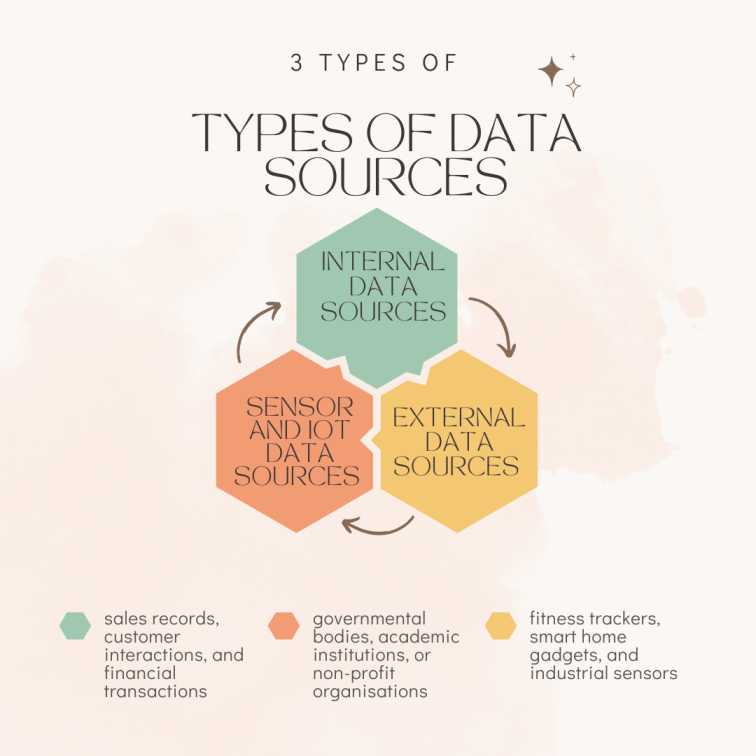
Types of Data Sources

The different locations or points of origin from which data might be gathered or received are referred to as data sources. These sources can be roughly divided into many groups according to their nature and traits. Here are a few typical categories of data sources:

Internal Data Sources

  • Data is generated through regular business operations, such as sales records, customer interactions, and financial transactions.
  • Customer data is information gathered from user profiles, reviews, and online and mobile behaviours.
  • Information about employees, such as their work history, attendance patterns, and training logs.

External Data Sources 

  • Publicly available data that may be accessed by anyone, is frequently offered by governmental bodies, academic institutions, or non-profit organisations.
  • Companies that supply specialised datasets for certain markets or uses, such as market research data, demographic data, or weather data. 
  • Information gathered from different social media sites includes user interactions, remarks, and trends.

Sensor and IoT Data Sources 

  • Information is gathered by sensors and connected devices, including wearable fitness trackers, smart home gadgets, and industrial sensors.
  • Information is collected by weather stations, air quality monitors, and other environmental sensors that keep tabs on several characteristics.

Data Preprocessing and Data Cleaning

Data Cleaning Techniques

A dataset’s flaws, inconsistencies, and inaccuracies are found and fixed through the process of data cleaning, sometimes referred to as data cleansing or data scrubbing. Making sure that the data utilised for analysis or decision-making is correct and dependable is an essential stage in the data preparation process. Here are a few typical methods for cleaning data:

Handling Missing Data 

  • Imputation: Substituting approximated or forecasted values for missing data using statistical techniques like mean, median, or regression.
  • Removal: If it doesn’t negatively affect the analysis, remove rows or columns with a substantial amount of missing data.

Removing Duplicates 

  • Locating and eliminating duplicate records to prevent analysis bias or double counting.

Outlier Detection and Treatment 

  • Help identify the outliners and make an informed decision as required in the data analysis. 

Data Standardisations 

  • Ensures consistent units of measurement, representation and formatting across the data sets. 

Data Transformation

  • Converting data for a feasible form to perform data analysis to ensure accuracy. 

Data Integration and ETL (Extract, Transform, Load)

Data Integration 

Data integration involves multiple data being combined in a unified manner. This is a crucial process in an organisation where data is stored in different databases and formats which need to be brought together for analysis. Data integration aims to remove data silos ensuring efficient decision-making with data consistency. 

ETL (Extract, Transform, Load) 

Data extraction from diverse sources, format conversion, and loading into a target system, like a data warehouse or database, are all steps in the data integration process known as ETL. ETL is a crucial step in ensuring data consistency and quality throughout the integrated data. The three stages of ETL are

  • Extract: Data extraction from various source systems, which may involve reading files, running queries against databases, web scraping, or connecting to APIs. 
  • Transform: Putting the collected data into a format that is consistent and standardised. Among other processes, this step involves data cleansing, data validation, data enrichment, and data aggregation.
  • Load: Transformed data is loaded into the target data repository, such as a database or data warehouse, to prepare it for analysis or reporting. 

Exploratory Data Analysis (EDA)

Understanding EDA and its Importance

Exploratory data analysis, often known as EDA, is a key first stage in data analysis that entails visually and quantitatively examining a dataset to comprehend its structure, trends, and properties. It seeks to collect knowledge, recognise trends, spot abnormalities, and provide guidance for additional data processing or modelling stages. Before creating formal statistical models or drawing conclusions, EDA is carried out to help analysts understand the nature of the data and make better decisions.

Data Visualisation Techniques

Data visualisation techniques are graphically represented to visually explore, analyse and communicate various data patterns and insights. It also enhances the comprehension of complex datasets and facilitates proper data-driven decision-making. The common data visualisation techniques are 

  • Bar graphs and column graphs. 
  • Line charts. 
  • Pie charts. 
  • Scatter plots. 
  • Area charts. 
  • Histogram. 
  • Heatmaps. 
  • Bubble charts. 
  • Box plots. 
  • Treemaps. 
  • Word clouds. 
  • Network graphs. 
  • Choropleth maps. 
  • Gantt charts. 
  • Sankey diagrams. 
  • Parallel Coordinates. 
  • Radar charts. 
  • Streamgraphs. 
  • Polarcharts. 
  • 3D charts. 

Descriptive Statistics and Data Distribution

Descriptive Statistics 

Descriptive statistics uses numerical measures to describe the various datasets succinctly. They help in providing a summary of data distribution and help to understand the key properties of data without conducting a complex analysis. 

Data Distribution

The term “data distribution” describes how data is split up or distributed among various values in a dataset. For choosing the best statistical approaches and drawing reliable conclusions, it is essential to comprehend the distribution of the data. 

Identifying Patterns and Relationships in Data

An essential part of data analysis and machine learning is finding patterns and relationships in data. You can gather insightful knowledge, form predictions, and comprehend the underlying structures of the data by seeing these patterns and linkages. Here are some popular methods and procedures to help you find patterns and connections in your data:

Start by using plots and charts to visually explore your data. Scatter plots, line charts, bar charts, histograms, and box plots are a few common visualisation methods. Trends, clusters, outliers, and potential correlations between variables can all be seen in visualisations.

To determine the relationships between the various variables in your dataset, compute correlations. When comparing continuous variables, correlation coefficients like Pearson’s correlation can show the strength and direction of associations.

Use tools like clustering to find patterns or natural groupings in your data. Structures in the data can be found using algorithms like k-means, hierarchical clustering, or density-based clustering.

Analysing high-dimensional data can be challenging. You may visualise and investigate correlations in lower-dimensional areas using dimensionality reduction techniques like Principal Component Analysis (PCA) or t-distributed Stochastic Neighbour Embedding (t-SNE).

Data Modeling, Data Engineering, and Machine Learning

Introduction to Data Modeling

The technique of data modelling is essential in the area of information systems and data management. To enable better comprehension, organisation, and manipulation of the data, it entails developing a conceptual representation of the data and its relationships. Making informed business decisions, creating software applications, and designing databases all require data modelling. 

Data modelling is a vital procedure that aids organisations in efficiently structuring their data. It helps with the creation of effective software programmes, the design of strong databases, and the maintenance of data consistency across systems. The basis for reliable data analysis, reporting, and well-informed corporate decision-making is a well-designed data model.

Data Engineering and Data Pipelines

Data Engineering 

Data engineering is the process of building and maintaining the infrastructure to handle large volumes of data efficiently. It involves various tasks adhering to data processing and storage. Data engineers focus on creating a reliable architecture to support data-driven applications and analytics. 

Data Pipelines

Data pipelines are a series of automated procedures that move and transform data from one stage to another. They provide a structured flow of data that enables data processing and delivery in various destinations easily. Data pipelines are considered to be the backbone of data engineering that helps ensure a smooth and consistent data flow. 

Machine Learning Algorithms and Techniques

In data-driven decision-making automation, machine learning algorithms and techniques are extremely crucial. They allow computers to learn various patterns and make predictions without any explicit programming. Here are some common machine-learning techniques. They are: 

  • Linear Regression: This is used for predicting continuous numerical values based upon its input features. 
  • Logistic Regression: This is primarily used for binary classification problems that predict the probabilities of class membership. 
  • Hierarchical Clustering: Agglomerative or divisive clustering based upon various hierarchical relationships. 
  • Q-Learning: A model-free reinforcement learning algorithm that estimates the value of taking particular actions in a given state. 
  • Transfer Learning: Leverages knowledge from one task or domain to improve performances on related tasks and domains. 

Big Data and Distributed Computing

Introduction to Big Data and its Challenges

Big Data is the term used to describe enormous amounts of data that are too complex and huge for conventional data processing methods to effectively handle. The three Vs—Volume (a lot of data), Velocity (fast data processing), and Variety (a range of data types—structured, semi-structured, and unstructured)—define it. Data from a variety of sources, including social media, sensors, online transactions, videos, photos, and more, is included in big data.

Distributed Computing and Hadoop Ecosystem

Distributed Computing 

A collection of computers that work together to complete a given activity or analyse huge datasets is known as distributed computing. It enables the division of large jobs into smaller ones that may be done simultaneously, cutting down on the total computing time.

Hadoop Ecosystem 

Hadoop Ecosystem is a group of free and open-source software programmes that were created to make distributed data processing and storage easier. It revolves around the Apache Hadoop project, which offers the Hadoop Distributed File System (HDFS) and the MapReduce framework for distributed processing.

Natural Language Processing (NLP) and Text Analytics

Processing and Analysing Textual Data

Natural language processing (NLP) and data science both frequently use textual data for processing and analysis. Textual information can be available is available blog entries, emails, social network updates etc. There are many tools, libraries, and methodologies available for processing and deriving insights from text in the rich and developing field of textual data analysis. It is essential to many applications, such as sentiment analysis, consumer feedback analysis, recommendation systems, chatbots, and more.

Sentiment Analysis and Named Entity Recognition (NER)

Sentiment Analysis 

Finding the sentiment or emotion expressed in a text is a method known as sentiment analysis, commonly referred to as opinion mining. It entails determining if a good, negative, or neutral attitude is being expressed by the text. Numerous applications, including customer feedback analysis, social media monitoring, brand reputation management, and market research, heavily rely on sentiment analysis.

Named Entity Recognition (NER) 

Named Entity Recognition (NER) is a subtask of information extraction that involves the identification and classification of specific entities such as the names of people, organisations, locations, dates, etc. from pieces of text. NER is crucial for understanding the structure and content of text and plays a vital role in various applications, such as information retrieval, question-answering systems, and knowledge graph construction.

Topic Modeling and Text Clustering

Topic Modelling 

To find abstract “topics” or themes in a group of papers, a statistical technique is called topic modelling. Without a prior understanding of the individual issues, it enables us to comprehend the main topics or concepts covered in the text corpus. The Latent Dirichlet Allocation (LDA) algorithm is one of the most frequently used methods for topic modelling.

Text Clustering 

Based on their content, comparable papers are grouped using a technique called text clustering. Without having any prior knowledge of the precise categories, it seeks to identify organic groups of documents. Large datasets can be organised and their patterns can be found with the aid of clustering.

Time Series Analysis and Forecasting

Understanding Time Series Data

Each data point in a time series is connected to a particular timestamp and is recorded throughout a series of periods. Numerous disciplines, such as economics, weather forecasting, and IoT (Internet of Things) sensors, use time series data. Understanding time series data is crucial for gaining insightful knowledge and for developing forecasts on temporal trends.

Time Series Visualisation and Decomposition

Understanding the patterns and components of time series data requires the use of time series visualisation and decomposition techniques. They aid in exposing trends, seasonality, and other underlying structures that can help with data-driven decision-making and value forecasting in the future.

Moving averages, exponential smoothing, and sophisticated statistical models like STL (Seasonal and Trend decomposition using Loess) are just a few of the strategies that can be used to complete the decomposition process.

Analysts can improve forecasting, and decision-making by visualising data to reveal hidden patterns and structures. These methods are essential for time series analysis in economics, healthcare, finance, and environmental studies.

Forecasting Techniques (ARIMA, Exponential Smoothing, etc.)

To forecast future values based on historical data and patterns, forecasting techniques are critical in time series analysis. Here are a few frequently used forecasting methods:

  1. Autoregressive Integrated Moving Average (ARIMA): This time series forecasting technique is well-liked and effective. To model the underlying patterns in the data, it mixes moving averages (MA), differencing (I), and autoregression (AR). ARIMA works well with stationary time series data, where the mean and variance don’t change over the course of the data.
  2. Seasonal Autoregressive Integrated Moving Average (SARIMA): An expansion of ARIMA that takes the data’s seasonality into consideration. In order to deal with the periodic patterns shown in the time series, it also contains additional seasonal components.
  3. Exponential smoothing: A family of forecasting techniques that gives more weight to new data points and less weight to older data points is known as exponential smoothing. It is appropriate for time series data with seasonality and trends. 
  4. Time series decomposition by season (STL): Time series data can be broken down into their trend, seasonality, and residual (noise) components using the reliable STL approach. When dealing with complicated and irregular seasons, it is especially helpful.

Real-World Time Series Analysis Examples

Finance: The process of predicting the future, spotting patterns, and supporting investment decisions by analysing stock market data, currency exchange rates, commodity prices, and other financial indicators.

Energy: Planning for peak demand, identifying energy-saving options, and optimising energy usage all require analysis of consumption trends.

Social Media: Examining social media data to evaluate company reputation, spot patterns, and comprehend consumer attitude.

Data Visualisation and Interactive Dashboards

Importance of Data Visualisation in Data Science

For several reasons, data visualisation is essential to data science. It is a crucial tool for uncovering and sharing intricate patterns, trends, and insights from huge datasets. The following are some of the main justifications for why data visualisation is so crucial in data science:

  • Data visualisation enables data scientists to visually explore the data, that might not be visible in the raw data.
  • It is simpler to spot significant ideas and patterns in visual representations of data than in tabular or numerical forms. When data is visualised, patterns and trends are easier to spot.
  • Visualisations are effective tools for explaining difficult information to stakeholders of all technical backgrounds. Long reports or tables of figures cannot express insights and findings as clearly and succinctly as a well-designed visualisation.

Visualisation Tools and Libraries

For making intelligent and aesthetically pleasing visualisations, there are several potent tools and packages for data visualisation. Among the well-liked ones are:

  • A popular Python charting library is Matplotlib. It provides a versatile and extensive collection of features to build all kinds of static, interactive, and publication-quality visualisations.
  • Seaborn, a higher-level interface for producing illuminating statistical visuals, is developed on top of Matplotlib. It is very helpful for making appealing visualisations with little coding and for visualising statistical correlations.
  • Tableau is an effective application for data visualisation that provides interactive drag-and-drop capability to build engaging visualisations. It is widely used in many industries for data exploration and reporting.

Interactive Dashboards and Custom Visualisations

Interactive Dashboards

Users can interact with data visualisations and examine data via interactive dashboards, which include dynamic user interfaces. They often include numerous graphs, tables, charts, and filters to give a thorough overview of the data

Custom Visualisation

Data visualisations that are developed specifically for a given data analysis purpose or to present complex information in a more understandable way are referred to as custom visualisations. Custom visualisations are made to fit particular data properties and the targeted objectives of the data study.

Communicating Data Insights through Visuals

A key competency in data analysis and data science is the ability to convey data insights through visualisations. It is simpler for the audience to act on the insights when complicated information is presented clearly through the use of well-designed data visualisations.  In a variety of fields, such as business, research, and academia, effective data visualisations can result in better decision-making, increased understanding of trends, and improved findings.

Data Ethics, Privacy, and Security

Ethical Considerations in Data Science

To ensure ethical and socially acceptable usage of data, data science ethics are essential. It is critical to address ethical issues and ramifications as data science develops and becomes increasingly important in many facets of society. 

The ethical development of data science is essential for its responsible and long-term sustainability. Professionals may leverage the power of data while preserving individual rights and the well-being of society by being aware of ethical concepts and incorporating them into every step of the data science process. A constant exchange of ideas and cooperation among data scientists, ethicists, decision-makers, and the general public is also essential for resolving new ethical issues in data science. 

Data Privacy Regulations (e.g., GDPR)

A comprehensive data protection law known as GDPR went into force in the European Union (EU) on May 25, 2018. Regardless of where personal data processing occurs, it is governed by this law, which applies to all EU member states. People have several rights under GDPR, including the right to view, correct, and delete their data. To secure personal data, it also mandates that organisations get explicit consent and put in place strong security measures.

Organisations that gather and use personal data must take these restrictions into account. They mandate that businesses disclose their data practises in full, seek consent when it’s required, and put in place the essential security safeguards to safeguard individuals’ data. Organisations may incur hefty fines and reputational harm for failing to abide by data privacy laws. More nations and regions are enacting their own data protection laws to defend people’s rights to privacy as concerns about data privacy continue to rise.

Data Security and Confidentiality

Protecting sensitive information and making sure that data is secure from unauthorised access, disclosure, or alteration require strong data security and confidentiality measures. Data security and confidentiality must be actively protected, both by organisations and by individuals.

It takes regular monitoring, updates, and enhancements to maintain data security and secrecy. Organisations may safeguard sensitive information and preserve the confidence of their stakeholders and consumers by implementing a comprehensive strategy for data security and adhering to best practices.

Fairness and Bias in Machine Learning Models

Fairness and bias in machine learning models are essential factors to take into account to make sure that algorithms don’t act biasedly or discriminate against specific groups. To encourage the ethical and responsible use of machine learning in many applications, it is crucial to construct fair and unbiased models.

Building trustworthy and ethical machine learning systems requires taking into account fairness and prejudice. It is crucial to be aware of the ethical implications and work towards just and impartial AI solutions as AI technologies continue to be incorporated into a variety of fields.

Conclusion

To sum up, data science and analytics have become potent disciplines that take advantage of the power of data to provide insights, guide decisions, and bring about transformational change in a variety of industries. For businesses looking to gain a competitive advantage and improve efficiency, data science integration into business operations has become crucial.

If you are interested in looking for a data analyst course or data scientist course with placement, check out Imarticus Learning’s Postgraduate Programme in Data Science and Analytics. This data science course will help you get placed in one of the top companies in the country. These data analytics certification courses are the pinnacle of building a new career in data science. 

To know more or look for more business analytics course with placement, check out the website right away!

7 Benefits of Implementing Strategic Workforce Planning

In today’s competitive job market, organisations must manage their workforce strategically. Human Resource (HR) management plays a vital role in shaping an organisation’s success by ensuring that the right people are in the right positions at the right time.

One effective approach to achieving this is through Strategic Workforce Planning. In this blog, we will explore the benefits of implementing it and how it can positively impact an organisation’s performance. You will also get to know about People Management Courses to look out for, to enhance your skills.

Overview of HR Management

HR management encompasses various activities aimed at maximising employee performance and well-being within an organisation. It involves activities such as recruitment, training and development, performance evaluation, compensation management and employee engagement initiatives. Through effective HR management practices, organisations can create a motivated and productive workforce.

Introduction to Strategic Workforce Planning

Strategic Workforce Planning is a proactive approach to aligning an organisation’s human capital with its business objectives. It involves identifying current and future workforce requirements, analysing gaps between demand and supply and developing strategies to address these gaps. By anticipating future workforce needs and taking necessary actions in advance, organisations can ensure they have the right talent in place when needed.

Benefits of Strategic Workforce Planning

Improved Employee Productivity and Engagement

  • Implementing Strategic Workforce Planning helps organisations identify skills gaps within their workforce.

  • By addressing these gaps through targeted training programs or hiring new talent, organisations can enhance employee productivity.

  • Additionally, involving employees in the planning process increases their engagement levels as they feel valued and included in decision-making.

Cost Reduction and Efficient Resource Allocation

  • Strategic Workforce Planning enables organisations to optimise their resource allocation by allocating resources where they are most needed.

  • By identifying areas of overstaffing or understaffing, organisations can adjust their workforce size accordingly, resulting in cost savings.

Enhanced Talent Acquisition and Retention

  • With strategic insights into future talent requirements, organisations can proactively recruit skilled individuals who align with their long-term goals.

  • Moreover, Strategic Workforce Planning helps in identifying and addressing retention challenges, ensuring that valuable talent is retained within the organisation.

Agile Response to Market Changes

  • In today’s rapidly changing business environment, organisations need to be agile in responding to market shifts.

  • Strategic Workforce Planning enables organisations to identify skills or competencies that may become obsolete in the future and develop strategies to address them.

  • This ensures that organisations are prepared for changes in their industry and can adapt quickly.

Better Decision-Making Through Data Analysis: Compliance and Risk Mitigation

  • Strategic Workforce Planning relies on data analysis to identify trends and make informed decisions.

  • By leveraging workforce analytics, organisations can gain insights into employee performance, turnover rates, succession planning and compliance requirements.

  • This data-driven approach enables organisations to mitigate risks and ensure compliance with regulatory standards.

Long-Term Organisational Sustainability

  • Strategic Workforce Planning focuses on long-term organisational sustainability by aligning human capital with business goals.

  • By continuously evaluating and adjusting workforce strategies, organisations can build a resilient workforce capable of driving growth even in challenging times.

How to Implement Strategic Workforce Planning? Organisations should follow these key steps for successful implementation:

1. Align Workforce Planning with Business Objectives: Strategically aligning your workforce planning with your organisation’s goals ensures that your workforce is equipped to support and drive the achievement of those objectives.

2. Conduct a Comprehensive Workforce Analysis: By conducting a thorough analysis of your current workforce, including skills, competencies and demographics, you can identify gaps and areas for improvement.

3. Identify Current and Future Skill Requirements: This enables you to proactively address talent shortages and develop targeted recruitment and training strategies.

4. Develop Targeted Recruitment and Training Strategies: Armed with insights from your workforce analysis, you can design targeted recruitment and training programs to attract and develop the right talent.

5. Monitor Progress Regularly and Adjust Strategies as Needed: This allows you to track progress, identify areas of improvement and make necessary adjustments to ensure optimal outcomes.

6. Leverage Technology Tools for Effective Data Analysis and Reporting: Embracing technology tools and analytics platforms empowers you to gather, analyse and report on workforce data more efficiently.

Strategy for Success

Strategic Workforce Planning is essential for organisations looking to thrive in today’s competitive landscape. The benefits of implementing this approach are numerous – from improved productivity and engagement to cost reduction, better decision-making through data analysis, enhanced talent acquisition and retention, agility in response to market changes and long-term sustainability.

If you want to enhance your people management skills or learn more about workforce planning, consider enrolling in our people management program at Imarticus Learning. Our comprehensive courses offer practical insights and strategies to effectively manage your organisation’s most valuable asset – its people. Don’t miss out on this opportunity to boost your career prospects. Visit our website today to learn more and get started on your journey to becoming a skilled people manager.

Balancing Technology and Human Touch in Human Resource Management

Human resource management and its role

In today’s rapidly evolving world, human resource (HR) management plays a crucial role in ensuring the success of organisations. As technology continues to advance, there is an increasing need to strike a balance between the efficiency offered by automation and the personal touch that only humans can provide.

In this blog, we will explore the evolution of human resource management, discuss the importance of maintaining a human touch, and highlight how organisations can navigate this delicate balance. Also, we will offer you guidance on how to opt for IIM’s human resource management certificate course to further enhance your human resource management skills.

The evolution of human resource management

Human resource management has come a long way from being purely administrative to becoming a strategic partner in organisational success. The advent of technology has transformed traditional human resource functions into streamlined processes that improve efficiency and accuracy. From applicant tracking systems to payroll software, automation has undoubtedly revolutionised these tasks.

Let us now discover in the following subsections how technology has aided the human resource management process.

Automation and efficiency in human resource processes

Automation enhances productivity by streamlining routine tasks within human resource processes. Tools like applicant tracking systems simplify recruitment efforts by filtering resumes based on predefined criteria, significantly reducing manual effort.

Similarly, automated performance management systems enable managers to provide real-time feedback and track employee progress effortlessly. By embracing technology in these areas, human resource departments can allocate their time and resources more effectively.

Enhancing employee experience through technology

Technology has also revolutionised the employee experience by providing seamless access to information and resources. Self-service portals empower employees, allowing them to manage their personal information, request leave, or access training programmes conveniently.

Additionally, digital learning platforms provide flexible and on-demand training opportunities that cater to diverse learning styles. This integration of technology not only improves efficiency but also demonstrates an organisation’s commitment to employee development.

Customising human resource approaches based on employee preferences

Each employee is unique, with varying preferences regarding communication styles or work arrangements. By leveraging technology-driven tools like surveys or feedback mechanisms, organisations can understand individual needs better. This data allows human resource professionals to customise approaches based on employee preferences, leading to higher levels of engagement and job satisfaction.

Importance of human touch

While technological advancements have undoubtedly improved human resource processes, it is essential not to overlook the significance of the human touch. Employees are at the heart of every organisation, and understanding their needs and aspirations requires empathy and emotional intelligence. Effective employee engagement relies on building relationships based on trust, feedback, and motivation — aspects that cannot be replicated by machines alone.

The human touch in employee engagement

Despite the prevalence of digital communication tools, maintaining a human touch is important for effective employee engagement. Organisations should leverage technology as a means to foster connection and facilitate meaningful interactions between employees and leaders. Regular video conferences or virtual town hall meetings allow employees to voice concerns and share insights directly with decision-makers.

Crisis management and support services

While technology can streamline crisis management workflows, it is imperative not to overlook the importance of human support services. During challenging times, employees may face emotional distress or require guidance beyond what automated systems can offer. Human resource professionals equipped with emotional intelligence can provide the necessary support by actively listening, offering personalised solutions, and connecting individuals with appropriate resources.

Why achieving a balance between technology and the human touch is vital?

Organisations must strike a balance between technology-driven solutions and human-centric approaches in human resource management. By leveraging technology for administrative tasks, such as data entry or record-keeping, human resource professionals can free up their time for more meaningful interactions with employees. This harmony ensures that both operational efficiency and employee satisfaction are prioritised.

If you want to enhance your skills in human resource management, consider obtaining a human resource management certificate from IIM or other reputable institutions that provide comprehensive training encompassing both technological expertise and the significance of maintaining the human touch. Imarticus Learning also offers a comprehensive human resource management certificate programme that combines technical proficiency with an understanding of the critical role of the human touch. Visit our website today to learn more and take your career in human resources to new heights.