Beyond Financial Metrics: Non-financial KPIs for Performance Measurement

Last Updated on 8 months ago by Imarticus Learning

A company’s value in the market and economy in present times significantly depends on many non-financial business drivers. An enterprise generally counts these as its intangible assets even though these might have been formerly driven by physical assets.

If you are fascinated by a career in fintech and planning to opt for finance courses online, consider reading through the article to grasp the knowledge of non-financial KPIs.

An Understanding of Non-financial Performance Measures

Non-financial KPIs are not precisely associated with dollar signs as their expressions are not done in monetary values. The focus of non-financial KPIs is often on other elements of a business organisation.

Notwithstanding the fact that there is not a direct association between the non-financial KPIs and finances, they can be numeric. In such an instance, there is an occurrence of the types of measures as either quantitative or qualitative.

Significance of Non-financial Performance Measures 

The importance of non-financial can be discussed as two primary reasons: 

Firstly, they help in explicating and providing context for financial KPIs. Financial KPIs are typically lagging measures that make them feasible to collect and analyse. These lagging measures generate a report that has occurred already such as the fulfilment of orders, revenue generated, etc. These finances do not always provide the entire story. On the other hand, non-financial performance measures never fail to fill in the gaps. If there is an event of monetary fluctuation, the non-financial KPIs provide an answer to it. 

Secondly, it is more convenient to link certain elements of your overall strategy to non-financial KPIs. More precisely, most business organisations lack a finance-based mission. If the business organisation’s goal is to establish the best customer service, revenue numbers are not an efficient way of tracking that. In this case, customer satisfaction scores would bring accomplishments to the table. 

Reasons to Track Non-financial Performance Measures

Tracking non-financial KPIs is one of the crucial tasks for some business organisations. It helps to manage performance while keeping things in a simpler format. Below are a few reasons for companies to track non-financial performance measures:

  • Help to analyse strengths and weaknesses: A non-financial KPI in feedback surveys helps to upscale customer services. These measures disclose your root competencies and throw light on other areas that undergo suffering without your knowledge. 
  • Adjust external factors better: Non-financial performance measures remain under control to a great extent. Hence, they help to tweak external risks that a business organisation might need to experience. 
  • Plays an important role in business performance: A non-financial KPI traces back the performances of business organisations to the source. For instance, if the budget for HR recruiting exceeds, the non-financial KPIs will help you to see that it is for the high employee turnover rate. 
  • Give feedback to employees for meeting strategic objectives: A well-constructed non-financial KPI is liable to be specific and assist the business organisations in amplifying their strategies. The various feedback generated by these non-financial performance measures lets the team members determine their future goals. 

10 Examples of Non-financial Performance Measures 

Below are examples of 7 non-financial performance KPIs coordinated according to three non-financial perspectives along with their formulas: 

Internal processes

1) On-time rate

This will provide the percentage of time products that were delivered on time as scheduled. The formula for this is: (Number of On-Time Units in a Given Period) / (Total Number of Units Shipped in a Given Period) = (On-Time Rate) 

2) Product Defect Percentage

This will provide the percentage of products that are defective in a specified time period. The formula for this is:  (Number of Defective Units in a Given Period) / (Total Number of Units Produced in a Given Period) = (Product Defect Percentage)

3) Overdue Project Percentage

This will provide the number of delayed or behind schedule. The formula for this is: (Number of Overdue Projects in a Given Period) / (Total Number of Projects in a Given Period) = (Overdue Project Percentage) 

Customer

4) Conversion Rate

This will give the percentage of interactions that take place during a sale. The formula for this is: (Interactions with Completed Transactions) / (Total Sales Interactions) = (Conversion Rate) 

5) Retention Rate 

This will give the percentage of consumers who are retained as customers over an entire period of time. The formula for this is: (Customers Lost in a Given Period) / (Number of Customers at the Start of a Period) = (Customer Retention Rate)

6) Net Promoter Score

This will increase the chances for the customers to give brand recommendations to others. The formula for this is: (Number of Promoters) – (Number of Detractors) = (Net Promoter Score) 

Learning and Growth 

7. Employee Productivity Rate

This non-financial performance measure determines the efficient workforce of the employees over time. The formula for this is: (Total Company Revenue) / (Total Number of Employees) = (Employee Productivity Rate)

8) Salary Competitiveness Ratio (SCR)

This will give compensation options for the competitiveness in salaries. The formula for this is: (Average Company Salary) / (Average Salary Offered from Competitors or (Average Salary Offered by Industry) = (Salary Competitiveness Ratio) 

9) Turnover Rate For Highest Performers 

This non-financial KPI will show the rate of success for retention efforts from top performers. The formula for this is: (Number of High Performers Who Departed in Past Year) / (Total High Performers Identified) = (High Performer Turnover Rate) 

  10. Internal Promotion Rate

This will show the progress of top performers. The formula for this is: (Number of Promoted Individuals) / (Total Number of Employees) = (Internal Promotion Rate) 

Conclusion 

Non-financial performance measures are largely gaining prominence and are adopted by many business organisations across the globe. They are a fantastic business tool for modern-day organisations to build up their business strategies. 

If you are currently looking for finance courses online, consider exploring Financial Analysis ProDegree in Collaboration with KPMG. This financial analyst course is a great choice for establishing a career in corporate finance with accurate guidance via virtual training. 

Visit Imarticus Learning website and learn more about finance courses online. 
Storing Big Data: Amazon S3 vs. Google Cloud Platform vs. Azure Data Lake Storage

Last Updated on 2 years ago by Imarticus Learning

In today’s data-driven world, managing and analysing vast amounts of information is crucial for businesses and organisations. This has led to the rise of big data storage solutions. If you wish to work with big data and big data analytics, you can take the help of a data science certification course. Skilled data scientists and data analysts are in more demand than ever in today’s competitive business markets.

In this blog, we will explore and compare three of the leading players in this field: Amazon S3, Google Cloud Platform, and Azure Data Lake Storage.

The Data Lake Revolution

Data lakes have revolutionised the way organisations handle data. Traditionally, data was stored in structured databases, making it challenging to manage unstructured or semi-structured data. Data lakes, on the other hand, provide a flexible and scalable solution. They allow organisations to store vast amounts of raw data, enabling advanced analytics, machine learning, and data-driven decision-making.

Comparing the Titans

Let’s take a deep dive into the three major players in the big data storage arena:

Amazon S3: Amazon Simple Storage Service, or S3, is known for its scalability and reliability. It offers high durability and availability of data, making it a popular choice for storing everything from images and videos to backups and log files.

Google Cloud Platform: Google’s cloud storage solution provides not only storage but also integrates seamlessly with its powerful data analytics and machine learning tools. It’s an excellent choice for organizations looking to leverage Google’s data processing capabilities.

Azure Data Lake Storage: Microsoft’s Azure Data Lake Storage is designed to handle large-scale analytics and data warehousing. It supports both structured and unstructured data and offers advanced security features.

Pros and Cons

Each of these solutions has its strengths and weaknesses. Understanding them is crucial in making an informed decision for your organisation’s data storage needs. Here’s a brief overview:

  • Amazon S3 Pros:
      • High durability and availability
      • Scalability
      • Cost-effective storage classes
  • Amazon S3 Cons:
      • Pricing complexity
      • Limited native data processing capabilities
  • Google Cloud Platform Pros:
      • Integration with Google’s data analytics tools
      • Advanced data processing capabilities
      • Excellent security features
    • Google Cloud Platform Cons:
      • Learning curve for beginners
      • Pricing can be complex
  • Azure Data Lake Storage Pros:
      • Designed for big data analytics
      • Supports multiple data types
      • Strong security and compliance features
  • Azure Data Lake Storage Cons:
    • Complex setup and configuration
    • Cost considerations for large-scale usage 

Tabulation of the important differences:

Parameter Amazon S3 Google Cloud Platform (GCP) Azure Data Lake Storage
Provider Amazon Web Services (AWS) Google Cloud Microsoft Azure
Primary Use Case Object storage, data archiving Data storage, analytics, machine learning Big data analytics, data warehousing
Scalability Highly scalable and elastic Scalable, with integration to GCP services Scalable and suitable for big data
Data Processing Integration Limited native data processing Integrates with GCP’s data analytics tools Supports big data analytics
Security Features Strong security features and access controls Advanced security features Robust security and compliance
Data Types Supported Supports various data types Supports various data types Supports structured and unstructured data
Durability and Availability High durability and availability High availability with data redundancy High availability and redundancy
Pricing Complexity Pricing can be complex Pricing can be complex Complex pricing based on usage
Learning Curve Moderate for basic usage Moderate to steep, especially for beginners Moderate to steep for setup
Native Tools and Ecosystem Rich ecosystem with AWS services Integration with GCP’s powerful tools Integrates with Azure services
Strengths Scalability, durability, reliability Integration with Google’s data tools Big data analytics, security
Weaknesses Limited native data processing, complex pricing Learning curve for beginners Complex setup and configuration

Notable Players and Innovations

Staying updated on industry innovations and key players is essential in the fast-paced world of data storage and analytics. From the latest developments in data lake technology to emerging startups, being informed can open up new opportunities and ideas. Investing in your education and skill development with the help of data science training can open doors to a rewarding career in the field of data science and analytics.

Beyond storage

While data lakes are primarily associated with storage, they are, in fact, much more than just data repositories. They serve as the foundation for comprehensive data ecosystems. These ecosystems encompass data storage, data processing, analytics, and data governance. Cloud-based data lakes, such as those offered by Amazon, Google, and Microsoft, are integrated with a wide array of complementary services. This integration allows organisations to seamlessly move data from storage to analytics tools, creating a fluid data pipeline.

Moreover, data lakes are at the forefront of data governance and compliance efforts. As data privacy regulations like GDPR and CCPA become more stringent, organisations need robust solutions to ensure the security and privacy of their data. Data lakes offer fine-grained access controls, encryption, and auditing capabilities that aid in compliance efforts. This is particularly important for industries like finance and government, where data security and compliance are paramount. 

Data lakes have evolved from a storage solution into a central component of modern data ecosystems. Their flexibility, scalability, and ability to support advanced analytics make them invaluable for organisations seeking to harness the power of their data. Understanding the pivotal role of data lakes in data management and analytics is crucial. With the right strategy and tools in place, data lakes can unlock a world of possibilities, from data-driven decision-making to innovative applications that drive business growth.

Conclusion

The world of big data storage is vast and ever-evolving, with Amazon S3, Google Cloud Platform, and Azure Data Lake Storage being key players in this arena. Choosing the right solution for your organisation requires a careful assessment of your specific needs and priorities. A solid data science certification or data science course can help you learn more about data lakes, big data and big data analytics.

Whether you are looking to become a data analyst, data scientist or data engineer, the Postgraduate Program In Data Science And Analytics  offered by Imarticus Learning will help you acquire the required skills to ace and polish your data science skills. A career in data science or a career in data analytics is very promising in today’s time.

Data Quality: 6 Pillars of Data Quality and Improving Your Data

Last Updated on 2 years ago by Imarticus Learning

Data quality is all about how accurate, consistent, comprehensive, dependable, and pertinent the data is that an organisation or a particular situation collects, holds, and employs.

Having top-notch data is vital for making smart choices, conducting precise analyses, and drawing up dynamic strategies. Several elements, including the methods for collecting data, the procedures for inputting data, data merging, and data storage, can impact data quality.

Ensuring that data quality remains high is of utmost importance for organisations. It allows them to discover valuable insights, make well-judged decisions, and realise their objectives.

If you want to improve your data-related skills, pursuing a data science certification can be a great stepping stone towards mastering the complexities of data quality and its impact on decision-making processes.

What Is the Importance of Data Quality?

  • Streamlined operations: The efficiency of day-to-day operations directly depends on data quality. Accurate and reliable data ensures that every department operates smoothly, from inventory management to order processing. The result? Fewer errors and heightened productivity across the board.
  • Customer delight: Serving customers relies heavily on accurate customer records. High-quality data in databases is a mainstay for ensuring client satisfaction.
  • Data science training for growth: Implementing data science training initiatives within your organisation catalyses growth across all these dimensions. Equipping your teams with data science skills improves data quality, amplifying its impact on decision-making, operations, customer satisfaction, and revenue generation.
  • Enhanced decision-making: Data quality stands as a cornerstone for well-informed decision-making in the corporate landscape. When data is accurate and reliable, it is the bedrock upon which leaders build their strategies, ultimately fostering growth and boosting profitability.

What Are the Fundamental Elements of Data Quality?

Measuring the success of data quality management depends on several factors. These factors include your confidence in analytical accuracy, the data’s ability to support diverse initiatives, and the speed at which these endeavours yield strategic value.

Your data quality tools must possess the following capabilities:

Versatility across use cases

Your data quality solution should offer integration that lets you handpick the right features for specific use cases, steering clear of a one-size-fits-all approach.

For example, data migration demands an initial understanding of data through profiling, whereas analytics necessitates data cleansing, parsing, standardisation, and deduplication.

Tailored user experience

Acknowledging that data scientists, stewards, and data consumers possess distinct capabilities and interests, choose a data quality solution that customises the user experience based on roles. Each team member can achieve their objectives without relying on IT support.

Automation of vital tasks

Coping with today’s enterprise data volume, variety, and speed renders manual data quality management unfeasible. An AI-powered solution automates data quality assessment and offers intelligent recommendations that streamline essential tasks, including data discovery and rule creation across the entire organisation.

What Are the Six Pillars of Data Quality?

Uniqueness

Uniqueness is all about ensuring that your dataset is free from repeated entries. Duplicate records can muddy the waters, making specific data points or trends seem more significant than they truly are. Improving your dataset’s uniqueness involves employing automated deduplication tools to pinpoint and eliminate needless records.

Completeness

Completeness revolves around whether your dataset is missing pieces or has gaps in its information. A dataset that needs essential records can help your ability to perform thorough analysis and make informed decisions.

Strategies to improve completeness include merging data from multiple sources, filling in missing values, and referencing external datasets.

Accuracy

Accuracy revolves around the alignment of your data with real-world facts and occurrences. Achieving accuracy necessitates the identification and correction of inaccuracies within your dataset, including erroneous entries and distortions.

A formidable approach to raise accuracy includes the incorporation of data validation rules as protective measures to ward off erroneous information from entering your system.

Timeliness and applicability

Maintaining data currency is vital for relevant analysis and decision-making. Outdated data can lead to errors, making current datasets essential.

Methods like real-time streaming, scheduled refreshes, and incremental updates ensure data remains timely, supporting informed actions and insights.

Data relevance

Data relevance is an important part of data quality, it emphasises the importance of data being directly applicable and meaningful to the context of its usage. Relevant data helps you achieve specific goals, questions at hand, or objectives, and ensures that the collected or analysed data serves a purpose.

Consistency

Consistency assesses the alignment and coherence of data across diverse datasets and systems. Incorrect data can confuse users and lead to erroneous conclusions.

To enhance consistency, use data standardisation techniques, adopting uniform naming conventions, formats, and units of measurement for a seamless data environment.

Steps to Improving Your Data

Provide data quality training

Equip your team with the expertise they need in data quality management through training programs. Regular workshops and seminars that focus on error detection techniques and best practices in data collection will prepare your employees to play a crucial role in maintaining high data quality standards.

Maintain current and accurate documentation

Maintain current and precise documentation regarding your data sources, systems, and processes. This documentation should detail data lineage, any transformations applied during collection, and any assumptions made during analysis. Accurate documentation prevents misunderstandings that can lead to incorrect insights.

Utilise data scrubbing software

Leverage data cleansing tools to automatically identify errors in your datasets. These tools compare data against predefined rules and patterns, aiding in duplicate removal and value normalisation tasks. Regularly deploying these tools ensures your systems store only top-notch information.

Use data validation methods

Ensure accurate data input by introducing validation techniques into your systems. Checks like format validation (e.g., email address accuracy), range constraints (e.g., age limits), or referential integrity rules (e.g., foreign vital restrictions) help prevent inconsistent values from entering your databases.

Track data quality indicators

Regularly assess data quality metrics, including completeness, accuracy, consistency, timeliness, and uniqueness. Monitoring these metrics enables early issue detection and corrective action, safeguarding business operations from potential disruptions.

Create policies for data governance

Create comprehensive data governance policies to establish consistency in data handling across your organisation. These policies should delineate roles, responsibilities, standards, and processes for data management.

Create feedback loops

Encourage open communication regarding potential data inaccuracies by implementing feedback loops with end-users. This proactive approach allows your organisation to swiftly identify issues and enact necessary changes, preventing problems from affecting operations downstream.

Conclusion

Mastering data quality principles is important for anyone aspiring to become a data analyst. Consider enrolling in Imarticus Learning’s Postgraduate Program In Data Science And Analytics course to start your career in data science

Imarticus Learning’s data analytics certification course provides the perfect platform for you to polish your skills and knowledge, enabling you to excel in a career in data analytics.

Visit Imarticus Learning today to learn more about our data analytics course.

Weighted Average Cost of Capital (WACC): Forecasting Cash Flows

Last Updated on 8 months ago by Imarticus Learning

Every organisation requires financing to fund its operations. Weighted average cost of capital is the average cost that is required by a company for carrying out daily operations. It is quite similar to the required rate of return (RRR) as the WACC of a company is the amount that shareholders and investors seek as returns for their investment. One may take up an investment banking course to learn the fundamentals of WACC. 

It is a critical study that involves multiple parameters. The concept of Weighted Average Cost of Capital is of immense importance if one wants to build a career in investment banking.

Read on to improve your understanding of WACC. One may also consider signing up for an investment banking certification to enhance their knowledge.

What is the Weighted Average Cost of Capital (WACC)?

The Weighted Average Cost of Capital (WACC) represents a company’s cost of capital by assigning a proportional weight to each category of capital. WACC is a form of after-tax cost of capital that includes numerous sources such as equity, preference shares, common stocks, bonds, borrowings etc. A banking course explains the concept of WACC in a detailed manner which helps professionals earn a good grasp of this topic.

WACC is the most commonly used and convenient way to calculate the required rate of return (RRR) since WACC reflects the amount of profit for the shareholders and bondholders in exchange for their investment in a single value. The WACC of a firm tends to rise as investors always want to extract higher returns on investment. However, this will only happen if the company includes volatile stocks or if the debt is regarded as unsafe and risky.

Understanding the WACC Concept

This concept is very important for companies to analyse various aspects and components of corporate finance. WACC is an immensely integral tool for the management of the company, investors and analysts. A banking and finance course will help professionals understand the intricate details of the Weighted Average Cost of Capital. 

WACC is commonly used as a benchmark rate by organisations and their investors to assess the economic worth of a specific initiative or purchase. Hence, this discount rate is commonly used by businesses to determine their net present value or to evaluate their discounted cash flow. WACC is also necessary in the case of a merger project when one company acquires the business and assets of another firm as it provides a clear picture in terms of a higher or lower cost of capital.

Also, a business’s potential to increase its net profitability depends upon the WACC. It helps to maintain a balance between the company’s assets and the borrowed funds.

Generally, a lower WACC represents a flourishing organisation that has the ability to draw the attention of investors at a reduced cost. On the contrary, a higher WACC frequently corresponds with businesses that are often perceived as risky and reward investors with more returns.

Formula and Calculation: WACC

The WACC formula considers both the equity and debt of the company for its calculation. There are various investment banking courses online that help to enhance the proficiency in the calculation of the professionals who pursue a career in banking and finance.

The following is the formula for calculating the Weighted Average Cost of Capital:

WACC= (E/V x Re) + {D/V x Rd x (1-Tc)}

Where,

E= market value of the company’s equity

D= market value of the company’s debt

V= E+D

Re= cost of equity

Rd= cost of debt

Tc = corporate tax rate

The value of WACC is determined by multiplying each source of capital that is equity and debt with the specific weights that are assigned to them. Then each of the values is added to get the definite product. In the above-mentioned formula, the financial capital based on equity is represented as E/V and the debt capital financing is denoted by D/V.

Hence, the calculation of the WACC is the result of the addition of these two sources of finance, represented as under:

(E/V x Re) – This portrays the weighted value of the equity capital.

{D/V x Rd x (1-Tc)} – This denotes the weighted value of the debt capital.

For instance, an organisation acquires INR 10 lakhs through debt financing and INR 40 lakhs via equity financing. Then the value of E/V will be 0.8. (Rs 40,00,000 ÷ Rs 50,00,000 of total capital). Similarly, the value of D/V will be 0.2. (Rs 10,00,000 ÷ Rs 50,00,000 of total capital). 

WACC in Forecasting Cash Flows

One of the major use cases of this formula and concept is to properly estimate and forecast cash flows in the future operations of a business. For forecasting cash flows, WACC is presented as a discount rate which is used to calculate the net present value (NVP) of an initiative, project or acquisition of the company. 

The difference between the present value of cash inflows and outflows is known as the net present value. The NVP presents an idea about the profitability of the acquisition or project undertaken by the company. WACC is an integral parameter for locating various investment opportunities and judging whether the investment will result in profit or loss. 

Hence, acquiring a deep understanding of the Weighted Average Cost of Capital is essential for individuals pursuing a career in investment banking as it enhances the skills of identifying potentially profitable areas of investment. This step is a key aspect of increasing an organisation’s profitability while establishing a balance between equity and debt financing.

Conclusion

The significance of Weighted Average Cost of Capital (WACC) in the banking and finance industry is immeasurable. WACC is a very dynamic concept that has a variety of use cases, out of which, its usage in forecasting cash flows is the most notable one. 

If you are a banking and finance professional or want to start a career in finance, registering for an effective investment banker course can immensely help you gain the required knowledge.

Vertical Mergers vs. Horizontal Mergers

Last Updated on 8 months ago by Imarticus Learning

Mergers and acquisitions are widely utilised by organisations to improve market share, efficiency, and, eventually, profitability. In this blog, we’ll look at the key juxtaposes between these two techniques, understanding their unique qualities and ramifications.

When two firms at different stages of the supply chain join forces, a vertical merger occurs. This indicates that an organisation either acquires a supplier, a customer, or both. 

A horizontal merger, on the other hand, includes the merging of two firms that operate in the same industry and at the same stage of the supply chain. Assume two competing smartphone makers joining together; this is an example of a horizontal merger.

If you want to have a  career in investment banking or a career in banking and finance, delve into understanding the difference between vertical and horizontal mergers and how it is crucial when one takes up an investment banker course

Vertical Mergers vs. Horizontal Mergers: Definitions

A vertical merger involves two companies operating at different levels of the supply chain or manufacturing process. A corporation integrates with another organisation either up or down the supply chain hierarchy. This implies that the merger might include the purchase of a supplier, a customer, or a firm in a separate but similar industry.

A vertical merger’s objective is to improve operational efficiency, reduce expenses, and gain greater autonomy over the manufacturing or distribution process. The merging firm obtains synergies and optimises its operations by joining forces with a business entity at a different level of the supply chain. For example, by acquiring a textile mill, a clothesmaker may ensure a steady supply of raw materials, lowering manufacturing costs.

A horizontal merger includes the merging of two firms operating in the same industry and at the same phase of the supply chain. The primary rationale for horizontal mergers is to gain market strength and competitiveness. For example, if two telecommunications businesses join, they may be able to offer a broader choice of services, decrease infrastructure duplication, and improve their market competitiveness.

Understanding the differences between vertical and horizontal mergers proves essential for companies, investors, and regulatory agencies. These two types of mergers have distinct ramifications for market dynamics, competition, and consumer welfare, making them a subject of acute interest and scrutiny in the business community.

Vertical Merger vs. Horizontal Merger 

Aspect  Vertical Mergers Horizontal Mergers
Definition  Integrates companies from different stages of the supply chain or production process.  Integrates companies operating within the same industry and supply chain stage. 
Supply Chain Impact  Extends vertically along the supply chain; either upstream or downstream.  Stagnant in the same stage of the supply chain. 
Competitive Advantage  Enhances control of the supply chain resulting in cost efficiency and reduced dependency on external stakeholders.  Improves market presence and reduces competition. 
Risks and Challenges  Potential integration can lead to complexities and challenges while realising cost savings.  Integrates corporate culture, market dominance concerns and antitrust issues. 
Regulatory Scrutiny  Scrutinised by antitrust authorities.  Faces scrutiny due to reduced competition. 

The above table would help you to understand vertical and horizontal mergers if you are seeking an investment banking certification or a banking and finance course

Case Study of Vertical Mergers and Horizontal Mergers 

If one is looking to take up an investment banking course, it is pivotal to understand the juxtaposition of vertical and horizontal mergers case studies. They are: 

Adobe and Figma

Adobe purchased Figma, a renowned web-first collaborative design tool, in September 2022. The merger of the two companies will, according to Adobe, “usher in a new era of collaborative creativity.”

Figma’s objective at the time of the merger was to pioneer web-based product design solutions. Though Adobe dealt with the digital experiences industry, its business was somewhat different. Figma was created specifically for online and app design, whereas Photoshop could only create prototypes of them. Adobe got access to a previously unreachable market by joining enterprises.

TD Bank and First Horizon 

Microsoft announced the acquisition of Activision Blizzard in January 2022. Microsoft already had the popular Xbox brand; the acquisition enabled Microsoft to provide great, unique content to video gamers and reap the benefits of doing so.

Satya Nadella announced that Microsoft was investing in Activision Blizzard “to usher in a new era of gaming that puts player and creators first and makes gaming safe, inclusive, and accessible for all.” The agreement would strengthen Microsoft’s Game Pass portfolio by giving subscribers more broad and robust content. It should be noted that the transaction has yet to receive FTC approval as of July 2023.

Drawbacks of Vertical Mergers and Horizontal Mergers 

While vertical and horizontal mergers entail potential benefits, they also have costs and obstacles.

Drawbacks of Vertical Mergers:

Complex Integration: Vertical mergers require integrating businesses with diverse operating procedures and cultures, which can provide integration issues. Coordination of various phases of the supply chain can be logistically challenging.

Reduced Supplier/Customer Choice: Vertical integration can limit suppliers’ or customers’ alternatives, hence diminishing competition. This may raise concerns about market domination and antitrust violations.

Cost Risks: Vertical mergers are intended to lower costs via efficiency, but they can sometimes result in unforeseen expenses, such as those involved with merging different IT systems or settling contractual commitments with current suppliers or customers.

Loss of Focus: Companies that engage in vertical mergers distract their attention away from their key capabilities, which have a detrimental influence on their overall success in their primary markets.

Drawbacks of Horizontal Mergers:

Reduced Competition: Horizontal mergers often result in the elimination of market rivals, resulting in decreased competition. This results in higher consumer pricing and less innovation.

Integration Difficulties: Integrating two firms in the same market can be difficult. Disruptions and morale concerns can result from cultural conflicts, unnecessary activities, and employee cutbacks.

Regulation: Because of their potential to produce monopolistic or oligopolistic market structures, horizontal mergers often receive more attention from antitrust authorities. Obtaining regulatory permission may be a lengthy and unpredictable procedure.

Market Concentration: When market power is concentrated in the hands of a few dominant businesses, it hinders innovation and limits customer options, possibly damaging market dynamics and overall economic well-being.

Conclusion

Vertical mergers are concerned with supply chain efficiency and lowering costs and  horizontal mergers are concerned with increasing market share and consolidating market dominance within the same industry. The decision between these mergers and acquisitions techniques is determined by a company’s strategic goals, regulatory concerns, and capacity to negotiate the unique hurdles associated with each approach.

If you are looking for investment banking courses online, check out Imarticus Learning’s Certified Investment Banking Operations Professional or CIBOP course. This investment banker course would provide you with 100% job assurance and build your career. 

To know more, check out the website right away.

The Pros and Cons of Top Cost Allocation Methods

Last Updated on 8 months ago by Imarticus Learning

In financial management, businesses utilise various cost-allocation methods to distribute expenses across different departments or projects. These methods aid in accurate financial reporting and decision-making. The top cost allocation methods include direct allocation, step-down allocation, and activity-based allocation. Each method has its merits, tailored to diverse organisational structures and goals. Effective cost allocation enhances resource management and enables informed strategic choices.

Explore our comprehensive CFO training courses designed to equip future finance leaders with strategic insights and practical skills. Elevate your financial expertise with a transformative learning journey with Imarticus’ curriculum tailored for emerging CFOs.

Direct Allocation

Direct allocation is a straightforward cost allocation method that assigns expenses directly to specific cost centres without much complexity. While it offers simplicity and ease of implementation, it also comes with limitations that should be carefully considered.

Pros:

  • Simplicity: The primary advantage of direct allocation is its simplicity. The method is easy to understand and execute, making it suitable for organisations with straightforward cost structures and limited resources for complex calculations. 
  • Speed: Direct allocation involves minimal calculations and can be carried out quickly. This efficiency can be advantageous when time is of the essence, allowing organisations to allocate costs promptly. 
  • Clarity: Since costs are directly assigned to specific cost centres, the allocation process is transparent and easy to trace. This transparency can foster accountability and clear reporting.

Cons:

  • Inaccuracy: One of the most significant drawbacks of direct allocation is its potential for inaccuracy. The method does not consider shared resources or the intricate interdependencies between departments, which can lead to misallocated costs. 
  • Oversimplification: While simplicity can be an advantage, it can also be a disadvantage in scenarios where cost distribution is more complex. direct allocation oversimplifies the allocation process and might not capture the true nature of resource usage. 
  • Distorted cost allocation: In cases where different departments utilise shared resources or contribute differently to the organisation’s objectives, direct allocation might result in skewed cost distribution. This can hinder accurate decision-making and resource allocation.

Step-Down Allocation

Step-down allocation, also known as Two-Step allocation, is a more intricate cost allocation method that takes into account the hierarchical nature of cost centres and the flow of resources. While it offers improved accuracy compared to direct allocation, it also presents challenges that organisations need to consider. 

Pros:

  • Hierarchical consideration: Step-down allocation acknowledges the hierarchy of cost centres within an organisation. This recognition allows for a more accurate reflection of how resources are used and distributed across different levels. 
  • Shared resource reflection: This method addresses the issue of shared resources more effectively than direct allocation. By sequentially allocating costs through primary and secondary cost centres, step-down allocation captures the impact of shared resources on different departments. 
  • Accurate distribution: With its hierarchical approach, step-down allocation provides a more precise distribution of costs, ensuring that resources are allocated in a manner that aligns with the organisation’s structure and objectives.

Cons:

  • Order of allocation: Determining the order in which costs are allocated can be challenging. The sequence chosen can impact the accuracy of the allocation and introduce biases if not chosen carefully. 
  • Complexity: While more accurate than direct allocation, step-down allocation is still more complex than some other methods. It requires careful consideration of cost centre relationships and potential impacts on allocation outcomes. 
  • Resource intensity: The implementation of step-down allocation demands more time and effort than direct allocation due to its multi-step nature. This can be resource-intensive, particularly for organisations with limited capabilities.

Activity-Based Allocation

Activity-based allocation is a method that allocates costs based on the actual activities that drive expenses. While it offers a highly accurate way of distributing costs, it also comes with complexities and resource demands that organisations should consider.

Pros:

  • Accurate cost reflection: Activity-based allocation provides the most accurate reflection of resource usage and cost drivers. By directly tying costs to specific activities, it ensures that costs are allocated in proportion to the actual resource consumption. 
  • Informed decision making: This method offers valuable insights into the cost drivers of different activities. Organisations can use this information to make informed decisions about resource allocation, process improvement, and strategic planning. 
  • Resource optimisation: Activity-based allocation helps organisations optimise resource allocation by identifying which activities are most resource-intensive. This knowledge can lead to improved operational performance and more efficient resource utilisation.

Cons:

  • Resource-intensive implementation: Implementing activity-based allocation into practise calls for a major time, energy, and resource commitment. Organisations need to accurately identify and track various activities to ensure meaningful cost allocation. 
  • Complexity: The process of identifying, categorising, and tracking activities can be complex, particularly in larger organisations with multiple processes and activities. This complexity can lead to challenges in maintaining accurate data. 
  • Costly technology and tools: Activity-based allocation often requires specialised software or tools to track activities and allocate costs accurately. This can add to the financial burden, especially for organisations with limited budgets.

Conclusion

Cost allocation methods are integral to financial management, facilitating the fair distribution of expenses among different organisational units. direct allocation, step-down allocation, and activity-based allocation each have their advantages and drawbacks. 

Organisations must carefully assess their needs and capabilities to determine which method best aligns with their goals. Effective cost allocation empowers businesses to make informed decisions and allocate resources optimally in a dynamic business landscape.

Elevate your financial leadership with our comprehensive Postgraduate Certificate Programme for Emerging CFOs. Gain a competitive edge through specialised CFO certification and immersive CFO training courses. Prepare to excel in the dynamic world of financial management.

Capital Structure Optimisation: Finding the Right Balance Between Debt and Equity

Last Updated on 2 years ago by Imarticus Learning

A company’s capital structure, a critical part of a career in finance, involves the blend of debt and equity it relies on to fund its activities and expansion.

Debt comprises borrowed money that necessitates repayment and interest, encompassing bank loans, bonds, or lease agreements. On the other hand, equity represents ownership stakes that do not require repayment, including common stocks, preferred stocks, or retained earnings.

The allocation of debt and equity within a capital structure is frequently quantified using ratios like debt-to-equity or debt-to-capital.

Why Does Capital Structure Matter?

Every business has its unique capital structure needs. Large conglomerates differ significantly from small businesses, just as low-risk consumer goods companies vary from those in the seasonal travel industry.

Regardless of size or industry, businesses must carefully determine the proper capital structure to achieve their goals.

Distinguishing between risk analysis and debt management approaches for businesses and individuals is important in shaping capital structure development.

Establishing a solid foundation that minimises liabilities, maximises cash flow, and balances debt with retained earnings enables businesses to create an optimal capital structure that supports their operations and garners stakeholder support.

How To Optimise a Capital Structure?

Choosing how to fund a company takes time and effort. Managers must consider market implications.

One smart move is to favour borrowing (debt) over selling shares (equity). Debt often sends a positive signal and is cheaper due to tax benefits.

Selling shares (equity) can dilute ownership, is seen as unfavourable, and is pricier with dividends paid after-tax earnings.

A vital tool is the “interest tax shield” that lowers taxes on interest payments:

What Is Equity Capital?

Equity capital is a key concept in corporate finance. It represents capital that doesn’t involve debt and can come from various sources, like stock options, savings, company profits, or family investments.

Equity in a company’s capital structure includes:

  • Hybrid Financing: This is a blend of equity and debt commonly found in publicly traded companies, often bought and sold through brokerage firms. 
  • Convertible Equity: It’s a type of hybrid financing where convertible preferred shares can change into common shares at a fixed rate. 
  • Preferred Equity: This form of financing represents a partial ownership stake in a business or company. It has advantages, like receiving payouts before other stockholders, but it doesn’t usually come with voting rights. 
  • Shared Equity: This is another form of financing offering ownership interest, but ownership typically only happens after the business or company pays off its debts, which makes it riskier.

The two common ways companies generate equity capital are as follows:

  1. Contributed Capital

When a company gets investment in exchange for stock, it’s called contributed capital. They often offer this to venture capitalists, angel investors, or shareholders. However, it usually means giving up some control over the business in exchange for funding.

  1. Retained Earnings

Established businesses with a strong track record can fund operations, expansion, or acquisitions using profits from previous years, without the need to persuade investors to buy stock.

Yet, for startups or newer companies, attracting investors may necessitate showcasing a higher potential return on investment.

What Is Debt capital

Debt capital represents borrowed money used to support a business’s capital structure. This borrowed cash can have short-term or long-term repayment periods.

The cost of this capital hinges on the company’s financial health. Highly rated companies secure loans at lower interest rates, which is more favourable than higher rates driven by perceived risk.

The company’s balance sheet is vital in demonstrating its creditworthiness to lenders and investors.

Some of the various components of debt in a capital structure include:

  • Senior debt: In cases of financial distress or bankruptcy, this category precedes repayment. Senior debt loans typically carry lower interest rates. 
  • Subordinated debt: Although riskier than senior debt, these loans offer higher interest rates, enabling lenders to earn more. 
  • Convertible debt: These bonds can be converted into equity based on a predetermined amount specified by the debtor.

Debt capital can take various forms, including:

  • Loans or credit cards: Some companies start with family funding and maxed-out credit cards. Though not the easiest route to building a capital structure, loans or small business funds offer a less complex alternative, demanding a detailed business plan and expense breakdown. 
  • Long-term bonds: Ideal for small businesses, these debts require interest payments without immediate principal repayment. 
  • Short-term commercial paper: Often employed by giant corporations like Fortune 500 companies, these 24-hour loans secure significant sums from capital markets, typically used for substantial operating expenses. 
  • Vendor financing: Companies may utilise this debt form to cover payments to vendors while building their business by selling goods. 
  • Policy holder “float”: Insurance companies rely on this type of debt to cover expenditures as needed or to earn interest in an account until repayment becomes necessary.

How Do You Balance Debt and Equity in Your Capital Structure?

Balancing debt and equity in your capital structure isn’t a one-size-fits-all equation; it depends on your unique business circumstances

Different businesses have different goals, risks, and opportunities to consider. Some of the factors in play include:

Profitability and cash flow

Assess your business’s profitability and how steady your cash flow is. You can use more debt if your company consistently makes money and has reliable cash flow. It allows you to handle debt payments and benefit from tax advantages.

Growth potential and investment opportunities

Consider your business’s growth potential and the investment prospects available. If your company has significant growth potential or lucrative investment opportunities, you might opt for a mix with more equity. This approach allows you to seize opportunities without excessive debt constraints.

Industry and market conditions

Analyse your industry and the market conditions in which you operate. If your business competes in a rapidly changing and competitive sector, you might lean towards less debt and more equity. This approach gives you flexibility to adapt to shifts in customer preferences and technological advancements.

The balance between debt and equity in your capital structure should align with your business’s specific circumstances and needs.

Conclusion

Achieving the right balance between debt and equity in your capital structure is crucial to financial management. It requires a deep understanding of your business’s unique needs and circumstances and considerations for profitability, cash flow, growth potential, and industry dynamics.

For those looking to enhance their expertise in this critical area of finance and embark on a rewarding career in finance, consider enrolling in Imarticus Learning’s IIM Lucknow’s Advanced Management Programme In Financial Services And Capital Markets.

Centralisation vs. Decentralisation in Organisations

Last Updated on 1 year ago by Imarticus Learning

In a centralised organisation, decision-making authority is concentrated at the top, and all lower levels of the hierarchy obey directives from the top. A decentralised organisation, on the other hand, spreads decision-making authority over multiple individuals or departmental teams.

Various variables, such as the dimensions of the company, the tradition, and the nature of the commercial enterprise, impact the selection between centralisation and decentralisation. Possessing an accredited 

ACCA course can lead to a higher pay grade as it tells employers that you have been quality-assured by industry standards. 

Centralisation

Centralisation is an organisational structure or situation in which decision-making power and authority are concentrated at the top level of management. It entails concentrating decision-making processes and control within a few important leaders or executives. In a centralised organisation, lower levels of the hierarchy follow the orders and choices of top-level management.

Advantages

  • Enhanced quality of work: Standardised processes and greater supervision in a centralised organisation result in enhanced quality of work.
  • A clear chain of command: A centralised organisation benefits from a clear chain of command, where every employee inside the company understands who to report to.
  • Reduced office and administrative expenses: Centralised businesses adhere to standard procedures and practises, which helps decrease office and administrative costs.
  • Faster decision-making: With fewer individuals, centralised businesses often react more swiftly to a dynamic marketplace.
  • Control and accountability: In a centralised system, there is a higher level of control and responsibility, as decision-making authority is concentrated at the top.
  • Order and efficiency: Centralisation enhances order and efficiency in company processes since top-level management can assure compliance with choices made.

Disadvantages

  • Lack of flexibility: Centralisation can lead to a lack of flexibility and longer decision-making processes since all choices need to go via the top-level management/
  • Confined local autonomy: Lower-level employees may feel confined in their decision-making power and may not have the ability to make judgements that are best suited for their individual situations/
  • Communication challenges: Communication can be difficult in a centralised company since information needs to go through numerous levels of management before reaching the lower levels.

Decentralisation

Decentralisation is an organisational system in which day-to-day operations and decision-making tasks are delegated by top management to middle management In embedded organisations, top management delegates the authority to make certain decisions to lower-level members of the board.

Advantages 

  • Frees up top management: Giving lower-level managers decision-making autonomy frees up senior management and helps top managers concentrate more on important decisions.
  • Empowers team members: Decentralised frameworks provide team members more authority by allowing them to use their skills, expertise, and abilities to make significant contributions at work.
  • Reduces the pressure of daily work: A decentralised organisational structure reduces the stress of daily operations and frees up senior management to focus more on long-term objectives.
  • Maintains self-sufficiency: Since managers and employees are accustomed to functioning independently, a decentralised structure increases the likelihood that the organisation will maintain self-sufficiency.

Disadvantages

  • Loss of control: With decentralisation, senior managers may lose control over their subordinates by giving too much authority. This can lead to uneven decision-making and a lack of alignment with company goals.
  • Greater costs: Decentralisation typically involves employing skilled employees to accept power, resulting in greater administrative expenses.
  • Coordination difficulties: Decentralisation can make coordination and control more problematic, as consistent processes may not be followed across various divisions or departments.
  • Inter-divisional rivalry: Decentralisation can cause competition and rivalry among various divisions or departments since divisional leaders may feel increasing pressure to earn profits at any cost.
  • Lack of synergy and coordination: Poor synergy and coordination are frequent downsides of decentralisation. Without effective coordination, choices may be uncoordinated or inconsistent with the broader organisational plan.

Hybrid Model

A hybrid model in companies refers to a work structure that mixes both remote labour and on-site work. It allows employees to select where and when they work, balancing autonomy and assistance. The particular characteristics of a hybrid model might vary based on the organisation’s goals and the preferences of its personnel.

Here are some key aspects of a hybrid model:

  • Productivity and engagement: A hybrid strategy may boost employee satisfaction and productivity by allowing for flexibility.
  • Designing the model: Each organisation is responsible for creating a hybrid model that satisfies its unique requirements. This may involve iterative processes and methodical thinking.
  • Problems: Managing a hybrid workforce may be difficult, especially when choosing the optimal hybrid model and accommodating remote and on-site workers’ demands.

Implementing a successful hybrid work model requires careful planning and consideration of human concerns, not just institutional ones.

Centralisation vs. Decentralisation: Determining the Superior Approach

Both methods possess their own set of merits and boundaries. The choice among the 2 hinges on different factors, which include the dimensions of the organisation, the inherent characteristics of its operations, and its overarching strategic goals.

Factors to consider when deciding between centralisation and decentralisation

  • Decision-making abilities: Decentralisation involves more persons from each level than centralisation, which focuses decision-making in the hands of a limited number of people.
  • Time: Due to the concentration of authority, choices made through centralisation may take longer than those made through decentralisation as they are made closer to the action.
  • Leadership and coordination: While decentralisation spreads the load of top-level administration, centralisation offers overall supervision and coordination.

Balancing the Two

Achieving the perfect balance between total centralisation and absolute decentralisation is unattainable in the real world. Thus, it becomes crucial to discover the optimal equilibrium between these two models that will be effective for the organisation.

CEOs may encourage a more informed discussion by posing important queries like the ideal ratio of centralisation to decentralisation for the business, the advantages and disadvantages of each approach, and how the company can achieve the right balance.

Conclusion

Centralisation and decentralisation are two competing approaches to organisational administration. While centralisation brings efficiency and control, decentralisation fosters cooperation and innovation. Finding the correct balance between the two is vital for firms flourishing in a continuously changing business market. A hybrid model with features of both techniques can give the flexibility, creativity, and customisation needed for success. With an ACCA online course, you have a clear advantage over your peers in a competitive job market.

Imarticus Learning has partnered with the Association of Chartered Certified Accountants (ACCA) in the UK to offer courses for ACCA qualification preparation across India. The ACCA course is globally recognised in accounting, and finance.

The course will help you to crack the ACCA exam online by providing comprehensive study materials and interactive practice sessions. This holistic approach aims to equip you with the skills, knowledge, and confidence needed to excel in the ACCA exam online and achieve your professional goals.

Developing Effective Marketing Strategies and Marketing Plans

Last Updated on 2 years ago by Imarticus Learning

In today’s competitive business environment, developing successful marketing strategies and comprehensive marketing plans is critical for any organisation striving to flourish and prosper.

A company’s success is intrinsically linked to offering excellent products or services and successfully conveying its value proposition to the correct audience. This is where innovative marketing may help.

From market research and consumer segmentation to branding, advertising, and digital marketing, marketers and business executives have essential insights, best practices, and practical recommendations. The blog’s lively voice will provide readers with practical knowledge and methods that they can instantly implement to improve their marketing efforts.

This blog provides marketers and business executives with essential insights, best practices, and practical recommendations from market research and consumer segmentation to branding, advertising, and digital marketing. This blog will look into various aspects of the sales & marketing management program

What is a Marketing Strategy?

A marketing strategy is a thoroughly prepared and organised plan of action developed by an organisation to fulfil its specific marketing objectives as well as general company goals. It acts as a road map, directing the allocation of resources and efforts to successfully reach and engage the target audience.

Marketing strategy is a multifaceted structure that includes a variety of crucial choices and methods. Market research and analysis, customer segmentation, branding, product positioning, price, distribution channels, promotional activities, and competition positioning are examples of these.

Importance of Marketing Strategy and Marketing Plans 

Marketing strategies and plans have their significance in creating a successful business model. They are: 

1. Understanding the Market 

Understanding the market is critical in developing marketing strategies and plans. It helps businesses to find opportunities, analyse competition, and target certain populations. This information informs product development, price, and message, ensuring that marketing efforts are effective. Strategies that lack market understanding lack direction and may fall short of obtaining targeted objectives.

2. Creating Awareness 

In marketing strategy and strategies, creating awareness is essential. It makes a brand or product visible to the intended audience, increasing awareness and trust. Consumer interest and engagement are built on a foundation of awareness. Without it, even the most extraordinary offers may go overlooked in a crowded marketplace, making it a critical component of effective marketing efforts.

3. Building a New Customer Base 

In marketing strategy and planning, establishing a new consumer base is critical. It increases revenue sources, decreases dependency on existing clients, and strengthens market presence. Precision targeting, convincing value propositions, and purposeful outreach are all required for this endeavour. A solid marketing strategy and plan are essential tools for companies looking to expand their consumer base and sustain long-term success.

4. Planning Marketing Budgets 

Budget allocation is a critical component of marketing strategy and strategies. It allocates funds for different marketing operations such as advertising, promotions, and research. Budgets that are properly managed guarantee that marketing initiatives are executed, tracked, and optimised effectively, allowing firms to maximise their ROI and meet strategic goals while preserving fiscal discipline and responsibility.

5. Aligning the Stakeholders with the Strategies 

In marketing planning, it is critical to align stakeholders with strategy. It ensures that internal teams, external partners, and decision-makers all have a shared vision and knowledge of the business’s goals. This synergy improves implementation efficiency and aids in the achievement of marketing objectives. All stakeholders’ collaboration and dedication are critical to the successful execution of marketing initiatives.

Steps to Develop an Effective Marketing Strategy and Plan

Developing a marketing strategy for a business might not seem easy at a glance. Let’s take a look at this step-by-step guide to creating a successful marketing strategy.

Step 1: Understand your company

Understanding the organisation is an essential step in developing efficient marketing strategies and plans. It entails a detailed analysis of its assets, liabilities, opportunities, and dangers. This introspection enables the creation of tactics that are in line with the company’s basic beliefs, goals, and target audience, laying the groundwork for a successful marketing campaign.

Step 2: Know your audience 

Knowing who your audience is is a critical step in developing a successful marketing strategy and plan. Businesses may precisely customise their messaging and techniques by completely knowing their customers’ requirements, preferences, and behaviours. This personalised strategy increases engagement and conversion rates, allowing marketing efforts to be more effective in attaining their goals.

Step 3: Perfect your brand 

Improving the brand is a critical step in developing a successful marketing strategy and plan. It promotes brand identity to appeal to the target audience. A strong brand image establishes a solid foundation, increasing market penetration and consumer loyalty ensuring success in marketing campaigns.

Step 4: Consider your goals

Goal setting is a critical element in developing effective marketing strategies and objectives. It gives purpose and direction, directing decision-making and resource allocation. Organisations can measure progress, analyse ROI, and change tactics when they have clear, quantifiable targets. Setting defined, attainable goals is the cornerstone of an effective marketing strategy.

Step 5: Research your competition

Competitor research is an essential step in developing efficient marketing strategies and plans. Organisations acquire significant insights by analysing rivals’ strengths, weaknesses, and market positioning. This insight influences strategic decisions, allowing businesses to differentiate themselves and provide interesting solutions. Understanding opponents is critical for obtaining a lasting competitive edge in today’s intensely competitive market.

Step 6: Choose your channels

Choosing the correct channels is critical in building an effective marketing strategy and plan. It involves choosing the best channels and media for reaching the target audience. This strategic choice ensures that resources are optimised, messaging is conveyed effectively, and the desired market impact is accomplished, all of which contribute to the overall success of marketing operations. 

Conclusion

Developing successful marketing strategies and plans is critical for firms to flourish in today’s competitive environment. These well-structured roadmaps help organisations to align stakeholders, use relevant channels, and fulfil their goals effectively, resulting in long-term growth and success.

If you are looking to accentuate your leadership skills and excel in sales and marketing, check out this sales & marketing management program by Imarticus Learning on Executive Management Programme in Sales & Marketing Leadership. This IIM-L sales leadership program will help you to take up leadership roles in big organisations at ease and will also improve your overall sales and marketing skills.

To know more check out the website right away. 

Data Collection Methods: How Do We Collect and Prepare Data?

Last Updated on 2 years ago by Imarticus Learning

Understanding the complexities of data-collecting methods is critical for anybody interested in harnessing the power of data. This blog intends to look into and clarify the various approaches used in data collection and preparation.

The importance of gathering data effectively cannot be stressed enough. It serves as the foundation for essential thoughts and conclusions. Data validity is crucial for scientific research, market analysis, and policy development.

This blog will look at various data-collecting methods, such as surveys and interviews, alongside observational research and data mining. The blog demystifies the complexity of data collecting, providing readers with a thorough guide to help them in their search for reliable and relevant data. 

If you want to pursue a career in data science or take up a data analytics certification course, you can use this blog to understand various data collection methods. 

What is Data Collection?

Data collection is a systematic means of gathering and combining information or data from numerous sources for purposes of analysis, research, or decision-making. It is a vital stage in both professional and academic settings, laying the groundwork for significant discoveries and informed choices.

Data collection is the envisioned and systematic acquisition of data, which includes numerical facts, qualitative details, or other pertinent information. These data can be obtained using primary methods such as surveys, interviews, and experiments, and via secondary sources such as existing databases, literature studies, and historical records.

To ensure the validity, dependability, and relevance of the obtained data, the procedure requires meticulous preparation and execution. This approach incorporates principles of ethics, data security, and quality control techniques.

Data collecting is an initial step on the road toward understanding complicated events, finding patterns, making evidence-based decisions, and increasing knowledge in a variety of domains. Its significance cannot be emphasised, since the quality of obtained data has a significant impact on the validity and reliability of future studies and results.

Different Methods of Data Collection

If one wants to pursue a data science course, one should know the different methods of data collection. They are: 

1. Primary Data Collection 

Primary data gathering is a qualitative way of data collecting. It entails acquiring fresh and unique information directly from sources such as surveys, interviews, observations, or experiments. This method allows researchers to personalise data gathering to their individual requirements and study objectives, assuring data accuracy and relevance while minimising any biases that might occur when using pre-existing data sources.

2. Secondary Data Collection 

Secondary data collection entails acquiring previously collected information from sources such as published research papers, government reports, and databases. This strategy is used by researchers to analyse and understand current data without collecting new data. It provides insights into historical patterns, comparisons, and large-scale statistical analysis, making it a powerful tool for informed decision-making and study validation in a variety of sectors ranging from academia to industry.


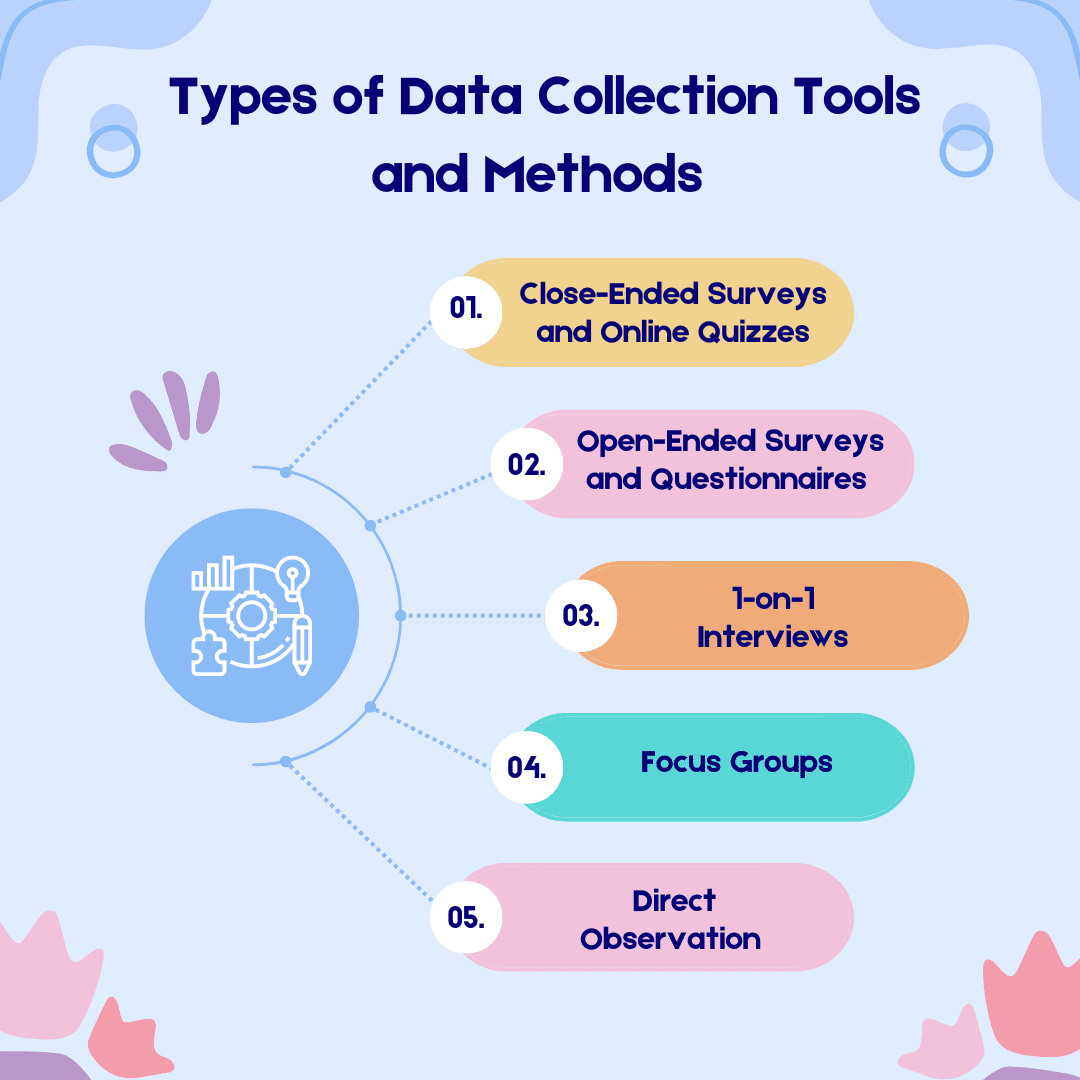
Types of Data Collection Tools and Methods 

Types of Data Collection Tools and Methods 

Data analytics course and data science training comes with various methods and tools for data collection. If one aspires to become a data analyst and take up a data analytics certification course, these methods would help them immensely. 

1) Close-Ended Surveys and Online Quizzes

Closed-ended surveys and online quizzes are data-collecting methods that employ structured questions with preset answer alternatives. Participants select from these alternatives, which simplifies data analysis. Closed-ended questionnaires are often used in market research and consumer feedback. 

Online quizzes, which are often used in education and evaluations, effectively gather data and offer immediate responses. Both strategies are useful for acquiring quantitative data in a timely and efficient manner.

2. Open-Ended Surveys and Questionnaires 

Questionnaires and open-ended surveys are significant techniques of data collection. They pose open-ended questions that stimulate comprehensive, free-text replies, resulting in rich qualitative data. These strategies are used by researchers to gather in-depth insights, opinions, and viewpoints on complicated issues. They are useful for exploratory research, qualitative analysis, and revealing unexpected discoveries because, unlike closed-ended questions, they allow for flexibility and investigation of participant opinions.

3. 1-on-1 Interviews 

One-on-one interviews are an effective method for collecting data. They entail an experienced interviewer conversing with a single respondent, asking predefined questions or delving into certain themes. This strategy yields rich qualitative data, revealing personal experiences, views, and feelings. One-on-one interviews are commonly used in social sciences, market research, and qualitative investigations because they provide a thorough knowledge of individual viewpoints and nuanced information.

4. Focus Groups

Focus groups are a qualitative data-collecting method in which a moderator leads a small group of participants in a discussion on a particular topic or issue. This strategy generates a wide range of viewpoints, ideas, and insights. Focus groups are very effective for investigating complicated social problems, customer behaviour, or product feedback. They give detailed qualitative data that assists in understanding underlying motives, attitudes, and views, allowing for more informed decision-making and research findings. 

5. Direct Observation 

Direct observation is a type of data-collecting method in which researchers watch and document events, behaviours, or phenomena as they occur. This method provides real-time, unfiltered insights into the activities of individuals, making it useful in domains such as psychology, anthropology, and market research. It reduces reliance on self-reports from participants and improves data accuracy. Structured procedures are used by researchers to methodically record and analyse observations, assuring objectivity and reproducibility.

Ethical Considerations in Data Collection Methods 

To comply with Indian legislation, ethical concerns in data-gathering procedures are critical. Researchers must acquire informed permission from participants, ensuring that they understand the goal of the study and any potential dangers. 

Privacy and secrecy must be strictly adhered to, by legislative laws such as the Information Technology Act and the Personal Data Protection Bill. Furthermore, data anonymisation and secure storage practises are critical for safeguarding sensitive information. Maintaining ethical standards in data collecting creates confidence, ensures legal compliance, and protects the rights and dignity of all engaged.

Conclusion 

The art of data collection and preparation is an indispensable skill needed to sustain in this data-driven environment. It enables individuals and organisations to get useful insights, make educated decisions and advance in a variety of disciplines. They leverage the power of data to design a more informed future by mastering these approaches and sticking to best practices.

If you wish to become a data analyst and have a budding career in data science, check out Imarticus Learning’s Postgraduate Program In Data Science And Analytics. You will get 100% job assurance with this data science course and learn in detail about various data collection methods.

To know more, check out the website right away.