How does Blockchain verification work?

One of the best features that have made blockchain so easily adaptable is the verification feature of transactions that are immutable, secure, permanently recorded, maintained as a public ledger and has no third-party interference.
How verification is achieved:
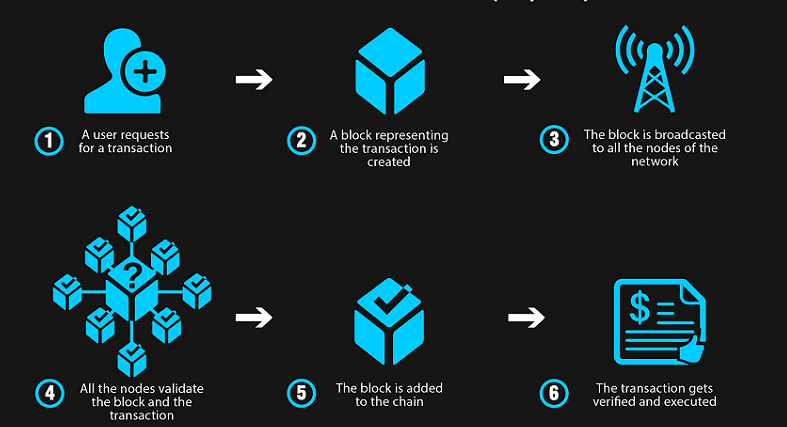
Blockchains are made of blocks of code joined together and is essentially a process based on consensus between transacting parties. The blockchain network has many nodes of such continuous blockchains. It functions as a ledger which is decentralized. Whenever a new block is introduced, the transaction gets a digital signature fingerprint which cannot be altered and consists of hashtag functions of the previous block with an output that is unique. If the output is changed and not verified the transaction becomes invalid and unverified. This means that all network nodes should receive the exact same output on executing the hash. If the change is acceptable by this test, the transaction is verified.
Blockchains provide security, immutable records, and verification as the prime features. The different blocks are held together by connecting hashtags, and each and every block holds the hash code of the preceding block got from the values generated when the new block is introduced.
Every initialized transaction has  the connecting nodes verify the following

  • Transaction history is immaterial, and the balance of the wallet address of the sender is checked.
  • Receiver address is also verified.

The request is approved if these conditions are met perfectly. A Digital authentication signature is formed by the request and unique private keys required for the transaction. This is then sent and verified across all nodes of the network for matching the key and signature by means of an output complex hashing algorithm generated with the request by a nonce. Nodes compete with each other to solve the hash thereby doubly ensuring the verification process.
Remember that the nodes are interconnected and are small configurations that are high-end and can solve the above code for the right output. They also broadcast the result to other transacting miner nodes in the network to ensure the solution is right. This ensures that all nodes are constantly watching the transactions and that the transaction is public verified.
It is important to note that a block can contain very many transactions. Only the transacting nodes that verify the transaction first is the rewarded miner thereby setting up a fool-proof verification system with healthy mining completion. Any miscalculation will result in invalidating the transaction broadcast across all connected nodes. Mining rewards are generally in the form of BTC or Ethereum on the Bitcoin blockchain network. A transaction is verified, validated and completed only when all nodes mine the information and receive their reward.
To learn all about this feature do a fintech course like the one at Imarticus which necessarily focuses on a global curriculum, hands-on practical blockchain training, and project work and which helps you build your industry and vertical relevant portfolio, learn at your convenience and get set to be career-ready as a blockchain developer.

Why Fintech Needs to Start Counting for The Unimaginable 2020?

Fintech is a young achiever in India. Just a half-decade into its foray it has completely transformed the behavior of consumers. From cash to cards and now smartphone digital payments the concept of money stands redefined. The young Turk of Fintech can hope to see much development and should gear itself for 2020. The Government has placed its bet on the Fintech industry and has gone all out to promote the revolution with large incubators, sand-boxes, and promotion of the Digital India movement. So what does 2020 hold for this nascent industry? Let us explore the main contributory factors that are sure to dominate the next decade and usher in the digital revolution.
Digital Payments:
While blockchain technology and the digital mobile app solutions for payments like the interface for unified payments UPI the QR scan Bharat, initiatives of large online payment solutions like Amazon and Google Pay and many more the Indian markets will see much user-experience improvements. As of today, and according to NPCI the Indian payments corporation digital payments on UPI recorded a growth of 20 percent and 2018 saw over six-figure Crore worth money being transacted in nearly 621 million digital or mobile transactions. Truly messaging money is as simple as it gets!
Scanning of QR codes:
India uses the slightly outdated version of QR codes that are static while countries like China have moved to dynamic codes already. Even street vendors use the QR scan options to accept even the least payments and have made a huge impact on the behavior of the customers pan India. Alipay, Wechat, Tencent, Paypal, and a host of other big players see India as an emerging market for QR code scanning applications and evolving technologies in payment solutions. With sanctions and trade-wars hanging over the global industrial scenario 2020 will be a decisive year as far as Indian markets go.
Banking for MSME/ SME:
2020 will definitely be the year when the Fintech players fill the gaps in traditional retailer banking with innovative solutions and better customer experience. With fintech based aggressive companies competing for a place in the lending sector, the impetus for MSME/SME lending and credit is set to grow and will probably overtake retail-banking. Rightly so, since they are vital drivers for an economy that needs a boost and niche to grow into. Fintech also is a great step towards inclusion financially and a step in the right direction for the growth of industries according to the survey data from FICCIIBA.
Credit and lending apps:
Over and above the lofty goals of financial inclusion and growing the economy, the Indian market is where credit has been consistently withheld and is a cumbersome process. A plethora of changes is expected with online loan facilities and a population that is largely credit-starved. The over 15 crore market, the POS credit facilities being offered by giants like Amazon, Flipkart and others, and the rapid development of credit apps for digital lending are set to dominate the development of the Fintech sector especially with the credit card circulation rate is less than 3.9 crore. This is a win-win situation for the young digital-age consumers with instant facilities to pay in installments and for the business enterprises to cash in on the burgeoning customer market for credit facilities completely doing away with the unnecessary issue of credit cards.
Fintech training:
The growth in this sector has also seen the promotion of Fintech learning in a big way. The essentials of finance, technology and practical development of learning have seen unprecedented boom-time. Are you interested in what the Fintech industry could mean to your career and how you could be a part of this growth? Try the courses at Imarticus Learning which not only gear you for a career in Fintech but also offer assured placements in this next-gen technology.
In parting, 2020 looks promising for disrupting in the Fintech segment and the emergence of young startups as the unicorns of tomorrow for all the above reasons. Beat the helm of a fintech career and experience the seamless career transitions at Imarticus. Besides, where futuristic technology is expected to spur growth, one cannot but place a bet on the reputed favorites, right? Enroll at Imarticus today and ensure you are part of Fintech’s success.

How do you become a bitcoin/blockchain expert?

In the US companies like the conservative IBM, groups like the R3 Consortium and newbies like Bloq and several others were responsible for transforming the Bitcoin blockchain into the revolution of Blockchain technology. The core feature of blockchains is the distributed ledger which is public and stores all transactions which are verified, recorded and make use of cryptography for encryption resulting in unbeatable trustworthy, secure and transparent transactions. The awesome features of blockchains can be used in

  • Financial transactions and sectors needing immutable records like banks, stock markets, real estate transactions and such.
  • Recording rights, trademarks, patents and preventing plagiarism in music, literary, entertainment, art and such fields.
  • Legal contracts, recording of registration, agreements, transfer certificates, etc.
  • Insurance, Healthcare, subsidy distribution, and such sectors.

Types of Developers:
As a tech-geek, you can become a Core Blockchain Developer or a Blockchain Software Developer. Core developers deal with architecture development, protocol design, decision-making, consensus design, and design development. The developers of software deal with the protocol and architecture used in creating blockchain enabled applications.
fintech certification
Tech skills required:

  • Coding skills are essential for logical interpretations and quantification.
  • Cryptography and its methods like the hash functions (KECCAK256, SHA256, etc) and a digital signature generating asynchronous cryptography.
  • The architecture of blockchains laid out in the Bitcoin whitepaper, fundamentals of distributed and centralized networks, consensus, cryptographic hash functions, and distributed ledgers in blockchain fundamentals, its architecture and working, convention theory used for decentralizing the architecture, MVC, Document-view, MVVM, fundamental communication architecture, G and bus architecture.
  • Programming languages and relational database procedural languages like OOPs, C, JavaScript, C, etc.
  • Structures of Data including data structures like Stack, Merkle trees, Patricia trees, advanced cryptography, Queues,  LinkedList, Tree, Hedera HashMaps, etc.

·Smart Contract enablers like Truffle suite installation and working on Mac, Windows, and Ubuntu.

  • Platforms and frameworks like HashGraph, Hyper Ledge, Ethereum, EOS, etc.
  • Development of Smart Contracts including functionalities of smart contracts and specific network languages like Ethereum’s Solidity, Chaincode, Viper, etc.
  • Web-Development both front and backend decentralized application development, handling APIs, requests, Dapps based interactive GU interfaces, etc.

Job scope and payouts:
Indian salaries range according to Glassdoor in the range of Rs19 to 21K in India for fresh candidates and Rs 288 to 313K for the experienced at higher levels. In the US Application Developers get an average salary of 85,534$ pa and for a Software Engineer, it is about 98,460 $ pa. According to Upwork blockchain engineering and development is the second most-evolving sector.
In parting, if you are interested in pursuing a career as a blockchain developer then do a certified course from a reliable institute like Imarticus. This ensures you get both the theoretical knowledge, technical skills to adapt the learning into solutions, and practical knowledge of trends and industry-relevant knowledge to further your career. To learn all about blockchain technology or the bitcoin blockchain one can do a fintech course. Such blockchain certification can give your career a head-start.

Python makes an excellent language for a blockchain training project and here is why:

It is advanced and easy to learn
Python’s position in the tech scenario is growing stronger every day, and it has been around for a while now. Python has evolved over the years, and it is constantly supported by a passionate and growing community of developers. It is at an advanced stage which guarantees reliability and stability. It has come a long way and has a long way to go, and one can rest assured that one’s project won’t be based on a language that is on its way to becoming obsolete. Python is equipped with a gentle learning curve making it possible for developers to master it within a short span of time.
Python is minimal and simple 
At the core of Python’s philosophy are two major things – it is minimal and hence simple. These core aspects of Python are derived from many different features like for example, white spaces in Python, signify code blocks. Developers need not worry about adding keywords or curly brackets. Python can be used to code a blockchain without having the need to write a lot of code.
Python is popular 
Over the past few years, Python is becoming increasingly popular which makes it an excellent choice for a Blockchain-based project. According to this year’s TIOBE index, Python is ranked third amongst all programming languages, and according to the index, its popularity is only growing steadily. In practical terms, this means that one will have a comparatively easier time building one’s project as there are many developers who specialize in Python including professionals with a scientific or academic background. Pythons’ popularity also means that a team has access to its ever-growing community which shares useful knowledge and builds libraries. Most online courses in blockchain offer a Fintech course which strongly suggests the use of Python over other programming languages.
Python can be run compiled or uncompiled
Unlike other programming languages like C, Python is a scripted language that requires no compilation to be readable by machines, which makes it easier for developers. For example, if someone runs an application and notices a bug – if one is using a compiled language to fix it, one has to stop the application, return to the source code, fix the bug, recompile the code and restart the application. In Python, all one has to do is fix the bug and then reload the application. It is that simple. One does not have to recompile the code, making massive headway in building blockchains.
Python offers free packages for Blockchain
A big plus of using Python in a blockchain project is that it gives developers a collection of free packages to assist them to write code more efficiently. Here is a page with a complete list of these libraries.
Python for Blockchain
Blockchain has some very specific requirements when it comes to code and language. When one chooses a programming language for a Blockchain project, one has to be very sure that the language is secure, well functioning and scalable. An advanced, reliable language is a must to make the blockchains as safe as possible, and Python can be of great help.
Blockchain implementation
With Python, a simple Blockchain can be created in less than 50 lines of code. First, one needs to define what the block will look like. Each block in the blockchain is stored with an index and a timestamp. The key is blockchain integrity, so it should be ensured with a cryptographic hash of the index of the block, timestamp, data and a genesis block at the start.
Python is recommended for blockchain if one is trying to address a case of Internet of Things. One can easily perform many tasks with a single command with Python which makes the work of building blocks with the necessary information and linking them a much easier one to do.

Which business models work within the Blockchain/ Bitcoin sector?

Blockchain technology has certainly caught the attention of different industry sectors especially the bitcoin sector. It is a game changer in the functioning of business and also aids in enabling innovation to evolve at a rapid pace. Which is why most companies are now adopting blockchain technology.

With the use of technology at the forefront, industries across are seeing a rise in the use of blockchain business models. Companies are now looking at decentralizing problems, the way they are perceived and the unique ways to solve them. Organizations are now trying to get the Blockchain technology to adapt to their mainstream implementations.

What is the need for a blockchain business model
Blockchain in itself is a business model with which businesses can turn their processes into a decentralization platform to alter the way their system works. Implementing a blockchain business model in an organization could change the entity, flow of transactions, profits, turnovers and ensures growth in the right direction.

From the advent of Bitcoin, blockchain based business models have been constantly used, modified and improved to suit the needs of the business. Blockchain business ideas must work at both macro and micro levels that will benefit the end users and the employees of the company.

With the blockchain business model, there is no need for a centralized authority. So the business model becomes a lucrative one with no stakeholders involved. Anyone helping and inputting in the blockchain gets rewarded for their contribution, depending on the contribution.

Bitcoin helps the miners to earn a profit by making their contribution to decoding the algorithm at any stage. This kind of model helps every person or institution contributing to the model to make some profit. Now that we have gained a basic understanding of how the blockchain business model works, let’s see some popular ones that function in the sectors:

  1. Token Economy – Utility Token Business Models

Loads of startups, e-commerce sites and business use this model where the businesses hold some of the utility tokens and release the remaining for the functioning of networks. The profit is made when the value of the utility token changes. The utility tokens have got variables assigned to them and examples are BANKEX tokens, EDU token, and even Ripple.
     2. Blockchain as a service business model ( BaaS)
This model aims at providing an ecosystem for other businesses to manage their existing blockchain system. Within this system, companies can test, research and experiment to decentralize their functions. Microsoft (Azure), Amazon (AWS) are examples that use this system and the startups, companies don’t have to worry about how their blockchain works and focus on their core business. This model also eliminates the need for hardware.

3. Block-based Software Products
Since its inception in 2009, older conglomerates also have the need to adapt their businesses to the blockchain technology. The easiest way for corporates to do this is to buy a blockchain solution and collaborate it with their existing system. This gives a chance to blockchain companies to create solutions and sell them to bigger giants. This is a lucrative option as it will give a profit up front and also a chance to develop solutions for support after implementation. Lack of talent in the market could also be a reason to buy a blockchain based software product that fits the requirement and saves the hassle of recruiting and training staff.

Since its inception, blockchain technology has been creating waves with almost every industry trying to implement it. Studies and surveys reveal that most companies would have adopted technology in a couple of years. Participants enrolling in the Fintech course will benefit from the knowledge given during the sessions about the functioning of these business model.

Why is blockchain technology revolutionary?

The rise in value from pennies to nearly 450$ did catch the imagination of nearly the whole world and suddenly industries were talking of the revolutionary Bitcoin, its blockchain technology and whether this would actually lead to disrupts or be the enabling technology of the future in all financial transactions.

In the US companies like the conservative IBM, groups like the R3 Consortium and newbies like Blog and several others were responsible for viewing and transforming the interest in Bitcoins to the revolution of Blockchain technology.

Today the world of Fintech, banking, and sectors like the real-estate, stock-markets and recording of financial transactions have more or less integrated the blockchain technology into their systems.

What is revolutionary in blockchains?

At present, there are two segments namely those using the blockchain adapted to their own systems and processes to increase efficiency, provide transparency and make financial transactions secure and immutable and the Bitcoin open network operating globally for cryptocurrencies.

Blockchains were termed revolutionary for the following scoring features.

  • Cryptocurrencies became tradable assets.
  • Code rules all transactions: The blockchain is based and governed by its coding. Once recorded it cannot be changed or tampered with. Also, the digital records are available to the public and thus ensures a safe, immutable, recorded transaction.
  • No governmental, legal or regulatory involvement as a third-party exists.
  • Trust and records between transacting parties without the involvement of institutions and banks were welcomed.
  • Data is permanently stored.
  • Blockchain verification and public record verification were used to track and verify every transaction.
  • Access is only through your private key.
  • Use of a reliable currency exchange platform prevents hackers and ensures safe transactions.
  • The receiver address is very important: In a digital and decentralized system once you transfer to a wrong party there can be no charge-backs or support interventions.
  • The possibilities of using tokens to make purchases, trade, sell or buy anything in virtual currency.
  • The accompanying digital wallet has enhanced security and can be password protected.Whether the technology will actually be adapted and change the banking industry, whether the blockchain is an enabler or will cause a disrupt and whether Fintech will really take off is a matter of speculation.

To learn all about blockchain technology or avail blockchain training one can do a fintech course. Such courses have several advantages and can give you a headstart if you are interested in pursuing a career as a blockchain developer. It is recommended you do a certified course from a reliable institute like Imarticus.

This ensures you get both the theoretical knowledge, technical skills to adapt the learning into solutions, and the practical knowledge of trends and industry-relevant knowledge to further your career. While certification does help in this evolving field, it is best to remember that opportunities will grow exponentially and will depend entirely on your skills.

What are other uses of a blockchain apart from cryptocurrencies?


Blockchain has been the primary technology behind the rising popularity of cryptocurrencies, especially in 2017. It is the concept of having a transaction system without the involvement of any financial intermediaries, which has been revolutionary in its time. It completely obliterated the need for banks and transaction fees, and time required for long distance transactions.

Blockchain technology is not just meant for the cryptocurrency. Here are some of the potential ways in which it can be used in the modern world.

Processing payments and transferring of money: Banking transactions can become much simpler when blockchain is involved. Transfer of funds from one party to another can be facilitated 24 x 7. Banks are not involved in the process, and therefore, the transaction can be completed within seconds.

Supply chain management: There is no need for records or physical bookkeeping when it comes to maintaining supply chains. Blockchain would help business owners figure out the issues in the supply chain much easily, and then locate the issues in real time. The technology would help perform quality control checks in the supply process from the place of origin to the retailer.

Rewards programmes in retail transactions: Loyalty rewards are an effective process to keep customers and maintain revenue for many retail businesses. Including blockchain in this system would completely eliminate the need for paper and card bases loyalty reward points. The token-based system would reward customers in a fast and effective way. Fraud and other issues would also not arise which is common in the current systems. Customers would find this system more reliable and would come back to shop from the same retail chain.

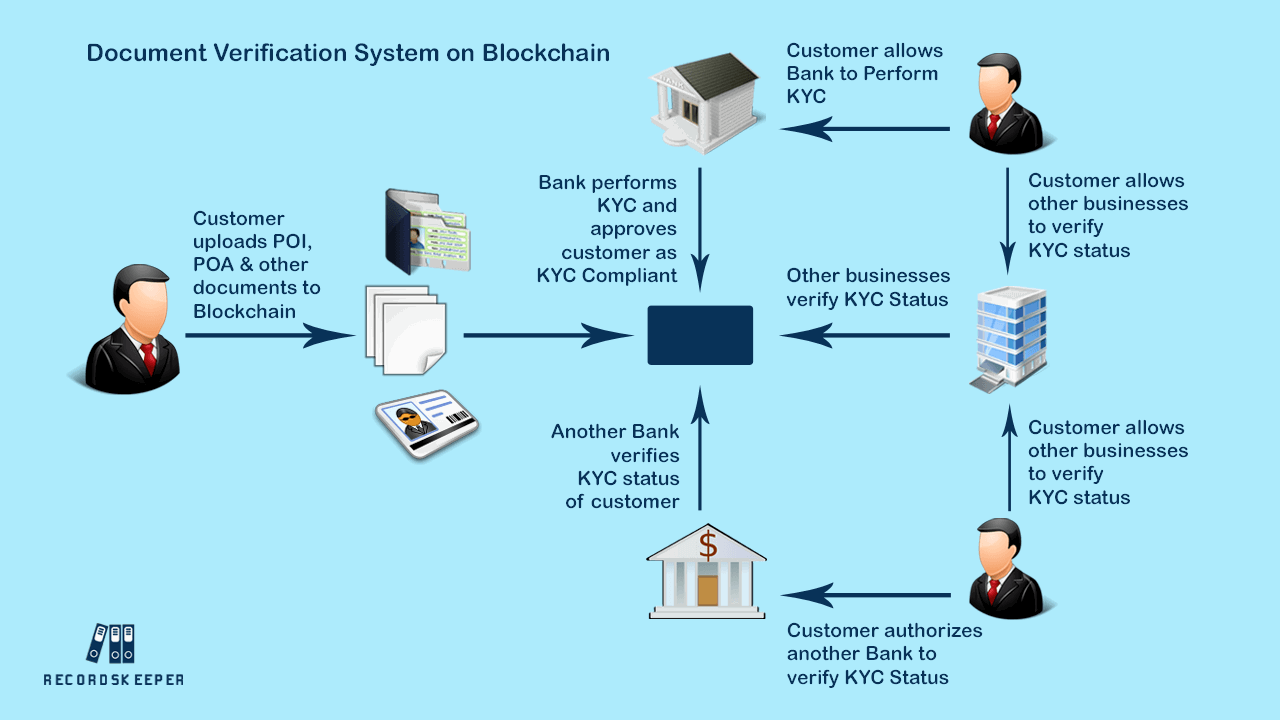
Digital IDs: Digital identification has become an increasingly important concept. It eliminates the need to carry your identification document around. It will also help people in remote areas get access to resources or banking services. Microsoft is currently working on digital IDs through its Authenticator app. It is currently used by many people and gives them control of their digital identities. Blockchain technology is instrumental to facilitate the process. The company is also working on decentralized digital IDs as well.

Sharing of data:  Blockchain can be used to share or sell unused data. The cryptocurrency IOTA has recently launched a beta version of the Data Marketplace. Involving blockchain can help unused enterprise data be used in a number of industries. Currently, IOTA has more than 35 brand-name products currently, with Microsoft being one of them.

Protection of copyrights and loyalties: Copyrights and loyalties for music and other shareable creations have become unclear, with digital and other platforms are involved. Involving blockchain in the process would help secure the transactions which take place for such products. Loyalties and copyrights would also be maintained properly as a  part of the process. Blockchain training offers a real-time distribution of data, which can be especially helpful when it comes to profit-sharing.

Online voting: Blockchain offers transparency in the system which can be very useful when it comes to voting. It can help you put votes digitally, and all regulators can clearly keep a track on the votes, making your vote really matter.

What are The Best Books To Understand Cryptocurrency and Blockchain?

Blockchain and cryptocurrency had taken the world by storm in 2017. The idea of digital currency has revolutionized the concept of sale and purchase of goods on the internet. Recently, cryptocurrency has become unpopular due to the lack of institutional controls behind it. There is no denying that it is the way to the future, though. This is the best time to read up on the concepts and brush up your knowledge. With the potential it holds in the future, being aware of the basics will put you ahead of many others.
There are many books out there which will support your Blockchain training. Here is a selection of books which are best suited to develop an understanding of the blockchain technology and bitcoins.
Digital Gold: Focusing on the first cryptocurrency which was developed. The book goes into the history of the evolution of Bitcoins. It walks you through the ideation and the creation of the blockchain revolution. The book, written by Nathaniel Popper, is a New York Times bestseller. It will definitely help you appreciate the efforts that went into making the technology, and clearly understand how the technology started, and what it is poised to be.
Blockchain Revolution: This is a great book to understand the fundamentals of blockchain technology. If there was a technical guidebook on the technology, this is it. The book is written by the famous business and management strategist, Don Tapscott, along with his son Alex. There are technical illustrations and examples clearly explaining the basics. It also shows how technology has changed the future of how we make transactions. You will also find real-time examples of various projects which are under development, along with the results.
The Bitcoin Standard: If you are interested in the economics of Bitcoin, this is the perfect book for you. The book explores the history of money and how transactions have been done. The author then discusses the challenges that Bitcoin poses to the current financial system. It also discusses the impact Bitcoin can have on the future as well.
Blockchain Basics: This book goes into the technical details of how blockchain works. However, it is extremely easy to understand from a non-technical point of view as well. There are illustrations, analogies, pictures, which make the book easily understandable. If you are looking for a Fintech Courses focusing on blockchain and cryptocurrency, then this is a great book.
The Truth Machine: This speaks about the larger concept of what blockchain stands for. From privacy-related issues to the control of data, a number of complex topics are explained from the perspective of blockchain and cryptocurrency.
Cryptoassets: Investors in cryptocurrencies will find this book extremely useful. The book clears the fundamentals of cryptocurrencies and is extremely useful if you are interested in investing in the future. Concepts, such as dollar-cost averaging are also explained with ease in this book.
Mastering Bitcoin: This book focuses on the software aspect of the book. Programmers and developers will find this book extremely useful because it goes into the technical details of the programming that goes into blockchain. Newer developments in the field, such as the Lightning Network, are also given in great detail in the book.

Bahrain Invites Indian Fintech Firms To Set Up Base


There are few fields which have seen as much a meteoric rise as fintech in recent years. There have been a lot of startups coming up around the world which work in the integration of technology to payments, and many of these are based out of India. In fact, India has more than 2,000 startups currently work in India, which represents a huge growth in the last five years alone. In 2014, this sum stood at around 700 – it has grown almost three-fold in the past 5 years.

Bahrain is looking to make a mark on the fintech sector as well and is constantly striving to establish itself as the fintech hub of the Middle East. In a bid to diversify from the traditional oil-based economy of Middle Eastern countries, Bahrain has been promoting and enticing many companies in the fintech sector to set up base in the nation. The Bahrain government is currently providing a lot of opportunities for the Indian firms to start their entry into various financial sector techs, like crypto assets, robot advisory, and blockchain.

The financial sector is actually extremely important to the government of Bahrain. The financial sector is actually the second biggest contributor to the Bahrain government, after the traditional oil and gas sector. The government has actually built up a capable support system in order to help the fintech startups thrive, and supports great innovation and growth in the sector.

There are many advantages that a fintech company gets when they shift to Bahrain. Apart from the strong support that the government provides companies, there are plenty of other perks – this includes a low cost of doing business, a large number of accelerators and many incubators too. This means that many companies have tried to get into this amazing ecosystem, including a large number of tech startups in India.

A sandbox actually offers a great opportunity for startups to push the limits of innovation in a safe space. Startups in Bahrain have actually started rolling out new products to the customers, in the testing phase – many of them have been gaining some great positive recognition too.

The investment promotion arm of the Bahrain government called the EDB has even signed a Memorandum of Understanding with the Maharashtra Government, in order to integrate the startups from the state into the markets in Bahrain. The formation of the Bahrain Fintech Bay, which is a private-public partnership platform, has played a huge role in attracting fintech startups too. It has worked to provide a physical space for fintech startups, and Bahrain is slowly shifting towards its bid for diversification. Around 42% of the fintech startups in the nation currently are based out of two cities – Bangalore and Mumbai. These two cities are actively targeted by the Bahrain government, and many fintech startups in the nation today are either entering the Bahrain markets with

The Hidden Agenda of Fintech

Fintech is the digital revolution which has redefined the way financial business took place in the past. India has adopted fintech at a very rapid pace. Many start-ups have emerged which are embracing fintech and many banks have also adopted fintech. The purpose of these new fintech start-ups is to utilize technology such as artificial intelligence in payments applications.
So what is fintech in the laymen terminology? Fintech is basically driven from the term financial technology which means that using technology is changing the financial services industry. This has been adopted globally. While fintech India is still quite a new concept in the country, but it is progressing.
Financial technology has its own agenda, in the way that it is customer driven. Fintech is a customer-driven approach. It is a way to spread awareness amongst its customers about the digital payments possibilities. From the financial industry aspect, another motive of fintech set-up is to make lending and borrowing available for all types of people who need capital. Since the current banking and finance industry uses credit history as a method of lending decisions, many individual borrowers along with small and medium enterprises end up suffering. This is because although their credit history might be tainted but possess good cash flow in present and future outlook could be promising with an intent to pay back the loan, banks and financial institutions still reject such applications.
How the fintech course can help in this situation? The answer is that since it makes use of artificial intelligence and machine learning it can help to create a lending score through a complete analysis using advanced data-driven and behavioral management models. Blockchain technology is the most amazing innovation of fintech. It is a digital ledger which stores all such data of customer which can be used whenever needed. Not only this, but it can also create a digital profile of customers who are not using banks for financial needs.
Another important reason why fintech is the next big thing is because of the online payments transactions which have become the norm. It wants to provide payments solutions to all individuals belonging to any sector in the economy. Fintech India aims to transform the country into digital India.
However, the biggest challenge is to convince and familiarize the small and medium enterprises to adopt fintech payments solutions as it will help them in the long-run to make and accept secure payments online. The biggest apprehension of the small and medium enterprises sector is the cost of adopting fintech. But what they need to understand is that this will not only help them to scale up their existing businesses but also increase the profitability of the business.
Through the use of smartphones, fintech is changing the customers of businesses as well. It makes it easier for customers to access information and data based on their previous history. Fintech can also keep a track of physical location as well as text messages. This way they can tailor the customer needs and provide a better way to address the financial needs efficiently.
Although all this sound promising the actual challenge which fintech is facing is the lack of awareness amongst the financial sector. There is an utmost need to address this issue and make fintech adoption easier and smooth. Since many people do not want to learn about the advanced banking products, while many do not want any disturbance in the current routine thus resisting the change. This can be resolved through aggressive marketing which can be done by making the marketers understand this concept completely.
Fintech is not a bad revolution which cannot be adopted rather it should be considered a positive sign for the economy. It will really change the financial industry for the better. Apart from this, it is also beneficial for customers to become financially sound.