Good Ways to Learn Data Science Algorithms, if Not From IT background?

At the beginning of your career in data sciences, algorithms are hugely over-rated. Every routine task, every subroutine, every strategy or method you do or write is because of an effective algorithm. In essence, all programs are formed of algorithms and you implement them with every line of code you write! Even in real life, you are executing tasks by algorithms formulated in your brain and just remember that all algorithms are simulations of how the human brain works.
Just as you begin with baby-steps and then worry about speed and efficiency it is a good routine to start your Data science career with the algorithms if you are not from a computer science background. And there are hordes of resources online that you can start with. Some people prefer the Youtube tutorials to reading books or even a tandem process including texts and videos which is fine.
As a beginner of a Data Science Career, your focus should be on making your algorithm work. Scalability comes much later when you integrate writing programs for large databases. Start with simple tasks. You will need to learn by practice and with determination laced with dedication. Don’t give up, as you never did, when you started walking or talking in English!
At the onset of learning, you will need to:

  • Understand and develop algorithms.
  • Understand how the computer processes and accesses information.
  • What limitations does the computer face when executing the task on hand?

Here’s an example of how algorithms work. Though huge amounts of data are stored and processed almost instantly, it can process/access only one/two pieces of information every time. This is the basis that algorithms use for simple tasks like finding the lowest/ highest number. An algorithm is essentially a series of sequential steps that helps the computer perform a task.
Starting with very basic algorithms for finding maximum/ minimum numbers, identifying prime numbers, sorting a list, etc will help understand and move to more complex algorithms. Modern times computer scientists use the suite and libraries of optimized and developed algorithms for both basic and complicated tasks.
For one who is not from a computer science background here are the basic steps to learn algorithm writing.

  • Begin with basic mathematics needed for algorithmic complexity analysis and proofs.
  • Learn a basic computer language like the C Suite.
  • Read about data science topics and the best programming practices:
  • Study algorithms and data structures
  • Learn about data analytics, databases and how the algorithms in CLRS work.

Learning algorithms and mathematics:
All algorithms for a  data science career requires proficiency in the three topics of Linear Algebra, Probability Theory, and Multivariate Calculus.
Some of the many reasons why mathematics is crucial in learning about algorithms are: 

  1. Selecting the apt algorithm with a mix of parameters including accuracy, model complexity, training time, number of features, number of parameters and such.
  2. Selecting the validation of strategies and parameter-settings.
  3. Using the tradeoff of Bias-Variance in identifying under or overfitting.
  4. Estimating uncertainty and confidence intervals.

Can you learn Math for data science quickly? The answer is that it is not required for you to be an expert. Rather understand the concepts and applications of the math to algorithms.
Doing math and learning algorithms through self-learning is time-consuming and laborious. But, there is no easy way out. If you want to quicken the process there are short and intensive training institutes to help.
While there may be any number of resources online, mathematics and algorithms are best learned by solving problems and doing! You must undertake homework, assignments and regular tests of your knowledge.
One way of getting there quickly and easily is to do a Data Science Course with a bootcamp for mathematics at Imarticus Learning. This will ensure the smooth transition of math and algorithmic data science applications. At the end of this course, you can build your algorithms and experiment with them in your projects.
Conclusion:
Algorithms and Mathematics are all about practice and more practice. However, it is crucial in today’s modern world where data sciences, AI, ML, VR, AR, and CS rule.
These sectors are where most career aspirants are seeking to make their careers because of the ever-increasing demand for professionals and the fact that with an increase in data and development of these core sectors, there are plentiful opportunities to land the well-paid jobs.
At the Imarticus Learning, Data Science career course, you will find a variety of courses on offer for both the newbie and tech-geek wanting to go ahead in his/her career.
For more details, you can contact us through the Live Chat Support system or can even visit one of our training centers based in – Mumbai, Thane, Pune, Chennai, Bangalore, Hyderabad, Delhi and Gurgaon.
Start today if you want to do a course in the algorithms used in data sciences. Happy coding!


What Do Experienced Data Scientist Know That Beginner Data Scientist Don’t Know?

The one thing that sets the experienced data scientist from the beginner’s data scientist career is that 99 percent of data sciences lies in the effective use of story-telling!

At the start of one data scientist career, most have the same skill-set as the top scientists with many years of experience and are job-prepared. The best of them learn to use their tools and techniques gained with practice and expertise to become excellent at using data to tell a compelling user-story. A data scientist in the early stages of the career is actually practicing as an analyst of data and probably comes from any of these fields. Namely,

  • Data analysis and wanting to pursue academics.
  • Analysts on the business intelligence side.
  • With computer science, statistics or mathematics expertise.

Large doses of the previous job role are normally used at the beginning of the data scientist’s jump into this field. That is being job prepared! And it will not be uncommon if the analysts are the busy rattling of their insights on blodgets and widgets, the business intelligence or business analysts present information in complex tables and graphs, and the group of CS, mathematicians, and statisticians write code the whole day. But that is not what a data scientist’s role is about especially in this role.

Whether you have deep learning knowledge, can crack ML algorithms, or write compelling codes for vector classifiers the skills you will need to be an excellent data scientist are not the same as the skills you landed the job with.

Your job is to use the data to tell the most compelling story while using your skills, tools and techniques learned to graphically illustrate your narration. Compare your story to a thrilling novel that you can’t put down till the last page. Your tale has to be anchored to the data and last till the final calculations are presented.

Story-telling skills:

For this, you will need the following skills they did not teach you in college and comes with aptitude, practice, and experience in a Data Scientist Career. Let us explore these attributes.

  • Structure: This is the manner of presenting data and information in an easily comprehended, logical, no-nonsense and understandable way that any reader or user can relate to. That’s precisely why most storybooks introduce their characters in the first few chapters itself. Most people err in not defining the issue and pitching its solution at the very start of writing.
  • Theory of the narrative: Good stories sustain interest till the very end and that is the essence of the narration. Keep your lines tight and use your data findings to get the story across cogently.
  • Expressive writing: This is the essential glue that holds the interest, tells the narrative and proves your point clearly and without ambiguity. Your grammar, sentence construction and choice of apt terms and words will go a long way and comes only by practice. Whether it be an email, a press note or internal communication remember that it may land on the table of the management head or your juniors.You wouldn’t want spelling and syntax errors in your calculations or writing style. Avoid ambiguous terms, technical jargon, and irrelevant information. At the beginning all tasks are difficult. They do ease out with regular practice and learning the right way to do things.
  • Presenting complex information: Being a data scientist isn’t totally about writing those accurate reports. As you move up the ladder you will be asked for your views, suggestions, and assessment. These are of a highly complex and technical nature and you need to train yourself to present your views without compromising accuracy, truth or the crucial data supporting your premise.This needs a lot of practice in all the above attributes to reach a level of credibility coupled with all the essentials and ingredients of the story. If you fail here you are possibly doomed to remain in those middle rungs of your career and can never rise to the top. Wisdom and skill are not gained by the number of years you spend on the job. They are learned on the job with regular and dedicated practice.

Conclusion:

The difference between the artist and artisan is the situation that occurs in the Data Scientist Career. No matter what your background is, excellence at the data scientist’s job comes from practice and learning from experiences. In data sciences, you will not only have to acquire the right tools of the trade, but you will also have to excel at wielding them artistically to tell the story WITH data. Not tell the story OF data.

At Imarticus Learning the data scientist learns this during the training in the soft-skills and personality development modules. Begin your story-telling today!

How Can You Prepare for The Data Science Interview?

How Can You Prepare for The Data Science Interview?

Do you have the jitters before every interview? Everyone does! Besides trying to run through the probable questions mentally, you need to stand well-placed with three fundamental attributes. They are aptitude, mathematical knowledge, and proficiency in technical skills. To explain and convince the other person does call for excellent communicative skills and a presence of mind! Commonly, data science courses will include learning of techniques in Big Data, Machine Learning, and programming languages like R and Python.
Before you try and prepare for a data science interview, you need to be honest with yourself and identify your key strengths and weaknesses.
What do you think the questions asked to you will be? Let’s have a look at the best techniques to conquer those butterflies in your stomach advocated by Imarticus Learning to get ahead of the crowd and ensure you emerge successful with a Data science Course.
Task 1: Understand your skill set, job profile, and application:
The essentials for any post in data sciences though, are the practical implementation-skills of your domain knowledge, the tools, and techniques you have competency in, great aptitude and comprehension attributes in quantitative, analytical analysis, programming languages and your confidence in answering questions on them.
Task-2: Crack the technical round:
Cover conceptual understanding of important topics needing the application of programming languages like Tableau, TensorFlow, Scala, Python, SQL, and R. You can expect most interviews to have a skill-test round where questions will be a case-study or assignment based on your skill-sets and implementation values of your learning. This is probably where all your tasks, test cases, project work, and case studies will be the litmus tested.
Task-3: Revise your basic topics well:
Since time and explanations need to be concise and succinct, you would do well to revisit supportive topics of data science like –

  • Concepts in Probability, Bayes Theorem, the distribution probability, etc.

·  Modelling techniques, Linear and non-linear Regression, Statistical Models, Time series,  Models for Non-Parametric data, popular algorithms, data tools, and libraries, etc.

  • Deep learning, database best practices, ML, ConvNets, LSTM, and other neural networks

You will need to make effective presentations of an industrially-relevant scenario through discussions or case-studies. It is a challenge to present the problem, cite research undertaken by you or others, suggest a valid solution and discuss business outcomes. Ensure you use and showcase your capability to solve problems, reinforce your learning, display solution finding, presentation, and team skills in this round.
Task-4: It’s perfectly valid to not have all the right answers in the personal round:
Data science is a vast field, and innovations happen every day through newer and more optimized models and statistical techniques. There are ten ways to do one thing, and at the end of the day, nobody has all the correct answers. So it’s fine if you do not know anything. However, the flexibility to adapt to teams and accept other’s views, the vision to add value to the employing organization, and learn-on-the-job are non-negotiable in this round.
Task-5: Your resume is the basis of measuring you:
Most times, it is best to mention what matters most in resume writing. Questions asked during interviews will silently explore your admissions. Be prepared to link your learning to your job experiences and prepare for justification of career decisions and choices made and stated in your resume.
Task-6: Continued Learning and practice counts:
An excellent Data science course certification, webinars, community learning, MOOCs and internships are good validations and endorse your desire for continued learning, focus on applications and job-suitability as well. Practice and repeat the reinforcement of your learning curve.
Conclusion:
Especially for first-timer career aspirants, the interview can prove to be very stressful. It is okay to stumble and fail, but the ability to get back up on your feet and justify your strengths is crucial. A Data Science career is a juggling of multiple domains and soft skills, a strong persona, dedication, and intent.
At Imarticus Learning, the methodology is to practically train you as a generalist on all the above tasks and includes resume-writing, personality-development and interview-training modules leading to assured placements. Their certification is widely accepted in industry circles as a skill-endorsement and being job-ready. So, why wait? Enroll today.

What Exactly is The Field and Type of Work That a Data Scientist has to Perform?

The field of data science gained prominence when technology enabled Google to introduce the ranking systems for searches. Recommendations were looked at in LinkedIn and data suddenly began to influence all types of newsfeeds.

Currently, the fine art of data science has permeated through every known vertical including Human Resources. Can you even imagine a world devoid of mobile phones, digital payments, or self-driven cars? Yet, just over a decade ago the scenario was very different.

The evolving segment of Data Science Training behind the huge volumes of data generated every second today implies a large number of tasks being powered by insights generated by powerful statistical models. In spite of all this hype, it’s still unclear what this field entails. What exactly does it take to become a data scientist with firms like Google and Apple?


What the data analyst and scientist does:

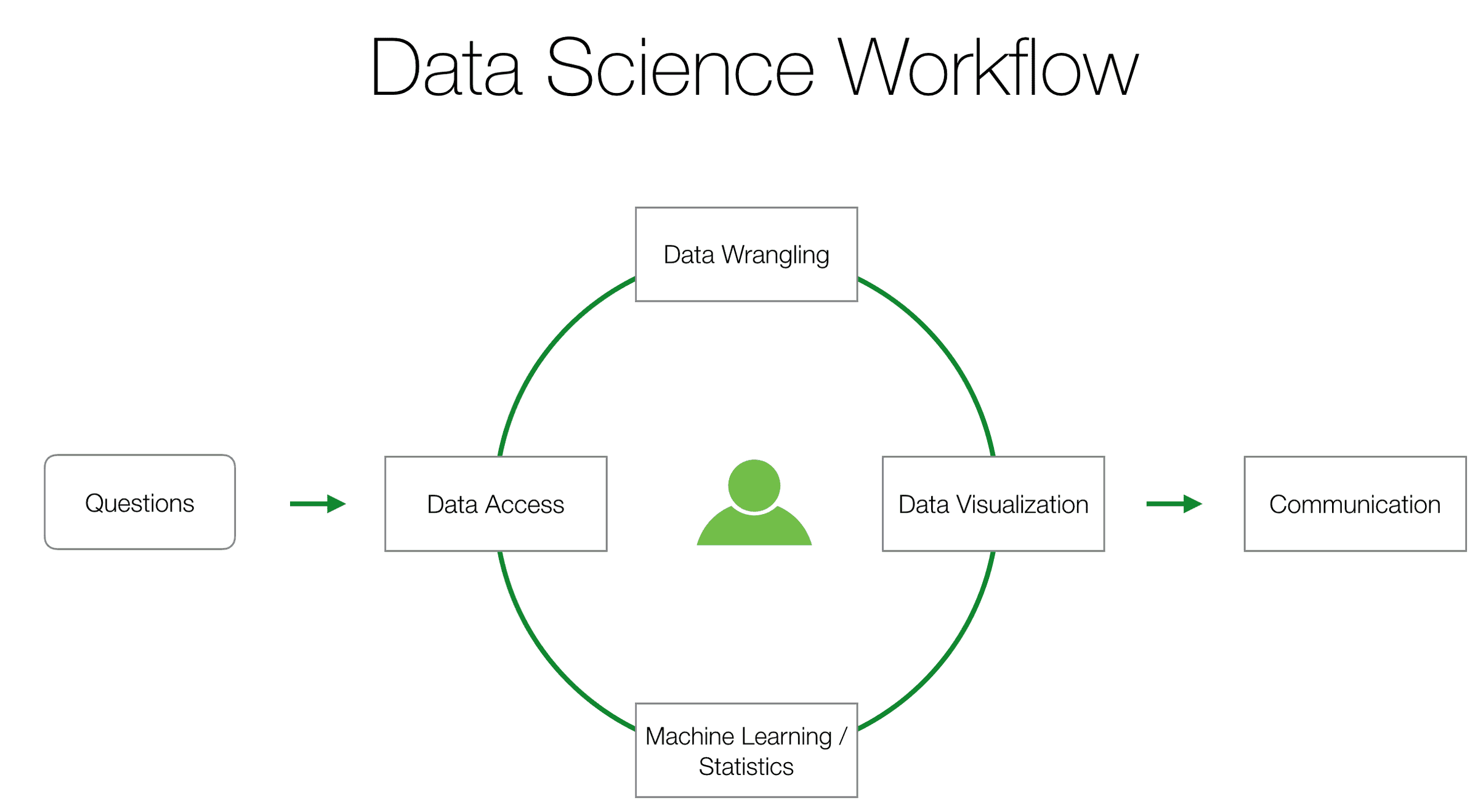
If we look at the most trending and lucrative Data Science Career, the one difference that sets these two categories apart is perhaps the areas of data science they operate in. It is a very huge and diverse field and demands the individual to have a strong understanding of advanced statistics and programming. The scientist’s role is more to clean, organize and make the data available in the desired format first.

Such data is then leveraged to train algorithms which are specifically used to execute the task on hand with maximum accuracy. The models are optimized, tested and re-engineered to provide desirable output in the form of products like forecasting engines.

In a way, the data scientist ensures the sustainable development and growth of the entire system and could also be called the architects behind a decision. Some firms like Mu Sigma Inc based out of Bangalore and Chicago have been the pioneers in this field in India.

The poorer cousin per se to the data scientist is the data analyst, who uses the created system so engineered to do the final live data-analysis and produce those forecasts and predictions to further particular goals and business outcomes.

So, whether the need is for a product-framework model being developed, a self-taught solution for optimization in a production process, or using the ML algorithm to provide and make decisions on a flight or hotel bookings, one definitely needs the services of both a data scientist and analyst.

Data science today in plain tech-speak is all about the latest technological infrastructure, analysis and repeated testing of pipelines, ML, AI, deep-learning algorithms, neural networks, modeling, decision-making ML, and innovative personalized data end-products.

The field is evolving rapidly:

Companies like Amazon, Airbnb, Etsy, Twitter, Facebook, Google, Apple and many more have greatly contributed to making data science a high-paying career. And, the sheer volumes of data being produced, is so large, that it seems unlikely that the Data Science Career aspirants will face a shortage of jobs, for the next decade or so.

Today data science is contributing to cancer cure and treatment needs, powering investigative tools for the law enforcement, high-tech medical imagery, and technologically advanced MRIs and CAT scans, as also the numerous uses of data in self-drive cars, making recommendations to leverage possible business markets and outcomes, in AI and ML-driven production technology, and providing the latest fintech digital solutions and multi-vertical end-products.

The requisite skills needed:

Since data analysts and scientists make a living off the collection, cleaning and modeling of data, testing and creating dashboards, visualizing petabytes of data, making statistical forecasts and inferences, and providing key verticals and stakeholders with the required decision-making prowess, the skills required of them are also multi-dimensional.

A course in data science training should educate the scientist in very short time-periods with practical skills, latest technology, and an ethical code besides non-transferable soft-skills and managerial experience. Though interest in data-analytics is the prime requisite, a sound degree in finance, economics, CE and engineering is a definite plus.

It also pays to specialize in performing areas like ML, Business Intelligence, and Decision Science which form the how, and whys of data science. Besides the practical aspects of techniques and best practices, you will need to be good at business modeling, data analysis, and communicative skills.

Parting notes:

Making a career in data sciences is definitely a good career choice. To succeed at it you will need a supportive learning partner like Imarticus Learning where the short-term courses are succinct, highly skilled and offer measurable certification. Besides who can refuse the offer of certified-trainers mentorship, assured placements, personality development and being job-ready from the first day?

Sandeep’s Review of Imarticus’ Data Science Course

We caught up with Sandeep, a recent graduate of the Post Graduate program in Analytics, for a quick chat to get his perspective on the program, the curriculum, Imarticus Learning’s placement process and more.
Tell us a little bit about yourself.

Sandeep: My name is Sandeep Singh. I recently completed my B.Sc. in Computer Science and was looking for an avenue to enhance my analytics skills and start my career.

Data Science Course in MumbaiI came across Imarticus’ data science course and, after thorough research, decided to enroll for it. I completed the course and have been placed at M Technologies through Imarticus.

How has your experience been with Imarticus Learning?
Sandeep: My experience with Imarticus Learning was super! The course focused on practical training with hands-on learning of various analytical tools and thorough practice with numerous datasets.

Looking back, I see the importance of actually applying Analytical tools and techniques to the projects I worked on because it gave me a running start when I began working.

What has changed since you joined Imarticus Learning?
Sandeep: Since the day I joined Imarticus my confidence has been boosted to a very high level. Through the practice of various analytical tools such as R, Python, SAS, Tableau, etc. I’ve come to believe in myself. My soft skills have also been elevated with the help of business communication workshops, mock interviews, and soft skill sessions throughout the course.

Would you recommend the program to someone else?
Sandeep: While researching various institutes, I came across some reviews that say Imarticus Learning is fake. Well, I wanted to see for myself and now that I have, I would definitely recommend Imarticus. If you’re looking for an institute, the first thing that comes to mind is the faculty and the learning material.

The faculty and staff are very cooperative and help you both inside and outside the classroom. The learning material is extensive and covers every aspect of data analytics. The best part is all of the lectures, notes, datasets, and quizzes are stored in an online Learning Management system and is available to students anytime, anywhere.

What do you like most about Imarticus?
The best thing about Imarticus Learning was the course content, the cooperative staff and the informative notes that are easily accessible. The resume building workshops and mock interviews definitely prepared me for the placement drives and I was able to crack the interview and land a job at M Technologies.

Looking to get started on your data science career, Speak with a counselor and get matched with the best course for you.

How do data scientists publish their work?

A data scientist is someone who has a skill set and qualification in interpreting and analyzing complex data that a company deals with. This interpretation and analysis make it easier for the general public to understand it. In a company, the primary function of a data scientist is to interpret data and help the company make its decision in accordance with that data.
Data scientists are intelligent individuals who pick up a huge mass of complex or messy data and apply their mathematical, statistical and programming skills to organize, interpret and analyze it to make it understandable for the general people.
A data scientist is a profession which is needed a lot by companies. In this era, where technology is everything, companies need the data to be simplified to understand it and make crucial decisions accordingly.
In this article, we will talk about how data scientists tend to publish their work. Keep reading and find out!
Share through a beautifully written blog!
Data scientists can be working in an academic field or a company. Inside an industry, the data scientist shares his work through an internal network limited to the employees of the company or the ones to which it the data concerns. In a company, where the main purpose of a data scientist is to recommend a change in decision making in accordance with the data, the task of a data scientist working in an academic field is entirely opposite.
The research and research paper does not stay limited to a section of people, but it is available to the general public. Data scientists usually present their work through blogs. Data is something which might not be interesting to all; hence, they try to make the blog as exciting as it can be for the general people to understand.
Social media is a platform for almost everything
The data might be shared through public repositories and other social platforms such as Google, Facebook, Twitter etc. The research of learned and experienced data scientist can be looked upon by the people who aim at getting the data science training.
A research paper shared by a data scientist consists of a lot of complex data converted into organized beauty! New scientists can get an idea by these research papers from experienced data scientist about how the data needs to be sorted.
Emails have a lot of conveniences!
Last but not least, data scientists also tend to share their work and research papers through emails. If a company does not have an internal network, emails serve the need. If a data scientist is working as a freelancer for a company or individual after completing Genpact data science courses in India, he will have to use the email services to share the work with concerned people.
Working as a freelancer is something which a data scientist can easily do. They generally prefer working from home because most of the work they do is typically done on computers. Big companies who employ data scientist permit the convenience of working from home to the data scientists.
Takeaway:
The sharing of the research data or research papers depends wholly on the data scientist. If working for a company, the company may not allow the scientist to share the data publicly but internally. If you are thinking to make this well-paid post as your profession, there are a number of Genpact data science courses in India after taking which, you can get the data science pro degree which makes you eligible to be hired by a company dealing with complex data.

Become Data Scientist in 90 Days

Data science is similar to any other field of science. The scientists involved conducted their own research and based on the information available form hypothesis and theories. However, in the case of data science, these hypotheses are created based on the data made available to the concerned scientists. The primary factor which an individual must consider in order to become a data scientist within a span of 90 days is to understand and to have a knack for analyzing data.
A career in data science is a hot topic in the present market. Organizations all around the globe are relying on big data, and for that skilled data, a scientist is required. Analysis of collected data involves the visualization of the data which is then backed up by creating reports after identifying specific patterns. However, what sets Data Science apart from the more traditional business analysis is the use of complex algorithms. The advanced algorithms such as neural networks, machine learning algorithms, and regression algorithms are used to scan the available data in order to identify the meaning and the purpose of the numbers and codes.
To become a data scientist an individual must have adequate knowledge about the fundamentals and the framework of these algorithms. This can only be possible when the concerned individual has a tremendous foundation for mathematics and statistics. So if you are aspiring to be a data scientist, make sure to get the basics right by keeping track of your mathematics as well as statistic skills.
Another foremost fundamental of data science is to know and understand the purpose of this study. The sole objective of a data scientist is to answer various questions. The study of data is carried out so that the probable questions can be answered by going through and analyzing a large set of recorded data. Let us consider the example of the popular entertainment network Netflix. In 2017, Netflix put forth a petition where a million dollars would be paid to a data scientist who would successfully improve the suggestion algorithm of the network.
Such is the demand and the requirement of the data scientist in the current market. Now for beginners, it is essential not to get into complex codes and a large amount of data. Analysis of large data would automatically mean the use of multiple algorithms. In order to become an efficient data scientist within a span of 90 days, it is critical to know personal strengths and weaknesses. Taking small steps helps as it builds confidence as well as enhances skill gradually. By considering these subtle factors, an individual can learn data science in no time and become proficient at it.
Another essential factor of becoming a data scientist is to go beyond the learning of Hadoop. There are many data science courses which not only helps you to be efficient with Hadoop but also assists you to gain real knowledge about reading and understand the various algorithms which are part of this data science game.
So to conclude, data science is a field which requires knowledge from all domains. A combination of mathematics, statistics, and algorithms give rise to data science. The job of a data scientist is not only to create a hypothesis, but also to find data which proves the formulated hypothesis to be correct. Thus, all these elements make the study of data science unique and challenging to master. However, with the right guidance made available through data scientist courses, an aspiring individual can surely reach the pinnacle of the data science industry.

Do Data Scientist Use Statistics?

Do Data Scientists Use Statistics?

Data science has been the buzzword of the tech industry for the past few years. Everyone is aware of the endless opportunities and large pay scale awaiting the data scientists. But when the question becomes “what do they do?” or “how do they do it? ” Only a few people know it. This article discusses whether data scientists use statistics in their operations. Read on to find out.

Statistics in Data Science
Statistics can be a very powerful tool in data science. It is simply the use of mathematics to analyse the data technically. The following are the few important instances where data scientists use statistics.

  1. Design Experiments to Inform Product Decisions.
    Data scientists use Frequentist Statistics and experimental design to determine whether or not the difference in the performance of two types of products are significant to take action. This application help data scientists to understand the experimental results especially when there are multiple metrics being measured.
  2. Models to Predict the Signal
    Using Regression, Classification, Time series analysis and casual analysis, data scientists can tell the reason behind a change of rate of sales. They use these techniques to predict the sales of upcoming months and point out the relevant trends to be careful of.
  3. Turning Big Data Into Big Picture
    Consider a large group of customers buying products. The data about each person’s shopping list is worthless if it stays like that. Data scientists can label each customer and put similar ones into a group and understand the buying pattern. It helps to identify how each group of people affect the business development. Statistic techniques such as clustering, latent variable analysis and dimensionality reduction are used to achieve this.
  4. Understand User Engagement, Retention, Conversion and Leads
    It is known that many customers would be lost from the signing-in stage to the actual regular use stage. Data science use techniques such as regression, latent variable analysis, casual effect analysis and survey design to find out the reason behind this loss. It also identifies the successful leads the company is using to engage more customers.
  5. Predicting the Customer Needs
    Statistical techniques such as latent variable analysis, predictive modelling, clustering and dimensionality reduction help data scientists to predict the items a customer might need next. A matrix of users and their interactions with the company product is all that is needed to obtain this.
  6. Telling the story with Data
    It is the end product of all operations of data scientists. He acts as the ambassador between the company and data. All the findings from data should be properly communicated with the rest of the company without losing any fidelity. Rather than summarizing the numbers, a data scientist has to explain why each number are significant. To do that properly, data visualisation techniques from statistics are used. Clearly, data scientists use statistics to solve various problems in their day to day life. If data science seems the right career choice for you, don’t wait for long. Imarticus  Learning is now providing course on data science prodegree. This Genpact data science course will equip you with all the necessary skills for a successful data science career.

How Should You Prepare For Statistic Questions for Data Science Interviews

Data Science has been the buzz word of the IT field for the past few years. Courses like data science course from Imarticus will equip you with all the skills required for a data science job. However, to ace the interviews for data science jobs, you should be well versed with the basic components of statistics too. This article discusses one of the key element in Data Science, statistics and its relevant topics to brush up before a data science job interview.
Preparing for Data science interviews
As in many interviews, the statistics are also going to start with technical questions. Many interviewers try to test your knowledge and communication skills by pretending to have no idea about the basic concepts and asking you to explain them. So, it is important to learn how to convey complex concepts without using the assumed knowledge.
Following are the few important topics you could brush off before attending the interview.
1. Statistical features
They are probably the most used statistics concept in data science. When you are exploring a dataset, the first technique you apply will be this. It includes the following features.

  • Bias
  • Variance
  • Mean
  • Median
  • Percentile and many others.

These features provide a quick, informative view of the data and are important to be familiar with.
2. Probability Distribution
A probability distribution is a function that represents the probabilities of occurrence of all possible values in the experiment. Data science use statistical inferences to predict trends from the data, and statistical inferences use probability distribution of data. So it is important to have proper knowledge of probability functions to work effectively on the data science problems. The important probability distributions in the data science perspective are the following.

  • Uniform Distribution
  • Normal Distribution
  • Poisson Distribution

3. Dimensionality Reduction
It is the process of reducing the number of random variables under consideration by taking a set of principle variables. In Data Science, it is used to reduce the feature variables. It can result in huge savings on computer power.
The most commonly used statistical technique for dimensionality reduction is PCA or Principal component analysis.
4. Over and Under-Sampling
Over and Under Sampling are techniques used to solve the classification problems. It comes handy when one dataset is too large or small relative to the next. In real life data science problems, there will be large differences in the rarity of different classes of data. In such cases, it is this technique comes to your rescue.
5. Bayesian Statistics
Bayesian statistics is a special approach to applying probability to the statistical problems. It interprets probability as the confidence of an individual about the occurrence of some event to happen. Bayesian statistics take evidence to account.
These topics from statistics are very important for a Data Science job and make sure you learn more about them before your interview. You can also try various data science training in Mumbai to begin your career at right note. Genpact data science course from Imarticus is an excellent choice to learn more about data science. Check out and join the course immediately.

7 Awesome Lessons You Can Learn From Studying Data Science

Data archives have increased exponentially, and it’s posing great challenges to various industries. Fortunately, they have gone beyond ‘What is Data Science?’ to finally adopt Data Science analysis, to derive something meaningful and productive from the existing pile of information.
Today there are many takers for data science training, and people have learnt some important lessons. Let’s discuss some of them:   
It’s important to understand business as a whole
At times people give too much emphasis on technical knowledge and out the domain knowledge on the backburner. This way they end up creating a sophisticated model without really understanding the business needs. Such models don’t add much value to the business, regardless of their accuracy.
As a data scientist, one needs to understand a business through the eyes of data. Only having the technical knowledge won’t help you articulate your ideas to colleagues in the context of business. So, besides Jargons, it’s important to learn the commonly used terms pertaining to a business.
It’s important to have a penchant for details
Data scientists can’t carry out data cleansing and transformation without having an eye for details. Data in real-world scenarios is never arranged perfectly, and one needs to isolate a lot of noise from it, to arrive at something meaningful. So, a detail-oriented mindset is a must to succeed in Data Science. Without that, you may not derive insightful results from your Exploratory Data Analysis. You may put your heart and soul into the data cleaning process, but still the data might not be reliable enough to be used by your Model.
Framing logic and designing an experiment
Machine learning problems are not that complicated, as you just need some data for training purpose in order to build your model. In case of Data science, there is a well-structured workflow that provides a larger picture of the undergoing processes (Data cleaning to Model interpretations). There is a component called Experiment which is a part of the workflow. It includes the logic for hypothesis testing and Model building.
Therefore, data science helps in framing a logic and designing an experiment for real-world scenarios, to test certain assumptions and evaluate the Model. You can understand more about this aspect by opting for a Data Science course.
Communication skills
If you are a Data Scientist, you better enhance your communication skills, as it will help you sail through. As mentioned earlier in the write-up, there is no point in acquiring the technical knowledge and crunching the data all day long, if you can’t communicate your ideas to stakeholders in a business-friendly language. This affects your credibility as well as your professional relationships. In short, it’s a lose-lose situation.
As a data scientist, your biggest challenge is to put forward your most complex ideas and insights in a layman’s language, so that even a 15 years old can understand them. Your language should make your colleagues feel empowered, so that they can invest emotionally and intellectually.
Art of Storytelling
If you think that Data Science is all about crunching data and building models, then you are mistaken. It’s also about weaving a compelling story based on data analysis, to indulge the stakeholders. Depending on the project goals, the story should cover the following questions:
> What’s the reason to analyze the data?
> What insights can be obtained from the results?
> Can any action plans be derived out of the analysis?
Often the art of storytelling is ignored over data-driven analysis. Lousy storytelling or boring presentations, can greatly undermine the valuable results from even some of the best models.
It’s important to set a benchmark for comparison
It’s naïve to assess the efficiency of a Model without comparing it with other models. Without a benchmark, it always difficult to define ‘What is good’, and the results can’t be fully trusted.
Art of Risk management
Every Model is built, keeping in mind the best and the worst-case scenarios. You are required to explain your model’s limitations to stakeholders, and how much risk can the company potentially bear if the model goes to production. This is where Risk Management comes into picture. If you understand what’s at stake and have a plan to minimize the risk involved, then only you can take stakeholders into confidence. To understand more about the art of risk management, you may opt for a Data science course.
Intensive Data Science training can help you realize the above-mentioned lessons. If you are an aspiring Data Scientist, we hope this write-up served the purpose.