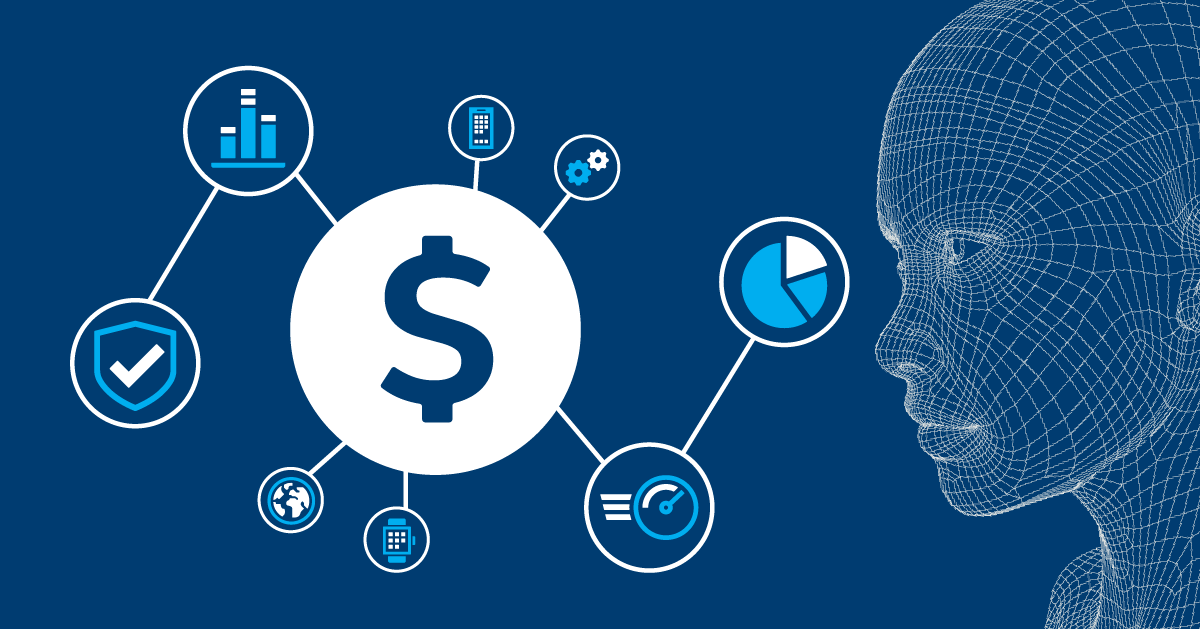
How big data and AI have revolutionized the world of banking and finance

Are you thinking about what after B. Com? Well, you can go for an online course to build new-age careers in banking and finance. The job roles in the finance and banking industry have changed a lot due to the introduction of new-age technologies. Technologies like AI and big data have given rise to new-age careers in banking and finance.

Before you start building a career in the banking and finance industry, you should know the role of new-age technologies. Read on to know five ways how AI and big data have revolutionized the banking and finance industry.

  • Risk analysis

AI and big data are used in the banking/finance industry for risk assessment. Besides providing financial services, banks must assess the risks associated with each client/customer. For example, before giving credit cards to customers, banks must analyze their loan repayment capacities. There is a plethora of customer data that needs to be analyzed for risk assessment. AI algorithms can scrap customer data from various sources and assess the risks associated with each customer. Banks are using AI to reduce human errors during risk assessment that can cost them more in the future.

  • Fraud prevention

Many criminals and money launderers target financial institutions to clean their black money. Money laundering increases the financial risks for banks and hampers their reputation. It is not possible to detect frauds in real-time with manual efforts. It is where AI comes into the picture for fraud prevention.

AI algorithms for big data analysis can identify the change in customers’ financial behavior. If anything seems off track, AI can help in identifying it in real-time. An AI-led fraud detection system can learn more about customer behaviors with time.

  • Recordkeeping

Banks are involved in financial statement preparation at frequent intervals. Human errors are bound to occur during financial statement preparation. Also, huge chunks of data are generated by banks and financial institutions.
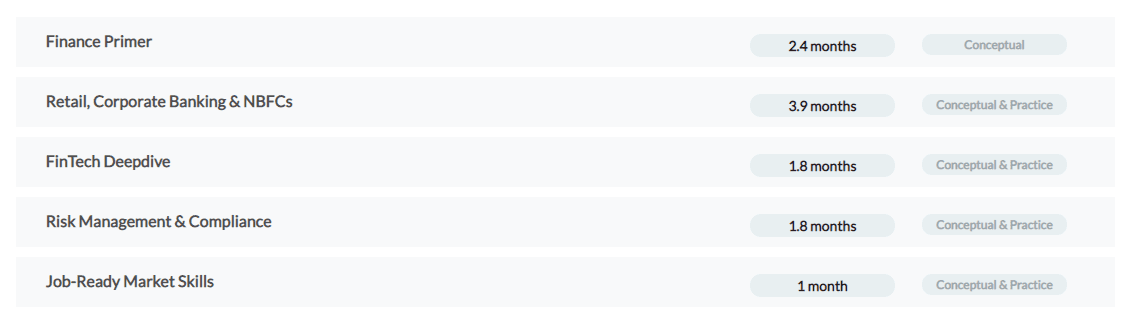
PG Diploma in banking and finance

It is essential to store the data and analyze it for market insights. An AI-led analysis platform can not only help you with record-keeping but also with real-time analysis. AI can prepare most of the financial statements without any manual effort. The employees of financial institutions can focus on important chores, while record keeping can be done with the help of AI.


  • Personalized financial services


The banking landscape is more competitive than ever in 2021. To survive amidst the high competition, financial institutions try to launch customer-centric services. There is a need to analyze customer preferences and trends for providing personalized financial services. With big data analysis, financial institutions can know about the spending habits of customers.

Based on customer behavior, financial services can be launched. Big data analysis is also used by banks to understand the pain points of their customers. Once the pain point is known, financial service is created to solve it. A financial institution can build better relationships with its customers via big data analytics.


  • Enhanced compliance


Financial institutions must follow several regulations imposed by the respective government. Upon failing to meet the compliance standards, business continuity can be hampered. Big data analysis can help in meeting compliance goals. If you are still wondering what after B. Com, you need to go for the NMIMS online MBA offered by Imarticus Learning. 

Conclusion

The PG Program in New Age Banking offered by Imarticus is certified by NMIMS. Young enthusiasts can launch their careers in finance/banking with this PG program. The NMIMS online MBA also guarantees a maximum of 25% of salary increase for working professionals. Start your new-age banking and finance course now!

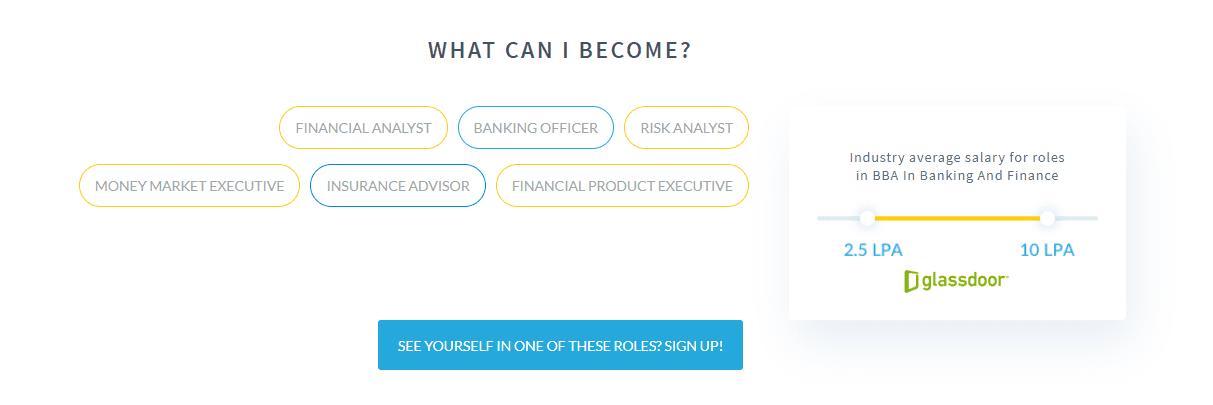
Get on with your Online BBA Certification now to set out on one of the best career trajectories.

A Bachelor of Business Administration degree is intended to offer students a solid foundation in business fundamentals as well as an awareness of how they can be applied in real-world job contexts.

 A BBA degree is designed to help you prepare for real-world business administration roles and how to reach smart business inferences via empirical analysis. For example, planning how an organization works day-to-day to making adjustments strategies in the face of ongoing changes and challenges, through a comprehensive curriculum. 

Bachelor of Business Administration (BBA) programs are intended to give students a solid foundation in business courses as well as advanced courses for specialized concentrations. A BBA helps students develop managerial abilities and prepares them for employment in business administration.

Along with offline courses, many online BBA courses in India are also readily available. An Online BBA certification can also give your career the right boost! 

BBA online courses by JAIN Online The skills taught in a BBA course:

 Mathematics:

A good understanding of various sorts of analytics that involve a basic comfort with math is required for any function that concerns business.  Courses like Quantitative Methods, which focuses on advanced algebra techniques used in a business role, and Probability and Statistics, which covers topics like probability distributions, expected value, and hypothesis testing, will provide you with a solid foundation in the math required for entry-level business roles.

 Technical skills:

While broad business knowledge is crucial, so are technical skills that you will use on a daily basis in any business-related function. Skills such as Excel and PowerPoint are honed to a professional level. When it comes to entering the workforce, learning to employ decision-making skills and analytical tools will provide you a competitive advantage. 

 Communication skills:

 It is essential to have both written and vocal communication skills. A BBA student’s communication skills will be put to the test on a regular basis, and networking is what will propel them forward. Speaking with individuals cannot be limited to meetings, and connections may not come to them through a certain source. As professionals, they might have to interact with several people on a daily basis via emails, phone calls, social media, or in-person for that matter. All of this will necessitate that they have good communication skills.

 Have a fair idea about Economics:

BBA students will have economics as a subject in their BBA course curriculum, and this is a fantastic opportunity for them to build the much-needed sense of knowing the country’s economy, which controls people’s purchasing power and can have a direct impact on a company’s success or failure. As managers, they will have to determine when to launch a product or whether to launch it at all, and their understanding of the economic situation will be useful. 

BBA online courses

BBA online courses

BBA online courses What jobs can BBA graduates get?

 Many high school students before stepping into their college life wonder what jobs can a BBA graduate get? There are several sectors that require BBA graduates. A few of them have been listed below:

  1. Marketing Sector
  2. Finance Industry
  3. Real Estate Industry
  4. Management Sector
  5. Advertising Industry and many more.

 Conclusion

 A certification in BBA can open up a number of career pathways for people. If you are looking forward to an online BBA certification, there are several options available at your disposal. Choose wisely to secure a successful career. Online BBA courses in India offer you all the skills you need to possess in order to flourish in your desired field.

Use of Data Analytics in Improving Working Capital Management

What is working capital management?

Working capital is an organization’s utilization of money to cover its daily needs, such as paying for raw materials, supplies, and salaries. The term can also be applied to individuals. Working Capital Management is defined as “managing cash flow so that it fulfills all the business needs”.

For example, if you have $10 in your wallet but need $100 worth of groceries today, your working capital would be negative $90. Working capital management takes care of the flow of funds within the organization. It ensures that funds are available to meet short-term obligations without having to borrow or sell assets. It’s essential for all businesses because it affects the growth and the profits of the company.

Without sufficient working capital, companies will fail before utilizing their full potential. Working capital management is a critical function for every company. Whether you are operating in the manufacturing or service industry, managing your working capital will impact your ability to grow and succeed.

How does it help the organizations?

Data analytics can help organizations measure how much money they need for their working capital based on their current situation. This way, they can improve their working capital management by minimizing risks such as overinvesting or underinvesting in one area while neglecting others.

There is a need for both MSMEs and large manufacturers to remotely manage their supply chain, cash flows, etc. This has led to a rapid and massive shift away from manual processes. This is where automation comes into play – Accounts Receivable Automation (ARA) was developed as an alternative solution by many companies who needed more control in this area of their business while still managing all aspects with less workforce. These systems allow businesses to deal directly with suppliers and it drastically cuts down processing between payments and delivery.

Application in the real world

In the past few years, the use of Data Analytics has been steadily increasing as a way for organizations to understand their customers better and identify trends.

In today’s world, data analytics is indispensable as it facilitates the efficient working of an organization. The proper recording and analysis of every activity related to the manufacturing cycle of the products help in having visibility of the processes.

Data Science Course

One particular area where Data Analytics can be applied is in examining customer payment patterns, such as when customers pay or don’t pay on time. For example, one company found that because of the customers who paid late, they were losing roughly about $21 million annually due to delayed payments from other clients. It also examined the reasons as to why people pay late. They came up with several insights like cash crunch during month-ends, etc. that stopped them from making these payments.

Using a company’s balance sheet and cash flow statement, a financial analyst can determine when the business has excess funds and also the times when they need more money. This analysis can then be used to establish an appropriate financing strategy that balances the company’s needs with its ability to repay the debt over time. Data Analytics makes the entire process smoother and better.

Conclusion

To maintain change, it is imperative to differentiate between noise and signal. This is done by developing measurable, granular  KPIs that are monitored strictly. Carefully analyzing historical data can provide valuable insights into managing networking capital by quickly finding and dealing with emerging issues.

Contact us today if you want to be well equipped when it comes to dealing with such situations. With a digital analytics course, implementing these tactics in your business becomes easier.

With a data science course, you become aware of the techniques that go into it. The course comes along with a placement opportunity so that you’re all set to apply your business analytics knowledge in managing operations.

Equity Research Analyst: Enhance Your Career Portfolio with This Most Sought-after Profession

In today’s era, financial decisions by businesses and investors are taken only after conducting proper research. Financial decisions can include investing in a company or opting out of a share/stock. There is no limit to financial decisions that can be encountered by businesses and investors.

To decide whether a financial decision is beneficial or not, equity research is performed. You can also build your career as an equity research analyst and work with the top organizations. Read on to know more about making a career as an equity research analyst.

best equity research analyst courseUnderstanding the role of an equity researcher 
An equity researcher is responsible for carrying out an analysis of a firm, stock, or any other type of financial entity. The information produced by equity researchers is then used by investment banks, shareholders, and companies to make better financial decisions.

For example, investors perform equity research to know which investment ventures will provide a huge return in the future. Companies value a project with the aid of equity research to make sure it is beneficial. In short, equity research is the valuation of a company or a venture/project.

An equity research analyst performs the following tasks for its organization/client:

  • An equity researcher has to develop a company portfolio that will be used to generate capital from investors. Company portfolio will be the ideal documents used in investment meetings and IPOs.
  • An equity researcher develops financial models and calculates the estimated income, cash flow, revenue, and returns of capital.
  • An equity researcher monitors the market situation continuously and provides updated reports to investors. Based on the generated reports, investors can then make better decisions.
  • An equity researcher evaluates the financial position of the firm in comparison to its competitors. This also predicts the growth of a company based on current performance and trends.

How to become an equity researcher?

You will have to learn the basic skills of financial analysis and modeling to become a successful equity researcher. Colleges in India do not offer a designated course for equity research. It can be included as a subject/topic in a traditional college course. For learning financial analysis, you may have to opt for the complete degree program. Also, the recent COVID pandemic has made it tough for colleges in India to conduct classes.

Nowadays, students are leaning towards EdTech platforms for financial analysis courses. You need to select an industry-oriented financial analysis course that could make you job-ready. Imarticus Learning is a reliable source that can help you in building a successful career as an equity researcher.

Why choose the financial analysis course from Imarticus?

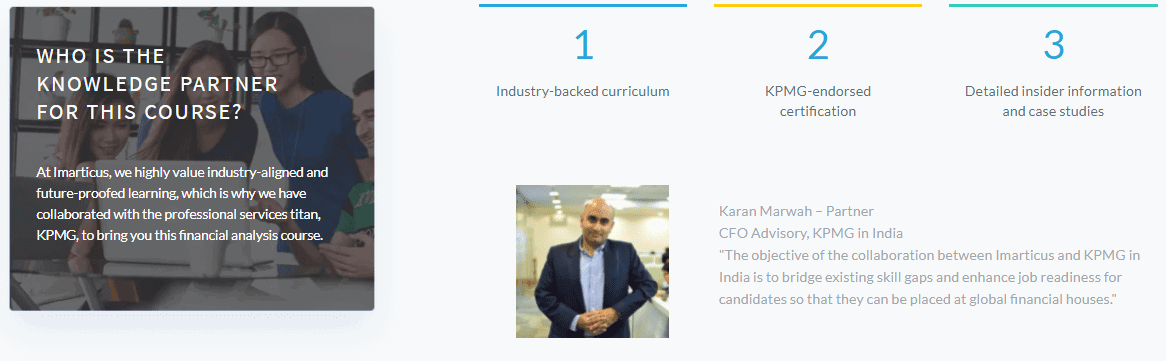
 The Financial Analysis Prodegree offered by Imarticus is endorsed by KPMG, a leading accounting firm in the country. The pros of choosing the financial analysis course of Imarticus are listed below:

financial analyst course

  • This course will help you in an easy career transition and will make you job-ready. Imarticus has successfully transformed the career of more than 2400 enthusiasts.
  • Six real-world projects offered by this course to students make it one of the best financial modeling courses in India.
  • A KPMG-endorsed curriculum will ensure that you learn the job-relevant skills and common practices in the industry.
  • Most of the financial modeling courses do not provide tech-enabled learning. This course will also introduce you to the tools and technologies used by equity researchers in the industry.

Conclusion 

financial analysis prodegree courseImarticus will help you in learning the concepts of equity research from industry experts. With a practical learning approach, you will learn equity research techniques by performing them in real life. You will obtain industry certifications during this course that will enhance your credibility as an equity researcher.

Innovative Banking: 10 Strategies That Will Impact the Future of Banking

The future of Banking will be shaped by huge technological shifts and will undergo a dramatic transformation. The COVID-19 pandemic has redesigned our life in terms of how we work, and even bank, resulting in a significant shift in customer behavior.

With the advancement of digital technologies, today’s consumers have become increasingly demanding of mobile banking. The pandemic has indeed increased the demand for convenient access to financial products, services, and information.

 Strategies that will impact the future of banking drastically: 

  1. It is obvious that an increase in the number of people using digital banking will result in an increase in cybercrime. The pandemic increased the number of opportunities for cybercriminals, be it through phishing, fraud, credential breaches, etc.cybersecurity threats must continue to use a variety of approaches to keep themselves and their clients secured.  A cybersecurity plan, such as the CIS Controls, boosts your entire cybersecurity posture.
  1. Banking customers today expect an easy and straightforward digital banking experience. Prioritizing emerging digital banking technology and attempting to blend digital with the human element, on the other hand, creates a conundrum for smaller financial institutions.While proper technologies and smooth rollouts are critical, effective digital transformation necessitates a strategic understanding of immediate customer demand.

    Customer data can be used by your institutions to expose cybersecurity risks such as suspicious activity, but transactional data and robust CRM technologies allow you to make better-educated judgments about cybersecurity.
    best digital marketing courses

  2. Producing quality content for your audience is an efficient approach to attract new leads while also giving useful resources that boost engagement with current clients. This is a powerful digital marketing tactic that banks utilize to advertise almost any product or service.
  3. Community banks can outperform others and acquire prominence at the top of search engine results pages by adopting techniques like pay-per-click (PPC) advertising with platforms like Google Ads. Paid search campaigns are effective because they can be tailored to a specific audience based on the exact phrases they are searching for on Google.
  4. Banks are confronting an influx of new competitors in the financial market, including fintechs, BigTech, and even non-financial entities. Banks can use cloud computing to store data and applications and access scalable computer resources on-demand via the internet.
  5. Biometric technology enables financial institutions to strike a balance between security, speed, and convenience in order to provide a hassle-free mobile banking experience. Biometrics are tangible human traits that can be used to confirm a customer’s identification.
  6. Banks can actually listen to their consumers and provide individualized financial services that benefit them through analyzing data. Banks that can consistently provide personalized offerings and individualized experiences for their consumers will undoubtedly win in the future.
  7. Banks can get more customers by giving referral bonuses for referring friends and getting them to sign up.
  8. RPA, artificial intelligence, and machine learning are all technologies that help you reduce expenses, increase efficiency, and process improvement.
  9. Microservices subdivide the entire banking application into separate services that can run independently while collaborating effectively.

A failure in one microservice does not disrupt the work of the others, resulting in improved service reusability and business continuity.

Conclusion

There are many courses available online on this subject. A banking and finance course graduation will ensure lucrative jobs as this sector is always in need of promising individuals. Thus, taking up a Banking and finance course after graduation will prove to be beneficial for young professionals.

How new-age banking solution geared with AI can help make wise investment decisions

Due to the chaos propelled by COVID-19, banks are now required to undertake continuous reinvention of their economic models and solutions with the help of flexible and adaptive technologies, which will not only make them immune to adverse situations but will also increase their profits.

Banks are creating new technology frameworks to distinguish themselves, which include elements such as hybrid multi-cloud, microservices, API platforms, blockchain, intelligent automation, and AI. When coupled with an agile approach to design thinking and organizational integration, these technologies will have a bigger influence.

With better risk reduction and more efficient compliance operations, these new architectures are becoming more secure and compliant. A post-graduate diploma in banking and finance or a certificate course in banking and finance will teach you all these technologies and help you secure a good job in the banking industry.

Banking institutions have always been infamous for amassing massive amounts of user data but failing to spend it wisely. Years have passed since the tech transformation stormed through the banking industry, and these institutions now deal with massive amounts of information that are just ready to be mined.

However, aside from certain fundamental digital capabilities, these solutions do not produce enough, especially from a cognitive standpoint. But a financial revolution is about to take place!

Artificial intelligence is at the forefront of this digital transformation quest as a springboard, providing a facelift for these traditional banking systems through scalability, automation, the convenience of use, risk assessment, and decision-making aid, which can direct to a banking experience customized to every individual’s needs.

Organizations have become increasingly customer-centric as a result of data-driven tactics that leverage the customer experience as a competitive difference. By leveraging a data ecosystem enriched with structured, unstructured, alternate, and internal data, advanced cognitive technologies, and AI will aid in the evolution of the customer experience, providing more unified and personal digital journeys.

Chatbots, cognitive routing, and smart search are examples of AI-powered systems that will enhance customer satisfaction and involvement.

How are new innovations helping people make wiser financial decisions? 

Financial institutions are working on providing exceptional customer service through hyper-personalization, which is based on intuitive, self-learning software that enables offers to be updated and added in response to consumer requests. This type of technology adds additional value and creates an altogether new customer experience.

Customer engagement may be improved by employing AI to better understand the customer and take advantage of real-time decision-making and predictive analysis.  Product suggestion algorithms, for example, have proven to be effective in providing a personalized experience while increasing revenue.

Product recommendation engines are a type of artificial intelligence (AI) technology that provides recommendations for each user based on a variety of characteristics such as historical behavior, in-session activity, product economics, and the behaviors and preferences of similar users.

Many banks use advanced investment algorithms to improve portfolio management. Banks are targeting deployment in fraud detection and back-office services in their future business plans because digital transformation is an end-to-end process.

An AI prediction system can provide an instant evaluation of a user’s credit risk, allowing customer service agents to provide a suitable offer. This approach improves the efficiency of offers by speeding up the total credit risk evaluation process.

Conclusion:

PG diploma in banking and financeThe banking industry is one of such industries that we will always depend on. We need money and banking as long as we live. The whole banking industry has undergone a huge revolution with the introduction of new technologies.


A post-graduate diploma in banking and finance or a certificate course in banking and finance can help you go a long way in the banking industry. You just need to pick the right course and you’ll be good to go.

5 Ways IT Industry Changed How Banking Looks !

In the modern world of technology and finance, it is hard to imagine how a banking system would function without computers. As far back as 1982, banks were using ATMs for customers to withdraw money from their accounts. These days, they are also using credit cards with smart chips that contain information about the cardholder stored on them, making transactions easier.

Computers have made other aspects of banking more efficient, such as wire transfers between countries to make payments and international trade easier. The evolution of IT in the industry has changed how banking looks in many ways over time – here are five fundamental changes you should know about!

  1. Banks are starting to offer more digital-only services because of the rise in mobile banking

In mobile banking, mobile devices are used to transfer money and keep track of financials. Mobile banking has allowed people to save time and do their transactions on the go instead of waiting in long queues at a bank or ATM. Digital mobile transactions can be traced more accurately and taken care of with ease because it is calculative and displayed in an accessible format.

  1. Cashiers don’t have to work as much and can focus on other tasks like customer service.

Due to the digital transformation in banking, cashiers at the bank who used to spend long hours calculating transactions may now devote more attention to customers.

  1. Online banking is becoming increasingly popular, with many consumers using it instead of going into a bank branch.

At the pandemic, where the importance is to focus on the safety of individuals more, online banking sees a surge. Online banking avoids the unnecessary crowd in the bank and makes life easy for the customer and bankers. After digital transformation, it notices to drop footfall in the banks. Consumers prefer online banking for daily baking like money transfer, checkbook issue, KYC update, opening an account, etc.

  1. ATMs are now commonplace at most major retailers, making them an easy way for customers to access their money without having to go inside a bank

No longer do customers need to go inside a bank and access their money through an ATM. These ATMs have become commonplace at major retailers, making it easy for us to get our hands on cash whenever we want!

  1. Mobile apps that allow you to deposit checks or pay bills electronically are becoming increasingly popular among customers who want all the convenience they can get without ever leaving their couch!

Mobile banking applications are a great way to do your financial transactions from the comfort of home. They allow you to deposit checks and pay bills electronically while saving time!

The banking and finance industry has transformed drastically, and it keeps changing. If you want to make your career in banking and finance, you should have a professional degree to pursue a successful career in the banking industry.

Imarticus learning offers PGDM in banking and finance. You can explore the details of the course by visiting their website.

Conclusion: The IT industry is changing fast, and banks are adapting to these changes. Banks can offer more services with less staff by leveraging technology.

post graduate diploma program in banking and financeBut they still need banking professionals who understand the complexities of financial transactions and regulations that govern them-thus; you should consider a career in banking or finance if you want to stay on top of this ever-changing field.

If you’re looking for an education type that will equip you with both technical skills and practical knowledge, then PGDM in Banking & Finance might be right up your alley! Apply now and be a banking professional.

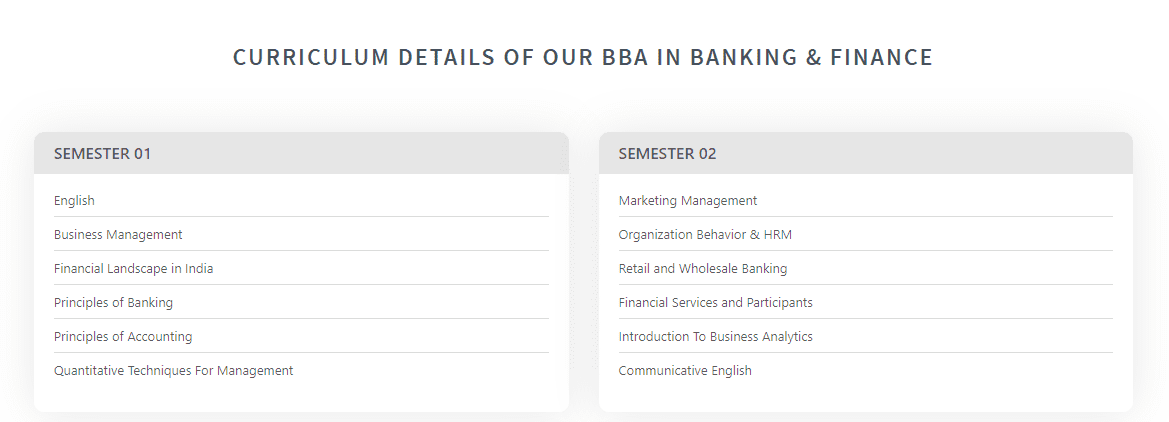
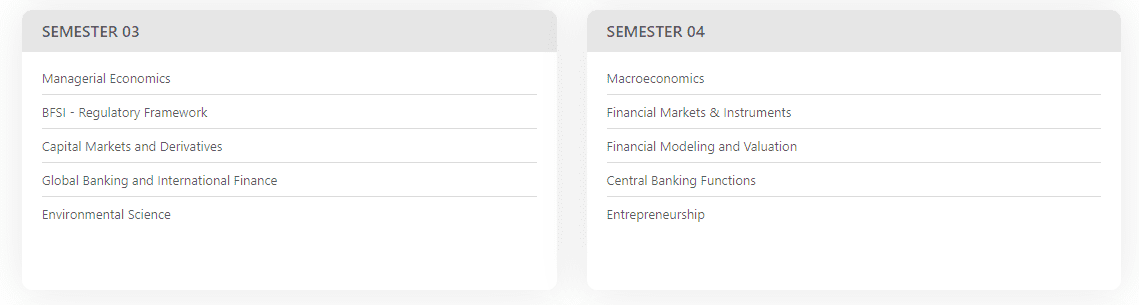
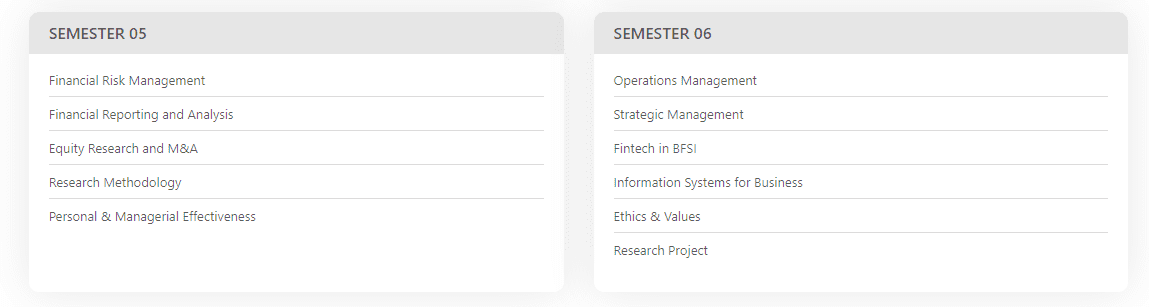
All You Need To Know About The Career Scope in BBA- Banking and Finance

BBA is a well-known management program in India and across the globe. There are too many institutes that provide BBA courses. Most of the students opt to join BBA courses as it helps them in getting admission to MBA or PGDM courses. However, choosing the right institute to pursue your career becomes an essential part of the education phase.

What is BBA in Banking and Finance?

BBA stands for Bachelor of Business Administration. In banking and finance, this degree enables students to gain skills in accounting, economics, business law, and marketing, which they can use when dealing with the public or other organizations.

Bachelor of Business administration is a four-year program that prepares people who want careers in management positions within various banking & financial services. The BBA focuses on teaching essential knowledge about how the industry operates, so graduates are ready for career opportunities from accountants to lawyers; managers/executives at small businesses like restaurants or retail stores up through executives working high-level jobs at Fortune 500 companies.

Why should you study an online BBA course in India?

BBA courses are the gateway to a bright future. The curriculum covers all of the fundamentals, including accounting and finance, management principles, marketing strategies, and more. These skills give you an edge in today’s job market over those who haven’t had them ever before!

BBA coursework is what helps make your resume stand out from other applicants on paper – it makes sure that employers know how much experience they can gain during their time enrolled at this institution while also taking advantage of these opportunities with internships or fully-paid jobs within various companies for hands-on learning outside class hours. BBA degrees provide students with knowledge about business administration practices as well as potential career paths after graduation.

Career scope of Banking and Finance professionals

Financial professionals are a breed of their own. They manage the economy, guide investments, and help grow companies with advice on making wise decisions about money matters. Bankers provide loans for organizations in need, while financial advisors advise those looking for ways to generate income or invest savings wisely.

Alongside venture capitalists and other investment managers, these experts can have an enormous impact on international trade as well as local economies by creating jobs, alleviating poverty through better education opportunities, or spurring economic growth through development projects that create new markets such as carbon trading schemes which reduce emissions from fossil fuels used around the world.

Imarticus offers Online BBA certification in Banking and Finance.

There are countless universities and business schools that offer BBA programs in Banking and finance. Imarticus Learning is one of the leading technology-driven institutes that provide online courses on banking for those living abroad or simply unable to move back home and Indian students looking to further their education without sacrificing work hours. Enroll now for BBA in banking and finance.