Do you feel stuck in a finance job with no real growth?
Or you’re just starting your accounting career and don’t want to waste years climbing slowly. Here’s the thing: an ACCA course can completely change your path. It builds real finance leadership skills, prepares you for global roles, and takes you straight from the classroom to the boardroom.
The ACCA Course Is More Than Just a Certificate
The ACCA course is not a typical professional accounting course. It is for those who want long-term success in global finance. It’s not just exams and books, it’s real-world training. Every stage builds both technical and leadership skills. Employers want that mix.
The Association of Chartered Certified Accountants is an accounting body that awards the Chartered Certified Accountant (ACCA) qualification. You’ll learn how finance works not just in India, but globally. Once you’re done, your certification will be easily recognised across countries.
The Real ACCA Qualification Benefits You Can Expect
One of the main reasons people choose the ACCA course is because of how useful it is. You don’t need to come from a top B-school. You just need focus. Once you pass, companies start seeing you differently. You’ve done something hard. It shows you’re serious. That’s what companies want.
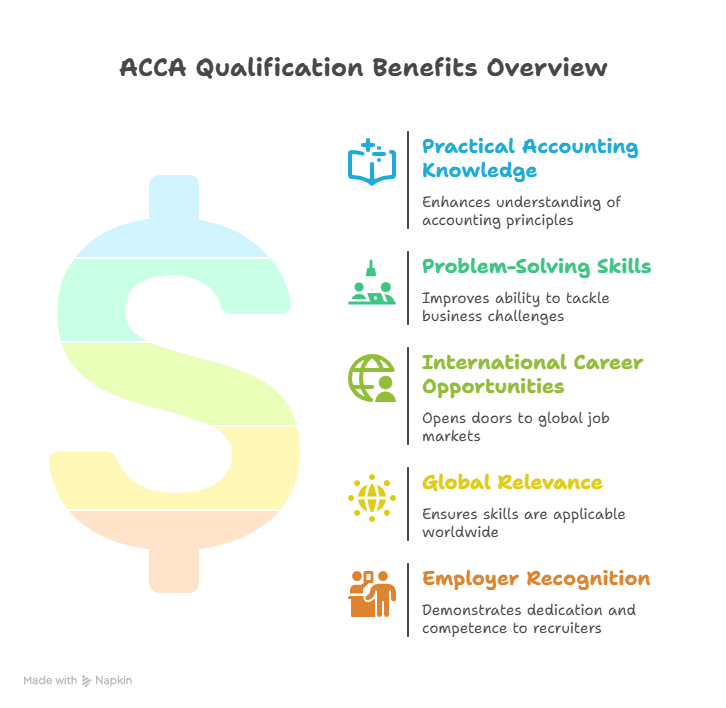
The ACCA qualification benefits are real.
You’ll gain practical accounting knowledge. You’ll also improve how you solve problems in a business.
As opposed to some other qualifications that place emphasis on a single country or an area of finance alone, ACCA qualifies you for international careers.
Wherever you would like to practice be it India or having an experience in London, Dubai or Singapore, your acquired skills will be pertinent.
Recruiters understand what is to be under ACCA. It demonstrates dedication, discipline, and is also capable of performing complicated financial endeavors under pressure.
How This Global Accounting Certification Opens Career Doors
The ACCA course gives you something very few other certifications can, global mobility. It allows you to apply for jobs across borders. That’s because employers in Europe, Singapore, the Middle East, and other regions understand and respect the ACCA certification.
Here’s what happens after you finish your ACCA course. Recruiters know the training you went through.
Career Growth After ACCA: Where Can You Go?
You don’t stop learning after the ACCA course, but you do move up faster. People who complete the ACCA course often report better job roles and bigger responsibilities. You’ll be able to apply for roles in:
Financial planning
Risk management
Internal audit
Strategy teams
Also, ACCA professionals are often first considered for team leader or mid-manager roles. Many even shift to business consulting or start their own practice. Once you prove you can handle real work, companies don’t hesitate to promote.
The Numbers Say It All
Let’s look at the results of what people get after ACCA:
Benefit
Before ACCA
After ACCA
Salary range (in INR)
3–4 LPA
7–12 LPA
Interview shortlisting rate
Low
Higher by 60%
Global job opportunities
Limited
Widely available
Promotions within 2 years
Slow
Much faster
Leadership training exposure
Minimal
Fully covered
This shows that it’s not just theory. The ACCA course leads to clear career growth after ACCA.
In the ACCA course, you’re not just learning balance sheets. You’re learning how finance supports decision-making. This is how real leaders think. From the first module, you’re trained to speak the language of top management. You’ll start thinking in terms of cost, performance, and value, not just rules.
That mindset shift helps you speak up in meetings. It helps you offer input that others don’t. Over time, this is how team leads and managers emerge. Leadership is not about titles; it’s about how you think. And the ACCA course builds that from the ground up.
Professional Accounting Courses: Why ACCA Stands Out
There are many professional accounting courses. However, very few focus on the future, as ACCA does. It doesn’t just focus on local tax laws or one country’s financial practices.
The ACCA has published the pass rates for the June 2025 exam session. A total of 111,639 students sat the exams, completing 128,651 papers overall. Notably, 4,527 students finished their final exams and achieved ACCA affiliate status.
Many other courses end with theory. The ACCA course continues with real-life applications. You’ll also get tools like case studies, industry exposure, and peer learning. It trains you to lead, not just follow instructions.
Train for a Global Accounting Career with Imarticus Learning and KPMG in India
Take your accounting career from student level to global finance with the ACCA course, designed by Imarticus Learning in collaboration with KPMG in India.
Get access to specially designed learning resources for ACCA, US CPA, US CMA, CFA, and FRM aspirants. Imarticus Learning makes complex subjects easier to grasp. Attend monthly webinars on industry trends and insights. Participate in twelve live sessions each year, conducted directly by KPMG in India’s senior professionals. If you don’t pass all ACCA Professional Level exams, Imarticus Learning will refund 50% of your course fees. That’s how confident they are in your success. Prepare for job interviews with soft skills training, resume support, mock interviews, and guaranteed interview opportunities with top finance companies.
Start your ACCA course with Imarticus Learning today. Train with KPMG in India, build global finance leadership skills, and step into roles that match your ambition.
Know how to prepare for ACCA Exam in this video
FAQ
Are there real ACCA qualification benefits for beginners? Yes, even freshers gain better salaries and job options after completing ACCA.
How is the ACCA course different from other professional accounting courses? It prepares you for global roles, not just local compliance or rules.
Can I get a global accounting certification with ACCA? Yes, ACCA is accepted in over 180 countries and opens up jobs abroad.
How do finance leadership skills improve with the ACCA course? It trains you to think like a manager and make smart business decisions.
Is career growth after ACCA faster than other certifications? Yes, many students get promoted or shift to better roles after completing it.
Do companies value professional accounting courses like ACCA? Big firms prefer ACCA-qualified professionals for senior finance roles.
Is the ACCA course tough to complete? It needs focus, but many pass with regular effort and the right training.
Conclusion
If you’re serious about growing in finance, stop waiting. Choose the ACCA course. It gives you the right mix of knowledge and leadership. It takes you from a student to a decision-maker. It builds a future in global finance, without wasting time.
Don’t delay. Your boardroom seat is waiting. Take the first step now!
If you sit down with ten ACCA students and ask them how long the ACCA Course takes, you’ll hear ten different answers. One will say 18 months. Another will confidently promise you 2 years. Someone else will whisper, “3 years… if you don’t lose momentum.”
And honestly? They’re all right.
ACCA isn’t a one-speed qualification. It behaves more like a career accelerator that adapts to the person pursuing it. A commerce student taking two papers every session moves differently from a working professional attempting one. A CA Inter candidate with exemptions races ahead in a way a 12th-pass beginner cannot.
That’s the beauty of ACCA. It stretches when you need time, and it moves fast when you’re ready.
What many students don’t realise is this: ACCA isn’t designed to measure how quickly you study; it’s designed to measure how intelligently you plan.
The qualification is now recognised in 180+ countries, used by more than 9,000 approved employers, and aligned to global standards like IFRS. A survey by ACCA Global noted that 7 out of 10 CFOs prefer candidates trained in international reporting and strategic finance frameworks, exactly what ACCA builds.
And thinking like a professional takes time, but not as much time as most students fear.
That brings us to the question every ACCA aspirant types into Google at some point:
“How long does the ACCA course actually take?”
Not the ideal timeline. Not the brochure timeline. But the real, background-based, exemption-based, experience-based, life-friendly timeline.
That’s exactly what this guide breaks down: clearly, practically, and with examples from real student journeys. By the end, you won’t just know the ACCA course duration. You’ll know your personalised duration, the fastest route for your profile, the effect of exemptions, the best exam sequencing, and the smart study habits that determine whether your journey takes 18 months or 36 months.
What is the ACCA Course?
Ask any student, “What is ACCA?” and most will say something like: “An accounting qualification from the UK… I think?”
But the ACCA Course is much bigger, deeper, and more forward-looking than that simple line suggests.
At its core, ACCA, the Association of Chartered Certified Accountants, is a global professional qualification built to shape finance leaders who can work anywhere in the world. Over 247,000 members and 526,000 students study ACCA across 180+ countries because it blends accounting, strategy, analytics, ethics, and leadership into one continuous skill path.
The best way to understand the ACCA course is to think of it as a training system, not a set of exams. It’s designed to teach you:
1. Get the fundamentals right (Applied Knowledge)
These papers develop the core vocabulary of finance. Students often underestimate this level because the names sound benign, but this is where ACCA builds your conceptual sharpness.
This level mirrors real boardroom thinking: managing risks, linking strategy to numbers, and defending recommendations.
Here is a video that breaks down the ACCA course and all its details:
What Your ACCA Syllabus Intentionally Trains You To Become
The ACCA syllabus is a deliberate progression that reshapes the way you analyse, question, and solve real financial problems. You begin by understanding numbers, then evolve into someone who interprets them, and ultimately grow into someone who can influence decisions made in boardrooms. By the time you complete the ACCA Course, you’re not just exam-ready, you’re industry-ready, future-ready, and trained to think like a complete finance professional.
The ACCA syllabus builds five competencies simultaneously:
Technical Accounting Expertise IFRS, consolidation, taxation policies, and audit testing.
Analytical Decision-Making Variance analysis, risk assessment, and strategic case evaluation.
Ethical & Professional Judgment Reinforced by the mandatory Ethics and Professional Skills module.
Business Leadership Scenario-based questions involving governance, risk, and control.
Digital Fluency ACCA now integrates analytics, data interpretation, and emerging tech concepts.
A recruiter doesn’t hire you for knowing “one subject.” They hire you because the qualification shapes you into someone who can interpret a balance sheet, challenge a budget, improve internal controls, and forecast business outcomes with confidence.
This is what separates an ACCA candidate from a regular BCom/MBA graduate. Watch the video below to find out about high-paying jobs that the ACCA course offers:
ACCA Course Structure: How the Journey Progresses From Start to Finish
The ACCA Course is organised in a way that mirrors how real finance careers grow. You begin with the Applied Knowledge papers, which give you the basic tools: how financial statements work, how costs behave, and how businesses function.
Then you step into the Applied Skills level, where the subjects start looking a lot like the tasks junior analysts, auditors, or accountants handle every day. By the time you reach the Strategic Professional level, the focus shifts to case-based thinking, drafting reports, analysing risks, and making decisions the way senior finance teams do. Mastering these levels enables you to explore a vast range of career opportunities with ACCA around the globe.
Exam Format: Case-study and professional judgment-based. Difficulty: High; requires scenario thinking and analysis.
ACCA Course Duration Explained
The ACCA Course is modular. A driven candidate can finish it in 18–24 months, while a working professional might take 30–36 months. The variation is based on four factors:
1. Background-based exemptions
BCom/BAF students typically receive 3–5 exemptions. MBA/CA Inter candidates may receive 6–9. Non-commerce graduates usually begin with zero.
2. How many papers do you take per exam session
You may sit for:
Up to 4 papers per session
Up to 8 papers per year
This flexibility changes everything.
3. Whether you’re studying full-time or part-time
A full-time student can take 2–3 papers per session. A working professional may prefer 1 paper at a time.
4. Resits
Pass rates globally hover around:
Applied Knowledge: 65%
Applied Skills: 50–55%
Strategic Professional: 40–50%
Even a single resit can increase your ACCA time duration by 3 months. This is why mentorship-based coaching tends to shorten total duration.
ACCA Course Duration: How Long Does It Take to Complete the ACCA Journey?
Every ACCA journey runs at its own pace, and the duration depends heavily on where you’re starting from, how many exemptions you receive, and how many papers you can manage each exam window.
Instead of giving a one-size-fits-all number, this breakdown helps you understand the timeline that aligns with your background, schedule, and study style, so you can plan the ACCA Course realistically from day one. Whether you’re someone who wants to understand how to do ACCA after 12th or a mid-career professional looking for a strategic jump!
Below is an easy-to-understand mapping for students deciding how much time they realistically need:
Profile
Estimated ACCA Time Duration
12th Pass (Commerce)
3–3.5 years
BCom/BAF Graduate
2–2.5 years
MBA (Finance)
1.5–2 years
CA Inter Cleared
1.5–2 years
Non-commerce Graduate
3–4 years
Working Professionals
2–3 years, depending on workload
Pass Rates Across ACCA Levels
When planning your preparation for the ACCA Course, it’s important to understand how pass rates vary across levels and papers. This helps you set realistic expectations and allocate your effort wisely.
Key Insights at a Glance
Foundation / Applied Knowledge papers tend to show higher pass rates, often above 60–80%.
Applied Skills and Strategic Professional levels generally register pass rates in the 40–55% range, indicating greater difficulty and need for deeper preparation.
Some papers consistently show lower pass rates (especially optional Strategic Professional papers), signalling higher complexity and application-intensive content.
The high pass rate for BT (~88 %) reflects its foundational nature and broader accessibility.
Lower pass rates for FR, AFM and similar papers reflect greater complexity, case-based scenarios, and advanced application requirements.
Understanding this helps you plan study time: for tougher papers, you should allocate more resources, and consider joining a structured programme like the one at Imarticus Learning to maximise your chances.
ACCA Course Duration: How Long Students Actually Take
When you look beyond official timelines and speak to students in real study groups, coaching classes, or audit firms, you notice a clear pattern: everyone’s ACCA journey settles into its own rhythm.
This section captures those real timelines based on how students actually study, attempt papers, and balance responsibilities, giving you a practical reference for what’s genuinely common
Scenario 1: Final Year BCom Student
3 exemptions
Takes 2 papers per session
Usually finishes in 30-32 months
Scenario 2: Working MBA Professional
4-6 exemptions
Prefers 1 paper per session
Usually finishes in 24-28 months
Scenario 3: CA Inter Student
5–7 exemptions
Strong conceptual base
Usually finishes in 18-22 months
Scenario 4: Non-Commerce Student
No exemptions
Needs more foundation building
Usually finishes in 36-40 months
The following visual gives an overview of the preparation timeline for your ACCA journey.
Factors that Might Influence ACCA Course Duration and How To Avoid Them
Finishing the ACCA Course on time isn’t just about how hard you study; it’s shaped by a mix of practical, everyday factors that quietly stretch your timeline.
Things like exam spacing, unexpected retakes, inconsistent study routines, work pressure, or even choosing the wrong paper combinations can slow down your progress without you realising it. Therefore, it is important to understand the essential skills and knowledge of ACCA training.
Over the years, I’ve seen five things delay students more than the syllabus itself:
Taking only one exam per year out of fear This adds unnecessary time.
Long breaks between exam attempts Momentum is one of the strongest predictors of ACCA success.
Blind preparation without exam technique training Many students study but do not learn how to write answers that examiners reward.
Ignoring digital tools ACCA exams are computer-based; Excel-like proficiency matters.
Not attempting the Ethics Module early Many postpone it and end up delaying membership.
How Candidates Move Through the ACCA Course
The ACCA Course is wonderfully flexible because it supports every type of student. Whether you are starting after Class 12, midway through college, or already working in industry, ACCA adapts to your pace.
Below is a step-by-step map that students follow from registration to membership. This is the first time many readers see the entire journey structured cleanly.
Step 1: Registration + Exemptions
ACCA evaluates your previous education and grants exemptions accordingly. This is the point where your ACCA course duration changes dramatically.
Typical exemption patterns:
Qualification
Expected Exemptions
Class 12 (Commerce)
0
BCom/BBI/BAF
3–5
MBA (Finance)
4–6
CA Inter
6–9
CA (Qualified)
9
You can verify their exact exemptions on the ACCA Exemption Calculator to check for the specific exemptions you’re eligible for.
Step 2: Attempting the 13 Papers (Structure With Strategy)
This is where the ACCA Course becomes highly personal. Students must choose between:
1 paper per session
2 papers per session
3 papers per session
Mixing Applied Skills and Strategic Professional
Your paper sequencing affects everything: study load, retake probability, work pressure, and overall timeline.
Below is the mentor-tested sequencing plan that creates the best score stability:
Applied Knowledge Sequence
Business & Technology
Management Accounting
Financial Accounting
Applied Skills Sequence
Corporate & Business Law
Financial Reporting
Performance Management
Taxation
Audit & Assurance
Financial Management
Strategic Professional Sequence
Strategic Business Leader (mandatory)
Strategic Business Reporting (mandatory)
AFM/APM/ATX/AAA (optional 1)
AFM/APM/ATX/AAA (optional 2)
Students frequently ask, “Should I attempt SBL early?” The answer: SBL becomes meaningful only when your FR, PM, AA and governance fundamentals are strong. That’s why the above sequence offers stability.
Competitors rarely explain logical sequencing, making this section uniquely valuable for SEO and user retention.
Step 3: Ethics and Professional Skills Module (EPSM)
Every ACCA student must complete the EPSM before membership.
The EPSM is not just a formal requirement; it boosts Strategic Professional pass rates significantly. ACCA’s own data shows that students who complete EPSM before SBL/SBR score 10–20% higher on average (Source: ACCA Global, “EPSM Impact Study”).
Step 4: Practical Experience Requirement (PER)
PER is what formally transforms a learner into a professional.
To gain membership, you must:
Complete 36 months of relevant work experience
Achieve 9 Performance Objectives (POs)
Get your experience signed by an approved mentor
Students often fear PER. The truth? Most finance or accounting roles automatically cover the required POs, whether in audit, FP&A, accounts, taxation, risk, or controllership.
Typical roles that count for PER:
Accounts Executive
Audit Associate
Finance Analyst
Tax Analyst
FP&A Intern
Risk and Compliance Trainee
Reporting Analyst
Imarticus Learning integrates mentorship-oriented guidance into its ACCA program, helping students document POs correctly and stay PER-ready while studying.
How To Complete the ACCA Course Faster: A Strategy That Actually Works
Every student wants to finish quickly without sacrificing understanding. Here is the blueprint that consistently brings students to 18–24 months of completion.
1. Maximise exemptions (if possible)
If you’re eligible for 3, 5, or even 9 exemptions, claim them without hesitation. Students sometimes opt to “study everything” from scratch. This adds unnecessary time.
2. Attempt 2 papers per session (when feasible)
This is the most effective way to reduce ACCA course duration. The sweet spot pairing that has worked for most students:
Ideal Applied Skills Combinations:
FR + PM
TX + FM
AA + LW
Ideal Strategic Professional Combinations:
SBL + APM
SBR + AFM
These combinations balance numerical and theory-heavy papers.
3. Maintain continuity
Three-month breaks between papers increase failure probability dramatically. The brain remembers best when the exam cycle remains active.
4. Use computer-based practice from Day 1
ACCA exams are digital, and speed matters. Students who practise typing answers and creating workings directly on the system consistently reduce retakes and therefore total ACCA duration.
5. Complete the Ethics Module before the Strategic Professional
This improves:
case interpretation
judgement skills
report writing
marking logic
Here is a video breakdown of the ACCA exam pattern to help you on the go:
Optimal Exam Scheduling for ACCA Course
Here is the real plan students can follow:
If you want to finish ACCA in 18 months:
Session 1: 2 papers
Session 2: 2 papers
Session 3: 2 papers
Session 4: 2 papers
Full year PER: Continuously
Strategic Professional: Final 6–8 months
If you want to finish in 24 months while working:
Attempt 1–2 papers per session, depending on workload
Spread Strategic Professional across 3 sessions
Complete EPSM before first SP paper
If you want a relaxed 3-year timeline:
Attempt 1 paper per session
Maintain PER throughout
Complete EPSM anytime after Applied Skills
This visual will give you an understanding of planning your exams efficiently, which subjects you should focus on, and when you should actually take the exam:
PER (Practical Experience Requirement): Your Playbook for Completing It Smoothly
Most students know they need 36 months of experience. Few know how to collect it efficiently.
Where Students Usually Gain PER
Industry
Sample Roles
Big 4 Audit Firms
Audit Associate, Assurance Analyst
MNC Finance Teams
FP&A Analyst, Reporting Intern
Banks
Credit Analyst, Operations Analyst
Startups
Accounts Executive, Finance Generalist
Mid-sized CA Firms
Audit Trainee, Tax Assistant
How to Log Experience Without Errors
Document tasks monthly using ACCA’s MyExperience portal.
Align each task with relevant performance objectives.
Keep your supervisor updated: students often forget to get sign-offs.
Revisit objectives before taking Strategic Professional exams to align skills.
The earlier the PER is started, the shorter your ACCA course duration becomes.
Expert Insight → Many students assume PER is complicated. In practice, it is easier than most academic stages, especially if guidance is available.
Real Job Roles That Use ACCA Course Skills
One of the strongest advantages of the ACCA Course is how directly its subject list translates into real workplace responsibilities. The concepts you learn in each paper aren’t academic exercises; they show up in audit files, management reports, tax computations, budgeting decks, and financial statements you’ll handle in your first job.
ACCA is a global certification that allows you to work in 180+ countries around the world. This section connects the skills you build across ACCA levels with the roles and tasks you’ll encounter in the real world, so you can clearly see how your studies shape your career from day one.
ACCA Paper
Real Industry Skill
Where It’s Used
FR
IFRS application
Reporting teams, Big 4 assurance
PM
Cost control & budgeting
FP&A, manufacturing finance
AA
Audit evidence & testing
Internal/external audit
SBR
Strategic reporting
MNC finance, regulatory roles
SBL
Leadership & governance
Management roles, consulting
FM
Treasury & capital budgeting
Corporate finance
FAQs about the ACCA Course
Students exploring the ACCA often have similar doubts about eligibility, duration, difficulty, career scope, and long-term prospects. This section brings together the most frequently asked questions about the ACCA course, answered clearly and practically, so you have a complete understanding before beginning your ACCA journey.
What is the ACCA course?
ACCA is a globally recognised professional accounting qualification offered by the Association of Chartered Certified Accountants (UK). It covers financial reporting, auditing, taxation, management accounting, and strategic leadership. Students choose ACCA because it offers international mobility and flexible exam scheduling. With guided mentorship and structured learning support at Imarticus Learning, clearing ACCA becomes significantly more achievable for beginners and working professionals.
Is ACCA better than CA?
The ACCA Course is internationally recognised, flexible, and aligned with global accounting standards like IFRS, making it ideal for careers in multinational companies. CA is more India-focused with deeper coverage of Indian taxation and law. Neither is “better”—the choice depends on whether you want global or domestic career opportunities. Many students prefer ACCA because the structure, resources, and faculty support from institutions like Imarticus Learning make the journey smoother.
How many years is the ACCA course?
The typical duration for ACCA is 2–3 years, depending on exemptions, study pace, and exam planning. Class 12 students may take 3–3.5 years, while CA Inter and commerce graduates complete it faster. With structured study plans and faculty-led exam preparation at Imarticus Learning, students usually finish the course within the optimal timeline.
Who is eligible for ACCA?
Anyone who has completed 10+2 with 50% marks, including at least 65% in English and Mathematics/Accounts, is eligible for the ACCA Course. Non-commerce students or those who don’t meet the criteria can join through the FIA (Foundation) route. Imarticus Learning guides students on the best entry path and helps them maximise exemptions based on their academic background.
Is ACCA full of math?
No, the ACCA course is not math-heavy. It focuses more on logic, analysis, finance, and accounting principles rather than advanced mathematics. Basic numerical skills are needed, but students do not require higher-level math. With the conceptual teaching approach at Imarticus Learning, even non-math students succeed comfortably.
What is an ACCA salary?
Freshers completing the ACCA course in India typically earn between ₹5–8 LPA, while experienced ACCA professionals can earn ₹12–25 LPA depending on role and industry. In global markets, salaries scale even higher. Imarticus Learning’s placement assistance and industry-aligned training ensure students enter the market with strong skills and better job prospects.
What is the 7-year rule in ACCA?
The 7-year rule applies only to the Strategic Professional level of the ACCA Course. Once you pass your first Strategic Professional paper, you must complete the remaining ones within 7 years. Imarticus Learning’s structured timelines and exam strategies help students avoid delays and complete ACCA within the recommended timeframe.
What is the ACCA exam pass rate?
ACCA exam pass rates vary by paper, generally ranging from 35% to 55% at the Skills and Professional levels. Applied Knowledge papers have higher pass rates. Strong faculty guidance and mock exam practice, like what students receive at Imarticus Learning, greatly improve the chances of clearing each paper on the first attempt.
Does ACCA have demand in India?
Yes, the ACCA Course has a rapidly growing demand in India, especially across Big 4 firms, MNCs, fintech, and global capability centres value ACCA is valued because it follows international accounting standards, making graduates immediately job-ready. Imarticus Learning’s industry-driven curriculum ensures students match exactly what employers expect.
Is ACCA closing in 2026?
No, the ACCA Course is not closing in 2026. This is a common rumour caused by confusion over syllabus updates. ACCA regularly revises its syllabus to stay aligned with global standards, but it is not shutting down. Imarticus Learning keeps students updated on all ACCA changes so they remain fully compliant.
Can ACCA earn 1 crore?
Yes, ACCA professionals can earn ₹1 crore+ annually, especially in senior roles such as CFO, Finance Director, Audit Partner, or Global Reporting Lead in multinational firms. Achieving such roles requires expertise, experience, and continuous upskilling, something the ACCA Course builds strongly when supported by structured training from Imarticus Learning.
Which city is best for ACCA in India?
Major metro cities like Mumbai, Bangalore, Delhi NCR, and Hyderabad offer the best career and internship opportunities for students pursuing ACCA, thanks to Big 4 firms and global capability centres. However, since institutions like Imarticus Learning provide high-quality online ACCA coaching, students from any city can access premium training and placements.
Conclusion: Your ACCA Journey Begins With the Right Guidance
The ACCA Course opens doors to global finance careers, international mobility, and high-growth opportunities across industries. Understanding the course duration, syllabus, fees, exam structure, and long-term prospects helps you plan your journey with clarity.
With expert faculty, personalised mentorship, placement assistance, and structured learning support, Imarticus Learning helps students complete the ACCA journey confidently and effectively, whether you’re a 12th-pass student, graduate, or working professional.
If you’re ready to build a global career, start your ACCA Course journey with Imarticus Learning today.
Is Your Accounting Career Stagnating? The ACCA Course Could Be the Solution
In today’s competitive financial sector- an accounting degree alone may not be enough to secure top roles. Employers are increasingly looking for professionals with global credentials, technical expertise & strong analytical skills. The ACCA course (Association of Chartered Certified Accountants)- provides exactly that—a globally recognised qualification designed to propel your career forward.
Whether you are a recent graduate or an experienced professional looking to enhance your expertise… the ACCA training programme offers a structured path to mastering financial management, taxation, auditing, and strategic decision-making. This blog explores-the benefits of the ACCA course, covering its curriculum, ACCA exam preparation, study resources, and how it can significantly impact your career.
Why Choose the ACCA Course?
The ACCA course is- a globally recognised accounting certification course that prepares professionalsfor leadership roles in … corporate finance, risk management & auditing. Here are some key benefits-
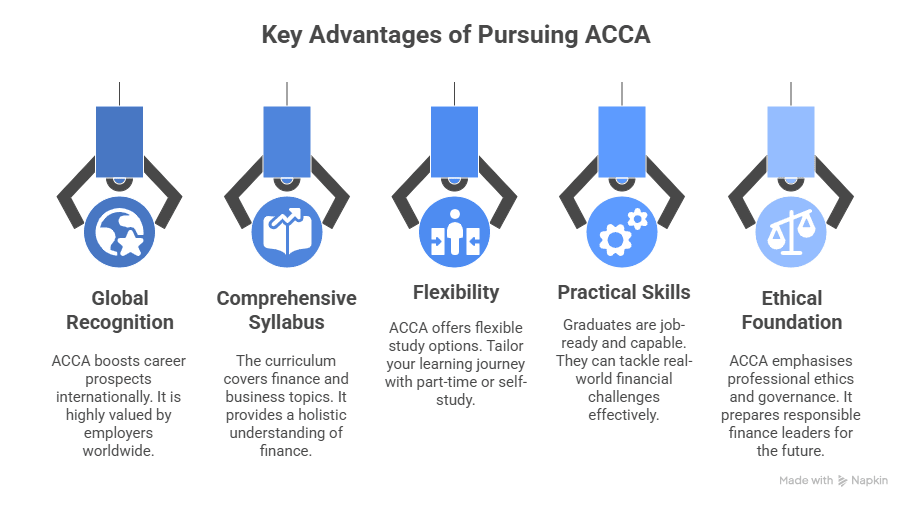
Global Recognition – The ACCA qualification is accepted in over 180 countries- including the UK, Canada, Singapore & the UAE.
Diverse Career Opportunities – ACCA-qualified professionals can work as Financial Analysts, Auditors, Risk Consultants & even CFOs.
Flexible Learning Options – The ACCA training programme…. allows candidates to study while working, offering online & part-time learning options.
Strategic Business Leader, Strategic Business Reporting, Ethics & Professional Skills
Focuses on leadership & strategic decision-making
The ACCA course curriculum- is designed to align with industry requirements, ensuring candidates acquire the knowledge & practical expertise needed to excel in their roles.
Strategies for Effective ACCA Exam Preparation
Success in the ACCA course requires thorough ACCA exam preparation. Here are key strategies to improve your chances of passing
Understand the Exam Structure – Each ACCA paper has a different format, including multiple-choice questions, case studies & professional judgement-scenarios.
Use an ACCA Study Guide – A structured ACCA study guide that includes past papers, examiner reports &…practice questions is essential.
Time Management – Set aside dedicated study hours each week, ensuring you cover the syllabus in time for revision.
Leverage Online Resources – Official ACCA materials, professional forums & video lectures provide valuable support.
Enrol in an ACCA Training Programme – A structured ACCA training programme- ensures expert guidance… a clear study plan & access to experienced tutors.
Recommended ACCA Study Guide Resources
Using the right ACCA study guide significantly enhances exam preparation. Below are essential resources:
Completing the ACCA course opens up numerous career opportunities in both public and private sectors. ACCA members are in demand across industries such as banking, consulting, investment management, and taxation. Below is an overview of potential roles and salary expectations:
Job Role
Average Salary (UK)
Average Salary (India)
Financial Analyst
£45,000 per year
₹8-12 LPA
Risk Manager
£60,000 per year
₹12-18 LPA
Audit Manager
£55,000 per year
₹10-15 LPA
Tax Consultant
£50,000 per year
₹8-12 LPA
Chief Financial Officer (CFO)
£100,000+ per year
₹25+ LPA
These figures highlight the earning potential and career progression available to ACCA-qualified professionals.
What is the ACCA course, and why is it beneficial for accountants? The ACCA course is a globally recognised accounting qualification that enhances financial expertise, strategic thinking, and career opportunities in accounting and finance.
What topics are covered in the ACCA course curriculum? The ACCA course curriculum covers financial reporting, taxation, auditing, business law, risk management, and strategic business leadership to prepare professionals for global finance roles.
How can I improve my ACCA exam preparation? Effective ACCA exam preparation involves understanding the exam structure, using practice papers, enrolling in a structured training programme, and following a well-organised study plan.
What resources are included in an ACCA study guide? An ACCA study guide typically includes syllabus outlines, practice questions, past exam papers, examiner insights, and time management strategies for better preparation.
Is the ACCA training programme flexible for working professionals? Yes, the ACCA training programme offers flexible learning options, including online and part-time study modes, allowing working professionals to balance their studies with their careers.
How does the ACCA course compare to other accounting certification courses? The ACCA course provides global recognition, career flexibility, and a structured approach to accounting expertise, making it a strong contender among various accounting certification courses.
What are the career prospects after completing the ACCA course? After completing the ACCA course, professionals can pursue roles such as Financial Analyst, Risk Manager, Audit Manager, and CFO, with excellent salary potential and global job opportunities.
Is the ACCA Course Worth It?
If you are-serious about advancing in the field of accounting & finance- the ACCA course is undoubtedly one of the best investments you can make. With its comprehensive ACCA course curriculum, structured ACCA exam preparation & globally recognised accreditation, it significantly enhances your career prospects.
By enrolling…in a structured ACCA- training programme- you can gain the necessary skills, knowledge & professional recognition to stand out in the competitive financial industry.
Now is the time to take control of your career & work towards becoming a globally certified….finance professional.
The field of accounting and finance continues to evolve, and organisations today look for professionals who can think strategically, analyse financial decisions, and adapt to global standards. The ACCA qualification is globally recognised, valued by multinational companies, and aligned with the skillsets modern finance roles demand.
That said, it’s also common to hear that the ACCA Course is challenging or “takes time.”
The reality is more balanced: ACCA is not difficult when approached with structure, discipline, and understanding. It’s a learning journey that develops your professional thinking step-by-step.
Let’s break this down honestly – what ACCA really is, where the challenges show up, and why thousands of students still choose it and succeed every year.
In this guide, we’ll explore:
What the ACCA Course really offers
Where students typically struggle
How to overcome those challenges
And why completing ACCA is absolutely worth it
ACCA is not hard – it requires the right structure, consistency, and approach.
What is ACCA?
The ACCA qualification is a globally recognised professional certification for finance and accounting professionals. To gain a clear and detailed picture of the ACCA journey – including the syllabus structure, exam formats, study modules, and career opportunities – be sure to check out our comprehensive guide on Breaking Down ACCA Course Details: What to Expect. It’s an essential resource for anyone planning their route to ACCA success. It prepares you for roles in:
ACCA is designed to make you think like a finance leader, not just a bookkeeper. After understanding what is ACCA, it’s important to recognise that ACCA’s syllabus not only covers core finance areas like audit and taxation but also integrates emerging topics such as digital transformation, data analytics, and sustainability reporting – equipping you with modern skills that are crucial to staying relevant in today’s fast-changing financial landscape.
Want to get a clearer picture of what you’ll be studying in ACCA? Check out our ACCA Subject List guide – it explains each paper, the difficulty level, and tips to handle the tougher ones. And if you’re unsure about eligibility or exemptions, our ACCA Course Eligibility and Exemptions guide will help you understand how you can fast-track your ACCA journey.
How about boosting your finance career in 2025? Whether you’re a student, graduate, or CA, the ACCA qualification opens doors globally. Watch this video to get a detailed guide to ACCA.
Why ACCA Still Stands Out?
ACCA remains a premier qualification with unmatched global recognition. It equips you with the skills and strategic mindset required in the modern finance world. Holding an ACCA qualification opens doors to diverse career opportunities globally and offers salary prospects that can reach ₹12 LPA or higher, depending on your expertise and location.
What makes ACCA uniquely valuable today is its blend of:
Global acceptance across industries
Real-world, scenario-based learning
Flexible exam structure suitable for students and working professionals
ACCA is not just a qualification – it’s a career passport.
To understand the immense global career opportunities that come with the ACCA qualification, check out our detailed guide on how you can leverage ACCA to work across 180+ countries and build a truly international finance career.
Why the ACCA Course Feels Tough?
Many students feel that ACCA is tough, and that feeling usually stems from what they’ve heard, rather than what they’ve experienced. The truth is, ACCA is absolutely achievable with the right approach and consistency. Here’s why it may seem challenging at first:
A Wide Syllabus to Cover
There’s a lot to learn across the papers, especially if you’re not eligible for exemptions. But when studied step-by-step, it becomes manageable, not overwhelming.
It Requires Real Understanding
ACCA isn’t about memorising notes. The exams are designed to help you think like a finance professional – applying concepts to real business situations.
Balancing Work and Study Can Be Tricky
Many students pursue ACCA alongside jobs or college, so planning your time well makes a big difference.
The Exam Test Analysis, Not Just Facts
You’re expected to explain, evaluate, and make decisions – the skills that are incredibly valuable in real-world roles.
The Standards Are High for a Reason
ACCA wants to ensure that its members are well-prepared, globally trusted, and professionally capable.
So yes, ACCA needs effort – but it’s not impossible. The difficulty is exactly what makes ACCA respected. With the right guidance, the right strategy, and a supportive learning environment, thousands of students clear it every year, and you can too.
Why Do Students Fail the ACCA Course?
Let’s be honest. Most students don’t fail because ACCA is impossible.
They fail because of how they study. Some common hurdles that cause failures include:
No Real Study Plan
Students often start ambitiously but don’t stick to their routine. Without structured learning, days go by, topics pile up, and suddenly everything feels overwhelming.
Not Practising Past Papers
You can understand every chapter and still struggle in the exam.
ACCA questions are application-based; they want to see how you think, not what you memorised. Students who don’t practise past papers and the entire syllabus often get surprised by the question style.
Skipping Technical Articles
ACCA notifies you of what they expect through technical articles. But many students ignore them. These articles explain how to approach answers, common mistakes and where marks are actually awarded. Not reading them is like skipping free hints.
Studying Completely Alone
Self-study is fine – but it needs direction.
A lot of students waste time on the wrong topics or don’t know how detailed their answers should be. Having guidance, even if minimal, keeps your preparation focused and clear.
Exam Pressure
Even when students know the concepts well, they often panic during the exam. Not practising under exam conditions with a timer doesn’t build confidence for the exam and increases anxiety.
So, the real takeaway?
ACCA isn’t “too hard.” With a steady study routine, regular practice, and the right approach to answering questions, it’s absolutely achievable. Thousands of students clear it every year – and so can you.
Preparing for the ACCA exams can feel overwhelming – there are different levels, case studies, and exemptions to track. But it doesn’t have to be stressful. In this video, we break down the ACCA exam structure, level-wise papers, exemptions, and proven study plans – giving you a clear roadmap to pass every paper with confidence and efficiency.
Advantages of Pursuing the ACCA Course
When considering any professional qualification, it’s important to know what makes it worth your time, effort, and investment. The ACCA course isn’t just another accounting certification; it’s a career game-changer. From global recognition to flexible learning and strong growth opportunities, here’s why thousands of students choose ACCA and reap the benefits.
Recognised Around the World
One of the biggest perks of ACCA is that it’s truly global. Whether you want to work in India or move abroad later, your qualification stays valid. It opens doors in 180+ countries, especially in multinational companies, Big Four firms, banks, and consulting roles.
Exams That Fit Your Schedule
Life is busy – and ACCA understands that. You get to choose when you want to attempt each paper, which means you can plan around college, work, or personal commitments. No unnecessary pressure. Just steady progress.
No Forced Articleship Lock-In
This is a relief for many students. Unlike some other accounting courses that require a fixed 3-year articleship under one employer, ACCA lets you gain experience more flexibly. You can work in different companies, departments, or internships – whatever helps you grow.
Study Without Pressing Pause on Life
Already in college? Working? Managing responsibilities at home? No problem. ACCA is designed so you can study alongside your routine. You don’t need to drop everything to pursue it.
Strong Salary & Career Growth
Because ACCA builds solid professional and decision-making skills, companies value ACCA-qualified candidates – and that often reflects in better salaries and faster promotions. As you gain experience, your earning potential increases significantly.
Develops a Strategic, Leadership Mindset
ACCA goes beyond accounting formulas. It trains you to:
Understand business decisions
Analyse financial results
Think like management
Lead with confidence
These are the same skills that shape future Finance Managers, CFOs, and strategic business leaders.
If you’ve been confused about whether to choose CA or ACCA, you’re not alone. Both are strong qualifications – but they lead to very different career paths. This video breaks the comparison down clearly, so you can decide based on your goals, not guesswork.
Toughest ACCA Papers
Certain papers consistently challenge students the most. These demand not only knowledge but also sharp analytical and professional skills:
In ACCA preparation, consistency matters more than long study hours.
Choosing the right finance qualification can be challenging. Should you go for an M.Com or pursue ACCA? In this video, we break down the real differences between the two – from salaries and skillsets to career demand and global opportunities – so you can make an informed decision for your finance career.
ACCA Course vs. Other Accounting Qualifications
The ACCA qualification stands out as a globally recognised accounting certification, offering a flexible and comprehensive curriculum tailored for international finance careers, which makes it distinct from other accounting certifications like CA, CPA, and CMA.
Here is a comparison of the ACCA course with other popular accounting qualifications based on duration, global recognition, and pass rate:
Qualification
Duration
Global Recognition
Pass Rate
ACCA
2-3 Years
High
~40%
CA (India)
4-5 Years
High
~15%
CPA (US)
1-2 Years
High
~50%
CFA
3-4 Years
Moderate
~45%
While ACCA’s pass rate might seem challenging, its global reach, flexible entry pathways, and syllabus depth make it a highly practical choice compared to others.
Thinking about taking your finance career global? You’ve probably wondered how CA India compares to ACCA when it comes to international recognition, salaries, and opportunities abroad. In this video, we break it all down – why working overseas with a CA can be tricky, how ACCA opens doors in 180+ countries, and what it means for your career growth. Whether you’re a student, a graduate, or a working CA exploring your next move, this comparison might just change the way you plan your future.
ACCA Course Success Strategies
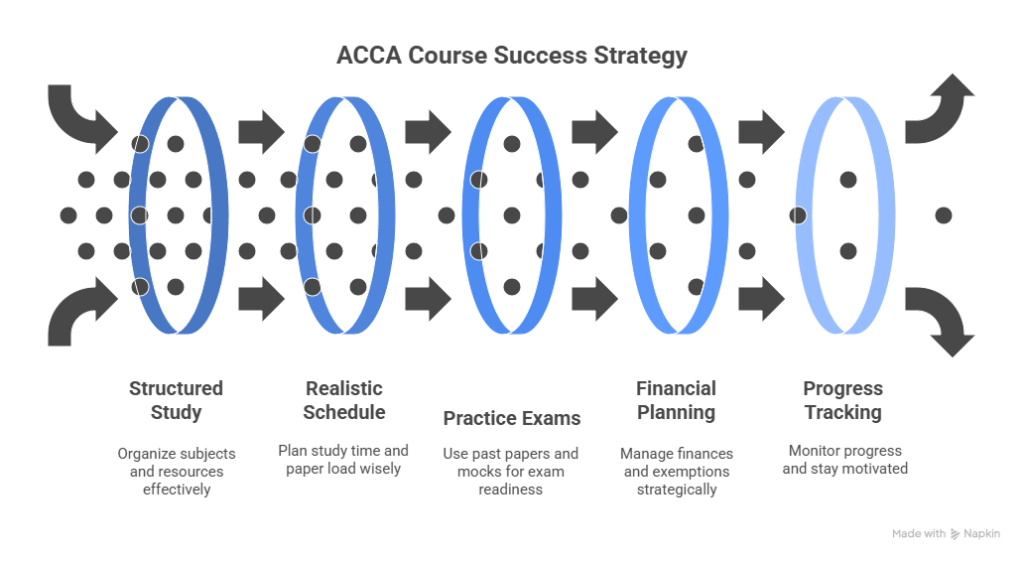
The key to clearing ACCA isn’t studying for endless hours – it’s following a clear, structured approach.
Start by understanding concepts through good lectures or approved study material.
Once you’ve got the basics, summarise each chapter in your own words so the ideas really stick.
Then, practice exam-style questions, topic-by-topic, to build confidence.
After that, move on to past papers and examiner reports – this is where you learn how questions are framed and what the examiners actually expect.
Finally, take timed mock exams and do a focused revision to strengthen weak areas before the real exam.
In ACCA preparation, consistency always beats long study hours.
Many students know what to study for ACCA, but not how to study it effectively. In this video, we share a clear, simple study strategy you can follow step-by-step to stay organised, stay confident, and improve your chances of passing – without stressing yourself out.
How Imarticus Learning Helps You Succeed in the ACCA Course
Preparing for ACCA is easier when you’re not doing it alone. Imarticus Learning’s ACCA training programme is designed to give you clarity, structure, and support at every stage of your preparation.
Here’s how we help you learn smarter – not harder:
• Live & Interactive Classes
Learn from industry experts and ACCA-qualified faculty who simplify complex concepts and help you apply them in real-world scenarios.
• Structured Study Roadmaps
No guessing what to study or when. You get a guided timeline that keeps your preparation consistent and stress-free.
• Practice-Focused Training
From Kaplan/BPP-backed study material to past papers, mocks, and examiner-style questions – everything is designed to build exam confidence.
• 1:1 Doubt Support & Mentoring
Whenever you’re stuck, you get personalised help. No wasting time searching for answers alone.
• Flexible Learning Options
Perfect for students, graduates, and working professionals – because your career shouldn’t have to pause for your qualification.
• Placement Assistance and Career Guidance
Once you’re ACCA-ready, our dedicated placement team helps connect you with roles in Big 4 firms, multinational companies, and high-growth organisations.
The goal isn’t just to help you clear exams – but to help you build a strong, global finance career.
FAQs About the ACCA Course
Still have a few doubts? You’re not alone – here are the most frequently asked questions students have while planning their ACCA Course journey.
Is the ACCA course recognised in India?
Yes, it’s gaining major popularity among recruiters, including Big 4 firms. The global recognition means ACCA professionals are in demand here, plus worldwide. It’s a solid credential for a finance career.
How is the ACCA course structured?
It has three levels: Applied Knowledge, Applied Skills, and Strategic Professional. You clear exams at each stage, plus the Ethics module and 36 months’ practical experience. This setup builds knowledge steadily and prepares you for leadership.
Who is eligible for the ACCA course?
If you’ve finished Class 12 with Maths or Accounts and English, you’re eligible to start the ACCA journey. Graduates and professionals with relevant backgrounds can join too, sometimes with exam exemptions. The course is designed to welcome learners from diverse academic paths. Imarticus Learning provides expert guidance to help you understand your eligibility and exemptions clearly.
Can commerce graduates apply directly for the ACCA course?
Yes, commerce grads like B.Com or BBA can dive straight into ACCA and often skip some papers due to exemptions. This makes the learning faster and more focused. It’s a great way to build on your existing knowledge.
Can I do self-study for the ACCA course?
Absolutely! Many students succeed through self-study. But structured courses, like those at Imarticus Learning, offer guidance and a roadmap that can make passing easier and boost success rates.
What’s the ideal starting subject for the ACCA course?
Start with the Applied Knowledge papers – Business and Technology, Management Accounting, and Financial Accounting. They lay a solid foundation that supports your progress. Getting these basics down early helps tackle tougher subjects later. Imarticus Learning’s tailored support ensures you build strong fundamentals from the start.
Can I finish the ACCA course quickly?
You can, especially if you have exemptions based on your previous qualifications. It takes discipline and a clear study plan to move fast. With the right approach, finishing in 1.5 to 2 years is realistic. Imarticus Learning provides personalised coaching to help you pace your journey effectively.
Is ACCA tougher than CA?
They each have their challenges, but differ in focus. CA is India-specific and more rigid, while ACCA offers global flexibility. Many find ACCA’s exam schedule and exemptions easier to manage. It depends on your goals and learning style.
What is the easiest subject in the ACCA course?
The Applied Knowledge papers, like Business and Technology (BT) and Management Accounting (MA), are usually seen as the easiest. They introduce the basics without heavy complexity. These help build confidence as you start.
What is the pass rate for the ACCA course?
Pass rates vary, from over 80% for entry-level papers to around 40-50% for advanced ones. It shows the increasing complexity as you progress. Consistent study and smart planning improve your chances.
Can I skip ACCA papers?
Yes, if you have relevant prior qualifications, you can get exemptions for certain exams. This helps cut down study time and focus on new content. Always check the official exemption calculator before starting.
What career opportunities are available after the ACCA course?
You can work as a Financial Analyst, Auditor, Tax Consultant, Management Accountant, or even progress to leadership roles like CFO. ACCA opens doors in multinational firms, banks, and growing sectors like fintech. The options are diverse and international.
What is the 7-year rule in the ACCA course?
Once you pass your first Strategic Professional paper, you have 7 years to finish the rest at that level. Applied Knowledge and Skills levels don’t have a time limit. It helps keep your progress steady without rushing early on.
Building Your Global Finance Career With the ACCA Course
The ACCA Course is more than just an accounting qualification – it’s a pathway to building a global finance career with credibility, mobility, and long-term growth. While the journey requires consistency and structured preparation, it is absolutely achievable with the right study approach.
The skills you develop – financial judgement, analytical thinking, strategic decision-making, and ethical responsibility are exactly what organisations seek in future finance leaders. When you focus on understanding concepts rather than memorising them, practise regularly, and stay disciplined, you’ll not only clear the exams, you’ll grow into a confident professional ready to create real impact.
With the right guidance, ACCA isn’t just a certification you earn – it’s a career you build.
Accurate record-keeping ensures transparency in finance. In this guide, we will focus on how to prepare a journal entry, preparing ledgers, and creating trial balances. We will look at journal entry examples in order to understand the process better.
If you wish to become a certified chartered accountant, you can sign up for the ACCA course offered by Imarticus Learning.
Record Rs. 1,000 in the Office Supplies account (debit).
Record Rs. 1,000 in the Cash account (credit).
Step 3: Prepare Trial Balance
Office Supplies: Debit Rs. 1,000
Cash: Credit Rs. 1,000
Total: Debit Rs. 1,000, Credit Rs. 1,000
Importance of Journal Entries and Preparing Ledger and Trial Balance
Ensures Financial Accuracy
Highlights errors in real-time.
Avoids discrepancies in financial reporting.
Aids in Decision-Making
Provides a clear financial snapshot.
Helps in planning and resource allocation.
Builds Transparency
Simplifies audits and compliance processes.
Enhances trust with stakeholders.
Best Practices for Accountants
Maintain Consistency
Follow standardised accounting principles.
Use uniform formats for entries and ledgers.
Leverage Technology
Use accounting software for efficiency.
Use automation for repetitive tasks to save time.
Regularly Review Books
Schedule periodic audits of financial records.
Address discrepancies immediately to prevent escalation.
Emerging Trends in Accounting
Digital Transformation
Cloud-based tools streamline journal and ledger management.
Blockchain ensures transparent and tamper-proof records.
Data Analytics
Predictive analytics optimise budgeting.
Insights from data improve decision-making.
The Role of Automation in Accounting
Modern tools automate repetitive accounting tasks. Automation saves time and minimises errors. Examples include automated ledger entries and trial balance checks.
Analysing Adjusting Entries for Accuracy
Adjusting entries correct end-of-period balances. They ensure accurate financial statement preparation. Trial balances detect discrepancies in ledgers. Imbalances often indicate recording mistakes. Accountants resolve errors to maintain accuracy.
Depreciation Entries in Journal and Ledger
Depreciation allocates asset costs over time. Journal entries reflect periodic depreciation. Ledgers track cumulative depreciation and net asset value.
Handling Reversing Entries in Accounting
Reversing entries simplifies future transactions. They adjust temporary account balances. This practice ensures smoother financial record updates. Discrepancies require journal adjustments. It ensures accurate cash flow tracking.
Temporary accounts reset after financial periods. Closing entries transfer balances to permanent accounts. This prepares books for the next cycle.
Understanding Retained Earnings and Equity Accounts
Retained earnings track cumulative profits. Equity accounts reflect ownership stakes. Both play crucial roles in financial reporting.
Conclusion
Preparing journals, ledgers, and trial balances is essential. It ensures financial accuracy and supports informed decision-making. Embracing technology and ethical practices enhances accounting efficiency.
Frequently Asked Questions
What do we use journal entries in accounting? A journal entry records financial transactions accurately. It ensures all debits and credits are balanced.
Why are ledgers so important in accounting? Ledgers organise transactions by account. They provide a clear view of account balances.
How does a trial balance help businesses? Trial balances verify the accuracy of ledgers. They ensure total debits and credits match.
What are common errors in financial recording? Errors include misclassification of accounts or posting mistakes. Regular reviews help avoid such issues.
Students working full-time must conquer the challenging dual task of attaining their ACCA exam certification. Study activities during nighttime, along with continuous review work and managing daily responsibilities, create significant difficulties in this process.
You have companionship in your struggle because adopting proper methods and a mental approach leads to achievement.
This post includes multiple methods for succeeding in ACCA exams during full-time employment and specific ACCA course details to keep you motivated.
Let’s make the journey less stressful and more rewarding!
What is ACCA?
The ACCA course is one of the most valuable and recognised financial and accounting qualifications in the industry. It is a key to more opportunities around the world and a proof of your competency in your discipline. However, it is crucial to know the ACCA course details, including the structure of the course, duration, and fee structure.
The ACCA Qualification is flexible, so you can decide how to study, when to take exams, and where to gain work experience.
Choose from these options:
Full-time courses
Part-time or weekend courses
Distance learning
Distance learning systememployed in the delivery of courses through ACCA-X
Here’s what the ACCA qualification entails:
Aspect
Details
What is ACCA?
A professional accounting qualification.
ACCA Course Fees
Vary globally ranges from ₹1,50,000 to ₹3,00,000.
ACCA Course Duration
Around 3-4 years on average, depending on pace.
Exams
13 papers covering a wide range of topics.
This journey requires determination, but the rewards—a global career and professional growth—make it worthwhile.
Crafting Your Study Plan
1. Start With a Clear Goal
Studying for ACCA while managing a full-time job begins with a detailed plan.
Define your goal: How many exams do you plan to complete in a year?
Knowing your end goal provides clarity and motivation.
Tip: Break down the ACCA course duration into achievable milestones. For example, aim for 1-2 papers per sitting based on your comfort level and work commitments.
2. Time Management is Key
A structured schedule is your best friend. Divide your day into work, study, and relaxation segments. Try to aim for at least 2-3 hours of focused study daily. You can reserve weekends for mock tests and revision.
3. Prioritise Your Studies
Identify high-priority tasks at work and try to delegate where possible. At the same time, focus on high-weightage topics in your ACCA syllabus.
Work vs Study Tips
Practical Actions
Learn to Say No
Politely decline extra tasks at work during exam periods.
Use Work Breaks Wisely
Review flashcards or solve short questions during lunch breaks.
Communicate with Your Boss
Inform your employer about your ACCA plans for flexibility support.
Creating a Study Environment
1. Choose a Distraction-Free Zone
A quiet space with minimal interruptions can significantly boost your concentration. Invest in ergonomic furniture to ensure your comfort for long study sessions.
2. Use Technology to Your Advantage
Leverage apps and tools to simplify your study routine.
For example:
ACCA Learning Community: Connect with fellow students to share resources and solve doubts.
Pomodoro Timers: Helps maintain focus with regular breaks.
E-books and Recorded Lectures: Ideal for quick revisions during commutes.
Understanding the ACCA course fees and planning your finances is crucial. At the same time, the fees can feel like a significant investment; remember the long-term benefits. Many employers offer sponsorships or reimbursement for professional development, so don’t hesitate to explore such opportunities.
How do you stay motivated during your ACCA journey?
1. Celebrate Small Wins
Passing an exam, completing a chapter, or scoring well on a mock test—are all reasons to reward yourself. These small celebrations build momentum and keep you motivated.
2. Remember Your “Why”
Why did you start the ACCA course?
Is it for career success, personal development, or both? Write down your reasons and keep them visible at your study desk; this simple reminder might rekindle your motivation on difficult days.
3. Seek Support
Studying while working isn’t easy, and you don’t have to do it alone. Join ACCA study groups, seek mentorship, or ask colleagues for tips if they’ve been through a similar journey.
What are the common challenges?
The main problem that students who are working while studying at ACCA face is time management. Balancing work, classes, and family responsibilities, along with other daily chores, can be incredibly challenging. For many students, having a routine helps bring structure and order to their lives. However, this becomes even more difficult when work hours are unpredictable.
Unstable schedules can make it harder to stick to a routine and reduce the time available for studying. Even small things, like spending hours on a long daily commute, can further cut into your valuable study time, making the balancing act even tougher.
When deciding on an ACCA online course, it is important what you choose. Studying online can give you the kind of routine you want, allow you to eliminate a daily commute, and help you find more time for studying.
Challenge
Solution
Lack of Time
Create a realistic schedule; avoid overloading yourself.
Burnout
Take short breaks and maintain a work-life balance.
Complex Topics
Seek help from tutors or peers; use online resources.
Financial Constraints
Apply for scholarships or employer sponsorships.
Your ACCA Success Awaits
Reaching the level of ACCA while working is not an easy task; however, it is definitely possible if the approach is perfect and the work and study get accompanied by passion and determination. Every aspect of the ACCA course offers different benefits, from recognition worldwide and career progression to making it a worthy course.
Remember, every effort you put into mastering the ACCA course details, enduring the ACCA course duration, and managing the ACCA course fees brings you one step closer. Take small steps, celebrate your progress, and trust the journey—you’ve got this!
Unlock Global Opportunities with the ACCA Qualification at Imarticus Learning
The Association of Chartered Certified Accountants (ACCA) is a well-known international certification in the field of accounting, and finance. The ACCA qualification structures its curriculum into three levels: Knowledge, Skill, and Professional.
At Imarticus Learning, we bring the ACCA qualification closer to you while offering the best ACCA preparation and a superior learning experience. The ACCA course prepares professions for accounting, taxation, management, finance and investment banking, corporate finance and consulting.
When you join the Association of Chartered Certified Accountants course, you are not only choosing a programme but also securing your career with a 100% placement guarantee upon completing even the first two levels or getting your money back.
The ACCA curriculum might seem comprehensive, but we make it manageable. Imarticus Learning provides an unconditional and unlimited guarantee to help you pass your ACCA exams. You can retake the programme and all sessions until you pass—all at no extra cost.
Advance Your Accounting Career with ACCA at Imarticus Learning!
The ability to maximise resources and master financial management is more crucial than ever. Effective financial strategies are the cornerstone of sustainable growth, whether you’re a small business owner or leading a large corporation.
But are you making the most of your financial resources?
From resource allocation to budgeting techniques, managing your finances can directly impact your ability to scale and thrive. In this post, we’ll explore actionable strategies to help you control your finances, optimise your resources, and set your business on a path to lasting success.
What is Financial Management?
Financial management is important in overseeing a company’s profitability, expenses, cash flow, and credit. These key areas align with the overarching goal of maximising the firm’s value for its shareholders.
The primary aim is to maximise the business’s wealth by maintaining an optimal balance among profitability, liquidity, and risk.
Effective financial management includes several key activities, such as budgeting, forecasting future finances, managing financial risks, and ensuring compliance with financial regulations.
The main components of financial management are:
Financial Planning: Estimating the capital required and assessing its sources.
Financial Control: Ensuring the company uses its assets efficiently.
Financial Decision-making: Involves making decisions regarding investments, financing, and dividends.
Capital Structure: Determining the appropriate mix of debt & equity to finance the company’s operations.
The Importance of Financial Management
Financial management is the pillar of a successful organisation. The primary objective is to maximise profitability while ensuring compliance with financial regulations. Businesses prioritising financial management can make informed decisions, which leads to better resource allocation and, ultimately, business growth.
Key Components of Resource Allocation
Resource allocation involves the process of assigning & managing assets in a way that supports an organisation’s strategic goals.
Here are some key components to consider:
Identifying Resource Needs: Conduct a comprehensive assessment of the human, financial, and technological resources needed to achieve your business objectives.
Prioritising Projects: Use metrics such as return on investment (ROI) and alignment with strategic goals to determine which initiatives deserve funding.
Monitoring and Adjusting: Implement regular reviews of resource allocation to ensure efficiency. The market is dynamic, and flexibility is key to staying ahead.
Budgeting Techniques for Financial Growth
Effective budgeting is crucial for managing your organisation’s finances.
Here are a few techniques to consider:
Zero-Based Budgeting (ZBB)
This method requires justifying all expenses from scratch for each new period. ZBB allocates resources efficiently based on current needs rather than historical spending.
Incremental Budgeting
This approach involves using the previous year’s budget as a base & adjusting it for inflation or other factors. While simpler, it may lead to complacency if not monitored closely.
Flexible Budgeting
A flexible budget adjusts expenses based on actual activity levels, making it easier to plan for variable costs and adapt to changes in the business environment.
Budgeting Techniques
Advantages
Disadvantages
Zero-Based Budgeting (ZBB)
High efficiency, cost control
Time-consuming
Incremental Budgeting
Simplicity and ease of use
Potential for inefficiency
Flexible Budgeting
Adaptability to changes
Complexity in planning
Business Growth Strategies: Maximising Your Resources
With proper financial management and resource allocation, several business growth strategies can drive growth:
Investing in Technology: Automation and software solutions can streamline processes and reduce overhead costs, leading to better resource management.
Upskilling Employees: Investing in your workforce through training programmes can enhance skills, improve productivity, and ultimately contribute to growth.
Exploring New Markets: Diversifying your product lines or entering new geographical areas can open new revenue streams. However, thorough financial analysis is essential to ensure sustainable growth.
Key Areas to Strengthen Your Financial Management Strategy
Effective financial management strategies for small businesses:
Evaluate Historical Data
Review past spending and revenue to learn from your financial history. Analysing previous balance sheets provides insights into your successes, failures, and areas for improvement, helping you set realistic growth goals.
Build a Profit & Loss Statement (P&L)
Your P&L is vital for tracking profitability. It summarises revenue, expenses, and net profit, offering a clear picture of financial health. Use this data to fine-tune strategies for increasing profits.
Develop a Budget and Cost Systems
Proactivebudgeting is crucial. It ensures resources get allocated efficiently, helping you make informed decisions. Implement cost systems to track and control spending while forecasting future figures.
Manage Working Capital
Leverage modern tools for real-time visibility over transactions. Automated platforms sync with accounting software, empowering you to monitor spending and manage cash flow effectively.
Accelerate Your Global Career with the ACCA Qualification at Imarticus Learning
Maximising resources through effective financial management and strategic budgeting is vital for any business aspiring to grow in today’s competitive environment. By employing innovative budgeting techniques and being mindful of resource allocation, organisations can pave the way for sustainable success.
The Association of Chartered Certified Accountants qualification is a prestigious, globally recognised accounting and finance certification awarded by ACCA UK. ACCA certification provides an extensive structure across three key levels: Knowledge, Skill, and Professional.
The Imarticus Learning ACCA course equips professionals with diverse roles in accounting, taxation, management, finance, investment banking, corporate finance, and consulting.
Ready to kickstart your global career with the ACCA course at Imarticus Learning?
Enrol today and take the first step towards a guaranteed future in finance!
The ESG framework is a comprehensive system for evaluating an organisation’s operations in relation to environmental, social, and governance factors. It serves as a tool for measuring and managing the sustainability and ethical impact of business decisions. Environmental factors in business, specifically, constitute a critical component of the ESG framework, encompassing a broad spectrum of issues such as climate change, resource depletion, pollution, and biodiversity loss.
The significance of these environmental factors in business has grown exponentially in recent years due to increasing regulatory scrutiny, heightened investor expectations, and heightened public awareness of environmental challenges. Consequently, businesses, investors, and ESG framework enthusiasts alike are placing a greater emphasis on understanding and addressing environmental factors in business within the broader context of sustainable development.
Understanding the Environmental Pillar of ESG Framework
The environmental pillar of ESG encompasses a broad spectrum of factors that pertain to a company’s impact on the natural environment. It encompasses the evaluation of a company’s resource consumption, waste generation, pollution emissions, and overall ecological footprint. This pillar seeks to assess how a company manages its environmental risks and opportunities, and how it contributes to environmental sustainability.
Several key environmental issues have emerged as paramount concerns for businesses.
Climate change, characterised by rising global temperatures and extreme weather events, poses significant risks to operations, supply chains, and financial performance.
Pollution, including air, water, and soil contamination, can damage ecosystems, harm human health, and lead to regulatory penalties.
Resource depletion, such as the overconsumption of water, minerals, and fossil fuels, threatens long-term viability and supply chain resilience.
Biodiversity loss, resulting from habitat destruction and species extinction, impacts ecosystem services and can have economic consequences.
Environmental regulations and policies play a pivotal role in shaping the business landscape. Governments worldwide have enacted legislation to address environmental challenges, setting standards for emissions, waste management, and resource use. Compliance with these regulations is essential for avoiding penalties and maintaining a strong reputation.
Moreover, environmental policies can create new business opportunities in the form of clean technologies and sustainable products and services.
The Business Case for Environmental Sustainability
Environmental performance exerts a substantial influence on a company’s financial health. Effective environmental management can lead to cost reductions through resource efficiency, waste minimisation, and energy conservation. Conversely, environmental liabilities, such as fines for non-compliance or remediation costs for pollution, can erode profitability. Moreover, the potential for future environmental regulations and carbon pricing mechanisms introduces financial uncertainty. However, environmental sustainability also presents significant opportunities. For instance, developing innovative green products or services can create new revenue streams and market share.
Cultivating a strong environmental reputation can be a powerful tool for enhancing brand image and customer loyalty. Consumers increasingly prioritise purchasing products and services from companies with a demonstrated commitment to sustainability. A positive environmental track record can differentiate a company from competitors and foster trust among stakeholders.
Investors are placing growing emphasis on environmental factors in business when making investment decisions. Demonstrating a robust environmental performance can attract environmentally conscious investors, facilitating access to capital and reducing the cost of capital. Additionally, incorporating environmental considerations into investment strategies can mitigate risks associated with climate change and resource scarcity.
Mitigating operational risks is another compelling reason for prioritising environmental sustainability. By proactively addressing environmental challenges, companies can reduce the likelihood of disruptions to operations, supply chains, and production processes. For example, implementing measures to reduce water consumption can mitigate risks associated with water scarcity, while adopting renewable energy sources can hedge against fluctuations in energy prices.
Core Environmental Factors in Business and Metrics
Climate change, characterised by rising global temperatures and shifting weather patterns, poses a significant challenge for businesses. Greenhouse gas emissions, primarily carbon dioxide, methane, and nitrous oxide, contribute to climate change. Reducing these emissions is essential for mitigating climate risks and complying with regulatory standards.
Energy efficiency and renewable energy are closely intertwined with climate change mitigation. Enhancing energy efficiency involves optimising energy consumption through technological advancements and operational improvements. Transitioning to renewable energy sources such as solar, wind, and hydropower helps reduce reliance on fossil fuels and lowers greenhouse gas emissions.
Effective waste management and the adoption of circular economy principles are crucial for minimising environmental impact. Waste reduction, recycling, and proper disposal of hazardous materials are essential for preserving natural resources and preventing pollution. The circular economy emphasises resource efficiency, waste minimisation, and product reuse, contributing to a more sustainable business model.
Water scarcity and pollution are growing concerns. Water management focuses on optimising water usage, reducing water consumption, and preventing water contamination. Water conservation strategies, such as rainwater harvesting and efficient irrigation systems, can help mitigate water scarcity risks.
Biodiversity and ecosystem protection are vital for maintaining ecological balance. Protecting biodiversity involves preserving ecosystems, habitats, and species. Companies can contribute to biodiversity conservation by minimising their impact on natural habitats, supporting conservation initiatives, and promoting sustainable land use practices.
Supply chain sustainability encompasses the environmental performance of a company’s suppliers and distributors. Assessing and managing environmental risks throughout the supply chain is essential for ensuring the overall sustainability of the business. Collaborating with suppliers to adopt sustainable practices can enhance the company’s environmental reputation.
Environmental reporting or ESG reporting and disclosure are essential for transparency and accountability. Companies can communicate their environmental performance to stakeholders through sustainability reports, which outline environmental goals, achievements, and challenges. Consistent and credible ESG reporting builds trust and enhances the company’s reputation.
Integrating Environmental Factors in Business into Strategy
Setting clear and measurable environmental goals and targets is fundamental to driving sustainable business practices. These goals should align with the company’s overall strategic objectives and reflect its commitment to environmental stewardship. Establishing specific, measurable, achievable, relevant, and time-bound (SMART) targets ensures accountability and progress tracking.
Developing comprehensive environmental action plans outlines the steps required to achieve the established goals. These plans should prioritise initiatives with the greatest environmental impact and consider resource allocation, timelines, and responsibilities. Effective action plans involve cross-functional collaboration and engagement from all levels of the organisation.
Implementing sustainable practices across the business is essential for achieving environmental goals. This involves adopting eco-friendly processes, technologies, and products. Companies can reduce their environmental footprint by optimising resource utilisation, minimising waste, and promoting energy efficiency. Employee training and awareness programs are crucial for fostering a culture of sustainability.
Measuring and monitoring environmental performance is vital for assessing progress, identifying areas for improvement, and demonstrating accountability. Key performance indicators (KPIs) should be established to track environmental metrics such as greenhouse gas emissions, energy consumption, waste generation, and water usage. Regular ESG reporting and analysis of performance data enable informed decision-making and continuous improvement.
Communicating environmental initiatives to stakeholders is essential for building trust, enhancing reputation, and attracting sustainable investments. Transparent ESG reporting on environmental performance, including sustainability reports and disclosures, demonstrates the company’s commitment to environmental responsibility. Engaging with stakeholders, such as customers, investors, employees, and communities, fosters collaboration and shared ownership of environmental goals.
Emerging Trends in Environmental Sustainability
The circular economy is a transformative model aimed at eliminating waste and preserving resources. It involves designing products for reuse, repair, and recycling. Innovations in waste management, such as advanced recycling technologies and waste-to-energy solutions, are accelerating this transition.
Green finance is rapidly gaining traction as investors seek sustainable investment opportunities. Green bonds, impact investing, and sustainable finance frameworks are driving capital towards environmentally friendly projects. These financial instruments support the transition to a low-carbon economy.
Climate-related financial disclosures are becoming increasingly important as investors demand transparency about climate risks and opportunities. Frameworks like the Task Force on Climate-related Financial Disclosures (TCFD) provide guidance for companies to assess and disclose climate-related information.
Technology is a powerful enabler of environmental sustainability. Advancements in renewable energy, energy storage, and digital technologies are driving innovation. Data analytics, artificial intelligence, and the Internet of Things are optimising resource management, reducing emissions, and enhancing environmental performance.
Case Studies and Best Practices
Examining successful companies with exemplary environmental performance provides valuable insights into effective sustainability strategies. These case studies offer tangible examples of how organisations can integrate environmental considerations into their core business operations. By analysing their approaches, challenges, and achievements, businesses can identify best practices and adapt them to their specific contexts.
Lessons learned from these case studies are invaluable for informing strategic decision-making. Understanding the factors that contributed to environmental success, as well as the obstacles overcome, enables organisations to avoid common pitfalls and accelerate their sustainability journey. Identifying key takeaways from successful initiatives can help prioritise efforts and allocate resources effectively.
The landscape of environmental sustainability is constantly evolving, with new technologies, regulations, and consumer expectations emerging. Staying abreast of emerging best practices and industry standards is crucial for maintaining a competitive edge. Adopting innovative approaches and aligning with evolving expectations can help businesses position themselves as leaders in environmental stewardship.
Wrapping Up
The environmental pillar of the ESG framework has emerged as a critical component of sustainable business practices. Addressing climate change, resource depletion, pollution, and biodiversity loss is essential for long-term business success and societal well-being. By integrating environmental considerations into core business strategies, companies can mitigate risks, enhance reputation, and unlock new opportunities.
To drive positive environmental impact, businesses must set ambitious goals, implement sustainable practices, and measure performance rigorously. Collaborating with stakeholders, embracing innovation, and staying informed about emerging trends are essential for navigating the evolving environmental landscape.
The future of environmental sustainability holds both challenges and opportunities. Increasing regulatory scrutiny, evolving consumer preferences, and technological advancements will shape the business environment. Companies that proactively address environmental factors in business and demonstrate leadership in sustainability will be well-positioned to thrive in the years to come.
If you wish to become a Certified Chartered Accountant i.e., a member of the Association of Chartered Certified Accountants, UK, enrol in Imarticus Learning’s comprehensive ACCA course. This holistic ACCA course will teach you everything you need to know to clear the ACCA papers.
Frequently Asked Questions
Why are the environmental factors in business crucial?
The environmental pillar of ESG is essential for businesses to operate sustainably, manage risks associated with climate change and resource depletion, enhance brand reputation, and attract environmentally conscious investors.
How can businesses measure their environmental impact?
Businesses can measure environmental impact through key performance indicators (KPIs) like greenhouse gas emissions, energy consumption, waste generation, and water usage. These environmental factors in business metrics help track progress, identify areas for improvement, and demonstrate accountability.
What are some examples of sustainable business practices?
Sustainable business practices include energy efficiency initiatives, waste reduction and recycling programs, water conservation measures, supply chain sustainability, and the adoption of renewable energy sources. These practices help minimise environmental impact and contribute to a circular economy.
How can businesses benefit from investing in environmental sustainability?
Investing in environmental sustainability can lead to cost savings, risk mitigation, improved brand reputation, increased customer loyalty, and access to new markets. It can also attract environmentally conscious investors and contribute to a positive societal impact.
The field of finance is dynamic and constantly evolving, demanding professionals who are adept at navigating its complexities. One of the most prestigious qualifications in this domain is the ACCA course (Association of Chartered Certified Accountants). Recognised globally, the ACCA designation opens doors to a multitude of career opportunities in finance, accounting, and management. In this comprehensive article, we will explore what is ACCA course, delve into ACCA course details, discuss ACCA course fees, and examine how this qualification can significantly boost your career prospects.
What Is ACCA Course?
The ACCA course is a professional qualification offered by the Association of Chartered Certified Accountants. The course is designed to provide students with the skills, knowledge, and values necessary to have successful careers and lead in the finance industry. It is recognised in over 180 countries, making it one of the most sought-after credentials in accounting and finance.
Key Features of ACCA Course
Global Recognition: The ACCA qualification is internationally recognised, enhancing your employability worldwide.
Comprehensive Curriculum: Covers a broad range of subjects including financial management, taxation and ethics.
Flexibility: Offers flexible study options allowing students to balance their studies with work and other commitments.
Ethical Standards: Emphasises strong ethical principles and professionalism in accounting practices.
ACCA Course Details
To understand the ACCA course details, it’s essential to break down its structure and components. The ACCA qualification consists of three main levels, which are further divided into various papers.
Ethics and Professional Skills Module: A mandatory module designed to develop ethical and professional skills essential for professional accountants.
Practical Experience Requirement (PER): Candidates must complete a minimum of 36 months of relevant work experience.
Continuous Professional Development (CPD): Members must engage in lifelong learning to keep their skills and knowledge up-to-date.
ACCA Course Fees
Level by Level
Knowledge Level
₹ 60,000 (All inclusive)
Skill Level
₹ 1,40,000 (All inclusive)
Professional Level
₹ 1,00,000 (All inclusive)
Full Course Fee Plan
Knowledge Level
Skill Level
Professional Level
All 3 Levels Combined Fee: ₹2,50,000 (All inclusive)
Benefits of Pursuing an ACCA Course
Career Advancement
Global Opportunities: With its international recognition, an ACCA course opens up job opportunities worldwide.
Higher Earning Potential: ACCA-qualified professionals often command higher salaries due to their expertise and recognised qualifications.
Versatile Career Paths: The comprehensive curriculum prepares you for various roles in finance, accounting, tax, and consulting.
Professional Growth:
Enhanced Skills: The ACCA course details ensure that you gain in-depth knowledge and practical skills required in the finance industry.
Leadership and Ethics: The course emphasises leadership qualities and ethical standards, essential for senior roles.
Networking: Becoming an ACCA member gives you access to a global network of finance professionals and continuous learning opportunities.
Flexibility and Support:
Flexible Learning: The ACCA offers various study options including full-time, part-time, and online learning, making it suitable for working professionals.
Support Resources: ACCA provides extensive support through study materials, online resources, and a global network of tuition providers.
Conclusion
The ACCA course is an exceptional pathway for those aspiring to excel in the field of finance and accounting. Its global recognition, comprehensive curriculum, and emphasis on professional ethics make it a highly regarded qualification. Whether you are looking to advance in your current role, explore new career opportunities, or enhance your financial expertise, the ACCA qualification can significantly propel your career.For those looking to embark on this transformative journey, Imarticus Learning offers tailored programs to help you succeed in the ACCA exams. Explore their courses and take the first step towards a rewarding career in finance. Learn more about the ACCA course and how it can benefit your career today!
ACCA or the Association of Chartered Certified Accountants is one of the most significant qualifications in accounting and finance globally. The ACCA course is recognised with more than 2,00,000 members and 6,00,000 students spread in over 180 countries. It provides students with the essential skills and knowledge to be proficient in the field of accounting and finance. In this blog, we will deep delve into the ACCA course details that you must know.
Understanding the ACCA Course Details?
Recognised around the globe, ACCA stands for the Association of Chartered Certified Accountants. The ACCA course is designed to provide students with complete skills and knowledge to excel in accounting, finance, and business management. It includes several levels and exams, covering a wide array of subjects crucial for professional accountants.
As per their education, students can get ACCA exemptions, like if a student has a B.Com. or M.Com. degree, then he/she will need to take 9 exams instead of 13, and for students with CA qualification, 4 exams are required instead of 13.
The ACCA exam is conducted 4 times a year, in March, June, September and December at exam centres.
To get the ACCA certification, you are required to complete 13 exams and have relevant work experience. The 13 exams include an array of topics, such as financial reporting, and assurance, taxation, financial management and business analysis. These are computer-based exams, and there is a time period to complete the ACCA course, i.e., 10 years.
Components of the ACCA Course
There are three key components of the ACCA course, which include:
Applied Knowledge: This section contains three papers that provide a broad understanding of accounting principles, financial management, and business ethics.
Applied Skills: The Applied Skills component contains six papers that emphasise innovative topics such as taxation, financial reporting, performance management and financial management.
Corporate and Business Law (LW)
Performance Management (PM)
Taxation (TX)
Financial reporting (FR)
Financial Management (FM)
Strategic Professional: The final component of the ACCA course has two different sections – Essentials and Options. The Essentials section consists of three papers that focus on advanced topics in corporate reporting, business analysis and advanced financial management. The Options section allows candidates to select two out of four papers, that cover topics such as advanced taxation, advanced performance management, and advanced financial management.
Essentials –
Strategic Business Leader (SBL)
Strategic Business Reporting (SBR)
Options –
Advanced Financial Management (AFM)
Advanced Performance Management (APM)
Advanced Taxation (ATX)
ACCA Course Eligibility Requirements
The following are the basic ACCA course eligibility criteria:
For students who have no formal education and do not meet the minimum criteria for the ACCA qualification, they can apply for the ACCA Foundation. Once they pass the ACCA Foundation diploma course, they can apply for the main ACCA certification exam.
Students with class 12 qualifications must have scored more than 65% in subjects like English, Mathematics and Accounts. Besides, they must have scored more than 50% in the other subjects.
It is important for candidates to show proof of identification and submit the required documents before sitting the exam.
Depending on the candidates’ educational qualifications, they may be eligible for certain ACCA exemptions (up to 9 papers). The exemption details are mentioned below.
Qualifications
Number of Papers to Give
ACCA Exemptions
Completion of Class 12th
13 Papers*
NIL
B.COM.
9 Papers
BT, MA, FA, LW
M.Com.
9 Papers
BT, MA, FA, LW
CA IPCC (Both Groups)
8 Papers**
BT, MA, FA, TX, AA
CA
4 Papers**
BT-FM (9 subjects)
What is the ACCA Salary in India?
As they begin their careers in the field of accounting and finance industry, ACCA candidates get a good salary package. The ACCA salary package in India ranges from Rs. 7 lakh – Rs. 19 lakh. Some of the top companies that hire ACCA candidates are BDO, Grant Thornton, J. P. Morgan and Morgan Stanley.
What are the Job Roles After ACCA Qualification?
There are plenty of job opportunities available for ACCA members that are offered by the accounting and finance industry. Additionally, in today’s fast-paced world, the demand for ACCA candidates is rising because of their updated knowledge and skills. So, here is a list of the most popular job roles after ACCA qualification.
The ACCA course offers you a path to global recognition, career opportunities and specific skills in the field of accounting and finance. By understanding the ACCA course details, you can make a successful career in the accounting sector. The course assists you in accomplishing this certification in a well-versed manner.
Advance your career with the ACCA course – Association of Chartered Certified Accountants, UK with Imarticus Learning.