ACCA Career: Expert Guide to Building a Global Finance Future

When you first start exploring global finance roles, one phrase that will keep appearing in your research is the ACCA career. You may wonder why this particular qualification is being talked about so much and whether it is really different from traditional accounting paths. 

When you go deeper, you’ll understand that ACCA isn’t just about learning debit and credit. It’s about learning how businesses think, how financial decisions shape organisations, and how finance professionals can influence real strategy.

What truly stood out to me was how internationally focused the qualification is. Instead of being limited to a single country’s system, ACCA prepares you to work with global accounting standards, ethical frameworks, and cross-border business practices. That kind of exposure changes the way you look at your future. 

One key reason for its popularity is that ACCA is a global qualification trusted by employers across major financial markets.

In this blog, I’ll walk you through everything you need to know about the career opportunities after clearing ACCA.


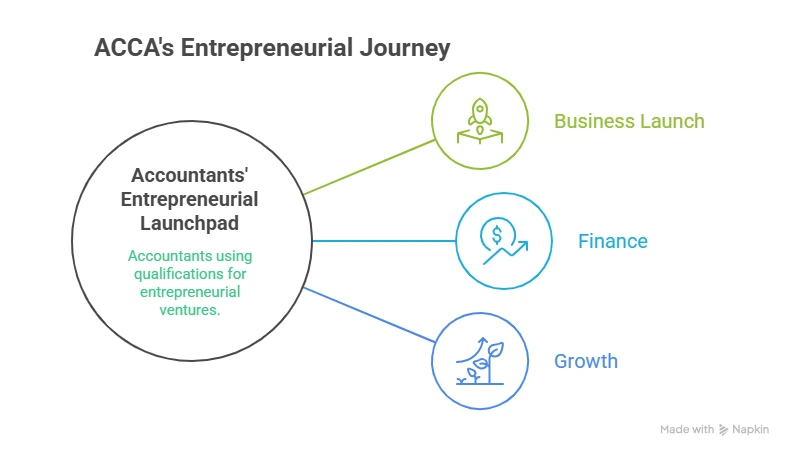
📊ACCA Facts – 52% of respondents see accountancy as a springboard to running their own businesses.


Why Should You Choose ACCA Certification Over Other Options

Before you understand the value of an ACCA Career, you need clarity on what is ACCA and what the ACCA Course actually trains you for.

ACCA is globally known for developing highly skilled chartered certified accountants who are trained to think strategically, operate ethically, and adapt to complex international business environments. The syllabus trains you to analyse and prepare financial statements that support real business decisions.

The ACCA course is divided into levels that sharpen you progressively:

ACCA LevelFocus Area
Applied Knowledge LevelBuilds the foundation of core finance concepts
Applied Skills LevelFocuses on practical accounting, taxation, and auditing skills
Strategic Professional LevelDevelops leadership, risk management, and strategic decision-making skills

This structure is designed to prepare you for real-world career opportunities, not just academic exams. The moment you start the preparation for the ACCA course, you begin building the mindset required for a strong career after ACCA. When I compared different accounting qualifications, what stood out about ACCA Certification was how practical it felt. 

Unlike theory-heavy courses, the challenges in the ACCA course actually prepare you for real-world roles. It covers everything – from financial reporting and IFRS to business strategy, audit, and ethics. That’s when I realised that choosing ACCA wasn’t just about a job title; it was about being prepared for serious responsibility early on.


For anyone eyeing top finance roles, here’s a must-watch video that walks you through how to ace a Big 4 interview as an ACCA professional – packed with real-world tips and insights.


Exploring ACCA Career Options Beyond Just “Big 4”

Let me be very honest – the Big 4 obsession is outdated. Yes, the Big 4 firms hire a lot of ACCA professionals. But limiting your ACCA career options only to them would be a mistake.

Most people assume that an ACCA only leads to Big 4 audit firms. I thought that too. But while researching deeper, I discovered how wide the career options after completing ACCA really are.

Some of the paths I came across included:

  • Financial Analyst roles in MNCs
  • Internal Audit & Risk Consulting
  • Corporate Finance & Strategy roles
  • Start-ups and fintech companies
  • NGOs and public sector finance
Career Opportunities After ACCA

And what amazed me was learning about ACCA Career Journeys, where professionals completely skipped the traditional audit path and moved straight into consulting, business strategy, or startup finance leadership.

Alternative ACCA Career Tracks: Start‑Ups, SMEs and Impact Sectors

If you only look at the Big 4, you’ll miss some of the most dynamic opportunities ACCA professionals are tapping into today. Many ACCA qualifiers are choosing to join high‑growth start‑ups as Financial Controllers, Business Advisors, or Internal Auditors – roles where they handle everything from cash‑flow planning and budgeting to compliance and risk management from day one.

Small and medium‑sized enterprises (SMEs) are an underrated playground for ACCA talent. In SMEs, you typically wear multiple hats, move up faster, work closely with founders or senior management, and build a much broader skill set compared to a narrow role in a large, structured setup.


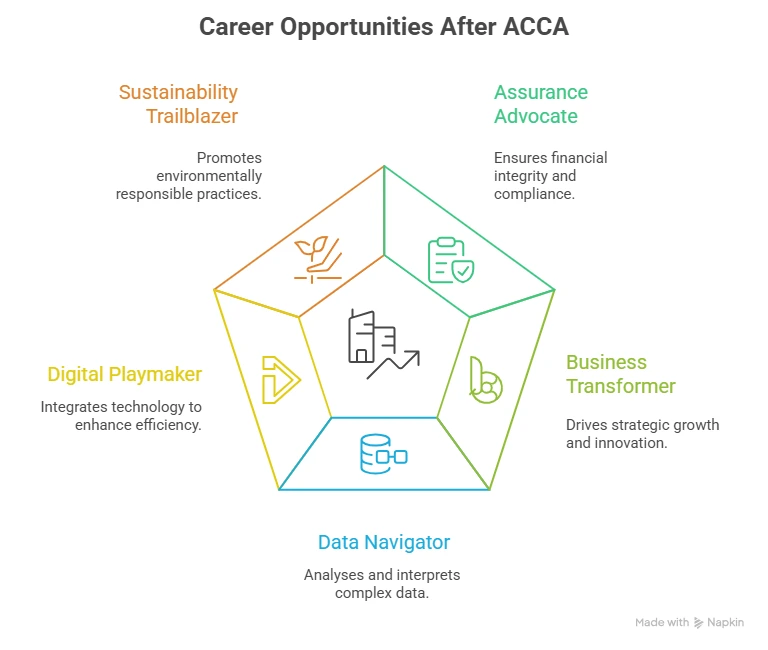
📊ACCA’s Future Ready Report identifies five emerging career zones: Assurance Advocate, Business Transformer, Data Navigator, Digital Playmaker and Sustainability Trailblazer.


ACCA Career Landscape in India

If you’re planning to build your base in India, ACCA is becoming more relevant every year. This table gives you a clear overview:

AspectDetails
ACCA RecognitionRecognised in 180+ countries, making it a truly global qualification with strong acceptance in India.
Demand in IndiaGrowing demand due to the rise of global firms and shared service centres (SSCs) across major Indian cities.
Popular Job RolesStatutory Reporting, Financial Controllership, Financial Analytics, Global Process Ownership.
Top Hiring SectorsBig 4 firms, multinational corporations (MNCs), global banks, consulting companies, and captive finance centres.
Key Advantage in IndiaStrong preference for professionals with IFRS knowledge and cross-border financial exposure.
Future OutlookRising demand as Indian companies expand globally and foreign investments continue to grow in the Indian market.

Becoming an ACCA member is not just about passing exams – it reflects your commitment to global ethical standards, continuous learning, and professional excellence in finance.

This is why employers across the world actively look for chartered certified accountants, as they bring a strong combination of technical expertise, business understanding, and global reporting capability.


Career After ACCA: What It Actually Looks Like

People often imagine that once you finish ACCA Certification, life magically becomes easy. The biggest question everyone has: What does Career After ACCA really look like?

Here’s the honest answer: Once you complete your ACCA Certification, you won’t stay stuck in entry-level roles for long. That’s only the beginning of your Career After ACCA. That’s when I truly understood how flexible an ACCA Career Path can be. 

As you grow in experience and move closer to becoming an ACCA member, your credibility in global organisations increases sharply, opening doors to leadership and international opportunities.

Most professionals move quickly from junior finance roles into positions like:

  • Finance Manager
  • Internal Auditor
  • Business Controller
  • Risk & Compliance Manager
  • Finance Business Partner

Here’s what I’ve seen happen in real life:

Year 1-2 after certification:

  • Junior accountant
  • Audit associate
  • Finance executive

Year 3-5:

  • Finance manager
  • Internal auditor
  • Business analyst

Year 6+:

  • Financial controller
  • Strategy Head
  • CFO-track roles

This is where career prospects really start to show. Your responsibility increases. Your impact grows. Your earning potential multiplies. A major attraction for many students is the competitive ACCA salary in India, which continues to grow as more multinational companies and global consulting firms expand their finance teams.

The career opportunities expand even faster when you combine the qualification with tools like Power BI, SAP, or financial modelling. This is why the ACCA career feels more future-proof than many traditional accounting careers.

With global recognition and practical skills, ACCA opens up diverse job opportunities across industries, countries, and business functions.

Industry Verticals Where ACCA Profiles Are in Demand

As you go deeper into the ACCA ecosystem, you’ll notice that the demand isn’t limited to traditional audit or tax. In finance and banking, ACCA professionals work on credit analysis, risk, capital planning, and investment decisions for large institutions and NBFCs.

ACCA professionals are actively hired outside core finance in industries like:

  • Healthcare
  • Retail
  • FMCG
  • Technology 

ACCA talent is in demand to manage budgeting, cost optimisation, pricing strategy, and long‑term financial planning. Even government bodies and non‑profits bring in ACCA professionals to strengthen transparency, governance, and policy‑driven financial management.


To make things even clearer, here’s a video that breaks down the latest changes to the ACCA syllabus to help you understand what to expect before you plan your next steps.


The Skills ACCA Really Values

The wide range of ACCA course subjects ensures you build strong foundations in accounting, taxation, audit, performance management, and business strategy. One of the biggest misconceptions I see is that people think an ACCA Career is only for top students or math geniuses. That’s not true at all. What ACCA really values is:

  • Consistency
  • Curiosity
  • Ethics
  • Practical thinking

To really understand what makes this qualification so strong, you need to know ACCA course details and what the syllabus actually includes. 

The course is not just about memorising formulas. You learn things like financial accounting, taxation, audit, performance management, and business law in a way that connects directly to real business problems. As you move ahead, the focus shifts towards strategic thinking, decision-making, and leadership skills, which is what makes ACCA professionals adaptable across different industries and roles.

What ACCA Actually Demands From You 

One thing most people don’t realise at the beginning is that ACCA isn’t only about clearing papers – it’s about proving you can operate like a real finance professional. Along with the exams, you need to complete a Practical Experience Requirement (PER), where you complete relevant work experience to build practical credibility and professional competence for about three years and map your responsibilities to ACCA’s performance objectives.

You also go through the Ethics and Professional Skills Module and later continue with CPD (Continuing Professional Development), which keeps your skills sharp even years after qualifying. Instead of seeing these as extra hurdles, think of them as structured milestones that signal to employers that you’re not just book‑smart – you’ve actually applied that knowledge in the real world.

The flexible ACCA course duration makes it easier for students and working professionals to balance studies with work experience and personal commitments.

Benefits of ACCA Career Fairs and Networking

One of the most underrated parts of the journey is the ACCA Career Fair ecosystem.

I learned that many institutions and learning partners organise placement drives, networking events, and industry connects. These forums introduce you to recruiters actively searching for ACCA-qualified talent.

Attending a Career Fair gives you direct exposure to:

  • Hiring managers
  • Global MNC recruiters
  • Finance leaders
  • Consulting firms

Another big reason? The ACCA career prospects are clearly global. Whether it’s the UK, UAE, Canada, or Australia, the qualification is recognised across major financial markets. What makes this even more accessible is the flexible ACCA course eligibility, which allows students from commerce, science, and even non-commerce backgrounds to begin the journey after their 10+2 or graduation. That combination of worldwide recognition and open entry pathways makes the flexibility of this career path genuinely rare.

Core Benefits of Choosing ACCA Early in Your Career

When you look at ACCA exams purely as a series of tests to clear, you miss the bigger picture of what it does for your career. The qualification is designed as a compact but powerful route that builds your fundamentals in accounting and finance while also preparing you for managerial and strategic roles.​

Because ACCA is globally recognised in over 180 countries, you’re not stuck with one geography or one industry; you can move across public sector, NGOs, multinational banks, consulting, and corporate roles as your interests evolve. Add to that the flexibility of online learning and working‑professional‑friendly formats, and ACCA becomes a realistic upgrade path even if you’re already in a job and can’t afford to pause your career.​

While planning your long-term growth, it’s also smart to factor in ACCA course fees, so you can align your investment with your career goals from the very beginning.


💡Did You Know? The job board of ACCA lists 21,004+ live vacancies globally.


How the ACCA Career Path Evolves Over Time

When someone pursues ACCA Certification, they’re not just learning accounting; they’re learning how businesses work at a strategic level. That’s what makes an ACCA Career so powerful compared to traditional degrees.

Through years of mentoring, I’ve seen students transform from unsure graduates into global professionals working across Dubai, London, Singapore, and Canada.

And the foundation of all that growth? A strategically built career path.

Now let’s talk about something serious: long-term growth. One reason I consistently recommend the ACCA course is that the career prospects don’t fade over time – they actually become stronger.

Because the ACCA syllabus is updated regularly, your ACCA subjects stay aligned with:

  • Global accounting standards
  • Sustainability reporting
  • Digital finance tools
  • Strategic risk management

That’s why ACCA career opportunities continue expanding even 10-15 years down the line. What I personally love about an ACCA Certification is how it evolves. In the beginning, you focus on technical roles – accounts, audit, or reporting. But as you grow, the career path naturally shifts towards:

  • Leadership roles
  • Strategic decision-making
  • High-level financial planning
  • Cross-border responsibilities

The longer you stay in the ecosystem, the stronger your career prospects become. Over time, ACCA offers professionals the flexibility to move into leadership, advisory, and international roles.

A clear comparison of CA vs ACCA helps you understand the differences in global recognition, flexibility, and long-term career mobility before choosing the right qualification.


Here’s a CA vs ACCA comparison covering course structure, eligibility, global career scope, industry roles, costs, pass rates, and flexibility – so you can choose the right path with confidence.


Why I Recommend ACCA Over Traditional Accounting Paths

The ACCA qualification is designed to develop well-rounded professional accountants who can handle technical, strategic, and leadership responsibilities with confidence.

Here’s a realistic comparison: Many traditional accounting courses tend to limit you to a specific country’s rules or a very narrow career track. An ACCA career works differently.

With ACCA, professionals benefit from:

  • Global recognition.
  • Flexible job roles.
  • Fast career mobility.
  • Better international salary exposure.
  • Strong Career Growth After ACCA.

The practical structure of the ACCA syllabus, combined with its strong global focus, makes ACCA Certification highly relevant for today’s finance and business landscape.

Is the ACCA Career Worth It?

If you’re looking for flexibility, international opportunities, and long-term growth, then ACCA is absolutely worth considering. Instead of locking you into a single role, it allows you to explore multiple directions – from corporate finance and consulting to startups and global roles.
ACCA Entrepreneurial Journey

The real strength of ACCA career opportunities lies in its diversity. You’re not restricted to one geography, industry, or job function, and that’s what makes this qualification stand out.


How to Strategically Design Your ACCA Career Path

A strong ACCA Career Path should be designed, not left to chance. Here’s what I always recommend:

  • Choose your first role based on learning, not salary.
  • Focus on industries that are growing (tech, consulting, ESG, fintech).
  • Use every job to build transferable skills.
  • Stay active in networking communities and career fairs.

The more intentional you are, the stronger your career becomes. Over time, it became clear to me that with ACCA, the career path naturally creates broader opportunities – not just in terms of job roles, but in terms of industries, countries, and long-term growth. That’s exactly why so many ambitious finance professionals today see ACCA as more than a course; they see it as a serious, future-ready career decision.

The Real Skillset That Makes Your ACCA Career Powerful

Let’s be honest: the qualification alone won’t make you extraordinary.

The ACCA professionals focus on:

  • Communication skills
  • Financial storytelling
  • Data interpretation
  • Business mindset

When these are combined with ACCA Certification, your professional credibility increases sharply.

This is why career journeys of ACCA Professionals look so different from person to person – because they customise their skills according to their strengths.


📊ACCA Facts – 67% of respondents are interested in pursuing accountancy careers focused on environmental issues.


Why Choose Imarticus for your ACCA Career

Partnering with Imarticus Learning, an official ACCA learning facilitator, can elevate your ACCA preparation experience with structured mentorship, global content, and assured outcomes.

Key Advantages of the ACCA Course with Imarticus:

  • Guaranteed placement after completing two ACCA levels. 
  • No-limit passing guarantee with free reappear sessions. 
  • Pre-placement bootcamps and interview preparation for job readiness.
  • Simulation-based global curriculum recognised ACCA content, with real-world case studies and industry-led training.
  • Dual certification – ACCA joint certificate offering with KPMG in India.
  • Course content powered by Kaplan – an ACCA Gold Approved Learning Partner. 

This combination of international curriculum and domestic career support ensures you emerge with both technical skills and practical employability, making your ACCA Career not just globally relevant but commercially effective.


FAQs About the ACCA Career

Over the years, I’ve noticed that students and professionals tend to have the same doubts while exploring ACCA as a career option. You will find that the following frequently asked questions about the ACCA career will assist you in making a clearer and confident decision.

What are the job roles after pursuing ACCA?

With ACCA, you can work in roles such as Financial Analyst, Internal Auditor, Tax Consultant, Business Controller, Risk & Compliance Manager, Finance Manager, and roles in corporate finance, consulting, MNCs, startups, and public sector organisations.

Is ACCA a good career option?

Yes, ACCA is considered a strong career option because it offers global recognition, flexible career paths, and opportunities across industries like finance, consulting, technology, and multinational corporations.

Will ACCA be replaced by AI?

It’s understandable to worry if your role might disappear to automation, but the good news is: an ACCA qualification is much less likely to be made redundant by AI. While routine tasks such as data entry or basic reporting may well be automated, ACCA professionals focus on strategy, decision-making, risk management, ethical judgement and business leadership – areas where human insight and professional ethics still matter a lot. Think of AI as a tool that will help you be more efficient, not replace you.

Is ACCA a stressful job?

Like many roles in finance and business, an ACCA career can come with its share of pressure – especially during audit seasons, financial closures, tight deadlines or strategic reviews. However, stress levels don’t only depend on the qualification – they heavily depend on your company culture, the role you choose, how you manage your workload, and your ability to build good systems. With the right employer, good time management, and self-care, many ACCA professionals manage a great career without burning out.

Which field is best after ACCA?

There isn’t one best field after ACCA – and that’s actually a strength of the qualification. You could lean into Corporate Finance, Financial Planning & Analysis (FP&A), Internal Audit, Risk & Compliance, Consulting, Fintech, ESG & Sustainability – whatever matches your strengths and passion.

Is a job guaranteed after ACCA?

Technically, no qualification can guarantee a job. However, with ACCA, you significantly increase your employability. However, if you enrol with Imarticus Learning, you get an added advantage of a 100% placement or internship guarantee upon completing the first two levels of ACCA. 

But even with that, your personal effort, networking, experience, and how you present your skills will make a huge difference in landing the right role.


Should You Choose an ACCA Career?

If you’re someone who wants flexibility, global exposure, strong pay growth, and modern finance roles, then an ACCA Career makes complete sense. ACCA prepares you not only for technical accounting roles, but also for leadership, strategy, consulting, and international finance opportunities.

What starts as an ACCA course gradually evolves into a powerful professional identity. Your career after ACCA can lead you into multinational companies, fast-growing startups, board-level roles, or even your own consulting practice over time.

The ACCA course doesn’t just give you a qualification, it gives you a globally respected, future-ready career path with multiple opportunities to grow, evolve, and succeed. If you’re serious about building a global finance career, now is the time to take the first step.

ACCA Career Journeys That Skip the Traditional Big 4 Route

Starting an ACCA career is often seen as an adventure in the vast world of the Big 4 accounting firms; however, the career opportunities available are far broader than just these four firms, with many opportunities that remain unknown to us. This blog will explore the various career paths ACCA professionals can take, which may be outside of the standard Big Four perspective. We will review the often off-the-beaten-path track in the ACCA career universe, with roles in all manner of industries, from finance to education and everything in between! We intend to introduce you to the fantastic opportunities that a non-traditional career as an ACCA could present to you, and give you the intrigue to skip over the familiar highway to travel on your unique road towards your professional career path. With that in mind, whether you are an aspiring ACCA, a recent graduate, or a professional willing to make a change, we hope this blog will encourage thinking outside the box and present you with fresh ideas for a career with your ACCA. Sit back and enjoy the adventure as we take you on the ACCA career path tour.

Exploring the many roads of ACCA Career options (Outside the Big 4)

While many ACCA professionals aspire to work in one of the Big 4 accounting firms, there are numerous opportunities beyond these traditional paths. An ACCA (Association of Chartered Certified Accountants) career opens up all types of job roles in many markets, not just the Big 4.

  • Corporate: ACCA professionals are also popular across the corporate sector. From controllers to CFOs, ACCA qualifications are designed for people who want to pursue high-level financial management roles.
  • Public Sector: ACCA careers can also be in government entities and public sector organisations. These careers may involve supervision of financial management, auditing, and budgeting.
  • Not-for-Profit Organisations: Not-for-profit entities often seek ACCA professionals to oversee finances, allocate resources, and ensure financial transparency.
  • Educational Institutions: ACCA professionals can also find careers in education, either lecturing or developing financial and accounting curricula.
  • Consultancy: If you prefer a dynamic environment, career opportunities abound in consultancy. ACCA professionals can consult on financial management, risk management, and strategic planning for many businesses.

As you can see, ACCA careers are not limited to traditional pathways. The career opportunities within ACCA are vast, and ACCA professionals can determine their career paths. As long as you have the appropriate skills and mindset, there are many opportunities in various sectors for an ACCA professional.

Consider your Options: Diverse Opportunities with an ACCA Qualification

It is a common belief that you only get to work at one of the ‘Big 4’ accounting firms with an ACCA qualification. However, that is not true – an ACCA qualification enables you to find many alternative careers with many more benefits and drawbacks.

For example, ACCA qualified people can work in:

  1. Financial Consultancy: ACCA careers closely align with principles of finance to provide advice to businesses to help them maximise income and reduce expenses. The work involved as a consultant typically requires, in addition to financial expertise, a focus on economic strategy, risk, and financial forecasting.
  2. Teaching or Academia: If you love to teach, as an ACCA, you could have a great career in academia. You can continue working in your ACCA field, whether as a lecturer or researcher, or any combination of them, to assist the next generation of financial professionals.
  3. Non-Government organisations (NGO’s): NGO’s frequently employ ACCA professionals to maintain and manage their finances, ensuring funding is spent correctly and accounted for. This role involves vectors of financial strategy and direction, but is further weighted by social obligations.
  4. Own Business: Many ACCAs utilise their financial abilities and pursue their businesses. This path offers an alternative vocational opportunity to be your boss, carries significant responsibility and high expectations.

Remember, whilst ACCA is a stepping stone to employment within the ‘Big 4’, it is equally an opportunity to follow a variety of career paths. In closing, don’t limit yourselves, but explore some alternative ACCA career paths to see where your qualification may take you on your journey.

Entering the Startup Ecosystem as an ACCA

The startup ecosystem is an exciting and energised space that offers the required unique skill set that ACCA professionals have. Most ACCA roles in the startup environment embody the nature of diverse, challenging yet rewarding, nurturing the opportunity for a successful ACCA payout outside of the traditional Big 4 offering. ACCA practitioners can assume several key roles in startups as follows:

  • Financial Controller: An ACCA practitioner in this capacity will manage the whole of a startup’s financial activities, ensuring that all financial operations run smoothly and comply with regulations.
  • Business Advisor: ACCA practitioners can act as business advisors by using their broad-based financial and business skills to provide strategic advice and guidance to startups that can help them through financial complexities and business challenges.
  • Internal Auditor: An ACCA practitioner can act as the internal auditor, ensuring that a startup is complying with financial regulations and standards to mitigate risks.

The table below provides a summary of the key accountabilities and skills related to the ACCA roles we have discussed:

Role Accountabilities Skills
Financial Controller Managing financial operations, budgeting, and reporting Financial management, strategic planning, and leadership
Business Advisor Providing strategic business advice, financial planning Business acumen, problem-solving, and communication
Internal Auditor Ensuring compliance and risk management Attentiveness, risk assessment, and integrity

Pursuing an ACCA career in startups is about more than just crunching numbers. It is about being part of a team that builds something from the ground up, enjoying the thrills of entrepreneurship, and making an impact. It is about promoting an area of expertise to support the mission of the startup. Whether you are an ACCA graduate or an experienced practitioner, the startup world offers incredible opportunities and rewards for your career pathway!

Exploring the Road Less Travelled in Small and Medium-Sized Enterprises

Starting an ACCA career is by no means a straight path to the Big 4. SMEs have a lot to offer ACCA professionals.

In SMEs, employees are exposed to a broader range of responsibilities earlier than they would have been in a larger company. This is because smaller teams often require you to wear multiple hats! As an ACCA professional working for an SME, you will have:

  1. A wider range of tasks, skill-building and learning experiences outside of your area of expertise or practice.
  2. A much greater opportunity to contribute to the organisation because of the smaller teams in SMEs.
  3. Faster job progression – SMEs tend to work at a faster pace than larger entities.

Finally, given the flatter hierarchical structures at many SMEs, working relationships between employees and senior management tend to be closer. This can play an essential role in your future career, too, providing insights that may not be present at larger organisations!

There are also some disciplinary challenges with an ACCA career in another SME, including limited resources, unstructured or limited training programs, and heavier workloads. However, the potential opportunities for development, growth, and ability to have an impact is favourable to me as an ACCA professional.

Bottom line? If you are newly qualified or an ACCA member contemplating a career change, SMEs are an exciting alternative to consider. The road to success is not always the most walked-upon road.

Diversifying your ACCA career: Look beyond the Big 4

While you’ll often find an ACCA career will often land in the big four, you should take the opportunity to consider the range of jobs available to you; these fields include finance and banking, healthcare, and retail, to name a few. Your ACCA qualification allows access to a range of industry sectors.

  • Finance and Banking: With solid training and a strong background in financial management, ACCA is a highly regarded professional in the finance and banking industry. ACCA professionals are involved in a range of activities, including risk awareness, planning for capital purchases, and investment banking.
  • Healthcare: The healthcare industry similarly has full-time and employed ACCA professionals, as the financial management activities emphasise understanding financial consequences when it comes to budgeting, financial reporting, and the ability to develop long-term strategies.
  • Retail and FMCG: As an ACCA professional in this space, you are ideally suited for taking advantage of opportunities for accumulating, interpreting and understanding roles involving supply chain cost data, and the development of pricing and revenue growth plans.
  • Technology: The tech industry is characterised by risk-taking and disruptiveness, driving positive change in a fast-moving world. ACCA professionals can find roles in technology companies using skills in financial modelling, business analysis, and advisory strategies.
  • Government and non-profit: Many ACCA professionals contribute to the public sector or charitable organisations by providing a mark of integrity and credibility, as well as developing business processes and policies, such as producing budget forecasts for government departments and all forms of public funds.

The above list reveals that there is a range of sectors with different ACCA opportunities, allowing you to develop your career path according to your interest, focus or desired outcome. Always remember, your career as an ACCA professional is not limited to the Big Four; however, as a qualified professional with skills and knowledge, you will have a meaningful career in any sector. Enjoy the flexibility that your ACCA qualification provides, and embrace the opportunities that await you. Who knows, your new ACCA career journey could be just around the corner.

Check out the new opportunities available in finance and accounting as part of our ACCA Certification course at Imarticus Learning. The ACCA Certification course builds the knowledge and skills necessary for a successful ACCA career. It aligns well with the purpose of this blog on professional development in the finance industry, and we love providing our readers with the experience. This course covers a wide range of material while building a solid foundation in financial management, taxation, auditing, and much more. ACCA Certification grants candidates global possibilities as it is recognised in over 180 countries. Thus, whether you are an aspiring accountant or an accountant wanting to level up in your career, the ACCA Certification can serve as a significant career milestone. So make the smart move towards a fruitful ACCA career, and create new professional opportunities with us at Imarticus Learning.

Frequently Asked Questions

What is an ACCA Career?

An ACCA career is defined as a professional journey pursued by individuals who have received the ACCA (Association of Chartered Certified Accountants) qualification. This qualification is globally recognised and opens new doors to opportunities in many roles related to finance or accounting at many organisations worldwide. Not only that, but it does not limit you to just the traditional path at the Big 4 accounting firms, and there’s also a wide array of alternative pathways.

Can I skip the traditional Big 4 pathway in my ACCA Career?

While many qualified ACCA professionals tend to start at the Big 4 accounting firms, that is not the only route available to you. You may want to consider whether opportunities in banking, insurance, public sector, corporate finance or even charity work, are more appealing options. You may also wish to look at academic or consulting roles. Just keep in mind that your ACCA qualification provides useful transferable skills for a wide array of jobs to go beyond the Big 4.

What are the possible advantages of taking an alternative route in my ACCA Career?

There are many advantages to taking an alternative route in your ACCA Career. The alternative pathway allows you to not only avoid the pressure cooker environments often associated with the Big 4 firms, but also achieve a better work-life balance. This alternative route also allows for a different set of experiences and skills, which could potentially benefit you when considering future career progression. It may also afford you opportunities for work within areas that are in better alignment with your interests or long-term career objectives.

What is the job outlook for those who choose an alternative ACCA Career?

The job outlook for those who choose an alternative ACCA Career is strong, and, considering the demand for ACCA qualified professionals spans numerous sectors outside of just the Big 4. In other words, the diversity of skills and knowledge obtained through an ACCA qualification prepares people to transition between different roles or different sectors, and having the ability to pivot between different options gives a good indication of job security and long-term career prospects.

If I skip the Big Four route initially, can I work there later in my ACCA Career?

Yes, you can! Ultimately, pursuing an alternative pathway first does not prevent you from working with one of the Big 4 firms at a later stage in your ACCA Career. The experience you will gain working in an alternative role may afford you a much more diverse experience that will make you a more appealing candidate when you decide to move. Your wider breadth of knowledge and diversity will put you in a position to distinguish yourself.

Shocking Truths About ACCA That Will Change Your Career Forever

Accounting is an essential component of any organisation, hence it is a consistent and expanding topic. According to an IRCC estimate, more than 79,600 new accountant employment openings are expected between 2019 and 2028.

As the global economy continues to recover from the pandemic, the demand for specialists to store and assess financial records is expected to increase.

This is great news for accounting students and professionals looking to work in the sector. A widely recognized qualification, the ACCA, can not only enhance your chances in a wide range of job areas, but it can also prepare you for a long and lucrative career.

Whether you want to take your initial steps into a career in finance or you’re a financial professional wishing to build strategic leadership skills to boost your earning potential, options of ACCA careers might prove to be a boon for you.

What is ACCA?

The Association of Chartered Certified Accountants (ACCA) qualification is a globally recognised certification in accounting, and finance awarded by the ACCA body in the United Kingdom. It has a structure consisting of three levels, namely Knowledge, Skill, and Professional.

ACCA is accepted in 180 countries and it provides better career opportunities worldwide. The ACCA Course prepares professionals for various domains such as accounting, taxation, management, finance, investment banking, corporate finance, forensic and consulting.

Truths About ACCA That will Direct Your Career 

  1. ACCA is a globally recognised qualification: Employers all over the world trust ACCA, through the rigorous training of our students and members, to ensure their businesses operate at the highest international levels. Moreover, ACCA holds recognition from key regulatory bodies in India, including SEBI, and RBI, validating its acceptance within the Indian financial sector.
  2. Offers success and security with diverse career paths: The field opens doors to diverse ACCA career opportunities in finance, banking, consulting, government, and academia, beyond traditional accounting roles.
  3. Inculcates skills for life: An ACCA qualification isn’t just about mastering the numbers, it’s about shaping well-rounded finance professionals equipped with a comprehensive skill set. The ACCA course inculcates strategic thinking, technical expertise, innovative approach, ethical integrity, and leadership and management skills.
  4. A flexible qualification for modern students: ACCA accommodates candidates at different career stages, offering a flexible pathway to certification. With its modular structure and recognition of prior learning ensure accessibility for individuals with diverse backgrounds and experiences, not just recent graduates. So, an aspirant can start ACCA at his/her level.
  5. ACCA has affordable options and is a valuable investment option: While there are expenses involved with ACCA exams, study materials, and membership, ACCA provides a variety of aid alternatives. These include scholarships, discounts, payment plans, and corporate sponsorship schemes, making the qualification available to people from a variety of backgrounds.

Furthermore, ACCA graduates frequently have superior earning potential, job progression chances, and international reputation.

Essential Details About ACCA

ParametersACCA
Recognising bodyThe Association of Certified Chartered Accountants is a globally recognised degree. Candidates can pursue careers relating to many fields in taxation, accounting, and others.
Course durationThe course duration for an ACCA qualification is 3 years of studying, along with additional 2 years of training.
EligibilityAspirants can achieve the ACCA qualification in a minimum of 3 years, if they:
  • Complete a maximum of 13 exams which depend on their previous qualifications
  • Complete an ethics and professional skills module
  • Have three years of work experience in a relevant role
Job profiles A trained ACCA professional can work on the following job profiles:
  • Business analyst

  • Chief financial officer

  • Insolvency practitioner

  • Forensic accountant

Salary

(ACCA affiliates) 

For ACCA careers India, the average salaries for each level are:
  • Entry-level: INR 4-8 lakhs
  • Mid-level: INR 10-20 lakhs
  • Senior-level: INR 20-50+ lakhs

Abroad, a salary of roughly USD 50,000 is earned.

In the UK, the average salaries for each level are:

  • Entry-level: £25,000 to £35,000 per year  
  • Mid-level: £40,000 to £60,000 per year  
  • Senior-level: £65,000 and upwards, often exceeding £100,000

In Canada, the average salaries for each level are:

  • Entry-level: Between CAD 40,000 and CAD 60,000 p.a.
  • Experienced: Approximately CAD 65,000 to CAD 90,000 p.a.
  • Senior-level: CAD 100,000 or above, depending on the job.

In Australia, the average salaries for each level are:

  • Entry-level: Between AUD 50,000 and AUD 70,000 p.a.
  • Experience of few years: Around AUD 80,000 to AUD 120,000 a year
  • Senior-level: AUD 150,000 and above
Companies hiringMost MNCs and Big 4 companies hire ACCAs in India, such as: 
  • PwC
  • KPMG
  • Deloitte
  • Ernst & Young

Conclusion 

The ACCA course is intended to provide aspiring candidates with a solid foundation in finance and accounting. Whether you are a 12th-grade dropout with an aptitude for accounting or an established professional, ACCA can help you launch a successful career in accounting.

If you want to get certified, embark on a journey with Imarticus’ Association of Chartered Certified Accountants course. From ACCA-certified teachers and extensive study materials to placement bootcamps, this is your opportunity to develop your accounting career.

Why Choose ACCA for Mastering the Art of Accountancy

Are you fascinated by numbers and financial statements? Do you want to work as an accountant but are unsure where to start? 

The Association of Chartered Certified Accountants is here to reveal the mysteries of accounting and unleash your full potential, so stop searching now! 

A real masterclass in its industry, ACCA offers cutting-edge training, certification, and assistance to aspiring accountants worldwide. 

ACCA’s dynamic and human-centered atmosphere, personalized services, and professional advice will enable you to develop your success narrative and establish yourself as a leader in the accounting industry, whether you’re a recent graduate or a seasoned professional looking to advance your career. 

So, why choose ACCA to master the art of accountancy? Let’s find out!

What is ACCA?

The Association of Chartered Certified Accountants empowers and accredits professional accountants worldwide. 

Take part in a network with 241,000 accomplished members and 542,000 aspirant members who have all been supported on their travels. Enter a thriving, human-centered workplace where relationships flourish. The primary goal is to develop your potential and assist you in moving toward extraordinary accomplishments by emphasizing value creation for the students and members.

 What Makes ACCA Stand Out in Accountancy Qualifications?

Unlocking Success in Accountancy: Choose ACCA

  • Globally Respected Qualification

Regarding accounting qualifications, the ACCA (Association of Chartered Certified Accountants) is a true titan in the industry. With over a century of excellence, it has earned a reputation as one of the most prestigious and globally respected qualifications. ACCA is recognized in more than 180 countries, making it a truly international qualification that opens doors to job opportunities worldwide. So, if you dream of working in diverse financial landscapes and making a global impact, ACCA can be your passport to success.

  • Comprehensive Curriculum

The ACCA syllabus is designed to equip you with a broad range of knowledge needed in finance and accounting. The extensive curriculum ensures you gain a thorough grasp of the industry, covering everything from financial reporting and taxation. Additionally, the ACCA curriculum changes to reflect changes in the financial industry, keeping you informed of the most recent developments in accounting.

  • Flexibility in Studying

The ACCA offers learning opportunities for students at all stages of their professional careers, whether they are new graduates or working professionals wishing to develop their careers. Because of its adaptability, the ACCA is a certificate that even individuals with hectic schedules may pursue.

  • Network of Professionals

As an ACCA student or member, you become part of a vast and influential network of finance professionals. The ACCA community spans the globe, connecting you with like-minded individuals, mentors, and potential employers. Networking events, webinars, and seminars organized by ACCA provide valuable opportunities to expand your connections, exchange knowledge, and stay updated on industry trends.

  • High Demand for ACCA Professionals

Employers look for accounting experts with technological know-how and practical abilities in today’s changing business environment. Organizations of all sizes in various sectors are actively seeking ACCA graduates. Your employability will increase due to the qualification, making you stand out in a crowded employment market. You may confidently pursue careers in financial management, consulting, and many other fields with an ACCA certificate.

  • Ethical Standards

Integrity and ethics are paramount in the accounting profession. ACCA is committed to upholding the highest ethical and professional standards. When you become an ACCA member, you pledge to abide by the ACCA’s Code of Ethics and Conduct, earning trust and respect from clients, employers, and the public. This dedication to ethics sets ACCA professionals apart and contributes to their long-term success.

  • Personal Growth and Development

The ACCA journey emphasizes professional and personal development and earning a credential. You develop resilience, problem-solving, and critical thinking abilities as you get real-world experience through the tests. These traits transcend accounting and become priceless assets in other facets of your life.

  • Lifelong Learning

ACCA’s commitment to lifelong education means that your professional development continues after the qualification. As an ACCA member, you have access to various tools that will help you stay knowledgeable and employable throughout your career. These tools include research, publications, and professional development programs.

Exploring Thriving Career Paths with ACCA: A World of Opportunities

ACCA provides budding accountants with a variety of professional options. Five major ACCA career opportunities in accounting are expected to emerge in the future, according to research by ACCA Global. 

These regions indicate employment opportunities where people may specialize and contribute to establishing long-lasting companies. The ACCA Career Navigator is a fantastic tool for students and members to research the various career options they may pursue using the knowledge and abilities they acquire via the ACCA Qualification. 

Additionally, the ACCA Careers employment portal, the only source for finding financial experts, has hundreds of live openings. ACCA is a top professional accountancy organization with a global network of over 241,000 members and a presence in 178 countries.

The Final Words

Choosing ACCA to master the art of accountancy can be a transformative step toward a successful and purposeful career. With its global recognition, comprehensive curriculum, practical experience, and commitment to ethical standards, ACCA offers the perfect platform to become a proficient and sought-after accounting professional. 

Imagine having a key that unlocks a world of opportunity in finance and accounting. The ACCA is known worldwide and influences 180 nations. It’s more than just a piece of paper; it’s key to improved job opportunities worldwide. 

Unleash Your Full Potential with Imarticus Learning and Ace ACCA Exams, Embarking on a Path of Success and Abundant Opportunities in the Accounting Craft. Start your journey with Imarticus Learning and become ready for various careers in accounting, taxes, finance, investment banking, corporate finance and consulting.

ACCA establishes the groundwork for a transformational career, giving you the skills you need to negotiate the always-changing worlds of finance and accounting successfully. With the acclaimed ACCA course, you may realize your potential and explore a world of limitless prospects. Your skill is needed for the future!

So, if you are ready to embark on a journey of growth, opportunity, and impact, ACCA awaits you with open arms.

Accounting for Intangible Assets: Recognition, Measurement, and Impairment

International Accounting Standards 38 (IAS) directs the accounting procedure and prerequisites for intangible assets. Intangible assets are not physical substances; hence unidentifiable and cannot be recognised. Assessing the value of intangible assets in monetary terms is tricky and involves specific recognition and measurement processes. 

The intangible assets that attain the identification criteria are first measured at cost. Then they are amortised and measured systematically to calculate the value of the asset’s remaining useful life. Computer services, company goodwill, trademarks, and patented technology are some examples of intangible assets. Read about the recognition criteria, measurement procedure, and other factors regarding intangible assets covered in an ACCA course online.

Recognition Criteria

According to IAS 38, only the intangible assets associated with an entity will be recognised. Such an asset can be either purchased or self-created, but it must meet specific requirements, which are:

  • There must be a high probability that any economic benefit resulting from that asset will go in favour of the entity.
  • The value or cost of the asset must be ascertained reliably.

best association certified chartered accountant course

Recognising intangible assets requires fulfilling various other criteria and pursuing an ACCA course online can help one understand how to deal with them effectively. If an intangible item does not meet both the recognition criteria, it will fall out of the assets category, and the expenditure incurred on such an item will be recorded as an expense in the accounts books.

Measurement of Intangible Assets

As stated in IAS 38, intangible assets are initially measured at cost. The value of intangible assets will always be measured and recorded in the books of accounts at the cost the entity has acquired it. 

Measurement post acquisition

Another way of measuring intangible assets is in case of acquisition of the same. Understanding the modes of calculating and measuring intangible assets is essential if you are preparing for the ACCA exam. Measurement of intangible assets in case of acquisition can be done in two ways enumerated as follows:

  • Cost model: In this model, once an intangible asset is developed or brought at cost and has been recognised, it should be calculated at cost deducting the total impairment losses and amortisation.
  • Revaluation model: Another mode of measuring intangible asset value is the revaluation model, where the revalued amount is based on fair value. If any reference to any active market can ascertain the fair value of the asset, the value of the intangible asset will be measured at fair value minus the accumulated amortisation and impairment losses. However, the existence of active markets in the case of intangible assets is rare. 

As per the revaluation model, revaluation rises are recorded in other comprehensive income. Revaluation surplus comes under the head of equity only if not recorded in the profit and loss statement. However, the revalued intangible asset has a limited life span and hence is likely to be amortised.

Measurement of Intangible Assets Based on Useful Life

Intangible assets can be classified into two broad categories as mentioned below:

  • Infinite life: Intangible assets are said to have infinite life when there is no foreseeable limit to the time or period to which that asset can yield cash inflows for the entity.
  • Finite life: Intangible assets have a finite life when there is a foreseeable limit to the period up to which it can generate cash inflows and benefit an entity.

Both these categories follow different methods of value measurement of the assets. 

Measurement of intangible assets with an indefinite useful life

While measuring the value of an intangible asset with an indefinite useful life, the asset’s amortisation should not occur. The value and indefinite life of the asset should be revised in each accounting period to check whether it lives up to the circumstances and events of indefinite useful life. If not, the shift from an indefinite to a finite useful life evaluation should be recorded as a modification in an accounting estimate.

Additionally, the intangible asset should also go through an assessment to check for empowerment according to the IAS standards 38. 

Measurement of intangible assets with a finite useful life

An intangible asset with finite useful life needs to be amortised, and the value of the asset should be assessed by deducting the residual value of the asset from the cost of the same. This process should follow a systematic way to evaluate the cost over a period of time correctly. 

However, the process of amortisation of the asset should depict the pattern of benefits, based on the fair value of the intangible asset. In case the pattern cannot be adequately evaluated, the amortisation process should be done according to the straight-line method. Generally, the cost of amortisation is recorded in the profit and loss statement unless otherwise required to be recorded as an expense as regards another asset. The period of amortisation needs to be reviewed at least once a year.

The amortisation standard involves a rebuttable presumption that the revenue-based amortisation process of an intangible asset is improper. Still, there are a few instances when this presumption can be proven wrong, such as:

  • When the intangible asset is recognised as a source of revenue.
  • When it can be shown that revenue and consumption of economic benefits of the intangible asset are extremely correlated.

Conclusion

We have moved beyond calculating and assessing the value of tangible assets, as the role and significance of intangible assets in an entity has grown manifold. Understanding the accounting standards for intangible assets has become extremely important for the upcoming chartered accountants. However, deriving the right value of an intangible asset is much more complex and challenging when compared to tangible assets.

If you want to become a leading chartered accountant focused on making an impact, then the Association of Chartered Certified Accountants, UK Programme by Imarticus can be a great step towards achieving a successful career. Enrol to pursue an ACCA course online and learn all you need about financial accounting, management accounting and business technology with a back-to-basics approach smoothening the transition for working professionals.

Essential Soft Skills for Chartered Accountants

Do you know that becoming a successful chartered accountant requires more than accounting and mathematics skills? 

The world of finance and accounting is ever-growing, and the role of a chartered accountant extends beyond just number crunching and financial analysis. While a strong foundation in accounting principles is undoubtedly crucial, excelling in this profession demands developing essential soft skills that enhance client service and drive business growth. 

Let’s delve into these essential skills and uncover how they can contribute to your success in chartered accountancy.

Top Essential Soft Skills for Chartered Accountants


To truly excel in this multifaceted profession, it is essential to cultivate a range of soft skills that complement your technical prowess. These soft skills enable you to establish strong client relationships, empower accountants to navigate complex financial challenges and provide valuable guidance. Here are some of the top essential soft skills for CAs – 

Effective Communication Skills 

Effective communication skills are vital in accounting and should never be underestimated. As a financial expert, your ability to convey critical information to clients is paramount. This involves, 

  • Educating clients about tax laws, 
  • Summarising their business performance, 
  • Communicating their financial obligations, and 
  • Ensuring that the information is easily understandable, regardless of their financial background.

Often, the content shared with clients includes many facts and figures that may seem overwhelming or confusing to individuals without financial acumen. Therefore, it becomes essential to communicate complex information in an engaging and relatable manner that resonates with your clients.

Organisational Skills

Successful accountants demonstrate exceptional organisational skills, improving their effectiveness and establishing trust and professionalism with their clients. Staying organised is crucial in managing the various aspects of their and clients’ businesses.

One effective strategy is to implement systematic approaches for tracking and organising information. A digital filing system can be highly advantageous, ensuring documents are organised and easily accessible. Additionally, a client management platform can help accountants maintain accurate and up-to-date client details, further streamlining their operations.

Leadership Skills

Leadership goes beyond being a competent boss or a trusted advocate; it involves earning respect through dedicated effort. Effective leaders prioritise impactful communication, considering their audience and ensuring their words are well-interpreted. They have a strategic mindset focusing on the big picture and long-term goals. Striking a balance between short-term wins and patiently waiting for future rewards is crucial.

Time Efficiency

Time management is critical to running an accounting firm, where numerous deadlines and responsibilities must be diligently tracked. From tax filing schedules to license renewals and document submissions, accountants face a multitude of important dates that require careful attention.

Accountants should be mindful of their available time and their capacity on a daily or weekly basis. By structuring their days effectively, they can meet deadlines and fulfil obligations promptly and efficiently.

Accountants can leverage various tools and technologies to facilitate time management, such as time-tracking apps and client engagement software. These resources, like Ignition, can streamline processes such as sending proposals and billing clients. For instance, Ignition provides proposal and engagement letter templates developed by industry experts, expediting the client engagement process.

Analytical Skills

Accountants frequently engage in extensive analyses as part of their role. They meticulously examine financial documents to identify opportunities for optimising cash flow and profitability for their clients. This involves analysing metrics such as sales, margins, and expenses to propose effective measures to enhance client profitability.

To excel in this area, accountants must possess strong analytical skills. They must delve deeper than basic reports, employing a keen eye to identify trends and extract valuable insights from the data. By honing their analytical abilities, accountants can provide their clients with comprehensive and strategic recommendations, ultimately driving financial success.

Technical Skills

With the impact of the global COVID-19 pandemic reshaping businesses worldwide, digitalisation is gaining momentum in the rapidly evolving landscape of financial services. As an accountant catering to modern businesses, staying abreast of these advancements is crucial.

Accountants should proactively cultivate their technological skills to thrive in this changing environment. Acquiring proficiency in accounting and tax software is essential, enabling efficient digital processes for tasks such as tax filing, license renewals, and fee or penalty payments. Additionally, staying updated on the digital initiatives undertaken by states and government agencies is vital for providing clients with the most effective and compliant services. 

Customer Relations

Placing a strong emphasis on customer relations is paramount for any accounting business. Adopting a client-centric approach facilitates seamless client retention and strengthens relationships with new and existing clients.

Accountants should strive to become strategic advisors or consultants to enhance client service. Research conducted by CPA.com indicates that offering strategic advisory services can significantly increase an accounting firm’s revenue, potentially by up to 50%. 

Furthermore, the research highlights that businesses are willing to invest more in their accountants to assist with growth planning and improving cash flow. Considering these insights, accountants should position their firms as trusted advisors and service providers, enabling them to effectively support clients in managing and expanding their businesses. 

Mastering Soft Skills for Accountants

As accountants consider their future careers, they recognise the immense value of honing essential soft skills for long-term professional success. Strengthening these skills, such as effective communication, critical thinking, and overall personal development, positions accountants to become trusted advisors, confident colleagues, and well-rounded professionals.

While technical proficiency gained through undergraduate programs is vital, the significance of quality soft skills cannot be overstated. To embark on a transformative journey of professional growth, individuals are encouraged to seize opportunities to enhance their skill set, including pursuing advanced education such as the online Association of Chartered Certified Accountants program offered by Imarticus and by giving the ACCA Exam Online.

Why Online Learning Is the Perfect Choice for ACCA Students: Benefits and Best Practices

Welcome to the world of education in the digital age, where the limits of traditional learning are broken, and the possibilities are endless. This blog explores why online education has become the top option for ACCA (Association of Chartered Certified Accountants) students. 

As we delve into the advantages and best practices that make distance learning a transforming experience for aspiring accountants, brace yourself for a tornado of excitement. Embark on a thrilling adventure as we unravel the extraordinary benefits and optimal approaches that revolutionize the journey to study ACCA online.

So buckle up, ACCA fans, as we embark on an exciting journey into online learning, where greatness lies!

Why Should You Study Online for the ACCA?

The internationally recognized ACCA certification equips you with the business and financial know-how needed to get reputable credentials, boost your earning potential, and pursue new career prospects.

However, earning an ACCA certification takes time and effort. It may become quite difficult and exhausting, especially for working individuals enrolled in another course or with family and other obligations. Taking an ACCA online course is best if you encounter such difficulties. E-learning is among the fastest-growing educational delivery methods, mostly because it is more affordable, practical, and time-efficient than traditional forms.

The Benefits of Digital Education for the ACCA Program

Discover effective remote learning strategies for ACCA students, empowering them to excel in their educational journey from the comfort of their own homes.

  • Flexibility

The flexibility that online learning provides is one of its major benefits. You don’t need to worry about attending different classes at a set time when you take online courses since you may study at your speed and according to your schedule. This is very helpful for ACCA students who might be balancing employment, family, and other responsibilities. 

  • Diverse Learning Resources at Your Fingertips

Thanks to online learning, various learning tools are now at your fingertips. ACCA students can access extensive study resources, video lectures, interactive tests, and discussion forums to comprehend difficult accounting concepts better. 

  • Real-Time Feedback and Interactive Learning

Online learning doesn’t necessarily entail alone study. Interactive components, including virtual classrooms, live webinars, and group projects, are common in online ACCA courses. You may communicate with teachers and other students using these tools, building a feeling of community and facilitating useful information exchange. 

  • Cost-Effective

Online courses are frequently more affordable than traditional classroom-based ones, which is another benefit. When you enroll in an online course, you won’t have to worry about paying for travel, parking, or housing. Additionally, you can access a greater selection of programs and providers, making comparing prices easier.

  • Having access to a variety of resources

You may access various resources through online learning that you would not have access to in a typical classroom situation. This includes interactive games, quizzes, video lectures, and forums. Using these tools, you may interact with the content in a way that best meets your learning preferences and receive the assistance you require to succeed.

  • Set attainable objectives

It’s crucial to have reasonable expectations for oneself regarding online learning. This entails organizing your coursework into small segments and giving each task a due date. It also entails being truthful about how much effort and time you can devote to your education practically.

  • Stay Engaged

Online learning success depends on student engagement. To do this, you should also actively participate in discussion forums, interact with your classmates and teachers, and look for extra materials. 

  • Take Advantage of Support Services

Finally, utilizing the support resources offered to you as an online learner is critical. This might involve having access to instructors or tutors, academic counselors, or technological assistance. You can remain on track and make the most of your studies by asking for assistance.

Best Practices for Successful Online Learning

It is crucial to follow a few recommended practices to get the most out of your online learning experience:

  • Establish specific objectives and make a study plan: Specify your learning goals and divide them into more doable assignments. Make a study schedule including your daily or weekly goals.
  • Create a specialized study area: Make a distraction-free, peaceful setting where you can study. By doing this, you’ll be able to concentrate and have a positive attitude.
  • Actively participate in discussions: Discuss topics with other students and teachers in online forums and chat rooms. Deeper understanding is encouraged through active participation, which also improves the learning process.
  • Seek support when needed: If you have problems or inquiries, don’t hesitate to contact your professors or student support services. They are there to help you and make sure your educational path is easy.
  • Practice self-discipline and time management: Online learning necessitates both of these skills. Plan out certain study times, resist putting off studying, and remain dedicated to your educational objectives.

Final Thoughts

Online learning offers a range of benefits for ACCA students, from flexibility and cost-effectiveness to access to a wide range of resources. By following best practices such as setting realistic goals, staying organized, staying engaged, and taking advantage of support services, you can make the most of your online learning experience and succeed in your ACCA studies. 

Imarticus Learning, a leading institution in professional education, is proud to offer the renowned Association of Chartered Certified Accountants (ACCA) qualification. The prestigious ACCA organization in the United Kingdom grants this internationally recognized qualification, which is well known for its proficiency in accounting, audit, and finance. 

The ACCA curriculum, which has a storied history spanning decades, is a monument to its tried-and-true design with three levels: Knowledge, Skill, and Professional. Begin your remarkable journey towards an exceptional ACCA career by joining forces with Imarticus Learning, unlocking a realm of boundless possibilities in the dynamic fields of accounting and finance.

So why not try online learning and see how it can help you achieve your career goals?

Tools and Techniques to Evaluate Company Performance

Organisations strive to succeed and maintain a competitive edge in today’s expansive business landscape. One crucial aspect that facilitates this endeavour is performance management. By measuring, reporting, and effectively managing progress, organisations can enhance their performance at both individual and corporate levels. Performance management relies on a plethora of tools and techniques that have been specifically developed to facilitate and enhance the evaluation process. 

This article will explore widely used tools and techniques that enable companies to assess their performance systematically. By leveraging these tools, organisations can streamline the evaluation process and gain the insights needed to make informed decisions that fuel continuous improvement.

Key Performance Indicators (KPIs)

Key Performance Indicators (KPIs) and metrics are crucial in evaluating performance against strategic goals. Yet, their value lies in fostering meaningful data-driven discussions and enhancing decision-making processes. 

Merely measuring every possible aspect without purpose only creates a façade of effective performance management. Instead, it is imperative to ask critical questions such as, “How will this KPI contribute to achieving our organisation’s goals or solving a specific problem?” and “What decisions can be informed by the insights derived from this KPI?” Well-crafted KPIs should act as vital navigational tools, clearly assessing the current performance levels and guiding businesses toward their desired outcomes.

Balanced Scorecard

The balanced scorecard is a management system that translates strategic goals into organisational performance objectives. It goes beyond traditional financial metrics by incorporating additional measures to provide a comprehensive view of performance. It addresses the limitation of financial results in guiding future direction and includes metrics for customer satisfaction and product innovation.

Performance Dashboards

Entrepreneurs and managers rely on performance dashboards, a visual reporting and management tool, to measure the effectiveness of their business across various metrics. By tracking performance, businesses gain valuable insights into critical processes and activities, such as employee performance, customer satisfaction, and marketing campaigns. For example, comparing the effectiveness of inbound and outbound advertising campaigns can guide strategic decision-making. The flexibility of customisable dashboards makes them valuable across diverse industries, including finance, healthcare, and customer service.

Benchmarking

Benchmarking compares a company’s products, services, or processes against those of industry-leading businesses, commonly known as “best in class.” Its primary objective is to identify internal areas for improvement. By thoroughly analysing the practices and strategies of top-performing companies and comparing them to their own operations, businesses can identify opportunities for change that can lead to substantial improvements.

360-Degree Feedback

The 360-degree feedback tool revolves around answering the question, “How do stakeholders perceive the performance of our people?” It offers individuals a comprehensive assessment of their performance, incorporating input from various perspectives such as supervisors, subordinates, peers, customers, suppliers, and more. 

The feedback is collected confidentially and shared with the employee, typically by a manager. The insights derived from 360-degree feedback are commonly utilised for employee training and development. This tool effectively democratises the review process by considering the opinions of multiple individuals rather than solely relying on the assessment of the employee’s direct manager.

Employee Engagement Surveys

Employee engagement surveys assess employees’ commitment, satisfaction, and motivation level. These surveys provide valuable feedback on organisational culture, leadership effectiveness, communication channels, and work environment. By gauging employee sentiment, organisations can identify factors that impact performance, address concerns, and implement strategies to improve engagement and productivity.

Financial Ratio Analysis

Financial ratio analysis evaluates a company’s financial performance by examining key ratios, such as liquidity, profitability, efficiency, and solvency. This quantitative approach provides insights into an organisation’s financial health, efficiency of operations and effectiveness in generating profits. Financial ratio analysis enables organisations to understand areas that require improvement, help make informed financial decisions, and ensure long-term sustainability.

SWOT Analysis

SWOT (Strengths, Weaknesses, Opportunities, and Threats) analysis is a framework for strategic planning and evaluating a company’s competitive position. It assesses internal and external factors, considering both current and future potential.

A SWOT analysis aims to provide a realistic, data-driven evaluation of an organisation, its initiatives, or its industry. It encourages an objective examination by avoiding preconceived notions or ambiguous areas and instead focusing on real-life contexts. Companies should use SWOT analysis rather than rigid prescription as a guiding tool.

Conclusion

Tools, techniques, and processes for managing employee performance are vital for fostering a good work culture. This applies to companies of all sizes and across all industries, as the goal should be to achieve strong performance at different levels of the organisation. These tools empower companies to align organisational strategies and goals, fostering a culture of continuous improvement and driving success. 

To help employees embark on a transformative path of professional growth, companies are encouraged to help their employees seize opportunities that enhance skill sets. This can include pursuing advanced education programs like the online Association of Chartered Certified Accountants (ACCA course) program offered by Imarticus. 

The Role of Forensic Accounting in Investigating Financial Crimes

Forensic accounting is the process of reconstructing a business’ financial history to determine whether it has been fraudulent. Forensic accountants analyse the company’s financial records, including accounts receivable, accounts payable, and inventory.

What Areas Do Forensic Accountants Work In?

1. Investigating business economic losses and bankruptcy 

Forensic accountants collaborate with businesses, creditors, and bankruptcy trustees to examine potential fraud or mismanagement of assets in business bankruptcies or situations involving economic losses.

2. Examining family and marital disputes

Forensic accountants operate alongside attorneys and clients to investigate possible fraud or misappropriation of assets in divorce or other family disputes.

3. Tracing hidden or misappropriated assets

Forensic accountants conduct searches for assets transferred or concealed by individuals or businesses.

4. Verifying insurance claims

Forensic accountants investigate insurance claims to determine their legitimacy.

5. Detecting money laundering

Forensic accountants identify financial crimes, report relevant information to law enforcement agencies, and potentially collaborate with them as local partners.

What Are the Roles and Responsibilities of Forensic Accountants? 

Forensic accountants utilise their accounting, and analysis expertise to examine businesses facing allegations of financial impropriety. Their role involves:

  • Probing financial crimes.
  • Generating detailed reports on their discoveries.
  • Potentially providing expert testimony during legal proceedings.
  • It is crucial for them to effectively articulate the intricacies of the offence in a courtroom setting.

Some of the responsibilities of a forensic accountant are as follows:

Investigating financial statements

Forensic accountants analyse financial records to detect fraud and unlawful activities, adhering to Generally Accepted Accounting Principles (GAAP). 

They meticulously review accounts for anomalies and patterns, requiring expertise beyond basic accounting, including criminalistics and advanced data analytics using a systematic approach.

Identifying potential fraud and money laundering activities

A forensic accountant protects a business’s financial and legal interests by identifying potential fraud and money laundering activities. They possess knowledge of legal proceedings, accounting procedures, and computer applications when necessary.

Businesses can prevent detrimental outcomes such as financial theft, securities fraud, bankruptcy, debt default, M&A-related economic damages, tax evasion/fraud, or complications in divorce proceedings by detecting fraud or money laundering.

Analysing financial records

Financial record analysis is crucial in forensic accounting to unveil hidden fraudulent or illegal activities.

Forensic accountants use precise attention to detail, effective interpersonal communication, and objective judgment to identify inconsistencies and assess the records’ accuracy.

This understanding enables them to construct compelling cases for criminal or civil proceedings.

Investigating financial crimes

Forensic accountants have critical responsibilities, including investigating economic crimes, uncovering fraud, offering expert testimony, identifying income/assets, analysing complex financial data, advising on legal matters, and collaborating with law enforcement to detect fraud and money laundering.

Advising on legal and regulatory compliance

Forensic accountants play a vital role in providing legal and regulatory compliance advice. They monitor financial records to safeguard assets and offer guidance to ensure all firm activities align with applicable laws and regulations.

Asset tracing and recovery

Tracing missing or misappropriated assets is a crucial area of expertise for forensic accountants.

Forensic accountants use various techniques such as investigating contracts and royalty agreements, analysing financial records and utilising software tools to locate and identify these assets.

Their comprehensive reports and testimonies contribute to successful asset recovery efforts.

Contract negotiation support

Forensic accountants play a vital role in contract negotiations, providing valuable insights into past performance and financial data. Their expertise in complex financial investigations helps ensure adherence to agreement terms and facilitates favourable talks for the company.

Which Types of Criminal Investigations Are Handled by Forensic Accountants?

Forensic accountancy is applied to diverse investigations, covering various areas such as:

  • Securities manipulation inquiries
  • Employee misappropriation cases
  • Fraudulent insurance claim examinations
  • Identity theft investigations
  • Uncovering fabricated financial statements

In addition, forensic accountants contribute expertise to civil matters like:

  • Tracing concealed assets in divorce proceedings
  • Resolving contractual breaches and warranty disputes
  • Analysing conflicts related to company acquisitions
  • Assessing arguments over business valuations

Furthermore, their involvement extends to investigations involving:

  • Unlawful expropriations
  • Evaluation of construction claims
  • Probing patent or trademark infringements
  • Resolving product liability claims
  • Quantifying financial damages arising from breaches of agreements or nondisclosure

Forensic accountants play a vital role in various assignments, encompassing criminal and civil investigations.

Pros and Cons of Using a Forensic Accountant

Like any professional service, there are both pros and cons to using a forensic accountant:

Pros 

Facilitating financial crime investigations

Forensic accounting serves as a valuable tool in resolving financial crimes, encompassing bribery within government institutions, fraud, and money laundering within businesses. Its role extends beyond evidence gathering, as it aids in crime detection and identification.

Monitoring professional conduct

Forensic accounting allows for evaluating professionals’ performance, including accountants. Accountants can use the insights obtained through such assessments to pursue professional negligence claims against those found responsible for significant intentional or unintentional errors.

Improving financial oversight for businesses

Businesses can leverage forensic accounting to identify irregularities within their ranks and relationships with external entities. For instance, companies can use forensic accountants to scrutinise an employee’s purchase records, verifying if expenses were exclusively business-related or if any personal diversions occurred.

Cons

Complex and thorough investigation process

Forensic accounting demands meticulous scrutiny of every document to ensure a comprehensive investigation and the discovery of crucial evidence.

This extensive review can span from several days to weeks or even months, depending on the case’s complexity, the organisation’s size, and the volume of documents involved.

Potential financial burden

The time-consuming nature of forensic accounting can result in significant costs. While large corporations may have the resources to accommodate these expenses, smaller businesses with limited budgets may need help bearing the financial burden associated with forensic accounting services.

Disruption and distraction

The involvement of external accountants in forensic accounting processes can disrupt the routine of internal staff members. This disruption can negatively impact productivity and efficiency, as employees may find their attention diverted from regular tasks to accommodate the demands of the investigation.

Conclusion

The role of forensic accounting is vital in investigating financial crimes. Forensic accountants play a crucial role in uncovering and addressing financial misconduct with specialised expertise in detecting fraud, analysing financial records, and presenting findings in legal proceedings.

Aspiring professionals seeking to enhance their skills in this field can study ACCA online, offered by Imarticus Learning’s Association of Chartered Certified Accountants, UK program, to gain comprehensive knowledge and prepare for the ACCA exam online.

Visit Imarticus Learning to learn more.

How to Prepare for ACCA Exam Online: Tips and Tricks for Success

The era of conventional classroom-based education is over. Aspiring ACCA (Association of Chartered Certified Accountants) professionals now have the flexibility and convenience to study from the comfort of their homes thanks to the development of online education. 

This blog will examine helpful tips and techniques to support your success while studying for the online ACCA exam. These insights will enable you to get the most out of this contemporary ACCA exam online preparation method, whether you’re a busy professional or a student juggling several obligations.

What is the ACCA exam?

Students who successfully achieve the ACCA Qualification will join the organization. Unleashing their potential to work in any industry, anywhere globally, by joining our network of more than 200,000 people. 

Employers know that the ACCA Qualification creates futuristic finance experts since it is based on worldwide accounting standards and independently benchmarked for excellence. With more than 110 years of expertise, they collaborate with an international network of more than 7,400 approved employers and more than 80 accounting partnerships.

Why should you prepare for it online?

There are several advantages to ACCA exam preparation online

  • Study whenever it’s convenient for you 
  • Get access to a variety of tools and resources
  • Receive input and encouragement from instructors and peers 
  • Save time and money on travel and lodging
  • Keep your environment free of disruptions and distractions.

Prepare for ACCA Exam Online: Tips and Tricks for Success

Here are some Online ACCA exams tips and tricks:

  • Planning a Structured Study Schedule

A well-structured study plan is the most important aspect of exam preparation success. Establishing a schedule and setting out time for study becomes even more important while studying for the ACCA test online. 

Creating a disciplined study schedule is vital while studying for the ACCA test online. Throughout your preparation process, it aids in your ability to maintain discipline, organization, and focus. Think about the following advice:

  • Establish Specific Goals: Specify your objectives and divide them into more achievable tasks. This strategy will make your preparation process more realistic and inspire you to stick with it.
  • Allocate Specific Time Slots for Studying: Schedule specific periods each day or each week for studying. Consider these times as your fixed appointments for studying.
  • Reduce Distractions: Find a quiet and comfortable study environment where you can reduce distractions. Your electronic gadgets should be without notifications, and you should establish a space that encourages intense focus.
  • Utilizing Online Resources for Learning

The advantage of studying for the ACCA exam online is the wealth of information at your disposal. Utilize all available online resources, including video lectures, interactive tests, and practice examinations.

  • Join an online community

Participating in an online community is the third stage. Interacting with students and tutors who are prepared for the same test as you might be helpful. 

  • Ask questions and get answers
  • Share tips and insights
  • Exchange feedback and advice
  • Motivate and encourage each other
  • Celebrate your achievements

Online communities may be found on websites like:

  • ACCA Learning Community
  • ACCA Global Wall
  • Facebook groups
  • WhatsApp groups
  • Telegram groups
  • Practice your skills

Practice is the fourth phase in the process. Apply the knowledge you have gained to issues and circumstances you face daily. 

  • Resolve case studies and situations
  • Examine reports and financial accounts
  • Conduct computations and calculations
  • Produce reports and essays
  • Present your conclusions and suggestions.

You can use internet resources like:

  • ACCA Exam Simulator
  • ACCA CBE Practice Platform
  • Excel spreadsheets
  • PowerPoint slides
  • Practice makes perfect.

Utilize internet resources that provide practice examinations and mock exams. Regularly take timed practice exams to acquaint yourself with the exam format, hone your time management abilities, and determine what needs further work. Analyze your performance and concentrate on enhancing your weaknesses. Remember that repetition and regular practice are essential to developing confidence and succeeding on the ACCA test.

  • Practice Time Management: 

When studying online for the ACCA exam, efficient time management is essential.

  • Make a study schedule: Create a detailed schedule specifying the topics you’ll cover and when. Give complicated subjects more of your time, and give the areas where you need to improve the most attention.
  • Break It Down: Break your study time into shorter, more concentrated blocks. Take brief intervals between each to refresh your head. This method can enhance memory retention while preventing fatigue.
  • Establish Deadlines: Establish reasonable due dates for finishing particular chapters or aspects of the course. With this strategy, procrastination is avoided, and a sense of urgency is instilled.
  • Seek Guidance from Online Mentors and Tutors

Mentorship and advice are essential for your ACCA test preparation, even in the virtual environment. Many online learning systems assist knowledgeable instructors and mentors who may offer insightful commentary, respond to your questions, and offer direction on challenging subjects.  

Use these tools to get more information, comprehend concepts better, and get tailored feedback on your development. You may get inspiration and encouragement from online mentors and teachers, enabling you to face the ACCA exam’s obstacles confidently.

The Final Words

If you use this advice and strategies, studying for the ACCA test online may be a fruitful and pleasurable experience. Keep in mind that you are not traveling alone. There are several tools and resources at your disposal to support your success. Therefore, don’t hesitate to ask for assistance whenever you want.

Imarticus Learning is proud to provide the best online resources for the ACCA exam, a renowned international credential in accounting, audit, and finance awarded by the acclaimed ACCA organization with its headquarters in the UK. The oldest CA program in the world, ACCA stands tall with a well-developed curriculum divided into three tiers: Knowledge, Skill, and Professional.

The boot camp for ACCA professional-level students includes resume-building services, interview preparation classes, soft skills, personality development seminars, and guaranteed internships with top businesses.

Good luck with your ACCA exam preparation!