History and Future of Full Stack Web Development

In the modern context of web designing and development, one common confusion that arises among those that are invested in the industry is the history and future of full stack development. One of the main reasons behind this debate being the convoluted origin of this term and how it matured and became mainstream over the years.

In this article we will explore the past as well as the future of full stack development, so that you as a developer can understand the true meaning of this terminology, how this will shape the future and decide if you should undertake a course in full stack web development.

History of Full Stack Development

If you look at it from an eagle-eye view, full-stack development has existed since the beginning of programming, but the meaning of the term in its current context is not the same as it was before.

 

Full Stack Developer Course

The current meaning of full stack development only came to light in 2008, when designing for the web as well as mobile became mainstream. Earlier to this, the term in a different capacity was regularly used in the 1970s as well as 80s. The main reason behind this being, at that time there was not much difference between a back-end programmer and a front-end one. Back then, a programmer was a programmer and he could handle and operate both the hardware as well as software end of operations.

Slowly over time, the distinction between both these ideologies grew and two different streams of application came into the picture, frontend and backend development. In early 2008, full stack web development as a term started gaining momentum and over the years it has come to become one of the most in-demand job roles of present times.

Full Stack Web Development of Today

Now that you have an idea about the history of full stack development, let us understand what full stack development implies today. In order to understand this debate better, you need to first know the two sides competing with each other. First, there is the side that promotes the cross-functional benefits of full stack development and then there is the other which continues to support the fact that one person cannot be proficient in multiple disciplines and thus this job role should be discontinued.

The first party who embraces the benefits of full stack development encourages developers to learn the technology and further optimise their skills, as they are of the belief that as a programmer, the more you understand stack, the easier it will be for you to implement in your applications.

On the other hand, the second party engages in the belief that there should be two different disciplines and programmers need to choose which side to specialise in. The main reason behind their belief is in the fact that not one person can have expertise in both areas and thus this demand for the creation of two different disciplines of programming.

Future of Full Stack Development

As you might have understood from the above arguments, the future alignment of both these ideologies looks like a far-fetched dream, but subject matter experts are of the belief that slowly but surely a unified view will emerge in the industry, which will be responsible for shaping the future of programming.

In a recent literature review, a unified definition of full stack web development for the future was published. It states, “Full stack development is a methodology which addresses all stack layers and in doing so creates a complete, implementable solution to business requirements. Full stack developers have broad experience among all stack layers and expertise in a few layers. They should be able to render a minimum viable product in a given stack.”

Conclusion

Thus, although the clear definition of full stack development gives the feel of a distant dream, slowly but surely it will emerge to shape the future of programming.

What industries will hire me with a professional certification in supply chain management?

Supply chain management (SCM) is the process of optimizing the development and flow of a product, from raw material procurement to production, distribution, and delivery to the final client.

SCM involves the integration planning and execution of processes designed to handle the flow of materials, information, and financial capital in operations such as demand planning, sourcing, production, inventory management and storage, transportation (or logistics), and returning excess or faulty goods.

To function, supply chain management requires a combination of corporate strategy, specialized tools, and teamwork. Professional certification in supply chain management can take you a long way.

Supply chain management generates a range of benefits, including increased earnings, a stronger brand image, and a competitive advantage. These are some examples:

  1. Improved ability to forecast and meet customer expectations
  2. Enhanced supply chain visibility, risk mitigation, and prediction accuracy
  3. Fewer process bottlenecks and less product waste
  4. Quality improvements
  5. Increased societal and environmental sustainability
  6. Fewer overhead
  7. Improved cash flow
  8. And better logistics

If you want to pursue a supply chain management career, you must know your job prospects. A Supply chain Management course will come in handy if you want to flourish in this field and bag a job in your desired company.

Supply chain management coursesLet’s check out a list of some giants that greatly need supply chain managers: 
  1. McDonald’s serves roughly 70 million consumers every day. It accomplishes this by coordinating a vast network of suppliers, franchise owners, and service providers.
  2. Walmart is well-known for integrating path-breaking supply chain technologies and for developing novel routes to efficiency. Other companies frequently study Walmart’s supply chain management practices in order to replicate its success.
  3. PepsiCo is the maker of well-known snack and beverage brands. It unveiled broad sustainability goals in 2019 that will drive the firm to reduce emissions and run leaner operations. PepsiCo is focusing more on optimizing its supply chain with enhanced data integration and inventory analytics, including ordering algorithms.
  1. Companies like Apple highly rely on supply chain management hence streamlining inventory management and limiting overstocking.
  2. Starbucks is another giant that depends on the supply chain and functions globally, reducing outsourcing costs and focusing on centralizations.
  3. H&M’s supply chain focuses on intelligence and analytics, seeking to predict potential patterns of consumer behavior both online and in the brand’s physical locations.
  4. Nestle is the world’s largest food processing enterprise. Nestle established a “global coffee alliance” with Starbucks, which will offer the coffee bean sourcing aspect of the supply chain, while Nestle (which paid $7.3 billion for Starbucks licensing) would execute customer-end allocation. They are also moving to blockchain to monitor food journeys.
  5. Nike’s current manufacturing model is primarily reliant on third-party contractors in countries such as Vietnam, and Indonesia. By 2023, 20% of Nike and Adidas shoe production will shift to more automated factories. Given Nike’s existing reliance on offshore factory labor, this transition toward automation may necessitate a significant reorganization of its supply chain organization system.
  6. Intel IT is transitioning the historical supply chain into a new “glass pipeline,” which increases decision-making skills and business agility. This project is concentrated on its Integrated Data Platform, which means that reports that used to take several hours to generate can now be generated in real-time as a result of speedier data access.
  7. Alibaba is another company that depends on supply chain management. In 2020, the company reached a milestone of US$1 trillion and boosted revenue by 35% a year. This growth was witnessed despite the ongoing pandemic.

So, it’s clear that supply chain management is required in several industries. Some of the most important ones are:

  • E-commerce industry
  • IT industry
  • Food manufacturing industry
  • Beverage Industry
  • Fast food industry
  • Retail industry

Conclusion:

There are institutes that provide a Professional certification in supply chain management. You must carefully pick the right one for a successful supply chain management career.

supply chain management courses in India


If you want to take up a Supply chain Management course, do not forget to check out what areas are covered by that course and whether it is accepted by companies all around the world.

What are the Types of Business Analysis

Business analysis is a research field that aids you in seeking business requirements and shaping solutions to business issues. Also, it consists of a software-enabled development component. Business analysis provides nitty-gritty of the progress of the initial model for all kinds of projects. It encompasses the solution to help investors of projects who implement business modelling in an organized way. 

That being said, it is quintessential for business analysts or professionals pursuing a career in business analysis to learn about various business analysis techniques. Some of them are explained below:

SWOT Analysis

SWOT stands for: S- Strength, W- Weakness, O- Opportunities and T- Threats. It is a comprehensive assessment that takes into account the factors that are termed internal – such as Strength and Weakness, as well as the external such as Opportunities and Threats. 

SWOT analysis is a four-dimensional approach, wherein business analysts place the information as the answers for every dimension. Moreover, they answer the queries under all the dimensions. 

SWOT analysis is gaining popularity across various industries as it is simple and is not just limited to business analysis. In addition, it can be used at any phase of the project if required with a majority of people aware of this approach.

MOST Analysis

MOST analysis contains four components, namely

  • M-Mission
  • O-Objective
  • S-Strategy
  • T-Tactics

This is an effective business analysis model that allows business analysts to assess the working of an organization, strategies to meet the goals, and tactics to maintain the strategic arrangement. 

MOST analysis is an organized business analysis technique utilized by all the working levels in a company from top to down. The approach makes sure that companies stay focused on the objective which is a key aspect for their success story further. 

PESTLE Analysis

Different environmental aspects impact businesses in their strategic framework. These important aspects are referred to as PESTLE which is an acronym for the following:

  • P- Political
  • E – Economic
  • S – Social
  • T – Technological
  • L- Legal
  • E – Environmental

All of the above-mentioned factors influence decision making, as such, assessing these important drivers is the vital job of business analysts. Business analysts implement the PESTLE analysis technique to know and recognize the factors inside the environment of organizations and evaluate the impact of these PESTLE factors on the future landscape of organizations.

CATWOE Analysis

CATWOE analysis is a general way of thinking for a business analyst to identify the key goals of a business. It recognized the pain points and the effect of the solution on the business and people associated with it. CATWOE stands for

  • C – Clients
  • A – Actors
  • T – Transformation
  • W – Weltanschauung or World View
  • O – Owner
  • E – Environmental Constraints

CATWOE analysis puts various perceptions of market players on a shared platform and thus, offers an overall understanding of the integrity of the data, assumption, and ethical viewpoint. Further, it aids business analysts to sort different perceptions based on their merits. 

Business Process Modelling (BPM)  

Business Process Modelling technique is used during the assessment stage of a project to identify or examine the loopholes between the current and the projected business model that businesses are going for. 

In a BPM project, business analysts perform various tasks including, business model assessment, strategic planning, technical analysis for complicated business solution, and specifying process and build it.

Conclusion

To wrap up, these techniques explained above are beneficial and are a must for any business analyst striving to exercise the most effective business analysis techniques. Moreover, they can enrol in any business analysis course to grasp more about them with real-time situations.

Top 15 Scrum Master Interview Questions

Scrum is a framework under the agile methodology that allows quick iterative modulations for a project under agile principles. The Scrum Master has a crucial role to play when it comes to project management. Scrum masters are responsible for overviewing the project development process and managing the scrum team to boost overall productivity. Given the importance of this role, it has become a lucrative career prospect for people in the IT industry. A Scrum certification can help you obtain relevant knowledge regarding the domain.

Important Interview Questions with Answers

Here is a list of top 15 scrum master interview questions with answers to help you prepare for your job interview.
Q. What are some important benefits of performing Scrum?
A. Scrum helps to continuously improve the process by repeatedly looking into the actual performance of the software. It has more transparency and visibility. It also reduces the cost of failure and boosts the ROI for the project.
Q. List the main artifacts of the scrum process.
A. Some of the main artifacts of the Scrum process include product backlog, velocity chart, sprint backlog, burndown chart, and product increment.
Q. Define a Scrum sprint.
A. A Scrum sprint can be understood as a short time-frame during which a scum team completes a work. The work here includes a potentially releasable product increment.
Q. What do you understand by product backlog in Scrum?
A. A Scrum product backlog can be explained as a list or menu that includes all the activities that need to be done in the project. The items on this list can be technical or user-centric.
Q. Explain the role of a Scrum Master in Scrum.
A. The main role of a Scrum master is to overview the project requirements and make sure that the team is meeting the project deadlines. The Scrum Master is also responsible for removing any impediments in the process and ensures that all Scrum practices are followed. They have to boost the overall productivity of the team in the process.
Q. Describe the main elements of the scrum burndown chart.
A. The scrum burndown chart has two axes; the X-axis and the Y-axis. The X-axis depicts the total working days whereas the Y-axis displays the work due in the process. Other elements include the start point, finish points, ahead of schedule, behind schedule, estimated and actual task remaining.
Q. Briefly explain the drawbacks of using scrum.
A. One of the drawbacks of using scrum is that the daily meeting and frequent reviews require substantial resources and continuous changes.
Q. Explain the concept of velocity concerning Scrum.
A. Velocity is simply the total effort a team is capable of in a sprint.
Q. What is the story point in scrum?
A. The story point can be understood as a parameter used in agile project management to assess the difficulty of executing a given user story.
Q. Explain scrum poker.
A. Scrum poker is a method to evaluate the relative size of development goals in the software development process.
Q. How is scrum different from the Iterative model?
A. Scrum is a combination of iterative and incremental model.
Q. Explain the ceremonies performed in Scrum.
A. The three major ceremonies performed in scrum are Planning meeting, review meeting and retrospective meeting.
Q. Mention any two other agile methodologies apart from the Scrum.
A. Two other agile methodologies apart from Scrum are KanBan and Lean.
Q. What should be an ideal time-frame for a sprint?
A. An ideal timeframe for a sprint can be two to four weeks.
Q. How can you track progress in the sprint?
A. Any progress in a sprint can be tracked down by the Burndown chart.

BEST 5 SOFTWARE ENGINEER CERTIFICATE PROGRAM TO CHOOSE IN 2021

Software engineering is the study of designing, creating, and maintaining software. Software engineers are in charge of creating programs for companies that will serve their needs. A software engineer must develop new ideas and translate them into a product or service that can be sold.

One of the most acceptable methods to become a competitive applicant for top options as a software engineer is to demonstrate one’s talents and abilities. Even if students have a limited portfolio or background, getting certification in software engineering indicates that they are well-rounded, qualified IT developers.

First, find out what employers look for when recruiting a software engineer for their IT department. This blog post provides information on five different certificate programs available for those who would like to work in this field.

SOFTWARE ENGINEERING CERTIFICATE COURSE: WHAT ARE THEY?

software engineering coursesA software engineering certification course certifies that candidates have a certain level of understanding of the concepts, technicalities, and duties of a software engineer’s role.

Depending on the certification provider’s requirements, earning a software engineering certificate course may entail taking a written test or completing a project that proves the candidate’s talents.

TOP 5 CERTIFICATION FOR SOFTWARE ENGINEERS

AWS Certified Solutions Architect – Professional

This certification ensures students can design and deploy secure, scalable applications with AWS.To get the professional level of certification as a Certified Solutions Architect (CSA), candidates must pass an associate exam and a professional practice examination.

Certified Cloud Security Professional (CCSP)

The Certified Cloud Security Professional ensures denotes students have advanced technical skills in designing, managing, and securing cloud applications. The six areas that are covered in  CCSP are:

  • Cloud concepts, architecture, and design
  • Legal, risk, and compliance
  • Cloud platform &
  • Infrastructure security
  • Cloud security operations
  • Data security

Certified Data Privacy Solutions Engineer (CDPSE)

The CDPSE certification is for technical professionals who work on privacy-related design and implementation. This certificate aims to help organizations install best practices by understanding how employees with different roles work.

Certified Data Professional (CDP)

The Certified Data Professional (CDP) certification requires two separate exams, one on data management and another on information systems. Candidates can choose from several different areas of specialization, including:

  • Data quality
  • Business analytics
  • Information management
  • Enterprise data architecture
  • Data warehousing & design Analytics and integration.

Certified Ethical Hacker (CEH)

A Certified Ethical Hacker training is an IT professional who understands how malicious hackers think and work. They use the same tools as a hacker to assess website vulnerabilities for their organization.

Why Enroll in AI Progam At Imarticus Learning

The Certification in Software Engineering for Blockchain and IoT cloud curriculum is created by industry leaders to give aspiring Software Engineers the most significant learning experience possible. This intensive 9-month curriculum will educate students for the new-age Software Engineer position.

The goal of Imarticus Learning is to assist students in preparing for the employment responsibilities they desire. They gain experience with Blockchain and IoT cloud applications through a variety of corporate projects. The projects are drawn from various industries to give exposure to candidates to a wide range of problems that Software Engineers are solving in the real world.

Some course USPs:

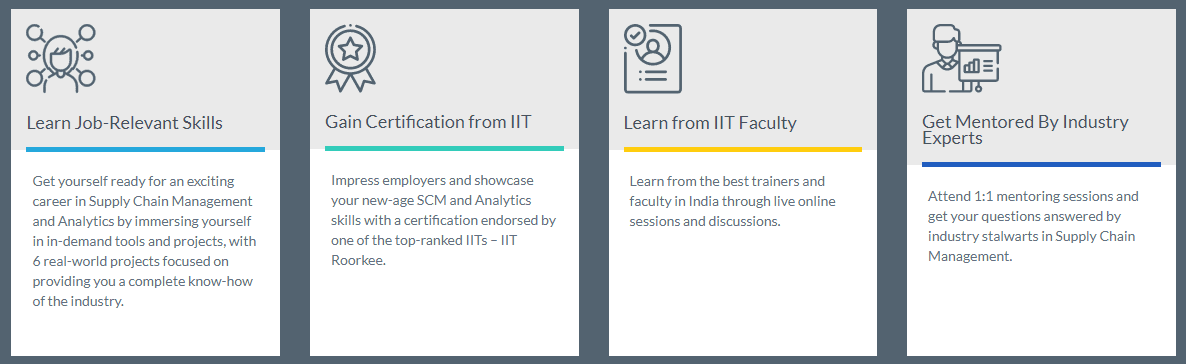
  • The course enables students to learn job-relevant skills that prepare them for an exciting Software Engineering career.
  • Impress employers & showcase skills with a certification endorsed by India’s most prestigious academic collaborations – E&ICT Academy, IIT Guwahati, and Imarticus Learning.
  • World-Class Academic Professors to learn from through live online sessions and discussions. This will help students understand the practical implementation with real industry projects and assignments.
  • Flexible Learning Journey that gives you the flexibility to transfer program credits for 1 year.

Contact us through the Live chat support system or schedule a visit to training centers in Mumbai, Thane, Pune, Chennai, Bengaluru, Hyderabad, Delhi, and Gurgaon.

What Are the Types of Change Management

What is Change Management?

Change Management is a process that helps organizations/firms to cope up with advancements. With all the technological enhancements going on, they need to adapt quickly to the changes. Their employees also have to learn and adapt to new working methodologies to grow. In this article, types of organizational change management & individual change management will be discussed.

Types of Organisational Change Management

• Evolutionary Change Management – It is one of the oldest and most experienced forms of change management. It is a part of natural selection where man has evolved and so do his thinking. It may not be evident in a short period but when we compare the state of today’s industries to the state of industries fifty years back, we might witness a lot of change.

• Revolutionary Change Management – This type of change management occurs when organizations/firms are forced to change due to extreme/foreign forces. It may be from the government, protests, etc. Firms have to cope up with these types of changes otherwise it may become a matter of survival of the firm in the market.

• Directed Change Management – Directed Change Management is a younger model of change management than the aforementioned models. It is designed to achieve a specific target/vision. Organizations have to use their custom models, strategies & processes to achieve the desired goal. It is of three types which are as follows:

1. Developmental Change Management – Whenever any organization brings changes in its working culture, methodologies, standards, etc. they have to cope up with the developmental change management. Examples of developmental changes are an increase in sales/capital, a shift in communication standards, etc. The firm has to make sure that each employee learns and adapts to the new changes. If they fail to do so, it will ultimately hamper the firm.

2. Transformational change management – It is a complex and challenging type of change management faced by companies/firms. They have to work on a vision/aim in which the future is uncertain. The hit and trial method is widely used to generate more information. Examples of Transformational change are shifting of business on a digital/virtual platform, complex mergers & acquisitions, etc.

3. Transitional Change Management – Transitional change occurs when the present state is going to be changed into something completely different and better. Examples are the launch of new services/products replacing the old ones, shifting of work locations, IT shifts, etc. The firm has to ensure that each employee should let go of the old working environment both mentally and emotionally to grow and develop.

Individual Change Management

The aforementioned change management types were in respect of organizations. Personal change management is also important for a person to adapt quickly to the changes and play a part in the development of the firm. it is also categorized into four types as follows:

Exceptional Change Management – In this type, an individual has to make sure that personal trouble in any field should not affect all other parts of life and living.

Incremental Change Management – In this one, an individual has to cope up with monitory hikes, new responsibilities to adapt to a new role.

Pendulum Change Management – When a complete swing of the present state to another state happens, this type of change occurs. An individual has to make sure he survives

Paradigm Change Management – This type of change occurs when a change in beliefs, morals of an organization happens. An individual has to learn new characteristics of the firm

Change management is a very interesting field and one can find various change management courses available in the market/internet to know more. There is a lot of competition in the market for market share, the firms which understand the importance of their employees make sure they grasp new things quickly and help in the development of the firm. This article was all about various parts of change management.

What is the Scope of Scrum master?

Scrum
Scrum is a framework that helps different teams to work in a cohesive manner. Scrum helps teams to remain self-organized while dealing with a problem. Using the Scrum framework, teams learn from their experiences. Scrum enables effective use of all the available resources and makes the deliverables available with high efficiency.

Scrum helps in dividing the overall projects into various sub-projects referred to as sprints. The use of scrum empowers all the team members to have visibility of everything happening in the project. The use of scrum makes it possible to have a 3600 feedback system regularly. Along with the performance and efficiency of the entire team, Scrum also focuses on the individual performers in the team.

Scrum Master
The scrum team leader, also referred to as the scrum master is a person who takes care of to and for communication between the product owner and the entire team members, communication within the team, without actually being included in the strategy flow of the product. Along with smooth communication, scrum master also ensure that all the team members follow astute values.

Scrum Master Course

Who should attend the Scrum Master Course?
The Scrum Master course is meant for the professionals who use the Scrum framework to develop software and the professionals whose ultimate commitment at the workplace to maximize the Scrum

Scrum master Course-Competencies

Competency 1 – Scrum values

Clear focus, Respect, commitment, and courage are the key values possessed by a Scrum master. The ability to apply the stated values in the organizations with the different sets of values altogether defines the role of the Scrum master. Practitioners living with the scrum values help create an environment where continual improvement with self-organization continuously flourishes.

Competency 2 – Empiricist Philosophy

Practicing Empiricist Philosophy to solve problems is the essential quality of the scrum master. The entire philosophy talks about breaking the complex problems into various incremental problems for empirical execution. The use of scientific methods to solve complex problems is the key attribute of empirical philosophy.

Competency 3- Scaling

The design of the Scrum framework helps to achieve the individual targets at the team, product, and organizational levels. The practitioner has a complete understanding of all the scales and the levels of the scrum. Different levels of scaling can be used in complex frameworks, keeping the essential qualities of scrum such as empiricism and continuous improvement intact.

Competency 4 – Events

The entire Scrum framework is defined in 5 stages. Sprint is the first stage, followed by sprint planning. The entire sprint planning defines the third, fourth, and fifth stage which is daily scrum, sprint review, and sprint retrospective respectively. These time-bounded stages facilitate the progress and achievement of goals through transparency. The three pillars of Scrum i.e. transparency, inspection, and adaptation uphold the entire system.

Competency 5 – Sprint-Product Backlog and Increment

Product and sprint provide the team with materials to plan, execute and review the sprint deliverables. Professionals in the same field will understand the application of these facts in real and complex situations, hence integrating the facts with the organization’s own objectives.

Competency 6 – ‘Done’
‘Done’ (DoD) is defined by the practitioner as the focus area to be applied to the particular context. The same needs to be communicated and visualized internally in the organization. The practitioner will be able to describe the trade-offs and compromises to be considered to deliver ‘done’.

Scrum master Salary in India
Average salary of Scrum Master in India is Rs.1,412,000 per annum which range between Rs.2,268,000 and Rs.7,02,000. Factors that determine the salary range for a candidate are experience in the field, region, and the company’s profile. Favorable factors decide the inclination towards the higher spectrum of the salary.

What are Roles and Responsibilities of Scrum Master

Who is Scrum Master

Scrum master is the moderator for an Agile Development team. These people have to look for a management task like information interchange between team members. Scrum masters manage that how people can exchange their information. Also, their responsibility includes promotion and supporting scrum. These are usually done by making people understand Scrum theory, rules, and values.

Scrum Master is the leader who makes people engaged or interactive so that this interaction results in maximized values. The scrum master takes care of the scrum tasks that needed to be done during a project. They hold processes that are going on in the organization, scrum framework, and scrum team. The project can get into failure if no scrum master is present to do promotion and support the process.

Scrum Master Responsibilities

The scrum master has many different roles in a process or a project. A scrum master ensures the goal, scope, and product information that is cleared to all the team members. They take care of product planning. They are knowledgeable about how to approach a project and meetings required for those. Some of the responsibilities include:

  • Helping the team to achieve the desired goal in a specific time.
  • Helping the team for the agreement during the scrum meets.
  • Ensuring the team to agree upon the rules of the daily scrum.
  • Ensuring there is no distraction for the team during the project.
  • Removing the problems and obstructions faced by the team.
  • Developing a good environment so that team can be constructive.
  • Taking care of the relationship between team and product owner.

Challenges Faced By Scrum Master

A scrum master is a person that ensures that everything in the scrum process is followed by the team. It can be said that scrum master’s role is easiest but there are still a few challenges that are faced by the scrum masters that are stated below:

1. Resisting Change- It can be in different forms.
2. Misunderstanding process – There can be different confusions in the daily implementation tasks. Often, there can be confusion between old terms and methods.
3. Failure in an adaption of changing roles- Changes in the role can take place between team and department. You should be able to adapt to your role.

How To Become Scrum Master

The way to be a scrum master you need to get a certification. Scrum Alliance offers CSM that gives the person knowledge to get their teams more effective. The certification talks about the concepts of the Scrum framework and you will gain understanding about events and team roles. If you are certified you can expand your career in various industries. A scrum certification gives you in-depth knowledge about scrum.

There are very few requirements that are required for CSM. You should be aware of the scrum framework. There is a session that talks about an overview of how to support a team. CSM conducts exams and If you pass and accept their license then you would graduate with the two-year member in the Scrum Alliance. There are also other exams apart from CSM.

Certified Scrum Master earns between $70-100K yearly which is dependent upon in the industry. Having certifications makes a scrum master a more preferable candidate for the job.

In this article, I have discussed who are scrum masters, what are their roles and responsibilities in the organization, how they help their team during projects and processes. I have discussed the challenges and problems faced by the scrum master and in the last, I have explained a few certifications that a person willing to do to become a scrum master.

What is Blockchain Developer Salary?

What is Blockchain Developer Salary?

The importance of Blockchain technology is paramount and there is a huge demand for Blockchain developers by tech-based companies that relies on using cutting-edge progressive technical solutions. Before jumping over to the remuneration offered to a Blockchain developer let’s understand what this technology entails and what these Blockchain developers do.

Understanding the Blockchain technology

Blockchain can be explained as a decentralized digital ledger that captures digital information mainly related to economic transactions of high value which can’t be altered later. The use of cryptography and decentralization to record data makes it impossible to alter the data recorded at any given point of time.

It is extremely helpful when it comes to recording public information and establishing accountability and transparency in the process.

Blockchain is based on a peer to peer technological model that allows information to be stored on multiple servers globally. Anyone who is a part of the network can see the updates in almost real-time and the source of input can be easily verified.

The participants in the network are given a unique identification number that can help to trace the identity of the person responsible for any updates in the blocks. The whole system comprises three important elements; the block, the nodes, the miner.

Blockchain is growing to become a disruptive technology much like the internet and has the power to transform the world for good. It will revolutionize the way information is shared among people and instill more accountability with transparency in the process.

Many companies in industries such as healthcare, finance, and supply-chain are keen on finding out the other possibilities with this revolutionary Blockchain technology and this has created a spurt in the demand for Blockchain developers.

Responsibilities & remuneration of Blockchain developers

What do the Blockchain developers exactly do? Well, Blockchain developers are responsible for a wide range of activities involved in developing a Blockchain application. A Blockchain developer is responsible for the development and optimization of Blockchain protocols that require an in-depth understanding of the core principles of this revolutionary technology.

Their main function can be understood in the light of the various applications of this remarkable technology that includes building the model of Blockchain systems, developing smart contracts, building applications based on Blockchain technology, etc.

Blockchain developers can be divided into two categories; blockchain core developers and blockchain software developers.

The roles of these two developers are interconnected and both have a different area of specialization. The core blockchain developers are responsible for the overall design and framework of blockchain technology. The blockchain software developers do not have to work on the design of the model, they have to develop blockchain applications using the design and framework created by the core developers.

Blockchain Developer Salary in India

As per global estimates, the average salary for a blockchain developer is far higher than the average salary for a normal software engineer. The annual average salary for blockchain developers or experts lies in the range of $150000 to $175000. The average annual figures for other software engineers is somewhere around $137000.

As per research reports, the median annual salary for blockchain developers is in the range of $127000 to $172000 making it one of the most lucrative career options for tech professionals.

In India, the blockchain developers’ average remuneration ranges between Rs. 500,000 to Rs. 30,00,000. This is almost double the average salary earned by other software engineers. With some experience in the professionals can earn as high as Rs. 45,00,000 annually.

Senior-level blockchain professionals can earn much higher in this industry, companies are even willing to pay over Rs. 3 crores given the value they’ll be adding as senior professionals.

If you are interested in choosing blockchain technology as a career option then you can easily work on the technical skills required to do the job by opting for a Blockchain online course. The course will impart you with relevant technical knowledge and give you a practical understanding of the functioning of this technology.

Stages That Lead From Agile Development Towards Agile Business!

If you thought that strategy analysis is the magic bullet to ensure the smooth working of a business, then it is time you learn about the Agile approach. Indeed, strategy analysis is essential for identifying organizational loopholes and improving them.

But, the Agile development strategy works wonders in creating more productive and efficient ways of working. As a result, there is a boost in employee morale, better team collaboration is achieved, and higher quality products are created that meet customer satisfaction.

The path to enterprise agility is a journey comprising various stages. And, each stage plays its part in the transformation that touches every facet of the organization.

The Journey Towards Business Agility

There is no single path to business agility. While some organizations is Agile right from the start, others adapt to it on the go. Regardless of the approach, pace, or gamut of Agile transformation, the journey comprises two broad, iterative stages.

Stage 1: Testing out new methodologies and tools with a small team

Most Agile developments start with understanding a commonly-owned aspiration, designing a blueprint to chalk out how agility will add business value, and launching pilots to test the Agile operating area.

Aspiration: The success of the Agile transformation requires a strong understanding of shared aspirations. In addition, efficient leadership from the top acts as a powerful drive throughout the transformation journey.

Creating a blueprint: The blueprint of the Agile operating model provides the design and clear vision of how a new strategy should work. It is developed in a fast and iterative manner and should identify how the technology, people, and processes of the new operating model must change.

Overall, the blueprint development has five stages:

  • Understanding how the industry and individual organization creates value
  • Defining the organizational structure
  • Identifying Agile teams and defining missions
  • Outlining core processes, people, and technology requirements
  • Deciding on an implementation approach

Agile Pilots: The purpose of Agile pilots is to test the operating model in a defined area. Pilot projects often involve multiple teams to test the broader aspects of business agility. They begin with defining the scope of the Agile pilot and finally go on to outlining the way in which the pilot will run.

Stage 2: Translation into broader business agility

The final broad stage of enterprise Agile adoption involves scaling the success of the pilots through an iterative approach based on continuous feedback and capability building.

Rolling out Agile cells: The structure of Agile organizations can be thought of as comprising “cells” or “teams” built around common missions. Agile cell deployment and support involve designing and rolling out new Agile cells in waves, including assignment of new roles to people.

Transforming the backbone: Transformation of the organization’s backbone entails an overhaul of the core processes and systems to make them Agile-ready.

Building new capabilities: Successful scaling of an Agile operating model requires an organization-wide adoption of new skills, behaviors, and mindsets. This critical and vital phase of the Agile transformation calls on the staff to take on new roles and responsibilities while building advanced capabilities and skills.

How to look for business analytics courses in India?

If you are looking for industry-oriented business analytics courses in India, then how about an Agile business analyst certification?

Imarticus offers a comprehensive Post Graduate Program for Agile Business Analyst in association with accredited training partner IIBA. The 6-month business analyst certification course combines hands-on training, practical assignments, business role-plays, and real industry case studies to train for a promising career as an Agile business analyst. In addition, learners will get one-on-one mentorship and career assistance throughout the course of the program.